

The gut–brain axis in early Parkinson’s disease: from prodrome to prevention
Open accessThe DOI matches its Crossref record; 275 of the 275 references it cites were found in a registry or an index; 107 of the 188 sources its claims cite were checked for support.
Abstract
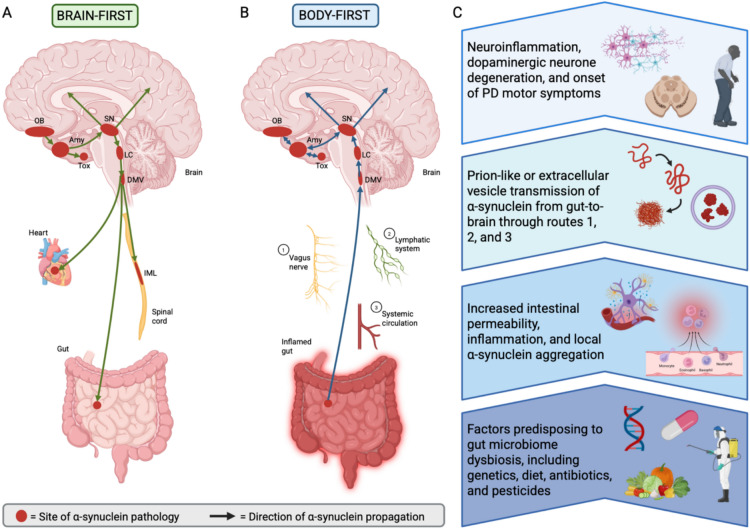
Parkinson's disease is the second most common neurodegenerative disorder and fastest growing neurological condition worldwide, yet its etiology and progression remain poorly understood. This disorder is characterized pathologically by the prion-like spread of misfolded neuronal alpha-synuclein proteins in specific brain regions leading to Lewy body formation, neurodegeneration, and progressive neurological impairment. It is unclear what triggers Parkinson's and where α-synuclein protein aggregation begins, although proposed induction sites include the olfactory bulb and dorsal motor nucleus of the vagus nerve. Within the last 20 years, there has been increasing evidence that Parkinson's could be triggered by early microbiome changes and α-synuclein accumulation in the gastrointestinal system. Gut microbiota dysbiosis that alters gastrointestinal motility, permeability, and inflammation could enable prion-like spread of α-synuclein from the gut-to-brain via the enteric nervous system. Individuals with isolated rapid eye movement sleep behavior disorder have a high likelihood of developing Parkinson's and might represent a prodromal 'gut-first' subtype of the condition. The gut-first model of Parkinson's offers novel gut-based therapeutic avenues, such as anti-, pre-, and pro-biotic preparations and fecal microbiota transplants. Crucially, gut-based interventions offer an avenue to treat Parkinson's at early prodromal stages with the aim of mitigating evolution to clinically recognizable Parkinson's disease characterized by motor impairment.
Overview
CoChat Summary
## TL;DR
This is a narrative review arguing that Parkinson’s disease may begin in the gut in at least a subset of patients, especially those with prodromal rapid eye movement sleep behavior disorder (RBD), and that gut microbiome changes could help identify and treat disease earlier. The authors conclude that the gut-first model is promising but still largely speculative and needs prospective longitudinal and interventional studies.
## Key findings
- Prodromal Parkinson’s disease is described as predominantly non-motor; the paper notes early constipation and gastrointestinal complaints in 80% of PD patients and states that RBD to overt α-synucleinopathies converts at 6.3% per year, with 73.5% converting after 12-year follow up.
- The review says evidence is mixed for peripheral α-synuclein before brain involvement: some post-mortem and immunohistochemical studies found α-synuclein in the esophagus, stomach, small intestine, and enteric nervous system up to 20 years before diagnosis, but a large Arizona Parkinson’s consortium study did not find cases with enteric nervous system α-synuclein without central nervous system involvement.
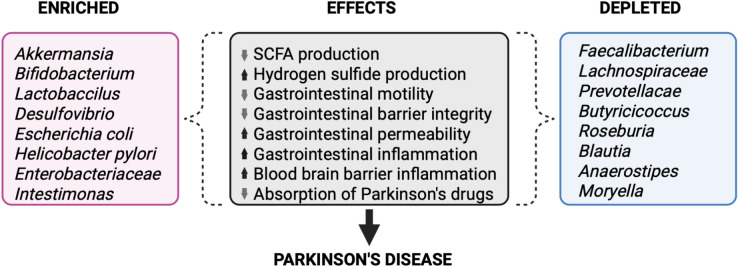
- It reports that gut microbiota dysbiosis is seen in prodromal PD, but study results are heterogeneous; sample sizes range from 38 in individual studies to 1269 in meta-analyses, and the authors say many studies are underpowered and confounded by geography, diet, smoking, medications, and other factors.
- For treatment, the paper highlights gut-based interventions: it says 4 RCTs of fecal microbiota transplant (FMT) have available evidence, 3 reported changes in global or motor function, and 2 reported significant improvement in UPDRS scores at 12 weeks and 12 months, respectively.
## Methods
- Narrative review synthesizing epidemiological, post-mortem, imaging, animal, and interventional studies on the gut–brain axis in early Parkinson’s disease.
- Focuses on prodromal PD, especially RBD-positive and body-first phenotypes, and on gut microbiome findings from 16S rRNA studies, shotgun metagenomics, and related biomarker work.
- No original dataset or primary statistical analysis is presented in the paper itself; it reviews and interprets prior studies.
## Limitations
- The paper explicitly states that the current evidence for gut-first Parkinson’s disease remains “largely speculative” and that there are conflicting reports across microbiome, histopathology, and epidemiological studies.
- It notes several limitations in the literature it reviews: small and heterogeneous samples, inadequate control of covariates, lack of a priori power calculations, limited species/strain resolution in 16S methods, and inconsistent bioinformatic/normalization approaches.
- The text makes evident that this is a narrative synthesis rather than a systematic review or meta-analysis; therefore, its conclusions depend on the quality and selection of prior studies (this is inferred from the text).
Model-written summary. Check it against the paper before relying on it.
Integrity signals
Registry
Cites
Statistics
Figures
Verification
Claims the paper makes
64 Valid · 9 Not valid · 31 Not checked · 42 Own results and interpretations
At least one cited source doesn’t support this claim or points to a different paper, and none confirmed it — see the verdicts below.
In the paper
“At the molecular level, in vitro data indicate that SCFAs might contribute to α-synuclein pathogenesis.”
§ The gut–brain axis in early Parkinson’s disease: from prodrome to prevention > Gut microbiota dysbiosis is seen in prodromal PD
What the sources say
- Not checked — no full text of the sourcecites [121] Hamer HM, Jonkers D, Venema K, Vanhoutvin S, Troost FJ, Brummer R (2008) Review article: the role of butyrate on colonic function. Aliment Pharmacol Ther. 10.1111/j.1365-2036.2007.03562.x 17973645 source
- Could not verifycites [122] Biagi E, Nylund L, Candela M, Ostan R, Bucci L, Pini E, Nikkïla J, Monti D, Satokari R, Franceschi C, Brigidi P, De Vos W (2010) Through ageing, and beyond: gut microbiota and inflammatory status in seniors and centenarians. PLoS ONE. 10.1371/journal.pone.0010667 20498852 PMC2871786 sourceExperimental — accuracy not yet measured
The Discussion describes butyrate as a short-chain fatty acid and reports changes in butyrate-producing gut bacteria in centenarians. Searches for α-synuclein, Parkinson’s disease, and in vitro SCFA effects found no passage connecting SCFAs to α-synuclein pathogenesis. (LLM, conf=0.76)
- Not checked — no full text of the sourcecites [123] Qu Y, An K, Wang D, Yu H, Li J, Min Z, Xiong Y, Xue Z, Mao Z (2025) Short-chain fatty acid aggregates alpha-synuclein accumulation and neuroinflammation via GPR43-NLRP3 signaling pathway in a model Parkinson’s disease. Mol Neurobiol. 10.1007/s12035-025-04726-7 39904963 source
- Disputedcites [124] Liu J, Chen Q, Su R (2024) Interplay of human gastrointestinal microbiota metabolites: short-chain fatty acids and their correlation with Parkinson’s disease. Medicine (Baltimore). 10.1097/MD.0000000000037960 38669388 PMC11049718 sourceExperimental — accuracy not yet measured
Section 4.3 reports that SCFAs downregulate α-synuclein aggregation and that sodium butyrate promotes its degradation in cell-based and rotenone-induced models. Those findings point away from the claimed contribution to α-synuclein pathogenesis, rather than supporting it. (LLM, conf=0.86)
Checked by a reasoning model — may be wrong.
hedgedstates a possible cause- Asserted: passes — The authors put it forward as true.
- Checkable: passes — It can be checked against evidence.
- Load-bearing: unclear — It is unclear whether the paper’s conclusions depend on it.
- Based: passes — The paper gives a reason why it holds.
Some cited sources support this claim and some don’t — read each source’s verdict below.
In the paper
“In this study, only 3% of the treatment group were reported to show a change from dysbiotic to non-dysbiotic status, compared to 33% in the placebo arm, suggesting that the FMT treatment failed to produce a significant change in the gut microbiome.”
§ The gut–brain axis in early Parkinson’s disease: from prodrome to prevention > A gut-first model of PD opens new avenues for treatment
What the sources say
- Disputedcites [206] Scheperjans F, Levo R, Bosch B, Lääperi M, Pereira PAB, Smolander O, Aho VTE, Vetkas N, Toivio L, Kainulainen V, Fedorova TD, Lahtinen P, Ortiz R, Kaasinen V, Satokari R, Arkkila P (2024) Fecal microbiota transplantation for treatment of Parkinson disease: a randomized clinical trial. JAMA Neurol. 10.1001/jamaneurol.2024.2305 39073834 PMC11287445 sourceExperimental — accuracy not yet measured
The cited proportions are accurate — Results (GMB section) report dysbiosis conversion to nondysbiotic falling from 7/29 (24%) at 1 month to 1/29 (3%) at 12 months in the FMT group versus 2/15 (13%) rising to 5/15 (33%) at 12 months in placebo. However, the inference drawn from them is contrary to the source: the same Results section states 'Microbiota changes were more pronounced after FMT but differed by donor,' with beta diversity (Bray-Curtis) increasing significantly more in the FMT group at strain and species levels and more abundant taxonomic shifts at 1 month, and the Discussion adds that 'donor FMT achieved a sustained GMB change close to what is observed between individuals' (species-level sustained dissimilarity 0.36-0.43 FMT vs 0.26-0.32 placebo). What the trial found futile was clinical/biomarker benefit and sustained dysbiosis reversal, not a significant microbiome change. (LLM, conf=0.80)
Checked by a reasoning model — may be wrong.
- Partly supportedcites [207] Cheng Y, Tan G, Zhu Q, Wang C, Ruan G, Ying S, Qie J, Hu X, Xiao Z, Xu F, Chen L, Chen M, Pei Y, Zhang H, Tian Y, Chen D, Liu X, Huang H, Wei Y (2023) Efficacy of fecal microbiota transplantation in patients with Parkinson’s disease: clinical trial results from a randomized, placebo-controlled design. Gut Microbes. 10.1080/19490976.2023.2284247 38057970 PMC10841011 sourceExperimental — accuracy not yet measured
The Results section on metagenomic sequencing (page unavailable) says gut-microbiota alpha and beta diversity did not change significantly after FMT or placebo, supporting the narrower point about diversity. It does not report the cited 3% versus 33% dysbiosis-status figures, and it reports differences in microbial species and community networks among FMT responders, so the broader claim of no significant microbiome change is overstated. (LLM, conf=0.86)
- Disputedcites [208] DuPont HL, Suescun J, Jiang Z, Brown EL, Essigmann HT, Alexander AS, DuPont AW, Iqbal T, Utay NS, Newmark M, Schiess MC (2023) Fecal microbiota transplantation in Parkinson’s disease-A randomized repeat-dose, placebo-controlled clinical pilot study. Front Neurol. 10.3389/fneur.2023.1104759 36937520 PMC10019775 sourceExperimental — accuracy not yet measured
The Results (Primary endpoints; page unavailable) report significant differences between the FMT and placebo groups in microbiome beta diversity at 6 weeks (p = 0.008) and 13 weeks (p = 0.0008), as well as significant differences in bacterial families at 13 weeks. The Discussion likewise says beta diversity increased significantly in the FMT group. The copy does not report the claimed 3% versus 33% change from dysbiotic to non-dysbiotic status. (LLM, conf=0.90)
Checked by a reasoning model — may be wrong.
- Could not verifycites [209] Bruggeman A, Vandendriessche C, Hamerlinck H, De Looze D, Tate DJ, Vuylsteke M, De Commer L, Devolder L, Raes J, Verhasselt B, Laukens D, Vandenbroucke RE, Santens P (2024) Safety and efficacy of faecal microbiota transplantation in patients with mild to moderate Parkinson’s disease (GUT-PARFECT): a double-blind, placebo-controlled, randomised, phase 2 trial. EClinicalMedicine. 10.1016/j.eclinm.2024.102563 38686220 PMC11056595 sourceExperimental — accuracy not yet measured
The Discussion (page unavailable) says that sequential microbiome analysis before and after FMT is a future step, rather than reporting whether this trial found a significant microbiome change. A search for dysbiotic-to-non-dysbiotic status and the cited 3% and 33% figures found no matching results in our copy. (LLM, conf=0.76)
hedged- Asserted: passes — The authors put it forward as true.
- Checkable: passes — It can be checked against evidence.
- Load-bearing: passes — The paper’s conclusions depend on it.
- Based: passes — The paper gives a reason why it holds.
- Disputed
The cited sources support only part of this claim — read each source’s verdict below.
In the paper
“Recent analyses reveal that early constipation and gastrointestinal complaints are seen in 80% of PD patients [23, 24].”
§ The gut–brain axis in early Parkinson’s disease: from prodrome to prevention > Prodromal PD is a non-motor phenomenon
What the sources say
- Partly supportedcites [23] Scheperjans F, Pekkonen E, Kaakkola S, Auvinen P (2015) Linking smoking, coffee, urate, and Parkinson’s disease: A role for gut microbiota? J Parkinsons Dis. 10.3233/JPD-150557 25882059 sourceExperimental — accuracy not yet measured
In “The Gut and Its Microbiota in PD” (page not provided), the paper says gastrointestinal dysfunction, particularly constipation, affects up to 80% of PD patients and that related changes can occur in the earliest stages. It does not say that 80% of patients have these complaints early in the disease, and “up to 80%” is an upper bound rather than a fixed rate. (LLM, conf=0.86)
- Supportedcites [24] Jia X, Chen Q, Zhang Y, Asakawa T (2023) Multidirectional associations between the gut microbiota and Parkinson’s disease, updated information from the perspectives of humoral pathway, cellular immune pathway and neuronal pathway. Front Cell Infect Microbiol. 10.3389/fcimb.2023.1296713 38173790 PMC10762314 source
The Introduction reports GI dysfunction in 80% of early PD patients. Section 2.1 identifies constipation as one of the gastrointestinal symptoms experienced by PD patients. (LLM, conf=0.91)
plainstates an association- Asserted: passes — The authors put it forward as true.
- Checkable: passes — It can be checked against evidence.
- Load-bearing: unclear — It is unclear whether the paper’s conclusions depend on it.
- Based: passes — The paper gives a reason why it holds.
- Partly supported
The cited sources support only part of this claim — read each source’s verdict below.
In the paper
“First, non-motor symptoms such as constipation and bloating are among the earliest seen in prodromal PD [10, 11].”
§ The gut–brain axis in early Parkinson’s disease: from prodrome to prevention > Abstract
What the sources say
- Partly supportedcites [10] Scott GD, Lim MM, Drake MG, Woltjer R, Quinn JF (2021) Onset of skin, gut, and genitourinary prodromal parkinson’s disease: a study of 1.5 million veterans. Mov Disord. 10.1002/mds.28636 33942370 PMC8734457 sourceExperimental — accuracy not yet measured
The Results section, “Estimated Onset Times for Gastrointestinal, Genitourinary, and Skin Disorders” (page unavailable), places constipation early in prodromal PD, with an estimated onset 17.3 years before diagnosis. It does not identify bloating, and it places constipation later than the earliest-onset disorders. (LLM, conf=0.86)
- Partly supportedcites [11] Adams-Carr KL, Bestwick JP, Shribman S, Lees A, Schrag A, Noyce AJ (2016) Constipation preceding Parkinson’s disease: a systematic review and meta-analysis. J Neurol Neurosurg Psychiatry. 10.1136/jnnp-2015-311680 26345189 sourceExperimental — accuracy not yet measured
The Introduction (p.1) states that 'Constipation, a consequence of autonomic dysfunction, is one of the most studied of the prodromal symptoms of PD', and the Abstract/Discussion conclude that 'constipation can predate Parkinson's diagnosis by over a decade' with a persistent 2.13-fold risk >10 years before diagnosis — supporting constipation as an early non-motor prodromal feature. However, our copy nowhere mentions bloating (searched: bloating, gastrointestinal/autonomic non-motor symptoms), so that element of the claim is not attributed to this paper. Note also that the paper's own ranking ('second most common non-motor symptom after anosmia') is a prevalence statement credited to Chen et al. (ref 4), not a claim about ordering of onset. (LLM, conf=0.78)
plainstates an association- Asserted: passes — The authors put it forward as true.
- Checkable: passes — It can be checked against evidence.
- Load-bearing: passes — The paper’s conclusions depend on it.
- Based: passes — The paper gives a reason why it holds.
- Partly supported
The cited sources support only part of this claim — read each source’s verdict below.
In the paper
“A leaky gut barrier has been linked to PD pathogenesis involving local flux of bacterial toxins, microbes, and potentially molecules like α-synuclein across the gastrointestinal epithelium [29–31]”
§ The gut–brain axis in early Parkinson’s disease: from prodrome to prevention > Prodromal PD is a non-motor phenomenon
What the sources say
- Not checked — no full text of the sourcecites [29] Schwiertz A, Spiegel J, Dillmann U, Grundmann D, Bürmann J, Faßbender K, Schäfer K, Unger MM (2018) Fecal markers of intestinal inflammation and intestinal permeability are elevated in Parkinson’s disease. Parkinsonism Relat Disord. 10.1016/j.parkreldis.2018.02.022 29454662 source
- Partly supportedcites [30] Kelly LP, Carvey PM, Keshavarzian A, Shannon KM, Shaikh M, Bakay RAE, Kordower JH (2014) Progression of intestinal permeability changes and alpha-synuclein expression in a mouse model of Parkinson’s disease. Mov Disord. 10.1002/mds.25736 24898698 PMC4050039 sourceExperimental — accuracy not yet measured
The Abstract hypothesizes that a leaky gut permits bacterial endotoxin (LPS) to pass from the intestinal lumen into enteric tissues, and the Discussion links permeability dysfunction to inflammation and neuronal damage in PD. The paper does not establish that whole microbes or α-synuclein cross the gastrointestinal epithelium; it describes α-synuclein expression in enteric neurons instead. Page numbers are unavailable in our copy. (LLM, conf=0.87)
- Partly supportedcites [31] Forsyth CB, Shannon KM, Kordower JH, Voigt RM, Shaikh M, Jaglin JA, Estes JD, Dodiya HB, Keshavarzian A (2011) Increased intestinal permeability correlates with sigmoid mucosa alpha-synuclein staining and endotoxin exposure markers in early Parkinson’s disease. PLoS ONE. 10.1371/journal.pone.0028032 22145021 PMC3228722 sourceExperimental — accuracy not yet measured
The Introduction and Discussion link increased intestinal permeability in PD to the passage of bacteria and endotoxins across the gut barrier, and report a correlation with intestinal α-synuclein staining. They do not suggest that α-synuclein itself crosses the gastrointestinal epithelium; instead, they propose that local inflammatory and oxidative injury may contribute to its accumulation in enteric neurons. The Discussion also cautions that this observational study cannot establish a causal role in PD pathogenesis. (LLM, conf=0.88)
hedgedstates an association- Asserted: passes — The authors put it forward as true.
- Checkable: passes — It can be checked against evidence.
- Load-bearing: passes — The paper’s conclusions depend on it.
- Based: passes — The paper gives a reason why it holds.
70 more claims · 37 with their cited sources checked
Create a free account to see all 146 claims and to verify the 24 references still open.
- It may state two separate claims as one. 58
- Probably not a substantial claim. 19
Self-check
Percentages, sums and reported differences re-computed from the paper’s own numbers.
Self-check results appear here once an independent check has confirmed them.
Cited works that were retracted
Works this paper cites that were later retracted, from the retraction notices publishers deposit. Major when the notice came out before this paper was published.
Rated major: it would touch a result — a value a result rests on, reported and recomputed p-values on opposite sides of the significance level, two passages that conflict with no sign which is right, or a cited work retracted before this paper was published.
In the paper
“Some studies have found no difference in SCFA levels between individuals with RBD compared to controls [128, 129], and one study reported no significant association between the non-motor features of prodromal PD and microbiome changes [130].”
Cited work 10.1002/ana.25788 · retracted 2021-07-14 · notice 10.1002/ana.26151 · this paper published 2025-05-21
A note, not an issue: for example, a cited work that was retracted only after this paper was published, which its authors could not have known.
In the paper
“Several other RCTs have consistently shown probiotics can improve constipation in PD patients [166–169].”
Cited work 10.1016/j.clnu.2018.05.018 · retracted 2025-09-26 · notice 10.1016/j.clnu.2025.08.012 · this paper published 2025-05-21
Citations
Cites
2 retracted
Items 201–275 of 275
Cao, Y.-Q., Li, Q., Xia, P.-F., Wei, L.-J., Guo, N., Li, J.-W., & Wang, S.-G. (2017) · Scientific Reports · doi:10.1038/s41598-017-17035-4 · Cited by 46
Severe obesity and gut microbiota: does bariatric surgery really reset the system?
Cani, P. D. (2019) · Gut · doi:10.1136/gutjnl-2018-316815 · Cited by 45
Narożańska, E., Białecka, M., Adamiak-Giera, U., Gawrońska-Szklarz, B., Sołtan, W., Schinwelski, M., Robowski, P., Madaliński, M. H., & Sławek, J. (2014) · Clinical Neuropharmacology · doi:10.1097/wnf.0000000000000037 · Cited by 45 · cited 1×
“However, a larger study found no difference in levodopa pharmacokinetics in patients with PD based on whether they were H. pylori -positive or negative [159].”
Whole-brain in vivo base editing reverses behavioral changes in Mef2c-mutant mice
Li, W.-K., Zhang, S.-Q., Peng, W., Shi, Y., Yuan, B., Yuan, Y., Xue, Z., Wang, J., Han, W., Chen, Z., et al. (2023) · Nature Neuroscience · doi:10.1038/s41593-023-01499-x · Cited by 44
Decreased noradrenaline transporter density in the motor cortex of Parkinson's disease patients
Sommerauer, M., Hansen, A. K., Parbo, P., Fedorova, T. D., Knudsen, K., Frederiksen, Y., Nahimi, A., Barbe, M. T., Brooks, D. J., & Borghammer, P. (2018) · Movement Disorders · doi:10.1002/mds.27411 · Cited by 43
Colonic inflammation affects myenteric alpha-synuclein in nonhuman primates
Resnikoff, H., Metzger, J. M., Lopez, M., Bondarenko, V., Mejia, A., Simmons, H. A., & Emborg, M. E. (2019) · Journal of Inflammation Research · doi:10.2147/jir.s196552 · Cited by 42
Onset of Skin, Gut, and Genitourinary Prodromal Parkinson's Disease: A Study of 1.5 Million Veterans
Scott, G. D., Lim, M. M., Drake, M. G., Woltjer, R., & Quinn, J. F. (2021) · Movement Disorders · doi:10.1002/mds.28636 · Cited by 42 · cited 1×
“In this model outlined by Braak et al., early α-synuclein induction sites are found in the brain, including the dorsal motor nucleus or the vagus and the olfactory bulb, with spread”
Efficacy and safety of probiotics in Parkinson’s constipation: A systematic review and meta-analysis
Xie, L., Chen, D., Xinghui, Z., & Cheng, C. (2023) · Frontiers in Pharmacology · doi:10.3389/fphar.2022.1007654 · Cited by 40
Neuropathology of myoclonus epilepsy associated with ragged-red fibers (Fukuhara's disease)
Takeda, S., Wakabayashi, K., Ohama, E., & Ikuta, F. (1988) · Acta Neuropathologica · doi:10.1007/bf00687129 · Cited by 40
Kulcsarova, K., Bang, C., Berg, D., & Schaeffer, E. (2023) · Journal of Parkinson’s Disease · doi:10.3233/jpd-230206 · Cited by 40
Chen, J.-F., & Schwarzschild, M. A. (2020) · Parkinsonism & Related Disorders · doi:10.1016/j.parkreldis.2020.10.024 · Cited by 39 · cited 1×
“Caffeine promotes gastro-intestinal permeability and decreases the abundance of species such as E. coli , helping to counteract constipation [191].”
Manipulating the Human Microbiome to Manage Disease
Harkins, C. P., Kong, H. H., & Segre, J. A. (2020) · JAMA · doi:10.1001/jama.2019.19602 · Cited by 38 · cited 1×
“Existing pharmacological treatments for PD could be improved through an appreciation of the gut microbiome [151, 152].”
Novel Autoantibodies in Idiopathic Small Fiber Neuropathy
Chan, A. C. Y., Wong, H. Y., Chong, Y. F. V., Lai, P. S., Teoh, H. L., Ng, A. Y. Y., Hung, J. H. M., Chan, Y. C., Ng, K. W. P., Vijayan, J., et al. (2021) · Annals of Neurology · doi:10.1002/ana.26268 · Cited by 38
Park, D. G., Kang, W., Shin, I.-J., Chalita, M., Oh, H.-S., Hyun, D.-W., Kim, H., Chun, J., An, Y.-S., Lee, E. J., et al. (2024) · Neurobiology of Disease · doi:10.1016/j.nbd.2024.106655 · Cited by 34
FTLD-ALS of TDP-43 type and SCA2 in a family with a full ataxin-2 polyglutamine expansion
Bäumer, D., East, S. Z., Tseu, B., et al. (2014) · Acta Neuropathologica · doi:10.1007/s00401-014-1277-z · Cited by 33
Ilieva, N. M., Wallen, Z. D., & De Miranda, B. R. (2022) · Toxicology and Applied Pharmacology · doi:10.1016/j.taap.2022.116176 · Cited by 31
Ahmadi, S.-A., Bötzel, K., Levin, J., Maiostre, J., Klein, T., Wein, W., Rozanski, V., Dietrich, O., Ertl-Wagner, B., Navab, N., et al. (2020) · NeuroImage: Clinical · doi:10.1016/j.nicl.2020.102185 · Cited by 31 · cited 1×
“Prodromal PD, characterized by the initiation of neuro-degeneration before the clinical signs of PD are evident, mostly comprises non-motor symptoms [22].”
A review of studies on gut microbiota and levodopa metabolism
Zhong, Z., Ye, M., & Yan, F. (2023) · Frontiers in Neurology · doi:10.3389/fneur.2023.1046910 · Cited by 31 · cited 1×
“Tyrosine decarboxylase (converts levodopa to dopamine in the intestine), mainly produced by Enterococcus (enriched in the PD microbiome), is negatively correlated with plasma levodopa levels [155].”
Zhang, P., Huang, P., Li, Y., Du, J., Luo, N., He, Y., Liu, J., He, G., Cui, S., Zhang, W., et al. (2024) · Aging and disease · doi:10.14336/ad.2023.0518 · Cited by 30 · cited 2×
“The authors have proposed that a decreased abundance of Butyricicoccus and Faecalibacterium might be potential hallmarks of phenoconversion of RBD to PD (Zhang et al. 2024).”
Qu, Y., An, K., Wang, D., Yu, H., Li, J., Min, Z., Xiong, Y., Xue, Z., & Mao, Z. (2025) · Molecular Neurobiology · doi:10.1007/s12035-025-04726-7 · Cited by 30
Wang, J., Xiang, Y., Wu, L., Zhang, C., Han, B., Cheng, Y., Tong, Y., Yan, D., & Wang, L. (2024) · European Journal of Clinical Nutrition · doi:10.1038/s41430-024-01486-w · Cited by 29
Thiazolidinedione use and risk of Parkinson’s disease in patients with type 2 diabetes mellitus
Zhao, H.-Y., Zhuo, L., Sun, Y., Shen, P., Lin, H., & Zhan, S. (2022) · npj Parkinson s Disease · doi:10.1038/s41531-022-00406-8 · Cited by 29
Sharma, N., Kapoor, M., & Nehru, B. (2015) · Behavioural Brain Research · doi:10.1016/j.bbr.2015.09.012 · Cited by 29
Objectively confirmed prevalence of sleep-related rhythmic movement disorder in pre-school children
Gogo, E., van Sluijs, R., Cheung, T., Gaskell, C., Jones, L., Alwan, N. A., & Hill, C. M. (2018) · Sleep Medicine · doi:10.1016/j.sleep.2018.08.021 · Cited by 28
The hypothalamus and neuropsychiatric disorders: psychiatry meets microscopy
Bernstein, H., Dobrowolny, H., Bogerts, B., Keilhoff, G., & Steiner, J. (2018) · Cell and Tissue Research · doi:10.1007/s00441-018-2849-3 · Cited by 27
Motor function and the probability of prodromal Parkinson's disease in older adults
Maraki, M. I., Stefanis, L., Yannakoulia, M., Kosmidis, M. H., Xiromerisiou, G., Dardiotis, E., Hadjigeorgiou, G. M., Sakka, P., Scarmeas, N., & Stamelou, M. (2019) · Movement Disorders · doi:10.1002/mds.27792 · Cited by 27
Follow‐up study of cardiac 123I‐MIBG scintigraphy in idiopathic REM sleep behavior disorder
Miyamoto, T., Miyamoto, M., Iwanami, M., & Hirata, K. (2011) · European Journal of Neurology · doi:10.1111/j.1468-1331.2011.03392.x · Cited by 27
Clinical correlates of decreased plasma coenzyme Q10 levels in patients with multiple system atrophy
Du, J., Wang, T., Huang, P., Cui, S., Gao, C., Lin, Y., Fu, R., Shen, J.-Y., He, Y.-C., Tan, Y., et al. (2018) · Parkinsonism & Related Disorders · doi:10.1016/j.parkreldis.2018.07.017 · Cited by 26
Grathwohl, S. A., Quansah, E., Maroof, N., Steiner, J. A., Spycher, L., Benmansour, F., Durán-Pacheco, G., Siebourg‐Polster, J., Oroszlan‐Szovik, K., Remy, H., et al. (2021) · Free Neuropathology · doi:10.17879/freeneuropathology-2021-3326 · Cited by 26
Liu, J., Chen, Q., & Su, R. (2024) · Medicine · doi:10.1097/md.0000000000037960 · Cited by 25
Mixed success for carbon payments and subsidies in support of forest restoration in the neotropics
Sinacore, K., García, E. H., Finkral, A. J., van Breugel, M., López, O. R., Espinosa, C. I., Miller, A., Howard, T. E., & Hall, J. S. (2023) · Nature Communications · doi:10.1038/s41467-023-43861-4 · Cited by 25
Discovery of a Gut Bacterial Metabolic Pathway that Drives α-Synuclein Aggregation
Ortiz de Ora, L., Balsamo, J. M., Uyeda, K. S., & Bess, E. N. (2024) · ACS Chemical Biology · doi:10.1021/acschembio.4c00095 · Cited by 24 · cited 1×
“In addition, E. coli is a crucial gut bacterial species that carries out nitrate respiration to produce nitrite and reactive oxygen species, capable of increasing oxidative stress in nearby host cells, particularly enteroendocrine cells expressing α-synuclein [146].”
Federally-overlooked flood risk inequities in the conterminous United States
Flores, A. B., Collins, T. W., Grineski, S. E., Amodeo, M. F., Porter, J. R., Sampson, C., & Wing, O. E. J. (2025) · Scientific Reports · doi:10.1038/s41598-025-95120-9 · Cited by 24
Xie, C., Zhong, D., Zhang, Y., Liu, X., Zhang, L., Luo, X. L., Gong, Y., Jiang, W., Jin, R., & Li, J. (2024) · Frontiers in Neurology · doi:10.3389/fneur.2023.1271437 · Cited by 23
Hu, J., Yang, Z., Li, J., Hu, B., Luo, C., Zhu, K., Dai, Z., Cai, J., Zhan, H., Hu, Z., et al. (2019) · Digestive and Liver Disease · doi:10.1016/j.dld.2019.10.010 · Cited by 22
Scheperjans, F. (2017) · Movement Disorders · doi:10.1002/mds.27197 · Cited by 22
Wang, H., Liu, M., Zou, G., Wang, L., Duan, W., He, X., Ji, M., Zou, X., Hu, Y., Yang, J., et al. (2020) · Neurobiology of Disease · doi:10.1016/j.nbd.2020.105212 · Cited by 22
Jia, X., Chen, Q., Zhang, Y., & Asakawa, T. (2023) · Frontiers in Cellular and Infection Microbiology · doi:10.3389/fcimb.2023.1296713 · Cited by 22 · cited 1×
“Recent analyses reveal that early constipation and gastrointestinal complaints are seen in 80% of PD patients [23, 24].”
Hurley, M. J., Menozzi, E., Koletsi, S., Bates, R., Gegg, M. E., Chau, K.-Y., Blottière, H. M., Macnaughtan, J., & Schapira, A. H. V. (2023) · Brain Communications · doi:10.1093/braincomms/fcad285 · Cited by 22
Yu, J., Jia, Y., Yu, Q., Lin, L., Li, C., Chen, B., Zhong, P., Lin, X., Li, H., Sun, Y., et al. (2024) · Frontiers in Cellular and Infection Microbiology · doi:10.3389/fcimb.2023.1306368 · Cited by 20
High Pesticide Exposure Events and Dream‐Enacting Behaviors Among US Farmers
Yuan, Y., Shrestha, S., Luo, Z., Li, C., Plassman, B. L., Parks, C. G., Hofmann, J. N., Freeman, L. E. B., Sandler, D. P., & Chen, H. (2022) · Movement Disorders · doi:10.1002/mds.28960 · Cited by 19 · cited 1×
“…reducing exposure such as through replacement with biopesticides and genetically modified organisms, greater monitoring for pesticide contamination in sources like drinking water and food, and adoption of protective techniques to include simple measures like hand washing with soap [197, 198].”
Attenuated Postprandial GLP-1 Response in Parkinson’s Disease
Manfready, R. A., Engen, P. A., Verhagen Metman, L., Sanzo, G., Goetz, C. G., Hall, D. A., Forsyth, C. B., Raeisi, S., Voigt, R. M., & Keshavarzian, A. (2021) · Frontiers in Neuroscience · doi:10.3389/fnins.2021.660942 · Cited by 19 · cited 1×
“Dysfunction in the bidirectional interactions between enteroendocrine cells and the hormone glucagon-like peptide-1 (GLP-1) that they secrete has been linked to PD pathogenesis, potentially involving links to SCFA metabolism [139, 140].”
Does vagotomy reduce the risk of Parkinson's disease: The authors reply
Svensson, E., Horváth–Puhó, E., Thomsen, R. W., Djurhuus, J. C., Pedersen, L. H., Borghammer, P., & Sørensen, H. T. (2015) · Annals of Neurology · doi:10.1002/ana.24518 · Cited by 18
The mysteries of sleep and waking unveiled by Michel Jouvet
Jones, B. E. (2018) · Sleep Medicine · doi:10.1016/j.sleep.2018.05.030 · Cited by 17 · cited 1×
“In the 1970s, Michel Jouvet used brainstem lesions in cats to identify the neuroanatomical sites responsible for muscle atonia during rapid eye movement (REM) sleep [37].”
Chronic psychological stress impairs germinal center response by repressing miR-155
Sun, W., Zhang, L., Lin, L., Wang, W., Ge, Y., Liu, Y., Yang, B., Hou, J., Cheng, X., Chen, X., et al. (2018) · Brain Behavior and Immunity · doi:10.1016/j.bbi.2018.11.002 · Cited by 17
Grathwohl, S., Quansah, E., Maroof, N., Steiner, J. A., Spycher, L., Benmansour, F., Duran-Pacheco, G., Siebourg-Polster, J., Oroszlan-Szovik, K., Remy, H., et al. (2020) · doi:10.21203/rs.3.rs-100199/v1 · Cited by 17 · cited 1×
“This could create an inflammatory environment that promotes α-synuclein expression, misfolding, and aggregation which subsequently triggers further gut dysbiosis, inflammation, and luminal hyperpermeability initiating a viscous positive feedback cycle [113–117].”
Wu, L., Chu, L., Pang, Y., Huo, J., Cao, H., Tian, Q., & Gao, Q. (2024) · European Journal of Clinical Nutrition · doi:10.1038/s41430-024-01411-1 · Cited by 16 · cited 1×
“However, this study identified that dietary patterns intervention, namely Mediterranean, low-fat, low-protein, and ketogenic diets, produced clinically meaningful improvements in motor and non-motor symptoms [185].”
Charting Disease Trajectories from Isolated REM Sleep Behavior Disorder to Parkinson's Disease
Di Folco, C., Couronné, R., Arnulf, I., Mangone, G., Leu‐Semenescu, S., Dodet, P., Vidailhet, M., Corvol, J., Lehéricy, S., & Durrleman, S. (2024) · Movement Disorders · doi:10.1002/mds.29662 · Cited by 16 · cited 1×
“These subtypes might also be distinguished by body-first PD involving a longer prodrome, more dysautonomia and symmetrical parkinsonism, faster progression, and higher dementia risk [47, 48].”
Molecular Insights into Tau Pathology and its Therapeutic Strategies in Alzheimer's Disease
Zhou, F., Zhao, Y., Sun, Y., & Chen, W. (2024) · Journal of Integrative Neuroscience · doi:10.31083/j.jin2311197 · Cited by 15
Long COVID research in minority ethnic populations may be lost in translation
Khunti, K. K., Banerjee, A., Evans, R. A., et al. (2024) · Nature Medicine · doi:10.1038/s41591-024-03070-y · Cited by 14
Russo, M. J., Orru, C. D., Concha‐Marambio, L., Giaisi, S., Groveman, B. R., Farris, C. M., Holguin, B., Hughson, A. G., Lafontant, D.-E., Caspell‐Garcia, C., et al. (2021) · Acta Neuropathologica Communications · doi:10.1186/s40478-021-01292-6 · Cited by 13
He, M., Liu, Z., Lian, T., Guo, P. F., Zhang, W., Huang, Y. M., Zhang, Y., Liu, G., Zhang, W., Li, J., et al. (2023) · CNS Neuroscience & Therapeutics · doi:10.1111/cns.14560 · Cited by 13
Research Progress on the Relationship between Parkinson's Disease and REM Sleep Behavior Disorder
Zhou, Y., Liu, X., & Xu, B. (2024) · Journal of Integrative Neuroscience · doi:10.31083/j.jin2309166 · Cited by 13
Alpha synuclein overexpression can drive microbiome dysbiosis in mice
Sampson, T. R., Wallen, Z. D., Won, W.-J., Standaert, D. G., Payami, H., & Harms, A. S. (2025) · Scientific Reports · doi:10.1038/s41598-024-82139-7 · Cited by 11 · cited 1×
“A recent study of transgenic α-synuclein overexpressing mice using gut microbial shotgun metagen-omics highlighted that the onset of PD pathology is related to changes in gut bacterial taxa in an age-and genotype-dependent manner [88].”
Willyard, C. (2021) · Nature · doi:10.1038/d41586-021-03405-6 · Cited by 11
Pesticides and the Gut Microbiota: Implications for Parkinson’s Disease
Ghosh, N., Sinha, K., & Sil, P. C. (2024) · Chemical Research in Toxicology · doi:10.1021/acs.chemrestox.4c00057 · Cited by 11
Zhang, W., He, J., Wang, Y., Wang, X., Jin, H., Zhang, X., Kong, L., Wu, Y., Yang, Y. F., & Wang, R. (2024) · Aging and Disease · doi:10.14336/ad.2024.01213 · Cited by 9
Qiu, Y., Tao, Y., Duan, A., Wei, X., Wang, M., Xie, M., Chen, Z., Shang, J., & Wang, Z. (2024) · Frontiers in Pharmacology · doi:10.3389/fphar.2023.1334694 · Cited by 9
Terkelsen, M. H., Iranzo, Á., Serradell, M., Baun, A. M., Stokholm, M. G., Danielsen, E. H., Østergaard, K., Otto, M., Svendsen, K. B., Møller, M., et al. (2024) · European Journal of Neurology · doi:10.1111/ene.16503 · Cited by 9 · cited 1×
“If this hypothesis is correct, it will influence the subset of prodromal PD patients which will be suitable for microbiome-based investigations and treatments to prevent phenoconversion, as discussed later in this review [50].”
Systemic cholecystokinin amplifies vago‐vagal reflex responses recorded in vagal motor neurones
Viard, E., Rogers, R. C., & Hermann, G. E. (2011) · The Journal of Physiology · doi:10.1113/jphysiol.2011.224477 · Cited by 9
Carneiro, D. R., Skorić, M. K., Habek, M., et al. (2024) · European Journal of Neurology · doi:10.1111/ene.16515 · Cited by 8
Ku, M. J., Kim, C. Y., Park, J. W., Lee, S., Jeong, E. Y., Jeong, J., Kim, W. Y., & Kim, J. (2024) · Neurobiology of Disease · doi:10.1016/j.nbd.2024.106733 · Cited by 8
Maiti, A., Manna, S. K., Halder, S., Ganguly, R., Karak, A., Ghosh, P., Jana, K., & Mahapatra, A. K. (2024) · Chemical Research in Toxicology · doi:10.1021/acs.chemrestox.4c00222 · Cited by 7
Heparin-free veno-venous ECMO for airway obstruction: A case report and review of literature
Sun, B., Zhou, M., Wang, R., et al. (2024) · Medicine · doi:10.1097/md.0000000000041098 · Cited by 7
Phages to the rescue: in situ editing of the gut microbiota
Kamm, C., & Beisel, C. L. (2024) · Trends in Microbiology · doi:10.1016/j.tim.2024.09.001 · Cited by 6
Genome studies must account for history—Response
Ganna, A., Verweij, K. J. H., Nivard, M. G., Maier, R., Wedow, R., Busch, A. S., Abdellaoui, A., Guo, S., Sathirapongsasuti, J. F., 23andMe Research Team, et al. (2019) · Science · doi:10.1126/science.aaz8941 · Cited by 5 · cited 1×
“Recent research in other non-PD conditions has highlighted the potential transferability of targeted approaches like engineered symbiotic bacteria, CRISPR-Cas9 technologies, and bacteriophages for targeting specific bacterial populations [171–173].”
Subacute CNS Demyelination After Treatment With Immune Checkpoint Inhibitors
Tan, E., Shaw, H. M., Nathan, P., Ghosh-Ray, S., & Ottaviani, D. (2021) · Neurology Clinical Practice · doi:10.1212/cpj.0000000000001069 · Cited by 5
Mild cognitive impairment in rapid eye movement sleep behavior disorder: a predictor of dementia?
McCarter, S. J., Louis, E. K. S., & Boeve, B. F. (2013) · Sleep Medicine · doi:10.1016/j.sleep.2013.08.780 · Cited by 4
Correspondence to proton pump inhibitors and risk of colorectal cancer
Dong, C., Lee, Y.-H., Tan, T.-Y., Yao, C., & Wei, J. C. (2021) · Gut · doi:10.1136/gutjnl-2021-326139 · Cited by 4
Correlation between dopaminergic and metabolic asymmetry in Lewy body disease – A dual-imaging study
Horsager, J., Andersen, K. B., Okkels, N., Knudsen, K., Skjærbæk, C., Berge, N. V. D., Pavese, N., Gottrup, H., & Borghammer, P. (2024) · Parkinsonism & Related Disorders · doi:10.1016/j.parkreldis.2024.107117 · Cited by 4
Concussion may not cause multiple sclerosis
Wijnands, J. M. A., & Tremlett, H. L. (2017) · Annals of Neurology · doi:10.1002/ana.25061 · Cited by 4
Anticipating the Next Pandemic
Meissner, H. C., Kapogiannis, B. G., & Wolfe, D. (2024) · New England Journal of Medicine · doi:10.1056/nejmp2403598 · Cited by 4
Sun, L. D., Yang, Z. G., Chen, H., et al. (2025) · Molecular Neurobiology · doi:10.1007/s12035-025-04998-z · Cited by 3
Response to Viewpoint by Bernhardt et al.
Kluge, A., Schaeffer, E., & Berg, D. (2024) · Movement Disorders · doi:10.1002/mds.29919 · Cited by 3
Reply to letter to the editor by Assoc. Prof. Yusuf Ozgur Cakmak, MD, PhD
Scheperjans, F. (2015) · Movement Disorders · doi:10.1002/mds.26259 · Cited by 1
Research works printed but not linked: 1
- Huang B, Chau SW, Liu Y, Chan JW, Wang J, Ma SL, Zhang J, Chan PK, Yeoh YK, Chen Z (2023) Gut microbiome dysbiosis across early Parkinson’s disease, REM sleep behavior disorder and their first-degree relatives. Nature Commun 14(1):2501 37130861 PMC10154387 · DOI · Paper page
Cited by
Neurodegeneration as Ecosystem Failure: A New Paradigm for Prevention and Treatment
Velikic, G. S., Šupić, G., Marić, D., Puletić, M., Kos, M. O., Vojvodić, D., & Maric, D. M. (2025) · International Journal of Molecular Sciences · doi:10.3390/ijms262211207 · Cited by 14
“Additional multicentric efforts examining gut–brain communication [10,120,121], cardiac denervation patterns, and peripheral α -syn pathology [122–125] have established that organ–brain axis dysfunction is not conjectural but represents a well-documented and systematically studied aspect of…”
Faecal microbiota transplant for Parkinson’s disease: promises and future directions
Tan, E. K., Wang, J. D. J., Pettersson, S., Wang, Q., Takahashi, R., Poewe, W. H., Jankovic, J. J., & Rascol, O. (2025) · Brain · doi:10.1093/brain/awaf419 · Cited by 12
Miquel-Rio, L., Jericó-Escolar, J., Yanes-Castilla, C., Sarriés-Serrano, U., Paz, V., Callado, L. F., Meana, J. J., & Bortolozzi, A. A. (2025) · Journal of Neuroinflammation · doi:10.1186/s12974-025-03608-y · Cited by 12
Aliuş, C., Breazu, A., Panţu, C., Toader, C., Șerban, M., Covache-Busuioc, R.-A., Munteanu, O., & Dumitru, A. V. (2025) · International Journal of Molecular Sciences · doi:10.3390/ijms262210959 · Cited by 12
García‐Yagüe, Á. J., Esteras, N., Dinkova‐Kostova, A. T., Rojo, A. I., Shiels, P. G., Dinnyés, A., Tamas, V., van Goor, H., & Lastres‐Becker, I. (2026) · Free Radical Biology and Medicine · doi:10.1016/j.freeradbiomed.2026.01.023 · Cited by 14
Metadata
- Authors
- Oliver, P. J., Civitelli, L., & Hu, M. T.
- Affiliations
- University of Oxford (GB)
- John Radcliffe Hospital (GB)
- Corresponding author
- Hu, Michele T.
- Venue
- Journal of Neurology
- Published
- 2025-05-21
- Volume
- 272
- Issue
- 6
- Pages
- 413-413
- ISSN
- 0012-1037 (ISSN-L)
- 0340-5354
- 1432-1459
- PMC
- PMC12092510
- OpenAlex
- W4410514566
- Cited by
- 42
- References
- 272
- Citations by year
- 2026: 32 · 2025: 10
- FWCI
- 7.49
- Type
- journal article
- Language
- en
- Open access
- hybrid
- doi.org
- Licence
- cc-by
- creativecommons.org/licenses/by/4.0 (tdm)
- creativecommons.org/licenses/by/4.0 (vor)
- Locations
- Journal of Neurology (publishedVersion, cc-by)
- PubMed Central (publishedVersion, cc-by)
- PubMed (publishedVersion)
- Topics
- Health Sciences › Medicine › Clinical Neurology › Parkinson's Disease Mechanisms and Treatments
- Life Sciences › Biochemistry, Genetics and Molecular Biology › Molecular Biology › Gut microbiota and health
- Health Sciences › Medicine › Gastroenterology › Gastrointestinal motility and disorders
- Keywords
- Parkinson's disease, gut-brain axis, gut dysbiosis, alpha-synuclein aggregation, prion-like spread, prodromal Parkinson's disease, REM sleep behavior disorder, enteric nervous system, probiotics, prebiotics, fecal microbiota transplantation, Lewy bodies, neurodegeneration, Parkinson's disease prevention
- MeSH terms
- Gastrointestinal Microbiome, Brain-Gut Axis, Animals, Brain, Humans, Parkinson Disease, alpha-Synuclein, Prodromal Symptoms, Dysbiosis
About these checks
Registry, retraction, Cites and statistics results are computed, not judged, with one exception: a printed reference that no index lists is read once by a model before it counts as a citation error. Claims are extracted by a model and kept only when their quote appears verbatim in the text; each cited source is then checked, with a model’s help, for whether it says what the claim relies on. Those verdicts can be wrong — read the claim’s quote and the cited source before relying on one.
The claim verdicts this report counts are experimental: their accuracy is not yet measured.
A language model drew the claims from the paper on 2026-10-10, under version 3 of the claim definition (model deepseek-v4.1-flash, prompt extract-v3).
A second model labelled each claim on 2026-10-10 (model jev-1.13-20260917, definition revision gold-guideline-v0.2).
Cited sources are checked with a language model’s help (gpt-6-sol and qwen3.8-omni-flash).
Statistics and arithmetic are recomputed, not judged.
Confidence bands are shown only for fields calibrated on our annotated test set. None is calibrated yet, so no band is shown.
What counts as a claim ›How we measure confidence ›How we check this ›
Are you an author, or do you see a problem with this page? Request a review
Data sources
Bibliographic data: Semantic Scholar, OpenAlex, Crossref.
Contains information from the Semantic Scholar Academic Graph Datasets, made available under the ODC Attribution License (ODC-BY 1.0).
Semantic Scholar’s data is described in: Kinney, R., et al. (2023). The Semantic Scholar Open Data Platform. arXiv:2301.10140.
