

What do parents perceive are the barriers and facilitators to accessing psychological treatment for mental health problems in children and adolescents? A systematic review of qualitative and quantitative studies
Open accessThe DOI matches its Crossref record; 81 of the 82 references it cites were found in a registry or an index.
Abstract
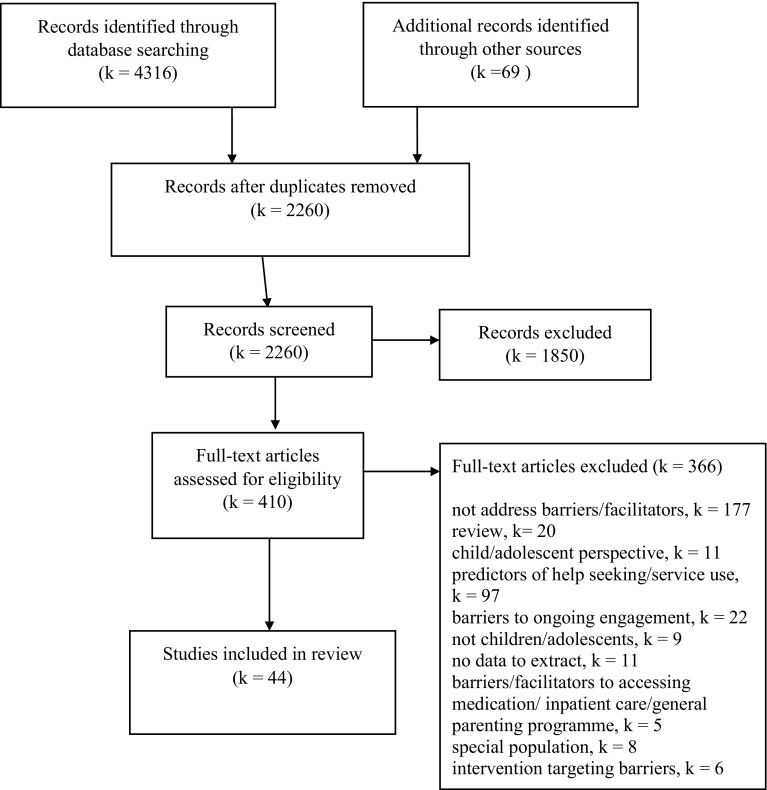
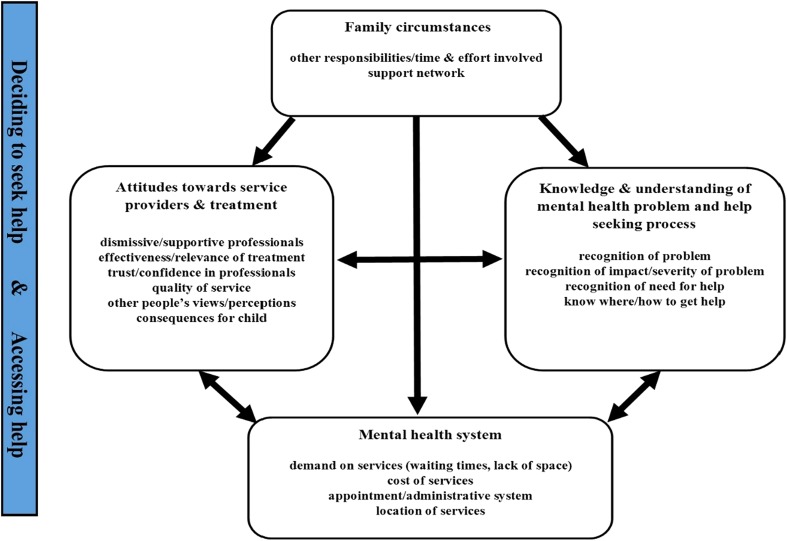
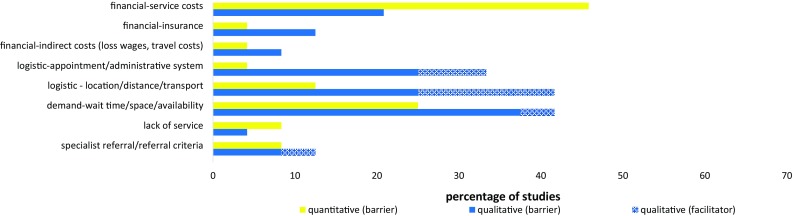
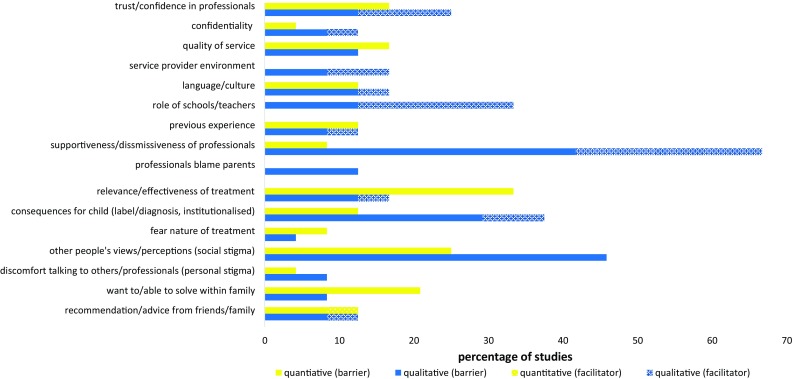
A minority of children and adolescents with mental health problems access treatment. The reasons for poor rates of treatment access are not well understood. As parents are a key gatekeeper to treatment access, it is important to establish parents' views of barriers/facilitators to accessing treatment. The aims of this study are to synthesise findings from qualitative and quantitative studies that report parents' perceptions of barriers/facilitators to accessing treatment for mental health problems in children/adolescents. A systematic review and narrative synthesis were conducted. Forty-four studies were included in the review and were assessed in detail. Parental perceived barriers/facilitators relating to (1) systemic/structural issues; (2) views and attitudes towards services and treatment; (3) knowledge and understanding of mental health problems and the help-seeking process; and (4) family circumstances were identified. Findings highlight avenues for improving access to child mental health services, including increased provision that is free to service users and flexible to their needs, with opportunities to develop trusting, supportive relationships with professionals. Furthermore, interventions are required to improve parents' identification of mental health problems, reduce stigma for parents, and increase awareness of how to access services.
Overview
The claims and statistics of this paper haven’t been checked yet.
Free: it reads the open-access text and checks the first 5 claims that cite a source we can check. Create a free account to check every claim.
Integrity signals
Registry
Cites
Statistics
Figures

Verification
Claims the paper makes
The claims and statistics of this paper haven’t been checked yet.
Free: it reads the open-access text and checks the first 5 claims that cite a source we can check. Create a free account to check every claim.
Claims other papers make about this one
Each is checked against this paper’s own text: does it say what the citing paper says it does?
The source backs part of the claim, not all of it — or backs it for a different population, condition or comparison.
In the citing paper
“These findings are also discrepant from prior studies examining barriers to EBP delivery in community-based settings for children (Reardon et al., 2017).”
From Stakeholder Perceptions of the Barriers to Receiving and Delivering Exposure-Based Cognitive Behavioral Therapy for Anxiety Disorders in Adult Community Mental Health Settings (2019) · cites this paper as Reardon et al., 2017
Experimental — accuracy not yet measuredThe source backs part of the claim, not all of it — or backs it for a different population, condition or comparison.
In the citing paper
“A previous review, which focused on the parents of children and adolescents, concluded that structural barriers were the most relevant [122].”
From What are the barriers, facilitators and interventions targeting help-seeking behaviours for common mental health problems in adolescents? A systematic review (2020) · cites this paper as [122]
Experimental — accuracy not yet measured
Self-check
Percentages, sums and reported differences re-computed from the paper’s own numbers.
The self-check needs the paper’s full text.
Citations
Cites
Preferred Reporting Items for Systematic Reviews and Meta-Analyses: the PRISMA statement
Moher, D., Liberati, A., Tetzlaff, J., Altman, D. G., & for the PRISMA Group (2009) · BMJ · doi:10.1136/bmj.b2535 · Cited by 83,823
Preferred reporting items for systematic reviews and meta-analyses: the PRISMA Statement.
(2009) · PubMed Central · Cited by 44,859
Kessler, R. C., Berglund, P., Demler, O., Jin, R., Merikangas, K. R., & Walters, E. E. (2005) · Archives of General Psychiatry · doi:10.1001/archpsyc.62.6.593 · Cited by 20,391 · cited 1×
“Youth is a time of heightened risk for mental health disorders, with half of all lifetime mental health disorders emerging before the age of 14 years [2].”
Polanczyk, G. V., Salum, G. A., Sugaya, L. S., Caye, A., & Rohde, L. A. (2015) · Journal of Child Psychology and Psychiatry · doi:10.1111/jcpp.12381 · Cited by 3,990
Gulliver, A., Griffiths, K. M., & Christensen, H. (2010) · BMC Psychiatry · doi:10.1186/1471-244x-10-113 · Cited by 3,292 · cited 1×
“A recent systematic review synthesised findings across studies that reported young people’s perceptions of barriers and facilitators to accessing mental health treatment [32].”
Popay, J., Roberts, H., Sowden, A., Petticrew, M., Arai, L., Rodgers, M., Britten, N., Roen, K., & Duffy, S. (2006) · Lancaster University · doi:10.13140/2.1.1018.4643 · Cited by 2,070
Pine, D. S., Cohen, P., Gurley, D., Brook, J., & Ma, Y. (1998) · Archives of General Psychiatry · doi:10.1001/archpsyc.55.1.56 · Cited by 1,753 · cited 1×
“Moreover, the negative impact of poor mental health early in life extends into adulthood, predicting poor academic outcomes [3], increasing the risk of subsequent mental health problems [4] and high rates of mental health service use [5], reducing life satisfaction [6], and creating a heavy economic burden for society…”
Merikangas, K. R., He, J.-P., Burstein, M., Swendsen, J., Avenevoli, S., Case, B., Georgiades, K., Heaton, L., Swanson, S., & Olfson, M. (2011) · Journal of the American Academy of Child & Adolescent Psychiatry · doi:10.1016/j.jaac.2010.10.006 · Cited by 1,579 · cited 2×
“1 3 studies suggest that being Caucasian [13, 14], having insurance coverage (in the USA) [15, 16], living in an urban area [17], and having a child with more severe mental health problems [12] increases the likelihood of a family accessing treatment.”
Unmet Need for Mental Health Care Among U.S. Children: Variation by Ethnicity and Insurance Status
Kataoka, S. H., Zhang, L., & Wells, K. B. (2002) · American Journal of Psychiatry · doi:10.1176/appi.ajp.159.9.1548 · Cited by 1,566 · cited 1×
“1 3 studies suggest that being Caucasian [13, 14], having insurance coverage (in the USA) [15, 16], living in an urban area [17], and having a child with more severe mental health problems [12] increases the likelihood of a family accessing treatment.”
Mental Health of Children and Young People in Great Britain, 2004: (557702010-001)
Green, H., McGinnity, A., Meltzer, H., Ford, T., & Goodman, R. (2005) · PsycEXTRA Dataset · doi:10.1037/e557702010-001 · Cited by 1,216 · cited 1×
“…and national surveys in the UK, Australia, and USA have estimated that only 25–56% of children and adolescents with mental health disorders access specialist mental health services [10–12], with particularly low rates of access for internalising compared with externalising problems [10, 12].”
Cited by
Items 201–300 of 653
Leigh, E., & Clark, D. M. (2019) · Trials · doi:10.1186/s13063-019-3651-6 · Cited by 15
“professionals [26], and also service level factors, including”
BackgroundPidano, A. E., Segool, N. K., Delgado, N., Forness, K., Hagen, K., Gurganus, E. A., Honigfeld, L., Hess, C. W., Hicks, A., & Morgan, C. (2020) · Journal of Pediatric Health Care · doi:10.1016/j.pedhc.2020.04.009 · Cited by 13
Making Evidence-Based Knowledge Accessible to Parents to Promote Child Mental Health Care
Shoval, G., Chiu, J. C., Taylor, J. H., & Barzilay, R. (2022) · Journal of the American Academy of Child & Adolescent Psychiatry · doi:10.1016/j.jaac.2022.03.005 · Cited by 13
Barriers to timely identification of bipolar disorder in youth: a multidimensional perspective
Keramatian, K., & Morton, E. E. (2023) · Frontiers in Child and Adolescent Psychiatry · doi:10.3389/frcha.2023.1186722 · Cited by 18
“For instance, perceived stigma associated with mental health issues as well as insufficient mental health literacy may prevent some parents and caregivers to seek help for youth who are going through early stages of BD (38).”
BackgroundUniversal Child Mental Health Screening for Parents: a Systematic Review of the Evidence
Brinley, S. K., Tully, L. A., Carl, T., McLean, R. K., Cowan, C. S. M., Hawes, D. J., Dadds, M. R., & Northam, J. C. (2024) · Prevention Science · doi:10.1007/s11121-024-01693-8 · Cited by 15
“Secondly, where screening identifies risk for MH problems, parents are best placed to facilitate their child’s access to MH services (Teagle, 2002; Reardon et al., 2017; Guo & Jhe, 2021).”
BackgroundCavelti, M., Ruppen, N. A., Sele, S., Moessner, M., Bauer, S., Becker, K., Krämer, J., Eschenbeck, H., Rummel‐Kluge, C., Thomasius, R., et al. (2024) · European Child & Adolescent Psychiatry · doi:10.1007/s00787-024-02568-7 · Cited by 23
“…conclude, the findings of the current study confirm attitudinal aspects, perceived barriers, as well as clinical and sociodemographic characteristics as relevant factors for the understanding of why some young people with mental health problems do seek professional help, while others do not [9–11].”
InfluentialChildhood Suicide Risk in the Emergency Department
Pagliaccio, D., Kirshenbaum, J. S., Keyes, K. M., & Auerbach, R. P. (2025) · JAMA Network Open · doi:10.1001/jamanetworkopen.2025.22591 · Cited by 11
Child ADHD and anxiety: Parent mental health literacy and information preferences
Davidson, D., Reynolds, K., Theule, J., & Feldgaier, S. (2022) · Child & Family Social Work · doi:10.1111/cfs.12915 · Cited by 15
Frank, H. E., Milgram, L., Freeman, J. B., & Benito, K. (2022) · Frontiers in Health Services · doi:10.3389/frhs.2022.892294 · Cited by 11
“A systematic review of parents’ perceptions of barriers and facilitators to seeking mental health treatment demonstrated that parents frequently reported a lack of knowledge about where or how to seek treatment (41).”
BackgroundPalis, H., Hu, K., Rioux, W., Korchinski, M., Young, P., Greiner, L. E., Nicholls, T. L., & Slaunwhite, A. (2022) · JAMA Network Open · doi:10.1001/jamanetworkopen.2022.47146 · Cited by 12
Provider Facilitation of Parent-Adolescent Health Communication: Findings From a National Survey
Brar, P., Sieving, R. E., Steiner, R. J., O’Brien, J. R. G., Moore, M. M., Mehus, C. J., Ross, C., Klein, J. D., & Santelli, J. S. (2023) · Journal of Pediatric Health Care · doi:10.1016/j.pedhc.2022.11.003 · Cited by 14
Brief report: Parenting stress among Chinese and Dutch caregivers of children with autism
Liu, F., Begeer, S., Hoekstra, R. A., Bai, Q., Wang, C., & Scheeren, A. M. (2023) · Research in Autism · doi:10.1016/j.rasd.2023.102224 · Cited by 11
“…care and support system for autistic individuals may be limited due to restricted access and affordability (de Leeuw et al., 2020; Durkin et al., 2015), lack of experienced and qualified practicing clinicians (Reardon et al., 2017) and low confidence in available interventions (Cauce et al., 2002).”
Harvey, L. J., & White, F. A. (2023) · Psychology and Psychotherapy Theory Research and Practice · doi:10.1111/papt.12467 · Cited by 13
Calear, A. L., McCallum, S. M., Kazan, D., Torok, M. H., Werner‐Seidler, A., O’Dea, B., Morse, A. R., Farrer, L. M., Shand, F., & Batterham, P. J. (2024) · BMJ Open · doi:10.1136/bmjopen-2023-082963 · Cited by 10
Ni, S., Cong, S., Feng, J., Sun, X., Xie, H., Han, J., Wu, Y., Wang, M., & Zhang, A. (2025) · BMC Psychiatry · doi:10.1186/s12888-025-06976-0 · Cited by 12
“Children depend on parental leadership to seek help [36], contrary to adult behaviours.”
The prevalence and impact of adolescent hospitalization to adult psychiatric units
McRae, S., Edwards, J., Speechley, K. N., Sukhera, J. I., Zou, G., & Anderson, K. K. (2021) · Early Intervention in Psychiatry · doi:10.1111/eip.13219 · Cited by 9
“The trends observed in the current study are concerning, given that barriers to help-seeking and disengagement from services are often shaped by adolescents' previous experiences within the mental health system (Reardon et al., 2017).”
BackgroundPitkänen, J., Remes, H., Aaltonen, M., & Martikainen, P. (2022) · BMC Psychiatry · doi:10.1186/s12888-021-03654-9 · Cited by 7
“Reasons for not seeking help might also relate to the relationship between the healthcare professionals and patients [17, 45].”
BackgroundYang, S., Lin, L., & Zhang, X. (2022) · Frontiers in Psychology · doi:10.3389/fpsyg.2022.921621 · Cited by 12
“The split information is similar to Info(D), which is defined as (Reardon et al., 2017): 1 | The overall structure design of the system.”
MethodLloyd, C. E. M., & Reid, G. (2022) · Mental Health Religion & Culture · doi:10.1080/13674676.2022.2116633 · Cited by 19
“…of psychopharmaceuticals and the difficulty experienced by different age groups in accessing therapy (Akil et al., 2018; Borson et al., 2019; Reardon et al., 2017), research has turned to lifestylemedicine to understand the factors that support good mental wellbeing (Sarris et al., 2014).”
BackgroundEffectiveness of Mental Health Care by Using Machine Learning on Manufacturing Worker
Lim, J., Lee, S., Noh, J., Lee, W., Su, P., & Yoon, Y. (2023) · International Journal of Precision Engineering and Manufacturing-Smart Technology · doi:10.57062/ijpem-st.2023.0066 · Cited by 9
Assessment and management of anxiety and depression in a pediatric high‐risk asthma clinic
Averill, S. H., McQuillan, M. E., Slaven, J. E., Weist, A. D., Kloepfer, K. M., & Krupp, N. L. (2023) · Pediatric Pulmonology · doi:10.1002/ppul.26727 · Cited by 11
“39 The presence of an embedded psychologist helped with time constraints, allowed an opportunity to build trust with families, system navigation, transportation, and provider availability.”
BackgroundStewart, E. M., Catroppa, C., & Lah, S. S. (2019) · Pilot and Feasibility Studies · doi:10.1186/s40814-019-0393-x · Cited by 11
“The BTPS was chosen as it covers the major barriers reported by parents [45] and young people [46] to accessing psychosocial treatments in two recent systematic reviews.”
MethodAdvocacy to Address Emergent Pediatric Mental Health Care
Gonzalez, K., Patel, F., Cutchins, L. A., Kodish, I. M., & Uspal, N. G. (2020) · Clinical Pediatric Emergency Medicine · doi:10.1016/j.cpem.2020.100778 · Cited by 11
Lawrence, P. J., Harvey, K., Williams, C., & Creswell, C. (2020) · European Child & Adolescent Psychiatry · doi:10.1007/s00787-020-01703-4 · Cited by 14
Self-citationTsamadou, E., Voultsos, P. P., Emmanouilidis, A., & Ampatzoglou, G. (2021) · BMC Psychiatry · doi:10.1186/s12888-021-03471-0 · Cited by 12
“seek mental health therapy for their children [54, 93].”
BackgroundMental healthcare for children with chronic conditions: a qualitative study
Jones, R., Hiscock, H., Wurzel, D. F., Kao, K., Freeman, J. L., & Ride, J. (2021) · Archives of Disease in Childhood · doi:10.1136/archdischild-2021-321795 · Cited by 12
Hutchison, M., Russell, B. S., Gans, K. M., & Starkweather, A. R. (2022) · Current Psychology · doi:10.1007/s12144-022-03025-x · Cited by 10
Chatwin, H., Holde, K. E. V., Wimberley, T., Dalsgaard, S., & Petersen, L. V. (2025) · Journal of Child Psychology and Psychiatry · doi:10.1111/jcpp.14113 · Cited by 10
Garibaldi, P. M., Abel, M. R., Snow, R. L., & Schleider, J. L. (2019) · Child & Youth Care Forum · doi:10.1007/s10566-019-09523-7 · Cited by 9
Kaushik, A., Papachristou, E., Telesia, L., Dima, D., Fewings, S., Kostaki, E., Gaete, J., Ploubidis, G. B., & Kyriakopoulos, M. (2021) · European Child & Adolescent Psychiatry · doi:10.1007/s00787-021-01904-5 · Cited by 11
“The stigma associated with these difficulties has been identified as an important factor preventing access to treatment for both young people [10] and their parents [11].”
BackgroundNegreiros, J., Best, J. R., Vallani, T., Belschner, L., Szymanski, J., & Stewart, S. E. (2022) · Journal of Child and Family Studies · doi:10.1007/s10826-022-02350-w · Cited by 11
Jewell, C., Wittkowski, A., Collinge, S., & Pratt, D. (2022) · Child & Youth Care Forum · doi:10.1007/s10566-022-09704-x · Cited by 12
“One of the most commonly reported barriers is perceived social stigma and perceived negative attitudes from others (Reardon et al., 2017).”
BackgroundParents’ experiences of parenting a preadolescent child with OCD: A qualitative study
Chessell, C., Harvey, K., Halldorsson, B., Farrington, A., & Creswell, C. (2023) · Emotional and Behavioural Difficulties · doi:10.1080/13632752.2023.2215036 · Cited by 11
“…range of parents who may not have yet sought support for their child’s difficulties), over half of participants were recruited from CAMHS or private treatment providers and therefore may have had to overcome several barriers to access this support (Anderson et al. 2017; Reardon et al. 2017).”
BackgroundSelf-citationHaack, L. M., Jiménez, E. A. A., Delucchi, K., Beaulieu, A., & Pfiffner, L. J. (2019) · Evidence-Based Practice in Child and Adolescent Mental Health · doi:10.1080/23794925.2018.1560236 · Cited by 11
“…populations (such as Latinos) are particularly vulnerable for underidentification and underutilization of services due to barriers across all stages of help seeking (Eraldi, Mazzuca, Clarke, & Power, 2006; Haack & Gerdes, 2014; Paidipati, Brawner, Eiraldi, & Deatrick, 2017; Reardon et al., 2017).”
BackgroundHusabø, E. B., Haugland, B. S. M., McLeod, B. D., Ogden, T., Rapee, R. M., & Wergeland, G. J. (2020) · School Mental Health · doi:10.1007/s12310-019-09357-7 · Cited by 9
Helseth, S. A., Scott, K., Escobar, K. I., Jiménez, F. N., & Becker, S. J. (2021) · Substance Abuse · doi:10.1080/08897077.2021.1915916 · Cited by 9
How child mental health training is conceptualized in four low- and middle-income countries
Vostanis, P., Eruyar, Ş., Haffejee, S., & O’Reilly, M. J. (2021) · International journal of child care and education policy/International journal of child care and education · doi:10.1186/s40723-021-00087-5 · Cited by 10
Lane, R., D’Souza, S., Livanou, M., Jacob, J., Riches, W., Ullman, R., Rashid, A., Singleton, R., Wheeler, J. S., Fuggle, P., et al. (2021) · Frontiers in Psychiatry · doi:10.3389/fpsyt.2021.697041 · Cited by 8
“, location of service, long wait times and lack of specialist services (8).”
BackgroundDogmanas, D., Arias, M. A., Gago, F., de Álava, L., & Roussos, A. (2022) · Counselling and Psychotherapy Research · doi:10.1002/capr.12579 · Cited by 10
O'Connor, K. A., Bagnell, A. L., Rosychuk, R. J., Chen, A. A., Lingley‐Pottie, P., Radomski, A. D., Öhinmaa, A., Joyce, A. S., McGrath, P. J., & Newton, A. S. (2022) · Journal of Anxiety Disorders · doi:10.1016/j.janxdis.2022.102637 · Cited by 9
Goldberg, S. G., & Wagner, K. (2018) · Journal of Clinical Psychology · doi:10.1002/jclp.22705 · Cited by 10
Shtapura-Ifrah, M., & Benish‐Weisman, M. (2019) · International Journal of Intercultural Relations · doi:10.1016/j.ijintrel.2019.01.004 · Cited by 14
Hamadi, L., Hilson, R., Lunn, A., Ralph, E., Rodrigues, E., & Sohail, R. (2023) · Eating Disorders · doi:10.1080/10640266.2022.2099606 · Cited by 8
“Online group therapy may have value even outside of a pandemic setting as distance and access to services have long been recognised as barriers to psychological therapy (Reardon et al., 2017).”
BackgroundPractical Considerations for Using the Eating Disorder Examination Interview with Adolescents
Parker, M. N., Lavender, J. M., Schvey, N., & Tanofsky-Kraff, M. (2023) · Adolescent Health, Medicine and Therapeutics · doi:10.2147/ahmt.s220102 · Cited by 9
“This is concerning, as having limited recognition of the severity of a child’s symptoms has been identified as a barrier to parents seeking treatment for their child.(92) Additionally, certain ED symptoms may be more “normalized” in some family contexts.”
BackgroundKercher, A., Beattie, S., Donkin, L., & Shepherd, D. (2024) · Australian and New Zealand Journal of Public Health · doi:10.1016/j.anzjph.2023.100120 · Cited by 7
Mental Health Screening: Recommendations from an Integrated Literature Review
Villarreal, V., & Peterson, L. S. (2024) · Contemporary School Psychology · doi:10.1007/s40688-024-00501-y · Cited by 8
“Treatment barriers – as reported by parents – include difficulty accessing services, lack of understanding about mental health problems and treatment options, attitudes and stigma around mental health, and barriers such as cost and transportation (Reardon et al., 2017).”
Argiros, A. P., Park, E., Phillips, K. F. V., Cyperski, M. A., & Clark, K. A. (2024) · LGBTQ+ Family An Interdisciplinary Journal · doi:10.1080/27703371.2024.2395902 · Cited by 7
McLean, R. K., Tully, L. A., Brinley, S. K., Carl, T., Turnell, A. I., Northam, J. C., & Dadds, M. R. (2024) · Clinical Child and Family Psychology Review · doi:10.1007/s10567-024-00506-2 · Cited by 10
“The parental help-seeking process has been identified as (1) Parents’ recognition of MH difficulties, (2) Parents’ recognition of a need for professional help, (3) Parents’ actively seeking help, and (4) Family accessing and receiving necessary help/support (Reardon et al., 2017).”
Assessing healthcare needs in endometriosis: a scoping review
Timková, V., Mikula, P., Katreniaková, Z., Howick, J., & Nagyová, I. (2025) · Psychology and Health · doi:10.1080/08870446.2025.2478154 · Cited by 8
“The quality of the included studies was assessed following Reardon et al. (2017) using modified versions of the two checklists developed for qualitative and quantitative studies by Kmet et al. (2004).”
Suicide among transport industry workers: A systematic review and meta-analysis
Mathieu, S. L., Ross, V. L., Wardhani, R., Brough, P. A., Wishart, D. E., Chan, X. W., & Kõlves, K. (2022) · Scandinavian Journal of Work Environment & Health · doi:10.5271/sjweh.4059 · Cited by 11
“Using a modified version (26) of a quality scoring measure (27), two reviewers independently evaluated all included studies, and the scores were discussed for consensus.”
MethodParents' acceptability of blended psychological interventions for children with emotional disorders
Moreira, H., Góis, A. C., Pereira, A. M., Gomes-Pereira, B., Caiado, B., Nepomuceno, M. I., & Pereira, A. I. (2023) · Internet Interventions · doi:10.1016/j.invent.2023.100687 · Cited by 7
“On the other hand, many barriers may prevent parents from seeking this type of treatment (e.g., lack of time to attend regular sessions; costs associated with time off work and travel; lack of motivation to commit to a lengthy face-to-face treatment) (Reardon et al., 2017).”
BackgroundFearing, G. (2024) · Children and Youth Services Review · doi:10.1016/j.childyouth.2024.107479 · Cited by 11
Yamubon, U., & Thongseiratch, T. (2023) · JMIR Pediatrics and Parenting · doi:10.2196/48201 · Cited by 14
Pathways to care in children- perspectives from a child guidance clinic in South India
Joseph, R. G., Kallivayalil, R. A., & Rajeev, A. (2020) · Asian Journal of Psychiatry · doi:10.1016/j.ajp.2020.102310 · Cited by 7
Young help‐seeker profiles in Israel: The case of the first Israeli headspace centre
Hoter‐Ishay, G., Mashiach‐Eizenberg, M., & Roe, D. (2022) · Early Intervention in Psychiatry · doi:10.1111/eip.13195 · Cited by 7
“This low help-seeking pattern is worrisome, considering research showed youths in distress usually turn first to unprofessional sources—especially parents—for help (Reardon et al., 2017).”
BackgroundKamali, M., Sivapalan, S., Kata, A., Kim, N. J., Shanmugalingam, N., Duku, E., Zwaigenbaum, L., & Georgiades, S. (2022) · BMC Health Services Research · doi:10.1186/s12913-022-07789-7 · Cited by 14
“This model of delivery is particularly advantageous in targeting hard-to-reach and vulnerable populations, who face barriers in accessing care in terms of cultural stigma, discrimination, language barriers, and health care system illiteracy [4, 25, 36, 38].”
BackgroundA survey of mental health literacy in parents and guardians of teenagers
Kusaka, S., Foo, J. C., Yamaguchi, S., Yukawa, A., Arai, T., Sawamura, F., Togo, F., & Sasaki, T. (2024) · Frontiers in Psychiatry · doi:10.3389/fpsyt.2024.1295918 · Cited by 8
Dhonnacha, S. N., Kerr, L., McCague, Y., & Cawley, D. (2024) · Journal of Clinical Nursing · doi:10.1111/jocn.17469 · Cited by 9
“In contrast, adolescents felt their experience was poor if they felt they were not being heard (Reardon et al. 2017; CQC 2018; Brown 2018; Kirk et al. 2023).”
InfluentialGreally, S., Hansen, J. O., & McPherson, S. (2024) · Family Process · doi:10.1111/famp.13087 · Cited by 7
Whitaker, E., Chessell, C., Klapow, M. C., & Creswell, C. (2025) · Clinical Child and Family Psychology Review · doi:10.1007/s10567-025-00521-x · Cited by 9
“However, despite the existence of evidence-based treatments for EBP, children and their families struggle to access them, citing barriers such as long waiting lists and perceived stigma (Baweja et al., 2021; Reardon et al., 2017).”
Self-citationDickson, S. J., Bussey, K., Kangas, M., Grocott, S., & Rapee, R. M. (2025) · Journal of Child and Family Studies · doi:10.1007/s10826-025-03172-2 · Cited by 9
“A comprehensive review by Reardon et al. (2017 ) identified 44 trials on caregivers’ perceived barriers and facilitators, but only four of those studies (all from the United States) focused specifically on a low-SES population (Brown et al., 2014; DosReis et al., 2010; Harrison et al., 2004; Larson…”
Han, E. K. L., Burton, A., Bradbury, A., Hayes, D., Wright, J., Sticpewich, L., Page, J., & Fancourt, D. E. (2026) · European Child & Adolescent Psychiatry · doi:10.1007/s00787-025-02952-x · Cited by 12
Ergün, G., Gümüş, F., & Dıkeç, G. (2018) · Journal of Clinical Nursing · doi:10.1111/jocn.14533 · Cited by 8
Williamson, V., Larkin, M., MacDonald, I., Morgan, F., Ford, T. J., Spence, S. H., Reardon, T. C., & Creswell, C. (2022) · Emotional and Behavioural Difficulties · doi:10.1080/13632752.2022.2110704 · Cited by 8
“…problems are developmentally ‘normal’ or indicate a clinically significant problem; uncertainty about where and how to seek formal help for their child, and are deterred by the perception that mental health services are oversubscribed and help cannot be easily accessed (Reardon et al. 2017).”
BackgroundSelf-citationParent reported barriers to children’s mental health services in the United States
Graaf, G., Hooley, C., Baiden, P., & Keyes, L. (2022) · Social Work in Mental Health · doi:10.1080/15332985.2022.2155503 · Cited by 10
“…2018; Dickson, Stadnick, Lind, & Trask, 2020; Lynch, Pines, Mutter, Teich, & Hendry, 2019; Merikangas et al., 2011; Reid et al., 2019), fewer studies identify specific barriers encountered by children and families that prevent them from accessing services (Radez et al., 2021; Reardon et al., 2017).”
BackgroundInfluentialZhao, M., You, Y., Gao, X., Li, L., Li, J., & Cao, M. (2024) · Complementary Therapies in Clinical Practice · doi:10.1016/j.ctcp.2024.101865 · Cited by 12
Determinants of Implementing the Mental Health Action Plan (MHAP) Pilot Program With Fidelity
Nygaard, M. A., & Ormiston, H. E. (2025) · Psychology in the Schools · doi:10.1002/pits.23556 · Cited by 5
“…of parent perceptions of barriers and facilitators to mental health treatment for youth, researchers called for interventions to “ improve parents' identification of mental health problems, reduce stigma for parents, and increase awareness of how to access services ” (Reardon et al. 2017, p. 623).”
Buttazzoni, A. N., Tariq, U., Thompson-Haile, A., Burkhalter, R., Cooke, M. J., & Minaker, L. M. (2020) · Addictive Behaviors · doi:10.1016/j.addbeh.2020.106547 · Cited by 7
Madjar, N., Mansbach‐Kleinfeld, I., Daeem, R., Farbstein, I., Apter, A., Fennig, S., Elias, R., & Shoval, G. (2020) · Journal of Psychosomatic Research · doi:10.1016/j.jpsychores.2020.110222 · Cited by 7
Mental health and non-communicable diseases: a narrative review
Gray, N. J., & Klein, J. D. (2021) · Pediatric Medicine · doi:10.21037/pm-20-84 · Cited by 6
“concluded, in their review of 44 studies on this subject, that “interventions are required to improve parents’ identification of mental health problems, reduce stigma for parents, and increase awareness of how to access services” (79).”
BackgroundPredictors of Sleep-Problem Trajectories Across Adolescence
Pine, A. E., Liu, Q., Abitante, G., Sutherland, S. L., & Garber, J. (2022) · Research on Child and Adolescent Psychopathology · doi:10.1007/s10802-022-00899-0 · Cited by 11
“Third, there are several salient barriers to adolescents receiving mental health treatment (Reardon et al., 2017), such as access and stigma.”
BackgroundSalloum, A., Lu, Y., Ali, O., Chen, H., Salomon, K., Cohen, J. A., Scheeringa, M. S., Quast, T. C., & Storch, E. A. (2022) · Research on Social Work Practice · doi:10.1177/10497315221137880 · Cited by 7
“…One such as critical life events, demographics, trauma-related factors, and child and parent symptomatology. accessing mental health treatment for their children, especially in the United States, and includes other fi nancial barriers such as transportation or loss of wages (Reardon et al., 2017).”
BackgroundPredictors of Engagement Barriers for Adolescent ADHD Treatment
Johansson, M., Greenwood, L., Antunez, G. T., Link, K. M., & Sibley, M. H. (2023) · Journal of Attention Disorders · doi:10.1177/10870547231153876 · Cited by 6
“Several papers have examined the influence of ethnicity and minority status and have demonstrated mixed influence on engagement (L. Miller et al., 2008; Reardon et al., 2017; Salloum et al., 2016; Stevens et al., 2006), but is yet to be associated with engagement in behavior therapy for ADHD (Langberg et al.”
BackgroundInfluentialPeyton, D., Wadley, G., Hackworth, N. J., Grobler, A. C., & Hiscock, H. (2023) · PLoS ONE · doi:10.1371/journal.pone.0273755 · Cited by 8
Predictors of school-based cognitive behavior therapy outcome for youth with anxiety
Wergeland, G. J., Haaland, V. Ø., Fjermestad, K. W., Öst, L., Gjestad, R., Bjaastad, J. F., Hoffart, A., Husabø, E. B., Raknes, S., & Haugland, B. S. M. (2023) · Behaviour Research and Therapy · doi:10.1016/j.brat.2023.104400 · Cited by 8
Hurley, J., Longbottom, P., Bennett, B., Yoxall, J., Hutchinson, M., Foley, K., Happell, B., Parkes, J., & Currey, K. (2024) · Australian Journal of Rural Health · doi:10.1111/ajr.13119 · Cited by 9
Choi, N. G., Marti, C. N., & Choi, B. Y. (2024) · Children and Youth Services Review · doi:10.1016/j.childyouth.2024.107665 · Cited by 6
Decke, S., Deckert, K., Lang, M., Laub, O., Loidl, V., Schwettmann, L., & Grill, E. (2020) · BMC Family Practice · doi:10.1186/s12875-020-01344-1 · Cited by 9
Stiles‐Shields, C., Batts, K. R., Reyes, K. M., Archer, J., Crosby, S., Draxler, J. M., Lennan, N., & Held, P. (2022) · JMIR Formative Research · doi:10.2196/38162 · Cited by 7
“Mental health stigma, time limitations, and the identification of mental health problems were among the primary barriers to accessing care [10-20].”
BackgroundReardon, T. C., Ukoumunne, O. C., Violato, M., Ball, S., Brown, P., Ford, T. J., Gray, A. M., Hill, C., Jasper, B., Larkin, M., et al. (2022) · Trials · doi:10.1186/s13063-022-06773-0 · Cited by 6
“Parents report uncertainty about how, when and where to seek professional support, concerns about possible negative consequences of ‘labelling’, and logistical barriers related to attending therapy appointments [12, 13].”
BackgroundSelf-citationKhanal, G., Selvamani, Y., Ghimire, S., Thapa, S., & Dhital, R. (2024) · Asian Journal of Psychiatry · doi:10.1016/j.ajp.2024.104331 · Cited by 9
Graf, D., Lerch, S., Böhnke, U., Reichl, C., & Kaess, M. (2025) · European Child & Adolescent Psychiatry · doi:10.1007/s00787-025-02677-x · Cited by 6
Mushonga, R. H., Jopling, R., Glozah, F. N., Kamvura, T. T., Dodd, S., Gudyanga, D., Maramba, A., Dambayi, E., Ayuure, C. A., Bere, T. C., et al. (2025) · PLoS ONE · doi:10.1371/journal.pone.0322954 · Cited by 7
“In low-income settings, meeting attendance is often below expected due to logistical barriers such as time, distance to school, and lack of transportation [29,38–40].”
Classroom-Level and Individual-Level Prosociality and Help-Seeking Behaviors Among Adolescents
Morishima, R., Usami, S., Kanehara, A., Okada, N., Noguchi, H., Yagishita, S., Fukuda, M., & Kasai, K. (2025) · JAMA Network Open · doi:10.1001/jamanetworkopen.2025.10319 · Cited by 6
Choi, S. Y., Rusch, A., Lane, A., Liebrecht, C., Bilek, E. L., Eisenberg, D., Andrews, C. M., Perry, M., & Smith, S. N. (2023) · Implementation Research and Practice · doi:10.1177/26334895231159429 · Cited by 5
“…stigma, confidentiality concerns, cost/lack of insurance coverage, transportation challenges, and limited provider availability (Radez et al., 2021; Reardon et al., 2017). school-based mental health services are provided locally using currently employed school professionals (SPs; e.g., school…”
Exploring reciprocal links between early adolescent coping and internalizing symptoms
Mytelka, C., Narendorf, S. C., Baumler, E. R., Acquati, C., & Temple, J. R. (2024) · Journal of Adolescence · doi:10.1002/jad.12429 · Cited by 4
The Impact of Pediatric Basal Ganglia Stroke on Mental Health in Children: Report of 2 Cases
Badar, S. A., Radhakrishnan, R., & Golomb, M. R. (2020) · Child Neurology Open · doi:10.1177/2329048x20979248 · Cited by 6
Linkenheil, A., Honigfeld, L., & Pidano, A. E. (2021) · Journal of Pediatric Health Care · doi:10.1016/j.pedhc.2021.04.004 · Cited by 5
Étude qualitative de l’expérience des parents après la tentative de suicide de leur adolescent
Boussat, M., Fourcade, L., Payet, M. M., Grandclerc, S., Moro, M. R., & Lachal, J. (2021) · L Encéphale · doi:10.1016/j.encep.2021.05.005 · Cited by 7
Panagi, L., White, S. R., Howdle, C., Bennett, S. D., Heyman, I., Shafran, R., & Ford, T. J. (2022) · European Child & Adolescent Psychiatry · doi:10.1007/s00787-022-02105-4 · Cited by 5
“Experiencing stressful life events [10], academic difficulties [12] and poor general health [16] have been associated with greater service contact in children, as well as the recognition of mental health difficulties by parents [17] and teachers [10].”
Semovski, V., King, C. B., Lapshina, N., & Stewart, S. L. (2023) · Frontiers in Psychology · doi:10.3389/fpsyg.2022.1027373 · Cited by 6
“, urbanicity) to tease apart nuances related to geography that have been implicated in youth’s service utilization (Reardon et al., 2017; Brooks et al., 2021).”
BackgroundChatrath, S., LeBovidge, J., Jack, C. S., Abuabara, K., Schneider, L. C., Capozza, K., Kelley, K., & Silverberg, J. I. (2023) · Clinical and Experimental Dermatology · doi:10.1093/ced/llad315 · Cited by 6
Burch, M. M., Rossiter, S., McGinty-Kolbe, K., Fredwall, M. M., Tschirner, C., Enciso, L., Iskander, J. M., Trott, K., Jackson, K., & Albert, D. V. F. (2023) · Pediatric Neurology · doi:10.1016/j.pediatrneurol.2023.11.007 · Cited by 5
Hodgins, M., McHugh, C. M., Eapen, V., Georgiou, G., Curtis, J., & Lingam, R. (2024) · International Journal of Integrated Care · doi:10.5334/ijic.7730 · Cited by 6
“…increased funding in high income countries to address mental health care needs for YP, existing models of mental health care are often inefficient, siloed, and have been associated with significant gaps in access to timely assessment and developmentally appropriate, evidence-based treatment [5, 6].”
BackgroundAdvancing community health worker models to support youth and families’ mental health
Gustafson, E. L., & Torres, S. A. (2024) · npj Mental Health Research · doi:10.1038/s44184-024-00094-7 · Cited by 5
Oxford, M. L., Abrahamson-Richards, T., O’Leary, R., Booth‐LaForce, C., Spieker, S. J., Lohr, M. J., Rees, J. R., & Kelly, J. F. (2024) · Infant Mental Health Journal · doi:10.1002/imhj.22153 · Cited by 5
“This question goes beyond identifying barriers and facilitators to enrollment (e.g., see Koerting et al., 2013; Reardon et al., 2017) or predictors of retention (Jester et al., 2023).”
Rapee, R. M., Kuhnert, R., Bowsher, I., Burns, J. R., Coen, J., Dixon, J. E., Kotselas, P., Lourey, C., McLellan, L. F., Mihalopoulos, C., et al. (2025) · Journal of the American Academy of Child & Adolescent Psychiatry · doi:10.1016/j.jaac.2025.01.032 · Cited by 8
Cafferky, J., Banbury, S. A., & Athanasiadou-Lewis, C. (2018) · Interpersona An International Journal on Personal Relationships · doi:10.5964/ijpr.v12i2.306 · Cited by 5
“health problems access treatment (Reardon et al., 2017), however the reasons for this are not well understood.”
BackgroundEvaluation of a diagnostic ADHD pathway in a community child mental health service in South London
Barnes, G. L., Wretham, A. E., Sedgwick, R., Boon, G., Cheesman, K., & Moghraby, O. S. (2020) · Mental Health Review Journal · doi:10.1108/mhrj-10-2019-0035 · Cited by 6
Benchmarking Trauma in Child Welfare: A Brief Report
Dellor, E. D., Yoon, S., Bunger, A. C., Himmeger, M., & Freisthler, B. (2021) · Journal of Interpersonal Violence · doi:10.1177/08862605211038324 · Cited by 29
Metadata
- Authors
- Reardon, T., Harvey, K., Baranowska, M., O’Brien, D., Smith, L., & Creswell, C.
- Affiliations
- University of Reading (GB)
- Corresponding author
- Harvey, Kate
- Venue
- European Child & Adolescent Psychiatry
- Published
- 2017-01-04
- Volume
- 26
- Issue
- 6
- Pages
- 623-647
- ISSN
- 1018-8827 (ISSN-L)
- 1435-165X
- PMC
- PMC5446558
- OpenAlex
- W2567323169
- Cited by
- 653
- References
- 82
- Citations by year
- 2026: 74 · 2025: 98 · 2024: 105 · 2023: 89 · 2022: 91 · 2021: 71 · 2020: 61 · 2019: 34 · 2018: 24 · 2017: 6
- FWCI
- 5.38
- Type
- journal article
- Language
- en
- Open access
- hybrid
- doi.org
- Locations
- European Child & Adolescent Psychiatry (publishedVersion, cc-by)
- Europe PMC (PubMed Central) (publishedVersion, other-oa)
- PubMed Central (publishedVersion, cc-by)
- PubMed (publishedVersion)
- CentAUR (University of Reading) (acceptedVersion)
- Funders
- Research Trainees Coordinating Centre (NIHR-RP-2014-04-018)
- Topics
- Health Sciences › Medicine › Psychiatry and Mental health › Mental Health Treatment and Access
- Social Sciences › Psychology › Clinical Psychology › Child and Adolescent Psychosocial and Emotional Development
- Social Sciences › Psychology › Clinical Psychology › Psychology and Mental Health
- Keywords
- barriers to treatment access, child and adolescent mental health, parental attitudes, help-seeking, mental health service utilization, mental health stigma, family situation, child mental health services, parent-professional relationship
- MeSH terms
- Adolescent, Child, Child, Preschool, Evaluation Studies as Topic, Humans, Mental Health, Mental Health Services, Parents, Qualitative Research
About these checks
Registry, retraction, Cites and statistics results are computed, not judged, with one exception: a printed reference that no index lists is read once by a model before it counts as a citation error. Claims are extracted by a model and kept only when their quote appears verbatim in the text; each cited source is then checked, with a model’s help, for whether it says what the claim relies on. Those verdicts can be wrong — read the claim’s quote and the cited source before relying on one.
Statistics and arithmetic are recomputed, not judged.
Confidence bands are shown only for fields calibrated on our annotated test set. None is calibrated yet, so no band is shown.
What counts as a claim ›How we measure confidence ›How we check this ›
Are you an author, or do you see a problem with this page? Request a review
Data sources
Bibliographic data: Semantic Scholar, OpenAlex, Crossref.
Contains information from the Semantic Scholar Academic Graph Datasets, made available under the ODC Attribution License (ODC-BY 1.0).
Semantic Scholar’s data is described in: Kinney, R., et al. (2023). The Semantic Scholar Open Data Platform. arXiv:2301.10140.
