

What do parents perceive are the barriers and facilitators to accessing psychological treatment for mental health problems in children and adolescents? A systematic review of qualitative and quantitative studies
Open accessThe DOI matches its Crossref record; 81 of the 82 references it cites were found in a registry or an index.
Abstract
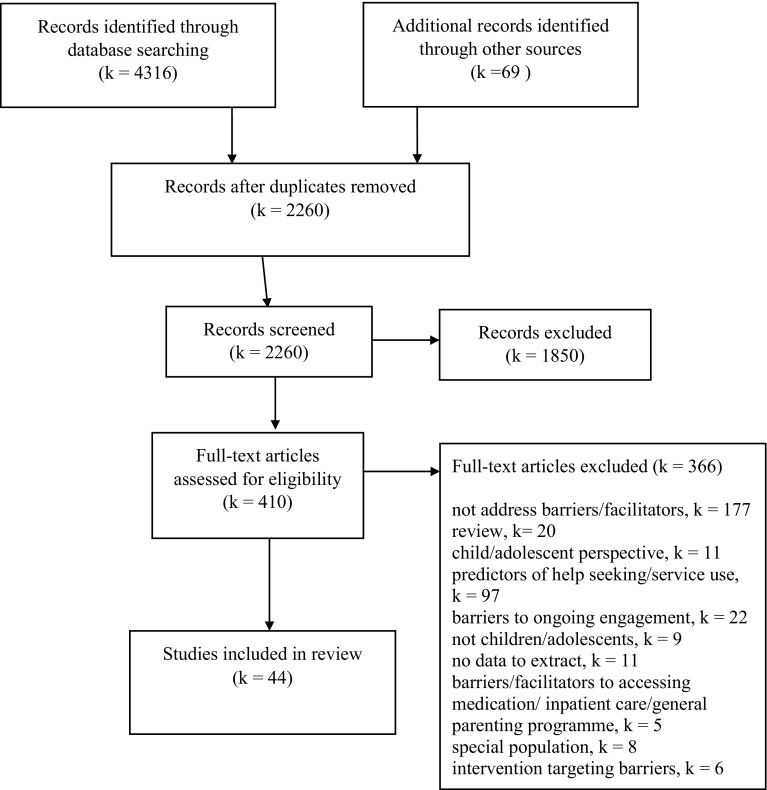
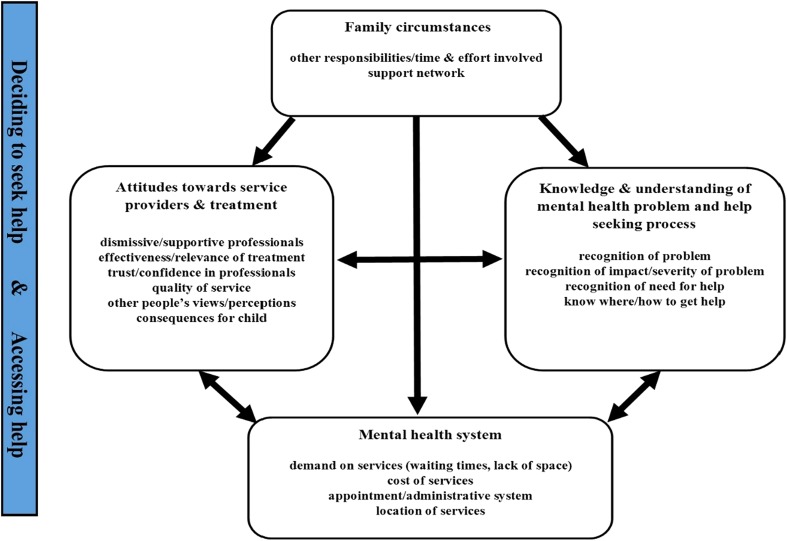
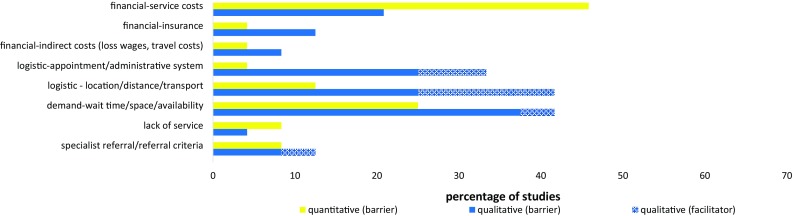
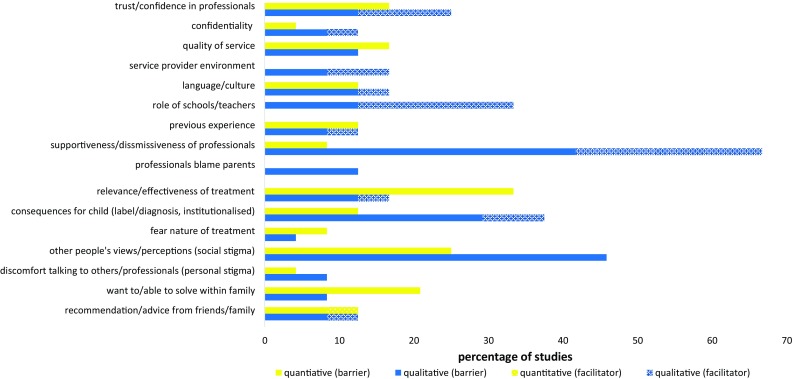
A minority of children and adolescents with mental health problems access treatment. The reasons for poor rates of treatment access are not well understood. As parents are a key gatekeeper to treatment access, it is important to establish parents' views of barriers/facilitators to accessing treatment. The aims of this study are to synthesise findings from qualitative and quantitative studies that report parents' perceptions of barriers/facilitators to accessing treatment for mental health problems in children/adolescents. A systematic review and narrative synthesis were conducted. Forty-four studies were included in the review and were assessed in detail. Parental perceived barriers/facilitators relating to (1) systemic/structural issues; (2) views and attitudes towards services and treatment; (3) knowledge and understanding of mental health problems and the help-seeking process; and (4) family circumstances were identified. Findings highlight avenues for improving access to child mental health services, including increased provision that is free to service users and flexible to their needs, with opportunities to develop trusting, supportive relationships with professionals. Furthermore, interventions are required to improve parents' identification of mental health problems, reduce stigma for parents, and increase awareness of how to access services.
Overview
The claims and statistics of this paper haven’t been checked yet.
Free: it reads the open-access text and checks the first 5 claims that cite a source we can check. Create a free account to check every claim.
Integrity signals
Registry
Cites
Statistics
Figures

Verification
Claims the paper makes
The claims and statistics of this paper haven’t been checked yet.
Free: it reads the open-access text and checks the first 5 claims that cite a source we can check. Create a free account to check every claim.
Claims other papers make about this one
Each is checked against this paper’s own text: does it say what the citing paper says it does?
The source backs part of the claim, not all of it — or backs it for a different population, condition or comparison.
In the citing paper
“These findings are also discrepant from prior studies examining barriers to EBP delivery in community-based settings for children (Reardon et al., 2017).”
From Stakeholder Perceptions of the Barriers to Receiving and Delivering Exposure-Based Cognitive Behavioral Therapy for Anxiety Disorders in Adult Community Mental Health Settings (2019) · cites this paper as Reardon et al., 2017
Experimental — accuracy not yet measuredThe source backs part of the claim, not all of it — or backs it for a different population, condition or comparison.
In the citing paper
“A previous review, which focused on the parents of children and adolescents, concluded that structural barriers were the most relevant [122].”
From What are the barriers, facilitators and interventions targeting help-seeking behaviours for common mental health problems in adolescents? A systematic review (2020) · cites this paper as [122]
Experimental — accuracy not yet measured
Self-check
Percentages, sums and reported differences re-computed from the paper’s own numbers.
The self-check needs the paper’s full text.
Citations
Cites
Preferred Reporting Items for Systematic Reviews and Meta-Analyses: the PRISMA statement
Moher, D., Liberati, A., Tetzlaff, J., Altman, D. G., & for the PRISMA Group (2009) · BMJ · doi:10.1136/bmj.b2535 · Cited by 83,823
Preferred reporting items for systematic reviews and meta-analyses: the PRISMA Statement.
(2009) · PubMed Central · Cited by 44,859
Kessler, R. C., Berglund, P., Demler, O., Jin, R., Merikangas, K. R., & Walters, E. E. (2005) · Archives of General Psychiatry · doi:10.1001/archpsyc.62.6.593 · Cited by 20,391 · cited 1×
“Youth is a time of heightened risk for mental health disorders, with half of all lifetime mental health disorders emerging before the age of 14 years [2].”
Polanczyk, G. V., Salum, G. A., Sugaya, L. S., Caye, A., & Rohde, L. A. (2015) · Journal of Child Psychology and Psychiatry · doi:10.1111/jcpp.12381 · Cited by 3,990
Gulliver, A., Griffiths, K. M., & Christensen, H. (2010) · BMC Psychiatry · doi:10.1186/1471-244x-10-113 · Cited by 3,292 · cited 1×
“A recent systematic review synthesised findings across studies that reported young people’s perceptions of barriers and facilitators to accessing mental health treatment [32].”
Popay, J., Roberts, H., Sowden, A., Petticrew, M., Arai, L., Rodgers, M., Britten, N., Roen, K., & Duffy, S. (2006) · Lancaster University · doi:10.13140/2.1.1018.4643 · Cited by 2,070
Pine, D. S., Cohen, P., Gurley, D., Brook, J., & Ma, Y. (1998) · Archives of General Psychiatry · doi:10.1001/archpsyc.55.1.56 · Cited by 1,753 · cited 1×
“Moreover, the negative impact of poor mental health early in life extends into adulthood, predicting poor academic outcomes [3], increasing the risk of subsequent mental health problems [4] and high rates of mental health service use [5], reducing life satisfaction [6], and creating a heavy economic burden for society…”
Merikangas, K. R., He, J.-P., Burstein, M., Swendsen, J., Avenevoli, S., Case, B., Georgiades, K., Heaton, L., Swanson, S., & Olfson, M. (2011) · Journal of the American Academy of Child & Adolescent Psychiatry · doi:10.1016/j.jaac.2010.10.006 · Cited by 1,579 · cited 2×
“1 3 studies suggest that being Caucasian [13, 14], having insurance coverage (in the USA) [15, 16], living in an urban area [17], and having a child with more severe mental health problems [12] increases the likelihood of a family accessing treatment.”
Unmet Need for Mental Health Care Among U.S. Children: Variation by Ethnicity and Insurance Status
Kataoka, S. H., Zhang, L., & Wells, K. B. (2002) · American Journal of Psychiatry · doi:10.1176/appi.ajp.159.9.1548 · Cited by 1,566 · cited 1×
“1 3 studies suggest that being Caucasian [13, 14], having insurance coverage (in the USA) [15, 16], living in an urban area [17], and having a child with more severe mental health problems [12] increases the likelihood of a family accessing treatment.”
Mental Health of Children and Young People in Great Britain, 2004: (557702010-001)
Green, H., McGinnity, A., Meltzer, H., Ford, T., & Goodman, R. (2005) · PsycEXTRA Dataset · doi:10.1037/e557702010-001 · Cited by 1,216 · cited 1×
“…and national surveys in the UK, Australia, and USA have estimated that only 25–56% of children and adolescents with mental health disorders access specialist mental health services [10–12], with particularly low rates of access for internalising compared with externalising problems [10, 12].”
Cited by
Items 601–653 of 653
Vogel, A., Comteße, H., & Rosner, R. (2020) · Figshare · doi:10.6084/m9.figshare.12144624
Reardon, T. C., Ukoumunne, O. C., Violato, M., Ball, S., Brown, P., Ford, T. J., Gray, A., Hill, C., Jasper, B., Larkin, M., et al. (2022) · Figshare · doi:10.6084/m9.figshare.21384478
Self-citationWu, J., Zhang, R., Zhao, L., Yin, Y., Min, J., Ge, Y., Luo, Y., Li, P., Li, L., & Tong, Y. (2024) · Figshare · doi:10.6084/m9.figshare.26066122
Zhang, F., Liu, W., Yang, H., Sun, Y., Lei, X., Ding, Y., Zhang, X., Hu, Z., Hu, S., Wang, Z., et al. (2025) · Child and Adolescent Psychiatry and Mental Health · doi:10.1186/s13034-025-01012-1 · Cited by 1
“…adolescents do not receive needed care due to multifaceted barriers, including stigma, poor symptom recognition [14], shortages in the mental health workforce [15], limited access to help-seeking information [16], and structural obstacles such as scheduling conflicts and financial constraints [17].”
de la Roche, L., Korczak, D. J., Charach, A., Birken, C. S., Tsujimoto, K. C., Crosbie, J., Cost, K. T., Schumacher, A., Anagnostou, E. A., Monga, S., et al. (2025) · Clinical Child Psychology and Psychiatry · doi:10.1177/13591045251413293
“Speci fi cally, parent reports align with the lack of resource uptake reported across the literature (Radez et al., 2021; Reardon et al., 2017) and provide a broader understanding regarding perceived utility of the resources.”
Grest, C. V., Finno-Velasquez, M., Casey, I., & Sepp, S. (2026) · Journal of Immigrant and Minority Health · doi:10.1007/s10903-025-01841-4
“Structural barriers in accessing mental health services include limited service availability for children and logistical challenges [29, 31].”
Craig, J. T., Sanders, M. T., Moore, C. C., Barnett, E. R., Sternberg, K. F., Breslend, N. L., Vazquez, L. C., Sand-Loud, N., & Jankowski, M. K. (2026) · Journal of Attention Disorders · doi:10.1177/10870547251415434
“…treatments including cost, availability of providers in their community, and missed work and wages due to session attendance, as well as intangible barriers, such as stigma and lack of confidence in the potential benefits of psychosocial interventions (Larson et al., 2013; Reardon et al., 2017).”
García-Ramos, A., Doval, S., Essau, C., Lara-Cabrera, R., Ayad-ahmed, W., & de la Torre-Luque, A. (2026) · International Journal of Child Abuse & Neglect · doi:10.1016/j.chiabu.2026.107920
Corberán, M., Arnáez, S., Carrasco, Á., Saman, Y., Carratalá-Ricart, L., Merchán, O. I., Vera, B. P., Doron, G., García‐Soriano, G., & Roncero, M. (2026) · Journal of Behavior Therapy and Experimental Psychiatry · doi:10.1016/j.jbtep.2026.102089 · Cited by 1
Scudder, A. T., Steggerda, J. C., Clancy, K., Mendez, B., Wright, C., & McNeil, C. B. (2026) · Children · doi:10.3390/children13020259 · Cited by 2
“At-home services have the potential to offer an avenue to intervention for families facing these and other barriers preventing them from accessing traditional therapeutic care (e.g., cost of services, transportation, provider shortage, and time constraints) [23,24].”
Asthma and neurodevelopmental and mental health disorder (NMD) multimorbidity in rural children
Lawson, J. A., Khanam, U., Goodridge, D. M., Ferro, M. A., Adamko, D. J., Balbuena, L., Dw, C., Pavloff, M., Philipenko, B. S., Pylypow, J., et al. (2026) · Expert Review of Clinical Immunology · doi:10.1080/1744666x.2026.2634846
“…(e.g. knowledge about mental health and mental health services, lack of accessibility [101,102]; wait times and availability, distance to provider [103]) and by health care providers (e.g. recognition, management, and referral barriers, including lack of/distance to resources [104]) are common in…”
Dong, X., Pang, X., Chen, Y., Li, J., Xie, Y., Zhao, Q., Zhu, Z., Fu, C., Chen, Y., & Wang, N. (2026) · BMC Public Health · doi:10.1186/s12889-026-26766-x
“Parents play a critical role as decision-makers in adolescents’ access to mental health services, with their attitudes fundamentally determining children’s participation in school-based screening programs [11].”
Kong, X., Cai, M., Liu, W., Xu, Y., Ren, N., & Mao, H. (2026) · Frontiers in Psychiatry · doi:10.3389/fpsyt.2026.1793421
“Conversion proportions, particularly in small subgroups, should therefore be interpreted as applying to a highly selected clinical population, not to the general adolescent population (17, 34, 38).”
Holly, L. E., Bivins, E. J., Bowling, A. R., & Buchanan, M. (2026) · The Journal of Behavioral Health Services & Research · doi:10.1007/s11414-026-09991-5
“22 Such challenges may reduce parents’ likelihood of seeking information from medical and mental health providers, even though these sources are more likely to provide scientifically grounded, evidence-based treatment recommendations compared to informal sources such as friends and family.”
I-PCIT Engagement and Outcomes in Children With Neurodevelopmental Disorders
Batista, S. G., Marsden, A., Carpenter, L. A., Bradley, C. C., & Ros‐Demarize, R. (2026) · Behavior Therapy · doi:10.1016/j.beth.2026.03.002
Çalı, O., & Yıldız, R. (2026) · Frontiers in Psychology · doi:10.3389/fpsyg.2026.1774136
“Moreover, confidence in mental health professionals and the perceived quality of the therapeutic relationship may either facilitate or hinder help-seeking processes (Reardon et al., 2017).”
Factors Influencing High School Students’ Attitudes Toward Seeking Professional Psychological Help
Chen, C.-L., Chu, Y.-H., Pan, Y.-J., Ho, M.-S., & Chang, H. (2026) · Journal of the American Psychiatric Nurses Association · doi:10.1177/10783903261422670
“A higher severity of depressive symptoms was associated with a lower likelihood of seeking help; this association may be attributable to the fact that diminished self-worth and hopelessness deter individuals from seeking treat-ment (CWLF, 2023; Reardon et al., 2017; Yeh et al., 2022).”
Duprey, E. B., Quinn, C. R., Handley, E. D., Mitchell, M., Radney, A., & Cerulli, C. (2026) · Journal of Child & Adolescent Trauma · doi:10.1007/s40653-026-00868-5
“Our findings on barriers to suicide prevention for youth with maltreatment histories also align with literature emphasizing the importance of suicide stigma reduction and mental health literacy (e.g., Reardon et al., 2017; Moses, 2010).”
Hakala, V., & Laajasalo, T. (2026) · Young · doi:10.1177/11033088261435342
“A lack of trust in adults (Reardon et al., 2017), limited parental support (Jokela et al., 2020; Stroem et al., 2021) and stigma around mental health (Chong et al., 2021) may all contribute to challenges in receiving help.”
Saunders, K. V., Joyce‐Beaulieu, D., Sun, S. J., MacInnes, J. W., Kranzler, J. H., Anthony, C. J., & Dawson, K. (2026) · Behavioral Disorders · doi:10.1177/01987429261431238
Development and validation of the Test of Mental Health Literacy for Supporting Children
Lu, S., Austen, E., Morgan, A. J., Jorm, A. F., Tully, L. A., Gregg, K. J., & Hart, L. (2026) · Mental Health & Prevention · doi:10.1016/j.mhp.2026.200515
Vargas, S. M., Yu, S. H., Onipede, Z. A., Flores, A., Martin, P., Bear, L., Goldston, D. B., Asarnow, J. R., & Lau, A. S. (2026) · Implementation Research and Practice · doi:10.1177/26334895261438503 · Cited by 1
“Yet, ambivalence about obtaining mental health services, doubt and dif fi culty accepting a youth ’ s suicidal risk are common experiences among caregivers (Reardon et al., 2017).”
Mostovoy, K., Pineda, B. S., Bharat, A., Patterson, T., Mao, J., Rivera-Cepeda, C. F., Bagner, D. M., Hardan, A. Y., & Bunge, E. L. (2026) · doi:10.2196/preprints.100302
Family Check-In: An Assessment, Feedback, and Referral Service for Families with Young Children
Vidair, H. B., Virgadamo, D. S., Wigod, T., & Korbman, M. (2026) · Cognitive and Behavioral Practice · doi:10.1016/j.cbpra.2026.05.005
Santa, K., Gordon, R., Kara, B., Huber, J., Pollock, H., Catt, H., Jayakody, P., Khan, K., Harding, A., Kenyon, A., et al. (2026) · Public health reviews · doi:10.3389/phrs.2026.1608969
Leppin, J., Tewes, A., Christiansen, H., & Szota, K. (2026) · European Journal of Psychotraumatology · doi:10.1080/20008066.2026.2652819
“Parents are usually the primary decision-makers when it comes to seeking mental health care for their children and their involvement is often crucial in motivating the children and adolescents to remain engaged in treatment (Reardon et al., 2017).”
Preyde, M., Markle, R., Watkis, A., Aguto, M., Parekh, S., & Heintzman, J. (2026) · Psychiatry International · doi:10.3390/psychiatryint7030135
What we need during admission – perspectives on improving the CAMHS inpatient admission processes
McMillan, K., Gathii, E., Doyle, I., & Breen, K. C. (2026) · The Journal of Mental Health Training Education and Practice · doi:10.1108/jmhtep-09-2025-0104
Khanal, G., Selvamani, Y., & Sapkota, P. (2026) · Brain and Behavior · doi:10.1002/brb3.71551
Thompson, P., Ahluwalia, C., LEVITT, A. J., & Markoulakis, R. (2026) · Research Square · doi:10.21203/rs.3.rs-10094813/v1
Mostovoy, K., Pineda, B. S., Bharat, A., Patterson, T., Mao, J., Rivera-Cepeda, C. F., Bagner, D. M., Hardan, A. Y., & Bunge, E. L. (2026) · JMIR Formative Research · doi:10.2196/100302
“Many families do not receive evidence-based care due to barriers such as time constraints, transportation challenges, limited service availability, and lack of childcare [6,7].”
Cardona, T., Atmore, K. H., Sibilio, R., Hall, J., Giannaki, A., Kalpaxi, P., Breda, J., Lazëri, L., & Salisbury, T. T. (2026) · European Journal of Public Health · doi:10.1093/eurpub/ckag115
Murphy, S., Tirani, D. D., Wagg, J., Stillwell, K., Lee, L., & Doan, Q. H. (2026) · PLoS ONE · doi:10.1371/journal.pone.0353390
“Service saturation, complex referral processes, and fragmented care pathways contribute to these challenges and represent potential areas for system-level intervention [3].”
Peter, S., Bednarz, J., & Taubner, S. (2026) · Psychoanalytische Familientherapie · doi:10.30820/1616-8836-2026-1-37
Bourion-Bédès, S., Boulch, A., Speranza, M., Motreff, Y., Falissard, B., Pastorello, A., Rouquette, A., The EpiCov study group, Warszawski, J., Bajos, N., et al. (2026) · European Child & Adolescent Psychiatry · doi:10.1007/s00787-026-03127-y
“As children and adolescents are rarely able to seek care on their own [11] and thus depend on a parent or caregiver [8], adult gatekeepers, particularly their parents, are expected to identify problematic behaviors or disorders and to seek help and request care on their behalf.”
Liverpool, S., Potts, C., Huddlestone, L., Kelman, C. R., McDonagh, C., Carmichael-Murphy, P., Ojo, J. O., Raji, N. A., Nwaeke, D., Lo, L. W. C., et al. (2026) · Mental Health and Digital Technologies · doi:10.1108/mhdt-02-2026-0015
Shepherd, E., Purrington, J., & Kara, B. (2026) · Journal of Child & Adolescent Trauma · doi:10.1007/s40653-026-00963-7
“Caregivers emphasised the emotional and practical labour involved in engaging with therapeutic services, as has been previously documented (Burney et al., 2024 ), with systemic and structural constraints further shaping experiences (Reardon et al., 2017).”
Generative AI in Youth Mental Health Apps: Rapid Review
Høgsdal, H., Kyrrestad, H., & Kaiser, S. (2026) · JMIR Mental Health · doi:10.2196/90589 · Cited by 1
Islam, F., Sharbaf, S., Muthukanagaraj, P., Zhan, L., Leow, A., & Shi, C. (2026) · Proceedings of the International Symposium on Human Factors and Ergonomics in Health Care · doi:10.1177/2327857926151210
“Across 44 studies, these barriers and facilitators were grouped into four key domains: family context, attitudes toward providers and treatment, knowledge and understanding of mental health conditions, and factors related to help-seeking and the broader mental health system (Reardon et al., 2017).”
Almogheer, Z. S., Seng, S., Schuman, D. L., Rayens, M. K., Moser, D. K., & Okoli, C. T. C. (2026) · Journal of the American Psychiatric Nurses Association · doi:10.1177/10783903261463187
der Maten, M. L. J.-V., Delsing, M. J. M. H., Scholte, R. H. J., & Rommes, E. W. M. (2026) · Advances in Mental Health · doi:10.1080/18387357.2026.2722035
McGinn, R., Radomski, A. D., Polihronis, C., Cloutier, P., McPherson, K., Menear, M., Ashcroft, R., & Cappelli, M. (2026) · Methods in Psychology · doi:10.1016/j.metip.2026.100278
Murphy, D., Heary, C., & Hennessy, E. (2026) · Child Psychiatry & Human Development · doi:10.1007/s10578-026-02088-2
Saleh, A., DiFazio, M., & Robb, A. S. (2026) · Journal of Ambulatory Care Management · doi:10.1097/jac.0000000000000572
Bowling, A. R., & Holly, L. E. (2026) · Clinical Child Psychology and Psychiatry · doi:10.1177/13591045261491099
Polat, M., İmrek, Y., & Kayhan, M. (2026) · OSMANGAZİ JOURNAL OF MEDICINE · doi:10.20515/otd.1952211
Minority ethnic heritage parent perceptions of accessing children’s services: a scoping review
Knight, J. S., & Atkinson, C. (2026) · Journal of Children s Services · doi:10.1108/jcs-10-2024-0054
Wells, C., Sonnappa, S., Salvo, T., Woodman, D., Segal, T. Y., & Christie, D. (2026) · Clinical Child Psychology and Psychiatry · doi:10.1177/13591045261491059
Carlick, T., McLean, R. K., Kittos, T., Northam, J. C., Carl, T., Fullerton, D. J., Tully, L. A., Hawes, D. J., & Dadds, M. R. (2026) · Mental Health & Prevention · doi:10.1016/j.mhp.2026.200571
Parental Stigma and “Good Parenting” in Child and Adolescent Mental Health
Becker, T. D., Guo, F., Li, B., Amsalem, D., Yang, L. H., & Pope, L. G. (2026) · Psychiatric Services · doi:10.1176/appi.ps.20260129
Zapata, J. P., Gorkin, A., Bergstrom, T., Kangavary, A., Sotomayor, I., & Szkody, E. M. (2026) · Journal of Community Psychology · doi:10.1002/jcop.70156
Feasibility of an AI Platform to Enhance Parent Management Training: A Case Series
Vaclavik, D., Desage, C., Bunge, E. L., & Bagner, D. M. (2026) · Cognitive and Behavioral Practice · doi:10.1016/j.cbpra.2026.10.004
Coverdale, G., Kuzminski, R., Magiati, I., Perry, Y., Badcock, N. A., & Alvares, G. A. (2026) · Research in Autism · doi:10.1016/j.reia.2026.203044
Metadata
- Authors
- Reardon, T., Harvey, K., Baranowska, M., O’Brien, D., Smith, L., & Creswell, C.
- Affiliations
- University of Reading (GB)
- Corresponding author
- Harvey, Kate
- Venue
- European Child & Adolescent Psychiatry
- Published
- 2017-01-04
- Volume
- 26
- Issue
- 6
- Pages
- 623-647
- ISSN
- 1018-8827 (ISSN-L)
- 1435-165X
- PMC
- PMC5446558
- OpenAlex
- W2567323169
- Cited by
- 653
- References
- 82
- Citations by year
- 2026: 74 · 2025: 98 · 2024: 105 · 2023: 89 · 2022: 91 · 2021: 71 · 2020: 61 · 2019: 34 · 2018: 24 · 2017: 6
- FWCI
- 5.38
- Type
- journal article
- Language
- en
- Open access
- hybrid
- doi.org
- Locations
- European Child & Adolescent Psychiatry (publishedVersion, cc-by)
- Europe PMC (PubMed Central) (publishedVersion, other-oa)
- PubMed Central (publishedVersion, cc-by)
- PubMed (publishedVersion)
- CentAUR (University of Reading) (acceptedVersion)
- Funders
- Research Trainees Coordinating Centre (NIHR-RP-2014-04-018)
- Topics
- Health Sciences › Medicine › Psychiatry and Mental health › Mental Health Treatment and Access
- Social Sciences › Psychology › Clinical Psychology › Child and Adolescent Psychosocial and Emotional Development
- Social Sciences › Psychology › Clinical Psychology › Psychology and Mental Health
- Keywords
- barriers to treatment access, child and adolescent mental health, parental attitudes, help-seeking, mental health service utilization, mental health stigma, family situation, child mental health services, parent-professional relationship
- MeSH terms
- Adolescent, Child, Child, Preschool, Evaluation Studies as Topic, Humans, Mental Health, Mental Health Services, Parents, Qualitative Research
About these checks
Registry, retraction, Cites and statistics results are computed, not judged, with one exception: a printed reference that no index lists is read once by a model before it counts as a citation error. Claims are extracted by a model and kept only when their quote appears verbatim in the text; each cited source is then checked, with a model’s help, for whether it says what the claim relies on. Those verdicts can be wrong — read the claim’s quote and the cited source before relying on one.
Statistics and arithmetic are recomputed, not judged.
Confidence bands are shown only for fields calibrated on our annotated test set. None is calibrated yet, so no band is shown.
What counts as a claim ›How we measure confidence ›How we check this ›
Are you an author, or do you see a problem with this page? Request a review
Data sources
Bibliographic data: Semantic Scholar, OpenAlex, Crossref.
Contains information from the Semantic Scholar Academic Graph Datasets, made available under the ODC Attribution License (ODC-BY 1.0).
Semantic Scholar’s data is described in: Kinney, R., et al. (2023). The Semantic Scholar Open Data Platform. arXiv:2301.10140.
