

What do parents perceive are the barriers and facilitators to accessing psychological treatment for mental health problems in children and adolescents? A systematic review of qualitative and quantitative studies
Open accessThe DOI matches its Crossref record; 81 of the 82 references it cites were found in a registry or an index.
Abstract
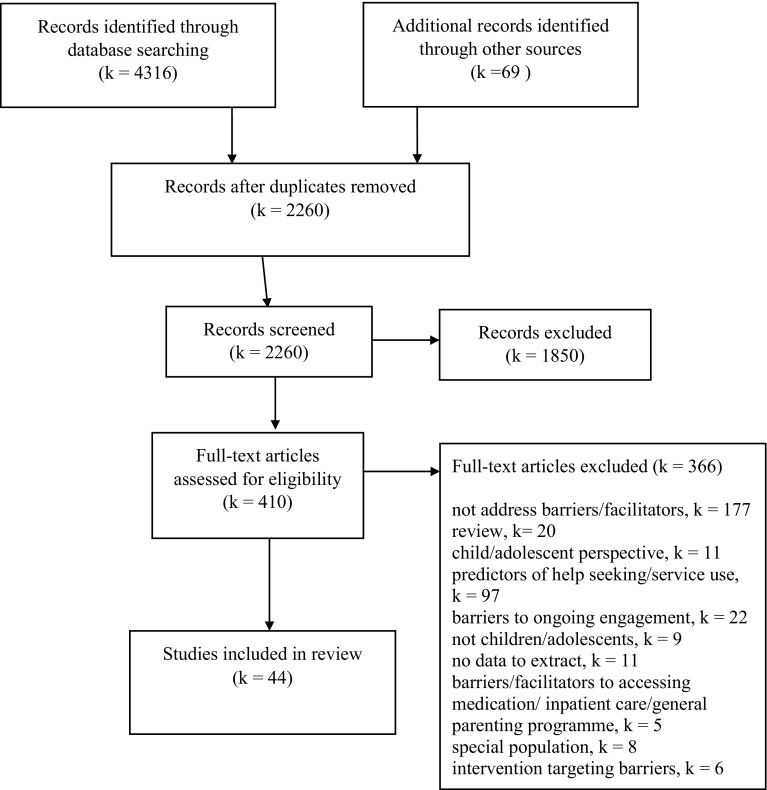
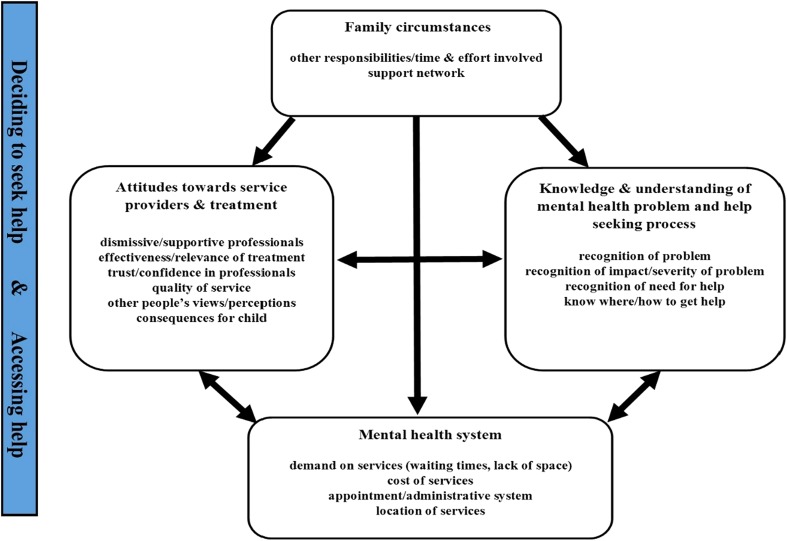
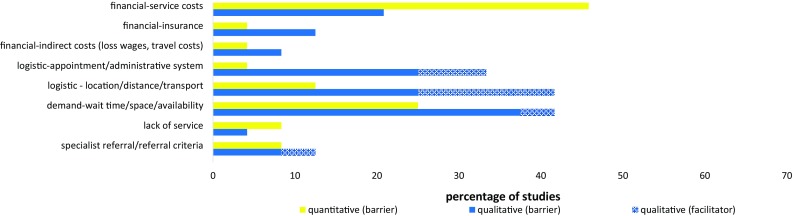
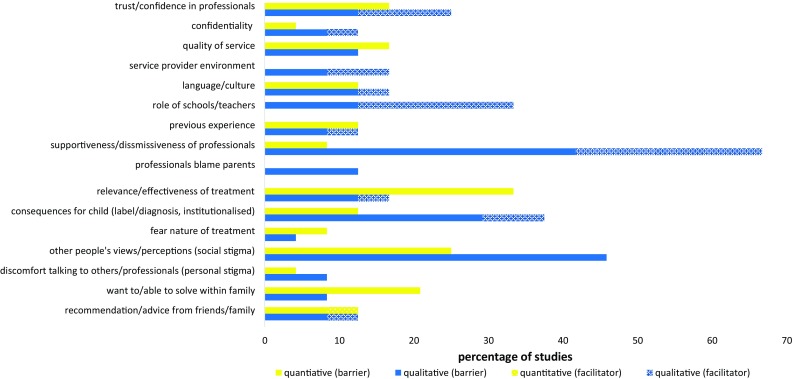
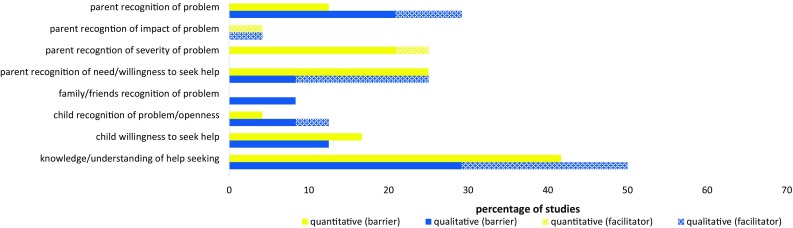
A minority of children and adolescents with mental health problems access treatment. The reasons for poor rates of treatment access are not well understood. As parents are a key gatekeeper to treatment access, it is important to establish parents' views of barriers/facilitators to accessing treatment. The aims of this study are to synthesise findings from qualitative and quantitative studies that report parents' perceptions of barriers/facilitators to accessing treatment for mental health problems in children/adolescents. A systematic review and narrative synthesis were conducted. Forty-four studies were included in the review and were assessed in detail. Parental perceived barriers/facilitators relating to (1) systemic/structural issues; (2) views and attitudes towards services and treatment; (3) knowledge and understanding of mental health problems and the help-seeking process; and (4) family circumstances were identified. Findings highlight avenues for improving access to child mental health services, including increased provision that is free to service users and flexible to their needs, with opportunities to develop trusting, supportive relationships with professionals. Furthermore, interventions are required to improve parents' identification of mental health problems, reduce stigma for parents, and increase awareness of how to access services.
Overview
The claims and statistics of this paper haven’t been checked yet.
Free: it reads the open-access text and checks the first 5 claims that cite a source we can check. Create a free account to check every claim.
Integrity signals
Registry
Cites
Statistics
Figures

Verification
Claims the paper makes
The claims and statistics of this paper haven’t been checked yet.
Free: it reads the open-access text and checks the first 5 claims that cite a source we can check. Create a free account to check every claim.
Claims other papers make about this one
Each is checked against this paper’s own text: does it say what the citing paper says it does?
The source backs part of the claim, not all of it — or backs it for a different population, condition or comparison.
In the citing paper
“These findings are also discrepant from prior studies examining barriers to EBP delivery in community-based settings for children (Reardon et al., 2017).”
From Stakeholder Perceptions of the Barriers to Receiving and Delivering Exposure-Based Cognitive Behavioral Therapy for Anxiety Disorders in Adult Community Mental Health Settings (2019) · cites this paper as Reardon et al., 2017
Experimental — accuracy not yet measuredThe source backs part of the claim, not all of it — or backs it for a different population, condition or comparison.
In the citing paper
“A previous review, which focused on the parents of children and adolescents, concluded that structural barriers were the most relevant [122].”
From What are the barriers, facilitators and interventions targeting help-seeking behaviours for common mental health problems in adolescents? A systematic review (2020) · cites this paper as [122]
Experimental — accuracy not yet measured
Self-check
Percentages, sums and reported differences re-computed from the paper’s own numbers.
The self-check needs the paper’s full text.
Citations
Cites
Preferred Reporting Items for Systematic Reviews and Meta-Analyses: the PRISMA statement
Moher, D., Liberati, A., Tetzlaff, J., Altman, D. G., & for the PRISMA Group (2009) · BMJ · doi:10.1136/bmj.b2535 · Cited by 83,823
Preferred reporting items for systematic reviews and meta-analyses: the PRISMA Statement.
(2009) · PubMed Central · Cited by 44,859
Kessler, R. C., Berglund, P., Demler, O., Jin, R., Merikangas, K. R., & Walters, E. E. (2005) · Archives of General Psychiatry · doi:10.1001/archpsyc.62.6.593 · Cited by 20,391 · cited 1×
“Youth is a time of heightened risk for mental health disorders, with half of all lifetime mental health disorders emerging before the age of 14 years [2].”
Polanczyk, G. V., Salum, G. A., Sugaya, L. S., Caye, A., & Rohde, L. A. (2015) · Journal of Child Psychology and Psychiatry · doi:10.1111/jcpp.12381 · Cited by 3,990
Gulliver, A., Griffiths, K. M., & Christensen, H. (2010) · BMC Psychiatry · doi:10.1186/1471-244x-10-113 · Cited by 3,292 · cited 1×
“A recent systematic review synthesised findings across studies that reported young people’s perceptions of barriers and facilitators to accessing mental health treatment [32].”
Popay, J., Roberts, H., Sowden, A., Petticrew, M., Arai, L., Rodgers, M., Britten, N., Roen, K., & Duffy, S. (2006) · Lancaster University · doi:10.13140/2.1.1018.4643 · Cited by 2,070
Pine, D. S., Cohen, P., Gurley, D., Brook, J., & Ma, Y. (1998) · Archives of General Psychiatry · doi:10.1001/archpsyc.55.1.56 · Cited by 1,753 · cited 1×
“Moreover, the negative impact of poor mental health early in life extends into adulthood, predicting poor academic outcomes [3], increasing the risk of subsequent mental health problems [4] and high rates of mental health service use [5], reducing life satisfaction [6], and creating a heavy economic burden for society…”
Merikangas, K. R., He, J.-P., Burstein, M., Swendsen, J., Avenevoli, S., Case, B., Georgiades, K., Heaton, L., Swanson, S., & Olfson, M. (2011) · Journal of the American Academy of Child & Adolescent Psychiatry · doi:10.1016/j.jaac.2010.10.006 · Cited by 1,579 · cited 2×
“1 3 studies suggest that being Caucasian [13, 14], having insurance coverage (in the USA) [15, 16], living in an urban area [17], and having a child with more severe mental health problems [12] increases the likelihood of a family accessing treatment.”
Unmet Need for Mental Health Care Among U.S. Children: Variation by Ethnicity and Insurance Status
Kataoka, S. H., Zhang, L., & Wells, K. B. (2002) · American Journal of Psychiatry · doi:10.1176/appi.ajp.159.9.1548 · Cited by 1,566 · cited 1×
“1 3 studies suggest that being Caucasian [13, 14], having insurance coverage (in the USA) [15, 16], living in an urban area [17], and having a child with more severe mental health problems [12] increases the likelihood of a family accessing treatment.”
Mental Health of Children and Young People in Great Britain, 2004: (557702010-001)
Green, H., McGinnity, A., Meltzer, H., Ford, T., & Goodman, R. (2005) · PsycEXTRA Dataset · doi:10.1037/e557702010-001 · Cited by 1,216 · cited 1×
“…and national surveys in the UK, Australia, and USA have estimated that only 25–56% of children and adolescents with mental health disorders access specialist mental health services [10–12], with particularly low rates of access for internalising compared with externalising problems [10, 12].”
Cited by
Radez, J., Reardon, T., Creswell, C., Lawrence, P. J., Evdoka-Burton, G., & Waite, P. (2021) · European Child & Adolescent Psychiatry · doi:10.1007/s00787-019-01469-4 · Cited by 1,119
Self-citationAguirre Velasco, A., Cruz, I. S. S., Billings, J., Jimenez, M., & Rowe, S. (2020) · BMC Psychiatry · doi:10.1186/s12888-020-02659-0 · Cited by 736
An overview of and recommendations for more accessible digital mental health services
Lattie, E. G., Stiles-Shields, C., & Graham, A. K. (2022) · Nature Reviews Psychology · doi:10.1038/s44159-021-00003-1 · Cited by 446
Cognitive behavioural therapy for anxiety disorders in children and adolescents
James, A. C., Reardon, T., Soler, A., James, G., & Creswell, C. (2020) · Cochrane Database of Systematic Reviews · doi:10.1002/14651858.cd013162.pub2 · Cited by 344
Self-citationde Leeuw, A., Happé, F., & Hoekstra, R. A. (2020) · Autism Research · doi:10.1002/aur.2276 · Cited by 295
“Lack of diagnostic and intervention materials or instruments; poor quality or lack of experience of practicing clinicians; and long wait times for access to services have also been identified as barriers to receiving support [Durkin et al., 2015; Peters et al., 2008; Reardon et al., 2017].”
BackgroundSacco, R., Camilleri, N., Eberhardt, J., Umla-Runge, K., & Newbury-Birch, D. (2024) · European Child & Adolescent Psychiatry · doi:10.1007/s00787-022-02131-2 · Cited by 264
What factors affect patients’ ability to access healthcare? An overview of systematic reviews
Dawkins, B., Renwick, C., Ensor, T., Shinkins, B., Jayne, D., & Meads, D. (2021) · Tropical Medicine & International Health · doi:10.1111/tmi.13651 · Cited by 257
Planey, A. M., Smith, S. M., Moore, S., & Walker, T. D. (2019) · Children and Youth Services Review · doi:10.1016/j.childyouth.2019.04.001 · Cited by 254
Otto, C., Reiss, F., Voss, C., Wüstner, A., Meyrose, A.-K., Hölling, H., & Ravens-Sieberer, U. (2021) · European Child & Adolescent Psychiatry · doi:10.1007/s00787-020-01630-4 · Cited by 235
Lu, W., Todhunter-Reid, A., Mitsdarffer, M. L., Muñoz-Laboy, M., Yoon, A. S., & Xu, L. (2021) · Frontiers in Public Health · doi:10.3389/fpubh.2021.641605 · Cited by 218
Anderson, J. K., Howarth, E., Vainre, M., Jones, P. B., & Humphrey, A. (2017) · Children and Youth Services Review · doi:10.1016/j.childyouth.2017.04.017 · Cited by 195
Adams, D., & Young, K. (2021) · Review Journal of Autism and Developmental Disorders · doi:10.1007/s40489-020-00226-7 · Cited by 179
Reardon, T., Spence, S. H., Hesse, J., Shakir, A., & Creswell, C. (2018) · Psychological Assessment · doi:10.1037/pas0000570 · Cited by 156
“…recognizing a child’s mental health problem, and difficulties recognizing the severity and impact of a problem are barriers to help-seeking (Reardon et al., 2017); primary care practitioners report that a lack of confidence in identification, time restrictions, and a lack of tools and…”
InfluentialSelf-citationVideoconferencing psychological therapy and anxiety: a systematic review
Berryhill, M. B., Halli-Tierney, A., Culmer, N., Williams, N., Betancourt, A., King, M., & Ruggles, H. (2019) · Family Practice · doi:10.1093/fampra/cmy072 · Cited by 143
Socially Assistive Robots as Mental Health Interventions for Children: A Scoping Review
Kabacińska, K., Prescott, T. J., & Robillard, J. M. (2021) · International Journal of Social Robotics · doi:10.1007/s12369-020-00679-0 · Cited by 113
Parent-perceived barriers to accessing services for their child’s mental health problems
Hansen, A. S., Telléus, G. K., Jensen, C. M., & Lauritsen, M. B. (2021) · Child and Adolescent Psychiatry and Mental Health · doi:10.1186/s13034-021-00357-7 · Cited by 150
Seeking and accessing professional support for child anxiety in a community sample
Reardon, T., Harvey, K., & Creswell, C. (2020) · European Child & Adolescent Psychiatry · doi:10.1007/s00787-019-01388-4 · Cited by 111
Self-citationA Systematic Review of Parent and Caregiver Mental Health Literacy
Hurley, D., Swann, C., Allen, M. S., Ferguson, H., & Vella, S. A. (2019) · Community Mental Health Journal · doi:10.1007/s10597-019-00454-0 · Cited by 147
“There was a preference for parents and caregivers, regardless of mental health status, to seek and use help from informal sources of support in line with previous research (Gulliver et al. 2012; Reardon et al. 2017).”
Radez, J., Reardon, T., Creswell, C., Orchard, F., & Waite, P. (2022) · European Child & Adolescent Psychiatry · doi:10.1007/s00787-020-01707-0 · Cited by 109
Self-citationToward Father‐friendly Parenting Interventions: A Qualitative Study
Sicouri, G., Tully, L. A., Collins, D., Burn, M. T., Sargeant, K., Frick, P. J., Anderson, V. A., Hawes, D. J., Kimonis, E. R., Moul, C., et al. (2018) · Australian and New Zealand Journal of Family Therapy · doi:10.1002/anzf.1307 · Cited by 118
“However, research with predominantly mothers has also found a lack of awareness of interventions (Reardon et al., 2016).”
BackgroundDai, Y., Cook, O., Yeganeh, L., Huang, C., Ding, J., & Johnson, C. E. (2020) · The Journal of Sexual Medicine · doi:10.1016/j.jsxm.2020.03.004 · Cited by 106
James-Palmer, A., Anderson, E. Z., Zucker, L., Kofman, Y., & Daneault, J.-F. (2020) · Frontiers in Pediatrics · doi:10.3389/fped.2020.00078 · Cited by 86
“Parents’ perceived barriers to mental healthcare include cost, cultural barriers, stigma, transportation, and access to mental healthcare providers (19).”
BackgroundHawke, L. D., Sheikhan, N. Y., MacCon, K., & Henderson, J. L. (2021) · BMC Health Services Research · doi:10.1186/s12913-021-06321-7 · Cited by 112
Hoagwood, K. E., Purtle, J., Spandorfer, J., Peth-Pierce, R., & Horwitz, S. M. (2020) · American Psychologist · doi:10.1037/amp0000706 · Cited by 81
“…of time, location, and cost of attendance (Haine-Schalgel & Walsh, 2015); stigma and perceived usefulness of treatment (Alegria et al., 2010; Reardon et al., 2017; Owens et al., 2002); difficulties engaging families in care, particularly for the most vulnerable and high-risk families…”
BackgroundReardon, T. C., Harvey, K., Young, B., O’Brien, D., & Creswell, C. (2018) · European Child & Adolescent Psychiatry · doi:10.1007/s00787-018-1107-2 · Cited by 93
“This echoes findings across the broader literature surrounding mental health difficulties in children [15], and illustrations of the impact of stigma on parenting [30] and help seeking among adults with mental health difficulties [31].”
InfluentialSelf-citationHaugland, B. S. M., Haaland, V. Ø., Baste, V., Bjaastad, J. F., Hoffart, A., Rapee, R. M., Raknes, S., Himle, J. A., Husabø, E. B., & Wergeland, G. J. (2020) · Journal of the American Academy of Child & Adolescent Psychiatry · doi:10.1016/j.jaac.2019.12.003 · Cited by 107
“These barriers may be reduced if effective interventions are offered in the everyday contexts of adolescents’ lives.(16) Meta-analyses of targeted prevention and school-based interventions report small to moderate effects.”
BackgroundGee, B., Reynolds, S. A., Carroll, B., Orchard, F., Clarke, T., Martin, D., Wilson, J., & Pass, L. (2020) · Journal of Child Psychology and Psychiatry · doi:10.1111/jcpp.13209 · Cited by 81
“Significant barriers to help-seeking have been identified, including perceived stigma, infrequent contact with health services and lack of knowledge about mental health (Langer et al., 2015; Plaistow et al., 2013; Reardon et al., 2017).”
BackgroundUse of Kids Helpline by Children and Young People in Australia During the COVID-19 Pandemic
Batchelor, S., Stoyanov, S. R., Pirkis, J., & Kõlves, K. (2021) · Journal of Adolescent Health · doi:10.1016/j.jadohealth.2021.03.015 · Cited by 78
Evans, A. C., & Bufka, L. F. (2020) · Preventing Chronic Disease · doi:10.5888/pcd17.200261 · Cited by 64
“Supporting behavioral health often means addressing social determinants of health through an array of social and community factors (11).”
Bornheimer, L. A., Acri, M. C., Gopalan, G., & McKay, M. M. (2018) · Psychiatric Services · doi:10.1176/appi.ps.201700317 · Cited by 59
Readiness to change and barriers to treatment seeking in college students with a mental disorder
Ennis, E., McLafferty, M., Murray, E., Lapsley, C., Bjourson, T., Armour, C., Bunting, B., Murphy, S., & O'Neill, S. (2019) · Journal of Affective Disorders · doi:10.1016/j.jad.2019.04.062 · Cited by 59
Kourgiantakis, T., Markoulakis, R., Lee, E., Hussain, A., Lau, C., Ashcroft, R., Goldstein, A. L., Kodeeswaran, S., Williams, C. C., & Levitt, A. (2023) · International Journal of Mental Health Systems · doi:10.1186/s13033-023-00572-z · Cited by 57
“A review of studies examining parent perceptions of barriers and facilitators to child and adolescent mental health treatment found that parents perceive structural barriers as the most relevant and cumbersome access barriers [19].”
BackgroundPerfect storm: emotionally based school avoidance in the post-COVID-19 pandemic context
Lester, K. J., & Michelson, D. (2024) · BMJ Mental Health · doi:10.1136/bmjment-2023-300944 · Cited by 84
“21 Content should also reflect the developmental stage of the child.”
BackgroundHow long and how much? Wait times and costs for initial private child mental health appointments
Mulraney, M., Lee, C., Freed, G. L., SAWYER, M. G., Coghill, D., Sciberras, E., Efron, D., & Hiscock, H. (2020) · Journal of Paediatrics and Child Health · doi:10.1111/jpc.15253 · Cited by 54
Schnyder, N., Lawrence, D., Panczak, R., Sawyer, M. G., Whiteford, H. A., Burgess, P. M., & Harris, M. G. (2020) · Epidemiology and Psychiatric Sciences · doi:10.1017/s2045796019000568 · Cited by 41
“Understanding barriers to care may assist in developing and targeting strategies to facilitate the use of appropriate services (Reardon et al., 2017; Sheppard et al., 2018).”
Kearney, C. A. (2021) · Child & Youth Care Forum · doi:10.1007/s10566-020-09591-0 · Cited by 51
Cohen, K. A., Stiles-Shields, C., Winquist, N., & Lattie, E. G. (2021) · The Journal of Behavioral Health Services & Research · doi:10.1007/s11414-020-09746-w · Cited by 51
Yonek, J. C., Dauria, E., Kemp, K. A., Koinis‐Mitchell, D., Marshall, B. D. L., & Tolou‐Shams, M. (2019) · Psychiatric Services · doi:10.1176/appi.ps.201800322 · Cited by 54
Estimates of Major Depressive Disorder and Treatment Among Adolescents by Race and Ethnicity
Flores, M. W., Sharp, A., Carson, N. J., & Cook, B. L. (2023) · Archives of Pediatrics and Adolescent Medicine · doi:10.1001/jamapediatrics.2023.3996 · Cited by 56
McQuillin, S. D., Hagler, M., Werntz, A. J., & Rhodes, J. E. (2021) · American Journal of Community Psychology · doi:10.1002/ajcp.12546 · Cited by 57
“…culturally competent services have increased somewhat over the past decade (e.g., American Psychological Association, 2017), many marginalized communities and families understandably remain wary of professional mental health (Alegr ıa et al., 2016; Reardon et al., 2017; V azquez & Villodas, 2019).”
BackgroundShidhaye, R. R. (2023) · Current Opinion in Psychology · doi:10.1016/j.copsyc.2023.101661 · Cited by 67
Cobham, V. E., Filus, A., & Sanders, M. R. (2017) · Behaviour Research and Therapy · doi:10.1016/j.brat.2017.06.004 · Cited by 48
“Stigma appears to be one of the most significant obstacles to help-seeking in parents of children who might benefit from a mental health intervention (Dempster, Wildman, & Keating, 2013; Reardon et al., 2017).”
BackgroundInfluentialBoesley, L., & Crane, L. (2018) · Journal of Research in Special Educational Needs · doi:10.1111/1471-3802.12416 · Cited by 58
“Increasing awareness about prevalence, symptoms and the impact of mental health issues, particularly amongst teachers, parents and LAs, may raise the profile for these needs (Reardon et al., 2017).”
BackgroundCrouch, L., Reardon, T. C., Farrington, A., Glover, F., & Creswell, C. (2019) · Child Care Health and Development · doi:10.1111/cch.12672 · Cited by 62
“demand on services), parents’ attitudes towards services, parents’ knowledge and understanding of mental health help-seeking, and family circumstances (Reardon et al., 2017).”
BackgroundSelf-citationAI-based chatbot micro-intervention for parents: Meaningful engagement, learning, and efficacy
Entenberg, G. A., Mizrahi, S., Walker, H., Aghakhani, S., Mostovoy, K., Carre, N., Marshall, Z., Dosovitsky, G., Benfica, D., Rousseau, A., et al. (2023) · Frontiers in Psychiatry · doi:10.3389/fpsyt.2023.1080770 · Cited by 61
“However, parents usually face barriers to accessing effective treatment (11); therefore, digital mental health has become a promising and popular source of mental health support (12).”
BackgroundElkington, K. S., Lee, J. G., Brooks, C., Watkins, J., & Wasserman, G. A. (2020) · Journal of Substance Abuse Treatment · doi:10.1016/j.jsat.2020.01.008 · Cited by 47
Melnyk, B. M. (2020) · Journal of Pediatric Health Care · doi:10.1016/j.pedhc.2019.08.002 · Cited by 45
Darling, S. J., Dawson, G., Quach, J., Smith, R., Perkins, A., Connolly, A., Smith, A. J., Moore, C. L., Ride, J., & Oberklaid, F. (2021) · BMC Public Health · doi:10.1186/s12889-021-11467-4 · Cited by 52
Ferrari, M., Sabetti, J., McIlwaine, S. V., Fazeli, S., Sadati, S. M. H., Shah, J. L., Archie, S., Boydell, K., Lal, S., Henderson, J. L., et al. (2022) · Frontiers in Digital Health · doi:10.3389/fdgth.2022.814248 · Cited by 65
Piotrowska, P. J., Tully, L. A., Collins, D. A. J., Sawrikar, V., Hawes, D., Kimonis, E. R., Lenroot, R. K., Moul, C., Anderson, V., Frick, P. J., et al. (2020) · Child Psychiatry & Human Development · doi:10.1007/s10578-019-00934-0 · Cited by 44
“, location, transport), waiting times, and social and personal stigma associated with child mental health problems and help-seeking [13].”
BackgroundMixed-Methods Examination of Adolescent-Reported Barriers to Accessing Mental Health ServicesPreprint
Ringle, V. A. M., Sung, J. Y., Roulston, C. A., & Schleider, J. L. (2023) · PsyArXiv (OSF Preprints) · doi:10.1016/j.jadohealth.2023.08.034 · Cited by 60
Paton, K., Gillam, L. H., Warren, H., Mulraney, M., Coghill, D., Efron, D., SAWYER, M. G., & Hiscock, H. (2021) · Australian & New Zealand Journal of Psychiatry · doi:10.1177/0004867420984242 · Cited by 43
“…high costs and long wait times, difficulty navigating the health system, a concern with being blamed for their child’s problems, and a lack of recognition of the existence and/or severity of the child’s mental health disorder (Lawrence et al., 2016; Reardon et al., 2017; Sawyer et al., 2000).”
BackgroundEssau, C. A., Sasagawa, S., Jones, G. L., Fernandes, B., & Ollendick, T. H. (2019) · Journal of Affective Disorders · doi:10.1016/j.jad.2019.04.036 · Cited by 50
A Systematic Review of Mindfulness-Based Interventions in Low-Income Schools
Segal, S. C., Vyas, S. S., & Monson, C. M. (2021) · Mindfulness · doi:10.1007/s12671-020-01571-8 · Cited by 41
Fawole, O. A., Reed, M. V., Harris, J. G., Hersh, A. O., Rodriguez, M. M., Onel, K. B., LAWSON, E. F., Rubinstein, T. B., Ardalan, K., Morgan, E. M., et al. (2021) · Pediatric Rheumatology · doi:10.1186/s12969-021-00503-7 · Cited by 43
“While the latter finding is a known general barrier from existing literature [37, 44], the concern about lack of understanding of disease is particularly relevant to providing effective intervention to youth with rheumatological disease.”
BackgroundAlam, S. S., Ahmed, S., Kokash, H. A., Mahmud, M. S., & Sharnali, S. Z. (2024) · Electronic Commerce Research and Applications · doi:10.1016/j.elerap.2024.101389 · Cited by 61
Omari, O. A., Khalaf, A., Sabei, S. D. A., Hashmi, I. A., Qadire, M. I. A., Joseph, M. A., & Damra, J. K. M. (2022) · Nordic Journal of Psychiatry · doi:10.1080/08039488.2022.2038666 · Cited by 58
“These factors include high cost of treatment [8], prolonged waiting time [9], and dis-”
BackgroundIslam, M. I., Yunus, F., Isha, S., Kabir, E., Khanam, R., & Martiniuk, A. (2022) · Scientific Reports · doi:10.1038/s41598-022-09352-0 · Cited by 35
Salloum, A., Lu, Y., Chen, H., Quast, T. C., Cohen, J. A., Scheeringa, M. S., Salomon, K., & Storch, E. A. (2022) · Journal of the American Academy of Child & Adolescent Psychiatry · doi:10.1016/j.jaac.2021.12.013 · Cited by 41
Litke, S. G., Resnikoff, A. W., Anil, A., Montgomery, M. L. T., Matta, R., Huh, J., & Daly, B. P. (2023) · JMIR Mental Health · doi:10.2196/46949 · Cited by 45
Chu, J. T. W., Wadham, A., Jiang, Y., Whittaker, R., Stasiak, K., Shepherd, M., & Bullen, C. (2019) · JAMA Network Open · doi:10.1001/jamanetworkopen.2019.11120 · Cited by 37
Barriers to and Facilitators of Mental Health Treatment Engagement Among Latina Adolescents
Stafford, A. M., & Draucker, C. B. (2019) · Community Mental Health Journal · doi:10.1007/s10597-019-00527-0 · Cited by 44
Hurley, D., Allen, M. S., Swann, C., & Vella, S. A. (2020) · Child Psychiatry & Human Development · doi:10.1007/s10578-020-00998-3 · Cited by 45
Depression and anxiety in patients with atopic dermatitis
LeBovidge, J., & Schneider, L. C. (2025) · Annals of Allergy Asthma & Immunology · doi:10.1016/j.anai.2025.02.017 · Cited by 40
Tully, L. A., Piotrowska, P. J., Collins, D. A. J., Mairet, K. S., Hawes, D. J., Kimonis, E. R., Lenroot, R. K., Moul, C., Anderson, V., Frick, P. J., et al. (2017) · BMC Psychology · doi:10.1186/s40359-017-0188-x · Cited by 36
“, time, work, child care, transportation and costs) are likely to be key barriers to participation in traditional face-to-face parenting interventions for many families [20].”
Background‘Are You OK?’ Students’ Trust in a Chatbot Providing Support Opportunities
Pesonen, J. A. (2021) · Lecture notes in computer science · doi:10.1007/978-3-030-77943-6_13 · Cited by 69
Verhoog, S., Eijgermans, D. G. M., Fang, Y., Bramer, W. M., Raat, H., & Jansen, W. (2022) · European Child & Adolescent Psychiatry · doi:10.1007/s00787-022-02077-5 · Cited by 41
Fredwall, M. M., Terry, D., Enciso, L., Burch, M. M., Trott, K., & Albert, D. V. F. (2021) · Epilepsia · doi:10.1111/epi.17031 · Cited by 34
Barnett, M. L., Kia‐Keating, M., Ruth, A. B., & Garcia, M. G. (2020) · Clinical Practice in Pediatric Psychology · doi:10.1037/cpp0000320 · Cited by 36
“Notably, a systematic review determined that parents’ perceptions of a lack of trust and confi-dence in providers, and cultural and linguistic barriers are critical factors that limit access to services for children and adolescents (Reardon et al., 2017).”
Leung, B. M. Y., Wandler, C., Pringsheim, T. M., & Santana, M. (2021) · Journal of Child Health Care · doi:10.1177/13674935211028694 · Cited by 45
“Conversely, access to services is more likely facilitated by factors such as having affordable and flexible support, enabling trust to be developed with practitioners and reducing stigma for parents and providing clear information on how to access services (Reardon et al., 2017).”
BackgroundResultInfluentialHurley, D., Swann, C., Allen, M. S., & Vella, S. A. (2019) · Psychology of sport and exercise · doi:10.1016/j.psychsport.2019.101635 · Cited by 44
Olson, J. R., Lucy, M., Kellogg, M. A., Schmitz, K., Berntson, T., Stuber, J., & Bruns, E. J. (2021) · School Mental Health · doi:10.1007/s12310-020-09401-x · Cited by 36
“, 2005; Sayal, 2006), parents commonly cite a lack of knowledge of mental health problems as a barrier to accessing treatment (Crouch et al., 2019; Reardon et al., 2017).”
Foster, C. E., Magness, C. S., Czyz, E. K., Kahsay, E., Martindale, J., Hong, V., Baker, E., Cavataio, I., Colombini, G., Kettley, J., et al. (2021) · Child Psychiatry & Human Development · doi:10.1007/s10578-021-01176-9 · Cited by 38
Sit, M., Elliott, S. A., Wright, K. S., Scott, S. D., & Hartling, L. (2022) · Youth & Society · doi:10.1177/0044118x221129642 · Cited by 47
“These types of experiences may reinforce youths’ fear of being dismissed and blamed, as mentioned above (Reardon et al., 2017).”
BackgroundWolitzky-Taylor, K., Chung, B., Bearman, S. K., Arch, J., Grossman, J., Fenwick, K., Lengnick-Hall, R., & Miranda, J. (2019) · Community Mental Health Journal · doi:10.1007/s10597-018-0250-z · Cited by 30
“These findings are also discrepant from prior studies examining barriers to EBP delivery in community-based settings for children (Reardon et al. 2017).”
ResultMeng, N., Huang, X., Wang, J., Wang, M., & Ya, W. (2022) · BMC Psychiatry · doi:10.1186/s12888-022-03996-y · Cited by 47
“What cannot be ignored is that levels of access to mental health care services are vastly different between urban and rural residents [39].”
BackgroundIntegrated care models for youth mental health: A systematic review and meta-analysis
McHugh, C. M., Hu, N., Georgiou, G., Hodgins, M., Leung, S. J., Cadiri, M., Paul, N. K., Ryall, V., Rickwood, D., Eapen, V., et al. (2024) · Australian & New Zealand Journal of Psychiatry · doi:10.1177/00048674241256759 · Cited by 44
“Young people accessing care frequently describe difficulty in engaging with services that are not orientated towards young people and may be particularly vulnerable to geographical and financial barriers to accessing care (Burkhart et al., 2020; Reardon et al., 2017).”
BackgroundSójta, K., & Strzelecki, D. (2023) · Journal of Clinical Medicine · doi:10.3390/jcm12041263 · Cited by 49
“The conclusions drawn can be used to formulate therapeutic guidelines for family interventions that may break the intergenerational cycle of psychological problems [23].”
BackgroundBehavioral Health Needs, Barriers, and Parent Preferences in Rural Pediatric Primary Care
Fehr, K. K., Leraas, B. C., & Littles, M. (2020) · Journal of Pediatric Psychology · doi:10.1093/jpepsy/jsaa057 · Cited by 31
Lawrence, P. J., Parkinson, M., Jasper, B., Creswell, C., & Halligan, S. L. (2021) · The Lancet Psychiatry · doi:10.1016/s2215-0366(20)30315-1 · Cited by 37
Self-citationEijgermans, D. G. M., Fang, Y., Jansen, D. E. M. C., Bramer, W. M., Raat, H., & Jansen, W. (2021) · Children and Youth Services Review · doi:10.1016/j.childyouth.2021.106288 · Cited by 32
Tully, L. A., Piotrowska, P. J., Collins, D., Frick, P. J., Anderson, V. A., Moul, C., Lenroot, R., Kimonis, E. R., Hawes, D. J., & Dadds, M. R. (2018) · Health Communication · doi:10.1080/10410236.2018.1495160 · Cited by 31
“In fact, research has also found that mothers (as well as fathers) have low rates of awareness of parenting programs (Reardon et al., 2017), and since three times as many caregivers participated in ParentWorks in the campaign period versus the comparison period, media campaigns are likely to be a…”
BackgroundSchool Nurse Perceptions of Student Anxiety
Muggeo, M. A., & Ginsburg, G. S. (2018) · The Journal of School Nursing · doi:10.1177/1059840517752457 · Cited by 42
Culturally Responsive Approaches for Addressing ADHD Within Multi-tiered Systems of Support
Dong, Q., García, B. H., Pham, A. V., & Cumming, M. M. (2020) · Current Psychiatry Reports · doi:10.1007/s11920-020-01154-3 · Cited by 34
MacNeill, L. A., Allen, N. B., Poleon, R. B., Vargas, T., Osborne, K. J., Damme, K. S. F., Barch, D. M., Krogh‐Jespersen, S., Nielsen, A. N., Norton, E. S., et al. (2021) · Development and Psychopathology · doi:10.1017/s0954579421000651 · Cited by 25
“, stigma, thoughts that problems will get better on their own) prevent timely access to treatment (Reardon et al., 2017).”
BackgroundTaylor, A., Radford, G., & Calia, C. (2022) · Child and Adolescent Mental Health · doi:10.1111/camh.12547 · Cited by 32
Mental Health Literacy Programs for Parents of Adolescents: A Systematic Review
Kusaka, S., Yamaguchi, S., Foo, J. C., Togo, F., & Sasaki, T. (2022) · Frontiers in Psychiatry · doi:10.3389/fpsyt.2022.816508 · Cited by 39
“In addition, by delaying recognition of mental health problems, inadequate MHL might be a barrier preventing parents from seeking help for their children (16, 17).”
BackgroundWickens, N., van Rensburg, E. J., Belinelo, P. D. G., Milroy, H., Martin, L. J., Wood, F. M., & Woolard, A. J. (2023) · Burns · doi:10.1016/j.burns.2023.06.014 · Cited by 34
Brown, J. (2018) · Clinical Child Psychology and Psychiatry · doi:10.1177/1359104518778330 · Cited by 35
“A few studies consider parent’s experience of accessing mental health services for their adolescent (Coyne et al., 2015; Iskra, Deane, Wahlin, & Davis, 2015; Langeveld, Israel, & Hove Thomsen, 2010; Reardon et al., 2017).”
BackgroundHowarth, E., Vainre, M., Humphrey, A., Lombardo, C., Hanafiah, A. N., Anderson, J., & Jones, P. B. (2019) · BMJ Open · doi:10.1136/bmjopen-2018-022936 · Cited by 29
Burke, C. T., Calear, A. L., Cruwys, T., & Batterham, P. J. (2023) · Journal of Youth and Adolescence · doi:10.1007/s10964-023-01841-3 · Cited by 30
“, 2003), access to services, and systemic barriers like waittimes and costs (Reardon et al., 2017).”
BackgroundAhessy, B. (2021) · British Journal of Visual Impairment · doi:10.1177/02646196211029342 · Cited by 31
“Telehealth offers families more affordable access (Reardon et al., 2017) and creates opportunities for new online communities.”
BackgroundCoelho, H. F., Price, A., Kiff, F., Trigg, L. A., Robinson, S., Coon, J. T., & Anderson, R. (2022) · Health and Social Care Delivery Research · doi:10.3310/xkwe8437 · Cited by 37
Agreement Between Parent Proxy Reports and Self-Reports of Adolescent Emotional Distress
Kim, C., Choi, H., Ko, H., & Park, C. G. (2018) · The Journal of School Nursing · doi:10.1177/1059840518792073 · Cited by 24
“Barriers to mental health service utilization identified in previous studies are inaccessibility to care, lack of health insurance, stigma of mental disorders, and lack of knowledge and understanding of mental disorders (Reardon et al., 2017; Shin et al., 2011).”
BackgroundBarnett, M. L., Lau, A. S., Lind, T., Wright, B., Stadnick, N. A., Innes-Gomberg, D., Pesanti, K., & Brookman-Frazee, L. I. (2019) · Journal of Clinical Child & Adolescent Psychology · doi:10.1080/15374416.2019.1683851 · Cited by 26
“, 2018), the evidence for school settings as facilitators for increased caregiver treatment involvement is mixed (Reardon et al., 2017).”
Implementing Trauma Informed Suicide Prevention Care in Schools: Responding to Acute Suicide Risk
O’Neill, J. C., Goldston, D. B., Kodish, T., Yu, S. H., Lau, A. S., & Asarnow, J. R. (2021) · Evidence-Based Practice in Child and Adolescent Mental Health · doi:10.1080/23794925.2021.1917019 · Cited by 32
“When youth and families do present to EDs, the ED may be overcrowded, the time spent with the youth and the quality of care may be variable, and there may be poor linkage to follow-up outpatient care (Kodish et al., 2020; Regan et al., 2017).”
BackgroundEngagement Barriers to Behavior Therapy for Adolescent ADHD
Sibley, M. H., Link, K. M., Antunez, G. T., & Greenwood, L. (2022) · Journal of Clinical Child & Adolescent Psychology · doi:10.1080/15374416.2022.2025597 · Cited by 28
“Like treatment access barriers (Brown et al., 2016; Owens et al., 2002; Reardon et al., 2017), engagement barriers may be cognitive (e.g., negative beliefs about treatment or one’s ability to improve, cultural worldviews), behavioral (e.g., parental interference behaviors, youth forgetfulness),…”
BackgroundMental health promotion in youth sporting clubs: predictors of stakeholder participation
Petersen, J. M., Drummond, M., Crossman, S., Elliott, S., Drummond, C., & Prichard, I. J. (2023) · BMC Public Health · doi:10.1186/s12889-023-15377-5 · Cited by 26
GPs’ experiences of children with anxiety disorders in primary care: a qualitative study
O’Brien, D., Harvey, K., Young, B., Reardon, T. C., & Creswell, C. (2017) · British Journal of General Practice · doi:10.3399/bjgp17x693473 · Cited by 31
“40 That GPs are so influenced by parental wishes when making decisions about this condition highlights the need to ensure that parents are competent at identifying when a problem may be occurring with their child, and clearly understand that their GP’s surgery is an appropriate place to bring their…”
Self-citationMeng, J. F., & Wiznitzer, E. (2024) · Preventing Chronic Disease · doi:10.5888/pcd21.240126 · Cited by 28
Metadata
- Authors
- Reardon, T., Harvey, K., Baranowska, M., O’Brien, D., Smith, L., & Creswell, C.
- Affiliations
- University of Reading (GB)
- Corresponding author
- Harvey, Kate
- Venue
- European Child & Adolescent Psychiatry
- Published
- 2017-01-04
- Volume
- 26
- Issue
- 6
- Pages
- 623-647
- ISSN
- 1018-8827 (ISSN-L)
- 1435-165X
- PMC
- PMC5446558
- OpenAlex
- W2567323169
- Cited by
- 653
- References
- 82
- Citations by year
- 2026: 74 · 2025: 98 · 2024: 105 · 2023: 89 · 2022: 91 · 2021: 71 · 2020: 61 · 2019: 34 · 2018: 24 · 2017: 6
- FWCI
- 5.38
- Type
- journal article
- Language
- en
- Open access
- hybrid
- doi.org
- Locations
- European Child & Adolescent Psychiatry (publishedVersion, cc-by)
- Europe PMC (PubMed Central) (publishedVersion, other-oa)
- PubMed Central (publishedVersion, cc-by)
- PubMed (publishedVersion)
- CentAUR (University of Reading) (acceptedVersion)
- Funders
- Research Trainees Coordinating Centre (NIHR-RP-2014-04-018)
- Topics
- Health Sciences › Medicine › Psychiatry and Mental health › Mental Health Treatment and Access
- Social Sciences › Psychology › Clinical Psychology › Child and Adolescent Psychosocial and Emotional Development
- Social Sciences › Psychology › Clinical Psychology › Psychology and Mental Health
- Keywords
- barriers to treatment access, child and adolescent mental health, parental attitudes, help-seeking, mental health service utilization, mental health stigma, family situation, child mental health services, parent-professional relationship
- MeSH terms
- Adolescent, Child, Child, Preschool, Evaluation Studies as Topic, Humans, Mental Health, Mental Health Services, Parents, Qualitative Research
About these checks
Registry, retraction, Cites and statistics results are computed, not judged, with one exception: a printed reference that no index lists is read once by a model before it counts as a citation error. Claims are extracted by a model and kept only when their quote appears verbatim in the text; each cited source is then checked, with a model’s help, for whether it says what the claim relies on. Those verdicts can be wrong — read the claim’s quote and the cited source before relying on one.
Statistics and arithmetic are recomputed, not judged.
Confidence bands are shown only for fields calibrated on our annotated test set. None is calibrated yet, so no band is shown.
What counts as a claim ›How we measure confidence ›How we check this ›
Are you an author, or do you see a problem with this page? Request a review
Data sources
Bibliographic data: Semantic Scholar, OpenAlex, Crossref.
Contains information from the Semantic Scholar Academic Graph Datasets, made available under the ODC Attribution License (ODC-BY 1.0).
Semantic Scholar’s data is described in: Kinney, R., et al. (2023). The Semantic Scholar Open Data Platform. arXiv:2301.10140.
