

What do parents perceive are the barriers and facilitators to accessing psychological treatment for mental health problems in children and adolescents? A systematic review of qualitative and quantitative studies
Open accessThe DOI matches its Crossref record; 81 of the 82 references it cites were found in a registry or an index.
Abstract
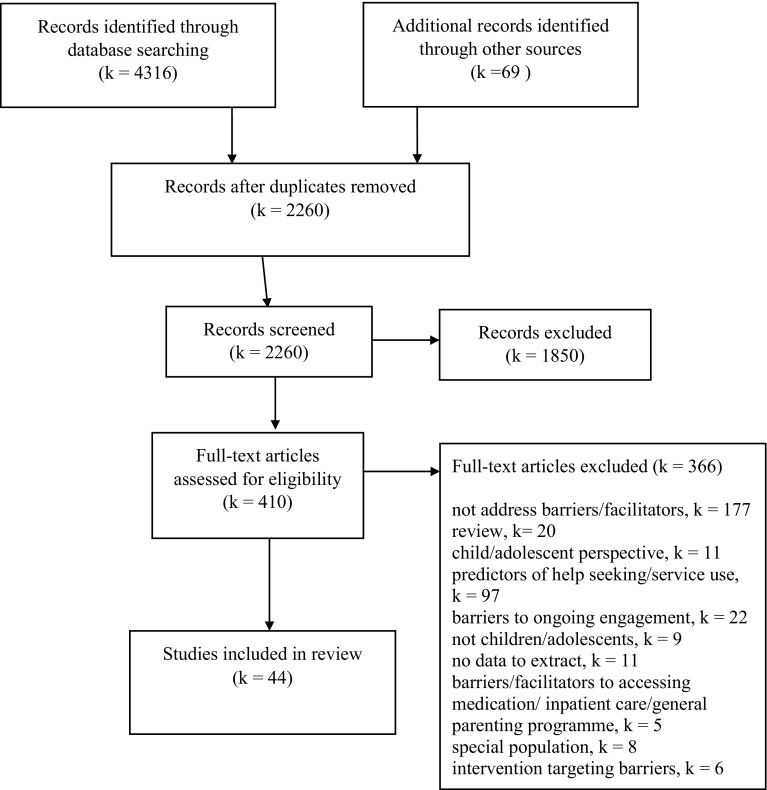
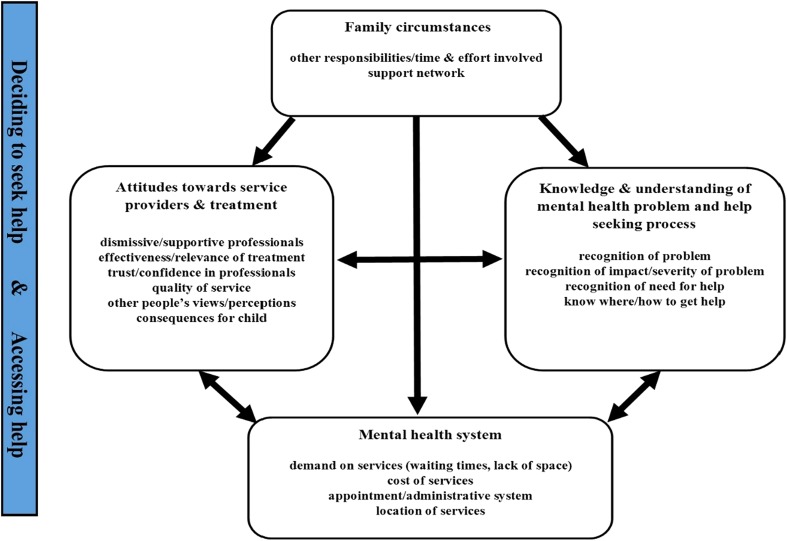
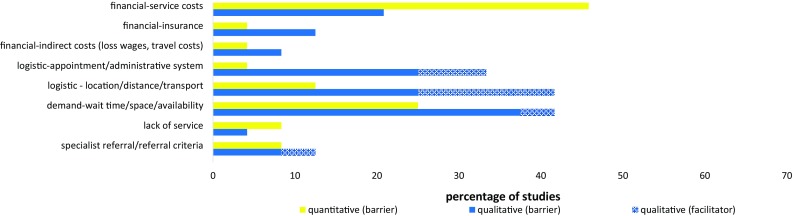
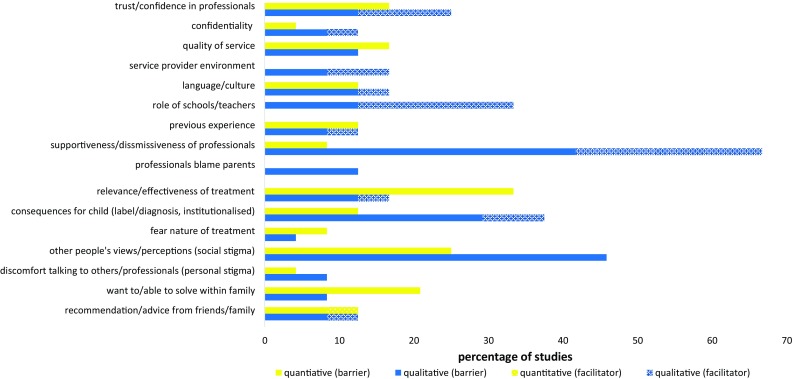
A minority of children and adolescents with mental health problems access treatment. The reasons for poor rates of treatment access are not well understood. As parents are a key gatekeeper to treatment access, it is important to establish parents' views of barriers/facilitators to accessing treatment. The aims of this study are to synthesise findings from qualitative and quantitative studies that report parents' perceptions of barriers/facilitators to accessing treatment for mental health problems in children/adolescents. A systematic review and narrative synthesis were conducted. Forty-four studies were included in the review and were assessed in detail. Parental perceived barriers/facilitators relating to (1) systemic/structural issues; (2) views and attitudes towards services and treatment; (3) knowledge and understanding of mental health problems and the help-seeking process; and (4) family circumstances were identified. Findings highlight avenues for improving access to child mental health services, including increased provision that is free to service users and flexible to their needs, with opportunities to develop trusting, supportive relationships with professionals. Furthermore, interventions are required to improve parents' identification of mental health problems, reduce stigma for parents, and increase awareness of how to access services.
Overview
The claims and statistics of this paper haven’t been checked yet.
Free: it reads the open-access text and checks the first 5 claims that cite a source we can check. Create a free account to check every claim.
Integrity signals
Registry
Cites
Statistics
Figures

Verification
Claims the paper makes
The claims and statistics of this paper haven’t been checked yet.
Free: it reads the open-access text and checks the first 5 claims that cite a source we can check. Create a free account to check every claim.
Claims other papers make about this one
Each is checked against this paper’s own text: does it say what the citing paper says it does?
The source backs part of the claim, not all of it — or backs it for a different population, condition or comparison.
In the citing paper
“These findings are also discrepant from prior studies examining barriers to EBP delivery in community-based settings for children (Reardon et al., 2017).”
From Stakeholder Perceptions of the Barriers to Receiving and Delivering Exposure-Based Cognitive Behavioral Therapy for Anxiety Disorders in Adult Community Mental Health Settings (2019) · cites this paper as Reardon et al., 2017
Experimental — accuracy not yet measuredThe source backs part of the claim, not all of it — or backs it for a different population, condition or comparison.
In the citing paper
“A previous review, which focused on the parents of children and adolescents, concluded that structural barriers were the most relevant [122].”
From What are the barriers, facilitators and interventions targeting help-seeking behaviours for common mental health problems in adolescents? A systematic review (2020) · cites this paper as [122]
Experimental — accuracy not yet measured
Self-check
Percentages, sums and reported differences re-computed from the paper’s own numbers.
The self-check needs the paper’s full text.
Citations
Cites
Preferred Reporting Items for Systematic Reviews and Meta-Analyses: the PRISMA statement
Moher, D., Liberati, A., Tetzlaff, J., Altman, D. G., & for the PRISMA Group (2009) · BMJ · doi:10.1136/bmj.b2535 · Cited by 83,823
Preferred reporting items for systematic reviews and meta-analyses: the PRISMA Statement.
(2009) · PubMed Central · Cited by 44,859
Kessler, R. C., Berglund, P., Demler, O., Jin, R., Merikangas, K. R., & Walters, E. E. (2005) · Archives of General Psychiatry · doi:10.1001/archpsyc.62.6.593 · Cited by 20,391 · cited 1×
“Youth is a time of heightened risk for mental health disorders, with half of all lifetime mental health disorders emerging before the age of 14 years [2].”
Polanczyk, G. V., Salum, G. A., Sugaya, L. S., Caye, A., & Rohde, L. A. (2015) · Journal of Child Psychology and Psychiatry · doi:10.1111/jcpp.12381 · Cited by 3,990
Gulliver, A., Griffiths, K. M., & Christensen, H. (2010) · BMC Psychiatry · doi:10.1186/1471-244x-10-113 · Cited by 3,292 · cited 1×
“A recent systematic review synthesised findings across studies that reported young people’s perceptions of barriers and facilitators to accessing mental health treatment [32].”
Popay, J., Roberts, H., Sowden, A., Petticrew, M., Arai, L., Rodgers, M., Britten, N., Roen, K., & Duffy, S. (2006) · Lancaster University · doi:10.13140/2.1.1018.4643 · Cited by 2,070
Pine, D. S., Cohen, P., Gurley, D., Brook, J., & Ma, Y. (1998) · Archives of General Psychiatry · doi:10.1001/archpsyc.55.1.56 · Cited by 1,753 · cited 1×
“Moreover, the negative impact of poor mental health early in life extends into adulthood, predicting poor academic outcomes [3], increasing the risk of subsequent mental health problems [4] and high rates of mental health service use [5], reducing life satisfaction [6], and creating a heavy economic burden for society…”
Merikangas, K. R., He, J.-P., Burstein, M., Swendsen, J., Avenevoli, S., Case, B., Georgiades, K., Heaton, L., Swanson, S., & Olfson, M. (2011) · Journal of the American Academy of Child & Adolescent Psychiatry · doi:10.1016/j.jaac.2010.10.006 · Cited by 1,579 · cited 2×
“1 3 studies suggest that being Caucasian [13, 14], having insurance coverage (in the USA) [15, 16], living in an urban area [17], and having a child with more severe mental health problems [12] increases the likelihood of a family accessing treatment.”
Unmet Need for Mental Health Care Among U.S. Children: Variation by Ethnicity and Insurance Status
Kataoka, S. H., Zhang, L., & Wells, K. B. (2002) · American Journal of Psychiatry · doi:10.1176/appi.ajp.159.9.1548 · Cited by 1,566 · cited 1×
“1 3 studies suggest that being Caucasian [13, 14], having insurance coverage (in the USA) [15, 16], living in an urban area [17], and having a child with more severe mental health problems [12] increases the likelihood of a family accessing treatment.”
Mental Health of Children and Young People in Great Britain, 2004: (557702010-001)
Green, H., McGinnity, A., Meltzer, H., Ford, T., & Goodman, R. (2005) · PsycEXTRA Dataset · doi:10.1037/e557702010-001 · Cited by 1,216 · cited 1×
“…and national surveys in the UK, Australia, and USA have estimated that only 25–56% of children and adolescents with mental health disorders access specialist mental health services [10–12], with particularly low rates of access for internalising compared with externalising problems [10, 12].”
Cited by
Items 101–200 of 653
Kappi, A. A., & Martel, M. M. (2021) · Journal of Attention Disorders · doi:10.1177/1087054720986909 · Cited by 35
“Stigmatizing attitudes toward parents and the culture of parental “blame” were significant barriers to help-seeking (Reardon et al., 2017).”
BackgroundMethodSoneson, E., Burn, A., Anderson, J., Humphrey, A., Jones, P. B., Fazel, M. S., Ford, T. J., & Howarth, E. (2022) · Journal of School Psychology · doi:10.1016/j.jsp.2022.01.008 · Cited by 26
Providers as Stakeholders in Addressing Implementation Barriers to Youth Mental Healthcare
Goodcase, E. T., Brewe, A. M., White, S. W., & Jones, S. (2021) · Community Mental Health Journal · doi:10.1007/s10597-021-00905-7 · Cited by 51
“While previous studies have explored this concept, many of these studies focused on parents, families, or children/adolescents themselves (Reardon et al., 2017).”
BackgroundResultGreen, I., Reardon, T. C., Button, R., Williamson, V., Halliday, G., Hill, C., Larkin, M., Sniehotta, F. F., Ukoumunne, O. C., Ford, T. J., et al. (2022) · Child and Adolescent Mental Health · doi:10.1111/camh.12612 · Cited by 29
“Indeed, strengths of the approach include the delivery of online support directly to families via schools thus relieving families of multiple barriers that can prevent access to support through specialist services (Reardon et al., 2017).”
BackgroundSelf-citationPeskin, A., Barth, A. M., Rothenberg, W. A., Turzi, A., Formoso, D., Garcia, D., & Jent, J. F. (2023) · Behavior Therapy · doi:10.1016/j.beth.2023.05.002 · Cited by 24
Youths’ Perceived Impact of Invalidation and Validation on Their Mental Health Treatment Journeys
Simpson, K. S. W., Gallagher, A., Ronis, S. T., Miller, D. A. A., & Tilleczek, K. C. (2021) · Administration and Policy in Mental Health and Mental Health Services Research · doi:10.1007/s10488-021-01177-9 · Cited by 33
“, family, friends) play integral roles in youths’ support systems as gatekeepers to treatment (Leijdedorff et al., 2021; Reardon et al., 2017).”
BackgroundKlinner, C., Glozier, N., Yeung, M., Conn, K., & Milton, A. C. (2023) · BMC Psychiatry · doi:10.1186/s12888-023-05209-6 · Cited by 30
“YP’s desire for more educated parents also speaks to a bottom-up empowerment approach to tackling mental health issues in rural and regional communities where parents are often found to feel helpless when it comes to understanding and supporting their children’s mental health [14, 19, 20].”
BackgroundHuff, N. R., Dunderdale, L., Kellogg, A. J., & Isbell, L. M. (2024) · Clinical Psychology Review · doi:10.1016/j.cpr.2024.102504 · Cited by 36
Simon, V. A., Barnett, D., Smith, E. R., Andrew, L. M., & Willis, D. E. (2017) · Child Abuse & Neglect · doi:10.1016/j.chiabu.2017.06.024 · Cited by 29
“These obstacles are consistent with theoretical models of therapy engagement and mirror those reported by caregivers in other therapy contexts (e.g., Reardon et al., 2017; Straudt, 2007).”
ResultDaeem, R., Mansbach‐Kleinfeld, I., Farbstein, I., Apter, A. S., Elias, R., Ifrah, A., Chodick, G., & Fennig, S. (2019) · Israel Journal of Health Policy Research · doi:10.1186/s13584-019-0315-7 · Cited by 28
Edbrooke-Childs, J. H., Hayes, D., Lane, R., Liverpool, S., Jacob, J., & Deighton, J. (2021) · Clinical Child Psychology and Psychiatry · doi:10.1177/13591045211002609 · Cited by 22
“Parents/carers are often a primary gateway provider for young people, not only supporting access to appointments but also playing a critical role in ensuring adherence to treatment (Reardon et al., 2017).”
BackgroundInfluentialChildren’s Behavioral Agency within Families in the Context of Migration: A Systematic Review
Deng, Z., Xing, J., Katz, I., & Li, B. (2021) · Adolescent Research Review · doi:10.1007/s40894-021-00175-0 · Cited by 36
Raviv, T., Smith, M. L., Hurwitz, L., Gill, T. L., Baker, S., Torres, S. A., Bowen, I. E., & Cicchetti, C. (2022) · Psychology in the Schools · doi:10.1002/pits.22683 · Cited by 35
How parents can help or hinder access to mental health services for young people
Platell, M., Cook, A. G., & Martin, K. (2022) · Children and Youth Services Review · doi:10.1016/j.childyouth.2022.106760 · Cited by 26
Kilmer, E. D., Rubin, J. D., Scanlon, M., & Kilmer, J. N. (2023) · Journal of Creativity in Mental Health · doi:10.1080/15401383.2023.2239703 · Cited by 32
“Previously existing barriers to accessing mental health care also continue to be present, including lack of access to treatment, treatment fatigue, stigma, and lack of parental support (Clark et al., 2018; Cummings et al., 2013; Ebert et al., 2019; Reardon et al., 2017).”
BackgroundEditorial Promoting Help-seeking using E-Technology for ADolescents: The ProHEAD consortium
Kaess, M., & Bauer, S. (2019) · Trials · doi:10.1186/s13063-018-3162-x · Cited by 24
Treier, A., Holas, V., Görtz‐Dorten, A., Frenk, F., Goldbeck, C., Mücke, K., Hanisch, C., Ritschel, A., Roessner, V., Rothe, J., et al. (2022) · European Child & Adolescent Psychiatry · doi:10.1007/s00787-022-02106-3 · Cited by 23
“On the other hand, online therapy might have reduced some of the barriers to attending psychotherapeutic treatment such as time and costs for travel or childcare for siblings [20].”
BackgroundCunningham, P. B., Gilmore, J., Naar, S., Preston, S. D., Eubanks, C. F., Hubig, N., McClendon, J. L., Ghosh, S., & Ryan-Pettes, S. R. (2023) · Clinical Child and Family Psychology Review · doi:10.1007/s10567-023-00451-6 · Cited by 26
“…EBTs in real-world practice settings remains far from optimal (Curtis et al., 2019; Weisz et al., 2013, 2014), especially for underserved, multi-problem, and multi-stressed families dealing with serious mental and medical problems (Guerrero et al., 2013; Lu & Zhang, 2021; Reardon et al., 2017).”
BackgroundMurphy, L., Jack, H. E., Concepcion, T. L., & Collins, P. Y. (2020) · Frontiers in Psychiatry · doi:10.3389/fpsyt.2020.00044 · Cited by 24
Vogel, A., Comteße, H., & Rosner, R. (2020) · Child and Adolescent Psychiatry and Mental Health · doi:10.1186/s13034-020-00320-y · Cited by 22
Examining a Mental Health Literacy Intervention Among Economically Disadvantaged Youth
Mumbauer‐Pisano, J., & Barden, S. M. (2020) · Journal of Mental Health Counseling · doi:10.17744/mehc.42.4.04 · Cited by 24
Barbato, M., Hemeiri, S. A., Nafie, S., Dhuhair, B. A., & Dabbagh, N. T. (2021) · International Journal of Mental Health Systems · doi:10.1186/s13033-021-00452-4 · Cited by 22
“For instance, access to child and adolescent mental health services is typically low [5], posing an obstacle to understanding the needs of this population.”
BackgroundYouth Perspectives on Integrated Youth Services: A Discrete Choice Conjoint Experiment
Henderson, J., Hawke, L. D., Iyer, S. N., Hayes, E., Darnay, K., Mathias, S., & Thabane, L. (2022) · The Canadian Journal of Psychiatry · doi:10.1177/07067437211044717 · Cited by 20
Storch, E. A., Schneider, S. C., Olsen, S. M., Ramírez, A. C., Berry, L. N., Goin‐Kochel, R. P., McNeel, M. M., Candelari, A. E., Guzick, A. G., Cepeda, S. L., et al. (2022) · Journal of Autism and Developmental Disorders · doi:10.1007/s10803-022-05775-w · Cited by 24
“, cost associated with treatment, transportation, child care, work demands) (Bringewatt & Gershoff, 2010; Reardon et al., 2017).”
McKeague, L., Hennessy, E., O’Driscoll, C., & Heary, C. (2021) · Journal of Family Issues · doi:10.1177/0192513x211030924 · Cited by 27
“The findings support recent calls for interventions that tackle stigmatizing attitudes and blame directed towards these parents (Reardon et al., 2017).”
BackgroundAdapting Brief CBT-I for Depressed Adolescents: A Case Illustration of the Sleeping Better Program
Orchard, F., Pass, L., Chessell, C., Moody, A., Ellis, J. G., & Reynolds, S. A. (2019) · Cognitive and Behavioral Practice · doi:10.1016/j.cbpra.2019.07.010 · Cited by 22
Cognitive therapy compared with CBT for social anxiety disorder in adolescents: a feasibility study
Creswell, C., Leigh, E., Larkin, M., Stephens, G., Violato, M., Brooks, E., Pearcey, S., Taylor, L. M. W., Stallard, P. N., Waite, P., et al. (2021) · Health Technology Assessment · doi:10.3310/hta25200 · Cited by 26
Self-citationSleep Duration and Insomnia in Adolescents Seeking Treatment for Anxiety in Primary Health Care
Haugland, B. S. M., Hysing, M., Baste, V., Wergeland, G. J., Rapee, R. M., Hoffart, A., Haaland, V. Ø., & Bjaastad, J. F. (2021) · Frontiers in Psychology · doi:10.3389/fpsyg.2021.638879 · Cited by 24
Miller, I., Peake, E., Strauss, G., Vierra, E., Koepsell, X., Shalchi, B., Padmanabhan, A., & Lake, J. (2023) · JMIR Formative Research · doi:10.2196/43260 · Cited by 19
“Finally, parents of children with mental health concerns also perceive financial burden as a significant barrier to accessing care [15].”
BackgroundBirrell, L., Prior, K., Vescovi, J., Sunderland, M., Slade, T. N., & Chapman, C. (2025) · Epidemiology and Psychiatric Sciences · doi:10.1017/s2045796025000034 · Cited by 19
“Equipping parents with knowledge and resources to better recognize mental health issues in children could mitigate key barriers to initiating treatment, particularly for early-onset disorders (Reardon et al. , 2017).”
Ashworth, E., Bray, L., Hanlon, C. A., Stanway, H., Pavlopoulou, G., Moore, D., Donaghy, B., Coen, E., & Firth, E. (2025) · Autism · doi:10.1177/13623613251335715 · Cited by 22
“…barriers and facilitators to attaining an autism diagnosis (Crane et al., 2016) and accessing psychological support for neurotypical children (e.g. Reardon et al., 2017), autistic adults (e.g. Camm-Crosbie et al., 2019) and autistic children in in-patient settings (e.g. Cervantes et al., 2019),…”
Mental health of children and young people in the WHO Europe region
Tarasenko, A., Josy, G., Minnis, H., Hall, J., Danese, A., Lau, J. Y. F., Cortese, S., Stringaris, A. K., Redlich, C., & Ougrin, D. (2025) · The Lancet Regional Health - Europe · doi:10.1016/j.lanepe.2025.101459 · Cited by 46
A Systematic Review of Help-Seeking Interventions for Parents of Adolescents
Murphy, D., Heary, C., Hennessy, M., Dwan-O'Reilly, M., & Hennessy, E. (2021) · Journal of Adolescent Health · doi:10.1016/j.jadohealth.2021.07.004 · Cited by 28
Bassi, E. M., Bright, K. S., Norman, L., Pintson, K., Daniel, S., Sidhu, S., Gondziola, J., Bradley, J., Fersovitch, M., Stamp, L. K., et al. (2024) · Digital Health · doi:10.1177/20552076241253093 · Cited by 26
Interpersonal Trust Reported by Adolescents Living with Mental Illness: A Scoping Review
Clarke, A., Meredith, P. J., & Rose, T. (2020) · Adolescent Research Review · doi:10.1007/s40894-020-00141-2 · Cited by 31
Bøe, T., Hysing, M., Askeland, K. G., Skogen, J. C., & Heradstveit, O. (2021) · Health Services Insights · doi:10.1177/11786329211055302 · Cited by 23
Vyas, S. S., Ford, M. K., Tam, E., Westmacott, R., Sananes, R., Beck, R., & Williams, T. S. (2021) · The Clinical Neuropsychologist · doi:10.1080/13854046.2020.1871516 · Cited by 19
“Previous research on intervention utilization describes this as the “distance decay effect,” whereby a greater distance from intervention or health services predicts less utilization (Joseph & Boeckh, 1981; Mukolo & Heflinger, 2011; Reardon et al., 2017).”
BackgroundDrent, H. M., van den Hoofdakker, B. J., Buitelaar, J. K., Hoekstra, P. J., & Dietrich, A. (2022) · International Journal of Environmental Research and Public Health · doi:10.3390/ijerph191912767 · Cited by 28
“their child [10,13,14], but may also be an important factor during treatment.”
BackgroundIncidence of anxiety and depression in children and young people with life-limiting conditions
Barker, M. M., Beresford, B., & Fraser, L. (2022) · Pediatric Research · doi:10.1038/s41390-022-02370-8 · Cited by 24
“Several factors can influence the likelihood of children and young people, or their parents, seeking medical help for potential mental health conditions, and therefore the anxiety and depression incidence rates presented in this study are likely to be underestimates of the incidence in the community.(50,51) However, t…”
BackgroundReinventing mental health care in youth through mobile approaches: Current status and future steps
Marciano, L., & Saboor, S. (2023) · Frontiers in Psychology · doi:10.3389/fpsyg.2023.1126015 · Cited by 21
Kearney, C. A., & Childs, J. (2023) · Improving Schools · doi:10.1177/13654802231174986 · Cited by 17
“Various health-based practices are available to address school attendance problems at this stage but problems include inadequate access to health care, lack of providers and resources, and extensive waiting lists (O’Brien et al., 2016; Reardon et al., 2017).”
BackgroundSamuel, O. N., McCallum, S. M., Pasalich, D. S., Batterham, P. J., & Calear, A. L. (2023) · Journal of Affective Disorders · doi:10.1016/j.jad.2023.05.079 · Cited by 21
McLellan, L. F., Woon, S., Hudson, J. L., Lyneham, H. J., Karin, E., & Rapee, R. M. (2023) · Journal of Anxiety Disorders · doi:10.1016/j.janxdis.2023.102802 · Cited by 23
Hawke, L. D., Thabane, L., Wilkins, L. K., Mathias, S., Iyer, S. N., & Henderson, J. L. (2021) · Patient · doi:10.1007/s40271-021-00510-6 · Cited by 20
Haack, L. M., Meza, J. I., Jiang, Y., Jiménez, E. A. A., & Pfiffner, L. J. (2018) · Administration and Policy in Mental Health and Mental Health Services Research · doi:10.1007/s10488-018-0877-7 · Cited by 22
“To understand and combat this disparity, researchers have identified several factors that contribute to the ADHD problem recognition process, both contextual and cultural in nature (Alvarado and Modesto-Lowe 2017; Gerdes et al. 2014; Eraldi et al. 2006; Rothe 2005; Power et al. 2005; Reardon et al. 2017).”
Cognitive behavioural therapy for anxiety disorders in children and adolescents
James, A. C., Reardon, T. C., Soler, A., James, G., & Creswell, C. (2018) · Cochrane Database of Systematic Reviews · doi:10.1002/14651858.cd013162 · Cited by 22
Self-citation“My family won't let me.” Adolescent‐reported barriers to accessing mental health care
Roulston, C. A., Ahuvia, I. L., Chen, S., Fassler, J., Fox, K., & Schleider, J. L. (2025) · Journal of Research on Adolescence · doi:10.1111/jora.70013 · Cited by 22
“Additionally, in a 2017 systematic review, “un-derstanding of the help seeking process” was among the most common barriers to mental health-care access cited by caregivers (Reardon et al., 2017).”
InfluentialWalder, N., Frey, A., Berger, T., & Schmidt, S. J. (2025) · Journal of Medical Internet Research · doi:10.2196/67067 · Cited by 37
“Nevertheless, for young people, parents play an important role in accessing mental health services [144,145] and could therefore be a crucial supporting factor in their children’s adherence to the intervention [146].”
Parent-identified barriers to accessing exposure therapy: A qualitative study using process mapping
Frank, H. E., Cain, G. H., Freeman, J. B., Benito, K., O’Connor, E., Kemp, J. J., & Kim, B. (2023) · Frontiers in Psychiatry · doi:10.3389/fpsyt.2023.1068255 · Cited by 20
“, wait times, cost); (2) individual-level barriers including (a) family attitudes towards treatment; (b) limited family knowledge of mental health problems and how to seek and access help; and (c) family circumstances such as a family’s support network (27).”
BackgroundResultMartin, A., McLeigh, J. D., & Lamminen, L. M. (2023) · Journal of Child & Adolescent Trauma · doi:10.1007/s40653-023-00538-w · Cited by 21
“…can experience logistical challenges related to employment (e.g., leave restrictions, scheduled work hours), transportation and having multiple children in their care as well as personal difficulties such as substance use and mental health problems (Kemp et al., 2009 ; Reardon et al., 2017).”
BackgroundIglhaut, L., Primbs, R., Kaubisch, S., Koppenhöfer, C., Piechaczek, C., Keim, P., Kloek, M., Feldmann, L., Schulte‐Körne, G., & Greimel, E. (2024) · Child and Adolescent Psychiatry and Mental Health · doi:10.1186/s13034-023-00703-x · Cited by 17
Ryan-Pettes, S. R., Lange, L. L., & Magnuson, K. I. (2019) · JMIR mhealth and uhealth · doi:10.2196/12407 · Cited by 16
Herbell, K., & Banks, A. J. (2020) · Administration and Policy in Mental Health and Mental Health Services Research · doi:10.1007/s10488-020-01026-1 · Cited by 17
O’Dea, B., Leach, C. V., Achilles, M. R., KING, C. A., Subotic-Kerry, M., & O’Moore, K. (2018) · Advances in Mental Health · doi:10.1080/18387357.2018.1514269 · Cited by 22
“…can be inhibited by a lack of awareness of available services, stigma, time constraints, and financial costs (Cometto, 2014; Patil et al., 2016; Reardon et al., 2017; © 2018 Informa UK Limited, trading as Taylor & Francis Group CONTACT Bridianne O’Dea b.odea@blackdog.org.au Sayal et al., 2010).”
BackgroundResultVázquez, A. L., Culianos, D., Flores, C. M. N., Alvarez, M. D. L. C., Barrett, T. S., & Domenech Rodríguez, M. M. (2022) · Child & Youth Care Forum · doi:10.1007/s10566-021-09656-8 · Cited by 15
Han, M., Chesney, E., Ng, V., Bright, J. K., Sagar, Y. K., Baker, E., Meaney, M. J., & Law, E. C. N. (2025) · BMJ Mental Health · doi:10.1136/bmjment-2025-301613 · Cited by 19
Oláh, B., Rádi, B. M., & Kósa, K. (2022) · International Journal of Environmental Research and Public Health · doi:10.3390/ijerph19137662 · Cited by 23
“Treatment, if accessed, is typically initiated years after the onset of mental problems [9] although prolonged duration of untreated mental disorders can lead to poorer quality of life and poorer clinical outcomes [10].”
BackgroundDigital mental health interventions for school teachers – A narrative review
Costardi, C. G., D'agostini, A. C. C., Pan, P. M., & Bressan, R. A. (2023) · Early Intervention in Psychiatry · doi:10.1111/eip.13431 · Cited by 17
“Parents' opinions regarding their children's mental health also point to interventions that facilitate the identification of mental health problems, increase awareness of treatment, and reduce stigma (Reardon et al., 2017).”
BackgroundEffects of Youth Flexible Assertive Community Treatment: outcomes of an 18-month observational study
Broersen, M., Creemers, D. H. M., Frieswijk, N., Vermulst, A. A., & Kroon, H. (2023) · Social Psychiatry and Psychiatric Epidemiology · doi:10.1007/s00127-023-02508-x · Cited by 19
“…health-care include long wait times, difficulty accessing (appropriate) treatment, insufficient cooperation and communication between organizations, and discontinuity of care during the transition from Child and Adolescent Mental Health Services (CAMHS) to Adult Mental Health Services (AMHS) [1–4].”
BackgroundFactors Influencing the Health Care Utilization Among People With Depression and/or Anxiety Symptoms
Lee, Y. J., Palmer, J. E., Cline, A. C., & Lee, H. (2023) · Journal of the American Psychiatric Nurses Association · doi:10.1177/10783903231197655 · Cited by 16
“For instance, Reardon et al. (2017) demonstrated that between 14% and 75% of patients with depression cite a lack of knowledge about accessing care as a barrier to receiving the care they need.”
O’Brien, M. J., Pauls, A. M., Cates, A. M., Larson, P. D., & Zorn, A. N. (2024) · The Journal of Pediatrics · doi:10.1016/j.jpeds.2024.114056 · Cited by 17
Parent and Adolescent Thoughts About Suicide Risk Screening in Pediatric Outpatient Settings
Bradley‐Ewing, A., Sullivant, S. A., Williams, D. D., Lanzillo, E. C., Aguinaldo, L. D., Wharff, E. A., Horowitz, L. M., & Goggin, K. (2020) · Archives of Suicide Research · doi:10.1080/13811118.2020.1864536 · Cited by 16
“…parents have previously reported prior negative experiences with mental health treatment (e.g., feeling dismissed or blamed by professionals), fears about the consequences of treatment, and perceived negative attitudes of others as barriers to seeking care for their children (Reardon et al., 2017).”
BackgroundHiscock, H., Connolly, A., Dunlop, K., Perera, P., O’Loughlin, R., Brown, S., Krieser, D., West, A., Chapman, P., Lawford, R., et al. (2020) · Journal of Paediatrics and Child Health · doi:10.1111/jpc.14835 · Cited by 14
Woodgate, R. L., González, M., & Tennent, P. (2023) · PLoS ONE · doi:10.1371/journal.pone.0283518 · Cited by 18
“Although documenting whether parents report different barriers when accessing services across mental health conditions is critical for informing tailored approaches to improving service access and facilitating early identification and intervention [30], less research attention has been given to studying access in the…”
BackgroundMubeen, Z., Fatmi, Z., Hameed, W., & Asim, M. (2024) · BMC Health Services Research · doi:10.1186/s12913-024-10593-0 · Cited by 24
“Moreover, self-stigmatization and social rejection over 8–12 years also interfere with MHC, in addition to parents’ attitudes [12, 13].”
BackgroundHawke, L. D., Thabane, L., Iyer, S. N., Jaouich, A., Reaume-Zimmer, P., & Henderson, J. (2021) · BMC Health Services Research · doi:10.1186/s12913-021-07038-3 · Cited by 14
Aguirre Velasco, A., Silva Santa Cruz, I., Billings, J., Jimenez, M., & Rowe, S. (2025) · Focus · doi:10.1176/appi.focus.25023003 · Cited by 14
Healy, L. C., Benkwitz, A., McVinnie, Z., Sarkar, M., Islin, M., Brinded, A., Dodge, B., Opacic, S., Swithenbank, Z., Ranasinghe, S., et al. (2023) · International Journal of Environmental Research and Public Health · doi:10.3390/ijerph20032291 · Cited by 20
“Both methods have previously been successfully used in mental health research [1,29].”
MethodZhao, X., Hayes, T., Timmons, A. C., Wu, W., & Frazier, S. L. (2023) · Administration and Policy in Mental Health and Mental Health Services Research · doi:10.1007/s10488-023-01259-w · Cited by 20
“Additionally, inequities in diagnoses have been attributed in part to biases from teachers and clinicians, structural racism, imbalanced community resources, insurance status, stigma, psychological literacy, sociocultural expectations, funding, and policy that influence service seeking for families of youth (Alvarez e…”
BackgroundKhaled, S. M., Alhussaini, N. W. Z., Alabdulla, M., Sampson, N. A., Kessler, R. C., Woodruff, P. W. R., & Al‐Thani, S. M. (2024) · International Journal of Methods in Psychiatric Research · doi:10.1002/mpr.2011 · Cited by 16
“Prolonged periods without treatment or treatment delay, often years after the onset of illness, all contribute to reduced quality of life and poor clinical outcome (Reardon et al., 2017).”
BackgroundStiles‐Shields, C., Reyes, K. M., Lakhtakia, T., Smith, S. R., Barnas, O. E., Gray, E., Krause, C. J., Kruzan, K. P., Kwasny, M., Mir, Z., et al. (2024) · BMC Psychiatry · doi:10.1186/s12888-024-06284-z · Cited by 18
Paula, C. S., Ziebold, C., Ribeiro, W. S., Pan, P. M., Mari, J. D. J., Bressan, R. A., Miguel, E. C., Rohde, L. A., Salum, G. A., & Evans-Lacko, S. E. (2022) · European Psychiatry · doi:10.1192/j.eurpsy.2022.24 · Cited by 15
“Therefore, caregivers ’ perceptions may influence concerns around labeling related to their child ’ s condition, and their perceptions of treatment options, impacting the help-seeking trajectory [7, 9].”
BackgroundInfluentialSchool-based screening for childhood anxiety problems and intervention delivery: a codesign approach
Williamson, V., Larkin, M., Reardon, T. C., Pearcey, S., Button, R., Green, I., Hill, C., Stallard, P. N., Spence, S. H., Breen, M. A., et al. (2022) · BMJ Open · doi:10.1136/bmjopen-2021-058089 · Cited by 15
Self-citationAli, I., Benkwitz, A., McDonald, P., Allen, K., & Glover, A. (2022) · Journal of Recovery in Mental Health · doi:10.33137/jrmh.v5i2.37890 · Cited by 14
Hoffer, R., & Fröhlich-Gildhoff, K. (2018) · Kindheit und Entwicklung · doi:10.1026/0942-5403/a000269 · Cited by 14
Barriers to mental health care for Australian children and adolescents in 1998 and 2013–2014
Schnyder, N., SAWYER, M. G., Lawrence, D. M., Panczak, R., Burgess, P. M., & Harris, M. (2020) · Australian & New Zealand Journal of Psychiatry · doi:10.1177/0004867420919158 · Cited by 14
“…(Rickwood et al., 2007), and they often disagree with their parents regarding whether help is needed or experience different barriers to care (Boulter and Rickwood, 2013; Gulliver et al., 2010; Jorm et al., 2007; Reardon et al., 2017; Sayal et al., 2010; Schnyder et al., 2019; Yap et al., 2013).”
BackgroundResultInfluentialWahdi, A. E., James, C., Nadhira, D. A., & Fine, S. L. (2025) · Journal of Adolescent Health · doi:10.1016/j.jadohealth.2024.02.035 · Cited by 21
Chukwuere, P. C., Sehularo, L. A., & Manyedi, M. E. (2022) · Curationis · doi:10.4102/curationis.v45i1.2178 · Cited by 16
Families post‐release: Barriers and pathways to family therapy
Negash, S., Chung, K., & Oh, S. (2022) · Family Process · doi:10.1111/famp.12769 · Cited by 13
Savaglio, M., Yap, M. B. H., Smith, T., Vincent, A., & Skouteris, H. (2023) · Child and Adolescent Psychiatry and Mental Health · doi:10.1186/s13034-023-00621-y · Cited by 13
“However, Australia is underrepresented in reviewed literature to date [11, 13].”
BackgroundEscoredo, M., Mostovoy, K., Schickler, R., Bechtel, A., Shagan, J., & Bunge, E. L. (2025) · Family Relations · doi:10.1111/fare.13158 · Cited by 22
Duarte, C. S., Lovero, K. L., Sourander, A., Ribeiro, W. S., & Bordin, I. A. (2021) · Psychiatric Services · doi:10.1176/appi.ps.202000742 · Cited by 15
Reardon, T. C., Dodd, H. F., Hill, C., Jasper, B., Lawrence, P. J., Morgan, F., Rapee, R. M., Ukoumunne, O. C., Violato, M., Davey, E., et al. (2022) · Trials · doi:10.1186/s13063-022-06010-8 · Cited by 17
“Only a minority of children with mental health problems access treatment [5], with extensive barriers to identification and treatment access widely reported [6, 7].”
BackgroundSelf-citationPsychogenic Nonepileptic Seizures in Children and Adolescents
Albert, D. V. F. (2021) · Seminars in Pediatric Neurology · doi:10.1016/j.spen.2021.100949 · Cited by 14
Serheta, I. V., Браткова, О., & Серебреннікова, О. (2022) · JOURNAL OF THE NATIONAL ACADEMY OF MEDICAL SCIENCES OF UKRAINE · doi:10.37621/jnamsu-2022-1-2 · Cited by 67
Xiong, T., Kaltenbach, E., Yakovenko, I., Lebsack, J., & McGrath, P. J. (2022) · BMC Health Services Research · doi:10.1186/s12913-022-08762-0 · Cited by 18
“Due to the scarce quantitative study in parental barriers to seeking help for mental health problems [25, 26, 42, 43], there was no available instruments for testing convergent validity of the PHBS.”
BackgroundShah, R., Sharma, A. D., Chauhan, N., Jhanda, S., & Grover, S. (2018) · Asian Journal of Psychiatry · doi:10.1016/j.ajp.2018.09.007 · Cited by 12
The Use of Mumsnet by Parents of Young People With Mental Health Needs: Qualitative Investigation
Croucher, L., Mertan, E., Shafran, R., & Bennett, S. D. (2020) · JMIR Mental Health · doi:10.2196/18271 · Cited by 14
“As a lack of knowledge regarding child mental health conditions is a significant barrier to seeking professional help [34], Mumsnet may act as a platform to enable parents to gain advice and information to disseminate barriers to seeking professional help.”
What Works When Treating Children and Adolescents With Low Back Pain?
Leite, M. N., Kamper, S. J., Broderick, C. R., & Yamato, T. P. (2022) · Journal of Orthopaedic and Sports Physical Therapy · doi:10.2519/jospt.2022.10768 · Cited by 12
Entrepreneurial leadership effect on SME’s performance in Malaysia
Khalil, M. I., Haque, R., Senathirajah, A. R. B. S., Connie, G., & Chowdhury, B. (2022) · International Journal of Health Sciences · doi:10.53730/ijhs.v6ns5.10879 · Cited by 25
Santana, A., Williams, C. D., Winter, M. A., Sullivan, T. N., Elias, M. D. J., & Moreno, O. (2023) · Journal of Child and Family Studies · doi:10.1007/s10826-023-02715-9 · Cited by 14
“Further, the few reviews on caregivers ’ mental health help-seeking for youth (e.g., Planey et al., 2019; Reardon et al., 2017) did not focus speci fi cally on Latinx samples.”
Augsberger, A., Carroll, M., Howard, R. C., Ng, G., Maldonado-Reis, T., Amador, A., Morabito, M. S., & Green, J. G. (2023) · School Mental Health · doi:10.1007/s12310-023-09621-x · Cited by 15
“Our study supports prior research, indicating that barriers to youth mental health service access are both attitudinal and structural (Green et al., 2022; Gulliver et al., 2010; Reardon et al., 2017).”
Soneson, E., White, S. R., Howarth, E., Ford, T. J., Fazel, M. S., & Jones, P. B. (2024) · Epidemiology and Psychiatric Sciences · doi:10.1017/s2045796024000027 · Cited by 11
“…families is essential for improving services (Fazel and Hoagwood, 2021; Howarth et al. , 2019; Lester et al. , 2020), especially given their insights into the barriers and facilitators of accessing and remaining engaged with the current systems (Radez et al. , 2021, 2021; Reardon et al. , 2017).”
Connolly, A., Giles‐Kaye, A., Smith, A. J., Dawson, G., Smith, R., Darling, S. J., Oberklaid, F., & Quach, J. (2024) · Mental Health & Prevention · doi:10.1016/j.mhp.2024.200323 · Cited by 20
Senior, M., Pierce, M., Taxiarchi, V. P., Garg, S., Edge, D., Newlove‐Delgado, T., Neufeld, S., & Abel, K. M. (2024) · The Lancet Psychiatry · doi:10.1016/s2215-0366(24)00038-5 · Cited by 12
Sawrikar, V., Dyke, C. V., & Slep, A. M. S. (2024) · Child Psychiatry & Human Development · doi:10.1007/s10578-024-01683-5 · Cited by 14
“…system-related (cost of mental health services, policy and legal constraints), attitudinal (stigma, mental health literacy, cultural and ethnic influences), and clinical practice (case identification, model of treatment delivery method) factors that impede families’ treatment utilization [10].”
Brown, F. L., Lee, C., Servili, C., Willhoite, A., van Ommeren, M., Hijazi, Z., Kieselbach, B. S., & Skeen, S. (2024) · Cambridge Prisms Global Mental Health · doi:10.1017/gmh.2024.57 · Cited by 17
“…such as lack of parental knowledge and understanding of mental health problems and support, high costs and low accessibility of services, lack of trust in services and limited health worker training in identifying and managing child mental problems (O ’ Brien et al., 2016; Reardon et al., 2017).”
BackgroundPredictors of barriers to accessing youth mental health and/or addiction care.
Chan, S., Markoulakis, R., & LEVITT, A. J. (2023) · PubMed Central · Cited by 21
Orgilés, M., Morales, A., Fernández‐Martínez, I., Méndez, X., & Espada, J. P. (2023) · Journal of Affective Disorders · doi:10.1016/j.jad.2023.06.004 · Cited by 12
Light Therapy for Adolescent Depression: A Scoping Review
Ballard, R., Parkhurst, J. T., Julian, K. M., Pasetes, L. N., Fawcett, A. J., Li, A., Goel, N., & Sit, D. K. Y. (2023) · Current Psychiatry Reports · doi:10.1007/s11920-023-01437-5 · Cited by 13
Metadata
- Authors
- Reardon, T., Harvey, K., Baranowska, M., O’Brien, D., Smith, L., & Creswell, C.
- Affiliations
- University of Reading (GB)
- Corresponding author
- Harvey, Kate
- Venue
- European Child & Adolescent Psychiatry
- Published
- 2017-01-04
- Volume
- 26
- Issue
- 6
- Pages
- 623-647
- ISSN
- 1018-8827 (ISSN-L)
- 1435-165X
- PMC
- PMC5446558
- OpenAlex
- W2567323169
- Cited by
- 653
- References
- 82
- Citations by year
- 2026: 74 · 2025: 98 · 2024: 105 · 2023: 89 · 2022: 91 · 2021: 71 · 2020: 61 · 2019: 34 · 2018: 24 · 2017: 6
- FWCI
- 5.38
- Type
- journal article
- Language
- en
- Open access
- hybrid
- doi.org
- Locations
- European Child & Adolescent Psychiatry (publishedVersion, cc-by)
- Europe PMC (PubMed Central) (publishedVersion, other-oa)
- PubMed Central (publishedVersion, cc-by)
- PubMed (publishedVersion)
- CentAUR (University of Reading) (acceptedVersion)
- Funders
- Research Trainees Coordinating Centre (NIHR-RP-2014-04-018)
- Topics
- Health Sciences › Medicine › Psychiatry and Mental health › Mental Health Treatment and Access
- Social Sciences › Psychology › Clinical Psychology › Child and Adolescent Psychosocial and Emotional Development
- Social Sciences › Psychology › Clinical Psychology › Psychology and Mental Health
- Keywords
- barriers to treatment access, child and adolescent mental health, parental attitudes, help-seeking, mental health service utilization, mental health stigma, family situation, child mental health services, parent-professional relationship
- MeSH terms
- Adolescent, Child, Child, Preschool, Evaluation Studies as Topic, Humans, Mental Health, Mental Health Services, Parents, Qualitative Research
About these checks
Registry, retraction, Cites and statistics results are computed, not judged, with one exception: a printed reference that no index lists is read once by a model before it counts as a citation error. Claims are extracted by a model and kept only when their quote appears verbatim in the text; each cited source is then checked, with a model’s help, for whether it says what the claim relies on. Those verdicts can be wrong — read the claim’s quote and the cited source before relying on one.
Statistics and arithmetic are recomputed, not judged.
Confidence bands are shown only for fields calibrated on our annotated test set. None is calibrated yet, so no band is shown.
What counts as a claim ›How we measure confidence ›How we check this ›
Are you an author, or do you see a problem with this page? Request a review
Data sources
Bibliographic data: Semantic Scholar, OpenAlex, Crossref.
Contains information from the Semantic Scholar Academic Graph Datasets, made available under the ODC Attribution License (ODC-BY 1.0).
Semantic Scholar’s data is described in: Kinney, R., et al. (2023). The Semantic Scholar Open Data Platform. arXiv:2301.10140.
