

What do parents perceive are the barriers and facilitators to accessing psychological treatment for mental health problems in children and adolescents? A systematic review of qualitative and quantitative studies
Open accessThe DOI matches its Crossref record; 81 of the 82 references it cites were found in a registry or an index.
Abstract
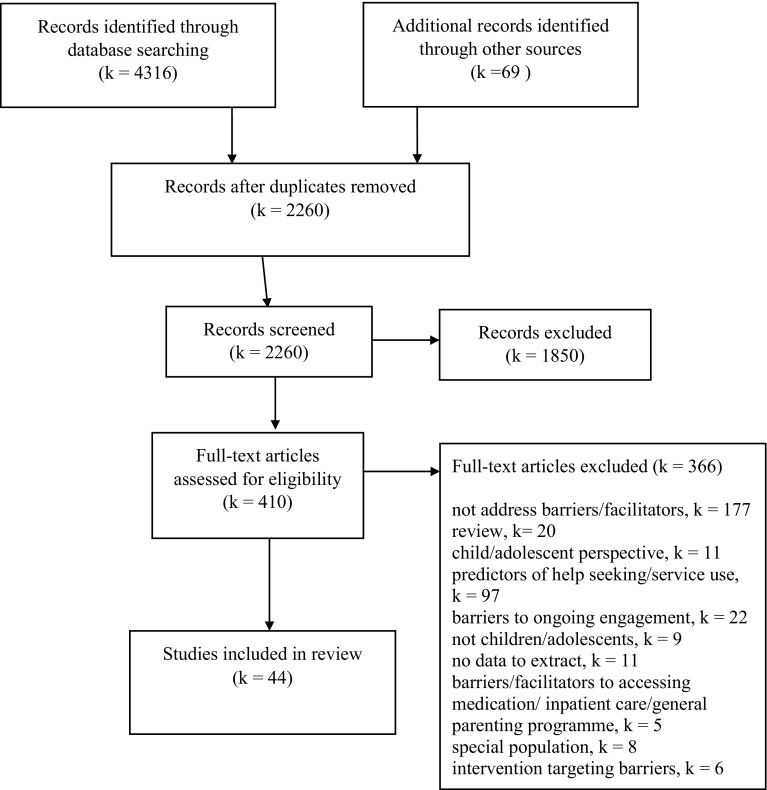
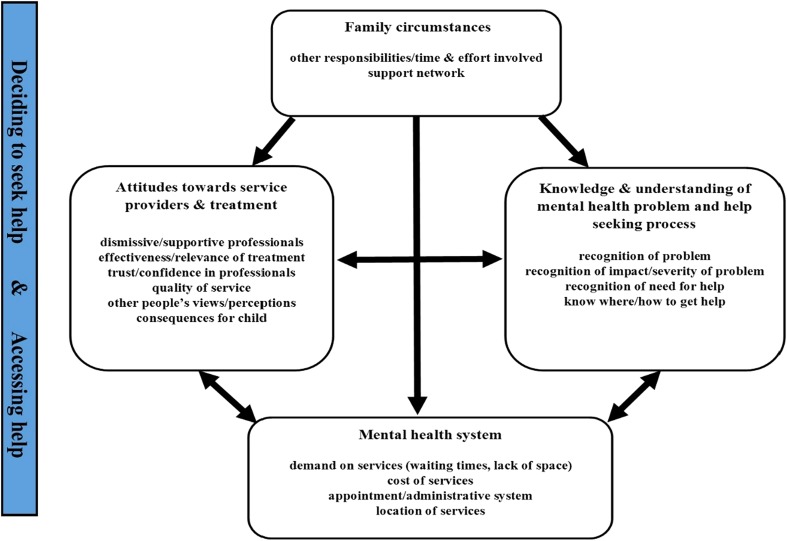
A minority of children and adolescents with mental health problems access treatment. The reasons for poor rates of treatment access are not well understood. As parents are a key gatekeeper to treatment access, it is important to establish parents' views of barriers/facilitators to accessing treatment. The aims of this study are to synthesise findings from qualitative and quantitative studies that report parents' perceptions of barriers/facilitators to accessing treatment for mental health problems in children/adolescents. A systematic review and narrative synthesis were conducted. Forty-four studies were included in the review and were assessed in detail. Parental perceived barriers/facilitators relating to (1) systemic/structural issues; (2) views and attitudes towards services and treatment; (3) knowledge and understanding of mental health problems and the help-seeking process; and (4) family circumstances were identified. Findings highlight avenues for improving access to child mental health services, including increased provision that is free to service users and flexible to their needs, with opportunities to develop trusting, supportive relationships with professionals. Furthermore, interventions are required to improve parents' identification of mental health problems, reduce stigma for parents, and increase awareness of how to access services.
Overview
The claims and statistics of this paper haven’t been checked yet.
Free: it reads the open-access text and checks the first 5 claims that cite a source we can check. Create a free account to check every claim.
Integrity signals
Registry
Cites
Statistics
Figures

Verification
Claims the paper makes
The claims and statistics of this paper haven’t been checked yet.
Free: it reads the open-access text and checks the first 5 claims that cite a source we can check. Create a free account to check every claim.
Claims other papers make about this one
Each is checked against this paper’s own text: does it say what the citing paper says it does?
The source backs part of the claim, not all of it — or backs it for a different population, condition or comparison.
In the citing paper
“These findings are also discrepant from prior studies examining barriers to EBP delivery in community-based settings for children (Reardon et al., 2017).”
From Stakeholder Perceptions of the Barriers to Receiving and Delivering Exposure-Based Cognitive Behavioral Therapy for Anxiety Disorders in Adult Community Mental Health Settings (2019) · cites this paper as Reardon et al., 2017
Experimental — accuracy not yet measuredThe source backs part of the claim, not all of it — or backs it for a different population, condition or comparison.
In the citing paper
“A previous review, which focused on the parents of children and adolescents, concluded that structural barriers were the most relevant [122].”
From What are the barriers, facilitators and interventions targeting help-seeking behaviours for common mental health problems in adolescents? A systematic review (2020) · cites this paper as [122]
Experimental — accuracy not yet measured
Self-check
Percentages, sums and reported differences re-computed from the paper’s own numbers.
The self-check needs the paper’s full text.
Citations
Cites
Preferred Reporting Items for Systematic Reviews and Meta-Analyses: the PRISMA statement
Moher, D., Liberati, A., Tetzlaff, J., Altman, D. G., & for the PRISMA Group (2009) · BMJ · doi:10.1136/bmj.b2535 · Cited by 83,823
Preferred reporting items for systematic reviews and meta-analyses: the PRISMA Statement.
(2009) · PubMed Central · Cited by 44,859
Kessler, R. C., Berglund, P., Demler, O., Jin, R., Merikangas, K. R., & Walters, E. E. (2005) · Archives of General Psychiatry · doi:10.1001/archpsyc.62.6.593 · Cited by 20,391 · cited 1×
“Youth is a time of heightened risk for mental health disorders, with half of all lifetime mental health disorders emerging before the age of 14 years [2].”
Polanczyk, G. V., Salum, G. A., Sugaya, L. S., Caye, A., & Rohde, L. A. (2015) · Journal of Child Psychology and Psychiatry · doi:10.1111/jcpp.12381 · Cited by 3,990
Gulliver, A., Griffiths, K. M., & Christensen, H. (2010) · BMC Psychiatry · doi:10.1186/1471-244x-10-113 · Cited by 3,292 · cited 1×
“A recent systematic review synthesised findings across studies that reported young people’s perceptions of barriers and facilitators to accessing mental health treatment [32].”
Popay, J., Roberts, H., Sowden, A., Petticrew, M., Arai, L., Rodgers, M., Britten, N., Roen, K., & Duffy, S. (2006) · Lancaster University · doi:10.13140/2.1.1018.4643 · Cited by 2,070
Pine, D. S., Cohen, P., Gurley, D., Brook, J., & Ma, Y. (1998) · Archives of General Psychiatry · doi:10.1001/archpsyc.55.1.56 · Cited by 1,753 · cited 1×
“Moreover, the negative impact of poor mental health early in life extends into adulthood, predicting poor academic outcomes [3], increasing the risk of subsequent mental health problems [4] and high rates of mental health service use [5], reducing life satisfaction [6], and creating a heavy economic burden for society…”
Merikangas, K. R., He, J.-P., Burstein, M., Swendsen, J., Avenevoli, S., Case, B., Georgiades, K., Heaton, L., Swanson, S., & Olfson, M. (2011) · Journal of the American Academy of Child & Adolescent Psychiatry · doi:10.1016/j.jaac.2010.10.006 · Cited by 1,579 · cited 2×
“1 3 studies suggest that being Caucasian [13, 14], having insurance coverage (in the USA) [15, 16], living in an urban area [17], and having a child with more severe mental health problems [12] increases the likelihood of a family accessing treatment.”
Unmet Need for Mental Health Care Among U.S. Children: Variation by Ethnicity and Insurance Status
Kataoka, S. H., Zhang, L., & Wells, K. B. (2002) · American Journal of Psychiatry · doi:10.1176/appi.ajp.159.9.1548 · Cited by 1,566 · cited 1×
“1 3 studies suggest that being Caucasian [13, 14], having insurance coverage (in the USA) [15, 16], living in an urban area [17], and having a child with more severe mental health problems [12] increases the likelihood of a family accessing treatment.”
Mental Health of Children and Young People in Great Britain, 2004: (557702010-001)
Green, H., McGinnity, A., Meltzer, H., Ford, T., & Goodman, R. (2005) · PsycEXTRA Dataset · doi:10.1037/e557702010-001 · Cited by 1,216 · cited 1×
“…and national surveys in the UK, Australia, and USA have estimated that only 25–56% of children and adolescents with mental health disorders access specialist mental health services [10–12], with particularly low rates of access for internalising compared with externalising problems [10, 12].”
Cited by
Items 301–400 of 653
Pfeiffer, S., Huffer, A., Feil, A., & In‐Albon, T. (2022) · Clinical Psychology in Europe · doi:10.32872/cpe.7375 · Cited by 5
“When assessing attitudes toward psychotherapy in youths, it is important to include parental attitudes, as they are important key gatekeep ers to mental health care access and as they also report negative attitudes toward mental health care (Reardon et al., 2017).”
BackgroundMathews, F., Benham‐Clarke, S., Ford, T. J., Hill, S., Sadler, K., & Newlove‐Delgado, T. (2024) · PLoS ONE · doi:10.1371/journal.pone.0297417 · Cited by 6
“This is in addition to the usual barriers perceived and experienced by young people in accessing professional based mental health support [30, 31].”
BackgroundAlhabeeb, A. A., Alasmari, S. S., Alduraihem, R. A., & Qureshi, N. A. (2019) · International Neuropsychiatric Disease Journal · doi:10.9734/indj/2019/v13i230106 · Cited by 5
“reported a couple of misperceptions and negative attitudes such as drugs are addictive and associated with weak or mild improvement, and difficult access to MH services in hospitals as also found in other studies [11-13,17].”
BackgroundResultParent Distress Intolerance, Repetitive Negative Thinking, and Mental Health Service Use
Patel, Z. S., Casline, E. P., Jensen‐Doss, A., & Timpano, K. R. (2020) · Child Psychiatry & Human Development · doi:10.1007/s10578-020-01017-1 · Cited by 5
Trethewey, S. P., Mathews, F., Russell, A. E., & Newlove‐Delgado, T. (2025) · European Child & Adolescent Psychiatry · doi:10.1007/s00787-025-02666-0 · Cited by 3
“The observed positive associations may partly reflect a time-lag to accessing support for younger children due to lower parental recognition of needs, parents adopting a ‘wait and see’ approach, long wait lists for specialist assessment and/or barriers to accessing services [19, 20].”
Supporting Clinicians in Implementing Exposure Therapy for Anxiety and Related Disorders
Frank, H. E., Woodard, G. S., & Martinez, R. G. (2025) · Current Psychiatry Reports · doi:10.1007/s11920-025-01612-w · Cited by 7
“…to treat in the office [ 37] • Psychosocial stressors (e.g., difficulty with transportation, lack of financial means to pay for services) [28, 39, 40] • Higher proportion of cases with anxiety disorders [42] or with PTSD [41] • Large caseloads [103] • Lack of ongoing supervision [28] • Lack…”
Loades, M. E., Perry, G., & Marshall, N. (2025) · JMIR Mental Health · doi:10.2196/72077 · Cited by 9
Montague, L. A., Hespos, S. J., Mackenzie, E., & Siette, J. (2024) · Frontiers in Public Health · doi:10.3389/fpubh.2024.1383270 · Cited by 6
Klein, A. M., Hagen, A., Rahemenia, J., de Gier, E., Rapee, R. M., Nauta, M. H., de Bruin, E. I., Biesters, J., van Rijswijk, L., Bexkens, A., et al. (2024) · Contemporary Clinical Trials Communications · doi:10.1016/j.conctc.2024.101346 · Cited by 4
“However, these effective treatments are often not easily accessible and many children with specific phobias do not receive the treatment they need [9, 10].”
BackgroundPape, T., Rixson, L., & Pari, A. A. A. (2025) · BJPsych Bulletin · doi:10.1192/bjb.2024.114 · Cited by 4
Hijdra, R. W., Groeniger, J. O., Burdorf, A., & Schuring, M. (2025) · Journal of Epidemiology & Community Health · doi:10.1136/jech-2024-222197 · Cited by 4
“12 15 Our study advances previous literature on NEET in interrelated ways.”
Parental Influences on University Students’ Mental Help‐Seeking Intentions
Digal, J. J., & Gagnon, M. M. (2020) · Journal of Counseling & Development · doi:10.1002/jcad.12308 · Cited by 8
Wickramasinghe, N. D., Samarutilake, N., Wettasinghe, M. C., Feiler, J., Morgan, A. R., Kousoulis, A. A., & Bortel, T. V. V. (2020) · BMJ Open · doi:10.1136/bmjopen-2020-037241 · Cited by 6
“9 12 19 On the global health agenda, evidence substantiates that it is advantageous and efficient to combine both preventive and promotional programmes in mental health in the context of holistic public health programmes.”
BackgroundKoet, L. B. M., Bennenbroek, J. J. M., Bruggeman, A. Y. S., de Schepper, E. I. T., Bohnen, A. M., Bindels, P., & Gerger, H. (2022) · BMC Family Practice · doi:10.1186/s12875-022-01802-y · Cited by 5
Chok, L., Surís, J.-C., & Barrense‐Dias, Y. (2023) · Qualitative Research Journal · doi:10.1108/qrj-10-2022-0135 · Cited by 9
Examining factors that drive health-related students to seek help for psychological challenges
Sojindamanee, N., Hongsanguansri, S., Hataiyusuk, S., Neelapaichit, N., Suttapanit, K., Jithavech, P., & Kiatrungrit, K. (2023) · International Journal of Medical Education · doi:10.5116/ijme.64a7.bffb · Cited by 4
Domhan, D., In‐Albon, T., & Pfeiffer, S. (2023) · Die Psychotherapie · doi:10.1007/s00278-023-00679-1 · Cited by 4
McLaughlin, S., Staniland, L., Egan, S. J., Wheadon, J., Munro, C., Preece, D. A., Furlong, Y., Mavaddat, N., Thompson, A., Robinson, S., et al. (2023) · BMJ Open · doi:10.1136/bmjopen-2023-073438 · Cited by 8
Moreira, H., Skvarc, D., Gomes-Pereira, B., Albuquerque, A., Góis, A. C., Fonseca, A., Pereira, A. M., Caiado, B., Paulino, B., Santos, C., et al. (2024) · BMC Psychology · doi:10.1186/s40359-024-01532-z · Cited by 7
“Many barriers may prevent parents from seeking face-to-face therapy for their children, such as a lack of time to attend regular sessions, costs associated with time off work and travel, and a lack of motivation to commit to lengthy face-to-face treatment [12].”
BackgroundChong, Y. Y., Lam, W. C., Wong, K. S., Wong, C., Lam, P. C. M., Hsu, S. M., & Chien, W. T. (2024) · Journal of Contextual Behavioral Science · doi:10.1016/j.jcbs.2024.100806 · Cited by 5
Mental Health Care Navigation Tools in Australia: Infoveillance Study
Woods, C., Furst, M. A., Dissanayake, M., Koerner, J., de Miquel, C., Lukersmith, S., Rosenberg, S. P., & Salvador‐Carulla, L. (2024) · JMIR Public Health and Surveillance · doi:10.2196/60079 · Cited by 6
Development of the children's wellbeing continuum: Fostering conversation in child mental health
Paton, K., Darling, S., Nowell, C., Gandhi, S., Jorm, A. F., Hart, L., Yap, M. B. H., & Oberklaid, F. (2024) · Mental Health & Prevention · doi:10.1016/j.mhp.2024.200385 · Cited by 7
McKenna, K., Dona, S. W. A., Gold, L. H., Silk, T. J., & Le, H. (2025) · European Child & Adolescent Psychiatry · doi:10.1007/s00787-025-02646-4 · Cited by 6
Rutar, M., Naterer, A., & Lavrič, M. (2025) · Journal of Trust Research · doi:10.1080/21515581.2025.2456270 · Cited by 13
“In a recent review, trust has been shown to be negatively related to mental illness in adolescents (Clarke et al., 2021; Fett et al., 2016) and positively to will-ingness to seek professional help (Corry & Leavey, 2017; Reardon et al., 2017).”
Burn, A., Holland, J., Roe, J., Hopkin, E., Wild, L., Fisher, M., Ford, T. J., Nazir, S. A., Dubicka, B., James, A. C., et al. (2025) · BJPsych Open · doi:10.1192/bjo.2024.850 · Cited by 4
“26 A risk that should not be underestimated given the delicate relationship between mental health services and young patients, especially at points of transition such as discharge.”
Reinhart, A., Alayli, A., Beierle, S., Löffler, A., Reißig, B., Walper, S., Kuger, S., & Bock, F. D. (2025) · Preventive Medicine · doi:10.1016/j.ypmed.2025.108392 · Cited by 6
Cummings, J. R., Gaydos, L. M., Mensa‐Kwao, A., Song, M., & Blake, S. (2018) · Journal of Technology in Behavioral Science · doi:10.1007/s41347-018-0066-2 · Cited by 5
Hiscock, H., Connolly, A., Dunlop, K., Perera, P., O’Loughlin, R., Brown, S., Krieser, D., West, A., Chapman, P., Lawford, R., et al. (2020) · Emergency Medicine Australasia · doi:10.1111/1742-6723.13486 · Cited by 4
Public perceptions on using Virtual Reality and Mobile Apps in Anxiety treatment
Kirkham, R., & Baten, C. (2020) · Reinvention an International Journal of Undergraduate Research · doi:10.31273/reinvention.v13i2.625 · Cited by 6
“If such individuals have limited knowledge or negative perceptions towards treatment, they are less likely to obtain help (Reardon et al., 2017) in the early stages of the illness where intervention is thought to reduce prevalence of developing an anxiety disorder (Osuch et al., 2015, Topper et…”
BackgroundBordin, I. A., Handegård, B. H., & Paula, C. S. (2021) · Child Abuse & Neglect · doi:10.1016/j.chiabu.2021.105382 · Cited by 6
“Other explanations based on studies that investigated the helpseeking behavior of adolescents with mental health needs may apply to victims of violence such as difficulty accessing services due to location, transportation costs and long waiting times to get an appointment, and even not knowing where to go or how to se…”
BackgroundResultCox, M., Urban, J. B., Lich, K. H., Wells, R. S., Lawrence, C., & Kwaja, N. (2022) · Child and Adolescent Social Work Journal · doi:10.1007/s10560-022-00898-6 · Cited by 6
“Parents or legal guardians are typically the gatekeepers to mental health treatment during childhood and adolescence, and their inclusion in research and planning efforts to support their children during the transition to adulthood is valuable (Reardon et al., 2017).”
BackgroundLange, S., Gossmann, E., Hofmann, S., & Fegert, J. M. (2022) · International Journal of Environmental Research and Public Health · doi:10.3390/ijerph192315951 · Cited by 7
“Previous studies further criticized the lack of use of evaluated measurement instruments for the operationalization of stigma [14,18].”
BackgroundInfluentialPredictors of help-seeking behavior in mothers of preschoolers
Jackson, S. T., Jaeger, A. J., & Vecchio, T. D. (2023) · Clinical Child Psychology and Psychiatry · doi:10.1177/13591045231160644 · Cited by 4
Slade, E. P., Bettencourt, A. F., & Gross, D. A. (2023) · Administration and Policy in Mental Health and Mental Health Services Research · doi:10.1007/s10488-023-01287-6 · Cited by 4
“Other costs for donated resources (e.g., the time trainees spent in training and the cost of classroom utilities) were imputed using standard methods (Drummond et al., 2015).”
MethodCao, H. (2023) · Frontiers in Psychology · doi:10.3389/fpsyg.2023.1219901 · Cited by 8
“, 2020); knowledge of therapy and the process of seeking help from mental health services (Reardon et al., 2017).”
BackgroundResultCalear, A. L., Batterham, P. J., McCallum, S. M., Banfield, M., Moore, E., Johnson, N., & Morse, A. R. (2024) · JMIR Formative Research · doi:10.2196/48945 · Cited by 6
“Similar barriers were identified among parents seeking treatment for mental health problems in their children and adolescents, with a lack of knowledge of where or how to seek help and a limited understanding of the mental health system identified as key barriers to service use [9].”
BackgroundLuo, J., Raat, H., Franse, C. B., Bannink, R., Bai, G., & van Grieken, A. (2022) · BMJ Open · doi:10.1136/bmjopen-2021-052595 · Cited by 6
Development of MyTeen Text Messaging Program to Support Parents of Adolescents: Qualitative Study
Chu, J. T. W., Wadham, A. K., Jiang, Y., Whittaker, R., Stasiak, K., Shepherd, M., & Bullen, C. (2019) · JMIR mhealth and uhealth · doi:10.2196/15664 · Cited by 4
“Majority of services to support youth mental health focus on the adolescent themselves, with scant knowledge of, or attention to, the unique role and needs of their parents [36].”
BackgroundRisser, H. J., Morford, A. E., Murphy, A., Pinkerton, L. M., Law, C., Yang, Y., Hersch, E., Wisner, K. L., & Boisseau, C. L. (2024) · Children and Youth Services Review · doi:10.1016/j.childyouth.2024.107578 · Cited by 4
Cha, B. S., Eikey, E. V., Mukamel, D. B., Palomares, K., Schueller, S. M., Sorkin, D. H., Stadnick, N. A., Stoeckl, S. E., Zheng, K., & Schneider, M. L. (2025) · Administration and Policy in Mental Health and Mental Health Services Research · doi:10.1007/s10488-025-01441-2 · Cited by 3
“…interventions (DMHIs) are one promising strategy for addressing barriers to traditional in-person mental health services, especially accessibility and acceptability of mental health care (Lattie et al., 2022), such as concerns about privacy and stigma (Andrade et al., 2014; Reardon et al., 2017).”
Bufton, K., Bates, M. T., Hamid, J., & Westrupp, E. M. (2025) · Mental Health & Prevention · doi:10.1016/j.mhp.2025.200448 · Cited by 5
Murphy, D., Heary, C., Shevlin, M. E., & Hennessy, E. (2025) · Clinical Child Psychology and Psychiatry · doi:10.1177/13591045251392632 · Cited by 5
“However, little is known about how their initial perception of the problem, predicts their likelihood of seeking help (Reardon et al., 2017).”
Biofeedback-based Digital Games and Well-being in Childhood: A Systematic Review
Darabi, M. D., Silber, S. P., Slotkin, R. A., & Peechatka, A. L. (2025) · Research on Child and Adolescent Psychopathology · doi:10.1007/s10802-025-01387-x · Cited by 6
“In many families, especially families of low-income, care-givers working full-time or multiple jobs do not have the ability to bring their child to a weekly therapy appointment, and many do not have access to transportation to reach the therapy office or clinic (Reardon et al., 2017).”
Rivera-Cepeda, C. F., Vaclavik, D., Bagner, D. M., Hardan, A. Y., & Bunge, E. L. (2025) · Evidence-Based Practice in Child and Adolescent Mental Health · doi:10.1080/23794925.2025.2602466 · Cited by 5
“Only a fraction of children in need of services have access to effective interventions such as behavioral parenting interventions (Reardon et al., 2017), highlighting the need for more accessible, efficient, and reliable tools to support caregivers and improve child outcomes.”
Barriers and disparities in adolescent mental health service access in the UK: A systematic review
Udu, S. K., Chukwu, J. O., Muhammad, R., & Isiyaku, S. (2026) · Mental Health & Prevention · doi:10.1016/j.mhp.2026.200497 · Cited by 5
Asseffa, N. A., Astawesegn, F. H., Giri, S., Ross, N., Ahmed, K. Y., Bore, M. G., Mahmood, S., & Thapa, S. (2026) · Child Abuse & Neglect · doi:10.1016/j.chiabu.2026.108005 · Cited by 4
Yang, M. (2022) · Journal of Environmental and Public Health · doi:10.1155/2022/1762767 · Cited by 3
“The integration of psychology into AI is something we must pay close attention to as AI advances since it will have a significant impact on how AI is used and developed in the real world [9].”
BackgroundRetractedPreferences of parents for mental health services to suit children with chronic medical conditions
Ride, J., Cameron, L., Jones, R., Dalziel, K., Wurzel, D. F., Kao, K., Freeman, J. L., & Hiscock, H. (2022) · Australian Health Review · doi:10.1071/ah22075 · Cited by 4
A qualitative analysis of child and family complaints related to child mental health services
Darcy, L., Råberus, A., & Sundler, A. J. (2023) · Journal of Child and Adolescent Psychiatric Nursing · doi:10.1111/jcap.12436 · Cited by 4
Parents' expected barriers to psychosocial care for children with complex problems
Pannebakker, N. M., Reijneveld, S. A., Numans, M. E., & Kocken, P. (2023) · Child & Family Social Work · doi:10.1111/cfs.13093 · Cited by 4
Weiler, L. M., Hanson, A. N., Busse, C., Aronson, E. L., & Neiman, P. J. (2024) · Children and Youth Services Review · doi:10.1016/j.childyouth.2024.107688 · Cited by 4
Craig, J. T., Moore, C. C., Barnett, E. R., Knight, E., Sanders, M. T., Breslend, N. L., Haskell, H. G., & Jankowski, M. K. (2024) · Journal of Child and Family Studies · doi:10.1007/s10826-024-02860-9 · Cited by 3
“…providers, time needed to travel to and attend appointments, and missed work and wages due to attendance, as well as intangible barriers, such as stigma, cultural barriers, and lack of con-fi dence in the potential bene fi ts of psychosocial interventions (Larson et al., 2013; Reardon et al., 2017).”
Smith, M. M., Smith, R. M., Habgood, E., Quach, J., & Darling, S. J. (2024) · Mental Health & Prevention · doi:10.1016/j.mhp.2024.200357 · Cited by 6
Levkovich, I., & Cohen, S. (2024) · School Mental Health · doi:10.1007/s12310-024-09714-1 · Cited by 5
“Moreover, Reardon et al. (2017) reported that socioeconomic disparities greatly influence access to mental health care, with students from lower-income families facing disproportionate challenges in obtaining necessary services.”
A Mixed Methods Approach to Korean-Youth Mental Health First Aid (K-YMHFA): A Pilot Study
Won, C. R., Lee, L. H., Lee, H. Y., Noh, H., Doh, N., & Allen, R. S. (2025) · Journal of Evidence-Based Social Work · doi:10.1080/26408066.2025.2456756 · Cited by 3
Skripkauskaitė, S., Geulayov, G., the OxWell Study Team, Fazel, M. S., & Borschmann, R. (2025) · JCPP Advances · doi:10.1002/jcv2.70050 · Cited by 4
“For some families, particularly those in rural or socioeconomically disadvantaged contexts, additional barriers such as transportation, time off work, or navigating complex referral pathways may further restrict access (Allwood, 2020; Reardon et al., 2017).”
New Technologies to Deliver CBT (Including Web-Based CBT, Mobile Apps, and Virtual Reality)
Weiss, D., & Marsac, M. L. (2019) · Cambridge University Press eBooks · doi:10.1017/9781108235655.028 · Cited by 3
O’Connell, C., Shafran, R., Camic, P. M., Bryon, M., & Christie, D. (2019) · Clinical Child Psychology and Psychiatry · doi:10.1177/1359104519836701 · Cited by 7
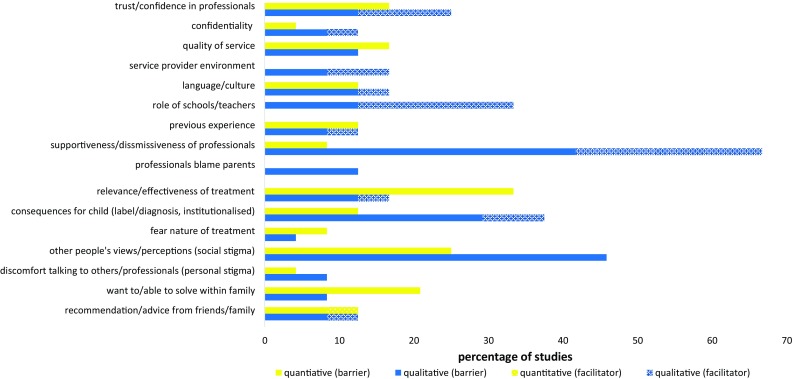
“Indeed, in a systematic review of the literature, Reardon et al. (2017) found that families view supportive healthcare professionals as a facilitator to access mental health support for their child.”
BackgroundBridges, A. J., Guzman, L. E., & Melkonian, A. J. (2019) · Social Sciences · doi:10.3390/socsci8120320 · Cited by 3
A Matter of Trust: Parents’ Attitudes Toward Child Mental Health Information Sources
Bonanno, R., & Veselak, K. (2020) · Advances in Social Work · doi:10.18060/22970 · Cited by 5
“A systematic review of parents’ perceptions of the barriers to pursuing mental health treatment for their children found that the absence of a trusting relationship with health care providers was a significant barrier (Reardon et al., 2017).”
BackgroundPannebakker, N. M., Kocken, P., van Dommelen, P., van Mourik, K., Reis, R., Reijneveld, S. A., & Numans, M. E. (2020) · PLoS ONE · doi:10.1371/journal.pone.0231620 · Cited by 3
Treatment Engagement Following a Positive Mental Health Screening Questionnaire
Cohan, H. L., Waxmonsky, J. G., Fogel, B. N., Pradhan, S., & Sekhar, D. L. (2022) · American Journal of Preventive Medicine · doi:10.1016/j.amepre.2022.01.007 · Cited by 5
Salvo, T., Huckridge, J., Daniilidi, X., Gedara, C. K., & Valentino, C. (2022) · Clinical Child Psychology and Psychiatry · doi:10.1177/13591045221111215 · Cited by 4
Kaminer, Y., Chan, G., & Burke, R. H. (2022) · American Journal on Addictions · doi:10.1111/ajad.13307 · Cited by 3
Williamson, V., Larkin, M., Reardon, T. C., Ford, T. J., Spence, S. H., Morgan, F., & Creswell, C. (2022) · Emotional and Behavioural Difficulties · doi:10.1080/13632752.2022.2122285 · Cited by 4
“…drawn from the data, but scaffolded by the open-ended interview schedule questions, the empirical literature on child mental health and school-based interventions (e.g. including but not limited to (Reardon et al. 2017; Morgan et al. 2017; Soneson et al. 2018), and the study’s research questions.”
BackgroundMethodInfluentialSelf-citationTan, R. H. S., Koh, Y. S., Vaingankar, J. A., Abdin, E., Sambasivam, R., Chong, S. A., & Subramaniam, M. (2023) · Social Psychiatry and Psychiatric Epidemiology · doi:10.1007/s00127-023-02440-0 · Cited by 4
Factors influencing junior high school students’ perceptions of attending school in Japan
Nakamura‐Thomas, H., Sano, N., & Maciver, D. (2023) · Child and Adolescent Psychiatry and Mental Health · doi:10.1186/s13034-023-00631-w · Cited by 6
Villarreal, V. (2023) · Journal of Applied School Psychology · doi:10.1080/15377903.2023.2236958 · Cited by 4
“…of the impact of the problem), the inconvenience of accessing non-school-based mental health services (e.g. travel, time), and concerns about knowledge about the availability of community providers (i.e. lack of knowledge about where or how to get help; Reardon et al., 2017; Villarreal, 2018).”
BackgroundManagement of youth with suicidal ideation: Challenges and best practices for emergency departments
Santillanes, G., Foster, A. A., Ishimine, P. T., Berg, K. T., Cheng, T. A., Deitrich, A., Heniff, M. S., Hooley, G., Pulcini, C. D., Ruttan, T. K., et al. (2024) · Journal of the American College of Emergency Physicians Open · doi:10.1002/emp2.13141 · Cited by 6
Chatrath, S., Loiselle, A. R., Johnson, J. K., & Begolka, W. S. (2024) · Skin Health and Disease · doi:10.1002/ski2.408 · Cited by 6
“27,28 In fact, previous literature has shown that patients report fear of stigma-tization, dismissed concerns, and failure to incorporate treatment preferences by their provider as barriers to seeking mental health support.”
BackgroundAssociations between child mental health, carer worry and help-seeking
Liverpool, S., & Edbrooke-Childs, J. H. (2021) · Journal of Child Health Care · doi:10.1177/13674935211014750 · Cited by 3
“Nevertheless, previous research suggests that problem severity in addition to functional impairment is associated with help-seeking, which was not the case in the present study as problem severity was not associated with help-seeking (Reardon et al., 2017, 2019).”
BackgroundResultChoi, S. Y., Rusch, A., Koschmann, E., Bilek, E. L., Lane, A., Abelson, J. L., Eisenberg, D., Himle, J. A., Fitzgerald, K. D., Liebrecht, C., et al. (2022) · Frontiers in Education · doi:10.3389/feduc.2022.814157 · Cited by 5
“However, youth access to effective and evidence-based mental healthcare remains low, especially when accessed in settings outside of school, due to various barriers including stigma, cost, inconvenience, transportation, and time/cost intensive systems for identifying and referring students to treatment (Kataoka et al.…”
BackgroundReardon, T. C., Dodd, H. F., Hill, C., Jasper, B., Lawrence, P. J., Morgan, F., Rapee, R. M., Ukoumunne, O. C., Violato, M., Davey, E., et al. (2022) · Research Square · doi:10.21203/rs.3.rs-970695/v1 · Cited by 3
Self-citationMoussavi, Y., Haugland, B. S. M., Wergeland, G. J., Lehmann, S., & Mæland, S. (2024) · Child & Family Social Work · doi:10.1111/cfs.13172 · Cited by 3
Victory, E. J., Druskin, L. R., Phillips, S. T., Han, R. C., Jean, A., Keen, K. R., Aman, E., Stokes, J. O., Kirby, J., & McNeil, C. B. (2024) · Child & Youth Care Forum · doi:10.1007/s10566-024-09831-7 · Cited by 3
“…and non-opioid-affected families is noteworthy, given that those in the opioid-affected group had significantly higher rates of non-biological parents, CPS involvement, and low-income status, all of which are often considered to be barriers to treatment (Radez et al., 2020; Reardon et al., 2017).”
Ethical Considerations in School‐Based Mental Health Screening and Service Provision—A Commentary
Peterson, L. S., & Villarreal, V. (2024) · Journal of School Health · doi:10.1111/josh.13520 · Cited by 2
Putkuri, T., Irene, L., & Häkkinen, M. (2024) · Scandinavian Journal of Caring Sciences · doi:10.1111/scs.13310 · Cited by 5
Büsch, K., ten Hoor, G. A., Paschke, K., Thomasius, R., & Arnaud, N. (2025) · European Child & Adolescent Psychiatry · doi:10.1007/s00787-025-02640-w · Cited by 6
“In addition, parental views and attitudes towards mental health services can influence treatment uptake among adolescents such that parents act as gatekeepers to treatment access [31].”
Pickens, J. C., Riggs, R. E., Kimball, T. G., Rasmussen, E. E., & Wakefield, S. M. (2025) · Health Communication · doi:10.1080/10410236.2025.2475561 · Cited by 4
“Researchers have found that low levels of MH literacy in parents is a barrier to parents getting their children MH services (Austin et al., 2024; Reardon et al., 2017), and unfortunately general parental MH literacy may be limited (Hurley et al., 2020).”
Aisiku, O. A., & Imarenezor, E. P. K. (2025) · African Journal of Medicine Surgery and Public Health Research · doi:10.58578/ajmsphr.v2i2.5256 · Cited by 2
Garcia‐Rodriguez, I., West, S. J., Tirado, C., Hernandez, C. M., Fuentes, L. S., Perrin, P. B., & Moreno, O. (2025) · Behavioral Sciences · doi:10.3390/bs15060826 · Cited by 4
HSN—helping in mental distress: a new emotion focused psychological first aid program
Scheele, M., Appel, S., Rausch, I., Schecklmann, M., Klein, J., Staudinger, S., Schmidt, R., Kreuzer, P. M., & Langguth, B. (2025) · Frontiers in Public Health · doi:10.3389/fpubh.2025.1589608 · Cited by 5
Khanal, G., Selvamani, Y., & Sapkota, P. (2025) · BMC Health Services Research · doi:10.1186/s12913-025-12983-4 · Cited by 7
“…reasons [6], such as stigma [12–14], misconceptions [10, 12, 15], the level of mental knowledge [12, 16–18], long waiting hours [5, 12], a lack of adequate human resources [12], financial scarcity [12], high costs of treatment [19] and distrust between beneficiaries and MHS providers [10, 19].”
Khoziasheva, A. (2025) · Social Sciences & Humanities Open · doi:10.1016/j.ssaho.2025.101921 · Cited by 2
Bibb, J., Dimopoulos-Bick, T. L., McMahon, K., Tjung, C., Orcher, P., & Palmer, V. J. (2025) · Mental Health & Prevention · doi:10.1016/j.mhp.2025.200457 · Cited by 2
Liu, W., Xie, Y., Vinson, S. Y., Yu, J., & Serban, N. (2025) · BMC Public Health · doi:10.1186/s12889-025-25422-0 · Cited by 4
Ticknor, I. L., DiGangi, M. J., Sarfan, L. D., & Negriff, S. L. (2026) · BMC Health Services Research · doi:10.1186/s12913-025-13928-7 · Cited by 4
“Additionally, numerous other studies focused on identifying barriers to behavior health referral completion have named both financial concerns and lack of appointment availability as common barriers [18, 23].”
Predictors of adolescent psychiatric rehospitalization: A multi-level framework
Pinkus, L., & Ford, J. L. (2026) · International Journal of Nursing Studies Advances · doi:10.1016/j.ijnsa.2026.100481 · Cited by 2
“…insurance (government provided partial or full medical coverage) to avoid out-of-pocket costs and reduce financial barriers to care (Berardelli et al., 2022; Eichstadt et al., 2023b; Grudnikoff et al., 2019; Madden et al., 2020; Owusu et al., 2022; Reardon et al., 2017; Rylander et al., 2016).”
Following the youth patient journey in the mental health help-seeking process in Bogotá, Colombia
Shambo-Rodríguez, D. L., Riaño-Fonseca, M. I., Camacho, S., Rueda-Jaimes, G. E., Sánchez-Nítola, M. N., Chocontá, A. M., Gómez–Restrepo, C., Hilber, A. M., Navarro-Mancilla, Á. A., Hickie, I. B., et al. (2026) · International Journal of Mental Health Systems · doi:10.1186/s13033-025-00685-7 · Cited by 4
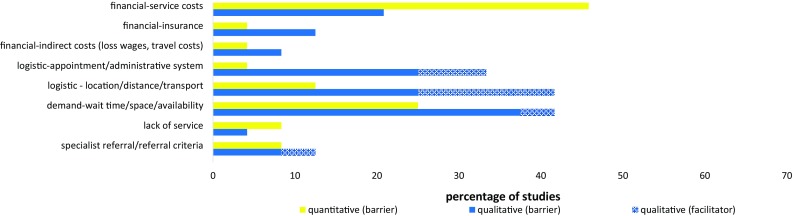
“Additionally, a systematic review by Reardon et al. [10] highlighted financial, logistical, and demand-related barriers as significant obstacles to accessing psychological treatment for children and adolescents.”
Bolhuis, K., Shamseddeen, W. A., Ghandour, L. A., Elbejjani, M., & Maalouf, F. T. (2026) · Social Psychiatry and Psychiatric Epidemiology · doi:10.1007/s00127-026-03071-x · Cited by 2
Kim, I., & Kim, N. (2021) · Counseling Outcome Research and Evaluation · doi:10.1080/21501378.2021.1874240 · Cited by 2
“Given that parents are the primary gatekeepers to receiving mental health care for their child (Reardon et al., 2017; Sayal et al., 2010), caregivers’ insufficient awareness of anxiety problems may result in adolescents’ continued or exacerbated experience of anxiety symptoms without appropriate interventions.”
BackgroundInfluentialColleran, A., O’Connor, A., Hogan, M., Harney, O., Durand, H., & Hanlon, M. L. D. (2021) · HRB Open Research · doi:10.12688/hrbopenres.13328.1 · Cited by 1
“, 2011) or related to the design and practices of the healthcare system (Reardon et al., 2017).”
BackgroundAvailability & willingness of psychologists to treat infants and young children: Data from one state
Giordano, K., LaTourette, R., O’Rourke, S. R., Baker, S., & Breen, E. (2021) · Children and Youth Services Review · doi:10.1016/j.childyouth.2021.106195 · Cited by 3
Mieloo, C. L., van der Ende, J., van Zijl, A. L., Schuring, M., Steijn, B., & Jansen, W. (2022) · BMJ Open · doi:10.1136/bmjopen-2021-048933 · Cited by 3
Analysis of Adolescent Barriers in Seeking Help for Mental Health Issues
Bhagavathi, P., & Vitone, T. (2022) · Journal of Student Research · doi:10.47611/jsrhs.v11i3.2670 · Cited by 4
The NSCH patient-centered medical home scale: A measurement history, critique, and commentary
Hughes, P. M., Graaf, G., & Thomas, K. C. (2023) · Children s Health Care · doi:10.1080/02739615.2023.2233431 · Cited by 3
“These questions have a long history of use and well-documented face validity and convergent reliability (Adler et al., 2010; Kim et al., 2012; Reardon et al., 2017).”
Salloum, A., Lu, Y., Echiverri-Cohen, A. M., Metts, A. V., Salomon, K., Chen, H., & Storch, E. A. (2023) · Child & Youth Care Forum · doi:10.1007/s10566-023-09774-5 · Cited by 3
“In childhood treatments, parent perception of the therapist as someone helpful and to be trusted is an important facilitator of behavioral health treatment for children (Reardon et al., 2017).”
Corberán, M., Arnáez, S., Saman, Y., Vera, B. P., García‐Soriano, G., & Roncero, M. (2024) · BMC Psychology · doi:10.1186/s40359-024-01772-z · Cited by 3
“In the adolescent population, this lack of treatment is even more noticeable [13].”
BackgroundExperience of psychosocial rehabilitation; perspectives of depressed adolescents
Kodzo, L. D., Danso, N. A. A., Budu, J. T., Kafle, A., Hussain, A., & Zhang, R. (2024) · European Child & Adolescent Psychiatry · doi:10.1007/s00787-024-02473-z · Cited by 4
“Several of these themes are consistent with past studies in the field [ 4, 28, 29], and it appears that this section of individuals still seeks more knowledge, assistance, and sympathy.”
Zink, J., Weniger, M., Porst, P. T., Siegmund, C. B., McDonald, M., Rückert, F., Roessner, V., Knappe, S., & Beesdo‐Baum, K. (2024) · Research on Child and Adolescent Psychopathology · doi:10.1007/s10802-024-01221-w · Cited by 5
“Several reasons for this intervention gap have been discussed, including that parents do not recognize emotional problems or underestimate their negative effects (Reardon et al., 2017).”
Background
Metadata
- Authors
- Reardon, T., Harvey, K., Baranowska, M., O’Brien, D., Smith, L., & Creswell, C.
- Affiliations
- University of Reading (GB)
- Corresponding author
- Harvey, Kate
- Venue
- European Child & Adolescent Psychiatry
- Published
- 2017-01-04
- Volume
- 26
- Issue
- 6
- Pages
- 623-647
- ISSN
- 1018-8827 (ISSN-L)
- 1435-165X
- PMC
- PMC5446558
- OpenAlex
- W2567323169
- Cited by
- 653
- References
- 82
- Citations by year
- 2026: 74 · 2025: 98 · 2024: 105 · 2023: 89 · 2022: 91 · 2021: 71 · 2020: 61 · 2019: 34 · 2018: 24 · 2017: 6
- FWCI
- 5.38
- Type
- journal article
- Language
- en
- Open access
- hybrid
- doi.org
- Locations
- European Child & Adolescent Psychiatry (publishedVersion, cc-by)
- Europe PMC (PubMed Central) (publishedVersion, other-oa)
- PubMed Central (publishedVersion, cc-by)
- PubMed (publishedVersion)
- CentAUR (University of Reading) (acceptedVersion)
- Funders
- Research Trainees Coordinating Centre (NIHR-RP-2014-04-018)
- Topics
- Health Sciences › Medicine › Psychiatry and Mental health › Mental Health Treatment and Access
- Social Sciences › Psychology › Clinical Psychology › Child and Adolescent Psychosocial and Emotional Development
- Social Sciences › Psychology › Clinical Psychology › Psychology and Mental Health
- Keywords
- barriers to treatment access, child and adolescent mental health, parental attitudes, help-seeking, mental health service utilization, mental health stigma, family situation, child mental health services, parent-professional relationship
- MeSH terms
- Adolescent, Child, Child, Preschool, Evaluation Studies as Topic, Humans, Mental Health, Mental Health Services, Parents, Qualitative Research
About these checks
Registry, retraction, Cites and statistics results are computed, not judged, with one exception: a printed reference that no index lists is read once by a model before it counts as a citation error. Claims are extracted by a model and kept only when their quote appears verbatim in the text; each cited source is then checked, with a model’s help, for whether it says what the claim relies on. Those verdicts can be wrong — read the claim’s quote and the cited source before relying on one.
Statistics and arithmetic are recomputed, not judged.
Confidence bands are shown only for fields calibrated on our annotated test set. None is calibrated yet, so no band is shown.
What counts as a claim ›How we measure confidence ›How we check this ›
Are you an author, or do you see a problem with this page? Request a review
Data sources
Bibliographic data: Semantic Scholar, OpenAlex, Crossref.
Contains information from the Semantic Scholar Academic Graph Datasets, made available under the ODC Attribution License (ODC-BY 1.0).
Semantic Scholar’s data is described in: Kinney, R., et al. (2023). The Semantic Scholar Open Data Platform. arXiv:2301.10140.
