

Conversion of biomass to biofuels and life cycle assessment: a review
Open accessThe DOI matches its Crossref record; 242 of the 242 references it cites were found in a registry or an index; 6 of the 80 sources its claims cite were checked for support.
Abstract
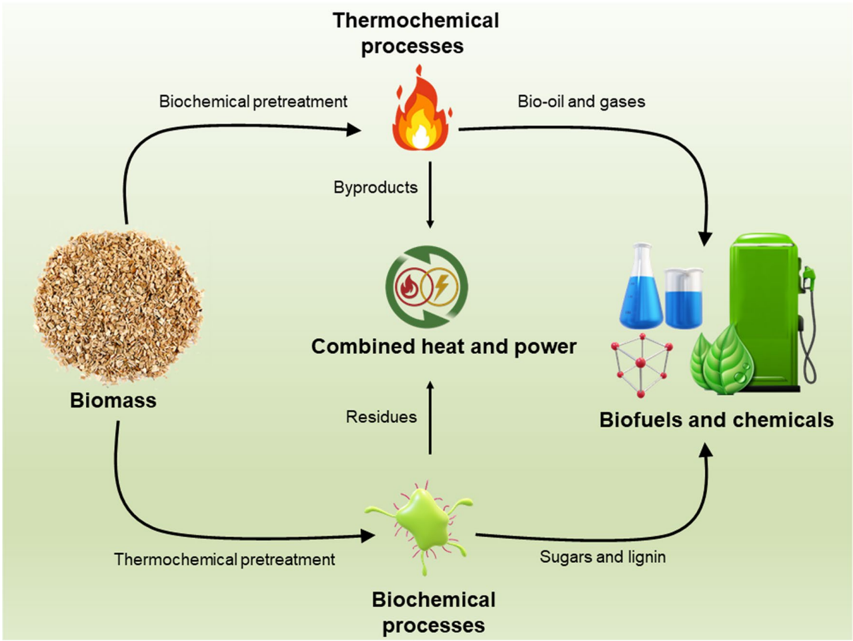
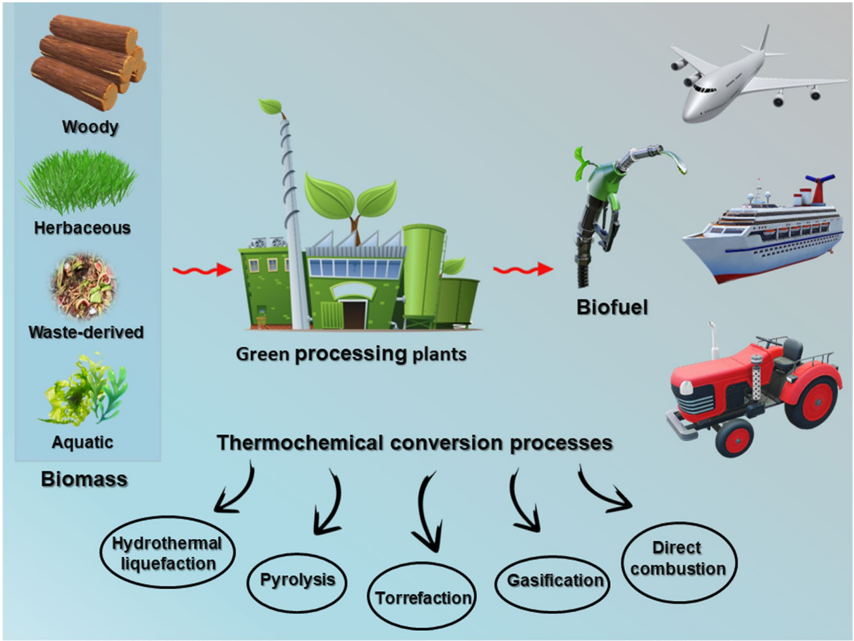
Thermochemical processes are classified into low temperature, below 300 °C, and high temperature, higher than 300 °C, i.e. gasification, combustion and pyrolysis.
Overview
CoChat Summary
TL;DR
This review surveys biomass-to-biofuel conversion routes and the life cycle assessment (LCA) literature, with a critical review of 40 LCA studies published from 2019–2021. It concludes that thermochemical routes are more researched than biochemical ones, and that integrating hydrothermal and biochemical routes is promising for a circular economy but still faces technical and cost challenges.
Key findings
- Biomass contributes about 9% (~51 EJ) of global primary energy supply, and the paper says global energy demand is projected to rise by almost 28% by 2040.
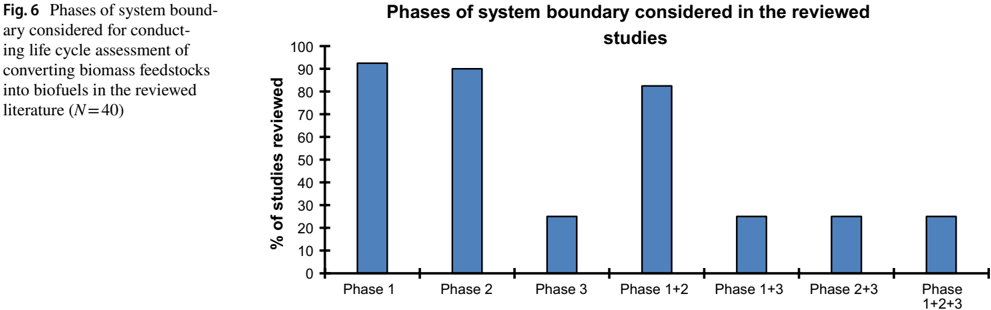
- The review analyzed 40 LCA studies from 2019–2021 and found that only 8 studies included all three phases of biofuel production; about 90% considered Phase 1 and Phase 2, but only 25% included Phase 3.
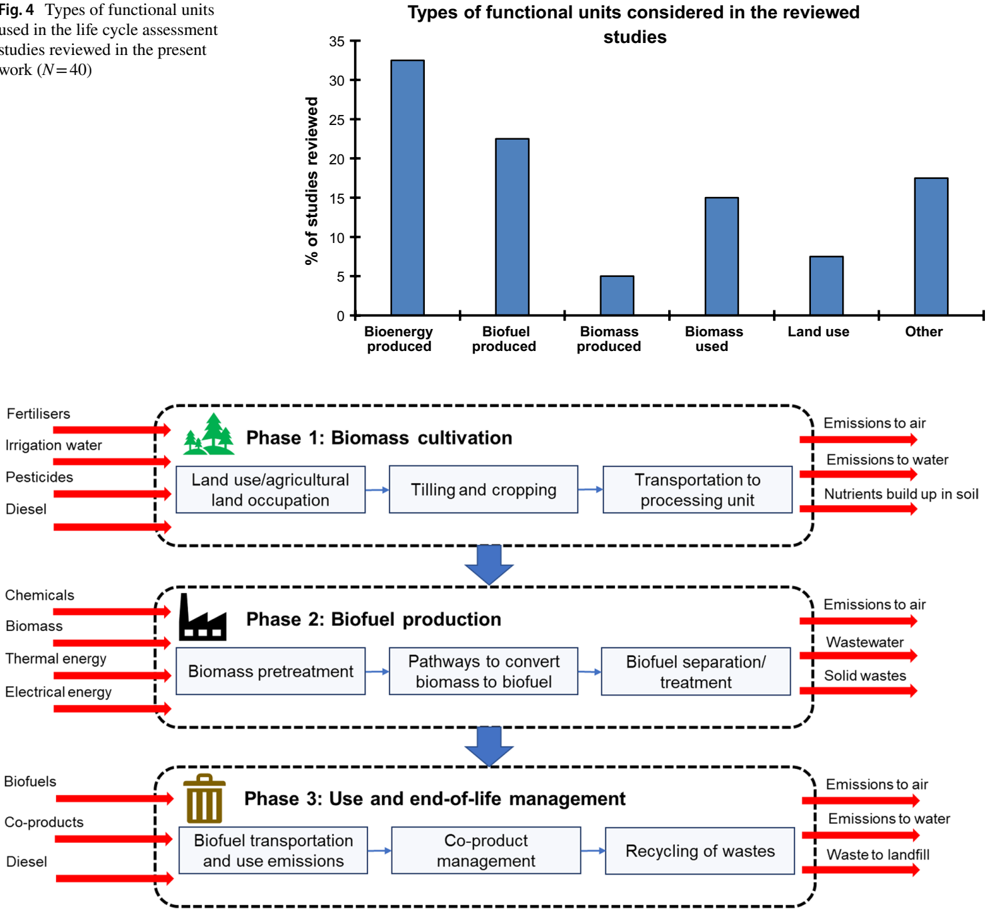
- About 32% of reviewed studies used “units of bioenergy in J or kWh” as the functional unit, while about 22% used “amount of biofuels produced” such as kg.
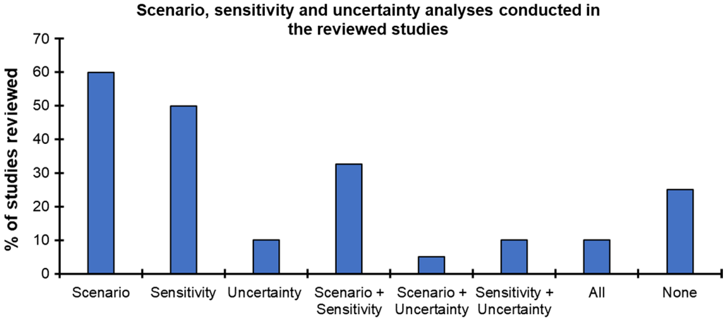
- The paper reports that 60% of the reviewed studies considered scenario analysis, 10% did uncertainty analysis, and 50% conducted sensitivity analysis; it also states that no study included all three phases of the biofuel production system boundary together with uncertainty, scenario, and sensitivity analyses.
- Across comparative LCA studies, thermochemical processes generally showed lower environmental impacts than biological processes for the same biomass and geographic/temporal span; one cited comparison found anaerobic digestion best for 14 out of 18 impacts.
Methods
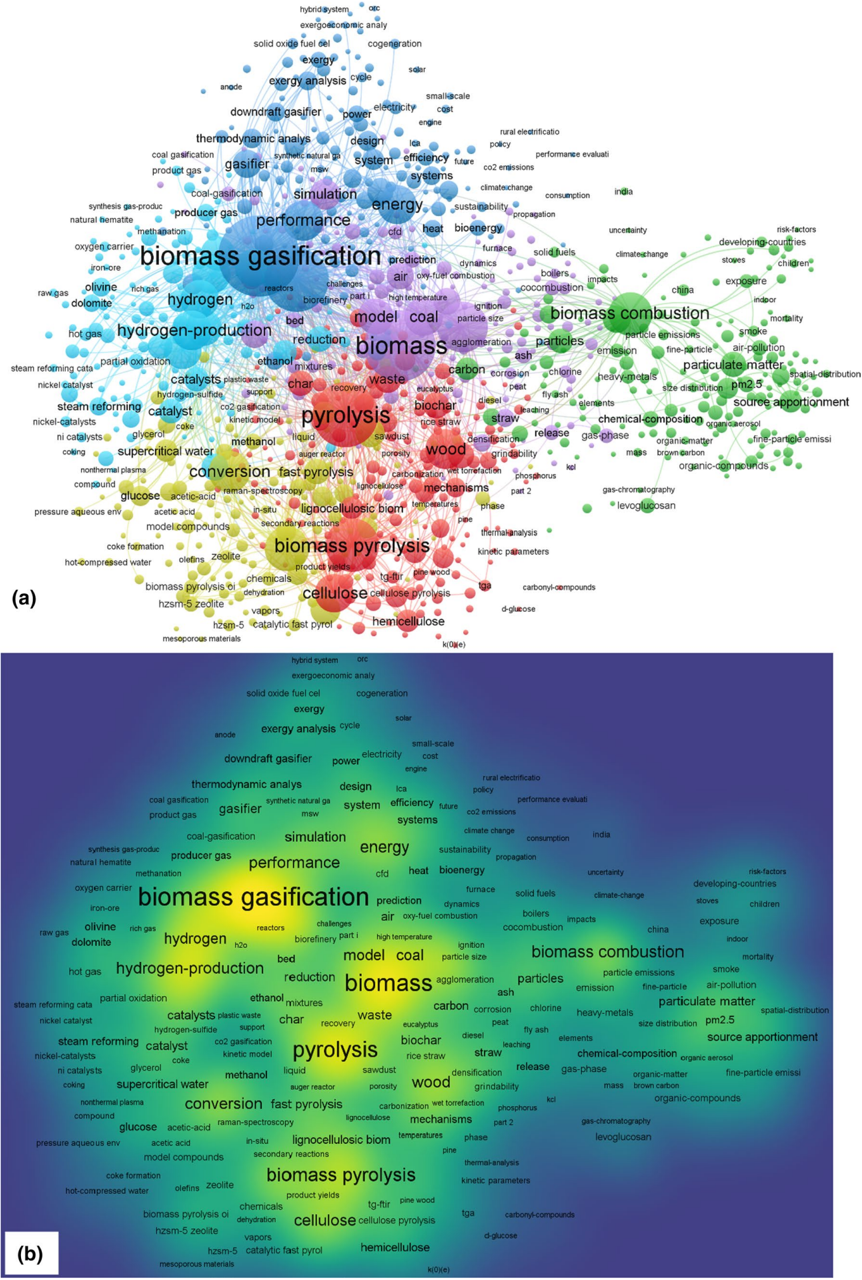
- Narrative review of biomass conversion technologies plus a bibliometric analysis using Web of Science data and VOSviewer; the bibliometric search returned 9,947 results, exported in batches of 500 entries.
- Critical review of 40 LCA studies published from 2019 to 2021 on biofuels, covering biomass feedstocks, geographical span, biofuels produced, life cycle tools, and inventories.
- The paper organizes analysis around ISO LCA stages: goal and scope, inventory analysis, impact assessment (mid-point and endpoint indicators), uncertainty/scenario/sensitivity analysis, and interpretation.
Limitations
- Stated in the paper: there was no study identified that included all three phases of biofuel production along with uncertainty, sensitivity, and scenario analyses.
- Stated in the paper: only 4 studies had all three of scenario, sensitivity, and uncertainty analyses, which “poses questions” about the applicability of findings for decision-making.
- Evident from the text: the review is limited to 40 studies from 2019–2021 for the LCA synthesis, so older or more recent studies are not part of that analysis.
Model-written summary. Check it against the paper before relying on it.
Integrity signals
Registry
Cites
Statistics
Figures
Verification
Claims the paper makes
3 Valid · 1 Not valid · 58 Not checked · 42 Own results and interpretations
The cited sources that could be checked couldn’t confirm or dispute this claim.
In the paper
“Biomass, unlike other sustainable energy sources such as wind, solar, geothermal, marine and hydropower, can directly produce fuel along with chemicals (Quereshi et al. 2021;Farrell et al. 2019;Farrell et al. 2020).”
§ Conversion of biomass to biofuels and life cycle assessment: a review > Introduction
What the sources say
- Not checked — no full text of the sourcecites Quereshi et al. 2021 matched to “Overview of sustainable fuel and energy technologies” (2021) source
- Could not verifycites Farrell et al. 2019 matched to “Assessment of the energy recovery potential of waste Photovoltaic (PV) modules” (2019) sourceExperimental — accuracy not yet measured
The Introduction (page unavailable) describes solar PV as producing electricity, and the Results and Discussion (page unavailable) compare PV polymers’ calorific value with energy crops. Neither passage addresses whether biomass can directly produce both fuels and chemicals, or makes the claimed comparison with other renewable sources. Searches for that comparison and for biomass, fuels, and chemicals found no supporting passage in our copy. (LLM, conf=0.76)
- Could not verifycites Farrell et al. 2020 matched to “Technical challenges and opportunities in realising a circular economy for waste photovoltaic modules” (2020) sourceExperimental — accuracy not yet measured
The Introduction (page unavailable) lists biomass alongside solar, wind, hydro, tidal and geothermal as renewable technologies, but does not compare what they produce. A search for biomass conversion into fuels and chemicals found discussion of pyrolysis in photovoltaic-module recycling, not a statement that biomass directly produces fuels and chemicals. (LLM, conf=0.76)
plain- Asserted: passes — The authors put it forward as true.
- Checkable: passes — It can be checked against evidence.
- Load-bearing: passes — The paper’s conclusions depend on it.
- Based: passes — The paper gives a reason why it holds.
The sources with a verdict support this claim; the rest weren’t checked yet, have no full text we could read, or their verdicts aren’t rated yet.
In the paper
“Some studies computed net energy ratio to evaluate the usability of biofuels as energy sources (Al-Mawali et al. 2021;Al-Muhtaseb et al. 2021;Dasan et al. 2019;Im-Orb and Arpornwichanop 2020;Reaño 2020;Saranya and Ramachandra 2020)”
§ Conversion of biomass to biofuels and life cycle assessment: a review > Mid-point indicators
What the sources say
- Could not verifycites Al-Mawali et al. 2021 matched to “Life cycle assessment of biodiesel production utilising waste date seed oil and a novel magnetic catalyst: A circular bioeconomy approach” (2021) sourceExperimental — accuracy not yet measured
Our copy of Al-Mawali et al. (2021) holds only the institutional-repository record: the title/author block, the keyword list (life cycle assessment, magnetic catalyst, circular bioeconomy, biodiesel, date seed oil) and the citation/RIS entries (Abstract section, no page numbers). Six searches ('net energy ratio', 'energy payback ratio fossil energy demand', 'energy efficiency ratio of energy output to input', transesterification/yield, and LCA functional-unit/GWP terms) returned only these metadata passages — no abstract body, methods, results or discussion text is present. Nothing in our copy therefore states or excludes that the authors computed a net energy ratio to assess biodiesel's usability as an energy source; the claim can be neither confirmed nor disputed. (LLM, conf=0.70)
- Supportedcites Al-Muhtaseb et al. 2021 matched to “Circular economy approach of enhanced bifunctional catalytic system of CaO/CeO2 for biodiesel production from waste loquat seed oil with life cycle assessment study” (2021) source
In the Figure 12 discussion, the paper calculates a net energy ratio of 2.23 using biodiesel energy output and fossil-resource savings. Section 3.6 identifies this as an LCA of biodiesel production from waste loquat seeds, supporting the citing sentence's characterization of the study. (LLM, conf=0.92)
- Not checked — no full text of the sourcecites Dasan et al. 2019 matched to “Life cycle evaluation of microalgae biofuels production: Effect of cultivation system on energy, carbon emission and cost balance analysis” (2019) source
plain- Asserted: passes — The authors put it forward as true.
- Checkable: passes — It can be checked against evidence.
- Load-bearing: unclear — It is unclear whether the paper’s conclusions depend on it.
- Based: passes — The paper gives a reason why it holds.
- Could not verify
Every source the paper cites for this claim was checked and supports it.
In the paper
“In fact, there was only one study identified that highlighted that for spent coffee grounds, incineration is a better route compared to biofuel production (Schmidt Rivera et al. 2020).”
§ Conversion of biomass to biofuels and life cycle assessment: a review > Key points observed in life cycle assessment studies
What the sources say
- Supportedcites Schmidt Rivera et al. 2020 matched to “Life cycle environmental sustainability of valorisation routes for spent coffee grounds: From waste to resources” (2020) source
Our copy states exactly what is attributed to it: the Abstract and Section 3.1 ('incineration is the most environmentally sustainable valorisation route, with net-negative impacts in 14 out of 16 categories') and the Conclusions rank biodiesel as 'the least preferred option with the highest impacts in 11 categories'. Section 3.2 reinforces this ('production of biodiesel from SCGs is not yet environmentally a competitive option, in particular when replacing incineration'). The 'only one study identified' framing is the citing authors' own review tally, not a statement attributed to this source. (LLM, conf=0.90)
plainSingle case- Asserted: passes — The authors put it forward as true.
- Checkable: passes — It can be checked against evidence.
- Load-bearing: unclear — It is unclear whether the paper’s conclusions depend on it.
- Based: passes — The paper gives a reason why it holds.
- Rests on an assumption not shown here.
- Supported
A result the paper reports from its own data — it cites no other source for it, so there is none to check. The quote shows it is in the paper.
In the paper
“There was no study identified that included all three phases of the life cycle of biofuel production system boundary (described in Fig. 5) and uncertainty, scenario and sensitivity analyses in the 40 reviewed studies.”
- Also stated in: § Key points observed in life cycle assessment studies · plain
“There was no study identified that included all the three phases of biofuel production along with uncertainty, sensitivity and scenario analyses.”
§ Conversion of biomass to biofuels and life cycle assessment: a review > Uncertainty, scenario and sensitivity analysis
plain- Asserted: passes — The authors put it forward as true.
- Checkable: passes — It can be checked against evidence.
- Load-bearing: passes — The paper’s conclusions depend on it.
- Based: passes — The paper gives a reason why it holds.
- Rests on an assumption not shown here.
- Also stated in: § Key points observed in life cycle assessment studies · plain
A result the paper reports from its own data — it cites no other source for it, so there is none to check. The quote shows it is in the paper.
In the paper
“Most of the studies focused on specific processes of the biofuel production chain, focusing on critical areas of concern rather than evaluating the overall impacts of the entire production chain.”
§ Conversion of biomass to biofuels and life cycle assessment: a review > Goal and scope definition
plain- Asserted: passes — The authors put it forward as true.
- Checkable: passes — It can be checked against evidence.
- Load-bearing: passes — The paper’s conclusions depend on it.
- Based: passes — The paper gives a reason why it holds.
56 more claims
Create a free account to see all 104 claims and to verify the 17 references still open.
- It may state two separate claims as one. 26
- Probably not a substantial claim. 19
- The quote only partly states this claim. 1
Citations
Cites
Review of fast pyrolysis of biomass and product upgrading
Bridgwater, A. V. (2012) · Biomass and Bioenergy · doi:10.1016/j.biombioe.2011.01.048 · Cited by 4,856 · cited 1×
“The primary product is liquid oil (Bridgwater, 2012a).”
Alvira, P., Tomás-Pejó, E., Ballesteros, M., & Negro, M. J. (2010) · Bioresource Technology · doi:10.1016/j.biortech.2009.11.093 · Cited by 3,912 · cited 1×
“Bioconversion of biomass to biofuel comprises of sequential stages: pretreatment, hydrolysis (acid/enzymatic) and fermentation (Alvira et al. 2010).”
BackgroundHydrothermal liquefaction of biomass: A review of subcritical water technologies
Toor, S. S., Rosendahl, L., & Rudolf, A. (2011) · Energy · doi:10.1016/j.energy.2011.03.013 · Cited by 1,840
Ethanol fermentation from biomass resources: current state and prospects
Lin, Y., & Tanaka, S. (2006) · Applied Microbiology and Biotechnology · doi:10.1007/s00253-005-0229-x · Cited by 1,621 · cited 1×
“In the consolidated bioprocessing scenario, only one microorganism is simultaneously utilised for hydrolysis and fermentation, which decreases the operation cost and enhances the process efficacy (Lin and Tanaka, 2006).”
BackgroundCombustion characteristics of different biomass fuels
Demirbas, A. (2004) · Progress in Energy and Combustion Science · doi:10.1016/j.pecs.2003.10.004 · Cited by 1,591
Strategies for mitigation of climate change: a review
Fawzy, S., Osman, A. I., Doran, J., & Rooney, D. W. (2020) · Environmental Chemistry Letters · doi:10.1007/s10311-020-01059-w · Cited by 1,522 · cited 1×
“The depletion of non-renewable fuel sources, accompanied with greenhouse gas emissions, has become a critical issue (Fawzy et al. 2020; Osman et al. 2021).”
BackgroundSelf-citationProgress in bioethanol processing
Balat, M., Balat, H., & Öz, C. (2008) · Progress in Energy and Combustion Science · doi:10.1016/j.pecs.2007.11.001 · Cited by 1,490 · cited 1×
“Under these subcritical conditions, physicochemical properties of water such as density, diffusivity, dielectric constant and viscosity alter and improve the biomass degradation process, which further upgrades the torrefaction process (Bach and Skreiberg 2016; Balat et al. 2008).”
BackgroundLignocellulosic biomass to bioethanol, a comprehensive review with a focus on pretreatment
Haghighi Mood, S., Hossein Golfeshan, A., Tabatabaei, M., Salehi Jouzani, G., Najafi, G. H., Gholami, M., & Ardjmand, M. (2013) · Renewable and Sustainable Energy Reviews · doi:10.1016/j.rser.2013.06.033 · Cited by 1,342 · cited 1×
“It can be classified into four main categories, including: (1) physical, e.g. grinding, (2) physicochemical, e.g. wet oxidation, (3) chemical, e.g. oxidising agents and organic solvents, and (4) biological or combination of them (Haghighi Mood et al. 2013).”
BackgroundCatalytic Conversion of Carbohydrates to Initial Platform Chemicals: Chemistry and Sustainability
Mika, L. T., Cséfalvay, E., & Németh, Á. (2018) · Chemical Reviews · doi:10.1021/acs.chemrev.7b00395 · Cited by 1,320 · cited 1×
“Based on the mode of operation, it can be divided into two main subclasses: (1) indirect liquefaction and (2) solvent liquefaction (Mika et al. 2018).”
BackgroundA review on hydrothermal liquefaction of biomass
Gollakota, A. R. K., Kishore, N., & Gu, S. (2018) · Renewable and Sustainable Energy Reviews · doi:10.1016/j.rser.2017.05.178 · Cited by 1,306 · cited 1×
“Solvent liquefaction has the priority to be implemented over the other scenario because of its remarkable merits, moderate operational conditions and higher yield of products (Gollakota et al. 2018).”
Background
Cited by
Items 301–400 of 714
Life Cycle Assessment of biomass resources for hydrogen production
Hsien Hui, K. H. O. O., Ho, E. H. Z., Yap, K. S., Zhao, Y., Tan, D. Z. L., & Yeo, Z. (2025) · The Science of The Total Environment · doi:10.1016/j.scitotenv.2025.180587 · Cited by 12
Panwar, N. L., Lanjekar, P. R., & Soni, K. (2025) · Discover Sustainability · doi:10.1007/s43621-025-01583-1 · Cited by 19
“LCA categorizes its analysis into three stages: cradle to gate, cradle to grave, and cradle to cradle [109].”
Azarakhsh, F. A.-S., Madadi, M., Galán‐Martín, Á., Denayer, J. F. M., Liú, D., & Karimi, K. (2025) · Energy Conversion and Management · doi:10.1016/j.enconman.2025.120751 · Cited by 10
Jain, S., & Kumar, S. (2026) · RSC Sustainability · doi:10.1039/d5su00152h · Cited by 12
Liu, Z., Terlouw, T., Frey, P., Bauer, C., & McKenna, R. (2026) · Energy & Environmental Science · doi:10.1039/d5ee05591a · Cited by 25
Xu, C., Li, S., Hou, Z., Yang, L., Fu, W., Wang, F., Kuang, Y., Zhou, H., & Chen, L. (2023) · Frontiers of Chemical Science and Engineering · doi:10.1007/s11705-022-2266-8 · Cited by 10
Martínez, M. E. I., Díaz, G. F., Machado, D., de Nucci, P. G., Paz, D., & Arena, P. (2023) · Clean Technologies and Environmental Policy · doi:10.1007/s10098-023-02693-y · Cited by 10
“In this sense, the thermochemical conversion of biomass is much more studied than the biochemical route (Osman et al. 2021).”
Khan, R. I. A., Ghosh, N., Ahmad, S., Varshney, K., Nasir, M., & Halder, G. (2024) · Materials Today Sustainability · doi:10.1016/j.mtsust.2024.100911 · Cited by 13
Erdoğan, E. M., Yılmaz, H., Topuz, E., & Özkan, M. (2024) · Renewable Energy · doi:10.1016/j.renene.2024.121464 · Cited by 20
Emission Factors for Biochar Production from Various Biomass Types in Flame Curtain Kilns
Cornelissen, G., Makate, C., Mulder, J., Janssen, J., Trimarco, J., Obia, A., Martinsen, V., & Sørmo, E. (2024) · Applied Sciences · doi:10.3390/app14219649 · Cited by 10
Saxena, A., Parveen, F., Hussain, A., Khubaib, M., & Ashfaque, M. (2024) · Environmental Science and Pollution Research · doi:10.1007/s11356-024-35265-8 · Cited by 11
“They can be addressed through life cycle assessment (LCA) which generates data and helps policymakers in making long-term strategies for improving environmental sustainability (Osman et al. 2021).”
Dall’Osto, G., Scolari, S., Mombelli, D., & Mapelli, C. (2025) · Biomass Conversion and Biorefinery · doi:10.1007/s13399-025-06707-1 · Cited by 11
“In recent years, hybrid solutions exploiting both thermo-and bio-chemical processes have been proposed to increase the overall yield as well as achieve low-ash content biochar [26–30].”
Liu, Z., Zhang, M., Bauer, C., & McKenna, R. (2025) · Renewable and Sustainable Energy Reviews · doi:10.1016/j.rser.2025.115608 · Cited by 18
Panchal, B. M., Su, C., Fu, C.-C., Wu, S., & Juan, H.-Y. (2025) · Journal of environmental chemical engineering · doi:10.1016/j.jece.2025.118223 · Cited by 10
Sharma, A., Salhotra, S., Rathour, R. K., Solanki, P., Putatunda, C., Hans, M., Walia, A., & Bhatia, R. K. (2025) · Biomass and Bioenergy · doi:10.1016/j.biombioe.2025.108417 · Cited by 15
Artificial Intelligence Approach In Predicting Biomass-to-Biofuels Conversion Performances
Mateescu, C., Tudor, E., Dima, A.-D., Chiriță, I., Tanasiev, V., & Prisecaru, T. I. (2022) · International Carpathian Control Conference · doi:10.1109/iccc54292.2022.9805871 · Cited by 16
Tian, J., Ding, X., Wang, Q., Yang, Y., Ma, S., Hou, Y., Huang, Z., & Liu, L. (2022) · Separation and Purification Technology · doi:10.1016/j.seppur.2022.121809 · Cited by 10
Shao, Z., Li, X., Zhang, X., & Zhao, M. (2023) · Environmental Chemistry Letters · doi:10.1007/s10311-023-01578-2 · Cited by 9
Niu, D., An, W., Yu, C., et al. (2023) · Industrial Crops and Products · doi:10.1016/j.indcrop.2023.116962 · Cited by 10
Potential of invasive shrubs for energy applications in Uganda
Ayaa, F., Lubwama, M., Kirabira, J. B., & Jiang, X. (2022) · Energy Ecology and Environment · doi:10.1007/s40974-022-00255-4 · Cited by 10
“The calorific values for the selected biomass are comparable to the energy content of woody species such as poplar (17.07 MJ/ kg), birch (18 MJ/kg) and agricultural residues like wheat straw (17 MJ/kg) and rice husk (16 MJ/kg) (Chai et al. 2021; Ioelovich 2018; Osman et al. 2021).”
MethodInfluentialBaral, N. R., Mishra, S. K., George, A., Gautam, S., Mishra, U., & Scown, C. D. (2022) · Renewable and Sustainable Energy Reviews · doi:10.1016/j.rser.2022.112857 · Cited by 10
Wahyono, Y., Hadiyanto, H., Gheewala, S. H., Budihardjo, M. A., Adiansyah, J. S., Widayat, W., & Christwardana, M. (2023) · International Journal of Ambient Energy · doi:10.1080/01430750.2023.2171485 · Cited by 11
“Osman et al. (2021) have reported that there are many methods of converting biomass into biodiesel that have been developed to date, including homogeneous catalytic transesterification, heterogeneous catalytic transesterification, microwave-assisted transesterification, ultrasonic irradiation…”
MethodChagas, M. F., Ferreira, G. F., Gomes, L. C. M., Zanphorlin, L. M., Martins, L. Z. O., Sampaio, I. L. D. M., Hernandes, T. A. D., Junqueira, T. L., & de Morais, E. R. (2023) · Chemical Engineering Journal · doi:10.1016/j.cej.2023.143878 · Cited by 10
Poskart, A., Sajdak, M., Skrzyniarz, M., Rzącki, J., Skibiński, A., & Zajemska, M. (2023) · Energies · doi:10.3390/en16186662 · Cited by 11
Pugazhendhi, A., & Sharma, A. K. (2024) · Renewable and Sustainable Energy Reviews · doi:10.1016/j.rser.2024.115005 · Cited by 10
State and Perspectives of Biomethane Production and Use—A Systematic Review
Pawłowska, M., Zdeb, M., Bis, M., & Pawłowski, Ł. (2025) · Energies · doi:10.3390/en18102660 · Cited by 13
“The current level of biomass processing technology creates wide possibilities for its energy use, both in stationary installations and in engines powering means of transport [1,2].”
Sustainable biogas-powered desalination using marine microalgae: A review
Saranya, S. V., Dhayanithi, S., & Chellapandi, P. (2025) · Renewable and Sustainable Energy Reviews · doi:10.1016/j.rser.2025.115886 · Cited by 10
Yang, R., Chen, C., Zhao, S., Wan, S., & He, S. (2025) · Energy · doi:10.1016/j.energy.2025.138375 · Cited by 11
Simões, C. L., Simões, R., Gonçalves, A. S., & Nunes, L. J. R. (2023) · Sustainability · doi:10.3390/su152014950 · Cited by 14
Johnravindar, D., & Rajendran, S. (2024) · ACS symposium series · doi:10.1021/bk-2024-1474.ch001 · Cited by 14
Chaudhary, V., Awadakkam, S., Borugadda, V. B., & Dalai, A. K. (2024) · Sustainable Energy & Fuels · doi:10.1039/d4se00527a · Cited by 8
Biomass Conversion Technologies: Transforming Organic Matter into Energy and Materials
Wu, R. (2025) · IntechOpen eBooks · doi:10.5772/intechopen.1008437 · Cited by 13
Chemistry and processes of typical bio-based polyether polyols toward green synthesis: A review
Tang, J., Liu, X., Liu, D., & Zhao, X. (2025) · International Journal of Biological Macromolecules · doi:10.1016/j.ijbiomac.2025.146698 · Cited by 11
Innovations in microalgae pyrolysis: Driving circular economy and clean energy goals: Review
Elsafi, M., Ho, Y., Beh, H. G., Leong, W. H., & Rashid, N. M. (2025) · Biomass and Bioenergy · doi:10.1016/j.biombioe.2025.108327 · Cited by 9
Adebule, A. P., Eregie, S. B., Sanusi, I. A., & Kana, G. E. B. (2025) · Biomass and Bioenergy · doi:10.1016/j.biombioe.2025.108628 · Cited by 11
Kinetic study on flue gas torrefaction of real components of corn stalk
Wang, Q., Sun, S., Wu, C., & Sun, B. (2022) · Thermochimica Acta · doi:10.1016/j.tca.2022.179406 · Cited by 8
Microplastics in aquatic environments: a review of recent advances
Fish, K. E., Clarizia, L., & Meegoda, J. N. (2023) · Journal of Environmental Engineering and Science · doi:10.1680/jenes.23.00018 · Cited by 8
Herdlevær, K. M., & Barth, T. (2024) · Energies · doi:10.3390/en17010258 · Cited by 11
Kourkoumpas, D., Sagani, A., Vallianatos, A., Kiartzis, S. J., Karellas, S., Dedoussis, V., & Grammelis, P. (2024) · Green Technologies and Sustainability · doi:10.1016/j.grets.2024.100076 · Cited by 14
Hydrotreating of Lignocellulosic Bio-Oil (A Review)
Zasypalov, G. O., Klimovsky, V. A., Abramov, E. S., Brindukova, E. E., Stytsenko, V. D., & Glotov, A. P. (2023) · Petroleum Chemistry · doi:10.1134/s0965544123090013 · Cited by 11
Characterization of a novel natural cellulosic fiber obtained from the fruit of Tipuana tipu
Alzarieni, K. Z., Alzoubi, O. M., Jaber, A. A., & Zayed, A. (2024) · Biomass Conversion and Biorefinery · doi:10.1007/s13399-024-05414-7 · Cited by 13
“Pretreatment of plant parts is crucial for the effective extraction of cellulosic fibers and cellulose biopolymers for diverse applications [3, 4].”
Zaki, M. T., Rowles, L. S., Hallowell, J., & Orner, K. D. (2024) · Cleaner Environmental Systems · doi:10.1016/j.cesys.2024.100188 · Cited by 11
Gao, N., Zhu, K., Fang, S., Deng, L., Lin, Y., Huang, Z., Li, J., & Huang, H. (2024) · Energies · doi:10.3390/en17102302 · Cited by 9
Plant biomass materials in petrochemical application
Emenike, E. C., Emmanuel, S. S., Iwuozor, K. O., Okwu, K. C., & Adeniyi, A. G. (2024) · Elsevier eBooks · doi:10.1016/b978-0-443-15465-2.00015-x · Cited by 11
Musharavati, F., Ahmad, A., Javed, M. H., Sajid, K., & Nizami, A. (2024) · Journal of the Taiwan Institute of Chemical Engineers · doi:10.1016/j.jtice.2024.105661 · Cited by 16
Haq, Z. U., Akintunde, S. B., & Salaudeen, S. A. (2025) · International Journal of Hydrogen Energy · doi:10.1016/j.ijhydene.2025.03.089 · Cited by 11
Castelluccio, S., Comoglio, C., & Fiore, S. (2022) · Sustainability · doi:10.3390/su14127438 · Cited by 12
“Life-Cycle Assessment (LCA) was used to evaluate the conversion of different biodegradable wastes into biofuel [13,14], or the use of woody biomass for polyphenols extraction [15] and soil amelioration [16].”
MethodStratulat, C., Ginghină, R. E., Bratu, A. E., et al. (2023) · Energies · doi:10.3390/en16135221 · Cited by 8
Bakhtyari, A., Sakhayi, A., Rahimpour, M. R., & Iulianelli, A. (2024) · Fuel Processing Technology · doi:10.1016/j.fuproc.2024.108077 · Cited by 6
Production and characterization of bio-oil from camelthorn plant using slow pyrolysis
Aboelela, D., Saleh, H., Attia, A. M., Elhenawy, Y., Majozi, T., & Bassyouni, M. I. (2024) · Journal of Thermal Analysis and Calorimetry · doi:10.1007/s10973-024-13551-4 · Cited by 8
Snousy, M. G., Abouelmagd, A., Moustafa, Y. M., Gamvroula, D. E., Alexakis, D. Ε., & Ismail, E. (2025) · Water · doi:10.3390/w17030416 · Cited by 11
Waris, M., Bhatti, A. H., & Zhang, R. (2025) · Carbon Neutralization · doi:10.1002/cnl2.70033 · Cited by 10
Pereira, D. B., da Silva, G. L., Soares, L. B. D. N., de Aguiar, L. V. B., Vasconcelos, A. D. S., Pessoa, V. A., Pozzan, R., Serra, J. L., Sales-Campos, C., Chevreuil, L. R., et al. (2026) · Fermentation · doi:10.3390/fermentation12010035 · Cited by 11
Akinbile, B. J., Olatunde, O. C., Makgato, S., & Mbohwa, C. (2026) · Biomass Futures · doi:10.1016/j.bmf.2026.100028 · Cited by 10
Bezza, F. A., Tichapondwa, S. M., Brink, H. G., Daramola, M. O., Chirwa, E. M. N., & Iwarere, S. A. (2026) · Biomass and Bioenergy · doi:10.1016/j.biombioe.2026.109534 · Cited by 11
Yousefzadeh, H., Borhan, E., HAZNEDAROĞLU, B. Z., Uzun, A., & Erkey, C. (2024) · Biochemical Engineering Journal · doi:10.1016/j.bej.2024.109237 · Cited by 7
Alotaibi, A. S., Alhumairi, A. M., Ghabban, H., Alenzi, A. M., & Hamouda, R. A. (2024) · Ecotoxicology and Environmental Safety · doi:10.1016/j.ecoenv.2024.116224 · Cited by 8
Etim, A. O., & Musonge, P. (2024) · Catalysts · doi:10.3390/catal14040261 · Cited by 8
“Among the various techniques used in oil conversion to biodiesel, catalytic transesteri-fication is the simplest and most economical method used for biodiesel production [10].”
Bishop, G., Domínguez, C. G., Gaffey, J., Henchion, M. M., Fealy, R. M., Zimmermann, J., Kargupta, W., & Styles, D. (2025) · Resources Environment and Sustainability · doi:10.1016/j.resenv.2025.100201 · Cited by 14
Bakar, N. A. A., Roslan, A. M., Hassan, M. A., Rahman, M. H. A., Ibrahim, K. N., Rahman, M. D. A., & Mohamad, R. (2022) · Journal of Cleaner Production · doi:10.1016/j.jclepro.2022.131722 · Cited by 9
Adoption of Improved Biomass Cook Stoves: Case Study of Baringo and West Pokot Counties in Kenya
Wamalwa, P. W., Okoti, M., Mutembei, H. M., et al. (2022) · Journal of Sustainable Bioenergy Systems · doi:10.4236/jsbs.2022.122003 · Cited by 7
“Conversion of biomass to energy can be achieved through the following routes: Thermo chemical conversion that includes Combustion, pyrolysis, gasification and liquefaction and Biochemical conversion that entails digestion and fermentation [20].”
BackgroundPelletization Process for the Production of Fuel Pellets from Various Surplus Biomass: A Review
Jagtap, A., & Kalbande, S. (2023) · International Journal of Environment and Climate Change · doi:10.9734/ijecc/2023/v13i71868 · Cited by 12
Rao, B. N., Banapurmath, N. R., Atgur, V., Sanjeevannavar, M. B., Sajjan, A. M., Vadlamudi, C., Krishnappa, S., Khan, T. M. Y., & Ayachit, N. H. (2023) · Heliyon · doi:10.1016/j.heliyon.2023.e16950 · Cited by 7
RetractedMukherjee, A. K., Gazi, K. H., Mukherjee, S. B., Ciurdariu, L., Biswas, A., Ramalingam, S., Mondal, S. P., & Singh, P. (2025) · Franklin Open · doi:10.1016/j.fraope.2025.100363 · Cited by 11
Progress of hydrogen production from food waste – A systematic, content, and bibliometric review
Agyekum, E. B., Al-Maaitah, M. I., Kumar, P., Odoi-Yorke, F., & Rashid, F. L. (2025) · Energy Conversion and Management X · doi:10.1016/j.ecmx.2025.101111 · Cited by 18
Padi, R. K., González-Mallén, V., Maran, K., Martinez, A., Brandão, M., Sanchez, E. Y., & Junginger, M. (2025) · Biomass and Bioenergy · doi:10.1016/j.biombioe.2025.108138 · Cited by 7
Biowaste Materials for Advanced Biodegradable Packaging Technology
Emran, M. Y., Miran, W., Gomaa, H., Ibrahim, I., Belessiotis, G. V., Abdelwahab, A. A., & Othman, M. B. (2022) · Springer eBooks · doi:10.1007/978-3-030-83783-9_46-1 · Cited by 11
Chen, H., Lou, F., Zhang, X., Shen, C., Pan, W., & Wang, S. (2023) · Energies · doi:10.3390/en16247986 · Cited by 7
A comprehensive thermodynamic modeling of the solubility of sugar alcohols in ionic liquids
Bakhtyari, A., Mehrabi, K., Rasoolzadeh, A., Javanmardi, J., Nasrifar, K., & Mohammadi, A. H. (2024) · Separation and Purification Technology · doi:10.1016/j.seppur.2024.126308 · Cited by 6
Basheir, M. (2024) · Future Perspectives of Medical Pharmaceutical and Environmental Biotechnology · doi:10.21608/fpmpeb.2024.348450 · Cited by 8
“To overcome these challenges associated with direct combustion, extensive research has been directed towards converting biomass, including sewage sludge, into various forms of biofuels that can exist in solid, liquid, and gaseous states [43].”
BackgroundBiomass feedstock: A sustainable and renewable source of energy production
Kanwal, S., Sana, H., Khan, M. K., Mujahid, R., & Zeb, H. (2024) · Elsevier eBooks · doi:10.1016/b978-0-443-13500-2.00013-4 · Cited by 8
Xiang, H., Liang, B., Zhang, Y., et al. (2024) · Colloids and Surfaces A Physicochemical and Engineering Aspects · doi:10.1016/j.colsurfa.2024.135559 · Cited by 6
Skoutida, S., Malamakis, A., Geroliolios, D., Karkanias, C., Melas, L. D., Batsioula, M., & Banias, G. (2024) · BioEnergy Research · doi:10.1007/s12155-024-10814-8 · Cited by 13
“The conversion technologies that are predominantly employed, encompass gasification, combustion, pyrolysis, enzymatic hydrolysis routes and fermentation [45, 46].”
Carbon nanomaterials based catalytic conversion of biomass: An overview
Cherian, T., Eranhottu, S., Mandal, K. K., Cherian, B., & Kurien, S. (2025) · Next research. · doi:10.1016/j.nexres.2025.100268 · Cited by 9
Admase, A. T., Gesese, T. N., Fanta, S. W., & Eshetie, B. G. (2025) · Scientific Reports · doi:10.1038/s41598-025-00398-4 · Cited by 14
“The presence of glycerol can disrupt the cohesive structure, leading to increased water vapor permeability 49,91,92 .”
Wahyono, Y., Hadiyanto, H., Gheewala, S. H., Budihardjo, M. A., Adiansyah, J. S., Widayat, W., & Christwardana, M. (2023) · Waste and Biomass Valorization · doi:10.1007/s12649-023-02040-8 · Cited by 7
“Utilizing waste cooking oil for the production of biodiesel or any other product with added value is also consistent with the circular economy strategy [1, 12].”
ResultRicci, F., Mariani, F., Papi, S., et al. (2024) · Energies · doi:10.3390/en17071659 · Cited by 6
Hendrawan, D. I., Rinanti, A., Fachrul, M. F., Tazkiaturrizki, Minarti, A., Marendra, S. M. P., & Zahra, L. A. (2024) · Environmental science and engineering · doi:10.1007/978-981-97-2371-3_15 · Cited by 6
Alaydi, H., Domínguez, C. G., Barry, D. A., Gaffey, J., & McMahon, H. P. (2024) · Process Safety and Environmental Protection · doi:10.1016/j.psep.2024.10.087 · Cited by 5
Amaraibi, R. J., Joseph, B., & Kuhn, J. N. (2025) · ACS Sustainable Chemistry & Engineering · doi:10.1021/acssuschemeng.4c08815 · Cited by 6
Life cycle assessment of polyethylene terephthalate (PET): an end-of-life perspective
Bartwal, S., Matura, A., Kumar, R., & Malhotra, H. (2025) · Green Materials · doi:10.1680/jgrma.25.00012 · Cited by 7
Kaur, G., Kaur, P., Devi, J., Devi, V., Bhushan, B., Singh, A., & Jat, H. S. (2025) · Journal of Environmental Management · doi:10.1016/j.jenvman.2025.126232 · Cited by 8
Harkou, E., Adamou, P., Kamenos, S., Natale, V., Al-Salem, S. M., Persiani, R., Jasiūnas, L., Manos, G., Wojcieszak, R., Dimitratos, N., et al. (2026) · Journal of Analytical and Applied Pyrolysis · doi:10.1016/j.jaap.2026.107794 · Cited by 9
RETRACTED ARTICLE: Rice Straw Waste-Based Biogas Production via Microbial Digestion: A Review
Srivastava, M., Bansal, S. L., Khan, M. S., et al. (2023) · Molecular Biotechnology · doi:10.1007/s12033-023-00904-x · Cited by 5
RetractedErsöz, K., Bayrak, B., Gündüz, F., & Karaca, H. (2024) · Environmental Science and Pollution Research · doi:10.1007/s11356-024-32981-z · Cited by 5
“Gasification, combustion, pyrolysis, enzymatic hydrolysis pathways, biodiesel, and fermentation processes are used to obtain clean fuel (Bedir and Doğan 2021; Osman et al. 2021).”
MethodSantos, H., & Guillén-Lambea, S. (2025) · Renewable and Sustainable Energy Reviews · doi:10.1016/j.rser.2025.115532 · Cited by 8
Jung, P.-G., Kim, S., Lim, Y., Choi, J., & Kim, J. (2025) · Biomass and Bioenergy · doi:10.1016/j.biombioe.2025.107915 · Cited by 7
Valle, B., Landa, L., Valecillos, J., Remiro, A., & Gayubo, A. G. (2025) · Energy Conversion and Management · doi:10.1016/j.enconman.2025.119830 · Cited by 5
Bamrotwar, R., Bhairam, S., Akhand, C., & Dafale, N. A. (2025) · BioEnergy Research · doi:10.1007/s12155-025-10876-2 · Cited by 7
“To mitigate the decay of lignocellulosic feedstock, efficient preprocessing and treatment methods can be employed to improve yields and reduce costs [125].”
Current Technological Status and Future Prospect of Biojet Fuel Production
Yadav, P., Dixit, Y., & Sharma, A. K. (2024) · Clean Energy Production Technologies · doi:10.1007/978-981-99-8783-2_11 · Cited by 6
Nie, Y., Zhu, M., Zhang, Y., Yang, G., Wang, Y., Xiao, X., Wang, L., Wang, B., Zhou, C., Chen, L., et al. (2024) · Biomass and Bioenergy · doi:10.1016/j.biombioe.2024.107311 · Cited by 7
Techno-economic and life cycle analysis of hydrothermal liquefaction: a case study on Shorea sawdust
Elhassan, M., Kooh, M. R. R., Chau, Y. C., & Abdullah, R. (2025) · Biomass Conversion and Biorefinery · doi:10.1007/s13399-025-06499-4 · Cited by 5
“The final stage is data interpretation, pin-pointing areas for improvement and concluding the product’s overall environmental footprint to provide decision-makers with recommendations and justifications [54, 55].”
Greenhouse Gas Emissions Associated with Pretreatment Techniques Utilized for Biosugar Production
Balchandani, S., Gracida-Alvarez, U. R., Hawkins, T. R., & Benavides, P. T. (2025) · ACS Sustainable Chemistry & Engineering · doi:10.1021/acssuschemeng.5c00873 · Cited by 6
Environmental Impact Assessment of Heat Generation from Residues: a Forest-Based Industry Case Study
Anaya-Reza, O., Eguía-Lis, J. A. Z., Aburto, J., & Amezcua‐Allieri, M. A. (2021) · BioEnergy Research · doi:10.1007/s12155-021-10356-3 · Cited by 5
“It has been reported that waste-derived feedstocks could provide more sustainable energy sources by mitigating impacts on land use and water depletion incurred during the production of energy crops [3].”
BackgroundGonzález, J., Oliva‐Merencio, D., Romero-Vistín, A.-S., Acosta, R. D. L., Espinoza, B. D. C., & Abreu-Naranjo, R. (2022) · Biomass Conversion and Biorefinery · doi:10.1007/s13399-021-02178-2 · Cited by 7
“In a recent review about the conversion of biomass to biofuels and lifecycle assess‑ ment, Osman et al. [5] revised lifecycle analysis studies from recent years concerning biomass to biofuel conversion pathways.”
BackgroundBiowaste Materials for Advanced Biodegradable Packaging Technology
Emran, M. Y., Miran, W., Gomaa, H., Ibrahim, I., Belessiotis, G. V., Abdelwahab, A. A., & Othman, M. B. (2023) · Springer eBooks · doi:10.1007/978-3-031-09710-2_46 · Cited by 6
Challenges and Opportunities in Machine Learning for Bioenergy Crop Yield Prediction: A ReviewPreprint
Akande, O. (2024) · SSRN Electronic Journal · doi:10.2139/ssrn.4898518 · Cited by 5
Life cycle assessment and role of circular economy: The case of fertilizer industry in India
Katiyar, A., & Gedam, V. V. (2025) · Journal of Industrial Ecology · doi:10.1111/jiec.70013 · Cited by 4
Silitonga, A. S., Milano, J., Riayatsyah, T. M. I., Kalam, M. A., Kiong, T. S., Fattah, I. M. R., Zulkifli, N. W. M., & Sebayang, A. H. (2025) · Biomass and Bioenergy · doi:10.1016/j.biombioe.2025.108211 · Cited by 6
Xu, P., Yao, J., Yang, H., Mao, J., Ge, J., Li, G., & Bi, R. (2025) · ACS Sustainable Chemistry & Engineering · doi:10.1021/acssuschemeng.5c05781 · Cited by 4
Metadata
- Authors
- Osman, A. I., Mehta, N., Elgarahy, A. M., Al-Hinai, A., Al-Muhtaseb, A. H., & Rooney, D. W.
- Affiliations
- Queen's University Belfast (GB)
- Port Said University (EG)
- Sultan Qaboos University (OM)
- Corresponding author
- Osman, Ahmed I.
- Al-Muhtaseb, Ala’a H.
- Venue
- Environmental Chemistry Letters
- Published
- 2021-07-23
- Volume
- 19
- Issue
- 6
- Pages
- 4075-4118
- ISSN
- 1610-3653 (ISSN-L)
- 1610-3661
- OpenAlex
- W3186199070
- Cited by
- 761
- References
- 234
- Citations by year
- 2026: 134 · 2025: 182 · 2024: 180 · 2023: 150 · 2022: 101 · 2021: 14
- FWCI
- 30.36
- Type
- journal article
- Language
- en
- Open access
- hybrid
- doi.org
- Licence
- cc-by
- creativecommons.org/licenses/by/4.0 (tdm)
- creativecommons.org/licenses/by/4.0 (vor)
- Locations
- Environmental Chemistry Letters (publishedVersion, cc-by)
- University of Birmingham Research Portal (University of Birmingham) (publishedVersion, cc-by)
- Research Portal (Queen's University Belfast) (publishedVersion, cc-by)
- Funders
- OQ Oman (CR/DVC/SERC/19/01)
- European Union’s INTERREG VA Programme (Bryden Centre project (Project ID VA5048))
- Topics
- Physical Sciences › Engineering › Biomedical Engineering › Biofuel production and bioconversion
- Physical Sciences › Energy › Fuel Technology › Thermochemical Biomass Conversion Processes
- Physical Sciences › Environmental Science › Environmental Engineering › Environmental Impact and Sustainability
- Keywords
- biomass conversion, biofuels, life cycle assessment, thermochemical conversion, biochemical conversion, pyrolysis, gasification, combustion, enzymatic hydrolysis, fermentation, hydrothermal conversion, greenhouse gas emissions, circular economy
About these checks
Registry, retraction, Cites and statistics results are computed, not judged, with one exception: a printed reference that no index lists is read once by a model before it counts as a citation error. Claims are extracted by a model and kept only when their quote appears verbatim in the text; each cited source is then checked, with a model’s help, for whether it says what the claim relies on. Those verdicts can be wrong — read the claim’s quote and the cited source before relying on one.
The claim verdicts this report counts are experimental: their accuracy is not yet measured.
A language model drew the claims from the paper on 2026-10-10, under version 3 of the claim definition (model deepseek-v4.1-flash, prompt extract-v3).
A second model labelled each claim on 2026-10-10 (model jev-1.13-20260917, definition revision gold-guideline-v0.2).
Cited sources are checked with a language model’s help (gpt-6-sol and qwen3.8-omni-flash).
Statistics and arithmetic are recomputed, not judged.
Confidence bands are shown only for fields calibrated on our annotated test set. None is calibrated yet, so no band is shown.
What counts as a claim ›How we measure confidence ›How we check this ›
Are you an author, or do you see a problem with this page? Request a review
Data sources
Bibliographic data: Semantic Scholar, OpenAlex, Crossref.
Contains information from the Semantic Scholar Academic Graph Datasets, made available under the ODC Attribution License (ODC-BY 1.0).
Semantic Scholar’s data is described in: Kinney, R., et al. (2023). The Semantic Scholar Open Data Platform. arXiv:2301.10140.
