

Conversion of biomass to biofuels and life cycle assessment: a review
Open accessThe DOI matches its Crossref record; 242 of the 242 references it cites were found in a registry or an index; 6 of the 80 sources its claims cite were checked for support.
Abstract
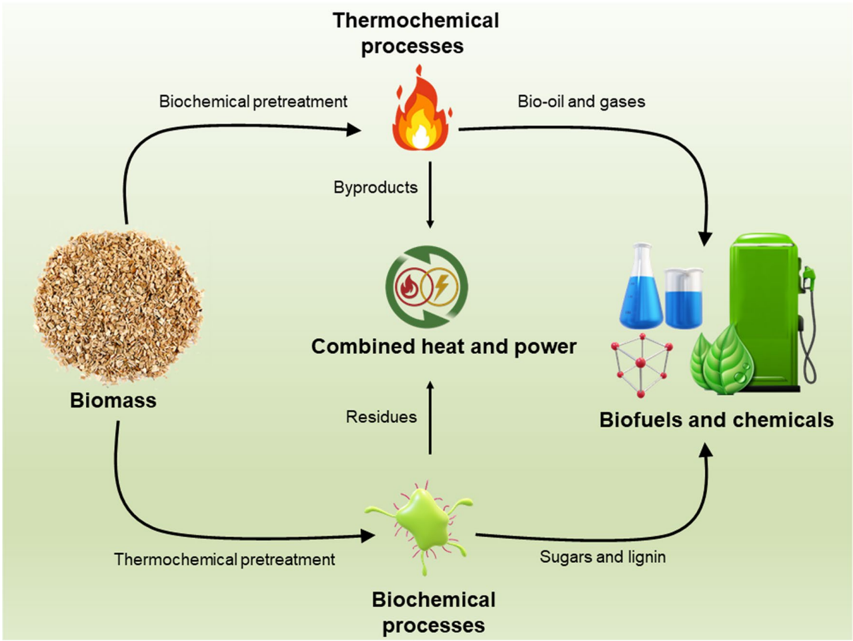
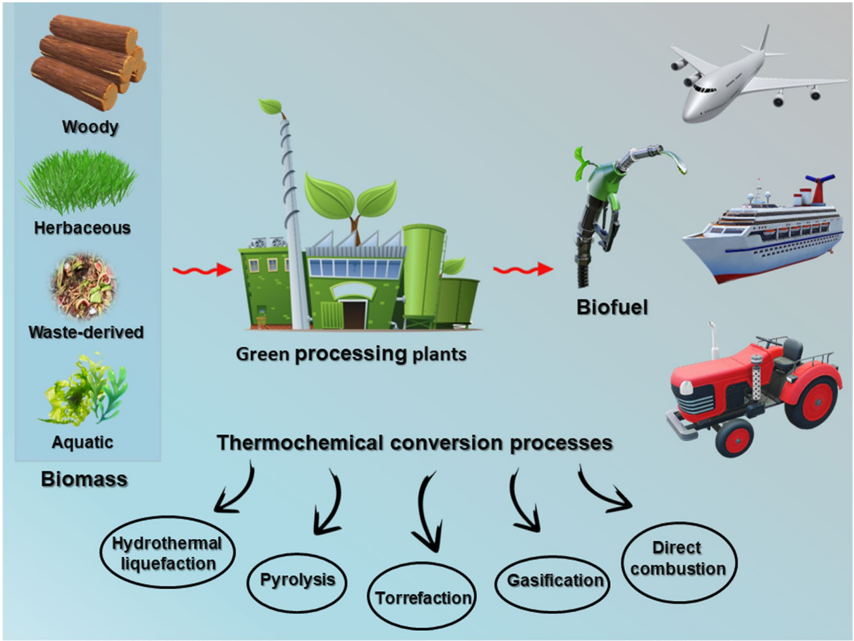
Thermochemical processes are classified into low temperature, below 300 °C, and high temperature, higher than 300 °C, i.e. gasification, combustion and pyrolysis.
Overview
CoChat Summary
TL;DR
This review surveys biomass-to-biofuel conversion routes and the life cycle assessment (LCA) literature, with a critical review of 40 LCA studies published from 2019–2021. It concludes that thermochemical routes are more researched than biochemical ones, and that integrating hydrothermal and biochemical routes is promising for a circular economy but still faces technical and cost challenges.
Key findings
- Biomass contributes about 9% (~51 EJ) of global primary energy supply, and the paper says global energy demand is projected to rise by almost 28% by 2040.
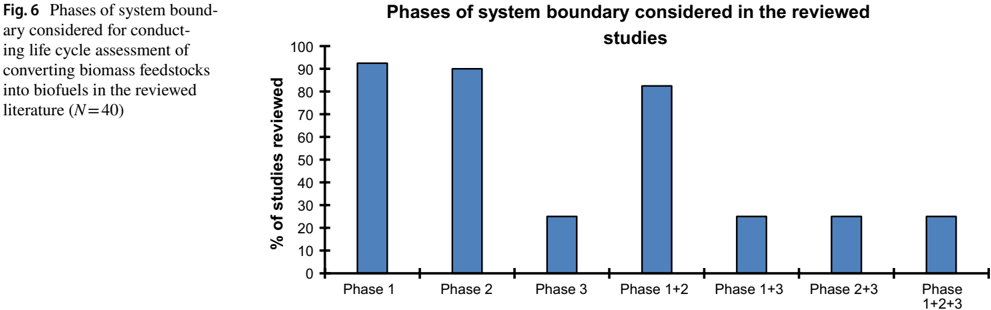
- The review analyzed 40 LCA studies from 2019–2021 and found that only 8 studies included all three phases of biofuel production; about 90% considered Phase 1 and Phase 2, but only 25% included Phase 3.
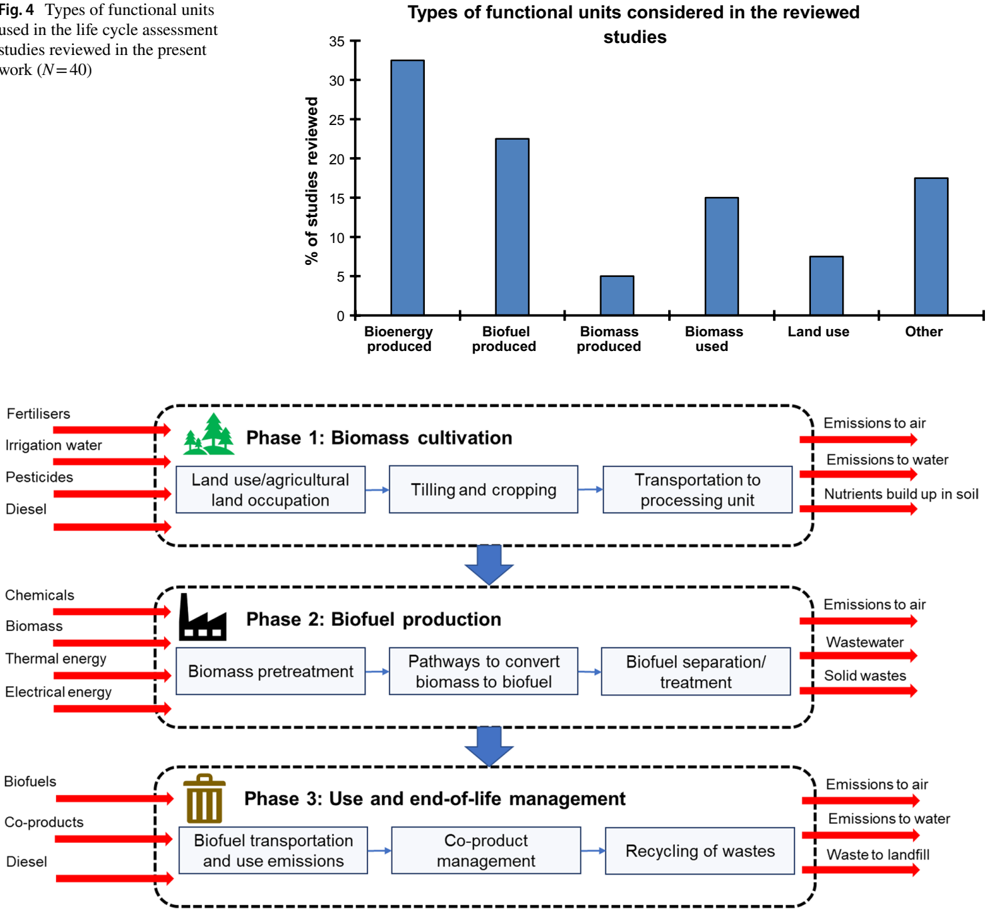
- About 32% of reviewed studies used “units of bioenergy in J or kWh” as the functional unit, while about 22% used “amount of biofuels produced” such as kg.
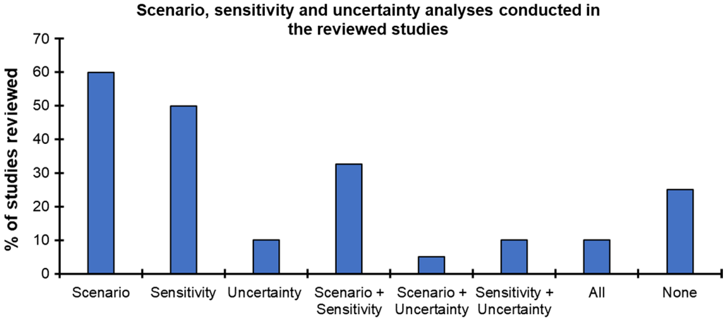
- The paper reports that 60% of the reviewed studies considered scenario analysis, 10% did uncertainty analysis, and 50% conducted sensitivity analysis; it also states that no study included all three phases of the biofuel production system boundary together with uncertainty, scenario, and sensitivity analyses.
- Across comparative LCA studies, thermochemical processes generally showed lower environmental impacts than biological processes for the same biomass and geographic/temporal span; one cited comparison found anaerobic digestion best for 14 out of 18 impacts.
Methods
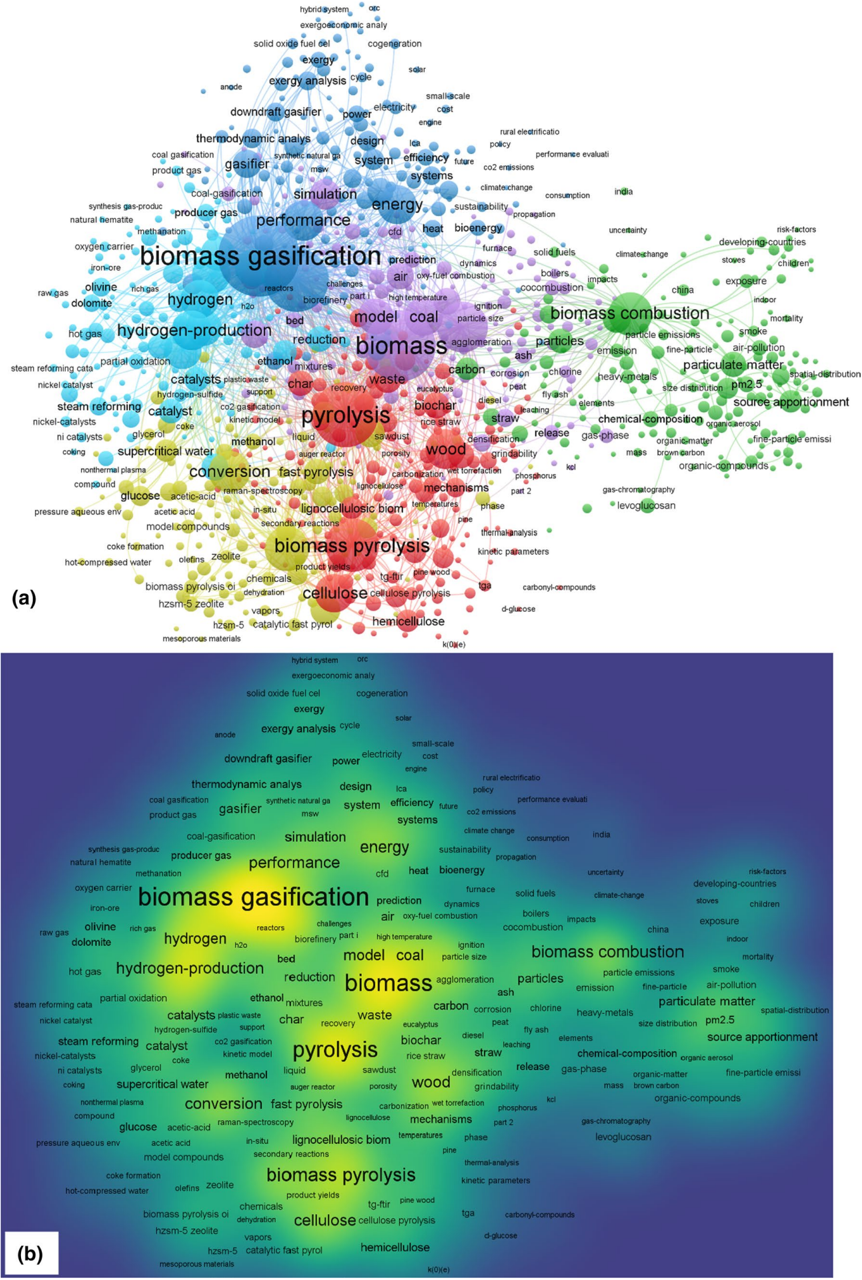
- Narrative review of biomass conversion technologies plus a bibliometric analysis using Web of Science data and VOSviewer; the bibliometric search returned 9,947 results, exported in batches of 500 entries.
- Critical review of 40 LCA studies published from 2019 to 2021 on biofuels, covering biomass feedstocks, geographical span, biofuels produced, life cycle tools, and inventories.
- The paper organizes analysis around ISO LCA stages: goal and scope, inventory analysis, impact assessment (mid-point and endpoint indicators), uncertainty/scenario/sensitivity analysis, and interpretation.
Limitations
- Stated in the paper: there was no study identified that included all three phases of biofuel production along with uncertainty, sensitivity, and scenario analyses.
- Stated in the paper: only 4 studies had all three of scenario, sensitivity, and uncertainty analyses, which “poses questions” about the applicability of findings for decision-making.
- Evident from the text: the review is limited to 40 studies from 2019–2021 for the LCA synthesis, so older or more recent studies are not part of that analysis.
Model-written summary. Check it against the paper before relying on it.
Integrity signals
Registry
Cites
Statistics
Figures
Verification
Claims the paper makes
3 Valid · 1 Not valid · 58 Not checked · 42 Own results and interpretations
The cited sources that could be checked couldn’t confirm or dispute this claim.
In the paper
“Biomass, unlike other sustainable energy sources such as wind, solar, geothermal, marine and hydropower, can directly produce fuel along with chemicals (Quereshi et al. 2021;Farrell et al. 2019;Farrell et al. 2020).”
§ Conversion of biomass to biofuels and life cycle assessment: a review > Introduction
What the sources say
- Not checked — no full text of the sourcecites Quereshi et al. 2021 matched to “Overview of sustainable fuel and energy technologies” (2021) source
- Could not verifycites Farrell et al. 2019 matched to “Assessment of the energy recovery potential of waste Photovoltaic (PV) modules” (2019) sourceExperimental — accuracy not yet measured
The Introduction (page unavailable) describes solar PV as producing electricity, and the Results and Discussion (page unavailable) compare PV polymers’ calorific value with energy crops. Neither passage addresses whether biomass can directly produce both fuels and chemicals, or makes the claimed comparison with other renewable sources. Searches for that comparison and for biomass, fuels, and chemicals found no supporting passage in our copy. (LLM, conf=0.76)
- Could not verifycites Farrell et al. 2020 matched to “Technical challenges and opportunities in realising a circular economy for waste photovoltaic modules” (2020) sourceExperimental — accuracy not yet measured
The Introduction (page unavailable) lists biomass alongside solar, wind, hydro, tidal and geothermal as renewable technologies, but does not compare what they produce. A search for biomass conversion into fuels and chemicals found discussion of pyrolysis in photovoltaic-module recycling, not a statement that biomass directly produces fuels and chemicals. (LLM, conf=0.76)
plain- Asserted: passes — The authors put it forward as true.
- Checkable: passes — It can be checked against evidence.
- Load-bearing: passes — The paper’s conclusions depend on it.
- Based: passes — The paper gives a reason why it holds.
The sources with a verdict support this claim; the rest weren’t checked yet, have no full text we could read, or their verdicts aren’t rated yet.
In the paper
“Some studies computed net energy ratio to evaluate the usability of biofuels as energy sources (Al-Mawali et al. 2021;Al-Muhtaseb et al. 2021;Dasan et al. 2019;Im-Orb and Arpornwichanop 2020;Reaño 2020;Saranya and Ramachandra 2020)”
§ Conversion of biomass to biofuels and life cycle assessment: a review > Mid-point indicators
What the sources say
- Could not verifycites Al-Mawali et al. 2021 matched to “Life cycle assessment of biodiesel production utilising waste date seed oil and a novel magnetic catalyst: A circular bioeconomy approach” (2021) sourceExperimental — accuracy not yet measured
Our copy of Al-Mawali et al. (2021) holds only the institutional-repository record: the title/author block, the keyword list (life cycle assessment, magnetic catalyst, circular bioeconomy, biodiesel, date seed oil) and the citation/RIS entries (Abstract section, no page numbers). Six searches ('net energy ratio', 'energy payback ratio fossil energy demand', 'energy efficiency ratio of energy output to input', transesterification/yield, and LCA functional-unit/GWP terms) returned only these metadata passages — no abstract body, methods, results or discussion text is present. Nothing in our copy therefore states or excludes that the authors computed a net energy ratio to assess biodiesel's usability as an energy source; the claim can be neither confirmed nor disputed. (LLM, conf=0.70)
- Supportedcites Al-Muhtaseb et al. 2021 matched to “Circular economy approach of enhanced bifunctional catalytic system of CaO/CeO2 for biodiesel production from waste loquat seed oil with life cycle assessment study” (2021) source
In the Figure 12 discussion, the paper calculates a net energy ratio of 2.23 using biodiesel energy output and fossil-resource savings. Section 3.6 identifies this as an LCA of biodiesel production from waste loquat seeds, supporting the citing sentence's characterization of the study. (LLM, conf=0.92)
- Not checked — no full text of the sourcecites Dasan et al. 2019 matched to “Life cycle evaluation of microalgae biofuels production: Effect of cultivation system on energy, carbon emission and cost balance analysis” (2019) source
plain- Asserted: passes — The authors put it forward as true.
- Checkable: passes — It can be checked against evidence.
- Load-bearing: unclear — It is unclear whether the paper’s conclusions depend on it.
- Based: passes — The paper gives a reason why it holds.
- Could not verify
Every source the paper cites for this claim was checked and supports it.
In the paper
“In fact, there was only one study identified that highlighted that for spent coffee grounds, incineration is a better route compared to biofuel production (Schmidt Rivera et al. 2020).”
§ Conversion of biomass to biofuels and life cycle assessment: a review > Key points observed in life cycle assessment studies
What the sources say
- Supportedcites Schmidt Rivera et al. 2020 matched to “Life cycle environmental sustainability of valorisation routes for spent coffee grounds: From waste to resources” (2020) source
Our copy states exactly what is attributed to it: the Abstract and Section 3.1 ('incineration is the most environmentally sustainable valorisation route, with net-negative impacts in 14 out of 16 categories') and the Conclusions rank biodiesel as 'the least preferred option with the highest impacts in 11 categories'. Section 3.2 reinforces this ('production of biodiesel from SCGs is not yet environmentally a competitive option, in particular when replacing incineration'). The 'only one study identified' framing is the citing authors' own review tally, not a statement attributed to this source. (LLM, conf=0.90)
plainSingle case- Asserted: passes — The authors put it forward as true.
- Checkable: passes — It can be checked against evidence.
- Load-bearing: unclear — It is unclear whether the paper’s conclusions depend on it.
- Based: passes — The paper gives a reason why it holds.
- Rests on an assumption not shown here.
- Supported
A result the paper reports from its own data — it cites no other source for it, so there is none to check. The quote shows it is in the paper.
In the paper
“There was no study identified that included all three phases of the life cycle of biofuel production system boundary (described in Fig. 5) and uncertainty, scenario and sensitivity analyses in the 40 reviewed studies.”
- Also stated in: § Key points observed in life cycle assessment studies · plain
“There was no study identified that included all the three phases of biofuel production along with uncertainty, sensitivity and scenario analyses.”
§ Conversion of biomass to biofuels and life cycle assessment: a review > Uncertainty, scenario and sensitivity analysis
plain- Asserted: passes — The authors put it forward as true.
- Checkable: passes — It can be checked against evidence.
- Load-bearing: passes — The paper’s conclusions depend on it.
- Based: passes — The paper gives a reason why it holds.
- Rests on an assumption not shown here.
- Also stated in: § Key points observed in life cycle assessment studies · plain
A result the paper reports from its own data — it cites no other source for it, so there is none to check. The quote shows it is in the paper.
In the paper
“Most of the studies focused on specific processes of the biofuel production chain, focusing on critical areas of concern rather than evaluating the overall impacts of the entire production chain.”
§ Conversion of biomass to biofuels and life cycle assessment: a review > Goal and scope definition
plain- Asserted: passes — The authors put it forward as true.
- Checkable: passes — It can be checked against evidence.
- Load-bearing: passes — The paper’s conclusions depend on it.
- Based: passes — The paper gives a reason why it holds.
56 more claims
Create a free account to see all 104 claims and to verify the 17 references still open.
- It may state two separate claims as one. 26
- Probably not a substantial claim. 19
- The quote only partly states this claim. 1
Citations
Cites
Review of fast pyrolysis of biomass and product upgrading
Bridgwater, A. V. (2012) · Biomass and Bioenergy · doi:10.1016/j.biombioe.2011.01.048 · Cited by 4,856 · cited 1×
“The primary product is liquid oil (Bridgwater, 2012a).”
Alvira, P., Tomás-Pejó, E., Ballesteros, M., & Negro, M. J. (2010) · Bioresource Technology · doi:10.1016/j.biortech.2009.11.093 · Cited by 3,912 · cited 1×
“Bioconversion of biomass to biofuel comprises of sequential stages: pretreatment, hydrolysis (acid/enzymatic) and fermentation (Alvira et al. 2010).”
BackgroundHydrothermal liquefaction of biomass: A review of subcritical water technologies
Toor, S. S., Rosendahl, L., & Rudolf, A. (2011) · Energy · doi:10.1016/j.energy.2011.03.013 · Cited by 1,840
Ethanol fermentation from biomass resources: current state and prospects
Lin, Y., & Tanaka, S. (2006) · Applied Microbiology and Biotechnology · doi:10.1007/s00253-005-0229-x · Cited by 1,621 · cited 1×
“In the consolidated bioprocessing scenario, only one microorganism is simultaneously utilised for hydrolysis and fermentation, which decreases the operation cost and enhances the process efficacy (Lin and Tanaka, 2006).”
BackgroundCombustion characteristics of different biomass fuels
Demirbas, A. (2004) · Progress in Energy and Combustion Science · doi:10.1016/j.pecs.2003.10.004 · Cited by 1,591
Strategies for mitigation of climate change: a review
Fawzy, S., Osman, A. I., Doran, J., & Rooney, D. W. (2020) · Environmental Chemistry Letters · doi:10.1007/s10311-020-01059-w · Cited by 1,522 · cited 1×
“The depletion of non-renewable fuel sources, accompanied with greenhouse gas emissions, has become a critical issue (Fawzy et al. 2020; Osman et al. 2021).”
BackgroundSelf-citationProgress in bioethanol processing
Balat, M., Balat, H., & Öz, C. (2008) · Progress in Energy and Combustion Science · doi:10.1016/j.pecs.2007.11.001 · Cited by 1,490 · cited 1×
“Under these subcritical conditions, physicochemical properties of water such as density, diffusivity, dielectric constant and viscosity alter and improve the biomass degradation process, which further upgrades the torrefaction process (Bach and Skreiberg 2016; Balat et al. 2008).”
BackgroundLignocellulosic biomass to bioethanol, a comprehensive review with a focus on pretreatment
Haghighi Mood, S., Hossein Golfeshan, A., Tabatabaei, M., Salehi Jouzani, G., Najafi, G. H., Gholami, M., & Ardjmand, M. (2013) · Renewable and Sustainable Energy Reviews · doi:10.1016/j.rser.2013.06.033 · Cited by 1,342 · cited 1×
“It can be classified into four main categories, including: (1) physical, e.g. grinding, (2) physicochemical, e.g. wet oxidation, (3) chemical, e.g. oxidising agents and organic solvents, and (4) biological or combination of them (Haghighi Mood et al. 2013).”
BackgroundCatalytic Conversion of Carbohydrates to Initial Platform Chemicals: Chemistry and Sustainability
Mika, L. T., Cséfalvay, E., & Németh, Á. (2018) · Chemical Reviews · doi:10.1021/acs.chemrev.7b00395 · Cited by 1,320 · cited 1×
“Based on the mode of operation, it can be divided into two main subclasses: (1) indirect liquefaction and (2) solvent liquefaction (Mika et al. 2018).”
BackgroundA review on hydrothermal liquefaction of biomass
Gollakota, A. R. K., Kishore, N., & Gu, S. (2018) · Renewable and Sustainable Energy Reviews · doi:10.1016/j.rser.2017.05.178 · Cited by 1,306 · cited 1×
“Solvent liquefaction has the priority to be implemented over the other scenario because of its remarkable merits, moderate operational conditions and higher yield of products (Gollakota et al. 2018).”
Background
Cited by
Items 501–600 of 714
Viswakethu, C., Pichappan, R., Perumal, P., et al. (2024) · Sustainable Energy & Fuels · doi:10.1039/d3se00551h · Cited by 2
Recycling Plant Biomass and Life Cycle Assessment in Circular Economy Systems
Nyika, J. M., Dinka, M. O., & Adediran, A. A. (2024) · Wiley eBooks · doi:10.1002/9783527839032.ch21 · Cited by 2
Integrated Use of Biomass to Produce Energy and Construction Material
Fiaz, S., Khalid, M., Akram, S., & Mushtaq, M. A. (2024) · Wiley eBooks · doi:10.1002/9781394204502.ch5 · Cited by 2
Edwin, M., Percy, A. J., & Eniyan, M. C. (2023) · Materials Today Proceedings · doi:10.1016/j.matpr.2023.02.247 · Cited by 2
Catalytic upgrading of bio-oil and bio-crude oil to synthetic transportation fuels
Gupta, S., Varma, A. K., & Mondal, P. (2023) · Elsevier eBooks · doi:10.1016/b978-0-443-15377-8.00007-2 · Cited by 4
Role of Bioactive Metabolites Produced by Plants and Microbes in Fuel Production
Kalebar, V. U., & Chakraborty, P. (2024) · Environmental science and engineering · doi:10.1007/978-3-031-52167-6_18 · Cited by 1
Ecotoxicity of Tar from Coffee Grounds and Pine Pellet Gasification Process
Hawrot-Paw, M., Koniuszy, A., Borusiewicz, A., Skibko, Z., Romaniuk, W., Zając, G., & Szyszlak-Bargłowicz, J. (2024) · Sustainability · doi:10.3390/su16156291 · Cited by 2
Datta, A., & Sarma, A. K. (2024) · Green chemistry and sustainable technology · doi:10.1007/978-3-031-63941-8_3 · Cited by 2
Thakur, P., Thakur, A., & Majumder, S. (2024) · Green chemistry and sustainable technology · doi:10.1007/978-3-031-63941-8_4 · Cited by 3
Economics, Environmental, and Sustainability Aspects of Bio-methanol
Alipour, F., & Rahimpour, M. R. (2024) · Elsevier eBooks · doi:10.1016/b978-0-443-15740-0.00129-4 · Cited by 1
Biomass to Energy: Scope, Challenges, and Applications
Subhan, S., Rahman, S. U., Subhan, F., & Yaseen, M. (2024) · ACS symposium series · doi:10.1021/bk-2024-1480.ch008 · Cited by 1
Petridi, A., Fragkouli, D.-N., Mejías, L., Paredes, L., Bistué-Rovira, M., Boukouvalas, C. J., Kekes, T., Krokida, M. K., & Papadaki, S. (2024) · Sustainability · doi:10.3390/su16229811 · Cited by 3
Biochemical conversion of municipal solid waste to biofuels and bioproducts: a review
Hans, M., Umrao, D., Mozhiarasi, V., Kumar, D., & Kumar, S. (2024) · Environmental Science and Pollution Research · doi:10.1007/s11356-024-35667-8 · Cited by 3
“…and life cycle inventory (ISO 14041), life cycle impact assessment (ISO 14043), and result interpretation (ISO 14044), (Ghosh et al. 2020 & Osman et al. 2021), The application of LCA is extended to the waste management sector to perform a comparison of different treatment options to…”
Multi-criteria analysis of agricultural bioenergy chains
Vaskovic, S., Perić, M., Gvero, P. M., Komatina, M., & JUGOVIC, M. (2025) · Thermal Science · doi:10.2298/tsci240820010v · Cited by 1
“Additionally, studies on biomass supply chains from agricultural residues have demonstrated the potential to reduce environmental impacts while improving economic feasibility [13–16].”
Nanomaterials for catalytic conversion of biomass
Valarini, O., Yassue‐Cordeiro, P. H., Ferrari, A. M., da Silva, L. L., & Bonfim-Rocha, L. (2025) · Elsevier eBooks · doi:10.1016/b978-0-443-24748-4.00009-x · Cited by 1
Herrera, L. I. P., Cortright, R. D., & Medlin, J. W. (2025) · Journal of Catalysis · doi:10.1016/j.jcat.2025.116110 · Cited by 1
Neto, J. L. D. M., & Santos, C. A. C. (2025) · Revista Brasileira de Ciências Ambientais · doi:10.5327/z2176-94782277 · Cited by 1
Seaweed Biosorption: A Sustainable Approach to Wastewater Treatment
Das, S., Behera, M., Behera, P. R., Adarsh, V., & Singh, L. (2025) · Springer eBooks · doi:10.1007/978-981-96-3945-8_6 · Cited by 1
Zhou, S., Lu, T., Zhou, L., & Yang, X. (2025) · ACS Sustainable Chemistry & Engineering · doi:10.1021/acssuschemeng.5c01890 · Cited by 2
Bioproducts and Bioenergy Generation
Soni, S. K., & Soni, R. (2025) · Clean Energy Production Technologies · doi:10.1007/978-981-96-9013-8_6 · Cited by 3
MacCarley, C. A. (2025) · Springer eBooks · doi:10.1007/978-3-031-85028-8_6 · Cited by 1
Dutta, S. (2025) · Bioresource Technology · doi:10.1016/j.biortech.2025.133216 · Cited by 2
Wen, S., Liang, L. P., Zhang, J., Gao, L., & He, Z. (2025) · Journal of the Energy Institute · doi:10.1016/j.joei.2025.102357 · Cited by 2
Marine bioresources for sustainable energy production and cleaner environment
Bello, O. S., Agboola, S. O., Alagbada, T. C., Ojo, A. O., Oguntola, P. A., Ajayi, O. S., Bello, O. O., & Olagunju, E. O. (2025) · Elsevier eBooks · doi:10.1016/b978-0-443-36320-7.00014-4 · Cited by 2
Rath, G. K., Borugadda, V. B., & Dalai, A. K. (2025) · Elsevier eBooks · doi:10.1016/b978-0-443-27564-7.00012-0 · Cited by 2
Progress in green methanol synthesis from municipal solid wastes
Ming, L. I., Dezhen, C. H. E. N., Kezhen, Q. I. A. N., & Yuyan, H. U. (2025) · Journal of Fuel Chemistry and Technology · doi:10.1016/s1872-5813(25)60589-5 · Cited by 2
Chen, M. W., Liu, X. L., Yu, X., et al. (2025) · Journal of Sustainable Metallurgy · doi:10.1007/s40831-025-01363-1 · Cited by 1
“The summarized results are characterization results [44]: In the formula: H i represents the characterization result of influence type I ; X i denotes the conversion factor of the environmental load factor i [45, 46]; and Y i denotes the emission of environmental load factor i (or consumption).”
Kaoke, D. F., Iya‐Sou, D., Veved, A., Boukar, H., & Talla, E. (2026) · BioEnergy Research · doi:10.1007/s12155-025-10949-2 · Cited by 1
Huang, W., Wang, J., Chang, L., et al. (2026) · Biomass and Bioenergy · doi:10.1016/j.biombioe.2026.108945 · Cited by 1
Breen, R., Hackula, A., Holmes, J. D., Wall, D. M., & Collins, G. (2026) · ACS Sustainable Chemistry & Engineering · doi:10.1021/acssuschemeng.5c10283 · Cited by 1
Sarker, A. R., Masud, M. A. A., Deepo, D. M., Das, K., Kebede, M. M., Rakib, M. R. J., Samaraweera, H., Uddin, F. J., & Hasan, A. K. (2026) · Discover Soil. · doi:10.1007/s44378-026-00174-4 · Cited by 4
“Higher temperatures (600–900 °C) drive complete carbonization, increasing the biochar’s aromaticity (graphitic structure) and surface area [15].”
Powering pineapple industry with pineapple residues - A circular bioenergy strategy for Costa Rica
Liao, A. Y., Spizzirri, E., Vasquez, M. J. R., Bustamante, M., Rojas‐Sossa, J. P., Toscano, A., & Valenti, F. (2026) · Renewable Energy · doi:10.1016/j.renene.2026.125709 · Cited by 3
Biofuels: An Overview for Climate Change Mitigation and Sustainable Development
Srinivasan, G. R. (2026) · Green energy and technology · doi:10.1007/978-981-95-6766-9_1 · Cited by 1
Yamamoto, L. J., Janas, A. G., & Maintinguer, S. I. (2026) · BioEnergy Research · doi:10.1007/s12155-026-11024-0 · Cited by 3
“In this context, lignocellulosic biomass has gained prominence due to its high energy potential and wide availability [2].”
Mohan, L., & Zhao, Y. (2026) · ACS Applied Materials & Interfaces · doi:10.1021/acsami.6c06620 · Cited by 1
Biró, K., Woon, K. S., Ninh, H. N., Buadit, T., & Rattanapan, C. (2026) · Cleaner Engineering and Technology · doi:10.1016/j.clet.2026.101267 · Cited by 1
Kazmi, B., Shahid, M., Taqvi, S. A. A., Wisniewski, A., Khan, M. N. A., & Naqvi, S. R. (2026) · Chemical Engineering Journal Advances · doi:10.1016/j.ceja.2026.101412 · Cited by 2
“…shortage of fossil fuel reserves and the growing need to reduce anthropogenic emissions of greenhouse gases have focused worldwide attention on renewable carbon-neutral energy carriers, lignocellulosic and organic waste biomass now becoming a feedstock of special strategic importance [1,2].”
Lu, X., He, C., Gao, Z., Ban, W., Chen, C., Zhou, C., Gu, Y., & Chen, S. (2023) · Materials Express · doi:10.1166/mex.2023.2380 · Cited by 1
Experimental study of gasification rate of fast-growing willow biomass
Jasinskas, A., Kukharets, S., Sukmaniuk, O., et al. (2023) · Engineering for Rural Development · doi:10.22616/erdev.2023.22.tf026 · Cited by 1
“, is a potential fuel for obtaining thermal and electrical energy [1-3].”
BackgroundMantilla, N. A., Jaramillo, J. E., & Villegas, J. D. (2023) · Revista de Investigación Agraria y Ambiental · doi:10.22490/21456453.6149 · Cited by 4
Thermochemical processes for resource recovery from municipal wastewater treatment plants
Arun, C., Sethupathy, A., Rangabhashiyam, S., Sharma, R., Karthikeyan, S., & Ramprasad, C. (2023) · Elsevier eBooks · doi:10.1016/b978-0-323-99348-7.00016-3 · Cited by 3
Bioenergy Applications of Haematococcus
Sarker, N. K., Mukherjee, T., & Kaparaju, P. (2023) · Springer eBooks · doi:10.1007/978-981-99-2901-6_19 · Cited by 1
Biofuel scale-up from waste source and strategies for cost optimization
Shaarani, S. M., Ramli, A. N. M., Manas, N. H. A., Ahmad, R. A., Fuzi, S. F. Z. M., & Arshad, Z. I. M. (2023) · Elsevier eBooks · doi:10.1016/b978-0-323-95417-4.00007-x · Cited by 2
Utilization of Waste Transformer Oil for the Synthesis of Biodiesel and Glyptal
Tiwari, R., Agrawal, P. S., Belkhode, P. N., et al. (2023) · Lecture notes in civil engineering · doi:10.1007/978-981-99-4186-5_7 · Cited by 1
Microwave-assisted Catalytic Transformation of Biomass to Platform Chemicals
Sharma, K., Modak, A., Sonde, R. R., & Pant, K. K. (2023) · Royal Society of Chemistry eBooks · doi:10.1039/bk9781837670277-00250 · Cited by 1
Converting Agricultural Waste Biomass Into Value-added Fuels Via Thermochemical Processes
Al-Muhtaseb, A. H., Jamil, F., Osman, A. I., & Alhajeri, N. S. (2023) · Royal Society of Chemistry eBooks · doi:10.1039/bk9781837670093-00201 · Cited by 2
Self-citationEnvironmental Challenges and Economic Assessment of Methanol Production Process
Madhankumar, S., & Viswanathan, K. (2024) · Elsevier eBooks · doi:10.1016/b978-0-443-15740-0.00041-0 · Cited by 1
Introduction to Renewable Sources and Technologies in Methanol Production
Mustafa, A., Zameer, N., Khan, N., Siddiqui, Z. N., Hamid, H., Alam, M. S., Ali, S. W., & Mishra, A. K. (2024) · Elsevier eBooks · doi:10.1016/b978-0-443-15740-0.00045-8 · Cited by 2
Is Biomass Energy a Boon or Bane for Society: A Comprehensive Analysis
Haque, S. E., & Rafi, T. R. (2024) · Springer eBooks · doi:10.1007/978-3-031-52485-1_1 · Cited by 1
Sustainable technologies for ethanol production from waste biomass
Niaze, A. A., Sunkara, M. K., & Upadhyayula, S. (2024) · Elsevier eBooks · doi:10.1016/b978-0-443-21899-6.00002-1 · Cited by 2
Zhang, Z., Adhikari, U., Saffron, C. M., et al. (2025) · Journal of Environmental Engineering · doi:10.1061/joeedu.eeeng-7672 · Cited by 1
Application of plastic for production of fuel
Mathew, J. T., Inobeme, A., Adetunji, C. O., Ajayi, A. S., Azeh, Y., Shaba, E. Y., Monday, M., Bini, E. M., Musa, S. T., Muhammad, I. A., et al. (2025) · Elsevier eBooks · doi:10.1016/b978-0-443-23599-3.00006-x · Cited by 3
Gorde, P. M., Das, A., Singha, P., & Singh, S. K. (2025) · Royal Society of Chemistry eBooks · doi:10.1039/9781837676071-00232 · Cited by 1
Forage Maize as Source of Cellulosic Biofuel Production
Mehta, B. K., Kumar, S., Chauhan, S., Ashiwal, C., Asati, R., Purwar, M., Bansal, S., Shashikumara, P., Meena, S. K., Kumar, A., et al. (2025) · Springer eBooks · doi:10.1007/978-981-96-2536-9_10 · Cited by 1
Life Cycle Assessment (LCA) of Biofuel Production from Lignocellulosic Biomass
Pan, S., Lin, J., Li, Z., Du, L., & Wei, Y. (2025) · Clean Energy Production Technologies · doi:10.1007/978-981-96-4636-4_2 · Cited by 1
Insights into the addition of exogenous materials to enhance anaerobic digestion
Vannarath, A., Ahmad, Y. H., Farhat, T. M., Chae, K., Aljaber, A. S., & Al-Qaradawi, S. Y. (2025) · Energy Conversion and Management X · doi:10.1016/j.ecmx.2025.101078 · Cited by 19
Environmental Life Cycle Assessment of Second-Generation Bioethanol from Tunisian Waste Dates
Baccar, I., Hnich, K. B., Khila, Z., Pons, M., Romdhane, M., & Hajjaji, N. (2022) · BioEnergy Research · doi:10.1007/s12155-022-10416-2 · Cited by 1
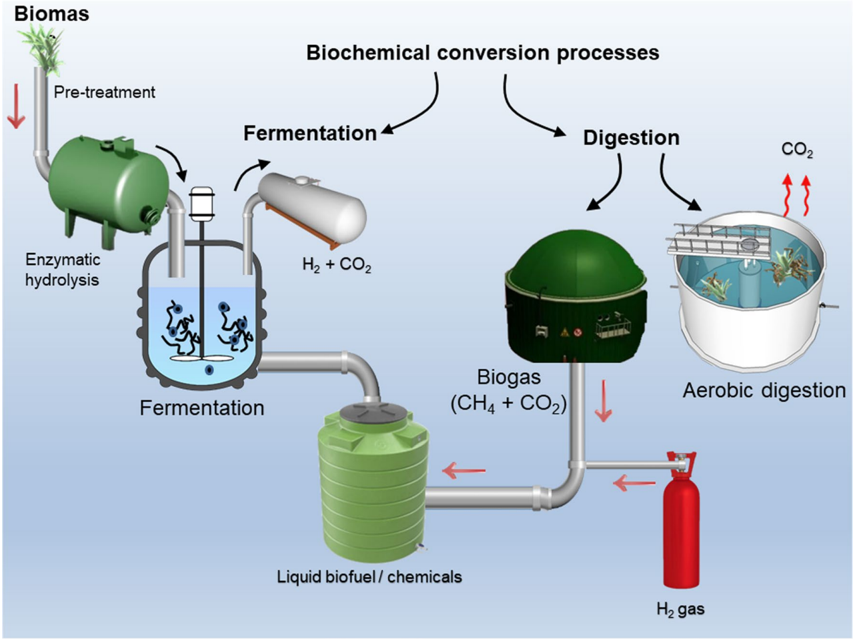
“Thermochemical and biochemical processes are two main pathways of biomass conversion into biofuels [3].”
BackgroundBio-energy system analysis: Profit, planet, and policy
Aui, A. (2022) · doi:10.31274/td-20240329-113 · Cited by 1
Chemical Properties of Biomass
Rossin, A. R. D. S., Cardoso, F. D. S. L., Cordeiro, C. C., Breitenbach, G. L., Caetano, J., Dragunski, D. C., & Rosenberger, A. G. (2024) · Springer eBooks · doi:10.1007/978-981-99-6727-8_12 · Cited by 6
Jagadale, M., Isabel, J. B., Jadhav, M., Periyasamy, S., & Gizaw, D. G. (2024) · Wiley eBooks · doi:10.1002/9781394204816.ch1 · Cited by 2
López‐González, I. E., Pérez, P. A. L., & Hernández‐Melchor, D. J. (2024) · Wiley eBooks · doi:10.1002/9781394234110.ch6 · Cited by 2
Eco-Friendly Diesel Fuels: How Biodiesel-Ethanol Blends Cut Emissions Without Sacrificing PowerPreprint
Karimi, M., Kheiralipour, K., & Khoobbakht, M. (2025) · SSRN Electronic Journal · doi:10.2139/ssrn.5378933 · Cited by 1
Circular Design and Biomanufacturing
Pandey, K., Kumari, M., Prapati, A., Sonali, Dixit, T., & Singhal, B. (2025) · Springer eBooks · doi:10.1007/978-981-95-2227-9_5 · Cited by 1
Life Cycle Assessment of Thermochemical Conversion of Agro Residues
Anand, A., & Kaushal, P. (2022) · Clean Energy Production Technologies · doi:10.1007/978-981-19-4316-4_11 · Cited by 1
Bioethanol Production From Biomass Extracted From Sunn Hemp Seed: A Case Study
Koshariya, A. K., Madhusudhanan, J., Mohamed, M. J. S., Kerur, S. S., Valeti, S. V., & Haribalaji, V. (2023) · Advances in environmental engineering and green technologies book series · doi:10.4018/978-1-6684-4118-3.ch012
A Study on the Conversion of Ligninolytic Biomass to Biofuels
Lakshmana Kishore, T., & Haribalaji, V. (2023) · Advances in environmental engineering and green technologies book series · doi:10.4018/978-1-6684-4118-3.ch003
Methods of catalyst synthesis and recycling processes for biofuel upgradation
Volli, V., Vinay, B., & Singh, R. (2023) · Elsevier eBooks · doi:10.1016/b978-0-323-98363-1.00018-1 · Cited by 3
Ricci, F., Martinelli, R., Papi, S., et al. (2023) · SSRN Electronic Journal · doi:10.2139/ssrn.4523193
Альтернативні палива для авіаційної техніки: досягнення і проблеми
Biekirov, A., Бережний, А. О., Tokarieva, I. A., & Мухіна, Т. П. (2023) · Наука і техніка Повітряних Сил Збройних Сил України · doi:10.30748/nitps.2023.51.02
Iqbal, A., Imran, M., Alves, J. L. F., Hadi, F., Yao, Z., da Silva, J. C. G., & Badshah, S. L. (2024) · SSRN Electronic Journal · doi:10.2139/ssrn.4690274
Membranes processes in the circular bioeconomy
Paola, L. D. (2024) · Elsevier eBooks · doi:10.1016/b978-0-323-90258-8.00004-3
Yadav, K., & Rai, M. P. (2024) · Biomass Conversion and Biorefinery · doi:10.1007/s13399-024-05316-8 · Cited by 2
“Moreover, a limited number of studies integrated analyses encompassing scenario, sensitivity, and uncertainty, thereby prompting apprehensions about the extrapolative applicability of findings delineated within life cycle assessment (LCA) studies [54].”
Chemical Properties of Biomass
Rossin, A. R. D. S., Cardoso, F. D. S. L., Cordeiro, C. C., Breitenbach, G. L., Caetano, J., Dragunski, D. C., & Rosenberger, A. G. (2023) · Springer eBooks · doi:10.1007/978-981-19-6772-6_12-1
Yaseen, S., Azhar, U., Arif, M. Z., Saqib, M., Riaz, A., & Yaqub, R. (2024) · Elsevier eBooks · doi:10.1016/b978-0-443-13500-2.00002-x · Cited by 1
A Critical Review on the Cradle-to-Gate Environmental Assessment of Xylitol as Phase Change MaterialPreprint
Santos, H., & Guillén-Lambea, S. (2024) · SSRN Electronic Journal · doi:10.2139/ssrn.4760678
Gidrooblagorazhivanie lignotsellyuloznoy bionefti (obzor)
Zasypalov, G. O., Klimovsky, V. A., Abramov, E. S., Brindukova, E. E., Stytsenko, V. D., & Glotov, A. P. (2023) · Petroleum Chemistry · doi:10.31857/s0028242123060011
Performing a Life Cycle Assessment for Self-service Devices: A Case Study of Self-checkout
Bosch, L., Yang, S., Hofste, D., Gibson, I., & Thiede, S. (2024) · Procedia CIRP · doi:10.1016/j.procir.2024.02.028 · Cited by 1
Karimi, M., Kheiralipour, K., & Khoobbakht, M. (2024) · SSRN Electronic Journal · doi:10.2139/ssrn.4839409
The Role of CCUS in a Low-Carbon Future: A Critical Review
Gedam, M. (2024) · The Bombay Technologist · doi:10.36664/bt/2023/v70i1/173202 · Cited by 3
Biorefineries for the Sustainable Generation of Algal Biofuels
Fiorese, M. L., Maestre, K. L., Triques, C. C., Echeverria, L., Honório, J. F., Klen, M. R. F., Fiorentin‐Ferrari, L. D., & Slusarski‐Santana, V. (2024) · Wiley eBooks · doi:10.1002/9781394204816.ch2
Bacterial Based Drop-In Biofuel Production
Lak, M., Marchlewicz, A., Nojoumi, S. A., Ramezani, M., & Harirchi, S. (2024) · Biofuel and biorefinery technologies · doi:10.1007/978-3-031-61637-2_6 · Cited by 2
Life cycle analysis and technical economic analysis of bio-oil hydrotreating
Omidkar, A., Haddadian, K., & Song, H. (2024) · Elsevier eBooks · doi:10.1016/b978-0-443-19076-6.00011-x · Cited by 1
Biomass Derived Adsorbent Materials for Removal of Environmental Pollutants
George, J., Roy, R., Eldhose, M., Joseph, A., & George, C. (2024) · Materials horizons · doi:10.1007/978-981-97-4300-1_7
Alptekin, F. M., & Çeliktaş, M. S. (2024) · Sustainable materials and technology · doi:10.1007/978-981-97-4561-6_2
Agro-forestry Biomass as a Potential Bioresource for Climate Change Mitigation
Jaswal, A., Singh, P. P., Lande, S. V., & Mondal, T. (2024) · Green energy and technology · doi:10.1007/978-981-97-6321-4_3
Natural Gas, Coal, Carbon Dioxide, and Biomass as Methanol Feedstocks
da Silva, M. J., & Temóteo, R. L. (2024) · Elsevier eBooks · doi:10.1016/b978-0-443-15740-0.00103-8
Yang, L., Fan, G., Liu, X., Wu, X., & Chen, Y. (2024) · SSRN Electronic Journal · doi:10.2139/ssrn.4971794
Biofuel Production from Algae: Opportunities, Challenges, and Future Prospects
Cherian, T., Geetha, U., Shahulhameed, F. P. P., & Eranhottu, S. (2024) · ACS symposium series · doi:10.1021/bk-2024-1480.ch010 · Cited by 2
Life Cycle Assessment (LCA) Method As Environmental Law Enforcement In Green Economic Development
Novemyanto, A. D., & Nazri, M. (2024) · ICEETE Conference Series · doi:10.36728/iceete.v2i1.200
Herrera, L. I. P., Cortright, R. D., & Medlin, J. W. (2025) · SSRN Electronic Journal · doi:10.2139/ssrn.5082474
Bioenergy Resources in the Global South
Asiedu, B., Iyiola, A. O., Nkansah, E. A., Ipinmoroti, M. O., & Akingba, O. O. (2025) · Springer eBooks · doi:10.1007/978-981-96-0640-5_6
Gautam, R., Chaudhary, S., Nautiyal, V. K., Kumari, L., & Gautam, Y. (2025) · Elsevier eBooks · doi:10.1016/b978-0-443-24110-9.00026-8
Espinoza-Vázquez, Y. M., Gómez‐Castro, F. I., Romero‐Izquierdo, A. G., & Sánchez‐Ramírez, E. (2025) · Digital Ciencia UAQRO · doi:10.61820/dcuaq.2395-8847.v18n1.1399 · Cited by 1
“→ Sacarificación y co-fermentación simultáneas: Se utilizan dos cepas genéticamente modificadas de la levadura Saccharomyces cerevisiae y de bacterias Zymomonas mobilis para co-fermentar glucosa y xilosa en el mismo reactor (Osman et al ., 2021).”
Udaibah, W., Anggoro, D. D., Prasetyaningrum, A., Bafaqeer, A., & Amin, N. A. S. (2025) · Reaction Kinetics Mechanisms and Catalysis · doi:10.1007/s11144-025-02821-3 · Cited by 2
Metagenomics in Agricultural and Forest Biomass Waste for Biorefineries
Roy, S., Singh, S., Chauhan, A. S., & Prasad, L. (2025) · Royal Society of Chemistry eBooks · doi:10.1039/9781837676071-00161
Life Cycle Assessment and Techno-Economic Analysis on Setting Up of Pilot Scale Plants
Marichamy, M. K. (2025) · Fungal biology · doi:10.1007/978-3-031-82599-6_4
Tabatabei, S. A., Zeinolabedini, B., Beheshti, M., & Kazemi, A. (2025) · Thermal Science and Engineering Progress · doi:10.1016/j.tsep.2025.103548
Dharshini, R. S., Srinivasan, R., & Ramya, M. (2025) · Elsevier eBooks · doi:10.1016/b978-0-443-23967-0.00019-x
Biophysical Methods in Medical Microbiology
Rabat, H. H. A., Kamel, N. M. M. S., Shaibeth, A. H. Q., Abdullah, D. J. K., & Rmaih, Z. A. A. (2025) · Bright Sky Publications eBooks · doi:10.62906/bs.book.288
Metadata
- Authors
- Osman, A. I., Mehta, N., Elgarahy, A. M., Al-Hinai, A., Al-Muhtaseb, A. H., & Rooney, D. W.
- Affiliations
- Queen's University Belfast (GB)
- Port Said University (EG)
- Sultan Qaboos University (OM)
- Corresponding author
- Osman, Ahmed I.
- Al-Muhtaseb, Ala’a H.
- Venue
- Environmental Chemistry Letters
- Published
- 2021-07-23
- Volume
- 19
- Issue
- 6
- Pages
- 4075-4118
- ISSN
- 1610-3653 (ISSN-L)
- 1610-3661
- OpenAlex
- W3186199070
- Cited by
- 761
- References
- 234
- Citations by year
- 2026: 134 · 2025: 182 · 2024: 180 · 2023: 150 · 2022: 101 · 2021: 14
- FWCI
- 30.36
- Type
- journal article
- Language
- en
- Open access
- hybrid
- doi.org
- Licence
- cc-by
- creativecommons.org/licenses/by/4.0 (tdm)
- creativecommons.org/licenses/by/4.0 (vor)
- Locations
- Environmental Chemistry Letters (publishedVersion, cc-by)
- University of Birmingham Research Portal (University of Birmingham) (publishedVersion, cc-by)
- Research Portal (Queen's University Belfast) (publishedVersion, cc-by)
- Funders
- OQ Oman (CR/DVC/SERC/19/01)
- European Union’s INTERREG VA Programme (Bryden Centre project (Project ID VA5048))
- Topics
- Physical Sciences › Engineering › Biomedical Engineering › Biofuel production and bioconversion
- Physical Sciences › Energy › Fuel Technology › Thermochemical Biomass Conversion Processes
- Physical Sciences › Environmental Science › Environmental Engineering › Environmental Impact and Sustainability
- Keywords
- biomass conversion, biofuels, life cycle assessment, thermochemical conversion, biochemical conversion, pyrolysis, gasification, combustion, enzymatic hydrolysis, fermentation, hydrothermal conversion, greenhouse gas emissions, circular economy
About these checks
Registry, retraction, Cites and statistics results are computed, not judged, with one exception: a printed reference that no index lists is read once by a model before it counts as a citation error. Claims are extracted by a model and kept only when their quote appears verbatim in the text; each cited source is then checked, with a model’s help, for whether it says what the claim relies on. Those verdicts can be wrong — read the claim’s quote and the cited source before relying on one.
The claim verdicts this report counts are experimental: their accuracy is not yet measured.
A language model drew the claims from the paper on 2026-10-10, under version 3 of the claim definition (model deepseek-v4.1-flash, prompt extract-v3).
A second model labelled each claim on 2026-10-10 (model jev-1.13-20260917, definition revision gold-guideline-v0.2).
Cited sources are checked with a language model’s help (gpt-6-sol and qwen3.8-omni-flash).
Statistics and arithmetic are recomputed, not judged.
Confidence bands are shown only for fields calibrated on our annotated test set. None is calibrated yet, so no band is shown.
What counts as a claim ›How we measure confidence ›How we check this ›
Are you an author, or do you see a problem with this page? Request a review
Data sources
Bibliographic data: Semantic Scholar, OpenAlex, Crossref.
Contains information from the Semantic Scholar Academic Graph Datasets, made available under the ODC Attribution License (ODC-BY 1.0).
Semantic Scholar’s data is described in: Kinney, R., et al. (2023). The Semantic Scholar Open Data Platform. arXiv:2301.10140.
