

Conversion of biomass to biofuels and life cycle assessment: a review
Open accessThe DOI matches its Crossref record; 242 of the 242 references it cites were found in a registry or an index; 6 of the 80 sources its claims cite were checked for support.
Abstract
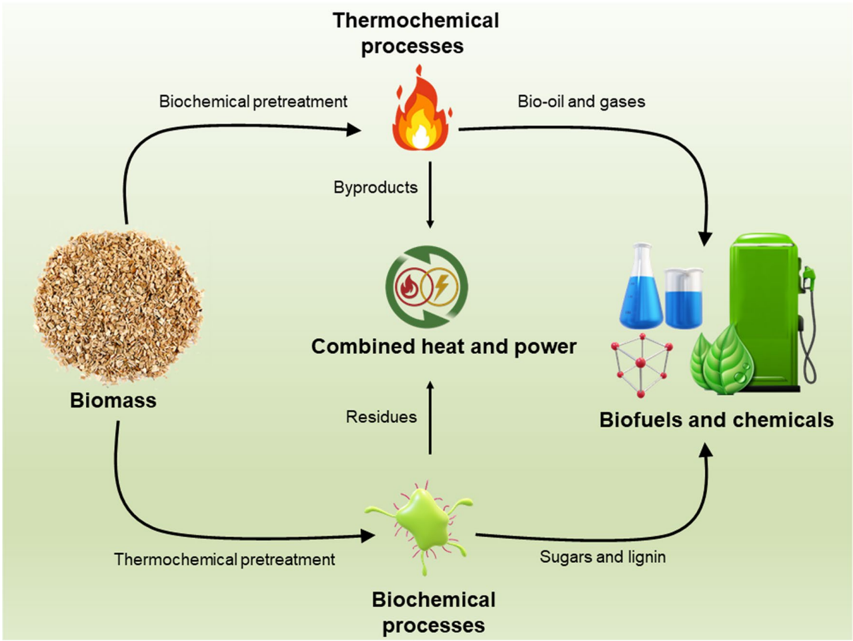
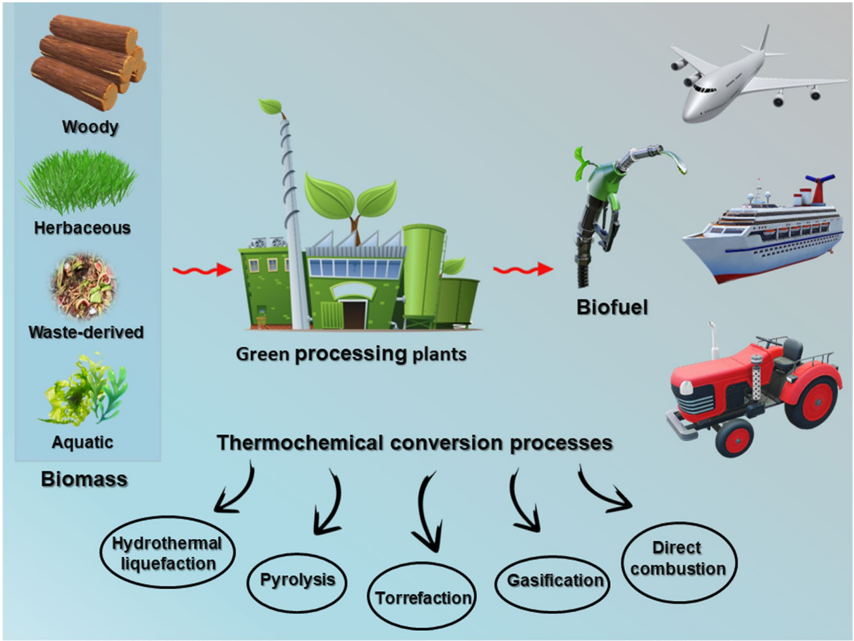
Thermochemical processes are classified into low temperature, below 300 °C, and high temperature, higher than 300 °C, i.e. gasification, combustion and pyrolysis.
Overview
CoChat Summary
TL;DR
This review surveys biomass-to-biofuel conversion routes and the life cycle assessment (LCA) literature, with a critical review of 40 LCA studies published from 2019–2021. It concludes that thermochemical routes are more researched than biochemical ones, and that integrating hydrothermal and biochemical routes is promising for a circular economy but still faces technical and cost challenges.
Key findings
- Biomass contributes about 9% (~51 EJ) of global primary energy supply, and the paper says global energy demand is projected to rise by almost 28% by 2040.
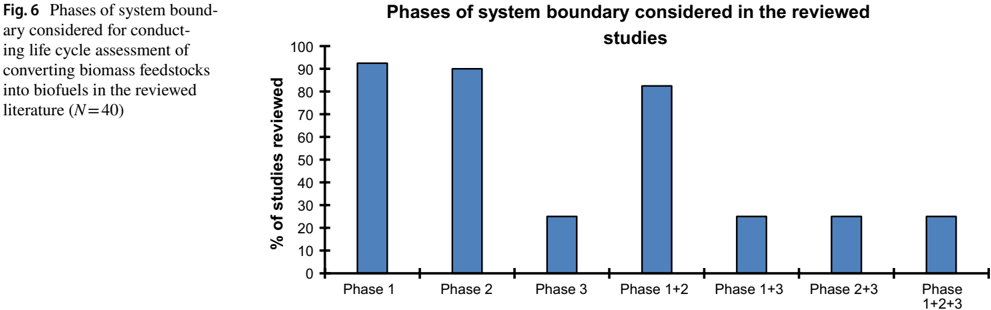
- The review analyzed 40 LCA studies from 2019–2021 and found that only 8 studies included all three phases of biofuel production; about 90% considered Phase 1 and Phase 2, but only 25% included Phase 3.
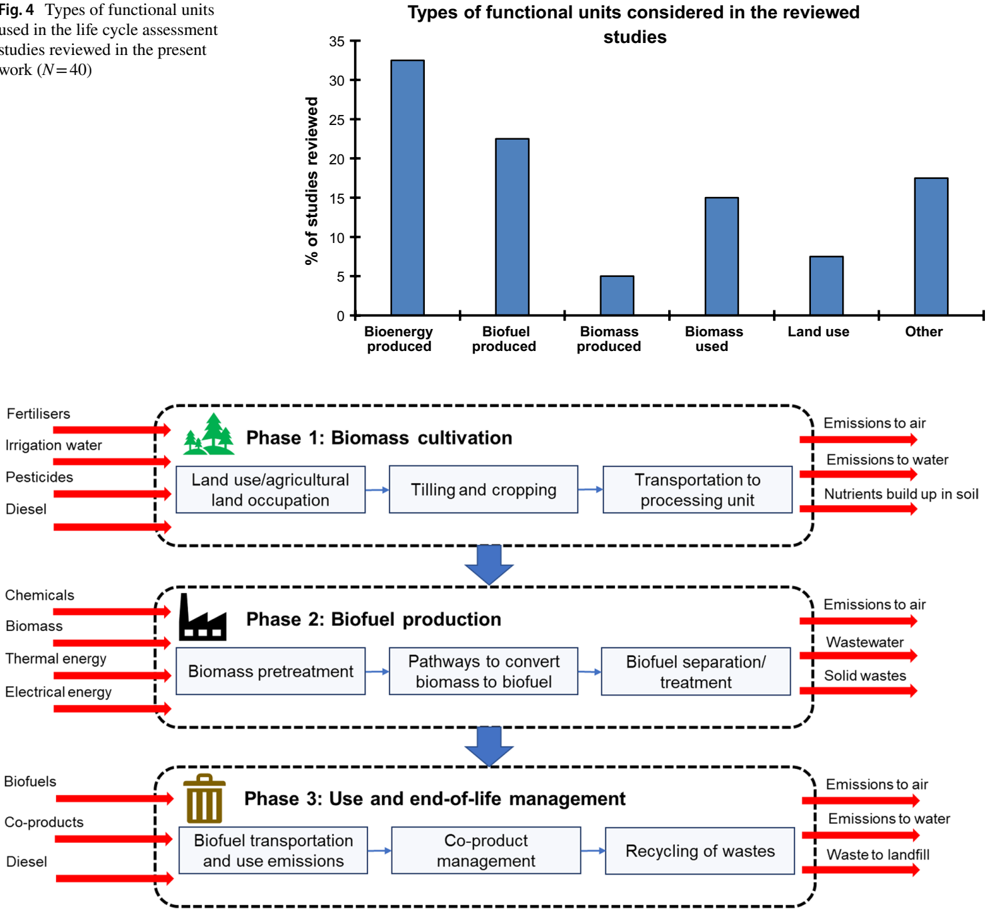
- About 32% of reviewed studies used “units of bioenergy in J or kWh” as the functional unit, while about 22% used “amount of biofuels produced” such as kg.
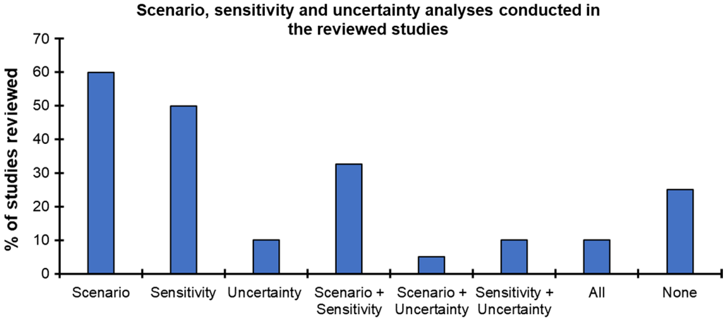
- The paper reports that 60% of the reviewed studies considered scenario analysis, 10% did uncertainty analysis, and 50% conducted sensitivity analysis; it also states that no study included all three phases of the biofuel production system boundary together with uncertainty, scenario, and sensitivity analyses.
- Across comparative LCA studies, thermochemical processes generally showed lower environmental impacts than biological processes for the same biomass and geographic/temporal span; one cited comparison found anaerobic digestion best for 14 out of 18 impacts.
Methods
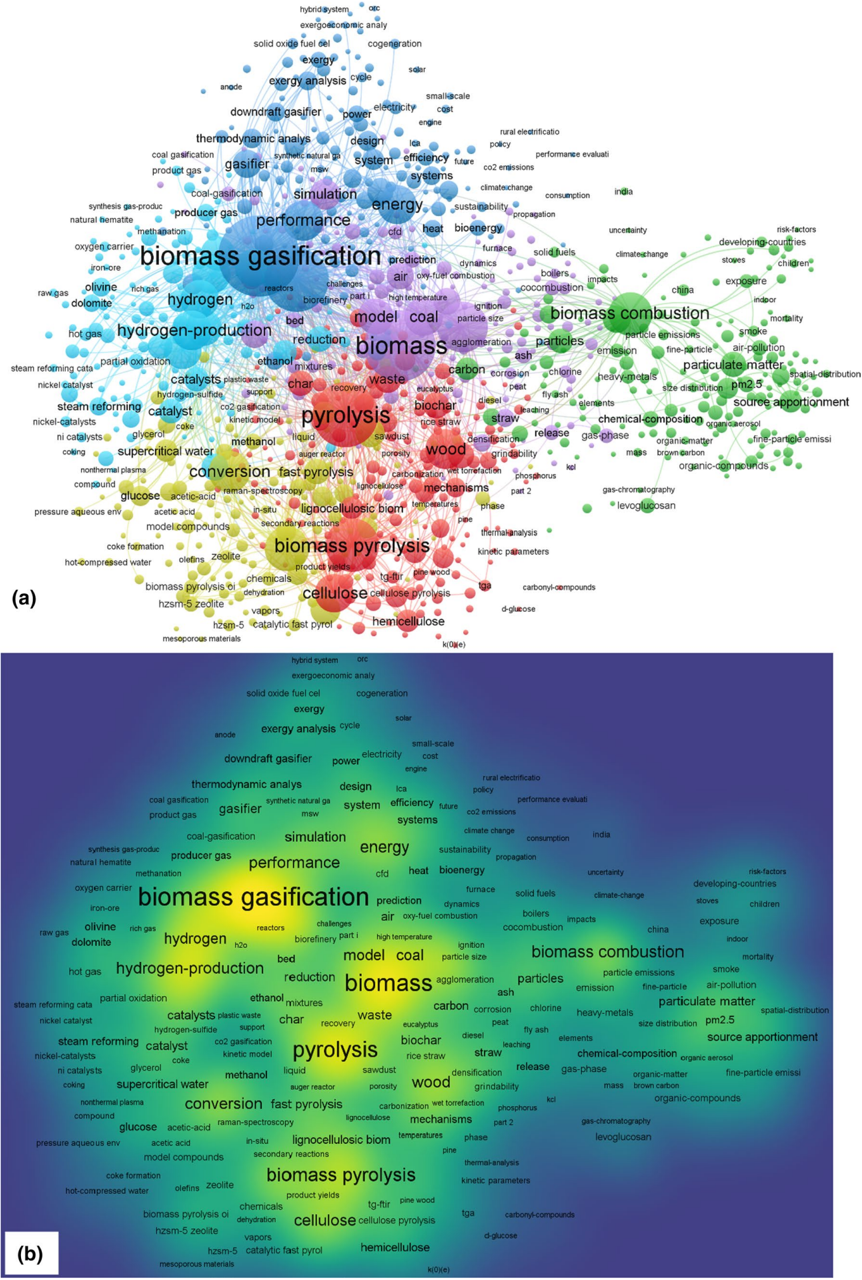
- Narrative review of biomass conversion technologies plus a bibliometric analysis using Web of Science data and VOSviewer; the bibliometric search returned 9,947 results, exported in batches of 500 entries.
- Critical review of 40 LCA studies published from 2019 to 2021 on biofuels, covering biomass feedstocks, geographical span, biofuels produced, life cycle tools, and inventories.
- The paper organizes analysis around ISO LCA stages: goal and scope, inventory analysis, impact assessment (mid-point and endpoint indicators), uncertainty/scenario/sensitivity analysis, and interpretation.
Limitations
- Stated in the paper: there was no study identified that included all three phases of biofuel production along with uncertainty, sensitivity, and scenario analyses.
- Stated in the paper: only 4 studies had all three of scenario, sensitivity, and uncertainty analyses, which “poses questions” about the applicability of findings for decision-making.
- Evident from the text: the review is limited to 40 studies from 2019–2021 for the LCA synthesis, so older or more recent studies are not part of that analysis.
Model-written summary. Check it against the paper before relying on it.
Integrity signals
Registry
Cites
Statistics
Figures
Verification
Claims the paper makes
3 Valid · 1 Not valid · 58 Not checked · 42 Own results and interpretations
The cited sources that could be checked couldn’t confirm or dispute this claim.
In the paper
“Biomass, unlike other sustainable energy sources such as wind, solar, geothermal, marine and hydropower, can directly produce fuel along with chemicals (Quereshi et al. 2021;Farrell et al. 2019;Farrell et al. 2020).”
§ Conversion of biomass to biofuels and life cycle assessment: a review > Introduction
What the sources say
- Not checked — no full text of the sourcecites Quereshi et al. 2021 matched to “Overview of sustainable fuel and energy technologies” (2021) source
- Could not verifycites Farrell et al. 2019 matched to “Assessment of the energy recovery potential of waste Photovoltaic (PV) modules” (2019) sourceExperimental — accuracy not yet measured
The Introduction (page unavailable) describes solar PV as producing electricity, and the Results and Discussion (page unavailable) compare PV polymers’ calorific value with energy crops. Neither passage addresses whether biomass can directly produce both fuels and chemicals, or makes the claimed comparison with other renewable sources. Searches for that comparison and for biomass, fuels, and chemicals found no supporting passage in our copy. (LLM, conf=0.76)
- Could not verifycites Farrell et al. 2020 matched to “Technical challenges and opportunities in realising a circular economy for waste photovoltaic modules” (2020) sourceExperimental — accuracy not yet measured
The Introduction (page unavailable) lists biomass alongside solar, wind, hydro, tidal and geothermal as renewable technologies, but does not compare what they produce. A search for biomass conversion into fuels and chemicals found discussion of pyrolysis in photovoltaic-module recycling, not a statement that biomass directly produces fuels and chemicals. (LLM, conf=0.76)
plain- Asserted: passes — The authors put it forward as true.
- Checkable: passes — It can be checked against evidence.
- Load-bearing: passes — The paper’s conclusions depend on it.
- Based: passes — The paper gives a reason why it holds.
The sources with a verdict support this claim; the rest weren’t checked yet, have no full text we could read, or their verdicts aren’t rated yet.
In the paper
“Some studies computed net energy ratio to evaluate the usability of biofuels as energy sources (Al-Mawali et al. 2021;Al-Muhtaseb et al. 2021;Dasan et al. 2019;Im-Orb and Arpornwichanop 2020;Reaño 2020;Saranya and Ramachandra 2020)”
§ Conversion of biomass to biofuels and life cycle assessment: a review > Mid-point indicators
What the sources say
- Could not verifycites Al-Mawali et al. 2021 matched to “Life cycle assessment of biodiesel production utilising waste date seed oil and a novel magnetic catalyst: A circular bioeconomy approach” (2021) sourceExperimental — accuracy not yet measured
Our copy of Al-Mawali et al. (2021) holds only the institutional-repository record: the title/author block, the keyword list (life cycle assessment, magnetic catalyst, circular bioeconomy, biodiesel, date seed oil) and the citation/RIS entries (Abstract section, no page numbers). Six searches ('net energy ratio', 'energy payback ratio fossil energy demand', 'energy efficiency ratio of energy output to input', transesterification/yield, and LCA functional-unit/GWP terms) returned only these metadata passages — no abstract body, methods, results or discussion text is present. Nothing in our copy therefore states or excludes that the authors computed a net energy ratio to assess biodiesel's usability as an energy source; the claim can be neither confirmed nor disputed. (LLM, conf=0.70)
- Supportedcites Al-Muhtaseb et al. 2021 matched to “Circular economy approach of enhanced bifunctional catalytic system of CaO/CeO2 for biodiesel production from waste loquat seed oil with life cycle assessment study” (2021) source
In the Figure 12 discussion, the paper calculates a net energy ratio of 2.23 using biodiesel energy output and fossil-resource savings. Section 3.6 identifies this as an LCA of biodiesel production from waste loquat seeds, supporting the citing sentence's characterization of the study. (LLM, conf=0.92)
- Not checked — no full text of the sourcecites Dasan et al. 2019 matched to “Life cycle evaluation of microalgae biofuels production: Effect of cultivation system on energy, carbon emission and cost balance analysis” (2019) source
plain- Asserted: passes — The authors put it forward as true.
- Checkable: passes — It can be checked against evidence.
- Load-bearing: unclear — It is unclear whether the paper’s conclusions depend on it.
- Based: passes — The paper gives a reason why it holds.
- Could not verify
Every source the paper cites for this claim was checked and supports it.
In the paper
“In fact, there was only one study identified that highlighted that for spent coffee grounds, incineration is a better route compared to biofuel production (Schmidt Rivera et al. 2020).”
§ Conversion of biomass to biofuels and life cycle assessment: a review > Key points observed in life cycle assessment studies
What the sources say
- Supportedcites Schmidt Rivera et al. 2020 matched to “Life cycle environmental sustainability of valorisation routes for spent coffee grounds: From waste to resources” (2020) source
Our copy states exactly what is attributed to it: the Abstract and Section 3.1 ('incineration is the most environmentally sustainable valorisation route, with net-negative impacts in 14 out of 16 categories') and the Conclusions rank biodiesel as 'the least preferred option with the highest impacts in 11 categories'. Section 3.2 reinforces this ('production of biodiesel from SCGs is not yet environmentally a competitive option, in particular when replacing incineration'). The 'only one study identified' framing is the citing authors' own review tally, not a statement attributed to this source. (LLM, conf=0.90)
plainSingle case- Asserted: passes — The authors put it forward as true.
- Checkable: passes — It can be checked against evidence.
- Load-bearing: unclear — It is unclear whether the paper’s conclusions depend on it.
- Based: passes — The paper gives a reason why it holds.
- Rests on an assumption not shown here.
- Supported
A result the paper reports from its own data — it cites no other source for it, so there is none to check. The quote shows it is in the paper.
In the paper
“There was no study identified that included all three phases of the life cycle of biofuel production system boundary (described in Fig. 5) and uncertainty, scenario and sensitivity analyses in the 40 reviewed studies.”
- Also stated in: § Key points observed in life cycle assessment studies · plain
“There was no study identified that included all the three phases of biofuel production along with uncertainty, sensitivity and scenario analyses.”
§ Conversion of biomass to biofuels and life cycle assessment: a review > Uncertainty, scenario and sensitivity analysis
plain- Asserted: passes — The authors put it forward as true.
- Checkable: passes — It can be checked against evidence.
- Load-bearing: passes — The paper’s conclusions depend on it.
- Based: passes — The paper gives a reason why it holds.
- Rests on an assumption not shown here.
- Also stated in: § Key points observed in life cycle assessment studies · plain
A result the paper reports from its own data — it cites no other source for it, so there is none to check. The quote shows it is in the paper.
In the paper
“Most of the studies focused on specific processes of the biofuel production chain, focusing on critical areas of concern rather than evaluating the overall impacts of the entire production chain.”
§ Conversion of biomass to biofuels and life cycle assessment: a review > Goal and scope definition
plain- Asserted: passes — The authors put it forward as true.
- Checkable: passes — It can be checked against evidence.
- Load-bearing: passes — The paper’s conclusions depend on it.
- Based: passes — The paper gives a reason why it holds.
56 more claims
Create a free account to see all 104 claims and to verify the 17 references still open.
- It may state two separate claims as one. 26
- Probably not a substantial claim. 19
- The quote only partly states this claim. 1
Citations
Cites
Review of fast pyrolysis of biomass and product upgrading
Bridgwater, A. V. (2012) · Biomass and Bioenergy · doi:10.1016/j.biombioe.2011.01.048 · Cited by 4,856 · cited 1×
“The primary product is liquid oil (Bridgwater, 2012a).”
Alvira, P., Tomás-Pejó, E., Ballesteros, M., & Negro, M. J. (2010) · Bioresource Technology · doi:10.1016/j.biortech.2009.11.093 · Cited by 3,912 · cited 1×
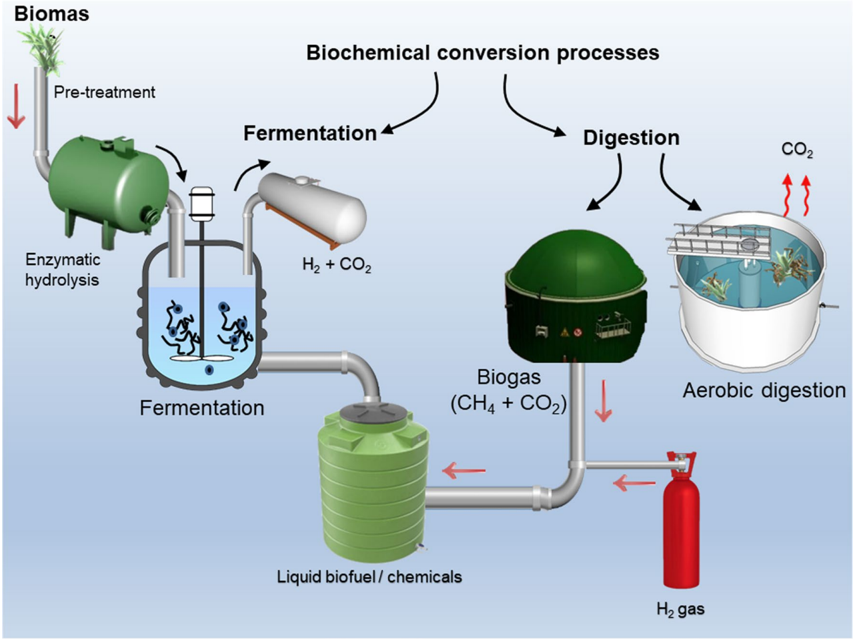
“Bioconversion of biomass to biofuel comprises of sequential stages: pretreatment, hydrolysis (acid/enzymatic) and fermentation (Alvira et al. 2010).”
BackgroundHydrothermal liquefaction of biomass: A review of subcritical water technologies
Toor, S. S., Rosendahl, L., & Rudolf, A. (2011) · Energy · doi:10.1016/j.energy.2011.03.013 · Cited by 1,840
Ethanol fermentation from biomass resources: current state and prospects
Lin, Y., & Tanaka, S. (2006) · Applied Microbiology and Biotechnology · doi:10.1007/s00253-005-0229-x · Cited by 1,621 · cited 1×
“In the consolidated bioprocessing scenario, only one microorganism is simultaneously utilised for hydrolysis and fermentation, which decreases the operation cost and enhances the process efficacy (Lin and Tanaka, 2006).”
BackgroundCombustion characteristics of different biomass fuels
Demirbas, A. (2004) · Progress in Energy and Combustion Science · doi:10.1016/j.pecs.2003.10.004 · Cited by 1,591
Strategies for mitigation of climate change: a review
Fawzy, S., Osman, A. I., Doran, J., & Rooney, D. W. (2020) · Environmental Chemistry Letters · doi:10.1007/s10311-020-01059-w · Cited by 1,522 · cited 1×
“The depletion of non-renewable fuel sources, accompanied with greenhouse gas emissions, has become a critical issue (Fawzy et al. 2020; Osman et al. 2021).”
BackgroundSelf-citationProgress in bioethanol processing
Balat, M., Balat, H., & Öz, C. (2008) · Progress in Energy and Combustion Science · doi:10.1016/j.pecs.2007.11.001 · Cited by 1,490 · cited 1×
“Under these subcritical conditions, physicochemical properties of water such as density, diffusivity, dielectric constant and viscosity alter and improve the biomass degradation process, which further upgrades the torrefaction process (Bach and Skreiberg 2016; Balat et al. 2008).”
BackgroundLignocellulosic biomass to bioethanol, a comprehensive review with a focus on pretreatment
Haghighi Mood, S., Hossein Golfeshan, A., Tabatabaei, M., Salehi Jouzani, G., Najafi, G. H., Gholami, M., & Ardjmand, M. (2013) · Renewable and Sustainable Energy Reviews · doi:10.1016/j.rser.2013.06.033 · Cited by 1,342 · cited 1×
“It can be classified into four main categories, including: (1) physical, e.g. grinding, (2) physicochemical, e.g. wet oxidation, (3) chemical, e.g. oxidising agents and organic solvents, and (4) biological or combination of them (Haghighi Mood et al. 2013).”
BackgroundCatalytic Conversion of Carbohydrates to Initial Platform Chemicals: Chemistry and Sustainability
Mika, L. T., Cséfalvay, E., & Németh, Á. (2018) · Chemical Reviews · doi:10.1021/acs.chemrev.7b00395 · Cited by 1,320 · cited 1×
“Based on the mode of operation, it can be divided into two main subclasses: (1) indirect liquefaction and (2) solvent liquefaction (Mika et al. 2018).”
BackgroundA review on hydrothermal liquefaction of biomass
Gollakota, A. R. K., Kishore, N., & Gu, S. (2018) · Renewable and Sustainable Energy Reviews · doi:10.1016/j.rser.2017.05.178 · Cited by 1,306 · cited 1×
“Solvent liquefaction has the priority to be implemented over the other scenario because of its remarkable merits, moderate operational conditions and higher yield of products (Gollakota et al. 2018).”
Background
Cited by
Items 401–500 of 714
From Fossil to Biomass: A Comparative Sustainability Assessment of Ethylene Glycol Production
Yan, J., Lei, Y., Li, B., Zhang, Z., & Chen, Y. (2025) · ACS Sustainable Chemistry & Engineering · doi:10.1021/acssuschemeng.5c07048 · Cited by 7
Calangi, J. D., Tago, T., & Kimura, K. (2025) · Applied Catalysis A General · doi:10.1016/j.apcata.2025.120648 · Cited by 5
Ensuring the Climate and Environmental Integrity of Alternative Fuels
Esquivel‐Elizondo, S., Ocko, I., Alvarez, R. A., Trask, B., Rettig, I., & Hamburg, S. P. (2025) · Environmental Science & Technology · doi:10.1021/acs.est.5c07609 · Cited by 5
Unveiling pyrolysis mechanism of furfural: a theoretical and kinetic study
Li, Y., Sun, J., Lin, S., et al. (2025) · Bioresource Technology · doi:10.1016/j.biortech.2025.133747 · Cited by 4
Techno-economic and life-cycle assessments of biomass thermochemical conversion into gaseous fuels
Hussain, M. S., Shi, M., Zhang, S., Zhang, Y. S., Bie, X., Li, Q., Zhang, Y., Lubjuhn, S., Venghaus, S., & Zhou, H. (2025) · Energy & Environment Nexus · doi:10.48130/een-0025-0015 · Cited by 19
Demineralization and torrefaction of mango peel waste: effect of process parameters
Masroor, A., Umar, M. Z., Ashraf, M., Aslam, Z., Azeem, S., Aslam, U., Mahmood, N., Gatasheh, M. K., & Junaid, M. B. (2026) · Biomass Conversion and Biorefinery · doi:10.1007/s13399-025-07013-6 · Cited by 4
Ogilvie, H., Rasul, M. G., Mandal, N. K., Nabi, M. N., & Naiker, M. (2026) · Biomass and Bioenergy · doi:10.1016/j.biombioe.2026.108968 · Cited by 6
Environmental Systems Engineering for Lignocellulosic Biorefineries Using AI and Genome-Scale Models
Raheja, Y., Gaur, V. K., Ainala, S. K., Kumar, A., Srivastava, J. K., & Chadha, B. S. (2026) · BioEnergy Research · doi:10.1007/s12155-026-10965-w · Cited by 4
“As standardized by ISO 14,040 and ISO 14,044 there are four main stages of LCA for biomass to biofuels: (1) defining the goal and scope, (2) conducting a life cycle inventory analysis, (3) assessing environmental impacts, and (4) performing life cycle interpretation [18].”
Duwal, R., Vasilev, K. A., Binner, E. R., Long, N. V. D., Coad, B. R., & Hessel, V. (2026) · ACS Sustainable Resource Management · doi:10.1021/acssusresmgt.5c00338 · Cited by 5
Ismail, R. I., Khor, C. Y., & Mohamed, A. R. (2024) · Journal of Manufacturing and Materials Processing · doi:10.3390/jmmp8020062 · Cited by 4
Luo, Y., & Li, Z. (2024) · European Journal of Organic Chemistry · doi:10.1002/ejoc.202400158 · Cited by 4
Tu, Y., Tu, F., Yang, Y. C., Qian, J., Wu, X., & Yang, S. (2024) · Science Progress · doi:10.1177/00368504241274999 · Cited by 6
“21 Life cycle assessment (LCA) is often used to integrate the entire lifecycle from raw material procurement to disposal.”
BackgroundVolarization of agro farm yard waste into bioenergy: present state and future directions
Asfaw, B. T., Gari, M. T., Jeyapaul, A. S., Jayakumar, M., & Baskar, G. (2024) · Elsevier eBooks · doi:10.1016/b978-0-443-29254-5.00008-4 · Cited by 9
Sofi, M. H. M., Hamid, M. Y. S., Jalil, A. A., Abdullah, T. A. T., Mohamud, M. Y., Bahari, M. B., Hassan, N. S. B., & Vo, D. N. (2025) · Environmental Chemistry Letters · doi:10.1007/s10311-025-01845-4 · Cited by 5
“This process is crucial in advancing catalytic technologies that reduce dependence on fossil fuels by utilizing abundant and alternative renewable resources such as biomass, coal, and natural gas, with methanol serving as the intermediate compound [2, 3].”
Development of soapstock processing technology to ensure waste-free and safe production
Kalyna, V., Koshulko, V., Ilinska, O., et al. (2021) · Eastern-European Journal of Enterprise Technologies · doi:10.15587/1729-4061.2021.245094 · Cited by 4
“The main cause of environmental pollution is the openness of the resource cycle, which leads to the accumulation of waste [5].”
BackgroundHossain, S. S., Ayodele, B. V., Alhulaybi, Z. A., & Alwi, M. M. A. (2022) · Applied Sciences · doi:10.3390/app122412914 · Cited by 4
Phycoremediation of heavy metals and production of biofuel from generated algal biomass: a review
Hazaimeh, M. (2023) · Environmental Science and Pollution Research · doi:10.1007/s11356-023-30190-8 · Cited by 6
“The LCA is a system that studies the entire steps of biofuel production, including the inputs and outputs (Osman et al. 2021).”
BackgroundMethodInfluentialFunctionals nanoarchitectonics based on metallic, and carbon structures: A review
Druzian, D. M., Machado, A. K., Ourique, A. F., & da Silva, W. L. (2023) · Journal of Molecular Liquids · doi:10.1016/j.molliq.2023.123902 · Cited by 5
Fuad, M. A. H. M., Hasan, M. F., Chong, W. W. F., Ani, F. N., & Ngadiman, N. H. A. (2024) · Renewable Energy · doi:10.1016/j.renene.2024.120592 · Cited by 6
Engineered nickel phyllosilicate for selective 5-HMF C–O bond hydrogenation under benign conditions
Wang, X., Liu, Q., Chen, S., et al. (2024) · Catalysis Today · doi:10.1016/j.cattod.2024.114883 · Cited by 4
Sustainable Utilization of Biomass Resources
Varalakksmi, V., Sudalai, S., & Arumugam, A. (2024) · Green energy and technology · doi:10.1007/978-981-97-6321-4_1 · Cited by 5
Pyrolysis of macroalgae biomass from Nitella hyalina and its thermokinetics
Iqbal, A., Imran, M., Alves, J. L. F., Hadi, F., Yao, Z., da Silva, J. C. G., & Badshah, S. L. (2024) · Biomass Conversion and Biorefinery · doi:10.1007/s13399-024-06242-5 · Cited by 6
“The depletion of non-renewable fuel resources and the emission of greenhouse gases have become significant concerns for continuous economic growth and pollu-tion-free environment [1, 2].”
MXene/SrTiO3 Heterostructure for FAME Synthesis from the Non-Edible Feedstock Oil Silybum marianum
Khoso, S., Saeed, M., Saleem, M., et al. (2024) · Catalysts · doi:10.3390/catal14120948 · Cited by 4
Dahman, H., Berrich, E., harfi, K. E., Loubar, K., Jeguirim, M., Jellali, S., & Aboulkas, A. (2025) · Waste and Biomass Valorization · doi:10.1007/s12649-024-02860-2 · Cited by 5
“The investigation results suggest that pyrolysis is a promising conversion technology that can be employed to produce a range of valuable materials from biomass, including olive pomace [24, 25].”
Rajkumar, P., Velmurugan, V., Kumutha, R., et al. (2025) · Physica B Condensed Matter · doi:10.1016/j.physb.2025.417081 · Cited by 4
Effects of water addition on the laminar burning velocities of ethanol/iso-octane mixtures
Zhang, T., Jiang, X. D., Lin, Z., Huang, Z., Zhu, W. S., Xu, L., & Xu, S. (2025) · Fuel · doi:10.1016/j.fuel.2025.134864 · Cited by 4
Zastempowski, M., Kaszkowiak, J., Jablonický, J., Hujo, Ľ., & Gromnicki, M. (2025) · Polish Maritime Research · doi:10.2478/pomr-2025-0009 · Cited by 4
Mohan, L., & Zhao, Y. (2025) · ACS Sustainable Chemistry & Engineering · doi:10.1021/acssuschemeng.5c04168 · Cited by 4
Biomass and Energy Production: Thermochemical Methods
Shafizadeh, A., & Danesh, P. (2022) · IntechOpen eBooks · doi:10.5772/intechopen.102526 · Cited by 8
Onaifo, J. O., Ikhuoria, E. U., Ifijen, I. H., & Abdullahi, S. M. (2022) · Chemistry Africa · doi:10.1007/s42250-022-00536-9 · Cited by 6
“When creating a method to create the optimal synthetic liquid fuel, low cost and useful fuel qualities are crucial [38].”
BackgroundMethodSapmaz, T., Uwineza, C., Mahboubi, A., De Wever, H., Koseoglu-Imer, D. Y., & Taherzadeh, M. J. (2023) · Biomass Conversion and Biorefinery · doi:10.1007/s13399-023-03782-0 · Cited by 4
“Methanogenesis requires pH levels of 6.5–7.5, while acido-genesis and acetogenesis need pH levels of 5–5.5 [46].”
InfluentialA comprehensive review of biomass and biofuels and their progress using digital technologies
Yeassin, R., Adnan, M. M. R., Chowdhury, M. M. A., Mia, A., Enan, M. A. J. C., & Fuad, M. H. (2025) · Energy Conversion and Management X · doi:10.1016/j.ecmx.2025.101254 · Cited by 19
Circular Chemistry: An Enabler of Circular Economy To Achieve the Zero-Waste Goal
Singh, S. B. (2024) · Sustainability & Circularity NOW · doi:10.1055/a-2451-4726 · Cited by 5
Dhanuprabha, D., Rahul, S., Prabakaran, S., et al. (2025) · International Journal of Biological Macromolecules · doi:10.1016/j.ijbiomac.2025.141551 · Cited by 3
Zhao, Z., Ding, J., Luo, G., Wang, B.-Y., Sun, H.-J., Liu, B.-F., Cao, G., Bao, M.-Y., Ren, N., Pang, J.-W., et al. (2025) · Advances in Applied Energy · doi:10.1016/j.adapen.2025.100219 · Cited by 5
Ajona, C., & Saravanakumar, A. (2025) · Biomass and Bioenergy · doi:10.1016/j.biombioe.2025.108028 · Cited by 7
Huang, X., Yin, T., Sun, W., Ge, G., & Wei, W. (2025) · Plants · doi:10.3390/plants14142217 · Cited by 3
“Biochar is a kind of carbonaceous product made from organic waste via high-temperature pyrolysis [6,7].”
Fernandes, R. J., Nguyen, D., Shakeel, M. R., & Turner, J. W. G. (2025) · Procedia CIRP · doi:10.1016/j.procir.2025.01.057 · Cited by 2
Yang, J. W., Chen, W., Cao, B. W., et al. (2025) · Case Studies in Thermal Engineering · doi:10.1016/j.csite.2025.107184 · Cited by 3
Eco-friendly diesel fuels: How biodiesel-ethanol blends cut emissions without sacrificing power
Karimi, M., Kheiralipour, K., & Khoobbakht, M. (2025) · Energy · doi:10.1016/j.energy.2025.139430 · Cited by 3
Xu, Y. C., Ye, X. W., Guan, X., Ruan, Y., Zhang, L., & Hu, X. (2025) · Biomass and Bioenergy · doi:10.1016/j.biombioe.2025.108698 · Cited by 7
Unlocking lignocellulosic biomass: Biocatalyst-driven strategies for sustainable biofuel generation
Gokul, T. A., Kumar, K. R., Dang, K. D., Ma, Y., Veeramanikandan, V., Sudharsun, B., Pothiraj, C., Arun, A., Hussain, M., Nguyen, V., et al. (2026) · Carbon Resources Conversion · doi:10.1016/j.crcon.2026.100417 · Cited by 12
Wu, W., & Zhai, H. (2026) · International journal of greenhouse gas control · doi:10.1016/j.ijggc.2026.104653 · Cited by 6
Ranjekar, A. M., OOST, G. V., Kaviti, A. K., & Sikarwar, V. S. (2026) · Journal of environmental chemical engineering · doi:10.1016/j.jece.2026.124024 · Cited by 5
Almalki, A. S. A., Alhadhrami, A., Alsanie, W. F., Kamarudin, S. K., & Pugazhendhi, A. (2023) · Fuel · doi:10.1016/j.fuel.2023.129645 · Cited by 4
Algae as a Sustainable Source for Energy Storage Technologies
Rinanti, A., Rahmiyati, L., Fachrul, M. F., Aphirta, S., Marendra, S. M. P., & Savira, N. (2024) · Environmental science and engineering · doi:10.1007/978-981-97-2371-3_20 · Cited by 3
Renewable and Sustainable Biorefinery: A Patent Review
Alexandre, S. A., Granjeiro, P. A., da Silva, J. A., & Gonçalves, D. B. (2025) · Recent Patents on Biotechnology · doi:10.2174/0118722083343982250312192000 · Cited by 5
Carbon Neutrality and Resilient Districts, a Common Strategy in European Union Countries in 2050
Nematchoua, M. K., Rakotomalala, M. S., & Reiter, S. (2025) · Atmosphere · doi:10.3390/atmos16050508 · Cited by 7
Rui, T., Zhu, B., Li, J., Zhang, X., Lü, B., Bian, J., Wen, J., Shi, Z., Kang, Y., & Peng, F. (2025) · Chemical Engineering Journal · doi:10.1016/j.cej.2025.165923 · Cited by 3
Chen, M., Chen, M., Xiang, X., et al. (2025) · Environmental Research · doi:10.1016/j.envres.2025.122639 · Cited by 3
Wibowo, S., Syafii, W., Pari, G., et al. (2023) · JURNAL KESEHATAN LINGKUNGAN · doi:10.20473/jkl.v15i3.2023.196-216 · Cited by 3
Renewable Carbohydrates: Advancements in Sustainable Glucose Production and Optimization
Mperiju, T. M., Silas, K., Aji, M. M., Abubakar, A. M., Budianto, A., Indianraj, N., & Chafika, R. (2023) · Global Sustainability Research · doi:10.56556/gssr.v2i4.621 · Cited by 5
“LCA requires gathering data on various inputs and outputs throughout the life cycle stages of glucose production (Osman et al., 2021).”
BackgroundMethodInfluentialA Sustainable Perspective on Biowaste-to-Biofuel for a Bio-based Economy
Yadav, S., & Pal, D. B. (2024) · Clean Energy Production Technologies · doi:10.1007/978-981-97-0847-5_3 · Cited by 3
Mubarak, M., Shaija, A., & Vasu, S. T. (2024) · Heliyon · doi:10.1016/j.heliyon.2024.e30681 · Cited by 3
“The increasing prices of the fast-depleting fossil fuels and the effect of its usage on the atmosphere have led to the search for unconventional fuels for diesel engines [ [1,2]].”
BackgroundBioeconomy for Sustainable Environment Management Practices
Amesho, K. T. T., Kadhila, T., Shangdiar, S., Shihomeka, S. P., Shopati, A. K., Edoun, E. I., & Mohan, C. (2024) · Springer eBooks · doi:10.1007/978-981-97-1837-5_2 · Cited by 3
Power plant units for CO2 neutral energy security in Switzerland
Züttel, A., Nützenadel, C., Schlapbach, L., & Gilgen, P. W. (2024) · Frontiers in Energy Research · doi:10.3389/fenrg.2024.1336016 · Cited by 4
Ardhiansyah, H., Kusumaningrum, M., Bahlawan, Z. A. S., Prasetiawan, H., Savanti, F., & Fauziyyah, H. A. (2024) · IOP Conference Series Earth and Environmental Science · doi:10.1088/1755-1315/1381/1/012034 · Cited by 10
Sravanthi, G., Samuvel, R. M. S., Pratyusha, B. B., & Ramalingam, V. (2024) · Industrial Crops and Products · doi:10.1016/j.indcrop.2024.120319 · Cited by 5
Life Cycle Assessment of Cynara cardunculus L. -Based Polygeneration and Biodiesel Chains
Temporim, R. B. L., Cavalaglio, G., Petrozzi, A., Coccia, V., Cotana, F., & Nicolini, A. (2022) · Sustainability · doi:10.3390/su142113868 · Cited by 4
Preparation of reed straw hydrochar adsorbent and its environmental impact assessment
Wang, J., Zang, Y., Zhang, J., et al. (2023) · City and Built Environment · doi:10.1007/s44213-023-00007-y · Cited by 3
“Last but not least, the LCA method was used to evaluate the environmental impact of the hydrochar preparation process using the SimaPro software (Osman et al. 2021).”
MethodAgriculture Biomass Characterization and Exploitation
Ramli, A. N. M., Jamek, S., Azelee, N. I. W., Manas, N. H. A., Munir, N., & Patil, R. V. (2023) · Elsevier eBooks · doi:10.1016/b978-0-323-93940-9.00067-0 · Cited by 4
Life Cycle Analysis of Biofuels
Hill, J. (2023) · Elsevier eBooks · doi:10.1016/b978-0-12-822562-2.00334-0 · Cited by 3
Lignocellulosic Biomass as Feedstock for Biofuels
Barnwal, S. K., Dhar, S., Parayil, D. J., & Francis, D. (2024) · Wiley eBooks · doi:10.1002/9781394204816.ch8 · Cited by 3
Synthetic Biology: Pioneering the Next Bio Revolution for a sustainable planetPreprint
Al-Salihi, S. A. A., Ford, K. L., Mahyudin, M. M., & Bunawan, H. (2024) · Research Square · doi:10.21203/rs.3.rs-4876104/v1 · Cited by 3
Grand challenges in heat engines
Novella, R. (2023) · Frontiers in Thermal Engineering · doi:10.3389/fther.2023.1301616 · Cited by 2
Sharma, S., Verma, P., & Agrawal, K. (2024) · Interdisciplinary biotechnological advances · doi:10.1007/978-981-97-5544-8_15 · Cited by 3
Nanocatalytic methodologies for biomass conversion to gaseous/liquid fuels
Kokkinos, N. C., Emmanouilidou, E., & Raftopoulou, K. (2025) · Elsevier eBooks · doi:10.1016/b978-0-443-24748-4.00005-2 · Cited by 4
Soni, S. K., & Soni, R. (2025) · Clean Energy Production Technologies · doi:10.1007/978-981-96-9013-8_2 · Cited by 2
Niju, S., Sriram, K., Sundramurthy, V. P., Abo, L. D., Jayakumar, M., Emana, A. N., Saminathan, S., & Baskar, G. (2025) · Waste and Biomass Valorization · doi:10.1007/s12649-025-03250-y · Cited by 10
Yadav, A. K., Yadav, S. K., Kumar, G., et al. (2025) · RSC Advances · doi:10.1039/d5ra04020e · Cited by 2
Tuning NiCu alloy metallicity and acidity on worm-like SiO2 for stable levulinic acid hydrogenation
Wang, X., Zhang, H., Xiang, H., et al. (2025) · Applied Catalysis A General · doi:10.1016/j.apcata.2025.120601 · Cited by 2
Jeong, E., Jung, S.-H., & Shin, H.-S. (2025) · Clean Technologies and Environmental Policy · doi:10.1007/s10098-025-03331-5 · Cited by 2
“Biofuels are an environmentally friendly energy source obtained from the thermochemical, biochemical, and/or physicochemical bio-conversion of biomass (Osman et al. 2021; Naik et al. 2010).”
Roman, A., Constantinescu, M., Bucura, F., Ionete, R. E., Botoran, O. R., & Niculescu, V.-C. (2025) · International Journal of Green Energy · doi:10.1080/15435075.2025.2564209 · Cited by 3
“In chemical recycling, pyrolysis is proposed as a general solution to deal with waste (Osman et al. 2021; Rajendran et al. 2022; Shivangi et al. 2022).”
Yue, W., Yu, Z., Liu, H., Xiao, W., Zheng, Z., Wang, X., & Ma, X. (2025) · Separation and Purification Technology · doi:10.1016/j.seppur.2025.136596 · Cited by 6
Xu, Y., & Qiu, Q. (2026) · Journal of Bioresources and Bioproducts · doi:10.1016/j.jobab.2026.100231 · Cited by 3
Research advances in gasification process modelling for syngas production from microalgal biomass
Sun, Z., Cao, S., Ugya, A. Y., Agathos, S. N., Sun, L., & Li, J. (2026) · Fuel · doi:10.1016/j.fuel.2026.138543 · Cited by 2
Rabah, M., Ali, L., Raza, M., Inayat, A., & Altarawneh, M. (2026) · Energy & Fuels · doi:10.1021/acs.energyfuels.5c04985 · Cited by 6
Life cycle assessment of hydrogen delivery pathways: a review
Hamedi, H., Gonzales‐Calienes, G., & Yang, J. (2026) · Energy Conversion and Management X · doi:10.1016/j.ecmx.2026.101711 · Cited by 10
de Carvalho, A. L., Silveira, E. A., Protásio, T. D. P., & OLIVEIRA, T. J. P. D. (2026) · Biomass and Bioenergy · doi:10.1016/j.biombioe.2026.109192 · Cited by 3
Dhal, S. B., Kar, D., & Capareda, S. C. (2026) · Global Energy Interconnection · doi:10.1016/j.gloei.2025.10.009 · Cited by 6
Guo, J., Su, S., Guo, S., Zhang, X., & Wang, J. (2026) · Biomass and Bioenergy · doi:10.1016/j.biombioe.2026.109220 · Cited by 3
Kumar, J. M. S., Ramakrishnan, P., Panneerselvam, P., Mohan, C. G., & Blasio, C. D. (2026) · Case Studies in Thermal Engineering · doi:10.1016/j.csite.2026.108032 · Cited by 2
Chemical contaminants and fish: implications for health and ecosystem sustainability
Sohail, M., Nematollahi, M. A., Suleman, S., & Habib, S. S. (2026) · Environmental Monitoring and Assessment · doi:10.1007/s10661-026-15351-9 · Cited by 5
“The process of pyrolysis has demonstrated remarkable efficacy in the synthesis of biofuels from lignocellulosic biomass, including bagasse from sugarcane (Osman et al., 2021).”
Life-cycle greenhouse gas mitigation of biomass technologies for various bioproducts
Lin, Y.-I., Aranha, D. J., Negi, S., Pan, S.-Y., & Fan, L.-S. (2026) · Industrial Crops and Products · doi:10.1016/j.indcrop.2026.123556 · Cited by 4
To Biotic or Abiotic: Biohybrid Systems for Artificial Photosynthesis
Cohen, Y., Bachar, O., Cohen, R., Meirovich, M. M., & Yehezkeli, O. (2026) · Chemical Reviews · doi:10.1021/acs.chemrev.5c00963 · Cited by 3
Rivaldi, M. R., Saputra, A., & Swantomo, D. (2022) · Jurnal Daur Lingkungan · doi:10.33087/daurling.v5i1.92 · Cited by 2
Kumar, S., Kumar, D., Sharma, P., & Punia, A. (2022) · International Journal of Current Microbiology and Applied Sciences · doi:10.20546/ijcmas.2022.1105.027 · Cited by 3
Immobilized biocatalysts for hydrolysis of polysaccharides
Pinto, M. C. C., Dutra, L. D. S., Fé, L. X. S. G. M., Freire, D. M. G., Manoel, E. A., & Cipolatti, E. P. (2023) · Elsevier eBooks · doi:10.1016/b978-0-323-99986-1.00012-0 · Cited by 5
Gois, A. R. D. S., Santos, C. F. D. S., Santana, I. M., Breitkreitz, M. C., & Freitas, L. D. S. (2023) · Analytical and Bioanalytical Chemistry · doi:10.1007/s00216-023-04906-1 · Cited by 2
“It is a renewable resource that can be used in the production of chemicals or carbon–neutral and low-emission fuels [2, 3].”
BackgroundLi, Z., Qin, W., Wang, J., Meng, X., Yang, J. Q., & Wu, J. (2024) · Industrial & Engineering Chemistry Research · doi:10.1021/acs.iecr.3c04439 · Cited by 2
Potentials of organic waste to provide bioenergy
Saidu, M. M., Lawal, E. E., Yetu, T. P., Yakubu, J. G., Oyegbade, S. A., Oyewole, O. A., & Dabai, A. I. (2024) · Elsevier eBooks · doi:10.1016/b978-0-443-14112-6.00010-9 · Cited by 3
Prasad, B. R., Suman, P., & Padhi, R. K. (2024) · Iranian Journal of Science · doi:10.1007/s40995-024-01651-7 · Cited by 2
“The comparative analysis of alkali and acid treatment underscores alkali’s superior suitability for fermentation, a finding of high significance in optimizing biofuel production (Osman et al. 2021).”
Coccia, V., Temporim, R. B. L., Lunghi, L., Tryboi, O., Cotana, F., Magrini, A., Dondi, D., Vadivel, D., Cartesegna, M., & Nicolini, A. (2024) · Sustainability · doi:10.3390/su16125164 · Cited by 2
Impact of advanced biofuels on water resources
Mintoo, M. J., & Kousar, R. (2024) · Elsevier eBooks · doi:10.1016/b978-0-443-21433-2.00023-2 · Cited by 2
Algal Biology and Biomass Characteristics
Parray, J. A., Singh, N., & Haghi, A. K. (2024) · Synthesis lectures on green energy and technology · doi:10.1007/978-3-031-77703-5_2 · Cited by 3
Empowering STEM Education at High Schools by a Talkative Power Based Learning Platform
Homayounnasab, N., Hoeher, P. A., & Hansen, S. (2025) · Journal of STEM Education Innovations and Research · doi:10.63504/jstem.v25i4.2683 · Cited by 2
“…friendly energy sources like solar power [Yang et al., 2 020], wind power [Olabi et al., 2023], hydro power [ Mor an et al., 2018], bio energy [Osman et al., 2021], geo-thermal energy [Anderson & Rezaie, 2019], and marine energy [Borthwick, 2016] help to minimize pollution and greenhouse gas…”
Tanyi, R. J., Mensah, L. D., Ntiamoah, A., Quansah, D. A., & Adaramola, M. S. (2025) · World sustainability series · doi:10.1007/978-3-031-87043-9_12 · Cited by 3
Han, Z., Shen, J., Guo, Y. R., Deng, S., Wang, S., Peng, H., & Zhang, C. (2025) · Fuel · doi:10.1016/j.fuel.2025.136233 · Cited by 2
Comparison of Biofuels for Decarbonized Maritime Transportation
Sevim, C., & Zincir, B. (2023) · Springer proceedings in energy · doi:10.1007/978-3-031-30171-1_55 · Cited by 3
Nanotechnology in Renewable Energy: Prospects and Challenges
Poobalan, B. (2023) · Nanomedicine & Nanotechnology Open Access · doi:10.23880/nnoa-16000260 · Cited by 2
Metadata
- Authors
- Osman, A. I., Mehta, N., Elgarahy, A. M., Al-Hinai, A., Al-Muhtaseb, A. H., & Rooney, D. W.
- Affiliations
- Queen's University Belfast (GB)
- Port Said University (EG)
- Sultan Qaboos University (OM)
- Corresponding author
- Osman, Ahmed I.
- Al-Muhtaseb, Ala’a H.
- Venue
- Environmental Chemistry Letters
- Published
- 2021-07-23
- Volume
- 19
- Issue
- 6
- Pages
- 4075-4118
- ISSN
- 1610-3653 (ISSN-L)
- 1610-3661
- OpenAlex
- W3186199070
- Cited by
- 761
- References
- 234
- Citations by year
- 2026: 134 · 2025: 182 · 2024: 180 · 2023: 150 · 2022: 101 · 2021: 14
- FWCI
- 30.36
- Type
- journal article
- Language
- en
- Open access
- hybrid
- doi.org
- Licence
- cc-by
- creativecommons.org/licenses/by/4.0 (tdm)
- creativecommons.org/licenses/by/4.0 (vor)
- Locations
- Environmental Chemistry Letters (publishedVersion, cc-by)
- University of Birmingham Research Portal (University of Birmingham) (publishedVersion, cc-by)
- Research Portal (Queen's University Belfast) (publishedVersion, cc-by)
- Funders
- OQ Oman (CR/DVC/SERC/19/01)
- European Union’s INTERREG VA Programme (Bryden Centre project (Project ID VA5048))
- Topics
- Physical Sciences › Engineering › Biomedical Engineering › Biofuel production and bioconversion
- Physical Sciences › Energy › Fuel Technology › Thermochemical Biomass Conversion Processes
- Physical Sciences › Environmental Science › Environmental Engineering › Environmental Impact and Sustainability
- Keywords
- biomass conversion, biofuels, life cycle assessment, thermochemical conversion, biochemical conversion, pyrolysis, gasification, combustion, enzymatic hydrolysis, fermentation, hydrothermal conversion, greenhouse gas emissions, circular economy
About these checks
Registry, retraction, Cites and statistics results are computed, not judged, with one exception: a printed reference that no index lists is read once by a model before it counts as a citation error. Claims are extracted by a model and kept only when their quote appears verbatim in the text; each cited source is then checked, with a model’s help, for whether it says what the claim relies on. Those verdicts can be wrong — read the claim’s quote and the cited source before relying on one.
The claim verdicts this report counts are experimental: their accuracy is not yet measured.
A language model drew the claims from the paper on 2026-10-10, under version 3 of the claim definition (model deepseek-v4.1-flash, prompt extract-v3).
A second model labelled each claim on 2026-10-10 (model jev-1.13-20260917, definition revision gold-guideline-v0.2).
Cited sources are checked with a language model’s help (gpt-6-sol and qwen3.8-omni-flash).
Statistics and arithmetic are recomputed, not judged.
Confidence bands are shown only for fields calibrated on our annotated test set. None is calibrated yet, so no band is shown.
What counts as a claim ›How we measure confidence ›How we check this ›
Are you an author, or do you see a problem with this page? Request a review
Data sources
Bibliographic data: Semantic Scholar, OpenAlex, Crossref.
Contains information from the Semantic Scholar Academic Graph Datasets, made available under the ODC Attribution License (ODC-BY 1.0).
Semantic Scholar’s data is described in: Kinney, R., et al. (2023). The Semantic Scholar Open Data Platform. arXiv:2301.10140.
