

Unlimited Associative Learning and the origins of consciousness: a primer and some predictions
Open accessThe DOI matches its Crossref record; 83 of the 85 references it cites were found in a registry or an index; 13 of the 33 sources its claims cite were checked for support.
Abstract
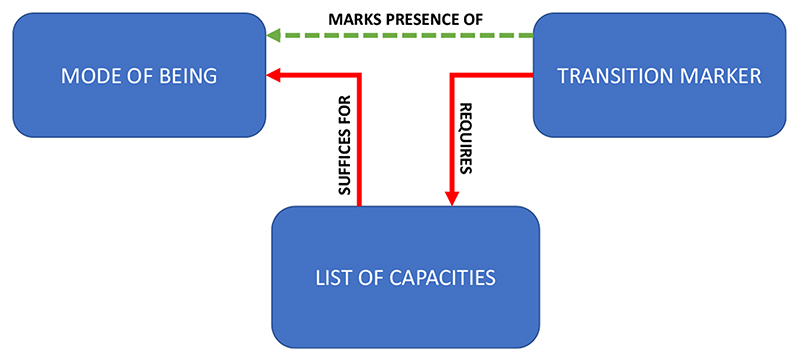
Over the past two decades, Ginsburg and Jablonka have developed a novel approach to studying the evolutionary origins of consciousness: the Unlimited Associative Learning (UAL) framework. The central idea is that there is a distinctive type of learning that can serve as a transition marker for the evolutionary transition from non-conscious to conscious life. The goal of this paper is to stimulate discussion of the framework by providing a primer on its key claims (Part I) and a clear statement of its main empirical predictions (Part II).
Overview
CoChat Summary
TL;DR
The paper argues that Unlimited Associative Learning (UAL) can serve as a transition marker for the evolutionary origin of consciousness, because it requires a package of mechanisms that are jointly sufficient for conscious experience in living organisms. It then lays out testable predictions about how UAL should cluster with one another, with conscious perception in humans, and with the distribution of learning abilities across animal taxa.
Key findings
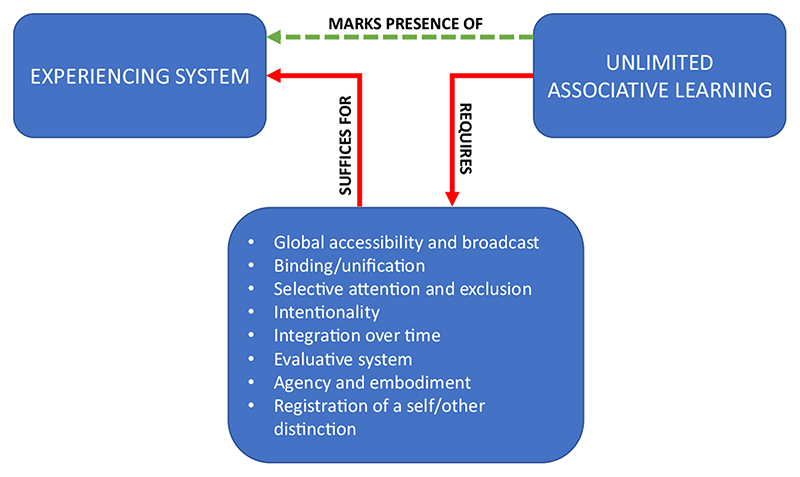
- The authors define UAL as associative learning with five features: learning on novel, compound stimuli, second-order conditioning, trace conditioning, and flexible, easily rewritable value-based associations; they argue these features form a natural cluster rather than five independent abilities.
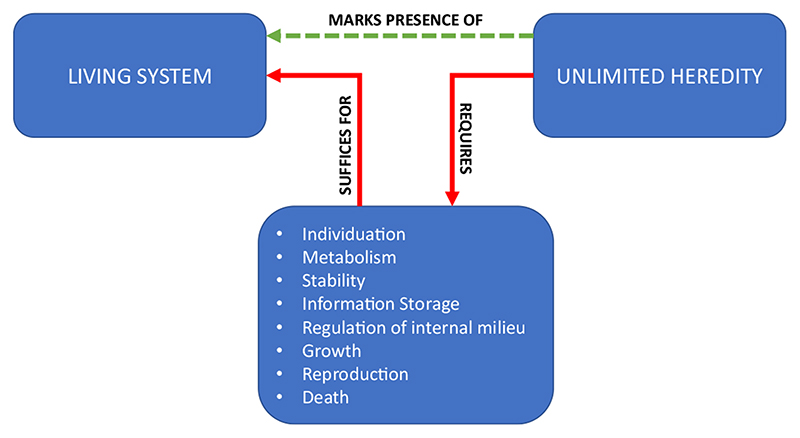
- They propose that a set of hallmarks of consciousness—global accessibility/broadcast, binding/differentiation, selective attention, intentionality, integration over time, evaluation, agency/embodiment, and self/other distinction—are jointly sufficient for consciousness in living organisms.
- On current evidence, they conjecture that UAL is present in most vertebrates, some arthropods, and coleoid cephalopods, and absent in other invertebrate taxa such as gastropods, annelids, and nematodes, though they stress the distribution is not yet well known.
- They predict that if UAL is the relevant transition marker, then human protocols that disrupt conscious perception (e.g., backward masking, attentional blink, inattentional blindness) should also selectively disrupt UAL, while simpler forms of learning may remain intact; similarly, blindsight should abolish UAL for stimuli in the blind field.
Methods
- Conceptual/theoretical paper: the authors present a primer on the UAL framework and then derive a set of empirical predictions.
- They synthesize evidence from the animal learning literature, comparative cognition, and human consciousness paradigms, drawing on prior work and the book *The Evolution of the Sensitive Soul*.
- Main analysis is a framework-level argument: UAL is treated as a proposed transition marker, and the paper maps that claim to testable predictions about ontogenetic, phylogenetic, medical, and neural correlations.
Limitations
- The paper explicitly says the evidence for where UAL is present is “admittedly limited” and that the precise distribution of UAL across phyla is not known.
- It states that some core claims are not testable as written; in particular, the claim that agreeing on a transition marker is important for the research program is not testable.
- Evident from the text: much of the paper is speculative/predictive rather than report of new data, so its conclusions depend on future comparative, developmental, and neurobiological tests.
Model-written summary. Check it against the paper before relying on it.
Integrity signals
Registry
Cites
Statistics
Figures
Verification
Claims the paper makes
8 Valid · 1 Not valid · 9 Not checked · 22 Own results and interpretations
The cited sources that could be checked couldn’t confirm or dispute this claim.
In the paper
“Second-order conditioning, trace conditioning, and discriminative learning on novel, compound stimuli were found some time ago in rats, rabbits, pigeons, and goldfish.7”
§ Unlimited Associative Learning and the origins of consciousness: a primer and some predictions > Part I: Primer > The distribution of UAL in the animal kingdom
What the sources say
- Could not verifycites [7] Benjamin PR Kemenes G Lymnaea learning and memory Scholarpedia 2010 5 4247 10.4249/scholarpedia.4247 sourceExperimental — accuracy not yet measured
The available passages (section 0.07, page not given) discuss conditioning and visual discrimination in Lymnaea snails, not the claimed findings in rats, rabbits, pigeons, and goldfish. Searches for second-order conditioning, trace conditioning, compound stimuli, and those species found no passage addressing the claim. (LLM, conf=0.75)
plain- Asserted: passes — The authors put it forward as true.
- Checkable: passes — It can be checked against evidence.
- Load-bearing: passes — The paper’s conclusions depend on it.
- Based: passes — The paper gives a reason why it holds.
- Could not verify
The cited sources support only part of this claim — read each source’s verdict below.
In the paper
“A case can be made that there could be no unlimited heredity in the world without the existence of systems that possess all the hallmarks of life: individuation, metabolism, stability, information storage, regulation of the internal milieu, growth, reproduction, and death (Gánti 2003; Bronfman et al. 2016b).”
§ Unlimited Associative Learning and the origins of consciousness: a primer and some predictions > Part I: Primer > Transition markers
What the sources say
- Not checked — no full text of the sourcecites Gánti 2003 matched to “The nature of life” (2003) source
- Partly supportedcites Bronfman et al. 2016b matched to “The Transition to Minimal Consciousness through the Evolution of Associative Learning” (2016) sourceExperimental — accuracy not yet measured
The Introduction (page unavailable) says that a system enabling unlimited heredity requires an information-carrying subsystem maintained by self-sustaining metabolism within a membrane. It does not establish the full list of life hallmarks in the claim. The section ‘The Attributes of UAL Instantiate the Properties of Minimal Consciousness’ also gives a genetic algorithm as an example of unlimited heredity implemented without making its computer chips alive, so the claim’s unqualified ‘no unlimited heredity’ formulation goes beyond the paper. (LLM, conf=0.86)
hedgedstates a cause- Asserted: passes — The authors put it forward as true.
- Checkable: passes — It can be checked against evidence.
- Load-bearing: passes — The paper’s conclusions depend on it.
- Based: passes — The paper gives a reason why it holds.
The cited sources support only part of this claim — read each source’s verdict below.
In the paper
“Honey bees and fruit flies can learn associations between novel, compound visual stimuli (Couvillon and Bitterman 1988; Brembs and Heisenberg 2000; Schubert et al. 2002)”
§ Unlimited Associative Learning and the origins of consciousness: a primer and some predictions > Part I: Primer > The distribution of UAL in the animal kingdom
What the sources say
- Partly supportedcites Couvillon and Bitterman 1988 matched to “Compound-component and conditional discrimination of colors and odors by honeybees: Further tests of a continuity model” (1988) sourceExperimental — accuracy not yet measured
The Method and Experiment 2 passages describe honeybees learning to discriminate compound targets made from a color and an odor. They do not show bees learning associations between compounds of visual stimuli alone. The fruit-fly portion of the sentence is accompanied by other citations and is not attributed to this paper specifically; page numbers are unavailable in our copy. (LLM, conf=0.86)
- Partly supportedcites Brembs and Heisenberg 2000 matched to “The Operant and the Classical in Conditioned Orientation of Drosophila melanogaster at the Flight Simulator” (2000) sourceExperimental — accuracy not yet measured
The Discussion reports that fruit flies acquire visual pattern and color preferences through associative conditioning. But the Classical Conditioning section describes pairing a visual pattern with heat, not learning an association between two novel, compound visual stimuli. This paper also does not provide evidence about honey bees. (LLM, conf=0.84)
- Not checked — no full text of the sourcecites Schubert et al. 2002 matched to “Nonelemental visual learning in honeybees” (2002) source
plainstates a cause- Asserted: passes — The authors put it forward as true.
- Checkable: passes — It can be checked against evidence.
- Load-bearing: unclear — It is unclear whether the paper’s conclusions depend on it.
- Based: passes — The paper gives a reason why it holds.
- Partly supported
The cited sources support only part of this claim — read each source’s verdict below.
In the paper
“Since stress is physiologically costly leading to a greater propensity for disease (e.g., Liu et al. 2017; Everly and Lating 2019), it”
§ Unlimited Associative Learning and the origins of consciousness: a primer and some predictions > Part I: Primer > Attempting to trace the origins of UAL and some of its evolutionary effects
What the sources say
- Partly supportedcites Liu et al. 2017 matched to “Inflammation: The Common Pathway of Stress-Related Diseases” (2017) sourceExperimental — accuracy not yet measured
The Introduction says severe or prolonged stress increases the risk of physical and psychiatric disorders, supporting the disease-risk part of the claim. It also says an appropriate short-term stress response is protective and beneficial, so the source does not support the unqualified implication that stress is always physiologically costly. (LLM, conf=0.85)
- Not checked — no full text of the sourcecites Everly and Lating 2019 matched to “Stress-Related Disease: A Review” (2019) source
plainstates a cause- Asserted: passes — The authors put it forward as true.
- Checkable: passes — It can be checked against evidence.
- Load-bearing: passes — The paper’s conclusions depend on it.
- Based: passes — The paper gives a reason why it holds.
- Partly supported
The cited sources support only part of this claim — read each source’s verdict below.
In the paper
“For example, hippocampal damage impairs trace conditioning in humans, rabbits and rats (Bangasser et al. 2006; Raybuck and Lattal 2014; McEchron et al. 1998; Moyer et al. 2015).”
§ Unlimited Associative Learning and the origins of consciousness: a primer and some predictions > Part II: Predictions > Testing Claim 1: UAL is a natural cluster
What the sources say
- Partly supportedcites Bangasser et al. 2006 matched to “Trace Conditioning and the Hippocampus: The Importance of Contiguity” (2006) sourceExperimental — accuracy not yet measured
The Results section reports that hippocampal lesions prevented standard trace fear conditioning in rats. The References list rabbit studies, but the passages do not establish impairment in rabbits; the discussion instead notes that H.M. learned trace conditioning despite hippocampal damage, possibly after prior delay training. The paper therefore does not support the claim across all three species as stated. (LLM, conf=0.86)
- Partly supportedcites Raybuck and Lattal 2014 matched to “Bridging the interval: Theory and neurobiology of trace conditioning” (2014) sourceExperimental — accuracy not yet measured
The Hippocampus section reports that hippocampal lesions disrupt trace fear learning, and the References identify lesion studies in rats and trace eyeblink conditioning in rabbits. The passages about humans discuss similar mechanisms and brain activity, but do not report that hippocampal damage impairs trace conditioning in humans. (LLM, conf=0.87)
- Not checked — no full text of the sourcecites McEchron et al. 1998 doi:10.1002/(sici)1098-1063(1998)8:6
plainstates a cause- Asserted: passes — The authors put it forward as true.
- Checkable: passes — It can be checked against evidence.
- Load-bearing: passes — The paper’s conclusions depend on it.
- Based: passes — The paper gives a reason why it holds.
- Partly supported
21 more claims · 2 with their cited sources checked
Create a free account to see all 40 claims and every source verdict.
- It may state two separate claims as one. 12
- Probably not a substantial claim. 4
Claims other papers make about this one
Each is checked against this paper’s own text: does it say what the citing paper says it does?
The cited source says what the claim attributes to it.
In the citing paper
“The current account may also provide a fuller picture of why ‘unlimited associative learning’—due to facilitating the complex reafferent processes associated with a deep self-model—may be a marker of the evolutionary transition to minimal consciousness (Bronfman et al. 2016; Ginsburg and Jablonka 2019; Birch et al. 2020).”
From Consciousness in active inference: Deep self-models, other minds, and the challenge of psychedelic-induced ego-dissolution (2021) · cites this paper as Birch et al. 2020
Citations
Cites
James, W. (1913) · Henry Holt and Company eBooks · doi:10.1037/11059-000 · Cited by 25,226
Merleau-Ponty, M. (1982) · Routledge eBooks · doi:10.4324/9780203981139 · Cited by 9,841
The attention system of the human brain: 20 years after
Petersen, S. E., & Posner, M. I. (2012) · Annual Review of Neuroscience · doi:10.1146/annurev-neuro-062111-150525 · Cited by 3,439
THE MAJOR TRANSITIONS OF EVOLUTION
Leigh, E. G. (1995) · Evolution · doi:10.1111/j.1558-5646.1995.tb04464.x · Cited by 3,410
On a confusion about a function of consciousness
Block, N. (1995) · Behavioral and Brain Sciences · doi:10.1017/s0140525x00038188 · Cited by 3,364
Experimental and theoretical approaches to conscious processing
Dehaene, S., & Changeux, J.-P. (2011) · Neuron · doi:10.1016/j.neuron.2011.03.018 · Cited by 2,573
The Major Transitions in Evolution
Maynard Smith, J., & Szathmary, E. (1997) · Oxford University Press eBooks · doi:10.1093/oso/9780198502944.001.0001 · Cited by 2,551 · cited 3×
“Gánti (2003) and Maynard Smith and Szathmáry (1995) proposed that there is: unlimited heredity .”
BackgroundInfluentialVISUAL CAPACITY IN THE HEMIANOPIC FIELD FOLLOWING A RESTRICTED OCCIPITAL ABLATION
WEISKRANTZ, L., WARRINGTON, E. K., SANDERS, M. D., & MARSHALL, J. (1974) · Brain · doi:10.1093/brain/97.1.709 · Cited by 1,465 · cited 1×
“The second way involves subjects with blindsight, a condition that switches off conscious perception in a particular region of the visual field while leaving unconscious perception intact (Weiskrantz et al. 1974; Weiskrantz 2010).”
BackgroundRosenthal, D. M. (2005) · doi:10.1093/oso/9780198236979.001.0001 · Cited by 993
Global workspace theory of consciousness: toward a cognitive neuroscience of human experience
Baars, B. J. (2005) · Progress in Brain Research · doi:10.1016/s0079-6123(05)50004-9 · Cited by 888
Research works printed but not linked: 4
- Baddeley AD Working memory Clarendon Oxford 1986
- Bronfman Z Ginsburg S Jablonka E The evolutionary origins of consciousness: suggesting a transition marker J Conscious Stud 2016a 23 9/10 7 34
- Carruthers P In defence of first-order representationalism J Conscious Stud 2017 24 5–6 74 87
- Gánti T The principles of life, with a Commentary by James Griesemer and Eörs Szathmáry Oxford University Press New York 2003
Cited by
The Edge of Sentience: Risk and Precaution in Humans, Other Animals, and AI
Birch, J. (2024) · doi:10.1093/9780191966729.001.0001 · Cited by 236
Self-citationSentience in decapod crustaceans: a general framework and review of the evidence
Crump, A., Browning, H., Schnell, A., Burn, C., & Birch, J. (2022) · Animal Sentience · doi:10.51291/2377-7478.1691 · Cited by 215
“By integrating information across the animal’s whole nervous system to generate evaluations, sentience also plausibly facilitates flexible decision-making and new forms of associative learning (Griffin, 1998; Ginsburg & Jablonka, 2019; Birch et al., 2020a).”
BackgroundSelf-citationConsciousness in Artificial Intelligence: Insights from the Science of Consciousness
Butlin, P., Long, R., Elmoznino, E., Bengio, Y., Birch, J., Constant, A., Deane, G., Fleming, S. M., Frith, C., Ji, X., et al. (2023) · arXiv · doi:10.48550/arxiv.2308.08708 · Cited by 196
Self-citationLevin, M. (2022) · Frontiers in Systems Neuroscience · doi:10.3389/fnsys.2022.768201 · Cited by 195
“Of course, additional subdivisions (dimensions) can easily be added, such as the Unlimited Associative Learning marker [126] or aspects of Active Inference [127; 128; 129; 130].”
BackgroundTests for consciousness in humans and beyond
Bayne, T., Seth, A. K., Massimini, M., Shepherd, J., Cleeremans, A., Fleming, S. M., Malach, R., Mattingley, J. B., Menon, D. K., Owen, A. M., et al. (2024) · Trends in Cognitive Sciences · doi:10.1016/j.tics.2024.01.010 · Cited by 198
“Unlimited associative learning (UAL) test [38,39]: The test is passed if the target system learns the relations between compound, novel stimuli (here, circles with dots at different locations), separately in time, so that learning involves trace conditioning (represented here by the clock), whose…”
BackgroundMethodBrowning, H., & Birch, J. (2022) · Philosophy Compass · doi:10.1111/phc3.12822 · Cited by 138
Self-citationLearning and the Evolution of Conscious Agents
Jablonka, E., & Ginsburg, S. (2022) · Biosemiotics · doi:10.1007/s12304-022-09501-y · Cited by 61
“There are many varieties of suffering and pleasure, and the evolution of the richness and diversity of felt emotions and drives was honed during the evolution of learning, with the emotional repertoire differing in animals inhabiting different niches (Birch et al., 2020b).”
BackgroundSelf-citationThe evolutionary origins of the Global Neuronal Workspace in vertebrates
Zacks, O., & Jablonka, E. (2023) · Neuroscience of Consciousness · doi:10.1093/nc/niad020 · Cited by 57
“Hence, the prediction of Birch et al. (2020) regarding the co-development and co-evolution of integrated sensory information may have to be qualified, especially with regard to anamniotes.”
BackgroundSelf-citationThe Case for Octopus Consciousness: Temporality
Mather, J. A. (2022) · NeuroSci · doi:10.3390/neurosci3020018 · Cited by 46
“One is Unlimited Associative Learning, the concept that flexibility in both how and what it learns might indicate that an animal is conscious [11].”
BackgroundInfluentialComplexity and the Evolution of Consciousness
Veit, W. (2022) · Biological Theory · doi:10.1007/s13752-022-00407-z · Cited by 60
Nieder, A. (2022) · Neuroscience & Biobehavioral Reviews · doi:10.1016/j.neubiorev.2022.104865 · Cited by 41
Naturalizing relevance realization: why agency and cognition are fundamentally not computational
Jaeger, J., Riedl, A., Djedovic, A., Vervaeke, J., & Walsh, D. M. (2024) · Frontiers in Psychology · doi:10.3389/fpsyg.2024.1362658 · Cited by 92
Transitions in cognitive evolution
Barron, A. B., Halina, M., & Klein, C. (2023) · Proceedings of the Royal Society B Biological Sciences · doi:10.1098/rspb.2023.0671 · Cited by 59
Deane, G. (2021) · Neuroscience of Consciousness · doi:10.1093/nc/niab024 · Cited by 38
“The current account may also provide a fuller picture of why ‘unlimited associative learning’—due to facilitating the complex reafferent processes associated with a deep self-model—may be a marker of the evolutionary transition tominimal consciousness (Bronfman et al. 2016; Ginsburg and Jablonka 2019; Birch et al. 202…”
BackgroundThe learning-consciousness connection
Birch, J., Ginsburg, S., & Jablonka, E. (2021) · Biology & Philosophy · doi:10.1007/s10539-021-09802-5 · Cited by 39
“This is a response to the nine commentaries on our target article “Unlimited Associative Learning: A primer and some predictions” (Birch et al. 2020).”
BackgroundSelf-citationNatural kind reasoning in consciousness science: An alternative to theory testing
Mckilliam, A. (2024) · Noûs · doi:10.1111/nous.12526 · Cited by 37
“Again, this research is already under way (see Birch, Ginsburg & Jablonka, 2020; and Birch et al., 2022 for discussions of the evolutionary origins of consciousness; and Bayne et al., 2023 for a review of consciousness in infants).”
Functions of consciousness: conceptual clarification
Niikawa, T., Miyahara, K., Hamada, H. T., & Nishida, S. (2022) · Neuroscience of Consciousness · doi:10.1093/nc/niac006 · Cited by 34
Ehret, G., & Romand, R. (2022) · Frontiers in Systems Neuroscience · doi:10.3389/fnsys.2022.941534 · Cited by 41
Hunter, P. (2021) · EMBO Reports · doi:10.15252/embr.202153199 · Cited by 28
“…is some agreement over the multiple dimensions of animal consciousness that might be used to construct the unique species profiles Birch mentioned (Birch et al, 2020a; Birch et al, 2020b): perceptual richness (p-richness), evaluative richness (e-richness), integration at a time (unity),…”
Decapod sentience: Promising framework and evidence
Mallatt, J. M., & Feinberg, T. E. (2022) · Animal Sentience · doi:10.51291/2377-7478.1750 · Cited by 29
Safron, A., Çatal, O., & Verbelen, T. (2022) · Frontiers in Systems Neuroscience · doi:10.3389/fnsys.2022.787659 · Cited by 35
“Some have even suggested that the mapping abilities of the H/E-S may provide bases for a potential core functionalities associated with conscious processing in the form of “unlimited associative learning” (Birch et al., 2020), in which knowledge may be flexibly aggregated across experiences (Mack et al.”
BackgroundThe scientific study of consciousness cannot, and should not, be morally neutralPreprint
Mazor, M., Brown, S. A. B., Ciaunica, A., Athena Demertzi, A., Fahrenfort, J. J., Faivre, N., Francken, J. C., Lamy, D., Lenggenhager, B., Moutoussis, M., et al. (2021) · doi:10.31234/osf.io/8nb2c · Cited by 26
Birch, J. (2021) · History & Philosophy of the Life Sciences · doi:10.1007/s40656-021-00472-w · Cited by 28
“…temporal gaps, learning across sense modalities, and other elements of what Ginsburg and Jablonka have called “unlimited associative learning”; see Birch et al., 2020), and we can point to some possible neural markers (such as global ignition; see Mashour et al., 2020), but none is entirely…”
BackgroundSelf-citationThe complex affective and cognitive capacities of rats
Bartal, I. B.-A. (2024) · Science · doi:10.1126/science.adq6217 · Cited by 28
Feasibility of unconscious instrumental conditioning: A registered replication
Skora, L. I., Livermore, J. J. A., Dienes, Z. P., Seth, A. K., & Scott, R. B. Y. (2022) · Cortex · doi:10.1016/j.cortex.2022.12.003 · Cited by 38
Properties of Life: Toward a Theory of Organismic Biology
Rosslenbroich, B. (2023) · The MIT Press eBooks · doi:10.7551/mitpress/14739.001.0001 · Cited by 36
How to deal with risks of AI suffering
Dung, L. (2025) · Inquiry · doi:10.1080/0020174x.2023.2238287 · Cited by 21
“Arguably, there are some behaviours where we have good grounds for believing that they require consciousness in humans and other animals, e.g. certain forms of learning (Birch 2022; Birch, Ginsburg, and Jablonka 2020).”
A general framework for modelling trade‐offs in adaptive behaviour
Houston, A. I., Fromhage, L., & McNamara, J. M. (2023) · Biological reviews/Biological reviews of the Cambridge Philosophical Society · doi:10.1111/brv.13011 · Cited by 26
“Extending this approach to issues of animal welfare (Budaev et al ., 2020) suggests intriguing links to the evolution of consciousness (Birch, Ginsburg & Jablonka, 2020).”
BackgroundSafron, A., Çatal, O., & Verbelen, T. (2021) · doi:10.31234/osf.io/tdw82 · Cited by 19
The scientific study of consciousness cannot and should not be morally neutral
Mazor, M., Brown, S., Ciaunica, A., Demertzi, A., Fahrenfort, J., Faivre, N., Francken, J. C., Lamy, D., Lenggenhager, B., Moutoussis, M., et al. (2023) · Perspectives on Psychological Science · doi:10.1177/17456916221110222 · Cited by 17
Artificial consciousness: a perspective from the free energy principle
Wiese, W. (2024) · Philosophical Studies · doi:10.1007/s11098-024-02182-y · Cited by 33
“By mapping internal states to a density 𝑞 𝜇 over external states, the flow can be rewritten in terms of a gradient flow on variational free-energy ∇ 𝜇 𝐹 (𝑠, 𝑎, 𝜇) .”
BackgroundBronfman, Z. Z., Ginsburg, S., & Jablonka, E. (2021) · Journal of Artificial Intelligence and Consciousness · doi:10.1142/s2705078521500168 · Cited by 17
Self-citationA pilot study of Global ICT strategy applications in sustainable continuing education
Hu, B., Noman, S. M., Irshad, M., et al. (2021) · Procedia Computer Science · doi:10.1016/j.procs.2021.03.009 · Cited by 16
Feasibility of Unconscious Instrumental Conditioning: A Registered ReplicationPreprint
Skora, L. I., Livermore, J. J. A., Dienes, Z. P., Seth, A. K., & Scott, R. B. Y. (2020) · doi:10.31234/osf.io/p9dgn · Cited by 13
Why it hurts: with freedom comes the biological need for pain
Farnsworth, K. D., & Elwood, R. W. (2023) · Animal Cognition · doi:10.1007/s10071-023-01773-2 · Cited by 31
“• Consciousness: it includes several dimensions additional to sentience (Birch et al. 2020), though sentience is one of its requirements (see Nani et al.”
BackgroundPlant sentience: The burden of proof
Mallatt, J. M., Robinson, D. G., Blatt, M. R., Draguhn, A., & Taiz, L. (2023) · Animal Sentience · doi:10.51291/2377-7478.1802 · Cited by 22
Neural Design Principles for Subjective Experience: Implications for Insects
Key, B., Zalucki, O. H., & Brown, D. J. (2021) · Frontiers in Behavioral Neuroscience · doi:10.3389/fnbeh.2021.658037 · Cited by 20
“Nonetheless, even to this day there are some researchers who continue to conclude that certain behaviors associated with subjective experience in humans are sufficient indicators of subjective experience in non-human animals (Birch et al., 2020).”
BackgroundA Traditional Scientific Perspective on the Integrated Information Theory of Consciousness
Mallatt, J. M. (2021) · Entropy · doi:10.3390/e23060650 · Cited by 20
Building the Blocks of Being: The Attributes and Qualities Required for Consciousness
Tait, I., Bensemann, J., & Nguyen, T. (2023) · Philosophies · doi:10.3390/philosophies8040052 · Cited by 20
“By integrating all the characteristics of the perceived object, the final stage creates a single binding and unified perceptive experience [3,10].”
BackgroundConsciousness in Jawless Fishes
Suzuki, D. G. (2021) · Frontiers in Systems Neuroscience · doi:10.3389/fnsys.2021.751876 · Cited by 11
Plant sentience revisited: Sifting through the thicket of perspectives
Calvo, P., & Segundo‐Ortin, M. (2023) · Animal Sentience · doi:10.51291/2377-7478.1830 · Cited by 16
Levin, M. G. (2021) · doi:10.31234/osf.io/t6e8p · Cited by 11
Skora, L. I., Scott, R. B. Y., & Jocham, G. (2024) · Cognition · doi:10.1016/j.cognition.2024.105716 · Cited by 15
“…(including trace conditioning, second-order conditioning, or flexible re-learning) have been considered to share overlapping markers with the hallmarks of consciousness, suggesting that the two may be evolutionarily intertwined (Birch et al., 2020; Birch et al., 2021; Gins-burg and Jablonka, 2019).”
From Teleonomy to Mentally Driven Goal-Directed Behavior: Evolutionary Considerations
Jablonka, E., & Ginsburg, S. (2023) · The MIT Press eBooks · doi:10.7551/mitpress/14642.003.0010 · Cited by 9
Self-citationJablonka, E. (2021) · Biosemiotics · doi:10.1007/s12304-021-09419-x · Cited by 8
Self-citationTorres–Martínez, S. (2024) · Language and Semiotic Studies · doi:10.1515/lass-2024-0018 · Cited by 9
Learning and the biology of consciousness: a commentary on Birch, Ginsburg, and Jablonka
Godfrey‐Smith, P. (2021) · Biology & Philosophy · doi:10.1007/s10539-021-09820-3 · Cited by 9
The mesoanatomy of the cortex, minimization of free energy, and generative cognition
Wright, J. J., & Bourke, P. D. (2023) · Frontiers in Computational Neuroscience · doi:10.3389/fncom.2023.1169772 · Cited by 7
“Two recent proposals seek to define essential features at each of the highest and lowest levels: the concept of unlimited associative learning, on the one hand (Ginsburg and Jablonska, 2019; Birch et al., 2020), and the energy homeostasis principle of neurons, on the other hand (Vergara et al.”
BackgroundExtrapolating Other Consciousnesses: The Prospects and Limits of Analogical Abduction
Negro, N., & Mudrik, L. (2025) · Philosophy of Science · doi:10.1017/psa.2025.10104 · Cited by 8
“…that the nature of the explanatory link between consciousness and a cluster of publicly observable properties (e.g., unlimited associative learning; Birch, Ginsburg, and Jablonka 2020) must be causal: Consciousness is assumed to be the cause of certain functions and behaviors in us; if similar…”
Seven Challenges for the Science of Animal Minds
Dacey, M. (2025) · doi:10.1093/9780198928102.001.0001 · Cited by 6
The value of consciousness: experiences worth having
Moncoucy, L., Dołęga, K., Tallon-Baudry, C., & Cleeremans, A. (2025) · Philosophical Transactions of the Royal Society B: Biological Sciences · doi:10.1098/rstb.2024.0303 · Cited by 6
Jablonka, E. (2024) · Interdisciplinary Science Reviews · doi:10.1177/03080188241229276 · Cited by 6
“The transition marker allows us to reverse-engineer to the system that enables it (Ginsburg and Jablonka 2015, 2019; Birch, Ginsburg, and Jablonka 2020, 2021).”
BackgroundSelf-citationBecerra, D., Calixto, A., & Orio, P. (2023) · International journal of psychological research · doi:10.21500/20112084.6487 · Cited by 5
“C. Elegans Regardless of not being considered by Birch et al. (2020) among their hallmarks of consciousness, ϕ allows to quantify the amount of information contained in the interaction among parts of a system and not within the parts themselves (Luppi et al., 2021).”
BackgroundInfluentialHow to Live in the Moment: The Methodology and Limitations of Evolutionary Research on Consciousness
de Weerd, C. R., & Dung, L. (2025) · Cognitive Science · doi:10.1111/cogs.70053 · Cited by 5
“Starting with the first tenet, Veit’s claim that hedonic consciousness is fundamental relies on an argument by elimination: he considers the five dimensions of consciousness postulated by Birch, Ginsburg, and Jablonka (2020) and rules out the other four dimensions as candidates.”
Baranzke, H., & Ingensiep, H. W. (2023) · animal · doi:10.1016/j.animal.2023.100875 · Cited by 7
The evolutionary functions of consciousness
Fitch, W. T., Allen, C., & Roskies, A. L. (2025) · Philosophical Transactions of the Royal Society B Biological Sciences · doi:10.1098/rstb.2024.0299 · Cited by 8
“By analogy to flying, we suggest that researchers on the functions of consciousness recognize that there are multiple potential functions of consciousness - both in terms of current utility and past selection - and clarify which aspect(s) they focus on (Birch et al. , 2020).”
InfluentialConsciousness: its goals, its functions and the emergence of a new category of selection
Jablonka, E., & Ginsburg, S. (2025) · Philosophical Transactions of the Royal Society B Biological Sciences · doi:10.1098/rstb.2024.0310 · Cited by 6
Self-citationWhat if Consciousness has no Function?
Belardinelli, S., & Pievani, T. (2023) · Biosemiotics · doi:10.1007/s12304-023-09533-y · Cited by 4
“…consciousness in the history of life can be detected through the presence of UAL, a «domain-general, open-ended form of associative learning» ( 2022, 413) which represents the transition from a non-con-scious living world to a conscious one (albeit to a minimal extent) (Birch et al., 2020, 2021).”
BackgroundSkora, L. I., & Scott, R. B. Y. (2022) · PsyArXiv (OSF Preprints) · doi:10.31234/osf.io/e6sw8 · Cited by 5
A General Model of and Lineage-Specific Ground Plans for Animal Consciousness
Suzuki, D. G. (2022) · Annals of the Japan Association for Philosophy of Science · doi:10.4288/jafpos.31.0_5 · Cited by 4
Fishnition: Developing Models From Cognition Toward Consciousness
Droege, P., Schwob, N., & Weiss, D. J. (2021) · Frontiers in Veterinary Science · doi:10.3389/fvets.2021.785256 · Cited by 4
“Generalizing from Ginsburg and Jablonka, we propose that an enabling system for flexibility includes the following: neuron structures to support learning; the development of neural patterns to integrate multi-modal stimuli in a novel situation and respond with complex action sequences; an emotional valence system to d…”
BackgroundResultBrown, R., LeDoux, J. E., & ROSENTHAL, D. M. (2021) · Biology & Philosophy · doi:10.1007/s10539-021-09797-z · Cited by 4
Using Neuron Counts to Estimate Welfare Ranges
Shriver, A. (2024) · Oxford University Press eBooks · doi:10.1093/9780197745793.003.0005 · Cited by 2
Tool evolution as a prerequisite for consciousness
Korth, C. (2025) · Reviews in the Neurosciences · doi:10.1515/revneuro-2024-0166 · Cited by 2
Lancioni, G. E., Belardinelli, M. O., Singh, N. N., O’Reilly, M. F., Sigafoos, J., Alberti, G., & Desideri, L. (2022) · Journal of Integrative Neuroscience · doi:10.31083/j.jin2106158 · Cited by 2
Mental causation: an evolutionary perspective
Lacalli, T. C. (2024) · Frontiers in Psychology · doi:10.3389/fpsyg.2024.1394669 · Cited by 4
Towards a neuroethological approach to consciousness
Cabral‐Calderín, Y., Hechavarría, J. C., & Melloni, L. (2025) · Philosophical Transactions of the Royal Society B Biological Sciences · doi:10.1098/rstb.2024.0307 · Cited by 3
Mallatt, J. M. (2021) · Biology & Philosophy · doi:10.1007/s10539-021-09798-y · Cited by 3
Leveraging conscious and nonconscious learning for efficient AI
Clair, R. S., Coward, L. A., & Schneider, S. M. (2023) · Frontiers in Computational Neuroscience · doi:10.3389/fncom.2023.1090126 · Cited by 4
Living and Experiencing: Response to Commentaries
Jablonka, E., & Ginsburg, S. (2023) · Biosemiotics · doi:10.1007/s12304-023-09549-4 · Cited by 2
“We recognize the different sen - sory and motor aspects of consciousness in different animals, as well as dimensions and degrees of conscious experience which may be more or less rich and unified (Birch et al., 2020 ).”
Self-citationHOTT and heavy: higher-order thought theory and the theory-heavy approach to animal consciousness
Berger, J., & Mylopoulos, M. I. (2024) · Synthese · doi:10.1007/s11229-024-04529-8 · Cited by 4
Tait, I., Bensemann, J., & Nguyen, T. (2023) · Preprints.org · doi:10.20944/preprints202303.0010.v1 · Cited by 1
Naturalizing Relevance Realization: Why agency and cognition are fundamentally not computationalPreprint
Jaeger, J., Riedl, A., Djedovic, A., et al. (2023) · doi:10.31219/osf.io/pr42k · Cited by 2
Birch, J. (2024) · The Edge of Sentience · doi:10.1093/9780191966729.003.0003 · Cited by 1
Self-citationSummary of the Framework and Proposals
Birch, J. (2024) · Oxford University Press eBooks · doi:10.1093/9780191966729.003.0001 · Cited by 2
Self-citation“Whose Science Is It?” The Field of Child, Childhood Studies, and Early Childhood Education
Taguchi, H. L., & Bodén, L. (2025) · Springer eBooks · doi:10.1007/978-3-031-75150-9_4 · Cited by 1
Habitual control of instrumental behaviour requires conscious stimulus perception
Höhmann, J.-D., Jocham, G., & Skora, L. I. (2025) · Consciousness and Cognition · doi:10.1016/j.concog.2025.103937 · Cited by 2
Sentience in cephalopod molluscs: an updated assessment
Schnell, A. K., Browning, H., Crump, A., Burn, C. C., & Birch, J. (2026) · Biological reviews/Biological reviews of the Cambridge Philosophical Society · doi:10.1002/brv.70125 · Cited by 15
Self-citationWhy evolve consciousness? Neural credit and blame allocation as a core function of consciousness
Fitch, W. T. (2022) · Behavioral and Brain Sciences · doi:10.1017/s0140525x21001953 · Cited by 2
Extrapolating animal consciousness
Baetu, T. M. (2024) · Studies in History and Philosophy of Science Part A · doi:10.1016/j.shpsa.2024.03.001 · Cited by 2
Apprentissages et attribution d’états de conscience
Forest, D. (2024) · Revue de métaphysique et de morale · doi:10.3917/rmm.241.0067 · Cited by 1
Large Language Models and the Gaming Problem
Birch, J. (2024) · Oxford University Press eBooks · doi:10.1093/9780191966729.003.0017 · Cited by 4
Self-citationBrains and where else? Mapping theories of consciousness to unconventional embodiments
Rouleau, N., & Levin, M. G. (2026) · Philosophical Transactions of the Royal Society A Mathematical Physical and Engineering Sciences · doi:10.1098/rsta.2025.0082 · Cited by 8
Dacey, M. (2025) · Oxford University Press eBooks · doi:10.1093/9780198928102.003.0008 · Cited by 1
Sample Size and Generalizability
Dacey, M. (2025) · Oxford University Press eBooks · doi:10.1093/9780198928102.003.0007 · Cited by 1
Editorial: Complex network dynamics in consciousness
Esteban, F. J., Ibáñez-Molina, A. J., Iglesias‐Parro, S., de Miras, J. R., & Toscano, F. S. (2023) · Frontiers in Computational Neuroscience · doi:10.3389/fncom.2023.1310392 · Cited by 2
Parrots, Cockroaches, Octopuses: Are They Conscious?
Jablonka, E., Ginsburg, S., & Zeligowski, A. (2022) · Frontiers for Young Minds · doi:10.3389/frym.2021.744555
Self-citationScarfe, A. (2022) · Evolutionary Biology/Evolutionary biology · doi:10.1007/978-3-031-04783-1_3
The lights and shadows of consciousness
Birch, J., & Crump, A. (2022) · Current Biology · doi:10.1016/j.cub.2022.06.055
Self-citation6. Supercedure: Into the Posthuman
Matthews, P. (2023) · Open Book Publishers · doi:10.11647/obp.0348.06
Matthews, P. (2023) · Open Book Publishers · doi:10.11647/obp.0348.07
Matthews, P. (2023) · Open Book Publishers · doi:10.11647/obp.0348.05
Matthews, P. (2023) · Open Book Publishers · doi:10.11647/obp.0348.02
Transparent Minds in Science Fiction: An Introduction to Alien, AI and Post-Human Consciousness
Matthews, P. (2023) · Open Book Publishers · doi:10.11647/obp.0348 · Cited by 5
Matthews, P. (2023) · Open Book Publishers · doi:10.11647/obp.0348.01
Matthews, P. (2023) · Open Book Publishers · doi:10.11647/obp.0348.03
4. The Alien, the Artificial, and the Extended
Matthews, P. (2023) · Open Book Publishers · doi:10.11647/obp.0348.04
New Biological Naturalism on Consciousness
Ogusa, Y., & Niikawa, T. (2024) · Journal of the Japan Association for Philosophy of Science · doi:10.4288/kisoron.51.1-2_115
Birch, J. (2024) · Oxford University Press eBooks · doi:10.1093/9780191966729.003.0011 · Cited by 1
Self-citationBirch, J. (2024) · Oxford University Press eBooks · doi:10.1093/9780191966729.003.0009
Self-citation
Metadata
- Authors
- Birch, J., Ginsburg, S., & Jablonka, E.
- Affiliations
- London School of Economics and Political Science (GB)
- Open University of Israel (IL)
- Tel Aviv University (IL)
- Corresponding author
- Birch, Jonathan
- Venue
- Biology & Philosophy
- Published
- 2020-12
- Volume
- 35
- Issue
- 6
- Pages
- 56-56
- ISSN
- 0169-3867 (ISSN-L)
- 1572-8404
- PMC
- PMC7116763
- OpenAlex
- W3107053627
- Semantic Scholar
- 46bc0d8742e0d71d0c5ce2eef5da6d619c7208d9
- Cited by
- 149
- References
- 85
- Citations by year
- 2026: 13 · 2025: 34 · 2024: 39 · 2023: 26 · 2022: 20 · 2021: 16 · 2020: 1
- FWCI
- 15.24
- Type
- journal article
- Language
- en
- Open access
- hybrid
- doi.org
- Licence
- cc-by
- creativecommons.org/licenses/by/4.0 (tdm)
- creativecommons.org/licenses/by/4.0 (vor, 2 d)
- Locations
- Biology & Philosophy (publishedVersion, cc-by)
- PubMed (publishedVersion)
- PubMed Central (acceptedVersion, cc-by)
- London School of Economics and Political Science Research Online (London School of Economics and Political Science) (acceptedVersion)
- London School of Economics and Political Science Theses Online (London School of Economics and Political Science) (submittedVersion)
- PhilPapers (PhilPapers Foundation) (submittedVersion)
- Funders
- H2020 European Research Council (851145)
- London School of Economics and Political Science
- Topics
- Social Sciences › Arts and Humanities › Philosophy › Philosophy and Theoretical Science
- Social Sciences › Arts and Humanities › History and Philosophy of Science › Philosophy of Biology and Scientific Explanation
- Life Sciences › Neuroscience › Cognitive Neuroscience › Embodied and Extended Cognition
- Keywords
- associative learning, evolutionary transitions, empirical prediction
About these checks
Registry, retraction, Cites and statistics results are computed, not judged, with one exception: a printed reference that no index lists is read once by a model before it counts as a citation error. Claims are extracted by a model and kept only when their quote appears verbatim in the text; each cited source is then checked, with a model’s help, for whether it says what the claim relies on. Those verdicts can be wrong — read the claim’s quote and the cited source before relying on one.
The claim verdicts this report counts are experimental: their accuracy is not yet measured.
A language model drew the claims from the paper on 2026-10-11, under version 3 of the claim definition (model deepseek-v4.1-flash, prompt extract-v3).
A second model labelled each claim on 2026-10-11 (model jev-1.13-20260917, definition revision gold-guideline-v0.2).
Cited sources are checked with a language model’s help (gpt-6-sol).
Statistics and arithmetic are recomputed, not judged.
Confidence bands are shown only for fields calibrated on our annotated test set. None is calibrated yet, so no band is shown.
What counts as a claim ›How we measure confidence ›How we check this ›
Are you an author, or do you see a problem with this page? Request a review
Data sources
Bibliographic data: Semantic Scholar, OpenAlex, Crossref.
Contains information from the Semantic Scholar Academic Graph Datasets, made available under the ODC Attribution License (ODC-BY 1.0).
Semantic Scholar’s data is described in: Kinney, R., et al. (2023). The Semantic Scholar Open Data Platform. arXiv:2301.10140.
