

Learning design to support student-AI collaboration: perspectives of leading teachers for AI in education
Open accessThe DOI matches its Crossref record; 68 of the 68 references it cites were found in a registry or an index.
Abstract
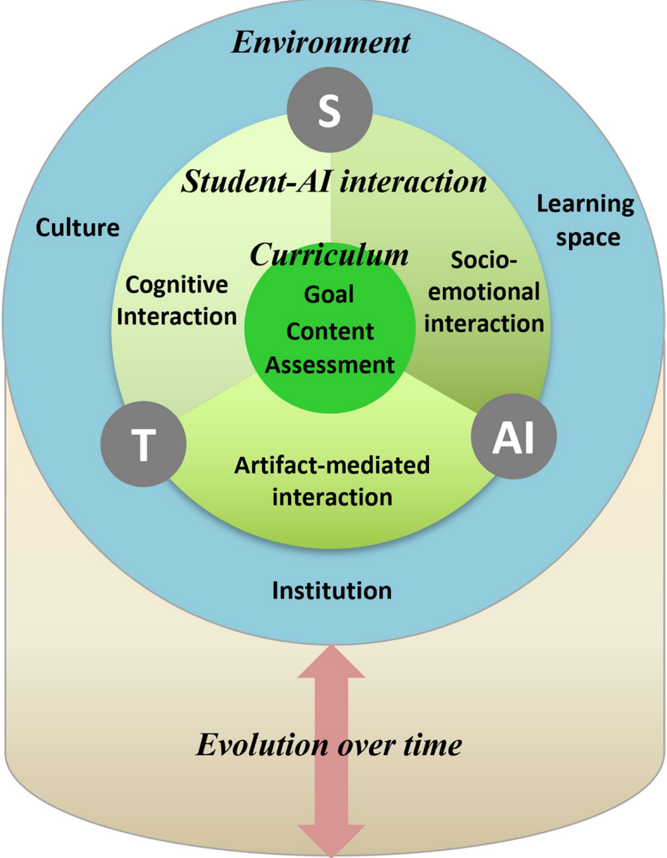
Preparing students to collaborate with AI remains a challenging goal. As AI technologies are new to K-12 schools, there is a lack of studies that inform how to design learning when AI is introduced as a collaborative learning agent to classrooms. The present study, therefore, aimed to explore teachers’ perspectives on what (1) curriculum design, (2) student-AI interaction, and (3) learning environments are required to design student-AI collaboration (SAC) in learning and (4) how SAC would evolve. Through in-depth interviews with 10 Korean leading teachers in AI in Education (AIED), the study found that teachers perceived capacity and subject-matter knowledge building as the optimal learning goals for SAC. SAC can be facilitated through interdisciplinary learning, authentic problem solving, and creative tasks in tandem with process-oriented assessment and collaboration performance assessment. While teachers expressed instruction on AI principles, data literacy, error analysis, AI ethics, and AI experiences in daily life were crucial support, AI needs to offer an instructional scaffolding and possess attributes as a learning mate to enhance student-AI interaction. In addition, teachers highlighted systematic AIED policy, flexible school system, the culture of collaborative learning, and a safe to fail environment are significant. Teachers further anticipated students would develop collaboration with AI through three stages: (1) learn about AI, (2) learn from AI, and (3) learn together. These findings can provide a more holistic understanding of the AIED and implications for the educational policies, educational AI design as well as instructional design that are aimed at enhancing SAC in learning.
Overview
The claims and statistics of this paper haven’t been checked yet.
Free: it reads the open-access text and checks the first 5 claims that cite a source we can check. Create a free account to check every claim.
Integrity signals
Registry
Cites
Statistics
Figures
Verification
Claims the paper makes
The claims and statistics of this paper haven’t been checked yet.
Free: it reads the open-access text and checks the first 5 claims that cite a source we can check. Create a free account to check every claim.
Claims other papers make about this one
Each is checked against this paper’s own text: does it say what the citing paper says it does?
The cited source says what the claim attributes to it.
In the citing paper
“This collaborative process aligns with the vision that AI tools act not just as implementers of human ideas, but as active collaborators in the creative process [7, 23].”
From Scaffolding Creativity: Integrating Generative AI Tools and Real-World Experiences in Business Education (2025) · cites this paper as [7]
The cited source says what the claim attributes to it.
In the citing paper
“Similarly, the positive effects of SI are consistent with prior research indicating that social expectations, peer endorsement, and collective support can shape users’ acceptance of new technologies [61,103,104,105,106].”
In the citing paper
“For many teachers, it may be their first time to use AIED technologies for teaching.They may not have rich experience of using AIED technologies to teach, and they face various challenges such as technological difficulties, communication and collaboration problems when using these novel-to-teacher technologies (Kim et al., 2022).”
From Teachers’ AI digital competencies and twenty-first century skills in the post-pandemic world (2023) · doi:10.1007/s11423-023-10203-6 · cites this paper as Kim et al., 2022
Self-check
Percentages, sums and reported differences re-computed from the paper’s own numbers.
The self-check needs the paper’s full text.
Citations
Cites
Using thematic analysis in psychology
Braun, V., & Clarke, V. (2006) · Qualitative Research in Psychology · doi:10.1191/1478088706qp063oa · Cited by 194,414
Zawacki-Richter, O., Marín, V. I., Bond, M., & Gouverneur, F. (2019) · International Journal of Educational Technology in Higher Education · doi:10.1186/s41239-019-0171-0 · Cited by 7,242 · cited 2×
“In particular, the time and cost of developing and introducing an appropriate methodology for implementing AIED pose a major challenge in public educational institutions (Zawacki-Richter et al., 2019).”
BackgroundIntelligent agents: theory and practice
Wooldridge, M., & Jennings, N. R. (1995) · The Knowledge Engineering Review · doi:10.1017/s0269888900008122 · Cited by 6,810
Hollan, J., Hutchins, E., & Kirsh, D. (2000) · ACM Transactions on Computer-Human Interaction · doi:10.1145/353485.353487 · Cited by 2,300 · cited 1×
“Second, the analysis looks for a range of mechanisms that can partake in the cognitive system rather than restricting itself to symbol manipulation and computation – e.g. the interplay between human memory, external representations, and the manipulation of objects (Hollan et al., 2000, p. 176).”
BackgroundThe evolution of research on collaborative learning
Dillenbourg, P., Baker, M. J., Blaye, A., & O’Malley, C. L. (1995) · HAL · Cited by 2,018
How a Cockpit Remembers Its Speeds
Hutchins, E. (1995) · Cognitive Science · doi:10.1207/s15516709cog1903_1 · Cited by 1,880 · cited 2×
“…an effective framework for a holistic understanding of the complex relations and interactions among heterogeneous agents (i.e., students, AI, and teachers), the multiple existing digital technologies, and practices in the classroom environment (Hutchins, 1995; Perkins, 1993; Nardi & O’Day, 1999).”
BackgroundBarr, V., & Stephenson, C. (2011) · ACM Inroads · doi:10.1145/1929887.1929905 · Cited by 1,692 · cited 1×
“While discussions on CT skills were narrowly positioned within the field of computer science or STEM-related subjects (Barr & Stephenson, 2011; Lee et al., 2020), this study moves CT forward to be extensible and embedded across disciplines.”
BackgroundDemystifying computational thinking
Shute, V. J., Sun, C., & Asbell-Clarke, J. (2017) · Educational Research Review · doi:10.1016/j.edurev.2017.09.003 · Cited by 1,466 · cited 1×
“…improving computational thinking (CT), a set of skills including decomposition, abstraction, algorithm design, debugging, testing/simulation, heuristic reasoning, and generalization, is being accentuated to understand and use AI effectively to solve problems (Shute et al., 2017; NRC, 2010).”
BackgroundAUGMENTING HUMAN INTELLECT: A CONCEPTUAL FRAMEWORK
ENGELBART, D. C. (1962) · doi:10.21236/ad0289565 · Cited by 1,082
New Technology and Digital Worlds: Analyzing Evidence of Equity in Access, Use, and Outcomes
Warschauer, M., & Matuchniak, T. (2010) · Review of Research in Education · doi:10.3102/0091732x09349791 · Cited by 1,047
Research works printed but not linked: 4
- Ai, R., Bhatt, M., Chevrier, S., Ciccarelli, R., Grady, R., Kumari, V., Li, K., Nazarli, N., Rahimi, H., Roberts, J., Sachs, J., Schepmyer, A., Wang, M., & Wong, H. (2008). Choose your own inquiry. , University Press of America.
- Big Innovation Center. (2020). AI in education: Embedding AI tools into teaching curricula. Big Innova- tion Centre.
- Johnson, D. W., & Johnson, R. T. (2006). Cooperation and the use of technology. In D. H. Jonassen (Ed.), Handbook of research on educational communications and technology (2 ed.), (pp. 785-811). , Lawrence Erlbaum Associates.
- Okoye, K., Nganji, J. T., & Hosseini, S. (2020). Learning analytics for educational innovation: A sys- tematic mapping study of early indicators and success factors. International Journal of Computer Information Systems and Industrial Management Applications, 12, 138-154.
Cited by
Items 101–200 of 669
A dual-pathway model of teacher-AI collaboration based on the job demands-resources theory
Hu, Y., Xu, Y., & Wu, B. (2025) · Education and Information Technologies · doi:10.1007/s10639-025-13421-y · Cited by 32
“…not only provides new tools for teachers to achieve personalized teaching, innovative teaching strategies, and precise teaching evaluation, but also offers new opportunities for complementary collaboration between teachers and technology (Kim, 2024a, b; Kim et al., 2022; Rudolph et al., 2023).”
Chea, P., & Xiao, Y. (2024) · Journal of General Education and Humanities · doi:10.58421/gehu.v3i3.242 · Cited by 58
“Successful applications of AI technologies in higher education institutions (HEIs) in college operations involve enhancing student learning experiences and offering student support, among other benefits, which can improve student learning performances [10], [11], [12].”
BackgroundResultLeveraging Generative AI for Cross-Cultural Knowledge Exchange in Higher Education
Mahboob, K., Asif, R., & Laila, U. (2023) · Advances in higher education and professional development book series · doi:10.4018/979-8-3693-0487-7.ch008 · Cited by 28
Wang, Q., Abidin, N. E. Z., Aman, M. S., Wang, N., Ma, L., & Liu, P. (2024) · BMC Psychology · doi:10.1186/s40359-024-01584-1 · Cited by 58
Hernández, D. C. V., Pérez, M. L. R., & Salazar-Garcés, L. F. (2023) · Salud Ciencia y Tecnología - Serie de Conferencias · doi:10.56294/sctconf2023582 · Cited by 53
A step toward building a unified framework for managing AI bias
Rana, S. A., Azizul, Z. H., & Awan, A. A. (2023) · PeerJ Computer Science · doi:10.7717/peerj-cs.1630 · Cited by 23
Chen, H., & Anyanwu, C. C. (2025) · Education and Information Technologies · doi:10.1007/s10639-024-13235-4 · Cited by 49
“A recent study by Kim et al. (2022) examined the perspectives of leading educators on the design and implementation of student-AI collaboration (SAC) in K-12 schools.”
Collaborative Learning Environments Facilitated by AI Technologies
Kok, C. L., Ho, C. K., Koh, Y. Y., Thanh, N. V., & Teo, T. H. (2024) · IEEE Region 10 Conference (TENCON) · doi:10.1109/tencon61640.2024.10902974 · Cited by 25
A Study on Using ChatGPT to Help Students With Dyslexia Learn Chinese and English Writing
Fung, K. Y., Fung, K. C., Lee, L., Lui, R. T. L., Qu, H., Song, S., & Sin, K. F. (2025) · ECNU Review of Education · doi:10.1177/20965311251358269 · Cited by 31
“…thinking (Shidiq, 2023; Yang et al., 2024), empowering learners in education (Kasneci et al., 2023), fostering student engagement through authentic writing (Adiguzel et al., 2023) and gradually building competency until the student achieves an acceptable level of mastery (Kim et al., 2022).”
AI4PCR: Artificial intelligence for practicing conflict resolution
Hsu, A., & Chaudhary, D. (2023) · Computers in Human Behavior Artificial Humans · doi:10.1016/j.chbah.2023.100002 · Cited by 33
“Recent work on AI in education has also emphasized the role of the AI as both pedagogue and collaborator in the learning process (J. Kim et al., 2022).”
BackgroundThe Informational Role of Artificial Intelligence in higher Education in the New era
Zhang, J., Goyal, S. B., & Rajawat, A. S. (2024) · Procedia Computer Science · doi:10.1016/j.procs.2024.04.096 · Cited by 53
Karamuk, E. (2025) · Advances in Computational Intelligence and Robotics · doi:10.4018/979-8-3373-0122-8.ch007 · Cited by 22
Lee, S.-S., Li, N., & Kim, J. (2023) · Education and Information Technologies · doi:10.1007/s10639-023-12371-7 · Cited by 26
“…and causal data mining), which explores and discovers the hidden/ or unexpected but meaningful relationships in a dataset with a large number of variables to generate new hypotheses for further investigation or to identify contexts for potential intervention (Kim et al, 2022a; Nunn et al., 2016).”
Self-citationSaimon, M., Mtenzi, F. J., Lavicza, Z., Fenyvesi, K., Arnold, M., & Diego-Mantecón, J. M. (2024) · Education and Information Technologies · doi:10.1007/s10639-024-12795-9 · Cited by 46
“Lack of teachers’ skills to integrate AI in education is cited to be among the causes of failure to har - ness the potential of AI in education (Franzoni et al., 2020 ; Kim et al., 2022; Kohnke et al., 2023; Lee & Perret, 2022 ; Nazaretsky et al., 2022 ; Utterberg Modén et al., 2021 ).”
Gantalao, L. C., Calzada, J. G. D., Capuyan, D. L., Lumantas, B. C., Acut, D. P., & Garcia, M. B. (2025) · Advances in computational intelligence and robotics book series · doi:10.4018/979-8-3373-0122-8.ch009 · Cited by 22
Boulhrir, T., & Hamash, M. (2025) · Computers and Education Artificial Intelligence · doi:10.1016/j.caeai.2025.100442 · Cited by 63
Abulibdeh, A. O. (2025) · Sustainable Futures · doi:10.1016/j.sftr.2025.101033 · Cited by 47
Oubibi, M. (2023) · Education and Information Technologies · doi:10.1007/s10639-023-12070-3 · Cited by 20
“This synergy enhances teaching and learning experiences, promotes personalized learning, fosters digital citizenship, and propels research and innovation in education (Kim et al., 2022).”
Eslit, E. R. (2023) · International Journal of Education and Teaching · doi:10.51483/ijedt.3.1.2023.46-57 · Cited by 28
AI in Education and Learning: Perspectives on the Education Ecosystem
Niemi, H. (2024) · Springer eBooks · doi:10.1007/978-3-031-61187-2_11 · Cited by 35
Integrating large language models into project-based learning based on self-determination theory
Zhang, L., & Zhang, W. (2025) · Interactive Learning Environments · doi:10.1080/10494820.2024.2446535 · Cited by 18
“Enlighted by practical suggestions by Kasneci et al. (2023), Kim et al. (2022), and adopted from Ahmadi et al. ’ s (2023) classification system for motivational and need-supportive behaviors based on SDT, this study therefore proposed the following framework to guide future implementation of LLMs…”
Mohideen, H. (2024) · JOURNAL OF DIGITAL LEARNING AND DISTANCE EDUCATION · doi:10.56778/jdlde.v2i9.225 · Cited by 46
“AI offers personalized learning experiences, instant feedback, and a safe space for learners to make mistakes (Gligorea et al., 2023); (Kim et al., 2022).”
BackgroundRevolutionizing Moroccan Education with AI: A Path to Customized Learning
-, R. E. (2024) · International Journal For Multidisciplinary Research · doi:10.36948/ijfmr.2024.v06i03.19462 · Cited by 53
“Adopting AI technology signals a shift toward more adaptive and student-centered approaches, necessitating significant changes in curriculum design, material distribution techniques, and evaluation procedures [88].”
Integration of AI helping teachers in traditional teaching roles
Jiménez, A. F. (2024) · European Public & Social Innovation Review · doi:10.31637/epsir-2024-664 · Cited by 33
“Training teachers on AI tools through workshops, online courses, and support enhances skills, streamlines workloads, and personalizes learning (Alam, 2023; Lee & Perret, 2022; Kim et al., 2022; Chiu & Chai, 2020).”
BackgroundAI Emergence in Education: Exploring Formative Tensions Across Scholarly and Popular Discourse
Cain, W. (2023) · The Journal of Interactive Learning Research · doi:10.70725/749605omikun · Cited by 19
“Analyzing discourse from both scholarly and popular sources can reveal these tensions and the assumptions, values, and expectations driving them (Kim et al., 2022; Zawacki-Richter et al., 2019).”
BackgroundWang, N. C. (2025) · Proceedings of the Extended Abstracts of the CHI Conference on Human Factors in Computing Systems · doi:10.1145/3706599.3720283 · Cited by 18
“This collaborative process aligns with the vision that AI tools act not just as implementers of human ideas, but as active collaborators in the creative process [7, 23].”
Lee, U., Kim, Y., Lee, S., Park, J., Mun, J., Lee, E., Kim, H., Lim, C., & Yoo, Y. J. (2024) · International Journal of Artificial Intelligence in Education · doi:10.1007/s40593-024-00448-4 · Cited by 30
“Distributed cognition refers to a process where reasoning and learning are distributed across a system, including people, the environment, and tools (Hutchins, 1995; Perkins, 1993; Nardi & O’Day, 1999; Kim et al., 2022).”
An, X., Bai, J., Li, Y., Zhou, Y., Chai, C. S., & Hong, J. (2025) · The Asia-Pacific Education Researcher · doi:10.1007/s40299-025-01045-2 · Cited by 24
“In line with this, teachers need technological pedagogical and content knowledge (TPACK) to enhance students to use AI (Kim et al., 2022).”
Öğretmen adaylarının yapay zekaya (YZ) ilişkin metafor algıları
Eriçok, B., Karataş, F., & Yüce, E. (2024) · Kocaeli Üniversitesi Eğitim Dergisi · doi:10.33400/kuje.1511500 · Cited by 26
I see you: teacher analytics with GPT-4 vision-powered observational assessment
Lee, U., Jeong, Y., Koh, J., Byun, G., Lee, Y., Lee, H., Eun, S., Moon, J., Lim, C., & Kim, H. (2024) · Smart Learning Environments · doi:10.1186/s40561-024-00335-4 · Cited by 30
“This perspective underscores the ongoing need to evolve AI tools in education, aiming not to replace but enhance human capabilities, thereby illustrating the importance of integrating a ‘human-in-the-loop’ approach in the system.”
Self-citationÖğretimde Yapay Zekâ Uygulamaları Hakkında Sınıf Öğretmenleri Ne Düşünüyor?
Sontay, G., Kazancı, Y., & Karamustafaoğlu, O. (2024) · İstanbul Eğitim Dergisi · doi:10.71270/istanbulegitim.istj.1586392 · Cited by 24
Ramírez-Cedillo, E., Armendáriz-Rodríguez, M., García-Ávila, J., Quintero-Sanchez, D. I., Ortiz, A., & Vargas‐Martínez, A. (2025) · Frontiers in Education · doi:10.3389/feduc.2025.1416761 · Cited by 23
Nguyen, M., Agarwal, R., Malik, A., & Pandey, R. (2025) · Journal of Enterprise Information Management · doi:10.1108/jeim-08-2024-0433 · Cited by 23
Zhang, C., & Villanueva, L. E. (2023) · International Journal of Education and Humanities · doi:10.54097/ijeh.v11i2.13753 · Cited by 29
Xu, C. Q., & Huang, Y. (2024) · Buildings · doi:10.3390/buildings14103288 · Cited by 27
Bora, B. Y., & Kölemen, C. Ş. (2025) · Contemporary Educational Technology · doi:10.30935/cedtech/16433 · Cited by 36
Exploring the role of generative AI in science teacher education programs: a qualitative study
Smits, L. G. A. D. P., Pols, F., Dekkers, P. J. J. M., Runhaar, P. R., Timmer, M., & van der Veen, J. T. (2025) · International Journal of Educational Research Open · doi:10.1016/j.ijedro.2025.100492 · Cited by 27
Rakap, S. (2024) · PRACTICE · doi:10.1080/25783858.2024.2411948 · Cited by 28
“2022, Kim et al .”
Chu, L. (2025) · Education and Information Technologies · doi:10.1007/s10639-024-13163-3 · Cited by 15
“First, when developing educational content utilizing AI technology, it is essential to enhance the human likeness of digital human instructors (including both visual and verbal elements) to improve learner experience and satisfaction (Kim et al., 2022a).”
Ishmuradova, I. I., Chistyakov, A. A., Brodskaya, T. A., Kosarenko, N. N., Savchenko, N. V., & Shindryaeva, N. N. (2025) · Contemporary Educational Technology · doi:10.30935/cedtech/15907 · Cited by 19
Wang, X., & Wei, Y. (2025) · Applied Cognitive Psychology · doi:10.1002/acp.70088 · Cited by 25
Reyes, R. L., & Regala, J. D. (2025) · Science & Education · doi:10.1007/s11191-025-00667-8 · Cited by 20
“The AI system can optimize the experimental design and provide data-driven insights, while the educator can provide guidance on the theoretical foundation of the experiment and evaluate the feasibility of AI-suggested conditions (Kim et al., 2022).”
InfluentialCeallaigh, T. J. Ó., O’ Brien, E., Tømte, C., Kulaksız, T., & Connolly, C. (2025) · European Journal of Teacher Education · doi:10.1080/02619768.2025.2563696 · Cited by 14
“To address this, educators emphasise the importance of safe platforms, flexible systems, and clear policies for the effective and responsible use of GenAI in schools (Kim, Lee, and Hoan Cho 2022).”
Simplifying Specialized Texts with AI: A ChatGPT-Based Learning Scenario
Araújo, S., & Aguiar, M. (2023) · Smart innovation, systems and technologies · doi:10.1007/978-981-99-5414-8_55 · Cited by 28
Explicitly Introducing ChatGPT into First-year Programming Practice: Challenges and Impact
Hu, M., Assadi, T., & Mahroeian, H. (2023) · IEEE International Conference on Teaching, Assessment, and Learning for Engineering · doi:10.1109/tale56641.2023.10398297 · Cited by 24
“They can also design assignments that require critical thinking and problem-solving skills, which cannot be entirely replaced by AI-generated code [11].”
BackgroundWriting creative stories with AI: learning designs for secondary school students
Woo, D. J., Guo, K., & Salas‐Pilco, S. Z. (2024) · Innovation in Language Learning and Teaching · doi:10.1080/17501229.2024.2384884 · Cited by 25
Wu, R., Gao, L., Li, J., Huang, Q., & Pan, Y. (2024) · Sustainability · doi:10.3390/su16229942 · Cited by 26
Yusuf, A., Mouas, S., Al-khresheh, M. H., & Boudouaia, A. (2025) · Thinking Skills and Creativity · doi:10.1016/j.tsc.2025.101986 · Cited by 15
You’ve Got AI Friend in Me: LLMs as Collaborative Learning Partners
Oppenheimer, D. M., Cash, T. N., & Pensky, A. C. (2025) · International Journal of Artificial Intelligence in Education · doi:10.1007/s40593-025-00521-6 · Cited by 24
“However, collaborative learning need not be exclusively between humans; in fact, much of modern society requires collaboration between humans and technology (Baroroh et al., 2021; Sowa et al., 2021) – and learning is no exception (Alam, 2022; Kim et al., 2022; Su et al., 2023).”
ChatGPT no auxílio da aprendizagem de programação: Um estudo de caso
da Silva, S. M., de Freitas, R. A. B., de Morais, M. A. C., & Costa, D. L. V. (2023) · Anais do ... Simpósio Brasileiro de Informática na Educação/Anais do Simpósio Brasileiro de Informática na Educação · doi:10.5753/sbie.2023.234873 · Cited by 17
Nyale, D., Karume, S., & Kipkebut, A. K. (2024) · Education and Information Technologies · doi:10.1007/s10639-024-12743-7 · Cited by 20
“In their in-depth analysis of AI-driven adaptive learning platforms, Kim et al. (2022) demonstrate how well these platforms can match academic curricula with the constantly altering demands of the digital economy.”
InfluentialHang, N. T. (2024) · Journal of Pedagogical Research · doi:10.33902/jpr.202428342 · Cited by 24
“AI can also expedite administrative duties that are regular, like assigning grades and setting up exams, giving teachers more time to concentrate on instructional design and student engagement (Kim et al., 2022).”
A Comparative Study on AI-Based Learning Behaviors: Evidence from Vietnam
Duong, N. T., Thi, T. D. P., & Pham, V. K. (2024) · International Journal of Human-Computer Interaction · doi:10.1080/10447318.2024.2430433 · Cited by 19
“Kim et al. (2022) demonstrated how diverse tool options in AI-mediated environments encourage learners to participate more actively in collaborative activities.”
Wang, W., Wang, Y., Chen, J., Wang, X., Zhang, H., Chunli, G., & Peng, Y. (2025) · Journal of Educational Computing Research · doi:10.1177/07356331251410020 · Cited by 31
“In recent times, arti fi cial intelligence (AI) has emerged as a transformative force in education, fundamentally altering both curriculum delivery and pedagogical practices (Kim et al., 2022; Sanusi et al., 2022).”
Educational Collaboration : Teachers and Artificial Intelligence
Mujiono, M. (2023) · Jurnal Kependidikan: Jurnal Hasil Penelitian dan Kajian Kepustakaan di Bidang Pendidikan, Pengajaran dan Pembelajaran · doi:10.33394/jk.v9i2.7801 · Cited by 12
“There are several ways in which teachers can utilize AI technology to create better learning experiences. a) Personalized Learning AI technology can assist teachers in identifying the individual needs and learning pace of each student more effectively (Kim et al., 2022).”
BackgroundRelationship between artificial intelligence and legal education: A bibliometric analysis
Diep, D. M., & Thanh, H. P. (2024) · Knowledge and Performance Management · doi:10.21511/kpm.08(2).2024.02 · Cited by 20
“Meanwhile, for educators, AI aids in designing better curricula, increasing interaction with students, and enhancing the learning environment (Kim et al., 2022).”
BackgroundArtificial Intelligence Educational Pedagogy Development: ICT Pedagogy Development for Education 5.0
Matthew, U. O., Kazaure, J. S., Ndukwu, C. C., Ebong, G. N., Nwanakwaugwu, A. C., & Nwamouh, U. C. (2024) · Advances in business information systems and analytics book series · doi:10.4018/979-8-3693-2314-4.ch003 · Cited by 21
Peng, Y., Wang, X., Chen, J., Wang, Y., Dong, Z., Wang, Y., Lyu, S., & Wang, W. (2025) · Journal of Research on Technology in Education · doi:10.1080/15391523.2025.2557392 · Cited by 16
Co-Creating With AI: How Communication Students Learn, Think, and Rely on Intelligent Systems
Lin, L. C.-S. (2025) · Journal of Educational Computing Research · doi:10.1177/07356331251385944 · Cited by 16
“Higher education is one area that has been required to adopt AI for its continued development (Kim et al., 2022b; Wang et al., 2023).”
Erkayıran, O. (2025) · Karya Journal of Health Science · doi:10.52831/kjhs.1755519 · Cited by 15
Transforming business interpretation education with AI: Perspectives from instructors and learners
Sun, L. (2025) · Education and Information Technologies · doi:10.1007/s10639-024-13270-1 · Cited by 21
“” This difficulty in integration highlights the need for careful planning and coordination to ensure that AI tools complement rather than disrupt existing pedagogical approaches (Kim et al., 2022; Alier et al., 2024).”
Exploring the potential use of generative ai for learner support in ODL at scale
Gevher, M., Öncü, S. E., & Erdoğdu, E. (2025) · Journal of Educational Technology and Online Learning · doi:10.31681/jetol.1559442 · Cited by 15
AI anxiety and awareness of German teacher candidates
DARANCIK, Y., Kaçar, E., & Sezik, A. (2025) · Education and Information Technologies · doi:10.1007/s10639-025-13573-x · Cited by 21
“And also in South Korea where AI in Education is more advanced, teachers reported that they experience moderate stress and especially stress about the need for further training in connection with the introduction of new information technologies in education (Kim et al., 2022).”
Generative AI and Education: Transforming Teaching and Learning Through Collaborative Intelligence
Kayyali, M. (2025) · Advances in computational intelligence and robotics book series · doi:10.4018/979-8-3693-8332-2.ch002 · Cited by 13
Vaněček, D., Yorulmaz, Y. İ., & Dobrovská, D. (2025) · Cogent Education · doi:10.1080/2331186x.2025.2571691 · Cited by 24
“The chatbots and language learning tools developed based on this method is used to support student ’ s competences by continuous interaction (Kim et al., 2021, 2022; Kim & Kim, 2022).”
Sultana, A., Latheef, N. A., Siby, N., & Ahmad, Z. (2025) · SAGE Open · doi:10.1177/21582440251378375 · Cited by 28
“These findings align with previous literature suggesting that team-based tasks encourage equitable participation and foster a sense of relatedness, which may naturally mitigate gender-based disparities (Chiu et al., 2023; J. Kim et al., 2022).”
Singh, A., Singh, H. P., & Alam, M. F. (2025) · Acta Psychologica · doi:10.1016/j.actpsy.2025.106103 · Cited by 23
Undergraduate students’ learning outcomes with ChatGPT: A meta-analytic study
Mo, F., Huang, J., Yang, Y., Ozen, Z., Maeda, Y., & Olenchak, F. R. (2025) · Computers and Education Artificial Intelligence · doi:10.1016/j.caeai.2025.100536 · Cited by 33
Zhou, X., Liu, G., & Chiu, T. K. F. (2026) · Interactive Learning Environments · doi:10.1080/10494820.2026.2614080 · Cited by 17
Transforming Education With the Power of Artificial Intelligence: Case Studies
Cota-Rivera, E. I., Correa, M. E. G., Marín, L. A. B., Montenegro, M. Y. M., Mercado-Herrera, A., & Martinez, M. A. A. M. (2024) · Advances in higher education and professional development book series · doi:10.4018/979-8-3693-1666-5.ch006 · Cited by 21
Isnaini, S., & Muslimin, A. I. (2024) · Studies in Media and Communication · doi:10.11114/smc.v12i4.7013 · Cited by 20
“However, through training, education, and a clear demonstration of the benefits of AI, universities were able to navigate these challenges and justify the investment in AI technologies (Kim et al., 2022; Muslimin et al., 2023).”
BackgroundMatthew, U. O., Oyekunle, D. O. T., Akpan, E. E., Oladipupo, M. A., Chukwuebuka, E. S., Adekunle, T. S., Waliu, A. O., & Onumaku, V. C. (2024) · Advances in educational technologies and instructional design book series · doi:10.4018/979-8-3693-2418-9.ch010 · Cited by 24
A Survey and Research on the Use of Artificial Intelligence by Chinese Design-College Students
Song, Y., & Wang, S. (2024) · Buildings · doi:10.3390/buildings14092957 · Cited by 14
Artificial Intelligence in Education: Transforming Learning Landscapes
Kujundziski, A. P., & Bojadjiev, J. (2024) · Advances in educational technologies and instructional design book series · doi:10.4018/979-8-3693-4310-4.ch001 · Cited by 23
Tamphu, S., Suyitno, I., Susanto, G., Budiana, N., Salim, M. R., Nurhikmah, N., & Purnawati, W. (2024) · Cogent Education · doi:10.1080/2331186x.2024.2417623 · Cited by 110
“Analyzing research trends and collaboration patterns and exploring popular keywords in AI research in education provided valuable insights into the evolving landscape of AI in education (Kim et al., 2022; Paek & Kim, 2021; Zhang & Aslan, 2021).”
Santos, M. M., Barros, A. P., Rodrigues, L., Dermeval, D., Primo, T. T., Bittencourt, I. I., & Isotani, S. (2024) · International Conference on Information and Communication Technologies and Development (ICTD) · doi:10.1145/3700794.3700817 · Cited by 18
“In another study, Kim [34] explored teachers’ perspectives on the necessary curriculum design, student-AI interaction, and learning environments required for effective student-AI collaboration in K-12 classrooms.”
Ali, W., Alami, R., Alsmairat, M. A. K., & Masaeid, T. F. A. (2024) · International Conference on Cyber Resilience (ICCR) · doi:10.1109/iccr61006.2024.10532968 · Cited by 20
“Similarly, [13], [14] investigated how AI supports the design of the learning process and enhances the inclusivity of learning environments.”
BackgroundNavigating AI Biases in Education: A Foundation for Equitable Learning
Bhavana, S., Jayashree, K., & Rao, T. V. N. (2024) · Advances in educational marketing, administration, and leadership book series · doi:10.4018/979-8-3693-5443-8.ch005 · Cited by 11
Paidicán, M., & Herrera, P. A. A. (2024) · Panorama · doi:10.15765/pkjpwv56 · Cited by 21
“Los análisis de las experiencias se desarrollan de forma descriptiva e interpretativa, aunque el trabajo propuesto por KIM (2024) sobresale por su especificidad, incorporando: el currículo, interacción entre docente y IA, entorno y evolución a lo largo del tiempo, basado en Kim et al. (2022a).”
Su, Y., Luo, M., & Zhong, C. (2025) · SAGE Open · doi:10.1177/21582440251321853 · Cited by 18
“Student-AI interaction includes three types, namely cognitive, socio-emotional, and artifact-mediated interaction (J. Kim et al., 2022).”
Low, M. P., Wut, T. M., & Pok, W. F. (2025) · Education and Information Technologies · doi:10.1007/s10639-025-13513-9 · Cited by 17
“More recently, Kim et al. (2022) uncovered the challenges in preparing K-12 school students to collaborate with AI and they conducted an in-depth interview with teachers to explore their perspectives on the curriculum design, student-AI interaction and learning environment focusing on student-AI…”
Wen, Q., Wang, J., Guo, Z., & Bădulescu, D. (2025) · Behavioral Sciences · doi:10.3390/bs15121649 · Cited by 12
“Previous studies have emphasized only narrow aspects of social development among teachers (e.g., Al-Zahrani & Alasmari, 2024; Lai et al., 2023; Sharples, 2023) and students (e.g., Huang, 2021; Kim et al., 2022).”
Kаldаrоvа, А., Kulgildinova, T., Berdenova, S., Zakirova, G., & Zhanabayeva, S. (2024) · Journal of Education and e-Learning Research · doi:10.20448/jeelr.v11i1.5288 · Cited by 23
“The most effective education in the future will be a symbiosis of classical education with elements of innovative technologies in teaching with varying degrees of participation in the educational process (Hamidi & Chavoshi, 2018; Khosravi et al., 2022; Kim, Lee, & Cho, 2022).”
BackgroundMicro-Credentials in Vocational and Professional Training
Charles, T., Zoelfakar, S., & Sebastian, S. K. (2024) · Advances in educational technologies and instructional design book series · doi:10.4018/979-8-3693-5488-9.ch010 · Cited by 11
Artificial Intelligence in Achieving Sustainable Development: Expectations of Undergraduate Students
Kim, J. (2024) · TechTrends · doi:10.1007/s11528-024-01025-1 · Cited by 28
“AI literacy comprises both data literacy—the ability to understand how AI collects, cleans, manipulates, and analyses data—as well as Algorithm literacy—the ability to understand how the AI algorithms work to find recurring themes and associations in the data (Chui et al., 2018; Kim et al., 2022).”
Self-citationAI and the Learning Experience Design: From Divergent Creativity to Convergent Precision
Czerkawski, B. C. (2024) · TechTrends · doi:10.1007/s11528-024-01032-2 · Cited by 12
“Although the present study focused only on higher education settings, the integration of AI in the K-12 curriculum is even more complex and significantly lacks empirical studies (Kim et al., 2022); therefore, learning design frameworks should be tested in a broad range of educational settings.”
Syam, M. I., Falemu, F. A., & Hussain, M. B. (2024) · Journal of Academic Biology and Biology Education · doi:10.37251/jouabe.v1i2.1143 · Cited by 14
Ling, S. L., & Amini, M. (2025) · IGI Global eBooks · doi:10.4018/979-8-3693-6463-5.ch001 · Cited by 8
Asad, M. M., & Ajaz, A. (2025) · The TQM Journal · doi:10.1108/tqm-09-2024-0357 · Cited by 17
Zhao, Z., Li, J., Hong, Y., & Yun, T. Y. (2025) · International Journal for Lesson and Learning Studies · doi:10.1108/ijlls-01-2025-0029 · Cited by 10
Chen, C. (2025) · Journal of Computers in Education · doi:10.1007/s40692-025-00372-z · Cited by 12
“Furthermore, the technology equips teachers with rich information to support their pedagogical decisions, particularly when navigating subject-specific challenges (Kim et al., 2022; Chen et al., 2023).”
Wiseman, D., & Foster, D. (2025) · Journal of Accounting Education · doi:10.1016/j.jaccedu.2025.100988 · Cited by 20
Shen, W., Lin, X., Liu, J., Liang, X., Chen, R., Xiao-yun, L., & Zheng, X. N. (2025) · Journal of Computer Assisted Learning · doi:10.1111/jcal.70140 · Cited by 12
Zhang, L., Fang, C., Lin, H., Liang, G., & Luo, S. (2025) · Thinking Skills and Creativity · doi:10.1016/j.tsc.2025.102020 · Cited by 12
The influence of affective AI literacy on student satisfaction in higher education
Shafiq, M., Saleem, Z., & Ijaz, A. (2026) · Discover Artificial Intelligence · doi:10.1007/s44163-025-00806-8 · Cited by 15
“When students feel both confident and motivated in their understanding of AI, they are more likely to view these technologies as beneficial tools that can enrich their educational experience and enhance their productivity [29, 30].”
Maheswari, B., & Nagarajan, R. (2024) · Kybernetes · doi:10.1108/k-01-2024-0103 · Cited by 13
Efficient Artificial Intelligence-Teaching Assistant Based on ChatGPT
Chen, Y., Deng, H., Chen, C.-H., & Chung, C.-L. (2023) · International Conference on Smart Systems for Applications in Electrical Sciences (ICSSES) · doi:10.1109/icsses58299.2023.10200077 · Cited by 8
“…“Artificial Intelligence (AI)-Teaching Assistant (TA) App” to assist students in their learning process by AI-based Question-and-Answer (QA) system [5] through voice, attempting to solve the real problem of “insufficient basic knowledge in interdisciplinary fields” in classroom teaching for…”
BackgroundInfluence of LLMs on Learning and Teaching in Higher EducationPreprint
Upadhyay, A., Farahmand, E., Muñoz, I., Khan, M. A., & Witte, N. (2024) · SSRN Electronic Journal · doi:10.2139/ssrn.4716855 · Cited by 15
AI IN ENGLISH LANGUAGE LEARNING: SAUDI LEARNERS’ PERSPECTIVES AND USAGE
Alqaed, M. A. (2024) · Advanced Education · doi:10.20535/2410-8286.318972 · Cited by 52
Sui, X., Lin, Q., Wang, Q., & Wan, H. (2025) · Education and Information Technologies · doi:10.1007/s10639-025-13590-w · Cited by 13
“Kim et al. (2022) conducted a study on the effectiveness of classroom teaching when artificial intelligence is introduced as a collaborative learning assistant from the perspective of teachers.”
Metadata
- Authors
- Kim, J., Lee, H., & Cho, Y. H.
- Affiliations
- Seoul National University (KR)
- Corresponding author
- Cho, Young Hoan
- Venue
- Education and Information Technologies
- Published
- 2022-01-28
- Volume
- 27
- Issue
- 5
- Pages
- 6069-6104
- ISSN
- 1360-2357 (ISSN-L)
- 1573-7608
- OpenAlex
- W4221079197
- Cited by
- 669
- References
- 66
- Citations by year
- 2026: 206 · 2025: 247 · 2024: 158 · 2023: 51 · 2022: 6
- FWCI
- 114.37
- Type
- journal article
- Language
- en
- Open access
- hybrid
- doi.org
- Licence
- cc-by
- creativecommons.org/licenses/by/4.0 (tdm)
- creativecommons.org/licenses/by/4.0 (vor)
- Locations
- Education and Information Technologies (publishedVersion, cc-by)
- Seoul National University Open Repository (Seoul National University) (submittedVersion)
- Topics
- Social Sciences › Education › Artificial Intelligence in Education
- Physical Sciences › Computer Science › Artificial Intelligence › Intelligent Tutoring Systems and Adaptive Learning
- Social Sciences › Psychology › Developmental and Educational Psychology › Innovative Teaching and Learning Methods
- Keywords
- learning design, artificial intelligence in education, teacher perceptions, curriculum development, student-AI interaction, learning environment, interdisciplinary learning, authentic problem solving, process-oriented assessment, data literacy, AI ethics, instructional scaffolding, collaborative learning culture, K-12 education
About these checks
Registry, retraction, Cites and statistics results are computed, not judged, with one exception: a printed reference that no index lists is read once by a model before it counts as a citation error. Claims are extracted by a model and kept only when their quote appears verbatim in the text; each cited source is then checked, with a model’s help, for whether it says what the claim relies on. Those verdicts can be wrong — read the claim’s quote and the cited source before relying on one.
Statistics and arithmetic are recomputed, not judged.
Confidence bands are shown only for fields calibrated on our annotated test set. None is calibrated yet, so no band is shown.
What counts as a claim ›How we measure confidence ›How we check this ›
Are you an author, or do you see a problem with this page? Request a review
Data sources
Bibliographic data: Semantic Scholar, OpenAlex, Crossref.
Contains information from the Semantic Scholar Academic Graph Datasets, made available under the ODC Attribution License (ODC-BY 1.0).
Semantic Scholar’s data is described in: Kinney, R., et al. (2023). The Semantic Scholar Open Data Platform. arXiv:2301.10140.
