

Factors affecting adoption intention of electric vehicle: a cross-cultural study
Open accessThe DOI matches its Crossref record; 125 of the 125 references it cites were found in a registry or an index.
Abstract
In recent years, the surge in the adoption of electric vehicles has played a vital role in reducing fossil fuel consumption and greenhouse gas emissions. However, limited cross-national research has been conducted on the determinants of electric vehicle adoption in developing and developed countries. This study examines the factors influencing the intention to adopt electric vehicles in India (378 participants) and Spain (265 participants). This study develops an integrated model that combines the unified theory of acceptance and use of technology (UTAUT2) and the value-belief-norm (VBN) model while accounting for the impact of national culture. The model is tested using structural equation modeling. The results indicate the integrated UTAUT2-VBN model is a valuable tool for explaining the differences in adoption intention across cultures. Moreover, the national cultural system plays a significant moderating role in most relationships within the model. This study offers valuable insights into the factors influencing electric vehicle adoption in different cultural contexts, which can inform policies and strategies to promote sustainable transportation.
Overview
The claims and statistics of this paper haven’t been checked yet.
Free: it reads the open-access text and checks the first 5 claims that cite a source we can check. Create a free account to check every claim.
Integrity signals
Registry
Cites
Statistics
Figures
Verification
Claims the paper makes
The claims and statistics of this paper haven’t been checked yet.
Free: it reads the open-access text and checks the first 5 claims that cite a source we can check. Create a free account to check every claim.
Claims other papers make about this one
Each is checked against this paper’s own text: does it say what the citing paper says it does?
The source backs part of the claim, not all of it — or backs it for a different population, condition or comparison.
In the citing paper
“The current body of literature on EV adoption tends to focus on specific aspects, often overlooking the multifaceted impacts of EVs.”
From Electric Vehicle Adoption: A Comprehensive Systematic Review of Technological, Environmental, Organizational and Policy Impacts (2024) · cites this paper as [16]
Experimental — accuracy not yet measuredThe cited source says what the claim attributes to it.
In the citing paper
“Technological research has delved into areas such as charging infrastructure, power management, and control techniques, and the impact of national culture on technology acceptance [15,16].”
From Electric Vehicle Adoption: A Comprehensive Systematic Review of Technological, Environmental, Organizational and Policy Impacts (2024) · cites this paper as [16]
Self-check
Percentages, sums and reported differences re-computed from the paper’s own numbers.
The self-check needs the paper’s full text.
Citations
Cites
Evaluating structural equation models with unobservable variables and measurement error
Fornell, C., & Larcker, D. F. (1981) · Journal of Marketing Research · doi:10.1177/002224378101800104 · Cited by 109,190 · cited 2×
“Therefore, the discriminant validity of the integrated model was regarded as satisfactory following prior studies by Anderson and Gerbing (1988) and Fornell and Larcker (1981).”
InfluentialStructural equation modeling in practice: A review and recommended two-step approach
Anderson, J. C., & Gerbing, D. W. (1988) · Psychological Bulletin · doi:10.1037/0033-2909.103.3.411 · Cited by 41,941 · cited 1×
“Therefore, the discriminant validity of the integrated model was regarded as satisfactory following prior studies by Anderson and Gerbing (1988) and Fornell and Larcker (1981).”
Culture's Consequences: Comparing Values, Behaviors, Institutions, and Organizations across Nations
Bhagat, R. S., & Hofstede, G. (2002) · The Academy of Management Review · doi:10.2307/4134391 · Cited by 21,664
Multivariate data analysis : a global perspective
Hair, J. F. (2010) · Cited by 20,126
Venkatesh, V., Thong, J. Y. L., & Xu, X. (2012) · MIS Quarterly · doi:10.2307/41410412 · Cited by 15,756 · cited 26×
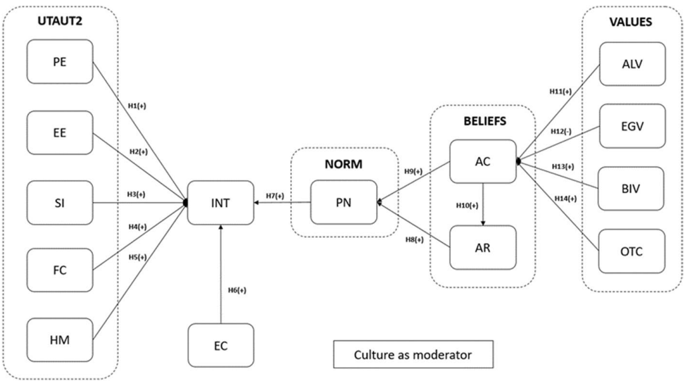
“We hypothesize that the factors identified in the UTAUT2 theory, and the personal norms derived from the VBN theory will significantly influence individuals’ intention to adopt EV.”
InfluentialSchwartz, S. H. (1992) · Advances in Experimental Social Psychology · doi:10.1016/s0065-2601(08)60281-6 · Cited by 14,619 · cited 1×
“On the other hand, the value–belief–norm (VBN) theory, introduced by Stern (2000), combines the New Environmental Paradigm (NEP) by Dunlap and Van Liere (1978) and Dunlap et al. (2000), the Personal Values Theory by Schwartz (1992), and the norm activation model (NAM) by Schwartz (1970, 1975).”
Culture's Consequences: International Differences in Work-Related Values
Gladwin, T. N., & Hofstede, G. (1981) · The Academy of Management Review · doi:10.2307/257651 · Cited by 9,275
New Environmental Theories: Toward a Coherent Theory of Environmentally Significant Behavior
Stern, P. C. (2000) · Journal of Social Issues · doi:10.1111/0022-4537.00175 · Cited by 8,682 · cited 3×
“On the other hand, the value–belief–norm (VBN) theory, introduced by Stern (2000), combines the New Environmental Paradigm (NEP) by Dunlap and Van Liere (1978) and Dunlap et al. (2000), the Personal Values Theory by Schwartz (1992), and the norm activation model (NAM) by Schwartz (1970, 1975).”
Dunlap, R. E., Van Liere, K. D., Mertig, A. G., & Jones, R. E. (2000) · Journal of Social Issues · doi:10.1111/0022-4537.00176 · Cited by 5,678
Normative Influences on Altruism
Schwartz, S. H. (1977) · Advances in Experimental Social Psychology · doi:10.1016/s0065-2601(08)60358-5 · Cited by 5,364 · cited 1×
“PN can be described as individuals’ internal beliefs and motivations helping them perceive morally right attitudes and behave following their value system (Schwartz, 1977).”
Hedonic and utilitarian motivations for online retail shopping behavior
Childers, T. L., Carr, C. L., Peck, J., & Carson, S. (2001) · Journal of Retailing · doi:10.1016/s0022-4359(01)00056-2 · Cited by 3,219 · cited 1×
“In this regard, the literature posits that hedonic motivations strongly impact the intention to adopt new technology (Childers et al., 2001).”
(2001) · Cited by 2,945
The “new environmental paradigm”
Dunlap, R. E., & Van Liere, K. D. (1978) · The Journal of Environmental Education · doi:10.1080/00958964.1978.10801875 · Cited by 2,833 · cited 1×
“On the other hand, the value–belief–norm (VBN) theory, introduced by Stern (2000), combines the New Environmental Paradigm (NEP) by Dunlap and Van Liere (1978) and Dunlap et al. (2000), the Personal Values Theory by Schwartz (1992), and the norm activation model (NAM) by Schwartz (1970, 1975).”
Transportation Research Part A: Policy and Practice
Sdol, E. (2009) · Cited by 2,176
Value orientations, gender and environmental concern
Stern, P. C., Dietz, T., & Kalof, L. (1993) · Environment and Behavior · doi:10.1177/0013916593255002 · Cited by 2,162 · cited 1×
“The four value orientations considered in this study are egoistic, altruistic, biospheric, and openness to change (Stern et al. 1993).”
Personality and Culture Revisited: Linking Traits and Dimensions of Culture
Hofstede, G., & McCrae, R. R. (2004) · Cross-Cultural Research · doi:10.1177/1069397103259443 · Cited by 1,397 · cited 1×
“Uncertainty avoidance can be considered the degree to which the different members of a society are uncomfortable with uncertainty and ambiguity (Hofstede & McCrae, 2004).”
Predictive Analytics in Information Systems Research1
Shmueli, G., & Koppius, O. R. (2011) · MIS Quarterly · doi:10.2307/23042796 · Cited by 1,328
Factors influencing the acceptability of energy policies: A test of VBN theory
Steg, L., Dreijerink, L., & Abrahamse, W. (2005) · Journal of Environmental Psychology · doi:10.1016/j.jenvp.2005.08.003 · Cited by 1,184 · cited 1×
“The VBN theory emphasizes the impact of norms on individual behaviors and posits that personal norms are influenced by awareness of consequences (AC) and ascription of responsibility (AR, Steg et al. 2005).”
Values, Environmental Concern, and Environmental Behavior: A Study into Household Energy Use
Poortinga, W., Steg, L., & Vlek, C. (2004) · Environment and Behavior · doi:10.1177/0013916503251466 · Cited by 1,133 · cited 1×
“Personal norms mediate the relationship between values and behaviors (Poortinga et al. 2004).”
Values and their Effect on Pro-Environmental Behavior
Karp, D. G. (1996) · Environment and Behavior · doi:10.1177/0013916596281006 · Cited by 787 · cited 1×
“Finally, in the case of openness to change, most customers will engage in behaviors that satisfy their intellectual and emotional needs (Karp, 1996).”
Consumer preferences for electric vehicles: a literature review
Liao, F., Molin, E., & van Wee, B. (2017) · Transport Reviews · doi:10.1080/01441647.2016.1230794 · Cited by 784 · cited 2×
“Also, as Westin et al. (2018) revealed, PN would be the most significant driver of EV adoption and are heavily influenced by pro-environmental behaviors (Liao et al., 2017).”
Wang, S., Fan, J., Zhao, D., Yang, S., & Fu, Y. (2016) · Transportation · doi:10.1007/s11116-014-9567-9 · Cited by 751 · cited 1×
“Studies in the extant literature have revealed a significant impact of environmental concern on attitudes toward EVs (Adnan et al., 2018; Wang et al., 2016).”
Impact of culture, behavior and gender on green purchase intention
Sreen, N., Purbey, S., & Sadarangani, P. (2018) · Journal of Retailing and Consumer Services · doi:10.1016/j.jretconser.2017.12.002 · Cited by 741 · cited 1×
“Therefore, the intention to acquire is positively impacted (McLeay et al., 2018; Sreen et al., 2018).”
Schuitema, G., Anable, J., Skippon, S., & Kinnear, N. (2013) · Transportation Research Part A: Policy and Practice · doi:10.1016/j.tra.2012.10.004 · Cited by 722
The Basic Practice of Statistics
Moore, L. M. (1996) · Technometrics · doi:10.1080/00401706.1996.10484558 · Cited by 719
The Hofstede model: Applications to global branding and advertising strategy and research
de Mooij, M., & Hofstede, G. (2010) · International Journal of Advertising · doi:10.2501/s026504870920104x · Cited by 715
Merhi, M., Hone, K., & Tarhini, A. (2019) · Technology in Society · doi:10.1016/j.techsoc.2019.101151 · Cited by 555 · cited 1×
“Various studies have employed the UTAUT2 model in different fields, including mobile banking (Merhi et al., 2019), mobile commerce (Shaw & Ser-gueeva, 2019), and artificial intelligence (Gansser & Reich, 2021).”
Environmental Concern: The Development of a Measure
Weigel, R., & Weigel, J. (1978) · Environment and Behavior · doi:10.1177/0013916578101001 · Cited by 540 · cited 1×
“Environmental concern can be defined as the degree to which individuals value and react to environmental problems (Weigel & Weigel, 1978).”
Wu, J., Liao, H., Wang, J.-W., & Chen, T. (2019) · Transportation Research Part F: Traffic Psychology and Behaviour · doi:10.1016/j.trf.2018.09.029 · Cited by 488 · cited 1×
“In addition to playing a pivotal role in EV adoption intention (Bhalla et al., 2018; Wu et al., 2019), environmental concern is also regarded as the most significant construct in studies such as Cui et al. (2021).”
The non-monetary benefits of mobile commerce: Extending UTAUT2 with perceived value
Shaw, N., & Sergueeva, K. (2019) · International Journal of Information Management · doi:10.1016/j.ijinfomgt.2018.10.024 · Cited by 483 · cited 2×
“…conventional vehicles 0.868*** 0.035 Using electric vehicles would be useful for me 0.840*** 0.038 Effort expectancy (adapted from Wahl et al., 2020; Shaw & Sergueeva, 2019; Udo et al., 2016; Cronbach’s α = 0.932; CR = 0.933; AVE = 0.777; MSV = 0.101) My interaction with the EV would be clear…”
InfluentialConsumer purchase intentions for electric vehicles: Is green more important than price and range?
Degirmenci, K., & Breitner, M. H. (2017) · Transportation Research Part D: Transport and Environment · doi:10.1016/j.trd.2017.01.001 · Cited by 445 · cited 1×
“Degirmenci and Breitner, (2017) prioritize environmental concerns above driving range and price.”
A review and simple meta-analysis of factors influencing adoption of electric vehicles
Singh, V., Singh, V., & Vaibhav, S. (2020) · Transportation Research Part D: Transport and Environment · doi:10.1016/j.trd.2020.102436 · Cited by 443 · cited 2×
“…the usage intention of EVs includes several studies that have identified various factors, such as environmental concerns, financial incentives, range anxiety, charging infrastructure, and sociodemographic factors (Singh et al., 2020a, 2023b), as significant determinants of EV usage intention.”
InfluentialSelf-citationAntecedents and outcomes of consumer environmentally friendly attitudes and behaviour
Leonidou, L. C., Leonidou, C. N., & Kvasova, O. (2010) · Journal of Marketing Management · doi:10.1080/0267257x.2010.523710 · Cited by 428
Kapser, S., & Abdelrahman, M. (2020) · Transportation Research Part C: Emerging Technologies · doi:10.1016/j.trc.2019.12.016 · Cited by 413
Kim, S. H., & Seock, Y.-K. (2019) · Journal of Retailing and Consumer Services · doi:10.1016/j.jretconser.2019.05.023 · Cited by 369 · cited 1×
“However, EGV in the case of self-centered individuals (Kim & Seock, 2019) and OTC (Nordlund et al., 2016) for intellectual and emotional self-fulfillment do not significantly influence the two assessed groups.”
European Online Journal of Natural and Social Sciences
s.r.o., P. S. (2020) · ADVANCED SCIENCES INDEX · Cited by 369
Factors impacting consumers’ intention toward adoption of electric vehicles in Malaysia
Asadi, S., Nilashi, M., Samad, S., Abdullah, R., Mahmoud, M., Alkinani, M. H., & Yadegaridehkordi, E. (2021) · Journal of Cleaner Production · doi:10.1016/j.jclepro.2020.124474 · Cited by 365 · cited 8×
“Cronbach’s alpha ( α ) and composite reliability were employed to check the internal reliability of the different dimensions (Hair et al., 2009).”
InfluentialConsumer purchase intention of electric vehicles in China: The roles of perception and personality
He, X., Zhan, W., & Hu, Y. (2018) · Journal of Cleaner Production · doi:10.1016/j.jclepro.2018.08.260 · Cited by 361 · cited 5×
“( Cronbach’s α = 0.920; CR = 0.920; AVE = 0.743; MSV = 0.234) Using an electric vehicle will help me get to my destination on time 0.865*** Using an electric vehicle would be more cost effective 0.875*** 0.034 Using an electric vehicle will serve as a good alternative to conventional vehicles 0.868*** 0.035 Using elec…”
InfluentialGansser, O. A., & Reich, C. S. (2021) · Technology in Society · doi:10.1016/j.techsoc.2021.101535 · Cited by 360 · cited 1×
“Various studies have employed the UTAUT2 model in different fields, including mobile banking (Merhi et al., 2019), mobile commerce (Shaw & Ser-gueeva, 2019), and artificial intelligence (Gansser & Reich, 2021).”
López-Mosquera, N., & Sánchez, M. (2012) · Journal of Environmental Management · doi:10.1016/j.jenvman.2012.08.029 · Cited by 347
Rahi, S., Othman Mansour, M. M., Alghizzawi, M., & Alnaser, F. M. (2019) · Journal of Research in Interactive Marketing · doi:10.1108/jrim-02-2018-0032 · Cited by 337 · cited 1×
“The positive relationship between the constructs above has been confirmed in the context of the theory of general technology acceptance, for example, in the case of online banking adoption (Rahi et al., 2019) or even in a far-removed field of study such as politics (Sair & Danish, 2018).”
He, X., & Zhan, W. (2018) · Journal of Cleaner Production · doi:10.1016/j.jclepro.2017.05.088 · Cited by 326 · cited 1×
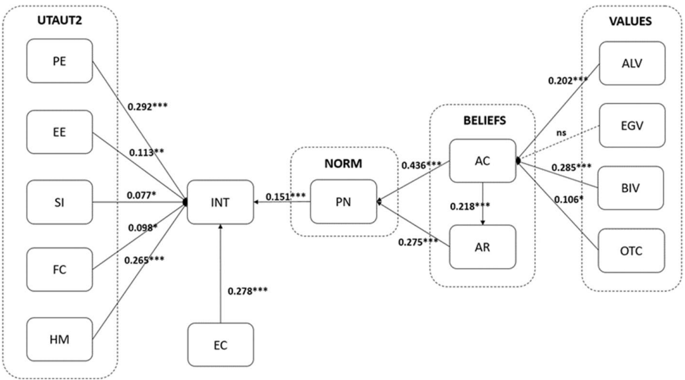
“Also, both AR and AC significantly influence PN (H8 and H9) in both samples, in line with previous research in the literature (Ashra et al., 2021; He & Zhan, 2018).”
Hamzah, M. I., & Tanwir, N. S. (2021) · Journal of Cleaner Production · doi:10.1016/j.jclepro.2020.123643 · Cited by 326 · cited 2×
“…would be easy for me to become skillful at using Electric Vehicles 0.865*** 0.039 Social influence (adapted from Asadi et al., 2021; Khazaei et al., 2021; Hamzah & Tanwir, 2021; He et al., 2018; Udo et al., 2016; Cronbach’s Asadi et al., 2021; Khazaei et al., 2021; Khan et al., 2021; Udo et al.,…”
InfluentialHaustein, S., & Jensen, A. F. (2018) · International Journal of Sustainable Transportation · doi:10.1080/15568318.2017.1398790 · Cited by 320
Featherman, M., Jia, S. (., Califf, C. B., & Hajli, N. (2021) · Technological Forecasting and Social Change · doi:10.1016/j.techfore.2021.120847 · Cited by 309
Personal Values, Green Self-identity and Electric Car Adoption
Barbarossa, C., De Pelsmacker, P., & Moons, I. (2017) · Ecological Economics · doi:10.1016/j.ecolecon.2017.05.015 · Cited by 304 · cited 3×
“…Cronbach’s Asadi et al., 2021; Khazaei et al., 2021; Khan et al., 2021; Udo et al., 2016; Venkatesh et al., 2012; Cronbach’s Chen et al., 2021; Ghazali et al., 2019; Barbarossa et al., 2017; Nayum et al., 2016; Cronbach’s α Funding Funding for open access publishing: Universidad de Granada/CBUA.”
InfluentialMital, M., Chang, V., Choudhary, P., Papa, A., & Pani, A. K. (2018) · Technological Forecasting and Social Change · doi:10.1016/j.techfore.2017.03.001 · Cited by 269 · cited 1×
“Factors such as sample size, variable selection, data sources, and statistical techniques can influence the results (Mital et al., 2018).”
Jain, N. K., Bhaskar, K., & Jain, S. (2022) · Research in Transportation Business & Management · doi:10.1016/j.rtbm.2021.100730 · Cited by 265 · cited 5×
“Although some research has been conducted on the factors influencing EV adoption intentions in India and Spain using the UTAUT2 and VBN theories (Jain et al., 2022; Ong et al., 2023; Singh et al., 2023a), more work is still needed in this area.”
InfluentialVan Liere, K. D., & Dunlap, R. E. (1978) · Journal of Applied Social Psychology · doi:10.1111/j.1559-1816.1978.tb00775.x · Cited by 264
Predicting information technology usage in the car: towards a car technology acceptance model
Osswald, S., Wurhofer, D., Trösterer, S., Beck, E., & Tscheligi, M. (2012) · Proceedings of the 4th International Conference on Automotive User Interfaces and Interactive Vehicular Applications · doi:10.1145/2390256.2390264 · Cited by 258 · cited 2×
“In this regard, with EVs pioneering technological advances in the automotive industry, they become part of their users’ identities and are usually considered symbols of social status (Axsen et al., 2013; Osswald et al., 2012).”
The influence of cultural values on green purchase behaviour
Nguyen, T. N., Lobo, A., & Greenland, S. (2017) · Marketing Intelligence & Planning · doi:10.1108/mip-08-2016-0131 · Cited by 257 · cited 1×
“Second, collectivism also plays a crucial role in consumers’ adoption of pro-environmental behaviors (Nguyen et al., 2017).”
Schmalfuß, F., Mühl, K., & Krems, J. F. (2017) · Transportation Research Part F: Traffic Psychology and Behaviour · doi:10.1016/j.trf.2017.01.004 · Cited by 254
Ghazali, E. M., Nguyen, B., Mutum, D. S., & Yap, S.-F. (2019) · Sustainability · doi:10.3390/su11123237 · Cited by 248 · cited 3×
“…Cronbach’s Asadi et al., 2021; Khazaei et al., 2021; Khan et al., 2021; Udo et al., 2016; Venkatesh et al., 2012; Cronbach’s Chen et al., 2021; Ghazali et al., 2019; Barbarossa et al., 2017; Nayum et al., 2016; Cronbach’s α Funding Funding for open access publishing: Universidad de…”
InfluentialMigliore, G., Wagner, R., Cechella, F. S., & Liébana-Cabanillas, F. (2022) · Information Systems Frontiers · doi:10.1007/s10796-021-10237-2 · Cited by 246
Self-citationRezvani, Z., Jansson, J., & Bengtsson, M. (2018) · Business Strategy and the Environment · doi:10.1002/bse.2074 · Cited by 239 · cited 1×
“In addition, the impact of hedonic motivations on behavioral intention is more robust in the case of consumers adhering to sustainable consumption behaviors (Rezvani et al., 2018).”
Gunawan, I., Redi, A. A. N. P., Santosa, A. A., Maghfiroh, M. F. N., Pandyaswargo, A. H., & Kurniawan, A. C. (2022) · Sustainability · doi:10.3390/su14041972 · Cited by 235 · cited 3×
“However, only a limited number of studies have utilized this model to explore EV adoption, such as Singh et al. (2023a), Bhat et al. (2022), and Gunawan et al. (2022).”
Axsen, J., Orlebar, C., & Skippon, S. (2013) · Ecological Economics · doi:10.1016/j.ecolecon.2013.08.009 · Cited by 232 · cited 1×
“In this regard, with EVs pioneering technological advances in the automotive industry, they become part of their users’ identities and are usually considered symbols of social status (Axsen et al., 2013; Osswald et al., 2012).”
Sair, S. A., & Danish, R. Q. (2018) · Pakistan Journal of Commerce and Social Sciences · Cited by 225
A self-identity based model of electric car adoption intention: A cross-cultural comparative study
Barbarossa, C., Beckmann, S. C., De Pelsmacker, P., Moons, I., & Gwozdz, W. (2015) · Journal of Environmental Psychology · doi:10.1016/j.jenvp.2015.04.001 · Cited by 217 · cited 2×
“Societies with a high level of masculinity tend to have a competitive orientation, whereas feminine societies are more geared toward consensus (Barbarossa et al., 2015).”
Impact of TQM on organisational performance: The case of Indian manufacturing and service industry
Singh, V., Kumar, A., & Singh, T. (2018) · Operations Research Perspectives · doi:10.1016/j.orp.2018.07.004 · Cited by 215 · cited 1×
“Finally, Table 3 shows that all fit indices (CMIN/DF, p-value, GFI, AGFI, IFI, CFI, TLI, RMSEA, and PCLOSE) are within the recommended thresholds suggested by Hair et al. (2009), Byrne (2010), and Singh et al. (2018).”
Self-citationThe Justice of Need and the Activation of Humanitarian Norms
Schwartz, S. (1975) · Journal of Social Issues · doi:10.1111/j.1540-4560.1975.tb00999.x · Cited by 209 · cited 1×
“On the other hand, the value–belief–norm (VBN) theory, introduced by Stern (2000), combines the New Environmental Paradigm (NEP) by Dunlap and Van Liere (1978) and Dunlap et al. (2000), the Personal Values Theory by Schwartz (1992), and the norm activation model (NAM) by Schwartz (1970, 1975).”
Cui, L., Wang, Y., Chen, W., Wen, W., & Han, M. S. (2021) · Energy Policy · doi:10.1016/j.enpol.2021.112167 · Cited by 206 · cited 4×
“In line with other studies (Cui et al., 2021; Liu et al., 2021), these motivations help improve EVADINT.”
InfluentialWestin, K., Jansson, J., & Nordlund, A. (2018) · Travel Behaviour and Society · doi:10.1016/j.tbs.2018.07.004 · Cited by 192 · cited 2×
“Also, as Westin et al. (2018) revealed, PN would be the most significant driver of EV adoption and are heavily influenced by pro-environmental behaviors (Liao et al., 2017).”
Al-Azawei, A., & Alowayr, A. (2020) · Technology in Society · doi:10.1016/j.techsoc.2020.101325 · Cited by 187
Journal of Industrial Engineering International
(2013) · Journal of industrial engineering international · doi:10.1007/40092.2251-712x · Cited by 183
Adoption of electric vehicles: Which factors are really important?
Higueras‐Castillo, E., Guillén, A., Herrera, L. J., & Liébana-Cabanillas, F. J. (2020) · International Journal of Sustainable Transportation · doi:10.1080/15568318.2020.1818330 · Cited by 179 · cited 2×
“Women are more likely to purchase EVs due to their environmental concerns (Higueras-Castillo et al., 2020b).”
Self-citationAbbasi, S., Daneshmand-Mehr, M., & Ghane Kanafi, A. (2023) · Environmental Modeling & Assessment · doi:10.1007/s10666-022-09863-0 · Cited by 177 · cited 2×
“The pandemic has caused disruptions in the supply chain due to factory closures, travel restrictions, and decreased demand for goods and services (Abbasi et al., 2022a, 2022b).”
The Influence of Values on E-learning Adoption
Mehta, A., Morris, N. P., Swinnerton, B., & Homer, M. (2019) · Computers & Education · doi:10.1016/j.compedu.2019.103617 · Cited by 175
What make consumer sign up to PHEVs? Predicting Malaysian consumer behavior in adoption of PHEVs
Adnan, N., Md Nordin, S., Hadi Amini, M., & Langove, N. (2018) · Transportation Research Part A: Policy and Practice · doi:10.1016/j.tra.2018.04.007 · Cited by 173 · cited 1×
“Studies in the extant literature have revealed a significant impact of environmental concern on attitudes toward EVs (Adnan et al., 2018; Wang et al., 2016).”
Cosmopolitanism, individual-level values and cultural-level values: A cross-cultural study
Cleveland, M., Erdoğan, S., Arıkan, G., & Poyraz, T. (2010) · Journal of Business Research · doi:10.1016/j.jbusres.2010.11.015 · Cited by 171 · cited 1×
“Societies with high uncertainty avoidance tend to avoid risks and are usually threatened by new situations and challenges arising from exposure to other cultural perspectives (Cleveland et al., 2011).”
Khazaei, H., & Tareq, M. A. (2021) · Heliyon · doi:10.1016/j.heliyon.2021.e08072 · Cited by 170 · cited 2×
“…0.036 It would be easy for me to become skillful at using Electric Vehicles 0.865*** 0.039 Social influence (adapted from Asadi et al., 2021; Khazaei et al., 2021; Hamzah & Tanwir, 2021; He et al., 2018; Udo et al., 2016; Cronbach’s Asadi et al., 2021; Khazaei et al., 2021; Khan et al.,…”
InfluentialUser acceptance of electric car-sharing services: The case of the Netherlands
Curtale, R., Liao, F., & van der Waerden, P. (2021) · Transportation Research Part A Policy and Practice · doi:10.1016/j.tra.2021.05.006 · Cited by 169 · cited 1×
“Also, Curtale et al. (2021) posit that social influence is instrumental to behavioral intentions.”
Abbasi, H. A., Johl, S. K., Shaari, Z. H., Moughal, W., Mazhar, M., Musarat, M. A., Rafiq, W., Farooqi, A. S., & Borovkov, A. I. (2021) · Sustainability · doi:10.3390/su132112177 · Cited by 167 · cited 4×
“EE did not have a significant influence in either sample (H2), confirming results from previous studies (Jain et al., 2022) except for some specific research (Abbasi et al., 2021a, 2021b).”
InfluentialManutworakit, P., & Choocharukul, K. (2022) · Sustainability · doi:10.3390/su14148482 · Cited by 159
Gupta, M., Esmaeilzadeh, P., Uz, I., & Tennant, V. M. (2019) · Journal of Business Research · doi:10.1016/j.jbusres.2018.12.018 · Cited by 157 · cited 1×
“In contrast, femininity is associated chiefly with quality of life, emotional and physical nourishment, and concern for the well-being of others (Gupta et al., 2019).”
Comparison of socio-psychological characteristics of conventional and battery electric car buyers
Nayum, A., Klöckner, C. A., & Mehmetoglu, M. (2015) · Travel Behaviour and Society · doi:10.1016/j.tbs.2015.03.005 · Cited by 155 · cited 5×
“On the other hand, the VBN model provides a framework for understanding the underlying values, beliefs, and norms that shape individuals’ behavior, including pro-environmental behavior (Barbarossa et al., 2017).”
InfluentialWang, P., Kuah, A. T. H., Lu, Q., Wong, C., Thirumaran, K., Adegbite, E. A., & Kendall, W. (2021) · Journal of Brand Management · doi:10.1057/s41262-020-00228-0 · Cited by 141 · cited 1×
“In this sense, Wang et al. (2021) posit that indul-gence is usually associated with the level to which people who firmly believe in carpe diem tend to engage in hedonistic behaviors.”
Public Intentions to Purchase Electric Vehicles in Pakistan
Lee, J. J., Baig, F., Talpur, M. A. H., & Shaikh, S. (2021) · Sustainability · doi:10.3390/su13105523 · Cited by 134 · cited 1×
“Furthermore, Lee et al. (2021) corroborated the positive impact of effort expectancy on the intention to use EVs.”
Huang, X., Lin, Y. J., Lim, M. K., Tseng, M., & Zhou, F. (2021) · Industrial Management & Data Systems · doi:10.1108/imds-07-2020-0411 · Cited by 132
Zhou, Y., Yang, H., Wang, Y., & Yan, X. (2021) · Transportation Research Part B Methodological · doi:10.1016/j.trb.2021.01.002 · Cited by 130 · cited 2×
“Also, Zhou et al. (2021) explored drivers’ intentions to use EVs and obtained similar results.”
Electric vehicle adoption intention in the Himalayan region using UTAUT2 – NAM model
Singh, H., Singh, V., Singh, T., & Higueras‐Castillo, E. (2022) · Case Studies on Transport Policy · doi:10.1016/j.cstp.2022.100946 · Cited by 130 · cited 5×
“…the usage intention of EVs includes several studies that have identified various factors, such as environmental concerns, financial incentives, range anxiety, charging infrastructure, and sociodemographic factors (Singh et al., 2020a, 2023b), as significant determinants of EV usage intention.”
InfluentialSelf-citationHigueras-Castillo, E., Liébana-Cabanillas, F. J., Muñoz-Leiva, F., & García-Maroto, I. (2019) · Journal of Retailing and Consumer Services · doi:10.1016/j.jretconser.2019.07.006 · Cited by 129 · cited 1×
“Therefore, EV driving experience must be considered (Higueras-Castillo et al. 2019b).”
Self-citationLiu, R., Ding, Z., Wang, Y., Jiang, X., Jiang, X., Sun, W., Wang, D., Mou, Y., & Liu, M. (2020) · Journal of Cleaner Production · doi:10.1016/j.jclepro.2020.125116 · Cited by 128 · cited 3×
“Therefore, they are inclined to feel deeply concerned about environmental problems (Liu et al., 2021).”
Khan, I. U., Hameed, Z., Khan, S. N., Khan, S. U., & Khan, M. T. (2021) · Journal of Internet Commerce · doi:10.1080/15332861.2021.1882749 · Cited by 127 · cited 3×
“…Asadi et al., 2021; Khazaei et al., 2021; Hamzah & Tanwir, 2021; He et al., 2018; Udo et al., 2016; Cronbach’s Asadi et al., 2021; Khazaei et al., 2021; Khan et al., 2021; Udo et al., 2016; Venkatesh et al., 2012; Cronbach’s Chen et al., 2021; Ghazali et al., 2019; Barbarossa et al., 2017;…”
Measuring and Modelling Electric Vehicle Adoption of Indian Consumers
Bhat, F. A., Verma, M., & Verma, A. (2021) · Transportation in Developing Economies · doi:10.1007/s40890-021-00143-2 · Cited by 121 · cited 20×
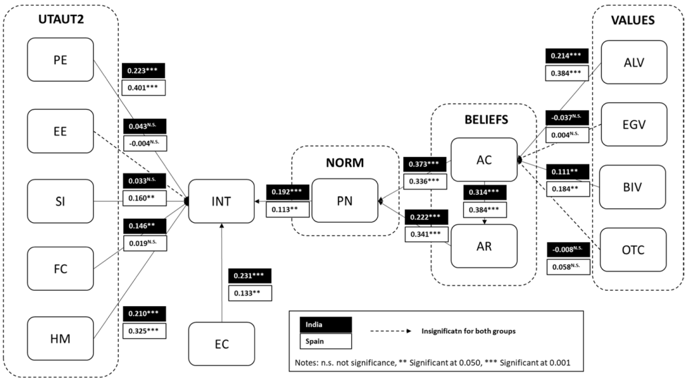
“2, the path estimates for H16a indicate a positive and significant relationship between AR and PN in India and Spain, with a stronger relationship observed in the Spain sample.”
InfluentialPerceived Value and Customer Adoption of Electric and Hybrid Vehicles
Higueras‐Castillo, E., Molinillo, S., Coca‐Stefaniak, J. A., & Liébana-Cabanillas, F. J. (2019) · Sustainability · doi:10.3390/su11184956 · Cited by 117 · cited 1×
“Therefore, EV driving experience must be considered (Higueras-Castillo et al. 2019b).”
Self-citationBhagat, R. S. (2002) · Academy of Management Review · doi:10.5465/amr.2002.7389951 · Cited by 105 · cited 1×
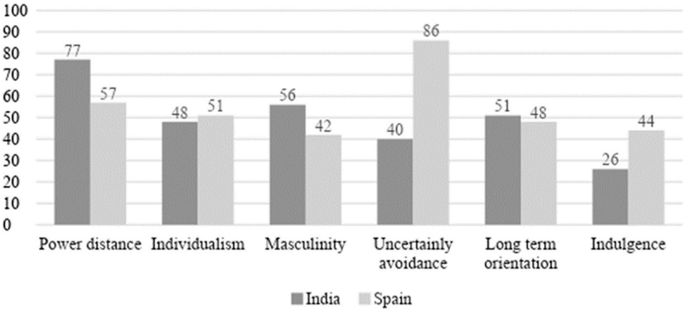
“Hofstede (2001) identified six cultural dimensions: power distance, collectivism versus individualism, femininity versus masculinity, uncertainty avoidance, long-term orientation, and indulgence.”
Abbasi, S., Khalili, H. A., Daneshmand-Mehr, M., & Hajiaghaei–Keshteli, M. (2022) · Foundations of Computing and Decision Sciences · doi:10.2478/fcds-2022-0018 · Cited by 104 · cited 2×
“The pandemic has caused disruptions in the supply chain due to factory closures, travel restrictions, and decreased demand for goods and services (Abbasi et al., 2022a, 2022b).”
Green and gendered? Cultural perspectives on the road towards electric vehicles in Norway
Anfinsen, M., Lagesen, V. A., & Ryghaug, M. (2018) · Transportation Research Part D Transport and Environment · doi:10.1016/j.trd.2018.12.003 · Cited by 102 · cited 1×
“In this sense, traditional vehicles have usually been associated with societies with a high level of masculinity (Anfinsen et al., 2019).”
A Comprehensive Study on the Expansion of Electric Vehicles in Europe
Razmjoo, A., Ghazanfari, A., Jahangiri, M., Franklin, E., Denai, M. A., Marzband, M., Garcia, D. A., & Maheri, A. (2022) · Applied Sciences · doi:10.3390/app122211656 · Cited by 98 · cited 2×
“Furthermore, the pandemic has highlighted the importance of localizing the supply chain for EVs to reduce dependence on foreign suppliers and ensure greater resilience in future crises (Abbasi et al., 2022d; Razmjoo et al., 2022).”
Factors affecting the intention to buy electric vehicles: empirical evidence from Thailand
Thananusak, T., Rakthin, S., Tavewatanaphan, T., & Punnakitikashem, P. (2017) · International Journal of Electric and Hybrid Vehicles · doi:10.1504/ijehv.2017.089875 · Cited by 97
Ziefle, M., Beul-Leusmann, S., Kasugai, K., & Schwalm, M. (2014) · Lecture notes in computer science · doi:10.1007/978-3-319-07635-5_60 · Cited by 93 · cited 1×
“In this sense, Ziefle et al. (2014) posit that the gender dimension is instrumental in EV adoption.”
Factors Influencing the Adoption of Electric Vehicles in Bengaluru
Verma, M., Verma, A., & Khan, M. (2020) · Transportation in Developing Economies · doi:10.1007/s40890-020-0100-x · Cited by 90 · cited 1×
“In the case of EVs, the most significant concern is the availability of stations for battery charging (Verma et al., 2020) and vehicle maintenance.”
A mixed analysis of perceptions of electric and hybrid vehicles
Higueras-Castillo, E., Kalinic, Z., Marinkovic, V., & Liébana-Cabanillas, F. J. (2020) · Energy Policy · doi:10.1016/j.enpol.2019.111076 · Cited by 89 · cited 2×
“Women are more likely to purchase EVs due to their environmental concerns (Higueras-Castillo et al., 2020b).”
Self-citationNordlund, A., Jansson, J., & Westin, K. (2016) · Transportation research procedia · doi:10.1016/j.trpro.2016.05.334 · Cited by 87 · cited 4×
“In addition, the literature reveals that PN can be approached to explain the intention to adopt conventional and alternative vehicles (Nordlund et al., 2016).”
InfluentialŞimşekoğlu, Ö. (2018) · Transport Policy · doi:10.1016/j.tranpol.2018.03.009 · Cited by 87 · cited 2×
“As Simsekoglu (2018) demonstrated, behaviors can be motivated by the consequences on the well-being of other people, i.e., ALV, avoiding implications on the environment, and BIV are significant predictors of EVADINT.”
Udo, G. G., Bagchi, K. K., & Maity, M. (2014) · Journal of Business Ethics · doi:10.1007/s10551-014-2484-1 · Cited by 87 · cited 4×
“…0.035 Using electric vehicles would be useful for me 0.840*** 0.038 Effort expectancy (adapted from Wahl et al., 2020; Shaw & Sergueeva, 2019; Udo et al., 2016; Cronbach’s α = 0.932; CR = 0.933; AVE = 0.777; MSV = 0.101) My interaction with the EV would be clear and understandable 0.857***…”
InfluentialKhazaei, H. (2019) · European Online Journal of Natural and Social Sciences · Cited by 78
The role of environmental concern in forming intentions for switching to electric scooters
Chen, C., Eccarius, T., & Su, P.-C. (2021) · Transportation Research Part A Policy and Practice · doi:10.1016/j.tra.2021.10.010 · Cited by 78 · cited 4×
“…et al., 2018; Udo et al., 2016; Cronbach’s Asadi et al., 2021; Khazaei et al., 2021; Khan et al., 2021; Udo et al., 2016; Venkatesh et al., 2012; Cronbach’s Chen et al., 2021; Ghazali et al., 2019; Barbarossa et al., 2017; Nayum et al., 2016; Cronbach’s α Funding Funding for open access…”
InfluentialRisks and drivers of hybrid car adoption: A cross-cultural segmentation analysis
McLeay, F., Yoganathan, V., Osburg, V., & Pandit, A. (2018) · Journal of Cleaner Production · doi:10.1016/j.jclepro.2018.04.031 · Cited by 67 · cited 2×
“However, the uptake of EVs was not up to the mark as initially expected, which may have unfavorable effects concerning the switch to zero-emission vehicles (Asadi et al., 2021; McLeay et al., 2018).”
Potential Early Adopters of Hybrid and Electric Vehicles in Spain—Towards a Customer Profile
Higueras‐Castillo, E., Molinillo, S., Coca‐Stefaniak, J. A., & Liébana-Cabanillas, F. J. (2020) · Sustainability · doi:10.3390/su12114345 · Cited by 65 · cited 2×
“Women are more likely to purchase EVs due to their environmental concerns (Higueras-Castillo et al., 2020b).”
Self-citationBattery and hydrogen-based electric vehicle adoption: A survey of Australian consumers perspective
Loengbudnark, W., Khalilpour, K. R., Bharathy, G. K., Taghikhah, F. R., & Voinov, A. A. (2022) · Case Studies on Transport Policy · doi:10.1016/j.cstp.2022.11.007 · Cited by 63
Ashmore, D., Pojani, D., Thoreau, R., Christie, N., & Tyler, N. (2018) · Transportation Research Part D Transport and Environment · doi:10.1016/j.trd.2018.06.024 · Cited by 62 · cited 1×
“In this sense, several studies have already reported that culture is instrumental in the intention to adopt EVs (Ashmore et al., 2018; Kuhn et al., 2017; Novo-tny et al., 2022; Sharif et al., 2021).”
What Makes People Actually Embrace or Shun Mobile Payment: A Cross-Culture Study
Zhang, Y., Sun, J., Yang, Z., & Wang, Y. (2018) · Mobile Information Systems · doi:10.1155/2018/7497545 · Cited by 56 · cited 1×
“Even if the present study excludes Hofstede dimensions from the sample, the literature in this field of knowledge validates their use for cross-cultural research (Migliore et al., 2021; Zhang et al., 2018).”
Singh, V., Singh, T., Higueras‐Castillo, E., & Liébana-Cabanillas, F. J. (2023) · Journal of Cleaner Production · doi:10.1016/j.jclepro.2023.136276 · Cited by 51 · cited 5×
“…the usage intention of EVs includes several studies that have identified various factors, such as environmental concerns, financial incentives, range anxiety, charging infrastructure, and sociodemographic factors (Singh et al., 2020a, 2023b), as significant determinants of EV usage intention.”
InfluentialSelf-citationOng, A. K. S., German, J. D., Redi, A. A. N. P., Cordova, L. N. Z., Longanilla, F. A. B., Caprecho, N. L., & Javier, R. A. V. (2023) · Sustainability · doi:10.3390/su15097657 · Cited by 49 · cited 1×
“Although some research has been conducted on the factors influencing EV adoption intentions in India and Spain using the UTAUT2 and VBN theories (Jain et al., 2022; Ong et al., 2023; Singh et al., 2023a), more work is still needed in this area.”
Javid, M. A., Ali, N., Abdullah, M., Campisi, T., & Shah, S. A. H. (2021) · Journal of Advanced Transportation · doi:10.1155/2021/7189411 · Cited by 48
National Culture and the Market Development of Battery Electric Vehicles in 21 Countries
Novotny, Á., Szeberin, I., Kovács, S., & Máté, D. (2022) · Energies · doi:10.3390/en15041539 · Cited by 48 · cited 1×
“Moreover, some research studies associate the purchase of electric vehicles with feminine individuals, groups, and societies (Novotny et al., 2022).”
Japutra, A., Branco, M., Higueras‐Castillo, E., & Molinillo, S. (2021) · British Food Journal · doi:10.1108/bfj-10-2020-0952 · Cited by 41 · cited 1×
“In addition, there has yet to be a cross-national comparative analysis that explores EV adoption intentions in medium-and high-income countries, which has been recommended by other researchers in the adoption of sustainable products (Japutra et al., 2022).”
Self-citationWahl, L. S., Hsiang, W.-H., & Hauer, G. (2020) · Springer eBooks · doi:10.1007/978-3-662-60806-7_7 · Cited by 37 · cited 4×
“In this sense, recent studies have reported the crucial role of facilitating conditions in predicting the intention to adopt (Wahl et al., 2020).”
InfluentialYang, J., & Chen, F. (2021) · Renewable and Sustainable Energy Reviews · doi:10.1016/j.rser.2021.111325 · Cited by 36 · cited 5×
“Cronbach’s alpha ( α ) and composite reliability were employed to check the internal reliability of the different dimensions (Hair et al., 2009).”
InfluentialEscandon-Barbosa, D., Salas-Paramo, J., Meneses-Franco, A. I., & Giraldo- Gonzalez, C. (2021) · Technology in Society · doi:10.1016/j.techsoc.2021.101674 · Cited by 35 · cited 2×
“Consequently, individuals with higher levels of indulgence and concern for others feel more comfortable adopting and using new technologies such as EVs (Escandon-Barbosa et al., 2021).”
Modeling potential impact of COVID-19 pandemic on global electric vehicle supply chain
Sun, X., Liu, G., Hao, H., Liu, Z., & Zhao, F. (2022) · iScience · doi:10.1016/j.isci.2022.103903 · Cited by 33 · cited 2×
“The COVID-19 pandemic has significantly impacted the global economy, including the EV industry and supply chain (Abbasi et al., 2021a; Sun et al., 2022).”
Yakut, E. (2021) · Current Psychology · doi:10.1007/s12144-021-01353-y · Cited by 31 · cited 1×
“The VBN theory has successfully explained pro-environmental behaviors such as reduced car use (Unal et al., 2019) and plastic carry bag use (Yakut, 2021), and it has also been applied to explore EV adoption (Saleem et al., 2021; Simsekoglu, 2018).”
Perret, J. K., Udalov, V., & Fabisch, N. (2021) · International Economics and Economic Policy · doi:10.1007/s10368-021-00521-6 · Cited by 29 · cited 1×
“In this sense, they will follow a sustainable lifestyle focusing on saving resources for the well-being of future generations (Perret et al., 2022).”
Kashani, M. A., Abbasi, M., Mamdoohi, A. R., & Sierpiński, G. (2023) · World Electric Vehicle Journal · doi:10.3390/wevj14010023 · Cited by 27
Statistical Modeling of Cultural Differences in Adopting Autonomous Vehicles
Yun, Y., Oh, H., & Myung, R. (2021) · Applied Sciences · doi:10.3390/app11199030 · Cited by 22 · cited 1×
“Therefore, the intention to adopt increases as innovations provide a tangible benefit concerning the enjoyment of life (Yun et al., 2021).”
Higueras‐Castillo, E., García-Maroto, I., Muñoz‐Leiva, F., & Liébana-Cabanillas, F. J. (2022) · Research in Transportation Business & Management · doi:10.1016/j.rtbm.2022.100878 · Cited by 22
Self-citationUsage Intention of Shared Autonomous Vehicles with Dynamic Ride Sharing on Long-Distance Trips
Abbasi, M., Mamdoohi, A. R., Sierpiński, G., & Ciari, F. (2023) · Sustainability · doi:10.3390/su15021649 · Cited by 17
Abbasi, M., & Hosseinlou, M. H. (2022) · Scientia Iranica · doi:10.24200/sci.2022.58461.5735 · Cited by 14 · cited 1×
“Among other options, such as electric scooters (Vallejo-Morales et al., 2021) or electric buses (Abbasi & Hadji Hosseinlou, 2022), the increased use of electric vehicles (EVs) significantly reduces fossil fuel consumption and greenhouse gas (GHG) emissions in the road transportation sector (Hamzah…”
Zhang, X., Hu, X., & Qi, L. (2022) · Energy · doi:10.1016/j.energy.2022.124891 · Cited by 10 · cited 1×
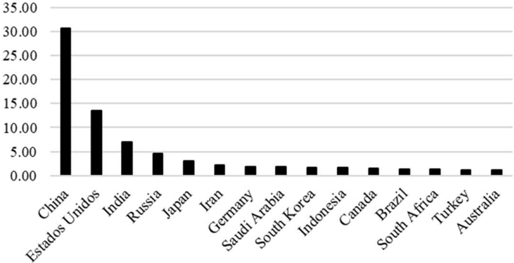
“COVID-19 has led to increased investments in the local production of EV components, particularly in countries such as China and the USA (Zhang et al., 2022).”
Exploring the key buying factors for electric scooters
Morales, D. V., Cabanillas, F. L., & Castillo, E. H. (2021) · International Journal of Electric and Hybrid Vehicles · doi:10.1504/ijehv.2021.117858 · Cited by 9
Singh, V. (2020) · European Transport/Trasporti Europei · doi:10.48295/et.2020.78.2 · Cited by 8 · cited 1×
“The average variance extracted (AVE) values were more significant than 0.5, showing that the convergent validity of the measurement model was acceptable (Singh et al., 2020b).”
InfluentialSelf-citationDoes One Really Fit All? Cultural Differences Experiencing E-mobility
Kuhn, M. M., & de Jong, N. (2017) · Developments in marketing science: proceedings of the Academy of Marketing Science · doi:10.1007/978-3-319-47331-4_305 · Cited by 3 · cited 1×
“In this sense, several studies have already reported that culture is instrumental in the intention to adopt EVs (Ashmore et al., 2018; Kuhn et al., 2017; Novo-tny et al., 2022; Sharif et al., 2021).”
Eco-Conscious Consumer Behavior--Model
Saleem, M. A., Eagle, L. C., & Low, D. (2021) · PsycTESTS Dataset · doi:10.1037/t79749-000 · Cited by 1
Research works printed but not linked: 5
- Alcántara-Pilar, J. M., del Barrio-García, S., Crespo-Almendros, E., & Porcu, L. (2017). Toward an understanding of online information processing in e-tourism: Does national culture matter? Jour- nal of Travel and Tourism Marketing, 34(8), 1128-1142.
- Bhalla, P., Ali, I. S., & Nazneen, A. (2018). A study of consumer perception and purchase intention of electric vehicles. European Journal of Scientific Research, 149(4), 362-368.
- Hofstede, G. (1980). Cultures consequences: International differences in work-related values. Sage.
- Sharif, M. S., Yaqub, R. M. S., Saleem, H. M. N., Iqbal, J., & Rasool, F. (2021). The consumers'intention to adopt hybrid electric vehicles in Pakistan; the role of cultural values. International Journal of Management (IJM), 12(4).
- Thananusak, T., Rakthin, S., Tavewatanaphan, T., & Punnakitikashem, P. (2017). Factors affecting the intention to buy electric vehicles: Empirical evidence from Thailand. International Journal of Electric and Hybrid Vehicles, 9(4), 361-381. · DOI
Cited by
Zaino, R., Ahmed, V., Alhammadi, A. M., & Alghoush, M. (2024) · World Electric Vehicle Journal · doi:10.3390/wevj15080375 · Cited by 211
“Technological research has delved into areas such as charging infrastructure, power management, and control techniques, and the impact of national culture on technology acceptance [15,16].”
BackgroundSingh, A. R., Vishnuram, P., Alagarsamy, S., Bajaj, M., Blazek, V., Damaj, I., Rathore, R. S., Al-Wesabi, F. N., & Othman, K. M. (2024) · Alexandria Engineering Journal · doi:10.1016/j.aej.2024.06.093 · Cited by 183
Buhmann, K. M., Criado, J. R., & Rialp, A. (2024) · Sustainability · doi:10.3390/su16031284 · Cited by 112
“Consumers with a higher level of EC exhibited a greater intention to purchase environmentally friendly products [8], indicating that EC positively influences the preference for and adoption of EVs [52,53].”
BackgroundElectric vehicle adoption in Indonesia: Lesson learned from developed and developing countries
Hakam, D. F., & Jumayla, S. (2024) · Sustainable Futures · doi:10.1016/j.sftr.2024.100348 · Cited by 85
Choo, S. Y., Zadeh, A. V., Hanifah, H. M., & Ramayah, T. (2024) · Research in Transportation Business & Management · doi:10.1016/j.rtbm.2024.101183 · Cited by 68
Metadata
- Authors
- Higueras-Castillo, E., Singh, V., Singh, V., & Liébana-Cabanillas, F.
- Affiliations
- Universidad de Granada (ES)
- Venue
- Environment, Development and Sustainability
- Published
- 2023-09-25
- Volume
- 26
- Issue
- 11
- Pages
- 29293-29329
- ISSN
- 1387-585X (ISSN-L)
- 1573-2975
- OpenAlex
- W4387023940
- Semantic Scholar
- 2671ba8d26d4948da1211ede956ab19a85b520b1
- Cited by
- 102
- References
- 124
- Citations by year
- 2026: 36 · 2025: 42 · 2024: 23 · 2023: 1
- FWCI
- 7.58
- Type
- journal article
- Language
- en
- Open access
- hybrid
- doi.org
- Licence
- cc-by
- creativecommons.org/licenses/by/4.0 (tdm)
- creativecommons.org/licenses/by/4.0 (vor)
- Locations
- Environment Development and Sustainability (publishedVersion, cc-by)
- Institutional Repository of the University of Granada (University of Granada) (submittedVersion, cc-by-nc-nd)
- RePEc: Research Papers in Economics (submittedVersion)
- Funders
- Universidad de Granada
- Topics
- Physical Sciences › Engineering › Electrical and Electronic Engineering › Electric Vehicles and Infrastructure
- Social Sciences › Decision Sciences › Information Systems and Management › Technology Adoption and User Behaviour
- Social Sciences › Sociology and Political Science › Social Acceptance of Renewable Energy
- Keywords
- electric vehicle adoption, adoption intention, UTAUT2, value-belief-norm theory, national culture, cross-cultural comparison, India, Spain, sustainable transport, moderating effect of culture
About these checks
Registry, retraction, Cites and statistics results are computed, not judged, with one exception: a printed reference that no index lists is read once by a model before it counts as a citation error. Claims are extracted by a model and kept only when their quote appears verbatim in the text; each cited source is then checked, with a model’s help, for whether it says what the claim relies on. Those verdicts can be wrong — read the claim’s quote and the cited source before relying on one.
Statistics and arithmetic are recomputed, not judged.
Confidence bands are shown only for fields calibrated on our annotated test set. None is calibrated yet, so no band is shown.
What counts as a claim ›How we measure confidence ›How we check this ›
Are you an author, or do you see a problem with this page? Request a review
Data sources
Bibliographic data: Semantic Scholar, OpenAlex, Crossref.
Contains information from the Semantic Scholar Academic Graph Datasets, made available under the ODC Attribution License (ODC-BY 1.0).
Semantic Scholar’s data is described in: Kinney, R., et al. (2023). The Semantic Scholar Open Data Platform. arXiv:2301.10140.
