

Atopic dermatitis: a comprehensive updated review of this intriguing disease with futuristic insights
Open accessThe DOI matches its Crossref record; 162 of the 162 references it cites were found in a registry or an index.
Abstract
Atopic dermatitis (AD) is a paradigmatic prevalent, long-lasting, and inflammatory skin condition with a diverse range of clinical manifestations. The etiology and clinical symptoms of AD are influenced by complex pathophysiological processes, which involve a strong genetic component, epidermal dysfunction, and immunological dysregulation, and a strong influence of other physiological and environmental factors. The FDA has approved targeted and well-tolerated immunomodulators including biologics like dupilumab and crisaborole, and small molecules such as baricitinib, as novel therapies for AD. They effectively treat AD but are too expensive for most patients. The review provides an update on the state of knowledge of AD pathogenesis, discusses the available diagnostic and scoring indices, and provides a scientific foundation for treatment methods for AD. This review also presents data on clinical efficacy of innovative treatments’ considering recent guidelines, emphasizing the newest medications and ongoing trials. Finally, the new implication of artificial intelligence (AI) in AD management is explored, where AI can speed up diagnosis and therapy. The PubMed, Google Scholar, and ScienceDirect databases were used for this review. Graphical Abstract
Overview
The claims and statistics of this paper haven’t been checked yet.
Free: it reads the open-access text and checks the first 5 claims that cite a source we can check. Create a free account to check every claim.
Integrity signals
Registry
Cites
Statistics
Figures
Verification
Claims the paper makes
The claims and statistics of this paper haven’t been checked yet.
Free: it reads the open-access text and checks the first 5 claims that cite a source we can check. Create a free account to check every claim.
Claims other papers make about this one
Each is checked against this paper’s own text: does it say what the citing paper says it does?
The source backs part of the claim, not all of it — or backs it for a different population, condition or comparison.
In the citing paper
“Airborne particles degrade the skin barrier and increase IL-4/IL13 mediated inflammation and may also alter the cutaneous microbiome, further aggravating AD [65].”
From The Environmental Determinants of Skin Health: Linking Climate Change, Air Pollution, and the Dermatologic Disease Burden (2025) · cites this paper as [65]
Experimental — accuracy not yet measured
Self-check
Percentages, sums and reported differences re-computed from the paper’s own numbers.
The self-check needs the paper’s full text.
Citations
Cites
Hashimoto, D., Chow, A., Noizat, C., Teo, P., Beasley, M. B., Leboeuf, M., Becker, C. D., See, P., Price, J., Lucas, D., et al. (2013) · Immunity · doi:10.1016/j.immuni.2013.04.004 · Cited by 2,311 · cited 1×
“Monocytes are precursors of macrophages, which are highly mobile phagocytic cells capable of initiating immune responses (Hashimoto et al. 2013).”
Two Phase 3 Trials of Dupilumab versus Placebo in Atopic Dermatitis
Simpson, E. L., Bieber, T., Guttman-Yassky, E., Beck, L. A., Blauvelt, A., Cork, M. J., Silverberg, J. I., Deleuran, M., Kataoka, Y., Lacour, J.-P., et al. (2016) · New England Journal of Medicine · doi:10.1056/nejmoa1610020 · Cited by 2,110 · cited 1×
“SOLO 1 and SOLO 2 clinical studies involved enrolling individuals with moderate-to-severe atopic dermatitis whose condition was not well controlled by topical therapy in two randomized, placebo-controlled, phase 3 studies of the same design (Simpson et al. 2016).”
Guidelines of care for the management of atopic dermatitis
Eichenfield, L. F., Tom, W. L., Berger, T. G., Krol, A., Paller, A. S., Schwarzenberger, K., Bergman, J. N., Chamlin, S. L., Cohen, D. E., Cooper, K. D., et al. (2014) · Journal of the American Academy of Dermatology · doi:10.1016/j.jaad.2014.03.023 · Cited by 1,224 · cited 1×
“TCI is usually applied twice daily in tender areas, such as the face and skin folds, where corticosteroids may cause skin atrophy or thinning (Eichenfield et al. 2014).”
Kunz, B., Oranje, A. P., Labrèze, L., Stalder, J.-F., Ring, J., & Taïeb, A. (1997) · Dermatology · doi:10.1159/000245677 · Cited by 1,046
Gittler, J. K., Shemer, A., Suárez-Fariñas, M., Fuentes-Duculan, J., Gulewicz, K. J., Wang, C. Q. F., Mitsui, H., Cardinale, I., de Guzman Strong, C., Krueger, J. G., et al. (2012) · Journal of Allergy and Clinical Immunology · doi:10.1016/j.jaci.2012.07.012 · Cited by 981
Skin pH: from basic science to basic skin care
Ali, S., & Yosipovitch, G. (2013) · Acta Dermato Venereologica · doi:10.2340/00015555-1531 · Cited by 690 · cited 1×
“By promoting barrier function and antimicrobial activity, the acidic milieu guards against atopic dermatitis (Ali and Yosipovitch 2013).”
The immunology of atopic dermatitis and its reversibility with broad-spectrum and targeted therapies
Brunner, P. M., Guttman-Yassky, E., & Leung, D. Y. M. (2017) · Journal of Allergy and Clinical Immunology · doi:10.1016/j.jaci.2017.01.011 · Cited by 642 · cited 2×
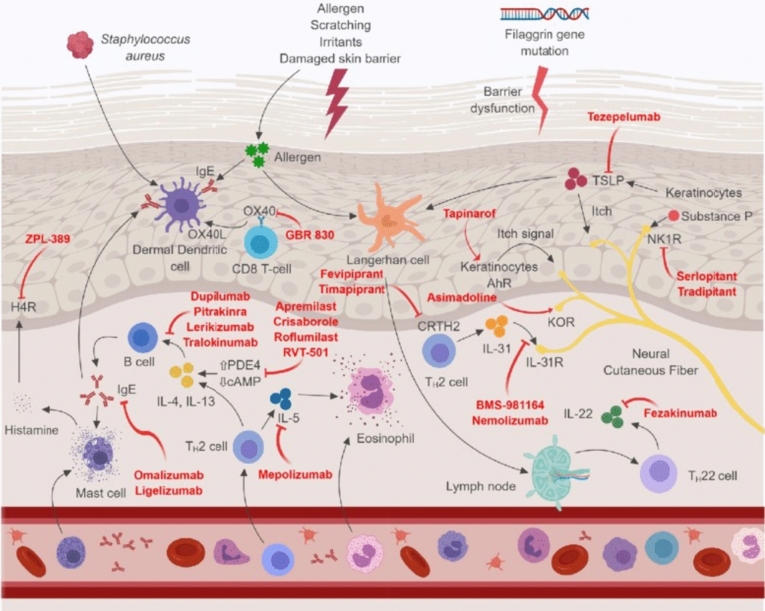
“…NK1R neurokinin-1 receptor, Janus kinase/ signal transducer and activator of transcription, and TSLP thymic stromal lymphopoietin immune responses, but cytokine activation varies, including that of IL-22, IL-17, IL-9, and IFN-γ, contributing to various clinical AD subtypes (Brunner et al. 2017).”
Staphylococcus δ-toxin induces allergic skin disease by activating mast cells
Nakamura, Y., Oscherwitz, J., Cease, K. B., Chan, S. M., Muñoz-Planillo, R., Hasegawa, M., Villaruz, A. E., Cheung, G. Y. C., McGavin, M. J., Travers, J. B., et al. (2013) · Nature · doi:10.1038/nature12655 · Cited by 558 · cited 1×
“Additionally, through Toll-like receptor 2 (TLR2), S. aureus induces thymic stromal lymphopoietin production and mast cell degranulation (Nakamura et al. 2013).”
Blauvelt, A., Teixeira, H. D., Simpson, E. L., Costanzo, A., De Bruin-Weller, M., Barbarot, S., Prajapati, V. H., Lio, P., Hu, X., Wu, T., et al. (2021) · JAMA Dermatology · doi:10.1001/jamadermatol.2021.3023 · Cited by 516 · cited 2×
“Similarly, other studies showed clinically significant improvements in all primary and secondary objectives (Blauvelt et al. 2021; Silverberg et al. 2023b).”
Skin lesion segmentation in dermoscopy images via deep full resolution convolutional networks
Al-masni, M. A., Al-antari, M. A., Choi, M.-T., Han, S.-M., & Kim, T.-S. (2018) · Computer Methods and Programs in Biomedicine · doi:10.1016/j.cmpb.2018.05.027 · Cited by 483 · cited 1×
“Al-masni et al. (2018) observed 77.11% testing accuracy for melanoma pictures using full-resolution CNN.”
InfluentialAbrocitinib versus Placebo or Dupilumab for Atopic Dermatitis
Bieber, T., Simpson, E. L., Silverberg, J. I., Thaçi, D., Paul, C., Pink, A. E., Kataoka, Y., Chu, C.-Y., DiBonaventura, M., Rojo, R., et al. (2021) · New England Journal of Medicine · doi:10.1056/nejmoa2019380 · Cited by 476 · cited 3×
“Pediatric investigations are ongoing (Bieber et al. 2021; Yim et al. 2024).”
Biomedical materials for wound dressing: recent advances and applications
Nguyen, H. M., Ngoc Le, T. T., Nguyen, A. T., Thien Le, H. N., & Pham, T. T. (2023) · RSC Advances · doi:10.1039/d2ra07673j · Cited by 453 · cited 1×
“The dosing and frequency of phototherapy depend on the lowest ery-thema dose, Fitzpatrick skin type, or both (Nguyen et al. 2023).”
Early-onset pediatric atopic dermatitis is TH2 but also TH17 polarized in skin
Esaki, H., Brunner, P. M., Renert-Yuval, Y., Czarnowicki, T., Huynh, T., Tran, G., Lyon, S., Rodriguez, G., Immaneni, S., Johnson, D. B., et al. (2016) · Journal of Allergy and Clinical Immunology · doi:10.1016/j.jaci.2016.07.013 · Cited by 428 · cited 1×
“Likewise, studies on Childhood AD demonstrated increased type 2 inflammation, but higher type 9 and type 17 effector activation at disease onset (Esaki et al. 2016).”
Topical tofacitinib for atopic dermatitis: a phase II a randomized trial
Bissonnette, R., Papp, K. A., Poulin, Y., Gooderham, M., Raman, M., Mallbris, L., Wang, C., Purohit, V., Mamolo, C., Papacharalambous, J., et al. (2016) · British Journal of Dermatology · doi:10.1111/bjd.14871 · Cited by 420 · cited 1×
“(Bissonnette et al. 2016).”
Microbe-host interplay in atopic dermatitis and psoriasis
Fyhrquist, N., Muirhead, G., Prast-Nielsen, S., Jeanmougin, M., Olah, P., Skoog, T., Jules-Clement, G., Feld, M., Barrientos-Somarribas, M., Sinkko, H., et al. (2019) · Nature Communications · doi:10.1038/s41467-019-12253-y · Cited by 409 · cited 1×
“It is one of the most important environmental variables in AD etiology (Fyhrquist et al. 2019).”
JAK inhibitors in the treatment of atopic dermatitis
Chovatiya, R., & Paller, A. S. (2021) · Journal of Allergy and Clinical Immunology · doi:10.1016/j.jaci.2021.08.009 · Cited by 398 · cited 5×
“The study found that targeting IL-13 with lebriki-zumab for moderate-to-severe AD in teenagers is promising (Paller et al. 2021).”
InfluentialErratum: JAK inhibition as a therapeutic strategy for immune and inflammatory diseases
Schwartz, D. M., Kanno, Y., Villarino, A., Ward, M., Gadina, M., & O'Shea, J. J. (2018) · Nature Reviews Drug Discovery · doi:10.1038/nrd.2017.267 · Cited by 394
Trial of Nemolizumab and Topical Agents for Atopic Dermatitis with Pruritus
Kabashima, K., Matsumura, T., Komazaki, H., & Kawashima, M. (2020) · New England Journal of Medicine · doi:10.1056/nejmoa1917006 · Cited by 361 · cited 1×
“A 16-week, double-blind, phase 3 trial found that nemoli-zumab reduced AD pruritus more than placebo plus topical treatments (Kabashima et al. 2020).”
The effect of environmental humidity and temperature on skin barrier function and dermatitis
Engebretsen, K. A., Johansen, J. D., Kezic, S., Linneberg, A., & Thyssen, J. P. (2016) · Journal of the European Academy of Dermatology and Venereology · doi:10.1111/jdv.13301 · Cited by 349 · cited 1×
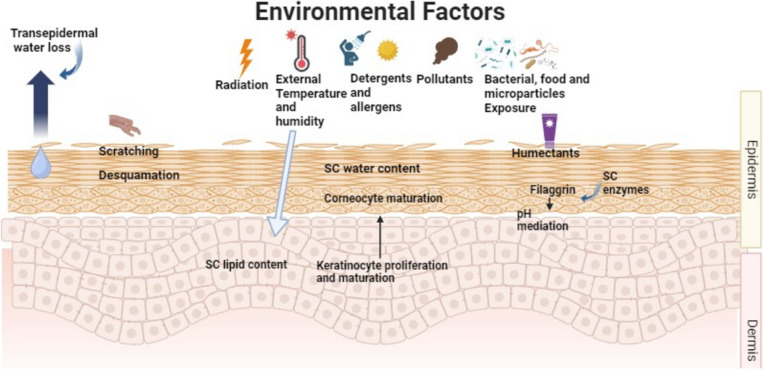
“The activation of transient receptor potential vanilloid (TRPV) 1 in low temperatures might result in the release of proinflammatory cytokines and downregulate the expression of loricrin and filaggrin, ultimately causing skin barrier failure and pruritus (Engebretsen et al. 2016).”
Two Phase 3 Trials of Lebrikizumab for Moderate-to-Severe Atopic Dermatitis
Silverberg, J. I., Guttman-Yassky, E., Thaçi, D., Irvine, A. D., Stein Gold, L., Blauvelt, A., Simpson, E. L., Chu, C.-Y., Liu, Z., Gontijo Lima, R., et al. (2023) · New England Journal of Medicine · doi:10.1056/nejmoa2206714 · Cited by 345
Guttman-Yassky, E., Blauvelt, A., Eichenfield, L. F., Paller, A. S., Armstrong, A. W., Drew, J., Gopalan, R., & Simpson, E. L. (2020) · JAMA Dermatology · doi:10.1001/jamadermatol.2020.0079 · Cited by 341 · cited 1×
“Placebo-treated patients needed three times more rescue TCS, started sooner and lasted longer, than lebrikizumab-treated patients (Guttman-Yassky et al. 2020).”
Microbiome in the gut-skin axis in atopic dermatitis
Lee, S.-Y., Lee, E., Park, Y. M., & Hong, S.-J. (2018) · Allergy, Asthma & Immunology Research · doi:10.4168/aair.2018.10.4.354 · Cited by 326 · cited 1×
“Alternatively, probiotics enhance the microbiota (Lee et al. 2018).”
First-in-human topical microbiome transplantation with Roseomonas mucosa for atopic dermatitis
Myles, I. A., Earland, N. J., Anderson, E. D., Moore, I. N., Kieh, M. D., Williams, K. W., Saleem, A., Fontecilla, N. M., Welch, P. A., Darnell, D. A., et al. (2018) · JCI Insight · doi:10.1172/jci.insight.120608 · Cited by 326 · cited 1×
“A gram-negative bacterium called Roseomonas mucosa was reported to improve AD and lower the burden of S. aureus in both adults and children with AD in preclinical research (Myles et al. 2018).”
Schmitt, J., Spuls, P. I., Thomas, K. S., Simpson, E., Furue, M., Deckert, S., Dohil, M., Apfelbacher, C., Singh, J. A., Chalmers, J., et al. (2014) · Journal of Allergy and Clinical Immunology · doi:10.1016/j.jaci.2014.07.043 · Cited by 319
Papp, K., Szepietowski, J. C., Kircik, L., Toth, D., Eichenfield, L. F., Leung, D. Y. M., Forman, S. B., Venturanza, M. E., Sun, K., Kuligowski, M. E., et al. (2021) · Journal of the American Academy of Dermatology · doi:10.1016/j.jaad.2021.04.085 · Cited by 313 · cited 1×
“Ruxoli-tinib’s 8-week efficacy in the Investigator’s Global Assessment (IGA) and itch reduction compared to the vehicle were reported in two phase 3 trials (Papp et al. 2021; Papapos-tolou et al. 2022).”
An update on the genetics of atopic dermatitis: Scratching the surface in 2009
Barnes, K. C. (2010) · Journal of Allergy and Clinical Immunology · doi:10.1016/j.jaci.2009.11.008 · Cited by 309 · cited 1×
“There is a substantial socioeconomic cost associated with AD, which significantly lowers the quality of life for patients and their families (Barnes 2010).”
Charman, C. R., Venn, A. J., Ravenscroft, J. C., & Williams, H. C. (2013) · British Journal of Dermatology · doi:10.1111/bjd.12590 · Cited by 301
Atopic Dermatitis: Diagnosis and Treatment.
Frazier, W. T., & Bhardwaj, N. (2020) · PubMed · Cited by 295
Williams, M. R., Costa, S. K., Zaramela, L. S., Khalil, S., Todd, D. A., Winter, H. L., Sanford, J. A., O’Neill, A. M., Liggins, M. C., Nakatsuji, T., et al. (2019) · Science Translational Medicine · doi:10.1126/scitranslmed.aat8329 · Cited by 292 · cited 1×
“It was discovered that certain strains of S. hominis produce an autoinducing peptide that inhibits the regulatory quorum sensing mechanism of S. aureus accessory genes and stops the bacteria from forming biofilms (Williams et al. 2019).”
Lipid abnormalities in atopic skin are driven by type 2 cytokines
Berdyshev, E., Goleva, E., Bronova, I., Dyjack, N., Rios, C., Jung, J., Taylor, P., Jeong, M., Hall, C. F., Richers, B. N., et al. (2018) · JCI Insight · doi:10.1172/jci.insight.98006 · Cited by 283 · cited 1×
“IL-4 and IL-13 minimize keratinocyte antimicrobial peptide expression and skin barrier function (Berdyshev et al. 2018), predisposing patients with AD to skin infections.”
Novel insights into atopic dermatitis
Schuler, C. F., Billi, A. C., Maverakis, E., Tsoi, L. C., & Gudjonsson, J. E. (2023) · Journal of Allergy and Clinical Immunology · doi:10.1016/j.jaci.2022.10.023 · Cited by 281 · cited 1×
“…a nonselective cation channel, is found in mast cells, cutaneous sensory neurons, and keratinocytes, controls inflammation and, mediates histamine-dependent and -independent itch by releasing central neuropeptides such as substance P (SP) and calcitonin gene-related peptide (Schuler et al. 2023).”
Liu, H., Archer, N. K., Dillen, C. A., Wang, Y., Ashbaugh, A. G., Ortines, R. V., Kao, T., Lee, S. K., Cai, S. S., Miller, R. J., et al. (2017) · Cell Host & Microbe · doi:10.1016/j.chom.2017.10.006 · Cited by 263 · cited 1×
“Phenol-soluble modulin (PSM)-α from S. aureus increases IL-36α and IL-1α production in keratinocytes, leading to IL-17 production and increased neutrophil recruitment (Liu et al. 2017).”
Deleuran, M., Thaçi, D., Beck, L. A., de Bruin-Weller, M., Blauvelt, A., Forman, S., Bissonnette, R., Reich, K., Soong, W., Hussain, I., et al. (2020) · Journal of the American Academy of Dermatology · doi:10.1016/j.jaad.2019.07.074 · Cited by 255 · cited 1×
“The study concluded that dupilumab’s use as a continuous, long-term therapy for patients with moderate to severe AD is supported by the safety and efficacy profile of this trial (Deleuran et al. 2020).”
Chen, Y.-L., Gutowska-Owsiak, D., Hardman, C. S., Westmoreland, M., MacKenzie, T., Cifuentes, L., Waithe, D., Lloyd-Lavery, A., Marquette, A., Londei, M., et al. (2019) · Science Translational Medicine · doi:10.1126/scitranslmed.aax2945 · Cited by 250 · cited 2×
“These findings suggest that suppressing IL-31 may be an additional part of AD therapy and may have a favorable impact on inflammatory responses (Chen et al. 2019).”
Artificial Intelligence in Dermatology Image Analysis: Current Developments and Future Trends
Li, Z., Koban, K. C., Schenck, T. L., Giunta, R. E., Li, Q., & Sun, Y. (2022) · Journal of Clinical Medicine · doi:10.3390/jcm11226826 · Cited by 248 · cited 1×
“Computer-aided diagnosis (CAD) solutions and convolutional neural networks (CNN) have been applied specifically in dermatology to improve picture categorization, object detection, and other analytical procedures (Li et al. 2022).”
Association of atopic dermatitis with smoking: A systematic review and meta-analysis
Kantor, R., Kim, A., Thyssen, J. P., & Silverberg, J. I. (2016) · Journal of the American Academy of Dermatology · doi:10.1016/j.jaad.2016.07.017 · Cited by 245 · cited 1×
“The prevalence of AD increases with passive cigarette smoking exposure (Kantor et al. 2016).”
Treatment of atopic dermatitis with ruxolitinib cream (JAK1/JAK2 inhibitor) or triamcinolone cream
Kim, B. S., Howell, M. D., Sun, K., Papp, K., Nasir, A., & Kuligowski, M. E. (2020) · Journal of Allergy and Clinical Immunology · doi:10.1016/j.jaci.2019.08.042 · Cited by 226 · cited 1×
“It was also reported that Cerdulatinib gel reduced epidermal thickness, inflammatory dendritic cells, and transcriptome inflammatory signatures in mild to moderate AD in a phase Ib study (Kim et al. 2020).”
Skin Physiology of the Neonate and Infant: Clinical Implications
Oranges, T., Dini, V., & Romanelli, M. (2015) · Advances in Wound Care · doi:10.1089/wound.2015.0642 · Cited by 223 · cited 2×
“Tests for common allergens can prevent allergies while safeguarding children’s nutrition (Oranges et al. 2015).”
Futamura, M., Leshem, Y. A., Thomas, K. S., Nankervis, H., Williams, H. C., & Simpson, E. L. (2016) · Journal of the American Academy of Dermatology · doi:10.1016/j.jaad.2015.09.062 · Cited by 220 · cited 1×
“…Global Assessment (e.g., V-IGA), the eczema area and severity index (EASI), the scoring atopic dermatitis (SCORAD), and the Patient-oriented eczema measure (POEM) are used to characterize a variety of disease severity indices (Futamura et al. 2016; Hanifin et al. 2022; Eichen-field et al. 2022).”
The Eczema Area and Severity Index – a practical guide
Hanifin, J. M., Baghoomian, W., Grinich, E., Leshem, Y. A., Jacobson, M., & Simpson, E. L. (2022) · Dermatitis · doi:10.1097/der.0000000000000895 · Cited by 213 · cited 2×
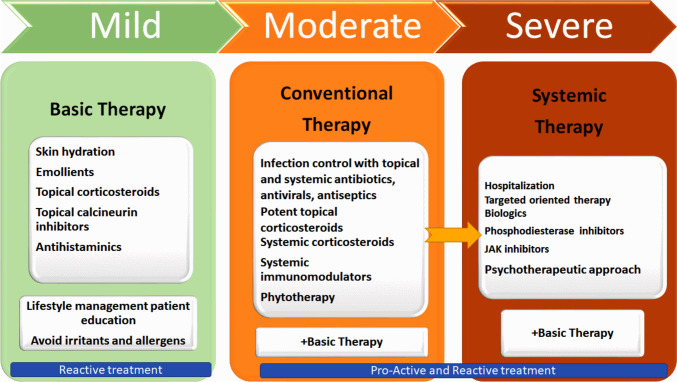
“The severity of AD has been classified into three forms: mild, moderate, and severe (Hanifin et al. 2022).”
Afshari, M., Koláčková, M., Rosecká, M., Čelakovská, J., & Krejsek, J. (2024) · Frontiers in Immunology · doi:10.3389/fimmu.2024.1361005 · Cited by 213 · cited 3×
“AD is ranked 15th in terms of the global disease burden (Afshari et al. 2024).”
Atopic dermatitis and the 'hygiene hypothesis': too clean to be true?
Flohr, C., Pascoe, D., & Williams, H. C. (2005) · British Journal of Dermatology · doi:10.1111/j.1365-2133.2004.06436.x · Cited by 208 · cited 1×
“Whereas, children raised in poor, rural nations with farm animals and unpasteurized milk are more likely to develop AD (Flohr et al. 2005).”
Interactions Between Atopic Dermatitis and Staphylococcus aureus Infection: Clinical Implications
Kim, J., Kim, B. E., Ahn, K., & Leung, D. Y. M. (2019) · Allergy, Asthma & Immunology Research · doi:10.4168/aair.2019.11.5.593 · Cited by 206 · cited 1×
“The superantigen staphylococcal enterotoxin B released by S. aureus from the skin of AD patients activates lymphocytes and macrophages, causing inflammation (Kim et al. 2019).”
Dijkhoff, I. M., Drasler, B., Karakocak, B. B., Petri-Fink, A., Valacchi, G., Eeman, M., & Rothen-Rutishauser, B. (2020) · Particle and Fibre Toxicology · doi:10.1186/s12989-020-00366-y · Cited by 202 · cited 1×
“The “brick and mortar” model explains how anuclear corneocyte, or bricks, are placed in a lipid matrix that repels water, or mortar to, create an efficient barrier that prevents water loss and acts as a shield against allergens and noxious substances (Dijkhoff et al. 2020).”
Guttman-Yassky, E., Simpson, E. L., Reich, K., Kabashima, K., Igawa, K., Suzuki, T., Mano, H., Matsui, T., Esfandiari, E., & Furue, M. (2023) · The Lancet · doi:10.1016/s0140-6736(22)02037-2 · Cited by 187
The infectious complications of atopic dermatitis
Wang, V., Boguniewicz, J., Boguniewicz, M., & Ong, P. Y. (2021) · Annals of Allergy, Asthma & Immunology · doi:10.1016/j.anai.2020.08.002 · Cited by 185 · cited 1×
“By deviating both innate and adaptive immune responses through various mechanisms, S. aureus exacerbates skin inflammation and allergic reactions (Wang et al. 2021).”
The vicious cycle of itch and anxiety
Sanders, K. M., & Akiyama, T. (2018) · Neuroscience & Biobehavioral Reviews · doi:10.1016/j.neubiorev.2018.01.009 · Cited by 179
Kapur, S., Watson, W., & Carr, S. (2018) · Allergy, Asthma & Clinical Immunology · doi:10.1186/s13223-018-0281-6 · Cited by 175 · cited 4×
“AD skin is more susceptible to allergies and infections upon dehydration due to FLG LoF (Kapur et al. 2018).”
InfluentialTreatment of atopic dermatitis: Recently approved drugs and advanced clinical development programs
Müller, S., Maintz, L., & Bieber, T. R. M. (2024) · Allergy · doi:10.1111/all.16009 · Cited by 175 · cited 1×
“This innovative treatment is presently in phase 3 treatment of atopic dermatitis (Bissonnette et al. 2023; Müller et al. 2024).”
Staphylococcus aureus Induces Increased Serine Protease Activity in Keratinocytes
Williams, M. R., Nakatsuji, T., Sanford, J. A., Vrbanac, A. F., & Gallo, R. L. (2017) · Journal of Investigative Dermatology · doi:10.1016/j.jid.2016.10.008 · Cited by 171 · cited 1×
“S. aureus disrupts the proteolytic balance in the skin (Williams et al. 2017).”
The role of the skin microbiome in atopic dermatitis
Nakatsuji, T., & Gallo, R. L. (2019) · Annals of Allergy, Asthma & Immunology · doi:10.1016/j.anai.2018.12.003 · Cited by 163 · cited 4×
“On the other hand, Commensal S. epidermidis produces lipoteichoic acid that prevents injury-induced TLR–3–3-mediated cutaneous inflammation via TLR-2 interaction (Nakatsuji and Gallo 2019).”
InfluentialMoyle, M., Cevikbas, F., Harden, J. L., & Guttman‐Yassky, E. (2019) · Experimental Dermatology · doi:10.1111/exd.13911 · Cited by 163 · cited 2×
“Lebrikizumab is a humanized monoclonal antibody that binds soluble IL-13 and is highly selective in the non-receptor binding domain. lebrikizumab stimulates IL-13Rα2 to control endogenous IL-13 while inhibiting the IL-4Rα–IL-13Rα1 signaling complex (Moyle et al. 2019).”
Abdel-Mageed, H. M., AbuelEzz, N. Z., Radwan, R. A., & Mohamed, S. A. (2021) · Journal of Microencapsulation · doi:10.1080/02652048.2021.1942275 · Cited by 162 · cited 1×
“Nanoparticles may be a viable medication delivery method to overcome skin permeability and solubility limitations (Abdel-Mageed et al. 2021, 2022a).”
Self-citationGranulocytes: New Members of the Antigen-Presenting Cell Family
Lin, A., & Loré, K. (2017) · Frontiers in Immunology · doi:10.3389/fimmu.2017.01781 · Cited by 161 · cited 1×
“Histamine-containing mast cells are tryptase and chymase-positive, and function as effector cells in IgE-mediated hypersensitivity reactions (Lin and Loré 2017).”
Basic Mechanisms of JAK Inhibition
Lin, C. M. A., Cooles, F. A. H., & Isaacs, J. D. (2020) · Mediterranean Journal of Rheumatology · doi:10.31138/mjr.31.1.100 · Cited by 150 · cited 1×
“(Lin et al. 2020).”
Eichenfield, L. F., Stripling, S., Fung, S., Cha, A., O’Brien, A., & Schachner, L. A. (2022) · Pediatric Drugs · doi:10.1007/s40272-022-00499-x · Cited by 150 · cited 3×
“This consensus statement recommended the use of the POEM index, as well as an updated version of the SCORAD known as the patient-oriented SCORAD index and the EASI (Hanifin et al. 2022; Eichenfield et al. 2022).”
InfluentialSystemic Kappa Opioid Receptor Agonists in the Treatment of Chronic Pruritus: A Literature Review
Phan, N., Lotts, T., Antal, A., Bernhard, J., & Ständer, S. (2012) · Acta Dermato Venereologica · doi:10.2340/00015555-1353 · Cited by 147 · cited 1×
“Therapies targeting mu (μ) opioid receptors, kappa(κ)-opioid receptors, or both have been beneficial in treating persistent itch, especially uremic and cholestatic itch (Phan et al. 2012).”
Paller, A. S., Stein Gold, L., Soung, J., Tallman, A. M., Rubenstein, D. S., & Gooderham, M. (2021) · Journal of the American Academy of Dermatology · doi:10.1016/j.jaad.2020.05.135 · Cited by 138 · cited 3×
“Side effects included nasopharyngitis, upper respiratory tract infection, AD worsening, and folliculitis (Paller et al. 2021).”
NF-κB Pathway and Its Inhibitors: A Promising Frontier in the Management of Alzheimer’s Disease
Sivamaruthi, B. S., Raghani, N. R., Chorawala, M. R., Bhattacharya, S., Prajapati, B. G., Elossaily, G. M., & Chaiyasut, C. (2023) · Biomedicines · doi:10.3390/biomedicines11092587 · Cited by 131 · cited 1×
“…skin inflammation in the paired related homeobox-1 (Prx1)+ fibroblastic subpopulation by overexpressing eotaxin-1: dysregulation of the inhibitor of nuclear factor kappa B kinase subunit beta-nuclear factor kappa-light-chain-enhancer of activated B cells (Ikkb-NF-kB) axis (Sivamaruthi et al. 2023).”
Bissonnette, R., Maari, C., Forman, S., Bhatia, N., Lee, M., Fowler, J., Tyring, S., Pariser, D., Sofen, H., Dhawan, S., et al. (2019) · British Journal of Dermatology · doi:10.1111/bjd.17932 · Cited by 130 · cited 1×
“Only the highest dosages of gusacitinib met the EASI-50 secondary objectives and baseline itch-NRS improvement (Bissonnette et al. 2019).”
Blood natural killer cell deficiency reveals an immunotherapy strategy for atopic dermatitis
Mack, M. R., Brestoff, J. R., Berrien-Elliott, M. M., Trier, A. M., Yang, T.-L. B., McCullen, M., Collins, P. L., Niu, H., Bodet, N. D., Wagner, J. A., et al. (2020) · Science Translational Medicine · doi:10.1126/scitranslmed.aay1005 · Cited by 111 · cited 1×
“Recently AD patients were shown to lack natural killer cells (NKs) due to a possible natural killer (NKs) cell-type 2 inflammation counter-regulatory mechanism; this deficit may promote type 2 inflammation in AD patients (Mack et al. 2020).”
de Lusignan, S., Alexander, H., Broderick, C., Dennis, J., McGovern, A. P., Feeney, C., & Flohr, C. (2020) · Clinical & Experimental Allergy · doi:10.1111/cea.13784 · Cited by 108 · cited 1×
“FLG promotes the development of a cornified cell envelope adjacent to the corneocyte after the buildup of keratin filaments within the corneocyte (De Lusignan et al. 2021).”
Międzobrodzki, J., Kaszycki, P., Białecka, A., & Kasprowicz, A. (2002) · European Journal of Clinical Microbiology & Infectious Diseases · doi:10.1007/s10096-002-0706-4 · Cited by 106 · cited 1×
“(Miedzobrodzki et al. 2002) .”
Sliz, E., Huilaja, L., Pasanen, A., Laisk, T., Reimann, E., Mägi, R., Hannula-Jouppi, K., Peltonen, S., Salmi, T., Koulu, L., et al. (2022) · Journal of Allergy and Clinical Immunology · doi:10.1016/j.jaci.2021.07.043 · Cited by 106 · cited 1×
“This study emphasizes that various developing biobank datasets can be used to investigate genetic AD in the future (Sliz et al. 2022).”
Nakagawa, H., Nemoto, O., Igarashi, A., Saeki, H., Murata, R., Kaino, H., & Nagata, T. (2020) · The Journal of Dermatology · doi:10.1111/1346-8138.15173 · Cited by 105 · cited 1×
“After phase III studies, Japan approved topical delgocitinib ointment for moderate to severe AD in 2020 (Nakagawa et al. 2020; Chovatiya and Paller 2021).”
Park, C. W., Kim, B. J., Lee, Y. W., Won, C. H., Park, C. O., Chung, B. Y., Lee, D. H., Jung, K.-M., Nam, H.-J., Choi, G., et al. (2021) · Journal of Allergy and Clinical Immunology · doi:10.1016/j.jaci.2021.09.024 · Cited by 105 · cited 3×
“These methods demonstrate high predictive accuracy in classifying AD for CNNs but are not as accurate for severity subclassification as the RF model (Park et al. 2021).”
InfluentialKamata, M., & Tada, Y. (2023) · JID Innovations · doi:10.1016/j.xjidi.2023.100195 · Cited by 102 · cited 1×
“Phospho-diesterase-4 (PDE-4) and Janus kinase (JAK) inhibitors represent new therapeutic options for targeting the underlying inflammatory processes in AD (Kamata and Tada 2023).”
Ravn, N. H., Halling, A., Berkowitz, A. C., Rinnov, M. R., Silverberg, J. I., Egeberg, A., & Thyssen, J. P. (2019) · Journal of Allergy and Clinical Immunology · doi:10.1016/j.jaci.2019.12.899 · Cited by 101 · cited 1×
“When both parents have atopic disorders, the likelihood increases to 60%–80% (Ravn et al. 2020).”
Atopic Dermatitis and Food Allergy: A Complex Interplay What We Know and What We Would Like to Learn
Papapostolou, N., Xepapadaki, P. V., Gregoriou, S., & Makris, M. P. (2022) · Journal of Clinical Medicine · doi:10.3390/jcm11144232 · Cited by 95 · cited 1×
“Research has shown that severe AD patients’ reduced skin barrier makes them more prone to food allergies, causing percutaneous food sensitivity (Papapostolou et al. 2022).”
Skin-Associated B Cells in Health and Inflammation
Debes, G. F., & McGettigan, S. E. (2019) · The Journal of Immunology · doi:10.4049/jimmunol.1801211 · Cited by 94 · cited 1×
“T-helper lymphocytes help mature dendritic cells and support effector cells through cytokine production (Debes and McGettigan 2019).”
Phosphodiesterase-4 Inhibition in Psoriasis
Milakovic, M., & Gooderham, M. (2021) · Psoriasis Targets and Therapy · doi:10.2147/ptt.s303634 · Cited by 94
Thomas, K. S., Apfelbacher, C., Chalmers, J. R., Simpson, E. L., Spuls, P. I., Gerbens, L. A. A., Williams, H. C., Schmitt, J. M., Gabes, M., Howells, L., et al. (2021) · British Journal of Dermatology · doi:10.1111/bjd.19751 · Cited by 93
Gutermuth, J., Pink, A. E., Worm, M., Soldbro, L., Bjerregård Øland, C., & Weidinger, S. (2022) · British Journal of Dermatology · doi:10.1111/bjd.20832 · Cited by 93 · cited 1×
“(Gutermuth et al. 2022).”
Trends in eczema prevalence in children and adolescents: A Global Asthma Network Phase I Study
Langan, S. M., Mulick, A. R., Rutter, C. E., Silverwood, R. J., Asher, I., García‐Marcos, L., Ellwood, E., Bissell, K., Chiang, C., Sony, A. E., et al. (2023) · Clinical & Experimental Allergy · doi:10.1111/cea.14276 · Cited by 93 · cited 1×
“AD prevalence has grew by 0.98% per decade in adolescents and by 1.21% per decade in children globally (Langan et al. 2023).”
InfluentialPhototherapy for atopic dermatitis
Rodenbeck, D. L., Silverberg, J. I., & Silverberg, N. B. (2016) · Clinics in Dermatology · doi:10.1016/j.clindermatol.2016.05.011 · Cited by 92 · cited 3×
“A separate phase 2b study (study to evaluate ASN002 in subjects with moderate to severe chronic hand eczema; NCT03728504) showed promising efficacy and safety (Rodenbeck et al. 2016).”
InfluentialHu, Y., Liu, S., Liu, P., Mu, Z., & Zhang, J. (2020) · Journal of Clinical Laboratory Analysis · doi:10.1002/jcla.23214 · Cited by 92 · cited 4×
“The sensitization profiles of patients with AD can be examined by testing total immunoglobulin (IgE) and allergen-specific IgE against food and pollen allergens and estimating the ratio of specific to total IgE (Hu et al. 2020).”
InfluentialSaeki, H., Ito, K., Yokota, D., & Tsubouchi, H. (2021) · Journal of the American Academy of Dermatology · doi:10.1016/j.jaad.2021.10.027 · Cited by 90
Atopic dermatitis guidelines: Diagnosis, systemic therapy, and adjunctive care
Sidbury, R., & Kodama, S. (2018) · Clinics in Dermatology · doi:10.1016/j.clindermatol.2018.05.008 · Cited by 85 · cited 1×
“In 87% of patients, pruritus is still the most common symptom and the initial indication of AD, resulting in pain, infections, anxiety, alteration of the skin barrier, and insomnia (Sidbury and Kodama 2018).”
Yang, H., Wang, J., Zhang, X., Zhang, Y., Qin, Z.-L., Wang, H., & Luo, X.-Y. (2019) · JAMA Dermatology · doi:10.1001/jamadermatol.2019.0008 · Cited by 85 · cited 1×
“These inhibitors prevents the degradation of cyclic adenosine monophosphate (cAMP) by phosphodiesterase, which typically lowers inflammation (Yang et al. 2019).”
The Role of Interleukins 4 and/or 13 in the Pathophysiology and Treatment of Atopic Dermatitis
Silverberg, J. I., & Kantor, R. W. (2017) · Dermatologic Clinics · doi:10.1016/j.det.2017.02.005 · Cited by 82
What’s New in Topicals for Atopic Dermatitis?
Kleinman, E. P., Laborada, J., Metterle, L., & Eichenfield, L. F. (2022) · American Journal of Clinical Dermatology · doi:10.1007/s40257-022-00712-0 · Cited by 81 · cited 1×
“Nasopharyngitis is the most prevalent side effect (Kleinman et al. 2022).”
Deeks, E. D. (2021) · Drugs · doi:10.1007/s40265-021-01619-6 · Cited by 76 · cited 2×
“The κ-opioid-R-agonist difelikefalin is licensed for moderate-to-severe pruritus in individuals requiring haemodialysis, and is being evaluated for moderate-to-severe itch in patients with AD (Deeks 2021).”
Dupilumab (Dupixent): An Interleukin-4 Receptor Antagonist for Atopic Dermatitis.
D'Ippolito, D., & Pisano, M. (2018) · Europe PMC (PubMed Central) · Cited by 76
Patrick, M. T., Zhang, H., Wasikowski, R., Prens, E. P., Weidinger, S., Gudjonsson, J. E., Elder, J. T., He, K., & Tsoi, L. C. (2021) · Journal of Allergy and Clinical Immunology · doi:10.1016/j.jaci.2021.01.006 · Cited by 75 · cited 4×
“One meta-analysis examining AD and coronavirus in 2019 (COVID-19) found that skin disorders like AD were linked to a higher risk of COVID-19 (Patrick et al. 2021).”
InfluentialMemory and Memory-Like NK Cell Responses to Microbial Pathogens
Brillantes, M., & Beaulieu, A. M. (2020) · Frontiers in Cellular and Infection Microbiology · doi:10.3389/fcimb.2020.00102 · Cited by 74 · cited 3×
“This monoclonal antibody (IgG4λ) anti-IL-13, is fully humanized and competitively inhibits IL-13’s ability to bind to both the IL-13Rα1 and IL-13Rα2 receptor chains (Lytvyn and Gooderham 2023).”
Butala, S., Castelo‐Soccio, L. A., Seshadri, R., Simpson, E. L., O’Shea, J. J., Bieber, T. R. M., & Paller, A. S. (2023) · The Journal of Allergy and Clinical Immunology In Practice · doi:10.1016/j.jaip.2023.03.011 · Cited by 71 · cited 1×
“Conversely, JAK inhibitors might be considered for patients requiring rapid disease control, with careful monitoring for potential adverse effects (Paller et al. 2021; Butala et al. 2023; Teixeira et al. 2024).”
The tiny big world of solid lipid nanoparticles and nanostructured lipid carriers: an updated review
Abdel-Mageed, H. M., Aziz, A. E. A. E., Mohamed, S. A., & AbuelEzz, N. Z. (2022) · Journal of Microencapsulation · doi:10.1080/02652048.2021.2021307 · Cited by 69
Self-citationYanagisawa, Y., Shido, K., Kojima, K., & Yamasaki, K. (2023) · Journal of Dermatological Science · doi:10.1016/j.jdermsci.2023.01.005 · Cited by 65 · cited 1×
“(Yanagisawa et al. 2023).”
Machine Learning Approach for Diabetes Detection Using Fine-Tuned XGBoost Algorithm
Maulana, A., Faisal, F. R., Noviandy, T. R., Rizkia, T., Idroes, G. M., Tallei, T. E., El‐Shazly, M., & Idroes, R. (2023) · Infolitika Journal of Data Science · doi:10.60084/ijds.v1i1.72 · Cited by 65 · cited 1×
“The last ten years saw the first practical examples of artificial neural networks (ANNs) being used in artificial intelligence (AI), as it has already highlighted the significance of applying data-driven approaches to AD etiopathogenesis (Maulana et al. 2023a, b).”
Makowska, K., Nowaczyk, J., Blicharz, L., Waśkiel-Burnat, A., Czuwara, J., Olszewska, M., & Rudnicka, L. (2023) · International Journal of Molecular Sciences · doi:10.3390/ijms24010781 · Cited by 63 · cited 1×
“In AD, decreased fatty acid expression impedes elongases, resulting in altered skin lipids, interleukin-4 (IL-4) anomalies, and interleukin-13 (IL-13) abnormalities (Makowska et al. 2023).”
Damiani, G. B., Eggenhöffner, R., Pigatto, P. D. M., & Bragazzi, N. L. (2019) · Bioactive Materials · doi:10.1016/j.bioactmat.2019.11.003 · Cited by 62 · cited 1×
“Nanoparticle formulations for topical medication administration for AD include antibiotics, corticosteroids, and herbal, synthetic, and herbal-synthetic combinations (Damiani et al. 2019; Abdel-Mageed et al. 2022b).”
Abdel-Mageed, H. M., Aziz, A. E. A. E., Raouf, B. M. A., Mohamed, S. A., & Nada, D. (2022) · 3 Biotech · doi:10.1007/s13205-022-03131-4 · Cited by 62 · cited 2×
“Nanoparticles may be a viable medication delivery method to overcome skin permeability and solubility limitations (Abdel-Mageed et al. 2021, 2022a).”
Self-citationIwamoto, K., Nümm, T. J., Koch, S., Herrmann, N., Leib, N., & Bieber, T. (2018) · Allergy · doi:10.1111/all.13460 · Cited by 61 · cited 1×
“Additionally, the ability of Langerhans cells and inflammatory dendritic epidermal cells to sense S aureus in AD patients is impaired (Iwamoto et al. 2018).”
Silverberg, J. I., Pinter, A., Alavi, A., Lynde, C. W., Bouaziz, J., Wollenberg, A., Murrell, D. F., Alpizar, S., Laquer, V. T., Chaouche‐Teyara, K., et al. (2021) · Journal of the European Academy of Dermatology and Venereology · doi:10.1111/jdv.17218 · Cited by 60 · cited 3×
“Among people with EASI ≥ 16 at baseline, nemolizumab therapy improved inflammation, pruritus, and sleep in a post hoc analysis of a phase 2b trial of moderate-to-severe AD (Silverberg et al. 2021).”
Micronutrients in Atopic Dermatitis: A Systematic Review
Vaughn, A. R., Foolad, N., Maarouf, M., Tran, K. A., & Shi, V. Y. (2019) · The Journal of Alternative and Complementary Medicine · doi:10.1089/acm.2018.0363 · Cited by 54 · cited 1×
“Previous studies have shown that maternal fish consumption during pregnancy reduces AD risk (Vaughn et al. 2019).”
Correlation of age-of-onset of Atopic Dermatitis with Filaggrin loss-of-function variant status
Smieszek, S. P., Welsh, S., Xiao, C., Wang, J., Polymeropoulos, C., Birznieks, G., & Polymeropoulos, M. H. (2020) · Scientific Reports · doi:10.1038/s41598-020-59627-7 · Cited by 54 · cited 2×
“Furthermore, the enzyme responsible for lipid synthesis, inflammation, and desquamation must be kept active by maintaining an acidic pH (Smieszek et al. 2020).”
Patella, V., Florio, G., Palmieri, M., Bousquet, J., Tonacci, A., Giuliano, A., & Gangemi, S. (2020) · Pediatric Allergy and Immunology · doi:10.1111/pai.13314 · Cited by 54 · cited 2×
“The last ten years saw the first practical examples of artificial neural networks (ANNs) being used in artificial intelligence (AI), as it has already highlighted the significance of applying data-driven approaches to AD etiopathogenesis (Maulana et al. 2023a, b).”
Jiang, Z., Li, J., Kong, N., Kim, J.-H., Kim, B.-S., Lee, M.-J., Park, Y. M., Lee, S.-Y., Hong, S.-J., & Sul, J. H. (2022) · Scientific Reports · doi:10.1038/s41598-021-04373-7 · Cited by 54 · cited 1×
“Recent breakthroughs in this field include an ML classifier that uses intestinal epithelial transcriptome and intestinal microbiome data to reliably and automatically detect AD and identify relevant novel biomarkers (Jiang et al. 2022).”
Phosphodiesterase 4 Inhibitor Therapies for Atopic Dermatitis: Progress and Outlook
Ahluwalia, J., Udkoff, J., Waldman, A. R., Borok, J. F., & Eichenfield, L. F. (2017) · Drugs · doi:10.1007/s40265-017-0784-3 · Cited by 52 · cited 1×
“Since this signaling pathway provides the basis for the expression of IL-2, IL-4, and numerous other cytokines, JAK inhibitors offer a promising treatment for AD (Ahluwalia et al. 2017).”
Niemeyer–van der Kolk, T., Buters, T. P., Krouwels, L., Boltjes, J., de Kam, M. L., van der Wall, H., van Alewijk, D. C. J. G., van den Munckhof, E. H. A., Becker, M. J., Feiss, G., et al. (2022) · Journal of the American Academy of Dermatology · doi:10.1016/j.jaad.2020.08.132 · Cited by 51 · cited 1×
“No clinical improvement was noted, despite reductions in S. aureus load and dysbiosis observed in all omiganan treat-ment groups (Niemeyer–van Der Kolk et al. 2022).”
Łabędź, N., & Pawliczak, R. (2019) · Advances in Dermatology and Allergology · doi:10.5114/ada.2019.91425 · Cited by 50 · cited 1×
“Calcineurin inhibitors suppress IL-2 synthesis, reducing T cell activation and immunological response (Abędź and Pawliczak 2019).”
Binding, Neutralization and Internalization of the Interleukin-13 Antibody, Lebrikizumab
Okragly, A. J., Ryuzoji, A., Wulur, I., Daniels, M., Van Horn, R. D., Patel, C. N., & Benschop, R. J. (2023) · Dermatology and Therapy · doi:10.1007/s13555-023-00947-7 · Cited by 48 · cited 1×
“These in vitro results demonstrate the molecular and mechanistic variations between cendakimab, tralokinumab, and lebriki-zumab, which could result in varying clinical efficacy for AD patients (Okragly et al. 2023).”
Tapinarof for psoriasis and atopic dermatitis: 15 years of clinical research
Bissonnette, R., Proulx, É. S., Jack, C. S., & Maari, C. (2023) · Journal of the European Academy of Dermatology and Venereology · doi:10.1111/jdv.18925 · Cited by 46 · cited 2×
“This innovative treatment is presently in phase 3 treatment of atopic dermatitis (Bissonnette et al. 2023; Müller et al. 2024).”
Jimenez, P. A., Sofen, H. L., Bissonnette, R., Lee, M., Fowler, J. F., Zammit, D. J., Chen, Y., Rao, N. S., Denis, L., & Gupta, S. K. (2023) · Journal of the American Academy of Dermatology · doi:10.1016/j.jaad.2023.04.027 · Cited by 46 · cited 1×
“A double-blind, placebo-controlled, multicenter, phase 2 trial was conducted to assess the safety and effectiveness of gusaci-tinib (Jimenez et al. 2023).”
Pomi, F. L., Papa, V., Borgia, F., Vaccaro, M., Pioggia, G., & Gangemi, S. (2024) · Life · doi:10.3390/life14040516 · Cited by 46 · cited 2×
“Two popular AI techniques are machine learning (ML) and deep learning (DL), with DL performing more effectively when handling complicated features and huge datasets (Li Pomi et al. 2024).”
Merola, J. F., Bagel, J., Almgren, P., Røpke, M. A., Lophaven, K. W., Vest, N. S., & Grewal, P. (2021) · Journal of the American Academy of Dermatology · doi:10.1016/j.jaad.2021.03.032 · Cited by 45 · cited 1×
“This suggests that tralokinumab-treated persons with moderate-to-severe AD can continue treatment without interruption because routine non-live vaccinations are safe and effective (Merola et al. 2021).”
Kakkar, V., Saini, K., & Singh, K. K. (2023) · Pharmacological Reports · doi:10.1007/s43440-023-00510-3 · Cited by 45 · cited 4×
“Pretreatment renal and hepatic screening is recommended for systemic therapy candidates because these drugs can cause kidney or liver impairment (Kakkar et al. 2023).”
InfluentialStaphylococcus aureus enterotoxins modulate IL-22-secreting cells in adults with atopic dermatitis
Orfali, R. L., Oliveira, L. M. D. S., de Lima, J. F., de Carvalho, G. C., Ramos, Y. Á. L., Pereira, N. Z., Pereira, N. V., Zaniboni, M. C., Sotto, M. N., Duarte, A. J. D. S., et al. (2018) · Scientific Reports · doi:10.1038/s41598-018-25125-0 · Cited by 43 · cited 1×
“Furthermore, by inducing mast cell degranulation, staphylococcal delta toxin can cause AD-associated inflammation (Orfali et al. 2018).”
Automatic SCOring of Atopic Dermatitis Using Deep Learning: A Pilot Study
Medela, A., Mac Carthy, T., Aguilar Robles, S. A., Chiesa-Estomba, C. M., & Grimalt, R. (2022) · JID Innovations · doi:10.1016/j.xjidi.2022.100107 · Cited by 43
Dähnhardt‐Pfeiffer, S., Dähnhardt, D., Buchner, M., Walter, K., Proksch, E., & Fölster‐Holst, R. (2013) · JDDG Journal der Deutschen Dermatologischen Gesellschaft · doi:10.1111/ddg.12074 · Cited by 42
New and Emerging Therapies for Pediatric Atopic Dermatitis
Nguyen, H. L., Anderson, K., & Tollefson, M. M. (2019) · Pediatric Drugs · doi:10.1007/s40272-019-00342-w · Cited by 42 · cited 1×
“Reproduced with permission from Nguyen et al. (2019).”
Conjunctivitis in patients with atopic dermatitis treated with dupilumab
Ferreira, S., & Torres, T. (2020) · Drugs in Context · doi:10.7573/dic.2020-2-3 · Cited by 42 · cited 1×
“Dupilumab, on the other hand, may trigger a Th1 response by targeting IL-4, which could result in reduced mucin synthesis and interferon γ-mediated goblet cell death, which would cause conjunctivitis and dry eyes (Ferreira and Torres 2020).”
Targeting Interleukin 13 for the Treatment of Atopic Dermatitis
Lytvyn, Y., & Gooderham, M. (2023) · Pharmaceutics · doi:10.3390/pharmaceutics15020568 · Cited by 42 · cited 4×
“This monoclonal antibody (IgG4λ) anti-IL-13, is fully humanized and competitively inhibits IL-13’s ability to bind to both the IL-13Rα1 and IL-13Rα2 receptor chains (Lytvyn and Gooderham 2023).”
InfluentialInnate lymphoid cells and allergic disease
Stier, M. T., & Peebles, R. S. (2017) · Annals of Allergy Asthma & Immunology · doi:10.1016/j.anai.2017.08.290 · Cited by 41 · cited 1×
“Keratinocytes produce more thymic stromal lymphopoietin, IL-33, and IL-25 in patients with AD, which activates ILC2cytokine expression in AD lesions to create IL-4, IL-5, and IL-13(Stier and Peebles 2017).”
Rezk, E., Eltorki, M., & El-Dakhakhni, W. (2022) · JMIR Research Protocols · doi:10.2196/34896 · Cited by 41 · cited 1×
“Potential biases may exist because various ethnic groups may exhibit skin diseases in distinct physical ways (Rezk et al. 2022).”
Evaluation of atopic dermatitis severity using artificial intelligence
Maulana, A., Noviandy, T. R., Suhendra, R., Earlia, N., Bulqiah, M., Idroes, G. M., Niode, N. J., Sofyan, H., Subianto, M., & Idroes, R. (2023) · Narra J · doi:10.52225/narra.v3i3.511 · Cited by 41 · cited 1×
“The last ten years saw the first practical examples of artificial neural networks (ANNs) being used in artificial intelligence (AI), as it has already highlighted the significance of applying data-driven approaches to AD etiopathogenesis (Maulana et al. 2023a, b).”
Management of dupilumab‐associated conjunctivitis in atopic dermatitis
Aszodi, N., Thurau, S., Seegräber, M., de Bruin‐Weller, M., & Wollenberg, A. (2019) · JDDG: Journal der Deutschen Dermatologischen Gesellschaft · doi:10.1111/ddg.13809 · Cited by 40 · cited 1×
“Conjunctivitis is an adverse effect of dupilumab, and 28% of patients reported experiencing burning and a sensation of a foreign body in their eyes (Aszodi et al. 2019).”
Topical and Conventional Systemic Treatments in Atopic Dermatitis: Have They Gone Out of Fashion?
Calabrese, G., Licata, G., Gambardella, A., ROSA, A. D., Alfano, R., & Argenziano, G. (2022) · Dermatology Practical & Conceptual · doi:10.5826/dpc.1201a155 · Cited by 38 · cited 1×
“…titi s i m p ac t s ca l e ( C AD I S ) Topical corticosteroids (TCS) Topical corticosteroids are the first-line treatment for AD, TCS reduces itching, inflammation, and redness by decreasing dendritic and Langerhans cell antigen processing and inflammatory cytokine levels (Calabrese et al. 2022).”
Huang, Y., Wen, H.-J., Guo, Y.-L. L., Wei, T.-Y., Wang, W.-C., Tsai, S.-F., Tseng, V. S., & Wang, S.-L. J. (2021) · Science of The Total Environment · doi:10.1016/j.scitotenv.2021.145982 · Cited by 37 · cited 1×
“The best predictive model was random forest (RF) (Huang et al. 2021).”
Martorano, L. M., & Grayson, M. H. (2017) · European Journal of Immunology · doi:10.1002/eji.201747052 · Cited by 36 · cited 1×
“Herpes simplex virus and respiratory syncytial virus increase dermatitis risk (Martorano and Grayson 2018).”
Klaeschen, A. S., Nümm, T. J., Herrmann, N., Leib, N., Maintz, L., Sakai, T., Wenzel, J., & Bieber, T. (2021) · Journal of Allergy and Clinical Immunology · doi:10.1016/j.jaci.2020.11.041 · Cited by 36 · cited 1×
“SYK is a crucial signaling protein for the FcεRI receptor on epidermal Langerhans cells, inflammatory dendritic cell count, and T-cell activation (Klaeschen et al. 2021).”
Treat-to-Target in Atopic Dermatitis
Vestergaard, C., Skovsgård, C. H., Johansen, C., Deleuran, M. S., & Thyssen, J. P. (2023) · American Journal of Clinical Dermatology · doi:10.1007/s40257-023-00827-y · Cited by 36 · cited 3×
“The European Task Force on Atopic Dermatitis (ETFAD) policy document recommends moisturizers for all AD patients (Vestergaard et al. 2024).”
InfluentialLakdawala, N., Channa, L., Gronbeck, C., Lakdawala, N., Weston, G., Sloan, B., & Feng, H. (2023) · JMIR Dermatology · doi:10.2196/50409 · Cited by 32 · cited 1×
“…Pre-Trained Transformer (ChatGPT) and specific mobile health apps, has also begun to play a key role in providing patients with clinically precise and comprehensive data on this disease, with psychopathological repercussions, particularly for parents with AD children (Lakdawala et al. 2023).”
Prenatal alcohol exposure and childhood atopic disease: A Mendelian randomization approach
Shaheen, S. O., Rutterford, C., Zuccolo, L., Ring, S. M., Davey Smith, G., Holloway, J. W., & Henderson, A. J. (2014) · Journal of Allergy and Clinical Immunology · doi:10.1016/j.jaci.2013.04.051 · Cited by 31 · cited 1×
“Alcohol and cigarette smoking during pregnancy may increase the incidence of AD in children (Shaheen et al. 2014).”
Live Biotherapeutic Products and Probiotics for the Skin
Vargason, A. M., & Anselmo, A. C. (2021) · Advanced NanoBiomed Research · doi:10.1002/anbr.202100118 · Cited by 31 · cited 1×
“Leveraging living bacteria and fungi has been shown to ameliorate microbial dysbiosis early on and result in clinically significant changes in AD (Vargason and Anselmo 2021).”
Zani, M. B., Sant'Ana, A. M., Tognato, R. C., Chagas, J. R., & Puzer, L. (2022) · Frontiers in Medicine · doi:10.3389/fmed.2021.777619 · Cited by 31 · cited 1×
“The enhanced activity of these cells indicate reduced corneocyte adhesion and desquamation (Zani et al. 2021).”
Silverberg, J. I., Bissonnette, R., Kircik, L., Murrell, D. F., Selfridge, A. C., Liu, K., Ahluwalia, G. S., & Guttman‐Yassky, E. (2023) · Journal of the European Academy of Dermatology and Venereology · doi:10.1111/jdv.18914 · Cited by 31
Assessment of a causal relationship between body mass index and atopic dermatitis
Budu‐Aggrey, A., Watkins, S., Brumpton, B. M., Løset, M., Tyrrell, J., Modalsli, E. H., Vie, G. Å., Palmer, T., Fritsche, L. G., Nielsen, J. B., et al. (2020) · Journal of Allergy and Clinical Immunology · doi:10.1016/j.jaci.2020.04.050 · Cited by 30 · cited 1×
“Based on information from 389,849 controls and 30,608 cases in the UK Biobank Resource, one group showed a marginally significant increase in AD risk of 1.02 for every kilogram/m 2 increase in body mass index (Budu-Aggrey et al. 2021).”
InfluentialPiscitelli, S. C., Pavel, A. B., McHale, K., Jett, J. E., Collins, J., Gillmor, D., Tabolt, G., Li, R., Song, T., Zhang, N., et al. (2021) · Journal of Investigative Dermatology · doi:10.1016/j.jid.2020.11.031 · Cited by 30 · cited 1×
“There were no clinically significant impacts on vital signs and electrocardiograms, and no patients quit treatment due to adverse events (Piscitelli et al. 2021).”
Li, Y., Zhao, D., Xu, Z., Heidari, A. A., Chen, H., Jiang, X., Liu, Z., Wang, M., Zhou, Q., & Xu, S. (2023) · Frontiers in Neuroinformatics · doi:10.3389/fninf.2022.1063048 · Cited by 30 · cited 1×
“In 2023, new and efficient AD predictive models like bSRWPSO-FKNN were proposed by combining swarm intelligence algorithms (binary enhanced particle swarm optimization; bSRWPSO) with well-known supervised ML techniques (fuzzy K-near-est neighbor; FKNN) (Li et al. 2023).”
Manna, T., Maji, S., Maity, M. M. A., Debnath, B., Panda, S., Khan, S. A., Nath, R., & Akhtar, M. J. (2024) · Molecular Diversity · doi:10.1007/s11030-024-10870-4 · Cited by 30
The New Era of Biologics in Atopic Dermatitis: A Review
Schneider, S., Li, L., & Zink, A. (2021) · Dermatology Practical & Conceptual · doi:10.5826/dpc.1104a144 · Cited by 28 · cited 1×
“Children, teenagers, and adults develop rather diffuse flexural lesions that alternate between acute and chronic areas, in distinction to infants who frequently display acute eczematous pruritic lesions involving the face, cheeks, and torso (Schneider et al. 2021).”
Comparison of Old and New Systemic Treatments for Moderate to Severe Atopic Dermatitis
Yim, H. J., Jean, T., & Ong, P. Y. (2024) · Current Allergy and Asthma Reports · doi:10.1007/s11882-024-01145-x · Cited by 28 · cited 3×
“Pediatric investigations are ongoing (Bieber et al. 2021; Yim et al. 2024).”
Caffarelli, C., Giannetti, A., Giannì, G., & Ricci, G. (2023) · Frontiers in Medicine · doi:10.3389/fmed.2023.1214963 · Cited by 27 · cited 1×
“Research and clinical trials have shown the practical value of biological therapy and have supported the development of patient-specific, targeted AD medicines (Caffarelli et al. 2023).”
Topical steroid withdrawal and atopic dermatitis
Marshall, H. F., Leung, D. Y. M., Lack, G., Sindher, S., Ciaccio, C. E., Chan, S., Nadeau, K. C., & Brough, H. A. (2023) · Annals of Allergy Asthma & Immunology · doi:10.1016/j.anai.2023.12.022 · Cited by 27 · cited 2×
“A recent study indicated that despite the enormous quantity of data supporting topical steroids for AD care, many patients are unwilling to use them (Marshall et al. 2024).”
Orfali, R. L., Yoshikawa, F. S. Y., Oliveira, L. M. D. S., Pereira, N. Z., de Lima, J. F., Ramos, Y. Á. L., Duarte, A. J. D. S., Sato, M. N., & Aoki, V. (2019) · Scientific Reports · doi:10.1038/s41598-019-49421-5 · Cited by 26 · cited 1×
“Superantigens reduce cutaneous interferon-γ and tumor necrosis factor-α (TNF-α) production, which are crucial for cellular protection against bacterial and viral infections (Orfali et al. 2019).”
Yamamoto, Y., Otsuka, A., Nakashima, C., Ishida, Y., Honda, T., Egawa, G., Amano, W., Usui, K., Hamada, Y., Wada, M., et al. (2020) · Journal of Dermatological Science · doi:10.1016/j.jdermsci.2019.12.008 · Cited by 26 · cited 1×
“After topical and oral adminstration, the first-generation, non-selective JAK inhibitor delgocitinib (JTE-052/LEO 242549) improved allergic contact sensitization and D-like inflammation in animal models (Yamamoto et al. 2020).”
Genetic evidence for the role of transforming growth factor-β in atopic phenotypes
Weissler, K. A., & Frischmeyer‐Guerrerio, P. A. (2019) · Current Opinion in Immunology · doi:10.1016/j.coi.2019.05.002 · Cited by 25 · cited 1×
“Additionally, TGF-β drives fibrotic processes in AD patients following inflammation-induced damage (Weissler and Frischmeyer-Guerrerio 2019).”
Relationship Between Atopic Dermatitis and Food Allergy in Children
Mehta, Y., & Fulmali, D. G. (2022) · Cureus · doi:10.7759/cureus.33160 · Cited by 25 · cited 1×
“( Mehta and Fulmali 2022).”
Effects of 308 nm excimer light treatment on the skin microbiome of atopic dermatitis patients
Kurosaki, Y., Tsurumachi, M., Kamata, Y., Tominaga, M., Suga, Y., & Takamori, K. (2019) · Photodermatology Photoimmunology & Photomedicine · doi:10.1111/phpp.12531 · Cited by 24 · cited 1×
“In recent studies, excimer light therapy was successfully applied to human patients with AD (Kurosaki et al. 2020).”
Veverka, K. A., Thng, S. T. G., Silverberg, J. I., Armstrong, A. W., Menezes, J., Kaoukhov, A., & Blauvelt, A. (2023) · Journal of the American Academy of Dermatology · doi:10.1016/j.jaad.2023.10.026 · Cited by 24 · cited 1×
“Pruritus, injection site erythema, and injection site edema were the most frequently reported adverse events (Veverka et al. 2024).”
Park, S., Saw, S. N., Li, X., Paknezhad, M., Coppola, D., Dinish, U. S., Attia, A. B. E., Yew, Y. W., Thng, S. T. G., Lee, H. K., et al. (2021) · Biomedical Optics Express · doi:10.1364/boe.415105 · Cited by 21 · cited 1×
“These methods demonstrate high predictive accuracy in classifying AD for CNNs but are not as accurate for severity subclassification as the RF model (Park et al. 2021).”
Cendakimab in Patients With Moderate to Severe Atopic Dermatitis: A Randomized Clinical Trial
Blauvelt, A., Guttman‐Yassky, E., Lynde, C. W., Khattri, S., Schlessinger, J., Imafuku, S., Tada, Y., Morita, A., Wiseman, M., Kwiek, B., et al. (2024) · JAMA Dermatology · doi:10.1001/jamadermatol.2024.2131 · Cited by 21 · cited 1×
“The most common adverse effects in this study were upper respiratory tract infection, allergic conjunctivitis, COVID-19, and headache (Blauvelt et al. 2024).”
Luger, T. A., Hebert, A. A., Zaenglein, A. L., Silverberg, J. I., Tan, H., Ports, W. C., & Zielinski, M. A. (2022) · Pediatric Drugs · doi:10.1007/s40272-021-00490-y · Cited by 20 · cited 1×
“Crisaborole outperformed placebo in the investigator’s Static Global Assessment (ISGA) success in mild-to-moderate AD children aged 2–17 (Luger et al. 2022).”
Dev, K., Ho, C. J. H., Bi, R., Yew, Y. W., S, D. U., Attia, A. B. E., Moothanchery, M., Guan, S. T. T., & Olivo, M. (2022) · Sensors · doi:10.3390/s22134674 · Cited by 18 · cited 1×
“In addition, the combination of advanced ML algorithms and confocal Raman microspectroscopy helps uncover clinically significant skin chemical indicators that distinguish AD patients from healthy controls (Dev et al. 2022).”
Maji, L., Sengupta, S., Matada, G. S. P., Teli, G., Biswas, G., Das, P. K., & Mudgal, M. P. (2024) · Molecular Diversity · doi:10.1007/s11030-023-10794-5 · Cited by 18 · cited 1×
“Different etiological processes, including hematopoiesis, immunological fitness, tissue repair, inflammation, apoptosis, and adipogenesis, are mediated by the JAK-STAT downstream signaling pathway and are linked to a range of diseases and pathological behaviors (Maji et al. 2024).”
IL-13 inhibition in the treatment of atopic dermatitis – new and emerging biologic agents
Teixeira, C., Yilmaz, O., Bernardo, D., & Torres, T. R. (2024) · Journal of International Medical Research · doi:10.1177/03000605241286832 · Cited by 18 · cited 2×
“Conversely, JAK inhibitors might be considered for patients requiring rapid disease control, with careful monitoring for potential adverse effects (Paller et al. 2021; Butala et al. 2023; Teixeira et al. 2024).”
Atopic dermatitis: Tofacitinib, an option for refractory disease
Ferreira, S. B., Ferreira, R. B., & Scheinberg, M. A. (2020) · Clinical Case Reports · doi:10.1002/ccr3.3325 · Cited by 17 · cited 1×
“Phosphotransferases known as Janus kinases (JK) are activated enzymatically when cytokines bind to their receptors (Berbert Ferreira et al. 2020).”
Pelc, J., Czarnecka-Operacz, M. M., & Adamski, Z. (2018) · Advances in Dermatology and Allergology · doi:10.5114/ada.2018.73159 · Cited by 16 · cited 1×
“Non-preventable problems can change skin pH; for instance, personal hygiene chemicals induce TEWL and skin injury by emulsifying skin lipids (Pelc et al. 2018).”
Wu, W., Chen, G., Zhang, Z., He, M., Li, H., & Yan, F. (2023) · BMC Medical Genomics · doi:10.1186/s12920-023-01552-5 · Cited by 15 · cited 3×
“Medela et al. (2022; Wu et al. (2023) used the Deep Expectation technique on 604 dermatological images to achieve an 84.6% diagnosis accuracy.”
InfluentialGabes, M., Chamlin, S. L., Lai, J., Cella, D. F., Mancini, A. J., & Apfelbacher, C. (2020) · Journal of the European Academy of Dermatology and Venereology · doi:10.1111/jdv.16362 · Cited by 14
Association of obesity in early childhood with atopic dermatitis in late childhood and adolescence
Manjunath, J., & Silverberg, J. I. (2021) · Journal of the American Academy of Dermatology · doi:10.1016/j.jaad.2021.08.048 · Cited by 14 · cited 4×
“Among people with EASI ≥ 16 at baseline, nemolizumab therapy improved inflammation, pruritus, and sleep in a post hoc analysis of a phase 2b trial of moderate-to-severe AD (Silverberg et al. 2021).”
InfluentialCho, S. I., Lee, D., Han, B., Lee, J. S., Hong, J. Y., Chung, J. H., Lee, D. H., & Na, J. (2022) · IEEE Journal of Biomedical and Health Informatics · doi:10.1109/jbhi.2022.3218166 · Cited by 14 · cited 1×
“When diagnosing or evaluating skin problems in non-Caucasian populations, the models may not function as well or properly if there is no representation of a range of skin tones (Cho et al. 2023).).”
Abdel-Mageed, H. M., AbuelEzz, N. Z., Abdelraouf, S. M., Fouad, S. A., Abdelaziz, A. E., Elshamy, A. A., Mohamed, S. A., & Radwan, R. A. (2024) · Process Biochemistry · doi:10.1016/j.procbio.2024.06.010 · Cited by 14
Self-citationNørreslet, L. B., Serup, J. V., Kežić, S., Engebretsen, K. A., Thyssen, J. P., Agner, T., & Clausen, M. (2019) · Skin Research and Technology · doi:10.1111/srt.12664 · Cited by 13 · cited 2×
“The intercellular lipid matrix and epidermal barrier are predominantly crossed through this significant route (Nørreslet et al. 2019).”
Sleep, nutritional status and eating behavior in children: a review study
Hermes, F. N., Nunes, E. E. M., & de Melo, C. M. (2022) · Revista Paulista de Pediatria · doi:10.1590/1984-0462/2022/40/2020479in · Cited by 13 · cited 1×
“Children with food allergies benefit from dietary counseling regarding energy, weight, length/height, and vitamin intake (Hermes et al. 2022).”
Atopic dermatitis: treatment and innovations in immunotherapy
Ferrara, F., Zovi, A., Capuozzo, M., & Langella, R. (2024) · Inflammopharmacology · doi:10.1007/s10787-024-01453-8 · Cited by 13 · cited 2×
“The topical phosphodiesterase-4 inhibitor (PDE4i), Crisab-orole (2% ointment twice a day), was approved by U.S. Food and Drug Administration (FDA) in 2016, for the treatment of mild to moderate AD in patients aged 3 months and older (Ferrara et al. 2024).”
Ewulu, A. R., Prajapati, S., & Feldman, S. R. (2023) · Immunotherapy · doi:10.2217/imt-2022-0307 · Cited by 10 · cited 1×
“At 32 weeks, the IGA and EASI 75 responses were maintained in 77.6% and 90.8% of patients who took tralokinumab q4w, respectively (Ewulu et al. 2023).”
InfluentialManagement der Dupilumab‐assoziierten Konjunktivitis beim atopischen Ekzem
ASZODI, N., THURAU, S. R., Seegräber, M., de Bruin-Weller, M. S., & Wollenberg, A. (2019) · JDDG Journal der Deutschen Dermatologischen Gesellschaft · doi:10.1111/ddg.13809_g · Cited by 7
Tildrakizumab: Successful Response in Two Patients with Psoriatic Arthritis
Buononato, D., Licata, G., Gambardella, A., ROSA, A. D., Calabrese, G., & Argenziano, G. (2022) · Dermatology Practical & Conceptual · doi:10.5826/dpc.1202a49 · Cited by 6
The Therapeutic Applications of Machine Learning in Atopic Dermatitis: A Scoping Review
McMullen, E. P., Syed, S. A., Espiritu, K. D., Grewal, R. S., Elder, G. A., Morita, P. P., & Drucker, A. M. (2023) · Journal of Cutaneous Medicine and Surgery · doi:10.1177/12034754231168846 · Cited by 6 · cited 1×
“In the therapeutic realm, recent advances in DL-based models that use disease-specific gene expression profiles to generate new drug candidate molecules contributed to precision medicine (McMullen et al. 2023).”
Cruz-Silva, I., Nunes, V. A., Rydlewski, M., Gozzo, A. J., Praxedes-Garcia, P., Carbonel, A. A. F., Tanaka, A. S., & Araújo, M. S. (2021) · Biochimie · doi:10.1016/j.biochi.2021.12.003 · Cited by 3
Cited by
Abdel-Mageed, H. M. (2025) · Micro and Nano Systems Letters · doi:10.1186/s40486-025-00228-2 · Cited by 69
“The integration of nanotechnology has revolutionized enzyme immobilization, with nanomaterials serving as effective support matrices [7, 8].”
Self-citationAtopic Dermatitis and Climate: Environmental Stressors and Care Strategies
Russo, F., Zink, A., Magnolo, N., Scala, E., & Scala, E. (2025) · Dermatology and Therapy · doi:10.1007/s13555-025-01560-6 · Cited by 15
The Neuroimmune Axis in Atopic Dermatitis: From Pathogenic Mechanisms to Targeted Neuroimmunotherapy
Zhang, Z., Chang, C., Xiao, L., Su, H., Lyu, Y., Zhao, J., Chen, J., Gou, K., Zhou, J., Wang, C., et al. (2025) · Journal of Inflammation Research · doi:10.2147/jir.s578036 · Cited by 15
“157 Based on these molecular insights, a recent bioinformatics study integrating machine learning methods identified candidate genes such as S100A9, SH3BGRL2, RAB27B, TMEM158, DAB2, FSTL1, CALD1, and XK, which may contribute to the neuroimmune mechanisms of AD.”
Athavale, T., Nalliah, M., Obuobi, S. A. O., Grimstad, Ø., & Škalko‐Basnet, N. (2025) · Journal of Pharmaceutical Sciences · doi:10.1016/j.xphs.2025.103876 · Cited by 14
Zieneldien, T., Ma, S., Tan, I. J., Kim, J., Busot, D., & Cohen, B. A. (2025) · International Journal of Environmental Research and Public Health · doi:10.3390/ijerph22121820 · Cited by 7
“Airborne particles degrade the skin barrier and increase IL-4/IL13 mediated inflammation and may also alter the cutaneous microbiome, further aggravating AD [65].”
Metadata
- Authors
- Abdel-Mageed, H. M.
- Affiliations
- National Research Centre (EG)
- Corresponding author
- Abdel-Mageed, Heidi M.
- Venue
- Inflammopharmacology
- Published
- 2025-02-07
- Volume
- 33
- Issue
- 3
- Pages
- 1161-1187
- ISSN
- 0925-4692 (ISSN-L)
- 1568-5608
- PMC
- PMC11914373
- OpenAlex
- W4407260598
- Cited by
- 45
- References
- 160
- Citations by year
- 2026: 28 · 2025: 17
- FWCI
- 7.71
- Type
- journal article
- Language
- en
- Open access
- hybrid
- doi.org
- Licence
- cc-by
- creativecommons.org/licenses/by/4.0 (tdm)
- creativecommons.org/licenses/by/4.0 (vor)
- Locations
- Inflammopharmacology (publishedVersion, cc-by)
- PubMed Central (publishedVersion, cc-by)
- PubMed (publishedVersion)
- Funders
- National Research Centre Egypt
- Topics
- Health Sciences › Medicine › Dermatology › Dermatology and Skin Diseases
- Health Sciences › Medicine › Dermatology › Contact Dermatitis and Allergies
- Life Sciences › Immunology and Microbiology › Immunology › Psoriasis: Treatment and Pathogenesis
- Keywords
- atopic dermatitis, pathogenesis, genetic susceptibility, immune dysregulation, dupilumab, crisaborole, baricitinib, biologics, small molecule therapy, treatment efficacy, artificial intelligence in dermatology, treatment costs
- MeSH terms
- Animals, Artificial Intelligence, Dermatitis, Atopic, Humans, Antibodies, Monoclonal, Humanized
About these checks
Registry, retraction, Cites and statistics results are computed, not judged, with one exception: a printed reference that no index lists is read once by a model before it counts as a citation error. Claims are extracted by a model and kept only when their quote appears verbatim in the text; each cited source is then checked, with a model’s help, for whether it says what the claim relies on. Those verdicts can be wrong — read the claim’s quote and the cited source before relying on one.
Statistics and arithmetic are recomputed, not judged.
Confidence bands are shown only for fields calibrated on our annotated test set. None is calibrated yet, so no band is shown.
What counts as a claim ›How we measure confidence ›How we check this ›
Are you an author, or do you see a problem with this page? Request a review
Data sources
Bibliographic data: Semantic Scholar, OpenAlex, Crossref.
Contains information from the Semantic Scholar Academic Graph Datasets, made available under the ODC Attribution License (ODC-BY 1.0).
Semantic Scholar’s data is described in: Kinney, R., et al. (2023). The Semantic Scholar Open Data Platform. arXiv:2301.10140.
