

Autism Spectrum Disorder and Attention-Deficit/Hyperactivity Disorder: Shared or Unique Neurocognitive Profiles?
Open accessThe DOI matches its Crossref record; 67 of the 67 references it cites were found in a registry or an index.
Abstract
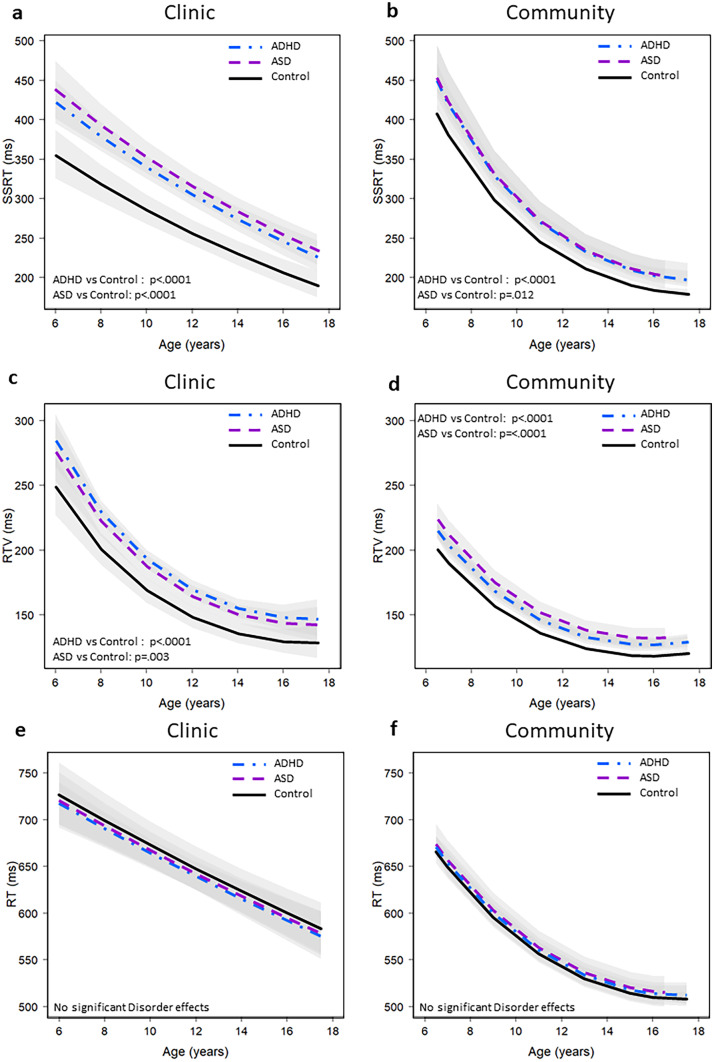
Attention-deficit/hyperactivity (ADHD) and autism spectrum (ASD) disorders are commonly co-occurring conditions characterized by neurocognitive impairments. Few studies have directly compared neurocognitive profiles in ADHD and ASD and fewer still have controlled for comorbidity of ADHD and ASD. All direct comparisons have been in clinic samples, leaving the question of generalizability of results unaddressed. We compared neurocognitive performance in clinically ascertained ASD (n = 261) and ADHD (n = 423) cases and controls (n = 162), 6.0–17.9 years of age. We also compared ASD (n = 190) and ADHD (n = 926) cases ascertained in the community with controls (n = 14,842) of similar age. Using the stop-signal task (SST), we measured response inhibition (stop-signal reaction time–SSRT), sustained attention (defined as reaction time variability–RTV), and reaction time (RT). We controlled for comorbidity using ADHD and ASD trait scores and categorically-defined ADHD. Compared with controls, both clinic ADHD and ASD had significantly longer SSRT and RTV than controls and did not differ from each other. ADHD traits accounted for neurocognitive impairment in ASD, but not vice versa. There were no group differences for RT. Similar patterns of neurocognitive impairment were observed in the community sample. In the largest direct comparison of ADHD and ASD to date, we found impaired response inhibition and sustained attention in both disorders. However, neurocognitive impairment in ASD was almost completely accounted for by comorbid ADHD. Results generalized in the community sample indicating that referral bias alone did not drive results. Response inhibition and sustained attention likely play a role in ADHD and ASD.
Overview
The claims and statistics of this paper haven’t been checked yet.
Free: it reads the open-access text and checks the first 5 claims that cite a source we can check. Create a free account to check every claim.
Integrity signals
Registry
Cites
Statistics
Figures
Verification
Claims the paper makes
The claims and statistics of this paper haven’t been checked yet.
Free: it reads the open-access text and checks the first 5 claims that cite a source we can check. Create a free account to check every claim.
Claims other papers make about this one
Each is checked against this paper’s own text: does it say what the citing paper says it does?
The source backs part of the claim, not all of it — or backs it for a different population, condition or comparison.
In the citing paper
“the three executive function components are moderately interrelated, and there is experimental evidence demonstrating that working memory impacts performance on inhibitory control tests (but not vice versa), which could potentially explain why children with ADHD show deficits on inhibition tests.152,157–159”
From Executive function deficits in attention-deficit/hyperactivity disorder and autism spectrum disorder (2024) · cites this paper as [159]
Experimental — accuracy not yet measuredIn the citing paper
“We found few studies that included a comorbid group, controlled for traits of ASD and ADHD, or distinguished between ADHD subtypes precluding adequate consideration of the effect of comorbidity and subtype on EF performance (Schachar et al., 2022; Semrud-Clikeman et al., 2010).”
From Do ASD and ADHD Have Distinct Executive Function Deficits? A Systematic Review and Meta-Analysis of Direct Comparison Studies (2023) · cites this paper as Schachar et al., 2022
Self-check
Percentages, sums and reported differences re-computed from the paper’s own numbers.
The self-check needs the paper’s full text.
Citations
Cites
Lord, C., Rutter, M., & Le Couteur, A. (1994) · Journal of Autism and Developmental Disorders · doi:10.1007/bf02172145 · Cited by 9,065 · cited 1×
“Each participant was assessed by a psychiatrist and/or a psychologist to confirm their primary diagnosis using the Autism Diagnostic Observation Schedule–2 (ADOS), Autism Diagnostic Interview–Revised (ADI-R) for ASD (Lord et al., 1994) and/or the Parent Interview for Child Symptoms (PICS) for ADHD (Ickowicz et al.”
Method(1998) · Cited by 2,026
Individual differences in executive functions are almost entirely genetic in origin.
Friedman, N. P., Miyake, A., Young, S. E., DeFries, J. C., Corley, R. P., & Hewitt, J. K. (2008) · Journal of Experimental Psychology: General · doi:10.1037/0096-3445.137.2.201 · Cited by 1,547 · cited 1×
“Response inhibition and reaction time variability might prove to be good, cross-disorder markers of aetiological risk factors in disorders characterized by ADHD traits given that both response inhibition and RTV have genetic (Finkel & Pedersen, 2014; Friedman et al., 2008; Schachar et al., 2005) and neurobiological (A…”
BackgroundAutism screening questionnaire: diagnostic validity
Berument, S. K., Rutter, M., Lord, C., Pickles, A., & Bailey, A. (1999) · British Journal of Psychiatry · doi:10.1192/bjp.175.5.444 · Cited by 1,464
Genomic Relationships, Novel Loci, and Pleiotropic Mechanisms across Eight Psychiatric Disorders
Lee, P. H., Anttila, V., Won, H., Feng, Y.-C. A., Rosenthal, J., Zhu, Z., Tucker-Drob, E. M., Nivard, M. G., Grotzinger, A. D., Posthuma, D., et al. (2019) · Cell · doi:10.1016/j.cell.2019.11.020 · Cited by 1,381
Self-citationThe Changing Epidemiology of Autism Spectrum Disorders
Lyall, K., Croen, L., Daniels, J., Fallin, M. D., Ladd-Acosta, C., Lee, B. K., Park, B. Y., Snyder, N. W., Schendel, D., Volk, H., et al. (2017) · Annual Review of Public Health · doi:10.1146/annurev-publhealth-031816-044318 · Cited by 1,011 · cited 2×
“ADHD is the most common comorbidity of ASD with comorbidity estimates of 40–70% (Brookman-Frazee et al., 2018; Joshi et al., 2017; Lyall et al., 2017).”
BackgroundResultVerbruggen, F., Aron, A. R., Band, G. P., Beste, C., Bissett, P. G., Brockett, A. T., Brown, J. W., Chamberlain, S. R., Chambers, C. D., Colonius, H., et al. (2019) · eLife · doi:10.7554/elife.46323 · Cited by 990
Self-citationSonuga-Barke, E. J. S., & Castellanos, F. X. (2007) · Neuroscience & Biobehavioral Reviews · doi:10.1016/j.neubiorev.2007.02.005 · Cited by 890 · cited 1×
“…factors in disorders characterized by ADHD traits given that both response inhibition and RTV have genetic (Finkel & Pedersen, 2014; Friedman et al., 2008; Schachar et al., 2005) and neurobiological (Albaugh et al., 2017; Chevrier & Schachar, 2020; Sonuga-Barke & Castellanos, 2007) underpinnings.”
BackgroundWhy IQ is not a covariate in cognitive studies of neurodevelopmental disorders
DENNIS, M., FRANCIS, D. J., CIRINO, P. T., SCHACHAR, R., BARNES, M. A., & FLETCHER, J. M. (2009) · Journal of the International Neuropsychological Society · doi:10.1017/s1355617709090481 · Cited by 875 · cited 1×
“IQ differences between ASD and ADHD or controls did not explain the observed impairments in neurocognitive test performance (Dennis et al., 2009).”
Self-citationAutism spectrum disorders: a meta-analysis of executive function
Demetriou, E. A., Lampit, A., Quintana, D. S., Naismith, S. L., Song, Y. J. C., Pye, J. E., Hickie, I., & Guastella, A. J. (2018) · Molecular Psychiatry · doi:10.1038/mp.2017.75 · Cited by 841
Reaction time variability in ADHD: A meta-analytic review of 319 studies
Kofler, M. J., Rapport, M. D., Sarver, D. E., Raiker, J. S., Orban, S. A., Friedman, L. M., & Kolomeyer, E. G. (2013) · Clinical Psychology Review · doi:10.1016/j.cpr.2013.06.001 · Cited by 648 · cited 1×
“RTV has been interpreted in various ways, but the strongest case can be made for it to be a reflection of lapses in attention (Kofler et al., 2013).”
BackgroundHappé, F., Booth, R., Charlton, R., & Hughes, C. (2006) · Brain and Cognition · doi:10.1016/j.bandc.2006.03.004 · Cited by 638 · cited 2×
“, 2009) and poorer sustained attention (reflected in greater reaction time variability–RTV), whereas those with ASD have worse cognitive flexibility and planning (Craig et al., 2015; Happé et al., 2006; Hosenbocus & Chahal, 2012; Lukito et al., 2020; Salcedo-Marin et al., 2013).”
BackgroundResultKarr, J. E., Areshenkoff, C. N., Rast, P., Hofer, S. M., Iverson, G. L., & Garcia-Barrera, M. A. (2018) · Psychological Bulletin · doi:10.1037/bul0000160 · Cited by 637
Inhibitory control and psychopathology: A meta-analysis of studies using the stop signal task
LIPSZYC, J., & SCHACHAR, R. (2010) · Journal of the International Neuropsychological Society · doi:10.1017/s1355617710000895 · Cited by 627 · cited 1×
“We did not include differences in RT among our primary hypotheses based on previous findings (Lipszyc & Schachar, 2010).”
MethodSelf-citationCorbett, B. A., Constantine, L. J., Hendren, R., Rocke, D., & Ozonoff, S. (2009) · Psychiatry Research · doi:10.1016/j.psychres.2008.02.005 · Cited by 584 · cited 2×
“The current conclusion that response inhibition and reaction time variability impairment in ASD is largely, although not exclusively, associated with comorbid ADHD traits is consistent with other studies (Corbett et al., 2009; Happé et al., 2006; Rommelse et al., 2010; Salunkhe et al., 2021; Tye et al., 2016).”
BackgroundResultShared heritability of attention-deficit/hyperactivity disorder and autism spectrum disorder
Rommelse, N. N. J., Franke, B., Geurts, H. M., Hartman, C. A., & Buitelaar, J. K. (2010) · European Child & Adolescent Psychiatry · doi:10.1007/s00787-010-0092-x · Cited by 564
Antshel, K. M., & Russo, N. (2019) · Current Psychiatry Reports · doi:10.1007/s11920-019-1020-5 · Cited by 450 · cited 2×
“However, it is not clear whether these disorders share neurocognitive profiles (Antshel & Russo, 2019).”
BackgroundThe neurocognitive profile of attention-deficit/hyperactivity disorder: a review of meta-analyses
Pievsky, M. A., & McGrath, R. E. (2018) · Archives of Clinical Neuropsychology · doi:10.1093/arclin/acx055 · Cited by 401 · cited 2×
“Given the well-established literature on neurocognitive impairment in ADHD such as in response inhibition and sustained attention (Karalunas et al., 2014; Pievsky & McGrath, 2018), failure to control for comorbid ADHD traits in neurocognitive studies of ASD could yield misleading conclusions.”
BackgroundResponse inhibition and psychopathology: A meta-analysis of go/no-go task performance
Wright, L., Lipszyc, J., Dupuis, A., Thayapararajah, S. W., & Schachar, R. (2014) · Journal of Abnormal Psychology · doi:10.1037/a0036295 · Cited by 360
Self-citationEvaluating vigilance deficits in ADHD: A meta-analysis of CPT performance.
Huang-Pollock, C. L., Karalunas, S. L., Tam, H., & Moore, A. N. (2012) · Journal of Abnormal Psychology · doi:10.1037/a0027205 · Cited by 359 · cited 1×
“We found no support for the contention that longer SSRT or greater RTV were artifacts of slower response times as previously asserted (Alderson et al., 2008; Huang-Pollock et al., 2012).”
ResultZakzanis, K. K. (2001) · Archives of Clinical Neuropsychology · doi:10.1093/arclin/16.7.653 · Cited by 346 · cited 1×
“We caution that while the observed impairments were statistically significant and may be clinically or aetiologically relevant, the associations were not sufficiently strong or sufficiently specific to use as a proxy for diagnosis (Zakzanis, 2001).”
BackgroundKaralunas, S. L., Geurts, H. M., Konrad, K., Bender, S., & Nigg, J. T. (2014) · Journal of Child Psychology and Psychiatry · doi:10.1111/jcpp.12217 · Cited by 278 · cited 1×
“Given the well-established literature on neurocognitive impairment in ADHD such as in response inhibition and sustained attention (Karalunas et al., 2014; Pievsky & McGrath, 2018), failure to control for comorbid ADHD traits in neurocognitive studies of ASD could yield misleading conclusions.”
BackgroundLai, C. L. E., Lau, Z., Lui, S. S. Y., Lok, E., Tam, V., Chan, Q., Cheng, K. M., Lam, S. M., & Cheung, E. F. C. (2017) · Autism Research · doi:10.1002/aur.1723 · Cited by 250 · cited 2×
“Similar to the current results, the magnitude of the deficit in ASD was reduced with control for ADHD (Lai et al., 2017).”
BackgroundResultLukito, S., Norman, L., Carlisi, C., Radua, J., Hart, H., Simonoff, E., & Rubia, K. (2020) · Psychological Medicine · doi:10.1017/s0033291720000574 · Cited by 248 · cited 1×
“, 2009) and poorer sustained attention (reflected in greater reaction time variability–RTV), whereas those with ASD have worse cognitive flexibility and planning (Craig et al., 2015; Happé et al., 2006; Hosenbocus & Chahal, 2012; Lukito et al., 2020; Salcedo-Marin et al., 2013).”
BackgroundSinzig, J., Walter, D., & Doepfner, M. (2009) · Journal of Attention Disorders · doi:10.1177/1087054708326261 · Cited by 223
Response inhibition and ADHD traits: Correlates and heritability in a community sample
Crosbie, J., Arnold, P., Paterson, A., Swanson, J., Dupuis, A., Li, X., Shan, J., Goodale, T., Tam, C., Strug, L. J., et al. (2013) · Journal of Abnormal Child Psychology · doi:10.1007/s10802-012-9693-9 · Cited by 218 · cited 2×
“Differences among disorders in SSRT and RTV did not vary with age although age did affect performance as has been found previously (Crosbie et al., 2013).”
BackgroundResultSelf-citation(2019) · Journal of Critical Reviews · doi:10.22159/jcr · Cited by 215
Boedhoe, P. S. W., van Rooij, D., Hoogman, M., Twisk, J. W. R., Schmaal, L., Abe, Y., Alonso, P., Ameis, S. H., Anikin, A., Anticevic, A., et al. (2020) · American Journal of Psychiatry · doi:10.1176/appi.ajp.2020.19030331 · Cited by 201
Self-citationCraig, F., Lamanna, A. L., Margari, F., Matera, E., Simone, M., & Margari, L. (2015) · Autism Research · doi:10.1002/aur.1449 · Cited by 194 · cited 2×
“, 2009) and poorer sustained attention (reflected in greater reaction time variability–RTV), whereas those with ASD have worse cognitive flexibility and planning (Craig et al., 2015; Happé et al., 2006; Hosenbocus & Chahal, 2012; Lukito et al., 2020; Salcedo-Marin et al., 2013).”
BackgroundBrookman-Frazee, L., Stadnick, N., Chlebowski, C., Baker-Ericzén, M., & Ganger, W. (2018) · Autism · doi:10.1177/1362361317712650 · Cited by 174 · cited 2×
“ADHD is the most common comorbidity of ASD with comorbidity estimates of 40–70% (Brookman-Frazee et al., 2018; Joshi et al., 2017; Lyall et al., 2017).”
BackgroundResultGlahn, D. C., Knowles, E. E. M., McKay, D. R., Sprooten, E., Raventós, H., Blangero, J., Gottesman, I. I., & Almasy, L. (2014) · American Journal of Medical Genetics Part B: Neuropsychiatric Genetics · doi:10.1002/ajmg.b.32221 · Cited by 159 · cited 1×
“Delineating neurocognitive profiles for ADHD and ASD could aid diagnosis, clarify whether ADHD found in ASD is a phenocopy of ADHD and advance understanding of disorder mechanisms (Chang et al., 2020; Glahn et al., 2014).”
BackgroundJoshi, G., Faraone, S. V., Wozniak, J., Tarko, L., Fried, R., Galdo, M., Furtak, S. L., & Biederman, J. (2017) · Journal of Attention Disorders · doi:10.1177/1087054714543368 · Cited by 155 · cited 2×
“ADHD is the most common comorbidity of ASD with comorbidity estimates of 40–70% (Brookman-Frazee et al., 2018; Joshi et al., 2017; Lyall et al., 2017).”
BackgroundResultKaralunas, S. L., Hawkey, E., Gustafsson, H., Miller, M., Langhorst, M., Cordova, M., Fair, D., & Nigg, J. T. (2018) · Journal of Abnormal Child Psychology · doi:10.1007/s10802-017-0394-2 · Cited by 148 · cited 5×
“Only five studies reported performance on the stop-signal task (SST), a widely used measure of response inhibition (Albajara Sáenz et al., 2020; Karalunas et al., 2018; Kuijper et al., 2015, 2017; Van Hulst et al., 2018).”
BackgroundResultInfluentialA review of executive function deficits and pharmacological management in children and adolescents.
Hosenbocus, S., & Chahal, R. (2012) · Europe PMC (PubMed Central) · Cited by 141
Executive Function and Theory of Mind in Children with ADHD: a Systematic Review
Pineda-Alhucema, W., Aristizabal, E., Escudero-Cabarcas, J., Acosta-López, J. E., & Vélez, J. I. (2018) · Neuropsychology Review · doi:10.1007/s11065-018-9381-9 · Cited by 136
The co-occurrence of autistic and ADHD dimensions in adults: an etiological study in 17 770 twins
Polderman, T. J. C., Hoekstra, R. A., Posthuma, D., & Larsson, H. (2014) · Translational Psychiatry · doi:10.1038/tp.2014.84 · Cited by 130
Ickowicz, A., Schachar, R. J., Sugarman, R., Chen, S. X., Millette, C., & Cook, L. (2006) · The Canadian Journal of Psychiatry · doi:10.1177/070674370605100508 · Cited by 114 · cited 1×
“, 1994) and/or the Parent Interview for Child Symptoms (PICS) for ADHD (Ickowicz et al., 2006).”
BackgroundSelf-citationKuijper, S. J. M., Hartman, C. A., Bogaerds-Hazenberg, S. T. M., & Hendriks, P. (2017) · Journal of Abnormal Psychology · doi:10.1037/abn0000231 · Cited by 102
Ghirardi, L., Pettersson, E., Taylor, M. J., Freitag, C. M., Franke, B., Asherson, P., Larsson, H., & Kuja-Halkola, R. (2019) · Psychological Medicine · doi:10.1017/s003329171800243x · Cited by 99 · cited 1×
“Attention-deficit/hyperactivity disorder (ADHD) and autism spectrum disorder (ASD) are impairing, persistent and heritable neurodevelopmental disorders (APA, 2013) that share some genetic (Ghirardi et al., 2019; Lee et al., 2019; Polderman et al., 2014) and neural features (Boedhoe et al.”
BackgroundEuropean Journal of Oral Implantology
tidsskrift, N., & Haanæs, H. R. (2009) · Den norske tannlegeforenings Tidende · doi:10.56373/2009-7-26 · Cited by 98
PDD symptoms in ADHD, an independent familial trait?
Nijmeijer, J. S., Hoekstra, P. J., Minderaa, R. B., Buitelaar, J. K., Altink, M. E., Buschgens, C. J. M., Fliers, E. A., Rommelse, N. N. J., Sergeant, J. A., & Hartman, C. A. (2009) · Journal of Abnormal Child Psychology · doi:10.1007/s10802-008-9282-0 · Cited by 93 · cited 1×
“While ASD traits are evident in ADHD, they are less common than ADHD traits in ASD (Nijmeijer et al., 2009; Rommelse et al., 2010).”
BackgroundKuijper, S. J. M., Hartman, C. A., & Hendriks, P. (2015) · PLoS ONE · doi:10.1371/journal.pone.0132408 · Cited by 87
ADHD and Behavioral Inhibition: A Re-examination of the Stop-signal Task
Alderson, R. M., Rapport, M. D., Sarver, D. E., & Kofler, M. J. (2008) · Journal of Abnormal Child Psychology · doi:10.1007/s10802-008-9230-z · Cited by 87 · cited 2×
“However, it is not clear whether these disorders share neurocognitive profiles (Antshel & Russo, 2019).”
BackgroundSchachar, R. J., Crosbie, J., Barr, C. L., Ornstein, T. J., Kennedy, J., Malone, M., Roberts, W., Ickowicz, A., Tannock, R., Chen, S., et al. (2005) · American Journal of Psychiatry · doi:10.1176/appi.ajp.162.6.1076 · Cited by 87
Self-citationvan Hulst, B. M., de Zeeuw, P., Vlaskamp, C., Rijks, Y., Zandbelt, B. B., & Durston, S. (2018) · Psychological Medicine · doi:10.1017/s0033291718000107 · Cited by 66
Albaugh, M. D., Orr, C., Chaarani, B., Althoff, R. R., Allgaier, N., D’Alberto, N., Hudson, K., Mackey, S., Spechler, P. A., Banaschewski, T., et al. (2017) · Biological Psychiatry · doi:10.1016/j.biopsych.2017.01.003 · Cited by 63
Specificity of executive functioning and processing speed problems in common psychopathology.
Nigg, J. T., Jester, J. M., Stavro, G. M., Ip, K. I., Puttler, L. I., & Zucker, R. A. (2017) · Neuropsychology · doi:10.1037/neu0000343 · Cited by 62 · cited 1×
“Previous research supports the hypothesis that processing speed might be slower in ADHD when operationalized as performance in the coding and symbol search subscales of intelligence tests (Braaten et al., 2020; Nigg et al., 2017).”
MethodADHD and ASD: distinct brain patterns of inhibition-related activation?
Albajara Sáenz, A., Septier, M., Van Schuerbeek, P., Baijot, S., Deconinck, N., Defresne, P., Delvenne, V., Passeri, G., Raeymaekers, H., Salvesen, L., et al. (2020) · Translational Psychiatry · doi:10.1038/s41398-020-0707-z · Cited by 62
Carter Leno, V., Chandler, S., White, P., Pickles, A., Baird, G., Hobson, C., Smith, A. B., Charman, T., Rubia, K., & Simonoff, E. (2018) · European Child & Adolescent Psychiatry · doi:10.1007/s00787-017-1089-5 · Cited by 54
SWAN scale for ADHD trait‐based genetic research: a validity and polygenic risk study
Burton, C. L., Wright, L., Shan, J., Xiao, B., Dupuis, A., Goodale, T., Shaheen, S., Corfield, E. C., Arnold, P. D., Schachar, R. J., et al. (2019) · Journal of Child Psychology and Psychiatry · doi:10.1111/jcpp.13032 · Cited by 52 · cited 3×
“75) for a community diagnosis of ADHD (Burton et al., 2019).”
BackgroundMethodSelf-citationCommentary: A structural approach to Berkson’s fallacy and a guide to a history of opinions about it
Snoep, J. D., Morabia, A., Hernández-Díaz, S., Hernán, M. A., & Vandenbroucke, J. P. (2014) · International Journal of Epidemiology · doi:10.1093/ije/dyu026 · Cited by 51 · cited 1×
“Neurocognitive impairment could vary as a function of disorder severity or comorbidity in cases referred to specialty clinics (Pearce & Richiardi, 2014; Snoep et al., 2014).”
BackgroundTye, C., Johnson, K. A., Kelly, S. P., Asherson, P., Kuntsi, J., Ashwood, K. L., Azadi, B., Bolton, P., & McLoughlin, G. (2016) · Journal of Child Psychology and Psychiatry · doi:10.1111/jcpp.12608 · Cited by 50 · cited 2×
“The current conclusion that response inhibition and reaction time variability impairment in ASD is largely, although not exclusively, associated with comorbid ADHD traits is consistent with other studies (Corbett et al., 2009; Happé et al., 2006; Rommelse et al., 2010; Salunkhe et al., 2021; Tye et al., 2016).”
BackgroundResultShared polygenic risk for ADHD, executive dysfunction and other psychiatric disorders
Chang, S., Yang, L., Wang, Y., & Faraone, S. V. (2020) · Translational Psychiatry · doi:10.1038/s41398-020-00872-9 · Cited by 49 · cited 1×
“Delineating neurocognitive profiles for ADHD and ASD could aid diagnosis, clarify whether ADHD found in ASD is a phenocopy of ADHD and advance understanding of disorder mechanisms (Chang et al., 2020; Glahn et al., 2014).”
BackgroundCommentary: Three worlds collide: Berkson's bias, selection bias and collider bias
Pearce, N. E., & Richiardi, L. (2014) · International Journal of Epidemiology · doi:10.1093/ije/dyu025 · Cited by 48 · cited 1×
“Neurocognitive impairment could vary as a function of disorder severity or comorbidity in cases referred to specialty clinics (Pearce & Richiardi, 2014; Snoep et al., 2014).”
BackgroundCommunity versus Clinic Sampling: Effect on the Familial Aggregation of Anxiety Disorders
Low, N. C. P., Cui, L., & Merikangas, K. R. (2007) · Biological Psychiatry · doi:10.1016/j.biopsych.2007.08.011 · Cited by 45 · cited 1×
“, 2018) leaving unanswered the question of whether findings can be generalized beyond specific clinic settings (Low et al., 2008).”
BackgroundPerformance monitoring and response inhibition in anxiety disorders with and without comorbid ADHD
Korenblum, C. B., Chen, S. X., Manassis, K., & Schachar, R. J. (2007) · Depression and Anxiety · doi:10.1002/da.20237 · Cited by 45
Self-citationPehlivanidis, A., Papanikolaou, Κ., Korobili, K., Kalantzi, E., Mantas, V., Pappa, D., & Papageorgiou, C. (2020) · Brain Sciences · doi:10.3390/brainsci11010018 · Cited by 35
Salunkhe, G., Weissbrodt, K., Feige, B., Saville, C. W. N., Berger, A., Dundon, N. M., Bender, S., Smyrnis, N., Beauducel, A., Biscaldi, M., et al. (2018) · Journal of Attention Disorders · doi:10.1177/1087054718778114 · Cited by 32
Salcedo-Marin, M. D., Moreno-Granados, J. M., Ruíz-Veguilla, M., & Ferrín, M. (2012) · Child Psychiatry & Human Development · doi:10.1007/s10578-012-0317-y · Cited by 31
Braaten, E. B., Ward, A. K., Forchelli, G. A., Vuijk, P. J., Cook, N. E., McGuinness, P. S., Lee, B., Samkavitz, A. R., Lind, H. S., O’Keefe, S. M., et al. (2020) · European Child & Adolescent Psychiatry · doi:10.1007/s00787-019-01455-w · Cited by 29
Network meta-analysis of randomised controlled trials: direct and indirect treatment comparisons.
Buti, J., Glenny, A., Worthington, H. V., Nieri, M., & Baccini, M. (2011) · European journal of oral implantology · Cited by 29
Response Time Adjustment in the Stop Signal Task: Development in Children and Adolescents
Dupuis, A., Indralingam, M., Chevrier, A., Crosbie, J., Arnold, P., Burton, C. L., & Schachar, R. (2019) · Child Development · doi:10.1111/cdev.13062 · Cited by 24 · cited 2×
“These responses are largely slower than trials for which stopping was not required (Dupuis et al., 2018).”
BackgroundMethodSelf-citationChevrier, A., & Schachar, R. J. (2020) · Journal of Neurodevelopmental Disorders · doi:10.1186/s11689-020-09311-8 · Cited by 22 · cited 1×
“…factors in disorders characterized by ADHD traits given that both response inhibition and RTV have genetic (Finkel & Pedersen, 2014; Friedman et al., 2008; Schachar et al., 2005) and neurobiological (Albaugh et al., 2017; Chevrier & Schachar, 2020; Sonuga-Barke & Castellanos, 2007) underpinnings.”
BackgroundSelf-citationRommelse, N., Luman, M., & Kievit, R. (2020) · European Child & Adolescent Psychiatry · doi:10.1007/s00787-020-01639-9 · Cited by 19
Finkel, D., & Pedersen, N. L. (2014) · Aging Neuropsychology and Cognition · doi:10.1080/13825585.2013.874523 · Cited by 9 · cited 1×
“…markers of aetiological risk factors in disorders characterized by ADHD traits given that both response inhibition and RTV have genetic (Finkel & Pedersen, 2014; Friedman et al., 2008; Schachar et al., 2005) and neurobiological (Albaugh et al., 2017; Chevrier & Schachar, 2020;…”
BackgroundKaur, K., & Pany, S. (2020) · Journal of Critical Reviews · Cited by 2
Research works printed but not linked: 2
- APA Diagnositic and statistical manual of mental disorders 1994 4 American Psychiatric Publishing
- APA Diagnositic and statistical manual of mental disorders 2013 5 American Psychiatric Publishing
Cited by
Townes, P., Liu, C., Panesar, P., Devoe, D., Lee, S. Y., Taylor, G., Arnold, P. D., Crosbie, J., & Schachar, R. (2023) · Journal of Attention Disorders · doi:10.1177/10870547231190494 · Cited by 75
“Studies in which ADHD and ASD traits were controlled indicate that, at least response inhibition and response variability, may be more strongly associated with ADHD than with ASD traits (Karalunas et al., 2018; Schachar et al., 2022).”
BackgroundSelf-citationExecutive function deficits in attention-deficit/hyperactivity disorder and autism spectrum disorder
Kofler, M. J., Soto, E. F., Singh, L. J., Harmon, S. L., Jaisle, E. M., Smith, J. N., Feeney, K. E., & Musser, E. D. (2024) · Nature Reviews Psychology · doi:10.1038/s44159-024-00350-9 · Cited by 51
“before it starts) component of inhibitory control 49,67,69,70,159 .”
Canals, J., Morales‐Hidalgo, P., Voltas, N., & Hernández‐Martínez, C. (2024) · Autism Research · doi:10.1002/aur.3146 · Cited by 54
“…coexist and common data on the clinical, neurobiological characteristics, and genetic associations have been a focus of study since the recognition of this comorbidity in the DSM-5 (American Psychiatric Association, 2013; Boedhoe et al., 2020; Ghirardi et al., 2019, 2021; Schachar et al., 2023).”
BackgroundNovau-Ferré, N., Papandreou, C., Rojo-Marticella, M., Canals, J., & Bulló, M. (2025) · Research in Developmental Disabilities · doi:10.1016/j.ridd.2025.105003 · Cited by 41
Schachar, R. J. (2023) · Neuroscience & Biobehavioral Reviews · doi:10.1016/j.neubiorev.2023.105461 · Cited by 34
Self-citation
Metadata
- Authors
- Schachar, R. J., Dupuis, A., Arnold, P. D., Anagnostou, E., Kelley, E., Georgiades, S., Nicolson, R., Townes, P., Burton, C. L., & Crosbie, J.
- Affiliations
- University of Toronto (CA)
- Hospital for Sick Children (CA)
- Queen's University (CA)
- McMaster University (CA)
- Mathison Centre for Mental Health Research and Education (CA)
- Corresponding author
- Schachar, Russell J.
- ORCID
- Venue
- Research on Child and Adolescent Psychopathology
- Published
- 2022-08-25
- Volume
- 51
- Issue
- 1
- Pages
- 17-31
- ISSN
- 0091-0627 (ISSN-L)
- 2730-7166
- 2730-7174
- PMC
- PMC9763138
- OpenAlex
- W4293052098
- Cited by
- 30
- References
- 67
- Citations by year
- 2026: 5 · 2025: 9 · 2024: 9 · 2023: 7
- FWCI
- 4.07
- Type
- journal article
- Language
- en
- Open access
- hybrid
- doi.org
- Licence
- cc-by
- creativecommons.org/licenses/by/4.0 (tdm)
- creativecommons.org/licenses/by/4.0 (vor)
- Locations
- Research on Child and Adolescent Psychopathology (publishedVersion, cc-by)
- PubMed Central (publishedVersion, cc-by)
- PubMed (publishedVersion)
- Funders
- Canadian Institutes of Health Research (MOP‐93696, MOP‐106573)
- Ontario Brain Institute (IDS-I l-02)
- Topics
- Health Sciences › Medicine › Psychiatry and Mental health › Attention Deficit Hyperactivity Disorder
- Life Sciences › Neuroscience › Cognitive Neuroscience › Autism Spectrum Disorder Research
- Social Sciences › Psychology › Neuropsychology and Physiological Psychology › Developmental and Educational Neuropsychology
- Keywords
- autism spectrum disorder, attention deficit hyperactivity disorder, neurocognitive impairment, response inhibition, sustained attention, reaction time variability, stop-signal reaction time, comorbidities, referral bias, community sample, ADHD traits
- MeSH terms
- Autism Spectrum Disorder, Attention, Attention Deficit Disorder with Hyperactivity, Humans, Reaction Time, Comorbidity
About these checks
Registry, retraction, Cites and statistics results are computed, not judged, with one exception: a printed reference that no index lists is read once by a model before it counts as a citation error. Claims are extracted by a model and kept only when their quote appears verbatim in the text; each cited source is then checked, with a model’s help, for whether it says what the claim relies on. Those verdicts can be wrong — read the claim’s quote and the cited source before relying on one.
Statistics and arithmetic are recomputed, not judged.
Confidence bands are shown only for fields calibrated on our annotated test set. None is calibrated yet, so no band is shown.
What counts as a claim ›How we measure confidence ›How we check this ›
Are you an author, or do you see a problem with this page? Request a review
Data sources
Bibliographic data: Semantic Scholar, OpenAlex, Crossref.
Contains information from the Semantic Scholar Academic Graph Datasets, made available under the ODC Attribution License (ODC-BY 1.0).
Semantic Scholar’s data is described in: Kinney, R., et al. (2023). The Semantic Scholar Open Data Platform. arXiv:2301.10140.
