

Art (Pre)History: Ritual, Narrative and Visual Culture in Neolithic and Bronze Age Europe
Open accessThe DOI matches its Crossref record; 89 of the 100 references it cites were found in a registry or an index, and 7 are not checked yet; 2 of the 62 sources its claims cite were checked for support.
Abstract
Can we reconstruct how prehistoric people perceived things (their "ways of seeing" or visual culture)? This challenge is made more difficult by the traditional disciplinary assumptions built into prehistoric art studies, for instance focusing narrowly upon a single body of art in isolation. This paper proposes an alternative approach, using comparative study to reveal broad regional changes in visual culture. Although prehistoric art specialists rarely work comparatively, art historians are familiar with describing continent-wide general developments in visual culture and placing them in social context (for instance, the traditional broad-brush history from Classical to medieval to Renaissance systems of representation). This paper does the same for Neolithic (6000-2500 BC) vs. Bronze Age (2500-800 BC) and Iron Age (800 BC-Classical) rock and cave art from sites across Europe, uncovering broad patterns of change. The principal pattern is a shift from a Neolithic iconic art which uses heavily encoded imagery, often schematic geometric motifs, to a Bronze/Iron Age narrative art, which increasingly involves imagery of identifiable people, animals and objects. Moreover, there is also an increasing tendency for motifs to be associated in scenes rather than purely accumulative, and with contextual changes in how art is used-a movement from hidden places to more open or accessible places. Underlying all these changes is a shift in how rock and cave art was used, from citations reproducing ritual knowledge to composed arrays telling narratives of personhood.
Verified 2026-11-22 · 7 references not checked yet
Overview
CoChat Summary
## TL;DR
John Robb argues that prehistoric European visual culture changed in broad, comparative ways from Neolithic to Bronze/Iron Age periods: from schematic, context-dependent imagery in special ritual places to more explicit, narrative, and socially integrated pictures. He presents this as a “big history” of prehistoric art built from cross-European comparison of two-dimensional imagery.
## Key findings
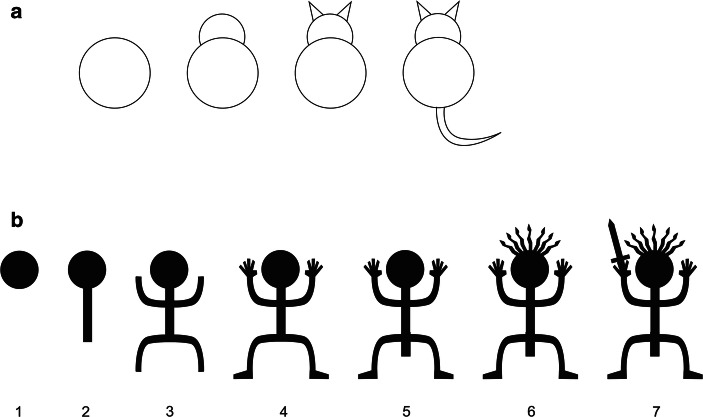
- The paper identifies three linked long-term trends between the Neolithic and the Iron Age: images move from hidden/special places to more open or accessible places, motifs become more detailed and recognizable, and communication shifts from single motifs to grouped scenes.
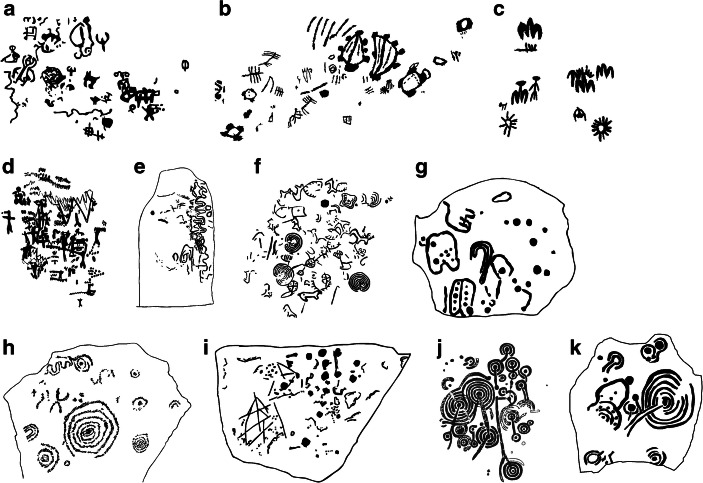
- Neolithic imagery is described as heavily schematic and often difficult to interpret: many bodies of art consist of abstract signs such as cup marks, circles, spirals, lines, crosses, and zig-zags, with meaning dependent on contextual knowledge.
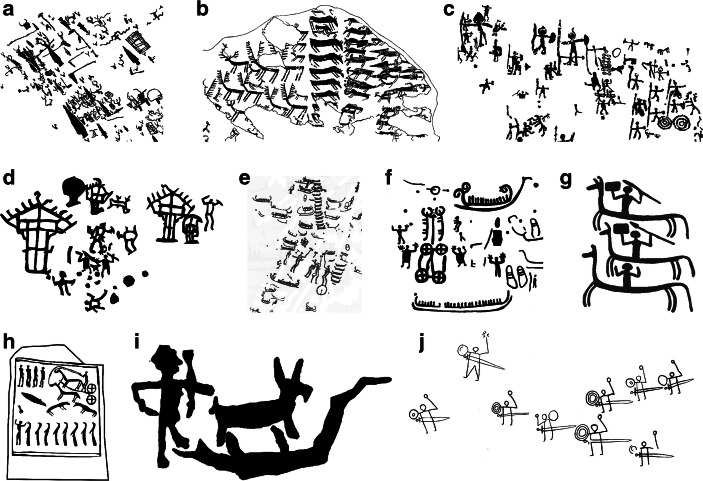
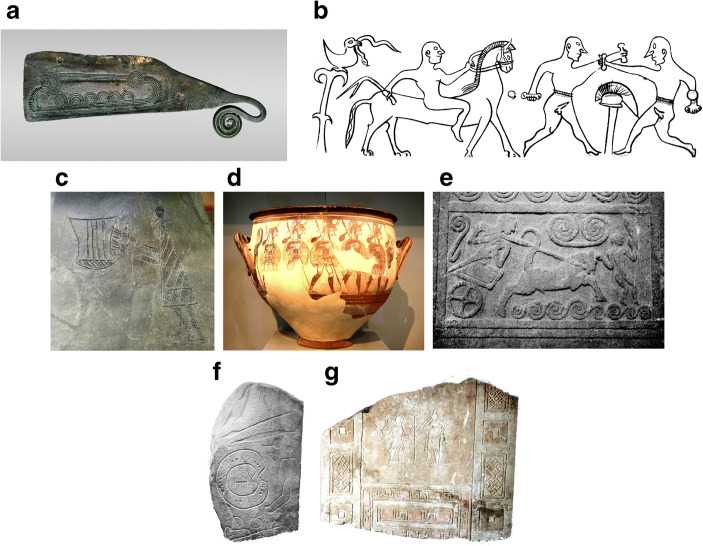
- From the 3rd millennium BC onward, rock art increasingly shows composed arrays and narrative scenes; examples given include Valcamonica’s repetitive arrays of animals and weapons, Mount Bego’s yoked oxen, and later Scandinavian scenes with boats, riders, hunters, and fights.
- The author argues that Bronze and Iron Age art becomes more transparently representational and narrative, tied to broader social changes including gender differentiation, prestige display, genealogy, warfare, and new kinds of personhood.
## Methods
- The study is a comparative, qualitative review of major bodies of European two-dimensional prehistoric imagery, mainly rock art, cave art, and architectural art, spanning roughly 6000–0 BC.
- It explicitly excludes Palaeolithic and Mesolithic art, three-dimensional imagery such as figurines and statuary, and small decorative motifs on pottery, bone, and metalwork, while including about 20 major traditions of rock, cave, and architectural art.
- The main analysis asks three recurring questions of each corpus: where the art is located, whether the motifs are identifiable, and how motifs are arranged spatially or thematically.
## Limitations
- The author states that the analysis is tentative and that future work may prove some aspects incorrect.
- The corpus is patchy and geographically uneven, and no single body of material spans the whole Neolithic-to-Iron Age transition, which limits claims about continuous change.
- The paper is explicitly limited to two-dimensional imagery and excludes 3D works, which the author says may have followed different pathways.
Model-written summary. Check it against the paper before relying on it.
Integrity signals
Registry
Cites
Statistics
Figures

Verification
Claims the paper makes
2 Valid · 24 Not valid · 43 Not checked · 104 Own results and interpretations
The cited sources support only part of this claim — read each source’s verdict below.
In the paper
“It may have been accompanied by a model of personhood which was situational or contextual, rather in the manner of so-called “Great Man” societies (Godelier and Strathern 1991): authority or capacity in one sphere of action did not necessarily convey power in other spheres (Fowler 2004; Robb and Harris 2018).”
§ Art (Pre)History: Ritual, Narrative and Visual Culture in Neolithic and Bronze Age Europe > Visual Culture and Society > The Neolithic: “Art” as Cosmological Knowledge and Action
What the sources say
- Not matchedcites Godelier and Strathern 1991
An author–year citation the paper’s reference list doesn’t settle. We don’t search these by name.
- Not checked — no full text of the sourcecites Fowler 2004 matched to “The Archaeology of Personhood: An Anthropological Approach” (2004) source
- Partly supportedcites Robb and Harris 2018 matched to “BECOMING GENDERED IN EUROPEAN PREHISTORY: WAS NEOLITHIC GENDER FUNDAMENTALLY DIFFERENT?” (2018) sourceExperimental — accuracy not yet measured
In “Neolithic Gender: It’s about Contextual Difference,” Robb and Harris propose that gender could be expressed differently across contexts; the Conclusion contrasts this with later, cross-contextual social personas. Their account supports the contextual aspect of the claim, but our copy does not say that authority or capacity in one sphere failed to confer power in another. (LLM, conf=0.83)
hedged- Asserted: passes — The authors put it forward as true.
- Checkable: passes — It can be checked against evidence.
- Load-bearing: unclear — It is unclear whether the paper’s conclusions depend on it.
- Based: passes — The paper gives a reason why it holds.
- Not matched
A result the paper states — it cites no source for it, so there is none to check. The quote shows it is in the paper.
In the paper
“with contextual changes in how art is used—a movement from hidden places to more open or accessible places.”
§ Art (Pre)History: Ritual, Narrative and Visual Culture in Neolithic and Bronze Age Europe > Abstract Can we reconstruct how prehistoric people perceived things (their “ways of seeing” or visual culture)? This challenge is made more difficult by the traditional disciplinary assumptions built into prehistoric art studies, for instance focusing narrowly upon a single body of art in isolation. This paper proposes an alternative approach, using comparative study to reveal broad regional changes in visual culture. Although prehistoric art specialists rarely work comparatively, art historians are familiar with describing continent-wide general developments in visual culture and placing them in social context (for instance, the traditional broad-brush history from Classical to medieval to Renaissance systems of representation). This paper does the same for Neolithic (6000–2500 BC) vs. Bronze Age (2500–800 BC) and Iron Age (800 BC–Classical) rock and cave art from sites across Europe, uncovering broad patterns of change. The principal pattern is a shift from a Neolithic iconic art which uses heavily encoded imagery, often schematic geometric motifs, to a Bronze/Iron Age narrative art, which increasingly involves imagery of identifiable people, animals and objects. Moreover, there is also an increasing tendency for motifs to be associated in scenes rather than purely accumulative, and with contextual changes in how art is used—a movement from hidden places to more open or accessible places. Underlying all these changes is a shift in how rock and cave art was used, from citations reproducing ritual knowledge to composed arrays telling narratives of personhood.
plainstates an association- Asserted: passes — The authors put it forward as true.
- Checkable: passes — It can be checked against evidence.
- Load-bearing: passes — The paper’s conclusions depend on it.
- Based: passes — The paper gives a reason why it holds.
A result the paper states — it cites no source for it, so there is none to check. The quote shows it is in the paper.
In the paper
“Moreover, there is also an increasing tendency for motifs to be associated in scenes rather than purely accumulative”
§ Art (Pre)History: Ritual, Narrative and Visual Culture in Neolithic and Bronze Age Europe > Abstract Can we reconstruct how prehistoric people perceived things (their “ways of seeing” or visual culture)? This challenge is made more difficult by the traditional disciplinary assumptions built into prehistoric art studies, for instance focusing narrowly upon a single body of art in isolation. This paper proposes an alternative approach, using comparative study to reveal broad regional changes in visual culture. Although prehistoric art specialists rarely work comparatively, art historians are familiar with describing continent-wide general developments in visual culture and placing them in social context (for instance, the traditional broad-brush history from Classical to medieval to Renaissance systems of representation). This paper does the same for Neolithic (6000–2500 BC) vs. Bronze Age (2500–800 BC) and Iron Age (800 BC–Classical) rock and cave art from sites across Europe, uncovering broad patterns of change. The principal pattern is a shift from a Neolithic iconic art which uses heavily encoded imagery, often schematic geometric motifs, to a Bronze/Iron Age narrative art, which increasingly involves imagery of identifiable people, animals and objects. Moreover, there is also an increasing tendency for motifs to be associated in scenes rather than purely accumulative, and with contextual changes in how art is used—a movement from hidden places to more open or accessible places. Underlying all these changes is a shift in how rock and cave art was used, from citations reproducing ritual knowledge to composed arrays telling narratives of personhood.
plainstates a cause- Asserted: passes — The authors put it forward as true.
- Checkable: passes — It can be checked against evidence.
- Load-bearing: passes — The paper’s conclusions depend on it.
- Based: passes — The paper gives a reason why it holds.
A result the paper states — it cites no source for it, so there is none to check. The quote shows it is in the paper.
In the paper
“Secondly, in keeping with related changes in prehistoric society, the transition in art varies regionally, occurring earlier south of the Alps and east, and later in Atlantic areas.”
§ Art (Pre)History: Ritual, Narrative and Visual Culture in Neolithic and Bronze Age Europe > Prehistoric Art in Europe: Background and Materials
plainstates an association- Asserted: passes — The authors put it forward as true.
- Checkable: passes — It can be checked against evidence.
- Load-bearing: unclear — It is unclear whether the paper’s conclusions depend on it.
- Based: passes — The paper gives a reason why it holds.
A result the paper reports from its own data — it cites no other source for it, so there is none to check. The quote shows it is in the paper.
In the paper
“The principal pattern is a shift from a Neolithic iconic art which uses heavily encoded imagery, often schematic geometric motifs, to a Bronze/Iron Age narrative art, which increasingly involves imagery of identifiable people, animals and objects.”
§ Art (Pre)History: Ritual, Narrative and Visual Culture in Neolithic and Bronze Age Europe > Abstract Can we reconstruct how prehistoric people perceived things (their “ways of seeing” or visual culture)? This challenge is made more difficult by the traditional disciplinary assumptions built into prehistoric art studies, for instance focusing narrowly upon a single body of art in isolation. This paper proposes an alternative approach, using comparative study to reveal broad regional changes in visual culture. Although prehistoric art specialists rarely work comparatively, art historians are familiar with describing continent-wide general developments in visual culture and placing them in social context (for instance, the traditional broad-brush history from Classical to medieval to Renaissance systems of representation). This paper does the same for Neolithic (6000–2500 BC) vs. Bronze Age (2500–800 BC) and Iron Age (800 BC–Classical) rock and cave art from sites across Europe, uncovering broad patterns of change. The principal pattern is a shift from a Neolithic iconic art which uses heavily encoded imagery, often schematic geometric motifs, to a Bronze/Iron Age narrative art, which increasingly involves imagery of identifiable people, animals and objects. Moreover, there is also an increasing tendency for motifs to be associated in scenes rather than purely accumulative, and with contextual changes in how art is used—a movement from hidden places to more open or accessible places. Underlying all these changes is a shift in how rock and cave art was used, from citations reproducing ritual knowledge to composed arrays telling narratives of personhood.
plainstates an association- Asserted: passes — The authors put it forward as true.
- Checkable: passes — It can be checked against evidence.
- Load-bearing: passes — The paper’s conclusions depend on it.
- Based: passes — The paper gives a reason why it holds.
66 more claims
Create a free account to see all 173 claims and to verify the 1 reference still open.
- It may state two separate claims as one. 62
- Probably not a substantial claim. 54
Citations
Cites
Art And Agency: An Anthropological Theory
Gell, A. (1998) · doi:10.1093/oso/9780198280132.001.0001 · Cited by 3,460
Art and Agency: An Anthropological Theory
Jamieson, M., & Gell, A. (1999) · The Journal of the Royal Anthropological Institute · doi:10.2307/2661201 · Cited by 1,929
(1980) · Cited by 1,658
What Do Pictures Want?: The Lives and Loves of Images
Mitchell, W. J. T. (2005) · doi:10.7208/chicago/9780226245904.001.0001 · Cited by 1,508
What do pictures want?: the lives and loves of images
(2006) · Choice Reviews Online · doi:10.5860/choice.43-3192 · Cited by 1,206
(2017) · Angel Interrupted · doi:10.2307/j.ctt7zw9bk.31 · Cited by 853
Showing seeing: a critique of visual culture
Mitchell, W. J. T. (2002) · Journal of Visual Culture · doi:10.1177/147041290200100202 · Cited by 694
The Archaeology of Personhood: An Anthropological Approach
Fowler, C. (2004) · doi:10.4324/9780203583210 · Cited by 486 · cited 1×
“…been accompanied by a model of personhood which was situational or contextual, rather in the manner of so-called “Great Man” societies (Godelier and Strathern 1991): authority or capacity in one sphere of action did not necessarily convey power in other spheres (Fowler 2004; Robb and Harris 2018).”
BackgroundHermeren, G., & Baxandall, M. (1973) · The Journal of Aesthetics and Art Criticism · doi:10.2307/428723 · Cited by 430
Fragments from Antiquity: An Archaeology of Social Life in Britain, 2900-1200 BC.
Wells, P. S., & Barrett, J. C. (1995) · The American Historical Review · doi:10.2307/2169896 · Cited by 421
An Island Archaeology of the Early Cyclades
Tartaron, T. F., & Broodbank, C. (2001) · Journal of Field Archaeology · doi:10.2307/3181475 · Cited by 406
Walbiri Iconography: Graphic Representation and Cultural Symbolism in a Central Australian Society
Crocker, J. C., & Munn, N. D. (1973) · Journal for the Scientific Study of Religion · doi:10.2307/1384444 · Cited by 368 · cited 1×
“For example, some Australian aborigine groups represent narratives through highly schematic, polysemic iconography; while each sign can have multiple referents, their combination restricts possible meanings and constructs a specific interpretation (Munn 1973).”
BackgroundThe Art of Describing. Dutch Art in the Seventeenth Century
Biazostocki, J., & Alpers, S. (1985) · The Art Bulletin · doi:10.2307/3050967 · Cited by 366
Feasting, Craft Specialization, and the Ritual Mode of Production in Small‐Scale Societies
Spielmann, K. A. (2002) · American Anthropologist · doi:10.1525/aa.2002.104.1.195 · Cited by 341 · cited 1×
“This is typical of what Spielmann (2002) has called the “ritual mode of production”, in which ritual was an end in itself.”
Background6 Plough and Pastoralism: Aspects of the Secondary Products Revolution (1981)
(1997) · Economy and Society in Prehistoric Europe · doi:10.1515/9781474472562-009 · Cited by 335
Thomas, J. (2002) · Routledge eBooks · doi:10.4324/9780203069561 · Cited by 292 · cited 1×
“Secondly, in death rituals, Neolithic people emphasised generalised, possibly collective or anonymous ancestors; Bronze Age people thought in terms of genealogies anchored by specific forebears, perhaps reflecting a new emphasis on lineal descent (Barrett 1994; Thomas 1999).”
BackgroundNegara: The Theatre State in 19th Century Bali
Geertz, C. (1981) · Princeton University Press eBooks · doi:10.1515/9781400843381 · Cited by 286
The Art of Describing: Dutch Art in the Seventeenth Century
de Jongh, E., & Alpers, S. (1984) · Simiolus: Netherlands Quarterly for the History of Art · doi:10.2307/3780534 · Cited by 268
An Anthropology of Images: Picture, Medium, Body
Belting, H. (2011) · Princeton University Press eBooks · doi:10.1515/9781400839780 · Cited by 244
An island archaeology of the early Cyclades
(2002) · Choice Reviews Online · doi:10.5860/choice.39-2868 · Cited by 243
The Origins of War: Violence in Prehistory
Guilaine, J., & Zammit, J. (2005) · Wiley eBooks · doi:10.1002/9780470773819 · Cited by 219 · cited 1×
“Archaeologists have noted the Bronze Age origin of the warrior as a new kind of social figure (Harding 2007; Guilaine and Zammit 2005); this is based above all on how weapons are used to define personas in burial, but weapons also figure as important items of material culture among the living.”
BackgroundAndean Value Systems and the Development of Prehistoric Metallurgy
Lechtman, H. (1984) · Technology and Culture · doi:10.2307/3104667 · Cited by 216 · cited 1×
“For instance, pattern in Aboriginal art embodies concepts of ancestral spiritual power (Morphy 1992), while indigenous Andean metalwork techniques were inseparable from concepts of material and purity (Lechtman 1984).”
BackgroundReal spaces: world art history and the rise of Western modernism
(2004) · Choice Reviews Online · doi:10.5860/choice.41-5076 · Cited by 215 · cited 1×
“These also reflect conceptions of the shape of space (Summers 2003).”
BackgroundVisual Studies and the Iconic Turn
Moxey, K. (2008) · Journal of Visual Culture · doi:10.1177/1470412908091934 · Cited by 200 · cited 1×
“Half a century on, as Mitchell’s provocative question “What do pictures want?” highlights how the interaction between people and images is complex and reciprocal (Mitchell 2006; Belting 2011; Moxey 2008; Mitchell 1998).”
Background(1981) · Clarendon Press eBooks · Cited by 192
Bailey, D. (2005) · doi:10.4324/9780203392454 · Cited by 167
Prehistoric Figurines: Representation and Corporeality in the Neolithic
Bailey, D. W. (2005) · Cited by 152
Inside the neolithic mind: consciousness, cosmos and the realm of the gods
(2006) · Choice Reviews Online · doi:10.5860/choice.43-6622 · Cited by 143 · cited 1×
“Whether or not tomb art was related to altered states of consciousness (Lewis-Williams and Pearce 2005; Lewis-Williams and Dowson 1993), it is clear that it formed part of special places, probably imbued with some form of supernatural power.”
BackgroundAnthropology, Art, and Aesthetics
Ottenberg, S., Coote, J., & Shelton, A. (1995) · African Arts · doi:10.2307/3337247 · Cited by 142
San spirituality: roots, expression, and social consequences
(2005) · Choice Reviews Online · doi:10.5860/choice.42-4116 · Cited by 132 · cited 1×
“…cosmological power, then such interventions may have been a way of creating points of contact with the inner world of stones, perhaps similar to the way in which, in South African rock art, rock surfaces acted as the interface between human and spirit worlds (Lewis-Williams and Pearce 2004).”
BackgroundThe origins of war: violence in prehistory
(2006) · Choice Reviews Online · doi:10.5860/choice.43-2927 · Cited by 129
Naked Truths: Women, Sexuality and Gender in Classical Art and Archaeology
Koloski‐Ostrow, A. O., & Lyons, C. L. (2000) · Woman s Art Journal · doi:10.2307/1358774 · Cited by 127
The Oxford Handbook of Neolithic Europe
(2015) · Oxford University Press eBooks · doi:10.1093/oxfordhb/9780199545841.001.0001 · Cited by 126
An anthropology of images: picture, medium, body
Belting, H. (2012) · Choice Reviews Online · doi:10.5860/choice.49-4538 · Cited by 119 · cited 1×
“Half a century on, as Mitchell’s provocative question “What do pictures want?” highlights how the interaction between people and images is complex and reciprocal (Mitchell 2006; Belting 2011; Moxey 2008; Mitchell 1998).”
BackgroundBook Review: Rock Art and the Prehistory of Atlantic Europe: Signing the Land
Shee-Twohig, E. (1998) · European Journal of Archaeology · doi:10.1179/146195798799774188 · Cited by 117
Image and Audience: Rethinking Prehistoric Art
Bradley, R. (2009) · doi:10.1093/oso/9780199533855.001.0001 · Cited by 107
Bray, T. L. (2009) · Cambridge Archaeological Journal · doi:10.1017/s0959774309000547 · Cited by 98 · cited 1×
“Similarly, in animistic traditions, an object can be both a crafted object and a spirit (Bray 2009); in our own tradition, a theological divide between matter and spirit underlies an understanding of “images” as representations of reality rather than reality itself.”
BackgroundPrehistoric Materialities: Becoming Material in Prehistoric Britain and Ireland
Jones, A. M. (2012) · doi:10.1093/acprof:osobl/9780199556427.001.0001 · Cited by 97 · cited 5×
“Archaeologists have rarely adopted a visual culture approach to prehistoric art, but some pioneering efforts have yielded important insights (Bradley 2009; Jones et al. 2011; Skeates 2005; Robin 2009; García Sanjuán et al. 2006; Wells 2012; Garrow and Gosden 2012; Helskog and Olsen 1995; Fredell et al. 2010; Fahlander…”
BackgroundInfluentialThe Body in history: Europe from the Palaeolithic to the future
(2014) · Choice Reviews Online · doi:10.5860/choice.51-6253 · Cited by 90 · cited 1×
“Schematism as a rhetorical strategy is exemplified by the kind of semi-naturalism found in both Classical sculpture and modern clothing catalogues (Robb and Harris 2013: Chapter 4).”
BackgroundPeople of Stone: Stelae, Personhood, and Society in Prehistoric Europe
Robb, J. (2009) · Journal of Archaeological Method and Theory · doi:10.1007/s10816-009-9066-z · Cited by 89 · cited 1×
“Statue-stelae are large stone anthropomorphic sculptures; the genre begins closely linked to megalithic ritual sites in the 3rd millennium BC and evolves into individual commemorative markers by the 1st millennium BC (Robb 2009).”
BackgroundSelf-citationA General Theory of Visual Culture
Michelsen, A. (2012) · Ekfrase · doi:10.18261/issn1891-5760-2012-02-06 · Cited by 88
The art of describing : Dutch art in the seventeenth century
Alpers, S. (. ). (1983) · J. Murray eBooks · Cited by 82
Technologies of Enchantment?: Exploring Celtic Art: 400 BC to AD 100
Garrow, D., & Gosden, C. (2012) · doi:10.1093/acprof:osobl/9780199548064.001.0001 · Cited by 81
Rock Art and the Prehistory of Atlantic Europe: Signing the Land. By Richard Bradley.
Tacon, P. S. C. (1999) · American Journal of Archaeology · doi:10.2307/506979 · Cited by 80 · cited 1×
“The carvings and paintings themselves are schematic, perhaps intentionally obscure, perhaps polysemic, perhaps restricted (Bradley 1997).”
BackgroundOn Vision and Power in the Neolithic: Evidence From the Decorated Monuments
Lewis-Williams, J. D., & Dowson, T. A. (1993) · Current Anthropology · doi:10.1086/204136 · Cited by 76 · cited 1×
“Whether or not tomb art was related to altered states of consciousness (Lewis-Williams and Pearce 2005; Lewis-Williams and Dowson 1993), it is clear that it formed part of special places, probably imbued with some form of supernatural power.”
BackgroundIdeology, change and the European Early Bronze Age
Shennan, S. (1982) · Symbolic and Structural Archaeology · doi:10.1017/cbo9780511558252.014 · Cited by 74 · cited 1×
“Finally, among the living, ritual was supplanted by prestige as a means of regulating society (Shennan 1982; Thorpe and Richards 1984).”
BackgroundFlemming Kaul, "Ships on Bronzes. A Study in Bronze Age Religion and Iconography"
Larsson, T. B. (2000) · Norwegian Archaeological Review · doi:10.1080/00293650050202637 · Cited by 66
BECOMING GENDERED IN EUROPEAN PREHISTORY: WAS NEOLITHIC GENDER FUNDAMENTALLY DIFFERENT?
Robb, J., & Harris, O. J. T. (2018) · American Antiquity · doi:10.1017/aaq.2017.54 · Cited by 66 · cited 3×
“First, Bronze Age society seems to have been much more gender-conscious; gender emerges as a key organising principal and an obligatory social category in contexts in which it often had not been marked before (Robb and Harris 2018).”
BackgroundSelf-citationA General Theory of Visual Culture
Davis, W. (2011) · doi:10.5860/choice.49-0064 · Cited by 66
Prehistoric Materialities: Becoming Material in Prehistoric Britain and Ireland
Jones, A. M. (2012) · Cited by 65
Image and Audience: Rethinking Prehistoric Art
Bradley, R. A. (2009) · Cited by 61
The Art of Assemblage: Styling Neolithic Art
Jones, A. M. (2017) · Cambridge Archaeological Journal · doi:10.1017/s0959774316000561 · Cited by 56 · cited 1×
“But, as colleagues have pointed out (Jones 2017), representation may be the wrong way to understand Neolithic art.”
BackgroundFrom Dull to Brilliant: The Aesthetics of Spiritual Power among the Yolngu
Morphy, H. (1992) · Anthropology Art and Aesthetics · doi:10.1093/oso/9780198277330.003.0009 · Cited by 55
Painting and experience in fifteenth century Italy a primer in the social history of pictorial style
Baxandall, M. (1988) · Cited by 53
Rosenfeld, A., & Sandars, N. K. (1969) · Man · doi:10.2307/2798182 · Cited by 50
Las estelas de guerrero de Almadén de la Plata (Sevilla). Morfología, tecnología y contexto
Sanjuán, L. G., Wheatley, D. W., Fábrega‐Álvarez, P., Arnedo, M. J. H., & del Río, A. P. (2006) · Trabajos de Prehistoria · doi:10.3989/tp.2006.v63.i2.21 · Cited by 47 · cited 1×
“…approach to prehistoric art, but some pioneering efforts have yielded important insights (Bradley 2009; Jones et al. 2011; Skeates 2005; Robin 2009; García Sanjuán et al. 2006; Wells 2012; Garrow and Gosden 2012; Helskog and Olsen 1995; Fredell et al. 2010; Fahlander 2012; Cochrane and Jones 2012;…”
BackgroundA GENERAL THEORY OF VISUAL CULTURE
(2015) · Penn State University Press eBooks · doi:10.5325/j.ctv14gp6nk.13 · Cited by 46
Bronze Age tripartite cosmologies
Kaul, F. (2005) · Praehistorische Zeitschrift · doi:10.1515/prhz.2005.80.2.135 · Cited by 46 · cited 1×
“Others may depict in quite concrete terms specific narratives we can now only reconstruct, but which must have been well-known to contemporary audiences; the grouping of boats, horses, serpents and wheels may refer to a specific cosmological narrative (Kaul 2005, 1998).”
BackgroundGesture and performance in Comanche rock art
Fowles, S. M., & Arterberry, J. W. (2013) · World Art · doi:10.1080/21500894.2013.773937 · Cited by 45 · cited 1×
“14.2) gendered and aged sub-groups, perhaps to accompany story-telling (as with Comanche rock art (Fowles and Arterberry 2013)); there is no reason to suppose it reflects an accurate cross-section of society rather than sectional interests.”
BackgroundInfluentialAn Animate Landscape: Rock Art and the Prehistory of Kilmartin, Argyll, Scotland
Jones, A. M., Freedman, D., O’Connor, B., Lamdin-Whymark, H., Tipping, R., & Watson, A. (2011) · doi:10.2307/j.ctv13gvfsw · Cited by 45
Bredarör on Kivik: a monumental cairn and the history of its interpretation
Goldhahn, J. (2009) · Antiquity · doi:10.1017/s0003598x00098483 · Cited by 41
Robin, G. (2010) · Cambridge Archaeological Journal · doi:10.1017/s0959774310000478 · Cited by 41 · cited 4×
“Throughout Neolithic art, the only consistent spatial arrangements occur in Sardinian, Breton and Irish tomb art, where there are some weak but consistent patterns of how different motifs are distributed within tombs to define architectural spaces (Robin 2009, 2016, 2010).”
BackgroundInfluentialTalalay, L. E. (1998) · American Journal of Archaeology · doi:10.2307/506408 · Cited by 40
Prehistoric Art in Europe: A Deep-Time Social History
Robb, J. (2015) · American Antiquity · doi:10.7183/0002-7316.80.4.635 · Cited by 39 · cited 4×
“Moreover, prehistoric art occurs in “macro-traditions”, broad groupings of multiple, distinct but generically related bodies of material which share materials and conventions (Robb 2015: Table 3).”
BackgroundInfluentialSelf-citation(2013) · Choice Reviews Online · doi:10.5860/choice.50-3936 · Cited by 38 · cited 2×
“…but some pioneering efforts have yielded important insights (Bradley 2009; Jones et al. 2011; Skeates 2005; Robin 2009; García Sanjuán et al. 2006; Wells 2012; Garrow and Gosden 2012; Helskog and Olsen 1995; Fredell et al. 2010; Fahlander 2012; Cochrane and Jones 2012; Primitiva Bueno Ramírez and…”
BackgroundResultEncountering Imagery : Materialities, Perceptions, Relations
Danielsson, I.-M. B., Fahlander, F., & Sjöstrand, Y. (2012) · Stockholm University eBooks · Cited by 35
The Art of Describing: Dutch Art in the Seventeenth Century
Alpers, S. (1984) · doi:10.7208/chicago/9780226201665.001.0001 · Cited by 35
War Canoes or Social Units? Human Representation in Rock-Art Ships
Ling, J. (2012) · European Journal of Archaeology · doi:10.1179/1461957112y.0000000013 · Cited by 33 · cited 1×
“Objects may also imply actions: a game animal implies hunting, a boat implies a journey and indeed a system of “maritime praxis” (Ling 2012).”
BackgroundDanish razors and Swedish rocks: Cosmology and the Bronze Age landscape
Bradley, R. A. (2006) · Antiquity · doi:10.1017/s0003598x00093698 · Cited by 33 · cited 1×
“In some cases, they may have referenced specific narratives, much in the same way that any Christian image of Jesus references the narrative of his life, death and resurrection; this has been most explicitly suggested for a Bronze Age Scandinavian cosmological narrative (Bradley 2006; Kaul 1998).”
Background(2008) · Oxbow Books · doi:10.2307/j.ctvh1dmpg · Cited by 32
Torti, J. L. S. (2001) · Dialnet (Universidad de la Rioja) · Cited by 28
The Human Body in Early Iron Age Central Europe
Rebay-Salisbury, K. (2016) · doi:10.4324/9781315277233 · Cited by 24 · cited 1×
“Only in the Iron Age do actual composed scenes of associated imagery occur, as on the Sopron Iron Age vessels from Austria (Rebay-Salisbury 2016).”
BackgroundRock Art as Secondary Agent? Society and Agency in Bronze Age Bohuslän
Ling, J., & Cornell, P. (2010) · Norwegian Archaeological Review · doi:10.1080/00293652.2010.489800 · Cited by 23 · cited 1×
“Indeed, as Ling and Cornell (2010) have argued powerfully, such visual narratives may have been the means by which warriors were produced.”
BackgroundNatural and artificial colours: the megalithic monuments of Brittany
Ramírez, P. B., Behrmann, R. D. B., Laporte, L., et al. (2015) · Antiquity · doi:10.15184/aqy.2014.29 · Cited by 20
SHADOWS OF A NORTHERN PAST: ROCK CARVINGS OF BOHUSLAN AND OSTFOLD.
Coles, J. M., & Coles, J. (2005) · Cited by 20
An Animate Landscape: Rock Art and the Prehistory of Kilmartin, Argyll, Scotland
Jones, A. M., Freedman, D., O’Connor, B., et al. (2011) · Cited by 17
An animate landscape: rock art and the prehistory of Kilmartin, Argyll
Jones, A. M., Freedman, D., O’Connor, B., et al. (2011) · Cited by 15
Living rocks: animacy, performance and the rock art of the Kilmartin region, Argyll, Scotland
Jones, A. M. (2012) · Visualising the Neolithic · doi:10.2307/j.ctvh1dwd6.10 · Cited by 15 · cited 5×
“Archaeologists have rarely adopted a visual culture approach to prehistoric art, but some pioneering efforts have yielded important insights (Bradley 2009; Jones et al. 2011; Skeates 2005; Robin 2009; García Sanjuán et al. 2006; Wells 2012; Garrow and Gosden 2012; Helskog and Olsen 1995; Fredell et al. 2010; Fahlander…”
BackgroundInfluentialThe Human Body in Early Iron Age Central Europe: Burial Practices and Images of the Hallstatt World
Rebay‐Salisbury, K. (2016) · Cited by 14
Visualising the Neolithic: Abstraction, figuration, performance, representation
Cochrane, A., & Jones, A. M. (2012) · Cited by 13
Prehistoric Art as Prehistoric Culture
Ramírez, P. B., & Bahn, P. G. (2015) · Archaeopress Publishing Ltd eBooks · doi:10.2307/j.ctvr43m2m.5 · Cited by 13 · cited 2×
“…efforts have yielded important insights (Bradley 2009; Jones et al. 2011; Skeates 2005; Robin 2009; García Sanjuán et al. 2006; Wells 2012; Garrow and Gosden 2012; Helskog and Olsen 1995; Fredell et al. 2010; Fahlander 2012; Cochrane and Jones 2012; Primitiva Bueno Ramírez and Bahn 2015).”
BackgroundLevels of Narrativity in Scandinavian Bronze Age Petroglyphs
Ranta, M., Skoglund, P., Rédei, A. C., & Persson, T. (2019) · Cambridge Archaeological Journal · doi:10.1017/s0959774319000118 · Cited by 12 · cited 3×
“But it is built out of recognisable elements which carry clear references to a broad audience (Ranta et al. 2019).”
Background(2005) · Durham Research Online (Durham University) · Cited by 11
Robin, G. (2016) · Cambridge Archaeological Journal · doi:10.1017/s0959774316000196 · Cited by 11 · cited 4×
“Throughout Neolithic art, the only consistent spatial arrangements occur in Sardinian, Breton and Irish tomb art, where there are some weak but consistent patterns of how different motifs are distributed within tombs to define architectural spaces (Robin 2009, 2016, 2010).”
BackgroundInfluentialRock “Art” and Art: Why Aesthetics should Matter
Heyd, T. (2012) · A Companion to Rock Art · doi:10.1002/9781118253892.ch16 · Cited by 10 · cited 2×
“anthropologists have argued that aesthetic senses are culturally specific (Coote and Shelton 1992; Heyd 2012) and may be enmeshed with social reflexes (Gell 1998).”
BackgroundArticulating stone. The material practice of petroglyphing
Fahlander, F. (2012) · Cited by 9
Introduction: re-integrating ‘Celtic’ art
Gosden, C., & Hill, J. D. (2008) · Rethinking Celtic Art · doi:10.2307/j.ctvh1dmpg.4 · Cited by 8
New Perspectives on the Chronology and Meaning of Mont Bégo Rock Art (Alpes-Maritimes, France)
Huet, T. (2017) · Cambridge Archaeological Journal · doi:10.1017/s0959774316000524 · Cited by 6 · cited 1×
“At Mount Bego, the repertory includes common Copper Age iconography such as weapons, oxen and ploughs (de Lumley 1996; Huet 2017), and in Valcamonica, Copper Age imagery includes daggers, deer and anthropomorphs.”
Methodde Lumley, H., Bégin-Ducornet, J., & Mano, L. (1996) · Jaca Book · Cited by 5
The body in history Europe from the Paleolithic to the future
Robb, J. (2013) · Cited by 3
Self-citationPintura esquemática y territorios de la Prehistoria Reciente en la cuenca interior del Tajo
LANCHARRO GUTIÉRREZ, M. ª. Á., & BUENO RAMÍREZ, P. (2017) · Zephyrvs · doi:10.14201/zephyrus2017803347 · Cited by 2 · cited 1×
“Some Schematic Art caves may have been territorial markers located between sites (Lancharro Gutiérrez and Bueno Ramírez 2017).”
BackgroundDíaz-Guardamino, M. (2012) · European Journal of Archaeology · doi:10.1179/146195712x13419103979395 · Cited by 1 · cited 1×
“…efforts have yielded important insights (Bradley 2009; Jones et al. 2011; Skeates 2005; Robin 2009; García Sanjuán et al. 2006; Wells 2012; Garrow and Gosden 2012; Helskog and Olsen 1995; Fredell et al. 2010; Fahlander 2012; Cochrane and Jones 2012; Primitiva Bueno Ramírez and Bahn 2015).”
BackgroundPerceiving rock art social and political perspectives
Helskog, K., & Alta, A. C. O. R. A. 1. (1995) · Cited by 1
(2009)
Visualising the Neolithic: an introduction
Cochrane, A., & Jones, A. M. (2012) · Visualising the Neolithic · doi:10.2307/j.ctvh1dwd6.5
Research works printed but not linked: 12
- Berger J Ways of seeing 1972 Harmondsworth Penguin
- Fredell AC Kristiansen K Criado Boado F Representations and communications: creating an archaeological matrix of late prehistoric art 2010 Oxford Oxbow
- Godelier M Strathern A Big men and great men: personifications of power 1991 Cambridge Cambridge University Press
- Gravina A Mattioli T Cronologia e iconografi a delle pitture e delle incisioni rupestri della Grotta del Riposo e della Grotta Pazienza (Rignano Garganico, Foggia) Atti del Convegno sulla Preistoria, Protostoria e Storia della Daunia 2010 30 95 112
- Graziosi P Le pitture preistoriche di Porto Badisco 1980 Firenze Martelli
- Harding AF Warriors and Weapons in Bronze Age Europe (Archaeolingua series minor 25) 2007 Budapest Archaeolingua
- Pivalaki S Mina M Triantaphyllou S Papadatos Y Turning into stone: rock art and the construction of identities in ancient Thrace An archaeology of prehistoric bodies and embodied identities in the Eastern Mediterranean 2016 Oxford Oxbow 160 170
- Seoane Veiga Y Galician rock art: from the past to the present Adoranten 2007 37 5 19
- Smith T Mirzoeff N Visual regimes of colonization: Aboriginal seeing and European vision in Australia The visual culture reader 1998 London Routledge 483 494
- Tacon PSC Chippindale C Chippindale C Tacon PSC An archaeology of rock art through informed and formal methods The archaeology of rock art 1998 Cambridge Cambridge University Press 1 10
- Thorpe I Richards C Bradley R Gardiner J The decline of ritual authority and the introduction of beakers into Britain Neolithic studies 1984 Oxford British Archaeological Reports 67 78
- Whitehouse R Underground religion: cult and culture in prehistoric Italy 1992 London Accordia Research Center
Cited by
The social dynamics of settling down
Feinman, G. M., & Neitzel, J. E. (2022) · Journal of Anthropological Archaeology · doi:10.1016/j.jaa.2022.101468 · Cited by 48
Sinha, M. K., Pal, A., Kishore, K., Singh, A., Archana, Sansanwal, H., & Sharma, P. (2022) · International Journal on Interactive Design and Manufacturing (IJIDeM) · doi:10.1007/s12008-022-01053-2 · Cited by 35
“Bronze was the first metal discovered by the human, and approximately one hundred years was termed the Bronze Age [1].”
BackgroundFerrous-metal matrix composites: a review on status, scope and challenges
Singh, A., Singh, J., Sinha, M. K., & Kumar, R. (2023) · International Journal on Interactive Design and Manufacturing (IJIDeM) · doi:10.1007/s12008-023-01517-z · Cited by 27
The impacts of visual Art Therapy for elderly with Neurocognitive disorder: a systematic review
de Souza, L. B. R., Gomes, Y. C., & de Moraes, M. G. G. (2022) · Dementia & Neuropsychologia · doi:10.1590/1980-5764-dn-2021-0042 · Cited by 16
Journey of natural pigments from ancient antiquity to present: Insights on sustainable development
Sarkar, S., Khatun, D., Dutta, B., & Bandopadhyay, R. (2022) · Revista de Fomento Social · doi:10.1007/s43539-022-00059-9 · Cited by 9
Metadata
- Authors
- Robb, J.
- Affiliations
- University of Cambridge (GB)
- Corresponding author
- Robb, John
- ORCID
- Robb, John
- Venue
- Journal of Archaeological Method and Theory
- Published
- 2020-07-20
- Volume
- 27
- Issue
- 3
- Pages
- 454-480
- ISSN
- 1072-5369 (ISSN-L)
- 1573-7764
- PMC
- PMC7445204
- OpenAlex
- W3044447910
- Cited by
- 30
- References
- 100
- Citations by year
- 2026: 4 · 2025: 4 · 2024: 7 · 2023: 4 · 2022: 10 · 2020: 1
- FWCI
- 8.72
- Type
- journal article
- Language
- en
- Open access
- hybrid
- doi.org
- Licence
- cc-by
- creativecommons.org/licenses/by/4.0 (tdm)
- creativecommons.org/licenses/by/4.0 (vor)
- Locations
- Journal of Archaeological Method and Theory (publishedVersion, cc-by)
- PubMed Central (publishedVersion, cc-by)
- PubMed (publishedVersion)
- Apollo (University of Cambridge) (submittedVersion, cc-by)
- Apollo (cc-by)
- Apollo
- Funders
- Wellcome Trust (096510/Z/11/Z)
- Topics
- Social Sciences › Archeology › Archaeology and Rock Art Studies
- Social Sciences › Arts and Humanities › Archeology (arts and humanities) › Archaeological and Geological Studies
- Social Sciences › Arts and Humanities › Archeology (arts and humanities) › Ancient and Medieval Archaeology Studies
- Keywords
- prehistoric art, Neolithic art, Bronze Age art, Iron Age art, rock art, cave art, visual culture, ritual, narrative art, personhood, European prehistory
About these checks
Registry, retraction, Cites and statistics results are computed, not judged, with one exception: a printed reference that no index lists is read once by a model before it counts as a citation error. Claims are extracted by a model and kept only when their quote appears verbatim in the text; each cited source is then checked, with a model’s help, for whether it says what the claim relies on. Those verdicts can be wrong — read the claim’s quote and the cited source before relying on one.
The claim verdicts this report counts are experimental: their accuracy is not yet measured.
A language model drew the claims from the paper on 2026-10-11, under version 3 of the claim definition (model deepseek-v4.1-flash, prompt extract-v3).
A second model labelled each claim on 2026-10-11 (model jev-1.13-20260917, definition revision gold-guideline-v0.2).
Cited sources are checked with a language model’s help (gpt-6-sol).
Statistics and arithmetic are recomputed, not judged.
Confidence bands are shown only for fields calibrated on our annotated test set. None is calibrated yet, so no band is shown.
What counts as a claim ›How we measure confidence ›How we check this ›
Are you an author, or do you see a problem with this page? Request a review
Data sources
Bibliographic data: Semantic Scholar, OpenAlex, Crossref.
Contains information from the Semantic Scholar Academic Graph Datasets, made available under the ODC Attribution License (ODC-BY 1.0).
Semantic Scholar’s data is described in: Kinney, R., et al. (2023). The Semantic Scholar Open Data Platform. arXiv:2301.10140.
