

Can Schools Reduce Adolescent Psychological Stress? A Multilevel Meta-Analysis of the Effectiveness of School-Based Intervention Programs
Open accessThe DOI matches its Crossref record; 109 of the 109 references it cites were found in a registry or an index.
Abstract
Increased levels of psychological stress during adolescence have been associated with a decline in academic performance, school dropout and increased risk of mental health problems. Intervening during this developmental period may prevent these problems. The school environment seems particularly suitable for interventions and over the past decade, various school-based stress reduction programs have been developed. The present study aims to evaluate the results of (quasi-)experimental studies on the effectiveness of school-based intervention programs targeting adolescent psychological stress and to investigate moderators of effectiveness. A three-level random effects meta-analytic model was conducted. The search resulted in the inclusion of k = 54 studies, reporting on analyses in 61 independent samples, yielding 123 effect sizes (N = 16,475 individuals). The results indicated a moderate overall effect on psychological stress. Yet, significant effects were only found in selected student samples. School-based intervention programs targeting selected adolescents have the potential to reduce psychological stress. Recommendations for practice, policy and future research are discussed.
Overview
The claims and statistics of this paper haven’t been checked yet.
Free: it reads the open-access text and checks the first 5 claims that cite a source we can check. Create a free account to check every claim.
Integrity signals
Registry
Cites
Statistics
Figures
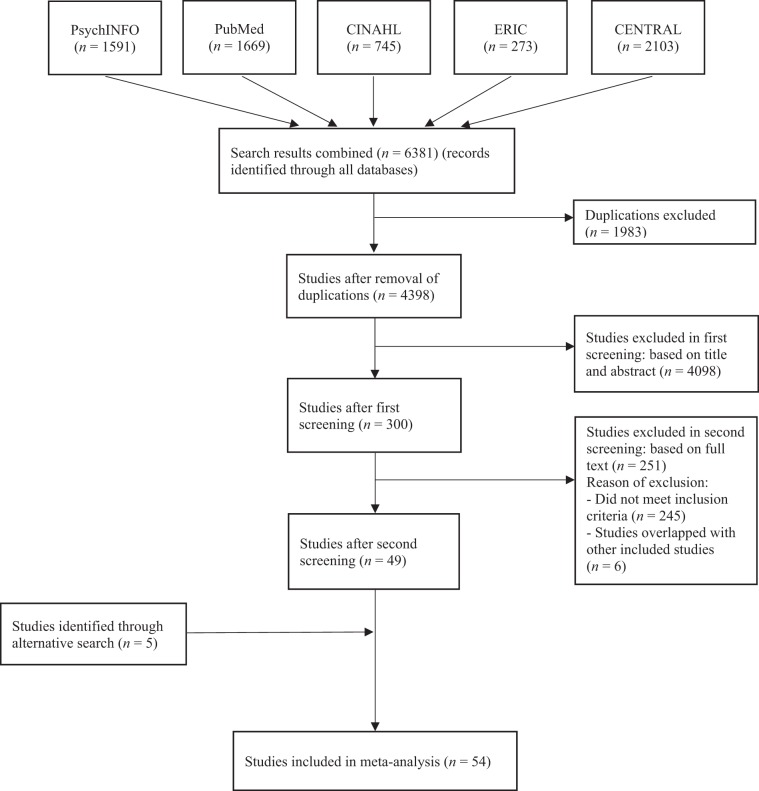
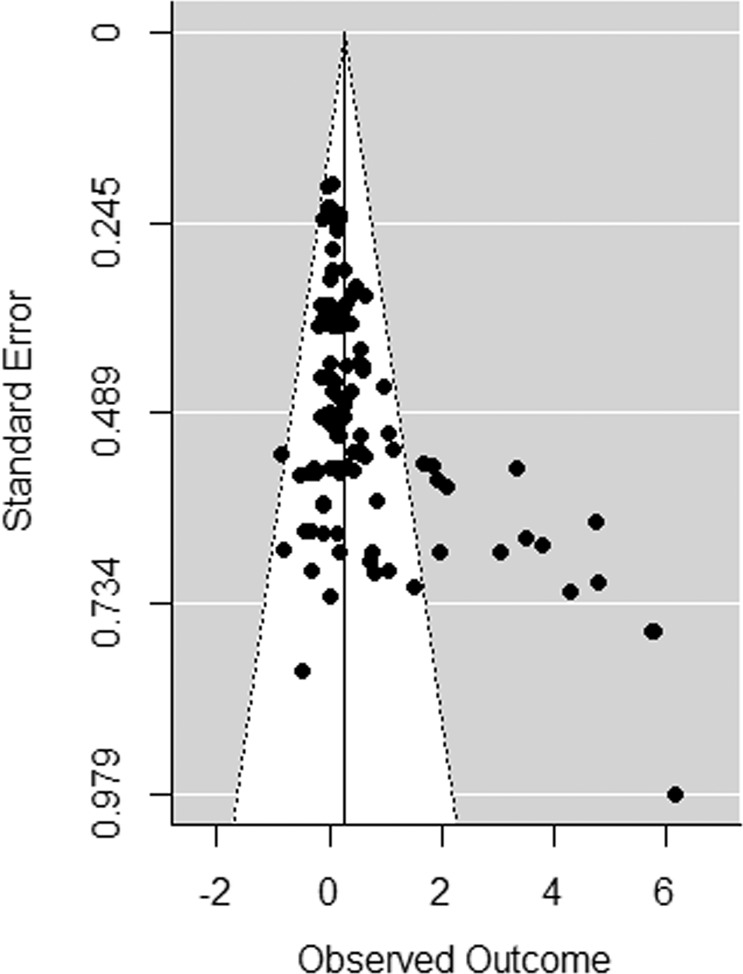
Verification
Claims the paper makes
The claims and statistics of this paper haven’t been checked yet.
Free: it reads the open-access text and checks the first 5 claims that cite a source we can check. Create a free account to check every claim.
Claims other papers make about this one
Each is checked against this paper’s own text: does it say what the citing paper says it does?
The cited source says what the claim attributes to it.
In the citing paper
“This pattern is consistent with findings of a meta-analysis of school-based intervention trials, which reported greater reductions in psychological stress at follow-up assessments as compared with post-test assessments (Van Loon et al., 2020).”
From Positive impacts of a universal trauma-informed intervention on student mental health: The Project POWER trial (2025) · cites this paper as Van Loon et al., 2020
Self-check
Percentages, sums and reported differences re-computed from the paper’s own numbers.
The self-check needs the paper’s full text.
Citations
Cites
Preferred Reporting Items for Systematic Reviews and Meta-Analyses: the PRISMA statement
Moher, D., Liberati, A., Tetzlaff, J., Altman, D. G., & for the PRISMA Group (2009) · BMJ · doi:10.1136/bmj.b2535 · Cited by 83,823
Preferred Reporting Items for Systematic Reviews and Meta-Analyses: The PRISMA Statement
Moher, D., Liberati, A., Tetzlaff, J., Altman, D. G., & The PRISMA Group (2009) · PLoS Medicine · doi:10.1371/journal.pmed.1000097 · Cited by 64,042
Bias in meta-analysis detected by a simple, graphical test
Egger, M., Smith, G. D., Schneider, M., & Minder, C. (1997) · BMJ · doi:10.1136/bmj.315.7109.629 · Cited by 56,722
Preferred reporting items for systematic reviews and meta-analyses: the PRISMA Statement.
(2009) · PubMed Central · Cited by 44,859
Wang, G., Ma, R., Qiao, G., Wada, K., Aizawa, Y., & Satoh, T. (2015) · Integrative Medicine International · doi:10.1159/000368408 · Cited by 18,657
Duval, S., & Tweedie, R. (2000) · Biometrics · doi:10.1111/j.0006-341x.2000.00455.x · Cited by 14,099
Durlak, J. A., Weissberg, R. P., Dymnicki, A. B., Taylor, R. D., & Schellinger, K. B. (2011) · Child Development · doi:10.1111/j.1467-8624.2010.01564.x · Cited by 10,854
The file drawer problem and tolerance for null results.
Rosenthal, R. (1979) · Psychological Bulletin · doi:10.1037/0033-2909.86.3.638 · Cited by 9,068 · cited 1×
“First, Rosenthal’s failsafe test was performed, indicating no publication bias when the fail-safe N exceeds the critical value (derived by the formula 5 × k+ 10, where k is the number of studies) (Rosenthal 1979).”
MethodPsychological stress and the coping process
Lazarus, R. S. (1966) · Medical Entomology and Zoology · Cited by 7,164
A Nonparametric “Trim and Fill” Method of Accounting for Publication Bias in Meta-Analysis
Duval, S., & Tweedie, R. (2000) · Journal of the American Statistical Association · doi:10.1080/01621459.2000.10473905 · Cited by 2,955
Mediators and Moderators of Treatment Effects in Randomized Clinical Trials
Kraemer, H. C., Wilson, G. T., Fairburn, C. G., & Agras, W. S. (2002) · Archives of General Psychiatry · doi:10.1001/archpsyc.59.10.877 · Cited by 2,562
Thomas, B. H., Ciliska, D., Dobbins, M., & Micucci, S. (2004) · Worldviews on Evidence-Based Nursing · doi:10.1111/j.1524-475x.2004.04006.x · Cited by 2,118
Improved tests for a random effects meta‐regression with a single covariate
Knapp, G., & Hartung, J. (2003) · Statistics in Medicine · doi:10.1002/sim.1482 · Cited by 2,075
Burnout: 35 years of research and practice.
Schaufeli, W. B., Leiter, M. P., & Maslach, C. (2009) · Career Development International · doi:10.1108/13620430910966406 · Cited by 1,964
Fitting three-level meta-analytic models in R: A step-by-step tutorial
Assink, M., & Wibbelink, C. J. M. (2016) · The Quantitative Methods for Psychology · doi:10.20982/tqmp.12.3.p154 · Cited by 1,330
Three-level meta-analysis of dependent effect sizes
Van den Noortgate, W., López-López, J. A., Marín-Martínez, F., & Sánchez-Meca, J. (2013) · Behavior Research Methods · doi:10.3758/s13428-012-0261-6 · Cited by 1,130
The Scientific Base Linking Social and Emotional Learning to School Success
Zins, J. E., Bloodworth, M. R., Weissberg, R. P., & Walberg, H. J. (2007) · Journal of Educational and Psychological Consultation · doi:10.1080/10474410701413145 · Cited by 993
Werner-Seidler, A., Perry, Y., Calear, A. L., Newby, J. M., & Christensen, H. (2017) · Clinical Psychology Review · doi:10.1016/j.cpr.2016.10.005 · Cited by 773 · cited 2×
“Previous meta-analyses demonstrated larger effects for less intensive interventions (Stice et al. 2009), and interventions delivered by external professionals (e.g. mental health professionals) as opposed to professionals working at the involved schools (Werner-Seidler et al. 2017).”
BackgroundMindfulness Interventions with Youth: A Meta-Analysis
Zoogman, S., Goldberg, S. B., Hoyt, W. T., & Miller, L. (2015) · Mindfulness · doi:10.1007/s12671-013-0260-4 · Cited by 760
Elbaum, B., Vaughn, S., Tejero Hughes, M., & Watson Moody, S. (2000) · Journal of Educational Psychology · doi:10.1037/0022-0663.92.4.605 · Cited by 564
Stice, E., Shaw, H., Bohon, C., Marti, C. N., & Rohde, P. (2009) · Journal of Consulting and Clinical Psychology · doi:10.1037/a0015168 · Cited by 553
Effectiveness of the Mindfulness in Schools Programme: non-randomised controlled feasibility study
Kuyken, W., Weare, K., Ukoumunne, O. C., Vicary, R., Motton, N., Burnett, R., Cullen, C., Hennelly, S., & Huppert, F. (2013) · British Journal of Psychiatry · doi:10.1192/bjp.bp.113.126649 · Cited by 427
Likelihood of Null Effects of Large NHLBI Clinical Trials Has Increased over Time
Kaplan, R. M., & Irvin, V. L. (2015) · PLOS ONE · doi:10.1371/journal.pone.0132382 · Cited by 356
Burnout among high school students: A literature review
Walburg, V. (2014) · Children and Youth Services Review · doi:10.1016/j.childyouth.2014.03.020 · Cited by 346 · cited 1×
“Since heightened stress is an increasing mental health issue among adolescents (Walburg 2014), it is important that governments and schools are aware of the availability and potential of school-based intervention programs to reduce psychological stress in adolescents, and implement such programs in…”
BackgroundThe Teenage Brain: The Stress Response and the Adolescent Brain
Romeo, R. D. (2013) · Current Directions in Psychological Science · doi:10.1177/0963721413475445 · Cited by 343 · cited 1×
“In adolescence, a developmental period characterized by increased stress-sensitivity (Romeo 2013), high levels of stress have been linked to various negative associates, including reductions in academic performance (Kaplan et al. 2005), school drop-out (Dupéré et al. 2015), increased mental health…”
BackgroundThe effectiveness of Multisystemic Therapy (MST): A meta-analysis
van der Stouwe, T., Asscher, J. J., Stams, G. J. J. M., Deković, M., & van der Laan, P. H. (2014) · Clinical Psychology Review · doi:10.1016/j.cpr.2014.06.006 · Cited by 321
Self-citationTransformation of children's mental health services: The role of school mental health
Stephan, S. H., Weist, M., Kataoka, S., Adelsheim, S., & Mills, C. (2007) · Psychiatric Services · doi:10.1176/ps.2007.58.10.1330 · Cited by 279 · cited 1×
“Moreover, school-based mental health services have been associated with a lower stigma and a greater utilization rate, especially among ethnic minority adolescents (Stephan et al. 2007).”
BackgroundKhalsa, S. B. S., Hickey-Schultz, L., Cohen, D., Steiner, N., & Cope, S. (2012) · The Journal of Behavioral Health Services & Research · doi:10.1007/s11414-011-9249-8 · Cited by 271
The Effectiveness of the Learning to BREATHE Program on Adolescent Emotion Regulation
Metz, S. M., Frank, J. L., Reibel, D., Cantrell, T., Sanders, R., & Broderick, P. C. (2013) · Research in Human Development · doi:10.1080/15427609.2013.818488 · Cited by 269
Pakistan Journal of Psychological Research
(2019) · Pakistan Journal of Psychological Research · doi:10.33824/pjpr.2019.34.3 · Cited by 261
Feiss, R., Dolinger, S. B., Merritt, M., Reiche, E., Martin, K., Yanes, J. A., Thomas, C. M., & Pangelinan, M. (2019) · Journal of Youth and Adolescence · doi:10.1007/s10964-019-01085-0 · Cited by 252
School-based mindfulness instruction: An RCT
Sibinga, E. M. S., Webb, L., Ghazarian, S. R., & Ellen, J. M. (2016) · Pediatrics · doi:10.1542/peds.2015-2532 · Cited by 231
School programs targeting stress management in children and adolescents: A meta-analysis
Kraag, G., Zeegers, M. P., Kok, G., Hosman, C., & Abu-Saad, H. H. (2006) · Journal of School Psychology · doi:10.1016/j.jsp.2006.07.001 · Cited by 229
Reducing Suicide Potential Among High‐Risk Youth: Tests of a School‐Based Prevention Program
Eggert, L. L., Thompson, E. A., Herting, J. R., & Nicholas, L. J. (1995) · Suicide and Life-Threatening Behavior · doi:10.1111/j.1943-278x.1995.tb00926.x · Cited by 226
Changes in American children´s time - 1997 to 2003
Hofferth, S. L. (2009) · electronic International Journal of Time Use Research · doi:10.13085/eijtur.6.1.26-47 · Cited by 224 · cited 1×
“Adolescents spend a substantial part of their time—on average six hours per school day—in school (Hofferth 2009), which makes the * Amanda W. G. van Loon a.w.g.vanloon@uu.nl 1 Utrecht University Child and Adolescent Studies, Heidelberglaan 1, 3584 CS Utrecht, The Netherlands 2 University of…”
BackgroundNoggle, J. J., Steiner, N. J., Minami, T., & Khalsa, S. B. S. (2012) · Journal of Developmental & Behavioral Pediatrics · doi:10.1097/dbp.0b013e31824afdc4 · Cited by 224
Van Ryzin, M. J., & Roseth, C. J. (2018) · Journal of Educational Psychology · doi:10.1037/edu0000265 · Cited by 217
Quach, D., Jastrowski Mano, K. E., & Alexander, K. (2016) · Journal of Adolescent Health · doi:10.1016/j.jadohealth.2015.09.024 · Cited by 213
Reducing stress in school-age girls through mindful yoga.
White, L. (2012) · Journal of Pediatric Health Care · doi:10.1016/j.pedhc.2011.01.002 · Cited by 199 · cited 1×
“…studies on school-based stress intervention programs have yielded positive results (e.g., Jellesma and Cornelis 2012; De Wolfe and Saunders 1995; White 2012), whereas other studies indicated that interventions were not effective in reducing stress (e.g., Lang et al. 2017; Lau and Hue 2011;…”
ResultSpence, S. H., & Shortt, A. L. (2007) · Journal of Child Psychology and Psychiatry · doi:10.1111/j.1469-7610.2007.01738.x · Cited by 191
Suter, J. C., & Bruns, E. J. (2009) · Clinical Child and Family Psychology Review · doi:10.1007/s10567-009-0059-y · Cited by 184
Stressors and Turning Points in High School and Dropout: A Stress Process, Life Course Framework
Dupéré, V., Leventhal, T., Dion, E., Crosnoe, R., Archambault, I., & Janosz, M. (2015) · Review of Educational Research · doi:10.3102/0034654314559845 · Cited by 174
Bennett, K., & Dorjee, D. (2015) · Mindfulness · doi:10.1007/s12671-015-0430-7 · Cited by 173
School-based mindfulness instruction for urban male youth: A small randomized controlled trial
Sibinga, E. M. S., Perry-Parrish, C., Chung, S.-E., Johnson, S. B., Smith, M., & Ellen, J. M. (2013) · Preventive Medicine · doi:10.1016/j.ypmed.2013.08.027 · Cited by 171
A School-Based Mindfulness Pilot Study for Ethnically Diverse At-Risk Adolescents
Bluth, K., Campo, R. A., Pruteanu-Malinici, S., Reams, A., Mullarkey, M., & Broderick, P. C. (2016) · Mindfulness · doi:10.1007/s12671-014-0376-1 · Cited by 171
Livheim, F., Hayes, L., Ghaderi, A., Magnusdottir, T., Högfeldt, A., Rowse, J., Turner, S., Hayes, S. C., & Tengström, A. (2015) · Journal of Child and Family Studies · doi:10.1007/s10826-014-9912-9 · Cited by 169
Selection of levels of prevention
Offord, D. R. (2000) · Addictive Behaviors · doi:10.1016/s0306-4603(00)00132-5 · Cited by 165 · cited 1×
“…populations (i.e., community samples) as well as selected adolescent populations (i.e., samples based on self-selection or screening, for instance on high stress or anxiety levels), given the potential of targeted interventions to be more efficient and to address problems early on (Offord 2000).”
BackgroundKaplan, D. S., Liu, R. X., & Kaplan, H. B. (2005) · Social Psychology of Education · doi:10.1007/s11218-004-3129-5 · Cited by 161
Emotional intelligence and psychological maladjustment in adolescence: A systematic review
Resurrección, D. M., Salguero, J. M., & Ruiz‐Aranda, D. (2014) · Journal of Adolescence · doi:10.1016/j.adolescence.2014.03.012 · Cited by 159
Silva, L. A. D., Doyenart, R., Henrique Salvan, P., Rodrigues, W., Felipe Lopes, J., Gomes, K., Thirupathi, A., Pinho, R. A. D., & Silveira, P. C. (2020) · International Journal of Environmental Health Research · doi:10.1080/09603123.2019.1612041 · Cited by 159
Petrosino, A., & Soydan, H. (2005) · Journal of Experimental Criminology · doi:10.1007/s11292-005-3540-8 · Cited by 152 · cited 2×
“…versus higher quality studies (Kraag et al. 2006), studies with quasi-experimental designs versus randomized controlled trials (RCTs) (Suter and Bruns 2009) and studies by researchers who developed the intervention program they studied versus independent researchers (Petrosino and Soydan 2005).”
BackgroundResultFung, J., Kim, J. J., Jin, J., Chen, G., Bear, L., & Lau, A. S. (2019) · Journal of Abnormal Child Psychology · doi:10.1007/s10802-018-0425-7 · Cited by 148
Developmental Differences in Universal Preventive Intervention for Child Anxiety
Barrett, P. M., Lock, S., & Farrell, L. J. (2005) · Clinical Child Psychology and Psychiatry · doi:10.1177/1359104505056317 · Cited by 138
Hampel, P., Meier, M., & Kümmel, U. (2007) · Journal of Youth and Adolescence · doi:10.1007/s10964-007-9204-4 · Cited by 130
(n.d.) · RWTH Publications (RWTH Aachen) · Cited by 127
Relationships: The key to successful transition from primary to secondary school?
Coffey, A. (2013) · Improving Schools · doi:10.1177/1365480213505181 · Cited by 123 · cited 1×
“…school students spend every day with the same teacher and classmates with whom they generally develop close relationships and feel comfortable (Coffey 2013), students in secondary school typically develop fewer close relationships, especially with their teachers (Tobbell and O’Donnell 2013).”
BackgroundPuolakanaho, A., Lappalainen, R., Lappalainen, P., Muotka, J. S., Hirvonen, R., Eklund, K. M., Ahonen, T. P. S., & Kiuru, N. (2019) · Journal of Youth and Adolescence · doi:10.1007/s10964-018-0973-8 · Cited by 122
Kiselica, M. S., Baker, S. B., Thomas, R. N., & Reedy, S. (1994) · Journal of Counseling Psychology · doi:10.1037/0022-0167.41.3.335 · Cited by 120
Butzer, B., LoRusso, A., Shin, S. H., & Khalsa, S. B. S. (2017) · Journal of Youth and Adolescence · doi:10.1007/s10964-016-0513-3 · Cited by 118
Lau, N.-S., & Hue, M.-T. (2011) · International Journal of Children's Spirituality · doi:10.1080/1364436x.2011.639747 · Cited by 115
Burckhardt, R., Manicavasagar, V., Batterham, P. J., & Hadzi-Pavlovic, D. (2016) · Journal of School Psychology · doi:10.1016/j.jsp.2016.05.008 · Cited by 112
Conley, C. S., Durlak, J. A., Shapiro, J. B., Kirsch, A. C., & Zahniser, E. (2016) · Prevention Science · doi:10.1007/s11121-016-0662-3 · Cited by 110
Dowling, K., Simpkin, A. J., & Barry, M. M. (2019) · Journal of Youth and Adolescence · doi:10.1007/s10964-019-00987-3 · Cited by 104
Associations Between Adolescents’ Family Stressors and Life Satisfaction
Chappel, A. M., Suldo, S. M., & Ogg, J. A. (2012) · Journal of Child and Family Studies · doi:10.1007/s10826-012-9687-9 · Cited by 99
Cross-national trends in perceived school pressure by gender and age from 1994 to 2010
Klinger, D. A., Freeman, J. G., Bilz, L., Liiv, K., Ramelow, D., Sebok, S. S., Samdal, O., Dur, W., & Rasmussen, M. (2015) · The European Journal of Public Health · doi:10.1093/eurpub/ckv027 · Cited by 86
IMPROVING SCHOOLS IN DIFFICULT CONTEXTS: TOWARDS A DIFFERENTIATED APPROACH
Harris, A., & Chapman, C. (2004) · British Journal of Educational Studies · doi:10.1111/j.1467-8527.2004.00276.x · Cited by 85
CROSS, D. S., Shaw, T., Epstein, M., Pearce, N., Barnes, A., Burns, S. K., Waters, S. K., Lester, L., & Runions, K. (2018) · European Journal of Education · doi:10.1111/ejed.12307 · Cited by 81
Eslami, A. A., Rabiei, L., Afzali, S. M., Hamidizadeh, S., & Masoudi, R. (2016) · Iranian Red Crescent Medical Journal · doi:10.5812/ircmj.21096 · Cited by 78
Norlander, T., Moås, L., & Archer, T. (2005) · School Effectiveness and School Improvement · doi:10.1080/092434505000114173 · Cited by 74
Snyder, H. R., Young, J. F., & Hankin, B. L. (2019) · Journal of Clinical Child & Adolescent Psychology · doi:10.1080/15374416.2017.1321002 · Cited by 74
Tobbell, J., & O’Donnell, V. (2013) · International Journal of Educational Research · doi:10.1016/j.ijer.2013.02.003 · Cited by 64
Ruiz-Aranda, D., Salguero, J. M., Cabello, R., Palomera, R., & -Berrocal, P. F. (2012) · Social Behavior and Personality: an international journal · doi:10.2224/sbp.2012.40.8.1373 · Cited by 62
A Systematic Review of Interventions to Reduce Stress in Adolescence
Rew, L., Johnson, K. M., & Young, C. C. (2014) · Issues in Mental Health Nursing · doi:10.3109/01612840.2014.924044 · Cited by 61
Kraag, G., Van Breukelen, G. J. P., Kok, G., & Hosman, C. (2009) · Journal of Child Psychology and Psychiatry · doi:10.1111/j.1469-7610.2009.02088.x · Cited by 61
Schüssler-Fiorenza Rose, S. M., Eslinger, J. G., Zimmerman, L., Scaccia, J., Lai, B. S., Lewis, C., & Alisic, E. (2016) · PLOS ONE · doi:10.1371/journal.pone.0157726 · Cited by 60
Lang, C., Feldmeth, A. K., Brand, S., Holsboer‐Trachsler, E., Pühse, U., & Gerber, M. (2016) · Physical Education and Sport Pedagogy · doi:10.1080/17408989.2016.1176130 · Cited by 59
Stress‐prevention in secondary schools: online‐ versus face‐to‐face‐training
Fridrici, M., & Lohaus, A. (2009) · Health Education · doi:10.1108/09654280910970884 · Cited by 55
Lai, E. S. Y., Kwok, C.-L., Wong, P. W. C., Fu, K.-W., Law, Y.-W., & Yip, P. S. F. (2016) · PLOS ONE · doi:10.1371/journal.pone.0149854 · Cited by 50
(2016) · PubMed Central · Cited by 49
Flückiger, C., & Re, A. C. D. (2016) · Epidemiology and Psychiatric Sciences · doi:10.1017/s2045796016000780 · Cited by 47
Ghaffari, M., Gharghani, Z. G., Mehrabi, Y., Ramezankhani, A., & Majeed, M. (2016) · Iranian Red Crescent Medical Journal · doi:10.5812/ircmj.21220 · Cited by 46
Ebrahimi, M., Jalilabadi, Z., Chenagh, K. H. G., Amini, F., & Arkian, F. (2015) · Europe PMC (PubMed Central) · Cited by 42
Testing a Digital Storytelling Intervention to Reduce Stress in Adolescent Females
Goodman, R., & Newman, D. M. (2014) · Storytelling Self Society · doi:10.13110/storselfsoci.10.2.0177 · Cited by 41
Stjerneklar, S., Hougaard, E., & Thastum, M. (2019) · Internet Interventions · doi:10.1016/j.invent.2019.01.003 · Cited by 38 · cited 1×
“Recent research demonstrated that program improvement is more evident in students with a high level of baseline problems (Stjerneklar et al. 2019).”
BackgroundLee, M. J., Oh, W., Jang, J. S., & Lee, J. Y. (2018) · Complementary Therapies in Medicine · doi:10.1016/j.ctim.2018.01.004 · Cited by 37
The Evaluation of a Stress Management Program for Middle School Adolescents
de Anda, D. (1998) · Child and Adolescent Social Work Journal · doi:10.1023/a:1022297521709 · Cited by 36
Van der Gucht, K., Takano, K., Raes, F., & Kuppens, P. (2018) · Cognition and Emotion · doi:10.1080/02699931.2017.1310716 · Cited by 35
Rentala, S., Lau, B. H. P., Aladakatti, R., & Thimmajja, S. G. (2019) · Journal of Family Medicine and Primary Care · doi:10.4103/jfmpc.jfmpc_378_18 · Cited by 34
School Based Relaxation: Attempting Primary Prevention
Hiebert, B., Kirby, B. I., & Jaknavorian, A. (1989) · Canadian Journal of Counselling and Psychotherapy · Cited by 32
Effects of Scheduled Qigong Exercise on Pupils' Well-Being, Self-Image, Distress, and Stress
Terjestam, Y., Jouper, J., & Johansson, C. U. (2010) · The Journal of Alternative and Complementary Medicine · doi:10.1089/acm.2009.0405 · Cited by 32
Efficacy of an indicated intervention program for Indian adolescents with subclinical depression
Singhal, M., Munivenkatappa, M., Kommu, J. V. S., & Philip, M. (2018) · Asian Journal of Psychiatry · doi:10.1016/j.ajp.2018.03.007 · Cited by 32
Terjestam, Y., Bengtsson, H., & Jansson, A. (2016) · School Psychology International · doi:10.1177/0143034316658321 · Cited by 31
Stress Reduction in Sixth-Grade Students
Wolfe, A. S. D., & Saunders, A. M. (1995) · The Journal of Experimental Education · doi:10.1080/00220973.1995.9943467 · Cited by 30
Singhal, M., Manjula, M., & Kommu, J. V. S. (2014) · Asian Journal of Psychiatry · doi:10.1016/j.ajp.2014.03.011 · Cited by 30
Project Wings, a Coping Intervention for Latina Adolescents: A Pilot Study
Garcia, C., Pintor, J., Vazquez, G., & Alvarez-Zumarraga, E. (2013) · Western Journal of Nursing Research · doi:10.1177/0193945911407524 · Cited by 29
Campbell, A. J., Lanthier, R. P., Weiss, B. A., & Shaine, M. D. (2019) · Journal of Child and Adolescent Counseling · doi:10.1080/23727810.2018.1556989 · Cited by 24
Silbert, K. L., & Berry, G. L. (1991) · Counselling Psychology Quarterly · doi:10.1080/09515079108254428 · Cited by 20
Ponsoda, F. C., Escartí, A., Goig, R. L., & Cortell-Tormo, J. M. (2017) · Cuadernos de Psicología del Deporte · Cited by 19
Zafar, H., & Khalily, M. T. (2015) · Cited by 15
Jellesma, F. C., & Cornelis, J. (2011) · Journal of Holistic Nursing · doi:10.1177/0898010111418117 · Cited by 14
A randomized pilot trial of a school‐based psychoeducational intervention for children with asthma
Marsland, A. L., Gentile, D. A., Hinze, A. K., von Stauffenberg, C., Rosen, R. K., Tavares, A. M., Votruba‐Drzal, E., Cohen, S., McQuaid, E. L., & Ewing, L. J. (2019) · Clinical & Experimental Allergy · doi:10.1111/cea.13337 · Cited by 12
Evaluating the Best of Coping Program: Enhancing coping skills in adolescents
Carter, A. (2010) · Scholarship at UWindsor (University of Windsor) · Cited by 11
STILLNESS ATSCHOOL: WELL-BEING AFTER EIGHTWEEKS OF MEDITATION-BASED PRACTICE IN SECONDARYSCHOOL
Terjestam, Y. (2011) · Psyke & Logos · doi:10.7146/pl.v32i1.8796 · Cited by 9
Jose, B., & Sajeena (2017) · Asian Journal of Nursing Education and Research · doi:10.5958/2349-2996.2017.00062.3 · Cited by 8
Rajagopal, M., Baby, P., Vijayaraghavan, R., & Sushama, B. (2017) · International Journal of Nursing Education · doi:10.5958/0974-9357.2017.00106.4 · Cited by 8
Reiss, V. L. (2013) · UA Campus Repository (The University of Arizona) · Cited by 5
The Effects of Mindfulness Meditation on Adolescents with High-Incidence Disabilities
Solar, E. (2013) · doi:10.13021/mars/4126 · Cited by 5
Ganjavi, L. M. S. (2016) · International Journal of Indian Psychology · doi:10.25215/0303.124 · Cited by 4
(1965) · American Journal of Orthopsychiatry · doi:10.1111/j.1939-0025.1965.tb04262.x · Cited by 3
Research works printed but not linked: 1
- *Terjestam Y Stilness at school: well-being after eight weeks of meditation-based practice in secondary school Psyke & Logos 2011 32 105 116
Cited by
A synergistic mindsets intervention protects adolescents from stress
Yeager, D. S., Bryan, C. J., Gross, J. J., Murray, J. S., Krettek Cobb, D., H. F. Santos, P., Gravelding, H., Johnson, M., & Jamieson, J. P. (2022) · Nature · doi:10.1038/s41586-022-04907-7 · Cited by 225
Zhang, Q., Wang, J., & Neitzel, A. (2023) · Journal of Youth and Adolescence · doi:10.1007/s10964-022-01684-4 · Cited by 153
“Compared to primary-care settings, school-based mental health programs can reach larger populations, provide more convenient access, and enhance social relationships between classmates and teachers (van Loon et al., 2020).”
BackgroundAre online mental health interventions for youth effective? A systematic review.
Zhou, X., Edirippulige, S., Bai, X., & Bambling, M. (2021) · Journal of Telemedicine and Telecare · doi:10.1177/1357633x211047285 · Cited by 107
Ruiz, A. A., Aritzeta, A., Olarza, A., Soroa, G., & Mindeguia, R. (2022) · International Journal of Environmental Research and Public Health · doi:10.3390/ijerph191610181 · Cited by 110
Identifying Salient Stressors of Adolescence: A Systematic Review and Content Analysis
Núñez‐Regueiro, F., & Núñez-Regueiro, S. (2021) · Journal of Youth and Adolescence · doi:10.1007/s10964-021-01492-2 · Cited by 119
Metadata
- Authors
- van Loon, A. W. G., Creemers, H. E., Beumer, W. Y., Okorn, A., Vogelaar, S., Saab, N., Miers, A. C., Westenberg, P. M., & Asscher, J. J.
- Affiliations
- University of Amsterdam (NL)
- Utrecht University (NL)
- Leiden University (NL)
- ORCID
- Venue
- Journal of Youth and Adolescence
- Published
- 2020-02-07
- Volume
- 49
- Issue
- 6
- Pages
- 1127-1145
- ISSN
- 0047-2891 (ISSN-L)
- 1573-6601
- PMC
- PMC7237523
- OpenAlex
- W3004696963
- Cited by
- 128
- References
- 109
- Citations by year
- 2026: 17 · 2025: 28 · 2024: 24 · 2023: 27 · 2022: 15 · 2021: 14 · 2020: 3
- FWCI
- 3.11
- Type
- journal article
- Language
- en
- Open access
- hybrid
- doi.org
- Licence
- cc-by
- creativecommons.org/licenses/by/4.0 (tdm)
- creativecommons.org/licenses/by/4.0 (vor)
- Locations
- Journal of Youth and Adolescence (publishedVersion, cc-by)
- PubMed Central (publishedVersion, cc-by)
- PubMed (publishedVersion)
- Pure Amsterdam UMC (publishedVersion, other-oa)
- Leiden Repository (Leiden University) (submittedVersion, cc-by)
- Radboud Repository (Radboud University) (submittedVersion, cc-by)
- Data Archiving and Networked Services (DANS) (submittedVersion)
- UvA-DARE (University of Amsterdam) (submittedVersion, cc-by)
- Utrecht University Repository (Utrecht University) (submittedVersion, other-oa)
- Leiden Repository (Leiden University) (submittedVersion)
- Radboud Repository (Radboud University) (submittedVersion)
- Data Archiving and Networked Services (DANS) (submittedVersion, other-oa)
- Data Archiving and Networked Services (DANS) (submittedVersion, cc-by)
- Funders
- Nederlandse Organisatie voor Wetenschappelijk Onderzoek (400.17.601, work package 3, grant number 400.17.601, work package 3, 400.17.601)
- Topics
- Social Sciences › Psychology › Developmental and Educational Psychology › Student Stress and Coping
- Health Sciences › Medicine › Public Health, Environmental and Occupational Health › School Health and Nursing Education
- Social Sciences › Psychology › Clinical Psychology › Child and Adolescent Psychosocial and Emotional Development
- Keywords
- school-based intervention, stress reduction, school environment, mental health prevention, academic performance, school dropout, moderators of intervention effectiveness
- MeSH terms
- Adolescent, Adolescent Behavior, Child, Female, Humans, School Health Services, Schools, Stress, Psychological, Students, Program Evaluation, Multilevel Analysis
About these checks
Registry, retraction, Cites and statistics results are computed, not judged, with one exception: a printed reference that no index lists is read once by a model before it counts as a citation error. Claims are extracted by a model and kept only when their quote appears verbatim in the text; each cited source is then checked, with a model’s help, for whether it says what the claim relies on. Those verdicts can be wrong — read the claim’s quote and the cited source before relying on one.
Statistics and arithmetic are recomputed, not judged.
Confidence bands are shown only for fields calibrated on our annotated test set. None is calibrated yet, so no band is shown.
What counts as a claim ›How we measure confidence ›How we check this ›
Are you an author, or do you see a problem with this page? Request a review
Data sources
Bibliographic data: Semantic Scholar, OpenAlex, Crossref.
Contains information from the Semantic Scholar Academic Graph Datasets, made available under the ODC Attribution License (ODC-BY 1.0).
Semantic Scholar’s data is described in: Kinney, R., et al. (2023). The Semantic Scholar Open Data Platform. arXiv:2301.10140.
