

Flourishing Across Europe: Application of a New Conceptual Framework for Defining Well-Being
Open accessThe DOI matches its Crossref record, with a small difference in title or year; 80 of the 88 references it cites were found in a registry or an index.
Abstract
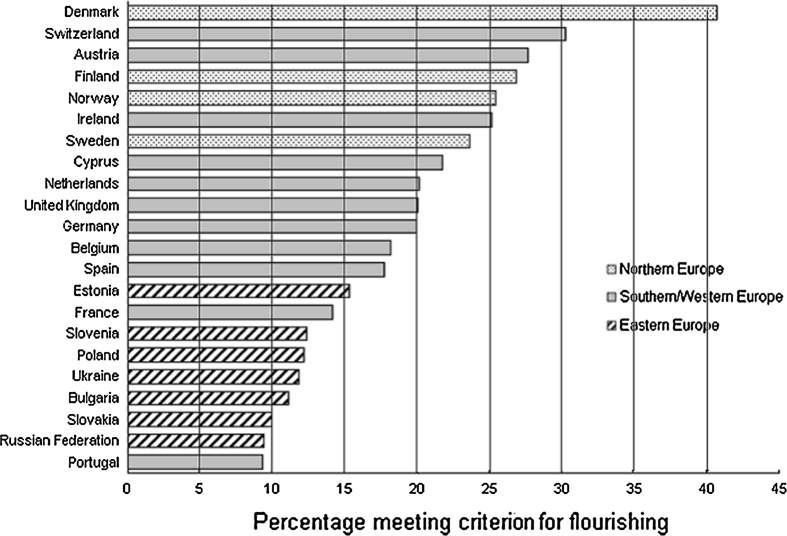
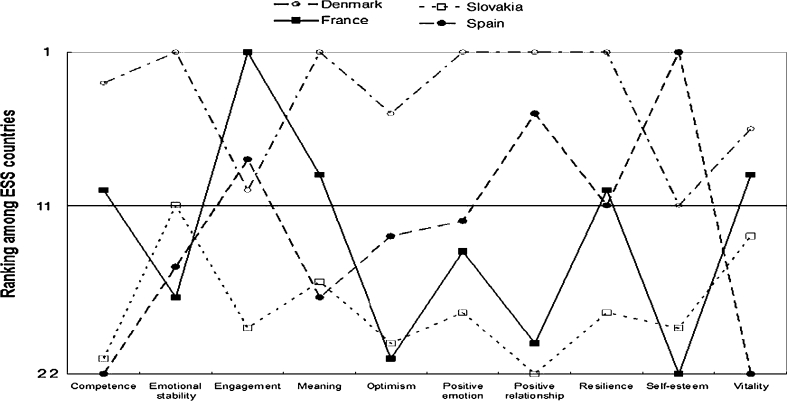
Governments around the world are recognising the importance of measuring subjective well-being as an indicator of progress. But how should well-being be measured? A conceptual framework is offered which equates high well-being with positive mental health. Well-being is seen as lying at the opposite end of a spectrum to the common mental disorders (depression, anxiety). By examining internationally agreed criteria for depression and anxiety (DSM and ICD classifications), and defining the opposite of each symptom, we identify ten features of positive well-being. These combine feeling and functioning, i.e. hedonic and eudaimonic aspects of well-being: competence, emotional stability, engagement, meaning, optimism, positive emotion, positive relationships, resilience, self esteem, and vitality. An operational definition of flourishing is developed, based on psychometric analysis of indicators of these ten features, using data from a representative sample of 43,000 Europeans. Application of this definition to respondents from the 23 countries which participated in the European Social Survey (Round 3) reveals a four-fold difference in flourishing rate, from 41% in Denmark to less than 10% in Slovakia, Russia and Portugal. There are also striking differences in country profiles across the 10 features. These profiles offer fresh insight into cultural differences in well-being, and indicate which features may provide the most promising targets for policies to improve well-being. Comparison with a life satisfaction measure shows that valuable information would be lost if well-being was measured by life satisfaction. Taken together, our findings reinforce the need to measure subjective well-being as a multi-dimensional construct in future surveys.
Overview
The claims and statistics of this paper haven’t been checked yet.
Free: it reads the open-access text and checks the first 5 claims that cite a source we can check. Create a free account to check every claim.
Integrity signals
Registry
Cites
Statistics
Figures
Verification
Claims the paper makes
The claims and statistics of this paper haven’t been checked yet.
Free: it reads the open-access text and checks the first 5 claims that cite a source we can check. Create a free account to check every claim.
Claims other papers make about this one
Each is checked against this paper’s own text: does it say what the citing paper says it does?
The source backs part of the claim, not all of it — or backs it for a different population, condition or comparison.
In the citing paper
“If flourishing encompasses emotional resonance, relational quality, and mutual regulation (4, 5), then sex differences in physiological attunement may influence how individuals engage in supportive, co-regulatory interactions that sustain psychological health.”
From Physiological attunement and flourishing: understanding the influence of relationships on health (2025) · cites this paper as [4]
Experimental — accuracy not yet measured
Self-check
Percentages, sums and reported differences re-computed from the paper’s own numbers.
The self-check needs the paper’s full text.
Citations
Cites
Diagnostic and Statistical Manual of Mental Disorders
Williams, J. B. W., & First, M. (2013) · Encyclopedia of Social Work · doi:10.1093/acrefore/9780199975839.013.104 · Cited by 109,519
The CES-D Scale: A Self-Report Depression Scale for Research in the General Population
Radloff, L. S. (1977) · Applied Psychological Measurement · doi:10.1177/014662167700100306 · Cited by 53,267
Development and validation of brief measures of positive and negative affect: The PANAS scales.
Watson, D., Clark, L. A., & Tellegen, A. (1988) · Journal of Personality and Social Psychology · doi:10.1037/0022-3514.54.6.1063 · Cited by 32,433 · cited 2×
“Proponents of this view have included Bradburn (1969), Watson et al. (1988), and Diener et al. (1999).”
BackgroundAlternative Ways of Assessing Model Fit
Browne, M. W., & Cudeck, R. (1992) · Sociological Methods & Research · doi:10.1177/0049124192021002005 · Cited by 27,200 · cited 2×
“In general, CFI and GFI values of .90 or above, and RMSEA values of .06 or below are indicative of good empirical fit (Browne and Cudeck 1993; Byrne 1994).”
BackgroundTesting Structural Equation Models.
Mueller, C. W., Bollen, K. A., & Long, J. S. (1994) · Contemporary Sociology · doi:10.2307/2074955 · Cited by 14,120
Subjective well-being: Three decades of progress.
Diener, E., Suh, E. M., Lucas, R. E., & Smith, H. L. (1999) · Psychological Bulletin · doi:10.1037/0033-2909.125.2.276 · Cited by 12,910
On Happiness and Human Potentials: A Review of Research on Hedonic and Eudaimonic Well-Being
Ryan, R. M., & Deci, E. L. (2001) · Annual Review of Psychology · doi:10.1146/annurev.psych.52.1.141 · Cited by 11,567 · cited 4×
“Some conceptual approaches to well-being have focused exclusively on the hedonic aspects (e.g. Bradburn 1969; Diener et al. 1999; Watson et al. 1988), while others have focused exclusively on eudaimonic aspects (e.g. Antonovsky 1993; Jahoda 1958; Ryan and Deci 2001; Ryff 1989).”
BackgroundMethodInfluentialThe structure of psychological well-being revisited.
Ryff, C. D., & Keyes, C. L. M. (1995) · Journal of Personality and Social Psychology · doi:10.1037//0022-3514.69.4.719 · Cited by 10,285 · cited 4×
“Similar findings have been reported in other studies (e.g. Chirkov and Ryan 2001; Diener et al. 2009; Ryff and Keyes 1995), indicating that a global measure of life satisfaction is no substitute for the information gained from a multi-dimensional approach.”
BackgroundResultInfluentialTesting Structural Equation Models.
Clogg, C. C., Bollen, K. A., & Long, J. S. (1995) · Social Forces · doi:10.2307/2580595 · Cited by 8,211
Flourish: A Visionary New Understanding of Happiness and Well-Being
(2011) · Choice Reviews Online · doi:10.5860/choice.48-7217 · Cited by 5,543 · cited 3×
“Our conceptual framework is more in keeping with the approaches of Keyes (2002), Seligman (2002, 2011), Tennant et al. (2007), and the recent work of Diener et al. (2010a, b), all of which incorporate both hedonic and eudaimonic aspects of wellbeing.”
BackgroundMethodResultSocial psychology: handbook of basic principles
(2008) · Choice Reviews Online · doi:10.5860/choice.45-3496 · Cited by 5,473
The mental health continuum: from languishing to flourishing in life.
Keyes, C. L. M. (2002) · Journal of Health and Social Behavior · doi:10.2307/3090197 · Cited by 5,133 · cited 3×
“Our conceptual framework is more in keeping with the approaches of Keyes (2002), Seligman (2002, 2011), Tennant et al. (2007), and the recent work of Diener et al. (2010a, b), all of which incorporate both hedonic and eudaimonic aspects of wellbeing.”
BackgroundResultThe Warwick-Edinburgh Mental Well-being Scale (WEMWBS): development and UK validation
Tennant, R., Hiller, L., Fishwick, R., Platt, S., Joseph, S., Weich, S., Parkinson, J., Secker, J., & Stewart-Brown, S. (2007) · Health and Quality of Life Outcomes · doi:10.1186/1477-7525-5-63 · Cited by 5,031 · cited 2×
“Our conceptual framework is more in keeping with the approaches of Keyes (2002), Seligman (2002, 2011), Tennant et al. (2007), and the recent work of Diener et al. (2010a, b), all of which incorporate both hedonic and eudaimonic aspects of wellbeing.”
ResultNew well-being measures: Short scales to assess flourishing and positive and negative feelings
Diener, E., Wirtz, D., Tov, W., Kim-Prieto, C., Choi, D.-W., Oishi, S., & Biswas-Diener, R. (2010) · Social Indicators Research · doi:10.1007/s11205-009-9493-y · Cited by 4,980 · cited 1×
“So Well-Being Institute & Department of Psychiatry, University of Cambridge, Box 189, Addenbrooke’s Hospital, Cambridge CB2 2QQ, UK e-mail: fah2@cam.ac.uk”
BackgroundThe Structure of Psychological Well-Being.
Mechanic, D., & Bradburn, N. M. (1970) · American Sociological Review · doi:10.2307/2093340 · Cited by 4,923 · cited 3×
“Proponents of this view have included Bradburn (1969), Watson et al. (1988), and Diener et al. (1999).”
BackgroundSocial psychology: handbook of basic principles
(1997) · Choice Reviews Online · doi:10.5860/choice.34-3595 · Cited by 4,895
Structural Equation Modeling With AMOS: Basic Concepts, Applications, and Programming, Third Edition
Byrne, B. M. (2016) · doi:10.4324/9781315757421 · Cited by 4,653
(1904) · The American Journal of Psychology · doi:10.2307/1412635 · Cited by 4,187
Goodness-of-fit indexes in confirmatory factor analysis: The effect of sample size.
Marsh, H. W., Balla, J. R., & McDonald, R. P. (1988) · Psychological Bulletin · doi:10.1037//0033-2909.103.3.391 · Cited by 3,824 · cited 1×
“Since the Chi-square goodness of fit test is very sensitive to sample size (Marsh et al. 1998), model fit was determined using standard fit indices, namely Comparative Fit Index (CFIs), Lisrel GFI Fit Index (GFI), and Root Mean Square Error of Approximations (RMSEAs).”
MethodThe structure and properties of the sense of coherence scale
Antonovsky, A. (1993) · Social Science & Medicine · doi:10.1016/0277-9536(93)90033-z · Cited by 3,515
Pursuing Happiness: The Architecture of Sustainable Change
Lyubomirsky, S., Sheldon, K. M., & Schkade, D. (2005) · Review of General Psychology · doi:10.1037/1089-2680.9.2.111 · Cited by 3,203 · cited 2×
“In cross-sectional, longitudinal and experimental studies, high levels of well-being have been shown to be associated with a range of positive outcomes, including effective learning, productivity and creativity, good relationships, pro-social behaviour, and good health and life expectancy (see reviews by Chida and Ste…”
BackgroundDolan, P., Peasgood, T., & White, M. (2008) · Journal of Economic Psychology · doi:10.1016/j.joep.2007.09.001 · Cited by 3,121 · cited 3×
“…with a range of positive outcomes, including effective learning, productivity and creativity, good relationships, pro-social behaviour, and good health and life expectancy (see reviews by Chida and Steptoe 2008; Diener et al. 2010a; Dolan et al. 2008; Huppert 2009b; Lyubomirsky et al. 2005).”
BackgroundReport by the commission on the measurement of economic performance and social progress
Fitoussi, J., Sen, A. K., & Stiglitz, J. E. (2011) · Cited by 3,090
Education at a glance: OECD indicators, 2002
(2003) · Choice Reviews Online · doi:10.5860/choice.40-4369 · Cited by 2,732
The Contours of Positive Human Health
Ryff, C. D., & Singer, B. (1998) · Psychological Inquiry · doi:10.1207/s15327965pli0901_1 · Cited by 2,658 · cited 1×
“Flourishing is synonymous with a high level of mental wellbeing, and it epitomises mental health (Huppert 2009a, b; Keyes 2002; Ryff and Singer 1998).”
BackgroundMethods and Data Analysis for Cross-Cultural Research
van de Vijver, F. J. R., & Leung, K. (2021) · Cambridge University Press eBooks · doi:10.1017/9781107415188 · Cited by 2,612 · cited 1×
“…the analysis since data for the vitality item was missing among all respondents in Hungary.1 Scores on each item were standardised within each region to reduce or eliminate unwanted cross-regional differences such as response set (Matsumoto and Ven der Vijver 2011; Van de Vijver and Leung 1997).”
Beyond money: toward an economy of well-being
Diener, E., & Seligman, M. E. P. (2004) · Psychological Science in the Public Interest · doi:10.1111/j.0963-7214.2004.00501001.x · Cited by 2,555
The social context of well–being
Helliwell, J. F., & Putnam, R. D. (2004) · Philosophical Transactions of the Royal Society of London. Series B: Biological Sciences · doi:10.1098/rstb.2004.1522 · Cited by 2,354 · cited 1×
“Other investigators (e.g. Dolan et al. 2008; Helliwell and Putnam 2004) have noted the close similarity between measures of overall life satisfaction and happiness.”
BackgroundKeyes, C. L. M. (2007) · American Psychologist · doi:10.1037/0003-066x.62.2.95 · Cited by 2,268 · cited 3×
“Rather than subjective well-being research unintentionally yielding mental health symptoms that mirror the symptoms of mental disorders (Keyes 2007) we have intentionally and systematically examined symptoms of the common mental disorders and proposed their mirror opposites as exemplifying the…”
BackgroundInfluentialIncome, Health, and Well-Being around the World: Evidence from the Gallup World Poll
Deaton, A. (2008) · Journal of Economic Perspectives · doi:10.1257/jep.22.2.53 · Cited by 1,636 · cited 4×
“Among Nordic countries, Denmark consistently ranks as the happiest nation in international surveys (Deaton 2008; Inglehart et al. 2008; Inglehart and Klingemann 2000), and among the explanations are low poverty and high welfare expenditure (Vogel 2002), as well as high levels of civil rights and…”
BackgroundResultInfluentialChida, Y., & Steptoe, A. (2008) · Psychosomatic Medicine · doi:10.1097/psy.0b013e31818105ba · Cited by 1,592 · cited 1×
“…with a range of positive outcomes, including effective learning, productivity and creativity, good relationships, pro-social behaviour, and good health and life expectancy (see reviews by Chida and Steptoe 2008; Diener et al. 2010a; Dolan et al. 2008; Huppert 2009b; Lyubomirsky et al. 2005).”
BackgroundPsychological well-being: evidence regarding its causes and consequences
Huppert, F. A. (2009) · Applied Psychology: Health and Well-Being · doi:10.1111/j.1758-0854.2009.01008.x · Cited by 1,583 · cited 3×
“In cross-sectional, longitudinal and experimental studies, high levels of well-being have been shown to be associated with a range of positive outcomes, including effective learning, productivity and creativity, good relationships, pro-social behaviour, and good health and life expectancy (see reviews by Chida and Ste…”
BackgroundSelf-citationStructural Equation Modeling with EQS and EQS/WINDOWS: Basic Concepts, Applications, and Programming
Byrne, B. M. (1994) · Medical Entomology and Zoology · Cited by 1,499
How's life? Combining individual and national variables to explain subjective well-being
Helliwell, J. F. (2003) · Economic Modelling · doi:10.1016/s0264-9993(02)00057-3 · Cited by 1,394 · cited 1×
“Although Aristotle is usually credited with advocating the eudaimonic perspective, his notion of happiness or living life well includes both perspectives (e.g. Helliwell 2003).”
Factors predicting the subjective well-being of nations.
Diener, E., Diener, M., & Diener, C. (1995) · Journal of Personality and Social Psychology · doi:10.1037/0022-3514.69.5.851 · Cited by 1,360
Current concepts of positive mental health.
Jahoda, M. (1958) · doi:10.1037/11258-000 · Cited by 1,296
Culture and Subjective Well-Being
Tov, W., & Diener, E. (2009) · Social Indicators Research Series · doi:10.1007/978-90-481-2352-0_2 · Cited by 1,293 · cited 1×
“…is a particularly interesting case, since it always does relatively poorly on measures of overall subjective well-being (usually life satisfaction or happiness) despite its wealth, short working hours, early retirement, and its commitment to leisure activities (Böhnke 2005; Diener and Suh 2000).”
BackgroundStewart-Brown, S., Tennant, A., Tennant, R., Platt, S., Parkinson, J., & Weich, S. (2009) · Health and Quality of Life Outcomes · doi:10.1186/1477-7525-7-15 · Cited by 1,251
Development, Freedom, and Rising Happiness: A Global Perspective (1981–2007)
Inglehart, R., Foa, R., Peterson, C., & Welzel, C. (2008) · Perspectives on Psychological Science · doi:10.1111/j.1745-6924.2008.00078.x · Cited by 1,056
Beyond Ponce de Leon and Life Satisfaction: New Directions in Quest of Successful Ageing
Ryff, C. D. (1989) · International Journal of Behavioral Development · doi:10.1177/016502548901200102 · Cited by 913 · cited 5×
“However, what the ten features do not include is psychodynamic constructs such as ‘personal growth’ or ‘self acceptance’ (Ryff 1989), or the construct of autonomy or selfdetermination, which is a central concept for Jahoda (1958), Ryan and Deci (2001), Ryff (1989), and Ryff and Keyes (1995).”
BackgroundInfluentialDiener, E., Lucas, R., Schimmack, U., & Helliwell, J. (2009) · doi:10.1093/acprof:oso/9780195334074.001.0001 · Cited by 865 · cited 4×
“Similar findings have been reported in other studies (e.g. Chirkov and Ryan 2001; Diener et al. 2009; Ryff and Keyes 1995), indicating that a global measure of life satisfaction is no substitute for the information gained from a multi-dimensional approach.”
BackgroundResultInfluential(2009) · Social Indicators Research Series · doi:10.1007/978-90-481-2350-6 · Cited by 841
Adult psychiatric morbidity in England, 2007: Results of a household survey
Mcmanus, S., Meltzer, H., Brugha, T., Bebbington, P., & Jenkins, R. (2009) · Unpublished · doi:10.13140/2.1.1563.5205 · Cited by 814
Testing factorial invariance across groups: A reconceptualization and proposed new method
Cheung, G. (1999) · Journal of Management · doi:10.1016/s0149-2063(99)80001-4 · Cited by 726 · cited 2×
“When moving to a more stringent model, a drop in CFI[.02 would be regarded as a reduction in fit, and the more restricted model is not confirmed (Cheung and Rensvold 1999).”
BackgroundMethodChirkov, V. I., & Ryan, R. M. (2001) · Journal of Cross-Cultural Psychology · doi:10.1177/0022022101032005006 · Cited by 725 · cited 3×
“Similar findings have been reported in other studies (e.g. Chirkov and Ryan 2001; Diener et al. 2009; Ryff and Keyes 1995), indicating that a global measure of life satisfaction is no substitute for the information gained from a multi-dimensional approach.”
BackgroundResultDoing the Right Thing: Measuring Well-Being for Public Policy
Seligman, M. E. P., Forgeard, M. J. C., Jayawickreme, E., & Kern, M. L. (2011) · International Journal of Wellbeing · doi:10.5502/ijw.v1i1.15 · Cited by 709 · cited 2×
“In his latest work, he offers two further elements—relationships and accomplishment (Forgeard et al. 2011; Seligman 2011).”
BackgroundMethodInternational Differences in Well-Being
Diener, E., Kahneman, D., & Helliwell, J. (2010) · doi:10.1093/acprof:oso/9780199732739.001.0001 · Cited by 582 · cited 1×
“Application of this definition to respondents from the 23 countries which participated in the European Social Survey (Round 3) reveals a four-fold difference in flourishing rate, from 41% in Denmark to less than 10% in Slovakia, Russia and Portugal.”
BackgroundToward DSM—V and the classification of psychopathology.
Widiger, T. A., & Clark, L. A. (2000) · Psychological Bulletin · doi:10.1037/0033-2909.126.6.946 · Cited by 540 · cited 1×
“DSM-IV improved on this situation through the use of systematic evidence to support their decisions (Widiger and Clark 2000).”
BackgroundDocumentation of Affective Functioning Measures in the Health and Retirement Study
Steffick, D. (2000) · doi:10.7826/isr-um.06.585031.001.05.0005.2000 · Cited by 476
The American dream in Russia: Extrinsic aspirations and well-being in two cultures
Ryan, R. M., Chirkov, V. I., Little, T. D., Sheldon, K. M., Timoshina, E., & Deci, E. L. (1999) · Personality and Social Psychology Bulletin · doi:10.1177/01461672992510007 · Cited by 450 · cited 1×
“A number of investigators have compared multi-dimensional measures against standard life satisfaction questions, and typically found only small or moderate correlations (e.g. Chirkov and Ryan 2001; Diener et al. 2009; Ryan et al. 1999; Ryff 1989; Ryff and Keyes 1995; Ryff et al. 1994).”
BackgroundHealth Related Quality of Life
(2014) · Encyclopedia of Quality of Life and Well-Being Research · doi:10.1007/978-94-007-0753-5_101744 · Cited by 423
How Can Measures of Subjective Well-Being Be Used to Inform Public Policy?
Dolan, P., & White, M. P. (2007) · Perspectives on Psychological Science · doi:10.1111/j.1745-6916.2007.00030.x · Cited by 416 · cited 2×
“…world are taking a keen interest in the measurement of subjective well-being, with a view to measuring progress more effectively, improving their policy decisions, and increasing the well-being of citizens (e.g. Diener et al. 2009; Dolan and White 2007; Marks and Shah 2005; Stiglitz et al. 2009).”
BackgroundHuppert, F. A., Marks, N., Clark, A., Siegrist, J., Stutzer, A., Vittersø, J., & Wahrendorf, M. (2009) · Social Indicators Research · doi:10.1007/s11205-008-9346-0 · Cited by 404 · cited 2×
“In Round 3 which took place in 2006/2007, it contained a supplementary wellbeing module (Huppert et al. 2009), on which the current analysis is based.”
BackgroundMethodSelf-citationHagerty, M. R. (2000) · Journal of Personality and Social Psychology · doi:10.1037//0022-3514.78.4.764 · Cited by 396 · cited 1×
“In addition to their relative wealth and low income inequality, explanations include well-developed social welfare and health care systems, low unemployment, high social trust, and ethnic homogeneity (Diener et al. 1995, 2010a; Haavind and Magnusson 2005; Hagerty 2000).”
BackgroundInternational Journal of Wellbeing
(2026) · International Journal of Wellbeing · doi:10.5502/ijw · Cited by 354
Current Concepts of Positive Mental Health
(1959) · Journal of the American Medical Association · doi:10.1001/jama.1959.03000290120032 · Cited by 335
Culture and basic psychological principles
Markus, H. R., Kitayama, S., & Heiman, R. (1996) · Publication Server of Goethe University Frankfurt am Main (Goethe University Frankfurt) · Cited by 314
Current Concepts of Positive Mental Health
Sister Marie Agnes of Rome, P. M., Jahoda, M., & Fien, R. (1959) · The American Catholic Sociological Review · doi:10.2307/3709002 · Cited by 288
Subjective Well-Being Across Cultures
Suh, E. M., & Oishi, S. (2002) · Online Readings in Psychology and Culture · doi:10.9707/2307-0919.1076 · Cited by 282
My children and me: Midlife evaluations of grown children and of self.
Ryff, C. D., Lee, Y. H., Essex, M. J., & Schmutte, P. S. (1994) · Psychology and Aging · doi:10.1037//0882-7974.9.2.195 · Cited by 279 · cited 1×
“A number of investigators have compared multi-dimensional measures against standard life satisfaction questions, and typically found only small or moderate correlations (e.g. Chirkov and Ryan 2001; Diener et al. 2009; Ryan et al. 1999; Ryff 1989; Ryff and Keyes 1995; Ryff et al. 1994).”
BackgroundCross-Cultural Research in Psychology
Brislin, R. W. (1983) · Annual Review of Psychology · doi:10.1146/annurev.ps.34.020183.002051 · Cited by 275
Minkov, M. (2012) · The Wiley‐Blackwell Encyclopedia of Globalization · doi:10.1002/9780470670590.wbeog840 · Cited by 268
Health-Related Quality of Life Models: Systematic Review of the Literature
Taillefer, M.-C., Dupuis, G., Roberge, M.-A., & May, S. L. (2003) · Social Indicators Research · doi:10.1023/a:1024740307643 · Cited by 258 · cited 2×
“Quality of life theories and measures also focus on functional ability (see review by Taillefer et al. 2003).”
BackgroundA well-being manifesto for a flourishing society
Marks, N., & Shah, H. (2004) · Journal of Mental Health Promotion · doi:10.1108/17465729200400023 · Cited by 230 · cited 1×
“…world are taking a keen interest in the measurement of subjective well-being, with a view to measuring progress more effectively, improving their policy decisions, and increasing the well-being of citizens (e.g. Diener et al. 2009; Dolan and White 2007; Marks and Shah 2005; Stiglitz et al. 2009).”
BackgroundCross-Cultural Research Methods in Psychology
(2010) · Cambridge University Press eBooks · doi:10.1017/cbo9780511779381 · Cited by 157
Chrisler, J. C., & Smith, C. A. (2004) · Greenwood Publishing Group Inc. eBooks · doi:10.5040/9798216000129.ch-013 · Cited by 136
Dollard, J., Miller, N. E., Doob, L. W., Mowrer, O. H., & Sears, R. R. (2004) · Yale University Press eBooks · doi:10.1037/10022-002 · Cited by 128
A new approach to reducing disorder and improving well-being
Huppert, F. A. (2009) · Perspectives on Psychological Science · doi:10.1111/j.1745-6924.2009.01100.x · Cited by 126 · cited 4×
“By examining internationally agreed criteria for depression and anxiety (DSM and ICD classifications), and defining the opposite of each symptom, we identify ten features of positive well-being.”
BackgroundInfluentialSelf-citationIn search of Nordic management styles
Smith, P. B., Andersen, J. A., Ekelund, B., Graversen, G., & Ropo, A. (2003) · Scandinavian Journal of Management · doi:10.1016/s0956-5221(03)00036-8 · Cited by 114
Anderson, J., Huppert, F., & Rose, G. (1993) · Psychological Medicine · doi:10.1017/s0033291700028567 · Cited by 113
Self-citationCross-Cultural Research Methods in Psychology
van de Vijver, F. J. R. (2015) · Elsevier eBooks · doi:10.1016/b978-0-08-097086-8.23148-6 · Cited by 106
The Organization for Economic Cooperation and Development
Ohlin, G. (1968) · International Organization · doi:10.1017/s0020818300013540 · Cited by 78
So far so good? Subjective and social well-being in Portugal and Europe
Lima, M. L., & Novo, R. (2006) · Portugese Journal of Social Sciences · doi:10.1386/pjss.5.1.5/1 · Cited by 56 · cited 1×
“Our finding that Portugal has the lowest subjective well-being in this study may seem puzzling, although its low well-being is in line with other findings (Böhnke 2005; Lima and Nova 2006).”
ResultWhittington, J. E., & Huppert, F. A. (1996) · Psychological Medicine · doi:10.1017/s0033291700035972 · Cited by 46 · cited 1×
“It has been recognised for some time (e.g. Anderson et al. 1993; Whittington and Huppert 1996) that a clinical diagnosis such as depression represents an arbitrary cut point along a continuum.”
BackgroundSelf-citationThe Nordic Countries - Welfare Paradises for Women and Children?
Haavind, H., & Magusson, E. (2005) · Feminism & Psychology · doi:10.1177/0959353505051730 · Cited by 30 · cited 1×
“In addition to their relative wealth and low income inequality, explanations include well-developed social welfare and health care systems, low unemployment, high social trust, and ethnic homogeneity (Diener et al. 1995, 2010a; Haavind and Magnusson 2005; Hagerty 2000).”
BackgroundHuman Development in Eastern Europe and the CIS Since 1990Preprint
Brainerd, E. (2010) · RePEc: Research Papers in Economics · Cited by 25
Rich and Poor: Disparities, Perceptions, Concomitants
Glatzer, W. (2002) · Social indicators research series · doi:10.1007/978-94-010-0257-8 · Cited by 23
The Nordic countries - Welfare paradise for women and children?
Haavind, H., & Magnusson, E. (2005) · Cited by 18
Welfare Production, Poverty and Wealth
Vogel, J. (2002) · Social indicators research series · doi:10.1007/978-94-010-0257-8_16 · Cited by 12 · cited 1×
“…ranks as the happiest nation in international surveys (Deaton 2008; Inglehart et al. 2008; Inglehart and Klingemann 2000), and among the explanations are low poverty and high welfare expenditure (Vogel 2002), as well as high levels of civil rights and individualism (Diener et al. 1995).”
BackgroundBond, M. H. (2013) · Wiley eBooks · doi:10.1002/9781118339893.wbeccp496 · Cited by 9
Research works printed but not linked: 4
- Böhnke P First European quality of life survey: Life satisfaction, happiness and sense of belonging 2005 Luxembourg Office for Official Publications of the European Communities
- Diener, E., Suh, E. M., & Sapyta, J. (1997). Cited in Diener, E., & Oshi, M. (2004). Are Scandinavians happier than Asians? Issues in comparing nations on subjective wellbeing. In F. Columbus (Ed.), Politics and economics of Asia (pp. 1–25). Hauppauge, NY: Nova Science Publishers.
- Jowell R The Central Co-ordinating Team European Social Survey 2002/2003: Technical report 2003 London Centre for Comparative Social Surveys, City University
- Seligman M Authentic happiness: Using the new positive psychology to realize your potential for lasting fulfilment 2002 New York Free Press
Cited by
The PERMA-Profiler: A brief multidimensional measure of flourishing.
Butler, J., & Kern, M. L. (2016) · International Journal of Wellbeing · doi:10.5502/ijw.v6i3.526 · Cited by 1,485
On the promotion of human flourishing
VanderWeele, T. J. (2017) · Proceedings of the National Academy of Sciences · doi:10.1073/pnas.1702996114 · Cited by 1,387
Gamification for health and wellbeing: A systematic review of the literature
Johnson, D., Deterding, S., Kuhn, K.-A., Staneva, A., Stoyanov, S., & Hides, L. (2016) · Internet Interventions · doi:10.1016/j.invent.2016.10.002 · Cited by 1,237
Designing for Motivation, Engagement and Wellbeing in Digital Experience
Peters, D., Calvo, R. A., & Ryan, R. M. (2018) · Frontiers in Psychology · doi:10.3389/fpsyg.2018.00797 · Cited by 888
“…are also available, such as Ryff’s Psychological Wellbeing Scales (Ryff, 1989), the MHC-SF (Lamers et al., 2011), the Flourishing Scale (Diener et al., 2009), or frameworks in which wellbeing is conceptualized as lying at the opposite end of a spectrum of mental illness (Huppert and So, 2013).”
MethodWell-being is more than happiness and life satisfaction: a multidimensional analysis of 21 countries
Ruggeri, K., Garcia-Garzon, E., Maguire, Á., Matz, S., & Huppert, F. A. (2020) · Health and Quality of Life Outcomes · doi:10.1186/s12955-020-01423-y · Cited by 844
“An extensive discussion on the development and validation of these measures for the framework is provided in this initial paper [27].”
BackgroundMethodResultInfluentialSelf-citation
Metadata
- Authors
- Huppert, F. A., & So, T. T. C.
- Affiliations
- University of Cambridge (GB)
- Corresponding author
- Huppert, Felicia A.
- ORCID
- Huppert, Felicia A.
- Venue
- Social Indicators Research
- Published
- 2011-12-15
- Volume
- 110
- Issue
- 3
- Pages
- 837-861
- ISSN
- 0303-8300 (ISSN-L)
- 1573-0921
- PMC
- PMC3545194
- OpenAlex
- W1992646537
- Cited by
- 1,864
- References
- 88
- Citations by year
- 2026: 170 · 2025: 196 · 2024: 209 · 2023: 187 · 2022: 214 · 2021: 173 · 2020: 159 · 2019: 131 · 2018: 109 · 2017: 101 · 2016: 74 · 2015: 67 · 2014: 46 · 2013: 24 · 2012: 4
- FWCI
- 32.30
- Type
- journal article
- Language
- en
- Open access
- hybrid
- doi.org
- Licence
- cc-by-nc
- Locations
- Social Indicators Research (publishedVersion, cc-by-nc)
- Europe PMC (PubMed Central) (publishedVersion, cc-by-nc)
- PubMed Central (publishedVersion, cc-by-nc)
- PubMed (publishedVersion)
- Research Bank (Australian Catholic University) (submittedVersion)
- RePEc: Research Papers in Economics (submittedVersion)
- Topics
- Social Sciences › Psychology › Social Psychology › Psychological Well-being and Life Satisfaction
- Social Sciences › Sociology and Political Science › Quality of Life Measurement
- Social Sciences › Psychology › Developmental and Educational Psychology › Flow Experience in Various Fields
- Keywords
- eudaimonia, subjective well-being, positive mental health, positive well-being, hedonic well-being, eudaimonic well-being, depression, anxiety, life satisfaction, well-being measurement, European Social Survey
About these checks
Registry, retraction, Cites and statistics results are computed, not judged, with one exception: a printed reference that no index lists is read once by a model before it counts as a citation error. Claims are extracted by a model and kept only when their quote appears verbatim in the text; each cited source is then checked, with a model’s help, for whether it says what the claim relies on. Those verdicts can be wrong — read the claim’s quote and the cited source before relying on one.
Statistics and arithmetic are recomputed, not judged.
Confidence bands are shown only for fields calibrated on our annotated test set. None is calibrated yet, so no band is shown.
What counts as a claim ›How we measure confidence ›How we check this ›
Are you an author, or do you see a problem with this page? Request a review
Data sources
Bibliographic data: Semantic Scholar, OpenAlex, Crossref.
Contains information from the Semantic Scholar Academic Graph Datasets, made available under the ODC Attribution License (ODC-BY 1.0).
Semantic Scholar’s data is described in: Kinney, R., et al. (2023). The Semantic Scholar Open Data Platform. arXiv:2301.10140.
