

Flourishing Across Europe: Application of a New Conceptual Framework for Defining Well-Being
Open accessThe DOI matches its Crossref record, with a small difference in title or year; 80 of the 88 references it cites were found in a registry or an index.
Abstract
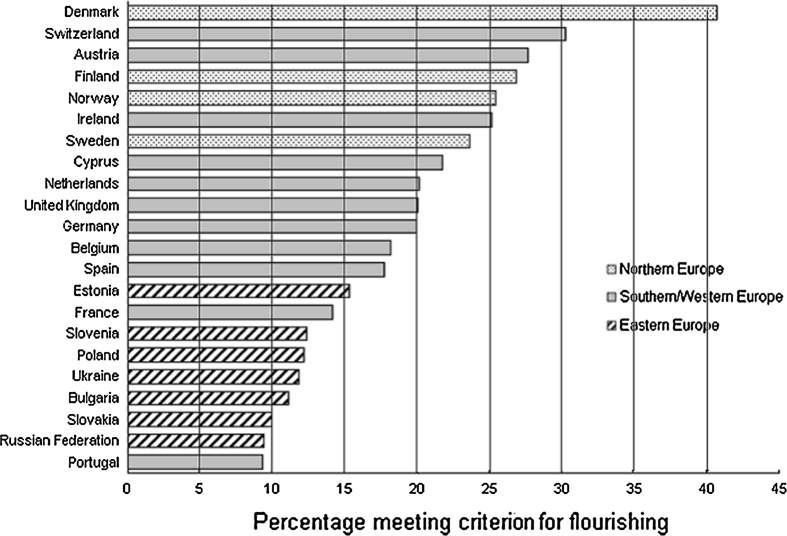
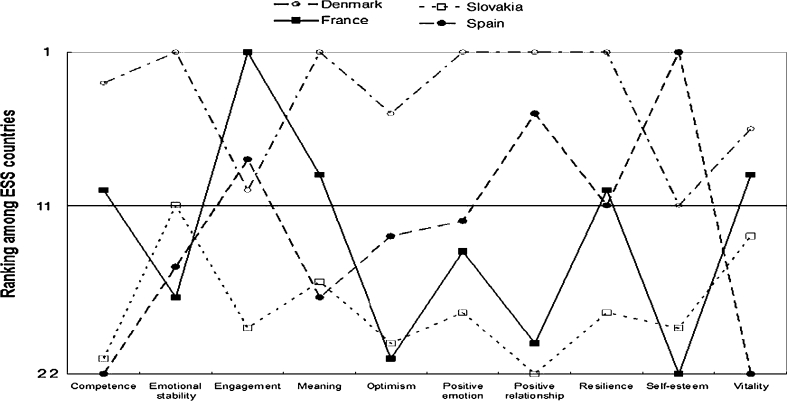
Governments around the world are recognising the importance of measuring subjective well-being as an indicator of progress. But how should well-being be measured? A conceptual framework is offered which equates high well-being with positive mental health. Well-being is seen as lying at the opposite end of a spectrum to the common mental disorders (depression, anxiety). By examining internationally agreed criteria for depression and anxiety (DSM and ICD classifications), and defining the opposite of each symptom, we identify ten features of positive well-being. These combine feeling and functioning, i.e. hedonic and eudaimonic aspects of well-being: competence, emotional stability, engagement, meaning, optimism, positive emotion, positive relationships, resilience, self esteem, and vitality. An operational definition of flourishing is developed, based on psychometric analysis of indicators of these ten features, using data from a representative sample of 43,000 Europeans. Application of this definition to respondents from the 23 countries which participated in the European Social Survey (Round 3) reveals a four-fold difference in flourishing rate, from 41% in Denmark to less than 10% in Slovakia, Russia and Portugal. There are also striking differences in country profiles across the 10 features. These profiles offer fresh insight into cultural differences in well-being, and indicate which features may provide the most promising targets for policies to improve well-being. Comparison with a life satisfaction measure shows that valuable information would be lost if well-being was measured by life satisfaction. Taken together, our findings reinforce the need to measure subjective well-being as a multi-dimensional construct in future surveys.
Overview
The claims and statistics of this paper haven’t been checked yet.
Free: it reads the open-access text and checks the first 5 claims that cite a source we can check. Create a free account to check every claim.
Integrity signals
Registry
Cites
Statistics
Figures
Verification
Claims the paper makes
The claims and statistics of this paper haven’t been checked yet.
Free: it reads the open-access text and checks the first 5 claims that cite a source we can check. Create a free account to check every claim.
Claims other papers make about this one
Each is checked against this paper’s own text: does it say what the citing paper says it does?
The source backs part of the claim, not all of it — or backs it for a different population, condition or comparison.
In the citing paper
“If flourishing encompasses emotional resonance, relational quality, and mutual regulation (4, 5), then sex differences in physiological attunement may influence how individuals engage in supportive, co-regulatory interactions that sustain psychological health.”
From Physiological attunement and flourishing: understanding the influence of relationships on health (2025) · cites this paper as [4]
Experimental — accuracy not yet measured
Self-check
Percentages, sums and reported differences re-computed from the paper’s own numbers.
The self-check needs the paper’s full text.
Citations
Cites
Diagnostic and Statistical Manual of Mental Disorders
Williams, J. B. W., & First, M. (2013) · Encyclopedia of Social Work · doi:10.1093/acrefore/9780199975839.013.104 · Cited by 109,519
The CES-D Scale: A Self-Report Depression Scale for Research in the General Population
Radloff, L. S. (1977) · Applied Psychological Measurement · doi:10.1177/014662167700100306 · Cited by 53,267
Development and validation of brief measures of positive and negative affect: The PANAS scales.
Watson, D., Clark, L. A., & Tellegen, A. (1988) · Journal of Personality and Social Psychology · doi:10.1037/0022-3514.54.6.1063 · Cited by 32,433 · cited 2×
“Proponents of this view have included Bradburn (1969), Watson et al. (1988), and Diener et al. (1999).”
BackgroundAlternative Ways of Assessing Model Fit
Browne, M. W., & Cudeck, R. (1992) · Sociological Methods & Research · doi:10.1177/0049124192021002005 · Cited by 27,200 · cited 2×
“In general, CFI and GFI values of .90 or above, and RMSEA values of .06 or below are indicative of good empirical fit (Browne and Cudeck 1993; Byrne 1994).”
BackgroundTesting Structural Equation Models.
Mueller, C. W., Bollen, K. A., & Long, J. S. (1994) · Contemporary Sociology · doi:10.2307/2074955 · Cited by 14,120
Subjective well-being: Three decades of progress.
Diener, E., Suh, E. M., Lucas, R. E., & Smith, H. L. (1999) · Psychological Bulletin · doi:10.1037/0033-2909.125.2.276 · Cited by 12,910
On Happiness and Human Potentials: A Review of Research on Hedonic and Eudaimonic Well-Being
Ryan, R. M., & Deci, E. L. (2001) · Annual Review of Psychology · doi:10.1146/annurev.psych.52.1.141 · Cited by 11,567 · cited 4×
“Some conceptual approaches to well-being have focused exclusively on the hedonic aspects (e.g. Bradburn 1969; Diener et al. 1999; Watson et al. 1988), while others have focused exclusively on eudaimonic aspects (e.g. Antonovsky 1993; Jahoda 1958; Ryan and Deci 2001; Ryff 1989).”
BackgroundMethodInfluentialThe structure of psychological well-being revisited.
Ryff, C. D., & Keyes, C. L. M. (1995) · Journal of Personality and Social Psychology · doi:10.1037//0022-3514.69.4.719 · Cited by 10,285 · cited 4×
“Similar findings have been reported in other studies (e.g. Chirkov and Ryan 2001; Diener et al. 2009; Ryff and Keyes 1995), indicating that a global measure of life satisfaction is no substitute for the information gained from a multi-dimensional approach.”
BackgroundResultInfluentialTesting Structural Equation Models.
Clogg, C. C., Bollen, K. A., & Long, J. S. (1995) · Social Forces · doi:10.2307/2580595 · Cited by 8,211
Flourish: A Visionary New Understanding of Happiness and Well-Being
(2011) · Choice Reviews Online · doi:10.5860/choice.48-7217 · Cited by 5,543 · cited 3×
“Our conceptual framework is more in keeping with the approaches of Keyes (2002), Seligman (2002, 2011), Tennant et al. (2007), and the recent work of Diener et al. (2010a, b), all of which incorporate both hedonic and eudaimonic aspects of wellbeing.”
BackgroundMethodResult
Research works printed but not linked: 4
- Böhnke P First European quality of life survey: Life satisfaction, happiness and sense of belonging 2005 Luxembourg Office for Official Publications of the European Communities
- Diener, E., Suh, E. M., & Sapyta, J. (1997). Cited in Diener, E., & Oshi, M. (2004). Are Scandinavians happier than Asians? Issues in comparing nations on subjective wellbeing. In F. Columbus (Ed.), Politics and economics of Asia (pp. 1–25). Hauppauge, NY: Nova Science Publishers.
- Jowell R The Central Co-ordinating Team European Social Survey 2002/2003: Technical report 2003 London Centre for Comparative Social Surveys, City University
- Seligman M Authentic happiness: Using the new positive psychology to realize your potential for lasting fulfilment 2002 New York Free Press
Cited by
The PERMA-Profiler: A brief multidimensional measure of flourishing.
Butler, J., & Kern, M. L. (2016) · International Journal of Wellbeing · doi:10.5502/ijw.v6i3.526 · Cited by 1,485
On the promotion of human flourishing
VanderWeele, T. J. (2017) · Proceedings of the National Academy of Sciences · doi:10.1073/pnas.1702996114 · Cited by 1,387
Gamification for health and wellbeing: A systematic review of the literature
Johnson, D., Deterding, S., Kuhn, K.-A., Staneva, A., Stoyanov, S., & Hides, L. (2016) · Internet Interventions · doi:10.1016/j.invent.2016.10.002 · Cited by 1,237
Designing for Motivation, Engagement and Wellbeing in Digital Experience
Peters, D., Calvo, R. A., & Ryan, R. M. (2018) · Frontiers in Psychology · doi:10.3389/fpsyg.2018.00797 · Cited by 888
“…are also available, such as Ryff’s Psychological Wellbeing Scales (Ryff, 1989), the MHC-SF (Lamers et al., 2011), the Flourishing Scale (Diener et al., 2009), or frameworks in which wellbeing is conceptualized as lying at the opposite end of a spectrum of mental illness (Huppert and So, 2013).”
MethodWell-being is more than happiness and life satisfaction: a multidimensional analysis of 21 countries
Ruggeri, K., Garcia-Garzon, E., Maguire, Á., Matz, S., & Huppert, F. A. (2020) · Health and Quality of Life Outcomes · doi:10.1186/s12955-020-01423-y · Cited by 844
“An extensive discussion on the development and validation of these measures for the framework is provided in this initial paper [27].”
BackgroundMethodResultInfluentialSelf-citationA multidimensional approach to measuring well-being in students: Application of the PERMA framework
Kern, M. L., Waters, L. E., Adler, A., & White, M. A. (2015) · The Journal of Positive Psychology · doi:10.1080/17439760.2014.936962 · Cited by 743
“…in a comparison across European countries, France and Spain scored similarly on overall well-being, but France scored high on engagement, moderately on competence, and low on self-esteem, whereas Spain scored moderately on engagement, low on competence, and high on selfesteem (Huppert & So, 2013).”
BackgroundInfluentialThe EPOCH Measure of Adolescent Well-Being.
Kern, M. L., Benson, L., Steinberg, E. A., & Steinberg, L. (2016) · Psychological Assessment · doi:10.1037/pas0000201 · Cited by 537
“Flourishing generally refers to the good life – feeling good and functioning effectively (Huppert & So, 2013).”
BackgroundInfluentialMartela, F., & Sheldon, K. M. (2019) · Review of General Psychology · doi:10.1177/1089268019880886 · Cited by 534
“Huppert and So (2013) generated their list of flourishing elements by looking at the symptoms of generalized anxiety and depression and identifying mirror opposites of each symptom.”
BackgroundMeasuring Well-Being: A Review of Instruments
Cooke, P. J., Melchert, T. P., & Connor, K. (2016) · The Counseling Psychologist · doi:10.1177/0011000016633507 · Cited by 468
Measuring well-being: A comparison of subjective well-being and PERMA
Goodman, F. R., Disabato, D. J., Kashdan, T. B., & Kauffman, S. B. (2018) · The Journal of Positive Psychology · doi:10.1080/17439760.2017.1388434 · Cited by 367
“Other researchers argue that 16 basic desires underlie human behavior (Reiss, 2004), or that ten features underlie well-being (Huppert & So, 2013).”
BackgroundUpdated thinking on positivity ratios.
Fredrickson, B. L. (2013) · American Psychologist · doi:10.1037/a0033584 · Cited by 393
“Amidst the current rise of interest in human flourishing, major theorists (Huppert & So, 2013;Keyes, 2002; Seligman, 2011) agree that the construct includes both feeling good (i.e., hedonia) and functioning effectively (i.e., eudaimonia) and in this way is the mirror opposite of common mental…”
BackgroundThe Ethics of Digital Well-Being: A Thematic Review
Burr, C., Taddeo, M., & Floridi, L. (2020) · Science and Engineering Ethics · doi:10.1007/s11948-020-00175-8 · Cited by 374
“Many national governments have become interested in the sciences of well-being and their impact on policy (Huppert and So 2013; Stiglitz et al. 2008).”
BackgroundIs well-being associated with the quantity and quality of social interactions?
Sun, J., Harris, K., & Vazire, S. (2020) · Journal of Personality and Social Psychology · doi:10.1037/pspp0000272 · Cited by 332
Hone, L. C., Jarden, A., Schofield, G. M., & Duncan, S. (2014) · International Journal of Wellbeing · doi:10.5502/ijw.v4i1.4 · Cited by 339
Ten questions concerning well-being in the built environment
Altomonte, S., Allen, J., Bluyssen, P. M., Brager, G., Heschong, L., Loder, A., Schiavon, S., Veitch, J. A., Wang, L., & Wargocki, P. (2020) · Building and Environment · doi:10.1016/j.buildenv.2020.106949 · Cited by 303
“in the built environment, advancing positive stimuli and making their minds and affects flourish and thrive [12,13].”
BackgroundGaming well: links between videogames and flourishing mental health
Jones, C. M., Scholes, L., Johnson, D., Katsikitis, M., & Carras, M. C. (2014) · Frontiers in Psychology · doi:10.3389/fpsyg.2014.00260 · Cited by 287
“Using Huppert’s (Huppert and So, 2013) proposition that to flourish is more than the absence of mental disorder but rather a combination of feeling good and functioning effectively, resulting in high levels of mental well-being, and Seligman’s (Seligman, 2011) PERMA theory of well-being, the paper identifies strengths…”
BackgroundInfluentialAn applied framework for Positive Education
Norrish, J. M., Williams, P., O'Connor, M., & Robinson, J. (2013) · International Journal of Wellbeing · doi:10.5502/ijw.v3i2.2 · Cited by 282
“Hence, within the GGS model for Positive Education, flourishing is seen to reflect both ‘feeling good’ and ‘doing good’ (Huppert & So, 2013).”
MethodImran, M. Y., Elahi, N. S., Abid, G., Ashfaq, F., & Ilyas, S. (2020) · Journal of Open Innovation: Technology, Market, and Complexity · doi:10.3390/joitmc6030082 · Cited by 206
“The notion of flourishing has become more and more interesting to scholars [19,20].”
BackgroundWhat Factors are Associated with Flourishing? Results from a Large Representative National Sample
Schotanus-Dijkstra, M., Pieterse, M. E., Drossaert, C. H. C., Westerhof, G. J., de Graaf, R., ten Have, M., Walburg, J. A., & Bohlmeijer, E. T. (2016) · Journal of Happiness Studies · doi:10.1007/s10902-015-9647-3 · Cited by 241
“Researchers have become increasingly interested in the concept of flourishing (Diener et al. 2010; Henderson et al. 2013; Huppert and So 2013; Keyes 2002; Seligman 2011).”
BackgroundMethodInfluentialFactors Associated with Teacher Wellbeing: A Meta-Analysis
Zhou, S., Slemp, G. R., & Vella‐Brodrick, D. (2024) · Educational Psychology Review · doi:10.1007/s10648-024-09886-x · Cited by 312
“However, the extent to which they add anything new remains a topic of debate (Huppert & So, 2013).”
Human flourishing, tourism transformation and COVID-19: a conceptual touchstone
Cheer, J. M. (2020) · Tourism Geographies · doi:10.1080/14616688.2020.1765016 · Cited by 229
The Global Flourishing Study: Study Profile and Initial Results on Flourishing
VanderWeele, T. J., Johnson, B. R., Białowolski, P., Bonhag, R., Bradshaw, M., Breedlove, T., Case, B. W., Chen, Y., Chen, Z. J., Counted, V., et al. (2025) · Nature Mental Health · doi:10.1038/s44220-025-00423-5 · Cited by 253
Kern, M. L., Waters, L., Adler, A., & White, M. (2014) · Psychology · doi:10.4236/psych.2014.56060 · Cited by 234
“Indeed, a positive psychology approach suggests that mental health ranges from extremely negative to extremely positive (Huppert & So, 2013; Keyes, 2002).”
BackgroundTeachers' well-being and job satisfaction: the important role of positive emotions in the workplace
Dreer, B. (2024) · Educational Studies · doi:10.1080/03055698.2021.1940872 · Cited by 233
“It thereby follows prior research in suggesting that job-related well-being is a multidimensional construct with causal effects on job satisfaction (e.g. Bowling, Eschleman, and Wang 2010; Huppert and So 2013).”
BackgroundTeacher well‐being and turnover intentions: Investigating the roles of job resources and job demands
Collie, R. J. (2023) · British Journal of Educational Psychology · doi:10.1111/bjep.12587 · Cited by 258
“In the present study, well-being is defined as “a combination of feeling good and functioning effectively” (Huppert & So, 2013, p. 838).”
Morin, A. J. S., Boudrias, J.-S., Marsh, H. W., McInerney, D. M., Dagenais-Desmarais, V., Madore, I., & Litalien, D. (2017) · Journal of Business and Psychology · doi:10.1007/s10869-016-9448-7 · Cited by 226
Teacher Well-Being: Exploring Its Components and a Practice-Oriented Scale
Collie, R. J., Shapka, J. D., Perry, N. E., & Martin, A. J. (2015) · Journal of Psychoeducational Assessment · doi:10.1177/0734282915587990 · Cited by 225
“This is critical for avoiding a deficit view (Huppert & So, 2013)—which can occur when using stress and burnout—and for ascertaining the extent to which teachers’ work environments are supportive of their well-being.”
BackgroundCurrent recommendations on the selection of measures for well-being.
VanderWeele, T. J., Trudel-Fitzgerald, C., Allin, P., Farrelly, C., Fletcher, G., Frederick, D. E., Hall, J., Helliwell, J. F., Kim, E. S., Lauinger, W. A., et al. (2020) · Preventive Medicine · doi:10.1016/j.ypmed.2020.106004 · Cited by 225
“Several existing approaches make use of one only item per domain (Diener et al., 2009; Huppert and So, 2013).”
BackgroundMethodHappier together. Social cohesion and subjective well‐being in Europe
Delhey, J., & Dragolov, G. (2016) · International Journal of Psychology · doi:10.1002/ijop.12149 · Cited by 191
Montero-Marin, J., Allwood, M., Ball, S., Crane, C., De Wilde, K., Hinze, V., Jones, B., Lord, L., Nuthall, E., Raja, A., et al. (2022) · Evidence Based Mental Health · doi:10.1136/ebmental-2022-300439 · Cited by 184
Patalay, P., & Fitzsimons, E. (2016) · Journal of the American Academy of Child & Adolescent Psychiatry · doi:10.1016/j.jaac.2016.05.019 · Cited by 180
“Theoretically, there is much debate around whether these two constructs represent two ends of the same spectrum of mental health or two distinct domains that overlap and interact.(2,12,17) Little research has examined the possible conceptual and aetiological differences in these constructs by examining the similaritie…”
BackgroundHappiness at work: Developing a shorter measure
Salas-Vallina, A., & Alegre, J. (2021) · Journal of Management & Organization · doi:10.1017/jmo.2018.24 · Cited by 181
“Later, Ryan and Deci (2001) and Huppert and So (2013) continued to develop this approach, which argues that hedonic theories are inadequate to describe the Good Life (Ryan & Deci, 2001).”
BackgroundCollie, R. J., Shapka, J. D., Perry, N. E., & Martin, A. J. (2016) · Journal of Educational Psychology · doi:10.1037/edu0000088 · Cited by 217
“Teachers’ work-related perceptions are central to their psychological functioning in the workplace (e.g., Huppert & So, 2013).”
Health Promotion in Health Care – Vital Theories and Research
(2021) · Springer eBooks · doi:10.1007/978-3-030-63135-2 · Cited by 169
Haver, A., Akerjordet, K., Caputi, P., Furunes, T., & Magee, C. (2015) · Scandinavian Journal of Public Health · doi:10.1177/1403494815588862 · Cited by 182
“The study was conducted in a Scandinavian organizational context known for a relatively high level of subjective well-being [30].”
BackgroundWȩziak-Białowolska, D., McNeely, E., & VanderWeele, T. J. (2019) · Frontiers in Psychology · doi:10.3389/fpsyg.2019.01269 · Cited by 180
Alturki, U., & Aldraiweesh, A. (2021) · Sustainability · doi:10.3390/su131910991 · Cited by 159
“Subjective Well-Being (SW) Subjective well-being is consistent well-being or satisfaction that allows individuals to feel successful and deal with life pressure [28,29].”
BackgroundMorin, A. J. S., Boudrias, J.-S., Marsh, H. W., Madore, I., & Desrumaux, P. (2016) · Structural Equation Modeling: A Multidisciplinary Journal · doi:10.1080/10705511.2015.1116077 · Cited by 181
“%) in comparison to studies on more general population (Huppert & So, 2013; Keyes, 2005) might be explained by our focus on a sample of teachers, a professional group displaying higher than average rates of stress and burnout (Johnson et al., 2005).”
BackgroundResultReligion and wellbeing around the world: Social purpose, social time, or social insurance?
Graham, C., & Crown, S. (2014) · International Journal of Wellbeing · doi:10.5502/ijw.v4i1.1 · Cited by 193
Conceptualizing and Measuring Wellbeing at Work
Fisher, C. D. (2014) · Wellbeing · doi:10.1002/9781118539415.wbwell018 · Cited by 167
PROSPER: A New Framework for Positive Education
Noble, T., & McGrath, H. (2015) · Psychology of Well-Being Theory Research and Practice · doi:10.1186/s13612-015-0030-2 · Cited by 209
“It is a combination of feeling good and functioning effectively (Huppert and So 2013).”
BackgroundDevelopment of the Work-Related Well-Being Questionnaire Based on Seligman’s PERMA Model
Kun, Á., Balogh, P., & Krasz, K. G. (2016) · Periodica Polytechnica Social and Management Sciences · doi:10.3311/ppso.9326 · Cited by 228
“Ryff and Keyes (1995) suggest six domains and Huppert and So (2013) identify 10 items associated with flourishing.”
BackgroundA Multi-Study Examination of Well-Being Theory in College and Community Samples
Coffey, J. K., Wray‐Lake, L., Mashek, D. J., & Branand, B. (2014) · Journal of Happiness Studies · doi:10.1007/s10902-014-9590-8 · Cited by 224
“4.1 Support for Well-Being Theory Supporting the burgeoning theoretical views that well-being is best conceptualized multidimensionally (e.g., Huppert and So 2013; Ryan and Deci 2000; Ryff 1989; Seligman 2011), we provided empirical support for WBT.”
BackgroundResultInfluentialA consensus on the definition of positive animal welfare
Rault, J., Bateson, M., Boissy, A., Forkman, B., Grinde, B., Gygax, L., Harfeld, J. L., Hintze, S., Keeling, L. J., Košťál, Ľ., et al. (2025) · Biology Letters · doi:10.1098/rsbl.2024.0382 · Cited by 202
“Flourishing links to mental and physical wellbeing [22,23].”
Investigating Elite End-of-Athletic-Career Transition: A Systematic Review
Knights, S., Sherry, E., & Ruddock-Hudson, M. (2016) · Journal of Applied Sport Psychology · doi:10.1080/10413200.2015.1128992 · Cited by 136
“An operational definition of flourishing was developed based on 10 features (competence, emotional stability, engagement, meaning, optimism, positive emotion, positive relationships, resilience, self-esteem, and vitality) from the hedonic and eudemonic aspects of well-being (Huppert & So, 2013).”
MethodParental warmth and flourishing in mid-life
Chen, Y., Kubzansky, L. D., & VanderWeele, T. J. (2018) · Social Science & Medicine · doi:10.1016/j.socscimed.2018.10.026 · Cited by 185
“There is some general consensus across various conceptual models of flourishing that have been proposed (Diener et al., 2010; Huppert and So, 2013; Keyes, 2002; Seligman, 2012; VanderWeele, 2017a).”
Teacher well-being: Investigating the contributions of school climate and job crafting
Dreer, B. (2022) · Cogent Education · doi:10.1080/2331186x.2022.2044583 · Cited by 189
The State of Wellbeing Science: Concepts, Measures, Interventions, and Policies
Huppert, F. A. (2014) · Wellbeing · doi:10.1002/9781118539415.wbwell036 · Cited by 97
Self-citationSchotanus-Dijkstra, M., ten Have, M., Lamers, S. M. A., de Graaf, R., & Bohlmeijer, E. T. (2016) · The European Journal of Public Health · doi:10.1093/eurpub/ckw202 · Cited by 132
Chamizo‐Nieto, M. T., Arrivillaga, C., Rey, L., & Extremera, N. (2021) · Frontiers in Psychology · doi:10.3389/fpsyg.2021.695067 · Cited by 163
The student voice in well-being: a case study of participatory action research in positive education
Halliday, A. J., Kern, M. L., Garrett, D. K., & Turnbull, D. A. (2019) · Educational Action Research · doi:10.1080/09650792.2018.1436079 · Cited by 115
“It aims to use evidence-informed interventions and practices to support a student’s well-being, defined as the ability for an individual to feel good and function well (Huppert and So 2013).”
BackgroundSeyranian, V., Madva, A., Duong, N., Abramzon, N., Tibbetts, Y., & Harackiewicz, J. M. (2018) · International Journal of STEM Education · doi:10.1186/s40594-018-0137-0 · Cited by 174
“Flourishing is a gauge of well-being that goes beyond traditional measures of well-being that tend to focus on depression or anxiety or positive states such as life satisfaction, happiness, or positive emotion (Huppert and So, 2013).”
BackgroundInterventions to Teacher Well-Being and Burnout A Scoping Review
Avola, P., Soini, T., Jyrkiäinen, A., & Pentikäinen, V. (2025) · Educational Psychology Review · doi:10.1007/s10648-025-09986-2 · Cited by 184
Anderson, J., Ruggeri, K., Steemers, K., & Huppert, F. A. (2016) · Environment and Behavior · doi:10.1177/0013916516659108 · Cited by 179
“However, this does not compare favorably with the highest recorded prevalence of 42% among the Danish population (Huppert & So, 2013), most of whom also live in urban areas (UN, 2016).”
ResultSelf-citationThe physical office workplace as a resource for mental health – A systematic scoping review
Bergefurt, L., Weijs-Perrée, M., Appel‐Meulenbroek, R., & Arentze, T. (2021) · Building and Environment · doi:10.1016/j.buildenv.2021.108505 · Cited by 173
Understanding and Measuring Psychological Stress Using Social Media
Chandra Guntuku, S., Buffone, A., Jaidka, K., Eichstaedt, J. C., & Ungar, L. H. (2019) · Proceedings of the International AAAI Conference on Web and Social Media · doi:10.1609/icwsm.v13i01.3223 · Cited by 133
The development of a model of community garden benefits to wellbeing
Egli, V., Oliver, M., & Tautolo, E. (2016) · Preventive Medicine Reports · doi:10.1016/j.pmedr.2016.04.005 · Cited by 159
“The connections between specific concepts, those on the outer branches, are not clearly communicated, for example nature contact and decreased stress are two themeswhich have been shown to influence each other (Kaplan, 1995).”
BackgroundPerugini, M. L. L., de la Iglesia, G., Solano, A. C., & Keyes, C. (2017) · Europe's Journal of Psychology · doi:10.5964/ejop.v13i1.1163 · Cited by 129
Guo, C., Tomson, G., Guo, J., Li, X., Keller, C., & Söderqvist, F. (2015) · Health and Quality of Life Outcomes · doi:10.1186/s12955-015-0394-2 · Cited by 130
“Based on a psychometric analysis of indicators of these ten features, an operational definition of flourishing was developed using data from a sample of 43,000 Europeans [16].”
MethodMeasuring Well-Being in Sport Performers: Where are We Now and How do we Progress?
Giles, S., Fletcher, D., Arnold, R., Ashfield, A., & Harrison, J. (2020) · Sports Medicine · doi:10.1007/s40279-020-01274-z · Cited by 117
“Drawing on research in broader psychology, it is interesting to note that two validated and brief well-being scales, the Short Warwick–Edinburgh Mental-Wellbeing Scale (SWEMWBS) [159] and Flourishing Scale (FS) [160] incorporate only single-item constructs, despite researchers and psychometricians maintaining that it…”
BackgroundMethodRelationship between Psychological Capital and Quality of Life: The Role of Courage
Santisi, G., Lodi, E., Magnano, P., Zarbo, R., & Zammitti, A. (2020) · Sustainability · doi:10.3390/su12135238 · Cited by 162
Doyle, J. P., Filo, K. R., Lock, D., Funk, D. C., & McDonald, H. (2016) · Sport Management Review · doi:10.1016/j.smr.2016.04.007 · Cited by 153
“The state of flourishing is characterised by experiencing “the opposite of mental disorder, rather than its mere absence” (Huppert & So, 2013, p.849).”
BackgroundWell-being and social media: A systematic review of Bergen addiction scales
Duradoni, M., Innocenti, F., & Guazzini, A. (2020) · Future Internet · doi:10.3390/fi12020024 · Cited by 141
“The flourishing definition encompasses purpose in life, self‐esteem, positive relationships, competence, engagement, optimism, and contribution toward the well‐being of others [63,64].”
BackgroundMental Health Without Well-being
Wren-Lewis, S., & Alexandrova, A. (2021) · The Journal of Medicine and Philosophy A Forum for Bioethics and Philosophy of Medicine · doi:10.1093/jmp/jhab032 · Cited by 141
Guerci, M., Hauff, S., & Gilardi, S. (2019) · The International Journal of Human Resource Management · doi:10.1080/09585192.2019.1695647 · Cited by 163
Song, H., Gu, Q., & Zhang, Z. (2020) · Teachers and Teaching · doi:10.1080/13540602.2020.1719059 · Cited by 167
Measuring children and young people’s wellbeing in the school context
McLellan, R., & Steward, S. (2014) · Cambridge Journal of Education · doi:10.1080/0305764x.2014.889659 · Cited by 170
“Policylevel work attempting to assess adult wellbeing at European (Huppert & So, 2013; Huppert et al., 2009; Michaelson, Abdallah, Steuer, Thompson, & Marks, 2009) as well as national level (Dolan, Layard, & Metcalfe, 2011; Self & Randall, 2013) is also increasingly drawing on both hedonic and eudaimonic conceptualisa…”
BackgroundMethodInfluentialYildirim, M. (2019) · Europe’s Journal of Psychology · doi:10.5964/ejop.v15i2.1640 · Cited by 125
Using the PERMA Model in the United Arab Emirates
D’raven, L. L., & Pasha-Zaidi, N. (2015) · Social Indicators Research · doi:10.1007/s11205-015-0866-0 · Cited by 152
Kyriazos, T. A., Stalikas, A., Prassa, K., Galanakis, M., Yotsidi, V., & Lakioti, A. (2018) · Psychology · doi:10.4236/psych.2018.97107 · Cited by 121
“Resilience has also been found to strongly correlate with Positive Affect (Huppert & So, 2013), physical health (Montross et al., 2006), optimism (Lee et al., 2008), satisfaction with life (Abolghasemi & Varaniyab, 2010), mindfulness (Keyes & Pidgeon, 2013) and equally strongly but negatively with…”
BackgroundA systematic review on the impact of social support on college students’ wellbeing and mental health
Li, R., Hassan, N. C., Zhu, Q., Ouyang, S., & Jingyi, D. (2025) · PLoS ONE · doi:10.1371/journal.pone.0325212 · Cited by 164
Conceptualizing adventurous nature sport: A positive psychology perspective
Mackenzie, S. H., & Brymer, E. (2018) · Annals of Leisure Research · doi:10.1080/11745398.2018.1483733 · Cited by 154
Positive mental health and mental illness.
Gilmour, H. (2014) · PubMed · Cited by 131
A Model of Positive School Leadership to Improve Teacher Wellbeing
Cann, R. F., Riedel, R., & Powell, D. (2020) · International Journal of Applied Positive Psychology · doi:10.1007/s41042-020-00045-5 · Cited by 147
“…growth, positive relations, purpose in life, and self-acceptance (Ryff 1989), and Huppert & So’s 10 features of flourishing: competence, emotional stability, engagement, meaning, optimism, positive emotion, positive relationships, resilience, self-esteem, and vitality (Huppert and So 2013).”
BackgroundSchotanus-Dijkstra, M., Drossaert, C. H. C., Pieterse, M. E., Boon, B., Walburg, J. A., & Bohlmeijer, E. T. (2017) · Internet Interventions · doi:10.1016/j.invent.2017.04.002 · Cited by 126
“This is important because low and moderate well-being is highly prevalent in the USA and Europe, regardless of mental illness (Huppert and So, 2013; Keyes, 2005, 2007; Schotanus-Dijkstra et al., 2016c).”
BackgroundDaily spillover from family to work: A test of the work–home resources model.
Du, D., Derks, D., & Bakker, A. B. (2018) · Journal of Occupational Health Psychology · doi:10.1037/ocp0000073 · Cited by 112
“The flourishing concept is increasingly used in the positive organizational psychology literature to describe well-being (Huppert & So, 2011; Selig-man, 2011).”
Yang, J., Peng, M. Y.-P., Wong, S., & Chong, W. (2021) · Frontiers in Psychology · doi:10.3389/fpsyg.2021.584976 · Cited by 87
“Subjective Well-Being Subjective well-being is consistent well-being or satisfaction that allows individuals to feel successful and deal with life pressure (Diener and Seligman, 2004; Huppert and So, 2013).”
BackgroundFranzosa, E., Tsui, E. K., & Baron, S. (2019) · The Gerontologist · doi:10.1093/geront/gny099 · Cited by 114
Lomas, T., Bradshaw, M., Case, B. W., Cowden, R. G., Crabtree, S., English, C., Fogleman, A., Johnson, K. A., Ritter, Z., Johnson, B. R., et al. (2025) · BMC Global and Public Health · doi:10.1186/s44263-025-00139-9 · Cited by 135
“Also prominent are Huppert and So, who view flourishing as “synonymous with a high level of mental well-being … epitomis[ing] mental health” [4].”
The scales of general well-being (SGWB)
Longo, Y., Coyne, I. J., & Joseph, S. (2017) · Personality and Individual Differences · doi:10.1016/j.paid.2017.01.005 · Cited by 142
“Consistent with this notion, general well-being has been recently defined as “the experience of life going well” (Huppert & So, 2013, p. 838).”
BackgroundMethodInfluentialThe age and well-being “paradox”: a longitudinal and multidimensional reconsideration
Hansen, T., & Blekesaune, M. (2022) · European Journal of Ageing · doi:10.1007/s10433-022-00709-y · Cited by 149
Coghlan, A. (2015) · Journal of Sustainable Tourism · doi:10.1080/09669582.2014.986489 · Cited by 138
“…form of wellbeing or complete state of mental health, with its subsequent implications for increased psychosocial functioning, productivity, creativity, and contributions to society, better physical health, longer life expectancy, and decreased health care costs (Huppert & So, 2013; Keyes, 2007).”
BackgroundHone, L. C., Jarden, A., Duncan, S., & Schofield, G. (2015) · Journal of Occupational and Environmental Medicine · doi:10.1097/jom.0000000000000508 · Cited by 149
“sample of 43,000 Europeans,(29) analyzing responses from the survey’s 10 items most closely corresponding to the identified positive features, plus one-item assessing life satisfaction.(25) Exploratory factor analysis revealed the presence of three factors, which they referred to as ‘‘positive characteristics’’ (compr…”
BackgroundMethodWidlund, A., Tuominen, H., & Korhonen, J. (2018) · Frontiers in Psychology · doi:10.3389/fpsyg.2018.00297 · Cited by 134
“Therefore, in line with previous research and as recommended by Huppert and So (2013), we conceptualized well-being as a multidimensional construct covering both negative (e.g., burnout) and positive (e.g., engagement) aspects of academic well-being in our investigation.”
ResultCross-national and historical differences in subjective well-being
Jorm, A. F., & Ryan, S. (2014) · International Journal of Epidemiology · doi:10.1093/ije/dyt188 · Cited by 125
Lifelong Pathways to Longevity: Personality, Relationships, Flourishing, and Health
Kern, M. L., Della Porta, S. S., & Friedman, H. S. (2014) · Journal of Personality · doi:10.1111/jopy.12062 · Cited by 110
“Recent theories on human flourishing have suggested that flourishing is a multidimensional construct that represents functioning well across multiple life domains (e.g., Huppert & So, 2011; Ryff & Keyes, 1995; Seligman, 2011).”
BackgroundSmith, M. M., Pereira, S. M. P., Chan, L., Rose, C., & Shafran, R. (2018) · Clinical Child and Family Psychology Review · doi:10.1007/s10567-018-0253-x · Cited by 120
“It is suggested that high well-being is positively related to good mental health and can be made up of the following ten components: competence, emotional stability, engagement, meaning, optimism, positive emotion, positive relationships, resilience, self-esteem, and vitality (Huppert and So 2013).”
BackgroundAdolescent flourishing: A systematic review
Witten, H., Savahl, S., & Adams, S. (2019) · Cogent Psychology · doi:10.1080/23311908.2019.1640341 · Cited by 136
Vaingankar, J. A., Abdin, E., Chong, S. A., Sambasivam, R., Seow, E., Jeyagurunathan, A., Picco, L., Stewart-Brown, S., & Subramaniam, M. (2017) · Health and Quality of Life Outcomes · doi:10.1186/s12955-017-0728-3 · Cited by 96
“the testing of psychometric properties of well-being measures in different populations is an important step to ensuring the quality of assessment and future cross-cultural adaptation of well-being measures [39, 40].”
Psychometric validation of the PERMA-profiler as a well-being measure for student veterans
Umucu, E., Wu, J.-R., Sánchez, J., Brooks, J., Chiu, C.-Y., Tu, W., & Chan, F. (2019) · Journal of American College Health · doi:10.1080/07448481.2018.1546182 · Cited by 120
“well-being occurs when these two components of well-being are present within an individual at the same time.(3,10,13) Forgeard and colleagues(13) also reported that Seligman’s”
BackgroundGiuntoli, L., Ceccarini, F., Sica, C., & Caudek, C. (2017) · SAGE Open · doi:10.1177/2158244016682293 · Cited by 120
“After noting the limitations of the existing measurement instruments, several authors studying flourishing have tried to identify its underlying dimensions (Diener et al., 2010; Huppert & So, 2013; Keyes, 2002; Seligman, 2011).”
BackgroundFlourishing: An Evolutionary Concept Analysis
Agenor, C., Conner, N., & Aroian, K. (2017) · Issues in Mental Health Nursing · doi:10.1080/01612840.2017.1355945 · Cited by 92
“Engagement is present during moments of losing track of time (Seligman, 2011), being engaged in daily activities (Diener et al., 2010), and having an interest in learning (Huppert & So, 2013).”
BackgroundMethodResultInfluentialThe Japanese Workplace PERMA-Profiler: A validation study among Japanese workers
Watanabe, K., Kawakami, N., Shiotani, T., Adachi, H., Matsumoto, K., Imamura, K., Matsumoto, K., Yamagami, F., Fusejima, A., Muraoka, T., et al. (2018) · Journal of Occupational Health · doi:10.1539/joh.2018-0050-oa · Cited by 114
Psychometric Properties of Flourishing Scales From a Comprehensive Well-Being Assessment
Węziak‐Białowolska, D., Białowolski, P., Lee, M. T., Chen, Y., VanderWeele, T. J., & McNeely, E. (2021) · Frontiers in Psychology · doi:10.3389/fpsyg.2021.652209 · Cited by 110
Teachers’ work motivation: Examining perceived leadership practices and salient outcomes
Collie, R. J. (2023) · Teaching and Teacher Education · doi:10.1016/j.tate.2023.104348 · Cited by 126
“More-over, the outcomes comprise key components of psychological functioning: functioning effectively (extra-role behavior, turnover intentions) and feeling good (affect; Huppert & So, 2013).”
A scoping review of well-being measures: conceptualisation and scales for overall well-being
Zhang, W., Balloo, K., Hosein, A., & Medland, E. (2024) · BMC Psychology · doi:10.1186/s40359-024-02074-0 · Cited by 129
“For example, Hone et al. [7] reviewed four conceptual and operational definitions of well-being: Keyes [27]; Huppert and So [21]; Diener et al. [28]; and Selig-man [19] and highlighted their commonalities and areas of difference.”
BackgroundDeHaan, C. R., Hirai, T., & Ryan, R. M. (2016) · Journal of Happiness Studies · doi:10.1007/s10902-015-9684-y · Cited by 106
“A number of scholars have linked the concept of flourishing with the Aristotelian concept of eudaimonia (Huppert and So 2013; Ryan and Deci 2011; Waterman 2012).”
Collie, R. J., & Martin, A. J. (2024) · Computers and Education: Artificial Intelligence · doi:10.1016/j.caeai.2024.100224 · Cited by 70
Mansfield, L., Kay, T., Meads, C., Grigsby-Duffy, L., Lane, J., John, A., Daykin, N., Dolan, P., Testoni, S., Julier, G., et al. (2018) · BMJ Open · doi:10.1136/bmjopen-2017-020959 · Cited by 103
Framing holistic indoor environment: Definitions of comfort, health and well-being
Rohde, L., Larsen, T. S., Jensen, R. L., & Larsen, O. K. (2019) · Indoor and Built Environment · doi:10.1177/1420326x19875795 · Cited by 116
Metadata
- Authors
- Huppert, F. A., & So, T. T. C.
- Affiliations
- University of Cambridge (GB)
- Corresponding author
- Huppert, Felicia A.
- ORCID
- Huppert, Felicia A.
- Venue
- Social Indicators Research
- Published
- 2011-12-15
- Volume
- 110
- Issue
- 3
- Pages
- 837-861
- ISSN
- 0303-8300 (ISSN-L)
- 1573-0921
- PMC
- PMC3545194
- OpenAlex
- W1992646537
- Cited by
- 1,864
- References
- 88
- Citations by year
- 2026: 170 · 2025: 196 · 2024: 209 · 2023: 187 · 2022: 214 · 2021: 173 · 2020: 159 · 2019: 131 · 2018: 109 · 2017: 101 · 2016: 74 · 2015: 67 · 2014: 46 · 2013: 24 · 2012: 4
- FWCI
- 32.30
- Type
- journal article
- Language
- en
- Open access
- hybrid
- doi.org
- Licence
- cc-by-nc
- Locations
- Social Indicators Research (publishedVersion, cc-by-nc)
- Europe PMC (PubMed Central) (publishedVersion, cc-by-nc)
- PubMed Central (publishedVersion, cc-by-nc)
- PubMed (publishedVersion)
- Research Bank (Australian Catholic University) (submittedVersion)
- RePEc: Research Papers in Economics (submittedVersion)
- Topics
- Social Sciences › Psychology › Social Psychology › Psychological Well-being and Life Satisfaction
- Social Sciences › Sociology and Political Science › Quality of Life Measurement
- Social Sciences › Psychology › Developmental and Educational Psychology › Flow Experience in Various Fields
- Keywords
- eudaimonia, subjective well-being, positive mental health, positive well-being, hedonic well-being, eudaimonic well-being, depression, anxiety, life satisfaction, well-being measurement, European Social Survey
About these checks
Registry, retraction, Cites and statistics results are computed, not judged, with one exception: a printed reference that no index lists is read once by a model before it counts as a citation error. Claims are extracted by a model and kept only when their quote appears verbatim in the text; each cited source is then checked, with a model’s help, for whether it says what the claim relies on. Those verdicts can be wrong — read the claim’s quote and the cited source before relying on one.
Statistics and arithmetic are recomputed, not judged.
Confidence bands are shown only for fields calibrated on our annotated test set. None is calibrated yet, so no band is shown.
What counts as a claim ›How we measure confidence ›How we check this ›
Are you an author, or do you see a problem with this page? Request a review
Data sources
Bibliographic data: Semantic Scholar, OpenAlex, Crossref.
Contains information from the Semantic Scholar Academic Graph Datasets, made available under the ODC Attribution License (ODC-BY 1.0).
Semantic Scholar’s data is described in: Kinney, R., et al. (2023). The Semantic Scholar Open Data Platform. arXiv:2301.10140.
