

Gamification enhances student intrinsic motivation, perceptions of autonomy and relatedness, but minimal impact on competency: a meta-analysis and systematic review
Open accessThe DOI matches its Crossref record; 122 of the 124 references it cites were found in a registry or an index, and 1 are not checked yet; 1 of the 114 sources its claims cite were checked for support.
Abstract
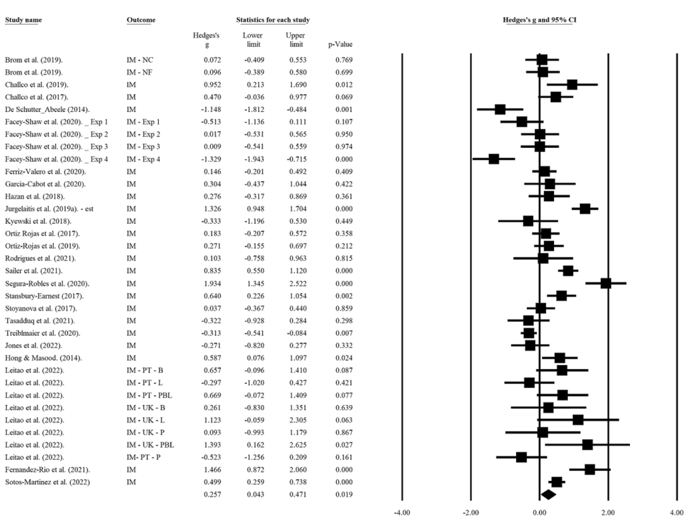
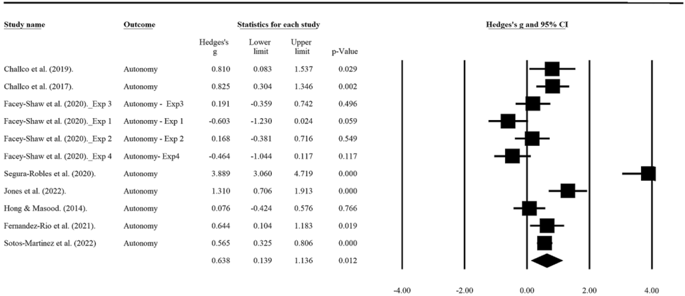
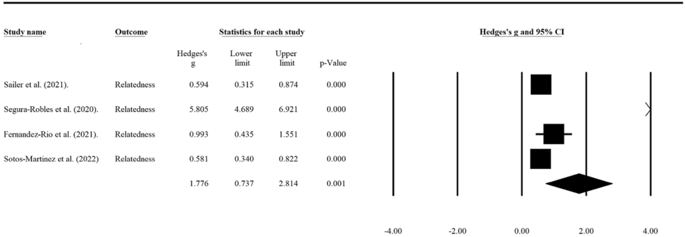
Although many studies in recent years have examined the use of gamification as a motivational strategy in education, evidence regarding its effects on intrinsic motivation is inconsistent. To make the case for or against the adoption of gamification in education, this study examines its effects on students’ intrinsic motivation and the underlying motivational factors: perceived competence, autonomy, and relatedness. In this review, we analyzed the results of studies comparing gamified learning with non-gamified learning published between 2011 and 2022. The results of our meta-analysis of 35 independent interventions (involving 2500 participants) indicated an overall significant but small effect size favoring gamified learning over learning without gamification (Hedges’g = 0.257, 95% CI [0.043, 0.471],p = .019) with no evidence of publication bias. Gamification also exerted a positive and significant effect on the students’ perceptions of autonomy (Hedges’g = 0.638, 95% CI [0.139, 1.136],p = .012) and relatedness (Hedges’g = 1.776, 95% CI [0.737, 2.814],p = .001), but minimal impact on competence (Hedges’g = 0.277, 95% CI [0.001, 0.553],p = .049). To further investigate the possible reasons for the small impact on intrinsic motivation, a systematic review of 31 studies was conducted. The findings revealed two major challenges encountered in the adoption of gamification to increase students’ intrinsic motivation: students’ lack of perceived competence and lack of perceived autonomy in gamified classes.
Verified 2026-11-23 · 1 reference not checked yet
Overview
CoChat Summary
TL;DR
This meta-analysis and systematic review compared gamified with non-gamified learning and found a small significant positive effect on intrinsic motivation, positive effects on autonomy and relatedness, but minimal impact on competence. The systematic review identified students’ lack of perceived competence and lack of perceived autonomy as major challenges in gamified classes.
Key findings
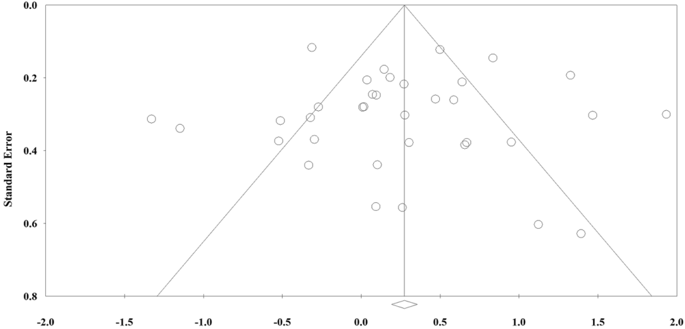
- Across 35 independent interventions involving 2,500 participants, gamification had a small significant overall effect on intrinsic motivation: Hedges’ g = 0.257, 95% CI [0.043, 0.471], p = .019; no evidence of publication bias was found (e.g., fail-safe N = 281; Egger’s regression p = .887; Begg and Mazumdar p = .820).
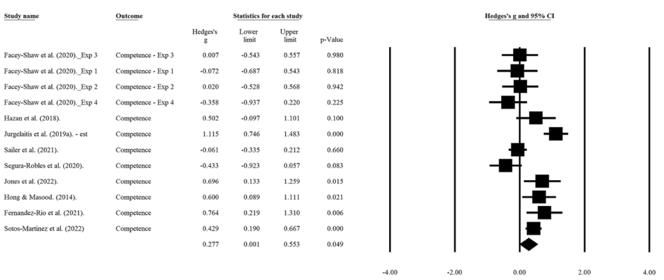
- Gamification significantly improved perceived autonomy (Hedges’ g = 0.638, 95% CI [0.139, 1.136], p = .012) and relatedness (Hedges’ g = 1.776, 95% CI [0.737, 2.814], p = .001), but had minimal impact on competence (Hedges’ g = 0.277, 95% CI [0.001, 0.553], p = .049).
- Significant moderator effects were found for reward contingency (Q = 99.486, p = .000), intervention duration (Q = 9.509, df = 4, p = .050), and instructor equivalence (Q = 12.596, df = 2, p = .002); same-instructor studies had g = 0.613 versus different-instructor studies g = −0.143, and 1–3 month interventions had g = 0.610 versus ≥1 semester g = −0.068.
- The systematic review of 31 studies found two main challenges: lack of perceived competence (e.g., discomfort among lowest-ranked participants on public absolute leaderboards, 23%; unsuitable task difficulty, 10%; unfamiliarity with gamification elements, 10%) and lack of perceived autonomy (e.g., lack of autonomy in choosing learning content and activities, 19%).
Methods
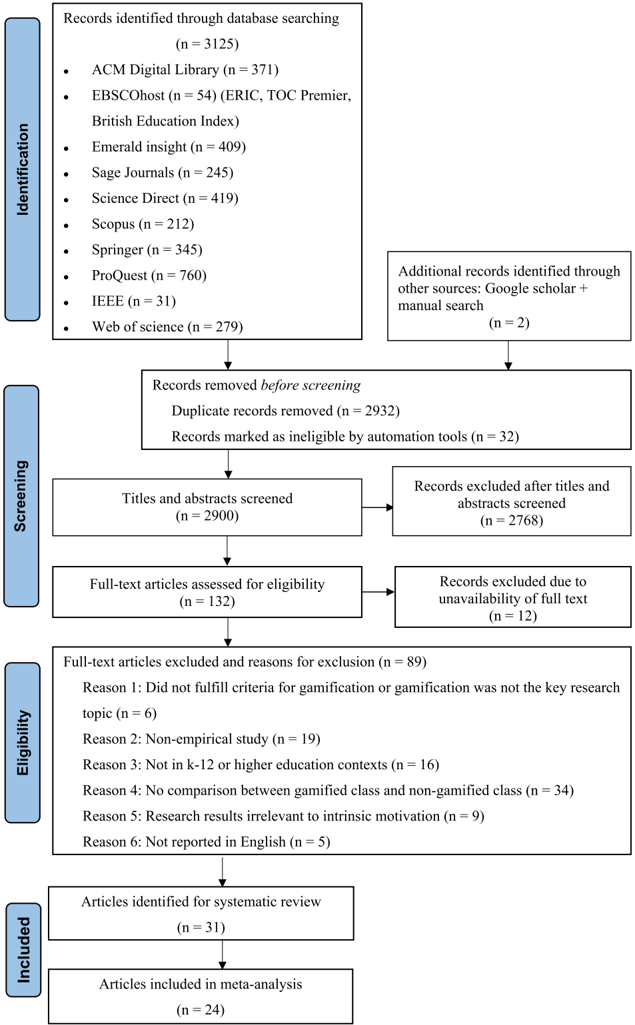
- PRISMA-guided search of 10 electronic databases for English-language studies published January 2011–October 2022 in K-12 or higher education; 3,125 records were retrieved, 132 full-text articles were eligible, 31 articles were included, and 24 provided sufficient data for meta-analysis, yielding 35 independent gamified classroom interventions and 2,500 participants.
- Meta-analysis used random effects models and Hedges’ g in Comprehensive Meta-Analysis v4; heterogeneity was assessed with Q and I², moderator analyses covered participant, course, control, game-element, reward, and reward-contingency variables, and publication bias was assessed via funnel plot, classic fail-safe N, Egger’s regression, and Begg and Mazumdar’s rank correlation.
- Systematic review used self-determination theory to code qualitative findings; the first author coded all articles using a constant-comparative approach, the second author independently coded 20%, and data-extraction inter-coder reliability was 98%.
Limitations
- Stated: many included studies had missing information or unclear reporting (e.g., insufficient statistical data); self-reports were the most common measurement approach and may reduce objectivity; moderator coding relied on information explicitly reported in original articles, with unreported variables coded as not available.
- Evident from the text: the relatedness meta-analysis was based on only 4 independent interventions, and competence and autonomy on 12 and 11 respectively; heterogeneity was substantial (I² = 83.527%), and a substantial part of heterogeneity could not be explained by the moderators investigated.
- Evident from the text: many studies did not report instructor equivalence (18 of 35 interventions in the instructor-equivalence analysis), and no included study assessed intrinsic motivation by monitoring free-choice behavior.
Model-written summary. Check it against the paper before relying on it.
Integrity signals
Registry
Cites
Statistics
Figures
Verification
Claims the paper makes
1 Valid · 0 Not valid · 74 Not checked · 75 Own results and interpretations
The cited sources support only part of this claim — read each source’s verdict below.
In the paper
“Questions that exceeded the students' expected difficulty, combined with negative feedback, also undermined their competence needs (e.g., Sailer & Sailer, 2021).”
§ Gamification enhances student intrinsic motivation, perceptions of autonomy and relatedness, but minimal impact on competency: a meta-analysis and systematic review > RQ4. What are the current challenges that gamification research must address?
What the sources say
- Partly supportedcites Sailer & Sailer, 2021 matched to “Gamification of in‐class activities in flipped classroom lectures” (2021) sourceExperimental — accuracy not yet measured
The Discussion (pp. 86-87) does say that negative feedback tends to diminish perceived competence and that this 'can be the case here as the item difficulty was higher than expected', and that negative feedback can be experienced as controlling, further diminishing competence need satisfaction — so the combination of over-difficult questions plus negative feedback and competence is the paper's own explanation. However, the paper states this only as a hedged interpretation ('can be the case here', 'we might have failed to provide optimal challenges'), while its measured result (Motivational outcomes, p. 85) showed no significant difference in competence need satisfaction between gamification and control (M = 4.03 vs 4.11, p = .67, g = -.06), contradicting Hypothesis 2.2; the underlying principle is also credited to Deci, Ryan & Williams (1996). The citing sentence therefore presents as a demonstrated undermining what this source offers as a possible explanatory mechanism. (LLM, conf=0.78)
plainstates a cause- Asserted: passes — The authors put it forward as true.
- Checkable: passes — It can be checked against evidence.
- Load-bearing: unclear — It is unclear whether the paper’s conclusions depend on it.
- Based: passes — The paper gives a reason why it holds.
- Partly supported
A result the paper reports from its own data — it cites no other source for it, so there is none to check. The quote shows it is in the paper.
In the paper
“The results of our meta-analysis of 35 independent interventions (involving 2500 participants) indicated an overall significant but small effect size favoring gamified learning over learning without gamification (Hedges' g = 0.257, 95% CI [0.043, 0.471], p = .019)”
§ Gamification enhances student intrinsic motivation, perceptions of autonomy and relatedness, but minimal impact on competency: a meta-analysis and systematic review > Abstract
hedgedstates a causen = 2,500 ·- Asserted: passes — The authors put it forward as true.
- Checkable: passes — It can be checked against evidence.
- Load-bearing: passes — The paper’s conclusions depend on it.
- Based: passes — The paper gives a reason why it holds.
A result the paper reports from its own data — it cites no other source for it, so there is none to check. The quote shows it is in the paper.
In the paper
“and relatedness (Hedges' g = 1.776, 95% CI [0.737, 2.814], p = .001)”
§ Gamification enhances student intrinsic motivation, perceptions of autonomy and relatedness, but minimal impact on competency: a meta-analysis and systematic review > Abstract
plainstates a causen = 2,500 ·- Asserted: passes — The authors put it forward as true.
- Checkable: passes — It can be checked against evidence.
- Load-bearing: passes — The paper’s conclusions depend on it.
- Based: passes — The paper gives a reason why it holds.
A result the paper reports from its own data — it cites no other source for it, so there is none to check. The quote shows it is in the paper.
In the paper
“but minimal impact on competence (Hedges' g = 0.277, 95% CI [0.001, 0.553], p = .049).”
§ Gamification enhances student intrinsic motivation, perceptions of autonomy and relatedness, but minimal impact on competency: a meta-analysis and systematic review > Abstract
plainn = 2,500 ·- Asserted: passes — The authors put it forward as true.
- Checkable: passes — It can be checked against evidence.
- Load-bearing: passes — The paper’s conclusions depend on it.
- Based: passes — The paper gives a reason why it holds.
A result the paper reports from its own data — it cites no other source for it, so there is none to check. The quote shows it is in the paper.
In the paper
“Gamification also exerted a positive and significant effect on the students' perceptions of autonomy (Hedges' g = 0.638, 95% CI [0.139, 1.136], p = .012)”
§ Gamification enhances student intrinsic motivation, perceptions of autonomy and relatedness, but minimal impact on competency: a meta-analysis and systematic review > Abstract
plainstates a causen = 2,500 ·- Asserted: passes — The authors put it forward as true.
- Checkable: passes — It can be checked against evidence.
- Load-bearing: passes — The paper’s conclusions depend on it.
- Based: passes — The paper gives a reason why it holds.
72 more claims
Create a free account to see all 150 claims and to verify the 106 references still open.
- Probably not a substantial claim. 54
- It may state two separate claims as one. 31
- The quote only partly states this claim. 3
Self-check
Percentages, sums and reported differences re-computed from the paper’s own numbers.
Each contradiction between two passages listed here was confirmed by an independent check.
Rated minor: it would not touch a result — a value no result rests on, a p-value that stays on the same side of the significance level, or a conflict that is clerical, resolved elsewhere in the paper, or outside its own findings.
In the paper
§ Gamification enhances student intrinsic motivation, perceptions of autonomy and relatedness, but minimal impact on competency: a meta-analysis and systematic review > RQ3: What is the effect of gamification on the basic psychological needs that contribute to intrinsic motivation?
“the effect size of the influence of gamification on perceived competence was marginally significant (Hedges' g = 0.277, 95% CI [0.001, 0.553], p = 0.049)”
§ Gamification enhances student intrinsic motivation, perceptions of autonomy and relatedness, but minimal impact on competency: a meta-analysis and systematic review > Effect of gamification on basic psychological needs
“the results showed that the gamification interventions did not satisfy the students' competence needs significantly better than non-gamified learning.”
Rated minor: it would not touch a result — a value no result rests on, a p-value that stays on the same side of the significance level, or a conflict that is clerical, resolved elsewhere in the paper, or outside its own findings.
In the paper
§ Gamification enhances student intrinsic motivation, perceptions of autonomy and relatedness, but minimal impact on competency: a meta-analysis and systematic review > Study selection
“(c) all selected studies were peerreviewed articles;”
§ Gamification enhances student intrinsic motivation, perceptions of autonomy and relatedness, but minimal impact on competency: a meta-analysis and systematic review > Search strategy
“we did not restrict our sources of papers to peer-reviewed journals and instead also included conference papers and dissertations.”
Citations
Cites
Preferred Reporting Items for Systematic Reviews and Meta-Analyses: The PRISMA Statement
Moher, D., Liberati, A., Tetzlaff, J., Altman, D. G., & The PRISMA Group (2009) · PLoS Medicine · doi:10.1371/journal.pmed.1000097 · Cited by 64,042 · cited 1×
“The Preferred Reporting Items for Systematic Reviews and Meta-analyses (PRISMA) statement guided the procedure for choosing relevant studies (Moher et al., 2009).”
Ryan, R. M., & Deci, E. L. (2000) · American Psychologist · doi:10.1037//0003-066x.55.1.68 · Cited by 54,599
Lincoln, Y. S., Guba, E. G., & Pilotta, J. J. (1985) · International Journal of Intercultural Relations · doi:10.1016/0147-1767(85)90062-8 · Cited by 45,787
The "what" and "why" of goal pursuits: Human needs and the self-determination of behavior
Deci, E. L., & Ryan, R. M. (2000) · Psychological Inquiry · doi:10.1207/s15327965pli1104_01 · Cited by 34,210 · cited 4×
“(2) Autonomy refers to psychological freedom and the volition to perform tasks (Deci & Ryan, 2000, p. 231; Van den Broeck et al., 2010; Vansteenkiste et al., 2010).”
InfluentialIntrinsic Motivation and Self-Determination in Human Behavior
Deci, E. L., & Ryan, R. M. (1985) · doi:10.1007/978-1-4899-2271-7 · Cited by 26,772 · cited 3×
“As Deci and Ryan (1985) argued, activities that are trivial or simple and therefore provide no challenge are not intrinsically interesting, even for somebody who perceives themselves to be extremely competent.”
The need to belong: Desire for interpersonal attachments as a fundamental human motivation.
Baumeister, R. F., & Leary, M. R. (1995) · Psychological Bulletin · doi:10.1037//0033-2909.117.3.497 · Cited by 23,245 · cited 1×
“It represents an individual’s underlying desire for integration into the social environment (Baumeister & Leary, 1995; Deci & Ryan, 2000, 2004).”
Intrinsic and Extrinsic Motivations: Classic Definitions and New Directions
Ryan, R. M., & Deci, E. L. (2000) · Contemporary Educational Psychology · doi:10.1006/ceps.1999.1020 · Cited by 18,666 · cited 8×
“…in learning activities is accompanied by positive effects such as improved mental health, enhanced creativity, and long-term learning outcomes (Ryan & Deci, 2000c), and intrinsic motivation increases the level of effort and quality of student input into a particular task (Cerasoli et al.,…”
InfluentialCochrane Handbook for Systematic Reviews of Interventions
(2019) · doi:10.1002/9781119536604 · Cited by 14,828
Shamseer, L., Moher, D., Clarke, M., Ghersi, D., Liberati, A., Petticrew, M., Shekelle, P., Stewart, L. A., & the PRISMA-P Group (2015) · BMJ · doi:10.1136/bmj.g7647 · Cited by 13,120 · cited 1×
“According to Shamseer et al. (2015), q-values of 0–40% indicate that heterogeneity is likely to be non-significant, 30–60% indicate moderate heterogeneity, 50% or more indicate large heterogeneity, and 75–100% indicate substantial heterogeneity.”
Borenstein, M., Hedges, L. V., Higgins, J. P. T., & Rothstein, H. R. (2021) · doi:10.1002/9781119558378 · Cited by 9,799
Active learning increases student performance in science, engineering, and mathematics
Freeman, S., Eddy, S. L., McDonough, M., Smith, M. K., Okoroafor, N., Jordt, H., & Wenderoth, M. P. (2014) · Proceedings of the National Academy of Sciences · doi:10.1073/pnas.1319030111 · Cited by 9,787 · cited 1×
“Aimed at determining whether the various control levels implemented in the interventions may have affected the final effect size (Freeman et al., 2014).”
(2000) · Cited by 9,198
From game design elements to gamefulness: defining "gamification"
Deterding, S., Dixon, D., Khaled, R., & Nacke, L. (2011) · Proceedings of the 15th International Academic MindTrek Conference: Envisioning Future Media Environments · doi:10.1145/2181037.2181040 · Cited by 8,402 · cited 2×
“Gamification, which refers to providing students with exciting game-like experiences “in a non-game context” through the use of game elements such as points and badges (Deterding et al., 2011, p. 10), is a potential solution to this problem (e.g., Ryan & Deci, 2020; Xu et al., 2021).”
Deci, E. L., Koestner, R., & Ryan, R. M. (1999) · Psychological Bulletin · doi:10.1037/0033-2909.125.6.627 · Cited by 7,176 · cited 6×
“For example, free-choice behavior can be recorded in a manner that is “typically unobtrusive” (Deci et al., 1999, p. 656), whereby participants assume that the experimenter is not aware of whether they persist in performing an activity during the free-choice period and thus decide whether to…”
InfluentialSelf-determination theory: A macrotheory of human motivation, development, and health
Deci, E. L., & Ryan, R. M. (2008) · Canadian Psychology / Psychologie canadienne · doi:10.1037/a0012801 · Cited by 6,664 · cited 1×
“In contrast, intrinsic motivation is the more productive force behind any behavior (Deci & Ryan, 2000; Ryan & Deci, 2000d) because intrinsic motivation triggers an individual’s inner drive to engage in activities based on their personal interests (Deci & Ryan, 2008).”
Ryan, R. M., & Deci, E. L. (2020) · Contemporary Educational Psychology · doi:10.1016/j.cedpsych.2020.101860 · Cited by 6,037 · cited 10×
“Gamification, which refers to providing students with exciting game-like experiences “in a non-game context” through the use of game elements such as points and badges (Deterding et al., 2011, p. 10), is a potential solution to this problem (e.g., Ryan & Deci, 2020; Xu et al., 2021).”
Influential-Handbook of Self-Determination Research by Edward L. Deci and Richard M. Ryan (Editors)
Paulson, D. S. (2002) · The Journal of mind and behavior · Cited by 5,171
The Handbook of Research Synthesis and Meta-Analysis
(2019) · doi:10.7758/9781610448864 · Cited by 4,553
(2002) · Cited by 3,047
Hunter, J., & Schmidt, F. (2004) · doi:10.4135/9781412985031 · Cited by 3,023 · cited 1×
“Furthermore, meta-analysis is superior to narrative synthesis, which in itself is not sufficient to synthe-size conflicting results when numerous studies are involved (Hunter & Schmidt, 2004).”
Hanus, M. D., & Fox, J. (2015) · Computers & Education · doi:10.1016/j.compedu.2014.08.019 · Cited by 2,927 · cited 5×
“%) were conducted in America (e.g., Challco et al., 2019; Hanus & Fox, 2015; Hazan et al., 2018).”
InfluentialThe Academic Motivation Scale: A Measure of Intrinsic, Extrinsic, and Amotivation in Education
Vallerand, R. J., Pelletier, L. G., Blais, M. R., Briere, N. M., Senecal, C., & Vallieres, E. F. (1992) · Educational and Psychological Measurement · doi:10.1177/0013164492052004025 · Cited by 2,870 · cited 1×
“Intrinsic motivation is one of the most important psychological concepts in education research (Vallerand et al., 1992, p. 1004) and a key determinant of academic achievement (Ryan & Deci, 2020).”
The gamification of learning: a meta-analysis
Sailer, M., & Homner, L. (2020) · Educational Psychology Review · doi:10.1007/s10648-019-09498-w · Cited by 2,594 · cited 2×
“For example, Sailer and Homner (2020) referred to motivational outcomes that included a host of constructs such as (intrinsic) motivation, dispositions, preferences, attitudes, engagement, confidence, and self-efficacy.”
Teaching and Researching: Motivation
Dörnyei, Z., & Ushioda, E. (2013) · Routledge eBooks · doi:10.4324/9781315833750 · Cited by 2,428
Gamification by Design: Implementing Game Mechanics in Web and Mobile Apps
Zichermann, G., & Cunningham, C. J. L. (2011) · Cited by 2,378
Handbook of research methods in personality psychology
(2007) · Choice Reviews Online · doi:10.5860/choice.45-2315 · Cited by 2,373
Vansteenkiste, M., & Ryan, R. M. (2013) · Journal of Psychotherapy Integration · doi:10.1037/a0032359 · Cited by 2,170
Sailer, M., Hense, J. U., Mayr, S. K., & Mandl, H. (2017) · Computers in Human Behavior · doi:10.1016/j.chb.2016.12.033 · Cited by 2,064 · cited 5×
“The use of avatars may also help enhance students’ perceived autonomy (Sailer et al., 2017; Xi & Hamari, 2019) by, for example, allowing them to choose their preferred avatar.”
InfluentialIntrinsic motivation and extrinsic incentives jointly predict performance: A 40-year meta-analysis.
Cerasoli, C. P., Nicklin, J. M., & Ford, M. T. (2014) · Psychological Bulletin · doi:10.1037/a0035661 · Cited by 1,981 · cited 4×
“It is therefore unsurprising that a substantial amount of research has been devoted to fostering students’ intrinsic motivation (Cerasoli et al., 2014; Deci et al., 2001; Xu et al., 2021).”
InfluentialMeta-Analysis: Recent Developments in Quantitative Methods for Literature Reviews
Rosenthal, R., & DiMatteo, M. R. (2001) · Annual Review of Psychology · doi:10.1146/annurev.psych.52.1.59 · Cited by 1,780 · cited 1×
“For studies in which means and standard deviations were not provided, standardized mean differences were computed using other sources of information such as F-values, t-tests, and p-values (Borenstein et al., 2021; Rosenthal & DiMatteo, 2001).”
The rise of motivational information systems: A review of gamification research
Koivisto, J., & Hamari, J. (2019) · International Journal of Information Management · doi:10.1016/j.ijinfomgt.2018.10.013 · Cited by 1,750 · cited 2×
“The integration of game elements and learning activities into gamified learning can potentially increase students’ intrinsic motivation by making learning activities enjoyable and satisfying (Koivisto & Hamari, 2019).”
Extrinsic Rewards and Intrinsic Motivation in Education: Reconsidered Once Again
Deci, E. L., Koestner, R., & Ryan, R. M. (2001) · Review of Educational Research · doi:10.3102/00346543071001001 · Cited by 1,596 · cited 2×
“It is therefore unsurprising that a substantial amount of research has been devoted to fostering students’ intrinsic motivation (Cerasoli et al., 2014; Deci et al., 2001; Xu et al., 2021).”
(2015) · Educational Technology & Society · Cited by 1,551
Mekler, E. D., Brühlmann, F., Tuch, A. N., & Opwis, K. (2017) · Computers in Human Behavior · doi:10.1016/j.chb.2015.08.048 · Cited by 1,473 · cited 4×
“To address this drawback of self-reports, future studies should use behavioral assessment methods that are more objective such as free-choice behavior (Deci et al., 1999; Mekler et al., 2017).”
InfluentialA Motivational Model of Video Game Engagement
Przybylski, A. K., Rigby, C. S., & Ryan, R. M. (2010) · Review of General Psychology · doi:10.1037/a0019440 · Cited by 1,422 · cited 1×
“…learning has the potential to help students satisfy their basic psychological needs of competence, autonomy, and relatedness (Deterding, 2012; Przybylski et al., 2010): (1) As competence refers to the feeling that one is succeeding when interacting with the environment (Rigby & Ryan, 2011;…”
The Darker and Brighter Sides of Human Existence: Basic Psychological Needs as a Unifying Concept
Ryan, R. M., & Deci, E. L. (2000) · Psychological Inquiry · doi:10.1207/s15327965pli1104_03 · Cited by 1,344 · cited 8×
“…in learning activities is accompanied by positive effects such as improved mental health, enhanced creativity, and long-term learning outcomes (Ryan & Deci, 2000c), and intrinsic motivation increases the level of effort and quality of student input into a particular task (Cerasoli et al.,…”
InfluentialDeci, E. L., & Ryan, R. M. (2012) · The Oxford Handbook of Human Motivation · doi:10.1093/oxfordhb/9780195399820.013.0006 · Cited by 1,342 · cited 1×
“The sense of making decisions based on one’s interests is the expression of psychological freedom (Deci & Ryan, 2012; Ryan & Deci, 2002), whereas volition is the sense of acting with no external pressure or coercion (Vansteenkiste et al., 2010).”
Van den Broeck, A., Vansteenkiste, M., De Witte, H., Soenens, B., & Lens, W. (2010) · Journal of Occupational and Organizational Psychology · doi:10.1348/096317909x481382 · Cited by 1,305 · cited 1×
“(2) Autonomy refers to psychological freedom and the volition to perform tasks (Deci & Ryan, 2000, p. 231; Van den Broeck et al., 2010; Vansteenkiste et al., 2010).”
Lepper, M. R., Corpus, J. H., & Iyengar, S. S. (2005) · Journal of Educational Psychology · doi:10.1037/0022-0663.97.2.184 · Cited by 1,298 · cited 1×
“Studies have shown that students’ intrinsic motivation in school-related activities tends to decline over the school year (Gnambs & Hanfstingl, 2016; Lepper et al., 2005; Ryan & Deci, 2020; Scherrer & Preckel, 2019).”
Borenstein, M., Hedges, L. V., Higgins, J. P. T., Rothstein, H. R., & Ben Van Den, A. (2020) · International Coaching Psychology Review · doi:10.53841/bpsicpr.2020.15.2.121 · Cited by 1,215
Reinforcement, Reward, and Intrinsic Motivation: A Meta-Analysis
Cameron, J., & Pierce, W. D. (1994) · Review of Educational Research · doi:10.3102/00346543064003363 · Cited by 1,153 · cited 4×
“Verbal rewards refer to expressions of recognition or praise (Cameron & Pierce, 1994; Deci et al., 2001) that are delivered in either verbal or written form (Hewett & Conway, 2016).”
InfluentialBoyle, E. A., Hainey, T., Connolly, T. M., Gray, G., Earp, J., Ott, M., Lim, T., Ninaus, M., Ribeiro, C., & Pereira, J. (2016) · Computers & Education · doi:10.1016/j.compedu.2015.11.003 · Cited by 1,133 · cited 1×
“Games are usually developed for entertainment purposes (e.g., World of Warcraft), while serious games, also known as game-based learning (Boyle et al., 2016) and are developed to train certain skills or learn academic content (Annetta, 2010).”
STATISTICAL ISSUES IN ECOLOGICAL META-ANALYSES
Gurevitch, J., & Hedges, L. V. (1999) · Ecology · doi:10.1890/0012-9658(1999)080[1142:siiema]2.0.co;2 · Cited by 1,081 · cited 1×
“Effect sizes were calculated using a random effects model (Gurevitch & Hedges, 1999) to shed light on inter-study variation (Raudenbush, 2009).”
Fredricks, J. A., & McColskey, W. (2012) · Handbook of Research on Student Engagement · doi:10.1007/978-1-4614-2018-7_37 · Cited by 1,052 · cited 2×
“One reason for the widespread use of self-reports is that this method enables researchers to measure large and diverse samples at a relatively low cost (Fredricks & McColskey, 2012).”
Vansteenkiste, M., Lens, W., & Deci, E. L. (2006) · Educational Psychologist · doi:10.1207/s15326985ep4101_4 · Cited by 1,044 · cited 1×
“In short, intrinsically motivated students—that is, students who find a task interesting—are more likely to persist in their learning and are more willing to voluntarily attempt different challenges (Deci & Ryan, 2004; Lee et al., 2010; Vansteenkiste et al., 2006).”
Bai, S., Hew, K. F., & Huang, B. (2020) · Educational Research Review · doi:10.1016/j.edurev.2020.100322 · Cited by 994 · cited 11×
“Although game elements are the fundamental building blocks of gamification, there is no commonly acknowledged classification of game elements (Bai et al., 2020).”
InfluentialSelf-citation(2007) · Cited by 926
Developing a Theory of Gamified Learning: Linking Serious Games and Gamification of Learning
Landers, R. N. (2014) · Simulation & Gaming · doi:10.1177/1046878114563660 · Cited by 918 · cited 2×
“The use of gamification in a learning context is referred to as gamified learning (Armstrong & Landers, 2017; Landers, 2014).”
Standard deviations and standard errors
Altman, D. G., & Bland, J. M. (2005) · BMJ · doi:10.1136/bmj.331.7521.903 · Cited by 878 · cited 1×
“If standard errors were used instead of standard deviations in a study, we calculated the standard deviation using the following formula (Altman & Bland, 2005): To satisfy the hypothesis of effect size independence for independent student samples, the effect size was computed for each study…”
Vansteenkiste, M., Niemiec, C. P., & Soenens, B. (2010) · Advances in Motivation and Achievement · doi:10.1108/s0749-7423(2010)000016a007 · Cited by 864 · cited 2×
“(2) Autonomy refers to psychological freedom and the volition to perform tasks (Deci & Ryan, 2000, p. 231; Van den Broeck et al., 2010; Vansteenkiste et al., 2010).”
Fu, R., Gartlehner, G., Grant, M., Shamliyan, T., Sedrakyan, A., Wilt, T. J., Griffith, L., Oremus, M., Raina, P., Ismaila, A., et al. (2011) · Journal of Clinical Epidemiology · doi:10.1016/j.jclinepi.2010.08.010 · Cited by 730 · cited 1×
“This is because the number of interventions was considered too small to yield meaningful results (Bai et al., 2020; Fu et al., 2011).”
Gamification: designing for motivation
Deterding, S. (2012) · Interactions · doi:10.1145/2212877.2212883 · Cited by 707 · cited 1×
“…of SDT, gamified learning has the potential to help students satisfy their basic psychological needs of competence, autonomy, and relatedness (Deterding, 2012; Przybylski et al., 2010): (1) As competence refers to the feeling that one is succeeding when interacting with the environment…”
Korpershoek, H., Harms, T., de Boer, H., van Kuijk, M., & Doolaard, S. (2016) · Review of Educational Research · doi:10.3102/0034654315626799 · Cited by 633 · cited 1×
“Hedges’ g is useful in meta-analyses of studies with varying sample sizes because it is the corrected standardized mean difference between two groups based on the pooled standard deviation (Korpershoek et al., 2016).”
Xi, N., & Hamari, J. (2019) · International Journal of Information Management · doi:10.1016/j.ijinfomgt.2018.12.002 · Cited by 618 · cited 5×
“The use of avatars may also help enhance students’ perceived autonomy (Sailer et al., 2017; Xi & Hamari, 2019) by, for example, allowing them to choose their preferred avatar.”
InfluentialA systematic review of research on the flipped learning method in engineering education
Karabulut‐Ilgu, A., Jaramillo Cherrez, N., & Jahren, C. T. (2018) · British Journal of Educational Technology · doi:10.1111/bjet.12548 · Cited by 581
Pervasive negative effects of rewards on intrinsic motivation: The myth continues
Cameron, J., Banko, K. M., & Pierce, W. D. (2001) · The Behavior Analyst · doi:10.1007/bf03392017 · Cited by 574 · cited 10×
“To foster students’ intrinsic motivation, many practitioners implement reward and incentive systems in educational settings (Cameron et al., 2001).”
InfluentialThe “I's” Have It: A Framework for Serious Educational Game Design
Annetta, L. A. (2010) · Review of General Psychology · doi:10.1037/a0018985 · Cited by 477 · cited 1×
“Games are usually developed for entertainment purposes (e.g., World of Warcraft), while serious games, also known as game-based learning (Boyle et al., 2016) and are developed to train certain skills or learn academic content (Annetta, 2010).”
Ego-involved persistence: When free-choice behavior is not intrinsically motivated
Ryan, R. M., Koestner, R., & Deci, E. L. (1991) · Motivation and Emotion · doi:10.1007/bf00995170 · Cited by 459 · cited 1×
“Students’ intrinsic motivation can also be inferred from behavior such as voluntary re-engagement with a task, which indicates the resumption of an activity without instruction or compulsion over a free-choice period (Ryan & Deci, 1987; Ryan et al., 1991).”
Chen, J., Wang, M., Kirschner, P. A., & Tsai, C.-C. (2018) · Review of Educational Research · doi:10.3102/0034654318791584 · Cited by 450 · cited 3×
“Aimed at analyzing whether there were any differences across course subjects and whether the durations and sample sizes of the experimental interventions influenced the final effect size (Chen et al., 2018; Zheng et al., 2016).”
When rewards compete with nature
Ryan, R. M., & Deci, E. L. (2000) · Intrinsic and Extrinsic Motivation · doi:10.1016/b978-012619070-0/50024-6 · Cited by 435
Peng, W., Lin, J.-H., Pfeiffer, K. A., & Winn, B. (2012) · Media Psychology · doi:10.1080/15213269.2012.673850 · Cited by 426 · cited 2×
“When tasks are at such a level of difficulty, students persist in improving themselves to accomplish them (Deci & Ryan, 1985; Peng et al., 2012).”
Psychological Perspectives on Motivation through Gamification
Sailer, M., Hense, J., Mandl, H., & Klevers, M. (2013) · Interaction Design and Architecture(s) · doi:10.55612/s-5002-019-002 · Cited by 380 · cited 1×
“…of gamification rules or elements, designers may consider combining storylines with tasks (Zarraonandia et al., 2015) and providing students with clear goals, thus promoting transparency regarding whether and how they might succeed in their attempts (Sailer et al., 2014; Xi & Hamari, 2019).”
Glued to Games: How Video Games Draw Us In and Hold Us Spellbound
Rigby, S., & Ryan, R. M. (2011) · doi:10.5040/9798400658105 · Cited by 362
Academic motivation of adolescents
Pajares, F., & Urdan, T. (2002) · Cited by 349
Kyewski, E., & Krämer, N. C. (2018) · Computers & Education · doi:10.1016/j.compedu.2017.11.006 · Cited by 327 · cited 1×
“%) of the 31 studies were conducted in Europe (e.g., Brom et al., 2019; Ferriz-Valero et al., 2020; Garcia ‐ Cabot et al., 2020; Jurgelaitis et al., 2019; Kyewski & Krämer, 2018) and 9 (29”
Learning in One-to-One Laptop Environments: A Meta-Analysis and Research Synthesis
Zheng, B., Warschauer, M., Lin, C.-H., & Chang, C. (2016) · Review of Educational Research · doi:10.3102/0034654316628645 · Cited by 312 · cited 2×
“Aimed at analyzing whether there were any differences across course subjects and whether the durations and sample sizes of the experimental interventions influenced the final effect size (Chen et al., 2018; Zheng et al., 2016).”
Enhancing student learning experience with technology-mediated gamification: An empirical study
Tsay, C. H.-H., Kofinas, A., & Luo, J. (2018) · Computers & Education · doi:10.1016/j.compedu.2018.01.009 · Cited by 275 · cited 1×
“Absolute leaderboards (also known as infinite leaderboards) display the positions of all players and are often used in educational settings (e.g., Bai et al., 2020; Tsay et al., 2018).”
Scammacca, N., Roberts, G., & Stuebing, K. K. (2014) · Review of Educational Research · doi:10.3102/0034654313500826 · Cited by 267 · cited 1×
“…were used instead of standard deviations in a study, we calculated the standard deviation using the following formula (Altman & Bland, 2005): To satisfy the hypothesis of effect size independence for independent student samples, the effect size was computed for each study (Scammacca et al., 2014).”
Gnambs, T., & Hanfstingl, B. (2016) · Educational Psychology · doi:10.1080/01443410.2015.1113236 · Cited by 254
Scherrer, V., & Preckel, F. (2019) · Review of Educational Research · doi:10.3102/0034654318819127 · Cited by 251 · cited 1×
“Studies have shown that students’ intrinsic motivation in school-related activities tends to decline over the school year (Gnambs & Hanfstingl, 2016; Lepper et al., 2005; Ryan & Deci, 2020; Scherrer & Preckel, 2019).”
Gamification of in‐class activities in flipped classroom lectures
Sailer, M., & Sailer, M. (2021) · British Journal of Educational Technology · doi:10.1111/bjet.12948 · Cited by 234 · cited 3×
“Questions that exceeded the students’ expected difficulty, combined with negative feedback, also undermined their competence needs (e.g., Sailer & Sailer, 2021).”
Rewards and Intrinsic Motivation: Resolving the Controversy
Cameron, J., & Pierce, W. D. (2002) · Cited by 222
Statisticians issue warning over misuse of P values
Baker, M. (2016) · Nature · doi:10.1038/nature.2016.19503 · Cited by 221 · cited 1×
“Unless otherwise stated, a p-value of 0.05 or less is considered statistically significant (Baker, 2016), and all p-values reported here are two-tailed.”
InfluentialLee, J. Q., McInerney, D. M., Liem, G. A. D., & Ortiga, Y. P. (2010) · Contemporary Educational Psychology · doi:10.1016/j.cedpsych.2010.04.004 · Cited by 215 · cited 2×
“In short, intrinsically motivated students—that is, students who find a task interesting—are more likely to persist in their learning and are more willing to voluntarily attempt different challenges (Deci & Ryan, 2004; Lee et al., 2010; Vansteenkiste et al., 2006).”
Sun, J. C., & Hsieh, P.-H. (2018) · Educational Technology & Society · Cited by 204
Psychological Theory and the Gamification of Learning
Landers, R. N., Bauer, K. N., Callan, R. C., & Armstrong, M. B. (2015) · Gamification in Education and Business · doi:10.1007/978-3-319-10208-5_9 · Cited by 198
A systematic evaluation of game elements effects on students’ motivation
Leitão, R., Maguire, M. C., Turner, S., & Guimarães, L. (2021) · Education and Information Technologies · doi:10.1007/s10639-021-10651-8 · Cited by 182
Elements of Gameful Design Emerging from User Preferences
Tondello, G. F., Mora, A., & Nacke, L. E. (2017) · Proceedings of the Annual Symposium on Computer-Human Interaction in Play · doi:10.1145/3116595.3116627 · Cited by 179 · cited 1×
“In addition, subgroups with only one intervention were excluded from the moderator analyses, as suggested by Tondello et al. (2017).”
Ferriz-Valero, A., Østerlie, O., García Martínez, S., & García-Jaén, M. (2020) · International Journal of Environmental Research and Public Health · doi:10.3390/ijerph17124465 · Cited by 178 · cited 4×
“…following recommendations should be made: … Provide students with freedom of choice in how they want to show their mastery of the materials” (De Schutter & Abeele, 2014, p. 7) social pressure and frustration for students who are ranked low (e.g., Andrade et al., 2020; Ferriz-Valero et al., 2020).”
Influentialvan Roy, R., & Zaman, B. (2019) · International Journal of Human-Computer Studies · doi:10.1016/j.ijhcs.2018.04.009 · Cited by 162 · cited 3×
“Furthermore, group competition can create a sense of belonging to a team by reinforcing the sense of community (van Roy & Zaman, 2019).”
van Roy, R., & Zaman, B. (2017) · Serious Games and Edutainment Applications · doi:10.1007/978-3-319-51645-5_22 · Cited by 162 · cited 1×
“In addition, to motivate students effectively, tasks in gamified learning should be designed so that they are not easy but just outside the comfort zone of the students at a level of difficulty they find achievable (Roy & Zaman, 2017).”
An Evaluation of Gamified Training: Using Narrative to Improve Reactions and Learning
Armstrong, M. B., & Landers, R. N. (2017) · Simulation & Gaming · doi:10.1177/1046878117703749 · Cited by 158 · cited 1×
“The use of gamification in a learning context is referred to as gamified learning (Armstrong & Landers, 2017; Landers, 2014).”
Implementing gamification in a university‐level UML modeling course: A case study
Jurgelaitis, M., Čeponienė, L., Čeponis, J., & Drungilas, V. (2018) · Computer Applications in Engineering Education · doi:10.1002/cae.22077 · Cited by 147
Gamification through leaderboards: An empirical study in engineering education
Ortiz‐Rojas, M., Chiluiza, K., & Valcke, M. (2019) · Computer Applications in Engineering Education · doi:10.1002/cae.12116 · Cited by 142
Segura-Robles, A., Cabrera, A. F., González, M. E. P., & López-Belmonte, J. (2020) · Frontiers in Psychology · doi:10.3389/fpsyg.2020.01103 · Cited by 142 · cited 1×
“Empirical studies have reported mixed results, with some studies reporting positive effects (Fernandez-Rio et al., 2021; Sailer & Sailer, 2021; Segura-Robles et al., 2020) and others finding no effects or even negative effects (Hanus & Fox, 2015; Jones et al., 2022; Mekler et al., 2017; Tasadduq et…”
The Decade Ahead: Theoretical Perspectives on Motivation and Achievement
(2010) · Advances in Motivation and Achievement · doi:10.1108/s0749-7423(2010)16_part_a · Cited by 131
Xu, J., Lio, A., Dhaliwal, H., Andrei, S., Balakrishnan, S., Nagani, U., & Samadder, S. (2021) · Journal of Affective Disorders · doi:10.1016/j.jad.2021.06.070 · Cited by 128 · cited 4×
“It is therefore unsurprising that a substantial amount of research has been devoted to fostering students’ intrinsic motivation (Cerasoli et al., 2014; Deci et al., 2001; Xu et al., 2021).”
InfluentialSerious Games and Edutainment Applications
Οικονόμου, Α., Poyade, M., Brown, J., & Fallon, V. (2017) · Springer eBooks · doi:10.1007/978-3-319-51645-5 · Cited by 116
What is being optimized?: Self-determination theory and basic psychological needs.
Ryan, R. M., & La Guardia, J. G. (2000) · Psychology and the aging revolution: How we adapt to longer life. · doi:10.1037/10363-008 · Cited by 107 · cited 1×
“In environments characterized by a sense of relatedness, intrinsic motivation is more likely to thrive (Ryan & Deci, 2000d; Ryan & La Guardia, 2000).”
Rewards and Intrinsic Motivation: Resolving the Controversy
Cameron, J., & Pierce, W. D. (2002) · Praeger eBooks · doi:10.5040/9798216008569 · Cited by 90
Fernández‐Río, J., Zumajo-Flores, M., & Aguilar, G. F. (2021) · European Physical Education Review · doi:10.1177/1356336x211052883 · Cited by 90
Hewett, R., & Conway, N. (2015) · Journal of Organizational Behavior · doi:10.1002/job.2051 · Cited by 88 · cited 1×
“Verbal rewards refer to expressions of recognition or praise (Cameron & Pierce, 1994; Deci et al., 2001) that are delivered in either verbal or written form (Hewett & Conway, 2016).”
Karimi, S., & Sotoodeh, B. (2020) · Teaching in Higher Education · doi:10.1080/13562517.2019.1623775 · Cited by 83 · cited 1×
“Several studies have also demonstrated that the satisfaction of one’s competence needs (Fransen et al., 2018), autonomy needs (Karimi & Sotoodeh, 2020), and relatedness needs (Xiang et al., 2017) increases their intrinsic motivation.”
Fransen, K., Boen, F., Vansteenkiste, M., Mertens, N., & Vande Broek, G. (2018) · Scandinavian Journal of Medicine & Science in Sports · doi:10.1111/sms.12950 · Cited by 80 · cited 1×
“Several studies have also demonstrated that the satisfaction of one’s competence needs (Fransen et al., 2018), autonomy needs (Karimi & Sotoodeh, 2020), and relatedness needs (Xiang et al., 2017) increases their intrinsic motivation.”
Meaningful Gamification in an Industrial/Organizational Psychology Course
Stansbury, J. A., & Earnest, D. R. (2017) · Teaching of Psychology · doi:10.1177/0098628316677645 · Cited by 78 · cited 1×
“…y a m ong p ee r s ( B a i e t a l ., 2020 ) • G r udg e t o w a r d s p ee r s ( Y a ş a r e t a l ., 2020 ) • L ac k o f a u t ono m y i n c hoo s i ng l ea r n i ng c on t e n t a nd ac ti v iti e s et al., 2020; Stansbury & Earnest, 2017) did not specify where the interventions were conducted.”
Understanding how Gamification Influences Behaviour in Social Marketing
Mitchell, R., Schuster, L., & Drennan, J. (2017) · Australasian Marketing Journal · doi:10.1016/j.ausmj.2016.12.001 · Cited by 78 · cited 1×
“Nevertheless, depending on how it is implemented, gamified learning may be ineffective at enhancing students’ intrinsic motivation and even lead to negative consequences such as negative emotions and poor learning outcomes (Hanus & Fox, 2015; Mekler et al., 2017; Mitchell et al., 2017).”
Zhang, Q., Yu, L., & Yu, Z. (2021) · Education Research International · doi:10.1155/2021/9429112 · Cited by 72 · cited 1×
“Several previous meta-analyses have reported that gamification positively affects students’ motivation (Mula-Falcón et al., 2022; Ritzhaupt et al., 2021; Sailer & Homner, 2020; Zhang et al., 2021).”
Gamification Works, but How and to Whom? An Experimental Study in the Context of Programming Lessons
Rodrigues, L., Toda, A. M., Oliveira, W., Palomino, P. T., Avila-Santos, A. P., & Isotani, S. (2021) · ACM Technical Symposium on Computer Science Education (SIGCSE) · doi:10.1145/3408877.3432419 · Cited by 69 · cited 1×
“The subjects covered varied between the studies, including physical education (e.g., Fernandez-Rio et al., 2021; Seg-ura-Robles et al., 2020), algorithms (e.g., Rodrigues et al., 2021), and mathematics (e.g., Stoyanova et al., 2017).”
Xiang, P., Ağbuğa, B., Liu, J., & McBride, R. E. (2017) · Journal of Teaching in Physical Education · doi:10.1123/jtpe.2017-0034 · Cited by 66 · cited 1×
“Several studies have also demonstrated that the satisfaction of one’s competence needs (Fransen et al., 2018), autonomy needs (Karimi & Sotoodeh, 2020), and relatedness needs (Xiang et al., 2017) increases their intrinsic motivation.”
Ritzhaupt, A. D., Huang, R., Sommer, M., Zhu, J., Stephen, A., Valle, N., Hampton, J., & Li, J. (2021) · Educational Technology Research and Development · doi:10.1007/s11423-021-10036-1 · Cited by 65 · cited 4×
“Similarly, although Ritzhaupt et al. (2021) reported a positive and significant effect size for the influence of gamification on students’ affective outcomes, the affective outcomes that they examined included not only motivation and interest but also learner self-efficacy, perceived learning,…”
InfluentialGuardia, J. G. L., & Ryan, R. M. (2002) · Emerald Group Publishing Limited eBooks · doi:10.1108/978-1-60752-554-720251008 · Cited by 65
Time's up: studying leaderboards for engaging punctual behaviour
Costa, J. P., Wehbe, R. R., Robb, J., & Nacke, L. E. (2013) · Proceedings of the First International Conference on Gameful Design, Research, and Applications · doi:10.1145/2583008.2583012 · Cited by 62 · cited 1×
“Leaderboards, for example, publicly display students’ ranks calculated based on some success criterion (Costa et al., 2013; Sailer et al., 2017).”
Garcia‐Cabot, A., Garcia‐Lopez, E., Caro‐Alvaro, S., Gutierrez‐Martinez, J., & de‐Marcos, L. (2020) · Computer Applications in Engineering Education · doi:10.1002/cae.22186 · Cited by 62
Designing educational games through a conceptual model based on rules and scenarios
Zarraonandía, T., Díaz, P., Aedo, I., & Vargas, M. R. R. (2014) · Multimedia Tools and Applications · doi:10.1007/s11042-013-1821-1 · Cited by 61 · cited 1×
“To help reinforce students’ understanding of gamification rules or elements, designers may consider combining storylines with tasks (Zarraonandia et al., 2015) and providing students with clear goals, thus promoting transparency regarding whether and how they might succeed in their attempts (Sailer…”
Do Badges Affect Intrinsic Motivation in Introductory Programming Students?
Facey-Shaw, L., Specht, M., van Rosmalen, P., & Bartley-Bryan, J. (2020) · Simulation & Gaming · doi:10.1177/1046878119884996 · Cited by 60
Gamifying a Simulation: Do a Game Goal, Choice, Points, and Praise Enhance Learning?
Brom, C., Stárková, T., Bromová, E., & Děchtěrenko, F. (2018) · Journal of Educational Computing Research · doi:10.1177/0735633118797330 · Cited by 59 · cited 2×
“%) of the 31 studies were conducted in Europe (e.g., Brom et al., 2019; Ferriz-Valero et al., 2020; Garcia ‐ Cabot et al., 2020; Jurgelaitis et al., 2019; Kyewski & Krämer, 2018) and 9 (29”
Science to practice: Does gamification enhance intrinsic motivation?
Jones, M., Blanton, J. E., & Williams, R. E. (2023) · Active Learning in Higher Education · doi:10.1177/14697874211066882 · Cited by 56 · cited 4×
“In contrast, Jones et al. (2022) successfully satisfied students’ perceived need for competence by providing a variety of assignments with different requirements for students to choose from.”
InfluentialTasadduq, M., Khan, M. S., Nawab, R. M. A., Jamal, M., & Chaudhry, M. T. (2021) · Computer Applications in Engineering Education · doi:10.1002/cae.22428 · Cited by 46 · cited 1×
“…have reported mixed results, with some studies reporting positive effects (Fernandez-Rio et al., 2021; Sailer & Sailer, 2021; Segura-Robles et al., 2020) and others finding no effects or even negative effects (Hanus & Fox, 2015; Jones et al., 2022; Mekler et al., 2017; Tasadduq et al., 2021).”
Yaşar, H., Kıyıcı, M., & Karataş, A. (2020) · Participatory Educational Research · doi:10.17275/per.20.46.7.3 · Cited by 43 · cited 1×
“More specifically, the first author developed the coding scheme based on previous gamification literature (e.g., Bai et al., 2020; Yaşar et al., 2020) and preliminary coding of several empirical studies identified in the present review (Table 4).”
Is Intrinsic Motivation Better Than Extrinsic Motivation?
Harpine, E. C. (2015) · Springer eBooks · doi:10.1007/978-3-319-19102-7_6 · Cited by 32 · cited 1×
“…students who do a task for an external consequence (e.g., obtaining a reward or avoiding punishment)— are more likely to engage in surface and unsustainable learning (Lee et al., 2010), and extrinsic motivation in students may be associated with certain negative outcomes (Clanton Harpine, 2015).”
GAMIFICATION OF AN UNDERGRADUATE PSYCHOLOGY STATISTICS LAB: BENEFITS TO PERCEIVED COMPETENCE
Hazan, B., Zhang, W., Olcum, E., Bergdoll, R., Grandoit, E., Mandelbaum, F., Wilson-Doenges, G. J., & Rabin, L. A. (2018) · Statistics Education Research Journal · doi:10.52041/serj.v17i2.169 · Cited by 24 · cited 1×
“%) were conducted in America (e.g., Challco et al., 2019; Hanus & Fox, 2015; Hazan et al., 2018).”
The role of the learning environment in adolescents’ motivational development
Raufelder, D., & Kulakow, S. (2021) · Motivation and Emotion · doi:10.1007/s11031-021-09879-1 · Cited by 22 · cited 1×
“However, traditional school settings do not always create need-supportive learning environments that foster students’ fulfillment of basic psychological needs (Gnambs & Hanfstingl, 2016; La Guardia & Ryan, 2002; Raufelder & Kulakow, 2021; Ryan & Deci, 2020).”
Stoyanova, M., Tuparova, D., & Samardzhiev, K. (2018) · Advances in Intelligent Systems and Computing · doi:10.1007/978-3-319-73204-6_17 · Cited by 19 · cited 2×
“The subjects covered varied between the studies, including physical education (e.g., Fernandez-Rio et al., 2021; Seg-ura-Robles et al., 2020), algorithms (e.g., Rodrigues et al., 2021), and mathematics (e.g., Stoyanova et al., 2017).”
Mula-Falcón, J., Moya-Roselló, I., & Ruiz-Ariza, A. (2022) · Review of European Studies · doi:10.5539/res.v14n2p32 · Cited by 18 · cited 1×
“Several previous meta-analyses have reported that gamification positively affects students’ motivation (Mula-Falcón et al., 2022; Ritzhaupt et al., 2021; Sailer & Homner, 2020; Zhang et al., 2021).”
Andrade, P., Law, E. L.-C., Farah, J. C., & Gillet, D. (2020) · 32nd Australian Conference on Human-Computer Interaction · doi:10.1145/3441000.3441073 · Cited by 17 · cited 2×
“…following recommendations should be made: … Provide students with freedom of choice in how they want to show their mastery of the materials” (De Schutter & Abeele, 2014, p. 7) social pressure and frustration for students who are ranked low (e.g., Andrade et al., 2020; Ferriz-Valero et al., 2020).”
Rewarding Performance: Guiding Principles; Custom Strategies
Greene, R. J. (2018) · Routledge eBooks · doi:10.4324/9780429429019 · Cited by 14 · cited 1×
“On the one hand, some researchers have suggested that providing extrinsic rewards for an initially enjoyable task can reduce individuals’ subsequent intrinsic motivation for that task, because extrinsic rewards are designed to externally control a person (Greene, 2018).”
The Effects of Ontology-Based Gamification in Scripted Collaborative Learning
Challco, G. C., Isotani, S., & Bittencourt, I. I. (2019) · IEEE International Conference on Advanced Learning Technologies (ICALT) · doi:10.1109/icalt.2019.00043 · Cited by 9 · cited 1×
“%) were conducted in America (e.g., Challco et al., 2019; Hanus & Fox, 2015; Hazan et al., 2018).”
USING GAMIFICATION AS A WAY OF INCREASING STUDENTS MOTIVATION
University College Borys Grinchenko Kyiv University, & Gladun, M. (2016) · OPEN EDUCATIONAL E-ENVIRONMENT OF MODERN UNIVERSITY · doi:10.28925/2414-0325.2016.2.g1419 · Cited by 3 · cited 1×
“Whereas rewards such as points and badges can reinforce extrinsi-cally motivated behavior, they may shift the focus of students to the rewards rather than the learning process (Gladun, 2016).”
(2004)
(2009)
Effects Of Gamification On Lower Secondary School Students' Motivation And Engagement
Hong, G. Y., & Masood, M. (2014) · Zenodo · doi:10.5281/zenodo.1096961
(2014) · Lirias
(2021) · DOAJ (DOAJ: Directory of Open Access Journals)
Self-citation
Research works printed but not linked: 1
- Huang, B., & Hew, K. F. (2021). Using gamification to design courses. Educational Technology & Society, 24(1), 44-63.
Cited by
Almuhanna, M. A. (2024) · Education and Information Technologies · doi:10.1007/s10639-024-13257-y · Cited by 149
The reality of the gamification methodology in Primary Education: A systematic review
Rodríguez, J. M. R., Menéndez, A. M., Alonso-García, S., & Maldonado, J. J. V. (2024) · International Journal of Educational Research · doi:10.1016/j.ijer.2024.102481 · Cited by 118
Smirani, L. K., & Yamani, H. A. (2024) · The Electronic Journal of e-Learning · doi:10.34190/ejel.22.9.3563 · Cited by 89
Design and Implementation of Educational Games: Theoretical and Practical Perspectives
Zemliansky, P., & Wilcox, D. (2010) · IGI Global eBooks · doi:10.4018/978-1-61520-781-7 · Cited by 74
A Meta‐Analysis of Gamification's Impact on Student Motivation in K‐12 Education
Kurnaz, M. F., & Koçtürk, N. (2025) · Psychology in the Schools · doi:10.1002/pits.70056 · Cited by 61
Metadata
- Authors
- Li, L., Hew, K. F., & Du, J.
- Affiliations
- University of Hong Kong (HK)
- Corresponding author
- Hew, Khe Foon
- Venue
- Educational technology research and development
- Published
- 2024-01-16
- Volume
- 72
- Issue
- 2
- Pages
- 765-796
- ISSN
- 1042-1629 (ISSN-L)
- 1556-6501
- OpenAlex
- W4390904158
- Cited by
- 595
- References
- 121
- Citations by year
- 2026: 418 · 2025: 149 · 2024: 25
- FWCI
- 26.43
- Type
- journal article
- Language
- en
- Open access
- hybrid
- doi.org
- Licence
- cc-by
- creativecommons.org/licenses/by/4.0 (tdm)
- creativecommons.org/licenses/by/4.0 (vor)
- Locations
- Educational Technology Research and Development (publishedVersion, cc-by)
- The HKU Scholars Hub (University of Hong Kong) (submittedVersion)
- Funders
- Research Grants Council of Hong Kong (17616020)
- Topics
- Social Sciences › Psychology › Developmental and Educational Psychology › Educational Games and Gamification
- Social Sciences › Sociology and Political Science › Digital Games and Media
- Social Sciences › Psychology › Social Psychology › Motivation and Self-Concept in Sports
- Keywords
- gamification, intrinsic motivation, perceived autonomy, relatedness, perceived competence, self-determination theory, gamified learning, student motivation, educational technology
About these checks
Registry, retraction, Cites and statistics results are computed, not judged, with one exception: a printed reference that no index lists is read once by a model before it counts as a citation error. Claims are extracted by a model and kept only when their quote appears verbatim in the text; each cited source is then checked, with a model’s help, for whether it says what the claim relies on. Those verdicts can be wrong — read the claim’s quote and the cited source before relying on one.
The claim verdicts this report counts are experimental: their accuracy is not yet measured.
A language model drew the claims from the paper on 2026-11-23, under version 3 of the claim definition (model deepseek-v4.1-flash, prompt extract-v3).
A second model labelled each claim on 2026-11-23 (model jev-1.13-20260917, definition revision gold-guideline-v0.2).
Cited sources are checked with a language model’s help (qwen3.8-omni-flash).
Statistics and arithmetic are recomputed, not judged.
Confidence bands are shown only for fields calibrated on our annotated test set. None is calibrated yet, so no band is shown.
What counts as a claim ›How we measure confidence ›How we check this ›
Are you an author, or do you see a problem with this page? Request a review
Data sources
Bibliographic data: Semantic Scholar, OpenAlex, Crossref.
Contains information from the Semantic Scholar Academic Graph Datasets, made available under the ODC Attribution License (ODC-BY 1.0).
Semantic Scholar’s data is described in: Kinney, R., et al. (2023). The Semantic Scholar Open Data Platform. arXiv:2301.10140.
