

The DOI matches its Crossref record; 110 of the 110 references it cites were found in a registry or an index; none of the 60 sources its claims cite is checked for support yet.
Nutraceuticals in the Management of Dyslipidemia: Which, When, and for Whom? Could Nutraceuticals Help Low-Risk Individuals with Non-optimal Lipid Levels?
Open accessAbstract
Purpose of Review: The aim of this review is to summarize the available clinical efficacy and safety data related to the most studied and used lipid-lowering nutraceuticals. Recent Findings: A growing number of meta-analyses of randomized clinical trials supports the effectiveness and tolerability of some lipid-lowering nutraceuticals such as red yeast rice, plant sterols and stanols, soluble fibers, berberine, artichoke extracts, bergamot polyphenol fraction, garlic, green tea, and spiruline. No significant safety concern has been raised for the use of such products. Association of more lipid-lowering nutraceuticals and of some nutraceuticals with lipid-lowering drugs has been tested as well. Summary: Current evidence suggests that some clinically tested lipid-lowering nutraceuticals could be safely used to improve plasma lipid levels in subjects affected by mild-to-moderate dyslipidaemia with low cardiovascular risk.
Overview
AI snapshot
Written from the paper’s full text.
TL;DR
This review summarizes clinical efficacy and safety data for the most studied lipid-lowering nutraceuticals, concluding that some can safely improve plasma lipids in low-CV-risk subjects with mild-to-moderate dyslipidemia. It stresses that nutraceuticals should not replace guideline-indicated drugs and that primary-prevention outcome evidence is still lacking.
Key findings
- Plant sterols/stanols: a meta-analysis of 124 studies (201 strata) found an average LDL-C reduction of 12%, increasing up to intakes of approximately 3 g/day; combined with statins, they produced an additional LDL-C reduction of 0.30 mmol/L (95% CI −0.35 to −0.25) versus statins alone.
- Red yeast rice (RYR): a meta-analysis of 20 RCTs found LDL-C reduction of 1.02 mmol/L (39.4 mg/dL) versus placebo, not different from moderate-intensity statins; in a Chinese trial of 1445 patients aged 65–75 with prior myocardial infarction followed for a mean of 4 years, RYR reduced CHD risk by 31.0% (p = 0.04), all-cause mortality by 31.9% (p = 0.01), and stroke by 44.1% (p = 0.04). A safety meta-analysis of 53 RCTs (8535 subjects) found monacolin K was not associated with increased muscle-related side effects (OR = 0.94, 95% CI 0.53–1.65) and was associated with reduced non-muscle-related side effects (OR = 0.59, 95% CI 0.50–0.69) and serious adverse events (OR = 0.54, 95% CI 0.46–0.64).
- Berberine: a meta-analysis of 27 clinical studies with 2569 participants found LDL-C −0.65 mmol/L (25.14 mg/dL), TG −0.39 mmol/L (34.5 mg/dL), and HDL-C +0.07 mmol/L (2.71 mg/dL); effects appeared additive to statins.
- Other agents: artichoke extract in a meta-analysis of 9 RCTs (702 subjects) reduced TC by 17.6 mg/dL, LDL-C by 14.9 mg/dL, and TG by 9.2 mg/dL; omega-3 EPA/DHA in a meta-analysis of 47 RCTs (16,511 participants) at an average 3.25 g/day reduced TG by 14% (−0.34 mmol/L); spirulina in a meta-analysis of 7 trials reduced LDL-C by 1.1 mmol/L, TC by 1.2 mmol/L, TG by 0.5 mmol/L, and increased HDL-C by 0.16 mmol/L.
Methods
- Narrative review of available clinical efficacy and safety data for the most studied lipid-lowering nutraceuticals, classified by mechanism: inhibitors of intestinal cholesterol absorption, inhibitors of hepatic cholesterol synthesis, enhancers of LDL-C excretion, and mixed-mechanism agents.
- Evidence base consists of meta-analyses of randomized clinical trials and individual randomized trials, including studies of nutraceutical combinations and combinations with lipid-lowering drugs; no primary patient data were collected.
- No systematic search strategy, inclusion criteria, or formal risk-of-bias assessment is described in the text.
Limitations
- The paper states there are still no outcome studies proving that nutraceuticals can prevent CVD morbidity or mortality in a primary prevention setting; clinical relevance, long-term maintenance of effects, and impact on CVD risk remain concerns.
- The paper states most nutraceutical combinations have been tested only in a single study/RCT, some tested combinations contained underdosed components, and results have not been confirmed, so recommendations cannot be made.
- Evident from the text: this is a narrative review without a described systematic search or quality appraisal, and many conclusions rely on heterogeneous meta-analyses and trials, with efficacy and safety often specific to particular products, doses, or populations.
Model-written summary. Check it against the paper before relying on it.
Integrity signals
Registry
Cites
Statistics
Figures
Verification
Claims the paper makes
53 Not checked yet · 11 Own interpretation · 4 No basis given
In the paper
“A large meta-analysis of 124 studies (201 strata) concluded that the PS are safe and that their LDL cholesterol-lowering effect continues to increase up to intakes of approximately 3 g/day with an average LDL-C reduction of 12% [12].”
§ Nutraceuticals in the Management of Dyslipidemia: Which, When, and for Whom? Could Nutraceuticals Help Low-Risk Individuals with Non-optimal Lipid Levels? > Inhibitors of Intestinal Cholesterol Absorption > Plant Sterols and Stanols
What the sources say
- Not checked yetcites [12] Ras RT, Geleijnse JM, Trautwein EA. LDL-cholesterol-lowering effect of plant sterols and stanols across different dose ranges: a meta-analysis of randomised controlled studies. Br J Nutr. 2014;112(2):214–9. source
boosted- Asserted: passes — The authors put it forward as true.
- Checkable: passes — It can be checked against evidence.
- Load-bearing: passes — The paper’s conclusions depend on it.
- Based: passes — The paper gives a reason why it holds.
In the paper
“Among the modifiable ones, elevated plasma low-density lipoprotein cholesterol (LDL-C) level is the most important [3].”
§ Nutraceuticals in the Management of Dyslipidemia: Which, When, and for Whom? Could Nutraceuticals Help Low-Risk Individuals with Non-optimal Lipid Levels? > Introduction
What the sources say
- Not checked yetcites [3] Colantonio LD, Bittner V, Reynolds K, Levitan EB, Rosenson RS, Banach M, Kent ST, Derose SF, Zhou H, Safford MM, Muntner P. Association of Serum Lipids and Coronary Heart Disease in Contemporary Observational Studies. Circulation. 2016;133(3):256–64. source
plaindirect- Asserted: passes — The authors put it forward as true.
- Checkable: passes — It can be checked against evidence.
- Load-bearing: passes — The paper’s conclusions depend on it.
- Based: passes — The paper gives a reason why it holds.
In the paper
“Many clinical trials have demonstrated that reducing LDL-C reduces risk for developing ASCVD and its clinical sequelae [4].”
§ Nutraceuticals in the Management of Dyslipidemia: Which, When, and for Whom? Could Nutraceuticals Help Low-Risk Individuals with Non-optimal Lipid Levels? > Introduction
What the sources say
- Not checked yetcites [4] Hobbs FD, Banach M, Mikhailidis DP, Malhotra A, Capewell S. Is statin-modified reduction in lipids the most important preventive therapy for cardiovascular disease? A pro/con debate. BMC Med. 2016;14:4. source
boosteddirect- Asserted: passes — The authors put it forward as true.
- Checkable: passes — It can be checked against evidence.
- Load-bearing: passes — The paper’s conclusions depend on it.
- Based: passes — The paper gives a reason why it holds.
A conclusion the paper draws from its own results — it cites no other source for it, so there is none to check. The quote shows it is in the paper.
In the paper
“Hence, it has been estimated that every 1% reduction of LDL-C levels corresponds to a 1% reduction in CV events.”
§ Nutraceuticals in the Management of Dyslipidemia: Which, When, and for Whom? Could Nutraceuticals Help Low-Risk Individuals with Non-optimal Lipid Levels? > Introduction
hedgeddirect- Asserted: passes — The authors put it forward as true.
- Checkable: passes — It can be checked against evidence.
- Load-bearing: unclear — It is unclear whether the paper’s conclusions depend on it.
- Based: passes — The paper gives a reason why it holds.
In the paper
“RYR supplementation has shown efficacy in reducing CVD risk in adult and elderly patients in secondary prevention [38].”
§ Nutraceuticals in the Management of Dyslipidemia: Which, When, and for Whom? Could Nutraceuticals Help Low-Risk Individuals with Non-optimal Lipid Levels? > Inhibitors of Liver Cholesterol Synthesis > Red Yeast Rice Extract
What the sources say
- Not checked yetcites [38] Luo Z, Kou W, Du B, Wu Y, Zhao S, Brusco OA, Morgan JM, Capuzzi DM, Chinese Coronary Secondary Prevention Study Group, Li S. Effect of Xuezhikang, an extract from red yeast Chinese rice, on coronary events in a Chinese population with previous myocardial infarction. Am J Cardiol. 2008;101(12):1689–93. source
plaindirectn = 1,445 ·- Asserted: passes — The authors put it forward as true.
- Checkable: passes — It can be checked against evidence.
- Load-bearing: passes — The paper’s conclusions depend on it.
- Based: passes — The paper gives a reason why it holds.
In the paper
“The pooled mean net change in LDL-C was of − 0.19 mmol/L (7.35 mg/dL) (p < 0.01) compared to controls.”
§ Nutraceuticals in the Management of Dyslipidemia: Which, When, and for Whom? Could Nutraceuticals Help Low-Risk Individuals with Non-optimal Lipid Levels? > Inhibitors of Intestinal Cholesterol Absorption > Probiotics
What the sources say
- Not checked yetcites [29] Cho YA, Kim J. Effect of Probiotics on Blood Lipid Concentrations: A Meta-Analysis of Randomized Controlled Trials. Medicine. 2015;94(43):e1714. source
plaindirect- Asserted: passes — The authors put it forward as true.
- Checkable: passes — It can be checked against evidence.
- Load-bearing: passes — The paper’s conclusions depend on it.
- Based: passes — The paper gives a reason why it holds.
In the paper
“MonK administration was not associated with increased risk of muscle-related side effects (odds ratio (OR) = 0.94, 95% confidence interval (CI) 0.53,1.65).”
§ Nutraceuticals in the Management of Dyslipidemia: Which, When, and for Whom? Could Nutraceuticals Help Low-Risk Individuals with Non-optimal Lipid Levels? > Inhibitors of Liver Cholesterol Synthesis > Red Yeast Rice Extract
What the sources say
- Not checked yetcites [44••]
plaincorrelationaln = 8,535- Asserted: passes — The authors put it forward as true.
- Checkable: passes — It can be checked against evidence.
- Load-bearing: passes — The paper’s conclusions depend on it.
- Based: passes — The paper gives a reason why it holds.
None of the sources cited for this claim have been checked yet.
In the paper
“the intake of at least 2 g/day of docosahexaenoic acid (DHA) and eicosapentaenoic acid (EPA) has the ability to maintain normal blood TG levels [78, 79].”
§ Nutraceuticals in the Management of Dyslipidemia: Which, When, and for Whom? Could Nutraceuticals Help Low-Risk Individuals with Non-optimal Lipid Levels? > Other Lipid-Lowering Nutraceuticals with Mixed Mechanisms of Action > Polyunsaturated Omega-3 Fatty Acids
What the sources say
- Not checked yetcites [78] EFSA Panel on Dietetic Products NaAN Scientific Opinion on the substantiation of health claims related to eicosapentaenoic acid (EPA), docosahexaenoic acid (DHA), docosapentaenoic acid (DPA) and maintenance of normal cardiac function (ID 504, 506, 516, 527, 538, 703, 1128, 1317, 1324, 1325), maintenance of normal blood glucose concentrations (ID 566), maintenance of normal blood pressure (ID 506, 516, 703, 1317, 1324), maintenance of normal blood HDL-cholesterol concentrations (ID 506), maintenance of normal (fasting) blood concentrations of triglycerides (ID 506, 527, 538, 1317, 1324, 1325), source
- Not checked yetcites [79] Howe P, Mori T, and Buckley J. Long chain Omega-3 fatty acids and cardiovascular disease - FSANZ consideration of a commissioned review. FSANZ. 2013. PDF: http://www.foodstandards.gov.au/consumer/labelling/nutrition/documents/FSANZ%20consideration%20of%20omega-3%20review1.pdf. Last accessed: 31 Mar 2017.
plaindirect- Asserted: passes — The authors put it forward as true.
- Checkable: passes — It can be checked against evidence.
- Load-bearing: unclear — It is unclear whether the paper’s conclusions depend on it.
- Based: passes — The paper gives a reason why it holds.
In the paper
“A meta-analysis of nine RCTs with 702 subjects suggested a significant decrease in plasma concentrations of TC [weighted mean difference (WMD): − 17.6 mg/dL (0.46 mmol/L), 95% CI: − 22.0, − 13.3, p < 0.001], LDL-C [− 14.9 mg/dL (0.39 mmol/L), 95% CI: − 20.4, − 9.5, p = 0.011], and triglycerides [WMD: − 9.2 mg/dL (0.1 mmol/L), 95% CI: − 16.2, − 2.1, p = 0.011] [55].”
§ Nutraceuticals in the Management of Dyslipidemia: Which, When, and for Whom? Could Nutraceuticals Help Low-Risk Individuals with Non-optimal Lipid Levels? > Inhibitors of Liver Cholesterol Synthesis > Artichoke
What the sources say
- Not checked yetcites [55] Sahebkar A, Pirro M, Banach M, Mikhailidis DP, Atkin SL, Cicero AFG. Lipid-lowering activity of artichoke extracts: a systematic review and meta-analysis. Crit Rev Food Sci Nutr. 2018;58(15):2549–56. source
hedgeddirectn = 702 ·- Asserted: passes — The authors put it forward as true.
- Checkable: passes — It can be checked against evidence.
- Load-bearing: passes — The paper’s conclusions depend on it.
- Based: passes — The paper gives a reason why it holds.
In the paper
“compared with placebo, consumption of psyllium lowered serum LDL-C by 0.28 mmol/L (10.8 mg/dL) (95% CI: 0.21; 0.31 mmol/L).”
§ Nutraceuticals in the Management of Dyslipidemia: Which, When, and for Whom? Could Nutraceuticals Help Low-Risk Individuals with Non-optimal Lipid Levels? > Inhibitors of Intestinal Cholesterol Absorption > Psyllium
What the sources say
- Not checked yetcites [23] Wei ZH, Wang H, Chen XY, Wang BS, Rong ZX, Wang BS, Su BH, Chen HZ. Time- and dose-dependent effect of psyllium on serum lipids in mild-to-moderate hypercholesterolemia: a meta-analysis of controlled clinical trials. Eur J ClinNutr. 2009;63(7):821–7. source
plaindirectn = 687- Asserted: passes — The authors put it forward as true.
- Checkable: passes — It can be checked against evidence.
- Load-bearing: passes — The paper’s conclusions depend on it.
- Based: passes — The paper gives a reason why it holds.
- It may state two separate claims as one. 23
- The quote only partly states this claim. 1
- Probably not a substantial claim. 2
In the paper
“the consumption of garlic extracts for at least 2 months showed a reduction of LDL-C (− 0.23 mmol/L [9 mg/dL], more evident in individuals with TC < 5.17 mmol/L [200 mg/dL] at baseline) [47].”
§ Nutraceuticals in the Management of Dyslipidemia: Which, When, and for Whom? Could Nutraceuticals Help Low-Risk Individuals with Non-optimal Lipid Levels? > Inhibitors of Liver Cholesterol Synthesis > Garlic
What the sources say
- Not checked yetcites [47] Ried K, Toben C, Fakler P. Effect on garlic on serum lipids: an updated meta-analysis. Nutr Rev. 2013;71(5):282–99. source
plaindirectn = 2,298- Asserted: passes — The authors put it forward as true.
- Checkable: passes — It can be checked against evidence.
- Load-bearing: passes — The paper’s conclusions depend on it.
- Based: passes — The paper gives a reason why it holds.
It may state two separate claims as one.
In the paper
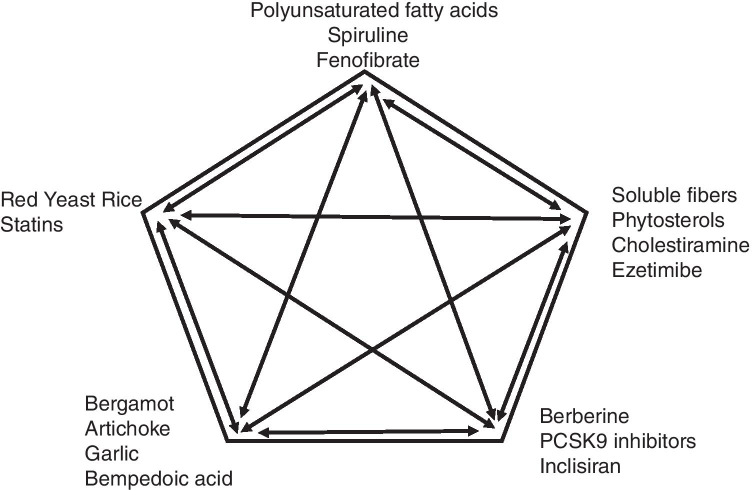
“Rational combinations of nutraceuticals with different lipid-lowering activities (Fig. 1), particularly when associated with an appropriate lifestyle, can provide an alternative to drug treatment in patients in primary CVD prevention with mildly elevated LDL-C (especially for those not being at their target LDL-C)) and in some statin-intolerant patients [90].”
§ Nutraceuticals in the Management of Dyslipidemia: Which, When, and for Whom? Could Nutraceuticals Help Low-Risk Individuals with Non-optimal Lipid Levels? > Nutraceutical Combinations
What the sources say
- Not checked yetcites [90] Cicero AF, Colletti A. Combinations of phytomedicines with different lipid lowering activity for dyslipidemia management: The available clinical data. Phytomedicine. 2016;23(11):1113–8. source
plainconditional- Asserted: passes — The authors put it forward as true.
- Checkable: passes — It can be checked against evidence.
- Load-bearing: passes — The paper’s conclusions depend on it.
- Based: passes — The paper gives a reason why it holds.
It may state two separate claims as one.
In the paper
“A meta-analysis of 20 RCTs evaluated the efficacy of RYR supplementation after 2–24 months that reduced LDL-C on average of 1.02 mmol/L (− 1.20; − 0.83) (39.4 mg/dL) compared to placebo which was not different from moderate-intensity statins (pravastatin 40 mg, simvastatin 10 mg, lovastatin 20 mg) (0.003 mmol/L; − 0.36; 0.41) (0.12 mg/dL).”
§ Nutraceuticals in the Management of Dyslipidemia: Which, When, and for Whom? Could Nutraceuticals Help Low-Risk Individuals with Non-optimal Lipid Levels? > Inhibitors of Liver Cholesterol Synthesis > Red Yeast Rice Extract
What the sources say
- Not checked yetcites [36] Gerards MC, Terlou RJ, Yu H, Koks CH, Gerdes VE. Traditional Chinese lipid-lowering agent red yeast rice results in significant LDL reduction but safety is uncertain - a systematic review and meta-analysis. Atherosclerosis. 2015;240(2):415–23. source
plaindirect- Asserted: passes — The authors put it forward as true.
- Checkable: passes — It can be checked against evidence.
- Load-bearing: passes — The paper’s conclusions depend on it.
- Based: passes — The paper gives a reason why it holds.
It may state two separate claims as one.
None of the sources cited for this claim have been checked yet.
In the paper
“bergamot-derived polyphenols (500 to 1500 mg/day) are able to reduce LDL-C, triglycerides, non-HDL-C, malonyl dialdehyde [52], fasting plasma insulin, leptin, leptin/adiponectin ratio, hs-CRP, and tumor necrosis factor alpha (TNF-α) [53], in a dose-dependent manner”
§ Nutraceuticals in the Management of Dyslipidemia: Which, When, and for Whom? Could Nutraceuticals Help Low-Risk Individuals with Non-optimal Lipid Levels? > Inhibitors of Liver Cholesterol Synthesis > Bergamot (Citrus bergamia)
What the sources say
- Not checked yetcites [52] Gliozzi M, Walker R, Muscoli S, Vitale C, Gratteri S, Carresi C, Musolino V, Russo V, Janda E, Ragusa S, Aloe A, Palma E, Muscoli C, Romeo F, Mollace V. Bergamot polyphenolic fraction enhances rosuvastatin-induced effect on LDL-cholesterol, LOX-1 expression and protein kinase B phosphorylation in patients with hyperlipidemia. Int J Cardiol. 2013;170(2):140–5. source
- Not checked yetcites [53] Cicero AFG, Fogacci F, Bove M, Giovannini M, Borghi C. Three-arm, placebo-controlled, randomized clinical trial evaluating the metabolic effect of a combined nutraceutical containing a bergamot standardized flavonoid extract in dyslipidemic overweight subjects. Phytother Res. 2019;33(8):2094–101. source
plaindirect- Asserted: passes — The authors put it forward as true.
- Checkable: passes — It can be checked against evidence.
- Load-bearing: passes — The paper’s conclusions depend on it.
- Based: passes — The paper gives a reason why it holds.
It may state two separate claims as one.
In the paper
“reduced risk of non-muscle-related side effects (OR = 0.59, 95% CI 0.50, 0.69) and serious adverse events (OR = 0.54, 95% CI 0.46, 0.64) versus control was shown [44••].”
§ Nutraceuticals in the Management of Dyslipidemia: Which, When, and for Whom? Could Nutraceuticals Help Low-Risk Individuals with Non-optimal Lipid Levels? > Inhibitors of Liver Cholesterol Synthesis > Red Yeast Rice Extract
What the sources say
- Not checked yetcites [44••]
plaincorrelational- Asserted: passes — The authors put it forward as true.
- Checkable: passes — It can be checked against evidence.
- Load-bearing: passes — The paper’s conclusions depend on it.
- Based: passes — The paper gives a reason why it holds.
It may state two separate claims as one.
In the paper
“Side effects from BBR are mild to moderate, mostly gastrointestinal (diarrhea, constipation, abdominal distension) and comparable in frequency to the control groups.”
§ Nutraceuticals in the Management of Dyslipidemia: Which, When, and for Whom? Could Nutraceuticals Help Low-Risk Individuals with Non-optimal Lipid Levels? > Inducers of LDL Cholesterol Excretion > Berberine
What the sources say
- Not checked yetcites [64] Derosa G, Maffioli P, Cicero AF. Berberine on metabolic and cardiovascular risk factors: an analysis from preclinical evidences to clinical trials. Expert Opin Biol Ther. 2012;12(8):1113–24. source
plain- Asserted: passes — The authors put it forward as true.
- Checkable: passes — It can be checked against evidence.
- Load-bearing: unclear — It is unclear whether the paper’s conclusions depend on it.
- Based: passes — The paper gives a reason why it holds.
It may state two separate claims as one.
In the paper
“with a reduction of LDL-C by − 1.1 mmol/L (95% CI: − 1.6; − 0.6, p < 0.001), TC by 1.2 mmol/L (95% CI: − 1.7; − 0.7, p < 0.001), and TG by − 0.5 mmol/L (95% CI: − 0.6; − 0.4, p < 0.001) and an increase of HDL-C of + 0.16 mmol/L (95% CI: 0.06; 0.25, p = 0.001) [89].”
§ Nutraceuticals in the Management of Dyslipidemia: Which, When, and for Whom? Could Nutraceuticals Help Low-Risk Individuals with Non-optimal Lipid Levels? > Other Lipid-Lowering Nutraceuticals with Mixed Mechanisms of Action > Spirulina
What the sources say
- Not checked yetcites [89] Serban MC, Sahebkar A, Dragan S, Stoichescu-Hogea G, Ursoniu S, Andrica F, Banach M. A systematic review and meta-analysis of the impact of Spirulina supplementation on plasma lipid concentrations. ClinNutr. 2016;35(4):842–51.
plaindirect- Asserted: passes — The authors put it forward as true.
- Checkable: passes — It can be checked against evidence.
- Load-bearing: passes — The paper’s conclusions depend on it.
- Based: passes — The paper gives a reason why it holds.
It may state two separate claims as one.
In the paper
“Ursoniu et al. showed a significant reduction in plasma concentrations of LDL-C [− 0.4 mmol/L (− 15.52 mg/dL); 95% CI: − 0.73; − 0.07 mmol/L (− 28.43; − 2.61 mg/dL); p = 0.018], TG [− 0.16 mmol/L (− 14.03 mg/dL); 95% CI: − 0.24; − 0.08 mmol/L (− 21.38; − 6.67 mg/dL)], and significant elevation in plasma concentrations of HDL-C [0.17 mmol/L (6.65 mg/dL); 95% CI: 0.06; 0.28 mmol/L (2.30; 10.99 mg/dL”
§ Nutraceuticals in the Management of Dyslipidemia: Which, When, and for Whom? Could Nutraceuticals Help Low-Risk Individuals with Non-optimal Lipid Levels? > Other Lipid-Lowering Nutraceuticals with Mixed Mechanisms of Action > Polyunsaturated Omega-3 Fatty Acids
What the sources say
- Not checked yetcites [86] Ursoniu S, Sahebkar A, Serban MC, Antal D, Mikhailidis DP, Cicero AF, Athyros V, Rizzo M, Rysz J, Banach M, Lipid and Blood Pressure Meta-analysis Collaboration Group. Lipid-modifying effects of krill oil in humans: systematicreview and meta-analysis of randomized controlled trials. Nutr Rev. 2017;75(5):361–73. source
plaindirectn = 662 ·- Asserted: passes — The authors put it forward as true.
- Checkable: passes — It can be checked against evidence.
- Load-bearing: passes — The paper’s conclusions depend on it.
- Based: passes — The paper gives a reason why it holds.
It may state two separate claims as one.
In the paper
“The BBR group showed a marked reduction in TG (26% BBR vs. 13% control: the difference did not reach statistical significance due to large inter-individual variations) and LDL-C (24% vs. 17% BBR control: p < 0.001) compared to the control group.”
§ Nutraceuticals in the Management of Dyslipidemia: Which, When, and for Whom? Could Nutraceuticals Help Low-Risk Individuals with Non-optimal Lipid Levels? > Inducers of LDL Cholesterol Excretion > Berberine
What the sources say
- Not checked yetcites [63] Meng S, Wang LS, Huang ZQ, Zhou Q, Sun YG, Cao JT, Li YG, Wang CQ. Berberine ameliorates inflammation in patients with acute coronary syndrome following percutaneous coronary intervention. Clin Exp Pharmacol Physiol. 2012;39(5):406–11. source
plaindirectn = 130 ·- Asserted: passes — The authors put it forward as true.
- Checkable: passes — It can be checked against evidence.
- Load-bearing: unclear — It is unclear whether the paper’s conclusions depend on it.
- Based: passes — The paper gives a reason why it holds.
It may state two separate claims as one.
In the paper
“the use of glucomannan (at doses ranging between 1.2 and 15.1 g/day) significantly reduces LDL-C and TG respectively by − 0.41 mmol/L (15.9 mg/dL) and − 0.13 mmol/L (11.5 mg/dL) (p < 0.05 for both), compared to placebo.”
§ Nutraceuticals in the Management of Dyslipidemia: Which, When, and for Whom? Could Nutraceuticals Help Low-Risk Individuals with Non-optimal Lipid Levels? > Inhibitors of Intestinal Cholesterol Absorption > Glucomannan
What the sources say
- Not checked yetcites [26] Sood N, Baker WL, Coleman CI. Effect of glucomannan on plasma lipid and glucose concentrations, body weight, and blood pressure: systematic review and meta-analysis. Am J ClinNutr. 2008;88(4):1167–75.
plaindirectn = 531 ·- Asserted: passes — The authors put it forward as true.
- Checkable: passes — It can be checked against evidence.
- Load-bearing: passes — The paper’s conclusions depend on it.
- Based: passes — The paper gives a reason why it holds.
It may state two separate claims as one.
In the paper
“their LDL cholesterol-lowering effect continues to increase up to intakes of approximately 3 g/day with an average LDL-C reduction of 12% [12].”
§ Nutraceuticals in the Management of Dyslipidemia: Which, When, and for Whom? Could Nutraceuticals Help Low-Risk Individuals with Non-optimal Lipid Levels? > Inhibitors of Intestinal Cholesterol Absorption > Plant Sterols and Stanols
What the sources say
- Not checked yetcites [12] Ras RT, Geleijnse JM, Trautwein EA. LDL-cholesterol-lowering effect of plant sterols and stanols across different dose ranges: a meta-analysis of randomised controlled studies. Br J Nutr. 2014;112(2):214–9. source
plaindirect- Asserted: passes — The authors put it forward as true.
- Checkable: passes — It can be checked against evidence.
- Load-bearing: unclear — It is unclear whether the paper’s conclusions depend on it.
- Based: passes — The paper gives a reason why it holds.
It may state two separate claims as one.
In the paper
“LDL-C: − 0.65 mmol/L (95% CI − 0.75; − 0.56, p = 0.00001) (25.14 mg/dL); TG: − 0.39 mmol/L (95% CI − 0.59; − 0.19, p = 0.0001) (34.5 mg/dL); HDL-C: 0.07 mmol/L (95% CI 0.04; 0.10, p = 0.00001) (2.71 mg/dL).”
§ Nutraceuticals in the Management of Dyslipidemia: Which, When, and for Whom? Could Nutraceuticals Help Low-Risk Individuals with Non-optimal Lipid Levels? > Inducers of LDL Cholesterol Excretion > Berberine
What the sources say
- Not checked yetcites [62] Lan J, Zhao Y, Dong F, Yan Z, Zheng W, Fan J, Sun G. Meta-analysis of the effect and safety of berberine in the treatment of type 2 diabetes mellitus, hyperlipemia and hypertension. J Ethnopharmacol. 2015;161:69–81. source
plaindirectn = 2,569 ·- Asserted: passes — The authors put it forward as true.
- Checkable: passes — It can be checked against evidence.
- Load-bearing: passes — The paper’s conclusions depend on it.
- Based: passes — The paper gives a reason why it holds.
It may state two separate claims as one.
In the paper
“These effects seem to be additive to those of statins and associated with a positive impact also on glucose metabolism and blood pressure [62].”
§ Nutraceuticals in the Management of Dyslipidemia: Which, When, and for Whom? Could Nutraceuticals Help Low-Risk Individuals with Non-optimal Lipid Levels? > Inducers of LDL Cholesterol Excretion > Berberine
What the sources say
- Not checked yetcites [62] Lan J, Zhao Y, Dong F, Yan Z, Zheng W, Fan J, Sun G. Meta-analysis of the effect and safety of berberine in the treatment of type 2 diabetes mellitus, hyperlipemia and hypertension. J Ethnopharmacol. 2015;161:69–81. source
hedgedcorrelationaln = 2,569- Asserted: passes — The authors put it forward as true.
- Checkable: passes — It can be checked against evidence.
- Load-bearing: passes — The paper’s conclusions depend on it.
- Based: passes — The paper gives a reason why it holds.
It may state two separate claims as one.
In the paper
“The results showed a significant reduction in TG of 14% [− 0.34 mmol/L (30.12 mg/dL), 95% CI: − 0.41; − 0.27 mmol/L (− 36; − 24 mg/dL)]. In addition, there was a small insignificant reduction of LDL-C of 0.06 mmol/L (2.3 mg/dL), but no differences in HDL-C [82].”
§ Nutraceuticals in the Management of Dyslipidemia: Which, When, and for Whom? Could Nutraceuticals Help Low-Risk Individuals with Non-optimal Lipid Levels? > Other Lipid-Lowering Nutraceuticals with Mixed Mechanisms of Action > Polyunsaturated Omega-3 Fatty Acids
What the sources say
- Not checked yetcites [82] Eslick GD, Howe PR, Smith C, Priest R, Bensoussan A. Benefits of fish oil supplementation in hyperlipidemia: a systematic review and meta-analysis. Int J Cardiol. 2009;136(1):4–16. source
plaindirectn = 16,511- Asserted: passes — The authors put it forward as true.
- Checkable: passes — It can be checked against evidence.
- Load-bearing: passes — The paper’s conclusions depend on it.
- Based: passes — The paper gives a reason why it holds.
It may state two separate claims as one.
In the paper
“soy proteins have a cholesterol-lowering effect with a mean reduction in LDL-C of 3% (− 0.12 mmol/L/4.6 mg/dL) and TG of 4% (− 0.06 mmol/L/5.3 mg/dL) and are able to increase HDL-C by 3% (+ 0.04 mmol/L/1.6 mg/dL), the effect being proportional to the baseline LDL-C level [74].”
§ Nutraceuticals in the Management of Dyslipidemia: Which, When, and for Whom? Could Nutraceuticals Help Low-Risk Individuals with Non-optimal Lipid Levels? > Inducers of LDL Cholesterol Excretion > Soy Proteins
What the sources say
- Not checked yetcites [74] Tokede OA, Onabanjo TA, Yansane A, Gaziano JM, Djoussé L. Soya products and serum lipids: a meta-analysis of randomised controlled trials. Br J Nutr. 2015;114(6):831–43. source
plaindirectn = 2,670- Asserted: passes — The authors put it forward as true.
- Checkable: passes — It can be checked against evidence.
- Load-bearing: passes — The paper’s conclusions depend on it.
- Based: passes — The paper gives a reason why it holds.
It may state two separate claims as one.
In the paper
“RYR supplementation showed a reduction in the risk of CHD (31.0%, p = 0.04), all-cause mortality (31.9%, p = 0.01), stroke (44.1%, p = 0.04), the need for coronary artery bypass graft or a percutaneous coronary intervention (48.6%, p = 0.07), and malignancies (51.4%, p = 0.03).”
§ Nutraceuticals in the Management of Dyslipidemia: Which, When, and for Whom? Could Nutraceuticals Help Low-Risk Individuals with Non-optimal Lipid Levels? > Inhibitors of Liver Cholesterol Synthesis > Red Yeast Rice Extract
What the sources say
- Not checked yetcites [46] Ackermann RT, Mulrow CD, Ramirez G, Gardner CD, Morbidoni L, Lawrence VA. Garlic shows promise for improving some cardiovascular risk factors. Arch Intern Med. 2001;161(6):813–24. source
plaindirectn = 1,445 ·- Asserted: passes — The authors put it forward as true.
- Checkable: passes — It can be checked against evidence.
- Load-bearing: passes — The paper’s conclusions depend on it.
- Based: passes — The paper gives a reason why it holds.
It may state two separate claims as one.
None of the sources cited for this claim have been checked yet.
In the paper
“This combination has also been tested in adult and elderly patients previously intolerant to statins [94, 95], being well tolerated in the 80% of cases.”
§ Nutraceuticals in the Management of Dyslipidemia: Which, When, and for Whom? Could Nutraceuticals Help Low-Risk Individuals with Non-optimal Lipid Levels? > Nutraceutical Combinations
What the sources say
- Not checked yetcites [94] Marazzi G, Cacciotti L, Pelliccia F, Iaia L, Volterrani M, Caminiti G, Sposato B, Massaro R, Grieco F, Rosano G. Long-term effects of nutraceuticals (berberine, red yeast rice, policosanol) in elderly hypercholesterolemic patients. Adv Ther. 2011;28(12):1105–13. source
- Not checked yetcites [95] Cicero AF, Derosa G, Borghi C. Red yeast rice and statin-intolerant patients. Am J Cardiol. 2010;105(10):1504. source
plain- Asserted: passes — The authors put it forward as true.
- Checkable: passes — It can be checked against evidence.
- Load-bearing: unclear — It is unclear whether the paper’s conclusions depend on it.
- Based: passes — The paper gives a reason why it holds.
It may state two separate claims as one.
The paper states this without a source or data behind it here, so there is nothing to check it against. The quote shows it is in the paper.
In the paper
“both single components and some combinations (in particular red yeast rice, berberine, policosanol combination) have been demonstrated to maintain their efficacy in the long term (years)”
§ Nutraceuticals in the Management of Dyslipidemia: Which, When, and for Whom? Could Nutraceuticals Help Low-Risk Individuals with Non-optimal Lipid Levels? > Discussion
boosteddirect- Asserted: passes — The authors put it forward as true.
- Checkable: passes — It can be checked against evidence.
- Load-bearing: passes — The paper’s conclusions depend on it.
- Based: unclear — It is unclear why the paper says it holds.
It may state two separate claims as one.
The paper states this without a source or data behind it here, so there is nothing to check it against. The quote shows it is in the paper.
In the paper
“to have a positive impact on CVD risk factors other than LDL-C”
§ Nutraceuticals in the Management of Dyslipidemia: Which, When, and for Whom? Could Nutraceuticals Help Low-Risk Individuals with Non-optimal Lipid Levels? > Discussion
plaindirect- Asserted: passes — The authors put it forward as true.
- Checkable: passes — It can be checked against evidence.
- Load-bearing: passes — The paper’s conclusions depend on it.
- Based: passes — The paper gives a reason why it holds.
It may state two separate claims as one.
In the paper
“many nutraceuticals have an additive effect on lipid-lowering drugs, allowing reduction of the statins’ doses without diminishing the results in terms of TC and LDL-C reduction and significantly limiting adverse effects [106••]”
§ Nutraceuticals in the Management of Dyslipidemia: Which, When, and for Whom? Could Nutraceuticals Help Low-Risk Individuals with Non-optimal Lipid Levels? > Discussion
What the sources say
- Not checked yetcites 106••
plaindirect- Asserted: passes — The authors put it forward as true.
- Checkable: passes — It can be checked against evidence.
- Load-bearing: unclear — It is unclear whether the paper’s conclusions depend on it.
- Based: passes — The paper gives a reason why it holds.
It may state two separate claims as one.
A conclusion the paper draws from its own results — it cites no other source for it, so there is none to check. The quote shows it is in the paper.
In the paper
“most of the presented combinations have been tested only in a single study and the obtained results have not been confirmed yet”
§ Nutraceuticals in the Management of Dyslipidemia: Which, When, and for Whom? Could Nutraceuticals Help Low-Risk Individuals with Non-optimal Lipid Levels? > Discussion
plain- Asserted: passes — The authors put it forward as true.
- Checkable: passes — It can be checked against evidence.
- Load-bearing: passes — The paper’s conclusions depend on it.
- Based: passes — The paper gives a reason why it holds.
It may state two separate claims as one.
The paper states this without a source or data behind it here, so there is nothing to check it against. The quote shows it is in the paper.
In the paper
“to improve some markers of vascular aging (endothelial function, pulse wave velocity)”
§ Nutraceuticals in the Management of Dyslipidemia: Which, When, and for Whom? Could Nutraceuticals Help Low-Risk Individuals with Non-optimal Lipid Levels? > Discussion
plaindirect- Asserted: passes — The authors put it forward as true.
- Checkable: passes — It can be checked against evidence.
- Load-bearing: unclear — It is unclear whether the paper’s conclusions depend on it.
- Based: passes — The paper gives a reason why it holds.
It may state two separate claims as one.
In the paper
“The association of plant sterols/stanols with certain lipid-lowering ingredients also demonstrated to strengthen cholesterol-lowering efficacy and add TG-lowering effects [96].”
§ Nutraceuticals in the Management of Dyslipidemia: Which, When, and for Whom? Could Nutraceuticals Help Low-Risk Individuals with Non-optimal Lipid Levels? > Nutraceutical Combinations
What the sources say
- Not checked yetcites [96] Cicero AF, Fogacci F, Rosticci M, Parini A, Giovannini M, Veronesi M, D’Addato S, Borghi C. Effect of a short-term dietary supplementation with phytosterols, red yeast rice or both on lipid pattern in moderately hypercholesterolemic subjects: a three-arm, double-blind, randomized clinical trial. Nutr Metab. 2017;14:61. source
boosteddirect- Asserted: passes — The authors put it forward as true.
- Checkable: passes — It can be checked against evidence.
- Load-bearing: passes — The paper’s conclusions depend on it.
- Based: passes — The paper gives a reason why it holds.
It may state two separate claims as one.
In the paper
“A recent meta-analysis of 12 randomized double-blind placebo-controlled clinical trials including 1050 subjects suggested that dietary supplementation with this nutraceutical combination exerts a significant effect on body mass index (mean difference (MD) = − 0.25 kg/m2, p = 0.008) and serum levels of LDL-C (MD = − 26.67 mg/dL, p < 0.001), TG (MD = − 11.47 mg/dL, p < 0.001), HDL-C (MD = 1.84 mg/dL”
§ Nutraceuticals in the Management of Dyslipidemia: Which, When, and for Whom? Could Nutraceuticals Help Low-Risk Individuals with Non-optimal Lipid Levels? > Nutraceutical Combinations
What the sources say
- Not checked yetcites [93] Cicero AFG, Kennedy C, Knežević T, Bove M, Georges CMG, Šatrauskienė A, Toth PP, Fogacci F. Efficacy and Safety of Armolipid Plus®: An Updated PRISMA Compliant Systematic Review and Meta-Analysis of Randomized Controlled Clinical Trials. Nutrients. 2021;13(2):638. source
hedgeddirectn = 1,050 ·- Asserted: passes — The authors put it forward as true.
- Checkable: passes — It can be checked against evidence.
- Load-bearing: passes — The paper’s conclusions depend on it.
- Based: passes — The paper gives a reason why it holds.
The quote only partly states this claim.
A conclusion the paper draws from its own results — it cites no other source for it, so there is none to check. The quote shows it is in the paper.
In the paper
“Combinations of lipid-lowering nutraceuticals could improve their safety (reducing the dosages of the single components)”
§ Nutraceuticals in the Management of Dyslipidemia: Which, When, and for Whom? Could Nutraceuticals Help Low-Risk Individuals with Non-optimal Lipid Levels? > Discussion
hedgedconditional- Asserted: passes — The authors put it forward as true.
- Checkable: passes — It can be checked against evidence.
- Load-bearing: fails — The paper’s conclusions may not depend on it.
- Based: fails — The paper may give no reason why it holds.
Probably not a substantial claim. The paper’s conclusions may not depend on it. The paper may give no reason why it holds.
A conclusion the paper draws from its own results — it cites no other source for it, so there is none to check. The quote shows it is in the paper.
In the paper
“some of the tested nutraceutical combinations contained underdosed components”
§ Nutraceuticals in the Management of Dyslipidemia: Which, When, and for Whom? Could Nutraceuticals Help Low-Risk Individuals with Non-optimal Lipid Levels? > Discussion
plain- Asserted: passes — The authors put it forward as true.
- Checkable: passes — It can be checked against evidence.
- Load-bearing: fails — The paper’s conclusions may not depend on it.
- Based: fails — The paper may give no reason why it holds.
Probably not a substantial claim. The paper’s conclusions may not depend on it. The paper may give no reason why it holds.
The paper relies on this without support.
The available data are sufficient to detect serious safety concerns of the evaluated nutraceutical combinations.
“Based on the available data, no serious safety concerns have been observed.”
Claims other papers make about this one
Each is checked against this paper’s own text: does it say what the citing paper says it does?
In the citing paper
“Meanwhile, a case-control clinical trial reported that the HOMA-IR level of T2DM decreased by 73% with 500 mg (×3 daily) berberine for 3 months [70].”
From The Effect of Berberine on Metabolic Profiles in Type 2 Diabetic Patients: A Systematic Review and Meta‐Analysis of Randomized Controlled Trials (2021) · cites this paper as [70]
Self-check
Percentages, sums and reported differences re-computed from the paper’s own numbers.
Each contradiction between two passages listed here was confirmed by an independent check.
Rated minor: it would not touch a result — a value no result rests on, a p-value that stays on the same side of the significance level, or a conflict that is clerical, resolved elsewhere in the paper, or outside its own findings.
In the paper
§ Nutraceuticals in the Management of Dyslipidemia: Which, When, and for Whom? Could Nutraceuticals Help Low-Risk Individuals with Non-optimal Lipid Levels? > Inhibitors of Liver Cholesterol Synthesis > Red Yeast Rice Extract
“A small increase of HDL-C (0.007 mmol/L; 0.03; 0.11) (0.3 mg/dL)”
§ Nutraceuticals in the Management of Dyslipidemia: Which, When, and for Whom? Could Nutraceuticals Help Low-Risk Individuals with Non-optimal Lipid Levels? > Inhibitors of Liver Cholesterol Synthesis > Red Yeast Rice Extract
“0.03; 0.11”
Rated minor: it would not touch a result — a value no result rests on, a p-value that stays on the same side of the significance level, or a conflict that is clerical, resolved elsewhere in the paper, or outside its own findings.
In the paper
§ Nutraceuticals in the Management of Dyslipidemia: Which, When, and for Whom? Could Nutraceuticals Help Low-Risk Individuals with Non-optimal Lipid Levels? > Inhibitors of Intestinal Cholesterol Absorption > β-Glucan
“95% CI: 0.27; − 0.14”
§ Nutraceuticals in the Management of Dyslipidemia: Which, When, and for Whom? Could Nutraceuticals Help Low-Risk Individuals with Non-optimal Lipid Levels? > Inhibitors of Intestinal Cholesterol Absorption > β-Glucan
“p < 0.00001”
Rated minor: it would not touch a result — a value no result rests on, a p-value that stays on the same side of the significance level, or a conflict that is clerical, resolved elsewhere in the paper, or outside its own findings.
In the paper
§ Nutraceuticals in the Management of Dyslipidemia: Which, When, and for Whom? Could Nutraceuticals Help Low-Risk Individuals with Non-optimal Lipid Levels? > Inhibitors of Liver Cholesterol Synthesis > Red Yeast Rice Extract
“the EFSA has defined 0.2 µg/kg b.w. per day as the highest quantity of citrinin which could be taken by humans with no nephrotoxic effects”
§ Nutraceuticals in the Management of Dyslipidemia: Which, When, and for Whom? Could Nutraceuticals Help Low-Risk Individuals with Non-optimal Lipid Levels? > Inhibitors of Liver Cholesterol Synthesis > Red Yeast Rice Extract
“the level of 20 µg/kg b.w. per day suggested by the EFSA”
Citations
Cites
Toprak, Ö., Kurt, H., Sarı, Y., Şarkış, C., Us, H., & Kırık, A. (2017) · Kidney & Blood Pressure Research · doi:10.1159/000468530 · Cited by 29,772
Grundy, S. M., Bilheimer, D. W., Chait, A., Clark, L. T., Denke, M. A., Havel, R. J., Hazzard, W. R., Hulley, S. B., Hunninghake, D. B., Kreisberg, R. A., et al. (1993) · JAMA · doi:10.1001/jama.269.23.3015 · Cited by 27,944
Expert Panel on Detection, E. (2001) · JAMA: The Journal of the American Medical Association · doi:10.1001/jama.285.19.2486 · Cited by 26,011
Cholesterol Treatment Trialists' (CTT) Collaboration (2010) · The Lancet · doi:10.1016/s0140-6736(10)61350-5 · Cited by 6,550
ESC/EAS Guidelines for the management of dyslipidaemias
Reiner, Ž., Catapano, A. L., De Backer, G., Graham, I., Taskinen, M.-R., Wiklund, O., Agewall, S., Alegria, E., Chapman, M. J., Durrington, P., et al. (2011) · European Heart Journal · doi:10.1093/eurheartj/ehr158 · Cited by 3,549
Triglycerides and Cardiovascular Disease: A Scientific Statement From the American Heart Association
Miller, M., Stone, N. J., Ballantyne, C., Bittner, V., Criqui, M. H., Ginsberg, H. N., Goldberg, A. C., Howard, W. J., Jacobson, M. S., Kris-Etherton, P. M., et al. (2011) · Circulation · doi:10.1161/cir.0b013e3182160726 · Cited by 1,871
Cholesterol-lowering effects of dietary fiber: a meta-analysis
Brown, L., Rosner, B., Willett, W. W., & Sacks, F. M. (1999) · The American Journal of Clinical Nutrition · doi:10.1093/ajcn/69.1.30 · Cited by 1,857
Allicin: Chemistry and biological properties
Borlinghaus, J., Albrecht, F., Gruhlke, M., Nwachukwu, I., & Slusarenko, A. (2014) · Molecules · doi:10.3390/molecules190812591 · Cited by 893
Assimilation of cholesterol by Lactobacillus acidophilus
Gilliland, S. E., Nelson, C. R., & Maxwell, C. V. (1985) · Applied and Environmental Microbiology · doi:10.1128/aem.49.2.377-381.1985 · Cited by 652
Guarner, F. (1998) · International Journal of Food Microbiology · doi:10.1016/s0168-1605(97)00136-0 · Cited by 638
Research works printed but not linked: 2
- EFSA. Scientific Opinion on the risks for public and animal health related to the presence of citrinin in food and feed. EFSA Panel on Contaminants in the Food Chain (CONTAM). European Food Safety Authority (EFSA), Parma, Italy. EFSA J. 2012;10(3):2605.
- EFSA Panel on Dietetic Products NaAN Scientific Opinion on the substantiation of health claims related to EPA, DHA, DPA and maintenance of normal blood pressure (ID 502), maintenance of normal HDL-cholesterol concentrations (ID 515), maintenance of normal (fasting) blood concentrations of triglycerides (ID 517), maintenance of normal LDL-cholesterol concentrations (ID 528, 698) and maintenance of joints (ID 503, 505, 507, 511, 518, 524, 526, 535, 537) pursuant to Article 13(1) of Regulation (EC) No 1924/2006. EFSA J. 2009;7:1263–1289.
Cited by
Sorted by citations
Items 101–109 of 109
The complex relationship between cardiologists and lipid-lowering dietary supplements: Hate or love?
Cicero, A. F. G., & Corsini, A. (2025) · Nutrition Metabolism and Cardiovascular Diseases · doi:10.1016/j.numecd.2025.104533
Self-citationThe Effect of Nutraceuticals on Lipid Profiles: A Systematic Review and Meta-Analysis
Muja, E., Floccari, L. G., Simaku, A., Grosha, K., & Laçi, I. (2026) · Current Nutrition & Food Science · doi:10.2174/0115734013417004251209211055
Woottisin, S., Imphat, C., Munjit, S., & Woottisin, N. (2026) · Tropical Journal of Natural Product Research · doi:10.26538/tjnpr/v10i1.54
«ՍՆՆԴՈՐԱՅՔԸ» ՈՐՊԵՍ «NUTRACEUTICAL» ԵԶՐՈՒՅԹԻ ՀԱՅԵՐԵՆ ՀԱՄԱՐԺԵՔ
Pepoyan, A., Չէպէնեան, Գ., & Չարչողլյան, Ա. (2025) · AgriScience and Technology · doi:10.52276/25792822-2025.3-241
Xia, Y., Leung, K. S. M., & Zhao, J. (2026) · npj Cardiovascular Health · doi:10.1038/s44325-026-00121-w · Cited by 1
Zamanian, N., Talebi, S., Rahimlou, M., & Mohammadi, H. (2026) · BMC Nutrition · doi:10.1186/s40795-026-01443-9
Zeghad, N., Gad, M. H., Ahmed, E., Demeyer, K., Heyden, Y. V., BRIKA, A., & Mohammed, M. (2026) · South African Journal of Botany · doi:10.1016/j.sajb.2026.08.023
Kulasegaran, S., Ahmad, N. A., & Balan, S. S. (2026) · Nutraceuticals · doi:10.3390/nutraceuticals6040064
Buranapin, S., Tejavanija, S., Wongthanee, A., & Manosroi, W. (2026) · European Journal of Nutrition · doi:10.1007/s00394-026-04138-w
Metadata
- Authors
- Cicero, A. F. G., Fogacci, F., Stoian, A. P., Vrablik, M., Al Rasadi, K., Banach, M., Toth, P. P., & Rizzo, M.
- Affiliations
- IRCCS Azienda Ospedliero-Universitaria di Bologna Policlinico di Sant'Orsola (IT)
- University of Bologna (IT)
- Carol Davila University of Medicine and Pharmacy (RO)
- Medical University of Lodz (PL)
- Johns Hopkins University (US)
- Corresponding author
- Cicero, Arrigo F. G.
- ORCID
- Venue
- Current Atherosclerosis Reports
- Published
- 2021-08-04
- Volume
- 23
- Issue
- 10
- Pages
- 57-57
- ISSN
- 1523-3804 (ISSN-L)
- 1534-6242
- PMC
- PMC8332568
- OpenAlex
- W3190295594
- Semantic Scholar
- af855c4967242aae75893d734155b63f9adeed60
- Cited by
- 110
- References
- 110
- Citations by year
- 2026: 11 · 2025: 21 · 2024: 24 · 2023: 23 · 2022: 28 · 2021: 3
- FWCI
- 4.70
- Type
- journal article
- Language
- en
- Open access
- hybrid
- doi.org
- Locations
- Current Atherosclerosis Reports (publishedVersion, cc-by)
- PubMed Central (publishedVersion, cc-by)
- PubMed (publishedVersion)
- Archivio istituzionale della ricerca (Alma Mater Studiorum Università di Bologna) (submittedVersion, cc-by)
- Nova Science Publishers (Nova Science Publishers, Inc.) (submittedVersion, other-oa)
- Funders
- Alma Mater Studiorum - Università di Bologna
- Topics
- Health Sciences › Medicine › Cardiology and Cardiovascular Medicine › Lipoproteins and Cardiovascular Health
- Life Sciences › Pharmacology, Toxicology and Pharmaceutics › Pharmacology › Natural Products and Biological Research
- Health Sciences › Medicine › Complementary and alternative medicine › Complementary and Alternative Medicine Studies
- Keywords
- nutraceuticals, dyslipidemia, lipid-lowering drugs, red yeast rice, soluble dietary fiber, berberine, artichoke extract, garlic, green tea, low cardiovascular risk, plasma lipids, safety and tolerability
- MeSH terms
- Hypolipidemic Agents, Humans, Lipids, Phytosterols, Dietary Supplements, Dyslipidemias
About these checks
Registry, retraction, Cites and statistics results are computed, not judged, with one exception: a printed reference that no index lists is read once by a model before it counts as a citation error. Claims are extracted by a model and kept only when their quote appears verbatim in the text; each cited source is then checked, with a model’s help, for whether it says what the claim relies on. Those verdicts can be wrong — read the claim’s quote and the cited source before relying on one.
A language model drew the claims from the paper on 2026-10-08, under version 3 of the claim definition (model deepseek-v4.1-flash, prompt extract-v3).
A second model labelled each claim on 2026-10-08 (model jev-1.13-20260917, definition revision gold-guideline-v0.2).
Statistics and arithmetic are recomputed, not judged.
Confidence bands are shown only for fields calibrated on our annotated test set. None is calibrated yet, so no band is shown.
What counts as a claim ›How we measure confidence ›How we check this ›
Are you an author, or do you see a problem with this page? Request a review
