

Soil Carbon Storage by Switchgrass Grown for Bioenergy
Open accessThe DOI matches its Crossref record; 46 of the 46 references it cites were found in a registry or an index; 6 of the 45 sources its claims cite were checked for support.
Abstract
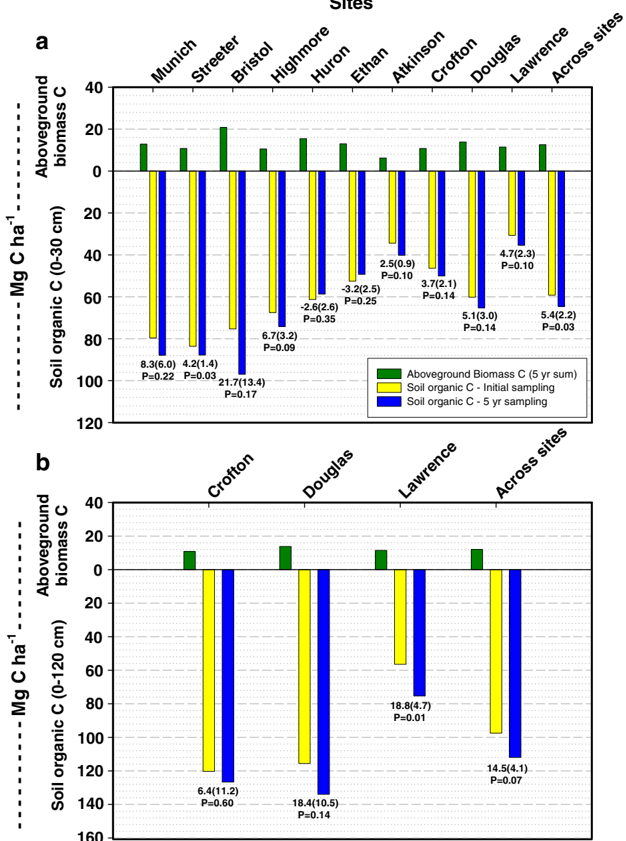
Life-cycle assessments (LCAs) of switchgrass ( Panicum virgatum L.) grown for bioenergy production require data on soil organic carbon (SOC) change and harvested C yields to accurately estimate net greenhouse gas (GHG) emissions. To date, nearly all information on SOC change under switchgrass has been based on modeled assumptions or small plot research, both of which do not take into account spatial variability within or across sites for an agro-ecoregion. To address this need, we measured change in SOC and harvested C yield for switchgrass fields on ten farms in the central and northern Great Plains, USA (930 km latitudinal range). Change in SOC was determined by collecting multiple soil samples in transects across the fields prior to planting switchgrass and again 5 years later after switchgrass had been grown and managed as a bioenergy crop. Harvested aboveground C averaged 2.5 ± 0.7 Mg C ha −1 over the 5 year study. Across sites, SOC increased significantly at 0–30 cm ( P = 0.03) and 0–120 cm ( P = 0.07), with accrual rates of 1.1 and 2.9 Mg C ha −1 year −1 (4.0 and 10.6 Mg CO 2 ha −1 year −1 ), respectively. Change in SOC across sites varied considerably, however, ranging from −0.6 to 4.3 Mg C ha −1 year −1 for the 0–30 cm depth. Such variation in SOC change must be taken into consideration in LCAs. Net GHG emissions from bioenergy crops vary in space and time. Such variation, coupled with an increased reliance on agriculture for energy production, underscores the need for long-term environmental monitoring sites in major agro-ecoregions.
Overview
CoChat Summary
TL;DR
This study measured soil organic carbon (SOC) change and harvested carbon in switchgrass fields on ten working farms across the central and northern Great Plains over five years. It found significant average SOC accrual at 0–30 and 0–120 cm, but large site-to-site variation that the authors argue must be included in life-cycle assessments.
Key findings
- Across sites, SOC increased significantly at 0–30 cm (P=0.03) and 0–120 cm (P=0.07), with accrual rates of 1.1 and 2.9 Mg C ha⁻¹ year⁻¹ (4.0 and 10.6 Mg CO₂ ha⁻¹ year⁻¹), respectively.
- Site-level SOC change varied widely, from −0.6 to 4.3 Mg C ha⁻¹ year⁻¹ at 0–30 cm; significant decreases occurred at Huron and Ethan, while responsive sites accrued 0.8–1.2 Mg C ha⁻¹ year⁻¹ at 0–30 cm, and Lawrence accrued 3.8 Mg C ha⁻¹ year⁻¹ at 0–120 cm.
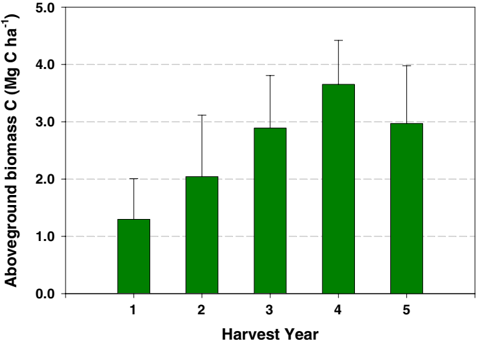
- Harvested aboveground C averaged 2.5±0.7 Mg C ha⁻¹ over 5 years, peaking in year 4 at 3.7±0.8 Mg C ha⁻¹; biomass C concentration averaged 444.1±6.1 g C kg⁻¹.
- The authors state SOC accrual appears large enough to offset N₂O emissions; cited N₂O emission from fertilized crested wheatgrass was 3.4 kg N ha⁻¹ year⁻¹ (1.6 Mg CO₂e ha⁻¹ year⁻¹), about 40% of the 0–30 cm C sequestration rate, and previous LCAs used C offset rates 4- to 11-fold lower than observed here.
Methods
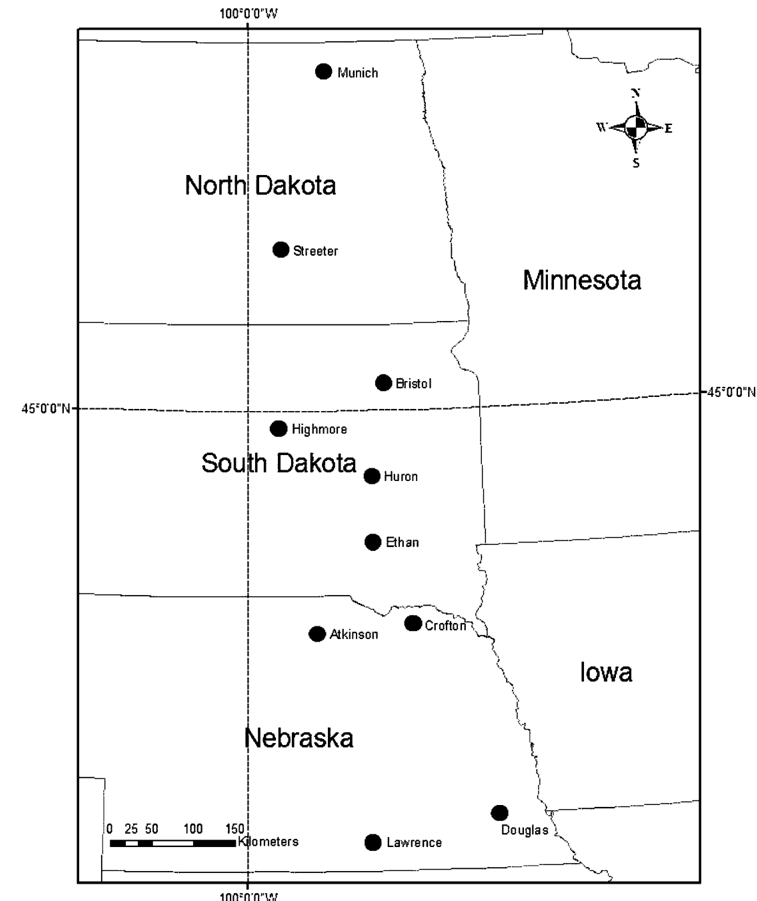
- Measured SOC change and harvested C on ten switchgrass fields on working farms in Nebraska, South Dakota, and North Dakota, spanning 930 km north–south and 230 km east–west; fields averaged 6.7 ha (range 3.0–9.5 ha) and were seeded in 2000–2001.
- Soil was sampled in transects before planting and 5 years later: two transects with three locations each (six per site; Atkinson had only two per transect). Depths were 0–5, 5–10, 10–20, and 20–30 cm at all sites, plus 30–60, 60–90, and 90–120 cm at three Nebraska sites. SOC was determined by dry combustion minus inorganic C, with bulk density used for volumetric C.
- Changes in SOC were calculated within sampling location and evaluated by paired t-test in PROC MIXED by depth and cumulative depths; harvested C was determined from baled biomass and hand-clipped quadrats.
Limitations
- Paper-stated: farmers participated via 5-year contracts that could not feasibly be extended, so SOC change beyond 5 years remains a critical research need; field-based N₂O and CH₄ flux assessments are urgently needed; LCAs generally calculate sequestration over 30 or 100 years, when accrual would be expected to plateau.
- Paper-stated: working-farm research has drawbacks, and variability in SOC change across sites was significant; the authors recommend LCAs include confidence intervals, not just means.
- Evident from the text: only ten farms were studied, sampling locations were treated as pseudoreplicates, only three sites were sampled to 120 cm, and Atkinson results were based on a 4-year switchgrass stand; no significant associations were found between annual SOC change at 0–30 cm and edaphic or climatic attributes.
Model-written summary. Check it against the paper before relying on it.
Integrity signals
Registry
Cites
Statistics
Figures
Verification
Claims the paper makes
4 Valid · 0 Not valid · 28 Not checked · 30 Own results and interpretations
The cited sources support only part of this claim — read each source’s verdict below.
In the paper
“Results from life-cycle assessments (LCAs) of switchgrass grown for bioenergy, however, have been mixed [1,8,32,33], due in large part to the assigned net GHG emissions associated with switchgrass production and assumptions made in indirect land conversion costs.”
§ Soil Carbon Storage by Switchgrass Grown for Bioenergy > Introduction
What the sources say
- Partly supportedcites [1] 1. Adler PR, Del Grosso SJ, Parton WJ (2007) Life-cycle assessment of net greenhouse-gas flux for bioenergy cropping systems. Ecol Appl 17(3):675-691 sourceExperimental — accuracy not yet measured
Adler et al. (2007) is indeed a life-cycle assessment of net GHG flux that assigns switchgrass a quantitative net GHG balance, and its Introduction (p. 1) notes that several studies have evaluated GHG fluxes of specific bioenergy crops with 'limited information comparing a range of crops' and 'a need to integrate factors contributing to the impact of land-use change on GHG fluxes' — so the multi-study framing is partly echoed. However, the paper's own result is not mixed: switchgrass (with hybrid poplar) gave the largest net GHG sink, <200 g CO2e-C m^-2 yr^-1 for ethanol and ~115-145% reduction versus gasoline/diesel, and all systems remained sinks even in the long term (Abstract p. 1; Net greenhouse-gas flux p. 8). Crucially, the accounting contains no indirect land-conversion (iLUC) term — land-use change is flagged only as a future need — so the claim's attribution of mixed results to 'assumptions made in indirect land conversion costs' is not supported by this source. (LLM, conf=0.72)
- Not checked yetcites [8] 8. Fargione J, Hill J, Tilman D, Polasky S, Hawthorne P (2008) Land clearing and the biofuel carbon debt. Science 319:1235-1238 source
- Partly supportedcites [32] 31. Schmer MR, Vogel KP, Mitchell RB, Perrin RK (2008) Net energy of cellulosic ethanol from switchgrass. Proc Natl Acad Sci USA 105(2):464-469 sourceExperimental — accuracy not yet measured
Our copy of Schmer et al. (2008) does support the 'mixed results' half of the claim at the level of assigned net GHG emissions: the GHG Emissions section reports that 'Switchgrass fields were GHG-positive, -neutral, or -negative, depending on agriculture input amounts (mainly N fertilization) and subsequent biomass yields,' that earlier studies differed in how they estimated GHG displaced (by material converted to ethanol vs. by soil C sequestration), and the Discussion highlights 'discrepancies that can occur when analyses are based on small-scale research plots and misassumptions' (cf. Fig. 3 on Farrell, Wang, and Pimentel & Patzek). However, the second driver the claim attributes to this source — assumptions about indirect land conversion costs — is not addressed anywhere in our copy: the paper only treats direct conversion of existing cropland/CRP land to perennial grasses and credits CO2 sequestered in soil on converted cropland, with no indirect land-use-change accounting. Searches for 'indirect land use change / iLUC / emission debt' returned no supporting passage. (LLM, conf=0.72)
- Not checked yetcites [33] 32. Searchinger T et al (2008) Use of U.S. croplands for biofuels increases greenhouse gases through emissions from land use change. Science 319:1238-1240 source
plainstates a cause- Asserted: passes — The authors put it forward as true.
- Checkable: passes — It can be checked against evidence.
- Load-bearing: unclear — It is unclear whether the paper’s conclusions depend on it.
- Based: passes — The paper gives a reason why it holds.
- Partly supported
The cited sources support only part of this claim — read each source’s verdict below.
In the paper
“This finding, coupled with observations that prairie grass roots regenerate by replacing dying roots with new, live roots [43] indicates the potential for significant C input to the soil under switchgrass.”
§ Soil Carbon Storage by Switchgrass Grown for Bioenergy > Discussion
What the sources say
- Partly supportedcites [43] 41. Weaver JE, Zink E (1946) Length of life of roots of ten species of perennial range and pasture grasses. Plant Physiol 21:201-217 sourceExperimental — accuracy not yet measured
Our copy of Weaver & Zink (1946) does document annual renewal growth in prairie grasses: the Discussion states that 'there was a gradual loss of the older roots year by year' which is 'small if not entirely negligible when the great abundance of new roots produced annually is considered', and the Results/Introduction note hundreds of individual roots produced per plant over three seasons. But the same Discussion explicitly denies the strong replacement reading the claim carries — 'No losses and replacements of root systems similar to those reported by SPRAGUE (3) and STUCKEY (5) occurred' — i.e. wholesale dying-and-replacement of the root system is the pattern those authors found in pasture/cultivated species (Kentucky bluegrass, orchard grass, perennial ryegrass, etc.), not in the prairie grasses this paper studied, whose roots are instead characterized as long-lived with 'great permanency of occupation'. So the source supports gradual loss of old roots plus abundant new-root production, but not prairie grass roots 'regenerating by replacing dying roots' in the replacement-cycle sense the citing sentence implies. (LLM, conf=0.70)
plainstates a cause- Asserted: passes — The authors put it forward as true.
- Checkable: passes — It can be checked against evidence.
- Load-bearing: passes — The paper’s conclusions depend on it.
- Based: passes — The paper gives a reason why it holds.
- Partly supported
The cited sources support only part of this claim — read each source’s verdict below.
In the paper
“Previous LCAs including switchgrass production for biomass energy have utilized C offset rates four-to 11-fold lower than the C sequestration rates observed in this study [1,32,33].”
§ Soil Carbon Storage by Switchgrass Grown for Bioenergy > Discussion
What the sources say
- Partly supportedcites [1] 1. Adler PR, Del Grosso SJ, Parton WJ (2007) Life-cycle assessment of net greenhouse-gas flux for bioenergy cropping systems. Ecol Appl 17(3):675-691 sourceExperimental — accuracy not yet measured
Our copy confirms the identifying half of the claim: Adler et al. (2007) is a life-cycle assessment of net GHG flux that includes switchgrass grown for biomass energy (ethanol conversion and gasification for electricity), and it does assign carbon offsets — displaced fossil fuel and soil C sequestration (ΔCsys) — with numeric sink rates (Abstract p. 1; Net greenhouse-gas flux p. 8, e.g. switchgrass net sinks < −200 g CO2e-C m⁻² yr⁻¹ near term, −400 g for gasification). What it does not support is the comparative magnitude: nowhere does the paper state or imply that its C offset rates are four- to 11-fold lower than any other study's observed sequestration rates — that fold-difference is the citing authors' own calculation against their data. Indeed the paper's offset accounting runs the other way in framing (ΔCsys is the second-largest sink in the near term and is set to zero in the long-term scenario; pp. 8, 12–14), so the specific 4–11-fold figure attributed here is not in the source. (LLM, conf=0.68)
- Partly supportedcites [32] 31. Schmer MR, Vogel KP, Mitchell RB, Perrin RK (2008) Net energy of cellulosic ethanol from switchgrass. Proc Natl Acad Sci USA 105(2):464-469 sourceExperimental — accuracy not yet measured
Our copy of Schmer et al. (2008) supplies only one half of the comparison: the GHG Emissions section states the soil-C credit used in their analysis (CO2 sequestered as soil C for 100 yr on converted cropland, 'estimated to be 138.1 kg of CO2 Mg−1 of aboveground biomass yr−1' per ref. 28, Fig. 5; also the cited 4.42 Mg C ha−1 y−1 from ref. 27), and the Life Cycle Bioenergy Analysis section notes they updated EBAMM by 'crediting carbon sequestered by switchgrass to GHG emissions based on field-scale yields.' Nothing in our copy compares previous LCAs' carbon offset rates with theirs, and no 'four- to 11-fold' figure appears; the paper's comparisons with earlier analyses (refs. 8, 10, 14, 19; Discussion) concern energy inputs, small-plot yields and net energy, not C offsets. Moreover, the rate is not 'observed in this study' — it is a previously published constant (ref. 28) applied to their measured yields, and the paper explicitly notes 'In this study, we used a constant previously published conversion rate.' (LLM, conf=0.65)
- Not checked yetcites [33] 32. Searchinger T et al (2008) Use of U.S. croplands for biofuels increases greenhouse gases through emissions from land use change. Science 319:1238-1240 source
plain- Asserted: passes — The authors put it forward as true.
- Checkable: passes — It can be checked against evidence.
- Load-bearing: passes — The paper’s conclusions depend on it.
- Based: passes — The paper gives a reason why it holds.
- Partly supported
The cited sources support only part of this claim — read each source’s verdict below.
In the paper
“Accrual rates of SOC under switchgrass contribute significantly to its potential to provide a favorable net GHG balance [8,32].”
§ Soil Carbon Storage by Switchgrass Grown for Bioenergy > Discussion
What the sources say
- Not checked yetcites [8] 8. Fargione J, Hill J, Tilman D, Polasky S, Hawthorne P (2008) Land clearing and the biofuel carbon debt. Science 319:1235-1238 source
- Partly supportedcites [32] 31. Schmer MR, Vogel KP, Mitchell RB, Perrin RK (2008) Net energy of cellulosic ethanol from switchgrass. Proc Natl Acad Sci USA 105(2):464-469 sourceExperimental — accuracy not yet measured
The GHG Emissions section supports the substance: Schmer et al. state that their estimate of GHG displaced by switchgrass ethanol over gasoline was based on biomass yields 'by both fossil fuel displacement (9) and the estimated carbon dioxide sequestered as soil C for 100 yr by switchgrass on converted cropland (28)', and Fig. 5 confirms 'Estimated GHG values include the amount of CO2 sequestered in the soil (100 yr)'. What the source does not support is the magnitude qualifier 'significantly': the paper never quantifies or characterises the soil-C share of the 94% GHG reduction, it takes the accrual figures themselves from other works (4.42 Mg C ha-1 y-1 from ref. 27; 138.1 kg CO2 per Mg biomass from ref. 28), and it names lignocellulosic residue energy use as 'the main reason' switchgrass has lower GHG emissions than annual-crop biofuels. It also notes switchgrass fields were GHG-positive, -neutral or -negative depending on N inputs, with 3 of 5 harvest years near neutral. (LLM, conf=0.70)
plainstates a cause- Asserted: passes — The authors put it forward as true.
- Checkable: passes — It can be checked against evidence.
- Load-bearing: passes — The paper’s conclusions depend on it.
- Based: passes — The paper gives a reason why it holds.
- Rests on an assumption not shown here.
A result the paper reports from its own data — it cites no other source for it, so there is none to check. The quote shows it is in the paper.
In the paper
“No significant associations were observed between annual change in SOC at 0-30 cm and relevant edaphic and climatic attributes (data not shown).”
§ Soil Carbon Storage by Switchgrass Grown for Bioenergy > Results
plain- Asserted: passes — The authors put it forward as true.
- Checkable: passes — It can be checked against evidence.
- Load-bearing: unclear — It is unclear whether the paper’s conclusions depend on it.
- Based: passes — The paper gives a reason why it holds.
30 more claims
Create a free account to see all 62 claims and to verify the 39 references still open.
- It may state two separate claims as one. 15
- Probably not a substantial claim. 11
- The quote only partly states this claim. 1
Claims other papers make about this one
Each is checked against this paper’s own text: does it say what the citing paper says it does?
The cited source says what the claim attributes to it.
In the citing paper
“According to Liebig et al. (2008), switchgrass decreases SOC at two of ten experimental sites due to a significant decrease in soil bulk density near the surface depth, which contributes to decreased SOC, whereas switchgrass increases SOC at the remaining experimental sites.”
From Global warming intensity of biofuel derived from switchgrass grown on marginal land in Michigan (2023) · cites this paper as Liebig et al. (2008)
The cited source says what the claim attributes to it.
In the citing paper
“Although the potential of switchgrass for SOC sequestration was highlighted in several studies (Ma, 2000;Liebig et al., 2008;Schmer et al., 2011), the different cropping managements (in terms of fertilization and irrigation) and analytical approaches to estimate the SOC stock variations limit the possibility to compare data across studies.”
From Carbon sequestration potential in perennial bioenergy crops: the importance of organic matter inputs and its physical protection (2016) · cites this paper as Liebig et al., 2008
The cited source says what the claim attributes to it.
In the citing paper
“Cultivation of temperate-zone perennial grasses -Miscanthus, switchgrass, or native mixes -increased SOC by an average of $ 0.1-1 Mg ha À1 yr À1 in the top 30 cm (Figs 234; see also e.g., Potter et al., 1999;Ma et al., 2000;Kahle et al., 2001;Lemus & Lal, 2005;Liebig et al., 2008).”
From Changes in soil organic carbon under biofuel crops (2009) · cites this paper as Liebig et al., 2008
In the citing paper
“Equivalent mass SOC trends were similar to volumetric SOC trends reported earlier (Liebig et al., 2008).”
From Field-scale soil property changes under switchgrass managed for bioenergy (2011) · cites this paper as Liebig et al., 2008
Self-check
Percentages, sums and reported differences re-computed from the paper’s own numbers.
Each contradiction between two passages listed here was confirmed by an independent check.
Rated minor: it would not touch a result — a value no result rests on, a p-value that stays on the same side of the significance level, or a conflict that is clerical, resolved elsewhere in the paper, or outside its own findings.
In the paper
§ Soil Carbon Storage by Switchgrass Grown for Bioenergy > Results
“Soil organic C accrual rates for responsive sites ranged from 0.8-1.2Mg C ha -1 year -1 for the 0-30 cm depth.”
§ Soil Carbon Storage by Switchgrass Grown for Bioenergy > Discussion
“| Highmore, SD | 0.55 | -0.76 | 1.69 | 5.23** | - | - | - |”
Rated minor: it would not touch a result — a value no result rests on, a p-value that stays on the same side of the significance level, or a conflict that is clerical, resolved elsewhere in the paper, or outside its own findings.
In the paper
§ Soil Carbon Storage by Switchgrass Grown for Bioenergy > Discussion
“Table 2 Change in soil bulk density and soil organic C at each site after 5 years under switchgrass”
§ Soil Carbon Storage by Switchgrass Grown for Bioenergy > Discussion
“Results from Atkinson site based on 4 year switchgrass stand.”
Citations
Cites
Statistical Procedures for Agricultural Research.
Cox, D. F., Gomez, K. A., & Gomez, A. A. (1985) · Journal of the American Statistical Association · doi:10.2307/2287932 · Cited by 18,086
Littell, R. C. (1996) · Medical Entomology and Zoology · Cited by 10,550
Soil taxonomy—a basic system of soil classification for making and interpreting soil surveys
Nachtergaele, F. (2001) · Geoderma · doi:10.1016/s0016-7061(00)00097-5 · Cited by 5,434
Use of U.S. Croplands for Biofuels Increases Greenhouse Gases Through Emissions from Land-Use Change
Searchinger, T., Heimlich, R., Houghton, R. A., Dong, F., Elobeid, A., Fabiosa, J., Tokgoz, S., Hayes, D., & Yu, T.-H. (2008) · Science · doi:10.1126/science.1151861 · Cited by 4,888 · cited 3×
“Previous LCAs including switchgrass production for biomass energy have utilized C offset rates four- to 11-fold lower than the C sequestration rates observed in this study [1, 32, 33].”
Land Clearing and the Biofuel Carbon Debt
Fargione, J., Hill, J., Tilman, D., Polasky, S., & Hawthorne, P. (2008) · Science · doi:10.1126/science.1152747 · Cited by 3,902
Environmental, economic, and energetic costs and benefits of biodiesel and ethanol biofuels
Hill, J., Nelson, E., Tilman, D., Polasky, S., & Tiffany, D. (2006) · Proceedings of the National Academy of Sciences · doi:10.1073/pnas.0604600103 · Cited by 2,871 · cited 2×
“Utilization of perennial herbaceous crops as biofuel sources has been purported to mitigate negative consequences due mainly to their lower requirements of fertilizers and pesticides relative to annual crops and their ability to be grown on marginal land [16, 36].”
BackgroundCarbon-Negative Biofuels from Low-Input High-Diversity Grassland Biomass
Tilman, D., Hill, J., & Lehman, C. (2006) · Science · doi:10.1126/science.1133306 · Cited by 1,813 · cited 2×
“Utilization of perennial herbaceous crops as biofuel sources has been purported to mitigate negative consequences due mainly to their lower requirements of fertilizers and pesticides relative to annual crops and their ability to be grown on marginal land [16, 36].”
BackgroundSoil Testing and Plant Analysis
(1990) · SSSA Book Series · doi:10.2136/sssabookser3.3ed · Cited by 1,674
Bhattacharyya, T. (2009) · Cited by 1,223
Soil Testing and Plant Analysis: Part I Soil Testing
(1967) · SSSA Special Publications · doi:10.2136/sssaspecpub2 · Cited by 1,083
Research works printed but not linked: 2
- 5. Blake GR, Hartge KH (1986) Bulk density. In: Klute A (ed) Methods of soil analysis. Soil Science Society of America, Madison, WI, pp 363-382
- 34. Shively SB, Weaver JE (1939) Amount of underground plant material in different grassland climates. Neb Conserv Bull 21:1- 68, Conservation and Survey Division, University of Nebraska, Lincoln, NE 36.
Cited by
U.S. Billion-Ton Update. Biomass Supply for a Bioenergy and Bioproducts Industry
none (2011) · doi:10.2172/1219219 · Cited by 461
Changes in soil organic carbon under biofuel crops
ANDERSON‐TEIXEIRA, K. J., DAVIS, S. C., MASTERS, M. D., & DELUCIA, E. H. (2009) · GCB Bioenergy · doi:10.1111/j.1757-1707.2008.01001.x · Cited by 391
“Overall, approximately 55–78 Gt C have been released from soil as a result of land conversion during the postindustrial era (Lal, 2004).”
BackgroundInfluentialMicrobial spatial footprint as a driver of soil carbon stabilization
Kravchenko, A. N., Guber, A. K., Razavi, B. S., Koestel, J., Quigley, M. Y., Robertson, G. P., & Kuzyakov, Y. (2019) · Nature Communications · doi:10.1038/s41467-019-11057-4 · Cited by 315
Root distribution and soil moisture retrieval in perennial and annual energy crops in Northern Italy
Monti, A., & Zatta, A. (2009) · Agriculture, Ecosystems & Environment · doi:10.1016/j.agee.2009.04.007 · Cited by 213
“, 2001; Cannell, 2003), but there is still little quantitative data on root systems (Frank et al., 2004; Liebig et al., 2008).”
BackgroundChum, H., Faaij, A., Moreira, J., Berndes, G., Dhamija, P., Dong, H., Gabrielle, B., Eng, A. G., Lucht, W., Mapako, M., et al. (2011) · Renewable Energy Sources and Climate Change Mitigation · doi:10.1017/cbo9781139151153.006 · Cited by 181
Marginal Lands: Concept, Assessment and Management
Kang, S., Post, W. M., Nichols, J. A., Wang, D., West, T. O., Bandaru, V., & Izaurralde, R. C. (2013) · Journal of Agricultural Science · doi:10.5539/jas.v5n5p129 · Cited by 174
Mohapatra, S., Mishra, C., Behera, S. S., & Thatoi, H. (2017) · Renewable and Sustainable Energy Reviews · doi:10.1016/j.rser.2017.05.026 · Cited by 168
Pedroli, B., Elbersen, B. S., Frederiksen, P., Grandin, U., Heikkilä, R., Krogh, P. H., Izakovičová, Z., Johansen, A., Meiresonne, L., & Spijker, J. H. (2012) · Biomass and Bioenergy · doi:10.1016/j.biombioe.2012.09.054 · Cited by 189
“In agriculture the main crops delivering ligno-cellulose material are short rotation coppice crops likewillowandpoplar orperennial grasses likeMiscanthus, switchgrass, reed canary grass (Phalaris arundinacea) or giant reed (Arundo donax).”
BackgroundInfluentialCarbon Sequestration by Perennial Energy Crops: Is the Jury Still Out?
Agostini, F., Gregory, A. S., & Richter, G. M. (2015) · BioEnergy Research · doi:10.1007/s12155-014-9571-0 · Cited by 155
Soil carbon sequestration by switchgrass and no-till maize grown for bioenergy
Follett, R. F., Vogel, K. P., Varvel, G. E., Mitchell, R. B., & Kimble, J. (2012) · BioEnergy Research · doi:10.1007/s12155-012-9198-y · Cited by 146
“[28] for four switchgrass fields managed with uniform N rates and harvest treatments for 5 years in the USAwestern Corn Belt.”
BackgroundSelf-citationLe, P. V. V., Kumar, P., & Drewry, D. T. (2011) · Proceedings of the National Academy of Sciences · doi:10.1073/pnas.1107177108 · Cited by 146
A regional comparison of water use efficiency for miscanthus, switchgrass and maize
VanLoocke, A. D., Twine, T. E., Zeri, M., & Bernacchi, C. J. (2012) · Agricultural and Forest Meteorology · doi:10.1016/j.agrformet.2012.05.016 · Cited by 169
“Farm-scale switchgrass managed for bioenergy production was found to increase soil organic carbon (SOC) at most sites across a large geographic range constrained to the west and northwest of our study domain (Liebig et al., 2008).”
Chambers, A., Lal, R., & Paustian, K. (2016) · Journal of Soil and Water Conservation · doi:10.2489/jswc.71.3.68a · Cited by 143
“…2006; Olson 2013; Lal 2015a, 2015b, 2015c; Poeplau and Don 2015; Sainju et al. 2006, 2008); for conversions to perennial grass biofuel plantations (Liebig et al. 2008; Follett et al. 2012); and for improved management on grazing lands (Conant et al. 2001; Schuman et al. 2002; Franzluebbers and…”
BackgroundCarbon exchange by establishing biofuel crops in Central Illinois
Zeri, M., Anderson-Teixeira, K., Hickman, G., Masters, M., DeLucia, E., & Bernacchi, C. J. (2011) · Agriculture, Ecosystems & Environment · doi:10.1016/j.agee.2011.09.006 · Cited by 140
“Department of Energy as a model energy crop (McLaughlin and Adams Kszos, 2005; Liebig et al., 2008), and low-input”
Will energy crop yields meet expectations?
Searle, S., & Malins, C. J. (2014) · Biomass and Bioenergy · doi:10.1016/j.biombioe.2014.01.001 · Cited by 169
“[85] Liebig MA, Schmer MR, Vogel KP, Mitchell RB.”
BackgroundCoupling GIS and LCA for biodiversity assessments of land use: Part 2: Impact assessment
Geyer, R., Lindner, J. P., Stoms, D. M., Davis, F. W., & Wittstock, B. (2010) · The International Journal of Life Cycle Assessment · doi:10.1007/s11367-010-0199-9 · Cited by 130
Impacts of a 32-billion-gallon bioenergy landscape on land and fossil fuel use in the US
Hudiburg, T. W., Wang, W., Khanna, M., Long, S. P., Dwivedi, P., Parton, W. J., Hartman, M. D., & DeLucia, E. H. (2016) · Nature Energy · doi:10.1038/nenergy.2015.5 · Cited by 142
Chimento, C., Almagro, M., & Amaducci, S. (2016) · GCB Bioenergy · doi:10.1111/gcbb.12232 · Cited by 123
“Although the potential of switchgrass for SOC sequestration was highlighted in several studies (Ma, 2000; Liebig et al., 2008; Schmer et al., 2011), the different cropping managements (in terms of fertilization and irrigation) and analytical approaches to estimate the SOC stock variations limit the possibility to comp…”
BackgroundThe contribution of switchgrass in reducing GHG emissions
Monti, A., Barbanti, L., Zatta, A., & Zegada‐Lizarazu, W. (2012) · GCB Bioenergy · doi:10.1111/j.1757-1707.2011.01142.x · Cited by 119
“Perennial grasses generally have 70–90% of root biomass in the upper 0.3–0.4 m of soil, thus most of the SOC changes can be expected to occur in this layer (Garten & Wullschleger, 1999; Ma et al., 2000b; Tufekcioglu et al., 2003; Liebig et al., 2008).”
BackgroundInfluentialCoupling GIS and LCA for biodiversity assessments of land use: Part 1: Inventory modeling
Geyer, R., Stoms, D. M., Lindner, J. P., Davis, F. W., & Wittstock, B. (2010) · The International Journal of Life Cycle Assessment · doi:10.1007/s11367-010-0170-9 · Cited by 117
“Other inventory flows are also likely to be spatially varying and amenable to GIS modeling, such as soil carbon ( Liebig et al 2008 ), soil organic matter (Sheehan et al. 2003), irrigation, or fertilization (Azapagic et al. 2007), and therefore, these may also respond nonlinearly to increases in references flows.”
BackgroundDedicated Energy Crops and Crop Residues for Bioenergy Feedstocks in the Central and Eastern USA
Mitchell, R. B., Schmer, M. R., Anderson, W. F., Jin, V., Balkcom, K. S., Kiniry, J., Coffin, A., & White, P. (2016) · BioEnergy Research · doi:10.1007/s12155-016-9734-2 · Cited by 115
“Mitchell et al. [17] evaluated selected herbicides on stand establishment and subsequent yields of adapted upland switchgrass cultivars in Nebraska, South Dakota, and North Dakota as well as lowland ecotypes in Nebraska.”
BackgroundInfluentialSelf-citationAmougou, N., Bertrand, I., Machet, J.-M., & Recous, S. (2011) · Plant and Soil · doi:10.1007/s11104-010-0443-x · Cited by 111
“The importance of belowground plant biomass for storing organic C in soils has recently been recognized (Hansen et al. 2004; Lal 2004; Liebig et al. 2008).”
BackgroundChanges in soil carbon stocks under perennial and annual bioenergy crops
Ferchaud, F., Vitte, G., & Mary, B. (2016) · GCB Bioenergy · doi:10.1111/gcbb.12249 · Cited by 111
“For example, Liebig et al. (2008) found a mean increase of 1.1 1.4 t C ha 1 yr 1 across ten sites after 5 years (in the 0–30 cm layer), but only four sites showed a significant increase.”
BackgroundInfluentialThe feasibility of switchgrass for biofuel production
Mitchell, R., Vogel, K. P., & Uden, D. R. (2012) · Biofuels · doi:10.4155/bfs.11.153 · Cited by 100
Self-citationEffects of climate change on soil carbon and nitrogen storage in the US Great Plains
Follett, R. F., Stewart, C. E., Pruessner, E. G., & Kimble, J. M. (2012) · Journal of Soil and Water Conservation · doi:10.2489/jswc.67.5.331 · Cited by 97
Cobuloglu, H. I., & Büyüktahtakın, İ. E. (2015) · Applied Energy · doi:10.1016/j.apenergy.2014.11.080 · Cited by 98
Field-scale soil property changes under switchgrass managed for bioenergy
SCHMER, M. R., LIEBIG, M. A., VOGEL, K. P., & MITCHELL, R. B. (2011) · GCB Bioenergy · doi:10.1111/j.1757-1707.2011.01099.x · Cited by 82
“…from the onfarm switchgrass trial has resulted in farm-gate feedstock cost estimates (Perrin et al., 2008), determination of volumetric SOC dynamics (Liebig et al., 2008), switchgrass life-cycle assessment (Schmer et al., 2008), and field-scale simulation yield modeling (Kiniry et al., 2008).”
BackgroundResultInfluentialSelf-citationQin, Z., Zhuang, Q., & Chen, M. (2012) · GCB Bioenergy · doi:10.1111/j.1757-1707.2011.01129.x · Cited by 79
“SOC sequestration by biofuel ecosystems, as shown here and elsewhere (e.g. Liebig et al., 2005; Liebig et al., 2008; Anderson-Teixeira et al., 2009; Clifton-Brown et al., 2007), could substantially augment the GHG mitigation benefits due to crop switching for biofuel purposes.”
BackgroundMethodGarten, C. T., Smith, J. L., Tyler, D. D., Amonette, J. E., Bailey, V. L., Brice, D. J., Castro, H. F., Graham, R. L., Gunderson, C. A., Izaurralde, R. C., et al. (2010) · Agriculture, Ecosystems & Environment · doi:10.1016/j.agee.2009.12.019 · Cited by 79
Energy, water and carbon exchange over a perennial Kernza wheatgrass crop
de Oliveira, G., Brunsell, N. A., Sutherlin, C. E., Crews, T. E., & DeHaan, L. R. (2017) · Agricultural and Forest Meteorology · doi:10.1016/j.agrformet.2017.11.022 · Cited by 105
Cost of Abating Greenhouse Gas Emissions with Cellulosic Ethanol
Dwivedi, P., Wang, W., Hudiburg, T., Jaiswal, D., Parton, W., Long, S., DeLucia, E., & Khanna, M. (2015) · Environmental Science & Technology · doi:10.1021/es5052588 · Cited by 79
Stewart, C. E., Follett, R. F., Pruessner, E. G., Varvel, G. E., Vogel, K. P., & Mitchell, R. B. (2015) · GCB Bioenergy · doi:10.1111/gcbb.12142 · Cited by 78
“Due to its perennial, deep-rooted growth form, switchgrass can increase belowground C stocks (Liebig et al., 2008; Garten et al., 2010; Schmer et al., 2011; Follett et al., 2012), and thus reduce potential soil erosion.”
BackgroundSelf-citationSchmer, M. R., Vogel, K. P., Varvel, G. E., Follett, R. F., Mitchell, R. B., & Jin, V. L. (2014) · PLoS ONE · doi:10.1371/journal.pone.0089501 · Cited by 74
“For switchgrass, SOC storage values were similar to other findings within the same ecoregion [16] and a long-term Conservation Reserve Program grassland [35].”
MethodSelf-citationCarbon dioxide and water fluxes from switchgrass managed for bioenergy production
Skinner, R. H., & Adler, P. R. (2010) · Agriculture, Ecosystems & Environment · doi:10.1016/j.agee.2010.05.008 · Cited by 68
Carbon and water relations in perennial Kernza (Thinopyrum intermedium): An overview
de Oliveira, G., Brunsell, N. A., Crews, T. E., DeHaan, L. R., & Vico, G. (2019) · Plant Science · doi:10.1016/j.plantsci.2019.110279 · Cited by 81
Ganjegunte, G. K., Ulery, A., Niu, G., & Wu, Y. Q. (2017) · Land Degradation and Development · doi:10.1002/ldr.2841 · Cited by 64
“The increased SOC at deeper depths could be because of low baseline values as well as the addition of SOC from switchgrass roots (Liebig et al., 2008).”
BackgroundCarbon Sequestration under Irrigated Switchgrass ( Panicum virgatum L.) Production
Collins, H. P., Smith, J. L., Fransen, S., Alva, A. K., Kruger, C. E., & Granatstein, D. M. (2010) · Soil Science Society of America Journal · doi:10.2136/sssaj2010.0020 · Cited by 56
Simulating switchgrass biomass production across ecoregions using the DAYCENT model
Lee, J., Pedroso, G. M., Linquist, B. A., Putnam, D. H., van Kessel, C., & Six, J. (2011) · GCB Bioenergy · doi:10.1111/j.1757-1707.2011.01140.x · Cited by 68
Life cycle assessment of a field-grown red maple tree to estimate its carbon footprint components
Ingram, D. L. (2012) · The International Journal of Life Cycle Assessment · doi:10.1007/s11367-012-0398-7 · Cited by 61
“The procedures have been applied to comparative studies of the agricultural phase of biofuels (Farrell et al. 2006; Liebig et al. 2008; Davis et al. 2009; Debolt 2009) and to compare organic and non-organic production systems (Nemecek et al. 2005; Nemecek et al. 2006 Williams et al. 2006).”
BackgroundMethodSchrama, M., Vandecasteele, B., Carvalho, S., Muylle, H., & van der Putten, W. H. (2016) · GCB Bioenergy · doi:10.1111/gcbb.12236 · Cited by 56
“Previous studies have demonstrated positive impacts of some second-generation crops on soil organic matter (Frank et al., 2004; Liebig et al., 2008; Rooney et al., 2009; Jandl et al., 2012; Poeplau & Don, 2014; Zatta et al., 2014), soil structure (Pellegrino et al.”
ResultGarten, C. T., Brice, D. J., Castro, H. F., Graham, R. L., Mayes, M. A., Phillips, J. R., Post, W. M., Schadt, C. W., Wullschleger, S. D., Tyler, D. D., et al. (2011) · Agriculture, Ecosystems & Environment · doi:10.1016/j.agee.2010.12.016 · Cited by 53
Temporal and Spatial Variation in Switchgrass Biomass Composition and Theoretical Ethanol Yield
Schmer, M. R., Vogel, K. P., Mitchell, R. B., Dien, B. S., Jung, H. G., & Casler, M. D. (2012) · Agronomy Journal · doi:10.2134/agronj2011.0195 · Cited by 53
“…experiment which included studies on switchgrass establishment, economics, yield modeling, net energy calculations, soil carbon sequestration, and spatial and temporal biomass yield variation (Kiniry et al., 2008; Liebig et al., 2008; Perrin et al., 2008; Schmer et al., 2006, 2008, 2010).”
BackgroundSelf-citationEvapotranspiration, water use efficiency, and energy partitioning of a mature switchgrass stand
Eichelmann, E., Wagner‐Riddle, C., Warland, J., Deen, B., & Voroney, P. R. (2015) · Agricultural and Forest Meteorology · doi:10.1016/j.agrformet.2015.11.008 · Cited by 54
Slessarev, E. W., Nuccio, E. E., McFarlane, K. J., Ramon, C. E., Saha, M., Firestone, M. K., & Pett‐Ridge, J. (2020) · GCB Bioenergy · doi:10.1111/gcbb.12729 · Cited by 51
“Ideally changes in SOC under different plant types would be quantified in long-term experiments in which initial conditions are controlled and quantified (Liebig et al., 2008; Sanford et al., 2012).”
BackgroundSpatial and temporal effects on switchgrass stands and yield in the Great Plains
Schmer, M. R., Mitchell, R. B., Vogel, K. P., Schacht, W. H., & Marx, D. B. (2010) · BioEnergy Research · doi:10.1007/s12155-009-9045-y · Cited by 50
“Soil samples were taken on each field before switchgrass establishment to assess soil fertility [17].”
BackgroundMethodSelf-citationShurpali, N., Strandman, H., Kilpeläinen, A., Huttunen, J. T., Hyvönen, N., Biasi, C., Kellomäki, S., & Martikainen, P. J. (2010) · GCB Bioenergy · doi:10.1111/j.1757-1707.2010.01048.x · Cited by 57
“This argument is in support of a study (Liebig et al., 2008) where in change in soil organic carbon under switch grass was measured at 10 different sites located on farmer fields managed for bioenergy production along a transect from North Dakota to Nebraska, USA.”
ResultJoo, E., Hussain, M. Z., Zeri, M., Masters, M. D., Miller, J. N., Gomez‐Casanovas, N., DeLucia, E. H., & Bernacchi, C. J. (2016) · Plant, Cell & Environment · doi:10.1111/pce.12751 · Cited by 44
Switchgrass Harvest and Storage
Mitchell, R. B., & Schmer, M. R. (2012) · Green energy and technology · doi:10.1007/978-1-4471-2903-5_5 · Cited by 61
“2 m of soil in just 5 years [30].”
Self-citationCobuloglu, H. I., & Büyüktahtakın, İ. E. (2017) · Computers & Industrial Engineering · doi:10.1016/j.cie.2017.02.017 · Cited by 45
The Switchgrass Microbiome: A Review of Structure, Function, and Taxonomic Distribution
Hestrin, R., Lee, M. R., Whitaker, B. K., & Pett‐Ridge, J. (2020) · Phytobiomes Journal · doi:10.1094/pbiomes-04-20-0029-fi · Cited by 50
Herbicides for Establishing Switchgrass in the Central and Northern Great Plains
Mitchell, R. B., Vogel, K. P., Berdahl, J. D., & Masters, R. A. (2010) · BioEnergy Research · doi:10.1007/s12155-010-9084-4 · Cited by 53
“It has excellent biomass production potential [14] throughout a broad geographic range and has desirable conservation attributes including carbon sequestration [3, 8].”
BackgroundSelf-citationGrowing season greenhouse gas flux from switchgrass in the northern great plains
Schmer, M. R., Liebig, M. A., Hendrickson, J. R., Tanaka, D. L., & Phillips, R. L. (2012) · Biomass and Bioenergy · doi:10.1016/j.biombioe.2012.05.026 · Cited by 38
“[13] Liebig MA, Schmer MR, Vogel KP, Mitchell RB.”
BackgroundSelf-citationIntegration of Annual and Perennial Cover Crops for Improving Soil Health
Wick, A. F., Berti, M. T., Lawley, Y. E., & Liebig, M. A. (2017) · Elsevier eBooks · doi:10.1016/b978-0-12-805317-1.00006-3 · Cited by 44
Self-citationMartinez‐Feria, R., & Basso, B. (2020) · GCB Bioenergy · doi:10.1111/gcbb.12726 · Cited by 38
“1 Mg C ha−1 year−1 in the top 30 cm within the first 5 years of switchgrass cultivation (Liebig et al., 2008).”
BackgroundHong, C. O., Owens, V. N., Lee, D. K., & Boe, A. A. (2012) · BioEnergy Research · doi:10.1007/s12155-012-9252-9 · Cited by 47
“Native grasses such as these offer a number of distinct benefits including (1) increased nitrogen (N) and water use efficiency compared to cool-season perennial grasses [10]; (2) improved soil conservation and quality [3, 11]; (3) reduced greenhouse gas emissions [12]; (4) carbon sequestration [2, 11, 13, 14]; and (5)…”
Life Cycle Assessment of Biochar versus Metal Catalysts Used in Syngas Cleaning
Frazier, R. S., Jin, E., & Kumar, A. (2015) · Energies · doi:10.3390/en8010621 · Cited by 47
“Part of the lesser GHG emissions of biochar production is due to soil organic carbon sequestration by switchgrass production [46].”
Backgroundda Costa, P. B., Benucci, G. M. N., Chou, M., Wyk, J. V., Chretien, M., & Bonito, G. M. (2022) · mBio · doi:10.1128/mbio.00079-22 · Cited by 38
“Further, the cultivation of switchgrass can provide additional ecosystem services such as increasing soil biodiversity, water quality and carbon storage (21).”
BackgroundBiomass Production a Stronger Driver of Cellulosic Ethanol Yield than Biomass Quality
Sanford, G. R., Oates, L. G., Roley, S. S., Duncan, D. S., Jackson, R. D., Robertson, G. P., & Thelen, K. D. (2017) · Agronomy Journal · doi:10.2134/agronj2016.08.0454 · Cited by 35
Cooney, D., Kim, H., Quinn, L., Lee, M.-S., Guo, J., CHEN, S.-L., XU, B.-C., & Lee, D. K. (2017) · Journal of Integrative Agriculture · doi:10.1016/s2095-3119(16)61587-3 · Cited by 35
Emmerling, C., Schmidt, A., Ruf, T., von Francken-Welz, H., & Thielen, S. (2017) · Journal of Plant Nutrition and Soil Science · doi:10.1002/jpln.201700162 · Cited by 42
Gene flow matters in switchgrass (Panicum virgatumL.), a potential widespread biofuel feedstock
Kwit, C., & Stewart, C. N. (2012) · Ecological Applications · doi:10.1890/11-1516.1 · Cited by 37
“Not only are such policies expected to lessen U.S. dependence on foreign oil and promote rural development, but they are also integral to and consistent with science-based climate change mitigation efforts (Liebig et al. 2008, Schmer et al. 2008, Jaradat 2010, Geogescu et al. 2011).”
ResultBioethanol Potentials and Life-Cycle Assessments of Biofuel Feedstocks
Bonin, C., & Lal, R. (2012) · Critical Reviews in Plant Sciences · doi:10.1080/07352689.2011.645438 · Cited by 33
“3 Mg C ha−1 yr−1, depending on location (Liebig et al., 2008).”
BackgroundInfluentialLCA of Arundo donax L. lignocellulosic feedstock production under Mediterranean conditions
Forte, A., Zucaro, A., Fagnano, M., Bastianoni, S., Basosi, R., & Fierro, A. (2014) · Biomass and Bioenergy · doi:10.1016/j.biombioe.2014.12.005 · Cited by 35
Jin, V. L., Schmer, M. R., Stewart, C. E., Mitchell, R. B., Williams, C. O., Wienhold, B. J., Varvel, G. E., Follett, R. F., Kimble, J., & Vogel, K. P. (2019) · Science Advances · doi:10.1126/sciadv.aav9318 · Cited by 32
Self-citationBazrgar, A. B., Ng, A., Coleman, B., Ashiq, M. W., Gordon, A., & Thevathasan, N. (2020) · Sustainability · doi:10.3390/su12093901 · Cited by 32
“[46] monitored switchgrass bioenergy production in central and northern Great Plains, USA for a five-year period and reported that the cropping system significantly affected change in SOC and increased it at a depth of 0–30 cm at a rate of 1.”
BackgroundEcosystem model parameterization and adaptation for sustainable cellulosic biofuel landscape design
Field, J. L., Marx, E., Easter, M., Adler, P. R., & Paustian, K. (2016) · GCB Bioenergy · doi:10.1111/gcbb.12316 · Cited by 31
“, 2013), long-term changes in SOC based on either repeat measurements or paired sites (Ma et al., 2001; Liebig et al., 2008; Follett et al., 2012; Anderson-Teixeira et al., 2013; Bonin & Lal, 2014), and/or time-resolved N2O emissions (Niki ema et al.”
BackgroundSeasonal Changes in Shoot and Root Nitrogen Distribution in Switchgrass (Panicum virgatum)
Wayman, S., Bowden, R. D., & Mitchell, R. B. (2013) · BioEnergy Research · doi:10.1007/s12155-013-9365-9 · Cited by 39
“The extensive root system [11, 12] of switchgrass reduces erosion [13–15] and can sequester more than 1 Mg ha of soil carbon annually [16–21].”
BackgroundSelf-citationZahorec, A., Reid, M. L., Tiemann, L. K., & Landis, D. A. (2021) · GCB Bioenergy · doi:10.1111/gcbb.12903 · Cited by 31
“25 Mg C ha−1 yr−1 minimum necessary for cropping system C neutrality (Agostini et al., 2015; Frank et al., 2004; Liebig et al., 2008; MartinezFeria & Basso, 2020).”
BackgroundInfluentialBene, C. D., Tavarini, S., Mazzoncini, M., & Angelini, L. G. (2011) · European Journal of Agronomy · doi:10.1016/j.eja.2011.05.007 · Cited by 31
Biofuel intercropping effects on soil carbon and microbial activity
Strickland, M. S., Leggett, Z. H., Sucre, E. B., & Bradford, M. A. (2015) · Ecological Applications · doi:10.1890/14-0285.1 · Cited by 34
Sumiyoshi, Y., Crow, S. E., Litton, C. M., Deenik, J. L., Taylor, A. D., Turano, B., & Ogoshi, R. M. (2016) · GCB Bioenergy · doi:10.1111/gcbb.12379 · Cited by 35
“The use of perennial grasses for biofuel production has the potential to mitigate SOC loss and greenhouse gas (GHG) emissions within the production system due to high yield and low requirements for fertilizer, pesticides, and irrigation (Liebig et al., 2008; DeLucia, 2016).”
BackgroundIngram, D. L., Hall, C. R., & Knight, J. (2016) · HortScience · doi:10.21273/hortsci.51.8.989 · Cited by 30
“LCA has been used to describe environmental impacts of the nursery industry in the Piemonte region (Beccaro et al., 2014) and the Pistoia plant production district (Lazzerini et al., 2016; Nicese and Lazzerini, 2013) of Italy on an area basis.”
MethodZhang, X., Fu, J., Lin, G., Jiang, D., & Yan, X. (2017) · Energies · doi:10.3390/en10020260 · Cited by 32
Ingram, D. L. (2013) · Journal of the American Society for Horticultural Science · doi:10.21273/jashs.138.1.3 · Cited by 44
Daystar, J., Reeb, C. W., Venditti, R. A., González, R., & Puettmann, M. (2012) · Forest Products Journal · doi:10.13073/fpj-d-12-00025.1 · Cited by 34
“This technique has been used in previous studies with broad acceptance when used consistently (Lemus and Lal 2005, Farrell et al. 2006, Tilman et al. 2006, Liebig et al. 2008).”
MethodGautam, S., Baral, N. R., Mishra, U., & Scown, C. D. (2023) · Proceedings of the National Academy of Sciences · doi:10.1073/pnas.2312667120 · Cited by 30
“The simulated SOC sequestration rates for Miscanthus, sorghum, and switchgrass in our study are consistent with experimental results observed in various regions of the United States (26–32).”
LeDuc, S. D., Zhang, X., Clark, C. M., & Izaurralde, R. C. (2016) · GCB Bioenergy · doi:10.1111/gcbb.12352 · Cited by 32
“The effects of N amendments and higher residue inputs, particularly under switchgrass, likely explain this increase in soil C (Liebig et al., 2008).”
BackgroundCasler, M. D., Mitchell, R. B., & Vogel, K. P. (2012) · CRC Press eBooks · doi:10.1201/b11711-25 · Cited by 30
Self-citationLindorfer, J., Fazeni‐Fraisl, K., & Steinmüller, H. (2014) · Sustainable Energy Technologies and Assessments · doi:10.1016/j.seta.2013.12.003 · Cited by 25
“Besides miscanthus, switchgrass, and other perennial bioenergy crops are also known to promote soil organic carbon sequestration [9–12].”
BackgroundCarbon dioxide exchange dynamics over a mature switchgrass stand
Eichelmann, E., Wagner‐Riddle, C., Warland, J., Deen, B., & Voroney, P. (2016) · GCB Bioenergy · doi:10.1111/gcbb.12259 · Cited by 23
“Estimates for switchgrass carbon sequestration vary from up to 1010 g C m (2)yr 1 to 290 g C m (2)yr 1 to negligible sequestration or net release of carbon (Garten & Wullschleger, 2000; Ma et al., 2000b; Frank et al., 2004; Liebig et al., 2008).”
BackgroundInfluentialTowards uncovering the roles of switchgrass peroxidases in plant processes
Saathoff, A. J., Donze‐Reiner, T., Palmer, N. A., Bradshaw, J. D., Heng‐Moss, T., Twigg, P., Tobias, C. M., Lagrimini, L. M., & Sarath, G. (2013) · Frontiers in Plant Science · doi:10.3389/fpls.2013.00202 · Cited by 27
““fpls-04-00202” — 2013/6/18 — 19:06 — page 1 — #1 REVIEW ARTICLE published: 19 June 2013 doi: 10.3389/fpls.2013.00202 Towards uncovering the roles of switchgrass peroxidases in plant processes”
BackgroundInfluentialWang, L., Qian, Y., Brummer, J. E., Zheng, J., Wilhelm, S., & Parton, W. J. (2015) · Biomass and Bioenergy · doi:10.1016/j.biombioe.2015.02.029 · Cited by 24
“[38] reported SOC increased in the 0e30 cm soil depth at 1.”
BackgroundGlobal warming intensity of biofuel derived from switchgrass grown on marginal land in Michigan
Kim, S., Dale, B. E., Martinez‐Feria, R., Basso, B., Thelen, K., Maravelias, C. T., Landis, D., Lark, T. J., & Robertson, G. P. (2023) · GCB Bioenergy · doi:10.1111/gcbb.13024 · Cited by 21
“…ability to grow on low fertility soils, low input requirements, and potential for SOC sequestration (Follett et al., 2012; Jin et al., 2019; Liebig et al., 2008; Martinez-Feria et al., 2022; McLaughlin & Kszos, 2005; Tilman et al., 2006; U.S. Department of Energy, 2016; Wright & Turhollow,…”
BackgroundInfluentialSub-surface soil carbon changes affects biofuel greenhouse gas emissions
Schmer, M. R., Jin, V. L., & Wienhold, B. J. (2015) · Biomass and Bioenergy · doi:10.1016/j.biombioe.2015.05.011 · Cited by 21
“Perennial grasses, like switchgrass, have the ability to significantly increase SOC and have an extensive root system (>3mdeep) which contributes to increased C accrual at sub-surface soil depths [6,7].”
BackgroundSelf-citationEffect of Nitrogen Fertilization and Residual Nitrogen on Biomass Yield of Switchgrass
Springer, T. L. (2017) · BioEnergy Research · doi:10.1007/s12155-017-9827-6 · Cited by 21
“Well-managed switchgrass has been shown to accumulate SOC in the upper 15 cm of the soil profile [37].”
BackgroundGu, Y., Boyte, S. P., Wylie, B. K., & Tieszen, L. L. (2011) · GCB Bioenergy · doi:10.1111/j.1757-1707.2011.01113.x · Cited by 23
“Several studies have been conducted regarding the environmental effects of using switchgrass for cellulosic feedstock (Liebig et al., 2008; Schmer et al., 2008, 2010; Vadas et al., 2008; Blanco-Canqui, 2010; Guretzky et al., 2011).”
BackgroundLe, P. V. V., Kumar, P., Drewry, D. T., & Quijano, J. C. (2012) · Computers & Geosciences · doi:10.1016/j.cageo.2012.07.007 · Cited by 23
Medium-Term Effect of Perennial Energy Crops on Soil Organic Carbon Storage
Ceotto, E., & Candilo, M. D. (2011) · Italian Journal of Agronomy · doi:10.4081/ija.2011.e33 · Cited by 20
Planting and Managing Switchgrass as a Biomass Energy Crop
Lehr, J. H., Keeley, J. W., & Kingery, T. B. (2016) · Wiley eBooks · doi:10.1002/9781119066354.ch63 · Cited by 22
Lee, J. H., Ulbrich, T. C., Lucas, M., Robertson, G. P., Guber, A. K., & Kravchenko, A. (2024) · Soil Biology and Biochemistry · doi:10.1016/j.soilbio.2024.109610 · Cited by 21
Midwest vision for sustainable fuel production
Moore, K. J., Birrell, S. J., Brown, R. C., Casler, M. D., Euken, J., Hanna, H. M., Hayes, D. J., Hill, J., Jacobs, K., Kling, C. L., et al. (2014) · Biofuels · doi:10.1080/17597269.2015.1015312 · Cited by 21
Self-citationDien, B. S., Mitchell, R. B., Bowman, M. J., Jin, V. L., Quarterman, J. C., Schmer, M. R., Singh, V., & Slininger, P. J. (2018) · Frontiers in Energy Research · doi:10.3389/fenrg.2018.00129 · Cited by 24
“Perennial, warm season grasses are ideal for inclusion in rainfed systems with variable precipitation because of their high water use efficiency and developed deep rooting systems which also serve to stabilize and improve soil quality (Liebig et al., 2008; Blanco-Canqui et al., 2017).”
Self-citationPerformance-Based Payments for Soil Carbon Sequestration Can Enable a Low-Carbon Bioeconomy
Mishra, S. K., Gautam, S., Mishra, U., & Scown, C. D. (2021) · Environmental Science & Technology · doi:10.1021/acs.est.0c06452 · Cited by 22
Bates, C. T., Escalas, A., Kuang, J., Hale, L., Wang, Y., Herman, D., Nuccio, E. E., Wan, X., Bhattacharyya, A., Fu, Y., et al. (2022) · The ISME Journal · doi:10.1038/s41396-021-00916-y · Cited by 17
Ecosystem services from partially harvested riparian buffers can offset biomass production costs
Jager, H. I., Nair, S. S., Efroymson, R. A., DeRolph, C. R., Parish, E. S., & Wang, G. (2023) · The Science of The Total Environment · doi:10.1016/j.scitotenv.2023.164199 · Cited by 18
Collins, H. P., Fay, P. A., Kimura, E., Fransen, S. C., & Himes, A. (2017) · Soil Science Society of America Journal · doi:10.2136/sssaj2017.09.0294 · Cited by 18
Vogel, K. P., Sarath, G., Saathoff, A. J., & Mitchell, R. B. (2010) · Royal Society of Chemistry eBooks · doi:10.1039/9781849732048-00341 · Cited by 31
Self-citationGarten, C. T. (2012) · BioEnergy Research · doi:10.1007/s12155-011-9154-2 · Cited by 16
“[10] reported statistically significant (P=0.”
Carbon dynamics in a biochar-amended loamy soil under switchgrass
Allaire, S. E., Baril, B., Vanasse, A., Lange, S. F., MacKay, J. J., & Smith, D. L. (2014) · Canadian Journal of Soil Science · doi:10.4141/cjss-2014-042 · Cited by 19
Miesel, J., Jach‐Smith, L. C., RENZ, M. J., & Jackson, R. D. (2017) · Biomass and Bioenergy · doi:10.1016/j.biombioe.2017.03.012 · Cited by 17
Metadata
- Authors
- Liebig, M. A., Schmer, M. R., Vogel, K. P., & Mitchell, R. B.
- Affiliations
- Northern Great Plains Research Laboratory (US)
- University of Nebraska–Lincoln (US)
- Corresponding author
- Liebig, M. A.
- Venue
- BioEnergy Research
- Published
- 2008-09-26
- Volume
- 1
- Issue
- 3-4
- Pages
- 215-222
- ISSN
- 1939-1234 (ISSN-L)
- 1939-1242
- OpenAlex
- W2054500605
- Cited by
- 203
- References
- 46
- Citations by year
- 2026: 2 · 2025: 6 · 2024: 7 · 2023: 9 · 2022: 5 · 2021: 12 · 2020: 9 · 2019: 5 · 2018: 9 · 2017: 18 · 2016: 16 · 2015: 18 · 2014: 16 · 2013: 13 · 2012: 22
- FWCI
- 21.18
- Type
- journal article
- Language
- en
- Open access
- hybrid
- doi.org
- Licence
- cc-by-nc
- creativecommons.org/licenses/by-nc/2.0 (tdm)
- Locations
- BioEnergy Research (publishedVersion, cc-by-nc)
- Lincoln (University of Nebraska) (submittedVersion)
- Funders
- U.S. Department of Energy
- U.S. Department of Agriculture
- Agricultural Research Service
- Oak Ridge National Laboratory
- Topics
- Life Sciences › Agricultural and Biological Sciences › Agronomy and Crop Science › Bioenergy crop production and management
- Life Sciences › Agricultural and Biological Sciences › Soil Science › Soil Carbon and Nitrogen Dynamics
- Physical Sciences › Engineering › Biomedical Engineering › Biofuel production and bioconversion
- Keywords
- switchgrass, soil organic carbon, energy crops, soil carbon sequestration, greenhouse gas emissions, life cycle assessment, spatial variability, Great Plains, long-term environmental monitoring
About these checks
Registry, retraction, Cites and statistics results are computed, not judged, with one exception: a printed reference that no index lists is read once by a model before it counts as a citation error. Claims are extracted by a model and kept only when their quote appears verbatim in the text; each cited source is then checked, with a model’s help, for whether it says what the claim relies on. Those verdicts can be wrong — read the claim’s quote and the cited source before relying on one.
The claim verdicts this report counts are experimental: their accuracy is not yet measured.
A language model drew the claims from the paper on 2026-09-28, under version 3 of the claim definition (prompt extract-v3).
A second model labelled each claim on 2026-09-28 (model jev-1.13-20260917, definition revision gold-guideline-v0.2).
Cited sources are checked with a language model’s help (qwen3.8-omni-flash).
Statistics and arithmetic are recomputed, not judged.
Confidence bands are shown only for fields calibrated on our annotated test set. None is calibrated yet, so no band is shown.
What counts as a claim ›How we measure confidence ›How we check this ›
Are you an author, or do you see a problem with this page? Request a review
Data sources
Bibliographic data: Semantic Scholar, OpenAlex, Crossref.
Contains information from the Semantic Scholar Academic Graph Datasets, made available under the ODC Attribution License (ODC-BY 1.0).
Semantic Scholar’s data is described in: Kinney, R., et al. (2023). The Semantic Scholar Open Data Platform. arXiv:2301.10140.
