

Just-in-Time Adaptive Interventions (JITAIs) in Mobile Health: Key Components and Design Principles for Ongoing Health Behavior Support
Open accessThe DOI matches its Crossref record; 140 of the 142 references it cites were found in a registry or an index.
Abstract
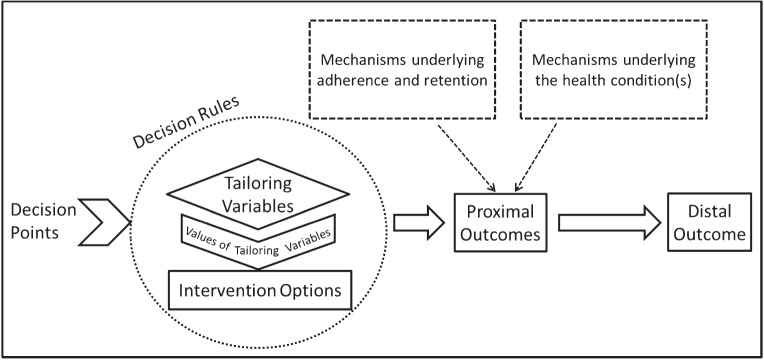
Background: The just-in-time adaptive intervention (JITAI) is an intervention design aiming to provide the right type/amount of support, at the right time, by adapting to an individual’s changing internal and contextual state. The availability of increasingly powerful mobile and sensing technologies underpins the use of JITAIs to support health behavior, as in such a setting an individual’s state can change rapidly, unexpectedly, and in his/her natural environment. Purpose: Despite the increasing use and appeal of JITAIs, a major gap exists between the growing technological capabilities for delivering JITAIs and research on the development and evaluation of these interventions. Many JITAIs have been developed with minimal use of empirical evidence, theory, or accepted treatment guidelines. Here, we take an essential first step towards bridging this gap. Methods: Building on health behavior theories and the extant literature on JITAIs, we clarify the scientific motivation for JITAIs, define their fundamental components, and highlight design principles related to these components. Examples of JITAIs from various domains of health behavior research are used for illustration. Conclusions: As we enter a new era of technological capacity for delivering JITAIs, it is critical that researchers develop sophisticated and nuanced health behavior theories capable of guiding the construction of such interventions. Particular attention has to be given to better understanding the implications of providing timely and ecologically sound support for intervention adherence and retention
Overview
The claims and statistics of this paper haven’t been checked yet.
Free: it reads the open-access text and checks the first 5 claims that cite a source we can check. Create a free account to check every claim.
Integrity signals
Registry
Cites
Statistics
Figures
Verification
Claims the paper makes
The claims and statistics of this paper haven’t been checked yet.
Free: it reads the open-access text and checks the first 5 claims that cite a source we can check. Create a free account to check every claim.
Claims other papers make about this one
Each is checked against this paper’s own text: does it say what the citing paper says it does?
The source backs part of the claim, not all of it — or backs it for a different population, condition or comparison.
In the citing paper
“Multivariable prognostic models may aid in better prediction of relapse and remission of depression at the individual patient level, which in turn can support precision medicine and allow resources to be better targeted toward relapse prevention”
From Digital health technologies and major depressive disorder (2023) · cites this paper as [139]
Experimental — accuracy not yet measuredThe source backs part of the claim, not all of it — or backs it for a different population, condition or comparison.
In the citing paper
“In addition, regular reminders that appear directly on the end device could increase activity and participation (61).”
From Improving mental well-being in psychocardiology—a feasibility trial for a non-blended web application as a brief metacognitive-based intervention in cardiovascular disease patients (2023) · cites this paper as [61]
Experimental — accuracy not yet measuredThe source backs part of the claim, not all of it — or backs it for a different population, condition or comparison.
In the citing paper
“The use of the JITAI framework to inform intervention design, evaluation, and reporting has potential to enable high-quality evidence for future app-based mHealth interventions for mental illness [13,24].”
From Effectiveness and Minimum Effective Dose of App-Based Mobile Health Interventions for Anxiety and Depression Symptom Reduction: Systematic Review and Meta-Analysis (2022) · cites this paper as [13]
Experimental — accuracy not yet measuredThe cited source says what the claim attributes to it.
In the citing paper
“Smartphone-based, just-in-time adaptive interventions (JITAIs) offer a promising alternative for delivering personalized behavioral support when individuals need it [19]”
The cited source says what the claim attributes to it.
In the citing paper
“Just-in-time adaptive intervention (JITAI) has been introduced in the mHealth domain to facilitate behavior changes; it proposes the use of ongoing information (individuals’ changing status) to adapt the delivery of the intervention in its type, timing, or amount (intensity) [13].”
3 more claims about this paper
Create a free account to see every claim other papers make about this one.
Self-check
Percentages, sums and reported differences re-computed from the paper’s own numbers.
The self-check needs the paper’s full text.
Citations
Cites
Preacher, K. J., & Hayes, A. F. (2008) · Behavior Research Methods · doi:10.3758/brm.40.3.879 · Cited by 34,117 · cited 1×
“In many cases, there are multiple pathways through which the intervention can impact the distal outcome [81].”
BackgroundThe need to belong: Desire for interpersonal attachments as a fundamental human motivation.
Baumeister, R. F., & Leary, M. R. (1995) · Psychological Bulletin · doi:10.1037//0033-2909.117.3.497 · Cited by 23,245
Health Promotion by Social Cognitive Means
Bandura, A. (2004) · Health Education & Behavior · doi:10.1177/1090198104263660 · Cited by 7,238 · cited 2×
“break long-term health behavior goals into short-term, specific, and achievable sub-goals; monitor progress; and provide relevant, timely feedback and guidance [35, 42].”
BackgroundThe Behavior of Organisms: An Experimental Analysis
Jones, F. N., & Skinner, B. F. (1939) · The American Journal of Psychology · doi:10.2307/1416495 · Cited by 4,398
Clinical Psychology: Science and Practice
(2021) · Clinical Psychology Science and Practice · doi:10.1111/(issn)1468-2850 · Cited by 3,672
Folkman, S., & Moskowitz, J. T. (2004) · Annual Review of Psychology · doi:10.1146/annurev.psych.55.090902.141456 · Cited by 3,485 · cited 1×
“behavior maintenance perspectives emphasize the importance of anticipatory coping [40]—a dynamic process involving ongoing anticipation of difficulties and timely execution of the”
BackgroundCrawford, E. R., LePine, J. A., & Rich, B. L. (2010) · Journal of Applied Psychology · doi:10.1037/a0019364 · Cited by 2,922
Deci, E. L. (1975) · doi:10.1007/978-1-4613-4446-9 · Cited by 2,911
Reality mining: sensing complex social systems
Eagle, N., & (Sandy) Pentland, A. (2006) · Personal and Ubiquitous Computing · doi:10.1007/s00779-005-0046-3 · Cited by 2,772
A taxonomy of behavior change techniques used in interventions
Abraham, C., & Michie, S. (2008) · Health Psychology · doi:10.1037/0278-6133.27.3.379 · Cited by 2,525 · cited 1×
“, healthy eating, physical activity) [33, 34].”
Research works printed but not linked: 4
- McCuaig J, Cordick A. Scaffolding for experts: Trial not error. Paper presented at: Proceedings of World Conference on E-Learning in Corporate, Government, Healthcare, and Higher Education. 2007.
- Rummel N, Weinberger A, Wecker C, et al. New challenges in CSCL: Towards adaptive script support. Paper presented at: Proceedings of the 8th International Conference on International Conference for the Learning Sciences. Vol. 3. 2008.
- Kommers P, Hooreman RW. Mobile phones for real-time teacher coaching. J Res Innov Teach. 2009; 2(1): 80- 90.
- Rahman MM, Ali AA, Plarre K, al’Absi M, Ertin E, Kumar S. mconverse: Inferring conversation episodes from respiratory measurements collected in the field. Paper presented at: Proceedings of the 2nd Conference on Wireless Health. 2011.
Cited by
Items 401–500 of 1,006
Koch, K., Maritsch, M., van Weenen, E., Feuerriegel, S., Pfäffli, M., Fleisch, E., Weinmann, W., & Wortmann, F. (2023) · CHI Conference on Human Factors in Computing Systems · doi:10.1145/3544548.3580975 · Cited by 38
“To promote behavior change, digital interventions provide effective means to prevent harm in critical situations due to alcohol consumption and intoxication [3, 5, 64, 65].”
BackgroundLee, V. V., Vijayakumar, S., Ng, W. Y., Lau, N. Y., Leong, Q. Y., Ooi, D. S. Q., Su, L. L., Lee, Y. S., Chan, S., Blasiak, A., et al. (2023) · npj Digital Medicine · doi:10.1038/s41746-023-00924-6 · Cited by 42
“This is in line with an emerging intervention design, the just-in-time adaptive intervention (JITAI) 27 .”
InfluentialHe, Z., Tian, S., Singh, A., Chakraborty, S., Zhang, S., Lustria, M. L. A., Charness, N. H., Roque, N. A., Harrell, E. R., & Boot, W. R. (2022) · Information Processing & Management · doi:10.1016/j.ipm.2022.103034 · Cited by 32
The Digital Transformation in Health: How AI Can Improve the Performance of Health Systems
Periáñez, Á., del Río, A. F., Nazarov, I., Jané, E., Hassan, M., Rastogi, A., & Tang, D. (2024) · Health Systems & Reform · doi:10.1080/23288604.2024.2387138 · Cited by 58
Mulvaney, S. A., Vaala, S., Hood, K. K., Lybarger, C., Carroll, R., Williams, L., Schmidt, D. C., Johnson, K., Dietrich, M. S., & Laffel, L. (2018) · Diabetes Technology & Therapeutics · doi:10.1089/dia.2018.0064 · Cited by 29
“Maximizing the impact of behavioral feedback will likely involve the provision of just-in-time communications based on clinically relevant data thresholds.(58) Despite utilization of advanced assessment and feedback methods, the study had limitations.”
BackgroundPrice, M., van Stolk‐Cooke, K., Brier, Z. M. F., & Legrand, A. C. (2018) · mHealth · doi:10.21037/mhealth.2018.06.03 · Cited by 30
Pokémon GO Within the Context of Family Health: Retrospective Study
Militello, L. K., Hanna, N., & Nigg, C. R. (2018) · JMIR Pediatrics and Parenting · doi:10.2196/10679 · Cited by 35
Bedrov, A., & Bulaj, G. W. (2018) · Frontiers in Psychology · doi:10.3389/fpsyg.2018.02126 · Cited by 39
Marsch, L. A. (2020) · Current Opinion in Systems Biology · doi:10.1016/j.coisb.2020.07.004 · Cited by 33
“[35]) or Just-in-Time Adaptive Interventions (JITAIs[36]) are designed to be directly responsive to the health needs of an individual, such as when they are craving a substance of abuse.”
BackgroundMobile health (mHealth) application loyalty in young consumers
Soni, M., Jain, K., & Jajodia, I. (2021) · Young Consumers Insight and Ideas for Responsible Marketers · doi:10.1108/yc-10-2020-1236 · Cited by 37
Implementing the Soil Enrichment Protocol at Scale: Opportunities for an Agricultural Carbon Market
Hammond, A. A. J., Motew, M. M., Brummitt, C. D., DuBuisson, M. L., Pinjuv, G., Harburg, D. V., Campbell, E. E., & Kumar, A. A. (2021) · Frontiers in Climate · doi:10.3389/fclim.2021.686440 · Cited by 35
Bentley, K. H., Maimone, J. S., Kilbury, E. N., Tate, M. S., Wisniewski, H., Levine, M., Roberg, R., Torous, J. B., Nock, M. K., & Kleiman, E. M. (2021) · Clinical Psychology Review · doi:10.1016/j.cpr.2021.102098 · Cited by 37
von Lützow, U., Neuendorf, N. L., & Scherr, S. (2025) · BMJ Mental Health · doi:10.1136/bmjment-2025-301641 · Cited by 29
“Although guiding frameworks exist for JITAI development, 8 many studies lack such specificity; for concrete examples of decision points and rules, we recommend the qualitative review by van Genugten et al. 46 Finally, five interventions included TAU alongside smartphone-based approaches,…”
InfluentialAmann, J., Fiordelli, M., Scheel-Sailer, A., Brach, M., & Rubinelli, S. (2020) · JMIR mHealth and uHealth · doi:10.2196/22452 · Cited by 28
“RenderX artificial intelligence and machine learning techniques offer unprecedented opportunities to take personalization to the next level [42,44,45].”
Cuijpers, P. J., Harrer, M., & Furukawa, T. A. (2026) · World Psychiatry · doi:10.1002/wps.70002 · Cited by 37
“These latter interventions are aimed at providing the right type and amount of support, at the right time, by adapting to an individual’s changing internal and contextual state 81 .”
Adaptive Intervention Designs to Promote Behavioral Change in Adults: What Is the Evidence?
Miller, C. K. (2019) · Current Diabetes Reports · doi:10.1007/s11892-019-1127-4 · Cited by 34
Wray, T. B., Luo, X., Ke, J., Pérez, A. E., Carr, D. J., & Monti, P. M. (2019) · Prevention Science · doi:10.1007/s11121-019-01019-z · Cited by 32
Chow, P. I., Drago, F., Kennedy, E. M., & Cohn, W. F. (2019) · JMIR Cancer · doi:10.2196/15750 · Cited by 32
“For example, a Just-in-Time Adaptive Intervention [81] aims to provide the right type and amount of support, at precisely the right time, by continually”
Changing Behavior by Changing Environments
Marteau, T. M., Fletcher, P. C., Hollands, G. J., & Munafo, M. R. (2020) · Cambridge University Press eBooks · doi:10.1017/9781108677318.014 · Cited by 35
Giovenco, D., Muessig, K. E., Horvitz, C., Biello, K. B., Liu, A., Horvath, K. J., Golinkoff, J., Reback, C. J., & Hightow‐Weidman, L. (2021) · mHealth · doi:10.21037/mhealth-20-43 · Cited by 30
Wen, H., Sobolev, M., Vitale, R., Kizer, J., Pollak, J., Muench, F. J., & Estrin, D. L. (2021) · JMIR Mental Health · doi:10.2196/25019 · Cited by 33
“Our results can further inform the development of digital interventions for individuals [49-51] by identifying and intervening with potential problematic behavioral patterns before they result in consequences.”
BackgroundOllier, J., Neff, S., Dworschak, C., Sejdiji, A., Santhanam, P., Keller, R., Xiao, G., Asisof, A., Rüegger, D., Bérubé, C., et al. (2021) · Frontiers in Public Health · doi:10.3389/fpubh.2021.625640 · Cited by 32
“…has begun with colleagues from Dartmouth College in the United States to adapt elements of Elena + into a “just-in-time-adaptive intervention” (157) whereby sensor data (such as GPS location, date and time, Wi-Fi connection status) is utilized to match phone notifications to user state of…”
Relationships between daily stress responses in everyday life and nightly sleep
Marcusson‐Clavertz, D., Sliwinski, M. J., Buxton, O. M., Kim, J., Almeida, D. M., & Smyth, J. M. (2022) · Journal of Behavioral Medicine · doi:10.1007/s10865-021-00281-3 · Cited by 40
Ye, J., Wang, Z., & Hai, J. (2022) · Journal of Medical Internet Research · doi:10.2196/30898 · Cited by 30
“Digital health platforms and PGHD are facilitating the development of a wave of timely interventions for mental health care and support [7].”
Pogorskiy, E., & Beckmann, J. F. (2022) · Computers and Education Artificial Intelligence · doi:10.1016/j.caeai.2022.100111 · Cited by 42
Optimizing User Engagement Through Adaptive Ad Sequencing
Rafieian, O. (2022) · Marketing Science · doi:10.1287/mksc.2022.1423 · Cited by 46
Situating Meditation Apps Within the Ecosystem of Meditation Practice: Population-Based Survey Study
Lam, S. U., Xie, Q., & Goldberg, S. B. (2023) · JMIR Mental Health · doi:10.2196/43565 · Cited by 30
“Smartphone-delivered interventions may be particularly helpful in expanding access to health services and integrating health support into people’s daily lives [3,4].”
BackgroundApproaches for tailoring between-session mental health therapy activities
Oewel, B., Areán, P. A., & Agapie, E. (2024) · CHI Conference on Human Factors in Computing Systems · doi:10.1145/3613904.3642856 · Cited by 37
“[84], system designers should use tailoring variables —information about the individual that is used to customize when and how to intervene.”
BackgroundInfluentialSchellekens, M. P. J., Zwanenburg, L. C., & van der Lee, M. L. (2024) · Current Oncology · doi:10.3390/curroncol31070297 · Cited by 33
“Underpinned by EMA and other mobile technologies, a just-in-time adaptive intervention (JITAI) aims to provide the right type and amount of support, at the right time, by adapting to an individual’s changing internal and contextual state [64].”
BackgroundFridberg, D. J., Faria, J., Cao, D., & King, A. C. (2019) · JMIR mhealth and uhealth · doi:10.2196/13765 · Cited by 32
Bulaj, G. W., Clark, J. E., Ebrahimi, M., & Bald, E. M. (2021) · Frontiers in Pharmacology · doi:10.3389/fphar.2021.612602 · Cited by 32
“interventions (JITAI) enabling changes of the therapy content in response to real-life circumstances (Nahum-Shani et al., 2018; Wang and Miller, 2019).”
BackgroundMoltrecht, B., Patalay, P., Deighton, J., & Edbrooke-Childs, J. H. (2021) · JMIR mhealth and uhealth · doi:10.2196/21837 · Cited by 39
“We suggest that future research could explore this idea further through wearable devices, which also provide an ideal opportunity to integrate advanced health technology concepts, such as just-in-time adaptive interventions [78].”
BackgroundHong-hai, J., & Zheng, C. (2021) · Work · doi:10.3233/wor-213506 · Cited by 34
“Moreover, there is a lack of research on SA from the perspective of PE [13, 14].”
Digital and Mobile Health Technology in Collaborative Behavioral Health Care: Scoping Review
Moon, K. C., Sobolev, M., & Kane, J. M. (2022) · JMIR Mental Health · doi:10.2196/30810 · Cited by 27
“Higher engagement can be achieved by personalizing the technological solutions to deliver the right treatment, in the right amount, and at the right time [72-74].”
BackgroundWang, S. D., Intille, S. S., Ponnada, A., Do, B., Rothman, A., & Dunton, G. F. (2022) · JMIR Research Protocols · doi:10.2196/36666 · Cited by 30
Overton, M., Ward, S., Swain, N., Falling, C., Gwynne‐Jones, D., Fillingim, R. B., & Mani, R. (2022) · Clinical Journal of Pain · doi:10.1097/ajp.0000000000001084 · Cited by 32
“Broderick et al38 117 56 (28-88) 87 91% W OA (49%%)”
Rohaj, A., & Bulaj, G. W. (2023) · Healthcare · doi:10.3390/healthcare11101469 · Cited by 36
Pisani, A. R., Wyman, P. A., Mohr, D. C., Perrino, T., Gallo, C. G., Villamar, J. A., Kendziora, K. T., Howe, G. W., Sloboda, Z., & Brown, C. H. (2016) · Prevention Science · doi:10.1007/s11121-016-0664-1 · Cited by 35
Moderating Effects of Weather-Related Factors on a Physical Activity Intervention
Welch, W. A., Spring, B. J., Phillips, S. M., & Siddique, J. (2018) · American Journal of Preventive Medicine · doi:10.1016/j.amepre.2018.01.025 · Cited by 32
“, suggesting the individual dress warm to be able to walk outside).(14) From a large-scale public health PA promotion perspective, it could be advisable to deploy campaigns that promote activities that may have less of a temperature and day length barrier, such as activities completed inside or those requiring little…”
Self-citationTowards A Framework for Mobile Behavior Change Research
Okeke, F., Sobolev, M., & Estrin, D. L. (2018) · Technology, Mind, and Society Conference (TechMindSociety) · doi:10.1145/3183654.3183706 · Cited by 41
“A number of the reviewed papers combined different design components e.g. digital nudges and contexts to achieve just-in-time interventions [21], sensing and nudges, and a few times all three components.”
BackgroundData-Driven Approaches to Neuroimaging Analysis to Enhance Psychiatric Diagnosis and Therapy
Zhang, X., Braun, U., Tost, H., & Bassett, D. S. (2020) · Biological Psychiatry Cognitive Neuroscience and Neuroimaging · doi:10.1016/j.bpsc.2019.12.015 · Cited by 33
Sticky apps, not sticky hands: A systematic review and content synthesis of hand hygiene mobile apps
Gasteiger, N., Dowding, D., Ali, S. M., Scott, A. J. S., Wilson, P., & van der Veer, S. N. (2021) · Journal of the American Medical Informatics Association · doi:10.1093/jamia/ocab094 · Cited by 26
Goldstein, S. P., Zhang, F., Klasnja, P., Hoover, A., Wing, R. R., & Thomas, J. G. (2021) · JMIR Research Protocols · doi:10.2196/33568 · Cited by 26
“As shown in Figure 1, the decision points in this trial occur immediately following the completion of each EMA survey [21].”
InfluentialSchroeder, J., Suh, J., Wilks, C. R., Czerwinski, M. P., Munson, S. A., Fogarty, J. A., & Althoff, T. (2020) · International Conference on Pervasive Computing Technologies for Healthcare · doi:10.1145/3421937.3421975 · Cited by 30
Wang, L., & Miller, L. C. (2023) · JMIR Formative Research · doi:10.2196/37270 · Cited by 33
“Therefore, MCBTs without intensive within-subject assessment offered by JITAIs could be perceived as nonresponsive to the changing state of the client with depression, which could undermine treatment effectiveness [19-22].”
BackgroundDraganidis, A., Fernando, A. N., West, M. L., & Sharp, G. (2024) · Social Science & Medicine · doi:10.1016/j.socscimed.2024.117231 · Cited by 46
“Just-in-time” but a bit delayed: Personalizing digital nudges for healthier online food choices
de Vries, R., Bol, N., & van der Laan, L. N. (2025) · Appetite · doi:10.1016/j.appet.2025.107852 · Cited by 31
Kmiec, J. A., & Suffoletto, B. P. (2019) · Journal of Substance Abuse Treatment · doi:10.1016/j.jsat.2019.02.005 · Cited by 26
Reichenberger, J., Smyth, J. M., Kuppens, P., & Blechert, J. (2019) · Appetite · doi:10.1016/j.appet.2019.04.019 · Cited by 26
Workshop on Implementation Science and Digital Therapeutics for Behavioral Health
Lord, S., Campbell, A. N. C., Brunette, M. F., Cubillos, L., Bartels, S. M., Torrey, W. C., Olson, A. L., Chapman, S. H., Batsis, J. A., Polsky, D. E., et al. (2021) · JMIR Mental Health · doi:10.2196/17662 · Cited by 31
“The flexibility of technologies also allows for use of innovative study designs, such as factorial and microrandomized trials, to test different intervention components and the impact of different implementation strategies for promoting use of a given digital therapeutic [69-71].”
BackgroundDesign, Implementation, and Evaluation of Behavior Change Interventions: A Ten-Task Guide
Abraham, C., & Denford, S. (2020) · Cambridge University Press eBooks · doi:10.1017/9781108677318.019 · Cited by 36
Changing Behavior Using the Reflective-Impulsive Model
Deutsch, R., & Strack, F. (2020) · Cambridge University Press eBooks · doi:10.1017/9781108677318.012 · Cited by 36
Patrick, M. E., Boatman, J. A., Morrell, N., Wagner, A. C., Lyden, G. R., Nahum-Shani, I. B., King, C. A., Bonar, E. E., Lee, C. M., Larimer, M. E., et al. (2020) · Contemporary Clinical Trials · doi:10.1016/j.cct.2020.106089 · Cited by 32
Self-citationRoos, C. R., Kober, H., Trull, T. J., MacLean, R. R., & Mun, C. J. (2020) · Current Addiction Reports · doi:10.1007/s40429-020-00329-5 · Cited by 35
Daemen, M., Postma, M. R., Lindauer, R., der Meulen, I. H.-V., Nieman, D. H., Delespaul, P., Breedvelt, J., van der Gaag, M., Viechtbauer, W., Schruers, K. R. J., et al. (2021) · Trials · doi:10.1186/s13063-021-05585-y · Cited by 33
Tanenbaum, M. L., Messer, L. H., Wu, C., Basina, M., Buckingham, B. A., Hessler, D., Mulvaney, S. A., Maahs, D. M., & Hood, K. K. (2021) · Diabetes Research and Clinical Practice · doi:10.1016/j.diabres.2021.109048 · Cited by 29
Edmondson, D. E., Conroy, D. E., Romero‐Canyas, R., Tanenbaum, M. L., & Czajkowski, S. M. (2022) · Translational Behavioral Medicine · doi:10.1093/tbm/ibac030 · Cited by 36
Nahum-Shani, I. B., Wetter, D. W., & Murphy, S. A. (2022) · Elsevier eBooks · doi:10.1016/b978-0-323-90045-4.00012-5 · Cited by 30
Self-citationOikonomidi, T., Ravaud, P., LeBeau, J., & Tran, V.-T. (2023) · Journal of Clinical Epidemiology · doi:10.1016/j.jclinepi.2022.12.006 · Cited by 26
Zainal, N. H., & Newman, M. G. (2023) · European Psychiatry · doi:10.1192/j.eurpsy.2023.2 · Cited by 26
“Future trials could examine how individualized feedback [84], event-contingent triggers, and passive sensors [85] could increase the efficacy ofMEMI in targeting GAD (just-in-time adaptive interventions) [86].”
Negative symptoms in schizophrenia differ across environmental contexts in daily life
Luther, L., Raugh, I. M., Collins, D. E., Knippenberg, A. R., & Strauss, G. P. (2023) · Journal of Psychiatric Research · doi:10.1016/j.jpsychires.2023.02.037 · Cited by 33
Koch, K., Mishra, V., Liu, S., Berger, T., Fleisch, E., Kotz, D. F., & Wortmann, F. (2021) · Proceedings of the ACM on Interactive Mobile Wearable and Ubiquitous Technologies · doi:10.1145/3448116 · Cited by 34
“In fact, in the realm of Just-in-Time Adaptive Interventions, these łnegativež events could be considered as states-of-vulnerability that could guide the right type and amount of support [48, 49].”
BackgroundSocial Comparison and Mental Health
Arigo, D., Bercovitz, I., Lapitan, E., & Gular, S. (2024) · Current Treatment Options in Psychiatry · doi:10.1007/s40501-024-00313-0 · Cited by 41
“Mobile just-in-time adaptive interventions (JITAI) [69] test the effects of distinct treatment components on short-term outcomes of interest over multiple exposures, often using micro-randomization that embeds randomization into EMA or other intensive ambulatory assessment designs [59].”
Toward a Theory of Lifespan Personality Trait Development
Bleidorn, W. (2024) · Annual Review of Developmental Psychology · doi:10.1146/annurev-devpsych-010923-101709 · Cited by 53
Suh, J., Howe, E. S., Lewis, R., Hernandez, J., Saha, K., Althoff, T., & Czerwinski, M. P. (2024) · JMIR Mental Health · doi:10.2196/48974 · Cited by 40
“There are multiple considerations that influence JITAI systems’ decision points (ie, “a time at which an intervention decision is made” [32]), such as the right timing for a prompt, the right intervention for the moment, or the intervention likely to be engaged in.”
BackgroundJust-in-Time Adaptive Interventions: Where Are We Now and What Is Next?
Nahum-Shani, I. B., & Murphy, S. A. (2025) · Annual Review of Psychology · doi:10.1146/annurev-psych-121024-044244 · Cited by 58
Self-citationFedele, D. A., McConville, A., Moon, J., & Thomas, J. G. (2018) · Journal of Pediatric Psychology · doi:10.1093/jpepsy/jsy084 · Cited by 25
Morton, E. E., Hole, R., Murray, G., Buzwell, S., & Michalak, E. E. (2019) · JMIR Mental Health · doi:10.2196/16121 · Cited by 29
“Disengagement is common with digital health interventions [22], and although engagement was not formally assessed over an extended period in this study, reported plans for use are promising.”
BackgroundA Methodologic Systematic Review of Mobile Health Behavior Change Randomized Trials
Oikonomidi, T., Vivot, A., Tran, V.-T., Riveros, C., Robin, E., & Ravaud, P. (2019) · American Journal of Preventive Medicine · doi:10.1016/j.amepre.2019.07.008 · Cited by 30
IntelligentPooling: practical Thompson sampling for mHealth
Tomkins, S., Liao, P., Klasnja, P., & Murphy, S. A. (2021) · Machine Learning · doi:10.1007/s10994-021-05995-8 · Cited by 53
“Over-treatment can lead to user disengagement (Nahum-Shani et al. 2017), for example users might ignore treatments or even delete the application.”
BackgroundSelf-citationMiller‐Graff, L. E., Ellis, K., & Hosny, N. (2020) · Journal of Traumatic Stress · doi:10.1002/jts.22621 · Cited by 28
Demers, M., & Winstein, C. J. (2020) · Topics in Stroke Rehabilitation · doi:10.1080/10749357.2020.1856557 · Cited by 27
“many behavioral EMI programs were developed using an atheoretical approach, with minimal empirical evidence, or limited to absent treatment guidelines.(48) While the technology enables new treatment possibilities, an effective EMI is more likely to emerge from robust evidence, a personalized approach and a strong theo…”
MethodStudyU: A Platform for Designing and Conducting Innovative Digital N-of-1 Trials
Konigorski, S., Wernicke, S., Slosarek, T., Zenner, A. M., Strelow, N., Ruether, D. F., Henschel, F., Manaswini, M., Pottbäcker, F., Edelman, J. A., et al. (2022) · Journal of Medical Internet Research · doi:10.2196/35884 · Cited by 34
“Third, we will provide the possibility to design adaptive trials, for example, including elements from micro-randomized trials (33,34) as well as from just-in-time adaptive interventions (35).”
MethodMerrill, J. E., Boyle, H. K., López, G., Miller, M. B., Barnett, N. P., Jackson, K. M., & Carey, K. B. (2021) · Alcoholism Clinical and Experimental Research · doi:10.1111/acer.14623 · Cited by 28
Rebele, R. W., Koval, P., & Smillie, L. D. (2021) · European Journal of Personality · doi:10.1177/08902070211016251 · Cited by 28
Person-specific dose-finding for a digital messaging intervention to promote physical activity.
Hojjatinia, S., Hojjatinia, S., Lagoa, C. M., Brunke-Reese, D., & Conroy, D. E. (2021) · Health Psychology · doi:10.1037/hea0001117 · Cited by 29
Giurgiu, M., Ebner‐Priemer, U., & Dumuid, D. (2021) · Psychology of sport and exercise · doi:10.1016/j.psychsport.2021.102102 · Cited by 31
Ryan, K. D., Dockray, S., & Linehan, C. (2022) · CHI Conference on Human Factors in Computing Systems · doi:10.1145/3491102.3501864 · Cited by 30
“More recently, context-aware systems for tailoring use wearables, sensors and smartphones that enable passive data gathering to provide personalized intervention to the individual, that is sensitive to the individual’s changing internal and external states [36].”
BackgroundMultimodal, Idiographic Ambulatory Sensing Will Transform our Understanding of Emotion
Hoemann, K., Wormwood, J. B., Barrett, L. F., & Quigley, K. S. (2023) · Affective Science · doi:10.1007/s42761-023-00206-0 · Cited by 34
“These innovations enable targeted sampling of stressful experiences, and can also inform the delivery of just-in-time adaptive interventions (e.g., Nahum-Shani et al., 2018; Schneider et al., 2023).”
BackgroundReinforcement Learning in Modern Biostatistics: Constructing Optimal Adaptive Interventions
Deliu, N., Williams, J. J., & Chakraborty, B. (2024) · International Statistical Review · doi:10.1111/insr.12583 · Cited by 39
“A high-level goal in mHealth is to deliver efficacious just-in-time adaptive interventions [JITAIs; 89] in response to the in-the-moment changes in an individual’s internal (e.g., health) and contextual (e.g., location) state [58].”
BackgroundInfluentialBoutelle, K. N., Sim, D. E. K., Manzano, M. A., Rhee, K. E., Crow, S. J., & Strong, D. R. (2019) · International Journal of Obesity · doi:10.1038/s41366-019-0463-4 · Cited by 31
Czyz, E. K., Yap, J. R. T., King, C. A., & Nahum-Shani, I. B. (2020) · Assessment · doi:10.1177/1073191120939168 · Cited by 31
“Identifying empirically based tailoring variables is also critical for just-in-time adaptive interventions (JITAIs), a type of adaptive intervention addressing dynamically changing needs of an individual in their natural environment (Nahum-Shani et al., 2017).”
BackgroundSelf-citationUsing novel mobile sensors to assess stress and smoking lapse
Nakajima, M., Lemieux, A. M., Fiecas, M. J. A., Chatterjee, S., Sarker, H., Saleheen, N., Ertin, E., Kumar, S., & Al’Absi, M. (2020) · International Journal of Psychophysiology · doi:10.1016/j.ijpsycho.2020.11.005 · Cited by 26
Automated Assessment of Psychiatric Disorders Using Speech: A Systematic ReviewPreprint
Low, D. M., Bentley, K. H., & Ghosh, S. (2019) · OSF Preprints (OSF Preprints) · doi:10.31219/osf.io/5pwze · Cited by 31
Ribba, B. (2023) · Frontiers in Pharmacology · doi:10.3389/fphar.2022.1094281 · Cited by 24
“In the mobile technology literature, JITAI has been primarily considered as a critical topic for increasing adherence and retention of users; but within a therapeutic perspective, it should encompass both the topic of adherence and retention to the therapeutic modality and the topic of its optimal dosing in order to m…”
BackgroundInfluentialMessage-Based vs Video-Based Psychotherapy for Depression: A Randomized Clinical Trial
Pullmann, M. D., Rouvere, J., Raue, P. J., Fillipo, I. G., Mosser, B., Heagerty, P. J., Fridling, N., Padmanabhan, A., Hull, T. D., & Areán, P. A. (2025) · JAMA Network Open · doi:10.1001/jamanetworkopen.2025.40065 · Cited by 32
Nebeker, C., Leow, A., & Moore, R. C. (2019) · Journal of Alzheimer s Disease · doi:10.3233/jad-190589 · Cited by 25
Byrne, M., McSharry, J., Meade, O., Lavoie, K., & Bacon, S. (2020) · Trials · doi:10.1186/s13063-020-04235-z · Cited by 25
Katapally, T. R., & Chu, L. M. (2020) · BMJ Open · doi:10.1136/bmjopen-2020-036787 · Cited by 23
Dyadic Behavior Change Interventions
Scholz, U., Berli, C., Lüscher, J., & Knoll, N. (2020) · Cambridge University Press eBooks · doi:10.1017/9781108677318.043 · Cited by 29
Naim, R., Smith, A. R., Chue, A. E., Grassie, H. L., Linke, J. O., Dombek, K., Shaughnessy, S., McNeil, C., Cardinale, E. M., Agorsor, C. F., et al. (2021) · Development and Psychopathology · doi:10.1017/s0954579421000717 · Cited by 24
“In addition to using EMA as a phenotyping tool, recent and ongoing efforts are using EMA in conjunction with information processing technologies to develop “just in time” interventions tailored to psychiatric symptoms reported in daily life (e.g., Bidargaddi, Schrader, Klasnja, Licinio, & Murphy, 2020; Nahum-Shani, He…”
MethodNahum-Shani, I. B., Dziak, J. J., & Wetter, D. W. (2022) · Frontiers in Digital Health · doi:10.3389/fdgth.2022.798025 · Cited by 25
“A JITAI employs adaptation to address conditions that change relatively rapidly (e.g., every few days, hours, or minutes) and in the person’s natural environment (39, 40).”
BackgroundMethodSelf-citationYip, S. W., Barch, D. M., Chase, H. W., Flagel, S. B., Huys, Q. J. M., Konova, A. B., Montague, P. R., & Paulus, M. P. (2022) · Biological Psychiatry Global Open Science · doi:10.1016/j.bpsgos.2022.03.011 · Cited by 31
Brain Structure and Function Predict Adherence to an Exercise Intervention in Older Adults
Morris, T. P., Burzynska, A. Z., Voss, M. W., Fanning, J. T., Salerno, E. A., Prakash, R. S., Gothe, N. P., Whitfield, S., Hillman, C. H., McAuley, E., et al. (2022) · Medicine & Science in Sports & Exercise · doi:10.1249/mss.0000000000002949 · Cited by 28
Smart Sensors for Health Research and Improvement
Garatva, P., Terhorst, Y., Meßner, E.-M., Karlen, W., Pryss, R. C., & Baumeister, H. (2022) · Studies in neuroscience, psychology and behavioral economics · doi:10.1007/978-3-030-98546-2_23 · Cited by 28
Wang, J., Fang, Y., Frank, E., Walton, M. A., Burmeister, M., Tewari, A., Dempsey, W., NeCamp, T., Sen, S., & Wu, Z. (2023) · npj Digital Medicine · doi:10.1038/s41746-022-00746-y · Cited by 38
Self-citationVětrovský, T., Král, N., Pfeiferová, M., Kühnová, J., Novák, J., Wahlich, C., Jaklova, A., Jurková, K., Janek, M., Omcirk, D., et al. (2023) · BMC Public Health · doi:10.1186/s12889-023-15513-1 · Cited by 25
Defining digital coaching: a qualitative inductive approach
Diller, S. J., & Passmore, J. (2023) · Frontiers in Psychology · doi:10.3389/fpsyg.2023.1148243 · Cited by 36
Selecting an Ecological Momentary Assessment Platform: Tutorial for Researchers
Henry, L. M., Hansen, E., Chimoff, J., Pokstis, K., Kiderman, M., Naim, R., Kossowsky, J., Byrne, M. E., López-Guzmán, S., Kircanski, K., et al. (2024) · Journal of Medical Internet Research · doi:10.2196/51125 · Cited by 29
“Ecological momentary interventions (EMIs), and relatedly just-in-time adaptive interventions (JITAIs), capitalize on EMA, wearable devices, and mobile device–based passive sensors to provide in-situ personalized support by detecting and adapting to individual internal and contextual states [29,30].”
Bejarano, C. M., Cushing, C. C., & Crick, C. (2018) · Psychology of sport and exercise · doi:10.1016/j.psychsport.2018.05.008 · Cited by 31
“These findings improve on the current literature and plans for future work in JITAIs (Nahum-Shani et al., 2016) in that they propose the importance of contextual variables that may provide effective intervention points.”
Background
Metadata
- Authors
- Nahum-Shani, I., Smith, S. N., Spring, B. J., Collins, L. M., Witkiewitz, K., Tewari, A., & Murphy, S. A.
- Affiliations
- University of Michigan (US)
- Northwestern University (US)
- Pennsylvania State University (US)
- University of New Mexico (US)
- Corresponding author
- Nahum-Shani, Inbal
- ORCID
- Venue
- Annals of Behavioral Medicine
- Publisher
- Oxford University Press (OUP)
- Published
- 2017-12-12
- Volume
- 52
- Issue
- 6
- Pages
- 446-462
- ISSN
- 0742-5554 (ISSN-L)
- 0883-6612
- 1532-4796
- PMC
- PMC5364076
- OpenAlex
- W2523153599
- Cited by
- 2,171
- References
- 142
- Citations by year
- 2026: 370 · 2025: 319 · 2024: 256 · 2023: 266 · 2022: 244 · 2021: 250 · 2020: 211 · 2019: 133 · 2018: 71 · 2017: 39
- FWCI
- 154.61
- Type
- journal article
- Language
- en
- Open access
- hybrid
- doi.org
- Licence
- Locations
- Annals of Behavioral Medicine (publishedVersion, cc-by-nc)
- PubMed Central (publishedVersion, cc-by-nc)
- PubMed (publishedVersion)
- Funders
- National Institutes of Health (R01 DA039901, R01 AA022113, R01 HD073975, R21 AA018336, R01 AA023187, R01 HL125440, U54 EB020404, R01 DK108678, R01 DK097364, P50 DA039838, P01 CA180945, R01 AA022931)
- NIH (R01 DA039901, R01 AA022113, R01 HD073975, R21 AA018336, R01 AA023187, R01 HL125440, U54 EB020404, R01 DK108678, R01 DK097364, P50 DA039838, P01 CA180945, R01 AA022931)
- National Science Foundation (IIS-1452099, IIS-1545751)
- Topics
- Health Sciences › Health Professions › General Health Professions › Mobile Health and mHealth Applications
- Social Sciences › Psychology › Applied Psychology › Digital Mental Health Interventions
- Social Sciences › Psychology › Applied Psychology › Behavioral Health and Interventions
- Keywords
- just-in-time adaptive interventions, mobile health, health behavior change, health behavior theory, intervention adherence, intervention retention, ecological validity, sensor technology
- MeSH terms
- Behavioral Medicine, Humans, Patient Compliance, Research Design, Health Behavior, Telemedicine
About these checks
Registry, retraction, Cites and statistics results are computed, not judged, with one exception: a printed reference that no index lists is read once by a model before it counts as a citation error. Claims are extracted by a model and kept only when their quote appears verbatim in the text; each cited source is then checked, with a model’s help, for whether it says what the claim relies on. Those verdicts can be wrong — read the claim’s quote and the cited source before relying on one.
Statistics and arithmetic are recomputed, not judged.
Confidence bands are shown only for fields calibrated on our annotated test set. None is calibrated yet, so no band is shown.
What counts as a claim ›How we measure confidence ›How we check this ›
Are you an author, or do you see a problem with this page? Request a review
Data sources
Bibliographic data: Semantic Scholar, OpenAlex, Crossref.
Contains information from the Semantic Scholar Academic Graph Datasets, made available under the ODC Attribution License (ODC-BY 1.0).
Semantic Scholar’s data is described in: Kinney, R., et al. (2023). The Semantic Scholar Open Data Platform. arXiv:2301.10140.
