

Just-in-Time Adaptive Interventions (JITAIs) in Mobile Health: Key Components and Design Principles for Ongoing Health Behavior Support
Open accessThe DOI matches its Crossref record; 140 of the 142 references it cites were found in a registry or an index.
Abstract
Background: The just-in-time adaptive intervention (JITAI) is an intervention design aiming to provide the right type/amount of support, at the right time, by adapting to an individual’s changing internal and contextual state. The availability of increasingly powerful mobile and sensing technologies underpins the use of JITAIs to support health behavior, as in such a setting an individual’s state can change rapidly, unexpectedly, and in his/her natural environment. Purpose: Despite the increasing use and appeal of JITAIs, a major gap exists between the growing technological capabilities for delivering JITAIs and research on the development and evaluation of these interventions. Many JITAIs have been developed with minimal use of empirical evidence, theory, or accepted treatment guidelines. Here, we take an essential first step towards bridging this gap. Methods: Building on health behavior theories and the extant literature on JITAIs, we clarify the scientific motivation for JITAIs, define their fundamental components, and highlight design principles related to these components. Examples of JITAIs from various domains of health behavior research are used for illustration. Conclusions: As we enter a new era of technological capacity for delivering JITAIs, it is critical that researchers develop sophisticated and nuanced health behavior theories capable of guiding the construction of such interventions. Particular attention has to be given to better understanding the implications of providing timely and ecologically sound support for intervention adherence and retention
Overview
The claims and statistics of this paper haven’t been checked yet.
Free: it reads the open-access text and checks the first 5 claims that cite a source we can check. Create a free account to check every claim.
Integrity signals
Registry
Cites
Statistics
Figures
Verification
Claims the paper makes
The claims and statistics of this paper haven’t been checked yet.
Free: it reads the open-access text and checks the first 5 claims that cite a source we can check. Create a free account to check every claim.
Claims other papers make about this one
Each is checked against this paper’s own text: does it say what the citing paper says it does?
The source backs part of the claim, not all of it — or backs it for a different population, condition or comparison.
In the citing paper
“Multivariable prognostic models may aid in better prediction of relapse and remission of depression at the individual patient level, which in turn can support precision medicine and allow resources to be better targeted toward relapse prevention”
From Digital health technologies and major depressive disorder (2023) · cites this paper as [139]
Experimental — accuracy not yet measuredThe source backs part of the claim, not all of it — or backs it for a different population, condition or comparison.
In the citing paper
“In addition, regular reminders that appear directly on the end device could increase activity and participation (61).”
From Improving mental well-being in psychocardiology—a feasibility trial for a non-blended web application as a brief metacognitive-based intervention in cardiovascular disease patients (2023) · cites this paper as [61]
Experimental — accuracy not yet measuredThe source backs part of the claim, not all of it — or backs it for a different population, condition or comparison.
In the citing paper
“The use of the JITAI framework to inform intervention design, evaluation, and reporting has potential to enable high-quality evidence for future app-based mHealth interventions for mental illness [13,24].”
From Effectiveness and Minimum Effective Dose of App-Based Mobile Health Interventions for Anxiety and Depression Symptom Reduction: Systematic Review and Meta-Analysis (2022) · cites this paper as [13]
Experimental — accuracy not yet measuredThe cited source says what the claim attributes to it.
In the citing paper
“Smartphone-based, just-in-time adaptive interventions (JITAIs) offer a promising alternative for delivering personalized behavioral support when individuals need it [19]”
The cited source says what the claim attributes to it.
In the citing paper
“Just-in-time adaptive intervention (JITAI) has been introduced in the mHealth domain to facilitate behavior changes; it proposes the use of ongoing information (individuals’ changing status) to adapt the delivery of the intervention in its type, timing, or amount (intensity) [13].”
3 more claims about this paper
Create a free account to see every claim other papers make about this one.
Self-check
Percentages, sums and reported differences re-computed from the paper’s own numbers.
The self-check needs the paper’s full text.
Citations
Cites
Preacher, K. J., & Hayes, A. F. (2008) · Behavior Research Methods · doi:10.3758/brm.40.3.879 · Cited by 34,117 · cited 1×
“In many cases, there are multiple pathways through which the intervention can impact the distal outcome [81].”
BackgroundThe need to belong: Desire for interpersonal attachments as a fundamental human motivation.
Baumeister, R. F., & Leary, M. R. (1995) · Psychological Bulletin · doi:10.1037//0033-2909.117.3.497 · Cited by 23,245
Health Promotion by Social Cognitive Means
Bandura, A. (2004) · Health Education & Behavior · doi:10.1177/1090198104263660 · Cited by 7,238 · cited 2×
“break long-term health behavior goals into short-term, specific, and achievable sub-goals; monitor progress; and provide relevant, timely feedback and guidance [35, 42].”
BackgroundThe Behavior of Organisms: An Experimental Analysis
Jones, F. N., & Skinner, B. F. (1939) · The American Journal of Psychology · doi:10.2307/1416495 · Cited by 4,398
Clinical Psychology: Science and Practice
(2021) · Clinical Psychology Science and Practice · doi:10.1111/(issn)1468-2850 · Cited by 3,672
Folkman, S., & Moskowitz, J. T. (2004) · Annual Review of Psychology · doi:10.1146/annurev.psych.55.090902.141456 · Cited by 3,485 · cited 1×
“behavior maintenance perspectives emphasize the importance of anticipatory coping [40]—a dynamic process involving ongoing anticipation of difficulties and timely execution of the”
BackgroundCrawford, E. R., LePine, J. A., & Rich, B. L. (2010) · Journal of Applied Psychology · doi:10.1037/a0019364 · Cited by 2,922
Deci, E. L. (1975) · doi:10.1007/978-1-4613-4446-9 · Cited by 2,911
Reality mining: sensing complex social systems
Eagle, N., & (Sandy) Pentland, A. (2006) · Personal and Ubiquitous Computing · doi:10.1007/s00779-005-0046-3 · Cited by 2,772
A taxonomy of behavior change techniques used in interventions
Abraham, C., & Michie, S. (2008) · Health Psychology · doi:10.1037/0278-6133.27.3.379 · Cited by 2,525 · cited 1×
“, healthy eating, physical activity) [33, 34].”
Research works printed but not linked: 4
- McCuaig J, Cordick A. Scaffolding for experts: Trial not error. Paper presented at: Proceedings of World Conference on E-Learning in Corporate, Government, Healthcare, and Higher Education. 2007.
- Rummel N, Weinberger A, Wecker C, et al. New challenges in CSCL: Towards adaptive script support. Paper presented at: Proceedings of the 8th International Conference on International Conference for the Learning Sciences. Vol. 3. 2008.
- Kommers P, Hooreman RW. Mobile phones for real-time teacher coaching. J Res Innov Teach. 2009; 2(1): 80- 90.
- Rahman MM, Ali AA, Plarre K, al’Absi M, Ertin E, Kumar S. mconverse: Inferring conversation episodes from respiratory measurements collected in the field. Paper presented at: Proceedings of the 2nd Conference on Wireless Health. 2011.
Cited by
Items 801–900 of 1,007
Shim, Y., Scotney, V. S., & Tay, L. (2021) · The Journal of Positive Psychology · doi:10.1080/17439760.2021.1913642 · Cited by 14
Votaw, V. R., Tuchman, F. R., Piccirillo, M. L., Schwebel, F. J., & Witkiewitz, K. A. (2022) · Current Addiction Reports · doi:10.1007/s40429-022-00441-8 · Cited by 14
Self-citationKulikova, M. S., Калинина, А. М., Васильевна, К. А., & Drapkina, O. M. (2022) · Russian Journal of Preventive Medicine · doi:10.17116/profmed20222510135 · Cited by 13
Sieber, C., Haag, C., Polhemus, A. M., Sylvester, R., Kool, J., Gonzenbach, R. R., & von Wyl, V. (2023) · Frontiers in Digital Health · doi:10.3389/fdgth.2023.1006932 · Cited by 11
“2%) EuroQol Visual Analogue Scale (value, 0-100 scale; refers to “today”), median (IQR) 60 (50-75) Missing information 1 EuroQol 5-Dimension 5-Level weighted by the French value set (0-100 scale; refers to “today”), median (IQR) 63.”
BackgroundMapping the associations of daily pain, sleep, and psychological distress in a U.S. sample
Anderson, A. R., & Holliday, D. (2023) · Journal of Behavioral Medicine · doi:10.1007/s10865-023-00432-8 · Cited by 11
“If future research examines more granular, just-in-time interventions for the management of these three important factors (Nahum-Shani et al., 2018), an important “state of vulnerability/opportunity” may be just after waking from poorer night sleep.”
BackgroundRominger, C., & Schwerdtfeger, A. R. (2023) · International Journal of Psychophysiology · doi:10.1016/j.ijpsycho.2023.08.004 · Cited by 17
Conroy, D. E., Marks, J. G., Cutshaw, A., Ram, N., Thomaz, E., & Streeper, N. M. (2024) · Contemporary Clinical Trials · doi:10.1016/j.cct.2024.107454 · Cited by 12
“Drawing on just-in-time intervention development principles [33], sip IT combines semi-automated tracking of fluid intake with lapse-contingent reminders to drink (see Fig.”
Surveys and Diaries and Scales, Oh My! A Critical Analysis of Household Food Waste Measurement
Aitken, J. A., Sprenger, A., Alaybek, B., Mika, G., Hartman, H., Leets, L., Maese, E., & Davoodi, T. (2024) · Sustainability · doi:10.3390/su16030968 · Cited by 13
The Effect of Everyday-Life Social Contact on Pain
Weiss, M. H., Gründahl, M., Jachnik, A., Lampe, E. C., Malik, I., Rittner, H. L., Sommer, C., & Hein, G. (2024) · Journal of Medical Internet Research · doi:10.2196/53830 · Cited by 16
“Such just-in-time adaptive interventions [112] could help patients with pain identify associations between their current pain level and their momentary activity [113].”
Tracking health-related quality of life dynamics: Advances in ambulatory assessment methods
Löchner, J., Moshe, I., Schiepek, G. K., Schuller, B. W., Schoedel, R., Rodgar, M., Wac, K., & Seizer, L. (2024) · Brain Behavior and Immunity Integrative · doi:10.1016/j.bbii.2024.100061 · Cited by 19
Leenaerts, N., Soyster, P. D., Ceccarini, J., Sunaert, S. G., Fisher, A. J., & Vrieze, E. (2024) · Psychological Medicine · doi:10.1017/s0033291724000862 · Cited by 19
Applying the Family Stress Model to responsive feeding and early obesity prevention
Ruggiero, C. F., Trexberg, K. M., Moore, A. M., & Savage, J. S. (2024) · Appetite · doi:10.1016/j.appet.2024.107515 · Cited by 14
Coppens, I., Pessemier, T. D., & Martens, L. (2024) · User Modeling and User-Adapted Interaction · doi:10.1007/s11257-024-09407-z · Cited by 15
Harrell, E. R., King, J. W., Stoeckel, L. E., & Treviño, M. (2024) · The Journals of Gerontology Series B · doi:10.1093/geronb/gbae120 · Cited by 11
Perski, O., Copeland, A., Allen, J., Pavel, M., Rivera, D. E., Hekler, E. B., Hankonen, N. E., & Chevance, G. (2024) · Health Psychology Review · doi:10.1080/17437199.2024.2400977 · Cited by 21
Accelerometer‐based heart rate adjustment for ambulatory stress research
van de Ven, S. R. B., Gevonden, M. J., Noordzij, M. L., & de Geus, E. J. C. (2024) · Psychophysiology · doi:10.1111/psyp.14721 · Cited by 14
de Oliveira, A. C., Bessa, R. F., & Teles, A. S. (2024) · Cadernos de Saúde Pública · doi:10.1590/0102-311xen028824 · Cited by 15
“This approach can facilitate early detection of suicide risk, thereby empowering mental health professionals to implement just-in-time adaptive interventions 31 , including via mobile apps 51 .”
Thompson, L., Charitos, S., Bird, J., Marshall, P., & Brigden, A. (2025) · Journal of Medical Internet Research · doi:10.2196/62944 · Cited by 19
“JITAIs use mobile and sensing technology to offer personalized and timely support [72] and have been used in a variety of adult and adolescent health domains including PA [70] and substance use behavior [71,73].”
Zhu, Z., Aitken, J. A., Kim, J., Baines, J. I., Kaplan, S. A., Dalal, R. S., & Hassani, J. (2025) · Journal of Occupational and Organizational Psychology · doi:10.1111/joop.70020 · Cited by 16
Cross, S. P. M., Mangelsdorf, S. N., Valentine, L., O’Sullivan, S., McEnery, C., Scott, I., Gilbertson, T., Louis, S., Myer, J., Liu, P., et al. (2025) · Internet Interventions · doi:10.1016/j.invent.2025.100849 · Cited by 18
Miller, C. C., Chua, Y. X., Quintana, M., Lei, B., Biljecki, F., & Frei, M. (2025) · Building and Environment · doi:10.1016/j.buildenv.2025.113388 · Cited by 11
“…just-in-time adaptive interventions (JITAI) that has significant momentum in the fields of reducing sedentary behavior (M¨uller et al., 2017; Saponaro et al., 2021), promoting physical activity (Hardeman et al., 2019; Venema et al., 2018) and supporting health behaviors (Nahum-Shani et al., 2018).”
Pogorskiy, E., Beckmann, J. F., Joksimovíc, S., Kovanović, V., & West, R. (2018) · IEEE International Conference on Teaching, Assessment, and Learning for Engineering · doi:10.1109/tale.2018.8615130 · Cited by 17
Rhew, I. C., Duckworth, J. C., Hurvitz, P. M., & Lee, C. M. (2020) · Drug and Alcohol Dependence · doi:10.1016/j.drugalcdep.2020.108068 · Cited by 12
Kang, A. W. C., von Ash, T., Tovar, A., Gans, K. M., Minkel, J. D., Mena, N. Z., & Risica, P. M. (2020) · Journal of Pediatric Nursing · doi:10.1016/j.pedn.2020.07.006 · Cited by 12
The Accuracy of Causal Learning Over Long Timeframes: An Ecological Momentary Experiment Approach
Willett, C. L., & Rottman, B. M. (2021) · Cognitive Science · doi:10.1111/cogs.12985 · Cited by 13
Poppe, L., Paepe, A. L. D., Ryckeghem, D. M. L. V., Dyck, D. V., Maes, I., & Crombez, G. (2021) · PeerJ · doi:10.7717/peerj.11579 · Cited by 16
Hua, W., Mei, H., Zohar, S., Giral, M., & Xu, Y. (2021) · Bayesian Analysis · doi:10.1214/21-ba1276 · Cited by 34
“, 2008), just-in-time adaptive interventions in mobile health (Nahum-Shani et al., 2018; Carpenter et al., 2020), and advantage doubly robust policy learning that optimizes when to treat (Nie et al.”
BackgroundDaily adherence variability and psychosocial differences in adolescents with asthma: a pilot study
Sweenie, R., Cushing, C. C., Fleming, K., Prabhakaran, S., & Fedele, D. A. (2021) · Journal of Behavioral Medicine · doi:10.1007/s10865-021-00247-5 · Cited by 12
Carlozzi, N. E., Choi, S. W., Wu, Z., Miner, J. A., Lyden, A. K., GRAVES, C. M., Wang, J., & Sen, S. (2021) · JMIR Research Protocols · doi:10.2196/32842 · Cited by 12
“The intervention is a just-in-time adaptive intervention (JITAI), that is, an emerging intervention that uses real time data collection to inform and personalize the delivery of the intervention [70,71].”
BackgroundAreán, P. A., Hull, D., Pullmann, M. D., & Heagerty, P. J. (2021) · BMJ Open · doi:10.1136/bmjopen-2020-046958 · Cited by 35
“45 48 However, the impact of MBC as a stand-alone treatment for depression is still unknown, and for this reason is in further need of study.”
BackgroundAssessing subjective cannabis effects in daily life with contemporary young adult language
Cloutier, R. M., Calhoun, B. H., Lanza, S. T., & Linden‐Carmichael, A. N. (2021) · Drug and Alcohol Dependence · doi:10.1016/j.drugalcdep.2021.109205 · Cited by 12
Bell, B. M., Alam, R., Mondol, A. S., Ma, M., Emi, I. A., Preum, S. M., de la Haye, K., Stankovic, J. A., Lach, J., & Spruijt‐Metz, D. (2022) · JMIR mhealth and uhealth · doi:10.2196/30211 · Cited by 10
“These types of intervention designs aim to provide the right amount of support at the right time and in the right context to promote behavior change [69-71].”
BackgroundSiddiqui, A. A. (2022) · Biomedical Journal of Scientific & Technical Research · doi:10.26717/bjstr.2022.42.006701 · Cited by 11
“Despite the increasing use and appeal of JITAIs, a major gap exists between the growing (Inbal NS [9]) technological capabilities for delivering JITAIs and research on the development and evaluation of these interventions (Figure 2).”
BackgroundThe NESTORE e-Coach: Designing a Multi-Domain Pathway to Well-Being in Older Age
Angelini, L., Kamali, M. E., Mugellini, E., Khaled, O. A., Röcke, C., Porcelli, S., Mastropietro, A., Rizzo, G., Boqué, N., Bas-Prior, J. M. D., et al. (2022) · Technologies · doi:10.3390/technologies10020050 · Cited by 16
Daily Contributors of Tinnitus Loudness and Distress: An Ecological Momentary Assessment Study
Simoes, J. P., Bulla, J., Neff, P. K. A., Pryss, R. C., Marcrum, S. C., Langguth, B., & Schlee, W. (2022) · Frontiers in Neuroscience · doi:10.3389/fnins.2022.883665 · Cited by 15
“For example, the results suggest that patients with tinnitus may benefit from just-in-time adaptive intervention (JITAI) (Nahum-Shani et al., 2016;Wang andMiller, 2019).”
BackgroundReal-time digital monitoring of a suicide attempt by a hospital patient
Coppersmith, D. D. L., Wang, S. B., Kleiman, E. M., Maimone, J. S., Fedor, S., Bentley, K. H., Millner, A. J., Fortgang, R. G., Picard, R. W., Beck, S., et al. (2022) · General Hospital Psychiatry · doi:10.1016/j.genhosppsych.2022.12.005 · Cited by 15
“Ultimately, a more precise understanding of suicidal behavior from digital phenotyping could be leveraged to develop just-in time adaptive interventions for suicidal behavior [34,35].”
BackgroundTrinquart, L., Liu, C., McManus, D. D., Nowak, C., Lin, H., Spartano, N. L., Borrelli, B., Benjamin, E. J., & Murabito, J. M. (2023) · Journal of Medical Internet Research · doi:10.2196/40784 · Cited by 11
Buu, A., Yang, J. J., Ou, T.-S., Nam, J. K., Suh, G., & Lin, H. (2023) · Addictive Behaviors · doi:10.1016/j.addbeh.2023.107662 · Cited by 14
Serre, F., Moriceau, S., Donnadieu, L., Forcier, C., Garnier, H., Alexandre, J., Dupuy, L., Philip, P., Levavasseur, Y., de Sevin, É., et al. (2023) · Frontiers in Psychiatry · doi:10.3389/fpsyt.2023.1143167 · Cited by 15
“The functioning of the app is described in Table 3 according the Nahum-Shani and colleagues list of contents and design principles of JITAI (92).”
BackgroundMethodBal, V. H., Mournet, A. M., Glascock, T., Shinall, J. A., Gunin, G. B., Jadav, N., Zhang, H., Brennan, E., Istvan, E. M., & Kleiman, E. M. (2023) · Autism · doi:10.1177/13623613231186035 · Cited by 13
Maher, J. P., Hevel, D. J., Bittel, K. M., Hudgins, B. L., Labban, J. D., & Kennedy‐Malone, L. (2023) · JMIR Research Protocols · doi:10.2196/47320 · Cited by 14
Barber, B. V., Kephart, G. C., Martin‐Misener, R., Vallis, M., Matthews, S. A., Atkins, L., Cassidy, C. E., Curran, J., & Rainham, D. G. C. (2023) · Translational Behavioral Medicine · doi:10.1093/tbm/ibad065 · Cited by 13
“Innovative methods such as just-in-time adaptive interventions are one example of techniques for providing tailored support at opportune times when individuals need assistance with monitoring and reducing harmful substance use [123, 124].”
Can accelerometry data improve estimates of heart rate variability from wrist pulse PPG sensors?
Kos, M., Li, X., Far, I. K., Gordon, C. M., Pavel, M., & Jimison, H. B. (2017) · Annual International Conference of the IEEE Engineering in Medicine and Biology Society (EMBC) · doi:10.1109/embc.2017.8037141 · Cited by 14
“By monitoring critical physiological markers of cardiovascular, autonomic, and mental health, such as heart rate variability and electrodermal activity, we can enable the delivery of just-in-time adaptive interventions [3] and help to optimize individuals’ health, thus making precision medicine a reality.”
BackgroundSallis, A., Attwood, S., Harper, H., LARSEN, J. A., Berry, D., Vlaev, I., Sanders, M., & Chadborn, T. (2019) · Psychology and Health · doi:10.1080/08870446.2019.1579911 · Cited by 11
“These ‘just-in-time adaptive interventions’ deliver content based on relevant situational cues and have already proven useful for community support in individuals leaving residential treatment for alcohol use disorder (e.g. Gustafson et al., 2014; Nahum-Shani et al., 2018).”
BackgroundCushing, C. C., Fedele, D. A., Patton, S. R., McQuaid, E. L., Smyth, J. M., Prabhakaran, S., Gierer, S. A., Koskela-Staples, N. C., Ortega, A., Fleming, K., et al. (2019) · BMJ Open · doi:10.1136/bmjopen-2019-030029 · Cited by 10
Dakter Bari: Introducing Intermediary to Ensure Healthcare Services to Extremely Impoverished People
Rahman, M. A., Rashed, R., Purabi, S. A., Ulfat, N., Chellappan, S., & Islam, A. B. M. A. A. (2021) · Proceedings of the ACM on Human-Computer Interaction · doi:10.1145/3449118 · Cited by 16
“In this realm, a particularly powerful concept is called Just-in-time-adaptive interventions (JITAIs) [68, 74, 100], where the goal is to slowly learn about a subject over time, and interveneminimally, but still optimally, only when needed.”
BackgroundJung, G., & Lee, U. (2025) · CHI Conference on Human Factors in Computing Systems · doi:10.1145/3706598.3713730 · Cited by 17
“Finally, opportune moments for providing coping strategies can be considered to ensure that users can utilize them more effectively [41, 69].”
Fechtelpeter, J., Rauschenberg, C., Götzl, C., Hiller, S., Wierzba, E., Emonds, N., Krumm, S., Reininghaus, U., Durstewitz, D., & Koppe, G. (2025) · npj Digital Medicine · doi:10.1038/s41746-025-02252-3 · Cited by 13
Honka, A. M., Nieminen, H., Similä, H., Kaartinen, J., & van Gils, M. (2022) · IEEE Access · doi:10.1109/access.2022.3218776 · Cited by 14
“positive framing [57], [58], [59])? 6) What are the opportune moments to provide support? [7] 7) What kind of behavior change techniques [16], [60] and activities are effective for the person? To provide answers to the open questions, we identified four key, high-level elements that form the core of the VI model: Heal…”
BackgroundSobolev, M., Anand, A., Dziak, J. J., Potter, L. N., Lam, C. Y., Wetter, D. W., & Nahum-Shani, I. B. (2023) · Frontiers in Digital Health · doi:10.3389/fdgth.2023.1144081 · Cited by 10
Self-citationDaryabeygi‐Khotbehsara, R., Dunstan, D. W., Islam, S. M. S., Zhang, Y., Abdelrazek, M., & Maddison, R. (2023) · JMIR Research Protocols · doi:10.2196/41502 · Cited by 11
“Due to the dynamic nature of SB and PA that change throughout the day and in various contexts, adaptive designs such as MRT align well with interventions targeting SB and PA behavior change [12].”
BackgroundDo, B., Hedeker, D., Wang, W., Mason, T. B., Belcher, B. R., Miller, K. A., Rothman, A. J., Intille, S. S., & Dunton, G. F. (2023) · Psychology of sport and exercise · doi:10.1016/j.psychsport.2023.102542 · Cited by 16
Muench, F. J., Madden, S. P., Oommen, S., Forthal, S., Srinagesh, A., Stadler, G., Kuerbis, A., Leeman, R. F., Suffoletto, B. P., Baumel, A., et al. (2023) · Addiction · doi:10.1111/add.16391 · Cited by 12
Carpenter, S. M., Greer, Z. M., Newman, R., Murphy, S. A., Shetty, V., & Nahum-Shani, I. B. (2023) · JMIR Formative Research · doi:10.2196/49179 · Cited by 10
“The messages described here will be used in a microrandomized trial [43-45] study with 70 dental patients to empirically optimize the delivery of just-in-time support [21,46] for oral self-care.”
BackgroundSelf-citationJust-in-Time: A Caregiver-Mediated Intervention for Toddlers With Autism
Bailey, K. M., Rodgers, M. E., Quinn, E. D., Thompson, S., Nietfeld, J. P., & Kaiser, A. P. (2024) · American Journal of Speech-Language Pathology · doi:10.1044/2023_ajslp-23-00279 · Cited by 11
Designing for Autonomy: A Process-Oriented Approach Based on Organismic Integration Theory
Gerstenberg, R., Hassenzahl, M., & Laschke, M. (2024) · Interacting with Computers · doi:10.1093/iwc/iwae022 · Cited by 13
Khanshan, A., Gorp, P. M. E. V., & Markopoulos, P. (2024) · Proceedings of the ACM on Human-Computer Interaction · doi:10.1145/3661143 · Cited by 12
“Machine learning methods in combination with the ample computational capacity of in-situ ESM devices (e.g., smartphones [60] and smartwatches [32]) could learn the opportune moments of notification delivery and optimize the number of prompts on the fly and over time [39, 45, 62, 63].”
BackgroundCoughlin, L. N., Campbell, M., Wheeler, T., Rodríguez, C., Florimbio, A. R., Ghosh, S., Guo, Y., Hung, P.-Y., Newman, M., Pan, H., et al. (2024) · Contemporary Clinical Trials · doi:10.1016/j.cct.2024.107667 · Cited by 23
Self-citationQuellec, G., Berrouiguet, S., Morgiève, M., Dubois, J., Leboyer, M., Vaïva, G., Azé, J., & Courtet, P. (2024) · Scientific Reports · doi:10.1038/s41598-024-71760-1 · Cited by 12
Arigo, D., Schumacher, L. M., Baga, K., & Mogle, J. A. (2024) · Annals of Behavioral Medicine · doi:10.1093/abm/kaae058 · Cited by 13
Valentine, L., Arnold, C., Nicholas, J., Castagnini, E., Malouf, J., Álvarez‐Jiménez, M., & Bell, I. (2024) · Journal of Medical Internet Research · doi:10.2196/63732 · Cited by 9
“Young people’s qualitative experiences spoke to the effectiveness of the JITAI framework [16] in fostering intentional engagement and reflection with thoughts and emotions in times of need, as presented in the first overarching theme.”
Hawker, C. O., Merkouris, S., Thomas, A. C., Rodda, S. N., Cowlishaw, S., & Dowling, N. A. (2025) · Journal of Gambling Studies · doi:10.1007/s10899-024-10373-9 · Cited by 12
Liu, S., Haucke, M. N., Groß, R., Schneider, K., Shin, J., Arntz, F., Bach, P., Banaschewski, T., Beste, C., Deserno, L., et al. (2025) · Digital Health · doi:10.1177/20552076241311731 · Cited by 12
“After initial screening and baseline measurements, a 1-week preintervention ambulatory assessment procedure will be followed by 3 weeks of WPED including JITAIs and subsequent 1-week postintervention EMA.”
InfluentialThe Application of AI to Ecological Momentary Assessment Data in Suicide Research: Systematic Review
Melia, R., Schafer, K. M., Rogers, M. L., Wilson, E., & Joiner, T. E. (2025) · Journal of Medical Internet Research · doi:10.2196/63192 · Cited by 14
“…as “an intervention design that adapts the provision of support (eg, the type, timing, and intensity) over time to an individual’s changing status and contexts, with the goal to deliver support at the moment and in the context that the person needs it most and is most likely to be receptive” [33].”
Schwerdtfeger, A. R., Tatschl, J. M., & Rominger, C. (2025) · Journal of Medical Internet Research · doi:10.2196/69582 · Cited by 17
“Thus, unobtrusively detecting such episodes in daily life and applying low-threshold brief interventions in the moment of highest need (ie, just-in-time adaptive interventions [JITAIs]) [3-5] could prove a highly effective treatment and prevention strategy for an increasingly stressed population.”
Lei, B., Liu, P., Fujiwara, K., Frei, M., Miller, C., Chua, Y. X., & Biljecki, F. (2025) · Cities · doi:10.1016/j.cities.2025.106443 · Cited by 14
The CAMS eSense Framework: Enabling Earable Computing for mHealth Apps and Digital Phenotyping
Bardram, J. E. (2019) · doi:10.1145/3345615.3361137 · Cited by 11
Using technology to tailor and personalise population level parenting interventions
Westrupp, E. M., Youssef, G. J., Fuller‐Tyszkiewicz, M., Macdonald, J. A., Havighurst, S. S., Kehoe, C. E., OLIVE, L. S., & Evans, S. (2020) · Mental Health & Prevention · doi:10.1016/j.mhp.2020.200184 · Cited by 10
Goulding, E. H., Dopke, C. A., Michaels, T., Martin, C. R., Khiani, M. A., Garborg, C., Karr, C. J., & Begale, M. J. (2021) · JMIR Formative Research · doi:10.2196/32932 · Cited by 11
“These adaptive interventions use fixed decision rules to link assessment of tailoring variables with the delivery of support to provide a flexible intervention design while maintaining replicability [49-51].”
BackgroundInfluentialPannicke, B., Blechert, J., Reichenberger, J., & Kaiser, T. (2022) · International Journal of Behavioral Nutrition and Physical Activity · doi:10.1186/s12966-022-01293-1 · Cited by 16
“Such insights may indicate regularity and potentially even predictability in the oscillation of appetitive-affective experience in (different subgroups of ) individuals which might relate to predictive modelling or machine learning approaches as often used in the context of just-in-time adaptive interventions [55].”
BackgroundRodda, S. N., Bagot, K. L., Merkouris, S., Youssef, G. J., Lubman, D. I., Thomas, A. C., & Dowling, N. A. (2022) · JMIR Research Protocols · doi:10.2196/38919 · Cited by 13
Nehme, M., Schneider, F., Perrin, A., Yu, W. S., Schmitt, S., Violot, G., Ducrot, A., Tissandier, F., Posfay-Barbe, K. M., & Guessous, I. (2023) · Journal of Medical Internet Research · doi:10.2196/43113 · Cited by 11
“In the context of post–COVID-19, this was a tool that was “just in time” [33], with several of the elements surrounding the disease and its impact still to be defined.”
Kiekens, G., Claes, L., Schoefs, S., Kemme, N. D. F., Luyckx, K., Kleiman, E. M., Nock, M. K., & Myin‐Germeys, I. (2023) · JMIR Research Protocols · doi:10.2196/46244 · Cited by 15
“This highly innovative intervention design adapts the provision of support in terms of type, intensity, and timing to an individual’s changing status and context to facilitate real-time interventions when and where they are needed most in everyday life and in ways that are appropriate and evidence based [140].”
BackgroundFärber, A., Schwabe, C., Stalder, P., Dolata, M., & Schwabe, G. (2024) · JMIR Human Factors · doi:10.2196/49647 · Cited by 13
“Not all are considered effective, convenient, or of high quality [67-69], and many have low success rates and high dropout rates [70-72].”
BackgroundHealth Lifestyle Data-Driven Applications Using Pervasive Computing
Fernández-Luque, L., Aupetit, M. J. M., Palotti, J., Singh, M., FADLELBARI, A. M., Baggag, A., Khowaja, K., & Al‐Thani, D. (2019) · Lecture notes in bioengineering · doi:10.1007/978-3-030-06109-8_10 · Cited by 10
The Science of Behavior Change: The Road Ahead
Hagger, M. S., Cameron, L. D., Hamilton, K., Hankonen, N. E., & Lintunen, T. (2020) · Cambridge University Press eBooks · doi:10.1017/9781108677318.046 · Cited by 16
Coughlin, L. N., Bonar, E. E., & Bickel, W. K. (2020) · Journal of Substance Abuse Treatment · doi:10.1016/j.jsat.2020.108150 · Cited by 10
“Nonetheless, remote treatments are necessary during COVID-19, and these treatments can benefit from technological innovations in remote monitoring of behaviors and efficient use of information collected from people and their environment (Nahum-Shani et al., 2018).”
Kim, H. H., Kim, Y., & Park, Y. R. (2021) · JMIR mhealth and uhealth · doi:10.2196/22183 · Cited by 11
Using Data Science to Improve Outcomes for Persons with Opioid use Disorder
Hayes, C. J., Cucciare, M. A., Martin, B. C., Hudson, T. J., Bush, K., Lo‐Ciganic, W., Yu, H. Q., Charron, E. M., & Gordon, A. J. (2022) · Substance Abuse · doi:10.1080/08897077.2022.2060446 · Cited by 12
“57 The use of smartphones for OUD research and treatment, typically through mobile health (mHealth) applications (apps), has garnered interest in recent years.”
BackgroundGame Changer: Is Palliative Care Ready for Games?
Azizoddin, D. R., & Thomas, T. H. (2022) · JCO Clinical Cancer Informatics · doi:10.1200/cci.22.00003 · Cited by 14
Golbus, J. R., Gupta, K., Stevens, R., Jeganathan, V. S. E., Luff, E., Boyden, T. F., Mukherjee, B., Klasnja, P., Kheterpal, S., Kohnstamm, S., et al. (2022) · Circulation Cardiovascular Quality and Outcomes · doi:10.1161/circoutcomes.122.009182 · Cited by 12
Roemer, L., Stoll, G., Rounds, J., & Ziegler, M. (2023) · Journal of Research in Personality · doi:10.1016/j.jrp.2023.104386 · Cited by 10
Phạm, Q., Shaw, J., Morita, P. P., Seto, E., Stinson, J., & Cafazzo, J. A. (2019) · Journal of Medical Internet Research · doi:10.2196/14849 · Cited by 12
“To address this methodological challenge and generate timely insights, digital health scholars have operationalized research protocols that capitalize on the unique characteristics of these technology mediated interventions [5-7].”
BackgroundSocial cognitions and smoking behaviour: Temporal resolution matters
Brinken, L., Schüz, B., Ferguson, S. G., Scholz, U., & Schüz, N. (2019) · British Journal of Health Psychology · doi:10.1111/bjhp.12402 · Cited by 10
ReApp – an mHealth app increasing reappraisal: results from two randomized controlled trialsPreprint
Marciniak, M. A., Shanahan, L., Veer, I. M., Walter, H., Binder, H., Hermans, E. J., Timmer, J., Kobylińska, D., Puhlmann, L. M. C., Tüscher, O., et al. (2023) · PsyArXiv (OSF Preprints) · doi:10.31234/osf.io/u4f5e · Cited by 10
Phi, N. T. T., Oikonomidi, T., Ravaud, P., & Tran, V.-T. (2023) · JAMA Internal Medicine · doi:10.1001/jamainternmed.2023.2864 · Cited by 9
Thomas, E. B. K., Sagorac Gruichich, T., Maronge, J. M., Hoel, S., Victory, A., Stowe, Z. N., & Cochran, A. (2023) · JMIR Mental Health · doi:10.2196/43065 · Cited by 9
“Specifically, just-in-time adaptive interventions are successful in providing individuals with the support they need based on their situation and context, and technological advances provide the framework to apply these concepts to mental health [24].”
Dauber, S. E., Beacham, A. R., Hammond, C., West, A. L., & Thrul, J. (2022) · JMIR Research Protocols · doi:10.2196/36849 · Cited by 13
“The selection of 5 daily surveys is based on the need to balance desire to assess fluctuations in risk factors with considerations of participant burden [129], and 3-4 surveys a day has been found to be acceptable to young mothers [130].”
BackgroundHudgins, B. L., Hevel, D. J., & Maher, J. P. (2023) · Psychology of sport and exercise · doi:10.1016/j.psychsport.2023.102433 · Cited by 9
Exploring tailored virtual emotion regulation approaches for individuals with emotional eating
Dol, A., van Gemert-Pijnen, L., Schwartz, L. M., Velthuijsen, H., & Bode, C. (2023) · Journal of Eating Disorders · doi:10.1186/s40337-023-00856-2 · Cited by 11
“Just-in-time adaptive interventions [85, 86] could, in conjunction with continuous monitoring and the deployment of Ecological Momentary Assessments (EMA’s) [87–89], provide the framework for real-time (or near-time) feed-back that builds off prior knowledge of individuals in general and data…”
BackgroundLucas‐Thompson, R. G., Prince, M. A., Rigsby, B. A., Adams, M. S., Miller, R. L., Rzonca, A. J., Krause, J. T., Moran, M. J., Piehler, T. F., Morrell, N., et al. (2023) · Mindfulness · doi:10.1007/s12671-023-02229-x · Cited by 9
Nahum-Shani, I. B., & Naar, S. (2023) · Current HIV/AIDS Reports · doi:10.1007/s11904-023-00671-z · Cited by 9
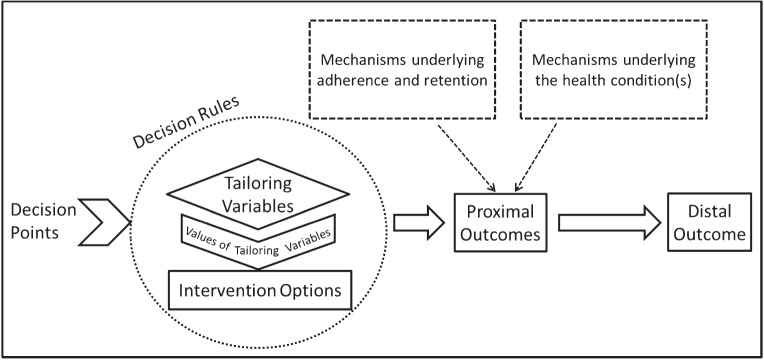
“Useful tailoring variables are often those that help identify conditions that represent heightened susceptibility that precede the selected proximal outcome(s) [13].”
Self-citationMueller, J., Ahern, A. L., Jones, R. A. P., Sharp, S. J., Davies, A., Zuckerman, A., Perry, B. I., Khandaker, G. M., Rolfe, E. D. L., Wareham, N. J., et al. (2024) · PLoS ONE · doi:10.1371/journal.pone.0295117 · Cited by 13
“Interventions which adapt support over time to an individual’s changing status (i.e. “just-in-time adaptive interventions”) are increasingly being used in various domains (e.g. physical inactivity, alcohol use and smoking) and have potential to facilitate long-term behaviour change [11].”
BackgroundInfluentialXie, Q., Dyer, R. L., Lam, S. U., Frye, C. J., Dahl, C. J., Quanbeck, A., Nahum-Shani, I. B., Davidson, R. J., & Goldberg, S. B. (2024) · Mindfulness · doi:10.1007/s12671-024-02304-x · Cited by 13
Self-citationImproving Work-Nonwork Balance with Data-Driven Implementation Intention and Mental Contrasting
Sefidgar, Y. S., Jörke, M., Suh, J., Saha, K., Iqbal, S. T., Ramos, G., & Czerwinski, M. P. (2024) · Proceedings of the ACM on Human-Computer Interaction · doi:10.1145/3637351 · Cited by 14
“The ideas and lessons from research on just-in-time adaptive interventions can be leveraged, e.g., in determining the number, timing, and content of micro-reflection prompts [64, 65, 72, 73].”
BackgroundCarey, R. L., Le, H., Coffman, D. L., Nahum-Shani, I. B., Thirumalai, M., Hagen, C., Baehr, L. A., Schmidt-Read, M., Lamboy, M. R., Kolakowsky‐Hayner, S. A., et al. (2024) · JMIR Research Protocols · doi:10.2196/57699 · Cited by 14
“Engagement with the JITAI, that is, effort invested in the JITAI [38], is critical for intervention effectiveness [26]; therefore, JITAI components should be selected and designed to promote engagement [27].”
BackgroundMethodInfluentialSelf-citationLeveraging Idle Games to Incentivize Intermittent and Frequent Practice of Deep Breathing
Sadprasid, B., Mei, A., Mariakakis, A. T., Bateman, S., & Chevalier, F. (2024) · CHI Conference on Human Factors in Computing Systems · doi:10.1145/3613904.3642430 · Cited by 10
“Literature on context awareness [2] and just-in-time adaptive interventions [66] could prove useful in this regard, and future work should explore how techniques in these areas can maximize ability and trigger success.”
BackgroundFiedler, J., Bergmann, M. R., Sell, S., Wöll, A., & Stetter, B. J. (2024) · Journal of Medical Internet Research · doi:10.2196/54119 · Cited by 11
“Intervention options refer to the possible actions that the JITAI can take at a decision point, while tailoring variables denote the sensor or user input that is used for adaptation [26].”
InfluentialTorre, S. A. D. L., Mistiri, M. E., Hekler, E. B., Predrag, K., Marlin, B. M., Pavel, M., Spruijt‐Metz, D., & Rivera, D. E. (2024) · Journal of Biomedical Informatics · doi:10.1016/j.jbi.2024.104721 · Cited by 11
A wearable alcohol biosensor: Exploring the accuracy of transdermal drinking detection
Fairbairn, C. E., Han, J., Caumiant, E. P., Benjamin, A. S., & Bosch, N. (2024) · Drug and Alcohol Dependence · doi:10.1016/j.drugalcdep.2024.112519 · Cited by 19
Metadata
- Authors
- Nahum-Shani, I., Smith, S. N., Spring, B. J., Collins, L. M., Witkiewitz, K., Tewari, A., & Murphy, S. A.
- Affiliations
- University of Michigan (US)
- Northwestern University (US)
- Pennsylvania State University (US)
- University of New Mexico (US)
- Corresponding author
- Nahum-Shani, Inbal
- ORCID
- Venue
- Annals of Behavioral Medicine
- Publisher
- Oxford University Press (OUP)
- Published
- 2017-12-12
- Volume
- 52
- Issue
- 6
- Pages
- 446-462
- ISSN
- 0742-5554 (ISSN-L)
- 0883-6612
- 1532-4796
- PMC
- PMC5364076
- OpenAlex
- W2523153599
- Cited by
- 2,171
- References
- 142
- Citations by year
- 2026: 370 · 2025: 319 · 2024: 256 · 2023: 266 · 2022: 244 · 2021: 250 · 2020: 211 · 2019: 133 · 2018: 71 · 2017: 39
- FWCI
- 154.61
- Type
- journal article
- Language
- en
- Open access
- hybrid
- doi.org
- Licence
- Locations
- Annals of Behavioral Medicine (publishedVersion, cc-by-nc)
- PubMed Central (publishedVersion, cc-by-nc)
- PubMed (publishedVersion)
- Funders
- National Institutes of Health (R01 DA039901, R01 AA022113, R01 HD073975, R21 AA018336, R01 AA023187, R01 HL125440, U54 EB020404, R01 DK108678, R01 DK097364, P50 DA039838, P01 CA180945, R01 AA022931)
- NIH (R01 DA039901, R01 AA022113, R01 HD073975, R21 AA018336, R01 AA023187, R01 HL125440, U54 EB020404, R01 DK108678, R01 DK097364, P50 DA039838, P01 CA180945, R01 AA022931)
- National Science Foundation (IIS-1452099, IIS-1545751)
- Topics
- Health Sciences › Health Professions › General Health Professions › Mobile Health and mHealth Applications
- Social Sciences › Psychology › Applied Psychology › Digital Mental Health Interventions
- Social Sciences › Psychology › Applied Psychology › Behavioral Health and Interventions
- Keywords
- just-in-time adaptive interventions, mobile health, health behavior change, health behavior theory, intervention adherence, intervention retention, ecological validity, sensor technology
- MeSH terms
- Behavioral Medicine, Humans, Patient Compliance, Research Design, Health Behavior, Telemedicine
About these checks
Registry, retraction, Cites and statistics results are computed, not judged, with one exception: a printed reference that no index lists is read once by a model before it counts as a citation error. Claims are extracted by a model and kept only when their quote appears verbatim in the text; each cited source is then checked, with a model’s help, for whether it says what the claim relies on. Those verdicts can be wrong — read the claim’s quote and the cited source before relying on one.
Statistics and arithmetic are recomputed, not judged.
Confidence bands are shown only for fields calibrated on our annotated test set. None is calibrated yet, so no band is shown.
What counts as a claim ›How we measure confidence ›How we check this ›
Are you an author, or do you see a problem with this page? Request a review
Data sources
Bibliographic data: Semantic Scholar, OpenAlex, Crossref.
Contains information from the Semantic Scholar Academic Graph Datasets, made available under the ODC Attribution License (ODC-BY 1.0).
Semantic Scholar’s data is described in: Kinney, R., et al. (2023). The Semantic Scholar Open Data Platform. arXiv:2301.10140.
