

Just-in-Time Adaptive Interventions (JITAIs) in Mobile Health: Key Components and Design Principles for Ongoing Health Behavior Support
Open accessThe DOI matches its Crossref record; 140 of the 142 references it cites were found in a registry or an index.
Abstract
Background: The just-in-time adaptive intervention (JITAI) is an intervention design aiming to provide the right type/amount of support, at the right time, by adapting to an individual’s changing internal and contextual state. The availability of increasingly powerful mobile and sensing technologies underpins the use of JITAIs to support health behavior, as in such a setting an individual’s state can change rapidly, unexpectedly, and in his/her natural environment. Purpose: Despite the increasing use and appeal of JITAIs, a major gap exists between the growing technological capabilities for delivering JITAIs and research on the development and evaluation of these interventions. Many JITAIs have been developed with minimal use of empirical evidence, theory, or accepted treatment guidelines. Here, we take an essential first step towards bridging this gap. Methods: Building on health behavior theories and the extant literature on JITAIs, we clarify the scientific motivation for JITAIs, define their fundamental components, and highlight design principles related to these components. Examples of JITAIs from various domains of health behavior research are used for illustration. Conclusions: As we enter a new era of technological capacity for delivering JITAIs, it is critical that researchers develop sophisticated and nuanced health behavior theories capable of guiding the construction of such interventions. Particular attention has to be given to better understanding the implications of providing timely and ecologically sound support for intervention adherence and retention
Overview
The claims and statistics of this paper haven’t been checked yet.
Free: it reads the open-access text and checks the first 5 claims that cite a source we can check. Create a free account to check every claim.
Integrity signals
Registry
Cites
Statistics
Figures
Verification
Claims the paper makes
The claims and statistics of this paper haven’t been checked yet.
Free: it reads the open-access text and checks the first 5 claims that cite a source we can check. Create a free account to check every claim.
Claims other papers make about this one
Each is checked against this paper’s own text: does it say what the citing paper says it does?
The source backs part of the claim, not all of it — or backs it for a different population, condition or comparison.
In the citing paper
“Multivariable prognostic models may aid in better prediction of relapse and remission of depression at the individual patient level, which in turn can support precision medicine and allow resources to be better targeted toward relapse prevention”
From Digital health technologies and major depressive disorder (2023) · cites this paper as [139]
Experimental — accuracy not yet measuredThe source backs part of the claim, not all of it — or backs it for a different population, condition or comparison.
In the citing paper
“In addition, regular reminders that appear directly on the end device could increase activity and participation (61).”
From Improving mental well-being in psychocardiology—a feasibility trial for a non-blended web application as a brief metacognitive-based intervention in cardiovascular disease patients (2023) · cites this paper as [61]
Experimental — accuracy not yet measuredThe source backs part of the claim, not all of it — or backs it for a different population, condition or comparison.
In the citing paper
“The use of the JITAI framework to inform intervention design, evaluation, and reporting has potential to enable high-quality evidence for future app-based mHealth interventions for mental illness [13,24].”
From Effectiveness and Minimum Effective Dose of App-Based Mobile Health Interventions for Anxiety and Depression Symptom Reduction: Systematic Review and Meta-Analysis (2022) · cites this paper as [13]
Experimental — accuracy not yet measuredThe cited source says what the claim attributes to it.
In the citing paper
“Smartphone-based, just-in-time adaptive interventions (JITAIs) offer a promising alternative for delivering personalized behavioral support when individuals need it [19]”
The cited source says what the claim attributes to it.
In the citing paper
“Just-in-time adaptive intervention (JITAI) has been introduced in the mHealth domain to facilitate behavior changes; it proposes the use of ongoing information (individuals’ changing status) to adapt the delivery of the intervention in its type, timing, or amount (intensity) [13].”
3 more claims about this paper
Create a free account to see every claim other papers make about this one.
Self-check
Percentages, sums and reported differences re-computed from the paper’s own numbers.
The self-check needs the paper’s full text.
Citations
Cites
Preacher, K. J., & Hayes, A. F. (2008) · Behavior Research Methods · doi:10.3758/brm.40.3.879 · Cited by 34,117 · cited 1×
“In many cases, there are multiple pathways through which the intervention can impact the distal outcome [81].”
BackgroundThe need to belong: Desire for interpersonal attachments as a fundamental human motivation.
Baumeister, R. F., & Leary, M. R. (1995) · Psychological Bulletin · doi:10.1037//0033-2909.117.3.497 · Cited by 23,245
Health Promotion by Social Cognitive Means
Bandura, A. (2004) · Health Education & Behavior · doi:10.1177/1090198104263660 · Cited by 7,238 · cited 2×
“break long-term health behavior goals into short-term, specific, and achievable sub-goals; monitor progress; and provide relevant, timely feedback and guidance [35, 42].”
BackgroundThe Behavior of Organisms: An Experimental Analysis
Jones, F. N., & Skinner, B. F. (1939) · The American Journal of Psychology · doi:10.2307/1416495 · Cited by 4,398
Clinical Psychology: Science and Practice
(2021) · Clinical Psychology Science and Practice · doi:10.1111/(issn)1468-2850 · Cited by 3,672
Folkman, S., & Moskowitz, J. T. (2004) · Annual Review of Psychology · doi:10.1146/annurev.psych.55.090902.141456 · Cited by 3,485 · cited 1×
“behavior maintenance perspectives emphasize the importance of anticipatory coping [40]—a dynamic process involving ongoing anticipation of difficulties and timely execution of the”
BackgroundCrawford, E. R., LePine, J. A., & Rich, B. L. (2010) · Journal of Applied Psychology · doi:10.1037/a0019364 · Cited by 2,922
Deci, E. L. (1975) · doi:10.1007/978-1-4613-4446-9 · Cited by 2,911
Reality mining: sensing complex social systems
Eagle, N., & (Sandy) Pentland, A. (2006) · Personal and Ubiquitous Computing · doi:10.1007/s00779-005-0046-3 · Cited by 2,772
A taxonomy of behavior change techniques used in interventions
Abraham, C., & Michie, S. (2008) · Health Psychology · doi:10.1037/0278-6133.27.3.379 · Cited by 2,525 · cited 1×
“, healthy eating, physical activity) [33, 34].”
Research works printed but not linked: 4
- McCuaig J, Cordick A. Scaffolding for experts: Trial not error. Paper presented at: Proceedings of World Conference on E-Learning in Corporate, Government, Healthcare, and Higher Education. 2007.
- Rummel N, Weinberger A, Wecker C, et al. New challenges in CSCL: Towards adaptive script support. Paper presented at: Proceedings of the 8th International Conference on International Conference for the Learning Sciences. Vol. 3. 2008.
- Kommers P, Hooreman RW. Mobile phones for real-time teacher coaching. J Res Innov Teach. 2009; 2(1): 80- 90.
- Rahman MM, Ali AA, Plarre K, al’Absi M, Ertin E, Kumar S. mconverse: Inferring conversation episodes from respiratory measurements collected in the field. Paper presented at: Proceedings of the 2nd Conference on Wireless Health. 2011.
Cited by
Items 301–400 of 1,007
Changing Behavior: A Theory- and Evidence-Based Approach
Hagger, M. S., Cameron, L. D., Hamilton, K., Hankonen, N. E., & Lintunen, T. (2020) · Cambridge University Press eBooks · doi:10.1017/9781108677318.001 · Cited by 63
The Future of Shift Work: Circadian Biology Meets Personalised Medicine and Behavioural Science
Potter, G. D., & Wood, T. R. (2020) · Frontiers in Nutrition · doi:10.3389/fnut.2020.00116 · Cited by 50
“We believe that technologies that deliver adaptive interventions to both help people avoid poor health decisions during states of vulnerability and support good health decisions during states of opportunity will be particularly advantageous (128).”
BackgroundPannicke, B., Kaiser, T., Reichenberger, J., & Blechert, J. (2021) · International Journal of Behavioral Nutrition and Physical Activity · doi:10.1186/s12966-020-01066-8 · Cited by 45
“To conclude, stress coping might be a potential novel intervention target for eating related Just-In-Time Adaptive Interventions in the context of intensive longitudinal assessment.”
MethodVarma, N., Cygankiewicz, I., Turakhia, M. P., Heidbüchel, H., Hu, Y., Chen, L. Y., Couderc, J., Cronin, E. M., Estep, J. D., Grieten, L., et al. (2021) · Journal of Arrhythmia · doi:10.1002/joa3.12461 · Cited by 41
Ponnada, A., Wang, S. D., Chu, D., Do, B., Dunton, G. F., & Intille, S. S. (2022) · JMIR Formative Research · doi:10.2196/32772 · Cited by 45
“Second, real-time measures gathered using mobile technologies can be used to design just-in-time adaptive interventions [4,5] that are sensitive to everyday changes in behaviors and states.”
Militello, L. K., Sobolev, M., Okeke, F., Adler, D. A., & Nahum-Shani, I. B. (2022) · JMIR Formative Research · doi:10.2196/30606 · Cited by 42
“JITAIs rely on explicit decision rules for when to prompt users with specific intervention components [52].”
BackgroundInfluentialSelf-citationBentley, K. H., Cohen, Z. D., Kim, T., Bullis, J. R., Nauphal, M., Cassiello-Robbins, C., Sauer-Zavala, S., Sbi, S., Gallagher, M. W., Farchione, T. J., et al. (2021) · Behavior Therapy · doi:10.1016/j.beth.2021.03.007 · Cited by 37
Influence of developmental social role transitions on young adult substance use
Cadigan, J. M., Duckworth, J. C., Parker, M., & Lee, C. M. (2019) · Current Opinion in Psychology · doi:10.1016/j.copsyc.2019.03.006 · Cited by 46
Veselý, Š., Klöckner, C. A., Carrus, G., Tiberio, L., Caffaro, F., Biresselioğlu, M. E., Kollmann, A., & Sinea, A. (2022) · Frontiers in Psychology · doi:10.3389/fpsyg.2022.967318 · Cited by 41
A systematic review of remotely delivered contingency management treatment for substance use
Coughlin, L. N., Salino, S., Jennings, C., Lacek, M., Townsend, W. A., Koffarnus, M. N., & Bonar, E. E. (2023) · Journal of Substance Use and Addiction Treatment · doi:10.1016/j.josat.2023.208977 · Cited by 45
Heterogeneity in suicide risk: Evidence from personalized dynamic models
Coppersmith, D. D. L., Kleiman, E. M., Millner, A. J., Wang, S. B., Arizmendi, C., Bentley, K. H., DeMarco, D., Fortgang, R. G., Zuromski, K. L., Maimone, J. S., et al. (2024) · Behaviour Research and Therapy · doi:10.1016/j.brat.2024.104574 · Cited by 49
Toward the Science of Engagement With Digital Interventions
Nahum-Shani, I. B., & Yoon, C. (2024) · Current Directions in Psychological Science · doi:10.1177/09637214241254328 · Cited by 50
Self-citationDeceptively Simple yet Profoundly Impactful: Text Messaging Interventions to Support Health
Suffoletto, B. P. (2024) · Journal of Medical Internet Research · doi:10.2196/58726 · Cited by 45
“For example, existing theories could be updated and adapted to take into account the dynamic and interactive nature in which behaviors play out in the real world, as well as the potential for real-time interventions to adapt to those time-and context-dependent needs [44].”
Pulantara, I. W., Parmanto, B., & Germain, A. (2018) · Journal of Medical Internet Research · doi:10.2196/10124 · Cited by 37
“This type of adaptability and personalization in delivering evidence-based interventions is known as a just-in-time adaptive intervention (JITAI) [42].”
Ranney, M. L., Pittman, S. K., DUNSIGER, S. I., Guthrie, K. M., Spirito, A., Boyer, E. W., & Cunningham, R. M. (2018) · Psychological Services · doi:10.1037/ser0000193 · Cited by 40
“Therefore, this is analysis shows that text-based daily mood ratings are a well-operationalized, feasible marker of participants’ need for additional, “adaptive” or stepped intervention (Almirall & Chronis-Tuscano, 2016; Nahum-Shani et al., 2016).”
Tarrant, M., Haslam, C., Carter, M., Calitri, R., & Haslam, S. A. (2020) · Cambridge University Press eBooks · doi:10.1017/9781108677318.044 · Cited by 43
Characterizing and predicting person-specific, day-to-day, fluctuations in walking behavior
Chevance, G., Baretta, D., Heino, M. T. J., Perski, O., Olthof, M., Klasnja, P., Hekler, E. B., & Godino, J. (2021) · PLoS ONE · doi:10.1371/journal.pone.0251659 · Cited by 48
“, periods in which individuals would benefit from support if they are receptive to it [38, 39]).”
BackgroundHaug, S., Castro, R. P., Wenger, A., & Schaub, M. P. (2021) · JMIR mhealth and uhealth · doi:10.2196/26951 · Cited by 63
“Furthermore, the provision of the right type of support at the right time by adapting to an individual’s changing internal and contextual state, as conceptualized in just-in-time adaptive interventions (JITAIs) [55], has the potential to increase program engagement and effectiveness.”
BackgroundInauen, J., Contzen, N., Frick, V., Kadel, P., Keller, J., Kollmann, J., Mata, J., & van Valkengoed, A. M. (2021) · European Psychologist · doi:10.1027/1016-9040/a000438 · Cited by 60
“Another promising avenue is just-in-time adaptive interventions (Hardeman et al., 2019 ; Nahum-Shani et al., 2018 ) that are used to deliver interventions in critical situations when persons are most susceptible to behavioral changes.”
Dhinagaran, D. A., Martinengo, L., Ho, M. R., Joty, S., Kowatsch, T., Atun, R. A., & Car, L. T. (2022) · JMIR mhealth and uhealth · doi:10.2196/38740 · Cited by 42
“This novel approach may be particularly useful for behavior change interventions supporting a healthy lifestyle, such as increasing physical activity or adhering to a healthier diet, or supporting substance use remission [22,120].”
BackgroundInfluentialDavis, K., Slovak, P., Landesman, R., Pitt, C., Ghajar, A., Schleider, J. L., Kawas, S., Perez Portillo, A. G., & Kuhn, N. S. (2023) · Proceedings of the 22nd Annual ACM Interaction Design and Children Conference · doi:10.1145/3585088.3589387 · Cited by 37
“In the case of smartphone overuse, for instance, justin-time interventions [53] might present notifications, reminders, or prompts as a person is using their phone in an effort to stimulate Type 2 processes of cognition and prevent phone overuse (see [47, 84]).”
BackgroundUlrich, S., Gantenbein, A. R., Zuber, V., Von Wyl, A., Kowatsch, T., & Künzli, H. (2024) · Journal of Medical Internet Research · doi:10.2196/50132 · Cited by 36
“Reminders (Figure 1C) are an effective way of improving engagement, especially when they address specific needs [76,77]; refer to Multimedia Appendix 4 [49,56,68,78-81] for the detailed aspects of the engagements implemented.”
Santa Maria, D., Padhye, N., Businelle, M., Yang, Y., Jones, J., Sims, A., & Lightfoot, M. (2021) · Journal of Medical Internet Research · doi:10.2196/26704 · Cited by 36
“…delivered via a smartphone app, that targets real-time predictors of HIV risk behaviors at the time of high risk, responds to patterns of risk behaviors to motivate participants to engage in prevention services, and provides behavioral feedback and goal attainment information in real time [88].”
Microrandomized Trials: Developing Just-in-Time Adaptive Interventions for Better Public Health
Liu, X., Deliu, N., & Chakraborty, B. (2022) · American Journal of Public Health · doi:10.2105/ajph.2022.307150 · Cited by 55
Interdisciplinary Perspectives on Sun Safety
Geller, A. C., Jablonski, N. G., Pagoto, S., Hay, J. L., Hillhouse, J., Buller, D. B., Kenney, W. L., Robinson, J. K., Weller, R. B., Moreno, M. A., et al. (2017) · JAMA Dermatology · doi:10.1001/jamadermatol.2017.4201 · Cited by 37
Lin, Z. J., Althoff, T., & Leskovec, J. (2018) · International World Wide Web Conference (WWW) · doi:10.1145/3178876.3186062 · Cited by 36
“Understanding how users engage with mobile activity tracking applications has the potential to signficantly improve people’s health, for instance by preventing negative health outcomes and promoting the adoption and maintenance of healthy behaviors [4, 30, 43].”
BackgroundPasipanodya, E. C., Jain, S., Sun, X., Blumenthal, J. S., Ellorin, E. E., Corado, K., Dubé, M. P., Daar, E. S., Morris, S., Moore, D. J., et al. (2018) · The Journal of Infectious Diseases · doi:10.1093/infdis/jiy368 · Cited by 37
“Indeed, ongoing assessment has been successfully used to identify when the intensity of interventions should be idiographically scaled up or down, both in supportive interventions for ART adherence, as well as in just-in-time adaptive interventions for other health behavior change [37, 38].”
BackgroundTuerk, P. W., Schaeffer, C. M., Mcguire, J. F., Larsen, M. A., Capobianco, N. B., & Piacentini, J. C. (2019) · Current Psychiatry Reports · doi:10.1007/s11920-019-1092-2 · Cited by 35
Breitwieser, J., Nobbe, L., Biedermann, D., & Brod, G. (2023) · Computers & Education · doi:10.1016/j.compedu.2023.104879 · Cited by 36
Santa Maria, D., Padhye, N., Businelle, M., Yang, Y., Jones, J., Sims, A., & Lightfoot, M. (2020) · doi:10.2196/preprints.26704 · Cited by 36
Coppersmith, D. D. L., Bentley, K. H., Kleiman, E. M., & Nock, M. K. (2021) · Behavior Therapy · doi:10.1016/j.beth.2021.05.003 · Cited by 40
Why do people sit? A framework for targeted behavior change
ten Broeke, P., Gardner, B., Beckers, D. G. J., Geurts, S. A. E., & Bijleveld, E. (2022) · Health Psychology Review · doi:10.1080/17437199.2022.2143851 · Cited by 43
Affective Touch as Immediate and Passive Wearable Intervention
Zhao, Y., Tao, Y., Le, G., Maki, R., Adams, A. T., Lopes, P., & Choudhury, T. (2022) · Proceedings of the ACM on Interactive Mobile Wearable and Ubiquitous Technologies · doi:10.1145/3569484 · Cited by 48
“Leveraging the rich data from mobile sensing, intervention systems facilitate self-reflection [10], provide just-in-time support to build healthy behaviors [82], and reduce access barriers to traditional interventions such as psychotherapy [63].”
BackgroundSpeech as a promising biosignal in precision psychiatry
Kappen, M., Vanderhasselt, M., & Slavich, G. M. (2023) · Neuroscience & Biobehavioral Reviews · doi:10.1016/j.neubiorev.2023.105121 · Cited by 38
Bond, D. S., & Thomas, J. G. (2015) · European Eating Disorders Review · doi:10.1002/erv.2394 · Cited by 39
Cerrada, C. J., Dzubur, E., Blackman, K. C. A., Mays, V. M., SHOPTAW, S. J., & Huh, J. (2017) · International Journal of Behavioral Medicine · doi:10.1007/s12529-016-9628-x · Cited by 40
Brick, T. R., Mundie, J., Weaver, J., Fraleigh, R. D., & Oravecz, Z. (2020) · JMIR Formative Research · doi:10.2196/16072 · Cited by 45
“For example, ecological momentary interventions [2] and just-in-time adaptive interventions (JITAI [3]) are developed to deliver targeted, adaptive interventions to participants only when needed.”
BackgroundChanging Behavior Using Integrated Theories
Hagger, M. S., & Hamilton, K. (2020) · Cambridge University Press eBooks · doi:10.1017/9781108677318.015 · Cited by 51
Wunsch, K., Eckert, T., Fiedler, J., Cleven, L., Niermann, C. Y. N., Reiterer, H., Renner, B., & Wöll, A. (2020) · JMIR Research Protocols · doi:10.2196/20534 · Cited by 40
“0 includes a more comprehensive range of app features such as JITAIs [58] and an interactive, humanized goal-setting coach who interacts with the app user in a personal way, providing hints and facts to achieve a higher app (and therefore, health behavior) commitment (ie, gamification).”
InfluentialPatrick, M. E., Lyden, G. R., Morrell, N., Mehus, C. J., Gunlicks‐Stoessel, M., Lee, C. M., King, C. A., Bonar, E. E., Nahum-Shani, I. B., Almirall, D., et al. (2021) · Journal of Consulting and Clinical Psychology · doi:10.1037/ccp0000663 · Cited by 39
Self-citationVirtual Coaches: Background, Theories, and Future Research Directions
Weimann, T. G., Schlieter, H., & Brendel, B. (2022) · Business & Information Systems Engineering · doi:10.1007/s12599-022-00757-9 · Cited by 43
Psihogios, A. M., King‐Dowling, S., O’Hagan, B., Darabos, K., Maurer, L. A., Young, J., Fleisher, L. G., Barakat, L. P., Szalda, D. E., Hill‐Kayser, C. E., et al. (2021) · Annals of Behavioral Medicine · doi:10.1093/abm/kaab008 · Cited by 39
“Beyond ensuring that an app is functioning properly across devices and platforms, these exploratory, hypothesis-generating findings offer potential tailoring variables and decision points to test in future mHealth trials [41].”
BackgroundEnhancing physical activity through context-aware coaching
van Dantzig, S., Bulut, M., Krans, M., van der Lans, A., & de Ruyter, B. (2018) · International Conference on Pervasive Computing Technologies for Healthcare · doi:10.1145/3240925.3240928 · Cited by 34
“These guidelines con rm earlier ndings [7, 8], and provide additional guidance for the design of context-aware e-coaching interventions.”
BackgroundInfluentialGaps and priorities in advancing methods for health behaviour change research
Byrne, M. (2020) · Health Psychology Review · doi:10.1080/17437199.2019.1707106 · Cited by 36
“…the just-in-time adaptive intervention (JITAI) design has been developed within digital health intervention research and aims to provide the right type and amount of support, at the right time, by adapting to an individual’s changing internal and contextual state (Nahum-Shani et al., 2017).”
MethodmHealth for pediatric chronic pain: state of the art and future directions
Richardson, P. A., Harrison, L. E., Heathcote, L. C., Rush, G., Shear, D., Lalloo, C., Hood, K., Wicksell, R. K., Stinson, J., & Simons, L. E. (2020) · Expert Review of Neurotherapeutics · doi:10.1080/14737175.2020.1819792 · Cited by 34
“goal of flexibly providing tailored support, in real time, when the individual needs it [49].”
BackgroundBieler, M., Maas, P., Fischer, L., & Rietmann, N. (2021) · Journal of Service Research · doi:10.1177/10946705211003676 · Cited by 38
“2012), behavioral medicine (Nahum-Shani et al. 2018), and public policy (Sunstein 2014).”
BackgroundInfluentialWang, S., Zhang, C., Kröse, B., & van Hoof, H. (2021) · Journal of Medical Systems · doi:10.1007/s10916-021-01773-0 · Cited by 42
Kolenik, T. (2022) · Internet of things · doi:10.1007/978-3-030-91181-2_7 · Cited by 60
Kabir, K. S., Kenfield, S. A., Blarigan, E. L. V., Chan, J. M., & Wiese, J. (2022) · Proceedings of the ACM on Interactive Mobile Wearable and Ubiquitous Technologies · doi:10.1145/3534612 · Cited by 38
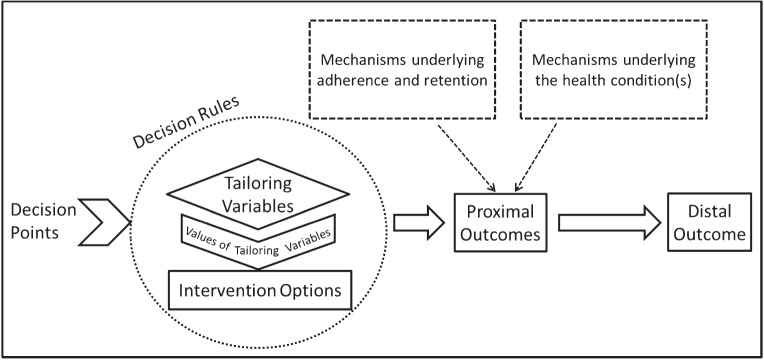
“identify the JITAI components as distal outcome, proximal outcomes, tailoring variables, decision points, decision rules, and intervention options (see definitions in Table 1) [44].”
BackgroundNam, S., Griggs, S. A., Ash, G. I., Dunton, G. F., Huang, S., Batten, J., Parekh, N., & Whittemore, R. (2021) · Diabetes Research and Clinical Practice · doi:10.1016/j.diabres.2021.108745 · Cited by 35
Machine Learning and Health Science Research: Tutorial
Cho, H., She, J., de Marchi, D., El-Zaatari, H., Barnes, E. L., Kahkoska, A. R., Kosorok, M. R., & Virkud, A. (2024) · Journal of Medical Internet Research · doi:10.2196/50890 · Cited by 43
“A class of DTRs that provide essentially continuous recommendations is called just-in-time adaptive intervention [92].”
Teachman, B. A., McKay, D., Barch, D. M., Prinstein, M. J., Hollon, S. D., & Chambless, D. L. (2019) · American Psychologist · doi:10.1037/amp0000361 · Cited by 43
Czyz, E. K., Arango, A., Healy, N. A., King, C. A., & Walton, M. A. (2020) · JMIR Mental Health · doi:10.2196/17345 · Cited by 50
“…optimal window of time to provide intervention prompts, which may be achieved with the application of real-time data (derived from ecological momentary assessments and passive sensing) that can help identify states of receptivity to mobile interventions to provide more personalized support [51,52].”
BackgroundEngineering Person-Specific Behavioral Interventions to Promote Physical Activity
Conroy, D. E., Lagoa, C. M., Hekler, E. B., & Rivera, D. E. (2020) · Exercise and Sport Sciences Reviews · doi:10.1249/jes.0000000000000232 · Cited by 38
Just-in-time adaptive intervention to promote fluid consumption in patients with kidney stones.
Conroy, D. E., West, A. B., Brunke-Reese, D., Thomaz, E., & Streeper, N. M. (2020) · Health Psychology · doi:10.1037/hea0001032 · Cited by 38
“If context sensing is engaged appropriately, just-in-time interventions can be triggered for delivery at moments of vulnerability (Nahum-Shani et al., 2015, 2018).”
BackgroundAtkinson, M. J., & Diedrichs, P. C. (2021) · International Journal of Eating Disorders · doi:10.1002/eat.23460 · Cited by 42
“This could provide a useful basis for machine learning and app-based models of care that can match and provide discrete tasks for discrete purposes, such as just-in-time adaptive interventions (Nahum-Shani et al., 2018).”
BackgroundBaumel, A., & Muench, F. J. (2021) · Journal of Medical Internet Research · doi:10.2196/24905 · Cited by 33
“Availability can also be triggered overtly through motivational reminders and environmental cues embedded in just-in-time digital interventions [38].”
BackgroundExploring the features of an app-based just-in-time intervention for depression
Everitt, N., Broadbent, J., Richardson, B., Smyth, J. M., Heron, K. E., Teague, S. J., & Fuller‐Tyszkiewicz, M. (2021) · Journal of Affective Disorders · doi:10.1016/j.jad.2021.05.021 · Cited by 40
Ismail, T., & Al‐Thani, D. (2021) · JMIR Formative Research · doi:10.2196/34309 · Cited by 36
“Finally, the decision rules in JITAI systematically link the intervention options and the tailoring variables to operationalize the adaption by specifying which intervention option to provide, for whom, and when [11].”
BackgroundDaily diary study of loneliness, alcohol, and drug use during the COVID ‐19 Pandemic
Bragard, E., Giorgi, S., Juneau, P. L., & Curtis, B. L. (2022) · Alcoholism Clinical and Experimental Research · doi:10.1111/acer.14889 · Cited by 39
Batch policy learning in average reward Markov decision processes
Liao, P., Qi, Z., Wan, R., Klasnja, P., & Murphy, S. A. (2022) · The Annals of Statistics · doi:10.1214/22-aos2231 · Cited by 118
Self-citationBhattacharjee, A., Williams, J. J., Meyerhoff, J., Kumar, H., Mariakakis, A. T., & Kornfield, R. (2023) · CHI Conference on Human Factors in Computing Systems · doi:10.1145/3544548.3580774 · Cited by 44
“JITAIs ideally fade into the background of a person’s day-to-day experiences, intervening only when necessary to initiate or sustain positive behavior changes [87].”
BackgroundInfluentialEcological Momentary Interventions in Public Mental Health Provision
Schulte‐Strathaus, J. C. C., Rauschenberg, C., Baumeister, H., & Reininghaus, U. (2022) · Studies in neuroscience, psychology and behavioral economics · doi:10.1007/978-3-030-98546-2_25 · Cited by 34
Murray, A. L., Brown, R., Zhu, X., Speyer, L. G., Yang, Y., Xiao, Z., Ribeaud, D., & Eisner, M. (2022) · Journal of Affective Disorders · doi:10.1016/j.jad.2022.11.014 · Cited by 55
Perspective: A Conceptual Framework for Adaptive Personalized Nutrition Advice Systems (APNASs)
Renner, B., Buyken, A. E., Gedrich, K., Lorkowski, S., Watzl, B., Linseisen, J., Daniel, H., Conrad, J., Ferrario, P. G., Holzapfel, C., et al. (2023) · Advances in Nutrition · doi:10.1016/j.advnut.2023.06.009 · Cited by 42
“The personalization of behavior change interventions in the context of JITAIs is a dynamic process; ideally, the provision of advice is adjusted to the changing needs of individuals (e.g., changing the timing or type of advice) during the course of the intervention [83,84].”
A randomized trial of a mobile health intervention to augment cardiac rehabilitation
Golbus, J. R., Gupta, K., Stevens, R., Jeganathan, V. S. E., Luff, E., Shi, J., Dempsey, W., Boyden, T. F., Mukherjee, B., Kohnstamm, S., et al. (2023) · npj Digital Medicine · doi:10.1038/s41746-023-00921-9 · Cited by 41
Self-citationWillms, A., & Liu, S. (2023) · JMIR Medical Education · doi:10.2196/51426 · Cited by 37
“A recent advancement in tailored mHealth interventions is the development of just-in-time adaptive interventions (JITAIs), which use mHealth technology to assess the dynamically changing needs of individuals and deliver tailored support in real time [14,16].”
Bucher, A., Blazek, E. S., & Symons, C. T. (2024) · Mayo Clinic Proceedings Digital Health · doi:10.1016/j.mcpdig.2024.05.007 · Cited by 49
Ross, K. M., Qiu, P., You, L., & Wing, R. R. (2017) · Obesity · doi:10.1002/oby.22083 · Cited by 35
Scientific challenges for precision public health
Kee, F., & Taylor-Robinson, D. C. (2020) · Journal of Epidemiology & Community Health · doi:10.1136/jech-2019-213311 · Cited by 38
Off-Policy Estimation of Long-Term Average Outcomes With Applications to Mobile Health
Liao, P., Klasnja, P., & Murphy, S. A. (2020) · Journal of the American Statistical Association · doi:10.1080/01621459.2020.1807993 · Cited by 89
“The mHealth intervention policies, often called just-in-time adaptive interventions in the mHealth literature (Nahum-Shani et al. 2018), are decision rules that map the individual’s current state (e.g., past behaviors as well as current observations of location, social activity, stress, and urges…”
BackgroundSelf-citationWalters, S. T., Businelle, M. S., Suchting, R., Li, X., Hébert, E. T., & Mun, E. (2021) · Journal of Substance Abuse Treatment · doi:10.1016/j.jsat.2021.108417 · Cited by 33
“Due to the dynamic nature of these alcohol risk contexts, strategies such as just-intime adaptive interventions (JITAIs) are ideally suited to providing tailored “real-time” intervention messages to nudge individuals away from alcohol misuse in the moments they are most needed (Nahum-Shani et al., 2016).”
BackgroundDigital Phenotyping: an Epistemic and Methodological Analysis
Coghlan, S., & D’Alfonso, S. (2021) · Philosophy & Technology · doi:10.1007/s13347-021-00492-1 · Cited by 42
“, 2021) or just-in-time adaptive interventions (Nahum-Shani et al., 2018), and they offer another advantage of digital phenotyping based on personal digital devices: the tool which is used to detect something about an individual can also be used to deliver, at opportune times, therapy modules/exercises to address dete…”
BackgroundText mining of Reddit posts: Using latent Dirichlet allocation to identify common parenting issues
Westrupp, E. M., Greenwood, C. J., Fuller‐Tyszkiewicz, M., Berkowitz, T. S., Hagg, L. J., & Youssef, G. J. (2022) · PLoS ONE · doi:10.1371/journal.pone.0262529 · Cited by 46
“Tailoring in technology-based parenting interventions has been minimal to-date, despite evidence that that engagement is strongest when interventions are flexibly tailored to be maximally relevant to individual parents [58, 60].”
BackgroundEnsari, I., Gorman, S. L., Horan, E. N., Henry, S. B., & Elhadad, N. (2022) · BMJ Open · doi:10.1136/bmjopen-2021-059280 · Cited by 53
Hybrid Experimental Designs for Intervention Development: What, Why, and How
Nahum-Shani, I. B., Dziak, J. J., Walton, M. A., & Dempsey, W. (2022) · Advances in Methods and Practices in Psychological Science · doi:10.1177/25152459221114279 · Cited by 42
“Recommended reading includes literature that describes the motivation for JITAIs, their key elements, and guidelines for their design (Nahum-Shani et al., 2015, 2018).”
BackgroundSelf-citationChanging Behavior Using the Transtheoretical Model
DiClemente, C. C., & Graydon, M. M. (2020) · Cambridge University Press eBooks · doi:10.1017/9781108677318.010 · Cited by 38
Renn, B. N., Schurr, M. S., Zaslavsky, O., & Pratap, A. (2021) · Frontiers in Psychiatry · doi:10.3389/fpsyt.2021.734909 · Cited by 42
“These adapt the type, timing, and intensity of treatment based on the individual’s need at the moment and context they most need the support (27).”
Funkhouser, C. J., Trivedi, E., Li, L. Y., Helgren, F., Zhang, E., Sritharan, A., Cherner, R., Pagliaccio, D., Durham, K., Kyler, M., et al. (2023) · Journal of Child Psychology and Psychiatry · doi:10.1111/jcpp.13931 · Cited by 42
Zaher, F., Diallo, M., Achim, A. M., Joober, R., Roy, M., Demers, M., Subramanian, P., Lavigne, K. M., Lepage, M., Gonzalez, D., et al. (2024) · Schizophrenia Research · doi:10.1016/j.schres.2024.02.036 · Cited by 32
Mapping the Landscape of Digital Health Intervention Strategies: 25-Year Synthesis
Liu, S., Ma, J., Sun, M., Zhang, C., Gao, Y., & Xu, J. (2025) · Journal of Medical Internet Research · doi:10.2196/59027 · Cited by 44
“Recently, there has been a rise in the use of personalized and adaptive strategies, aiming to tailor interventions to participants' characteristics, needs, and responses [56], as well as the aims of the intervention.”
Maestre, J. F., Zdziarska, P. A., Min, A., Baglione, A. N., Chung, C.-F., & Shih, P. C. (2021) · Proceedings of the ACM on Human-Computer Interaction · doi:10.1145/3434171 · Cited by 41
Figueroa, C. A., Aguilera, A., Chakraborty, B., Modiri, A., Aggarwal, J., Deliu, N., Sarkar, U., Williams, J. J., & Lyles, C. R. (2021) · Journal of the American Medical Informatics Association · doi:10.1093/jamia/ocab001 · Cited by 47
“11 Using machine learning, the content of interventions can also dynamically adapt to changes in participant behavior over time to maximize outcomes.”
BackgroundDo, B., Mason, T. B., Yi, L., Yang, C., & Dunton, G. F. (2021) · Psychology of sport and exercise · doi:10.1016/j.psychsport.2021.101935 · Cited by 36
Fairbairn, C. E., & Bosch, N. (2021) · Addiction · doi:10.1111/add.15523 · Cited by 37
“…the context of such treatments (e.g., Just-in-Time Adaptive Interventions; 47), transdermal sensors might be used to issue alcohol alerts to a family member, sponsor, or treatment provider when a drinking episode is detected, thus potentially decreasing severity and duration of relapse (58,59).”
BackgroundBalaskas, A., Schueller, S. M., Cox, A. L., & Doherty, G. J. (2021) · JMIR mhealth and uhealth · doi:10.2196/26712 · Cited by 44
“…literature, in which much recent research concerns the vision of just-in-time adaptive interventions that allow the provision of intervention content when users are in need of support [12,56] and the interest in exploiting machine learning to optimize treatment delivery within mental health [57].”
BackgroundInfluentialHardy, A., Ward, T., Emsley, R., Greenwood, K., Freeman, D. H., Fowler, D. G., Kuipers, E., Bebbington, P., & Garety, P. A. (2022) · JMIR Human Factors · doi:10.2196/29725 · Cited by 34
“Given the impact of SlowMo on a range of outcomes including well-being, we plan to build on this by incorporating other therapeutic targets and techniques, using principles of agile science and responsive technology [38,39].”
Juarascio, A. S., Presseller, E. K., Srivastava, P., Manasse, S. M., & Forman, E. M. (2022) · Behavior Modification · doi:10.1177/01454455221109434 · Cited by 34
“Second, JITAIs can facilitate skills practice by delivering interventions that coach users on how to use specific therapeutic skills at relevant times (Nahum-Shani et al., 2018).”
BackgroundSchick, A., Paetzold, I., Rauschenberg, C., Hirjak, D., Banaschewski, T., Meyer-Lindenberg, A., Boehnke, J. R., Boecking, B., & Reininghaus, U. (2021) · JMIR Research Protocols · doi:10.2196/27462 · Cited by 30
“EMIs such as Acceptance and Commitment Therapy in Daily Life [29,30], recently also referred to as just-in-time adaptive interventions [31], provide a unique opportunity to deliver youth-friendly, adaptive, personalized, real-time transfer of intervention components to individuals’ daily lives.”
Adaptive mHealth Intervention for Adolescent Physical Activity Promotion
Cushing, C. C., Bejarano, C. M., Ortega, A., Sayre, N., Fedele, D. A., & Smyth, J. M. (2021) · Journal of Pediatric Psychology · doi:10.1093/jpepsy/jsaa125 · Cited by 37
Affective Response During Real-World Physical Activity as an Intervention Mediator
Dunton, G. F., Crosley‐Lyons, R., & Rhodes, R. E. (2023) · Exercise and Sport Sciences Reviews · doi:10.1249/jes.0000000000000321 · Cited by 36
Langener, A. M., Stulp, G., Jacobson, N. C., Costanzo, A., Jagesar, R. R., Kas, M. J., & Bringmann, L. F. (2024) · Advances in Methods and Practices in Psychological Science · doi:10.1177/25152459231202677 · Cited by 45
“Just-in-time interventions are personalized interventions that are delivered to patients during daily life and may improve patient care in the future (Nahum-Shani et al., 2017).”
BackgroundThe use of ambulatory assessment in smoking cessation
Vinci, C., Haslam, A. K., Lam, C. Y., Kumar, S., & Wetter, D. W. (2018) · Addictive Behaviors · doi:10.1016/j.addbeh.2018.01.018 · Cited by 30
Lee, B. C., Xie, J., Ajisafe, T., & Kim, S.-H. (2020) · International Journal of Environmental Research and Public Health · doi:10.3390/ijerph17103461 · Cited by 32
“This finding strengthens the importance of having a tailored self-efficacy intervention, such as offering individualized goal setting that enables a gradual increase in activity levels or developing self-regulatory skills to meet minimum daily exercise time goals [43,44].”
BackgroundLee, K., Cho, H., Toshnazarov, K. E., Narziev, N., Rhim, S., Han, K., Noh, Y., & Hong, H. (2020) · CHI Conference on Human Factors in Computing Systems · doi:10.1145/3313831.3376475 · Cited by 31
“The system also could support users execute interventions at an appropriate moment by combining the just in time (JIT) components mechanism [21, 38], intelligent coaching systems suggesting adaptive tasks [4, 25], activity recommendations based on automatic mood prediction [20], or enhancements of a programs’ social n…”
BackgroundChanging Behavior Using the Health Belief Model and Protection Motivation Theory
Orbell, S., Zahid, H., & Henderson, C. J. (2020) · Cambridge University Press eBooks · doi:10.1017/9781108677318.004 · Cited by 40
Valle, C. G., Nezami, B. T., & Tate, D. F. (2020) · Organizational Behavior and Human Decision Processes · doi:10.1016/j.obhdp.2020.10.004 · Cited by 34
Richards, D. K., Pearson, M. R., & Witkiewitz, K. A. (2020) · Addiction Research & Theory · doi:10.1080/16066359.2020.1863378 · Cited by 35
Self-citationPapini, N. M., Yang, C., Do, B., Mason, T. B., & Lopez, N. V. (2020) · International Review of Sport and Exercise Psychology · doi:10.1080/1750984x.2020.1858439 · Cited by 34
“Recent developments in ecological momentary interventions or just-in-time adaptive interventions can leverage momentary social, physical, and time-based contexts to modify activity in everyday life (Nahum-Shani et al., 2018; Smith & Juarascio, 2019).”
BackgroundWang, S., Sporrel, K., van Hoof, H., Simons, M., Boer, R. D., Ettema, D., Nibbeling, N., Deutekom, M. D. L. F., & Kröse, B. (2021) · International Journal of Environmental Research and Public Health · doi:10.3390/ijerph18116059 · Cited by 35
“JITAI is an intervention design aiming to provide the right type and amount of support, at the right time, by adapting to an individual’s changing internal and external state [7].”
Metadata
- Authors
- Nahum-Shani, I., Smith, S. N., Spring, B. J., Collins, L. M., Witkiewitz, K., Tewari, A., & Murphy, S. A.
- Affiliations
- University of Michigan (US)
- Northwestern University (US)
- Pennsylvania State University (US)
- University of New Mexico (US)
- Corresponding author
- Nahum-Shani, Inbal
- ORCID
- Venue
- Annals of Behavioral Medicine
- Publisher
- Oxford University Press (OUP)
- Published
- 2017-12-12
- Volume
- 52
- Issue
- 6
- Pages
- 446-462
- ISSN
- 0742-5554 (ISSN-L)
- 0883-6612
- 1532-4796
- PMC
- PMC5364076
- OpenAlex
- W2523153599
- Cited by
- 2,171
- References
- 142
- Citations by year
- 2026: 370 · 2025: 319 · 2024: 256 · 2023: 266 · 2022: 244 · 2021: 250 · 2020: 211 · 2019: 133 · 2018: 71 · 2017: 39
- FWCI
- 154.61
- Type
- journal article
- Language
- en
- Open access
- hybrid
- doi.org
- Licence
- Locations
- Annals of Behavioral Medicine (publishedVersion, cc-by-nc)
- PubMed Central (publishedVersion, cc-by-nc)
- PubMed (publishedVersion)
- Funders
- National Institutes of Health (R01 DA039901, R01 AA022113, R01 HD073975, R21 AA018336, R01 AA023187, R01 HL125440, U54 EB020404, R01 DK108678, R01 DK097364, P50 DA039838, P01 CA180945, R01 AA022931)
- NIH (R01 DA039901, R01 AA022113, R01 HD073975, R21 AA018336, R01 AA023187, R01 HL125440, U54 EB020404, R01 DK108678, R01 DK097364, P50 DA039838, P01 CA180945, R01 AA022931)
- National Science Foundation (IIS-1452099, IIS-1545751)
- Topics
- Health Sciences › Health Professions › General Health Professions › Mobile Health and mHealth Applications
- Social Sciences › Psychology › Applied Psychology › Digital Mental Health Interventions
- Social Sciences › Psychology › Applied Psychology › Behavioral Health and Interventions
- Keywords
- just-in-time adaptive interventions, mobile health, health behavior change, health behavior theory, intervention adherence, intervention retention, ecological validity, sensor technology
- MeSH terms
- Behavioral Medicine, Humans, Patient Compliance, Research Design, Health Behavior, Telemedicine
About these checks
Registry, retraction, Cites and statistics results are computed, not judged, with one exception: a printed reference that no index lists is read once by a model before it counts as a citation error. Claims are extracted by a model and kept only when their quote appears verbatim in the text; each cited source is then checked, with a model’s help, for whether it says what the claim relies on. Those verdicts can be wrong — read the claim’s quote and the cited source before relying on one.
Statistics and arithmetic are recomputed, not judged.
Confidence bands are shown only for fields calibrated on our annotated test set. None is calibrated yet, so no band is shown.
What counts as a claim ›How we measure confidence ›How we check this ›
Are you an author, or do you see a problem with this page? Request a review
Data sources
Bibliographic data: Semantic Scholar, OpenAlex, Crossref.
Contains information from the Semantic Scholar Academic Graph Datasets, made available under the ODC Attribution License (ODC-BY 1.0).
Semantic Scholar’s data is described in: Kinney, R., et al. (2023). The Semantic Scholar Open Data Platform. arXiv:2301.10140.
