

Assessing Acceptance of Assistive Social Agent Technology by Older Adults: the Almere Model
Open accessThe DOI matches its Crossref record; 69 of the 69 references it cites were found in a registry or an index.
Abstract
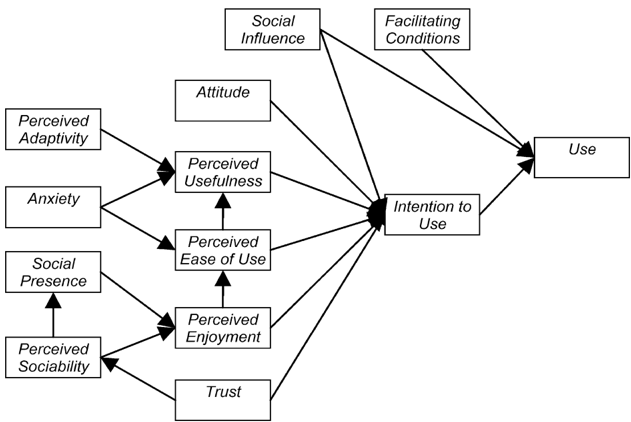
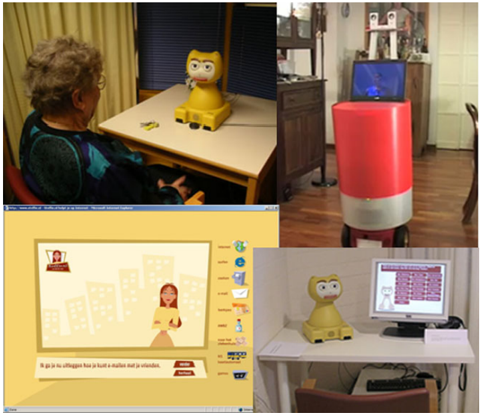
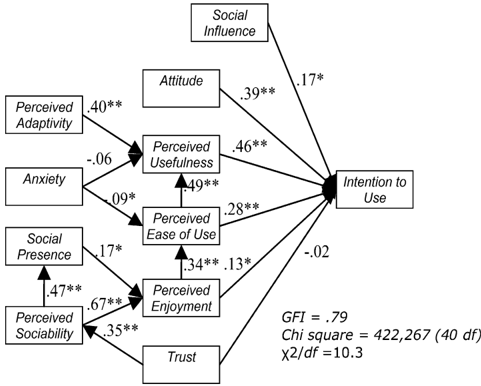
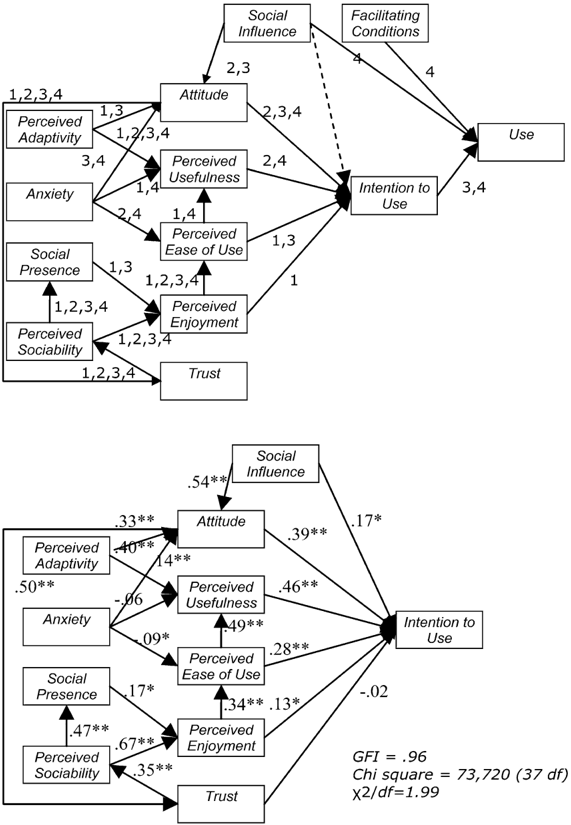
This paper proposes a model of technology acceptance that is specifically developed to test the acceptance of assistive social agents by elderly users. The research in this paper develops and tests an adaptation and theoretical extension of the Unified Theory of Acceptance and Use of Technology (UTAUT) by explaining intent to use not only in terms of variables related to functional evaluation like perceived usefulness and perceived ease of use, but also variables that relate to social interaction. The new model was tested using controlled experiment and longitudinal data collected regarding three different social agents at elderly care facilities and at the homes of older adults. The model was strongly supported accounting for 59–79% of the variance in usage intentions and 49–59% of the variance in actual use. These findings contribute to our understanding of how elderly users accept assistive social agents.
Overview
The claims and statistics of this paper haven’t been checked yet.
Free: it reads the open-access text and checks the first 5 claims that cite a source we can check. Create a free account to check every claim.
Integrity signals
Registry
Cites
Statistics
Figures

Verification
Claims the paper makes
The claims and statistics of this paper haven’t been checked yet.
Free: it reads the open-access text and checks the first 5 claims that cite a source we can check. Create a free account to check every claim.
Claims other papers make about this one
Each is checked against this paper’s own text: does it say what the citing paper says it does?
The source backs part of the claim, not all of it — or backs it for a different population, condition or comparison.
In the citing paper
“The extant literature attests to a positive correlation between users’ trust in technology and their inclination to use it, as evidenced by many studies [25-31].”
From Investigating the impact of user trust on the adoption and use of ChatGPT: Survey analysis (2023) · cites this paper as [31]
Experimental — accuracy not yet measuredThe cited source says what the claim attributes to it.
In the citing paper
“Prior research has established a positive correlation between intent to use and actual use of technology, indicating that users who intend to use the technology are more likely to actually use it [25,31,34].”
From Investigating the impact of user trust on the adoption and use of ChatGPT: Survey analysis (2023) · cites this paper as [31]
In the citing paper
“For instance, studies on adopting robots as assistive social agents found that users’ intent to use them strongly predicted their actual use [25,31].”
From Investigating the impact of user trust on the adoption and use of ChatGPT: Survey analysis (2023) · cites this paper as [31]
In the citing paper
“A study on technology acceptance for assistive social robots among older adult users found that the intention to use plays a mediating role in the relationship between trust and actual use [31].”
From Investigating the impact of user trust on the adoption and use of ChatGPT: Survey analysis (2023) · cites this paper as [31]
In the citing paper
“Heerink [15] found ITU is impacted by other acceptance factors and can be predicted by users' attitude and how much they perceive the robot to be useful.”
From Factors Affecting the Acceptability of Social Robots by Older Adults Including People with Dementia or Cognitive Impairment: A Literature Review (2018) · cites this paper as [15]
11 more claims about this paper
Create a free account to see every claim other papers make about this one.
Self-check
Percentages, sums and reported differences re-computed from the paper’s own numbers.
The self-check needs the paper’s full text.
Citations
Cites
Perceived usefulness, perceived ease of use, and user acceptance of information technology
Davis, F. D. (1989) · MIS Quarterly · doi:10.2307/249008 · Cited by 68,483
User Acceptance of Information Technology: Toward A Unified View1
Venkatesh, V., Morris, M. G., Davis, G. B., & Davis, F. D. (2003) · MIS Quarterly · doi:10.2307/30036540 · Cited by 45,035
(1975) · PhilPapers (PhilPapers Foundation) · Cited by 36,737
A Beginner's Guide to Structural Equation Modeling: Fourth Edition
Schumacker, R. E., & Lomax, R. G. (2015) · doi:10.4324/9781315749105 · Cited by 6,604
Structural Equation Modeling and Regression: Guidelines for Research Practice
Gefen, D., Straub, D., & Boudreau, M.-C. (2000) · Communications of the Association for Information Systems · doi:10.17705/1cais.00407 · Cited by 6,416
Measuring Presence in Virtual Environments: A Presence Questionnaire
Witmer, B. G., & Singer, M. J. (1998) · Presence: Teleoperators and Virtual Environments · doi:10.1162/105474698565686 · Cited by 6,371
A Beginner's Guide to Structural Equation Modeling
Schumacker, R. E., & Lomax, R. G. (2004) · doi:10.4324/9781410610904 · Cited by 6,235
Extrinsic and Intrinsic Motivation to Use Computers in the Workplace 1
Davis, F. D., Bagozzi, R. P., & Warshaw, P. R. (1992) · Journal of Applied Social Psychology · doi:10.1111/j.1559-1816.1992.tb00945.x · Cited by 6,231
Multivariate Data Analysis with Readings.
Rutherford, G. S. W., Hair, J. F., Anderson, R. E., & Tatham, R. L. (1988) · The Statistician · doi:10.2307/2348783 · Cited by 5,830
Multivariate Data Analysis with Readings.
Jolliffe, I. T., Hair, J. F., Anderson, R. E., & Tatham, R. L. (1988) · Journal of the Royal Statistical Society. Series A (Statistics in Society) · doi:10.2307/2983017 · Cited by 5,077
Research works printed but not linked: 6
- United Nations (2007) World population prospects: the 2006 revision-comprehensive tables. United Nations Publications, New York
- Pollack M (2005) Intelligent technology for an aging population: the use of AI to assist elders with cognitive impairment. AI Mag 26(2):9-24
- Zajicek M, Arnold A (1999) The 'technology push' and the user Tailored information environment. In: 5th European research con- sortium for informatics and mathematics, workshop on user inter- faces for all
- Pollack ME, Brown L, Colbry D, Orosz C, Peintner B, Ramakr- ishnan S, Engberg S, Matthews JT, Dunbar-Jacob J, McCarthy CE, Thrun S, Montemerlo M, Pineau J, Pearl NR (2002) A mobile ro- botic assistant for the elderly. In: AAAI workshop on automation as eldercare
- Heerink M (2009) Exploring adaptability, adaptivity and user control. Information Engineering Institute, Almere
- Heerink M (2008) Evaluating steffie. Information Engineering Institute, Almere
Cited by
Items 401–500 of 1,002
Supporting Conversations Between Individuals With Dementia and Their Family Members
Karlsson, Ε., Axelsson, K., Zingmark, K., Fahlander, K., & Sävenstedt, S. (2014) · Journal of Gerontological Nursing · doi:10.3928/00989134-20130916-07 · Cited by 29
Trust in Automated Agents is Modulated by the Combined Influence of Agent and Task Type
Smith, M. A. B., Allaham, M. M., & Wiese, E. (2016) · Proceedings of the Human Factors and Ergonomics Society Annual Meeting · doi:10.1177/1541931213601046 · Cited by 28
Measuring Trust in the XAI ContextPreprint
Hoffman, R., Mueller, S. T., Klein, G. A., & Litman, J. A. (2021) · PsyArXiv (OSF Preprints) · doi:10.31234/osf.io/e3kv9 · Cited by 42
User-centered feedback design in person-following robots for older adults
Olatunji, S., Oron-Gilad, T., Sarne‐Fleischmann, V., & Edan, Y. (2020) · Paladyn Journal of Behavioral Robotics · doi:10.1515/pjbr-2020-0007 · Cited by 32
Savela, N., García, D., Pellert, M., & Oksanen, A. (2021) · New Media & Society · doi:10.1177/14614448211067259 · Cited by 28
Tobis, S., Piasek-Skupna, J., Cylkowska-Nowak, M., & Suwalska, A. (2022) · Sensors · doi:10.3390/s22051717 · Cited by 27
Assistant nurses and orientation to care robot use in three European countries
Tuisku, O., Johansson‐Pajala, R., Hoppe, J. A., Pekkarinen, S., Hennala, L., Thommes, K., Gustafsson, C., & Melkas, H. (2022) · Behaviour and Information Technology · doi:10.1080/0144929x.2022.2042736 · Cited by 26
Lorusso, L., Mošmondor, M., Grgurić, A., Toccafondi, L., D’Onofrio, G., Russo, S., Lampe, J., Pihl, T., Mayer, N., Vignani, G., et al. (2023) · Sensors · doi:10.3390/s23020797 · Cited by 26
Influence of collaborative customer service by service robots and clerks in bakery stores
Okafuji, Y., Song, S., Baba, J., Yoshikawa, Y., & Ishiguro, H. (2023) · Frontiers in Robotics and AI · doi:10.3389/frobt.2023.1125308 · Cited by 26
Analysis of Research in Adoption of Assistive Technologies for Aged Care
Vichitvanichphong, S., Kerr, D. V., Talaei‐Khoei, A., & Ghapanchi, A. H. (2013) · UniSC Research Bank (University of the Sunshine Coast) · Cited by 27
Aspects of Socially Assistive Robots Design for Dementia Care
Nestorov, N., Stone, E., Lehane, P., & Eibrand, R. (2014) · Proceedings - IEEE Symposium on Computer-Based Medical Systems · doi:10.1109/cbms.2014.16 · Cited by 30
The Effect of Robot's Ice-breaking Humor on Likeability and Future Contact Intentions
Tae, M., & Lee, J. (2020) · ACM/IEEE International Conference on Human-Robot Interaction (HRI) · doi:10.1145/3371382.3378267 · Cited by 31
“THIS ISN’T ME!”: The Role of Age-Related Self- and User Images for Robot Acceptance by Elders
Dudek, M., Baisch, S., Knopf, M., & Kolling, T. (2020) · International Journal of Social Robotics · doi:10.1007/s12369-020-00678-1 · Cited by 27
Conde, M., Mikhailova, V., & Döring, N. M. (2024) · International Journal of Social Robotics · doi:10.1007/s12369-024-01143-z · Cited by 25
Promoting Cognitive Health in Elder Care with Large Language Model-Powered Socially Assistive Robots
Lima, M. R. D., O'Connell, A., Zhou, F. B., Nagahara, A., Hulyalkar, A., Deshpande, A., Thomason, J., Vaidyanathan, R., & Matarić, M. J. (2025) · CHI Conference on Human Factors in Computing Systems · doi:10.1145/3706598.3713582 · Cited by 33
Liu, J., Wang, X., & Zhang, J. (2025) · Behavioral Sciences · doi:10.3390/bs15050697 · Cited by 27
A Need for Service Robots Among Health Care Professionals in Hospitals and Housing Services
Vänni, K. J., & Salin, S. E. (2017) · Lecture notes in computer science · doi:10.1007/978-3-319-70022-9_18 · Cited by 30
Are Preferences Useful for Better Assistance? A Physically Assistive Robotics User Study
Canal, G., Torras, C., & Alenyà, G. (2021) · ACM Transactions on Human-Robot Interaction · doi:10.1145/3472208 · Cited by 31
Esfandbod, A., Rokhi, Z., Meghdari, A. F., Taheri, A., Alemi, M., & Karimi, M. (2022) · International Journal of Social Robotics · doi:10.1007/s12369-022-00946-2 · Cited by 25
Kuoppamäki, S., Jaberibraheem, R., Hellstrand, M., & McMillan, D. (2023) · International Journal of Social Robotics · doi:10.1007/s12369-023-01055-4 · Cited by 27
Mayer, P., Beck, C., & Panek, P. E. (2012) · IEEE International Conference on Cognitive Infocommunications · doi:10.1109/coginfocom.2012.6422014 · Cited by 24
Are Robots Appropriate for Troublesome and Communicative Tasks in a City Environment?
Hayashi, K., Shiomi, M., Kanda, T., & Hagita, N. (2011) · IEEE Transactions on Autonomous Mental Development · doi:10.1109/tamd.2011.2178846 · Cited by 26
Children’s acceptance of social robots: A narrative review of the research 2000–2017
de Jong, C., Peter, J., Kühne, R., & Barco, À. (2019) · Interaction Studies Social Behaviour and Communication in Biological and Artificial Systems · doi:10.1075/is.18071.jon · Cited by 28
Lee, L. Y., Lim, W. M., Teh, P., Malik, O. A. S., & Nurzaman, S. G. (2020) · AIS Transactions on Human-Computer Interaction · doi:10.17705/1thci.00132 · Cited by 30
Spence, P. R., Edwards, C. C., Edwards, A. P., Rainear, A. M., & Jin, X. (2021) · Communication Quarterly · doi:10.1080/01463373.2021.1877164 · Cited by 24
Understanding Older Adults’ Perceptions of Usefulness for the Paro Robot
McGlynn, S. A., Kemple, S., Mitzner, T. L., King, C., & Rogers, W. A. (2014) · Proceedings of the Human Factors and Ergonomics Society Annual Meeting · doi:10.1177/1541931214581400 · Cited by 30
Emotional factors in robot-based assistive services for elderly at home
Boladeras, M. D., Sàez-Pons, J., Heerink, M., & Ángulo, C. (2013) · IEEE RO-MAN · doi:10.1109/roman.2013.6628396 · Cited by 30
Self-citationHeinisch, J. S., Kirchhoff, J., Busch, P., Wendt, J., von Stryk, O., & David, K. (2024) · Scientific Data · doi:10.1038/s41597-024-03128-z · Cited by 29
Kramer, L. L., Mulder, B. C., van Velsen, L., & de Vet, E. (2021) · JMIR Research Protocols · doi:10.2196/22186 · Cited by 23
Sociodemographic Impact on the Adoption of Emerging Technologies
González-Anleo, J. M., Delbello, L., Martínez-Gonzálo, J. M., & Gómez, A. (2024) · Journal of Small Business Strategy · doi:10.53703/001c.122089 · Cited by 27
Cao, H.-L., Scholz, C., Winter, J. D., Makrini, I. E., & Vanderborght, B. (2023) · International Journal of Social Robotics · doi:10.1007/s12369-023-01018-9 · Cited by 29
Crossing Reality: Comparing Physical and Virtual Robot Deixis
Zhao, H., Zhu, Y., Phan, A., Garza, F. S., Castro, A., & Williams, T. (2023) · ACM/IEEE International Conference on Human-Robot Interaction (HRI) · doi:10.1145/3568162.3576972 · Cited by 31
The Care-Dependent are Less Averse to Care Robots: An Empirical Comparison of Attitudes
Schönmann, M., Bodenschatz, A., Uhl, M., & Walkowitz, G. (2023) · International Journal of Social Robotics · doi:10.1007/s12369-023-01003-2 · Cited by 23
Dang, N. B., & Bertrandias, L. (2023) · Technological Forecasting and Social Change · doi:10.1016/j.techfore.2023.122845 · Cited by 25
Russo, S., Lorusso, L., D’Onofrio, G., Ciccone, F., Tritto, M., Nocco, S., Cardone, D., Perpetuini, D., Lombardo, M., Lombardo, D., et al. (2023) · Biomimetics · doi:10.3390/biomimetics8060475 · Cited by 22
Vagnetti, R., Camp, N., Story, M., Belaid, K. A., Mitra, S., Zecca, M., Nuovo, A. G. D., & Magistro, D. (2024) · Journal of Medical Internet Research · doi:10.2196/55597 · Cited by 23
Kargar, B. A. H., & Mahoor, M. H. (2017) · IEEE-RAS International Conference on Humanoid Robots (Humanoids) · doi:10.1109/humanoids.2017.8246957 · Cited by 24
Attitudes of Professionals Toward the Need for Assistive and Social Robots in the Healthcare Sector
Vänni, K. J., & Salin, S. E. (2019) · Human-computer interaction series · doi:10.1007/978-3-030-17107-0_11 · Cited by 27
Hampel, N., & Sassenberg, K. (2021) · Computers in Human Behavior Reports · doi:10.1016/j.chbr.2021.100086 · Cited by 23
Huang, T., & Huang, C. (2021) · Work · doi:10.3233/wor-205166 · Cited by 29
User experience with conversational agent: a systematic review of assessment methods
Tubin, C., Rodriguez, J. P. M., & Marchi, A. C. B. D. (2021) · Behaviour and Information Technology · doi:10.1080/0144929x.2021.2001047 · Cited by 26
Kramer, M., Yaghoubzadeh, R., Kopp, S., & Pitsch, K. (2013) · PUB – Publications at Bielefeld University (Bielefeld University) · Cited by 22
The Purpose of Bedside Robots: Exploring the Needs of Inpatients and Healthcare Professionals
Lee, H., Piao, M.-H., Lee, J., Byun, A., & Kim, J. (2019) · CIN Computers Informatics Nursing · doi:10.1097/cin.0000000000000558 · Cited by 28
Lee, J., & Kim, H. (2025) · International Journal of Human-Computer Interaction · doi:10.1080/10447318.2024.2439571 · Cited by 24
Fiorini, L., Rovini, E., Russo, S., Toccafondi, L., D’Onofrio, G., Loizzo, F. G. C., Bonaccorsi, M., Giuliani, F., Vignani, G., Sancarlo, D., et al. (2022) · Sensors · doi:10.3390/s22176631 · Cited by 21
Observing the Interaction between a Socially-Assistive Robot and Residents in a Nursing Home
Rettinger, L., Fürst, A., Kupka-Klepsch, E., Mühlhauser, K., Haslinger‐Baumann, E., & Werner, F. (2023) · International Journal of Social Robotics · doi:10.1007/s12369-023-01088-9 · Cited by 22
Implicit Attitudes Toward Robots
Sanders, T. L., Schafer, K. E., Volante, W. G., Reardon, A., & Hancock, P. A. (2016) · Proceedings of the Human Factors and Ergonomics Society Annual Meeting · doi:10.1177/1541931213601400 · Cited by 21
Affective Human–Robot Interaction
Beer, J. M., Liles, K. R., Wu, X., & Pakala, S. (2017) · Elsevier eBooks · doi:10.1016/b978-0-12-801851-4.00015-x · Cited by 28
Factors that influence robot acceptance
Xu, L., & Yu, F. (2019) · Chinese Science Bulletin (Chinese Version) · doi:10.1360/tb-2019-0136 · Cited by 29
An Acceptance Test for Assistive Robots
Martín, F., Rodríguez-Lera, F. J., Ginés, J., Guerrero‐Higueras, Á. M., & Olivera, V. M. (2020) · Sensors · doi:10.3390/s20143912 · Cited by 21
Social Robots in Education: Conceptual Overview and Case Study of Use
Guggemos, J., Seufert, S., Sonderegger, S., & Burkhard, M. (2022) · Cognition and exploratory learning in the digital age · doi:10.1007/978-3-030-90944-4_10 · Cited by 23
Wolbring, G., Diep, L., Yumakulov, S., Ball, N., & Yergens, D. (2013) · Technologies · doi:10.3390/technologies1010003 · Cited by 24
EHR: a Sensing Technology Readiness Model for Lifestyle Changes
Chen, Y., Le, D., Yumak, Z., & Pu, P. (2017) · Mobile Networks and Applications · doi:10.1007/s11036-017-0871-4 · Cited by 23
Basiri, S., Taheri, A., Meghdari, A. F., & Alemi, M. (2021) · Journal of Intelligent & Robotic Systems · doi:10.1007/s10846-021-01413-2 · Cited by 22
Cao, C., Hu, Y., & Xu, H. (2022) · Frontiers in Psychology · doi:10.3389/fpsyg.2022.856283 · Cited by 24
Bevilacqua, R., Rosa, M. D., Riccardi, G. R., Pelliccioni, G., Lattanzio, F., Felici, E., Margaritini, A., Amabili, G., & Maranesi, E. (2022) · Frontiers in Neurorobotics · doi:10.3389/fnbot.2022.883106 · Cited by 21
Esfandbod, A., Nourbala, A., Rokhi, Z., Meghdari, A. F., Taheri, A., & Alemi, M. (2022) · International Journal of Social Robotics · doi:10.1007/s12369-022-00933-7 · Cited by 23
Rato, D., Correia, F., Pereira, A., & Prada, R. (2022) · International Journal of Social Robotics · doi:10.1007/s12369-022-00944-4 · Cited by 25
Adoption of service robots: exploring the emerging trends through the lens of bibliometric analysis
Madhan, K., Shagirbasha, S., Mishra, T. K., & Iqbal, J. (2023) · International Hospitality Review · doi:10.1108/ihr-12-2022-0058 · Cited by 22
Kaiser, F. G., Glatte, K., & Lauckner, M. (2019) · Applied Ergonomics · doi:10.1016/j.apergo.2019.02.004 · Cited by 22
Using a Personalised Socially Assistive Robot for Cardiac Rehabilitation: A Long-Term Case Study
Irfan, B., Céspedes, N., Casas, J., Senft, E., Gutiérrez, L. F., Rincón-Roncancio, M., Múnera, M., Belpaeme, T., & Cifuentes, C. A. (2020) · IEEE RO-MAN · doi:10.1109/ro-man47096.2020.9223491 · Cited by 25
Applying the swift trust model to human-robot teaming
Haring, K. S., Phillips, E. K., Lazzara, E. H., Ullman, D. L., Baker, A. L., & Keebler, J. R. (2020) · Elsevier eBooks · doi:10.1016/b978-0-12-819472-0.00017-4 · Cited by 23
Lee, J.-G., Lee, J., & Lee, D. (2021) · Computers in Human Behavior · doi:10.1016/j.chb.2021.106697 · Cited by 20
The EMPATHIC project: mid-term achievements
Torres, M. I., Olaso, J. M., Montenegro, C., Santana, R., Vázquez, A., Justo, R., Lozano, J. A., Schlögl, S., Chollet, G., Dugan, N., et al. (2019) · International Conference on PErvasive Technologies Related to Assistive Environments (PETRA) · doi:10.1145/3316782.3322764 · Cited by 26
Social Robots for Older Adults with Dementia: A Narrative Review on Challenges & Future Directions
Woods, D., Yuan, F., Jao, Y., & Zhao, X. (2021) · Lecture notes in computer science · doi:10.1007/978-3-030-90525-5_35 · Cited by 24
Drivers of e-government use during the COVID-19 pandemic: the case of Vietnam
Nguyen, H. T., & Borazon, E. Q. (2022) · Online Information Review · doi:10.1108/oir-08-2021-0440 · Cited by 20
Social Robots: Views of special education teachers
Diep, L., Cabibihan, J., & Wolbring, G. (2015) · Workshop on ICTs for improving Patients Rehabilitation Research Techniques (REHAB) · doi:10.1145/2838944.2838983 · Cited by 27
Jo, H. S., Kim, J. H., & Kim, S. (2019) · 보건교육·건강증진학회지 · doi:10.14367/kjhep.2019.36.5.43 · Cited by 22
A New Perspective on Robot Ethics through Investigating Human–Robot Interactions with Older Adults
van Maris, A., Zook, N., Dogramadzi, S., Studley, M., Winfield, A. F. T., & Caleb-Solly, P. (2021) · Applied Sciences · doi:10.3390/app112110136 · Cited by 22
Isabet, B., Rigaud, A., Li, W., & Pino, M. (2022) · JMIR Research Protocols · doi:10.2196/40528 · Cited by 21
Are Friendly Robots Trusted More? An Analysis of Robot Sociability and Trust
Kadylak, T., Bayles, M. A., & Rogers, W. A. (2023) · Robotics · doi:10.3390/robotics12060162 · Cited by 20
Chen, Y., Wu, X., Jia, F., Yang, J., Bai, X., & Yu, R. (2024) · International Journal of Human-Computer Interaction · doi:10.1080/10447318.2024.2402126 · Cited by 23
After-Action Review for AI (AAR/AI)
Dodge, J. E., Khanna, R., Irvine, J., Lam, K.-H., Mai, T., Lin, Z., Kiddle, N. G., Newman, E., Anderson, A. W., Raja, S., et al. (2021) · ACM Transactions on Interactive Intelligent Systems · doi:10.1145/3453173 · Cited by 26
Mozafari, N., Schwede, M., Hammerschmidt, M., & Weiger, W. H. (2022) · Hawaii International Conference on System Sciences (HICSS) · doi:10.24251/hicss.2022.525 · Cited by 23
Nomura, T., & Kanda, T. (2014) · International Journal of Social Robotics · doi:10.1007/s12369-014-0270-y · Cited by 19
Tool UTAUT Applied to Measure Interaction Experience with NAO Robot
Vega, A., Ramírez-Benavides, K., & Guerrero, L. A. (2019) · Lecture notes in computer science · doi:10.1007/978-3-030-22636-7_38 · Cited by 19
Ageing and Technology: Perspectives from the Social Sciences
Domínguez-Rué, E., & Nierling, L. (2016) · Science studies · doi:10.14361/9783839429570 · Cited by 20
Evaluation and intention to use the interactive robotic kitchen system AuRorA in older adults
Perotti, L., & Strutz, N. (2022) · Zeitschrift für Gerontologie und Geriatrie · doi:10.1007/s00391-022-02105-8 · Cited by 22
Acceptance of social robot and its challenges: From privacy calculus perspectives
Chatterjee, S., Chaudhuri, R., & Vrontis, D. (2023) · Technological Forecasting and Social Change · doi:10.1016/j.techfore.2023.122862 · Cited by 18
Consumers' adoption intention to Metaverse applications: An exploration through fsQCA approach
Yuan, J., Shah, S. K., & Li, Z. (2024) · Journal of Consumer Behaviour · doi:10.1002/cb.2346 · Cited by 20
Service robot acceptance: agenda for tourism and hospitality research
Chen, Q., Huang, D., & Miao, M. (2024) · Tourism Review · doi:10.1108/tr-03-2024-0159 · Cited by 18
Assistive Technologies for Aged Care: Supportive or Empowering?
Vichitvanichphong, S., Talaei‐Khoei, A., Kerr, D. V., & Ghapanchi, A. H. (2014) · AJIS. Australasian journal of information systems/AJIS. Australian journal of information systems/Australian journal of information systems · doi:10.3127/ajis.v18i3.880 · Cited by 19
Effect of Agent Embodiment on the Elder User Enjoyment of a Game
Wrobel, J., Wu, Y.-H., Kerhervé, H., Kamali, L., Rigaud, A., Jost, C., Pévédic, B. L., & Duhaut, D. (2013) · HAL · Cited by 23
On the social perception of robots: measurement, moderation, and implications
Stroessner, S. J. (2019) · Elsevier eBooks · doi:10.1016/b978-0-12-815367-3.00002-5 · Cited by 22
Esposito, A. A., Amorese, T., Cuciniello, M., Esposito, A. M., & Cordasco, G. (2023) · Frontiers in Computer Science · doi:10.3389/fcomp.2023.1138501 · Cited by 18
Hao, J., Bouzouane, A., & Gaboury, S. (2017) · Journal of Reliable Intelligent Environments · doi:10.1007/s40860-017-0041-2 · Cited by 19
Older people and robotic technologies in the home: perspectives from recent research literature
Petrie, H., & Darzentas, J. (2017) · International Conference on PErvasive Technologies Related to Assistive Environments (PETRA) · doi:10.1145/3056540.3056553 · Cited by 22
Yang, W., Xie, Y., & Wang, Y. (2025) · Journal of Hospitality Marketing & Management · doi:10.1080/19368623.2025.2458602 · Cited by 18
Exploring the Effect of Mass Customization on User Acceptance of Socially Assistive Robots (SARs)
Liberman-Pincu, E., & Oron-Gilad, T. (2022) · ACM/IEEE International Conference on Human-Robot Interaction (HRI) · doi:10.1109/hri53351.2022.9889466 · Cited by 19
Mlakar, I., Smrke, U., Flis, V., Kobilica, N., Horvat, S., Ilijevec, B., Musil, B., & Plohl, N. (2023) · International Journal of Social Robotics · doi:10.1007/s12369-023-01039-4 · Cited by 20
Rossi, S., Napoli, C. D., Garramone, F., Salvatore, E., & Santangelo, G. (2023) · International Journal of Social Robotics · doi:10.1007/s12369-023-01074-1 · Cited by 19
Sørensen, L., Johannesen, D. T. S., Melkas, H., & Johnsen, H. M. (2025) · JMIR Rehabilitation and Assistive Technologies · doi:10.2196/63641 · Cited by 17
How (not) to increase older adults’ tendency to anthropomorphise in serious games
Müller, B. C. N., Chen, S., Nijssen, S. R. R., & Kühn, S. (2018) · PLoS ONE · doi:10.1371/journal.pone.0199948 · Cited by 19
Wu, M., & Gao, Q. (2021) · Lecture notes in computer science · doi:10.1007/978-3-030-78108-8_20 · Cited by 21
Robot Gaze Behavior and Proxemics to Coordinate Conversational Roles in Group Interactions
Tatarian, K., Chamoux, M., Pandey, A. K., & Chétouani, M. (2021) · IEEE RO-MAN · doi:10.1109/ro-man50785.2021.9515550 · Cited by 17
Heerink, M. (2011) · IEEE International Symposium on Computational Intelligence and Informatics (CINTI) · doi:10.1109/cinti.2011.6108476 · Cited by 17
Self-citationPütten, A. M. R.-V. D., Bock, N., & Brockmann, K. (2017) · ACM/IEEE International Conference on Human-Robot Interaction (HRI) · doi:10.1145/2909824.3020251 · Cited by 23
Dupuy, L., Micoulaud‐Franchi, J., & Philip, P. (2020) · Journal of Sleep Research · doi:10.1111/jsr.13094 · Cited by 17
What Is Emotional About Emotional Robotics?
Kolling, T., Baisch, S., Schall, A., Selic, S., Rühl, S., Kim, Z., Roßberg, H., Klein, B. D., Pantel, J., Oswald, F., et al. (2016) · Elsevier eBooks · doi:10.1016/b978-0-12-801737-1.00005-6 · Cited by 21
Metadata
- Authors
- Heerink, M., Kröse, B., Evers, V., & Wielinga, B.
- Affiliations
- Amsterdam University of Applied Sciences (NL)
- University of Amsterdam (NL)
- Corresponding author
- Heerink, Marcel
- Venue
- International Journal of Social Robotics
- Published
- 2010-09-04
- Volume
- 2
- Issue
- 4
- Pages
- 361-375
- ISSN
- 1875-4791 (ISSN-L)
- 1875-4805
- OpenAlex
- W2137577228
- Cited by
- 1,229
- References
- 69
- Citations by year
- 2026: 145 · 2025: 138 · 2024: 115 · 2023: 142 · 2022: 125 · 2021: 119 · 2020: 104 · 2019: 91 · 2018: 46 · 2017: 47 · 2016: 39 · 2015: 28 · 2014: 34 · 2013: 31 · 2012: 14
- Type
- book review
- Language
- en
- Open access
- hybrid
- doi.org
- Licence
- cc-by-nc
- Locations
- International Journal of Social Robotics (publishedVersion, cc-by-nc)
- UvA-DARE (University of Amsterdam) (publishedVersion, other-oa)
- VU Research Portal (publishedVersion, other-oa)
- UvA-DARE (University of Amsterdam) (submittedVersion, other-oa)
- Data Archiving and Networked Services (DANS) (submittedVersion, other-oa)
- Digital Academic REpository of VU University Amsterdam (Vrije Universiteit Amsterdam) (submittedVersion)
- Funders
- European Commission
- Rabobank Foundation
- Topics
- Social Sciences › Psychology › Social Psychology › Social Robot Interaction and HRI
- Health Sciences › Medicine › Geriatrics and Gerontology › Technology Use by Older Adults
- Social Sciences › Decision Sciences › Information Systems and Management › Technology Adoption and User Behaviour
- Keywords
- technology acceptance, older adults, UTAUT, intention to use, perceived usefulness, perceived ease of use, social interaction, elderly care, social robots
About these checks
Registry, retraction, Cites and statistics results are computed, not judged, with one exception: a printed reference that no index lists is read once by a model before it counts as a citation error. Claims are extracted by a model and kept only when their quote appears verbatim in the text; each cited source is then checked, with a model’s help, for whether it says what the claim relies on. Those verdicts can be wrong — read the claim’s quote and the cited source before relying on one.
Statistics and arithmetic are recomputed, not judged.
Confidence bands are shown only for fields calibrated on our annotated test set. None is calibrated yet, so no band is shown.
What counts as a claim ›How we measure confidence ›How we check this ›
Are you an author, or do you see a problem with this page? Request a review
Data sources
Bibliographic data: Semantic Scholar, OpenAlex, Crossref.
Contains information from the Semantic Scholar Academic Graph Datasets, made available under the ODC Attribution License (ODC-BY 1.0).
Semantic Scholar’s data is described in: Kinney, R., et al. (2023). The Semantic Scholar Open Data Platform. arXiv:2301.10140.
