

Assessing Acceptance of Assistive Social Agent Technology by Older Adults: the Almere Model
Open accessThe DOI matches its Crossref record; 69 of the 69 references it cites were found in a registry or an index.
Abstract
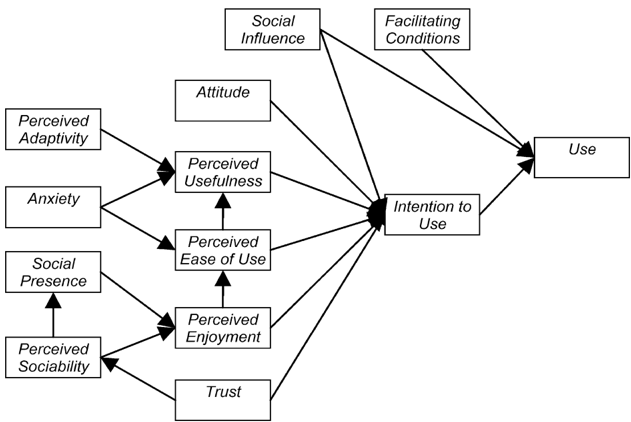
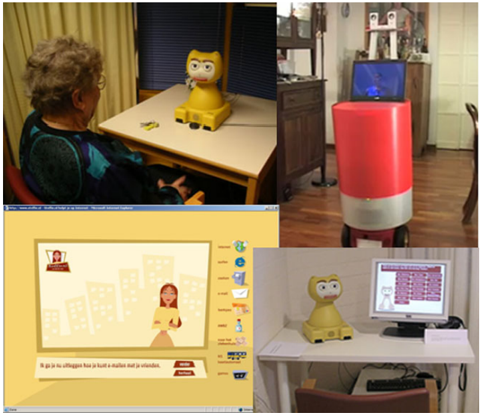
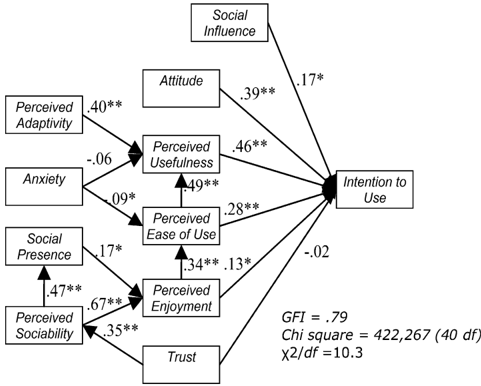
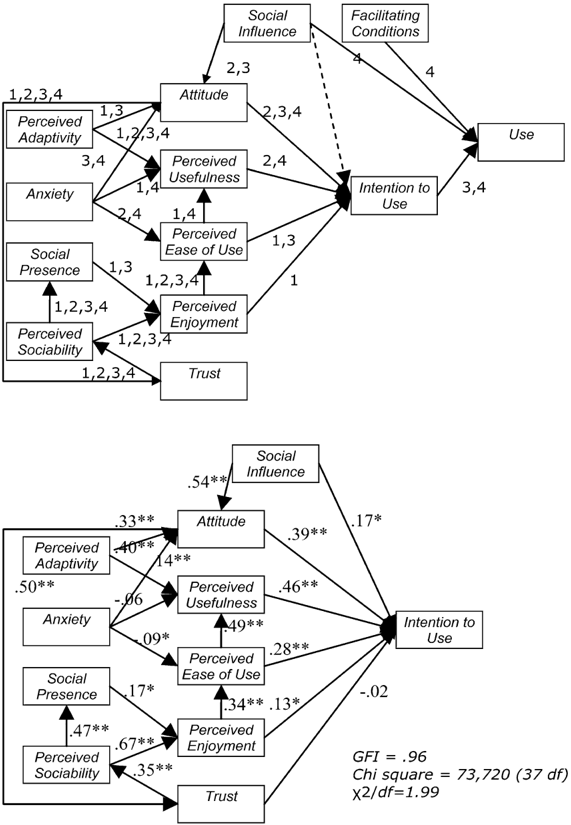
This paper proposes a model of technology acceptance that is specifically developed to test the acceptance of assistive social agents by elderly users. The research in this paper develops and tests an adaptation and theoretical extension of the Unified Theory of Acceptance and Use of Technology (UTAUT) by explaining intent to use not only in terms of variables related to functional evaluation like perceived usefulness and perceived ease of use, but also variables that relate to social interaction. The new model was tested using controlled experiment and longitudinal data collected regarding three different social agents at elderly care facilities and at the homes of older adults. The model was strongly supported accounting for 59–79% of the variance in usage intentions and 49–59% of the variance in actual use. These findings contribute to our understanding of how elderly users accept assistive social agents.
Overview
The claims and statistics of this paper haven’t been checked yet.
Free: it reads the open-access text and checks the first 5 claims that cite a source we can check. Create a free account to check every claim.
Integrity signals
Registry
Cites
Statistics
Figures

Verification
Claims the paper makes
The claims and statistics of this paper haven’t been checked yet.
Free: it reads the open-access text and checks the first 5 claims that cite a source we can check. Create a free account to check every claim.
Claims other papers make about this one
Each is checked against this paper’s own text: does it say what the citing paper says it does?
The source backs part of the claim, not all of it — or backs it for a different population, condition or comparison.
In the citing paper
“The extant literature attests to a positive correlation between users’ trust in technology and their inclination to use it, as evidenced by many studies [25-31].”
From Investigating the impact of user trust on the adoption and use of ChatGPT: Survey analysis (2023) · cites this paper as [31]
Experimental — accuracy not yet measuredThe cited source says what the claim attributes to it.
In the citing paper
“Prior research has established a positive correlation between intent to use and actual use of technology, indicating that users who intend to use the technology are more likely to actually use it [25,31,34].”
From Investigating the impact of user trust on the adoption and use of ChatGPT: Survey analysis (2023) · cites this paper as [31]
In the citing paper
“For instance, studies on adopting robots as assistive social agents found that users’ intent to use them strongly predicted their actual use [25,31].”
From Investigating the impact of user trust on the adoption and use of ChatGPT: Survey analysis (2023) · cites this paper as [31]
In the citing paper
“A study on technology acceptance for assistive social robots among older adult users found that the intention to use plays a mediating role in the relationship between trust and actual use [31].”
From Investigating the impact of user trust on the adoption and use of ChatGPT: Survey analysis (2023) · cites this paper as [31]
In the citing paper
“Heerink [15] found ITU is impacted by other acceptance factors and can be predicted by users' attitude and how much they perceive the robot to be useful.”
From Factors Affecting the Acceptability of Social Robots by Older Adults Including People with Dementia or Cognitive Impairment: A Literature Review (2018) · cites this paper as [15]
11 more claims about this paper
Create a free account to see every claim other papers make about this one.
Self-check
Percentages, sums and reported differences re-computed from the paper’s own numbers.
The self-check needs the paper’s full text.
Citations
Cites
Perceived usefulness, perceived ease of use, and user acceptance of information technology
Davis, F. D. (1989) · MIS Quarterly · doi:10.2307/249008 · Cited by 68,483
User Acceptance of Information Technology: Toward A Unified View1
Venkatesh, V., Morris, M. G., Davis, G. B., & Davis, F. D. (2003) · MIS Quarterly · doi:10.2307/30036540 · Cited by 45,035
(1975) · PhilPapers (PhilPapers Foundation) · Cited by 36,737
A Beginner's Guide to Structural Equation Modeling: Fourth Edition
Schumacker, R. E., & Lomax, R. G. (2015) · doi:10.4324/9781315749105 · Cited by 6,604
Structural Equation Modeling and Regression: Guidelines for Research Practice
Gefen, D., Straub, D., & Boudreau, M.-C. (2000) · Communications of the Association for Information Systems · doi:10.17705/1cais.00407 · Cited by 6,416
Measuring Presence in Virtual Environments: A Presence Questionnaire
Witmer, B. G., & Singer, M. J. (1998) · Presence: Teleoperators and Virtual Environments · doi:10.1162/105474698565686 · Cited by 6,371
A Beginner's Guide to Structural Equation Modeling
Schumacker, R. E., & Lomax, R. G. (2004) · doi:10.4324/9781410610904 · Cited by 6,235
Extrinsic and Intrinsic Motivation to Use Computers in the Workplace 1
Davis, F. D., Bagozzi, R. P., & Warshaw, P. R. (1992) · Journal of Applied Social Psychology · doi:10.1111/j.1559-1816.1992.tb00945.x · Cited by 6,231
Multivariate Data Analysis with Readings.
Rutherford, G. S. W., Hair, J. F., Anderson, R. E., & Tatham, R. L. (1988) · The Statistician · doi:10.2307/2348783 · Cited by 5,830
Multivariate Data Analysis with Readings.
Jolliffe, I. T., Hair, J. F., Anderson, R. E., & Tatham, R. L. (1988) · Journal of the Royal Statistical Society. Series A (Statistics in Society) · doi:10.2307/2983017 · Cited by 5,077
Research works printed but not linked: 6
- United Nations (2007) World population prospects: the 2006 revision-comprehensive tables. United Nations Publications, New York
- Pollack M (2005) Intelligent technology for an aging population: the use of AI to assist elders with cognitive impairment. AI Mag 26(2):9-24
- Zajicek M, Arnold A (1999) The 'technology push' and the user Tailored information environment. In: 5th European research con- sortium for informatics and mathematics, workshop on user inter- faces for all
- Pollack ME, Brown L, Colbry D, Orosz C, Peintner B, Ramakr- ishnan S, Engberg S, Matthews JT, Dunbar-Jacob J, McCarthy CE, Thrun S, Montemerlo M, Pineau J, Pearl NR (2002) A mobile ro- botic assistant for the elderly. In: AAAI workshop on automation as eldercare
- Heerink M (2009) Exploring adaptability, adaptivity and user control. Information Engineering Institute, Almere
- Heerink M (2008) Evaluating steffie. Information Engineering Institute, Almere
Cited by
Items 201–300 of 1,002
Robotic System for Physical Training of Older Adults
Avioz-Sarig, O., Olatunji, S., Sarne‐Fleischmann, V., & Edan, Y. (2020) · International Journal of Social Robotics · doi:10.1007/s12369-020-00697-y · Cited by 66
Olde Keizer, R. A. C. M., van Velsen, L., Moncharmont, M., Riche, B., Ammour, N., Del Signore, S., Zia, G., Hermens, H., & N’Dja, A. (2019) · Health and Technology · doi:10.1007/s12553-019-00320-9 · Cited by 57
Wong, K. L. Y., Hung, L., Wong, J., Park, J., Alfares, H., Zhao, Y., Mousavinejad, A., Soni, A., & Zhao, H. (2024) · JMIR Aging · doi:10.2196/55257 · Cited by 57
German farmers’ intention to use autonomous field robots: a PLS-analysis
von Veltheim, F. R., Theuvsen, L., & Heise, H. (2021) · Precision Agriculture · doi:10.1007/s11119-021-09854-3 · Cited by 62
The impact of different types of service robots usage in hotels on guests’ intention to stay
Çallı, B. A., Çallı, L., ÇALLI, D. S., & Çallı, F. (2022) · Journal of Hospitality and Tourism Technology · doi:10.1108/jhtt-09-2021-0266 · Cited by 64
Field trial of an information-providing robot in a shopping mall
Satake, S., Hayashi, K., Nakatani, K., & Kanda, T. (2015) · IEEE/RSJ International Conference on Intelligent Robots and Systems (IROS) · doi:10.1109/iros.2015.7353616 · Cited by 58
How do Consumers’ Gender and Rational Thinking Affect the Acceptance of Entertainment Social Robots?
Forgas‐Coll, S., Huertas-García, R., Andriella, A., & Alenyà, G. (2021) · International Journal of Social Robotics · doi:10.1007/s12369-021-00845-y · Cited by 60
Kraus, J., Miller, L., Klumpp, M., Babel, F., Scholz, D. D., Merger, J., & Baumann, M. R. K. (2023) · International Journal of Social Robotics · doi:10.1007/s12369-022-00952-4 · Cited by 63
Suwa, S., Tsujimura, M., Kodate, N., Donnelly, S., Kitinoja, H., Hallila, J., Toivonen, M., Ide, H., Bergman-Kärpijoki, C., Takahashi, E., et al. (2020) · Archives of Gerontology and Geriatrics · doi:10.1016/j.archger.2020.104178 · Cited by 53
Impact of auditory sense on trust and brand affect through auditory social interaction and control
Poushneh, A. (2020) · Journal of Retailing and Consumer Services · doi:10.1016/j.jretconser.2020.102281 · Cited by 58
Wilson‐Nash, C., & Tinson, J. S. (2021) · Journal of Marketing Management · doi:10.1080/0267257x.2021.1945662 · Cited by 59
Cane use and late onset visual impairment
Hersh, M. A. (2015) · Technology and Disability · doi:10.3233/tad-150432 · Cited by 55
Virtual Assistive Companions for Older Adults: Qualitative Field Study and Design Implications
Tsiourti, C., Joly, E., Wings, C., Ben Moussa, M., & Wac, K. (2014) · Proceedings of the 8th International Conference on Pervasive Computing Technologies for Healthcare · doi:10.4108/icst.pervasivehealth.2014.254943 · Cited by 54
Bradwell, H. L., Edwards, K., Shenton, D., Winnington, R., Thill, S., & Jones, R. B. (2021) · JMIR Rehabilitation and Assistive Technologies · doi:10.2196/30337 · Cited by 54
Breuer, S., Braun, M., Tigard, D. W., Buyx, A., & Müller, R. (2023) · ACM Transactions on Computer-Human Interaction · doi:10.1145/3577010 · Cited by 60
That robot is not for me: Addressing stereotypes of aging in assistive robot design
Lee, H. R., Tan, H., & Sabanovic, S. (2016) · 2016 25th IEEE International Symposium on Robot and Human Interactive Communication (RO-MAN) · doi:10.1109/roman.2016.7745148 · Cited by 44
van Straten, C. L., Peter, J., Kühne, R., & Barco, À. (2021) · Computers in Human Behavior · doi:10.1016/j.chb.2021.107135 · Cited by 56
Fan, H., Gao, W., & Han, B. (2022) · Computers in Human Behavior · doi:10.1016/j.chb.2022.107287 · Cited by 47
Sustainable Adaptation of New Technology—The Case of Humanoids Used for the Care of Older Adults
Ejdys, J., & Halicka, K. (2018) · Sustainability · doi:10.3390/su10103770 · Cited by 50
The effects of gender and personality of robot assistants on customers’ acceptance of their service
Forgas‐Coll, S., Huertas-García, R., Andriella, A., & Alenyà, G. (2022) · Service Business · doi:10.1007/s11628-022-00492-x · Cited by 53
Hampel, N., Sassenberg, K., Scholl, A., & Ditrich, L. (2023) · Behaviour and Information Technology · doi:10.1080/0144929x.2022.2162436 · Cited by 54
Mitchell, J. J., & Jeon, M. (2025) · International Journal of Human-Computer Interaction · doi:10.1080/10447318.2024.2445100 · Cited by 65
An Integrated Decision Making Approach for Adaptive Shared Control of Mobility Assistance Robots
Geravand, M., Werner, C., Hauer, K. A., & Peer, A. (2016) · International Journal of Social Robotics · doi:10.1007/s12369-016-0353-z · Cited by 54
Case Report: Implications of Doing Research on Socially Assistive Robots in Real Homes
Frennert, S., Eftring, H., & Östlund, B. (2017) · International Journal of Social Robotics · doi:10.1007/s12369-017-0396-9 · Cited by 60
Ferrari, F., Divan, S., Guerrero, C., Zenatti, F., Guidolin, R., Palopoli, L., & Fontanelli, D. (2019) · International Journal of Social Robotics · doi:10.1007/s12369-019-00572-5 · Cited by 55
Chen, S., Jones, C., & Moyle, W. (2019) · International Journal of Social Robotics · doi:10.1007/s12369-019-00613-z · Cited by 55
Multi-stakeholder perspectives on the impacts of service robots in urban hotel rooms
Zhong, L., Verma, R., Wei, W., Morrsion, A. M., & Yang, L. (2022) · Technology in Society · doi:10.1016/j.techsoc.2021.101846 · Cited by 54
Fracasso, F., Buchweitz, L., Theil, A., Cesta, A., & Korn, O. (2022) · International Journal of Social Robotics · doi:10.1007/s12369-022-00884-z · Cited by 53
Yap, Y.-Y., Tan, S., Tan, S., & Choon, S.-W. (2022) · Telematics and Informatics · doi:10.1016/j.tele.2022.101842 · Cited by 54
Mahmoudi Asl, A., Molinari Ulate, M., Franco Martin, M., & van der Roest, H. (2022) · Journal of Medical Internet Research · doi:10.2196/37434 · Cited by 50
van der Putte, D., Boumans, R., Neerincx, M. A., Rikkert, M. G. M. O., & de Mul, M. (2019) · ACM/IEEE International Conference on Human-Robot Interaction (HRI) · doi:10.1109/hri.2019.8673280 · Cited by 50
Evaluation Tools for Assistive Technologies: A Scoping Review
Tao, G., Charm, G., Kabacińska, K., Miller, W. C., & Robillard, J. M. (2020) · Archives of Physical Medicine and Rehabilitation · doi:10.1016/j.apmr.2020.01.008 · Cited by 53
A Reinforcement Learning Based Cognitive Empathy Framework for Social Robots
Bagheri, E., Roesler, O., Cao, H.-L., & Vanderborght, B. (2020) · International Journal of Social Robotics · doi:10.1007/s12369-020-00683-4 · Cited by 54
Computational Emotion Models: A Thematic Review
Ojha, S., Vitale, J., & Williams, M. (2020) · International Journal of Social Robotics · doi:10.1007/s12369-020-00713-1 · Cited by 62
Song, X., Gu, H., Ling, X., Ye, W., Li, X., & Zhu, Z. (2024) · Journal of Hospitality and Tourism Technology · doi:10.1108/jhtt-12-2023-0428 · Cited by 57
Campos, W., Martínez, A., Gómez, W. A. S., Estrada, H., Castro-Sánchez, N. A., & Mújica‐Vargas, D. (2016) · Cognitive Computation · doi:10.1007/s12559-016-9382-z · Cited by 56
Piezzo, C., & Suzuki, K. (2017) · Future Internet · doi:10.3390/fi9030030 · Cited by 51
Conti, D., Cattani, A., Nuovo, S. D., & Nuovo, A. G. D. (2019) · Frontiers in Psychology · doi:10.3389/fpsyg.2019.02138 · Cited by 56
Liu, N., Pu, Q., Shi, Y., Zhang, S., & Qiu, L. (2022) · International Journal of Human-Computer Interaction · doi:10.1080/10447318.2022.2074667 · Cited by 52
Designing an assistive robot for older adults: The ROBADOM project
Wu, Y.-H., Wrobel, J., Cristancho‐Lacroix, V., Kamali, L., Chétouani, M., Duhaut, D., Pévédic, B. L., Jost, C., Dupourqué, V., Ghrissi, M., et al. (2013) · IRBM · doi:10.1016/j.irbm.2013.01.003 · Cited by 48
A cross-cultural study of acceptance and use of robotics by future psychology practitioners
Conti, D., Cattani, A., Nuovo, S. D., & Nuovo, A. G. D. (2015) · IEEE RO-MAN · doi:10.1109/roman.2015.7333601 · Cited by 55
Media effects on the perceptions of robots
Savela, N., Turja, T., Latikka, R., & Oksanen, A. (2021) · Human Behavior and Emerging Technologies · doi:10.1002/hbe2.296 · Cited by 50
Will Older Adults Accept a Humanoid Robot as a Walking Partner?
Karunarathne, D., Morales, Y., Nomura, T., Kanda, T., & Ishiguro, H. (2018) · International Journal of Social Robotics · doi:10.1007/s12369-018-0503-6 · Cited by 50
Escaping Oz: Autonomy in Socially Assistive Robotics
Clabaugh, C., & Matarić, M. J. (2019) · Annual Review of Control Robotics and Autonomous Systems · doi:10.1146/annurev-control-060117-104911 · Cited by 55
Elder user’s attitude toward assistive virtual agents: the role of voice and gender
Esposito, A. A., Amorese, T., Cuciniello, M., Riviello, M. T., Esposito, A. M., Troncone, A., Torres, M. I., Schlögl, S., & Cordasco, G. (2019) · Journal of Ambient Intelligence and Humanized Computing · doi:10.1007/s12652-019-01423-x · Cited by 47
Assistive technology design and development for acceptable robotics companions for ageing years
Amirabdollahian, F., Akker, R. O. D., Bedaf, S., Bormann, R., Draper, H., Evers, V., Pérez, J. G., Gelderblom, G. J., Ruiz, C. G., Hewson, D., et al. (2013) · Paladyn, Journal of Behavioral Robotics · doi:10.2478/pjbr-2013-0007 · Cited by 46
Self-citationFeng, Y. S., Perugia, G., Yu, S., Barakova, E. I., Hu, J., & Rauterberg, M. (2021) · International Journal of Social Robotics · doi:10.1007/s12369-021-00823-4 · Cited by 49
Human-Like Movements of Industrial Robots Positively Impact Observer Perception
Hostettler, D., Mayer, S., & Hildebrand, C. (2022) · International Journal of Social Robotics · doi:10.1007/s12369-022-00954-2 · Cited by 49
A Survey On Measuring Presence in Mixed Reality
Tran, T. Q., Langlotz, T., & Regenbrecht, H. T. (2024) · CHI Conference on Human Factors in Computing Systems · doi:10.1145/3613904.3642383 · Cited by 51
Can AI robots foster social inclusion? Exploring the role of immersive augmentation in hospitality
González‐Jiménez, H., & Pinto, D. C. (2024) · International Journal of Contemporary Hospitality Management · doi:10.1108/ijchm-09-2023-1459 · Cited by 48
Age-Related Differences in the Uncanny Valley Effect
Tu, Y., Chien, S.-E., & Yeh, S. (2020) · Gerontology · doi:10.1159/000507812 · Cited by 52
Older People’s Prior Robot Attitudes Influence Evaluations of a Conversational Robot
Stafford, R. Q., MacDonald, B. A., Li, X., & Broadbent, E. (2014) · International Journal of Social Robotics · doi:10.1007/s12369-013-0224-9 · Cited by 38
Roadmap of Designing Cognitive Metrics for Explainable Artificial Intelligence (XAI)
Hsiao, J. H.-W., Ngai, H. H. T., Qiu, L., Yang, Y., & Cao, C. C. (2021) · arXiv · doi:10.48550/arxiv.2108.01737 · Cited by 45
Methodological Issues in Scenario-Based Evaluation of Human–Robot Interaction
Xu, Q., Ng, J., Tan, O., Huang, Z., Tay, B. T. C., & Park, T. (2014) · International Journal of Social Robotics · doi:10.1007/s12369-014-0248-9 · Cited by 46
Evaluating directional cost models in navigation
Kruse, T., Kirsch, A., Khambhaita, H., & Alami, R. (2014) · ACM/IEEE International Conference on Human-Robot Interaction (HRI) · doi:10.1145/2559636.2559662 · Cited by 45
Using Socially Expressive Mixed Reality Arms for Enhancing Low-Expressivity Robots
Groechel, T. R., Shi, Z., Pakkar, R., & Matarić, M. J. (2019) · IEEE RO-MAN · doi:10.1109/ro-man46459.2019.8956458 · Cited by 52
Using robot animal companions in the academic library to mitigate student stress
Edwards, A. P., Edwards, C. C., Abendschein, B., Espinosa, J., Scherger, J., & Meer, P. V. (2020) · Library Hi Tech · doi:10.1108/lht-07-2020-0148 · Cited by 47
Socially Assistive Robots as Storytellers that Elicit Empathy
Spitale, M., Okamoto, S., Gupta, M., Xi, H., & Matarić, M. J. (2022) · ACM Transactions on Human-Robot Interaction · doi:10.1145/3538409 · Cited by 59
The Role of Ageism in the Acceptance and Use of Digital Technology
Mannheim, I., Varlamova, M., van Zaalen, Y., & Wouters, E. (2023) · Journal of Applied Gerontology · doi:10.1177/07334648231163426 · Cited by 51
Cognitive Exercise for Persons With Alzheimer's Disease and Related Dementia Using a Social Robot
Yuan, F., Boltz, M. P., Bilal, D., Jao, Y., Crane, M. K., Duzan, J., Bahour, A., & Zhao, X. (2023) · IEEE Transactions on Robotics · doi:10.1109/tro.2023.3272846 · Cited by 51
Rasouli, S., Ghafurian, M., Nilsen, E. S., & Dautenhahn, K. (2023) · Computers in Human Behavior · doi:10.1016/j.chb.2023.108072 · Cited by 45
Moghavvemi, S., Salleh, N. A. M., & Standing, C. (2016) · Internet Research · doi:10.1108/intr-01-2014-0024 · Cited by 59
Assistive Robotic Technology to Combat Social Isolation in Acute Hospital Settings
Sarabia, M., Young, N., Canavan, K., Edginton, T. L., Demiris, Y., & Vizcaychipi, M. P. (2018) · International Journal of Social Robotics · doi:10.1007/s12369-017-0421-z · Cited by 56
Mannion, A., Summerville, S., Barrett, E., Burke, M., Santorelli, A., Kruschke, C., Felzmann, H., Kovačič, T., Murphy, K., Casey, D., et al. (2019) · International Journal of Social Robotics · doi:10.1007/s12369-019-00568-1 · Cited by 47
A Community-Centered Design Framework for Robot-Assisted Feeding Systems
Bhattacharjee, T., Cabrera, M. E., Caspi, A., Cakmak, M., & Srinivasa, S. S. (2019) · Proceedings of the 21st International ACM SIGACCESS Conference on Computers and Accessibility · doi:10.1145/3308561.3353803 · Cited by 40
The Effects of Robot’s Facial Expressions on Children’s First Impressions of Trustworthiness
Calvo-Barajas, N., Perugia, G., & Castellano, G. (2020) · IEEE RO-MAN · doi:10.1109/ro-man47096.2020.9223456 · Cited by 50
Louie, W.-Y. G., Li, J., Vaquero, T., & Nejat, G. (2014) · The 23rd IEEE International Symposium on Robot and Human Interactive Communication · doi:10.1109/roman.2014.6926259 · Cited by 41
Khan, M. I., Fatima, J. K., Bahmannia, S., Chatrath, S. K., Dale, N. F., & Johns, R. (2025) · Journal of Service Theory and Practice · doi:10.1108/jstp-10-2023-0282 · Cited by 43
He, Y., He, Q., & Liu, Q. (2022) · Journal of Healthcare Engineering · doi:10.1155/2022/6334732 · Cited by 51
Emerging Opportunities and Challenges in Optimal Aging with Virtual Personal Assistants
Vollmer Dahlke, D., & Ory, M. G. (2017) · Public Policy & Aging Report · doi:10.1093/ppar/prx004 · Cited by 38
Empathetic Speech Synthesis and Testing for Healthcare Robots
James, J., Balamurali, B. T., Watson, C. I., & MacDonald, B. A. (2020) · International Journal of Social Robotics · doi:10.1007/s12369-020-00691-4 · Cited by 56
Evaluation of Methodologies and Measures on the Usability of Social Robots: A Systematic Review
Jung, M., Lazaro, M. J., & Yun, M. H. (2021) · Applied Sciences · doi:10.3390/app11041388 · Cited by 49
What People with Dementia Want: Designing MARIO an Acceptable Robot Companion
Casey, D., Felzmann, H., Pegman, G., Kouroupetroglou, C., Murphy, K., Koumpis, A., & Whelan, S. (2016) · Lecture Notes in Computer Science · doi:10.1007/978-3-319-41264-1_44 · Cited by 38
Mahieu, C., Ongenae, F., Backere, F. D., Bonte, P., Turck, F. D., & Simoens, P. (2018) · Journal of Systems and Software · doi:10.1016/j.jss.2018.11.022 · Cited by 48
Robot for health data acquisition among older adults: a pilot randomised controlled cross-over trial
Boumans, R., van Meulen, F., Hindriks, K., Neerincx, M., & Olde Rikkert, M. G. M. (2019) · BMJ Quality & Safety · doi:10.1136/bmjqs-2018-008977 · Cited by 39
Suwa, S., Tsujimura, M., Ide, H., Kodate, N., Ishimaru, M., Shimamura, A., & Yu, W. (2020) · International Journal of Human-Computer Interaction · doi:10.1080/10447318.2020.1736809 · Cited by 45
Socially Assistive Robot Exercise Coach: Motivating Older Adults to Engage in Physical Exercise
Fasola, J., & Matarić, M. J. (2013) · Springer tracts in advanced robotics · doi:10.1007/978-3-319-00065-7_32 · Cited by 49
Ayanoğlu, H., & Sequeira, J. S. (2019) · Human-computer interaction series · doi:10.1007/978-3-319-96722-6_3 · Cited by 41
Jang, S.-H., & Lee, C. W. (2018) · Sustainability · doi:10.3390/su10061876 · Cited by 47
German Farmers’ Attitudes on Adopting Autonomous Field Robots: An Empirical Survey
von Veltheim, F. R., & Heise, H. (2021) · Agriculture · doi:10.3390/agriculture11030216 · Cited by 47
van Straten, C. L., Peter, J., Kühne, R., & Barco, À. (2021) · AI & Society · doi:10.1007/s00146-021-01202-3 · Cited by 45
Factors Affecting Acceptance of Social Robots Among Prospective Users
Chatzoglou, P., Lazaraki, V., Apostolidis, S., & Gasteratos, A. C. (2023) · International Journal of Social Robotics · doi:10.1007/s12369-023-01024-x · Cited by 46
Big Data, Smart Homes and Ambient Assisted Living
Wass, S., & Vimarlund, V. (2014) · Yearbook of Medical Informatics · doi:10.15265/iy-2014-0011 · Cited by 45
Khaksar, S. M. S., Shahmehr, F. S., Khosla, R., & Chu, M. T. (2017) · Journal of Services Marketing · doi:10.1108/jsm-06-2016-0243 · Cited by 38
Towards a methodology for longitudinal evaluation of social robotic telepresence for elderly
Coradeschi, S., Kristoffersson, A., Loutfi, A., Rump, S. V., Cesta, A., Cortellessa, G., & González, J. (2011) · DiVA - Örebro University (Örebro universitet) · Cited by 44
Neurophysiological responses to robot–human interactions in retail stores
Rancati, G., & Maggioni, I. (2022) · Journal of Services Marketing · doi:10.1108/jsm-04-2021-0126 · Cited by 43
Reading experiences influencing the acceptance of e-book devices
Park, E., Sung, J., & Cho, K. (2015) · The Electronic Library · doi:10.1108/el-05-2012-0045 · Cited by 43
Are we ready for hotel robots after the pandemic? A profile analysis
Binesh, F., & Baloğlu, Ş. (2023) · Computers in Human Behavior · doi:10.1016/j.chb.2023.107854 · Cited by 41
Smart Nursing Robot for COVID-19 Patients
Manikandan, P., Ramesh, G., Likith, G., Sreekanth, D., & Prasad, G. D. (2021) · International Conference on Advance Computing and Innovative Technologies in Engineering (ICACITE) · doi:10.1109/icacite51222.2021.9404698 · Cited by 41
Papadopoulos, I., Wright, S., Koulouglioti, C., Ali, S., Lazzarino, R., García, Á. M., Oter‐Quintana, C., Kouta, C., Rousou, E., Papp, K., et al. (2023) · Japan Journal of Nursing Science · doi:10.1111/jjns.12523 · Cited by 38
Consumers acceptance of service robots in hotels: A meta-analytic review
Begum, N., Faisal, M. N., Sobh, R., Nunkoo, R., & Rana, N. P. (2024) · International Journal of Hospitality Management · doi:10.1016/j.ijhm.2024.104052 · Cited by 43
User Requirements for Inclusive Technology for Older Adults
Jovanovic, M., Angeli, A. D., McNeill, A. R., & Coventry, L. (2021) · International Journal of Human-Computer Interaction · doi:10.1080/10447318.2021.1921365 · Cited by 43
Shang, X., Liu, Z., Gong, C., Hu, Z., Wu, Y., & Wang, C. (2024) · Humanities and Social Sciences Communications · doi:10.1057/s41599-024-03658-2 · Cited by 37
Felding, S. A., Koh, W. Q., Teupen, S., Budak, K. B., Uribe, F. L., & Roes, M. (2023) · International Journal of Social Robotics · doi:10.1007/s12369-023-01012-1 · Cited by 39
Using Socially Assistive Robots in Speech-Language Therapy for Children with Language Impairments
Spitale, M., Silleresi, S., Garzotto, F., & Matarić, M. J. (2023) · International Journal of Social Robotics · doi:10.1007/s12369-023-01028-7 · Cited by 37
The evaluation of different roles for domestic social robots
de Graaf, M. M. A., & Allouch, S. B. (2015) · IEEE RO-MAN · doi:10.1109/roman.2015.7333594 · Cited by 40
Evaluating the Sense of Safety and Security in Human–Robot Interaction with Older People
Akalın, N., Kristoffersson, A., & Loutfi, A. (2019) · Human-computer interaction series · doi:10.1007/978-3-030-17107-0_12 · Cited by 45
The Influence of Feedback Type in Robot-Assisted Training
Akalın, N., Kristoffersson, A., & Loutfi, A. (2019) · Multimodal Technologies and Interaction · doi:10.3390/mti3040067 · Cited by 37
de Jong, C., Kühne, R., Peter, J., van Straten, C. L., & Barco, À. (2020) · International Journal of Human-Computer Studies · doi:10.1016/j.ijhcs.2020.102426 · Cited by 39
Noguchi, Y., Kamide, H., & Tanaka, F. (2020) · ACM Transactions on Human-Robot Interaction · doi:10.1145/3377342 · Cited by 41
Metadata
- Authors
- Heerink, M., Kröse, B., Evers, V., & Wielinga, B.
- Affiliations
- Amsterdam University of Applied Sciences (NL)
- University of Amsterdam (NL)
- Corresponding author
- Heerink, Marcel
- Venue
- International Journal of Social Robotics
- Published
- 2010-09-04
- Volume
- 2
- Issue
- 4
- Pages
- 361-375
- ISSN
- 1875-4791 (ISSN-L)
- 1875-4805
- OpenAlex
- W2137577228
- Cited by
- 1,229
- References
- 69
- Citations by year
- 2026: 145 · 2025: 138 · 2024: 115 · 2023: 142 · 2022: 125 · 2021: 119 · 2020: 104 · 2019: 91 · 2018: 46 · 2017: 47 · 2016: 39 · 2015: 28 · 2014: 34 · 2013: 31 · 2012: 14
- Type
- book review
- Language
- en
- Open access
- hybrid
- doi.org
- Licence
- cc-by-nc
- Locations
- International Journal of Social Robotics (publishedVersion, cc-by-nc)
- UvA-DARE (University of Amsterdam) (publishedVersion, other-oa)
- VU Research Portal (publishedVersion, other-oa)
- UvA-DARE (University of Amsterdam) (submittedVersion, other-oa)
- Data Archiving and Networked Services (DANS) (submittedVersion, other-oa)
- Digital Academic REpository of VU University Amsterdam (Vrije Universiteit Amsterdam) (submittedVersion)
- Funders
- European Commission
- Rabobank Foundation
- Topics
- Social Sciences › Psychology › Social Psychology › Social Robot Interaction and HRI
- Health Sciences › Medicine › Geriatrics and Gerontology › Technology Use by Older Adults
- Social Sciences › Decision Sciences › Information Systems and Management › Technology Adoption and User Behaviour
- Keywords
- technology acceptance, older adults, UTAUT, intention to use, perceived usefulness, perceived ease of use, social interaction, elderly care, social robots
About these checks
Registry, retraction, Cites and statistics results are computed, not judged, with one exception: a printed reference that no index lists is read once by a model before it counts as a citation error. Claims are extracted by a model and kept only when their quote appears verbatim in the text; each cited source is then checked, with a model’s help, for whether it says what the claim relies on. Those verdicts can be wrong — read the claim’s quote and the cited source before relying on one.
Statistics and arithmetic are recomputed, not judged.
Confidence bands are shown only for fields calibrated on our annotated test set. None is calibrated yet, so no band is shown.
What counts as a claim ›How we measure confidence ›How we check this ›
Are you an author, or do you see a problem with this page? Request a review
Data sources
Bibliographic data: Semantic Scholar, OpenAlex, Crossref.
Contains information from the Semantic Scholar Academic Graph Datasets, made available under the ODC Attribution License (ODC-BY 1.0).
Semantic Scholar’s data is described in: Kinney, R., et al. (2023). The Semantic Scholar Open Data Platform. arXiv:2301.10140.
