

Gait speed at usual pace as a predictor of adverse outcomes in community-dwelling older people an International Academy on Nutrition and Aging (IANA) Task Force
Open accessThe DOI matches its Crossref record; 56 of the 56 references it cites were found in a registry or an index; 10 of the 62 sources its claims cite were checked for support.
Abstract
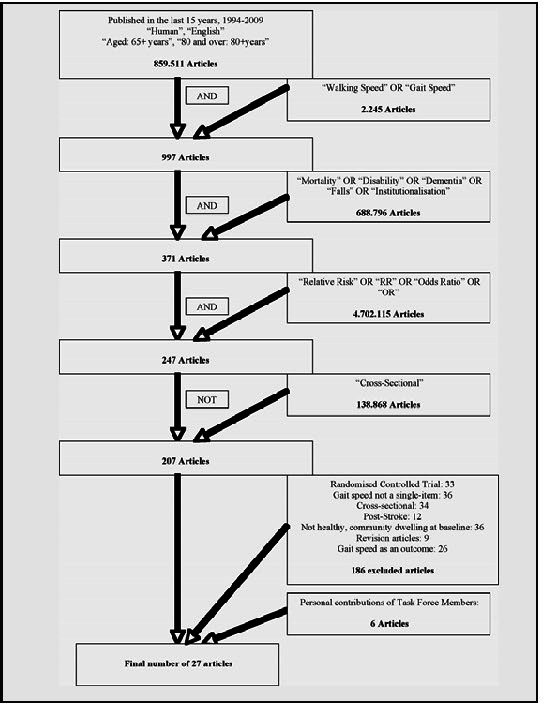
INTRODUCTION: The use of a simple, safe, and easy to perform assessment tool, like gait speed, to evaluate vulnerability to adverse outcomes in community-dwelling older people is appealing, but its predictive capacity is still questioned. The present manuscript summarises the conclusions of an expert panel in the domain of physical performance measures and frailty in older people, who reviewed and discussed the existing literature in a 2-day meeting held in Toulouse, France on March 12-13, 2009. The aim of the IANA Task Force was to state if, in the light of actual scientific evidence, gait speed assessed at usual pace had the capacity to identify community-dwelling older people at risk of adverse outcomes, and if gait speed could be used as a single-item tool instead of more comprehensive but more time-consuming assessment instruments. METHODS: A systematic review of literature was performed prior to the meeting (Medline search and additional pearling of reference lists and key-articles supplied by Task Force members). Manuscripts were retained for the present revision only when a high level of evidence was present following 4 pre-selected criteria: a) gait speed, at usual pace, had to be specifically assessed as a single-item tool, b) gait speed should be measured over a short distance, c) at baseline, participants had to be autonomous, community-dwelling older people, and d) the evaluation of onset of adverse outcomes (i.e. disability, cognitive impairment, institutionalisation, falls, and/or mortality) had to be assessed longitudinally over time. Based on the prior criteria, a final selection of 27 articles was used for the present manuscript. RESULTS: Gait speed at usual pace was found to be a consistent risk factor for disability, cognitive impairment, institutionalisation, falls, and/or mortality. In predicting these adverse outcomes over time, gait speed was at least as sensible as composite tools. CONCLUSIONS: Although more specific surveys needs to be performed, there is sufficient evidence to state that gait speed identifies autonomous community-dwelling older people at risk of adverse outcomes and can be used as a single-item assessment tool. The assessment at usual pace over 4 meters was the most often used method in literature and might represent a quick, safe, inexpensive and highly reliable instrument to be implemented.
Overview
CoChat Summary
TL;DR
This IANA Task Force systematic review and expert-panel report concludes that usual-pace gait speed is a consistent predictor of adverse outcomes in autonomous community-dwelling older people and performs at least as well as composite tools. The panel recommends gait speed as a single-item assessment, with an “easy-to-remember” cutpoint of 0.8 m/s using a 4-meter course.
Key findings
- Gait speed at usual pace was a consistent risk factor for disability, cognitive impairment, institutionalisation, falls, and/or mortality across the 27 selected articles.
- In Health ABC, slow gait speed (<1.0 m/s) predicted persistent lower extremity limitation with RR 2.20 (95% CI 1.76–2.74) over 4.9 years and mortality with RR 1.64 (95% CI 1.14–2.37).
- In H-EPESE, the lowest versus highest gait-speed quartile predicted mortality with OR 3.64 (95% CI 1.93–6.85), and inability to perform the task raised mortality risk to OR 7.47 (95% CI 3.83–14.55).
- Gait speed alone was nearly as good as the SPPB for predicting ADL disability at 4 years: AUC 0.67 for gait speed versus 0.69 for SPPB, p=0.18; the panel proposed 0.8 m/s (5 seconds for 4 meters) as the clinical cutpoint for adverse outcomes.
Methods
- Systematic literature review using Medline from January 1994 to March 2009, with MeSH terms including “Walking Speed” and “Gait Speed,” yielding 207 articles before final selection of 27 articles.
- Inclusion required usual-pace gait speed assessed as a single-item tool over a short distance, autonomous community-dwelling older participants at baseline, and longitudinal assessment of adverse outcomes (disability, cognitive impairment, institutionalisation, falls, and/or mortality).
- Abstracts were independently evaluated by two reviewers using the STROBE checklist; findings were discussed and revised by an international expert panel at a 2-day meeting in Toulouse, France on March 12–13, 2009.
Limitations
- The paper states that more specific surveys are needed, and that most cohort studies assessed community-dwelling well-functioning older people, so identified cutpoints may differ from frail older people seen in clinical practice.
- The paper notes that many cutpoints are based on tertiles or quartiles used for statistical analyses and may not be easy to remember for clinical practice; the Health ABC cohort’s well-functioning inclusion also limits generalisation of its cutpoints.
- Evident from the text: this is a narrative expert-panel review of 27 selected articles rather than a meta-analysis, and some recommendations, such as using gait speed as an inclusion/exclusion criterion in trials, were explicitly described as not soundly based on existing literature.
Model-written summary. Check it against the paper before relying on it.
Integrity signals
Registry
Cites
Statistics
Figures
Verification
Claims the paper makes
9 Valid · 1 Not valid · 37 Not checked · 21 Own results and interpretations
Every source the paper cites for this claim was checked and supports it.
In the paper
“participants in the lowest quartile (<1.05 ms-1) were more likely to decline in DSST with an Odds Ratio, OR of 1.74 (95% CI 1.21-2.51)”
§ Gait speed at usual pace as a predictor of adverse outcomes in community-dwelling older people an International Academy on Nutrition and Aging (IANA) Task Force > Results: Gait speed as a predictor of adverse outcomes > Gait speed as a predictor of cognitive decline (Table 2)
What the sources say
- Supportedcites [30] Inzitari M. Newman A.B. Yaffe K. Gait speed predicts decline in attention and psychomotor speed in older adults: The Health Aging and Body Composition Study Neuroepidemiology 29 2007 156 162 10.1159/000111577 PubMed PMID: 18042999 18042999 PMC2824580 source
The Results report that, compared with the highest gait-speed quartile, participants in the lowest quartile (<1.05 m/s) had greater odds of DSST decline over five years (OR 1.74, 95% CI 1.21–2.51). This matches the attributed claim. (LLM, conf=0.95)
plainstates an associationn = 2,776- Asserted: passes — The authors put it forward as true.
- Checkable: passes — It can be checked against evidence.
- Load-bearing: passes — The paper’s conclusions depend on it.
- Based: passes — The paper gives a reason why it holds.
- Supported
The cited sources support only part of this claim — read each source’s verdict below.
In the paper
“Gait speed was an independent predictor of falls with a RR of 5.4 (2-14.3)”
§ Gait speed at usual pace as a predictor of adverse outcomes in community-dwelling older people an International Academy on Nutrition and Aging (IANA) Task Force > Results: Gait speed as a predictor of adverse outcomes > Gait speed as a predictor of falls (Table 4)
What the sources say
- Partly supportedcites [43] Montero-Odasso M. Schapira M. Soriano E.R. Gait velocity as a single predictor of adverse events in healthy senior aged 75 years and older J Gerontol Med Sci 60 10 2005 1304 1309 16282564 sourceExperimental — accuracy not yet measured
The Results (p. 3) report an RR of 5.4 (95% CI, 2.0–14.3) for low gait velocity and new falls, but that estimate is from the univariate analysis. The association remained significant after multivariate adjustment, where the reported measure was an OR of 10.9 (95% CI, 2.0–57.9). Thus, the claim combines the unadjusted RR with the independent-predictor finding. (LLM, conf=0.91)
plainstates an associationn = 102- Asserted: passes — The authors put it forward as true.
- Checkable: passes — It can be checked against evidence.
- Load-bearing: unclear — It is unclear whether the paper’s conclusions depend on it.
- Based: passes — The paper gives a reason why it holds.
- Partly supported
Every source the paper cites for this claim was checked and supports it.
In the paper
“Compared to the fastest quartile, the participants who were unable to perform the task raised their risk of death to an OR of 7.47 (95% CI 3.83-14.55).”
§ Gait speed at usual pace as a predictor of adverse outcomes in community-dwelling older people an International Academy on Nutrition and Aging (IANA) Task Force > Results: Gait speed as a predictor of adverse outcomes > Gait speed as a predictor of cognitive decline (Table 2)
What the sources say
- Supportedcites [39] Markides K.S. Black S.A. Ostir G.V. Lower body function and mortality in Mexican American elderly people J Gerontol Biol Sci Med Sci 56 2001 243 247 11283198 source
The Measures section identifies the task as a timed 8-foot walk and scores the fastest quartile as 4 and those unable to complete it as 0. Results, Table 3, reports a mortality odds ratio of 7.47 (95% CI 3.83–14.55) for short-walk score 0 versus score 4 in Model 4. (LLM, conf=0.95)
plainstates an association- Asserted: passes — The authors put it forward as true.
- Checkable: passes — It can be checked against evidence.
- Load-bearing: unclear — It is unclear whether the paper’s conclusions depend on it.
- Based: passes — The paper gives a reason why it holds.
- Supported
The cited sources support only part of this claim — read each source’s verdict below.
In the paper
“Gait speed over 1 ms-1 presented a Hazard Ratio, HR of 0.88 (95% CI 0.81-0.97) in predicting incident disability”
§ Gait speed at usual pace as a predictor of adverse outcomes in community-dwelling older people an International Academy on Nutrition and Aging (IANA) Task Force > Results: Gait speed as a predictor of adverse outcomes > Gait speed as a predictor of mobility disability (Table 1)
What the sources say
- Partly supportedcites [21] Rosano C. Newman A.B. Katz R. Association between lower digit symbol substitution test score and slower gait and greater risk of mortality and of developing incident disability in well-functioning older adults J Am Geriatr Soc 56 2008 1618 1625 10.1111/j.1532-5415.2008.01856.x PubMed PMID: 18691275 18691275 PMC2631090 sourceExperimental — accuracy not yet measured
The Methods (Gait Speed; page unavailable) use 1.0 m/s as a gait-speed threshold, and the Discussion (page unavailable) reports that gait speed was associated with incident disability in the Cardiovascular Health Study participants analyzed. The retrieved Results and other passages do not report the claimed hazard ratio of 0.88 or its 95% confidence interval of 0.81–0.97, so the numerical claim is not supported by our copy. (LLM, conf=0.84)
plainstates an association- Asserted: passes — The authors put it forward as true.
- Checkable: passes — It can be checked against evidence.
- Load-bearing: passes — The paper’s conclusions depend on it.
- Based: passes — The paper gives a reason why it holds.
- Partly supported
The sources with a verdict support this claim; the rest weren’t checked yet, have no full text we could read, or their verdicts aren’t rated yet.
In the paper
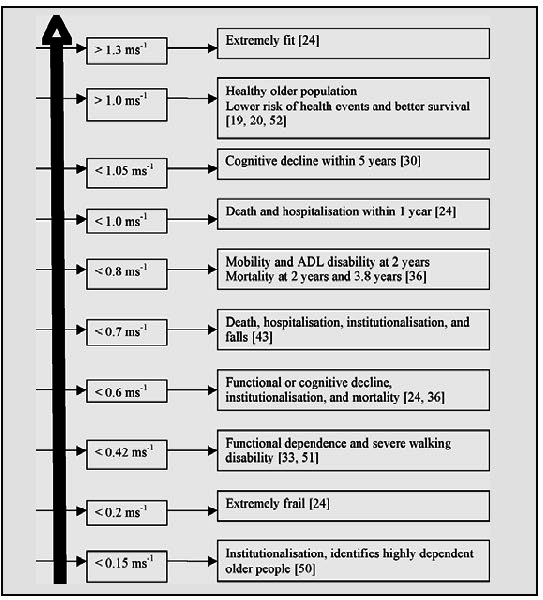
“The 1.0 ms-1 cutpoint was used to predict mortality (19, 20)”
§ Gait speed at usual pace as a predictor of adverse outcomes in community-dwelling older people an International Academy on Nutrition and Aging (IANA) Task Force > Results: Gait speed as a single-item tool > Distance and cut-points reported in literature for a single-item tool (Figure 2)
What the sources say
- Not checked yetcites [19] Cesari M. Kritchevsky S.B. Penninx B.W.H.J. Pronostic value of usual gait speed in well-functioning older people. Results from the Health, Aging and Body Composition Study J Am Geriatr Soc 53 2005 1675 1680 10.1111/j.1532-5415.2005.53501.x PubMed PMID: 16181165 16181165 source
- Supportedcites [20] Cesari M. Kritchevsky S.B. Newman A.B. Added value of physical performance measures in predicting adverse health-related events: results from the Health, Aging and Body Composition Study J Am Geriatr Soc 57 2009 251 259 10.1111/j.1532-5415.2008.02126.x PubMed PMID: 19207142 19207142 PMC2695653 source
The Methods section says the study used the 1 m/sec gait-speed cutpoint to classify participants into high- and low-risk groups. The Results section reports that the resulting high-risk gait-speed group was more likely to experience death, so the cutpoint was used to predict mortality. (LLM, conf=0.93)
plainstates an association- Asserted: passes — The authors put it forward as true.
- Checkable: passes — It can be checked against evidence.
- Load-bearing: unclear — It is unclear whether the paper’s conclusions depend on it.
- Based: passes — The paper gives a reason why it holds.
32 more claims · 1 with their cited sources checked
Create a free account to see all 68 claims and to verify the 52 references still open.
- The quote only partly states this claim. 2
- It may state two separate claims as one. 18
- Probably not a substantial claim. 14
Claims other papers make about this one
Each is checked against this paper’s own text: does it say what the citing paper says it does?
In the citing paper
“Gait speed has been widely used as a single measure of frailty and is supported by a robust body of literature demonstrating its prognostic importance across a wide range of patient populations and performance levels.85”
In the citing paper
“Gait speed has also been demonstrated to be a consistent risk factor for disability, cognitive impairment, institutionalization, falls, and postoperative outcomes.85”
In the citing paper
“Accumulating evidence indicates slow walking speed (<1 m/sec indicating a high risk and < 0.8 m/sec indicating a very high risk), as well as reductions in walking speed, strongly predict functional decline, major health outcomes, and mortality in older adults.”
From Successful aging: Advancing the science of physical independence in older adults (2015) · cites this paper as Abellan Van, Rolland, Andrieu, Bauer, Beauchet, Bonnefoy, Cesari, Donini, Gillette, Inzitari, Nourhashemi, Onder, Ritz, Salva, Visser, and Vellas 2009
In the citing paper
“Gait speed has been shown to predict adverse outcomes related to sarcopenia—disability, cognitive impairment, need for institutionalization, falls, and mortality.[82–85]”
From Sarcopenia: revised European consensus on definition and diagnosis (2019) · cites this paper as [82]
Self-check
Percentages, sums and reported differences re-computed from the paper’s own numbers.
Each contradiction between two passages listed here was confirmed by an independent check.
Rated minor: it would not touch a result — a value no result rests on, a p-value that stays on the same side of the significance level, or a conflict that is clerical, resolved elsewhere in the paper, or outside its own findings.
In the paper
“After 5 years, of the assessed 2776 baseline participants, 389 (17.1%) declined in DSST.”
§ Gait speed at usual pace as a predictor of adverse outcomes in community-dwelling older people an International Academy on Nutrition and Aging (IANA) Task Force > Results: Gait speed as a predictor of adverse outcomes > Gait speed as a predictor of cognitive decline (Table 2)
Reported 17.1 · recomputed 14.012968
Rated minor: it would not touch a result — a value no result rests on, a p-value that stays on the same side of the significance level, or a conflict that is clerical, resolved elsewhere in the paper, or outside its own findings.
In the paper
§ Gait speed at usual pace as a predictor of adverse outcomes in community-dwelling older people an International Academy on Nutrition and Aging (IANA) Task Force > Results: Gait speed as a predictor of adverse outcomes > Gait speed as a predictor of cognitive decline (Table 2)
“| | Follow-up 6 years | | |”
§ Gait speed at usual pace as a predictor of adverse outcomes in community-dwelling older people an International Academy on Nutrition and Aging (IANA) Task Force > Results: Gait speed as a predictor of adverse outcomes > Gait speed as a predictor of cognitive decline (Table 2)
“In a prospective cohort study of 2288 persons, 65 years and older without dementia with a mean follow-up of 9 years, 319 participants developed dementia.”
Rated minor: it would not touch a result — a value no result rests on, a p-value that stays on the same side of the significance level, or a conflict that is clerical, resolved elsewhere in the paper, or outside its own findings.
In the paper
§ Gait speed at usual pace as a predictor of adverse outcomes in community-dwelling older people an International Academy on Nutrition and Aging (IANA) Task Force > Results: Gait speed as a single-item tool > Distance and cut-points reported in literature for a single-item tool (Figure 2)
“The walking distance used in the selected articles was found to be between 2.44 meters (8 feet) and 6 meters”
§ Gait speed at usual pace as a predictor of adverse outcomes in community-dwelling older people an International Academy on Nutrition and Aging (IANA) Task Force > Results: Gait speed as a predictor of adverse outcomes > Gait speed as a predictor of falls (Table 4)
“| Estudio de Evaluación | N= 102 | 10 meter walk | Gait speed was an independent predictor of falls with a RR of 5.4 (2-14.3) |”
Rated minor: it would not touch a result — a value no result rests on, a p-value that stays on the same side of the significance level, or a conflict that is clerical, resolved elsewhere in the paper, or outside its own findings.
In the paper
§ Gait speed at usual pace as a predictor of adverse outcomes in community-dwelling older people an International Academy on Nutrition and Aging (IANA) Task Force > Results: Gait speed as a predictor of adverse outcomes > Gait speed as a predictor of mobility disability (Table 1)
“| | Free from disability, cognitively intact | 15-foot walk | Incident ADL disability HR 0.88 (0.80-0.96) |”
§ Gait speed at usual pace as a predictor of adverse outcomes in community-dwelling older people an International Academy on Nutrition and Aging (IANA) Task Force > Results: Gait speed as a predictor of adverse outcomes > Gait speed as a predictor of mobility disability (Table 1)
“Gait speed over 1 ms-1 presented a Hazard Ratio, HR of 0.88 (95% CI 0.81-0.97) in predicting incident disability”
Rated minor: it would not touch a result — a value no result rests on, a p-value that stays on the same side of the significance level, or a conflict that is clerical, resolved elsewhere in the paper, or outside its own findings.
In the paper
§ Gait speed at usual pace as a predictor of adverse outcomes in community-dwelling older people an International Academy on Nutrition and Aging (IANA) Task Force > Methods
“The assessment of gait speed had to be performed over a short distance (long distance assessment instruments were excluded from the present review)”
§ Gait speed at usual pace as a predictor of adverse outcomes in community-dwelling older people an International Academy on Nutrition and Aging (IANA) Task Force > Results: Gait speed as a predictor of adverse outcomes > Gait speed as a predictor of mobility disability (Table 1)
“| Health ABC study (25) | N=3056 | LDCW 400 meter walk | New mobility limitations |”
2 more findings
Create a free account to see every finding of this check.
Citations
Cites
von Elm, E., Altman, D. G., Egger, M., Pocock, S. J., Gøtzsche, P. C., Vandenbroucke, J. P., & Initiative, F. T. S. (2007) · PLoS Medicine · doi:10.1371/journal.pmed.0040296 · Cited by 23,020
von Elm, E., Altman, D. G., Egger, M., Pocock, S. J., Gøtzsche, P. C., & Vandenbroucke, J. P. (2008) · Journal of Clinical Epidemiology · doi:10.1016/j.jclinepi.2007.11.008 · Cited by 17,893
von Elm, E., Altman, D. G., Egger, M., Pocock, S. J., Gøtzsche, P. C., Vandenbroucke, J. P., & Initiative, F. T. S. (2007) · Annals of Internal Medicine · doi:10.7326/0003-4819-147-8-200710160-00010 · Cited by 17,796
Lower-extremity function in persons over the age of 70 years as a predictor of subsequent disability
Guralnik, J. M., Ferrucci, L., Simonsick, E. M., Salive, M. E., & Wallace, R. B. (1995) · New England Journal of Medicine · doi:10.1056/nejm199503023320902 · Cited by 4,083
Guralnik, J. M., Ferrucci, L., Pieper, C. F., Leveille, S. G., Markides, K. S., Ostir, G. V., Studenski, S., Berkman, L. F., & Wallace, R. B. (2000) · The Journals of Gerontology Series A: Biological Sciences and Medical Sciences · doi:10.1093/gerona/55.4.m221 · Cited by 2,898 · cited 5×
“18) in between the curves when predicting ADL disability at 4 years of follow-up (3).”
Influentialvon Elm, E., Altman, D. G., Egger, M., Pocock, S. J., Gøtzsche, P. C., & Vandenbroucke, J. P. (2007) · Preventive Medicine · doi:10.1016/j.ypmed.2007.08.012 · Cited by 2,698
Comfortable and maximum walking speed of adults aged 20—79 years: reference values and determinants
BOHANNON, R. W. (1997) · Age and Ageing · doi:10.1093/ageing/26.1.15 · Cited by 2,341
Physical performance measures in the clinical setting
Studenski, S., Perera, S., Wallace, D., Chandler, J. M., Duncan, P. W., Rooney, E., Fox, M., & Guralnik, J. M. (2003) · Journal of the American Geriatrics Society · doi:10.1046/j.1532-5415.2003.51104.x · Cited by 1,218 · cited 7×
“2 ms-1 organisation, HMO, and > 65 years Fast walkers >1 ms-1 increase Veterans Affairs, VA (24) Cognitively intact No mobility disability 1-year follow-up Hong Kong Chinese cohort N=2032 16-feet walk Institutionalisation”
InfluentialCesari, M., Kritchevsky, S. B., Penninx, B. W. H. J., Nicklas, B. J., Simonsick, E. M., Newman, A. B., Tylavsky, F. A., Brach, J. S., Satterfield, S., Bauer, D. C., et al. (2005) · Journal of the American Geriatrics Society · doi:10.1111/j.1532-5415.2005.53501.x · Cited by 1,192
Self-citationThe I.A.N.A. task force on frailty assessment of older people in clinical practice
Van Kan, G. A., Rolland, Y., Bergman, H., Morley, J. E., Kritchevsky, S. B., & Vellas, B. (2008) · The Journal of nutrition, health and aging · doi:10.1007/bf02982161 · Cited by 1,099
Self-citationLeg extensor power and functional performance in very old men and women.
Bassey, E. J., Fiatarone, M. A., O'neill, E. F., Kelly, M., Evans, W. J., & Lipsitz, L. A. (1992) · Clinical Science · doi:10.1042/cs0820321 · Cited by 943 · cited 1×
“Inflammatory markers, present in many physio-pathological pathways, were also implicated in sarcopenia and the loss of muscle strength and may represent an independent predictor of decrease in walking speed and progression to severe walking disability (16, 17 ).”
BackgroundMyosin isoforms, muscle fiber types, and transitions
Pette, D., & Staron, R. S. (2000) · Microscopy Research and Technique · doi:10.1002/1097-0029(20000915)50:6<500::aid-jemt7>3.0.co;2-7 · Cited by 922
Fall-related factors and risk of hip fracture: the EPIDOS prospective study
Dargent-Molina, P., Favier, F., Grandjean, H., Baudoin, C., Schott, A., Hausherr, E., Meunier, P., & Bréart, G. (1996) · The Lancet · doi:10.1016/s0140-6736(96)01440-7 · Cited by 901 · cited 4×
“Epidemiologie de 7575 community-dwelling 6-meter walk Gait speed was an independent predictor of fall-related l’Osteoporose, EPIDOS (42) Well-functioning Women Highest vs lowest gait speed group femoral neck fracture RR 1.”
InfluentialGait velocity as a single predictor of adverse events in healthy seniors aged 75 years and older
Montero-Odasso, M., Schapira, M., Soriano, E. R., Varela, M., Kaplan, R., Camera, L. A., & Mayorga, L. M. (2005) · The Journals of Gerontology Series A: Biological Sciences and Medical Sciences · doi:10.1093/gerona/60.10.1304 · Cited by 746 · cited 6×
“The 1.0 ms-1 cutpoint was used to predict mortality (19, 20) while the 0.8 ms-1 cut-point seemed a more sensible (and more often used) cut-point for health adverse outcomes (23, 24, 30, 33, 36-38, 43 , 50, 51, 52).”
InfluentialCesari, M., Kritchevsky, S. B., Newman, A. B., Simonsick, E. M., Harris, T. B., Penninx, B. W., Brach, J. S., Tylavsky, F. A., Satterfield, S., Bauer, D. C., et al. (2009) · Journal of the American Geriatrics Society · doi:10.1111/j.1532-5415.2008.02126.x · Cited by 702 · cited 6×
“Health ABC study (20) N=3024 6 meter walk Mortality RR 1.”
InfluentialSelf-citationImprovement in usual gait speed predicts better survival in older adults
Hardy, S. E., Perera, S., Roumani, Y. F., Chandler, J. M., & Studenski, S. A. (2007) · Journal of the American Geriatrics Society · doi:10.1111/j.1532-5415.2007.01413.x · Cited by 628 · cited 1×
“Other authors have also analysed upper and lower extremity physical performance measures alone or in combination finding that gait speed alone performs as well as more comprehensive batteries (or combinations of tests) in predicting adverse health outcomes in most of the cases (23, 31, 36-39, 43, 46, 47).”
Shinkai, S. (2000) · Age and Ageing · doi:10.1093/ageing/29.5.441 · Cited by 491 · cited 6×
“A final selection of 27 articles was used for the purpose of this review (19-45).”
InfluentialAssociation of gait and balance disorders with age-related white matter changes: The LADIS Study
Baezner, H., Blahak, C., Poggesi, A., Pantoni, L., Inzitari, D., Chabriat, H., Erkinjuntti, T., Fazekas, F., Ferro, J. M., Langhorne, P., et al. (2008) · Neurology · doi:10.1212/01.wnl.0000305959.46197.e6 · Cited by 415 · cited 1×
“Muscular factors like decrease in motor units, impaired muscular activation, substitution of type II by type I fibers and therefore diminished contraction speed and velocity, or neurological factors like diminished cutaneuos sensitivity, decreased nerve conduction velocity and reaction time, decreased grey matter volu…”
Self-citationOnder, G., Penninx, B. W. J. H., Ferrucci, L., Fried, L. P., Guralnik, J. M., & Pahor, M. (2005) · The Journals of Gerontology Series A: Biological Sciences and Medical Sciences · doi:10.1093/gerona/60.1.74 · Cited by 347 · cited 3×
“A final selection of 27 articles was used for the purpose of this review (19-45).”
Self-citationSchmitz, A., Silder, A., Heiderscheit, B., Mahoney, J., & Thelen, D. G. (2009) · Journal of Electromyography and Kinesiology · doi:10.1016/j.jelekin.2008.10.008 · Cited by 347
Independent predictors of cognitive decline in healthy elderly persons
Marquis, S., Moore, M. M., Howieson, D. B., Sexton, G., Payami, H., Kaye, J. A., & Camicioli, R. (2002) · Archives of Neurology · doi:10.1001/archneur.59.4.601 · Cited by 344 · cited 3×
“A final selection of 27 articles was used for the purpose of this review (19-45).”
Performance-based physical function and future dementia in older people
Wang, L., Larson, E. B., Bowen, J. D., & van Belle, G. (2006) · Archives of Internal Medicine · doi:10.1001/archinte.166.10.1115 · Cited by 329 · cited 4×
“A final selection of 27 articles was used for the purpose of this review (19-45).”
InfluentialIncidence and predictors of falls in the Chinese elderly
Chu, L., Chi, I., & Chiu, A. (2005) · Annals of the Academy of Medicine, Singapore · doi:10.47102/annals-acadmedsg.v34n1p60 · Cited by 316 · cited 3×
“Other cohorts with similar follow-ups and population have shown results in the line with the EPIDOS cohort (43-45).”
Motor slowing precedes cognitive impairment in the oldest old
Camicioli, R., Howieson, D., Oken, B., Sexton, G., & Kaye, J. (1998) · Neurology · doi:10.1212/wnl.50.5.1496 · Cited by 281 · cited 5×
“OBA Study (35) N=85 15 foot returned walk 18 participants developed cognitive impairment.”
InfluentialRosano, C., Newman, A. B., Katz, R., Hirsch, C. H., & Kuller, L. H. (2008) · Journal of the American Geriatrics Society · doi:10.1111/j.1532-5415.2008.01856.x · Cited by 280 · cited 5×
“Gait speed over 1 ms -1 presented a Hazard Ratio, HR of 0.88 (95% CI 0.81-0.97) in predicting incident disability (in a controlled model of many confounders including brain MRI-imaging) (21).”
InfluentialChamberlin, M. E., Fulwider, B. D., Sanders, S. L., & Medeiros, J. M. (2005) · The Journals of Gerontology Series A: Biological Sciences and Medical Sciences · doi:10.1093/gerona/60.9.1163 · Cited by 276 · cited 2×
“A final selection of 27 articles was used for the purpose of this review (19-45).”
Cesari, M., Onder, G., Zamboni, V., Manini, T., Shorr, R. I., Russo, A., Bernabei, R., Pahor, M., & Landi, F. (2008) · BMC Geriatrics · doi:10.1186/1471-2318-8-34 · Cited by 274 · cited 4×
“A final selection of 27 articles was used for the purpose of this review ( 19-45 ).”
InfluentialSelf-citationWaite, L. M., Grayson, D. A., Piguet, O., Creasey, H., Bennett, H. P., & Broe, G. A. (2005) · Journal of the Neurological Sciences · doi:10.1016/j.jns.2004.11.009 · Cited by 269 · cited 4×
“A final selection of 27 articles was used for the purpose of this review (19-45).”
InfluentialRolland, Y., Lauwers-Cances, V., Cesari, M., Vellas, B., Pahor, M., & Grandjean, H. (2006) · European Journal of Epidemiology · doi:10.1007/s10654-005-5458-x · Cited by 261 · cited 4×
“8 ms-1 cut-point seemed a more sensible (and more often used) cut-point for health adverse outcomes (23, 24, 30, 33, 36-38, 43, 50, 51, 52).”
InfluentialSelf-citationLower Body Functioning as a Predictor of Subsequent Disability Among Older Mexican Americans
Ostir, G. V., Markides, K. S., Black, S. A., & Goodwin, J. S. (1998) · The Journals of Gerontology Series A: Biological Sciences and Medical Sciences · doi:10.1093/gerona/53a.6.m491 · Cited by 243
Depression and falls among community dwelling elderly people: a search for common risk factors
Biderman, A., Cwikel, J., Fried, A. V., & Galinsky, D. (2002) · Journal of Epidemiology and Community Health · doi:10.1136/jech.56.8.631 · Cited by 229 · cited 2×
“Other cohorts with similar follow-ups and population have shown results in the line with the EPIDOS cohort (43-45).”
Coimpairments as Predictors of Severe Walking Disability in Older Women
Rantanen, T., Guralnik, J. M., Ferrucci, L., Penninx, B. W. J. H., Leveille, S., Sipilä, S., & Fried, L. P. (2001) · Journal of the American Geriatrics Society · doi:10.1046/j.1532-5415.2001.49005.x · Cited by 225 · cited 1×
“The 1.0 ms-1 cutpoint was used to predict mortality (19, 20) while the 0.8 ms-1 cut-point seemed a more sensible (and more often used) cut-point for health adverse outcomes (23, 24, 30, 33, 36-38, 43, 50, 51 , 52).”
InfluentialRosano, C., Aizenstein, H., Brach, J., Longenberger, A., Studenski, S., & Newman, A. B. (2008) · The Journals of Gerontology Series A: Biological Sciences and Medical Sciences · doi:10.1093/gerona/63.12.1380 · Cited by 221
Woo, J., Ho, S. C., & Yu, A. L. M. (1999) · Journal of the American Geriatrics Society · doi:10.1111/j.1532-5415.1999.tb05209.x · Cited by 219
Rosano, C., Kuller, L. H., Chung, H., Arnold, A. M., Longstreth, W. T., & Newman, A. B. (2005) · Journal of the American Geriatrics Society · doi:10.1111/j.1532-5415.2005.53214.x · Cited by 205
Inzitari, M., Newman, A. B., Yaffe, K., Boudreau, R., de Rekeneire, N., Shorr, R., Harris, T. B., & Rosano, C. (2007) · Neuroepidemiology · doi:10.1159/000111577 · Cited by 200 · cited 2×
“8 ms-1 cut-point seemed a more sensible (and more often used) cut-point for health adverse outcomes (23, 24, 30, 33, 36-38, 43, 50, 51, 52).”
Self-citationEvidence for Nervous System Degeneration with Advancing Age
Lexell, J. (1997) · The Journal of Nutrition · doi:10.1093/jn/127.5.1011s · Cited by 199
Rosano, C., Brach, J., Longstreth Jr., W. T., & Newman, A. B. (2006) · Neuroepidemiology · doi:10.1159/000089240 · Cited by 198 · cited 1×
“Muscular factors like decrease in motor units, impaired muscular activation, substitution of type II by type I fibers and therefore diminished contraction speed and velocity, or neurological factors like diminished cutaneuos sensitivity, decreased nerve conduction velocity and reaction time, decreased grey matter volu…”
Rolland, Y. M., Cesari, M., Miller, M. E., Penninx, B. W., Atkinson, H. H., & Pahor, M. (2004) · Journal of the American Geriatrics Society · doi:10.1111/j.1532-5415.2004.52267.x · Cited by 194 · cited 1×
“6 ms-1 predicted the probability (>80%) of not performing a 400-meter test (49).”
Self-citationPredictors of combined cognitive and physical decline
Atkinson, H. H., Cesari, M., Kritchevsky, S. B., Penninx, B. W. J. H., Fried, L. P., Guralnik, J. M., & Williamson, J. D. (2005) · Journal of the American Geriatrics Society · doi:10.1111/j.1532-5415.2005.53362.x · Cited by 179 · cited 4×
“8 ms-1 cut-point seemed a more sensible (and more often used) cut-point for health adverse outcomes (23, 24, 30, 33, 36-38, 43, 50, 51, 52).”
InfluentialSelf-citation(2008) · The Journals of Gerontology Series A: Biological Sciences and Medical Sciences · doi:10.1093/gerona/63.2.160 · Cited by 172 · cited 1×
“Evans and colleagues recently stated that gait speed was the functional test closest to be ready for pharmacological trials (2).”
Measures of lower body function and risk of mortality over 7 years of follow-up
Ostir, G. V., Kuo, Y.-F., Berges, I. M., Markides, K. S., & Ottenbacher, K. J. (2007) · American Journal of Epidemiology · doi:10.1093/aje/kwm121 · Cited by 165 · cited 3×
“8 ms-1 cut-point seemed a more sensible (and more often used) cut-point for health adverse outcomes (23, 24, 30, 33, 36-38, 43, 50, 51, 52).”
A PROSPECTIVE TRIAL OF SERIAL GAIT SPEED AS A MEASURE OF REHABILITATION IN THE ELDERLY
FRIEDMAN, P. J., RICHMOND, D. E., & BASKETT, J. J. (1988) · Age and Ageing · doi:10.1093/ageing/17.4.227 · Cited by 158 · cited 1×
“8 ms-1 cut-point seemed a more sensible (and more often used) cut-point for health adverse outcomes (23, 24, 30, 33, 36-38, 43, 50, 51, 52).”
Simonsick, E. M., Newman, A. B., Visser, M., Goodpaster, B., Kritchevsky, S. B., Rubin, S., Nevitt, M. C., Harris, T. B., & for the Health, A. A. B. C. S. (2008) · The Journals of Gerontology Series A: Biological Sciences and Medical Sciences · doi:10.1093/gerona/63.8.841 · Cited by 147
Self-citationMisic, M. M., Rosengren, K. S., Woods, J. A., & Evans, E. M. (2007) · Gerontology · doi:10.1159/000101826 · Cited by 142 · cited 1×
“Muscular factors like decrease in motor units, impaired muscular activation, substitution of type II by type I fibers and therefore diminished contraction speed and velocity, or neurological factors like diminished cutaneuos sensitivity, decreased nerve conduction velocity and reaction time, decreased grey matter volu…”
Oxidative Stress and Severe Walking Disability among Older Women
Semba, R. D., Ferrucci, L., Sun, K., Walston, J. D., Varadhan, R., Guralnik, J. M., & Fried, L. P. (2007) · The American Journal of Medicine · doi:10.1016/j.amjmed.2007.07.028 · Cited by 142 · cited 1×
“Inflammatory markers, present in many physio-pathological pathways, were also implicated in sarcopenia and the loss of muscle strength and may represent an independent predictor of decrease in walking speed and progression to severe walking disability (16, 17).”
Magnitude and patterns of decline in health and function in 1 year affect subsequent 5-year survival
Perera, S., Studenski, S., Chandler, J. M., & Guralnik, J. M. (2005) · The Journals of Gerontology Series A: Biological Sciences and Medical Sciences · doi:10.1093/gerona/60.7.894 · Cited by 134 · cited 1×
“Other authors have also analysed upper and lower extremity physical performance measures alone or in combination finding that gait speed alone performs as well as more comprehensive batteries (or combinations of tests) in predicting adverse health outcomes in most of the cases (23, 31, 36-39, 43, 46, 47).”
A population-based study of sensorimotor factors affecting gait in older people
Callisaya, M. L., Blizzard, L., Schmidt, M. D., McGinley, J. L., Lord, S. R., & Srikanth, V. K. (2008) · Age and Ageing · doi:10.1093/ageing/afp017 · Cited by 122 · cited 1×
“Muscular factors like decrease in motor units, impaired muscular activation, substitution of type II by type I fibers and therefore diminished contraction speed and velocity, or neurological factors like diminished cutaneuos sensitivity, decreased nerve conduction velocity and reaction time, decreased grey matter volu…”
Axonal degeneration affects muscle density in older men and women
Lauretani, F., Bandinelli, S., Bartali, B., Iorio, A. D., Giacomini, V., Corsi, A. M., Guralnik, J. M., & Ferrucci, L. (2005) · Neurobiology of Aging · doi:10.1016/j.neurobiolaging.2005.06.009 · Cited by 111 · cited 1×
“Muscular factors like decrease in motor units, impaired muscular activation, substitution of type II by type I fibers and therefore diminished contraction speed and velocity, or neurological factors like diminished cutaneuos sensitivity, decreased nerve conduction velocity and reaction time, decreased grey matter volu…”
Lower body function and mortality in Mexican American elderly people
Markides, K. S., Black, S. A., Ostir, G. V., Angel, R. J., Guralnik, J. M., & Lichtenstein, M. (2001) · The Journals of Gerontology Series A: Biological Sciences and Medical Sciences · doi:10.1093/gerona/56.4.m243 · Cited by 107 · cited 3×
“A final selection of 27 articles was used for the purpose of this review (19-45).”
Does 8-foot walk time predict cognitive decline in older Mexicans Americans?
Alfaro‐Acha, A., Al Snih, S., Raji, M. A., Markides, K. S., & Ottenbacher, K. J. (2007) · Journal of the American Geriatrics Society · doi:10.1111/j.1532-5415.2007.01039.x · Cited by 106 · cited 7×
“Of the 3050 older adults from the H-EPESE cohort, aged 65 years and older, 198 died after a 2-year follow-up.”
InfluentialOccipital encephalocele: A morphological study
Karch, S. B., & Urich, H. (1972) · Journal of the Neurological Sciences · doi:10.1016/0022-510x(72)90123-2 · Cited by 90
Predictors of Mobility Decline: the Hong Kong Old-old Study
Ho, S. C., Woo, J., Yuen, Y. K., Sham, A., & Chan, S. G. (1997) · The Journals of Gerontology Series A: Biological Sciences and Medical Sciences · doi:10.1093/gerona/52a.6.m356 · Cited by 68
Clémençon, M., Hautier, C. A., Rahmani, A., Cornu, C., & Bonnefoy, M. (2008) · Archives of Physical Medicine and Rehabilitation · doi:10.1016/j.apmr.2007.11.061 · Cited by 67 · cited 1×
“Muscular factors like decrease in motor units, impaired muscular activation, substitution of type II by type I fibers and therefore diminished contraction speed and velocity, or neurological factors like diminished cutaneuos sensitivity, decreased nerve conduction velocity and reaction time, decreased grey matter volu…”
Self-citationBalash, Y., Hadar-Frumer, M., Herman, T., Peretz, C., Giladi, N., & Hausdorff, J. M. (2007) · Journal of Neural Transmission · doi:10.1007/s00702-007-0771-z · Cited by 38 · cited 2×
“A final selection of 27 articles was used for the purpose of this review (19-45).”
Association of Lower Limb Cutaneous Sensitivity with Gait Speed in the Elderly: The Health ABC Study
Deshpande, N., Ferrucci, L., Metter, J., Faulkner, K. A., Strotmeyer, E., Satterfield, S., Schwartz, A., & Simonsick, E. (2008) · American Journal of Physical Medicine & Rehabilitation · doi:10.1097/phm.0b013e31818a5556 · Cited by 35 · cited 1×
“Muscular factors like decrease in motor units, impaired muscular activation, substitution of type II by type I fibers and therefore diminished contraction speed and velocity, or neurological factors like diminished cutaneuos sensitivity, decreased nerve conduction velocity and reaction time, decreased grey matter volu…”
Cited by
Sarcopenia: revised European consensus on definition and diagnosis
Cruz-Jentoft, A. J., Bahat, G., Bauer, J., Boirie, Y., Bruyère, O., Cederholm, T., Cooper, C., Landi, F., Rolland, Y., Sayer, A. A., et al. (2019) · Age and Ageing · doi:10.1093/ageing/afy169 · Cited by 13,818
Self-citationSarcopenia: European consensus on definition and diagnosis
Cruz-Jentoft, A. J., Baeyens, J. P., Bauer, J. M., Boirie, Y., Cederholm, T., Landi, F., Martin, F. C., Michel, J.-P., Rolland, Y., Schneider, S. M., et al. (2010) · Age and Ageing · doi:10.1093/ageing/afq034 · Cited by 11,601
Self-citationGait speed and survival in older adults.
Studenski, S. (2011) · JAMA · doi:10.1001/jama.2010.1923 · Cited by 4,558
Self-citationSarcopenia: revised European consensus on definition and diagnosis
Cruz-Jentoft, A. J., Bahat, G., Bauer, J., Boirie, Y., Bruyère, O., Cederholm, T., Cooper, C., Landi, F., Rolland, Y., Sayer, A. A., et al. (2019) · Age and Ageing · doi:10.1093/ageing/afz046 · Cited by 3,803
Self-citationStudenski, S. A., Peters, K. W., Alley, D. E., Cawthon, P. M., McLean, R. R., Harris, T. B., Ferrucci, L., Guralnik, J. M., Fragala, M. S., Kenny, A. M., et al. (2014) · The Journals of Gerontology: Series A · doi:10.1093/gerona/glu010 · Cited by 2,545
“8 m/s because it predicts reduced overall survival (13), disability (14), and has been recommended by other experts (15).”
Background
Metadata
- Authors
- Abellan Van Kan, G., Rolland, Y., Andrieu, S., Bauer, J., Beauchet, O., Bonnefoy, M., Cesari, M., Donini, L. M., Gillette-Guyonnet, S., Inzitari, M., Nourhashemi, F., Onder, G., Ritz, P., Salva, A., Visser, M., & Vellas, B.
- Affiliations
- Université Toulouse III - Paul Sabatier (FR)
- Friedrich-Alexander-Universität Erlangen-Nürnberg (DE)
- Centre Hospitalier Universitaire d'Angers (FR)
- Hôpital Lyon Sud (FR)
- University of Florida (US)
- Sapienza University of Rome (IT)
- Universitat Autònoma de Barcelona (ES)
- Università Cattolica del Sacro Cuore (IT)
- Centre Hospitalier Universitaire de Toulouse (FR)
- Amsterdam Public Health (NL)
- ORCID
- Venue
- The Journal of nutrition, health and aging
- Publisher
- Elsevier BV
- Published
- 2009-12
- Volume
- 13
- Issue
- 10
- Pages
- 881-889
- ISSN
- 1279-7707 (ISSN-L)
- PMC
- PMC12878092
- OpenAlex
- W2104750100
- Semantic Scholar
- 10553b18ba60c073f881cfe6be4b7f453a2f15b0
- Cited by
- 2,003
- References
- 56
- Citations by year
- 2026: 96 · 2025: 117 · 2024: 113 · 2023: 137 · 2022: 141 · 2021: 172 · 2020: 153 · 2019: 156 · 2018: 122 · 2017: 155 · 2016: 154 · 2015: 135 · 2014: 117 · 2013: 75 · 2012: 94
- FWCI
- 5.47
- Type
- journal article
- Language
- en
- Open access
- hybrid
- doi.org
- Licence
- cc-by-nc-nd
- www.elsevier.com/tdm/userlicense/1.0/ (tdm)
- www.elsevier.com/legal/tdmrep-license (tdm)
- creativecommons.org/licenses/by-nc-nd/4.0/ (vor, 5125 d)
- Locations
- The journal of nutrition health & aging (publishedVersion, cc-by-nc-nd)
- Europe PMC (PubMed Central) (publishedVersion, cc-by-nc-nd)
- PubMed (publishedVersion)
- PubMed Central (publishedVersion, cc-by-nc-nd)
- VU Research Portal (publishedVersion)
- IRIS Research product catalog (Sapienza University of Rome) (submittedVersion)
- Data Archiving and Networked Services (DANS) (submittedVersion)
- Topics
- Health Sciences › Medicine › Geriatrics and Gerontology › Frailty in Older Adults
- Health Sciences › Health Professions › Physical Therapy, Sports Therapy and Rehabilitation › Balance, Gait, and Falls Prevention
- Health Sciences › Medicine › Physiology (medical) › Nutrition and Health in Aging
- Keywords
- walking speed, community-dwelling older adults, frailty, physical performance, adverse outcomes, disability, cognitive impairment, institutionalization, falls, mortality, risk prediction
- MeSH terms
- Activities of Daily Living, Aged, Aged, 80 and over, Aging, Cognition Disorders, Disability Evaluation, Female, Gait, Humans, Kinetics, Male, Predictive Value of Tests, Geriatric Assessment, Frail Elderly, Mobility Limitation
About these checks
Registry, retraction, Cites and statistics results are computed, not judged, with one exception: a printed reference that no index lists is read once by a model before it counts as a citation error. Claims are extracted by a model and kept only when their quote appears verbatim in the text; each cited source is then checked, with a model’s help, for whether it says what the claim relies on. Those verdicts can be wrong — read the claim’s quote and the cited source before relying on one.
The claim verdicts this report counts are experimental: their accuracy is not yet measured.
A language model drew the claims from the paper on 2026-10-05, under version 3 of the claim definition (model deepseek-v4.1-flash, prompt extract-v3).
A second model labelled each claim on 2026-10-05 (model jev-1.13-20260917, definition revision gold-guideline-v0.2).
Cited sources are checked with a language model’s help (gpt-6-sol).
Statistics and arithmetic are recomputed, not judged.
Confidence bands are shown only for fields calibrated on our annotated test set. None is calibrated yet, so no band is shown.
What counts as a claim ›How we measure confidence ›How we check this ›
Are you an author, or do you see a problem with this page? Request a review
Data sources
Bibliographic data: Semantic Scholar, OpenAlex, Crossref.
Contains information from the Semantic Scholar Academic Graph Datasets, made available under the ODC Attribution License (ODC-BY 1.0).
Semantic Scholar’s data is described in: Kinney, R., et al. (2023). The Semantic Scholar Open Data Platform. arXiv:2301.10140.
