

Dispositional Mindfulness and Psychological Health: a Systematic Review
Open accessThe DOI matches its Crossref record; 126 of the 126 references it cites were found in a registry or an index; 10 of the 87 sources its claims cite were checked for support.
Abstract
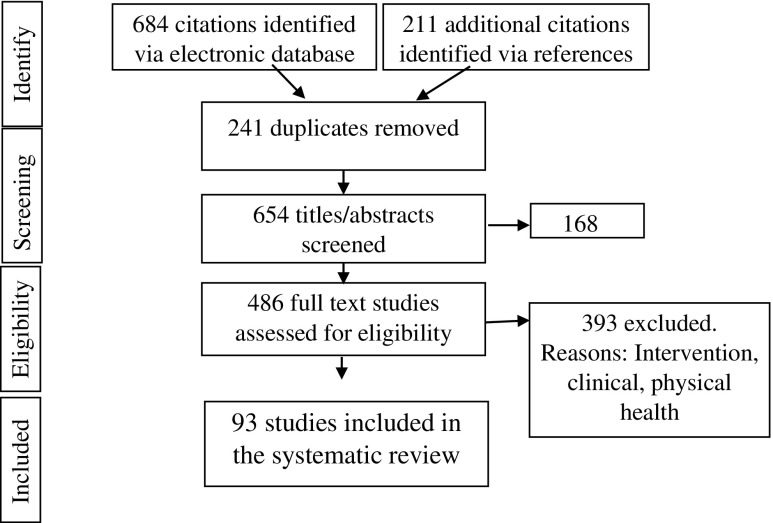
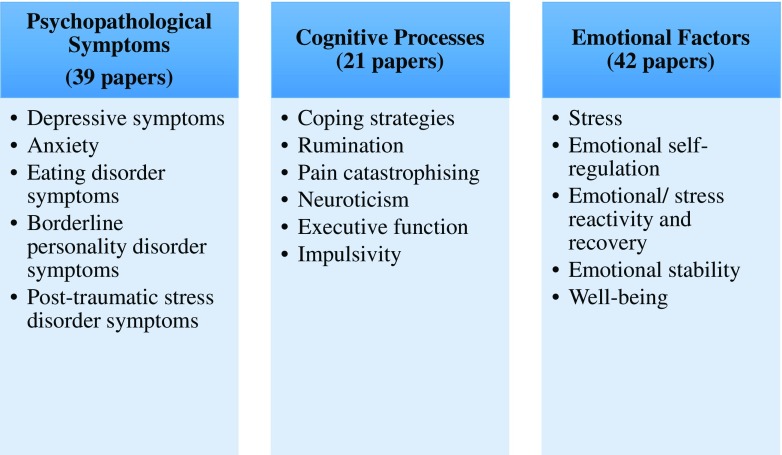
Interest in the influence of dispositional mindfulness (DM) on psychological health has been gathering pace over recent years. Despite this, a systematic review of this topic has not been conducted. A systematic review can benefit the field by identifying the terminology and measures used by researchers and by highlighting methodological weaknesses and empirical gaps. We systematically reviewed non-interventional, quantitative papers on DM and psychological health in non-clinical samples published in English up to June 2016, following the Preferred Reporting Items for Systematic Reviews and Meta-analyses (PRISMA) guidelines. A literature search was conducted using PsycINFO, PubMED, Medline and Embase, and 93 papers met the inclusion criteria. Within these, three main themes emerged, depicting the relationship between DM and psychological health: (1) DM appears to be inversely related to psychopathological symptoms such as depressive symptoms, (2) DM is positively linked to adaptive cognitive processes such as less rumination and pain catastrophizing and (3) DM appears to be associated with better emotional processing and regulation. These themes informed the creation of a taxonomy. We conclude that research has consistently shown a positive relationship between DM and psychological health. Suggestions for future research and conceptual and methodological limitations within the field are discussed.
Overview
CoChat Summary
## TL;DR
This systematic review synthesized 93 quantitative, non-interventional studies on dispositional mindfulness (DM) and psychological health in non-clinical samples published in English up to June 2016. Across the included literature, DM was consistently associated with better psychological health, especially lower psychopathological symptoms, more adaptive cognitive processes, and better emotional processing/regulation.
## Key findings
- The review included 93 papers with a combined 34,620 participants; study sizes ranged from 12 to 5,287 participants.
- 39 studies examined psychopathological symptoms, 21 examined cognitive processes, and 42 examined emotional factors; the authors report that DM was generally linked to better outcomes across all three themes.
- For depressive symptoms, 21 papers focused on depression and all 21 found a negative relationship between DM and depressive symptoms.
- For psychological well-being, 13 papers examined the outcome and all 13 showed positive associations between DM and psychological well-being.
- For stress, the review notes 27 papers focused on stress and found that higher DM was associated with lower perceived stress and emotional distress.
- The most commonly used DM measure was the Mindful Attention Awareness Scale (MAAS), used in 48 papers; the Five Facet Mindfulness Questionnaire (FFMQ) was used in 30 studies.
## Methods
- Systematic review conducted following PRISMA guidelines; included quantitative, non-interventional studies on DM and psychological health in non-clinical samples.
- Searched PsycINFO, PubMED, Medline, and Embase for papers published up to June 2016, with additional backward and forward citation searches.
- Included papers had to be English, empirical, peer-reviewed, and use a validated measure of DM; quality was rated with the Standard Quality Assessment Criteria.
## Limitations
- The paper states that it included only published articles in English, so non-English studies were excluded and may have provided additional cross-cultural evidence.
- The search terms were applied to titles and abstracts only, which may have missed relevant studies not explicitly framed around DM in those fields.
- The text makes evident that the evidence base is limited by heavy reliance on cross-sectional, self-report, and often student/white Caucasian samples; the review itself notes this reduces external validity and that many studies analyzed ordinal Likert data with parametric tests.
Model-written summary. Check it against the paper before relying on it.
Integrity signals
Registry
Cites
Statistics
Figures
Verification
Claims the paper makes
7 Valid · 0 Not valid · 61 Not checked · 63 Own results and interpretations
Every source the paper cites for this claim was checked and supports it.
In the paper
“They found that DM mediates the effects of procrastination on health.”
§ Dispositional Mindfulness and Psychological Health: a Systematic Review > Results > Emergent Themes
What the sources say
- Supportedcites Sirois and Tosti (2012) matched to “Lost in the Moment? An Investigation of Procrastination, Mindfulness, and Well-being” (2012) source
The Abstract (p.1) states that tests of the nested mediation models revealed the effects of procrastination on stress and health were mediated by mindfulness, with bootstrapping confirming significance. The Structural Model section (p.~7) reports the fit-index comparison showing mindfulness also mediated the effects of procrastination on (perceived) health, and the Discussion summarises that low mindfulness 'mediates the association of procrastination to poor perceived health' in a sample of 339 students measured with trait/dispositional mindfulness scales (MAAS, KIMS). The paraphrase matches the source's population, predictor, mediator and outcome. (LLM, conf=0.92)
plainstates a cause- Asserted: passes — The authors put it forward as true.
- Checkable: passes — It can be checked against evidence.
- Load-bearing: unclear — It is unclear whether the paper’s conclusions depend on it.
- Based: passes — The paper gives a reason why it holds.
- Supported
The cited sources support only part of this claim — read each source’s verdict below.
In the paper
“Studies suggest that DM buffers against the negative influence of perceived stress on psychological health (Adams et al. 2015; Bergin and Pakenham 2016; Bränström et al. 2011; Cole et al. 2014; Daubenmier et al. 2014).”
§ Dispositional Mindfulness and Psychological Health: a Systematic Review > Results > Emergent Themes
What the sources say
- Partly supportedcites Adams et al. 2015 matched to “Testing a Moderated Mediation Model of Mindfulness, Psychosocial Stress, and Alcohol Use Among African American Smokers” (2015) sourceExperimental — accuracy not yet measured
Our copy does show a buffering (moderation) effect: the Discussion reports that 'mindfulness significantly moderated the relationship of perceived stress with quantity of alcohol use,' with higher stress predicting greater drinking and more frequent binging 'among participants with low, but not high, mindfulness scores' (Results, Path Analyses; binge interaction only a trend, β = −0.14, p = 0.056; the mindfulness × stress interaction for probable alcohol use disorder was non-significant, β = −0.05, p = 0.44). However, the outcomes buffered were alcohol-use variables in a specific sample of predominantly low-SES African American smokers, not 'psychological health' as the citing sentence generalizes; the paper's only broader mental-health content is background citations to others' work (e.g., Brown & Ryan 2003; McKee et al. 2007) in the Introduction, plus the mediation pathway whereby mindfulness was associated with lower perceived stress. So the moderation point is supported for stress → drinking, while the extension to psychological health and to populations beyond the study sample is not. (LLM, conf=0.72)
- Not checked yetcites Bergin and Pakenham 2016
- Supportedcites Bränström et al. 2011 matched to “The association between dispositional mindfulness, psychological well‐being, and perceived health in a Swedish population‐based sample” (2011) source
The Abstract's Conclusions (p. 1) state almost verbatim that 'Results suggest that dispositional mindfulness might buffer against the negative influence of perceived stress on psychological well-being,' matching the citing sentence's hedged framing ('studies suggest'). The Discussion (p. 9) and Results section 'The effect of mindfulness as a moderator of stress' (p. 6) report significant stress × mindfulness interactions for acting with awareness, non-judging, non-reactivity (and describing) on depression and for non-judging on perceived health, with the buffer appearing chiefly at higher stress levels. Minor qualification: the effect was facet-specific and cross-sectional, and no moderation emerged for anxiety or physical symptoms/other complaints, but the attributed point itself is stated by the source. (LLM, conf=0.85)
hedgedstates a possible cause- Asserted: passes — The authors put it forward as true.
- Checkable: passes — It can be checked against evidence.
- Load-bearing: passes — The paper’s conclusions depend on it.
- Based: passes — The paper gives a reason why it holds.
- Partly supported
Every source the paper cites for this claim was checked and supports it.
In the paper
“Finally, one paper has found that lower coping motives in students mediate the link between mindfulness facets and alcohol use (Vinci et al. 2016).”
§ Dispositional Mindfulness and Psychological Health: a Systematic Review > Results > Emergent Themes
What the sources say
- Supportedcites Vinci et al. 2016 matched to “Drinking motives mediate the relationship between facets of mindfulness and problematic alcohol use” (2016) source
The Abstract reports that, among 207 college students classified as engaging in problematic drinking, lower coping motives significantly mediated the relationships of Acting with Awareness and Nonjudging with lower AUDIT scores. The Discussion likewise identifies coping motives as a significant mediator for those two mindfulness facets. (LLM, conf=0.93)
plainstates a cause- Asserted: passes — The authors put it forward as true.
- Checkable: passes — It can be checked against evidence.
- Load-bearing: unclear — It is unclear whether the paper’s conclusions depend on it.
- Based: passes — The paper gives a reason why it holds.
- Supported
Every source the paper cites for this claim was checked and supports it.
In the paper
“It appears that one of the possible mechanisms through which DM does this is by improving emotional regulation (Coffey and Hartman 2008; de Frias 2014; Feldman et al. 2016; Kadziolka et al. 2016; McDonald et al. 2016; Prakash et al. 2015).”
§ Dispositional Mindfulness and Psychological Health: a Systematic Review > Results > Emergent Themes
What the sources say
- Supportedcites Coffey and Hartman 2008 matched to “Mechanisms of action in the inverse relationship between mindfulness and psychological distress” (2008) source
The Discussion identifies emotion regulation as a mediator between dispositional mindfulness and psychological distress and reports that greater mindfulness was associated with better management of negative emotion. The paper studied depressive and anxious symptoms, so its evidence concerns psychological distress rather than every form of stress. (LLM, conf=0.90)
- Supportedcites de Frias 2014 matched to “Memory Compensation in Older Adults: The Role of Health, Emotion Regulation, and Trait Mindfulness” (2014) source
The Discussion (p. 6) proposes that mindfulness may buffer against stress by lowering rumination and reducing excessive processing of negative information during emotional challenges. The introduction (p. 2) also describes emotion regulation and stress reduction as reported benefits of mindfulness. The claim is a hedged paraphrase of that proposed mechanism, not a claim that this study tested it. (LLM, conf=0.88)
- Supportedcites Feldman et al. 2016 matched to “Dispositional Mindfulness Uncouples Physiological and Emotional Reactivity to a Laboratory Stressor and Emotional Reactivity to Executive Functioning Lapses in Daily Life” (2016) source
The General Discussion reports that people higher in dispositional mindfulness showed less emotional reactivity to stress-related experiences and describes this as more emotionally even responding to stressors. That supports the citing sentence’s cautious proposal that better emotional regulation is a possible way mindfulness buffers stress, although the studies did not directly test a mediating mechanism. (LLM, conf=0.88)
hedgedstates a possible cause- Asserted: passes — The authors put it forward as true.
- Checkable: passes — It can be checked against evidence.
- Load-bearing: passes — The paper’s conclusions depend on it.
- Based: passes — The paper gives a reason why it holds.
- Supported
A result the paper reports from its own data — it cites no other source for it, so there is none to check. The quote shows it is in the paper.
In the paper
“93 papers met the inclusion criteria”
- Also stated in: § Results · plain
“Ninety-three papers, all of which used quantitative methodology, met the eligibility criteria and were included in the systematic review”
§ Dispositional Mindfulness and Psychological Health: a Systematic Review > Abstract
plain- Asserted: passes — The authors put it forward as true.
- Checkable: passes — It can be checked against evidence.
- Load-bearing: unclear — It is unclear whether the paper’s conclusions depend on it.
- Based: passes — The paper gives a reason why it holds.
- Also stated in: § Results · plain
71 more claims
Create a free account to see all 131 claims and to verify the 77 references still open.
- It may state two separate claims as one. 28
- Probably not a substantial claim. 35
Claims other papers make about this one
Each is checked against this paper’s own text: does it say what the citing paper says it does?
The source backs part of the claim, not all of it — or backs it for a different population, condition or comparison.
In the citing paper
“Further, the strong relationship between dispositional mindfulness and physical health is related to stress.”
From What is the mindful personality? Implications for physical and psychological health (2022) · cites this paper as Tomlinson et al., 2018
Experimental — accuracy not yet measuredThe source backs part of the claim, not all of it — or backs it for a different population, condition or comparison.
In the citing paper
“Dispositional mindfulness has protective effects against psychological distress (Tomlinson et al., 2018).”
From Does the practice of mindfulness reduce somatic symptoms and COVID-19-related anxiety? A community-based survey (2022) · cites this paper as Tomlinson et al., 2018
Experimental — accuracy not yet measuredThe source backs part of the claim, not all of it — or backs it for a different population, condition or comparison.
In the citing paper
“In fact, a longer experience in meditation is associated with higher levels of dispositional mindfulness (Josefsson et al., 2011; Tomlinson et al., 2018)”
From Does the practice of mindfulness reduce somatic symptoms and COVID-19-related anxiety? A community-based survey (2022) · cites this paper as Tomlinson et al., 2018
Experimental — accuracy not yet measuredThe cited source says what the claim attributes to it.
In the citing paper
“Over the years, research has demonstrated that trait mindfulness is associated with psychological health outcomes, such as lower levels of stress, anxiety and depression (for review see, Tomlinson et al., 2018).”
From The association between facets of mindfulness and COVID-19 related distress: A cross-sectional study (2023) · cites this paper as Tomlinson et al., 2018
The cited source says what the claim attributes to it.
In the citing paper
“A systematic review on mindfulness and psychological health revealed that trait mindfulness was negatively related to psychopathology symptoms (i.e., depression and anxiety) and positively related to adaptive functioning (Tomlinson et al., 2018).”
From Examining the Prospective Associations Between Mindfulness Facets and Substance Use in Emerging Adulthood. (2021) · cites this paper as Tomlinson et al., 2018
4 more claims about this paper
Create a free account to see every claim other papers make about this one.
Citations
Cites
Preferred Reporting Items for Systematic Reviews and Meta-Analyses: the PRISMA statement
Moher, D., Liberati, A., Tetzlaff, J., Altman, D. G., & for the PRISMA Group (2009) · BMJ · doi:10.1136/bmj.b2535 · Cited by 83,823
The CES-D Scale: A Self-Report Depression Scale for Research in the General Population
Radloff, L. S. (1977) · Applied Psychological Measurement · doi:10.1177/014662167700100306 · Cited by 53,267
Preferred reporting items for systematic reviews and meta-analyses: the PRISMA Statement.
(2009) · PubMed Central · Cited by 44,859
Development and validation of brief measures of positive and negative affect: The PANAS scales.
Watson, D., Clark, L. A., & Tellegen, A. (1988) · Journal of Personality and Social Psychology · doi:10.1037/0022-3514.54.6.1063 · Cited by 32,433 · cited 2×
“The positive and negative subscales are internally consistent (Cronbach’s alpha for negative affect = .084–0.87 and positive affect = .86–.90) with good test-retest reliability of r = .48 and .42 for positive and negative affect, respectively (Watson et al. 1988).”
BackgroundMethodInfluentialPreferred Reporting Items for Systematic Reviews and Meta-Analyses: The PRISMA Statement
Moher, D., Liberati, A., Tetzlaff, J., & Altman, D. G. (2009) · Journal of Clinical Epidemiology · doi:10.1016/j.jclinepi.2009.06.005 · Cited by 19,575
(2017) · Cited by 16,319
Lovibond, P. F., & Lovibond, S. H. (1995) · Behaviour Research and Therapy · doi:10.1016/0005-7967(94)00075-u · Cited by 14,523 · cited 1×
“The Depression, Anxiety and Stress Scale (DASS-21; Lovibond and Lovibond 1995) was frequently used within the papers.”
MethodThe benefits of being present: Mindfulness and its role in psychological well-being
Brown, K. W., & Ryan, R. M. (2003) · Journal of Personality and Social Psychology · doi:10.1037/0022-3514.84.4.822 · Cited by 13,448 · cited 8×
“The MAAS measures mindfulness as a single construct.”
BackgroundMethodInfluentialUsing Self-Report Assessment Methods to Explore Facets of Mindfulness
Baer, R. A., Smith, G. T., Hopkins, J., Krietemeyer, J., & Toney, L. (2006) · Assessment · doi:10.1177/1073191105283504 · Cited by 7,511 · cited 6×
“Despite promoting the use of multi-faceted DM measures such as the FFMQ, it has been argued that the factor structure of this measure may need to be re-evaluated first (Baer et al. 2006; Petrocchi and Ottaviani 2016).”
BackgroundMethodInfluential(2008) · Medical Entomology and Zoology · Cited by 7,477
Cited by
Items 201–300 of 561
Kümmerle, S., Heidenreich, T., & Müller‐Engelmann, M. (2023) · Mindfulness · doi:10.1007/s12671-023-02093-9 · Cited by 11
“Mindfulness seems to be an important beneficial factor in the context of mental health (Tomlinson et al., 2018).”
BackgroundGalluzzi, S., Lanfredi, M., Moretti, D. V., Rossi, R., Meloni, S., Tomasoni, E., Frisoni, G. B., Chiesa, A., & Pievani, M. (2024) · BMC Geriatrics · doi:10.1186/s12877-024-04766-z · Cited by 14
“This increased level of mindfulness in older adults has a positive effect on their mental health [6].”
BackgroundStein, J. A., Tomfohr‐Madsen, L. M., Bray, S., MacMaster, F. P., & Kopala‐Sibley, D. C. (2021) · Current Psychology · doi:10.1007/s12144-020-01291-1 · Cited by 12
de Azevedo, M. L., & Menezes, C. B. (2020) · SMAD Revista Eletrônica Saúde Mental Álcool e Drogas (Edição em Português) · doi:10.11606/issn.1806-6976.smad.2020.165513 · Cited by 10
What is the mindful personality? Implications for physical and psychological health
Beaulieu, D. A., Proctor, C. J., Gaudet, D. J., Canales, D., & Best, L. A. (2022) · Acta Psychologica · doi:10.1016/j.actpsy.2022.103514 · Cited by 12
Malandrone, F., Urru, S., Berchialla, P., Rossini, P. G., Oliva, F., Bianchi, S., Ottaviano, M., Gonzalez-Martinez, S., Carli, V., Valenza, G., et al. (2024) · JMIR Mental Health · doi:10.2196/57415 · Cited by 9
Rudaz, M., Ledermann, T., & Fincham, F. D. (2022) · The Journal of Positive Psychology · doi:10.1080/17439760.2022.2036795 · Cited by 12
“First, based on findings of Satici et al. (2013), Tomlinson et al. (2018), and Zessin et al. (2015), we hypothesized that higher levels of mindfulness, self-compassion, and caring for bliss are associated with higher flourishing and lower depressive symptoms.”
BackgroundYousaf, O., Love, S., Hampson, P. J., Hedderly, J., & Rogers, M. (2022) · Personality and Individual Differences · doi:10.1016/j.paid.2022.111683 · Cited by 14
Self-citationJiang, Y., & Poon, K. (2022) · Current Psychology · doi:10.1007/s12144-022-03838-w · Cited by 12
“Mindfulness is related to less rumination and better emotional regulation (Tomlinson et al., 2018).”
BackgroundLucas‐Thompson, R. G., Prince, M. A., Rigsby, B. A., Adams, M. S., Miller, R. L., Rzonca, A. J., Krause, J. T., Moran, M. J., Piehler, T. F., Morrell, N., et al. (2023) · Mindfulness · doi:10.1007/s12671-023-02229-x · Cited by 9
“Indeed, mindfulness reduces the extent to which people perceive potential stressors as stressful, reduces stress reactivity, and promotes coping (Arch & Craske, 2010; Brown et al., 2012; Tomlinson et al., 2018).”
BackgroundMas‐Cuesta, L., Baltruschat, S., Cándido, A., Verdejo-Lucas, C., Catena-Verdejo, E., & Catena, A. (2024) · Behavioural Brain Research · doi:10.1016/j.bbr.2024.114859 · Cited by 13
“Dispositional mindfulness has been related to various cognitive and personality factors involved in mental health, such as neuroticism, coping strategies, rumination, executive functions, and impulsivity [3].”
Smyth, A. P. J., Juneau, C., Hong, S., Ilagan, M. J., & Knaüper, B. (2024) · Mindfulness · doi:10.1007/s12671-024-02338-1 · Cited by 10
“Another limitation, which applies to the research on dispositional mindfulness more generally (Tomlinson et al., 2018), is that mindfulness was operationalized using a total score from the Five Facet Mindfulness Questionnaire (FFMQ; Baer et al., 2008).”
Borgdorf, K. S. A., Küchler, G., Wrzus, C., & Aguilar‐Raab, C. (2024) · Mindfulness · doi:10.1007/s12671-024-02472-w · Cited by 11
“…aimed at enhancing them, have been associated with numerous positive psychological, cognitive, emotional, and behavioral outcomes (e.g., Farb et al., 2014; Ferrari et al., 2019; Keng et al., 2011; Neff, 2023; Singer & Engert, 2019; Tomlinson et al., 2018; van Vugt, 2015; Zessin et al., 2015).”
A Narrative Review of Digital Addiction and Health: A New Challenge for Modern Medicine
Patel, D. G., Kshatri, A. H. S., Kommuru, S., & Javvaji, C. K. (2025) · Cureus · doi:10.7759/cureus.100491 · Cited by 19
Examining the Link Between Mindfulness and Temporal Perspective
Samani, M. N., & Busseri, M. A. (2019) · Mindfulness · doi:10.1007/s12671-019-01240-5 · Cited by 12
Stein, J. A., Bray, S., MacMaster, F. P., Tomfohr‐Madsen, L. M., & Kopala‐Sibley, D. C. (2021) · Mindfulness · doi:10.1007/s12671-021-01785-4 · Cited by 15
Limpo, T., Rasteiro, I., Aguiar, S., & Magalhães, S. (2022) · Mindfulness · doi:10.1007/s12671-022-02003-5 · Cited by 8
Mehraban, R., Hosseininasab, S. D., & Alivandivafa, M. (2022) · journal of Adolescent and Youth Psychological Studies · doi:10.52547/jspnay.3.3.1 · Cited by 19
Wang, H., Han, Z. R., Yan, J. J., & Ahemaitijiang, N. (2020) · Mindfulness · doi:10.1007/s12671-020-01529-w · Cited by 12
“For example, higher dispositional mindfulness is linked to less rumination (Tomlinson et al. 2018), lower emotional suppression (Tamagawa et al. 2013), and less frequent use of avoidant coping strategies, such as denial and behavioral and mental disengagement (Weinstein et al. 2009).”
BackgroundInfluentialLam, C. B., Lam, C. S., & Chung, K. K. H. (2022) · Mindfulness · doi:10.1007/s12671-021-01818-y · Cited by 15
Validation of the Comprehensive Inventory of Mindfulness Experiences (CHIME) in Portuguese Children
Magalhães, S., & Limpo, T. (2022) · Mindfulness · doi:10.1007/s12671-022-01908-5 · Cited by 12
“Research has indicated that mindfulness in children was positively associated with positive affect and negatively related to negative affect (Mestre et al., 2019; Tomlinson et al., 2018).”
BackgroundResultInfluentialMorin, L., Laurin, J. C., Doucerain, M. M., & Grégoire, S. (2023) · Journal of Social and Personal Relationships · doi:10.1177/02654075231156404 · Cited by 17
A Network Investigation of Core Mindfulness Processes
Sala, M., Aslan, M., Gueorguieva, R. V., Schupak, M., & Garrison, K. A. (2023) · Mindfulness · doi:10.1007/s12671-023-02109-4 · Cited by 13
“Recent meta-analyses report positive relationships between trait mindfulness and psychological health (Sala et al., 2020a, 2020b; Tomlinson et al., 2018) and health behaviors (Sala et al.”
BackgroundXie, E. B., Sedov, I. D., Sanguino, H., Freeman, M., Kumari, J., & Tomfohr-Madsen, L. (2023) · Health Psychology Open · doi:10.1177/20551029221149282 · Cited by 8
“Higher trait mindfulness has been negatively associated with depression and positively linked to adaptive cognitive processes (Carpenter et al., 2019; Mattes, 2019; Tomlinson et al., 2017).”
BackgroundRisks and resources for college students’ mental health: ACEs, attachment, and mindfulness
Hatton‐Bowers, H., Lombardi, C. M., Kemp, B. R., Decker, K. B., Virmani, E. A., Brophy‐Herb, H. E., & Vallotton, C. D. (2021) · Journal of American College Health · doi:10.1080/07448481.2021.1942007 · Cited by 17
Vargas-Nieto, J. C., Montorio, I., Gantiva, C., Froufe, M., Fundación Universitaria Konrad Lorenz, B., Universidad Autónoma de Madrid, M., Universidad de los Andes, B., & Universidad Autónoma de Madrid, M. (2022) · Revista Latinoamericana de Psicología · doi:10.14349/rlp.2022.v54.23 · Cited by 9
Can Mindfulness Buffer Against Negative Effects of Job Demands for Military and Police Personnel?
Krick, A., Felfe, J., & Klebe, L. (2023) · Journal of Occupational and Environmental Medicine · doi:10.1097/jom.0000000000002805 · Cited by 9
“These findings are similar to findings from Kaplan et al(27) and Bränström et al(35) and provide answers to calls for further research on mindfulness subfacets.(3,36) Our results indicate that the application of specific mindfulness skills might be dependent on the job context.”
ResultPetrovic, J., Mills, D. J., & Heath, N. L. (2024) · Journal of Clinical Psychology · doi:10.1002/jclp.23708 · Cited by 12
Gülden, Ç., & Polat, K. (2024) · Erzincan Üniversitesi Eğitim Fakültesi Dergisi · doi:10.17556/erziefd.1500379 · Cited by 11
Serhatoğlu, S., Koydemir, S., & Schütz, A. (2022) · The Journal of Psychology · doi:10.1080/00223980.2022.2048777 · Cited by 9
“…has been found to be negatively associated with various ill-being outcomes, including distress, depression, anxiety, posttraumatic stress, and eating pathology (Adams et al., 2012; Brown & Ryan, 2003; Feldman et al., 2007; Mayer et al., 2019; also see Tomlinson et al., 2018, for a review).”
BackgroundBabu, V., Kumar, A., & Kumar, V. (2022) · FIIB Business Review · doi:10.1177/23197145221088643 · Cited by 10
“The seminal work of Tomlinson et al. (2018) and Garland et al. (2016) demonstrates the positive results based on a variety of illnesses.”
Nowakowska‐Domagała, K., Podlecka, M., Sadowski, K., Pietras, T., & Mokros, Ł. (2023) · Journal of Sleep Research · doi:10.1111/jsr.13823 · Cited by 12
Nagy, T., Sik, K., Török, L., Bőthe, B., Takács, Z. K., & Orosz, G. (2023) · Collabra Psychology · doi:10.1525/collabra.74253 · Cited by 14
Olmeda, N., Cuesta-Zamora, C., Joiner, R., & Ricarte, J. J. (2023) · Clinical Child Psychology and Psychiatry · doi:10.1177/13591045231221269 · Cited by 14
“De Bruin et al. (2014) found that mindfulness in children and adolescents was inversely related to maladaptive CER strategies such as Self-blame, Rumination and Catastrophizing.”
BackgroundWang, M., Chen, Q., & Deng, X. (2024) · Journal of Social and Personal Relationships · doi:10.1177/02654075241263873 · Cited by 9
“Mindfulness is a state of focusing attention on one ’ s ongoing experience in an accepting stance (Bishop et al., 2004; Dolbier et al., 2021), which can be a temporary state or a personality trait in nature (Tomlinson et al., 2018).”
Mindfulness Across the Lifespan: Psychometric Properties and Age Invariance of the FFMQ-15
Johnson, N. J., & Kil, H. (2025) · Mindfulness · doi:10.1007/s12671-024-02511-6 · Cited by 9
“…and divergent validity was also evaluated by exploring the associations between the scale and constructs known to be linked to mindfulness: well-being; life satisfaction; self-compassion; and mental health captured by stress, anxiety, and depression (LeBlanc et al., 2021; Tomlinson et al., 2018).”
Jo, D., Spencer, S. D., & Masuda, A. (2020) · Current Psychology · doi:10.1007/s12144-020-00969-w · Cited by 9
“…mindfulness has been of great interest because of its therapeutic effects found across various mental health concerns (e.g., Goldberg et al., 2018; Tomlinson et al., 2018), including disordered eating and related concerns (Katterman et al., 2014; Masuda & Hill, 2013; Wanden-Berghe et al., 2010).”
BackgroundJaurequi, M. E., Kimmes, J. G., Ledermann, T., Seibert, G. S., Pocchio, K. E., & Tawfiq, D. (2020) · Journal of American College Health · doi:10.1080/07448481.2020.1845183 · Cited by 9
“In addition, a large number of studies have shown a higher tendency to employ present focused nonjudgmental attention and awareness predicting lower negative emotional symptoms.(31) Similarly, relationship mindfulness was found to be negatively associated with depression and stress among a sample of couples.”
BackgroundSweeney, T., Morriss, R. K., Nixon, E., Guo, B., & Callaghan, P. (2021) · Mindfulness · doi:10.1007/s12671-020-01573-6 · Cited by 9
Sexual Minority Status, Affect Lability, and Suicide Ideation: Buffering Role of Trait Mindfulness
Wedell, E., Tuthill, S. D., Herchenroeder, L., Prince, M. A., Bravo, A. J., & Cross-Cultural Addictions Study Team (2021) · Archives of Suicide Research · doi:10.1080/13811118.2021.1950587 · Cited by 8
Examining the Impact and Moderating Effects of an 8-Week Mindfulness-Based Program in Grade 4
Limpo, T., Vieira, A. I., Magalhães, S., Rocha, R. S., Cordeiro, C., Rodrigues, R., Coelho, A. F., Nóbrega, R., Jacob, J., Cardoso, P., et al. (2023) · Mindfulness · doi:10.1007/s12671-023-02189-2 · Cited by 10
Mental Health Status of College Freshmen and Influencing Factors
Liang, J., Zhang, X., Wang, J., Feng, L., Xu, C., Cheng, K., Cao, G., Yan, D., & Liu, B. (2020) · Psychology · doi:10.4236/psych.2020.115050 · Cited by 9
Measuring mindfulness: A systematic review and evaluation of self-report mindfulness scales
Chems-Maarif, R., Cavanagh, K., Baer, R., Gu, J., & Strauss, C. (2026) · Clinical Psychology Review · doi:10.1016/j.cpr.2026.102719 · Cited by 7
Doren, N. V., Mahlobo, C. T., Galla, B. M., Colaianne, B. A., Hirshberg, M. J., Inkelas, K. K., & Roeser, R. W. (2023) · Social and Personality Psychology Compass · doi:10.1111/spc3.12870 · Cited by 9
“…trait mindfulness to fewer symptoms of anxiety and depression (Gómez-Odriozola & Calvete, 2020), better emotion regulation and adaptive responses to stress (Ramasubramanian, 2017; Tomlinson et al., 2018; Weinstein et al., 2009), and better compliance with medication regimes (Fanning et al., 2018).”
Almenräder, F., Heßmann, G., Voracek, M., & Tran, U. S. (2024) · European Journal of Personality · doi:10.1177/08902070241289160 · Cited by 9
“Higher trait mind-fulness is, for example, associated with lower perceived stress and greater psychological well-being (e.g., Zimmaro et al., 2016) and psychological health (Tomlinson et al., 2018).”
Zhao, Y., An, W., Zhang, Y., Yang, C. C., Li, W., Li, J., & Li, X. (2024) · Journal of Youth and Adolescence · doi:10.1007/s10964-024-02105-4 · Cited by 9
“This is consistent with the research hypotheses of this study, revealing the protective role of mindfulness in alleviating the negative psychological health effects of adverse experiences (Cor-tazar & Calvete, 2019; Tomlinson et al., 2018).”
The clinical neuroscience of lucid dreaming
Tzioridou, S., Campillo-Ferrer, T., Cañas-Martín, J., Schlüter, L., Torres-Platas, S. G., Gott, J., Soffer‐Dudek, N., Stumbrys, T., & Dresler, M. (2025) · Neuroscience & Biobehavioral Reviews · doi:10.1016/j.neubiorev.2025.106011 · Cited by 17
Chen, L., Chen, W., & Cheng, Y. (2025) · Learning and Motivation · doi:10.1016/j.lmot.2025.102097 · Cited by 11
Wang, T., & Qi, W. (2023) · Journal of Social and Personal Relationships · doi:10.1177/02654075231167550 · Cited by 12
“Being a temporary state or a trait (Tomlinson et al., 2018; Vago & Silbersweig, 2012), it can moderate the impact of trauma on individuals ’ distressed symptoms (Hanley et al., 2017; Martin et al., 2018).”
Ergüler, H., Ferreira, N. B., Adonis, M. N., & Koushiou, M. (2023) · Mindfulness · doi:10.1007/s12671-023-02225-1 · Cited by 8
“DM can reportedly help facilitate adaptive emotion regulation and stress coping strategies (Chambers et al., 2009; Chiesa & Serretti, 2009; Guendelman et al., 2017; Hollis-Walker & Colosimo, 2011; Rau & Williams, 2016; Tomlinson et al., 2018).”
BackgroundTakhdat, K., Rebahi, H., Eddabbah, M., Fadely, A. E., Lamtali, S., & Adib, A. R. E. (2024) · Simulation & Gaming · doi:10.1177/10468781231222312 · Cited by 10
“It can be conceptualized as a state (a momentary, transient condition) or a trait (relatively stable mindfulness propensity or dispositional mindfulness) (Tomlinson et al., 2018b).”
BackgroundMethodConnectome‐Based Predictive Modeling of Trait Mindfulness
Treves, I. N., Kucyi, A., Park, M. S., Kral, T. R. A., Goldberg, S. B., Davidson, R. J., Rosenkranz, M. A., Whitfield, S., & Gabrieli, J. D. E. (2025) · Human Brain Mapping · doi:10.1002/hbm.70123 · Cited by 10
“In this case, as mindfulness is correlated negatively with depression and anxiety (Carpenter et al. 2019; Tomlinson et al. 2018), including these “diverse” participants may actually improve performance by widening the range of trait scores and brain function.”
Ibañez, G. E., Sánchez, M., Villalba, K., & Amaro, H. D. L. A. (2022) · BMC Psychiatry · doi:10.1186/s12888-022-03931-1 · Cited by 11
“Trait mindfulness, an inherent trait that people possess to varying degrees regardless of mindfulness practice, is related to psychological health [25], and which can be improved with mindfulness training [26].”
BackgroundLiptáková, S., Světlák, M., Matis, J., Slezáčková, A., & Rastislav, R. (2022) · Ceskoslovenska psychologie · doi:10.51561/cspsych.66.3.233 · Cited by 9
Ketay, S., Thorson, K. R., Roy, A. R. K., & Welker, K. M. (2022) · Mindfulness · doi:10.1007/s12671-022-02044-w · Cited by 9
“Trait mindfulness is linked with increased psychological well-being (see Tomlinson et al., 2018 for a review).”
BackgroundLucas‐Thompson, R. G., Miller, R. L., Moran, M. J., Rzonca, A. J., Krause, J. T., Montavon, J. K., Johnson, S., Haddock, S. A., Zimmerman, T. S., & Shomaker, L. B. (2024) · Mindfulness · doi:10.1007/s12671-024-02334-5 · Cited by 8
“…lines of empirical evidence generally support this hypothesis, indicating that greater mindfulness predicts less perceived stress, less negative stress appraisals, reduced stress reactivity, and more adaptive coping (Lucas-Thompson et al., 2019; Tomlinson et al., 2018; Weinstein et al., 2009).”
The protective value of trait mindfulness for mothers' anxiety during the perinatal period
Leyland, A. F., Boekhorst, M. G. B. M., Offermans, J. E., Emerson, L.-M., Hulsbosch, L. P., & Potharst, E. S. (2023) · Acta Psychologica · doi:10.1016/j.actpsy.2023.104034 · Cited by 6
Pirbaglou, M., El Morr, C., Ahmad, F., & Ritvo, P. (2025) · JMIR Mental Health · doi:10.2196/65853 · Cited by 6
“Mindfulness, as a key mechanism of action in MBIs, is regarded in current research as both a disposition [36,37], and a capacity to regulate attention and emotion in relating to experiences with an open, accepting, and nonavoidant attitude [11,38].”
Fekih‐Romdhane, F., Malaeb, D. N., Azzi, V., Hallit, R. R., Dabbous, M., Sakr, F., Obeïd, S., & Hallit, S. R. (2024) · BMC Psychiatry · doi:10.1186/s12888-024-05674-7 · Cited by 7
Hazan‐Liran, B., & Walter, O. (2024) · European Journal of Special Needs Education · doi:10.1080/08856257.2024.2351701 · Cited by 10
“This aligns with the recommendations by Tomlinson et al. (2018), who advocated for integrated support systems in schools to address both academic and psychological needs.”
Su, N., Feng, S., Wang, L., & Wu, Y. (2024) · International Journal of Market Research · doi:10.1177/14707853241268151 · Cited by 7
“Mindfulness is a mental faculty that is inherent to the human condition (e.g., Nyanaponika, 1972; Tomlinson et al., 2018) and is most commonly de fi ned as an awareness of and a non-judgmental stance toward present-moment experience (Bishop et al., 2004; Brown & Ryan, 2003; Cardaciotto et al., 2008;…”
Feliu‐Soler, A., Royuela-Colomer, E., Navarrete, J., Jørgensen, N. N., Mariño, M., Demarzo, M., Soler, J., García‐Campayo, J., Montero‐Marín, J., & Luciano, J. V. (2024) · Journal of Happiness Studies · doi:10.1007/s10902-024-00820-0 · Cited by 8
“Mindfulness has been shown to benefit mental health by reducing psychopathology and promoting well-being (Tomlinson et al., 2018).”
Limited Validity of Breath‐Counting as a Measure of Mindfulness in Ruminative Adolescents
Treves, I. N., Tierney, A. O., Goldberg, S. B., Rouleau, N., Carson, N. J., Schuman‐Olivier, Z., & Webb, C. A. (2025) · Psychophysiology · doi:10.1111/psyp.70071 · Cited by 6
Deits‐Lebehn, C., Smith, T. W., Grove, J. L., Williams, P., & Uchino, B. N. (2022) · Mindfulness · doi:10.1007/s12671-021-01798-z · Cited by 6
“3), internal aspects of dispositional mindfulness, such as low negative and high positive affect and better emotion regulation (Tomlinson et al., 2018; Wheeler et al., 2017), greater security in relationships (Stevenson et al.”
BackgroundEidman, L., de Behrends, M. R., & Seif, G. (2022) · Ciencias Psicológicas · doi:10.22235/cp.v16i1.2560 · Cited by 10
Mindfulness stress-buffering model of health: implications for successful aging
MacAulay, R. K., Brown, L. F., & Moore, L. (2022) · Aging & Mental Health · doi:10.1080/13607863.2022.2107175 · Cited by 9
Perceived stress and suicidal ideation: The role of dispositional mindfulness
Moscardini, E. H., Robinson, A. D., Gerner, J. L., & Tucker, R. P. (2023) · Suicide and Life-Threatening Behavior · doi:10.1111/sltb.12982 · Cited by 6
Lorenzini, J. A., Wong‐Parodi, G., & Garfin, D. R. (2023) · Anxiety Stress & Coping · doi:10.1080/10615806.2023.2267454 · Cited by 9
“Considerable evidence suggests that mindfulness is associated with improved psychological well-being and decreased levels of psychopathological symptoms in the general population (Brown & Ryan, 2003; Carpenter et al., 2019; Tomlinson et al., 2018).”
BackgroundLestage, P., & Bergugnat, L. (2019) · Journal de Thérapie Comportementale et Cognitive · doi:10.1016/j.jtcc.2019.02.001 · Cited by 10
“[128] Tomlinson ER, Yousaf O, Vitterso AD, Jones L.”
BackgroundMediators of the Relationship Between Attachment and Dispositional Mindfulness in Adolescents
Goodall, K., Brodie, Z. P., & Schwannauer, M. (2020) · Mindfulness · doi:10.1007/s12671-020-01395-6 · Cited by 6
Plana-Farran, M., Blanch, À., & Solé, S. (2022) · International Journal of Environmental Research and Public Health · doi:10.3390/ijerph19031376 · Cited by 8
“It can be a dispositional trait or a state that can be trained with several studies showing its efficacy in improving mental health and diminishing stress and anxiety in different populations [20,57,58].”
BackgroundDispositional Mindfulness Mediates the Relationship between Emotion Regulation and Creativity
Yousaf, O., & Taylor, J. (2022) · Journal of Creativity in Mental Health · doi:10.1080/15401383.2022.2074182 · Cited by 6
“DM has been shown to be positively correlated with a number of psychological health outcomes, and as such has shown to be a reliable predictor of mental resilience and well-being (for a systematic review of this relationship, based on 93 studies, refer to Tomlinson et al., 2017).”
BackgroundMethodSelf-citationHuang, Y., & Yeh, K. (2022) · Asian Journal of Social Psychology · doi:10.1111/ajsp.12535 · Cited by 5
Cheng, X., Duan, J., Wu, W., & Lu, L. (2023) · Frontiers in Psychiatry · doi:10.3389/fpsyt.2023.1287217 · Cited by 9
“As a positive personal trait, mindfulness not only has a positive and direct impact on the individual’s cognitive function, emotion regulation, and adaptive behavior, but also buffers the adverse effects of external risks (45).”
BackgroundZhang, C., Liu, F., Ran, H., Che, Y., Fang, D., Liu, S., Zheng, G., He, Y., Xiang, Y., Lü, J., et al. (2025) · BMC Public Health · doi:10.1186/s12889-025-22991-y · Cited by 5
The effects of mindfulness on eudaimonic well-being and its theoretical explanation
Qi, H. E., & Xiaoming, L. I. U. (2023) · Advances in Psychological Science · doi:10.3724/sp.j.1042.2023.01937 · Cited by 7
Echabe-Ecenarro, O., Orue, I., & Calvete, E. (2023) · Frontiers in Psychology · doi:10.3389/fpsyg.2023.1237461 · Cited by 7
“Numerous studies have found that mindfulness is positively correlated with life satisfaction (Mattes, 2019) and negatively with psychological problems, including depression and anxiety (Tomlinson et al., 2018), particularly during pregnancy (Krusche et al.”
BackgroundFrom metacognition to academic burnout in university students: The mediating role of mindfulness
Sapancı, A. (2023) · Journal of Pedagogical Research · doi:10.33902/jpr.202313708 · Cited by 11
“Research substantiates mindfulness as a robust positive skill facilitating mental health, with pronounced implications for psychological well-being in academic spheres (Huang et al., 2018; Khoury et al., 2015; Shiralkar et al., 2013; Tomlinson et al., 2018).”
BackgroundTorquati, J., Lombardi, C. M., Cohen, R. C., Matthews, A., & Brophy‐Herb, H. E. (2023) · Journal of American College Health · doi:10.1080/07448481.2023.2277184 · Cited by 6
Hilt, L. M., Swords, C. M., Austria, N., Webb, C. A., Wahl, J., & Eklund, L. (2024) · Mindfulness · doi:10.1007/s12671-024-02363-0 · Cited by 6
The Associations between Mindfulness Processes and Emotional Distress Symptoms: A Network Analysis
Li, P., Zhang, Y., Zhou, Y., Qiu, T., Fang, Y., & Chen, Z. (2024) · Mindfulness · doi:10.1007/s12671-024-02478-4 · Cited by 6
Wang, J., Häusermann, M., & Ambresin, A. (2018) · Frontiers in Psychiatry · doi:10.3389/fpsyt.2018.00361 · Cited by 6
Corman, M., Rubio, M., Cabrespine, A., Brindel, I., Bay, J., de Latour, R. P., & Dambrun, M. (2021) · Health Psychology and Behavioral Medicine · doi:10.1080/21642850.2021.1873140 · Cited by 8
“identified new beneficial factors and processes, such as dispositional mindfulness (Tomlinson et al., 2017), lasting happiness involving inner peace (Dambrun, Ricard, Després, Drelon, & Gibelin, 2012), or acceptance favoring psychological flexibility, which is a”
BackgroundCook, S., Wood, E. P., Mirin, N., Bandel, M., Delorme, M., Gad, L., Jayakar, O., Mustafa, Z., Tatar, R., Javdani, S., et al. (2022) · JMIR Research Protocols · doi:10.2196/35593 · Cited by 8
“Although there is a critical number of observational and intervention studies showing the effectiveness of mindfulness in reducing stress from discrimination and promoting well-being [16], the key features of mindfulness interventions that are the most effective, efficient, and scalable remain unclear.”
Liu, H., Lu, F. J.-H., Hsu, Y., Gill, D. L., Chiu, Y., & Peng, Y.-H. (2022) · Perceptual and Motor Skills · doi:10.1177/00315125211069042 · Cited by 9
Scrima, F., Foddai, E., Hamel, J., Carrein‐Lerouge, C., Codou, O., Montalan, B., Vallée, B., Zerhouni, O., Rioux, L., & Marchesa, P. (2022) · International Journal of Environmental Research and Public Health · doi:10.3390/ijerph192114288 · Cited by 6
“Other studies suggest that exposure to works of art can play a role in improving the well-being of individuals, particularly those with an interest in art [64].”
BackgroundSánchez, M., & Amaro, H. D. L. A. (2022) · Frontiers in Psychology · doi:10.3389/fpsyg.2022.1048798 · Cited by 7
“Mindfulness has been conceptualized and investigated as both a state (modifiable characteristic) and a trait (i.e., stable characteristic; Tomlinson et al., 2018).”
BackgroundLei, Y., Liu, J., Wang, X., Deng, Z., & Gao, Q. (2022) · International Journal of Environmental Research and Public Health · doi:10.3390/ijerph192316088 · Cited by 5
“State mindfulness can be stressed by interventions such as meditation training, mindfulness-based stress reduction, and mindfulness-based cognitive therapy [5,11].”
BackgroundZhang, Z., He, Z., Qian, J., Qi, X., & Tong, J. S. (2023) · Perceptual and Motor Skills · doi:10.1177/00315125221149833 · Cited by 11
Patra, S., Patro, B. K., Padhy, S. K., & Mantri, J. (2023) · Indian Journal of Social Psychiatry · doi:10.4103/ijsp.ijsp_436_20 · Cited by 11
“[21] A systematic review of MBIs found improvement in psychological symptoms such as depression, anxiety, coping, worries, and stress with MBSR and MBCT. [8] The review documented the beneficial effects of MBIs in patients with type 2 diabetes mellitus reported in six studies.”
BackgroundPandey, R., Mandal, S. P., Shukla, M., Tripathi, V., Antonova, E., & Kumari, V. (2023) · Heliyon · doi:10.1016/j.heliyon.2023.e21934 · Cited by 7
Wunderlin, M., Studler, M., Gianotti, L. R. R., Züst, M. A., & Knoch, D. (2024) · SLEEP · doi:10.1093/sleep/zsae101 · Cited by 6
“…display increased life satisfaction and better mental health [8, 9], have more self-esteem [10], and enhanced emotion regulatory control [11, 12], whereas those with lower trait mind-fulness demonstrate lower job satisfaction and performance [9] as well as increased health risk…”
BackgroundNon-dual awareness and sensory processing in meditators: Insights from startle reflex modulation
Kumari, V., Tailor, U., Saifullah, A., Pandey, R., & Antonova, E. (2024) · Consciousness and Cognition · doi:10.1016/j.concog.2024.103722 · Cited by 7
“Furthermore, future studies with pre-and post-design should include other factors known to respond favourably to meditation (Keng et al., 2011; Tomlinson et al., 2018) that have been linked to reduced PPI [for example, demotivation (e.g., Acheson et al., 2022), stress (e.g., Santos-Carrasco & De la…”
BackgroundMiller, J., & Evans, S. (2024) · Nature and Science of Sleep · doi:10.2147/nss.s447469 · Cited by 5
“25,26 In adults with insomnia, higher levels of awareness have been linked to less severe symptoms of insomnia, less sleep disturbance, and fewer dysfunctional beliefs about sleep; non-judging was also associated with fewer dysfunctional beliefs about sleep, and both non-judging and non-reactivity…”
BackgroundThe effects of mindfulness and psychological capital on reducing worker stress and promoting health
Sánchez‐Cardona, I., Sardiñas, L. M., Rivera-Colón, E. A., Alamo, C. V., Moore, B. A., & Sánchez-Cesareo, M. (2024) · Journal of Workplace Behavioral Health · doi:10.1080/15555240.2024.2425431 · Cited by 8
“A recent systematic review found that mindfulness interacts with the propensity to engage in negative thinking patterns (i.e., rumination) and is associated with better emotional processing and regulation (Tomlinson et al., 2018).”
InfluentialDuan, W., & Wang, Z. (2018) · Mindfulness · doi:10.1007/s12671-018-1039-4 · Cited by 7
“Mindfulness is closely related to coping styles (Shallcross and Spruill 2017; Tomlinson et al. 2018), while appraisal is the core mechanism of the coping process (Folkman 1984).”
BackgroundInfluentialNaghavi, M., Nakhaee, N., & Ward, K. D. (2021) · The Journal of Smoking Cessation · doi:10.1155/2021/6648779 · Cited by 5
“Mindfulness refers to the innate propensity to be aware of our thoughts and feelings in the present moment in a nonjudgmental manner [13].”
BackgroundBorgdorf, K. S. A., Küchler, G., Wrzus, C., & Aguilar‐Raab, C. (2025) · Scientific Reports · doi:10.1038/s41598-025-27697-0 · Cited by 5
Fitzgerald, M. (2021) · American Journal of Family Therapy · doi:10.1080/01926187.2020.1865218 · Cited by 8
“For example, research on mindfulness, which is defined by nonjudgmental awareness of internal and external experiences in the current moment, has found consistent associations with lower levels of anxiety, depression, and stress (see Tomlinson et al., 2018, for review).”
BackgroundMeng, L., Huang, J., Qiu, C., Liu, Y., & Niu, J. (2023) · Current Psychology · doi:10.1007/s12144-023-04345-2 · Cited by 6
Metadata
- Authors
- Tomlinson, E. R., Yousaf, O., Vittersø, A. D., & Jones, L.
- Affiliations
- University of Bath (GB)
- Corresponding author
- Yousaf, Omar
- Venue
- Mindfulness
- Published
- 2017-07-01
- Volume
- 9
- Issue
- 1
- Pages
- 23-43
- ISSN
- 1868-8527 (ISSN-L)
- 1868-8535
- PMC
- PMC5770488
- OpenAlex
- W2672899517
- Cited by
- 560
- References
- 125
- Citations by year
- 2026: 49 · 2025: 72 · 2024: 85 · 2023: 82 · 2022: 87 · 2021: 75 · 2020: 58 · 2019: 40 · 2018: 9
- FWCI
- 4.47
- Type
- journal article
- Language
- en
- Open access
- hybrid
- doi.org
- Locations
- Mindfulness (publishedVersion, cc-by)
- Europe PMC (PubMed Central) (publishedVersion, cc-by)
- PubMed Central (publishedVersion, cc-by)
- PubMed (publishedVersion)
- The University of Bath Online Publications Store (The University of Bath) (submittedVersion, cc-by)
- Research Space (submittedVersion)
- Pure (University of Bath) (submittedVersion, cc-by)
- Funders
- University of Bath
- Topics
- Social Sciences › Psychology › Clinical Psychology › Mindfulness and Compassion Interventions
- Social Sciences › Psychology › Social Psychology › Psychological Well-being and Life Satisfaction
- Social Sciences › Health › Religion, Spirituality, and Psychology
- Keywords
- trait mindfulness, mental health, depressive symptoms, rumination, pain catastrophizing, emotion regulation, emotional processing, psychopathology, non-clinical sample, mindfulness measurement
About these checks
Registry, retraction, Cites and statistics results are computed, not judged, with one exception: a printed reference that no index lists is read once by a model before it counts as a citation error. Claims are extracted by a model and kept only when their quote appears verbatim in the text; each cited source is then checked, with a model’s help, for whether it says what the claim relies on. Those verdicts can be wrong — read the claim’s quote and the cited source before relying on one.
The claim verdicts this report counts are experimental: their accuracy is not yet measured.
A language model drew the claims from the paper on 2026-10-11, under version 3 of the claim definition (model deepseek-v4.1-flash, prompt extract-v3).
A second model labelled each claim on 2026-10-11 (model jev-1.13-20260917, definition revision gold-guideline-v0.2).
Cited sources are checked with a language model’s help (qwen3.8-omni-flash and gpt-6-sol).
Statistics and arithmetic are recomputed, not judged.
Confidence bands are shown only for fields calibrated on our annotated test set. None is calibrated yet, so no band is shown.
What counts as a claim ›How we measure confidence ›How we check this ›
Are you an author, or do you see a problem with this page? Request a review
Data sources
Bibliographic data: Semantic Scholar, OpenAlex, Crossref.
Contains information from the Semantic Scholar Academic Graph Datasets, made available under the ODC Attribution License (ODC-BY 1.0).
Semantic Scholar’s data is described in: Kinney, R., et al. (2023). The Semantic Scholar Open Data Platform. arXiv:2301.10140.
