

Dispositional Mindfulness and Psychological Health: a Systematic Review
Open accessThe DOI matches its Crossref record; 126 of the 126 references it cites were found in a registry or an index; 10 of the 87 sources its claims cite were checked for support.
Abstract
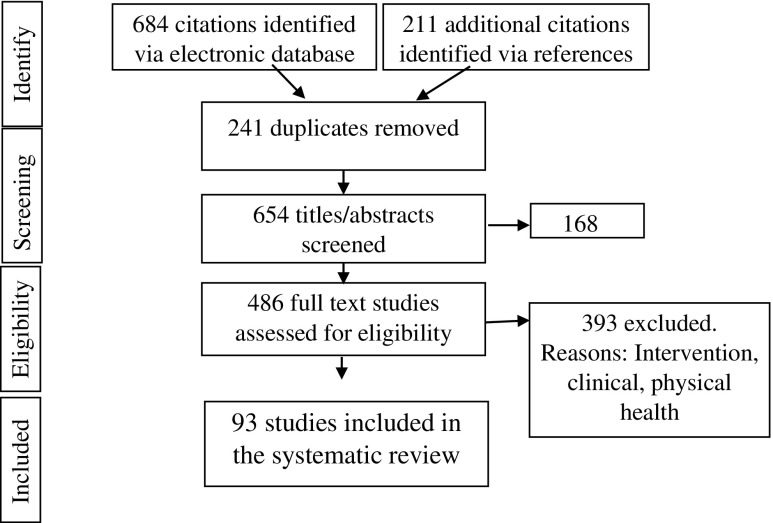
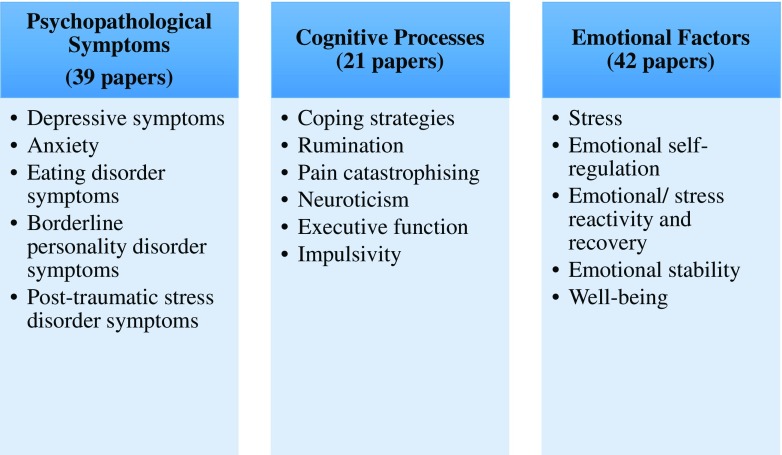
Interest in the influence of dispositional mindfulness (DM) on psychological health has been gathering pace over recent years. Despite this, a systematic review of this topic has not been conducted. A systematic review can benefit the field by identifying the terminology and measures used by researchers and by highlighting methodological weaknesses and empirical gaps. We systematically reviewed non-interventional, quantitative papers on DM and psychological health in non-clinical samples published in English up to June 2016, following the Preferred Reporting Items for Systematic Reviews and Meta-analyses (PRISMA) guidelines. A literature search was conducted using PsycINFO, PubMED, Medline and Embase, and 93 papers met the inclusion criteria. Within these, three main themes emerged, depicting the relationship between DM and psychological health: (1) DM appears to be inversely related to psychopathological symptoms such as depressive symptoms, (2) DM is positively linked to adaptive cognitive processes such as less rumination and pain catastrophizing and (3) DM appears to be associated with better emotional processing and regulation. These themes informed the creation of a taxonomy. We conclude that research has consistently shown a positive relationship between DM and psychological health. Suggestions for future research and conceptual and methodological limitations within the field are discussed.
Overview
CoChat Summary
## TL;DR
This systematic review synthesized 93 quantitative, non-interventional studies on dispositional mindfulness (DM) and psychological health in non-clinical samples published in English up to June 2016. Across the included literature, DM was consistently associated with better psychological health, especially lower psychopathological symptoms, more adaptive cognitive processes, and better emotional processing/regulation.
## Key findings
- The review included 93 papers with a combined 34,620 participants; study sizes ranged from 12 to 5,287 participants.
- 39 studies examined psychopathological symptoms, 21 examined cognitive processes, and 42 examined emotional factors; the authors report that DM was generally linked to better outcomes across all three themes.
- For depressive symptoms, 21 papers focused on depression and all 21 found a negative relationship between DM and depressive symptoms.
- For psychological well-being, 13 papers examined the outcome and all 13 showed positive associations between DM and psychological well-being.
- For stress, the review notes 27 papers focused on stress and found that higher DM was associated with lower perceived stress and emotional distress.
- The most commonly used DM measure was the Mindful Attention Awareness Scale (MAAS), used in 48 papers; the Five Facet Mindfulness Questionnaire (FFMQ) was used in 30 studies.
## Methods
- Systematic review conducted following PRISMA guidelines; included quantitative, non-interventional studies on DM and psychological health in non-clinical samples.
- Searched PsycINFO, PubMED, Medline, and Embase for papers published up to June 2016, with additional backward and forward citation searches.
- Included papers had to be English, empirical, peer-reviewed, and use a validated measure of DM; quality was rated with the Standard Quality Assessment Criteria.
## Limitations
- The paper states that it included only published articles in English, so non-English studies were excluded and may have provided additional cross-cultural evidence.
- The search terms were applied to titles and abstracts only, which may have missed relevant studies not explicitly framed around DM in those fields.
- The text makes evident that the evidence base is limited by heavy reliance on cross-sectional, self-report, and often student/white Caucasian samples; the review itself notes this reduces external validity and that many studies analyzed ordinal Likert data with parametric tests.
Model-written summary. Check it against the paper before relying on it.
Integrity signals
Registry
Cites
Statistics
Figures
Verification
Claims the paper makes
7 Valid · 0 Not valid · 61 Not checked · 63 Own results and interpretations
Every source the paper cites for this claim was checked and supports it.
In the paper
“They found that DM mediates the effects of procrastination on health.”
§ Dispositional Mindfulness and Psychological Health: a Systematic Review > Results > Emergent Themes
What the sources say
- Supportedcites Sirois and Tosti (2012) matched to “Lost in the Moment? An Investigation of Procrastination, Mindfulness, and Well-being” (2012) source
The Abstract (p.1) states that tests of the nested mediation models revealed the effects of procrastination on stress and health were mediated by mindfulness, with bootstrapping confirming significance. The Structural Model section (p.~7) reports the fit-index comparison showing mindfulness also mediated the effects of procrastination on (perceived) health, and the Discussion summarises that low mindfulness 'mediates the association of procrastination to poor perceived health' in a sample of 339 students measured with trait/dispositional mindfulness scales (MAAS, KIMS). The paraphrase matches the source's population, predictor, mediator and outcome. (LLM, conf=0.92)
plainstates a cause- Asserted: passes — The authors put it forward as true.
- Checkable: passes — It can be checked against evidence.
- Load-bearing: unclear — It is unclear whether the paper’s conclusions depend on it.
- Based: passes — The paper gives a reason why it holds.
- Supported
The cited sources support only part of this claim — read each source’s verdict below.
In the paper
“Studies suggest that DM buffers against the negative influence of perceived stress on psychological health (Adams et al. 2015; Bergin and Pakenham 2016; Bränström et al. 2011; Cole et al. 2014; Daubenmier et al. 2014).”
§ Dispositional Mindfulness and Psychological Health: a Systematic Review > Results > Emergent Themes
What the sources say
- Partly supportedcites Adams et al. 2015 matched to “Testing a Moderated Mediation Model of Mindfulness, Psychosocial Stress, and Alcohol Use Among African American Smokers” (2015) sourceExperimental — accuracy not yet measured
Our copy does show a buffering (moderation) effect: the Discussion reports that 'mindfulness significantly moderated the relationship of perceived stress with quantity of alcohol use,' with higher stress predicting greater drinking and more frequent binging 'among participants with low, but not high, mindfulness scores' (Results, Path Analyses; binge interaction only a trend, β = −0.14, p = 0.056; the mindfulness × stress interaction for probable alcohol use disorder was non-significant, β = −0.05, p = 0.44). However, the outcomes buffered were alcohol-use variables in a specific sample of predominantly low-SES African American smokers, not 'psychological health' as the citing sentence generalizes; the paper's only broader mental-health content is background citations to others' work (e.g., Brown & Ryan 2003; McKee et al. 2007) in the Introduction, plus the mediation pathway whereby mindfulness was associated with lower perceived stress. So the moderation point is supported for stress → drinking, while the extension to psychological health and to populations beyond the study sample is not. (LLM, conf=0.72)
- Not checked yetcites Bergin and Pakenham 2016
- Supportedcites Bränström et al. 2011 matched to “The association between dispositional mindfulness, psychological well‐being, and perceived health in a Swedish population‐based sample” (2011) source
The Abstract's Conclusions (p. 1) state almost verbatim that 'Results suggest that dispositional mindfulness might buffer against the negative influence of perceived stress on psychological well-being,' matching the citing sentence's hedged framing ('studies suggest'). The Discussion (p. 9) and Results section 'The effect of mindfulness as a moderator of stress' (p. 6) report significant stress × mindfulness interactions for acting with awareness, non-judging, non-reactivity (and describing) on depression and for non-judging on perceived health, with the buffer appearing chiefly at higher stress levels. Minor qualification: the effect was facet-specific and cross-sectional, and no moderation emerged for anxiety or physical symptoms/other complaints, but the attributed point itself is stated by the source. (LLM, conf=0.85)
hedgedstates a possible cause- Asserted: passes — The authors put it forward as true.
- Checkable: passes — It can be checked against evidence.
- Load-bearing: passes — The paper’s conclusions depend on it.
- Based: passes — The paper gives a reason why it holds.
- Partly supported
Every source the paper cites for this claim was checked and supports it.
In the paper
“Finally, one paper has found that lower coping motives in students mediate the link between mindfulness facets and alcohol use (Vinci et al. 2016).”
§ Dispositional Mindfulness and Psychological Health: a Systematic Review > Results > Emergent Themes
What the sources say
- Supportedcites Vinci et al. 2016 matched to “Drinking motives mediate the relationship between facets of mindfulness and problematic alcohol use” (2016) source
The Abstract reports that, among 207 college students classified as engaging in problematic drinking, lower coping motives significantly mediated the relationships of Acting with Awareness and Nonjudging with lower AUDIT scores. The Discussion likewise identifies coping motives as a significant mediator for those two mindfulness facets. (LLM, conf=0.93)
plainstates a cause- Asserted: passes — The authors put it forward as true.
- Checkable: passes — It can be checked against evidence.
- Load-bearing: unclear — It is unclear whether the paper’s conclusions depend on it.
- Based: passes — The paper gives a reason why it holds.
- Supported
Every source the paper cites for this claim was checked and supports it.
In the paper
“It appears that one of the possible mechanisms through which DM does this is by improving emotional regulation (Coffey and Hartman 2008; de Frias 2014; Feldman et al. 2016; Kadziolka et al. 2016; McDonald et al. 2016; Prakash et al. 2015).”
§ Dispositional Mindfulness and Psychological Health: a Systematic Review > Results > Emergent Themes
What the sources say
- Supportedcites Coffey and Hartman 2008 matched to “Mechanisms of action in the inverse relationship between mindfulness and psychological distress” (2008) source
The Discussion identifies emotion regulation as a mediator between dispositional mindfulness and psychological distress and reports that greater mindfulness was associated with better management of negative emotion. The paper studied depressive and anxious symptoms, so its evidence concerns psychological distress rather than every form of stress. (LLM, conf=0.90)
- Supportedcites de Frias 2014 matched to “Memory Compensation in Older Adults: The Role of Health, Emotion Regulation, and Trait Mindfulness” (2014) source
The Discussion (p. 6) proposes that mindfulness may buffer against stress by lowering rumination and reducing excessive processing of negative information during emotional challenges. The introduction (p. 2) also describes emotion regulation and stress reduction as reported benefits of mindfulness. The claim is a hedged paraphrase of that proposed mechanism, not a claim that this study tested it. (LLM, conf=0.88)
- Supportedcites Feldman et al. 2016 matched to “Dispositional Mindfulness Uncouples Physiological and Emotional Reactivity to a Laboratory Stressor and Emotional Reactivity to Executive Functioning Lapses in Daily Life” (2016) source
The General Discussion reports that people higher in dispositional mindfulness showed less emotional reactivity to stress-related experiences and describes this as more emotionally even responding to stressors. That supports the citing sentence’s cautious proposal that better emotional regulation is a possible way mindfulness buffers stress, although the studies did not directly test a mediating mechanism. (LLM, conf=0.88)
hedgedstates a possible cause- Asserted: passes — The authors put it forward as true.
- Checkable: passes — It can be checked against evidence.
- Load-bearing: passes — The paper’s conclusions depend on it.
- Based: passes — The paper gives a reason why it holds.
- Supported
A result the paper reports from its own data — it cites no other source for it, so there is none to check. The quote shows it is in the paper.
In the paper
“93 papers met the inclusion criteria”
- Also stated in: § Results · plain
“Ninety-three papers, all of which used quantitative methodology, met the eligibility criteria and were included in the systematic review”
§ Dispositional Mindfulness and Psychological Health: a Systematic Review > Abstract
plain- Asserted: passes — The authors put it forward as true.
- Checkable: passes — It can be checked against evidence.
- Load-bearing: unclear — It is unclear whether the paper’s conclusions depend on it.
- Based: passes — The paper gives a reason why it holds.
- Also stated in: § Results · plain
71 more claims
Create a free account to see all 131 claims and to verify the 77 references still open.
- It may state two separate claims as one. 28
- Probably not a substantial claim. 35
Claims other papers make about this one
Each is checked against this paper’s own text: does it say what the citing paper says it does?
The source backs part of the claim, not all of it — or backs it for a different population, condition or comparison.
In the citing paper
“Further, the strong relationship between dispositional mindfulness and physical health is related to stress.”
From What is the mindful personality? Implications for physical and psychological health (2022) · cites this paper as Tomlinson et al., 2018
Experimental — accuracy not yet measuredThe source backs part of the claim, not all of it — or backs it for a different population, condition or comparison.
In the citing paper
“Dispositional mindfulness has protective effects against psychological distress (Tomlinson et al., 2018).”
From Does the practice of mindfulness reduce somatic symptoms and COVID-19-related anxiety? A community-based survey (2022) · cites this paper as Tomlinson et al., 2018
Experimental — accuracy not yet measuredThe source backs part of the claim, not all of it — or backs it for a different population, condition or comparison.
In the citing paper
“In fact, a longer experience in meditation is associated with higher levels of dispositional mindfulness (Josefsson et al., 2011; Tomlinson et al., 2018)”
From Does the practice of mindfulness reduce somatic symptoms and COVID-19-related anxiety? A community-based survey (2022) · cites this paper as Tomlinson et al., 2018
Experimental — accuracy not yet measuredThe cited source says what the claim attributes to it.
In the citing paper
“Over the years, research has demonstrated that trait mindfulness is associated with psychological health outcomes, such as lower levels of stress, anxiety and depression (for review see, Tomlinson et al., 2018).”
From The association between facets of mindfulness and COVID-19 related distress: A cross-sectional study (2023) · cites this paper as Tomlinson et al., 2018
The cited source says what the claim attributes to it.
In the citing paper
“A systematic review on mindfulness and psychological health revealed that trait mindfulness was negatively related to psychopathology symptoms (i.e., depression and anxiety) and positively related to adaptive functioning (Tomlinson et al., 2018).”
From Examining the Prospective Associations Between Mindfulness Facets and Substance Use in Emerging Adulthood. (2021) · cites this paper as Tomlinson et al., 2018
4 more claims about this paper
Create a free account to see every claim other papers make about this one.
Citations
Cites
Preferred Reporting Items for Systematic Reviews and Meta-Analyses: the PRISMA statement
Moher, D., Liberati, A., Tetzlaff, J., Altman, D. G., & for the PRISMA Group (2009) · BMJ · doi:10.1136/bmj.b2535 · Cited by 83,823
The CES-D Scale: A Self-Report Depression Scale for Research in the General Population
Radloff, L. S. (1977) · Applied Psychological Measurement · doi:10.1177/014662167700100306 · Cited by 53,267
Preferred reporting items for systematic reviews and meta-analyses: the PRISMA Statement.
(2009) · PubMed Central · Cited by 44,859
Development and validation of brief measures of positive and negative affect: The PANAS scales.
Watson, D., Clark, L. A., & Tellegen, A. (1988) · Journal of Personality and Social Psychology · doi:10.1037/0022-3514.54.6.1063 · Cited by 32,433 · cited 2×
“The positive and negative subscales are internally consistent (Cronbach’s alpha for negative affect = .084–0.87 and positive affect = .86–.90) with good test-retest reliability of r = .48 and .42 for positive and negative affect, respectively (Watson et al. 1988).”
BackgroundMethodInfluentialPreferred Reporting Items for Systematic Reviews and Meta-Analyses: The PRISMA Statement
Moher, D., Liberati, A., Tetzlaff, J., & Altman, D. G. (2009) · Journal of Clinical Epidemiology · doi:10.1016/j.jclinepi.2009.06.005 · Cited by 19,575
(2017) · Cited by 16,319
Lovibond, P. F., & Lovibond, S. H. (1995) · Behaviour Research and Therapy · doi:10.1016/0005-7967(94)00075-u · Cited by 14,523 · cited 1×
“The Depression, Anxiety and Stress Scale (DASS-21; Lovibond and Lovibond 1995) was frequently used within the papers.”
MethodThe benefits of being present: Mindfulness and its role in psychological well-being
Brown, K. W., & Ryan, R. M. (2003) · Journal of Personality and Social Psychology · doi:10.1037/0022-3514.84.4.822 · Cited by 13,448 · cited 8×
“The MAAS measures mindfulness as a single construct.”
BackgroundMethodInfluentialUsing Self-Report Assessment Methods to Explore Facets of Mindfulness
Baer, R. A., Smith, G. T., Hopkins, J., Krietemeyer, J., & Toney, L. (2006) · Assessment · doi:10.1177/1073191105283504 · Cited by 7,511 · cited 6×
“Despite promoting the use of multi-faceted DM measures such as the FFMQ, it has been argued that the factor structure of this measure may need to be re-evaluated first (Baer et al. 2006; Petrocchi and Ottaviani 2016).”
BackgroundMethodInfluential(2008) · Medical Entomology and Zoology · Cited by 7,477
Cited by
Carpenter, J. K., Conroy, K., Gomez, A. F., Curren, L. C., & Hofmann, S. G. (2019) · Clinical Psychology Review · doi:10.1016/j.cpr.2019.101785 · Cited by 342
Dawson, A. F., Brown, W. W., Anderson, J., Datta, B., Donald, J. N., Hong, K., Allan, S., Mole, T. B., Jones, P. B., & Galante, J. (2020) · Applied Psychology: Health and Well-Being · doi:10.1111/aphw.12188 · Cited by 312
Dzhambov, A. M., Hartig, T., Tilov, B., Atanasova, V., Makakova, D. R., & Dimitrova, D. D. (2019) · Environmental Research · doi:10.1016/j.envres.2019.108708 · Cited by 144
Lee, F. K. S., & Zelman, D. C. (2019) · Personality and Individual Differences · doi:10.1016/j.paid.2019.04.001 · Cited by 131
Neurobiological Changes Induced by Mindfulness and Meditation: A Systematic Review
Calderone, A., Latella, D., Impellizzeri, F., Pasquale, P. D., Famà, F., Quartarone, A., & Calabrò, R. S. (2024) · Biomedicines · doi:10.3390/biomedicines12112613 · Cited by 216
“They are usually accompanied by increased functioning of the mind, which includes reduced anxiety, worry, and depression [16].”
Burnout phenomenon: neurophysiological factors, clinical features, and aspects of management
Khammissa, R. A. G., Nemutandani, S. M., Feller, G., Lemmer, J., & Feller, L. (2022) · Journal of International Medical Research · doi:10.1177/03000605221106428 · Cited by 211
“Improvement in emotional, attentional, and behavioral regulation induced by mindfulness is associated with increased levels of personal mental energy, self-control, satisfaction, conscientiousness, empathy, and competence as well as with positive structural and functional changes in regions of the brain (prefrontal co…”
BackgroundPathways to well-being: Untangling the causal relationships among biopsychosocial variables
Karunamuni, N. D., Imayama, I., & Goonetilleke, D. (2020) · Social Science & Medicine · doi:10.1016/j.socscimed.2020.112846 · Cited by 129
COVID-19: implicações e aplicações da Psicologia Positiva em tempos de pandemia
Zanon, C., Dellazzana‐Zanon, L. L., Wechsler, S. M., Fabretti, R. R., & da Rocha, K. N. (2020) · Estudos de Psicologia (Campinas) · doi:10.1590/1982-0275202037e200072 · Cited by 222
Sousa, G. M. D., Lima-Araújo, G. L. D., Araújo, D. B. D., & Sousa, M. B. C. D. (2021) · BMC Psychology · doi:10.1186/s40359-021-00520-x · Cited by 92
Medvedev, O. N., Norden, P. A., Krägeloh, C. U., & Siegert, R. J. (2018) · Mindfulness · doi:10.1007/s12671-018-0917-0 · Cited by 88
“Overall, our results indicated that lower levels of self-judgment resulted in lower scores on stress, anxiety, and depression, which is in line with previous studies (Tomlinson et al. 2017).”
BackgroundMethodResultInfluentialWhat do people mean when they talk about mindfulness?
Choi, E., Farb, N., Pogrebtsova, E., Gruman, J., & Grossmann, I. (2021) · Clinical Psychology Review · doi:10.1016/j.cpr.2021.102085 · Cited by 87
Gkintoni, E., Vassilopoulos, S. P., & Νικολάου, Γ. (2025) · Journal of Clinical Medicine · doi:10.3390/jcm14051703 · Cited by 136
Matis, J., Svetlak, M., Slezackova, A., Svoboda, M., & Šumec, R. (2020) · doi:10.2196/preprints.20709 · Cited by 81
“…effect of MBSR on reducing pain and symptoms of negative mood in a group of patients with chronic pain, the effectiveness of MBPs on improving mental and physical health has been repeatedly documented in healthy people [15,16] and in people with various psychiatric or somatic conditions [17,18].”
Systematic Review and Meta-Analysis of Correlates of FFMQ Mindfulness Facets
Mattes, J. (2019) · Frontiers in Psychology · doi:10.3389/fpsyg.2019.02684 · Cited by 76
“This paper contributes to the “exploration [of links] between specific DM facets and psychological health” (Tomlinson et al., 2018), and between those facets and well-being, by meta-analytically studying the strength, statistical significance, and robustness of correlations; by evaluating possible moderators; and by e…”
BackgroundEvaluating Short Versions of the Five Facet Mindfulness Questionnaire Using Rasch Analysis
Medvedev, O. N., Titkova, E. A., Siegert, R. J., Hwang, Y.-S., & Krägeloh, C. U. (2018) · Mindfulness · doi:10.1007/s12671-017-0881-0 · Cited by 71
A balanced view of mindfulness at work
Choi, E., Gruman, J. A., & Leonard, C. (2021) · Organizational Psychology Review · doi:10.1177/20413866211036930 · Cited by 88
“…that mindfulness is associated with reduced stress, anxiety (Chiesa & Serretti, 2009; Hofman et al., 2010), and depression (Hofman et al., 2010), and enhanced emotion regulation (Tomlinson et al., 2018), mental health, physical health and wellbeing (Grossman et al., 2004; Tomlinson et al., 2018).”
BackgroundWang, X. (2023) · Frontiers in Psychology · doi:10.3389/fpsyg.2023.1301786 · Cited by 175
Clarke, J., & Draper, S. (2020) · Internet Interventions · doi:10.1016/j.invent.2019.100293 · Cited by 65
“Another limitation was the reliance on subjective self-report measures, which may be inaccurate (Tomlinson et al., 2018).”
BackgroundTrait mindfulness is negatively associated with distress related to COVID-19
Dillard, A. J., & Meier, B. P. (2021) · Personality and Individual Differences · doi:10.1016/j.paid.2021.110955 · Cited by 71
Miller, A. N., & Orsillo, S. M. (2020) · Journal of Contextual Behavioral Science · doi:10.1016/j.jcbs.2020.01.002 · Cited by 70
Effects of extreme weather events on child mood and behavior
Barkin, J. L., Buoli, M., Curry, C. L., von Esenwein, S. A., Upadhyay, S., Kearney, M., & Mach, K. J. (2021) · Developmental Medicine & Child Neurology · doi:10.1111/dmcn.14856 · Cited by 73
“result is consistent with findings from a systematic literature review in which the authors cite a positive relationship between the practice of dispositional mindfulness and overall psychological health.(43) Interestingly, the combination of high acculturation and high coping efficacy among black adolescents was foun…”
ResultTran, M. A. Q., Vo‐Thanh, T., Soliman, M. S. A., Hà, T. A., & Pham, M. V. (2022) · Current Psychology · doi:10.1007/s12144-022-03421-3 · Cited by 79
“Furthermore, mindfulness could protect against maladaptive behaviors among university students and benefit their mental health (Fino et al., 2021; Tomlinson et al., 2018) considerably affected by the COVID-19 pandemic (Almomani et al.”
Brown, S. L., Hughes, M., Campbell, S., & Cherry, M. G. (2020) · Clinical Psychology & Psychotherapy · doi:10.1002/cpp.2399 · Cited by 55
Simione, L., Raffone, A., & Mirolli, M. (2021) · Mindfulness · doi:10.1007/s12671-021-01607-7 · Cited by 52
Cheng, S.-S., Zhang, C., & Wu, J.-Q. (2020) · Clocks & Sleep · doi:10.3390/clockssleep2030026 · Cited by 65
“It is associated with enhanced emotional regulation and positive emotional outcomes [17,18], while rumination is related to reduced well-being and also depression, anxiety, and problems of emotional regulation [19–21].”
BackgroundCortazar, N., & Calvete, E. (2019) · Mindfulness · doi:10.1007/s12671-019-01175-x · Cited by 50
Rogge, R. D., & Daks, J. S. (2021) · Mindfulness · doi:10.1007/s12671-020-01537-w · Cited by 50
“mindfulness and individual well-being (for reviews, see Giluk 2009; Grossman et al. 2004; Tomlinson et al. 2018), these results are some of the first to test a three-stage, process-”
ResultInfluentialKimmes, J. G., Jaurequi, M. E., Roberts, K., Harris, V. W., & Fincham, F. D. (2019) · Journal of Marital and Family Therapy · doi:10.1111/jmft.12388 · Cited by 66
Lower Mindfulness is Associated with Problematic Social Media Use: A Meta-Analysis
Meynadier, J., Malouff, J. M., Loi, N. M., & Schutte, N. S. (2023) · Current Psychology · doi:10.1007/s12144-023-04587-0 · Cited by 67
“Studies have shown that trait mindfulness is associated with lower neuroticism and negative affect (Giluk, 2009), better mental health, more adaptive cognitive processes, more effective processing and regulation of emotion, and fewer symptoms of depression and anxiety (Tomlinson et al., 2018).”
Fino, E., Martoni, M., & Russo, P. M. (2021) · Advances in Health Sciences Education · doi:10.1007/s10459-021-10039-w · Cited by 46
The effects of mindfulness-based interventions in medical students: a systematic review
Kaisti, I., Kulmala, P., Hintsanen, M., Hurtig, T. M., Repo, S., Paunio, T., Miettunen, J., Halt, A., & Jääskeläinen, E. (2023) · Advances in Health Sciences Education · doi:10.1007/s10459-023-10231-0 · Cited by 73
“Mindfulness can be divided into state (i.e., a momentary condition) and trait (i.e., a permanent characteristic) mindfulness (Quaglia et al., 2016; Tomlinson et al., 2018).”
BackgroundLeeuwerik, T., Cavanagh, K., & Strauss, C. (2020) · Cognitive Therapy and Research · doi:10.1007/s10608-019-10049-4 · Cited by 44
Acabchuk, R. L., Simon, M. A., Low, S., Brisson, J. M., & Johnson, B. T. (2021) · Mindfulness · doi:10.1007/s12671-020-01497-1 · Cited by 44
Per, M., Schmelefske, E., Brophy, K., Austin, S. B., & Khoury, B. (2022) · Mindfulness · doi:10.1007/s12671-021-01815-1 · Cited by 60
“Similarly, mindfulness is inversely related to psychopathology, including depression (Tomlinson et al., 2018).”
BackgroundParent, J. M., Dale, C. F., McKee, L. G., & Sullivan, A. D. W. (2020) · Mindfulness · doi:10.1007/s12671-020-01536-x · Cited by 56
“…including several meta-analyses, has demonstrated that higher levels of trait mindfulness are associated with greater self-efficacy, coping, emotion regulation, motivation, and more adaptive cognitive processes (i.e., less rumination; Tomlinson et al., 2018) (e.g., Brown & Mindfulness (N Y).”
BackgroundExperiential avoidance mediates the relation between mindfulness and anxiety
McCluskey, D. L., Haliwa, I., Wilson, J. M., Keeley, J. W., & Shook, N. J. (2022) · Current Psychology · doi:10.1007/s12144-020-00929-4 · Cited by 43
Kechter, A., Black, D. S., Riggs, N. R., Warren, C. M., Ritt‐Olson, A., Chou, C.-P., & Pentz, M. A. (2019) · Journal of Child and Family Studies · doi:10.1007/s10826-018-01313-4 · Cited by 62
Wang, Y., Pan, B., Yu, Z., & Song, Z. (2023) · Current Psychology · doi:10.1007/s12144-023-04512-5 · Cited by 67
“For example, Tomlinson et al. (2018) pointed out that mindfulness has a negative relationship with mental health problems, including anxiety, depression, stress, and emotional symptoms.”
Krupıć, D., Žuro, B., & Corr, P. J. (2020) · Personality and Individual Differences · doi:10.1016/j.paid.2019.109720 · Cited by 48
Zimmer‐Gembeck, M. J., Clear, S. J., & Campbell, S. M. (2021) · Journal of Adolescence · doi:10.1016/j.adolescence.2021.11.003 · Cited by 38
Murfield, J., Moyle, W., O’Donovan, A., & Ware, R. S. (2024) · Clinical Gerontologist · doi:10.1080/07317115.2020.1846650 · Cited by 43
“Across the life-span, dispositional mindfulness and compassion have shown positive associations with wellbeing and negative associations with depression, anxiety, and stress (e.g., MacBeth & Gumley, 2012; Tomlinson, Yousaf, Vittersø, & Jones, 2018).”
BackgroundThe Role of Dispositional Mindfulness and Self-compassion in Educator Stress
Hwang, Y., Medvedev, O. N., Krägeloh, C., Hand, K., Noh, J., & Singh, N. N. (2019) · Mindfulness · doi:10.1007/s12671-019-01183-x · Cited by 52
Keleynikov, M., Benatov, J., & Berger, R. (2022) · International Journal of Environmental Research and Public Health · doi:10.3390/ijerph19052645 · Cited by 52
“There is growing empirical evidence supporting the existence of a link between mindfulness and well-being, and a negative association between mindfulness and mental health issues, such as depression, anxiety, and stress [28].”
BackgroundCheng, X., Ma, Y., Li, J., Cai, Y., Li, L., & Zhang, J. (2020) · International Journal of Environmental Research and Public Health · doi:10.3390/ijerph17218212 · Cited by 51
“Moreover, there is growing empirical evidence supporting the inverse relationship between mindfulness and mental health problems, involving depression, anxiety, stress and emotional symptoms [13], whereas people with higher dispositional mindfulness are hardly affected by habitual patterns [9] and they are more prone…”
BackgroundYang, Z. Y., Chen, F., Liu, S., Dai, M., & Zhang, H. (2021) · Frontiers in Psychology · doi:10.3389/fpsyg.2021.715507 · Cited by 45
“Mindfulness, as a form of self-care, is defined as paying attention to what is happening in the mind, body and external environment with an attitude of curiosity and kindness (Tomlinson et al., 2018; Hotchkiss and Cook-Cottone, 2019), which aims to reduce compassion fatigue and promote compassion satisfaction (Hotchki…”
BackgroundBóo, S. J. M., Childs‐Fegredo, J., Cooney, S., Datta, B., Dufour, G., Jones, P. B., & Galante, J. (2020) · Counselling and Psychotherapy Research · doi:10.1002/capr.12282 · Cited by 39
Naude, C., Skvarc, D., Knowles, S., Russell, L., Evans, S., & Mikocka-Walus, A. (2023) · Journal of Psychosomatic Research · doi:10.1016/j.jpsychores.2023.111232 · Cited by 37
Godbout, N., Bakhos, G., Dussault, É., & Hébert, M. (2020) · Journal of Sex & Marital Therapy · doi:10.1080/0092623x.2019.1626309 · Cited by 38
“To our knowledge, studies have mainly focused on psychological distress in terms of depression or anxiety (Tomlinson et al., 2018), but limited research has examined psychological distress as an overall concept including multiple dimensions (i.e., depression, anxiety, irritability, and cognitive…”
BackgroundHan, A. (2022) · Clinical Gerontologist · doi:10.1080/07317115.2021.1995561 · Cited by 38
Gherardi-Donato, E. C. D. S., Díaz-Serrano, K. V., Barbosa, M. R., Fernandes, M. N. D. F., Gonçalves-Ferri, W. A., Camargo Júnior, E. B., & Reisdorfer, E. (2023) · International Journal of Environmental Research and Public Health · doi:10.3390/ijerph20043666 · Cited by 37
Mindfulness and Parenting: A Meta-analysis and an Exploratory Meta-mediation
Kil, H., Antonacci, R., Shukla, S., & Luca, A. D. (2021) · Mindfulness · doi:10.1007/s12671-021-01720-7 · Cited by 45
Zhao, H., Gong, X., Huebner, E. S., Yang, X., & Zhou, J. (2021) · Journal of Affective Disorders · doi:10.1016/j.jad.2021.11.070 · Cited by 43
Hsieh, C., Yu, C., Chen, H., Chen, Y., Chang, N., & Hsiao, F. (2019) · Psycho-Oncology · doi:10.1002/pon.5106 · Cited by 36
“caregivers with more trait mindfulness more likely produce a reflective space and choose to respond stress in more adaptive ways.(15,16) This study revealed that caregivers' self‐compassionate action moderated the effect of caregivers' stress on their depressive symptoms.”
BackgroundIoannou, A., Tussyadiah, I. P., & Marshan, A. (2021) · Psychology and Marketing · doi:10.1002/mar.21529 · Cited by 42
Differential contribution of the five facets of mindfulness to well-being and psychological distress
Roemer, A., Sutton, A., Grimm, C., & Medvedev, O. N. (2021) · Mindfulness · doi:10.1007/s12671-020-01535-y · Cited by 36
“which was not yet rigorously investigated using suitable methodology (Tomlinson et al. 2018; Medvedev et al. 2018a).”
BackgroundMethodPrieto-Fidalgo, Á., Gómez-Odriozola, J., Royuela-Colomer, E., Orue, I., Fernández‐González, L., Oñate, L., Cortázar, N., Castillo, I. I., & Calvete, E. (2021) · Mindfulness · doi:10.1007/s12671-021-01756-9 · Cited by 42
Kingery, J. N., Bodenlos, J. S., & Lathrop, J. A. (2020) · Journal of American College Health · doi:10.1080/07448481.2019.1574801 · Cited by 34
“In discussing directions for future studies, researchers emphasize the importance of examining DM as a multi-faceted construct, given that the specific DM facets (ie, nonreactivity to inner experience; observing/attending to sensations, thoughts or feelings; acting with awareness; describing feelings with words; nonju…”
BackgroundAssociation between trait mindfulness and symptoms of post-traumatic stress: A meta-analysis
Harper, L., Jones, A., Goodwin, L., & Gillespie, S. M. (2022) · Journal of Psychiatric Research · doi:10.1016/j.jpsychires.2022.05.027 · Cited by 42
Martínez-Rubio, D., Colomer-Carbonell, A., Sanabria-Mazo, J. P., Pérez-Aranda, A., Navarrete, J., Martínez-Brotóns, C., Escamilla, C., Muro, A., Montero-Marín, J., Luciano, J. V., et al. (2023) · PLOS ONE · doi:10.1371/journal.pone.0280791 · Cited by 33
“Even though the inverse association between dispositional mindfulness and psychopathological symptoms has been consistently reported [53], our results showed a non-significant relationship between mindfulness as a trait and perceived stress.”
ResultGarcía-Gómez, M., Guerra, J., López-Ramos, V. M., & Mestre, J. M. (2019) · International Journal of Environmental Research and Public Health · doi:10.3390/ijerph16234687 · Cited by 33
“According to several authors with a huge contrasted MBI’s experience, cognitive defusion is watching at thoughts rather than from thoughts, noticing them instead of being catch from thoughts, trying to flow with thoughts and not to hold them [1,2,6,8,10,14,18,25].”
BackgroundFong, T. C. T., & Ho, R. T. H. (2020) · Psycho-Oncology · doi:10.1002/pon.5363 · Cited by 30
Fuochi, G., & Voci, A. (2020) · Personality and Individual Differences · doi:10.1016/j.paid.2020.110122 · Cited by 37
Wang, C., Geng, L., & Rodríguez-Casallas, J. D. (2021) · Current Psychology · doi:10.1007/s12144-021-01453-9 · Cited by 39
Chen, W., Yan, L., Yuan, Y.-R., Zhu, X.-W., Zhang, Y., & Lian, S.-L. (2021) · Frontiers in Psychology · doi:10.3389/fpsyg.2021.750511 · Cited by 38
Remskar, M., Western, M. J., & Ainsworth, B. (2024) · British Journal of Health Psychology · doi:10.1111/bjhp.12745 · Cited by 48
“…turn, evidence shows that both engagement in health behaviours and being more dispositionally mindful are associated with better psychological health (e.g., Singh et al.'s, 2023) meta-review evidencing the positive effects of physical activity on mental health; Tomlinson et al., 2018, respectively.”
Calvete, E., Fernández‐González, L., Echezarraga, A., & Orue, I. (2019) · Journal of Youth and Adolescence · doi:10.1007/s10964-019-01128-6 · Cited by 32
Social connectedness, mindfulness, and coping as protective factors during the COVID‐19 pandemic
Dailey, S. F., Parker, M. M., & Campbell, A. (2023) · Journal of Counseling & Development · doi:10.1002/jcad.12450 · Cited by 41
“While mindfulness highlights present moment awareness, dispositional (or trait) mindfulness incorporates the innate capacity of an individual to maintain awareness (Tomlinson et al., 2018).”
BackgroundMethodkakhki, Z. B., Mashhadi, A., Yazdi, S. A. A., & Saleh, S. (2022) · Journal of Child and Family Studies · doi:10.1007/s10826-022-02420-z · Cited by 50
“address mental and physical health-related problems and parenting stress, as well as enhance the quality of Parent–Child interactions (Bögels & Restifo, 2014; Chaplin et al., 2018; Coatsworth et al., 2015; Duncan & Shaddix, 2015; Singh et al., 2010; Tomlinson et al., 2018; Townshend et al., 2016; Turpyn & Chaplin, 201…”
BackgroundKarremans, J. C., Kappen, G., Schellekens, M. P. J., & Schoebi, D. (2020) · Scientific Reports · doi:10.1038/s41598-020-78919-6 · Cited by 39
Psychosocial Variables That Predict Chronic and Disabling Tinnitus: A Systematic Review
Kleinstäuber, M., & Weise, C. (2020) · Current topics in behavioral neurosciences · doi:10.1007/7854_2020_213 · Cited by 32
Lin, Y., Tang, R., & Braver, T. S. (2021) · Psychonomic Bulletin & Review · doi:10.3758/s13423-021-02008-6 · Cited by 36
Meditators’ Non-academic Definition of Mindfulness
Morón, D. A., Soler, J., & Cebolla, A. (2022) · Mindfulness · doi:10.1007/s12671-022-01899-3 · Cited by 44
“This abundance of different mindfulness measurement scales does not seem to have reduced the problems of validity and reliability of the construct (Grossman, 2019; Tomlinson et al., 2018).”
BackgroundCortázar, N., Calvete, E., Fernández‐González, L., & Orue, I. (2019) · Journal of Personality Assessment · doi:10.1080/00223891.2019.1616206 · Cited by 41
Cyber-victimization and Suicidal Ideation in Adolescents: A Longitudinal Moderated Mediation Model
Zhou, J., Li, X., Zhu, D., & Gong, X. (2022) · Journal of Youth and Adolescence · doi:10.1007/s10964-022-01670-w · Cited by 38
Turanzas, J. A., Cordón, J. R., Choca, J. P., & Mestre, J. M. (2020) · Mindfulness · doi:10.1007/s12671-018-0985-1 · Cited by 26
Salvati, M., Chiorri, C., & Baiocco, R. (2019) · Mindfulness · doi:10.1007/s12671-019-01215-6 · Cited by 31
The Association Between Implicit Racial Bias and Mindfulness in Mental Health Practitioners
Ivers, N. N., Johnson, D. A., & Rogers, J. L. (2020) · Journal of Counseling & Development · doi:10.1002/jcad.12350 · Cited by 39
Jin, Y., Xiong, W., Liu, X., & An, J. (2023) · Behavioral Sciences · doi:10.3390/bs13030222 · Cited by 38
“These studies suggest that mindful awareness and attention are associated with positive mental and physical health [21,22].”
BackgroundRiquino, M. R., Priddy, S. E., Howard, M. O., & Garland, E. L. (2018) · Borderline Personality Disorder and Emotion Dysregulation · doi:10.1186/s40479-018-0088-6 · Cited by 31
“With respect to the focus of this article, trait mindfulness is positively associated with psychological well-being [79] and negatively associated with self-medication of negative emotions with opioids among a sample of chronic pain patients [80].”
BackgroundUsing Whole Trait Theory to unite trait and state mindfulness
Warren, M. T., Galla, B. M., & Grund, A. (2023) · Journal of Research in Personality · doi:10.1016/j.jrp.2023.104372 · Cited by 37
Hanley, A. W., Dehili, V., Krzanowski, D., Barou, D., Lecy, N., & Garland, E. L. (2022) · Clinical Social Work Journal · doi:10.1007/s10615-021-00812-0 · Cited by 27
“State mindfulness is a momentary condition which can be enhanced by mindfulness-based practices (Tomlinson et al., 2018).”
Does laughing have a stress-buffering effect in daily life? An intensive longitudinal study
Zander-Schellenberg, T., Mutschler, I., Miché, M., Guttmann, C., Lieb, R., & Wahl, K. (2020) · PLoS ONE · doi:10.1371/journal.pone.0235851 · Cited by 37
“and/or high emotion regulation skills as both are per se associated with greater levels of positive affect and well-being [39, 40, 41].”
BackgroundEddy, P. J., Wertheim, E. H., Hale, M. W., & Wright, B. J. (2018) · Journal of Occupational and Environmental Medicine · doi:10.1097/jom.0000000000001493 · Cited by 30
Kashiwazaki, Y., Takebayashi, Y., & Murakami, M. (2020) · PLoS ONE · doi:10.1371/journal.pone.0235517 · Cited by 33
“People with a high tendency toward mindfulness have been shown to be effective at reducing various mental and physical problems by promoting emotional self-regulation, reducing depressive symptoms and anxiety, and improving well-being [23,24].”
BackgroundBeyond neutrophil recovery: manipulation of the tumor microenvironment by GM-CSF to control cancer.
Anzick, S. L., & Trent, J. M. (2002) · PubMed · Cited by 27
Emotion dysregulation and mindfulness in non-suicidal self-injury
Calvete, E., Royuela-Colomer, E., & Maruottolo, C. (2022) · Psychiatry Research · doi:10.1016/j.psychres.2022.114691 · Cited by 35
“For example, other variables could explain the associations between the study variables, such as having a psychiatric disorder and personality traits like neuroticism, which have been associated with trait mindfulness (Tomlinson et al., 2018), emotion regulation (Cludius”
BackgroundZewude, G. T., Natnael, T., Woreta, G. T., & Bezie, A. E. (2025) · International Journal of Environmental Research and Public Health · doi:10.3390/ijerph22010057 · Cited by 49
“Conduct longitudinal studies to evaluate the long-term efficacy of mindfulness and social capital interventions in reducing social media and internet addiction.”
Ardenghi, S., Rampoldi, G., Pepe, A., Bani, M., Salvarani, V., & Strepparava, M. G. (2020) · Teaching and Learning in Medicine · doi:10.1080/10401334.2020.1813582 · Cited by 26
“Mindful people can be in touch with their own feelings and difficulties and are more able to deal with those of others.(41,42) Based on this conceptual framework, several studies have recently investigated the empirical association between DM facets and empathy dimensions in the general population.”
BackgroundGrégoire, C., Faymonville, M.-É., Vanhaudenhuyse, A., Jérusalem, G., Willems, S. J., & Bragard, I. (2020) · Quality of Life Research · doi:10.1007/s11136-020-02655-7 · Cited by 34
“, coping, emotional regulation) is mindfulness [21, 22].”
ResultCritical issues in cognitive behavioural therapy (CBT) with gender and sexual minorities (GSMs)
Carvalho, S. A., Castilho, P., Seabra, D., Salvador, C., Rijo, D., & Carona, C. (2022) · The Cognitive Behaviour Therapist · doi:10.1017/s1754470x21000398 · Cited by 55
Blanke, E. S., Schmiedek, F., Siebert, S., Richter, D., & Brose, A. (2022) · Stress and Health · doi:10.1002/smi.3164 · Cited by 37
Nayman, S., Konstantinow, D. T., Schricker, I. F., Reinhard, I., & Kuehner, C. (2023) · Archives of Women s Mental Health · doi:10.1007/s00737-023-01304-5 · Cited by 35
Navas, J. M. M., Turanzas, J., Gómez, M. G., Bustamante, J. G., Cordón, J. R., la Torre, G. G. D., & López-Ramos, V.-M. (2019) · Frontiers in Psychology · doi:10.3389/fpsyg.2019.02817 · Cited by 35
Guerra, J., García-Gómez, M., Turanzas, J., Cordón, J. R., Suárez-Jurado, C., & Mestre, J. M. (2019) · International Journal of Environmental Research and Public Health · doi:10.3390/ijerph16081355 · Cited by 25
“Authors reviewed non-interventional and quantitative DM’s articles in non-clinical samples [4].”
BackgroundMethodDong, Y., Dang, L., Li, S., & Yang, X. (2021) · Psychology Research and Behavior Management · doi:10.2147/prbm.s319145 · Cited by 40
Kingery, J. N., Bodenlos, J. S., Schneider, T. I., Peltz, J. S., & Sindoni, M. W. (2021) · Journal of American College Health · doi:10.1080/07448481.2021.1943411 · Cited by 27
Trait mindfulness associations with executive function and well-being in older adults
MacAulay, R. K., Halpin, A., Andrews, H. E., & Boeve, A. R. (2021) · Aging & Mental Health · doi:10.1080/13607863.2021.1998352 · Cited by 34
“It has been suggested that some of the beneficial aspects of trait mindfulness involve having a greater capacity to engage executive function processes, which allows one to better inhibit emotional reactivity (Tomlinson et al., 2018).”
BackgroundSvětlák, M., Linhartová, P., Knejzlíková, T., Knejzlík, J., Kóša, B., Horníčková, V., Jarolínová, K., Lučanská, K., Slezáčková, A., & Šumec, R. (2021) · Frontiers in Psychology · doi:10.3389/fpsyg.2020.581086 · Cited by 30
“Mindfulness in eHealth Context The effectiveness of face-to-face mindfulness-based interventions on improving mental and physical health has been repeatedly documented in healthy people (Keng et al., 2011; Tomlinson et al., 2018) and in people with various psychiatric and somatic conditions (Goldberg et al.”
BackgroundFazia, T., Bubbico, F., Berzuini, G., Tezza, L. D., Cortellini, C., Bruno, S., & Bernardinelli, L. (2021) · Work · doi:10.3233/wor-210510 · Cited by 25
“Dispositional mindfulness is a multidimensional skill distributed within the population at varying levels and it can be enhanced through mindfulness practice [24], that is the key component of MBI.”
BackgroundKil, H., & Grusec, J. E. (2020) · Mindfulness · doi:10.1007/s12671-020-01387-6 · Cited by 26
Metadata
- Authors
- Tomlinson, E. R., Yousaf, O., Vittersø, A. D., & Jones, L.
- Affiliations
- University of Bath (GB)
- Corresponding author
- Yousaf, Omar
- Venue
- Mindfulness
- Published
- 2017-07-01
- Volume
- 9
- Issue
- 1
- Pages
- 23-43
- ISSN
- 1868-8527 (ISSN-L)
- 1868-8535
- PMC
- PMC5770488
- OpenAlex
- W2672899517
- Cited by
- 560
- References
- 125
- Citations by year
- 2026: 49 · 2025: 72 · 2024: 85 · 2023: 82 · 2022: 87 · 2021: 75 · 2020: 58 · 2019: 40 · 2018: 9
- FWCI
- 4.47
- Type
- journal article
- Language
- en
- Open access
- hybrid
- doi.org
- Locations
- Mindfulness (publishedVersion, cc-by)
- Europe PMC (PubMed Central) (publishedVersion, cc-by)
- PubMed Central (publishedVersion, cc-by)
- PubMed (publishedVersion)
- The University of Bath Online Publications Store (The University of Bath) (submittedVersion, cc-by)
- Research Space (submittedVersion)
- Pure (University of Bath) (submittedVersion, cc-by)
- Funders
- University of Bath
- Topics
- Social Sciences › Psychology › Clinical Psychology › Mindfulness and Compassion Interventions
- Social Sciences › Psychology › Social Psychology › Psychological Well-being and Life Satisfaction
- Social Sciences › Health › Religion, Spirituality, and Psychology
- Keywords
- trait mindfulness, mental health, depressive symptoms, rumination, pain catastrophizing, emotion regulation, emotional processing, psychopathology, non-clinical sample, mindfulness measurement
About these checks
Registry, retraction, Cites and statistics results are computed, not judged, with one exception: a printed reference that no index lists is read once by a model before it counts as a citation error. Claims are extracted by a model and kept only when their quote appears verbatim in the text; each cited source is then checked, with a model’s help, for whether it says what the claim relies on. Those verdicts can be wrong — read the claim’s quote and the cited source before relying on one.
The claim verdicts this report counts are experimental: their accuracy is not yet measured.
A language model drew the claims from the paper on 2026-10-11, under version 3 of the claim definition (model deepseek-v4.1-flash, prompt extract-v3).
A second model labelled each claim on 2026-10-11 (model jev-1.13-20260917, definition revision gold-guideline-v0.2).
Cited sources are checked with a language model’s help (qwen3.8-omni-flash and gpt-6-sol).
Statistics and arithmetic are recomputed, not judged.
Confidence bands are shown only for fields calibrated on our annotated test set. None is calibrated yet, so no band is shown.
What counts as a claim ›How we measure confidence ›How we check this ›
Are you an author, or do you see a problem with this page? Request a review
Data sources
Bibliographic data: Semantic Scholar, OpenAlex, Crossref.
Contains information from the Semantic Scholar Academic Graph Datasets, made available under the ODC Attribution License (ODC-BY 1.0).
Semantic Scholar’s data is described in: Kinney, R., et al. (2023). The Semantic Scholar Open Data Platform. arXiv:2301.10140.
