

Dispositional Mindfulness and Psychological Health: a Systematic Review
Open accessThe DOI matches its Crossref record; 126 of the 126 references it cites were found in a registry or an index; 10 of the 87 sources its claims cite were checked for support.
Abstract
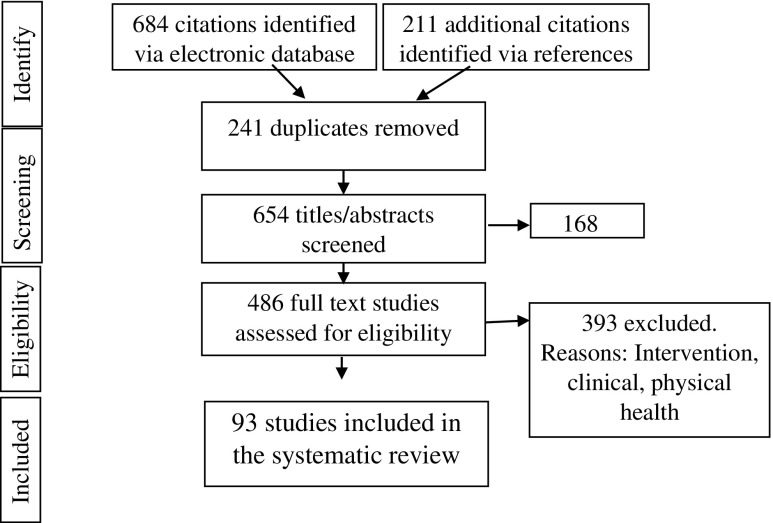
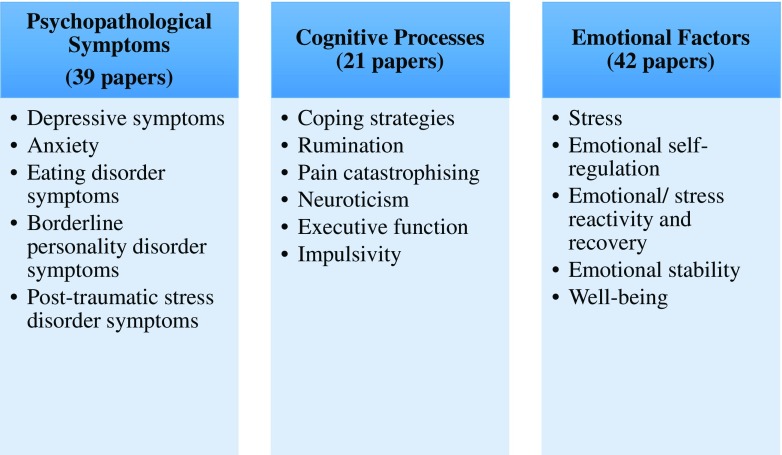
Interest in the influence of dispositional mindfulness (DM) on psychological health has been gathering pace over recent years. Despite this, a systematic review of this topic has not been conducted. A systematic review can benefit the field by identifying the terminology and measures used by researchers and by highlighting methodological weaknesses and empirical gaps. We systematically reviewed non-interventional, quantitative papers on DM and psychological health in non-clinical samples published in English up to June 2016, following the Preferred Reporting Items for Systematic Reviews and Meta-analyses (PRISMA) guidelines. A literature search was conducted using PsycINFO, PubMED, Medline and Embase, and 93 papers met the inclusion criteria. Within these, three main themes emerged, depicting the relationship between DM and psychological health: (1) DM appears to be inversely related to psychopathological symptoms such as depressive symptoms, (2) DM is positively linked to adaptive cognitive processes such as less rumination and pain catastrophizing and (3) DM appears to be associated with better emotional processing and regulation. These themes informed the creation of a taxonomy. We conclude that research has consistently shown a positive relationship between DM and psychological health. Suggestions for future research and conceptual and methodological limitations within the field are discussed.
Overview
CoChat Summary
## TL;DR
This systematic review synthesized 93 quantitative, non-interventional studies on dispositional mindfulness (DM) and psychological health in non-clinical samples published in English up to June 2016. Across the included literature, DM was consistently associated with better psychological health, especially lower psychopathological symptoms, more adaptive cognitive processes, and better emotional processing/regulation.
## Key findings
- The review included 93 papers with a combined 34,620 participants; study sizes ranged from 12 to 5,287 participants.
- 39 studies examined psychopathological symptoms, 21 examined cognitive processes, and 42 examined emotional factors; the authors report that DM was generally linked to better outcomes across all three themes.
- For depressive symptoms, 21 papers focused on depression and all 21 found a negative relationship between DM and depressive symptoms.
- For psychological well-being, 13 papers examined the outcome and all 13 showed positive associations between DM and psychological well-being.
- For stress, the review notes 27 papers focused on stress and found that higher DM was associated with lower perceived stress and emotional distress.
- The most commonly used DM measure was the Mindful Attention Awareness Scale (MAAS), used in 48 papers; the Five Facet Mindfulness Questionnaire (FFMQ) was used in 30 studies.
## Methods
- Systematic review conducted following PRISMA guidelines; included quantitative, non-interventional studies on DM and psychological health in non-clinical samples.
- Searched PsycINFO, PubMED, Medline, and Embase for papers published up to June 2016, with additional backward and forward citation searches.
- Included papers had to be English, empirical, peer-reviewed, and use a validated measure of DM; quality was rated with the Standard Quality Assessment Criteria.
## Limitations
- The paper states that it included only published articles in English, so non-English studies were excluded and may have provided additional cross-cultural evidence.
- The search terms were applied to titles and abstracts only, which may have missed relevant studies not explicitly framed around DM in those fields.
- The text makes evident that the evidence base is limited by heavy reliance on cross-sectional, self-report, and often student/white Caucasian samples; the review itself notes this reduces external validity and that many studies analyzed ordinal Likert data with parametric tests.
Model-written summary. Check it against the paper before relying on it.
Integrity signals
Registry
Cites
Statistics
Figures
Verification
Claims the paper makes
7 Valid · 0 Not valid · 61 Not checked · 63 Own results and interpretations
Every source the paper cites for this claim was checked and supports it.
In the paper
“They found that DM mediates the effects of procrastination on health.”
§ Dispositional Mindfulness and Psychological Health: a Systematic Review > Results > Emergent Themes
What the sources say
- Supportedcites Sirois and Tosti (2012) matched to “Lost in the Moment? An Investigation of Procrastination, Mindfulness, and Well-being” (2012) source
The Abstract (p.1) states that tests of the nested mediation models revealed the effects of procrastination on stress and health were mediated by mindfulness, with bootstrapping confirming significance. The Structural Model section (p.~7) reports the fit-index comparison showing mindfulness also mediated the effects of procrastination on (perceived) health, and the Discussion summarises that low mindfulness 'mediates the association of procrastination to poor perceived health' in a sample of 339 students measured with trait/dispositional mindfulness scales (MAAS, KIMS). The paraphrase matches the source's population, predictor, mediator and outcome. (LLM, conf=0.92)
plainstates a cause- Asserted: passes — The authors put it forward as true.
- Checkable: passes — It can be checked against evidence.
- Load-bearing: unclear — It is unclear whether the paper’s conclusions depend on it.
- Based: passes — The paper gives a reason why it holds.
- Supported
The cited sources support only part of this claim — read each source’s verdict below.
In the paper
“Studies suggest that DM buffers against the negative influence of perceived stress on psychological health (Adams et al. 2015; Bergin and Pakenham 2016; Bränström et al. 2011; Cole et al. 2014; Daubenmier et al. 2014).”
§ Dispositional Mindfulness and Psychological Health: a Systematic Review > Results > Emergent Themes
What the sources say
- Partly supportedcites Adams et al. 2015 matched to “Testing a Moderated Mediation Model of Mindfulness, Psychosocial Stress, and Alcohol Use Among African American Smokers” (2015) sourceExperimental — accuracy not yet measured
Our copy does show a buffering (moderation) effect: the Discussion reports that 'mindfulness significantly moderated the relationship of perceived stress with quantity of alcohol use,' with higher stress predicting greater drinking and more frequent binging 'among participants with low, but not high, mindfulness scores' (Results, Path Analyses; binge interaction only a trend, β = −0.14, p = 0.056; the mindfulness × stress interaction for probable alcohol use disorder was non-significant, β = −0.05, p = 0.44). However, the outcomes buffered were alcohol-use variables in a specific sample of predominantly low-SES African American smokers, not 'psychological health' as the citing sentence generalizes; the paper's only broader mental-health content is background citations to others' work (e.g., Brown & Ryan 2003; McKee et al. 2007) in the Introduction, plus the mediation pathway whereby mindfulness was associated with lower perceived stress. So the moderation point is supported for stress → drinking, while the extension to psychological health and to populations beyond the study sample is not. (LLM, conf=0.72)
- Not checked yetcites Bergin and Pakenham 2016
- Supportedcites Bränström et al. 2011 matched to “The association between dispositional mindfulness, psychological well‐being, and perceived health in a Swedish population‐based sample” (2011) source
The Abstract's Conclusions (p. 1) state almost verbatim that 'Results suggest that dispositional mindfulness might buffer against the negative influence of perceived stress on psychological well-being,' matching the citing sentence's hedged framing ('studies suggest'). The Discussion (p. 9) and Results section 'The effect of mindfulness as a moderator of stress' (p. 6) report significant stress × mindfulness interactions for acting with awareness, non-judging, non-reactivity (and describing) on depression and for non-judging on perceived health, with the buffer appearing chiefly at higher stress levels. Minor qualification: the effect was facet-specific and cross-sectional, and no moderation emerged for anxiety or physical symptoms/other complaints, but the attributed point itself is stated by the source. (LLM, conf=0.85)
hedgedstates a possible cause- Asserted: passes — The authors put it forward as true.
- Checkable: passes — It can be checked against evidence.
- Load-bearing: passes — The paper’s conclusions depend on it.
- Based: passes — The paper gives a reason why it holds.
- Partly supported
Every source the paper cites for this claim was checked and supports it.
In the paper
“Finally, one paper has found that lower coping motives in students mediate the link between mindfulness facets and alcohol use (Vinci et al. 2016).”
§ Dispositional Mindfulness and Psychological Health: a Systematic Review > Results > Emergent Themes
What the sources say
- Supportedcites Vinci et al. 2016 matched to “Drinking motives mediate the relationship between facets of mindfulness and problematic alcohol use” (2016) source
The Abstract reports that, among 207 college students classified as engaging in problematic drinking, lower coping motives significantly mediated the relationships of Acting with Awareness and Nonjudging with lower AUDIT scores. The Discussion likewise identifies coping motives as a significant mediator for those two mindfulness facets. (LLM, conf=0.93)
plainstates a cause- Asserted: passes — The authors put it forward as true.
- Checkable: passes — It can be checked against evidence.
- Load-bearing: unclear — It is unclear whether the paper’s conclusions depend on it.
- Based: passes — The paper gives a reason why it holds.
- Supported
Every source the paper cites for this claim was checked and supports it.
In the paper
“It appears that one of the possible mechanisms through which DM does this is by improving emotional regulation (Coffey and Hartman 2008; de Frias 2014; Feldman et al. 2016; Kadziolka et al. 2016; McDonald et al. 2016; Prakash et al. 2015).”
§ Dispositional Mindfulness and Psychological Health: a Systematic Review > Results > Emergent Themes
What the sources say
- Supportedcites Coffey and Hartman 2008 matched to “Mechanisms of action in the inverse relationship between mindfulness and psychological distress” (2008) source
The Discussion identifies emotion regulation as a mediator between dispositional mindfulness and psychological distress and reports that greater mindfulness was associated with better management of negative emotion. The paper studied depressive and anxious symptoms, so its evidence concerns psychological distress rather than every form of stress. (LLM, conf=0.90)
- Supportedcites de Frias 2014 matched to “Memory Compensation in Older Adults: The Role of Health, Emotion Regulation, and Trait Mindfulness” (2014) source
The Discussion (p. 6) proposes that mindfulness may buffer against stress by lowering rumination and reducing excessive processing of negative information during emotional challenges. The introduction (p. 2) also describes emotion regulation and stress reduction as reported benefits of mindfulness. The claim is a hedged paraphrase of that proposed mechanism, not a claim that this study tested it. (LLM, conf=0.88)
- Supportedcites Feldman et al. 2016 matched to “Dispositional Mindfulness Uncouples Physiological and Emotional Reactivity to a Laboratory Stressor and Emotional Reactivity to Executive Functioning Lapses in Daily Life” (2016) source
The General Discussion reports that people higher in dispositional mindfulness showed less emotional reactivity to stress-related experiences and describes this as more emotionally even responding to stressors. That supports the citing sentence’s cautious proposal that better emotional regulation is a possible way mindfulness buffers stress, although the studies did not directly test a mediating mechanism. (LLM, conf=0.88)
hedgedstates a possible cause- Asserted: passes — The authors put it forward as true.
- Checkable: passes — It can be checked against evidence.
- Load-bearing: passes — The paper’s conclusions depend on it.
- Based: passes — The paper gives a reason why it holds.
- Supported
A result the paper reports from its own data — it cites no other source for it, so there is none to check. The quote shows it is in the paper.
In the paper
“93 papers met the inclusion criteria”
- Also stated in: § Results · plain
“Ninety-three papers, all of which used quantitative methodology, met the eligibility criteria and were included in the systematic review”
§ Dispositional Mindfulness and Psychological Health: a Systematic Review > Abstract
plain- Asserted: passes — The authors put it forward as true.
- Checkable: passes — It can be checked against evidence.
- Load-bearing: unclear — It is unclear whether the paper’s conclusions depend on it.
- Based: passes — The paper gives a reason why it holds.
- Also stated in: § Results · plain
71 more claims
Create a free account to see all 131 claims and to verify the 77 references still open.
- It may state two separate claims as one. 28
- Probably not a substantial claim. 35
Claims other papers make about this one
Each is checked against this paper’s own text: does it say what the citing paper says it does?
The source backs part of the claim, not all of it — or backs it for a different population, condition or comparison.
In the citing paper
“Further, the strong relationship between dispositional mindfulness and physical health is related to stress.”
From What is the mindful personality? Implications for physical and psychological health (2022) · cites this paper as Tomlinson et al., 2018
Experimental — accuracy not yet measuredThe source backs part of the claim, not all of it — or backs it for a different population, condition or comparison.
In the citing paper
“Dispositional mindfulness has protective effects against psychological distress (Tomlinson et al., 2018).”
From Does the practice of mindfulness reduce somatic symptoms and COVID-19-related anxiety? A community-based survey (2022) · cites this paper as Tomlinson et al., 2018
Experimental — accuracy not yet measuredThe source backs part of the claim, not all of it — or backs it for a different population, condition or comparison.
In the citing paper
“In fact, a longer experience in meditation is associated with higher levels of dispositional mindfulness (Josefsson et al., 2011; Tomlinson et al., 2018)”
From Does the practice of mindfulness reduce somatic symptoms and COVID-19-related anxiety? A community-based survey (2022) · cites this paper as Tomlinson et al., 2018
Experimental — accuracy not yet measuredThe cited source says what the claim attributes to it.
In the citing paper
“Over the years, research has demonstrated that trait mindfulness is associated with psychological health outcomes, such as lower levels of stress, anxiety and depression (for review see, Tomlinson et al., 2018).”
From The association between facets of mindfulness and COVID-19 related distress: A cross-sectional study (2023) · cites this paper as Tomlinson et al., 2018
The cited source says what the claim attributes to it.
In the citing paper
“A systematic review on mindfulness and psychological health revealed that trait mindfulness was negatively related to psychopathology symptoms (i.e., depression and anxiety) and positively related to adaptive functioning (Tomlinson et al., 2018).”
From Examining the Prospective Associations Between Mindfulness Facets and Substance Use in Emerging Adulthood. (2021) · cites this paper as Tomlinson et al., 2018
4 more claims about this paper
Create a free account to see every claim other papers make about this one.
Citations
Cites
Preferred Reporting Items for Systematic Reviews and Meta-Analyses: the PRISMA statement
Moher, D., Liberati, A., Tetzlaff, J., Altman, D. G., & for the PRISMA Group (2009) · BMJ · doi:10.1136/bmj.b2535 · Cited by 83,823
The CES-D Scale: A Self-Report Depression Scale for Research in the General Population
Radloff, L. S. (1977) · Applied Psychological Measurement · doi:10.1177/014662167700100306 · Cited by 53,267
Preferred reporting items for systematic reviews and meta-analyses: the PRISMA Statement.
(2009) · PubMed Central · Cited by 44,859
Development and validation of brief measures of positive and negative affect: The PANAS scales.
Watson, D., Clark, L. A., & Tellegen, A. (1988) · Journal of Personality and Social Psychology · doi:10.1037/0022-3514.54.6.1063 · Cited by 32,433 · cited 2×
“The positive and negative subscales are internally consistent (Cronbach’s alpha for negative affect = .084–0.87 and positive affect = .86–.90) with good test-retest reliability of r = .48 and .42 for positive and negative affect, respectively (Watson et al. 1988).”
BackgroundMethodInfluentialPreferred Reporting Items for Systematic Reviews and Meta-Analyses: The PRISMA Statement
Moher, D., Liberati, A., Tetzlaff, J., & Altman, D. G. (2009) · Journal of Clinical Epidemiology · doi:10.1016/j.jclinepi.2009.06.005 · Cited by 19,575
(2017) · Cited by 16,319
Lovibond, P. F., & Lovibond, S. H. (1995) · Behaviour Research and Therapy · doi:10.1016/0005-7967(94)00075-u · Cited by 14,523 · cited 1×
“The Depression, Anxiety and Stress Scale (DASS-21; Lovibond and Lovibond 1995) was frequently used within the papers.”
MethodThe benefits of being present: Mindfulness and its role in psychological well-being
Brown, K. W., & Ryan, R. M. (2003) · Journal of Personality and Social Psychology · doi:10.1037/0022-3514.84.4.822 · Cited by 13,448 · cited 8×
“The MAAS measures mindfulness as a single construct.”
BackgroundMethodInfluentialUsing Self-Report Assessment Methods to Explore Facets of Mindfulness
Baer, R. A., Smith, G. T., Hopkins, J., Krietemeyer, J., & Toney, L. (2006) · Assessment · doi:10.1177/1073191105283504 · Cited by 7,511 · cited 6×
“Despite promoting the use of multi-faceted DM measures such as the FFMQ, it has been argued that the factor structure of this measure may need to be re-evaluated first (Baer et al. 2006; Petrocchi and Ottaviani 2016).”
BackgroundMethodInfluential(2008) · Medical Entomology and Zoology · Cited by 7,477
Cited by
Items 401–500 of 561
Žuro, B. (2020) · Psihologijske teme · doi:10.31820/pt.29.3.10 · Cited by 2
Tomlin, C., Estrin, R., & Thall, J. (2021) · Psi Beta Research Journal - Brief Reports · doi:10.54581/niwn4728 · Cited by 1
Dispositional Mindfulness and Eating Behaviours: Conceptual and Clinical Considerations
Gangodawila, C. (2022) · Vidyodaya Journal of Humanities and Social Sciences · doi:10.31357/fhss/vjhss.v07i01.09 · Cited by 1
“A systematic review by Tomlinson, Yousaf, Vittersø, & Jones (2018) also pursued to establish the linkage between dispositional mindfulness and an individual's psychological health.”
Fonia, D., & Aisenberg-Shafran, D. (2022) · Journal of Clinical Psychology in Medical Settings · doi:10.1007/s10880-022-09911-7 · Cited by 2
Sinclair, R. R., Sawhney, G., Jones, K. O., Pittman, M. A., Watson, G. P., & Bitner, M. D. (2023) · Journal of Occupational and Environmental Medicine · doi:10.1097/jom.0000000000002793 · Cited by 1
“Within this literature, trait (or dispositional) mindfulness, a general tendency that one has to be mindful has been linked to health outcomes such as depressive symptoms, adaptive emotion regulation, and adaptive cognitive processes.(17) Moreover, a growing body of research has established the benefits of mindfulness…”
BackgroundValidation of the Observing Scale in Chinese Populations
Sun, L., & Chen, S. (2023) · Mindfulness · doi:10.1007/s12671-023-02198-1 · Cited by 1
“mindful (conceptualized as dispositional mindfulness, DM) has also shown a positive relationship with psychological health (Tomlinson et al., 2018).”
BackgroundBamber, M. D., Solatikia, F., Gaillard, P., & Spratling, R. G. (2023) · Journal of Psychopathology and Behavioral Assessment · doi:10.1007/s10862-023-10081-5 · Cited by 1
“Decreased cognition is positively associated with trait mindfulness (Stillman et al., 2014; Tomlinson et al., 2018); thus, increased burden experienced by informal caregivers of children with SHCN results in trouble with attention, memory, cognitive flexibility, and concentration, all qualities of…”
BackgroundBe Here Now: Dispositional Mindfulness Enhances Fading Affect Bias
Crawford, M. T., Marsh, C., & Clegg, J. (2023) · Mindfulness · doi:10.1007/s12671-023-02243-z · Cited by 2
“Researchers interested in dispositional mindfulness frequently take a correlational approach that examines the relationship between mindfulness and other variables (Car-penter et al., 2019; Tomlinson et al., 2018).”
InfluentialRibeiro, N. T., de Oliveira, G. C., Nakashima, Y., Tomé, L. D. P. F., & Durce, K. (2023) · O Mundo da Saúde · doi:10.15343/0104-7809.202347e14342022p · Cited by 1
Zhang, Q., Chao, X., Tu, Y., Yao, S., & Quan, P. (2024) · Scientific Reports · doi:10.1038/s41598-024-54504-z · Cited by 2
“Studies have found that mindfulness can decrease the frequency and intensity of negative emotions 14 such as anxiety and depression 15 .”
BackgroundSchäffer, F., & Jansen, P. (2024) · Mindfulness · doi:10.1007/s12671-024-02396-5 · Cited by 1
“In addition to the previously mentioned measures, dispositional mindfulness was assessed due to its inverse relationship with psycho-pathological symptoms such as depression (Tomlinson et al., 2018).”
Integration of Mindfulness and Emotional Intelligence in School Settings
Pantelides, S. N. (2024) · Advances in early childhood and K-12 education · doi:10.4018/979-8-3693-8312-4.ch005 · Cited by 2
Trait Mindfulness and the Experience of Stuttering
Arney, M., Moser, J. S., Walsh, B. M., & Yaruss, J. S. (2025) · American Journal of Speech-Language Pathology · doi:10.1044/2025_ajslp-24-00295 · Cited by 1
Pain-Induced Alcohol Urge and Intention to Drink: the Role of Dispositional Mindfulness
Moskal, D., Víta, M., & Maisto, S. A. (2019) · Mindfulness · doi:10.1007/s12671-019-01272-x · Cited by 2
Achtsamkeitsbasierte Verfahren in der qualitativen Gesundheitsforschung
Schreier, M. (2021) · Springer eBooks · doi:10.1007/978-3-658-31434-7_20 · Cited by 1
Achtsamkeit – Gewahrsein im gegenwärtigen Moment
Burch, C. (2021) · Springer eBooks · doi:10.1007/978-3-662-63513-1_8 · Cited by 1
Neurobiology of Mindfulness-Based Interventions
Desormeau, P. A., & Farb, N. A. S. (2021) · Springer eBooks · doi:10.1007/978-3-030-81245-4_10 · Cited by 3
Grand manuel de psychologie positive
Verdonk, C., Gilbert, L., Azema, A., & Trousselard, M. (2021) · Dunod eBooks · doi:10.3917/dunod.marti.2021.02.0253 · Cited by 1
Molina, E., Fernández‐Prieto, I., Andrés, P., & Parmentier, F. B. R. (2020) · PsyArXiv (OSF Preprints) · doi:10.31234/osf.io/8ynca · Cited by 2
Mindful parents, mindful children? Exploring the mediating role of mindful parentingPreprint
Kil, H., Lee, E. H., Antonacci, R., & Grusec, J. E. (2021) · doi:10.31234/osf.io/j8h3c · Cited by 1
Real-time shadow casting using fake soft shadow volume with stencil buffer
Lee, K. W. (2006) · Cited by 1
Brief growth mindset and mindfulness inductions to facilitate effort after negative feedbackPreprint
Nagy, T., Sik, K., Török, L., Bőthe, B., Takács, Z. K., & Orosz, G. (2021) · doi:10.31219/osf.io/4v58u · Cited by 1
Ma, J. (2022) · ThinkIR: The University of Louisville's Institutional Repository (University of Louisville) · doi:10.18297/etd/3934 · Cited by 1
Connectome predictive modeling of trait mindfulnessPreprint
Treves, I. N., Kucyi, A., Park, M. S., Kral, T. R. A., Goldberg, S. B., Davidson, R. J., Rosenkranz, M. A., Whitfield, S., & Gabrieli, J. D. E. (2024) · bioRxiv (Cold Spring Harbor Laboratory) · doi:10.1101/2024.07.09.602725 · Cited by 1
Sauvain, M. (2021) · theses.fr (ABES) · doi:10.70675/f00ecdd0z91faz4006z9980zfb6374ed5061 · Cited by 2
Ng, M. C. Y., Wang, I. Y., & Cheung, R. Y. M. (2025) · Journal of Social and Personal Relationships · doi:10.1177/02654075241292561
“…psychological outcomes, such as higher emotion regulation and lower psychological distress (Baer et al., 2012; Chambers et al., 2009; Cheung & Ng, 2019; Tomlinson et al., 2018), and positive relationship functioning, such as lower attachment anxiety in close relationships (Fall & Shankland, 2021).”
Chan, L. M. L., Choi, E. P. H., Wayne, P. M., & Kwok, J. Y. Y. (2026) · Geriatric Nursing · doi:10.1016/j.gerinurse.2026.104172
Contact with the present moment including shared psychological presence
Whittingham, K., & Coyne, L. W. (2019) · Elsevier eBooks · doi:10.1016/b978-0-12-814669-9.00009-6
McGowan, D. (2019) · Griffith Research Online · doi:10.25904/1912/3148 · Cited by 2
El Mindfulness y ansiedad en pacientes con obesidad mórbida
Garza, E. Y. T., Ramírez, L. A. O., & Sagarduy, J. L. Y. (2020) · Revista Digital Internacional de Psicología y Ciencia Social · doi:10.22402/j.rdipycs.unam.6.1.2020.216.65-80
Stres sebagai mediator antara mindfulness dan frekuensi merokok pada individu dewasa awal di Jakarta
Lesmana, T., & Yunita, M. M. (2020) · Jurnal Psikologi Ulayat · doi:10.24854/jpu139
Pino, O., Giucastro, G., & Crespi, R. (2020) · RICERCHE DI PSICOLOGIA · doi:10.3280/rip2020-003004
مقیاسُ العُرضة للملل المختصر: صلاحیتُه القیاسیة وارتباطاتُه المعرفیة والوجدانیة
نجیب, أ. م. (2021) · المجلة المصرية للدراسات النفسية · doi:10.21608/ejcj.2021.182583
Mindfulness and Negative Emotional Reactivity: Psychological and Physiological Mechanisms
胡, 文. (2021) · Advances in Psychology · doi:10.12677/ap.2021.1111289
Dispositional Mindfulness in Context: Cultural and Individual Perspectives
Karl, J. A. (2021) · Open Access Victoria University of Wellington | Te Herenga Waka (Figshare) · doi:10.26686/wgtn.16892419 · Cited by 1
Doren, N. V., Mahlobo, C. T., & Roeser, R. W. (2021) · doi:10.31234/osf.io/h26t7
Lin, Y., Tang, R., & Braver, T. S. (2021) · MindRxiv (OSF Preprints) · doi:10.31231/osf.io/8avkw
Rodríguez, A. S. (2020) · Revista Digital Internacional de Psicología y Ciencia Social · doi:10.22402/j.rdipycs.unam.6.1.2020.281.1-246 · Cited by 1
Métivier, A. (2022) · Anthropologica · doi:10.18357/anthropologica64120221077 · Cited by 3
Fitzgerald, M., & Notice, M. R. (2022) · Research on Aging · doi:10.1177/01640275221108869
“Mindfulness research has burgeoned over the past several decades and has widely documented psychological benefits (Tomlinson et al., 2017).”
BackgroundMindfulness and Impulsive Urgency are Related but Not Interacting Predictors of Disordered Gambling
Potoczny, C., Gill, P. R., Ohtsuka, K., & Scarfo, J. (2022) · Journal of Gambling Issues · doi:10.4309/pydq5415
“As such, we propose that mindfulness, the awareness that results from purposely paying attention in a particular way, in the present moment, and non-judgementally (Kabat-Zinn, 1994; Tomlinson et al., 2018), could be beneficial as a moderator or protective factor for this impulsively urgent gambling pathway.”
Effectiveness of Online Mindfulness Training for People Experiencing Mental Illness
Griffiths, C., Hina, F., Pollard, L., & Reid, I. (2022) · Open Journal of Depression · doi:10.4236/ojd.2022.112002 · Cited by 1
علم النفس الإيجابي ودوره في الصحة النفسية لدى طلبة کلية التربية الأساسية
الهبيدة, ج. م., & الحربي, س. ن. (2022) · Maǧallaẗ Kulliyyaẗ Al-Tarbiyyaẗ Bil-Manṣūraẗ · doi:10.21608/maed.2022.249768
وصمة الذات واليقظة العقلية کمنبئات بالمرونة النفسية لدى المراهقين ذوي الإعاقة البصرية
مرعي, إ. ف. (2022) · مجلة کلیة علوم ذوی الاحتیاجات الخاصة · doi:10.21608/jshm.2022.157352.1210
Miladinović, P., & Mitić, A. (2022) · Engrami · doi:10.5937/engrami44-36516 · Cited by 2
“High reliability reported in earlier studies[50] has been also confirmed for a version used in this study (α =0.”
ResultAchtsamkeit und Metta im Kontext von Traumafolgestörungen
Kümmerle, S. (2022) · Publication Server of Goethe University Frankfurt am Main (Goethe University Frankfurt) · doi:10.21248/gups.71718
Yazdi, S. A. H., Mashhadi, A., Kimiaee, S. A., & Yazdi, S. A. A. (2022) · Journal of Research in Behavioural Sciences · doi:10.52547/rbs.20.1.83 · Cited by 1
Positive Association between Dispositional Mindfulness and Knee OsteoarthritisCommon Health ProblemsPreprint
Chu, S., Chiu, A., & Wang, H. (2023) · Research Square · doi:10.21203/rs.3.rs-2798757/v1
Minkler, T. O. (2023) · The Research Repository @ WVU (West Virginia University) · doi:10.33915/etd.11968 · Cited by 5
Confirmatory Factor Analysis of the Adult Coping Inventory
Hollas, K. (2023) · Louisiana State University · doi:10.31390/gradschool_dissertations.6171 · Cited by 1
Keys-Kukoricza, S. (2023) · PSU McNair Scholars Online Journal · doi:10.15760/mcnair.2023.16.1.8
Murphy, J. (2023) · Open Access Victoria University of Wellington | Te Herenga Waka (Figshare) · doi:10.26686/wgtn.23664465 · Cited by 1
الخصائص القياسيَّة لِلصُّورة العربيَّة لِاسْتخْبار الانْغماس المعْرفيِّ
اللطيف, أ. م. ن. ع. (2023) · المجلة المصرية للدراسات النفسية · doi:10.21608/ejcj.2023.306804
Uważność a radzenie sobie ze stresem u kobiet i mężczyzn
Stańko-Kaczmarek, M., Kardasz, Ł., Koza, J., Piwońska, M., Siwińska, W., & Sokołowska, K. (2023) · Człowiek i Społeczeństwo · doi:10.14746/cis.2023.55.8 · Cited by 3
Ye, X., Kuang, J., Cheung, R. Y. M., Herold, F., Gerber, M., Hall, D. L., Arnett, J. J., Ludyga, S., Taylor, A., Kramer, A. F., et al. (2023) · OSF Preprints (OSF Preprints) · doi:10.31219/osf.io/a4twd
Empowering women in South African law enforcement: Developing authenticity as best-self
Jacobs, R., & Barnard, A. (2023) · Journal of Psychology in Africa · doi:10.1080/14330237.2023.2233229
“These enhancing tactics, which are evident in the participants’ narratives, are corroborated in the authenticity literature: optimism is related to authenticity (Amunkete & Rothmann, 2015; Avolio & Gardner, 2005; Jacobs & Barnard, 2022); the development of authenticity involves employing mindfulness (Carson & Langer,…”
BackgroundHow Do Dispositional Mindfulness and Statistical Anxiety Affect Student Performance on an Exam?
Diaz, M. (2023) · ISU Red - Research and eData (Illinois State University) · doi:10.30707/etd2023.20231004061827980208.999986
The Role of Mindfulness in Moderating Climate Distress During Wildfire SeasonPreprint
Guan, J., Dutcher, E. G., Goldin, P. R., Ahmadi, S. E., Fromer, E., Weiser, S. D., Maibach, E. W., Prather, A. A., & Epel, E. S. (2023) · SSRN Electronic Journal · doi:10.2139/ssrn.4589850
Chen, D., Huang, K., Ho, W., & Cheng, Y. (2023) · SSRN Electronic Journal · doi:10.2139/ssrn.4613396
Thomson, J. S. H., & Hedger, S. C. V. (2023) · PsyArXiv (OSF Preprints) · doi:10.31234/osf.io/zwbhe
Hindering or Helping? User Preferences for Features of Recorded Mindfulness Training
Stańko-Kaczmarek, M., Jankowski, T., Koczyk, A., Krzyżaniak, W. L., Meder, K., & Dulian, K. (2023) · Mindfulness · doi:10.1007/s12671-023-02264-8
“Conversely, negative correlations have been observed between mindfulness and symptoms of depression, rumination, dissociation, distraction, social anxiety, emotional dysregulation, stress, and experiential avoidance (Tomlinson et al., 2018).”
Ribeiro, N. T., de Oliveira, G. C., Nakashima, Y., Tomé, L. D. P. F., & Durce, K. (2023) · O Mundo da Saúde · doi:10.15343/01047809.202347e14342022p
Ribeiro, N. T., de Oliveira, G. C., Nakashima, Y., Tomé, L. D. P. F., & Durce, K. (2023) · O Mundo da Saúde · doi:10.15343/01047809.202347e14342022i
Javidnia, N., Mehrinejad, S. A., & Moazedian, A. (2022) · doi:10.61838/kman.aftj.3.1.25
Malandrone, F., Urru, S., Berchialla, P., Rossini, P. G., Oliva, F., Bianchi, S., Ottaviano, M., González-Martínez, S., Carli, V., Valenza, G., et al. (2024) · doi:10.2196/preprints.57415
Dispositional mindfulness: Is it related to knee osteoarthritis population’s common health problems?Preprint
Chu, S., Lin, L., Chiu, A., & Wang, H. (2024) · Research Square · doi:10.21203/rs.3.rs-2798757/v2
The relationship between dispositional mindfulness and temperament in athletes
Zinchenko, M. I., Gultyaeva, V. V., Uryumtsev, D. Y., Владимировна, Б. Е., Vergunov, E. G., Anufriev, G. N., Рыбкин, В. О., Arkhipova, E. E., & Krivoschekov, S. G. (2023) · Comprehensive Child Studies · doi:10.33910/2687-0223-2023-5-4-237-247
Ahmadi, E., Rostami, H., & Javani, Z. (2024) · Medical Journal of Tabriz University of Medical Sciences and Health Services · doi:10.34172/mj.2024.016
Dispositional mindfulness: Is it related to knee osteoarthritis population’s common health problems?Preprint
Chu, S., Lin, L., Chiu, A., & Wang, H. (2024) · Research Square · doi:10.21203/rs.3.rs-2798757/v3
Telessaúde em intervenção comportamental com mães de crianças com autismo
Domeniconi, C., Balog, L. G. C., Biazim, M. D. A., Moron, S. G., & Benítez, P. (2024) · Revista Brasileira de Terapia Comportamental e Cognitiva · doi:10.31505/rbtcc.v25i1.1838 · Cited by 6
Elterliche Skills als Teil der beruflichen Entwicklung
Lask, J. E., & Junker, N. M. (2024) · Springer eBooks · doi:10.1007/978-3-662-62564-4_6
Evelyn, E., & Boediman, L. M. (2024) · Psikoborneo Jurnal Ilmiah Psikologi · doi:10.30872/psikoborneo.v12i1.13961 · Cited by 1
“Salah satu faktor protektif terhadap stress adalah mindfulness (Tomlinson et al., 2018), yaitu perhatian dan kesadaran yang diberikan sepenuhnya pada saat ini tanpa penilaian (Kabat-Zinn, 1990).”
BackgroundThe Role of Mindfulness and Patience on Social Anxiety in Using Social Media in Emerging Adulthood
Aryandari, D., & Nashori, F. (2024) · Journal An-Nafs Kajian Penelitian Psikologi · doi:10.33367/psi.v9i1.4530 · Cited by 4
“…to improve subjective well-being, improve behavioral regulation, and helps individuals regulate emotions better (Gámez-Guadix & Calvete, 2016; Tomlinson et al., 2018) so that individuals in emerging adulthood who have good mindfulness will be able to deal with social anxiety when using…”
Backgroundİnam, Ö., & Satılmış, İ. G. (2024) · doi:10.2196/preprints.64220
Fitzgerald, M., Papp, V., & Payne, J. A. (2024) · Mindfulness · doi:10.1007/s12671-024-02420-8 · Cited by 1
“Both types of mindfulness, often referred to as state and trait mindfulness respectively, have been examined in individuals as they relate to various health outcomes and are generally considered to produce positive outcomes (Fitzgerald, 2022; Murphy et al., 2012; Tomlinson et al., 2018).”
Glavač, T., Poštuvan, V., Schmeckenbecher, J., & Kapusta, N. D. (2024) · Frontiers in Psychology · doi:10.3389/fpsyg.2024.1440013 · Cited by 4
Jin, J., Xu, W., Wang, Y., Yang, X., Wang, S., Li, D., & Liu, X. (2024) · Current Psychology · doi:10.1007/s12144-024-06632-y
“These results affirm the efficacy of an eight-week systematic mindfulness training in enhancing individuals’ mindfulness levels, aligning with previous research (Mamede et al., 2022; Quaglia et al., 2016; Tomlinson et al., 2018).”
Krägeloh, C. U., & Medvedev, O. N. (2024) · Springer eBooks · doi:10.1007/978-981-97-0821-5_6-1
Sorjonen, K., & Melin, B. (2025) · Mindfulness · doi:10.1007/s12671-025-02530-x · Cited by 1
“Readers interested in more extensive reviews of research on dispositional mindfulness are referred to, for example, Rau and Williams (2016), Tomlinson et al. (2018), and Karl and Fischer (2022).”
Community safety through mindfulness: a study on Chinese Grid Workers’ risk reporting behavior
Xie, Y. (2024) · Journal of Risk Research · doi:10.1080/13669877.2025.2466542
“…psychological health consequences, such as conscientiousness, extraversion, lower neuroticism, openness, agreeable-ness, work engagement and wellbeing (Giluk 2009; Malinowski and Lim 2015; Rau and Williams 2016; Tomlinson et al. 2018), providing a solid foundation for rational decision-making.”
Mindfulness in U.S. Military Veterans: Prevalence, Correlates, and Functional Significance
Kang, H., Fischer, I. C., Na, P. J., & Pietrzak, R. H. (2025) · Clinical Psychology & Psychotherapy · doi:10.1002/cpp.70059 · Cited by 1
Resilience Differences Among Health Professionals: Examining the Impact of Body Image Appreciation
Manomenidis, G., Kosmidis, D., Lavdaniti, M., Tsiakiri, A., Amanatidou, M., Koutelekos, I., Loukidou, S., Kalatzis, V., & Georgousopoulou, V. (2025) · Cureus · doi:10.7759/cureus.80745
“According to Tomlinson et al. [14], dispositional mindfulness is positively associated with psychological health, contributing to reduced psychopathological symptoms and improved emotional regulation.”
Xiaofan, X., & Buxin, H. (2024) · International Conference on Information Technology in Medicine and Education · doi:10.1109/itme63426.2024.00013
“This validates that mindfulness traits are relatively stable and can be enhanced and maintained through effective training [55][58].”
The Mediator Role of Mindfulness Between Social Emotional Learning and Mental Health Problems
Kaşıkçı, F., & Korkmaz, B. C. (2025) · Erzincan Üniversitesi Eğitim Fakültesi Dergisi · doi:10.17556/erziefd.1582370
“Numerous studies have found beneficial effects of mindfulness on mental health (Canby et al., 2015; Tomlinson et al., 2018).”
Sawyer, M. T., Stanton, M. V., Southerland, A. C., Kelly, C. N., & Gutierrez, L. (2025) · Mindfulness · doi:10.1007/s12671-025-02562-3 · Cited by 2
“This process is similar to previous methods of systematic reviews of mind-fulness (Tomlinson et al., 2018).”
Rôle médiateur des fonctions exécutives entre la présence attentive et la santé psychologique
Gouin, S., Lachance, L., Grégoire, S., Cournoyer, L., McKinnon, S., & Richer, L. (2025) · Revue québécoise de psychologie · doi:10.7202/1117751ar
The influence of core self-evaluation, mindful awareness, & anger rumination on forgiveness
Collard, J. J., & Stephens, A. N. (2025) · Cognitive Processing · doi:10.1007/s10339-025-01274-9 · Cited by 1
“For instance, dispositional mindfulness has been positively associated with self-esteem and self-efficacy, while being negatively related to neuroticism (Brown & Ryan 2003; Firth et al. 2019; Luberto et al. 2014; Rau & Williams 2016; Tomlinson et al. 2018).”
Donofry, S. D., Damon, S. T., Jouppi, R. J., Davis, J. A., Conlon, R. P. K., Call, C. C., & Levine, M. D. (2025) · SSRN Electronic Journal · doi:10.2139/ssrn.5244654
Ogilvie, L., & Carson, J. (2025) · Emerald Group Publishing Limited eBooks · doi:10.1108/978-1-83662-338-020251015
Chong, E. S. K., Chen, H., Po, S. K., & Zhang, Y. (2025) · Research Square · doi:10.21203/rs.3.rs-6668586/v1
Xie, C., Hagenaars, M. A., & Boelen, P. A. (2025) · Journal of Psychopathology and Behavioral Assessment · doi:10.1007/s10862-025-10227-7 · Cited by 1
Manica, I., Almeida, S., Lemos, R., Sousa, B., & Oliveira-Maia, A. J. (2025) · Health Psychology and Behavioral Medicine · doi:10.1080/21642850.2025.2517599 · Cited by 1
“…were also associated with more symptoms of depression and anxiety (Cor-tazar & Calvete, 2019; Marks et al., 2010), with other studies also describing negative correlations between trait mindfulness and symptoms of depression, anxiety and eating disorders (Lattimore, 2020; Tomlinson et al., 2018).”
An Introduction to Assessment in Mindfulness Research
Medvedev, O. N., Krägeloh, C. U., Siegert, R. J., & Singh, N. N. (2025) · Springer eBooks · doi:10.1007/978-3-031-47219-0_1 · Cited by 1
Blair, E., & Chester, D. S. (2025) · Research Square · doi:10.21203/rs.3.rs-6985856/v1
“This may also play a role in mindfulness’ demonstrated effectiveness at reducing negative thought patterns including rumination and catastrophizing (Tomlinson et al., 2018).”
Resilienz – Was ist das? Konzeptualisierung und Forschungsstand
Wessa, M. (2025) · Studien zur Resilienzforschung · doi:10.1007/978-3-658-44909-4_2 · Cited by 1
Bartolen, I., & Soláriková, P. (2025) · BMC Psychology · doi:10.1186/s40359-025-03094-0 · Cited by 1
“A systematic review of 93 studies found that students with higher dispositional mindfulness (DM) had lower emotional and stress reactivity to aversive situations and could respond more adaptively when stressed [22].”
Metadata
- Authors
- Tomlinson, E. R., Yousaf, O., Vittersø, A. D., & Jones, L.
- Affiliations
- University of Bath (GB)
- Corresponding author
- Yousaf, Omar
- Venue
- Mindfulness
- Published
- 2017-07-01
- Volume
- 9
- Issue
- 1
- Pages
- 23-43
- ISSN
- 1868-8527 (ISSN-L)
- 1868-8535
- PMC
- PMC5770488
- OpenAlex
- W2672899517
- Cited by
- 560
- References
- 125
- Citations by year
- 2026: 49 · 2025: 72 · 2024: 85 · 2023: 82 · 2022: 87 · 2021: 75 · 2020: 58 · 2019: 40 · 2018: 9
- FWCI
- 4.47
- Type
- journal article
- Language
- en
- Open access
- hybrid
- doi.org
- Locations
- Mindfulness (publishedVersion, cc-by)
- Europe PMC (PubMed Central) (publishedVersion, cc-by)
- PubMed Central (publishedVersion, cc-by)
- PubMed (publishedVersion)
- The University of Bath Online Publications Store (The University of Bath) (submittedVersion, cc-by)
- Research Space (submittedVersion)
- Pure (University of Bath) (submittedVersion, cc-by)
- Funders
- University of Bath
- Topics
- Social Sciences › Psychology › Clinical Psychology › Mindfulness and Compassion Interventions
- Social Sciences › Psychology › Social Psychology › Psychological Well-being and Life Satisfaction
- Social Sciences › Health › Religion, Spirituality, and Psychology
- Keywords
- trait mindfulness, mental health, depressive symptoms, rumination, pain catastrophizing, emotion regulation, emotional processing, psychopathology, non-clinical sample, mindfulness measurement
About these checks
Registry, retraction, Cites and statistics results are computed, not judged, with one exception: a printed reference that no index lists is read once by a model before it counts as a citation error. Claims are extracted by a model and kept only when their quote appears verbatim in the text; each cited source is then checked, with a model’s help, for whether it says what the claim relies on. Those verdicts can be wrong — read the claim’s quote and the cited source before relying on one.
The claim verdicts this report counts are experimental: their accuracy is not yet measured.
A language model drew the claims from the paper on 2026-10-11, under version 3 of the claim definition (model deepseek-v4.1-flash, prompt extract-v3).
A second model labelled each claim on 2026-10-11 (model jev-1.13-20260917, definition revision gold-guideline-v0.2).
Cited sources are checked with a language model’s help (qwen3.8-omni-flash and gpt-6-sol).
Statistics and arithmetic are recomputed, not judged.
Confidence bands are shown only for fields calibrated on our annotated test set. None is calibrated yet, so no band is shown.
What counts as a claim ›How we measure confidence ›How we check this ›
Are you an author, or do you see a problem with this page? Request a review
Data sources
Bibliographic data: Semantic Scholar, OpenAlex, Crossref.
Contains information from the Semantic Scholar Academic Graph Datasets, made available under the ODC Attribution License (ODC-BY 1.0).
Semantic Scholar’s data is described in: Kinney, R., et al. (2023). The Semantic Scholar Open Data Platform. arXiv:2301.10140.
