

Dispositional Mindfulness and Psychological Health: a Systematic Review
Open accessThe DOI matches its Crossref record; 126 of the 126 references it cites were found in a registry or an index; 10 of the 87 sources its claims cite were checked for support.
Abstract
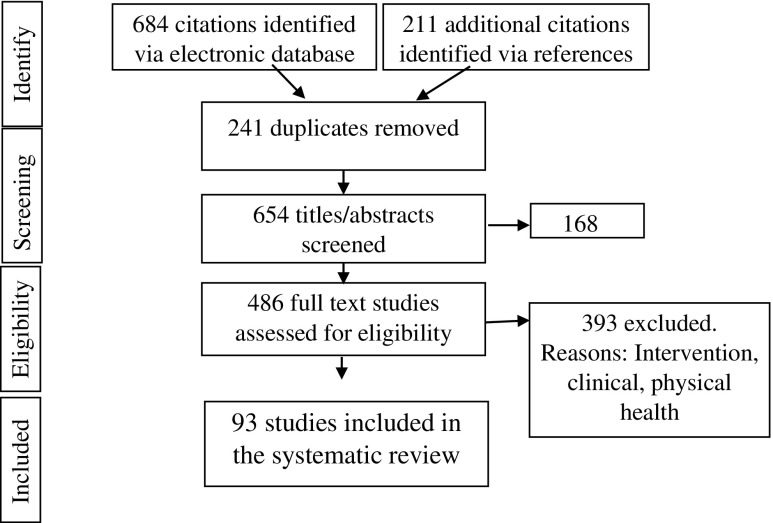
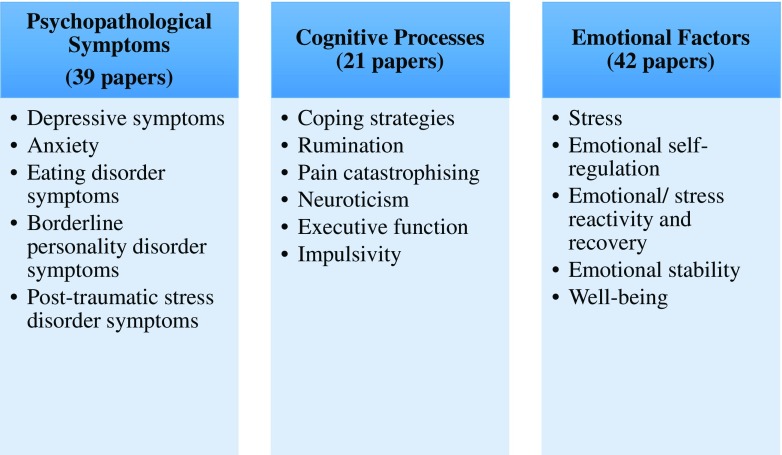
Interest in the influence of dispositional mindfulness (DM) on psychological health has been gathering pace over recent years. Despite this, a systematic review of this topic has not been conducted. A systematic review can benefit the field by identifying the terminology and measures used by researchers and by highlighting methodological weaknesses and empirical gaps. We systematically reviewed non-interventional, quantitative papers on DM and psychological health in non-clinical samples published in English up to June 2016, following the Preferred Reporting Items for Systematic Reviews and Meta-analyses (PRISMA) guidelines. A literature search was conducted using PsycINFO, PubMED, Medline and Embase, and 93 papers met the inclusion criteria. Within these, three main themes emerged, depicting the relationship between DM and psychological health: (1) DM appears to be inversely related to psychopathological symptoms such as depressive symptoms, (2) DM is positively linked to adaptive cognitive processes such as less rumination and pain catastrophizing and (3) DM appears to be associated with better emotional processing and regulation. These themes informed the creation of a taxonomy. We conclude that research has consistently shown a positive relationship between DM and psychological health. Suggestions for future research and conceptual and methodological limitations within the field are discussed.
Overview
CoChat Summary
## TL;DR
This systematic review synthesized 93 quantitative, non-interventional studies on dispositional mindfulness (DM) and psychological health in non-clinical samples published in English up to June 2016. Across the included literature, DM was consistently associated with better psychological health, especially lower psychopathological symptoms, more adaptive cognitive processes, and better emotional processing/regulation.
## Key findings
- The review included 93 papers with a combined 34,620 participants; study sizes ranged from 12 to 5,287 participants.
- 39 studies examined psychopathological symptoms, 21 examined cognitive processes, and 42 examined emotional factors; the authors report that DM was generally linked to better outcomes across all three themes.
- For depressive symptoms, 21 papers focused on depression and all 21 found a negative relationship between DM and depressive symptoms.
- For psychological well-being, 13 papers examined the outcome and all 13 showed positive associations between DM and psychological well-being.
- For stress, the review notes 27 papers focused on stress and found that higher DM was associated with lower perceived stress and emotional distress.
- The most commonly used DM measure was the Mindful Attention Awareness Scale (MAAS), used in 48 papers; the Five Facet Mindfulness Questionnaire (FFMQ) was used in 30 studies.
## Methods
- Systematic review conducted following PRISMA guidelines; included quantitative, non-interventional studies on DM and psychological health in non-clinical samples.
- Searched PsycINFO, PubMED, Medline, and Embase for papers published up to June 2016, with additional backward and forward citation searches.
- Included papers had to be English, empirical, peer-reviewed, and use a validated measure of DM; quality was rated with the Standard Quality Assessment Criteria.
## Limitations
- The paper states that it included only published articles in English, so non-English studies were excluded and may have provided additional cross-cultural evidence.
- The search terms were applied to titles and abstracts only, which may have missed relevant studies not explicitly framed around DM in those fields.
- The text makes evident that the evidence base is limited by heavy reliance on cross-sectional, self-report, and often student/white Caucasian samples; the review itself notes this reduces external validity and that many studies analyzed ordinal Likert data with parametric tests.
Model-written summary. Check it against the paper before relying on it.
Integrity signals
Registry
Cites
Statistics
Figures
Verification
Claims the paper makes
7 Valid · 0 Not valid · 61 Not checked · 63 Own results and interpretations
Every source the paper cites for this claim was checked and supports it.
In the paper
“They found that DM mediates the effects of procrastination on health.”
§ Dispositional Mindfulness and Psychological Health: a Systematic Review > Results > Emergent Themes
What the sources say
- Supportedcites Sirois and Tosti (2012) matched to “Lost in the Moment? An Investigation of Procrastination, Mindfulness, and Well-being” (2012) source
The Abstract (p.1) states that tests of the nested mediation models revealed the effects of procrastination on stress and health were mediated by mindfulness, with bootstrapping confirming significance. The Structural Model section (p.~7) reports the fit-index comparison showing mindfulness also mediated the effects of procrastination on (perceived) health, and the Discussion summarises that low mindfulness 'mediates the association of procrastination to poor perceived health' in a sample of 339 students measured with trait/dispositional mindfulness scales (MAAS, KIMS). The paraphrase matches the source's population, predictor, mediator and outcome. (LLM, conf=0.92)
plainstates a cause- Asserted: passes — The authors put it forward as true.
- Checkable: passes — It can be checked against evidence.
- Load-bearing: unclear — It is unclear whether the paper’s conclusions depend on it.
- Based: passes — The paper gives a reason why it holds.
- Supported
The cited sources support only part of this claim — read each source’s verdict below.
In the paper
“Studies suggest that DM buffers against the negative influence of perceived stress on psychological health (Adams et al. 2015; Bergin and Pakenham 2016; Bränström et al. 2011; Cole et al. 2014; Daubenmier et al. 2014).”
§ Dispositional Mindfulness and Psychological Health: a Systematic Review > Results > Emergent Themes
What the sources say
- Partly supportedcites Adams et al. 2015 matched to “Testing a Moderated Mediation Model of Mindfulness, Psychosocial Stress, and Alcohol Use Among African American Smokers” (2015) sourceExperimental — accuracy not yet measured
Our copy does show a buffering (moderation) effect: the Discussion reports that 'mindfulness significantly moderated the relationship of perceived stress with quantity of alcohol use,' with higher stress predicting greater drinking and more frequent binging 'among participants with low, but not high, mindfulness scores' (Results, Path Analyses; binge interaction only a trend, β = −0.14, p = 0.056; the mindfulness × stress interaction for probable alcohol use disorder was non-significant, β = −0.05, p = 0.44). However, the outcomes buffered were alcohol-use variables in a specific sample of predominantly low-SES African American smokers, not 'psychological health' as the citing sentence generalizes; the paper's only broader mental-health content is background citations to others' work (e.g., Brown & Ryan 2003; McKee et al. 2007) in the Introduction, plus the mediation pathway whereby mindfulness was associated with lower perceived stress. So the moderation point is supported for stress → drinking, while the extension to psychological health and to populations beyond the study sample is not. (LLM, conf=0.72)
- Not checked yetcites Bergin and Pakenham 2016
- Supportedcites Bränström et al. 2011 matched to “The association between dispositional mindfulness, psychological well‐being, and perceived health in a Swedish population‐based sample” (2011) source
The Abstract's Conclusions (p. 1) state almost verbatim that 'Results suggest that dispositional mindfulness might buffer against the negative influence of perceived stress on psychological well-being,' matching the citing sentence's hedged framing ('studies suggest'). The Discussion (p. 9) and Results section 'The effect of mindfulness as a moderator of stress' (p. 6) report significant stress × mindfulness interactions for acting with awareness, non-judging, non-reactivity (and describing) on depression and for non-judging on perceived health, with the buffer appearing chiefly at higher stress levels. Minor qualification: the effect was facet-specific and cross-sectional, and no moderation emerged for anxiety or physical symptoms/other complaints, but the attributed point itself is stated by the source. (LLM, conf=0.85)
hedgedstates a possible cause- Asserted: passes — The authors put it forward as true.
- Checkable: passes — It can be checked against evidence.
- Load-bearing: passes — The paper’s conclusions depend on it.
- Based: passes — The paper gives a reason why it holds.
- Partly supported
Every source the paper cites for this claim was checked and supports it.
In the paper
“Finally, one paper has found that lower coping motives in students mediate the link between mindfulness facets and alcohol use (Vinci et al. 2016).”
§ Dispositional Mindfulness and Psychological Health: a Systematic Review > Results > Emergent Themes
What the sources say
- Supportedcites Vinci et al. 2016 matched to “Drinking motives mediate the relationship between facets of mindfulness and problematic alcohol use” (2016) source
The Abstract reports that, among 207 college students classified as engaging in problematic drinking, lower coping motives significantly mediated the relationships of Acting with Awareness and Nonjudging with lower AUDIT scores. The Discussion likewise identifies coping motives as a significant mediator for those two mindfulness facets. (LLM, conf=0.93)
plainstates a cause- Asserted: passes — The authors put it forward as true.
- Checkable: passes — It can be checked against evidence.
- Load-bearing: unclear — It is unclear whether the paper’s conclusions depend on it.
- Based: passes — The paper gives a reason why it holds.
- Supported
Every source the paper cites for this claim was checked and supports it.
In the paper
“It appears that one of the possible mechanisms through which DM does this is by improving emotional regulation (Coffey and Hartman 2008; de Frias 2014; Feldman et al. 2016; Kadziolka et al. 2016; McDonald et al. 2016; Prakash et al. 2015).”
§ Dispositional Mindfulness and Psychological Health: a Systematic Review > Results > Emergent Themes
What the sources say
- Supportedcites Coffey and Hartman 2008 matched to “Mechanisms of action in the inverse relationship between mindfulness and psychological distress” (2008) source
The Discussion identifies emotion regulation as a mediator between dispositional mindfulness and psychological distress and reports that greater mindfulness was associated with better management of negative emotion. The paper studied depressive and anxious symptoms, so its evidence concerns psychological distress rather than every form of stress. (LLM, conf=0.90)
- Supportedcites de Frias 2014 matched to “Memory Compensation in Older Adults: The Role of Health, Emotion Regulation, and Trait Mindfulness” (2014) source
The Discussion (p. 6) proposes that mindfulness may buffer against stress by lowering rumination and reducing excessive processing of negative information during emotional challenges. The introduction (p. 2) also describes emotion regulation and stress reduction as reported benefits of mindfulness. The claim is a hedged paraphrase of that proposed mechanism, not a claim that this study tested it. (LLM, conf=0.88)
- Supportedcites Feldman et al. 2016 matched to “Dispositional Mindfulness Uncouples Physiological and Emotional Reactivity to a Laboratory Stressor and Emotional Reactivity to Executive Functioning Lapses in Daily Life” (2016) source
The General Discussion reports that people higher in dispositional mindfulness showed less emotional reactivity to stress-related experiences and describes this as more emotionally even responding to stressors. That supports the citing sentence’s cautious proposal that better emotional regulation is a possible way mindfulness buffers stress, although the studies did not directly test a mediating mechanism. (LLM, conf=0.88)
hedgedstates a possible cause- Asserted: passes — The authors put it forward as true.
- Checkable: passes — It can be checked against evidence.
- Load-bearing: passes — The paper’s conclusions depend on it.
- Based: passes — The paper gives a reason why it holds.
- Supported
A result the paper reports from its own data — it cites no other source for it, so there is none to check. The quote shows it is in the paper.
In the paper
“93 papers met the inclusion criteria”
- Also stated in: § Results · plain
“Ninety-three papers, all of which used quantitative methodology, met the eligibility criteria and were included in the systematic review”
§ Dispositional Mindfulness and Psychological Health: a Systematic Review > Abstract
plain- Asserted: passes — The authors put it forward as true.
- Checkable: passes — It can be checked against evidence.
- Load-bearing: unclear — It is unclear whether the paper’s conclusions depend on it.
- Based: passes — The paper gives a reason why it holds.
- Also stated in: § Results · plain
71 more claims
Create a free account to see all 131 claims and to verify the 77 references still open.
- It may state two separate claims as one. 28
- Probably not a substantial claim. 35
Claims other papers make about this one
Each is checked against this paper’s own text: does it say what the citing paper says it does?
The source backs part of the claim, not all of it — or backs it for a different population, condition or comparison.
In the citing paper
“Further, the strong relationship between dispositional mindfulness and physical health is related to stress.”
From What is the mindful personality? Implications for physical and psychological health (2022) · cites this paper as Tomlinson et al., 2018
Experimental — accuracy not yet measuredThe source backs part of the claim, not all of it — or backs it for a different population, condition or comparison.
In the citing paper
“Dispositional mindfulness has protective effects against psychological distress (Tomlinson et al., 2018).”
From Does the practice of mindfulness reduce somatic symptoms and COVID-19-related anxiety? A community-based survey (2022) · cites this paper as Tomlinson et al., 2018
Experimental — accuracy not yet measuredThe source backs part of the claim, not all of it — or backs it for a different population, condition or comparison.
In the citing paper
“In fact, a longer experience in meditation is associated with higher levels of dispositional mindfulness (Josefsson et al., 2011; Tomlinson et al., 2018)”
From Does the practice of mindfulness reduce somatic symptoms and COVID-19-related anxiety? A community-based survey (2022) · cites this paper as Tomlinson et al., 2018
Experimental — accuracy not yet measuredThe cited source says what the claim attributes to it.
In the citing paper
“Over the years, research has demonstrated that trait mindfulness is associated with psychological health outcomes, such as lower levels of stress, anxiety and depression (for review see, Tomlinson et al., 2018).”
From The association between facets of mindfulness and COVID-19 related distress: A cross-sectional study (2023) · cites this paper as Tomlinson et al., 2018
The cited source says what the claim attributes to it.
In the citing paper
“A systematic review on mindfulness and psychological health revealed that trait mindfulness was negatively related to psychopathology symptoms (i.e., depression and anxiety) and positively related to adaptive functioning (Tomlinson et al., 2018).”
From Examining the Prospective Associations Between Mindfulness Facets and Substance Use in Emerging Adulthood. (2021) · cites this paper as Tomlinson et al., 2018
4 more claims about this paper
Create a free account to see every claim other papers make about this one.
Citations
Cites
Preferred Reporting Items for Systematic Reviews and Meta-Analyses: the PRISMA statement
Moher, D., Liberati, A., Tetzlaff, J., Altman, D. G., & for the PRISMA Group (2009) · BMJ · doi:10.1136/bmj.b2535 · Cited by 83,823
The CES-D Scale: A Self-Report Depression Scale for Research in the General Population
Radloff, L. S. (1977) · Applied Psychological Measurement · doi:10.1177/014662167700100306 · Cited by 53,267
Preferred reporting items for systematic reviews and meta-analyses: the PRISMA Statement.
(2009) · PubMed Central · Cited by 44,859
Development and validation of brief measures of positive and negative affect: The PANAS scales.
Watson, D., Clark, L. A., & Tellegen, A. (1988) · Journal of Personality and Social Psychology · doi:10.1037/0022-3514.54.6.1063 · Cited by 32,433 · cited 2×
“The positive and negative subscales are internally consistent (Cronbach’s alpha for negative affect = .084–0.87 and positive affect = .86–.90) with good test-retest reliability of r = .48 and .42 for positive and negative affect, respectively (Watson et al. 1988).”
BackgroundMethodInfluentialPreferred Reporting Items for Systematic Reviews and Meta-Analyses: The PRISMA Statement
Moher, D., Liberati, A., Tetzlaff, J., & Altman, D. G. (2009) · Journal of Clinical Epidemiology · doi:10.1016/j.jclinepi.2009.06.005 · Cited by 19,575
(2017) · Cited by 16,319
Lovibond, P. F., & Lovibond, S. H. (1995) · Behaviour Research and Therapy · doi:10.1016/0005-7967(94)00075-u · Cited by 14,523 · cited 1×
“The Depression, Anxiety and Stress Scale (DASS-21; Lovibond and Lovibond 1995) was frequently used within the papers.”
MethodThe benefits of being present: Mindfulness and its role in psychological well-being
Brown, K. W., & Ryan, R. M. (2003) · Journal of Personality and Social Psychology · doi:10.1037/0022-3514.84.4.822 · Cited by 13,448 · cited 8×
“The MAAS measures mindfulness as a single construct.”
BackgroundMethodInfluentialUsing Self-Report Assessment Methods to Explore Facets of Mindfulness
Baer, R. A., Smith, G. T., Hopkins, J., Krietemeyer, J., & Toney, L. (2006) · Assessment · doi:10.1177/1073191105283504 · Cited by 7,511 · cited 6×
“Despite promoting the use of multi-faceted DM measures such as the FFMQ, it has been argued that the factor structure of this measure may need to be re-evaluated first (Baer et al. 2006; Petrocchi and Ottaviani 2016).”
BackgroundMethodInfluential(2008) · Medical Entomology and Zoology · Cited by 7,477
Cited by
Items 301–400 of 561
Morin, L., Laurin, J. C., Doucerain, M. M., & Grégoire, S. (2024) · Mindfulness · doi:10.1007/s12671-024-02437-z · Cited by 8
“…the practice of meditation during mindfulness-based interventions) is positively linked to favorable psychological (Sommers-Spijkerman et al., 2021; Tomlinson et al., 2018; Wielgosz et al., 2019) and physical outcomes (Conversano et al., 2021; Goldberg et al., 2022; Greeson & Chin, 2016), in both…”
Mills-Webb, K., & Hennessey, A. (2025) · Frontiers in Education · doi:10.3389/feduc.2025.1430197 · Cited by 6
Wang, Y. J., Qiao, T., & Liu, C. (2025) · Scientific Reports · doi:10.1038/s41598-025-94326-1 · Cited by 7
“Existing research proved that individuals with a higher level of mindfulness perceive negative emotions lower 57 , and mindfulness can negatively affect individuals’ negative affectivity responses 58,59 .”
Mental Health and Well-Being of Solid Organ Transplant Donors. The Forgotten Sacrifices
Pan, X., Toh, J. Z. K., Ng, C. H., Tay, P. W. L., Wong, N. W., Kow, A. W. C., Vathsala, A., Tan, E. X. X., Muthiah, M. D., & Lim, W. H. (2021) · Transplantology · doi:10.3390/transplantology2030026 · Cited by 7
Catagnus, R. M., García, Y., & Zhang, D. X. (2022) · Advances in Neurodevelopmental Disorders · doi:10.1007/s41252-022-00294-2 · Cited by 4
“, 2018) Personality psychology Trait or disposition characterized by a stable state of mindfulness (Tomlinson et al., 2018) Functional contextualism Processes of acceptance, defusion, contact with the present moment, and self as context; somewhat aligned with Buddhist teachings (see Fletcher & Hayes, 2005; Fung, 2015;…”
BackgroundFan, S., Yu, S., & Xu, W. (2023) · Psychological Reports · doi:10.1177/00332941231166615 · Cited by 6
“More recently, trait mindfulness has been shown to be associated with increases in psychological well-being (Tomlinson et al., 2018).”
Соколова, А., Лобанова, П., & Kuzminov, I. (2023) · foresight · doi:10.1108/fs-02-2023-0026 · Cited by 5
Sánchez, M., Saavedra, L. M., Lozano, A., Morgan‐López, A. A., & Amaro, H. D. L. A. (2024) · Current Addiction Reports · doi:10.1007/s40429-024-00567-x · Cited by 4
Dispositional mindfulness: Is it related to knee osteoarthritis population’s common health problems?
Chu, S., Lin, L., Chiu, A., & Wang, H. (2024) · PLoS ONE · doi:10.1371/journal.pone.0299879 · Cited by 5
The role of trait mindfulness in moderating climate distress during wildfire season
Guan, J., Dutcher, E. G., Goldin, P. R., Ahmadi, S. E., Fromer, E., Weiser, S. D., Maibach, E. W., Prather, A. A., & Epel, E. S. (2024) · PLOS Climate · doi:10.1371/journal.pclm.0000524 · Cited by 5
Yuan, D., Kuang, J., Li, J., Cheung, R. Y. M., Herold, F., Gerber, M., Taylor, A., Kramer, A. F., Wang, J., Yeung, A., et al. (2025) · Complementary Therapies in Clinical Practice · doi:10.1016/j.ctcp.2025.101953 · Cited by 7
Ibili, G., Tree, J. J., & Gürlük, Y. O. (2025) · PLoS ONE · doi:10.1371/journal.pone.0318845 · Cited by 10
Schwartz, K., Ganster, F. M., Voracek, M., & Tran, U. S. (2025) · Psychosomatic Medicine · doi:10.1097/psy.0000000000001381 · Cited by 8
Effects of short-term Huatou Chan training on health
Luo, F., Qiang, V., Yi-Bing, W., Wang, Y., Tian, W., Ma, Z., & Mao, Y. (2021) · EXPLORE · doi:10.1016/j.explore.2021.04.001 · Cited by 5
¿El mindfulness disposicional media la relación entre ansiedad y rendimiento en un examen?
López-Navarro, E., Giorgetti, D., & Errasti, J. M. (2020) · Revista de Investigación en Educación · doi:10.35869/reined.v18i3.3271 · Cited by 5
Childhood Maltreatment and Mindfulness: Implications for Older Adult’s Marital Outcomes
Fitzgerald, M., & Grames, H. A. (2021) · Journal of Couple & Relationship Therapy · doi:10.1080/15332691.2021.1922114 · Cited by 6
“Likewise, mindfulness has been shown to decrease mental health problems (Tomlinson et al., 2018), which often contribute to marital problems among adults who were maltreated in childhood (Fitzgerald et al., 2020).”
BackgroundFang, S., & Chung, M. C. (2021) · Current Psychology · doi:10.1007/s12144-021-02162-z · Cited by 4
Goyer, M. S., McKee, L. G., & Parent, J. M. (2022) · Mindfulness · doi:10.1007/s12671-022-01873-z · Cited by 4
“Despite disparities across operationalizations of the construct, research has indicated a positive relationship between trait mindfulness and mental health and well-being, and a negative association with psychopathology (e.g., Brown et al., 2007; Keng et al., 2011; Tomlinson et al., 2018).”
BackgroundSomohano, V. C., Vásquez, A., Shank, T. M., Irrgang, M., Newman, A. G., Laue, C. S., Wyse, J. J. B., Denneson, L. M., O'Neil, M. E., & Lovejoy, T. I. (2022) · Cognitive and Behavioral Practice · doi:10.1016/j.cbpra.2022.05.003 · Cited by 5
Kang, M., Nan, J. K.-M., & Yuan, Y. (2022) · Applied Psychology Health and Well-Being · doi:10.1111/aphw.12431 · Cited by 6
Keleynikov, M., Benatov, J., & Berger, R. (2021) · Preprints.org · doi:10.20944/preprints202112.0364.v1 · Cited by 3
“There is growing empirical evidence supporting the existence of a link between mindfulness and well-being, and that there is a negative association between mindfulness and mental health issues such as depression, anxiety, and stress [26].”
BackgroundMingxuan, W., Ting, H., Chenqi, Z., Ningning, Z., Hao, C., Hongtao, Z., Shuo, L., & Yang, G. (2024) · Games for Health Journal · doi:10.1089/g4h.2024.0041 · Cited by 3
Micheli, N., Porcelli, P., Barrault-Couchouron, M., & Dantzer, C. (2022) · Frontiers in Psychology · doi:10.3389/fpsyg.2022.996559 · Cited by 3
Upadhyay, N., Shukla, M., & Pandey, R. (2024) · Current Psychology · doi:10.1007/s12144-024-06332-7 · Cited by 7
“This finding is corroborated by those of earlier researches (e.g., Tomlinson et al., 2018).”
Galluzzi, S., Solorzano, C. S., Marizzoni, M., Gatti, E., Gualco, C., Lanfredi, M., Rossi, R., Cattaneo, A., Frisoni, G. B., Crescentini, C., et al. (2025) · Mindfulness · doi:10.1007/s12671-025-02718-1 · Cited by 5
“…on depression, anxiety, rumination, well-being, worry, cognitive function, stress perception, and sleep quality in clinical and nonclinical samples of older adults (Chiesa & Serretti,2009; Geiger et al., 2016; Tomlinson et al., 2018; Hazlett-Stevens et al., 2019; González-Martín et al., 2023).”
Sik, H. T., Yu, B. C. L., Chan, R. M. K., Ho, C. Y. Y., & Mak, W. W. S. (2026) · Mindfulness · doi:10.1007/s12671-026-02770-5 · Cited by 3
The Impact of a Mindfulness-Gestalt Based Counseling Group on Undergraduate College Students
Kyvelou, A., Αντωνοπούλου, Κ., Kleftaras, G., Verdis, A., & Tsitsas, G. (2023) · Psychology · doi:10.4236/psych.2023.148070 · Cited by 8
Chen, G., Wang, X., Barnhart, W. R., Fu, Y., & He, J. (2024) · Journal of Clinical Psychology · doi:10.1002/jclp.23706 · Cited by 3
A pilot study on the efficacy of an online mindfulness intervention for Canadian police officers
Fleischmann, M. H., Boudreau, A., Vincent, M., Charman, M., Collie, E., Johnston, R., & Khoury, B. (2024) · Journal of Community Safety and Well-Being · doi:10.35502/jcswb.364 · Cited by 3
Zhou, J., Zhang, H., & Cao, R. (2024) · Current Psychology · doi:10.1007/s12144-024-06590-5 · Cited by 5
Tabatabaee, S. M., Abdolahi, M., Matvaei, R., & Khalili, P. (2024) · ENLIGHTEN (Jurnal Bimbingan dan Konseling Islam) · doi:10.32505/enlighten.v7i1.8375 · Cited by 5
“This enhanced awareness translates to reduced depressive symptoms, improved cognitive function, and a greater capacity to regulate emotions – all factors associated with a lower risk of suicide (Lyvers et al., 2014; Shorey et al., 2016; Song & Bae, 2020; Tomlinson et al., 2018).”
BackgroundDifferential explanations of psychological well-being according to clinical personality patterns
Ciofu, V., Marian, A.-L., Apostol, M.-M., & Chiriac, L.-E. (2024) · Current Psychology · doi:10.1007/s12144-024-06897-3 · Cited by 5
Dispositional mindfulness profiles and psychological symptoms: a latent profile analysis
Mehrabi, F., & Beshai, S. (2025) · Frontiers in Psychology · doi:10.3389/fpsyg.2025.1411901 · Cited by 5
Evidence to Support Mindful Healthcare Professionals
Kraemer, K. M., Wang, A., O’Bryan, E. M., & Luberto, C. M. (2022) · Springer eBooks · doi:10.1007/978-3-030-91062-4_2 · Cited by 3
Cortázar, N., & Calvete, E. (2022) · Behavioral Psychology/Psicología Conductual · doi:10.51668/bp.8322202n · Cited by 4
dethoor, M., Vialatte, F., martinelli, M., peri, P., Lançon, C., & Trousselard, M. (2022) · OBM Integrative and Complementary Medicine · doi:10.21926/obm.icm.2204058 · Cited by 4
Blinnikova, I. V., Матюшин, В. В., Gushchin, M. V., & Lange, M. D. (2023) · National Psychological Journal · doi:10.11621/npj.2022.0406 · Cited by 4
Wimmer, L., Isherwood, K. R., Parkinson, J. A., & Dorjee, D. (2023) · Psychological Studies · doi:10.1007/s12646-023-00746-2 · Cited by 5
Demina, A., Petit, B., Meille, V., Lebon, F., & Trojak, B. (2023) · PLoS ONE · doi:10.1371/journal.pone.0288692 · Cited by 5
Wang, X., & Chen, S. (2023) · Sustainability · doi:10.3390/su152316457 · Cited by 3
“Similar to mindfulness, which could be conceptualized as a trait referred to as dispositional mindfulness [28], we suggested that observing can also be developed into a long-term tendency like a trait and thus can be referred to as dispositional mindful observation.”
BackgroundZhang, R., Wu, J., Duan, Y., & Sun, F. (2024) · Mindfulness · doi:10.1007/s12671-024-02409-3 · Cited by 4
“The direct effect of mindfulness was also consistent with empirical research identifying mindfulness as an important resource against distress, as it was associated with less physical and perceived stress in the face of pressure (Li et al., 2023; McBride et al., 2022; Tomlinson et al., 2018).”
Polak, N., & Grossman, E. S. (2024) · Societies · doi:10.3390/soc14110236 · Cited by 3
Mental Health and Work: A Systematic Review of the Concept
Lancman, S., Bicudo, S. P. B. D. C., Rodrigues, D. D. S., Nogueira, L. D. F. Z., Barros, J. D. O., & Barroso, B. I. D. L. (2024) · Healthcare · doi:10.3390/healthcare12232377 · Cited by 4
“Mapping concepts in systematic reviews is an emerging proposition for producing knowledge that seeks to compile, understand, identify, describe, and characterize the concepts used by a given scientific population, exceeding epistemological questions [13,14].”
The relationship between mindfulness and wellbeing in first responders: a systematic review
Parker, B., Ashton, A., & Eccles, F. J. R. (2025) · Current Psychology · doi:10.1007/s12144-024-07029-7 · Cited by 3
Xu, T., Liu, Y., Sim, C. T. K., Cui, X., & Lin, L. (2025) · Psychological Reports · doi:10.1177/00332941241308789 · Cited by 4
“They found that non-judgment and acting with awareness were the most correlated protective factors in alleviating painful feelings (Carpenter et al., 2019; Tomlinson et al., 2018).”
Yousaf, O., Love, S., & Ramsay, J. E. (2025) · Mental Health Religion & Culture · doi:10.1080/13674676.2024.2374353 · Cited by 4
“…found mindfulness to promote a variety of positive mental health outcomes (Enkema et al., 2020; Gu et al., 2015), both in its dispositional form (Tomlinson et al., 2018) and when nur-tured through therapeutic mindfulness-based programs (MBPs), such as mindfulness based cognitive therapy (MBCT;…”
InfluentialSelf-citationHu, Y., Sun, X., Yuan, Y., & Wang, H. (2025) · BMC Nursing · doi:10.1186/s12912-025-03357-6 · Cited by 6
Saltsman, T. L., Seery, M. D., Ward, D. E., Radsvick, T. M., Panlilio, Z. A., Lamarche, V. M., & Kondrak, C. L. (2020) · Personality and Social Psychology Bulletin · doi:10.1177/0146167220956898 · Cited by 7
“The overarching construct of dispositional mindfulness has been associated with various stress and coping benefits (e.g., Keng et al., 2011; Tomlinson et al., 2018), but previous work suggests that some facets may be particularly important.”
BackgroundИванович, Г. П. (2008) · PubMed · Cited by 3
Miyata, H., Yamasaki, K., ChaeEun, N., & Ishikawa, H. (2023) · International Journal of Environmental Research and Public Health · doi:10.3390/ijerph20105873 · Cited by 4
“Such mindfulness as an inherent trait of humans is referred to as dispositional mindfulness [8,9].”
BackgroundAgnoli, S., & Vannucci, M. (2020) · Elsevier eBooks · doi:10.1016/b978-0-12-809324-5.23851-0 · Cited by 4
Malboeuf‐Hurtubise, C., Taylor, G., Léger‐Goodes, T., Touré, E. H., Fitzpatrick, C., & Smith, J. (2025) · Research Square · doi:10.21203/rs.3.rs-6448641/v1 · Cited by 3
Fitzgerald, P. B., Webb, S. L., Denning, N. C., Dowie, T.-I., Schweickle, M. M., Modak, A., Chan, G., Knight, J., Waldron, M., Gainsford, K., et al. (2025) · medRxiv · doi:10.1101/2025.05.28.25328532 · Cited by 3
The association between facets of mindfulness and COVID-19 related distress: A cross-sectional study
Boekhorst, M. G. B. M., & Duijndam, S. (2023) · Acta Psychologica · doi:10.1016/j.actpsy.2023.103826 · Cited by 2
Li, J., & Liu, S. (2023) · Adolescent Psychiatry · doi:10.2174/0122106766264988231024052215 · Cited by 2
Unveiling the mirage of mindfulness profiles through mindfulness-based stress reduction
Lecuona, O. Z., García‐Rubio, C., de Rivas, S., Vidal, J., Moreno‐Jiménez, J. E., & Rodríguez‐Carvajal, R. (2024) · Journal of Contextual Behavioral Science · doi:10.1016/j.jcbs.2024.100775 · Cited by 3
Hsu, T., Nardini, C., Vélez, G., & Raposa, E. B. (2025) · Journal of American College Health · doi:10.1080/07448481.2024.2446442 · Cited by 4
She, R., Li, L., Yang, Q., Lin, J., Ye, X., Wu, S., Yang, Z., Guan, S., Zhang, J., & Lau, J. T. F. (2025) · Stress and Health · doi:10.1002/smi.70037 · Cited by 7
“Relatedly, empirical evidence suggested that emotional regulation and maladaptive coping strategies, such as rumination and avoidant coping, mediated the association between mindfulness and psychological health (Tomlinson et al. 2018).”
Kamboj, S. K., Peniket, M. J., Norman, J., Robshaw, R., Soni-Tricker, A., Falconer, C. J., Gilbert, P., & Simeonov, L. (2025) · Psychological Medicine · doi:10.1017/s0033291725101013 · Cited by 3
“Whether as dispositions (Tomlinson, Yousaf, Vittersø, & Jones, 2018) or acquired competencies (Galante et al., 2014), (self-)compassion and mindfulness are associated with positive health outcomes (Millard, Wan, Smith, & Wittkowski, 2023; Wielgosz et al., 2019), and recent innovations in…”
Unravelling the Association Between Trait Mindfulness and Problematic Social Media Use in Youth
Galli, E., Sannino, M., Dridi, Z., & Giancola, M. (2025) · International Journal of Environmental Research and Public Health · doi:10.3390/ijerph22101479 · Cited by 3
“Of particular interest is trait mindfulness, a dispositional characteristic associated with heightened self-awareness, adaptive emotion regulation, and reduced engagement in maladaptive coping behaviours [45–47].”
Wang, H., Ding, J., Liu, G., Sun, G., Zhang, X., Xiao, W., Cai, Y., & Lin, A. (2025) · Frontiers in Medicine · doi:10.3389/fmed.2025.1630034 · Cited by 3
“Several studies have demonstrated the positive impact of MI on quality of life (53, 75).”
Zhu, H., Zeng, J., Liu, L., & Gong, J. (2025) · Mindfulness · doi:10.1007/s12671-025-02683-9 · Cited by 3
“A systematic review by Tomlinson et al. (2018) revealed that higher levels of DM are inversely associated with psychopathological symptoms and positively correlated with adaptive cognitive processes and enhanced emotional regulation.”
Wu, Y., & Ma, R. (2025) · Frontiers in Psychology · doi:10.3389/fpsyg.2025.1635604 · Cited by 7
Asymmetric Anticipatory Emotions and Economic Preferences: Dread, Savoring, Risk, and Time
Dawson, C., & Johnson, S. G. B. (2026) · Cognitive Science · doi:10.1111/cogs.70160 · Cited by 4
“Given that dread is a more powerful emotion than savoring, it follows that mind-wandering should typically lead to more negative affect and mindfulness to more positive affect—both robust empirical findings (Killingsworth & Gilbert, 2010; Tomlinson et al., 2018).”
Mindfulness Training for New Nursing Students Improves Stress Resilience and Well-Being
Schwartz‐Mette, R. A., Strout, K. A., Sapp, M., Carmone, S.-M., & Weirich, M. (2026) · Journal of Nursing Education · doi:10.3928/01484834-20250827-01 · Cited by 3
Bi, S., Zhou, H., Wang, J., Zhou, H., & Keller, P. S. (2022) · Family Relations · doi:10.1111/fare.12783 · Cited by 4
Gawrysiak, M. J., Loomis, D., Armao, M., Gillooly, E., Kearns, L., & Walsh, J. C. (2023) · Mindfulness · doi:10.1007/s12671-023-02136-1 · Cited by 2
Can Mindfulness and Self-Compassion Protect from Relational Aggression and Victimization in College?
Christodoulou, V., Ilia, C., & Hadjigeorgiou, S. (2024) · Journal of College Student Mental Health · doi:10.1080/28367138.2024.2310222 · Cited by 4
“…support in improving negative emotional states (Bowlin & Baer, 2012; Carpenter et al., 2019; Eberth & Sedlmeier, 2012; Ostafin et al., 2015; Tomlinson et al., 2017), enhancing emotion regulation capacities (i.e., the process of effectively managing one’s emotional states; Berking &…”
Barone, P., Borrás-Sansaloni, C., Ricco-Pérez, M., López-Navarro, E., & Navarro, C. (2024) · Journal of Clinical Medicine · doi:10.3390/jcm13082340 · Cited by 3
“Previous research has linked an increase in subjective well-being with DM, resulting in a reduction in symptoms of depression and anxiety [27,51].”
BackgroundKotsiantis, S. B., Γεωργίου, Μ., Kalles, D., & Dedos, S. (2024) · Higher Education · doi:10.1007/s10734-024-01253-7 · Cited by 2
“…have been put forth in the relevant literature (Brown & Ryan, 2003; Campos et al., 2019; Grossenbacher & Quaglia, 2017; Haliwa et al., 2021; Hanley & Garland, 2017; Irie & Yokomitsu, 2019; Rau & Williams, 2016) and have been extensively described by other social studies (Tomlinson et al., 2018).”
InfluentialSease, T. B., Andersland, M., Perkins, D. R., Sandoz, E. K., Jean, C., Sudduth, H., & Cox, C. R. (2024) · Journal of Contextual Behavioral Science · doi:10.1016/j.jcbs.2024.100815 · Cited by 5
Mindfulness-Based Education: Exploring Cultural and Age-Related Perspectives Through Course Design
Shi, X. (2024) · Lecture Notes in Education Psychology and Public Media · doi:10.54254/2753-7048/61/20240583 · Cited by 3
Wei, X., Chi, X., Chen, S., Liang, K., Zhao, Y., & Xie, S. (2024) · Behavioral Sciences · doi:10.3390/bs14111088 · Cited by 4
Li, P., Zhou, Y., Fang, Y., & Chen, Z. (2024) · Psychological Reports · doi:10.1177/00332941241300963 · Cited by 2
“While existing meta-analysis and experimental studies have suggested a negative association between trait mindfulness and perceived stress (Tomlinson et al., 2018; Weinstein et al., 2009), an integrative examination of the underlying mechanisms is lacking.”
Chasson, M. (2024) · Journal of Reproductive and Infant Psychology · doi:10.1080/02646838.2024.2431144 · Cited by 3
“Research suggests that mindfulness influences mental health through emotional and cognitive processes (Tomlinson et al., 2018).”
InfluentialGhalgar, Z., Vakilian, K., Rizi, S. M., Ghaemmaghami, M., & Moradzadeh, R. (2025) · Current Women s Health Reviews · doi:10.2174/0115734048302262240812054604 · Cited by 3
Li, P., Fang, Y., Zhou, Y., Chen, Z., & Luo, H. (2025) · Current Psychology · doi:10.1007/s12144-025-07477-9 · Cited by 2
Skorupa, A., Kocur, D. J., Domurat, A., & Paliga, M. (2025) · Mindfulness · doi:10.1007/s12671-025-02617-5 · Cited by 5
“…stress reduction (Vonderlin et al., 2020), but mindfulness also benefits emotional regulation (Guendelman et al., 2017; Mandal et al., 2011; Tomlinson et al., 2018), correlating positively with positive affect and inversely with negative affect (Enkema et al., 2020; Mandal et al., 2012;…”
Park, R., Mohiuddin, M., Poulin, P. A., Salomons, T. V., Edwards, R. R., Nathan, H., Haley, C., & Gilron, I. (2019) · PAIN Reports · doi:10.1097/pr9.0000000000000793 · Cited by 2
“Recent studies have consistently shown a positive relationship between mindfulness and positive psychological health, with clinical uses including the treatment of depression, stress reduction, and tobacco cessation—as well as for chronic pain.(17,25,39) Although there are variations between mindfulness techniques, th…”
BackgroundFeatures of Using the Russian Version of the Dispositional Mindfulness Scale (CAMM) for Teenagers
Zotova, L. E., Gubanov, A. V., & Sidyacheva, N. V. (2020) · Psychological-Educational Studies · doi:10.17759/psyedu.2020120205 · Cited by 3
Corman, M., Rubio, M., Cabrespine, A., Brindel, I., Bay, J., de Latour, R. P., & Dambrun, M. (2021) · Mindfulness · doi:10.1007/s12671-021-01788-1 · Cited by 3
Ergüler, H., Ferreira, N. B., Adonis, M. N., & Koushiou, M. (2023) · Psychological Reports · doi:10.1177/00332941231175614 · Cited by 5
“…of mindfulness in general public and college student samples, and DM has since been strongly related to increased psychological well-being regardless of an existence of clinical presentation (Baer et al., 2006; Coffey & Hartman, 2008; Rau & Williams, 2016; Tomlinson et al., 2018).”
de Zavala, A. G., Förster, C. A., Ziegler, M. D., Nalberczak‐Skóra, M., Ciesielski, P., & Mazurkiewicz, M. (2024) · Applied Psychology Health and Well-Being · doi:10.1111/aphw.12518 · Cited by 4
“Those findings align with previous results pointing to dispositional mindfulness predicting well-being (Prieto-Fidalgo et al., 2022; Tomlinson et al., 2018), but also suggest that being mindful and practicing mindfulness are not the same even if both are associated with positive changes in mood…”
BackgroundResultMindfulness and Its Role in Youth Mental Health in Schools
Albertova, S. M. (2024) · Advances in mental health and addiction · doi:10.1007/978-3-031-54295-4_2 · Cited by 2
Kingery, J. N., Schneider, T. I., Bodenlos, J. S., Peltz, J. S., Moore, M. D., & Brown, K. J. (2024) · Journal of American College Health · doi:10.1080/07448481.2024.2372584 · Cited by 5
Facets of Mindfulness and Health Among a Predominantly Low-Income Community Sample
Burstein, S. M., Hawes, E. S., Arroyo, K. M., & Bodenlos, J. S. (2020) · Mindfulness · doi:10.1007/s12671-019-01295-4 · Cited by 4
Conradi, H. S. W., Nguyen, T., Lawal, O. A., & Carlson, L. E. (2025) · Global Advances in Integrative Medicine and Health · doi:10.1177/27536130251367051 · Cited by 1
The Time Has Come to Be Mindwanderful: Mind Wandering and the Intuitive Psychology Mode
Gonçalves, Ó. F., & da Silva, M. R. D. (2022) · Springer eBooks · doi:10.1007/978-3-031-08651-9_9 · Cited by 2
Mohamadzade, A., Hasanzadeh, S., Shokoohi–Yekta, M., & Ghasemzadeh, S. (2022) · Journal of Research in Behavioural Sciences · doi:10.52547/rbs.20.3.515 · Cited by 1
Demirci, C. (2023) · The Annals of Clinical and Analytical Medicine · doi:10.4328/acam.21616 · Cited by 1
Jalilvand, S. B., & Ahmadi, S. (2023) · JOURNAL OF MENTAL HEALTH AND CLINICAL PSYCHOLOGY · doi:10.29245/2578-2959/2023/2.1271 · Cited by 2
Gölbaşı, C., Çökmüş, F. P., Başer, L. M., Hakan, G., Ünal‐Aydın, P., & Orkun, A. (2024) · Psihologija · doi:10.2298/psi230222013g · Cited by 2
Mandal, S. P., Pandey, V., Bonal, R. B., Sharma, A., Astha, A., Rajesh, V., & Saha, P. K. (2024) · Journal of Education and Health Promotion · doi:10.4103/jehp.jehp_1507_23 · Cited by 2
“[20,22] Lately, researchers have been interested in the trait mindfulness, observing its beneficial health effects in nonclinical populations.”
BackgroundSo, M. M., Wong, S. M. Y., Hui, C. L. M., Suen, Y. N., Chan, S. K. W., Lee, E. H. M., & Chen, E. Y. H. (2025) · Journal of Loss and Trauma · doi:10.1080/15325024.2025.2493954 · Cited by 2
“Several systematic reviews and meta-analyses have indeed shown that people with higher trait mindfulness, including those exposed to war trauma, experience not only fewer psychopathological symptoms but also improved quality of life (Harper et al., 2022; Tomlinson et al., 2018).”
Kaźmierczak, I., & Lacko, D. (2025) · Journal of Rational-Emotive & Cognitive-Behavior Therapy · doi:10.1007/s10942-025-00607-z · Cited by 1
Kaźmierczak, I., & Lacko, D. (2026) · Journal of Clinical Psychology · doi:10.1002/jclp.70127 · Cited by 2
Poon, J. A., Zelaya, D. G., Rajasankar, V., Murphy, M. J., Russell, R., & Sun, S. (2026) · International Journal of Environmental Research and Public Health · doi:10.3390/ijerph23050609 · Cited by 2
“A systematic review and meta-analysis of over 100 studies, most of which were correlational, found that trait mindfulness was inversely associated with mental health behaviors and health risk behaviors [58].”
Rigsby, B. A., Attai, A. K., Henner, K. K., Lancaster, G. M., Boucher, C., Ballard, J. R., Carrizales, M. G., Faw, M. H., Brown, S. M., & Lucas‐Thompson, R. G. (2026) · Journal of Marital and Family Therapy · doi:10.1111/jmft.70145 · Cited by 1
Trait mindfulness buffers depersonalization symptoms among young adults exposed to childhood abuse
Mili, F. A., & Lindsay, E. K. (2026) · Frontiers in Psychology · doi:10.3389/fpsyg.2026.1838217 · Cited by 1
“…factors such as caregiver attachments and peer social interactions (Pepping and Duvenage, 2016; Warren et al., 2021), suggesting that trait mindfulness represents a malleable disposition that can be shaped by experience (Roeser and Eccles, 2015; Tomlinson et al., 2018; Warren et al., 2023).”
López‐Zamora, M., & Morales, M. I. J. (2019) · Universitas Psychologica · doi:10.11144/javeriana.upsy18-5.cpfe · Cited by 5
Metadata
- Authors
- Tomlinson, E. R., Yousaf, O., Vittersø, A. D., & Jones, L.
- Affiliations
- University of Bath (GB)
- Corresponding author
- Yousaf, Omar
- Venue
- Mindfulness
- Published
- 2017-07-01
- Volume
- 9
- Issue
- 1
- Pages
- 23-43
- ISSN
- 1868-8527 (ISSN-L)
- 1868-8535
- PMC
- PMC5770488
- OpenAlex
- W2672899517
- Cited by
- 560
- References
- 125
- Citations by year
- 2026: 49 · 2025: 72 · 2024: 85 · 2023: 82 · 2022: 87 · 2021: 75 · 2020: 58 · 2019: 40 · 2018: 9
- FWCI
- 4.47
- Type
- journal article
- Language
- en
- Open access
- hybrid
- doi.org
- Locations
- Mindfulness (publishedVersion, cc-by)
- Europe PMC (PubMed Central) (publishedVersion, cc-by)
- PubMed Central (publishedVersion, cc-by)
- PubMed (publishedVersion)
- The University of Bath Online Publications Store (The University of Bath) (submittedVersion, cc-by)
- Research Space (submittedVersion)
- Pure (University of Bath) (submittedVersion, cc-by)
- Funders
- University of Bath
- Topics
- Social Sciences › Psychology › Clinical Psychology › Mindfulness and Compassion Interventions
- Social Sciences › Psychology › Social Psychology › Psychological Well-being and Life Satisfaction
- Social Sciences › Health › Religion, Spirituality, and Psychology
- Keywords
- trait mindfulness, mental health, depressive symptoms, rumination, pain catastrophizing, emotion regulation, emotional processing, psychopathology, non-clinical sample, mindfulness measurement
About these checks
Registry, retraction, Cites and statistics results are computed, not judged, with one exception: a printed reference that no index lists is read once by a model before it counts as a citation error. Claims are extracted by a model and kept only when their quote appears verbatim in the text; each cited source is then checked, with a model’s help, for whether it says what the claim relies on. Those verdicts can be wrong — read the claim’s quote and the cited source before relying on one.
The claim verdicts this report counts are experimental: their accuracy is not yet measured.
A language model drew the claims from the paper on 2026-10-11, under version 3 of the claim definition (model deepseek-v4.1-flash, prompt extract-v3).
A second model labelled each claim on 2026-10-11 (model jev-1.13-20260917, definition revision gold-guideline-v0.2).
Cited sources are checked with a language model’s help (qwen3.8-omni-flash and gpt-6-sol).
Statistics and arithmetic are recomputed, not judged.
Confidence bands are shown only for fields calibrated on our annotated test set. None is calibrated yet, so no band is shown.
What counts as a claim ›How we measure confidence ›How we check this ›
Are you an author, or do you see a problem with this page? Request a review
Data sources
Bibliographic data: Semantic Scholar, OpenAlex, Crossref.
Contains information from the Semantic Scholar Academic Graph Datasets, made available under the ODC Attribution License (ODC-BY 1.0).
Semantic Scholar’s data is described in: Kinney, R., et al. (2023). The Semantic Scholar Open Data Platform. arXiv:2301.10140.
