

The Unilever Study: Positive Effects on Stress and Risk for Dropout from Work after the Finding Peace in a Frantic World Training
Open accessThe DOI matches its Crossref record; 46 of the 48 references it cites were found in a registry or an index.
Abstract
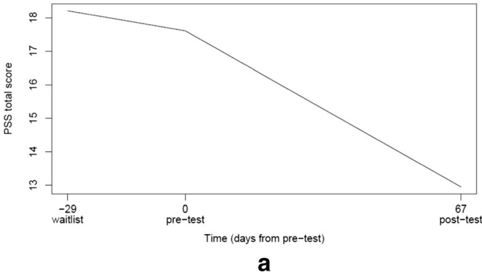
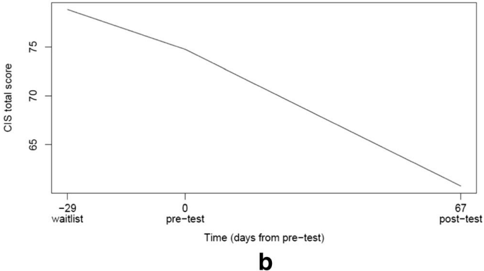
Organizations are confronted with a constant need for efficiency, which affects the working atmosphere, often typified by velocity, time pressure, competition, job insecurity, and information overload, which may lead to stress, burnout, work-life disbalance, and lowered work functioning. This study evaluated an 8-week, 1.5 h-per-week group-based standardized mindfulness program (“Finding peace in a frantic world”), applied on-site in a large multinational company. In a naturalistic longitudinal design self-selected employees ( n = 150) completed measurements at wait-list, pre-test, post-test, and 2 and 6 months follow-up. Nearly all participants followed at least five out of eight sessions, were highly satisfied with the training (8.3 out 10), and almost 90% intended to continue with mindfulness practices. Primary outcomes were stress and risk for dropout from work. Using multilevel analyses, mean pre-test scores were compared to the other measurement occasions, and the rate of change in the training period ( M = 67 days; SD = 12) was compared to the rate of change in the wait-list period ( M = 29 days; SD = 8). Direct and long-term positive effects on risk for dropout from work ( p < .001; effect size (ES) = 0.67, 0.73, and 0.88, respectively) and stress ( p < .001; ES = 0.72, 0.86, and 1.02, respectively) were found. The risk for dropout from work declined from 54.4% at wait-list (45.8% at pre-test) to 16.4% at 6 months follow-up, and declined significantly faster ( p < .001) during the training than during the wait-list period, but stress did not. In addition, positive effects on secondary measures of psychological well-being and functioning at work were found. In conclusion, a standardized mindfulness training in a multinational company reduces stress and risk for dropout and improves well-being and functioning at work, also in the long term, but a comparison of the training against alternative stress-reducing interventions is needed.
Overview
The claims and statistics of this paper haven’t been checked yet.
Free: it reads the open-access text and checks the first 5 claims that cite a source we can check. Create a free account to check every claim.
Integrity signals
Registry
Cites
Statistics
Figures
Verification
Claims the paper makes
The claims and statistics of this paper haven’t been checked yet.
Free: it reads the open-access text and checks the first 5 claims that cite a source we can check. Create a free account to check every claim.
Claims other papers make about this one
Each is checked against this paper’s own text: does it say what the citing paper says it does?
The source backs part of the claim, not all of it — or backs it for a different population, condition or comparison.
In the citing paper
“There is also a growing body of evidence that has demonstrated preliminary efficacy of MBCT adaptations in general population samples (e.g., secondary school teachers, university students, healthcare workers, and workplace employees) (Beshai et al., 2016; de Bruin et al., 2020; Medlicott et al., 2021; Montero-Marin et al., 2021; Strauss et al., 2021; Taylor et al., 2014).”
From The State- and Trait-Level Effects and Candidate Mechanisms of Four Mindfulness-Based Cognitive Therapy (MBCT) Practices: Two Exploratory Studies (2023) · cites this paper as de Bruin et al., 2020
Experimental — accuracy not yet measured
Self-check
Percentages, sums and reported differences re-computed from the paper’s own numbers.
The self-check needs the paper’s full text.
Citations
Cites
A Global Measure of Perceived Stress
Cohen, S., Kamarck, T., & Mermelstein, R. (1983) · Journal of Health and Social Behavior · doi:10.2307/2136404 · Cited by 32,807
Development and validation of brief measures of positive and negative affect: The PANAS scales.
Watson, D., Clark, L. A., & Tellegen, A. (1988) · Journal of Personality and Social Psychology · doi:10.1037/0022-3514.54.6.1063 · Cited by 32,433
Multilevel analysis : an introduction to basic and advanced multilevel modeling
Snijders, T. A. B., & Bosker, R. (1999) · Cited by 14,026
A Measure of Subjective Happiness: Preliminary Reliability and Construct Validation
Lyubomirsky, S., & Lepper, H. S. (1999) · Social Indicators Research · doi:10.1023/a:1006824100041 · Cited by 4,071
The effect of mindfulness based therapy on anxiety and depression: A meta analytic review
Hofmann, S. G., Sawyer, A. T., Witt, A. A., & Oh, D. (2010) · Journal of Consulting and Clinical Psychology · doi:10.1037/a0018555 · Cited by 3,846 · cited 1×
“Effects were maintained at follow-up (Hofmann et al. 2010).”
Pursuing Happiness: The Architecture of Sustainable Change
Lyubomirsky, S., Sheldon, K. M., & Schkade, D. (2005) · Review of General Psychology · doi:10.1037/1089-2680.9.2.111 · Cited by 3,203
The Neuroscience of Mindfulness Meditation
Tang, Y.-Y., Hölzel, B. K., & Posner, M. I. (2015) · Nature reviews. Neuroscience · doi:10.1038/nrn3916 · Cited by 2,889 · cited 1×
“…influences brain activity and regions involved in the regulation of attention, emotion regulation, and self-awareness, and that these changes in the brain are in turn related to improved wellbeing, and reduction of mental and physical distress (e.g., Tang et al. 2015; Treadway and Lazar 2009).”
BackgroundMindfulness-based therapy: a comprehensive meta-analysis
Khoury, B., Lecomte, T., Fortin, G., Masse, M., Therien, P., Bouchard, V., Chapleau, M.-A., Paquin, K., & Hofmann, S. G. (2013) · Clinical Psychology Review · doi:10.1016/j.cpr.2013.05.005 · Cited by 2,003
Mindfulness-based stress reduction for healthy individuals: A meta-analysis
Khoury, B., Sharma, M., Rush, S. E., & Fournier, C. (2015) · Journal of Psychosomatic Research · doi:10.1016/j.jpsychores.2015.03.009 · Cited by 1,617
Van Dam, N. T., van Vugt, M. K., Vago, D. R., Schmalzl, L., Saron, C. D., Olendzki, A., Meissner, T., Lazar, S. W., Kerr, C. E., Gorchov, J., et al. (2018) · Perspectives on Psychological Science · doi:10.1177/1745691617709589 · Cited by 1,506
Hülsheger, U. R., Alberts, H. J. E. M., Feinholdt, A., & Lang, J. W. B. (2013) · Journal of Applied Psychology · doi:10.1037/a0031313 · Cited by 1,433
Effects of occupational stress management intervention programs: A meta-analysis.
Richardson, K. M., & Rothstein, H. R. (2008) · Journal of Occupational Health Psychology · doi:10.1037/1076-8998.13.1.69 · Cited by 1,374
COHEN, S., & JANICKI‐DEVERTS, D. (2012) · Journal of Applied Social Psychology · doi:10.1111/j.1559-1816.2012.00900.x · Cited by 1,187 · cited 1×
“Compared to an average PSS score of 15.83 (SD = 7.5, theoretical range of PSS is from 0 to 40) for the general population (Cohen and Janicki-Deverts 2012) this study sample indeed scored a little higher before the training (18.21 at wait-list and 17.61 at pre-test).”
BackgroundInfluentialMindfulness-based interventions for psychiatric disorders: A systematic review and meta-analysis
Goldberg, S. B., Tucker, R. P., Greene, P. A., Davidson, R. J., Wampold, B. E., Kearney, D. J., & Simpson, T. L. (2018) · Clinical Psychology Review · doi:10.1016/j.cpr.2017.10.011 · Cited by 1,145
A Meta-Analysis of Work Demand Stressors and Job Performance: Examining Main and Moderating Effects
GILBOA, S., SHIROM, A., FRIED, Y., & COOPER, C. (2008) · Personnel Psychology · doi:10.1111/j.1744-6570.2008.00113.x · Cited by 1,072
(1994) · Cited by 877
Glomb, T. M., Duffy, M. K., Bono, J. E., & Yang, T. (2011) · Research in Personnel and Human Resources Management · doi:10.1108/s0742-7301(2011)0000030005 · Cited by 809
Coming to Our Senses: Healing Ourselves and the World Through Mindfulness
Sierpina, V. S. (2005) · EXPLORE · doi:10.1016/j.explore.2005.04.001 · Cited by 680
(2005) · Medical Entomology and Zoology · Cited by 671
Parsons, C. E., Crane, C., Parsons, L. J., Fjorback, L. O., & Kuyken, W. (2017) · Behaviour Research and Therapy · doi:10.1016/j.brat.2017.05.004 · Cited by 550
Effective and viable mind-body stress reduction in the workplace: A randomized controlled trial.
Wolever, R. Q., Bobinet, K. J., McCabe, K., Mackenzie, E. R., Fekete, E., Kusnick, C. A., & Baime, M. (2012) · Journal of Occupational Health Psychology · doi:10.1037/a0027278 · Cited by 539 · cited 1×
“In fact, stress and its accompanying chronic inflammatory response have been involved in nearly all chronic illnesses (Wolever et al. 2012).”
BackgroundFatigue among working people: validity of a questionnaire measure
Beurskens, A. J. H. M., Bültmann, U., Kant, I., Vercoulen, J. H. M. M., Bleijenberg, G., & Swaen, G. M. H. (2000) · Occupational and Environmental Medicine · doi:10.1136/oem.57.5.353 · Cited by 525
A meta‐analysis of studies of nurses' job satisfaction
Zangaro, G. A., & Soeken, K. L. (2007) · Research in Nursing & Health · doi:10.1002/nur.20202 · Cited by 506
The Relation between Work-related Psychosocial Factors and the Development of Depression
Netterstrom, B., Conrad, N., Bech, P., Fink, P., Olsen, O., Rugulies, R., & Stansfeld, S. (2008) · Epidemiologic Reviews · doi:10.1093/epirev/mxn004 · Cited by 467
Effects of low-dose mindfulness-based stress reduction (MBSR-ld) on working adults
Klatt, M. D., Buckworth, J., & Malarkey, W. B. (2009) · Health Education & Behavior · doi:10.1177/1090198108317627 · Cited by 362 · cited 1×
“Recently, a variety of mindfulness-based programs (MBPs) has been developed for use in organizational settings (e.g., Huang et al. 2015; Klatt et al. 2009).”
BackgroundMindfulness Goes to Work: Impact of an Online Workplace Intervention
Aikens, K. A., Astin, J., Pelletier, K. R., Levanovich, K., Baase, C. M., Park, Y. Y., & Bodnar, C. M. (2014) · Journal of Occupational & Environmental Medicine · doi:10.1097/jom.0000000000000209 · Cited by 338
Mindfulness, authentic functioning, and work engagement: a growth modeling approach
Leroy, H., Anseel, F., Dimitrova, N. G., & Sels, L. (2013) · Journal of Vocational Behavior · doi:10.1016/j.jvb.2013.01.012 · Cited by 336
Annual Report of the Chief Medical Officer for 1965
(1967) · Sexually Transmitted Infections · doi:10.1136/sti.43.1.60 · Cited by 300
Virgili, M. (2015) · Mindfulness · doi:10.1007/s12671-013-0264-0 · Cited by 273
Bültmann, U., de Vries, M., Beurskens, A. J. H. M., Bleijenberg, G., Vercoulen, J. H. M. M., & Kant, I. (2000) · Journal of Occupational Health Psychology · doi:10.1037//1076-8998.5.4.411 · Cited by 256
Assessing the economic impact of stress[mdash ]The modern day hidden epidemic
Kalia, M. (2002) · Metabolism · doi:10.1053/meta.2002.33193 · Cited by 243 · cited 1×
“Employees with elevated stress levels show decreased work performance and lower job satisfaction (Kalia 2002; Gilboa et al. 2008; Zangaro and Soeken 2007).”
BackgroundMindfulness-based Mind Fitness Training: A Case Study of a High-Stress Predeployment Military Cohort
Stanley, E. A., Schaldach, J. M., Kiyonaga, A., & Jha, A. P. (2011) · Cognitive and Behavioral Practice · doi:10.1016/j.cbpra.2010.08.002 · Cited by 226 · cited 2×
“…amount of studies that have been conducted suggest that, at the individual level, mindfulness training improves employee well-being, focus, self-awareness, emotion, and stress regulation (Stanley et al. 2011), job satisfaction (Hülsheger et al. 2013), and work engagement (Leroy et al. 2013).”
BackgroundHoutman, I. L. D., Jettinghoff, K., & Cedillo, L. (2007) · TNO Repository · Cited by 219
Tuomi, K., Ilmarinen, J., Eskelinen, L., Järvinen, E., Toikkanen, J., & Klockars, M. (1991) · PsycTESTS Dataset · doi:10.1037/t58607-000 · Cited by 151
Davies, S. C. (2014) · Discovery Research Portal (University of Dundee) · Cited by 132
Two sides of the same coin? On the history and phenomenology of chronic fatigue and burnout
Leone, S. S., Wessely, S., Huibers, M. J. H., Knottnerus, J. A., & Kant, I. (2011) · Psychology & Health · doi:10.1080/08870440903494191 · Cited by 99
The Mindful Workplace: Developing Resilient Individuals and Resonant Organizations with MBSR
Chaskalson, M. (2011) · doi:10.1002/9781119976974 · Cited by 96
Bränström, R., Kvillemo, P., & Moskowitz, J. T. (2012) · International Journal of Behavioral Medicine · doi:10.1007/s12529-011-9192-3 · Cited by 94
Mindfulness in Organizations: Foundations, Research, and Applications
(2015) · Cambridge University Press eBooks · doi:10.1017/cbo9781107587793 · Cited by 88
Can Stress Management at the Workplace Prevent Depression? A Randomized Controlled Trial
Mino, Y., Babazono, A., Tsuda, T., & Yasuda, N. (2006) · Psychotherapy and Psychosomatics · doi:10.1159/000091775 · Cited by 80
Huang, S.-L., Li, R.-H., Huang, F.-Y., & Tang, F.-C. (2015) · PLOS ONE · doi:10.1371/journal.pone.0138089 · Cited by 78
The Mindful Workplace: Developing Resilient Individuals and Resonant Organizations with MBSR
Chaskalson, M. (2011) · Cited by 71
The Neurobiology of Mindfulness
Treadway, M. T., & Lazar, S. W. (2009) · Clinical Handbook of Mindfulness · doi:10.1007/978-0-387-09593-6_4 · Cited by 64 · cited 2×
“…influences brain activity and regions involved in the regulation of attention, emotion regulation, and self-awareness, and that these changes in the brain are in turn related to improved wellbeing, and reduction of mental and physical distress (e.g., Tang et al. 2015; Treadway and Lazar 2009).”
BackgroundMindful Nation UK – Report by the Mindfulness All-Party Parliamentary Group (MAPPG)
Hyland, T. (2016) · Journal of Vocational Education & Training · doi:10.1080/13636820.2015.1123926 · Cited by 30
Trunnell, E. P., & Braza, J. (1995) · Health Education · doi:10.1080/10556699.1995.10603116 · Cited by 13
A Health Plan Perspective on Worksite-Based Health Promotion Programs
Thygeson, N. M. (2010) · American Journal of Preventive Medicine · doi:10.1016/j.amepre.2009.11.004 · Cited by 13
Research works printed but not linked: 6
- American Psychological Association (2015). Stress in America: paying with our health. Retrieved from https://www.apa.org/news/press/ releases/stress/2014/stress-report.pdf
- Cohen, J. (Ed.). (1988). Statistical power analysis for the behavioural sciences (2nd ed.). New York: Academic Press.
- Douglas, E. F. (1998). Straight talk: turning communication upside down for strategic results at work. Sacramento: LRI Publishing.
- Lovibond, S. H., & Lovibond, P. F. (1995). Manual for the depression anxiety stress scale. Sydney: The psychology foundation of Australia.
- Schaufeli, W. B., & Bakker, A. (2004). UWES-Utrecht Work Engagement Scale. Utrecht: Occupational Health Psychology Unit.
- Williams, J. M. G., & Penman, D. (2011). Mindfulness: a practical guide to finding peace in a frantic world. London: Piatkus.
Cited by
Dealing with information overload: a comprehensive review
Arnold, M., Goldschmitt, M., & Rigotti, T. (2023) · Frontiers in Psychology · doi:10.3389/fpsyg.2023.1122200 · Cited by 291
Effects of a Mindfulness-Based Intervention for Police Officers
Hoeve, M., de Bruin, E. I., van Rooij, F. B., & Bögels, S. M. (2021) · Mindfulness · doi:10.1007/s12671-021-01631-7 · Cited by 58
Self-citationImplementation and Dissemination of Mindfulness-Based Interventions
Michalak, J., Mander, J., & Heidenreich, T. (2019) · Mindfulness · doi:10.1007/s12671-019-01250-3 · Cited by 20
Maloney, S., Montero‐Marín, J., & Kuyken, W. (2024) · Behaviour Research and Therapy · doi:10.1016/j.brat.2024.104478 · Cited by 19
Exploring an Organizational-Level Mindfulness-Based Intervention in Private Workplace Settings
Bonde, E. H., Mikkelsen, E. G., Fjorback, L. O., & Juul, L. (2024) · Mindfulness · doi:10.1007/s12671-024-02375-w · Cited by 18
Metadata
- Authors
- de Bruin, E. I., van der Meulen, R. T., de Wandeler, J., Zijlstra, B. J. H., Formsma, A. R., & Bögels, S. M.
- Affiliations
- University of Amsterdam (NL)
- Venue
- Mindfulness
- Published
- 2018-10-20
- Volume
- 11
- Issue
- 2
- Pages
- 350-361
- ISSN
- 1868-8527 (ISSN-L)
- 1868-8535
- OpenAlex
- W2897819233
- Cited by
- 11
- References
- 48
- Citations by year
- 2026: 1 · 2025: 3 · 2024: 3 · 2023: 2 · 2021: 1 · 2019: 1
- FWCI
- 0.59
- Type
- journal article
- Language
- en
- Open access
- hybrid
- doi.org
- Licence
- cc-by
- creativecommons.org/licenses/by/4.0 (tdm)
- creativecommons.org/licenses/by/4.0 (vor)
- Locations
- Mindfulness (publishedVersion, cc-by)
- UvA-DARE (University of Amsterdam) (publishedVersion, cc-by)
- Data Archiving and Networked Services (DANS) (submittedVersion, other-oa)
- Funders
- University of Amsterdam
- Topics
- Social Sciences › Psychology › Clinical Psychology › Mindfulness and Compassion Interventions
- Health Sciences › Medicine › Public Health, Environmental and Occupational Health › Workplace Health and Well-being
- Social Sciences › Psychology › Social Psychology › Stress and Burnout Research
- Keywords
- mindfulness training, occupational stress, employee retention, psychological well-being, work functioning, job insecurity, time pressure, information overload, group intervention, workplace interventions, long-term effects, Unilever
About these checks
Registry, retraction, Cites and statistics results are computed, not judged, with one exception: a printed reference that no index lists is read once by a model before it counts as a citation error. Claims are extracted by a model and kept only when their quote appears verbatim in the text; each cited source is then checked, with a model’s help, for whether it says what the claim relies on. Those verdicts can be wrong — read the claim’s quote and the cited source before relying on one.
Statistics and arithmetic are recomputed, not judged.
Confidence bands are shown only for fields calibrated on our annotated test set. None is calibrated yet, so no band is shown.
What counts as a claim ›How we measure confidence ›How we check this ›
Are you an author, or do you see a problem with this page? Request a review
Data sources
Bibliographic data: Semantic Scholar, OpenAlex, Crossref.
Contains information from the Semantic Scholar Academic Graph Datasets, made available under the ODC Attribution License (ODC-BY 1.0).
Semantic Scholar’s data is described in: Kinney, R., et al. (2023). The Semantic Scholar Open Data Platform. arXiv:2301.10140.
