

Collagen as a double-edged sword in tumor progression
Open accessThe DOI matches its Crossref record; 112 of the 112 references it cites were found in a registry or an index.
Abstract
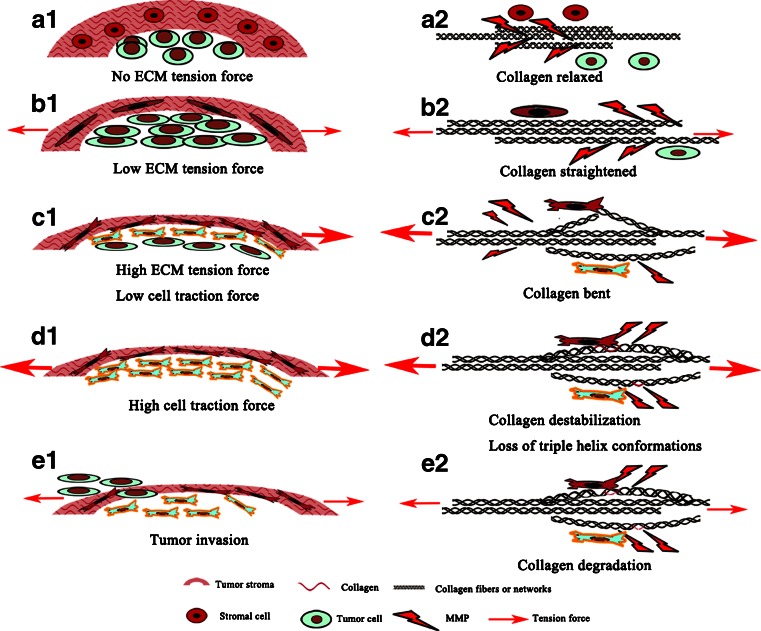
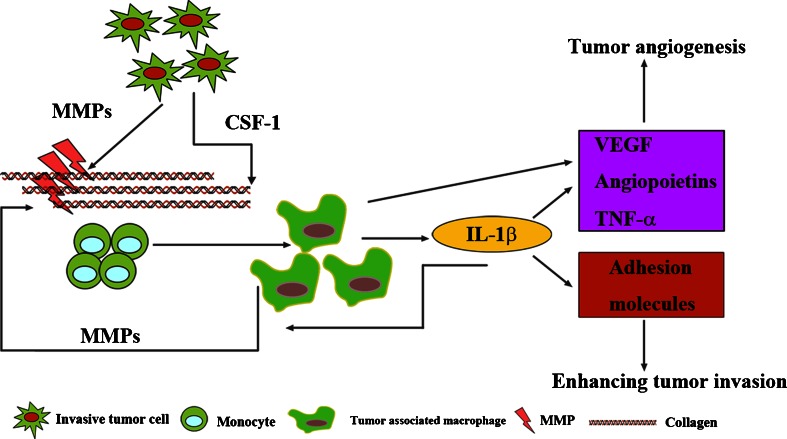
It has been recognized that cancer is not merely a disease of tumor cells, but a disease of imbalance, in which stromal cells and tumor microenvironment play crucial roles. Extracellular matrix (ECM) as the most abundant component in tumor microenvironment can regulate tumor cell behaviors and tissue tension homeostasis. Collagen constitutes the scaffold of tumor microenvironment and affects tumor microenvironment such that it regulates ECM remodeling by collagen degradation and re-deposition, and promotes tumor infiltration, angiogenesis, invasion and migration. While collagen was traditionally regarded as a passive barrier to resist tumor cells, it is now evident that collagen is also actively involved in promoting tumor progression. Collagen changes in tumor microenvironment release biomechanical signals, which are sensed by both tumor cells and stromal cells, trigger a cascade of biological events. In this work, we discuss how collagen can be a double-edged sword in tumor progression, both inhibiting and promoting tumor progression at different stages of cancer development.
Overview
The claims and statistics of this paper haven’t been checked yet.
Free: it reads the open-access text and checks the first 5 claims that cite a source we can check. Create a free account to check every claim.
Integrity signals
Registry
Cites
Statistics
Figures
Verification
Claims the paper makes
The claims and statistics of this paper haven’t been checked yet.
Free: it reads the open-access text and checks the first 5 claims that cite a source we can check. Create a free account to check every claim.
Claims other papers make about this one
Each is checked against this paper’s own text: does it say what the citing paper says it does?
The cited source says what the claim attributes to it.
In the citing paper
“The overexpression of these collagens leads to the formation of a stiffer ECM which in turn promotes the formation of a tumorigenic microenvironment [26].”
From Microfluidic modelling of the tumor microenvironment for anti-cancer drug development (2019) · cites this paper as [26]
Self-check
Percentages, sums and reported differences re-computed from the paper’s own numbers.
The self-check needs the paper’s full text.
Citations
Cites
2 retracted
Lysyl oxidase is essential for hypoxia-induced metastasis
Erler, J. T., Bennewith, K. L., Nicolau, M., Dornhöfer, N., Kong, C., Le, Q.-T., Chi, J.-T. A., Jeffrey, S. S., & Giaccia, A. J. (2006) · Nature · doi:10.1038/nature04695 · Cited by 1,309 · cited 2×
“It is reported that LOX can be disseminated into distal target organs via circulation to mobilize bone marrow derived cells (BMDCs) to distal sites, and to create pre-metastatic niche [29], as evidenced by consistent correlation between increased LOX expression and higher cancer metastasis risk [34].”
BackgroundRetractedSudhakar, A. (2005) · Journal of Clinical Investigation · doi:10.1172/jci24813 · Cited by 162
RetractedJemal, A., Bray, F., Center, M. M., Ferlay, J., Ward, E., & Forman, D. (2011) · CA: A Cancer Journal for Clinicians · doi:10.3322/caac.20107 · Cited by 54,679
Angiogenesis in cancer and other diseases
Carmeliet, P., & Jain, R. K. (2000) · Nature · doi:10.1038/35025220 · Cited by 9,070
Intratumor Heterogeneity and Branched Evolution Revealed by Multiregion Sequencing
Gerlinger, M., Rowan, A. J., Horswell, S., Larkin, J., Endesfelder, D., Gronroos, E., Martinez, P., Matthews, N., Stewart, A., Tarpey, P., et al. (2012) · New England Journal of Medicine · doi:10.1056/nejmoa1113205 · Cited by 7,774 · cited 1×
“To tackle this problem, many efforts focusing on tumor cells have been made over the past century, and some genetic and epigenetic mechanisms have been elucidated [2–6].”
BackgroundNew functions for the matrix metalloproteinases in cancer progression
Egeblad, M., & Werb, Z. (2002) · Nature Reviews Cancer · doi:10.1038/nrc745 · Cited by 6,108
Matrix Crosslinking Forces Tumor Progression by Enhancing Integrin Signaling
Levental, K. R., Yu, H., Kass, L., Lakins, J. N., Egeblad, M., Erler, J. T., Fong, S. F. T., Csiszar, K., Giaccia, A., Weninger, W., et al. (2009) · Cell · doi:10.1016/j.cell.2009.10.027 · Cited by 4,101 · cited 1×
“As the most abundant constituent of ECM, collagen accounts for the major function of ECM, and either increased [12] or decreased [13] deposition of collagen can be associated with increased malignancy.”
BackgroundTensional homeostasis and the malignant phenotype
Paszek, M. J., Zahir, N., Johnson, K. R., Lakins, J. N., Rozenberg, G. I., Gefen, A., Reinhart-King, C. A., Margulies, S. S., Dembo, M., Boettiger, D., et al. (2005) · Cancer Cell · doi:10.1016/j.ccr.2005.08.010 · Cited by 3,941 · cited 3×
“The progressive ECM remodeling produces typical morphological changes characterized by linearization of interstitial collagens at tumor invasion front, with significant impacts on tumor cell biology including gene expression, cell differentiation, proliferation, migration and responses to treatments [10].”
BackgroundCollagen Structure and Stability
Shoulders, M. D., & Raines, R. T. (2009) · Annual Review of Biochemistry · doi:10.1146/annurev.biochem.77.032207.120833 · Cited by 3,923 · cited 2×
“At least 28 different types of collagens have been identified in vertebrates [19, 20] (Table 1).”
BackgroundTumour-educated macrophages promote tumour progression and metastasis
Pollard, J. W. (2004) · Nature Reviews Cancer · doi:10.1038/nrc1256 · Cited by 3,367
Cited by
Items 401–500 of 608
The Effects of HIPEC on Survival of Gastric Cancer Patients With Peritoneal Metastasis
Ji, Z., Zhao, Q., & Li, Y. (2024) · Journal of Surgical Oncology · doi:10.1002/jso.27877 · Cited by 5
Self-citationBatur, L. K., Yavaş, C., & Hekim, N. (2025) · Current Issues in Molecular Biology · doi:10.3390/cimb47050364 · Cited by 5
“…studies have reported that certain forms of collagen, particularly matrix-associated fibrillar collagen, can support tumor growth and metastasis through interactions with integrin receptors and the tumor microenvironment, the findings of the present study highlight a contrasting effect [25].”
Optical polarization response of collagen: role in clinical cancer diagnostics—part I
Sharma, M., Shaji, C., & Unni, S. N. (2022) · ISSS Journal of Micro and Smart Systems · doi:10.1007/s41683-022-00090-z · Cited by 6
“However, a decrease in collagen deposition also coordinates in promoting tumor invasion and metastasis (Fang et al. 2014).”
BackgroundNaleskina, L. A., Lukianova, N. Y., Zadvornyi, T., Kunska, L. M., Mushii, O., & Chekhun, V. F. (2023) · Cytology and Genetics · doi:10.3103/s0095452723050031 · Cited by 5
“…idea that collagen has changed from a protective barrier to the development of neoplasms to a factor that contributes to the generalization of the tumor process and that collagen structures influence connective tissue remodeling along with cancer progression (Fang et al., 2014; Song et al., 2022).”
BackgroundCustomizable biomaterials as tools for advanced anti-angiogenic drug discovery
Nguyen, E. H., & Murphy, W. L. (2018) · Biomaterials · doi:10.1016/j.biomaterials.2018.07.041 · Cited by 5
“In dysfunctional vasculature the ECM contains μm-scale gaps in the basement membrane [44, 45] and elevated levels of ECM proteins, notably Collagen I, leading to increased mechanical stiffness [46].”
Factors Within the Endoneurial Microenvironment Act to Suppress Tumorigenesis of MPNST
Stratton, J. A., Assinck, P., Sinha, S., Kumar, R., Moulson, A. J., Patrick, N., Raharjo, E., Chan, J. A.-W., Midha, R., Tetzlaff, W., et al. (2018) · Frontiers in Cellular Neuroscience · doi:10.3389/fncel.2018.00356 · Cited by 5
The Microenvironment of Tongue Cancer
Tao, W., Li-Juan, Z., Li, K., Jing-yuan, L., Liu, X., & Liang, Y. (2020) · Advances in experimental medicine and biology · doi:10.1007/978-3-030-59038-3_4 · Cited by 6
Constitutive Modelling of Soft Biological Tissue from Ex Vivo to in Vivo: Myocardium as an Example
Guan, D., Luo, X., & Gao, H. (2021) · Springer proceedings in mathematics & statistics · doi:10.1007/978-981-16-4866-3_1 · Cited by 5
Li, F., Wu, Y., Yan, Y., Wu, S., Zhu, J., Zhang, G., Zhang, P., Yuan, L., Zeng, Y., & Liu, Z. (2022) · Molecular Omics · doi:10.1039/d2mo00127f · Cited by 5
Isabella, S., & Mirunalini, S. (2020) · Breast Cancer · doi:10.1007/s12282-020-01167-z · Cited by 5
Cai, X., Wang, B., Yang, Z., Yan, X., & Xiao, J. (2025) · Analytical Chemistry · doi:10.1021/acs.analchem.5c03166 · Cited by 4
Locatelli, C., Ferrario, N., Fortunato, O., Ghidotti, P., & Crescitelli, R. (2025) · Frontiers in Immunology · doi:10.3389/fimmu.2025.1703974 · Cited by 5
“Recent studies have shown that fi brillar collagen accumulation directly promotes tumor development and progression (51), while fi bronectin deposition creates a supportive niche for the adhesion of BMDCs, which are critical for PMN formation (55).”
In-situ collagen mineralization modulates metastatic properties of breast cancer cells
Thilakan, J., Goel, S. K., & Arya, N. (2024) · Journal of Bioscience and Bioengineering · doi:10.1016/j.jbiosc.2024.07.010 · Cited by 4
Modeling of oral squamous cell carcinoma microenvironment- A 3D bioprinting approach
Chaurasia, A., Sivaramakrishnan, G., Asa’ad, F., Larsson, L., Daghrery, A., Marques, J. R. O. F., Spirito, F., Clemente, V. B., Apolônio, A. C. M., Alipour, M., et al. (2024) · Bioprinting · doi:10.1016/j.bprint.2024.e00381 · Cited by 4
Dorjkhorloo, G., Shiraishi, T., Erkhem‐Ochir, B., Sohda, M., Okami, H., Yamaguchi, A., Shioi, I., Komine, C., Nakazawa, N., Shibasaki, Y., et al. (2024) · Scientific Reports · doi:10.1038/s41598-024-80489-w · Cited by 4
Mucin 1 Aberrantly Expresses in Goat Mammary Carcinoma
Choudhary, R. K. (2017) · Journal of Stem Cell Research & Therapeutics · doi:10.15406/jsrt.2017.02.00072 · Cited by 4
Khalid, A., Siddiqui, S., Bordoloi, B., Faizi, N., Samadi, F. M., & Saeed, N. (2018) · Journal of Pathology and Translational Medicine · doi:10.4132/jptm.2018.07.17 · Cited by 4
What We Need to Learn When Exploring the Mixed Basal Cell Carcinoma of Head and Neck
Moisejenko-Goluboviča, J., Volkovs, O., Ivanova, A., Petrošina, E., & Groma, V. (2021) · Proceedings of the Latvian Academy of Sciences Section B Natural Exact and Applied Sciences · doi:10.2478/prolas-2021-0013 · Cited by 4
RBM15 increase tumor-infiltrating CD4+ T cell in ESCC via modulating of PLOD3
Lin, X. (2024) · American Journal of Cancer Research · doi:10.62347/idcp2061 · Cited by 4
Omics Investigations of Prostate Cancer Cells Exposed to Simulated Microgravity Conditions
Schulz, H., Abdelfattah, F., Heinrich, A., Melnik, D., Sandt, V., Krüger, M., Wehland, M., Hoffmann, P., Cortés-Sánchez, J. L., Evert, M., et al. (2025) · Biomolecules · doi:10.3390/biom15020303 · Cited by 5
“Furthermore, the biomechanical signals induced by collagen alterations in the tumor microenvironment trigger a cascade of biological events [47].”
Hambardzumyan, S., Kasper, J. Y., & del Campo, A. (2025) · Biomaterials Advances · doi:10.1016/j.bioadv.2025.214436 · Cited by 4
Collagen peptide simulated bending after applied axial deformation
Bourne, J. W., Shi, L., & Torzilli, P. A. (2020) · Journal of the mechanical behavior of biomedical materials/Journal of mechanical behavior of biomedical materials · doi:10.1016/j.jmbbm.2020.103835 · Cited by 4
Tan, Z., Lam, W. W., Oakden, W., Murray, L., Koletar, M. M., Liu, S. K., & Stanisz, G. J. (2020) · Scientific Reports · doi:10.1038/s41598-020-78353-8 · Cited by 4
A collagen-binding SIRPαFc fusion protein for targeted cancer immunotherapy
Liu, J., Xu, T., Pan, D., Fan, J., Fu, Y., Huang, X., Zhao, W., Dong, X., Zhang, S., Kuerban, K., et al. (2023) · International Immunopharmacology · doi:10.1016/j.intimp.2023.110951 · Cited by 4
The Investigation of ADAMTS16 in Insulin-Induced Human Chondrosarcoma Cells
Çakmak, Ö., Cömertoğlu, İ., Fırat, R., Erdemli, H. K., Kurşunlu, S. F., Akyol, S., Uğurcu, V., Altuntaş, A., Adam, B., & Demircan, K. (2015) · Cancer Biotherapy and Radiopharmaceuticals · doi:10.1089/cbr.2015.1840 · Cited by 5
“Cancer cells and tumor’s microenvironment play important roles in cancer formation and progression.(20) Cell–cell and cell–ECM interactions have crucial roles in formation and development of cancers.”
Chen, Y., Jiang, B., Wang, W., Su, D., Xia, F., & Li, X. (2020) · Frontiers in Genetics · doi:10.3389/fgene.2020.00453 · Cited by 5
“, 2016; Brioschi and Colonna, 2019), and plays an important role in tumor progression through the interaction and coevolution of tumor cells and the stroma (Garcia et al., 2011; Fang et al., 2014; Wu et al., 2019).”
BackgroundPan, H., Liu, Y., Fuller, A. M., Williams, E. F., Fraietta, J. A., & Eisinger‐Mathason, T. S. K. (2024) · bioRxiv (Cold Spring Harbor Laboratory) · doi:10.1101/2024.06.28.601055 · Cited by 4
SERS plasmonic droplet assay for non-invasive early oral cancer screening using saliva samples
Puravankara, V., Patil, V., Unnikrishnan, V., & George, S. D. (2025) · Microchemical Journal · doi:10.1016/j.microc.2025.116745 · Cited by 3
Ancient and Emerging Nanostructures for Innovations to Fight Head and Neck Cancer
Kummer, N., Acet, Ö., Acet, B. Ö., Blueggel, M., Khamis, A., Gül, D., Knauer, S. K., & Stauber, R. H. (2026) · Cells · doi:10.3390/cells15040339 · Cited by 4
“Alterations in collagen within the tumor microenvironment emit biomechanical signals that are detected by both tumor and stromal cells, instigating a series of biological events [62].”
Modulation of Angiogenesis by Tumor Associated Macrophages in the Tumor Microenvironment
Murphy, J. F. (2014) · MOJ Immunology · doi:10.15406/moji.2014.01.00016 · Cited by 3
“Angiogenic factors exert direct effects on endothelial cells and tissue matrix is also involved in regulating angiogenesis [38].”
BackgroundShang, Y., Zhang, Z., Ba, H., Wang, D., Qi, X., & Li, C. (2019) · Journal of Biomolecular Structure and Dynamics · doi:10.1080/07391102.2019.1630002 · Cited by 3
Iurchenko, N. P., Nesina, I. P., Glushchenko, N. М., & Buchynska, L. G. (2023) · Experimental Oncology · doi:10.15407/exp-oncology.2023.01.051 · Cited by 3
Cai, X., Wang, B., Nian, L., Tao, C., Zhang, C., Li, L., Zhang, G., & Xiao, J. (2024) · Materials Today Bio · doi:10.1016/j.mtbio.2024.101026 · Cited by 3
“The dysregulation of collagen remodeling has been widely recognized as a key underlying factor contributing to a variety of severe diseases such as tumors and fibrosis [6 – 9].”
BackgroundCOL6A1 Inhibits the Malignant Development of Bladder Cancer by Regulating FBN1
yang, T., Peng, X., Huang, X., Cao, P., & Chen, H. (2024) · Cell Biochemistry and Biophysics · doi:10.1007/s12013-024-01573-6 · Cited by 3
“Collagen is a passive barrier against tumor cells; however, recent evidence has demonstrated that it is also actively implicated in tumor progression [16].”
Liu, Y., Wang, T., Chi, X., Yu, S., He, W., He, H., Wang, G., Hao, K., & Zhang, J. (2025) · International Journal of Pharmaceutics · doi:10.1016/j.ijpharm.2025.125237 · Cited by 4
P4HB, a novel succinated protein, is essential for fumarate-induced cancer metastasis
Song, X., Rao, H., Huang, C., Huang, M., Ma, Y., Xin, J., Hou, J., Hu, Z., He, L., Pan, F., et al. (2025) · International Journal of Biological Macromolecules · doi:10.1016/j.ijbiomac.2025.143885 · Cited by 3
Estimation of high-dimensional directed acyclic graphs with surrogate intervention
Ha, M. J., & Sun, W. (2018) · Biostatistics · doi:10.1093/biostatistics/kxy080 · Cited by 4
Mohamed, A. A., Abo-Amer, Y. E.-E., Aalkhalegy, A., Fathalla, L. A., Elmaghraby, M. B., Elhoseeny, M. M., Mostafa, S. M., El-Abgeegy, M., Khattab, R. A., El-damasy, D. A., et al. (2021) · The Open Biomarkers Journal · doi:10.2174/1875318302111010108 · Cited by 3
Zhibing, 许. X., Jinjin, 吴. W., Lu, 丁. D., Zihan, 王. W., Suwei, 周. Z., Hui, 尚. S., Huijie, 王. W., & Jianhua, 尹. Y. (2022) · Chinese Journal of Lasers · doi:10.3788/cjl202249.2407102 · Cited by 3
Keate, R. L., Tropp, J., Wu, R., Petty, A. J., Ameer, G. A., & Rivnay, J. (2024) · Advanced Science · doi:10.1002/advs.202305562 · Cited by 3
Sato, A., Takagi, K., Yoshida, M., Yamaguchi, M., Sagehashi, M., Miki, Y., Miyashita, M., & Suzuki, T. (2024) · Cancers · doi:10.3390/cancers16244285 · Cited by 3
Thermostability of rat sarcoma M1 procollagen solutions, procollagen fibers and whole tissues
Monaselidze, J., Kikalishvili, L., Ramishvili, M., Gorgoshidze, M., & Kiladze, M. (2020) · Journal of Thermal Analysis and Calorimetry · doi:10.1007/s10973-020-09332-4 · Cited by 2
Ramya, V., Nandini, D. B., Amberkar, V. S., Kumar, K. M., & Madhushankari, G. (2022) · Journal of Microscopy and Ultrastructure · doi:10.4103/jmau.jmau_83_21 · Cited by 2
The roles of collagens and fibroblasts in cancer
Nissen, N. I., Karsdal, M. A., Cox, T. R., & Willumsen, N. (2024) · Elsevier eBooks · doi:10.1016/b978-0-443-15617-5.00029-9 · Cited by 3
Batur, L. K., Yavaş, C., & Hekim, N. (2025) · Oncology Letters · doi:10.3892/ol.2025.15306 · Cited by 2
“Bilberry treatment decreased MMP‑9 activity and urokinase‑type plasminogen activator secretion, and increased tissue inhibitor of MMP‑1 and plasminogen activator inhibitor‑1 secretion in MDA‑MB‑231 cells (38,39).”
Talia, M., Scordamaglia, D., Cirillo, F., Zicarelli, A., Francesco, E. M. D., Malaguarnera, R., Cesario, E., Miglietta, A., Maggiolini, M., & Lappano, R. (2025) · Journal of Translational Medicine · doi:10.1186/s12967-025-07196-6 · Cited by 2
“Indeed, variations in ECM composition and stiffness may influence oxygen and nutrient entry, invasive properties of tumor cells as well as drug bioavailability [72, 73].”
Al-Jada, D. N., Takruri, H. R., Talib, W. H., Hajeer, M., Alsafadi, D. B., Shahin, N. A., & Ahram, M. A. (2025) · Mediterranean Journal of Nutrition and Metabolism · doi:10.1177/1973798x251391703 · Cited by 2
The influence of cell phenotype on collective cell invasion into the extracellular matrix
Yin, Y., Waters, S. L., & Baker, R. E. (2025) · Bulletin of Mathematical Biology · doi:10.1007/s11538-025-01560-9 · Cited by 3
“Recent experiments also suggest that collagen fibres can mature over time, becoming increasingly resistant to remodelling during tumour progression [56].”
Targeting Tumor Stroma: Current Challenges and Future Directions
Wang, S., Hu, H., Zeng, W., Qin, L., Chen, X., Liao, Z., Liu, F., & Zhang, Z. (2026) · MedComm · doi:10.1002/mco2.70763 · Cited by 3
“Consequently, excessive or inappropriate disruption of the stromal structure may carry the risk of promoting tumor metastasis [ 156, 157 ].”
InfluentialProton wave propagation along collagen fibers
Costa, P., Maznichenko, A., Agmon, N., & Pohl, P. (2026) · European Biophysics Journal · doi:10.1007/s00249-026-01856-1 · Cited by 2
Lemarié-Delaunay, C., Vincourt, J., Marie, B., Battaglia-Hsu, S.-F., Etienne, S., Sirveaux, F., Nguyen‐Thi, P., Magdalou, J., Vignaud, J.-M., & Gauchotte, G. (2015) · Archiv für Pathologische Anatomie und Physiologie und für Klinische Medicin · doi:10.1007/s00428-015-1799-3 · Cited by 2
“The ECM, with collagens as important component, has multiple and complex roles in tumor differentiation and progression [15].”
BackgroundTumor Desmoplastic Stroma - Its Utility as A Prognostic Marker for Breast Carcinoma
Tejeswini, V., Chaitra, B., Premalatha, P., Renuka, I. V., Vaishnavi, R., & Manasa, B. M. B. (2019) · Annals of Pathology and Laboratory Medicine · doi:10.21276/apalm.2334 · Cited by 2
Drake, R. R., Scott, D. A., & Angel, P. M. (2021) · Elsevier eBooks · doi:10.1016/b978-0-12-816386-3.00017-x · Cited by 2
Abdulhaleem, M. N., Ruiz, J., O’Neill, S. S., Hughes, R. T., Qasem, S. A., Strowd, R. E., III, Furdui, C. M., Watabe, K., Miller, L. D., Debinski, W., et al. (2023) · Neuro-Oncology Advances · doi:10.1093/noajnl/vdac186 · Cited by 2
Polleys, C. M., Thieu, H.-T. N., Genega, E. M., Jahanseir, N., & Georgakoudi, I. (2023) · doi:10.1117/12.2650926 · Cited by 2
Davidson, C., Miller, E., Muir, M., Dawson, J. C., Lee, M. W., Aitken, S., Serrels, A., Webster, S. P., Homer, N. Z. M., Andrew, R., et al. (2023) · PLoS ONE · doi:10.1371/journal.pone.0255709 · Cited by 3
Multifaceted Potential of Photoacoustic Imaging for Preclinical Cancer Research
Sankepalle, D. M., Sweeney, A., & Mallidi, S. (2024) · Springer eBooks · doi:10.1007/978-3-031-61411-8_14 · Cited by 2
TATA-box binding protein-associated factor 2 (TAF2) in hepatocyte survival and tumorigenesis
Reghupaty, S. C., Raha, S., Mendoza, R. G., Manna, D., Ermi, A. G., Davis, E., Aqeel, Y., Subler, M. A., Koblinski, J. E., Idowu, M. O., et al. (2025) · Hepatology · doi:10.1097/hep.0000000000001406 · Cited by 2
Villanueva, B. H. A., Tsai, P., & Tayo, L. L. (2026) · Onco · doi:10.3390/onco6020022 · Cited by 3
“In contrast, the upregulation of cluster 3 genes initiates tumor progression by promoting protease and collagen binding, which are responsible for the extracellular matrix, leading to an abnormal extracellular matrix in tumor growth [163].”
Comparison of actual and simulated tumoricidal effects induced by photodynamic therapy
Jin, W., Shi, X., Yin, H., Zhang, H., Wang, Z., Chen, Q., Wu, H., Han, Y., & Li, Y. (2020) · Photodiagnosis and Photodynamic Therapy · doi:10.1016/j.pdpdt.2020.102060 · Cited by 2
Self-citationPolarization-Enabled Optical Spectroscopy and Microscopic Techniques for Cancer Diagnosis
Divya, M., Hegde, M., Hegde, M., Roy, S., Raju, G., Nikolaev, V. V., Kistenev, Y. V., & Mazumder, N. (2023) · Biological and medical physics, biomedical engineering · doi:10.1007/978-3-031-31852-8_12 · Cited by 2
Huang, H., Kovacs, M. E., Aguilera, K. Y., & Brekken, R. A. (2019) · Elsevier eBooks · doi:10.1016/b978-0-12-816435-8.00007-9 · Cited by 2
Attallah, A. M., El-Far, M., Fatah, M. A., Omran, M. M., Abdelrazek, M., Abdelhameed, G. E. A. G. E., Attallah, K. A., Ahmed, N., El-Sayes, E., Khedr, F., et al. (2019) · Journal of Bioscience and Applied Research/Journal of Bioscience and Applied Research · doi:10.21608/jbaar.2019.141374 · Cited by 2
“Also, in breast cancer, MMPs are correlated with lysyl oxidase (LOX) expression (Erler et al., 2009) that increase MMPs levels which increase hydrolysis of collagen to reveal active sites producing a protumorigenic environment to favor tumor progression (Fang et al., 2014).”
BackgroundInfluentialRadak, M., Ghamari, N., & Fallahi, H. (2023) · Biosystems · doi:10.1016/j.biosystems.2023.105093 · Cited by 2
dos Santos, P. W. D. S. (2019) · Digital Library of Theses and Dissertations (Universidade de São Paulo) · doi:10.11606/d.60.2019.tde-24052019-145414 · Cited by 4
Alfonso, A. B., Pomerleau, V., Nicolás, V. R., Raisch, J., Jurkovic, C.-M., Boisvert, F., & Perreault, N. (2022) · Biomedicines · doi:10.3390/biomedicines11010019 · Cited by 1
“CL is a polymeric protein present in greater quantities in the ECM under physiological conditions [75,76], as well as in the tumor microenvironment, where its extensive deposition is one of the pathological characteristics of cancers, such as gastric neoplasia [43,77].”
BackgroundMakarova, Z. M., & Fedusenko, O. A. (2023) · Reproductive Endocrinology · doi:10.18370/2309-4117.2023.67.47-54 · Cited by 1
Chang, S., Giannico, G. A., Haugen, E. J., Jardaneh, A., Baba, J. S., Mahadevan-Jansen, A. M., Chang, S. S., & Bowden, A. K. (2023) · Journal of Biomedical Optics · doi:10.1117/1.jbo.28.10.102907 · Cited by 1
“Degradation of ECM and deposition of a new ECM that favors tumor growth are the major events of the remodeling process.(71,72) Excessive remodeling of the ECM is characteristic of malignancy in many tumor types and has been shown to have strong correlation with tumor progression and poor prognosis.”
BackgroundExtracellular Matrix Remodeling on Cancer Progression
Deepika, B., Girigoswami, A., & Girigoswami, K. (2024) · Springer eBooks · doi:10.1007/978-3-031-56363-8_10 · Cited by 1
Mordi, A., Karunakaran, V., Mim, U. M., Marple, E. T., & Rajaram, N. (2024) · Journal of Biophotonics · doi:10.1002/jbio.202400333 · Cited by 2
Long, C., Cheng, J., Feng, M., Yan, B., Li, Y., Jiang, W., Chen, D., & Yan, J. (2025) · BMC Cancer · doi:10.1186/s12885-025-13842-5 · Cited by 4
“[31] Adur et al. mentioned that under physiological conditions, collagen fibers were arranged at an angle of 10° in the epithelial matrix of the intestinal mucosa, while in colorectal tumors, collagen fibers were thicker and arranged at an angle of 50°.”
Self-citationBiopolymer crosslinking: Application and prospects
Bikbov, M. M., Кабиров, И. Р., Халимов, А. Р., Дмитриевич, Н. А., Shmelkova, P., Gainullina, D. K., Gumerova, L. S., Tukhbatullin, A. A., Akhunzyanov, A. A., & Nadezhdina, E. A. (2025) · Creative Surgery and Oncology · doi:10.24060/2076-3093-2025-15-1-50-56 · Cited by 1
Metadichol Orchestrate Pluripotency via Nuclear Receptors during Cellular Reprogramming
Raghavan, P. R. (2025) · Medical Research Archives · doi:10.18103/mra.v13i6.6603 · Cited by 1
Elyas, M. A. M. S., Saleh, S. M. A., Ramadan, A. M., & Youssef, H. E. M. (2025) · Tanta Dental Journal · doi:10.4103/tdj.tdj_17_25 · Cited by 2
Nag, R., Chen, C., Mejbel, H. A., Li, H., Aqeel, A., Fu, P., Corredor, G., Khalighi, S., Pathak, T. B., Mokhtari, M., et al. (2025) · npj Precision Oncology · doi:10.1038/s41698-025-01098-y · Cited by 4
“In addition to imaging collagen topology through traditional histological staining or advanced imaging methods, quantifying collagen fi bers is essential for patient prognosis 48 .”
Singh, P., Singh, S., Sharma, K., Singh, R., Sinha, S. S., & Grover, N. (2025) · Dental Journal of Advance Studies · doi:10.5005/djas-11014-0085 · Cited by 1
Zhou, C., Wang, J., Zhang, Y., Zhou, Z., Wu, C., Wang, L., & Guo, L. (2025) · Journal of Materials Chemistry B · doi:10.1039/d5tb00833f · Cited by 1
Redmond, J., Agarwal, S., McCarthy, H. O., Buchanan, P., Levingstone, T. J., & Dunne, N. (2025) · Biomaterials Advances · doi:10.1016/j.bioadv.2025.214635 · Cited by 1
Zadvornyi, T., Mushii, O., Burda, T. S., Pavlova, A., Shevchuk, A., Yushchenko, L. Y. L., Vitruk, Y. V., & Lukianova, N. (2026) · Journal of Molecular Histology · doi:10.1007/s10735-026-10716-3 · Cited by 1
“In particular, the inten - sification of ECM component synthesis and its remodeling promotes tumor growth by destabilizing cell polarity and intercellular adhesion, as well as enhancing the signaling of various growth factors (Fang et al. 2014 ).”
Macur, K., Bogucka, A. E., Fel, A., Skokowski, J., Ołdziej, S., & Czaplewska, P. (2026) · Frontiers in Molecular Biosciences · doi:10.3389/fmolb.2026.1739472 · Cited by 1
“Extracellular matrix (ECM) remodeling is a hallmark of tumor progression and involves processes such as collagen degradation, deposition, cross-linking, and stiffening (Fang et al., 2014).”
Is there a link between fascia and cancer? From potential mechanisms to future treatment options
Otto, S., & Klingler, W. (2026) · Frontiers in Physiology · doi:10.3389/fphys.2026.1741526 · Cited by 1
“The creation of these aligned collagen tracks is orchestrated by CAF-mediated MMP secretion and fi ber reorganization and is distinct from random interstitial matrix penetration described in general ECM biology (Fang et al., 2014; Li et al., 2017).”
InfluentialZhang, Q., Jiang, S., Abliz, A., Chen, S., Hu, Q., Ding, L., & Wang, Y. (2026) · The Journal of Pathology Clinical Research · doi:10.1002/2056-4538.70095 · Cited by 1
“Notably, as a core noncellular component in the tumor microenvironment (TME), remodeling of the extracellular matrix (ECM) has emerged as a major initiator in metastasis [11,12].”
Swanner, J. L., Meisen, W. H., McCormack, R., Lewis, C. T., Hong, B., & Kaur, B. (2019) · Resistance to targeted anti-cancer therapeutics · doi:10.1007/978-3-030-21477-7_3 · Cited by 1
Cytokine profiling of tumor-infiltrating T lymphocytes by flow cytometry
Foote, J. B., Sarvesh, S., & Emens, L. A. (2020) · Methods in enzymology on CD-ROM/Methods in enzymology · doi:10.1016/bs.mie.2019.08.015 · Cited by 2
Diagnostic role of collagen III in the diagnosis of breast cancer in Egyptian women
Attallah, A. M., El-Far, M., El-Sayes, E., & Omran, M. M. (2020) · Journal of Bioscience and Applied Research/Journal of Bioscience and Applied Research · doi:10.21608/jbaar.2020.115764 · Cited by 1
Decellularized Matrix Hydrogels for In Vitro Disease Modeling
Ferreira, L. P., Monteiro, M. V., Gaspar, V. M., & Mano, J. F. (2021) · Royal Society of Chemistry eBooks · doi:10.1039/9781839161124-00626 · Cited by 2
Liver cancer: the tumor microenvironment and associated pathways
Banik, A., Shaw, K., Dar, A. A., Peela, S., & Kancharla, P. K. (2022) · Elsevier eBooks · doi:10.1016/b978-0-323-98807-0.00022-3 · Cited by 1
Bgatova, N. P., Skudin, N., Karpov, M. A., Taskaeva, I. S., Ryaguzov, M. E., Lomakin, A. I., Fursov, S. A., & Korolev, M. A. (2024) · Bulletin of Experimental Biology and Medicine · doi:10.1007/s10517-024-06245-2 · Cited by 1
Cerce, D. D. P., CÂNDIDO, G. C., de Almeida, M. B., Silva, J. L., Dias, F. G. G., & Aldrovani, M. (2025) · Journal of Comparative Pathology · doi:10.1016/j.jcpa.2025.02.001 · Cited by 1
Design and Engineering of 3D Collagen-Fibronectin Scaffolds for Wound Healing and Cancer Research
Asadishekari, M. (2018) · uO Research (University of Ottawa) · doi:10.20381/ruor-22631 · Cited by 1
Investigating medulloblastoma metabolism for better diagnosis and treatment
Munford, H. (2019) · University of Birmingham Institutional Research Archive (University of Birmingham) · Cited by 1
Matrix stiffness mediates glioma cells stemness through an integrin/JAK/STAT3 signaling pathwayPreprint
Wu, Y., Bei, T., Tangming, P., Xiaobo, Y., Peng, L., Xia, X., Ligang, C., & Zhong, C. (2021) · Research Square · doi:10.21203/rs.3.rs-153935/v1 · Cited by 1
Maretty, L., Sibbesen, J. A., & Krogh, A. (2014)
Brinckerhoff, C. (2016) · Melanoma Management · doi:10.2217/mmt.15.36
Proteomic Based Approaches for Differentiating Tumor Subtypes
Wang, L. (2017) · OhioLink ETD Center (Ohio Library and Information Network)
Inflammatory Cells and Mediators in the Tumor Microenvironment of Breast Cancer
Allaoui, R. (2017) · Lund University Publications (Lund University)
Multiple Modes of Hepcidin Regulation in Breast Cancer
Farra, N. (2017) · OpenCommons - UConn (University of Connecticut) · Cited by 1
Changes of the Expressions of Orphan and gon- ADAMTS in Chondrosarcoma Cells
Işık, B. (2015) · International Journal of Hematology and Oncology · doi:10.4999/uhod.15960
The Development of Micro- and Nano-scale Techniques for Studying Cancer Cell Invasion
Bushman, S. M. (2017) · OhioLink ETD Center (Ohio Library and Information Network)
Metadata
- Authors
- Fang, M., Yuan, J., Peng, C., & Li, Y.
- Affiliations
- Zhongnan Hospital of Wuhan University (CN)
- Corresponding author
- Li, Yan
- Venue
- Tumor Biology
- Published
- 2013-12-15
- Volume
- 35
- Issue
- 4
- Pages
- 2871-2882
- ISSN
- 1010-4283 (ISSN-L)
- 1423-0380
- PMC
- PMC3980040
- OpenAlex
- W2116586864
- Semantic Scholar
- 431cc89326c45343b7634dc894588122f4206efd
- Cited by
- 580
- References
- 109
- Citations by year
- 2026: 26 · 2025: 42 · 2024: 41 · 2023: 61 · 2022: 56 · 2021: 84 · 2020: 85 · 2019: 72 · 2018: 45 · 2017: 33 · 2016: 20 · 2015: 11 · 2014: 4
- FWCI
- 1.35
- Type
- journal article
- Language
- en
- Open access
- hybrid
- doi.org
- Locations
- Tumor Biology (publishedVersion, cc-by)
- Europe PMC (PubMed Central) (publishedVersion, cc-by)
- PubMed Central (publishedVersion, cc-by)
- PubMed (publishedVersion)
- Funders
- National Natural Science Foundation of China (81171396, 10002012, 81230031)
- National Science and Technology Major Project (2012ZX10002012-12)
- Topics
- Life Sciences › Biochemistry, Genetics and Molecular Biology › Cell Biology › Cellular Mechanics and Interactions
- Life Sciences › Biochemistry, Genetics and Molecular Biology › Molecular Biology › TGF-β signaling in diseases
- Life Sciences › Biochemistry, Genetics and Molecular Biology › Cancer Research › Protease and Inhibitor Mechanisms
- Keywords
- collagen, tumor progression, tumor microenvironment, extracellular matrix, extracellular matrix remodeling, collagen degradation, tumor stroma, biomechanical signaling, tumor invasion, tumor cell migration, angiogenesis, tumor infiltration, tissue tension
- MeSH terms
- Animals, Collagen, Humans, Protein-Lysine 6-Oxidase, Neoplasms, Neovascularization, Pathologic, Disease Progression, Matrix Metalloproteinases, Epithelial-Mesenchymal Transition
About these checks
Registry, retraction, Cites and statistics results are computed, not judged, with one exception: a printed reference that no index lists is read once by a model before it counts as a citation error. Claims are extracted by a model and kept only when their quote appears verbatim in the text; each cited source is then checked, with a model’s help, for whether it says what the claim relies on. Those verdicts can be wrong — read the claim’s quote and the cited source before relying on one.
Statistics and arithmetic are recomputed, not judged.
Confidence bands are shown only for fields calibrated on our annotated test set. None is calibrated yet, so no band is shown.
What counts as a claim ›How we measure confidence ›How we check this ›
Are you an author, or do you see a problem with this page? Request a review
Data sources
Bibliographic data: Semantic Scholar, OpenAlex, Crossref.
Contains information from the Semantic Scholar Academic Graph Datasets, made available under the ODC Attribution License (ODC-BY 1.0).
Semantic Scholar’s data is described in: Kinney, R., et al. (2023). The Semantic Scholar Open Data Platform. arXiv:2301.10140.
