

Collagen as a double-edged sword in tumor progression
Open accessThe DOI matches its Crossref record; 112 of the 112 references it cites were found in a registry or an index.
Abstract
It has been recognized that cancer is not merely a disease of tumor cells, but a disease of imbalance, in which stromal cells and tumor microenvironment play crucial roles. Extracellular matrix (ECM) as the most abundant component in tumor microenvironment can regulate tumor cell behaviors and tissue tension homeostasis. Collagen constitutes the scaffold of tumor microenvironment and affects tumor microenvironment such that it regulates ECM remodeling by collagen degradation and re-deposition, and promotes tumor infiltration, angiogenesis, invasion and migration. While collagen was traditionally regarded as a passive barrier to resist tumor cells, it is now evident that collagen is also actively involved in promoting tumor progression. Collagen changes in tumor microenvironment release biomechanical signals, which are sensed by both tumor cells and stromal cells, trigger a cascade of biological events. In this work, we discuss how collagen can be a double-edged sword in tumor progression, both inhibiting and promoting tumor progression at different stages of cancer development.
Overview
The claims and statistics of this paper haven’t been checked yet.
Free: it reads the open-access text and checks the first 5 claims that cite a source we can check. Create a free account to check every claim.
Integrity signals
Registry
Cites
Statistics
Figures
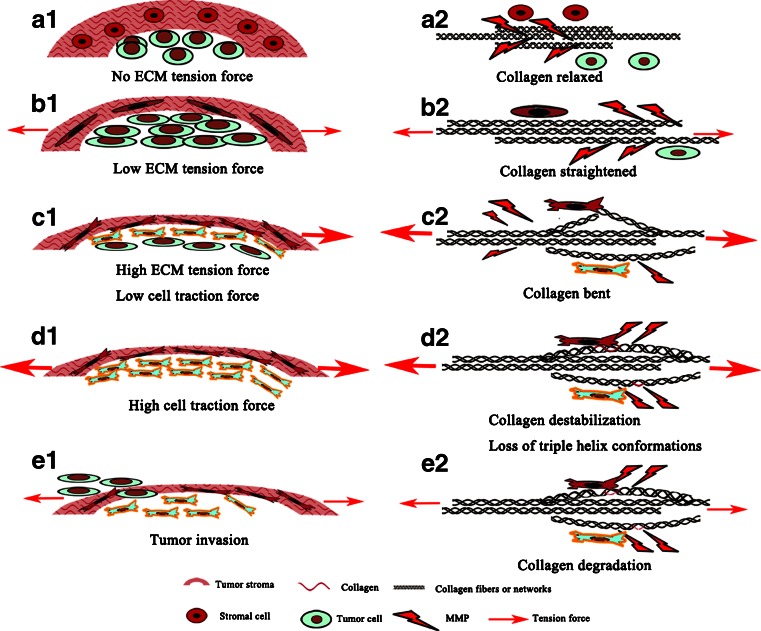
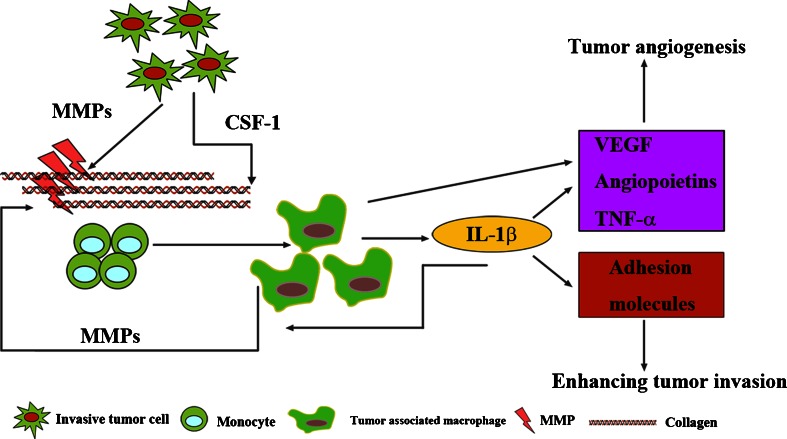
Verification
Claims the paper makes
The claims and statistics of this paper haven’t been checked yet.
Free: it reads the open-access text and checks the first 5 claims that cite a source we can check. Create a free account to check every claim.
Claims other papers make about this one
Each is checked against this paper’s own text: does it say what the citing paper says it does?
The cited source says what the claim attributes to it.
In the citing paper
“The overexpression of these collagens leads to the formation of a stiffer ECM which in turn promotes the formation of a tumorigenic microenvironment [26].”
From Microfluidic modelling of the tumor microenvironment for anti-cancer drug development (2019) · cites this paper as [26]
Self-check
Percentages, sums and reported differences re-computed from the paper’s own numbers.
The self-check needs the paper’s full text.
Citations
Cites
2 retracted
Lysyl oxidase is essential for hypoxia-induced metastasis
Erler, J. T., Bennewith, K. L., Nicolau, M., Dornhöfer, N., Kong, C., Le, Q.-T., Chi, J.-T. A., Jeffrey, S. S., & Giaccia, A. J. (2006) · Nature · doi:10.1038/nature04695 · Cited by 1,309 · cited 2×
“It is reported that LOX can be disseminated into distal target organs via circulation to mobilize bone marrow derived cells (BMDCs) to distal sites, and to create pre-metastatic niche [29], as evidenced by consistent correlation between increased LOX expression and higher cancer metastasis risk [34].”
BackgroundRetractedSudhakar, A. (2005) · Journal of Clinical Investigation · doi:10.1172/jci24813 · Cited by 162
RetractedJemal, A., Bray, F., Center, M. M., Ferlay, J., Ward, E., & Forman, D. (2011) · CA: A Cancer Journal for Clinicians · doi:10.3322/caac.20107 · Cited by 54,679
Angiogenesis in cancer and other diseases
Carmeliet, P., & Jain, R. K. (2000) · Nature · doi:10.1038/35025220 · Cited by 9,070
Intratumor Heterogeneity and Branched Evolution Revealed by Multiregion Sequencing
Gerlinger, M., Rowan, A. J., Horswell, S., Larkin, J., Endesfelder, D., Gronroos, E., Martinez, P., Matthews, N., Stewart, A., Tarpey, P., et al. (2012) · New England Journal of Medicine · doi:10.1056/nejmoa1113205 · Cited by 7,774 · cited 1×
“To tackle this problem, many efforts focusing on tumor cells have been made over the past century, and some genetic and epigenetic mechanisms have been elucidated [2–6].”
BackgroundNew functions for the matrix metalloproteinases in cancer progression
Egeblad, M., & Werb, Z. (2002) · Nature Reviews Cancer · doi:10.1038/nrc745 · Cited by 6,108
Matrix Crosslinking Forces Tumor Progression by Enhancing Integrin Signaling
Levental, K. R., Yu, H., Kass, L., Lakins, J. N., Egeblad, M., Erler, J. T., Fong, S. F. T., Csiszar, K., Giaccia, A., Weninger, W., et al. (2009) · Cell · doi:10.1016/j.cell.2009.10.027 · Cited by 4,101 · cited 1×
“As the most abundant constituent of ECM, collagen accounts for the major function of ECM, and either increased [12] or decreased [13] deposition of collagen can be associated with increased malignancy.”
BackgroundTensional homeostasis and the malignant phenotype
Paszek, M. J., Zahir, N., Johnson, K. R., Lakins, J. N., Rozenberg, G. I., Gefen, A., Reinhart-King, C. A., Margulies, S. S., Dembo, M., Boettiger, D., et al. (2005) · Cancer Cell · doi:10.1016/j.ccr.2005.08.010 · Cited by 3,941 · cited 3×
“The progressive ECM remodeling produces typical morphological changes characterized by linearization of interstitial collagens at tumor invasion front, with significant impacts on tumor cell biology including gene expression, cell differentiation, proliferation, migration and responses to treatments [10].”
BackgroundCollagen Structure and Stability
Shoulders, M. D., & Raines, R. T. (2009) · Annual Review of Biochemistry · doi:10.1146/annurev.biochem.77.032207.120833 · Cited by 3,923 · cited 2×
“At least 28 different types of collagens have been identified in vertebrates [19, 20] (Table 1).”
BackgroundTumour-educated macrophages promote tumour progression and metastasis
Pollard, J. W. (2004) · Nature Reviews Cancer · doi:10.1038/nrc1256 · Cited by 3,367
Cited by
Molecular Mechanisms of Stress-Responsive Changes in Collagen and Elastin Networks in Skin
Aziz, J., Shezali, H., Radzi, Z., Yahya, N. A., Abu Kassim, N. H., Czernuszka, J., & Rahman, M. T. (2016) · Skin Pharmacology and Physiology · doi:10.1159/000447017 · Cited by 7,323
Concepts of extracellular matrix remodelling in tumour progression and metastasis
Winkler, J., Abisoye-Ogunniyan, A., Metcalf, K. J., & Werb, Z. (2020) · Nature Communications · doi:10.1038/s41467-020-18794-x · Cited by 2,296
Role of Extracellular Matrix in Development and Cancer Progression
Walker, C., Mojares, E., & Del Río Hernández, A. (2018) · International Journal of Molecular Sciences · doi:10.3390/ijms19103028 · Cited by 1,084
“Moreover, elevated LOX activity found on invasive edges of tumours has been noted to drive actin polymerization, cell contractility, and migration, providing a pathway for successive tumour cells to follow [130].”
BackgroundCox, T. R. (2021) · Nature Reviews Cancer · doi:10.1038/s41568-020-00329-7 · Cited by 976
Extracellular matrix and its therapeutic potential for cancer treatment
Huang, J., Zhang, L., Wan, D., Zhou, L., Zheng, S., Lin, S., & Qiao, Y. (2021) · Signal Transduction and Targeted Therapy · doi:10.1038/s41392-021-00544-0 · Cited by 962
How the Warburg effect supports aggressiveness and drug resistance of cancer cells?
Icard, P., Shulman, S., Farhat, D., Steyaert, J.-M., Alifano, M., & Lincet, H. (2018) · Drug Resistance Updates · doi:10.1016/j.drup.2018.03.001 · Cited by 643
Hydrolyzed Collagen—Sources and Applications
León-López, A., Morales-Peñaloza, A., Martínez-Juárez, V. M., Vargas-Torres, A., Zeugolis, D. I., & Aguirre-Álvarez, G. (2019) · Molecules · doi:10.3390/molecules24224031 · Cited by 558
“Other collagen types are in very low concentration and in specific organs in the body [14,17].”
Background3D Cell Culture Systems: Tumor Application, Advantages, and Disadvantages
Habanjar, O., Diab-Assaf, M., Caldefie-Chezet, F., & Delort, L. (2021) · International Journal of Molecular Sciences · doi:10.3390/ijms222212200 · Cited by 547
Improving drug delivery to solid tumors: Priming the tumor microenvironment
Khawar, I. A., Kim, J. H., & Kuh, H.-J. (2015) · Journal of Controlled Release · doi:10.1016/j.jconrel.2014.12.018 · Cited by 533
Chen, F., Chandrashekar, D. S., Varambally, S., & Creighton, C. J. (2019) · Nature Communications · doi:10.1038/s41467-019-13528-0 · Cited by 529
Nissen, N. I., Karsdal, M., & Willumsen, N. (2019) · Journal of Experimental & Clinical Cancer Research · doi:10.1186/s13046-019-1110-6 · Cited by 489
New insights into M1/M2 macrophages: key modulators in cancer progression
Liu, J., Geng, X., Hou, J., & Wu, G. (2021) · Cancer Cell International · doi:10.1186/s12935-021-02089-2 · Cited by 501
“In addition, M2-related enzymes promote ECM digestion and deposition, as well as the proteolysis of basement membrane (BM) and collagens surrounding tumor nests [52].”
BackgroundDoyle, A. D., Carvajal, N., Jin, A., Matsumoto, K., & Yamada, K. M. (2015) · Nature Communications · doi:10.1038/ncomms9720 · Cited by 461
“…fibril microstructure such as extent of inter-fibril branching have been shown to effect the 3D vascularization of endothelial cells and crosslinking via lysyl oxidase can alter cancer cell migration, indicating that other micron-scale alterations to ECM stiffness can alter cellular events 36–38 .”
Goveia, J., Rohlenova, K., Taverna, F., Treps, L., Conradi, L.-C., Pircher, A., Geldhof, V., de Rooij, L. P. M. H., Kalucka, J., Sokol, L., et al. (2020) · Cancer Cell · doi:10.1016/j.ccell.2019.12.001 · Cited by 468
“Collagens have been implicated in tumor angiogenesis, albeit contextually (Fang et al., 2014; Sottile, 2004), but PLOD isoenzymes have not been substantially and consistently involved in angiogenesis yet.”
BackgroundEngineered nanomedicines with enhanced tumor penetration
Ding, J., Chen, J., Gao, L., Jiang, Z., Zhang, Y., Li, M., Xiao, Q., Lee, S. S., & Chen, X. (2019) · Nano Today · doi:10.1016/j.nantod.2019.100800 · Cited by 420
Design and applications of man-made biomimetic fibrillar hydrogels
Prince, E., & Kumacheva, E. (2019) · Nature Reviews Materials · doi:10.1038/s41578-018-0077-9 · Cited by 379
Oriented collagen fibers direct tumor cell intravasation
Han, W., Chen, S., Yuan, W., Fan, Q., Tian, J., Wang, X., Chen, L., Zhang, X., Wei, W., Liu, R., et al. (2016) · Proceedings of the National Academy of Sciences · doi:10.1073/pnas.1610347113 · Cited by 376
Emerging roles of ECM remodeling processes in cancer
Mohan, V., Das, A., & Sagi, I. (2020) · Seminars in Cancer Biology · doi:10.1016/j.semcancer.2019.09.004 · Cited by 334
Collagen- and hyaluronic acid-based hydrogels and their biomedical applications
Xu, Q., Torres, J. E., Hakim, M., Babiak, P. M., Pal, P., Battistoni, C. M., Nguyen, M., Panitch, A., Solorio, L., & Liu, J. C. (2021) · Materials Science and Engineering: R: Reports · doi:10.1016/j.mser.2021.100641 · Cited by 318
Collagen: quantification, biomechanics and role of minor subtypes in cartilage
Bielajew, B. J., Hu, J. C., & Athanasiou, K. A. (2020) · Nature Reviews Materials · doi:10.1038/s41578-020-0213-1 · Cited by 311
Poirion, O. B., Jing, Z., Chaudhary, K., Huang, S., & Garmire, L. X. (2021) · Genome Medicine · doi:10.1186/s13073-021-00930-x · Cited by 297
“and immunoregulation, confirming earlier results in the literature on cancer invasion [47, 48].”
BackgroundResultAutomated sample preparation with SP 3 for low‐input clinical proteomics
Müller, T., Kalxdorf, M., Longuespée, R., Kazdal, D. N., Stenzinger, A., & Krijgsveld, J. (2020) · Molecular Systems Biology · doi:10.15252/msb.20199111 · Cited by 295
The double edge sword of fibrosis in cancer
Chandler, C., Liu, T., Buckanovich, R., & Coffman, L. G. (2019) · Translational Research · doi:10.1016/j.trsl.2019.02.006 · Cited by 242
“This has also been demonstrated in other cancers such as hepatocellular carcinoma.(126) Fibrosis is important in not only established tumor sites but also in the creation of a premetastatic niche.”
ResultMolecular imaging of the tumor microenvironment
Zhou, Z., & Lu, Z.-R. (2017) · Advanced Drug Delivery Reviews · doi:10.1016/j.addr.2016.07.012 · Cited by 253
“The excess deposition and considerable structural alterations of various collagen subtypes, including type I, II, III, and IV, are associatedwith tumor formation [92,93].”
BackgroundDesign of spherically structured 3D in vitro tumor models -Advances and prospects
Ferreira, L. P., Gaspar, V. M., & Mano, J. F. (2018) · Acta Biomaterialia · doi:10.1016/j.actbio.2018.05.034 · Cited by 249
Collagen interactions: Drug design and delivery
An, B., Lin, Y.-S., & Brodsky, B. (2016) · Advanced Drug Delivery Reviews · doi:10.1016/j.addr.2015.11.013 · Cited by 244
“Proteins such as MMPs, DDR, integrin I domains and the collagen-binding domain of bacterial collagenase have been studied bound to triple-helical peptides or even fibrillar collagens in a few instances [95,131,148–158].”
BackgroundInfluentialCissell, D. D., Link, J. M., Hu, J. C., & Athanasiou, K. A. (2017) · Tissue Engineering Part C: Methods · doi:10.1089/ten.tec.2017.0018 · Cited by 234
“, integrins) can either promote proper cell phenotype, as in chondrocytes, or contribute to cell dysregulation, as in tumor progression.(8,9) Degradation or loss of collagen due to age or trauma remains clinically relevant since these processes can adversely affect physiologic function of the aforementioned organ syst…”
Biophysics of tumor microenvironment and cancer metastasis – a mini review
Emon, B., Bauer, J., Jain, Y., Jung, B., & Saif, T. (2018) · Computational and Structural Biotechnology Journal · doi:10.1016/j.csbj.2018.07.003 · Cited by 245
“ECM dimension, density or gap size, orientation, stiffness [46, 75, 130, 131].”
BackgroundImmune Modulatory Properties of Collagen in Cancer
Rømer, A. M. A., Thorseth, M.-L., & Madsen, D. H. (2021) · Frontiers in Immunology · doi:10.3389/fimmu.2021.791453 · Cited by 231
“Each type of collagen contains a unique combination of a-chains (16, 17).”
BackgroundThe Extracellular Matrix: Its Composition, Function, Remodeling, and Role in Tumorigenesis
Dzobo, K., & Dandara, C. (2023) · Biomimetics · doi:10.3390/biomimetics8020146 · Cited by 171
“Thus, collagens influence many cellular processes in the body including proliferation, migration, and adhesion [44].”
BackgroundMicrofluidic modelling of the tumor microenvironment for anti-cancer drug development
Shang, M., Soon, R. H., Lim, C. T., Khoo, B. L., & Han, J. (2019) · Lab on a Chip · doi:10.1039/c8lc00970h · Cited by 227
In vitro cancer cell–ECM interactions inform in vivo cancer treatment
Holle, A. W., Young, J. L., & Spatz, J. P. (2016) · Advanced Drug Delivery Reviews · doi:10.1016/j.addr.2015.10.007 · Cited by 213
Cancer chemotherapy resistance: Mechanisms and recent breakthrough in targeted drug delivery
Davodabadi, F., Sajjadi, S. F., Sarhadi, M., Mirghasemi, S., Nadali Hezaveh, M., Khosravi, S., Kamali Andani, M., Cordani, M., Basiri, M., & Ghavami, S. (2023) · European Journal of Pharmacology · doi:10.1016/j.ejphar.2023.176013 · Cited by 184
Allaoui, R., Bergenfelz, C., Mohlin, S., Hagerling, C., Salari, K., Werb, Z., Anderson, R. L., Ethier, S. P., Jirström, K., Påhlman, S., et al. (2016) · Nature Communications · doi:10.1038/ncomms13050 · Cited by 179
Chen, D., Liu, Z., Liu, W., Fu, M., Jiang, W., Xu, S., Wang, G., Chen, F., Lu, J., Chen, H., et al. (2021) · Nature Communications · doi:10.1038/s41467-020-20429-0 · Cited by 180
Li, C., Qiu, S., Liu, X., Guo, F., Zhai, J., Li, Z., Deng, L., Ge, L., Qian, H., Yang, L., et al. (2023) · Signal Transduction and Targeted Therapy · doi:10.1038/s41392-023-01453-0 · Cited by 188
“2 In addition to biochemical alterations, the biophysical parameters of ECM also change dynamically, including topography, stiffness, and molecular density.”
Mechanochemical Signaling of the Extracellular Matrix in Epithelial-Mesenchymal Transition
Scott, L. E., Weinberg, S. H., & Lemmon, C. A. (2019) · Frontiers in Cell and Developmental Biology · doi:10.3389/fcell.2019.00135 · Cited by 175
“Dysregulation of fibrillar matrix is widely implicated in fibrosis (Karsdal et al., 2017) and cancer progression (Fang et al., 2014; Kaushik et al., 2016; Wang and Hielscher, 2017), owing to the suppression of epithelial differentiation (Shintani et al., 2008b).”
Zhou, X., Huang, X., Liang, S., Tang, S., Wu, S., Huang, T., Mo, Z., & Wang, Q. (2018) · OncoTargets and Therapy · doi:10.2147/ott.s163891 · Cited by 166
“Considering that the ECM-related genes accounted for the majority of hub genes and ECM–receptor interaction pathway was the most significant pathway in the module, we speculated that the biological function of the Gmagenta could closely relate to ECM.”
InfluentialDecellularized Extracellular Matrix for Bioengineering Physiomimetic 3D in Vitro Tumor Models
Ferreira, L. P., Gaspar, V. M., & Mano, J. F. (2020) · Trends in Biotechnology · doi:10.1016/j.tibtech.2020.04.006 · Cited by 153
Digesting a Path Forward: The Utility of Collagenase Tumor Treatment for Improved Drug Delivery
Dolor, A., & Szoka, F. C. (2018) · Molecular Pharmaceutics · doi:10.1021/acs.molpharmaceut.8b00319 · Cited by 145
Dynamic matrisome: ECM remodeling factors licensing cancer progression and metastasis
Yuzhalin, A. E., Lim, S. Y., Kutikhin, A. G., & Gordon-Weeks, A. N. (2018) · Biochimica et Biophysica Acta (BBA) - Reviews on Cancer · doi:10.1016/j.bbcan.2018.09.002 · Cited by 146
Velez, D. O., Tsui, B., Goshia, T., Chute, C. L., Han, A., Carter, H., & Fraley, S. I. (2017) · Nature Communications · doi:10.1038/s41467-017-01556-7 · Cited by 144
Anaplastic transformation in thyroid cancer revealed by single-cell transcriptomics
Lu, L., Wang, J. R., Henderson, Y. C., Bai, S., Yang, J., Hu, M., Shiau, C.-K., Pan, T., Yan, Y., Tran, T. M., et al. (2023) · Journal of Clinical Investigation · doi:10.1172/jci169653 · Cited by 158
“All tumor tissues were collected from untreated patients except PTC03 (5 months of treatment with dab-association between collagens and more malignant phenotypes such as angiogenesis and metastasis (38–41).”
MethodEngineered models to parse apart the metastatic cascade
Hapach, L. A., Mosier, J. A., Wang, W., & Reinhart‐King, C. A. (2019) · npj Precision Oncology · doi:10.1038/s41698-019-0092-3 · Cited by 158
Wang, T., Jin, H., Hu, J., Li, X., Ruan, H., Xu, H., Wei, L., Dong, W., Teng, F., Gu, J., et al. (2020) · Journal of Experimental & Clinical Cancer Research · doi:10.1186/s13046-020-01650-7 · Cited by 157
The Role of Tumor Microenvironment in Chemoresistance: 3D Extracellular Matrices as Accomplices
Senthebane, D., Jonker, T., Rowe, A., Thomford, N., Munro, D., Dandara, C., Wonkam, A., Govender, D., Calder, B., Soares, N., et al. (2018) · International Journal of Molecular Sciences · doi:10.3390/ijms19102861 · Cited by 131
RASSF1A controls tissue stiffness and cancer stem‐like cells in lung adenocarcinoma
Paňková, D., Jiang, Y., Chatzifrangkeskou, M., Vendrell, I., Buzzelli, J. N., Ryan, A. J., Brown, C., & O’Neill, E. E. (2019) · The EMBO Journal · doi:10.15252/embj.2018100532 · Cited by 145
“DNA methylation of the CpG island spanning the RASSF1A promoter has been widely appreciated to associate with poor clinical outcome of non-small cell lung cancer (Kim et al , 2003; Fischer et al , 2007).”
Biomimetic hydrogel supports initiation and growth of patient-derived breast tumor organoids
Prince, E., Cruickshank, J., Ba-Alawi, W., Hodgson, K., Haight, J., Tobin, C., Wakeman, A., Avoulov, A., Topolskaia, V., Elliott, M. J., et al. (2022) · Nature Communications · doi:10.1038/s41467-022-28788-6 · Cited by 135
Shih, A., Menzin, A. W., Whyte, J. S., Lovecchio, J. L., Liew, A., Khalili, H., Bhuiya, T. A., Gregersen, P. K., & Lee, A. T. (2018) · PLoS ONE · doi:10.1371/journal.pone.0206785 · Cited by 157
Vázquez, F., García-Ocaña, M., Galván, J. A., García–Martínez, J., García-Pravia, C., Menéndez‐Rodríguez, P., del Rey, C. G., Barneo, L., & Toyos, J. R. D. L. (2015) · Tumor Biology · doi:10.1007/s13277-015-3295-4 · Cited by 139
Yong, T., Wei, Z., Gan, L., & Yang, X. (2022) · Advanced Materials · doi:10.1002/adma.202201054 · Cited by 130
Collagen Density Modulates the Immunosuppressive Functions of Macrophages
Larsen, A. M. H., Kuczek, D. E., Kalvisa, A., Siersbæk, M. S., Thorseth, M.-L., Johansen, A. Z., Carretta, M., Grøntved, L., Vang, O., & Madsen, D. H. (2020) · The Journal of Immunology · doi:10.4049/jimmunol.1900789 · Cited by 120
“is more linearized and of increased stiffness (6, 7).”
BackgroundComba, A., Faisal, S. M., Dunn, P., Argento, A. E., Hollon, T. C., Al‐Holou, W. N., Varela, M. L., Zamler, D. B., Quass, G. L., Apostolides, P. F., et al. (2022) · Nature Communications · doi:10.1038/s41467-022-31340-1 · Cited by 130
Towards extracellular matrix normalization for improved treatment of solid tumors
Abyaneh, H. S., Regenold, M., McKee, T. D., Allen, C. J., & Gauthier, M. A. (2020) · Theranostics · doi:10.7150/thno.39995 · Cited by 128
“tumor collagen can enhance tumor invasion by facilitating the access of tumor cells to the blood stream [136, 137].”
BackgroundAntifibrotic therapy to normalize the tumor microenvironment
Hauge, A., & Rofstad, E. K. (2020) · Journal of Translational Medicine · doi:10.1186/s12967-020-02376-y · Cited by 114
Nanomedicine-based drug delivery towards tumor biological and immunological microenvironment
Li, J., & Burgess, D. J. (2020) · Acta Pharmaceutica Sinica B · doi:10.1016/j.apsb.2020.05.008 · Cited by 123
Tensile Forces Originating from Cancer Spheroids Facilitate Tumor Invasion
Kopanska, K. S., Alcheikh, Y., Staneva, R., Vignjevic, D., & Betz, T. (2016) · PLOS ONE · doi:10.1371/journal.pone.0156442 · Cited by 112
Imaging tumor microscopic viscosity in vivo using molecular rotors
Shimolina, L. E., Izquierdo, M. A., López‐Duarte, I., Bull, J. A., Shirmanova, M. V., Klapshina, L. G., Вадимовна, З. Е., & Kuimova, M. K. (2017) · Scientific Reports · doi:10.1038/srep41097 · Cited by 116
Cun, X., Ruan, S., Chen, J., Zhang, L., Li, J., He, Q., & Gao, H. (2015) · Acta Biomaterialia · doi:10.1016/j.actbio.2015.12.002 · Cited by 117
The hepatic pre-metastatic niche in pancreatic ductal adenocarcinoma
Houg, D. S., & Bijlsma, M. F. (2018) · Molecular Cancer · doi:10.1186/s12943-018-0842-9 · Cited by 127
“The ECM comprises a diverse array of macromolecules including collagens, fibronectin and proteoglycans, the concentrations and post-translational modifications of which are normally tightly controlled [71].”
BackgroundJurj, A. M., Ionescu, C., Berindan‐Neagoe, I., & Braicu, C. (2022) · Journal of Experimental & Clinical Cancer Research · doi:10.1186/s13046-022-02484-1 · Cited by 116
“Any alterations occurring in the deposition or degradation of collagen alter the ECM [66, 67].”
BackgroundNanomedicine Penetration to Tumor: Challenges, and Advanced Strategies to Tackle This Issue
Munir, M. U. (2022) · Cancers · doi:10.3390/cancers14122904 · Cited by 121
Discoidin Domain Receptor 1 Mediates Myosin-Dependent Collagen Contraction
Coelho, N. M., Arora, P. D., van Putten, S., Boo, S., Petrovic, P., Lin, A. X., Hinz, B., & McCulloch, C. A. (2017) · Cell Reports · doi:10.1016/j.celrep.2017.01.061 · Cited by 104
Zhang, L., Wang, Y., Yang, Y., Liu, Y., Ruan, S., Zhang, Q., Tai, X., Chen, J., Xia, T., Qiu, Y., et al. (2015) · ACS Applied Materials & Interfaces · doi:10.1021/acsami.5b01473 · Cited by 107
Nguyen, E. V., Pereira, B. A., Lawrence, M. G., Ma, X., Rebello, R. J., Chan, H., Niranjan, B., Wu, Y., Ellem, S., Guan, X., et al. (2019) · Molecular & Cellular Proteomics · doi:10.1074/mcp.ra119.001496 · Cited by 107
“is a cornerstone of solid tumor development (72).”
BackgroundAngel, P. M., Comte‐Walters, S., Ball, L. E., Talbot, K. M., Mehta, A. S., Brockbank, K. G. M., & Drake, R. R. (2017) · Journal of Proteome Research · doi:10.1021/acs.jproteome.7b00713 · Cited by 109
“known and significant increases in many collagen types.(27, 28) COLase3 reportedly has higher”
Collagen biology making inroads into prognosis and treatment of cancer progression and metastasis
Cavaco, A. C. M., Dâmaso, S., Casimiro, S., & Costa, L. (2020) · Cancer and Metastasis Reviews · doi:10.1007/s10555-020-09888-5 · Cited by 111
“Collagen surrounding normal epithelial structures is typically curly or smooth and progressively thickens, linearizes, stiffens, and remodels with tumor development [49].”
BackgroundMcCoy, M. G., Nyanyo, D. D., Hung, C. K., Goerger, J. P., Zipfel, W. R., Williams, R. M., Nishimura, N., & Fischbach, C. (2019) · Scientific Reports · doi:10.1038/s41598-019-45535-y · Cited by 106
Parallel Accumulation of Tumor Hyaluronan, Collagen, and Other Drivers of Tumor Progression
Li, X., Shepard, H. M., Cowell, J. A., Zhao, C., Osgood, R. J., Rosengren, S., Blouw, B., Garrovillo, S. A., Pagel, M. D., Whatcott, C. J., et al. (2018) · Clinical Cancer Research · doi:10.1158/1078-0432.ccr-17-3284 · Cited by 99
Song, K., Yu, Z., Zu, X., Li, G., Hu, Z., & Xue, Y. (2022) · International Journal of Molecular Sciences · doi:10.3390/ijms231810509 · Cited by 105
“High ECM stiffness is mainly realized by increasing the secretion of fibrous collagens and the deposition of non-fibrous collagens, most notably collagen type I and type IV [48,49].”
BackgroundA biomimetic 3D model of hypoxia-driven cancer progression
Liverani, C., Vita, A. D., Minardi, S., Kang, Y., Mercatali, L., Amadori, D., Bongiovanni, A., Manna, F. L., Ibrahim, T., & Tasciotti, E. (2019) · Scientific Reports · doi:10.1038/s41598-019-48701-4 · Cited by 102
Liu, Y. L., Bager, C. L., Willumsen, N., Ramchandani, D., Kornhauser, N., Lu, L., Cobham, M. V., Andreopoulou, E., Cigler, T., Moore, A. L., et al. (2021) · npj Breast Cancer · doi:10.1038/s41523-021-00313-w · Cited by 104
Lang, B. J., Guerrero-Gimenez, M. E., Prince, T. L., Ackerman, A., Bonorino, C., & Calderwood, S. K. (2019) · International Journal of Molecular Sciences · doi:10.3390/ijms20184507 · Cited by 100
“Hsp47 has a versatile role in ECM assembly, and was shown to participate in the deployment of type I and II collagens, molecules that, when expressed to a high level, can lead to tumor desmoplasia and increased metastasis [108,126].”
BackgroundYan, Y., Du, C., Duan, X., Yao, X., Wan, J., Jiang, Z., Qin, Z., Li, W., Pan, L., Gu, Z., et al. (2021) · Acta Pharmaceutica Sinica B · doi:10.1016/j.apsb.2021.08.011 · Cited by 90
Nothdurfter, D., Ploner, C., Coraça-Huber, D. C., Wilflingseder, D., Müller, T., Hermann, M., Hagenbuchner, J., & Ausserlechner, M. J. (2022) · Biofabrication · doi:10.1088/1758-5090/ac5fb7 · Cited by 90
Cancer immunotherapy by NC410, a LAIR-2 Fc protein blocking human LAIR-collagen interaction
Ramos, M. I. P., Tian, L., de Ruiter, E. J., Song, C., Paucarmayta, A., Singh, A., Elshof, E., Vijver, S. V., Shaik, J., Bosiacki, J., et al. (2021) · eLife · doi:10.7554/elife.62927 · Cited by 85
“Several epithelial tumors including breast, pancreatic, colorectal, ovarian and lung cancer are characterized by a dense ECM where high collagen content correlates with poor prognosis (Fang et al., 2014).”
BackgroundCollagen cross-linking mediated by lysyl hydroxylase 2: an enzymatic battlefield to combat fibrosis
Piersma, B., & Bank, R. A. (2019) · Essays in Biochemistry · doi:10.1042/ebc20180051 · Cited by 84
Andersen, M., Rise, K., Giskeødegård, G. F., Richardsen, E. H., Bertilsson, H., Størkersen, Ø., Bathen, T. F., Rye, M. B., & Tessem, M. (2018) · Scientific Reports · doi:10.1038/s41598-018-32549-1 · Cited by 90
Macrophages and Extracellular Matrix in Breast Cancer: Partners in Crime or Protective Allies?
Deligne, C., & Midwood, K. S. (2021) · Frontiers in Oncology · doi:10.3389/fonc.2021.620773 · Cited by 86
“These data suggest an involvement of the CCL2/CCR2 axis in matrix remodeling and tissue repair mechanisms, in favor of a positive reinforcement loop between the ECM and macrophages; it is for example known that collagen degradation products can play a chemotactic role towards macrophages, which may contribute to their…”
BackgroundInterpretation of cancer mutations using a multiscale map of protein systems
Zheng, F., Kelly, M. R., Ramms, D. J., Heintschel, M. L., Tao, K., Tutuncuoglu, B., Lee, J. J., Ono, K., Foussard, H., Chen, M., et al. (2021) · Science · doi:10.1126/science.abf3067 · Cited by 81
“Fibrillar collagens are the most abundant proteins of the extracellular matrix (80,81), the structure and composition ofwhich can promote a tumor microenvironment conducive to invasive growth (82, 83).”
BackgroundRijal, G., & Li, W. (2018) · Journal of Biological Engineering · doi:10.1186/s13036-018-0114-7 · Cited by 86
Thangavelu, P. U., Krenács, T., Dray, E. V., & Duijf, P. H. G. (2016) · Clinical Epigenetics · doi:10.1186/s13148-016-0290-6 · Cited by 85
“While initially regarded as a physical barrier to tumor cell migration, recent studies have shown that collagens also support tumor progression depending on the stage of cancer development [6].”
Contribution of collagen adhesion receptors to tissue fibrosis
Coelho, N. M., & McCulloch, C. A. (2016) · Cell and Tissue Research · doi:10.1007/s00441-016-2440-8 · Cited by 77
“4) (Fang et al. 2014; Malik et al. 2015).”
BackgroundMakela, A. V., Gaudet, J. M., & Foster, P. J. (2017) · Scientific Reports · doi:10.1038/srep42109 · Cited by 84
Organ on Chip Technology to Model Cancer Growth and Metastasis
Imparato, G., Urciuolo, F., & Netti, P. A. (2022) · Bioengineering · doi:10.3390/bioengineering9010028 · Cited by 82
“The modifications in the amount, composition, or organization of the ECM induce to changes in the properties of the ECM itself, that in turn promotes the formation of a tumorigenic microenvironment [32,52,53].”
BackgroundLiu, Y., Wan, G., Guo, H., Liu, Y., Zhou, P., Wang, H., Wang, D., Zhang, S., Wang, Y., & Zhang, N. (2017) · Nano Research · doi:10.1007/s12274-016-1339-8 · Cited by 75
“Collagen is conventionally regarded as a passive barrier to resist tumor cells; however, recent evidence shows that collagen is also actively involved in promoting tumor initiation and progression [39, 41].”
BackgroundLi, Z.-L., Wang, Z., Wei, G., Yang, Y., & Wang, X. (2020) · World Journal of Gastrointestinal Oncology · doi:10.4251/wjgo.v12.i3.267 · Cited by 82
Fiber density modulates cell spreading in 3D interstitial matrix mimetics
Matera, D. L., Wang, W. Y., Smith, M. R., Shikanov, A., & Baker, B. M. (2019) · ACS Biomaterials Science & Engineering · doi:10.1021/acsbiomaterials.9b00141 · Cited by 75
Vantaku, V., Donepudi, S. R., Piyarathna, D. W. B., Amara, C. S., Ambati, C. R., Tang, W., Putluri, V., Chandrashekar, D. S., Varambally, S., Terris, M. K., et al. (2019) · Cancer · doi:10.1002/cncr.31890 · Cited by 80
“Collagen is a major component of the extracellular matrix and is dynamically involved in promoting cancer progression.(9) In contrast, ME3 oxidatively decarboxylates malate to pyruvate and is essential for NADP/ NADPH homeostasis.”
BackgroundTargeting type I collagen for cancer treatment
Shi, R., Zhang, Z., Zhu, A.-K., Xiong, X., Zhang, J., Xu, J., Sy, M., & Li, C. (2022) · International Journal of Cancer · doi:10.1002/ijc.33985 · Cited by 80
“surface of solid tumors or blood vessels may also create a physical barrier, which prevents tumor cells from dissemination or invasion.(45)”
BackgroundLiu, J., Huang, C., Peng, C., Xu, F., Li, Y., Yonemura, Y., Xiong, B., & Yang, X. (2018) · BMC Cancer · doi:10.1186/s12885-018-5035-9 · Cited by 75
Self-citationMengistu, B. A., Tsegaw, T., Demessie, Y., Getnet, K., Bitew, A. B., Kinde, M. Z., Berihun, A. M., Mebratu, A. S., Mekasha, Y. T., Feleke, M. G., et al. (2024) · Cancer Cell International · doi:10.1186/s12935-024-03558-0 · Cited by 85
Bioinstructive microparticles for self-assembly of mesenchymal stem Cell-3D tumor spheroids
Ferreira, L. P., Gaspar, V. M., & Mano, J. F. (2018) · Biomaterials · doi:10.1016/j.biomaterials.2018.09.007 · Cited by 73
“Collagen is an abundant structural component of the human ECM, is constituted by several diverse types of which collage type I is the predominant form in most tissues [67].”
BackgroundInfluentialCancer immune exclusion: breaking the barricade for a successful immunotherapy
Bruni, S., Mercogliano, M. F., Mauro, F. L., Russo, R. I. C., & Schillaci, R. (2023) · Frontiers in Oncology · doi:10.3389/fonc.2023.1135456 · Cited by 79
Redmond, J., McCarthy, H. O., Buchanan, P., Levingstone, T. J., & Dunne, N. (2021) · Materials Science and Engineering C · doi:10.1016/j.msec.2021.111944 · Cited by 79
Ritter, A., Kreis, N., Hoock, S. C., Solbach, C., Louwen, F., & Yuan, J. (2022) · Cancers · doi:10.3390/cancers14163908 · Cited by 72
Self-citationDing, L., Liang, M., Li, Y., Zeng, M., Liu, M., Ma, W., Chen, F., Li, C., Reis, R. L., Li, F., et al. (2023) · Advanced Science · doi:10.1002/advs.202302967 · Cited by 68
Self-citationGoodwin, T. J., & Huang, L. (2017) · Vaccine · doi:10.1016/j.vaccine.2017.03.067 · Cited by 68
“Degradation of collagen in an ex vivo model resulted in markedly augmented penetration of T cells in the solid tumor microenvironment, enabling direct contact of T cells with tumor cells (18).”
BackgroundA Complex and Evolutive Character: Two Face Aspects of ECM in Tumor Progression
Sala, M., Ros, M., & Saltel, F. (2020) · Frontiers in Oncology · doi:10.3389/fonc.2020.01620 · Cited by 68
“Next, we describe the remodeling of TAEM: (i) its deposition and (ii) its degradation by invadopodia formation (20) through (iii) matrix receptors, leading to loss of ECM homeostasis (19) and change of biomechanical properties of the ECM.”
BackgroundMethodEngqvist, H., Parris, T. Z., Kovács, A., Nemes, S., Werner Rönnerman, E., De Lara, S., Biermann, J., Sundfeldt, K., Karlsson, P., & Helou, K. (2019) · BMC Cancer · doi:10.1186/s12885-019-6084-4 · Cited by 64
Metadata
- Authors
- Fang, M., Yuan, J., Peng, C., & Li, Y.
- Affiliations
- Zhongnan Hospital of Wuhan University (CN)
- Corresponding author
- Li, Yan
- Venue
- Tumor Biology
- Published
- 2013-12-15
- Volume
- 35
- Issue
- 4
- Pages
- 2871-2882
- ISSN
- 1010-4283 (ISSN-L)
- 1423-0380
- PMC
- PMC3980040
- OpenAlex
- W2116586864
- Semantic Scholar
- 431cc89326c45343b7634dc894588122f4206efd
- Cited by
- 580
- References
- 109
- Citations by year
- 2026: 26 · 2025: 42 · 2024: 41 · 2023: 61 · 2022: 56 · 2021: 84 · 2020: 85 · 2019: 72 · 2018: 45 · 2017: 33 · 2016: 20 · 2015: 11 · 2014: 4
- FWCI
- 1.35
- Type
- journal article
- Language
- en
- Open access
- hybrid
- doi.org
- Locations
- Tumor Biology (publishedVersion, cc-by)
- Europe PMC (PubMed Central) (publishedVersion, cc-by)
- PubMed Central (publishedVersion, cc-by)
- PubMed (publishedVersion)
- Funders
- National Natural Science Foundation of China (81171396, 10002012, 81230031)
- National Science and Technology Major Project (2012ZX10002012-12)
- Topics
- Life Sciences › Biochemistry, Genetics and Molecular Biology › Cell Biology › Cellular Mechanics and Interactions
- Life Sciences › Biochemistry, Genetics and Molecular Biology › Molecular Biology › TGF-β signaling in diseases
- Life Sciences › Biochemistry, Genetics and Molecular Biology › Cancer Research › Protease and Inhibitor Mechanisms
- Keywords
- collagen, tumor progression, tumor microenvironment, extracellular matrix, extracellular matrix remodeling, collagen degradation, tumor stroma, biomechanical signaling, tumor invasion, tumor cell migration, angiogenesis, tumor infiltration, tissue tension
- MeSH terms
- Animals, Collagen, Humans, Protein-Lysine 6-Oxidase, Neoplasms, Neovascularization, Pathologic, Disease Progression, Matrix Metalloproteinases, Epithelial-Mesenchymal Transition
About these checks
Registry, retraction, Cites and statistics results are computed, not judged, with one exception: a printed reference that no index lists is read once by a model before it counts as a citation error. Claims are extracted by a model and kept only when their quote appears verbatim in the text; each cited source is then checked, with a model’s help, for whether it says what the claim relies on. Those verdicts can be wrong — read the claim’s quote and the cited source before relying on one.
Statistics and arithmetic are recomputed, not judged.
Confidence bands are shown only for fields calibrated on our annotated test set. None is calibrated yet, so no band is shown.
What counts as a claim ›How we measure confidence ›How we check this ›
Are you an author, or do you see a problem with this page? Request a review
Data sources
Bibliographic data: Semantic Scholar, OpenAlex, Crossref.
Contains information from the Semantic Scholar Academic Graph Datasets, made available under the ODC Attribution License (ODC-BY 1.0).
Semantic Scholar’s data is described in: Kinney, R., et al. (2023). The Semantic Scholar Open Data Platform. arXiv:2301.10140.
