

Collagen as a double-edged sword in tumor progression
Open accessThe DOI matches its Crossref record; 112 of the 112 references it cites were found in a registry or an index.
Abstract
It has been recognized that cancer is not merely a disease of tumor cells, but a disease of imbalance, in which stromal cells and tumor microenvironment play crucial roles. Extracellular matrix (ECM) as the most abundant component in tumor microenvironment can regulate tumor cell behaviors and tissue tension homeostasis. Collagen constitutes the scaffold of tumor microenvironment and affects tumor microenvironment such that it regulates ECM remodeling by collagen degradation and re-deposition, and promotes tumor infiltration, angiogenesis, invasion and migration. While collagen was traditionally regarded as a passive barrier to resist tumor cells, it is now evident that collagen is also actively involved in promoting tumor progression. Collagen changes in tumor microenvironment release biomechanical signals, which are sensed by both tumor cells and stromal cells, trigger a cascade of biological events. In this work, we discuss how collagen can be a double-edged sword in tumor progression, both inhibiting and promoting tumor progression at different stages of cancer development.
Overview
The claims and statistics of this paper haven’t been checked yet.
Free: it reads the open-access text and checks the first 5 claims that cite a source we can check. Create a free account to check every claim.
Integrity signals
Registry
Cites
Statistics
Figures
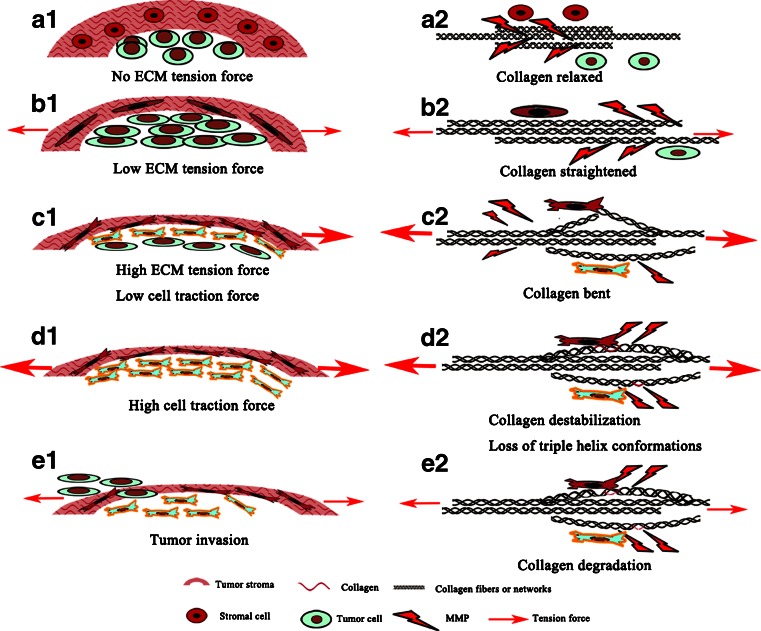
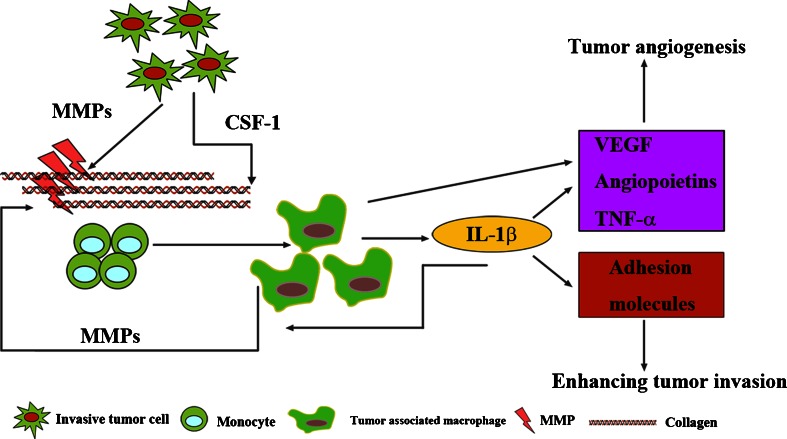
Verification
Claims the paper makes
The claims and statistics of this paper haven’t been checked yet.
Free: it reads the open-access text and checks the first 5 claims that cite a source we can check. Create a free account to check every claim.
Claims other papers make about this one
Each is checked against this paper’s own text: does it say what the citing paper says it does?
The cited source says what the claim attributes to it.
In the citing paper
“The overexpression of these collagens leads to the formation of a stiffer ECM which in turn promotes the formation of a tumorigenic microenvironment [26].”
From Microfluidic modelling of the tumor microenvironment for anti-cancer drug development (2019) · cites this paper as [26]
Self-check
Percentages, sums and reported differences re-computed from the paper’s own numbers.
The self-check needs the paper’s full text.
Citations
Cites
2 retracted
Lysyl oxidase is essential for hypoxia-induced metastasis
Erler, J. T., Bennewith, K. L., Nicolau, M., Dornhöfer, N., Kong, C., Le, Q.-T., Chi, J.-T. A., Jeffrey, S. S., & Giaccia, A. J. (2006) · Nature · doi:10.1038/nature04695 · Cited by 1,309 · cited 2×
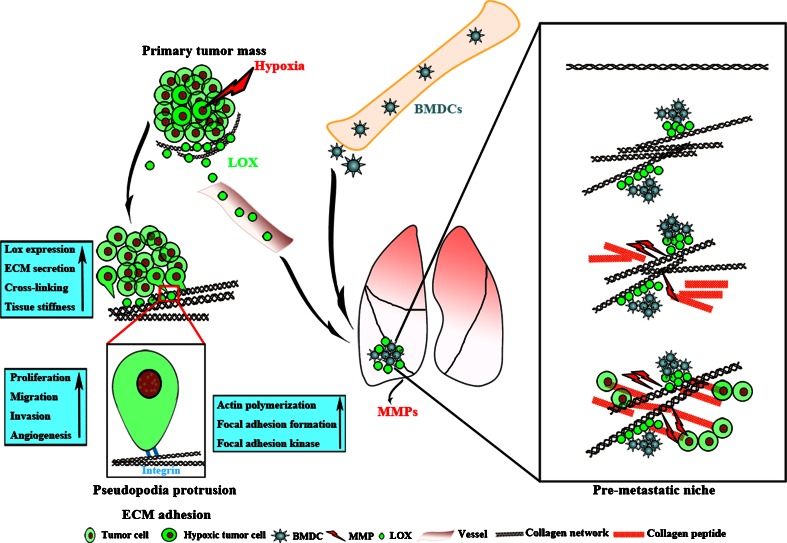
“It is reported that LOX can be disseminated into distal target organs via circulation to mobilize bone marrow derived cells (BMDCs) to distal sites, and to create pre-metastatic niche [29], as evidenced by consistent correlation between increased LOX expression and higher cancer metastasis risk [34].”
BackgroundRetractedSudhakar, A. (2005) · Journal of Clinical Investigation · doi:10.1172/jci24813 · Cited by 162
RetractedJemal, A., Bray, F., Center, M. M., Ferlay, J., Ward, E., & Forman, D. (2011) · CA: A Cancer Journal for Clinicians · doi:10.3322/caac.20107 · Cited by 54,679
Angiogenesis in cancer and other diseases
Carmeliet, P., & Jain, R. K. (2000) · Nature · doi:10.1038/35025220 · Cited by 9,070
Intratumor Heterogeneity and Branched Evolution Revealed by Multiregion Sequencing
Gerlinger, M., Rowan, A. J., Horswell, S., Larkin, J., Endesfelder, D., Gronroos, E., Martinez, P., Matthews, N., Stewart, A., Tarpey, P., et al. (2012) · New England Journal of Medicine · doi:10.1056/nejmoa1113205 · Cited by 7,774 · cited 1×
“To tackle this problem, many efforts focusing on tumor cells have been made over the past century, and some genetic and epigenetic mechanisms have been elucidated [2–6].”
BackgroundNew functions for the matrix metalloproteinases in cancer progression
Egeblad, M., & Werb, Z. (2002) · Nature Reviews Cancer · doi:10.1038/nrc745 · Cited by 6,108
Matrix Crosslinking Forces Tumor Progression by Enhancing Integrin Signaling
Levental, K. R., Yu, H., Kass, L., Lakins, J. N., Egeblad, M., Erler, J. T., Fong, S. F. T., Csiszar, K., Giaccia, A., Weninger, W., et al. (2009) · Cell · doi:10.1016/j.cell.2009.10.027 · Cited by 4,101 · cited 1×
“As the most abundant constituent of ECM, collagen accounts for the major function of ECM, and either increased [12] or decreased [13] deposition of collagen can be associated with increased malignancy.”
BackgroundTensional homeostasis and the malignant phenotype
Paszek, M. J., Zahir, N., Johnson, K. R., Lakins, J. N., Rozenberg, G. I., Gefen, A., Reinhart-King, C. A., Margulies, S. S., Dembo, M., Boettiger, D., et al. (2005) · Cancer Cell · doi:10.1016/j.ccr.2005.08.010 · Cited by 3,941 · cited 3×
“The progressive ECM remodeling produces typical morphological changes characterized by linearization of interstitial collagens at tumor invasion front, with significant impacts on tumor cell biology including gene expression, cell differentiation, proliferation, migration and responses to treatments [10].”
BackgroundCollagen Structure and Stability
Shoulders, M. D., & Raines, R. T. (2009) · Annual Review of Biochemistry · doi:10.1146/annurev.biochem.77.032207.120833 · Cited by 3,923 · cited 2×
“At least 28 different types of collagens have been identified in vertebrates [19, 20] (Table 1).”
BackgroundTumour-educated macrophages promote tumour progression and metastasis
Pollard, J. W. (2004) · Nature Reviews Cancer · doi:10.1038/nrc1256 · Cited by 3,367
Cited by
Items 501–600 of 608
Single and Multiphoton Responsive Nanomaterials for the Investigation of Cancer Microenvironment
Li, Y., Lee, C., Wang, Y.-C., Huang, C.-C., & Liu, T. (2018) · Elsevier eBooks · doi:10.1016/b978-0-12-813339-2.00003-7
Self-citationExtracellular matrix modifications by oligoguluronates for cancer treatment
Haug, B. (2018) · NORA - Norwegian Open Research Archives
Régnier, P. (2018) · theses.fr (ABES) · doi:10.70675/d099b951z1217z49bez85c8z194527757c10
11β-hydroxysteroid dehydrogenase type I inhibition in solid tumours
Davidson, C. (2018) · ERA
Dynamics of cancer cells in the tumor core and role of the extracellular matrix in invasion
Staneva, R. (2018) · theses.fr (ABES) · doi:10.70675/c4d1f55fzbec9z45f1za6eezbd7f83378600
Tan, Y. Q., Tay, W. K., Ooi, L. Y., Teo, Z. C. R., & Tiong, H. Y. (2019) · The Journal of Urology · doi:10.1097/01.ju.0000555356.74794.91
Goodwin, T. J. (2017) · Carolina Digital Repository (University of North Carolina at Chapel Hill) · doi:10.17615/1c1c-8819
Intérêt de l’utilisation de stratégies anti-métaboliques pour le traitement du cancer du sein
Farhat, D. (2019) · theses.fr (ABES) · doi:10.70675/aa097636z0a5dz46acz86bfz7219eb79404e
Puri, M. (2020) · Otago University Research Archive (University of Otago) · Cited by 1
Gu, J., Hu, W., Liu, Y., Zhang, X., Yuan, L., Du, L., & Bai, M. (2020) · Journal of Ultrasound in Medicine · doi:10.1002/jum.15269
The effects of radiation on the extracellular matrix
Diana, A. (2019) · Oxford University Research Archive (ORA) (University of Oxford) · doi:10.5287/ora-e9zarea48
Joseph, A. (2020) · Saint Mary's University Institutional Repository (Saint Mary's University) · Cited by 2
Carcinogénese do Carcinoma da Mama Masculina
André, M. S. P. (2019) · Portuguese National Funding Agency for Science, Research and Technology (RCAAP Project by FCT)
Linked in: the extracellular matrix network in tumour dissemination
Leb‐Reichl, V., Guttmann‐Gruber, C., & Hofbauer, J. P. (2020) · British Journal of Dermatology · doi:10.1111/bjd.19617
Polarized Light Microscopy of Human Breast Cancer
Westreich, J. (2019) · TSpace (University of Toronto)
Li, J., Han, T., Wang, X., Wang, Y., & Yang, Q. (2020) · doi:10.21203/rs.3.rs-111313/v1
“ECM is the major components of the tumor microenvironment, which affects the biological behaviors of tumor cells [43].”
BackgroundAttallah, A. M., El-Far, M., Omran, M. M., Abdelrazek, M., Attallah, K. A., Elbendary, M. S., Soliman, S., & Atwa, R. (2019) · Journal of Bioscience and Applied Research/Journal of Bioscience and Applied Research · doi:10.21608/jbaar.2019.138673
A Role for Adseverin in the Invasion and Migration of MCF7 Breast Adenocarcinoma Cells
Tanic, J. (2018) · TSpace (University of Toronto)
Hall, F. L., & Gordon, E. M. (2021) · IntechOpen eBooks · doi:10.5772/intechopen.97057
do Nascimento, T. G. F. D. C., de França, N., Poncio, L. D. C., Fonseca, A. S., de Figueiredo, B. C., Wéber, H., Herai, R. H., de Noronha, L., Cavalli, L. R., Feltes, B. C., et al. (2021) · doi:10.22541/au.162212567.71149689/v1
Chen, Y., Zhao, J., An, Y., & Bi, F. (2020) · Research Square · doi:10.21203/rs.3.rs-45924/v1
“It has also be shown that collagen acts as a barrier against the invasion and metastasis of tumor cells [13].”
BackgroundWagle, M. M., Rao, A. K., Kabekkodu, S. P., & Mallya, S. P. (2021) · Research Square · doi:10.21203/rs.3.rs-879048/v1
Balancin, M. L. (2020) · Digital Library of Theses and Dissertations (Universidade de São Paulo) · doi:10.11606/t.5.2020.tde-10092021-163714 · Cited by 3
Wagle, M. M., Rao, A. K., Kabekkodu, S. P., & Mallya, S. P. (2022) · Research Square · doi:10.21203/rs.3.rs-879048/v2
Liu, Y., & Ng, M. K. (2022) · Network Modeling Analysis in Health Informatics and Bioinformatics · doi:10.1007/s13721-022-00362-6
“The primary functional properties of the matrix are dominated by collagen, changes in the deposition or degradation will result in the loss of extracellular matrix homeostasis, which would have great influences on the proliferation of cancer cells (Fang et al. 2014; Provenzano et al. 2006).”
BackgroundTumor-asszociált miofibroblasztok genetikai, epigenetikai, transzkripciós és funkcionális jellemzői
Huliák, I. (2021) · SZTE Repository of Dissertations (University of Szeged) · doi:10.14232/phd.10787
Lahr, C. A. (2021) · Queensland University of Technology · doi:10.5204/thesis.eprints.207759
Gudipati, S., Mankad, A., Pandya, H., & Jasrai, Y. T. (2018) · Research Journal of Life Sciences Bioinformatics Pharmaceutical and Chemical Sciences · doi:10.26479/2018.0406.12
Wollina, U. (2019) · Faculty Opinions – Post-Publication Peer Review of the Biomedical Literature · doi:10.3410/f.733007170.793564021
Functional roles of EMP-associated targets in breast cancer models
Toh, A. K. L. (2021) · Queensland University of Technology · doi:10.5204/thesis.eprints.207818
Paradiso, F. (2022) · Cronfa (Swansea University) · doi:10.23889/suthesis.60122 · Cited by 1
Lee, D. B., Oh, H. K., Lee, N.-R., Park, S. H., & Jeong, Y. J. (2022) · Journal of Breast Disease · doi:10.14449/jbd.2022.10.1.18 · Cited by 1
“Further, fibrosis within the TME promotes tumor growth by altering blood flow, enhancing tumor cell intravasation, and enhancing metastasis [6,10,11].”
BackgroundApplying Biomimetic Modeling and Clinical Transcriptomics Data to Investigate Fibrotic Disease
Matera, D. L. (2022) · Deep Blue (University of Michigan) · doi:10.7302/6203
Encapsulation: Advances in cell encapsulation
Saeinasab, M., Davies, E., & Sefat, F. (2023) · Elsevier eBooks · doi:10.1016/b978-0-323-85947-9.00022-4
Cancer Stem-Cells: The Need for a Correct Definition
Adjiri, A. (2023) · Cancer therapy & Oncology International Journal · doi:10.19080/ctoij.2023.23.556108
Hypoxia and the Metastatic Cascade
Gandhi, S., Khanna, S., Kaushik, S., Chaudhry, D., Ghorawat, P., Chongtham, J., & Srivastava, T. (2023) · Springer eBooks · doi:10.1007/978-981-99-0313-9_9 · Cited by 1
Wagle, M. M., Rao, A. K., Kabekkodu, S. P., & Mallya, S. P. (2023) · Asian Pacific Journal of Cancer Prevention · doi:10.31557/apjcp.2023.24.5.1601
“Since tumor cells continuously interact with ECM, an increased disruption can accelerate tumor progression by negatively interfering with cell adhesion (Fang et al., 2014; Paszek et al., 2005; Xu et al., 2019).”
BackgroundBaldavira, C. M. (2023) · Digital Library of Theses and Dissertations (Universidade de São Paulo) · doi:10.11606/t.5.2023.tde-26052023-123151
Extracellular Matrix Remodeling on Cancer Progression
Deepika, B., Girigoswami, A., & Girigoswami, K. (2023) · Springer eBooks · doi:10.1007/978-3-030-92090-6_10-1
Transcriptomics Reveals Tumorigenesis and Pathogen Response in Scombrid Puffy Snout SyndromePreprint
Leidholt, S. L., Bistolas, K., Pastey, M. K., Dasenko, M., Miller, E., Houtan, K. S. V., Boustany, A. M., Galivn, T., & Thurber, R. L. V. (2023) · bioRxiv (Cold Spring Harbor Laboratory) · doi:10.1101/2023.06.26.546572
“Collagens have been described as a double edge sword of the tumor microenvironment where they not only drive immune invasion but also promote oncogenesis by releasing biochemical signals among cancer cells [56].”
BackgroundDecellularized Tissue-Derived Materials for 3D In Vitro Cancer Models Development
Cardoso, A. P., & Marques-Magalhães, Â. (2023) · Springer eBooks · doi:10.1007/978-3-030-92090-6_45-1 · Cited by 1
Naleskina, L. A., Lukianova, N. Y., Zadvorny, T. V., Kunska, L. M., Mushii, O., & Chekhun, V. F. (2023) · Oncology · doi:10.15407/oncology.2023.01.055
Shinawi, T. (2023) · Journal of Microscopy and Ultrastructure · doi:10.4103/jmau.jmau_57_23
“[35] Collagen I, II, III, V, plus Collagen IX levels were increased at BC progression.”
Cancer stem cells and maintenance of tumor heterogeneity/microenvironment
Garg, S., Yadav, R., Garg, K., Khan, H., & Kumar, D. (2023) · Elsevier eBooks · doi:10.1016/b978-0-443-13212-4.00019-2 · Cited by 1
Kumari, P., & Dixit, A. (2024) · Research Square · doi:10.21203/rs.3.rs-3831307/v1
Mechanoregulation of angiopoietin-like 4 in epithelial-mesenchymal transition and cancer metastasis
Liao, Z. (2023) · DR-NTU (Nanyang Technological University) · doi:10.32657/10356/173585
Mukai, C., Choi, E., Sams, K. L., Klampen, E. Z., Anguish, L. J., Marks, B. A., Rice, E. J., Wang, Z., Choate, L. A., Chou, S., et al. (2020) · Figshare · doi:10.6084/m9.figshare.12544814
Mukai, C., Choi, E., Sams, K. L., Klampen, E. Z., Anguish, L. J., Marks, B. A., Rice, E. J., Wang, Z., Choate, L. A., Chou, S., et al. (2020) · Figshare · doi:10.6084/m9.figshare.12544796
Mukai, C., Choi, E. A., Sams, K. L., Klampen, E. Z., Anguish, L. J., Marks, B. A., Rice, E. J., Wang, Z., Choate, L. A., Chou, S., et al. (2020) · Figshare · doi:10.6084/m9.figshare.12544820
Decellularized Tissue-Derived Materials for 3D In Vitro Cancer Models Development
Cardoso, A. P., & Marques-Magalhães, Â. (2024) · Springer eBooks · doi:10.1007/978-3-031-56363-8_45
The Diverse Roles of the Tumour Microenvironment in Carcinogenesis
Al-Janabi, I. I. (2024) · Al-Rafidain Journal of Medical Sciences · doi:10.54133/ajms.v7i2.1464 · Cited by 1
“Additionally, the breakdown of collagen may facilitate tumor metastasis [109].”
BackgroundArora, B. (2025) · eDiss (Georg-August-Universität Göttingen) · doi:10.53846/goediss-11001
Collagen-based nanofibers in wound dressings
Chandraguptha, D. T., Godakanda, V. U., Manatunga, D. C., de Silva, K. M. N., de Silva, R. M., & Williams, G. R. (2025) · Elsevier eBooks · doi:10.1016/b978-0-443-29066-4.00010-x
Jurj, A., Ionescu, C., Berindan‐Neagoe, I., & Braicu, C. (2022) · Figshare · doi:10.6084/m9.figshare.21151438
Brodsky, A. S., Khurana, J., Guo, K. S., Wu, E. Y., Yang, D., Siddique, A. S., Wong, I. Y., Uzun, E. D. G., & Resnick, M. B. (2022) · Figshare · doi:10.6084/m9.figshare.19127236
Mukai, C., Choi, E., Sams, K. L., Klampen, E. Z., Anguish, L. J., Marks, B. A., Rice, E. J., Wang, Z., Choate, L. A., Chou, S.-P., et al. (2020) · Figshare · doi:10.6084/m9.figshare.12544793
Poirion, O., Jing, Z., Chaudhary, K., Huang, S., & Garmire, L. X. (2021) · Figshare · doi:10.6084/m9.figshare.14984946
Mukai, C., Choi, E., Sams, K. L., Klampen, E. Z., Anguish, L. J., Marks, B. A., Rice, E. J., Wang, Z., Choate, L. A., Chou, S.-P., et al. (2020) · Figshare · doi:10.6084/m9.figshare.12544811
Mukai, C., Choi, E., Sams, K. L., Klampen, E. Z., Anguish, L. J., Marks, B. A., Rice, E. J., Wang, Z., Choate, L. A., Chou, S.-P., et al. (2020) · Figshare · doi:10.6084/m9.figshare.12544832
Mukai, C., Choi, E., Sams, K. L., Klampen, E. Z., Anguish, L. J., Marks, B. A., Rice, E. J., Wang, Z., Choate, L. A., Chou, S.-P., et al. (2020) · Figshare · doi:10.6084/m9.figshare.12544826
Brodsky, A. S., Khurana, J., Guo, K. S., Wu, E. Y., Yang, D., Siddique, A. S., Wong, I. Y., Uzun, E. D. G., & Resnick, M. B. (2022) · Figshare · doi:10.6084/m9.figshare.19127248
Brodsky, A. S., Khurana, J., Guo, K. S., Wu, E. Y., Yang, D., Siddique, A. S., Wong, I. Y., Uzun, E. D. G., & Resnick, M. B. (2022) · Figshare · doi:10.6084/m9.figshare.19127239
Golé, L., Yeong, J., Lim, J. C. T., Ong, K. H., Han, H., Thike, A. A., Poh, Y. C., Yee, S., Iqbal, J., Hong, W., et al. (2020) · Figshare · doi:10.6084/m9.figshare.12262772
Adur, J. F., ERBES, L. A., Bianchi, M., Ruff, S., Zeitoune, A. A., Izaguirre, M. F., Cesar, C. L., Carvahlo, H. F., & Casco, V. H. (2018) · bioRxiv (Cold Spring Harbor Laboratory) · doi:10.1101/398719
Jiang, W., Wang, H., Dong, X., Zhao, Y., Long, C., Chen, D., Yan, B., Cheng, J., Lin, Z., Zhuo, S., et al. (2024) · Figshare · doi:10.6084/m9.figshare.25067167
Brodsky, A. S., Khurana, J., Guo, K. S., Wu, E. Y., Yang, D., Siddique, A. S., Wong, I. Y., Uzun, E. D. G., & Resnick, M. B. (2022) · Figshare · doi:10.6084/m9.figshare.19127251
Mukai, C., Choi, E., Sams, K. L., Klampen, E. Z., Anguish, L. J., Marks, B. A., Rice, E. J., Wang, Z., Choate, L. A., Chou, S.-P., et al. (2020) · Figshare · doi:10.6084/m9.figshare.12544805
Mukai, C., Choi, E., Sams, K. L., Klampen, E. Z., Anguish, L. J., Marks, B. A., Rice, E. J., Wang, Z., Choate, L. A., Chou, S.-P., et al. (2020) · Figshare · doi:10.6084/m9.figshare.12544829
Poirion, O., Jing, Z., Chaudhary, K., Huang, S., & Garmire, L. X. (2021) · Figshare · doi:10.6084/m9.figshare.14984937
Hybrid nanosystems for the delivery of therapeutic agents as tretament for complex diseases
Moreno-Zafra, V. (2021) · Library Open Repository (Universidad Complutense Madrid)
Desa, D. E., & Brown, E. B. (2021) · UR Research (University of Rochester) · Cited by 1
Mohammad, S. (2022) · Nottingham ePrints (University of Nottingham)
(2019) · Arizona State University Library Digital Repository (Arizona State University)
Differential Effects of KIM-1 in Subcutaneous and Orthotopic Renca Models of Kidney Cancer
Yotis, D. M. (2021) · Scholarship@Western (Western University)
Laser-Activated Nanomaterials for Tissue Repair
(2019) · Arizona State University Library Digital Repository (Arizona State University)
Martínez Blanco, Á. (2025) · Dipòsit Digital de la Universitat de Barcelona (Universitat de Barcelona)
Zhang, X., Wang, Z., Wang, L., Gong, S., Pang, L., Zhang, S., Li, M., Zhang, C., Chen, Y., Li, Z., et al. (2025) · Histopathology · doi:10.1111/his.70085
“26 Cancer cells can cause the remodelling of the extracellular matrix, which facilitates tumour growth, tumour invasion, and dissemination.”
Huang, X., Chen, J., & He, X. (2026) · Journal of Pharmaceutical and Biomedical Analysis · doi:10.1016/j.jpba.2026.117347
Collagen type I promotes pancreatic tumor growth and limits immune cell infiltrationPreprint
Thorseth, M., Johansen, A. Z., Baker, K. J., Carretta, M., Rømer, A. M. A., Jensen, C., Jürgensen, H. J., Linder, H., Czajkowski, N. K., Kuczek, D. E., et al. (2026) · bioRxiv (Cold Spring Harbor Laboratory) · doi:10.64898/2026.01.09.698616 · Cited by 1
“A hallmark of many solid tumors is the extensive remodeling of the ECM, including increased deposition and reorganization of collagen type I (Col1) 2 – 4 .”
Nair, V., Uppal, G., Sinha, R., Kaur, M., Gupta, S., & Kumar, R. (2026) · IEEE Journal of Selected Topics in Quantum Electronics · doi:10.1109/jstqe.2026.3651753
“The ECM is a dynamic and intricate structure [3] whose chemical and biophysical characteristics influence cell morphology [2], adhesion [4], migration [5], and proliferation [6].”
Folding and Quality Control Mechanisms of Procollagen
Kim, S. (2025) · DSpace@MIT (Massachusetts Institute of Technology)
Shahd, N. N., Hussain, K. A. M., & Al-Safy, A. H. (2026) · AIP conference proceedings · doi:10.1063/5.0318634
Impact du microenvironnement dans la composition, la plasticité et la formation des invadosomes
Henriet, E. (2017) · theses.fr (ABES) · doi:10.70675/b6bc42f3z4b88z41c0z8c31z890b1ab044bc
Ferrari, R. (2019) · theses.fr (ABES) · doi:10.70675/d141bd23z9ea4z4561z977ezef795633f434
Etude des propriétés mécaniques intrinsèques d’un modèle de microtumeur in vitro
Guillaume, L. (2017) · theses.fr (ABES) · doi:10.70675/98eaf292zbc52z4451z8a14z84364523ff6b
Lozano, A. (2021) · theses.fr (ABES) · doi:10.70675/a2b1195ez9acdz4848za284z48d03d642274 · Cited by 1
Engineering hyaluronic acid-binding cytokines for enhanced tumor retention and safetyPreprint
Fink, E., Pinney, W., Duhamel, L., Msari, R. A., Krum, D., Stinson, J. A., & Wittrup, K. D. (2026) · bioRxiv (Cold Spring Harbor Laboratory) · doi:10.64898/2026.04.06.716711
Martinier, I. (2023) · theses.fr (ABES) · doi:10.70675/c8872ff9z0aeez4facz9326zf565b159575d
Dabaja, A. A., Apu, E. H., Zhao, V., Manimaran, S., Slayton, M. D., Li, H., Serhan, H. A., Bao, L., Morikawa, A., Lowenstein, P. R., et al. (2026) · Biomaterials · doi:10.1016/j.biomaterials.2026.124224
The role of imaging and deformable models in cancer biomechanics
Brock, K. K., Lim, R. T., O’Driscoll, O. H., Snoddy, E. P., Pan, J., Hickey, M., & Tang, T. T. (2026) · Current Opinion in Biomedical Engineering · doi:10.1016/j.cobme.2026.100670
Mushii, O., Burda, T. S., Shevchuk, A. O., Kokoilo, M. V., Levenets, A. Y., & Zadvornyi, T. (2026) · Oncology · doi:10.15407/oncology.2026.02.097
“Such structural rearrangements of the ECM contribute to the loss of cell polarity and intercellular adhesion, the enhancement of growth factor signalling, and the creation of conditions favourable for invasive tumour growth and metastasis [6].”
Biomaterial-based Platforms for Modeling the Pre-metastatic Niche
Halim, M. S. A., Nadernezhad, A., Kopecky, C., Hauser, S., Kilian, K. A., & Loessner, D. (2026) · Elsevier eBooks · doi:10.1016/b978-0-443-30151-3.00005-x
Ibrahim, E. G., Mahmoud, S. S., TAHA, R. A., & Zayed, H. A. (2026) · Journal of Biophotonics · doi:10.1002/jbio.70316
Liu, Q., Cao, W., & 郝洲华 (2026) · Archives of Biochemistry and Biophysics · doi:10.1016/j.abb.2026.110919
Retracted
Metadata
- Authors
- Fang, M., Yuan, J., Peng, C., & Li, Y.
- Affiliations
- Zhongnan Hospital of Wuhan University (CN)
- Corresponding author
- Li, Yan
- Venue
- Tumor Biology
- Published
- 2013-12-15
- Volume
- 35
- Issue
- 4
- Pages
- 2871-2882
- ISSN
- 1010-4283 (ISSN-L)
- 1423-0380
- PMC
- PMC3980040
- OpenAlex
- W2116586864
- Semantic Scholar
- 431cc89326c45343b7634dc894588122f4206efd
- Cited by
- 580
- References
- 109
- Citations by year
- 2026: 26 · 2025: 42 · 2024: 41 · 2023: 61 · 2022: 56 · 2021: 84 · 2020: 85 · 2019: 72 · 2018: 45 · 2017: 33 · 2016: 20 · 2015: 11 · 2014: 4
- FWCI
- 1.35
- Type
- journal article
- Language
- en
- Open access
- hybrid
- doi.org
- Locations
- Tumor Biology (publishedVersion, cc-by)
- Europe PMC (PubMed Central) (publishedVersion, cc-by)
- PubMed Central (publishedVersion, cc-by)
- PubMed (publishedVersion)
- Funders
- National Natural Science Foundation of China (81171396, 10002012, 81230031)
- National Science and Technology Major Project (2012ZX10002012-12)
- Topics
- Life Sciences › Biochemistry, Genetics and Molecular Biology › Cell Biology › Cellular Mechanics and Interactions
- Life Sciences › Biochemistry, Genetics and Molecular Biology › Molecular Biology › TGF-β signaling in diseases
- Life Sciences › Biochemistry, Genetics and Molecular Biology › Cancer Research › Protease and Inhibitor Mechanisms
- Keywords
- collagen, tumor progression, tumor microenvironment, extracellular matrix, extracellular matrix remodeling, collagen degradation, tumor stroma, biomechanical signaling, tumor invasion, tumor cell migration, angiogenesis, tumor infiltration, tissue tension
- MeSH terms
- Animals, Collagen, Humans, Protein-Lysine 6-Oxidase, Neoplasms, Neovascularization, Pathologic, Disease Progression, Matrix Metalloproteinases, Epithelial-Mesenchymal Transition
About these checks
Registry, retraction, Cites and statistics results are computed, not judged, with one exception: a printed reference that no index lists is read once by a model before it counts as a citation error. Claims are extracted by a model and kept only when their quote appears verbatim in the text; each cited source is then checked, with a model’s help, for whether it says what the claim relies on. Those verdicts can be wrong — read the claim’s quote and the cited source before relying on one.
Statistics and arithmetic are recomputed, not judged.
Confidence bands are shown only for fields calibrated on our annotated test set. None is calibrated yet, so no band is shown.
What counts as a claim ›How we measure confidence ›How we check this ›
Are you an author, or do you see a problem with this page? Request a review
Data sources
Bibliographic data: Semantic Scholar, OpenAlex, Crossref.
Contains information from the Semantic Scholar Academic Graph Datasets, made available under the ODC Attribution License (ODC-BY 1.0).
Semantic Scholar’s data is described in: Kinney, R., et al. (2023). The Semantic Scholar Open Data Platform. arXiv:2301.10140.
