

Collagen as a double-edged sword in tumor progression
Open accessThe DOI matches its Crossref record; 112 of the 112 references it cites were found in a registry or an index.
Abstract
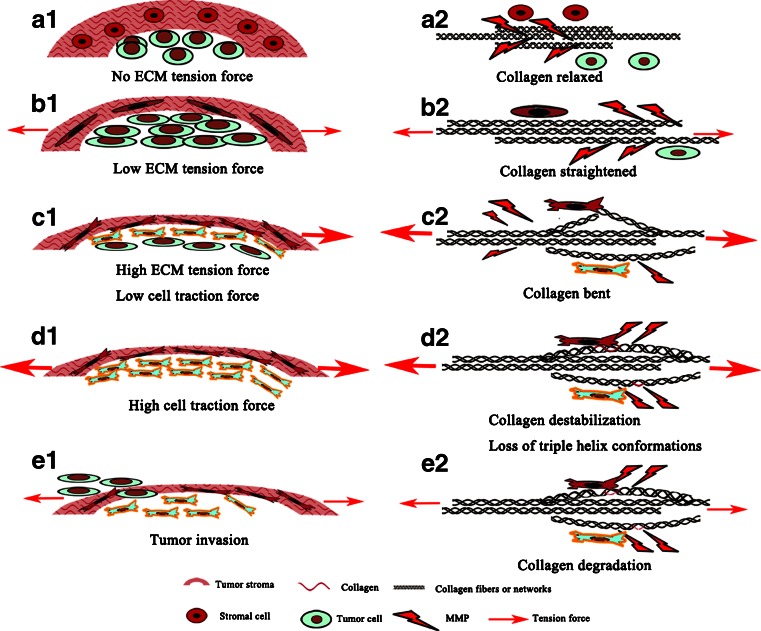
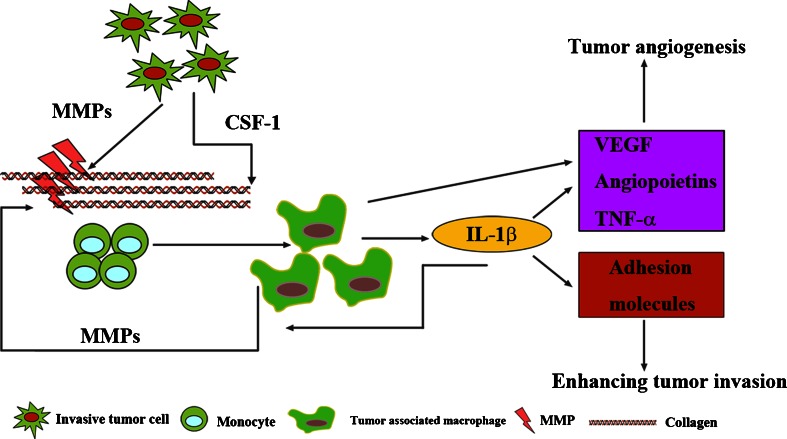
It has been recognized that cancer is not merely a disease of tumor cells, but a disease of imbalance, in which stromal cells and tumor microenvironment play crucial roles. Extracellular matrix (ECM) as the most abundant component in tumor microenvironment can regulate tumor cell behaviors and tissue tension homeostasis. Collagen constitutes the scaffold of tumor microenvironment and affects tumor microenvironment such that it regulates ECM remodeling by collagen degradation and re-deposition, and promotes tumor infiltration, angiogenesis, invasion and migration. While collagen was traditionally regarded as a passive barrier to resist tumor cells, it is now evident that collagen is also actively involved in promoting tumor progression. Collagen changes in tumor microenvironment release biomechanical signals, which are sensed by both tumor cells and stromal cells, trigger a cascade of biological events. In this work, we discuss how collagen can be a double-edged sword in tumor progression, both inhibiting and promoting tumor progression at different stages of cancer development.
Overview
The claims and statistics of this paper haven’t been checked yet.
Free: it reads the open-access text and checks the first 5 claims that cite a source we can check. Create a free account to check every claim.
Integrity signals
Registry
Cites
Statistics
Figures
Verification
Claims the paper makes
The claims and statistics of this paper haven’t been checked yet.
Free: it reads the open-access text and checks the first 5 claims that cite a source we can check. Create a free account to check every claim.
Claims other papers make about this one
Each is checked against this paper’s own text: does it say what the citing paper says it does?
The cited source says what the claim attributes to it.
In the citing paper
“The overexpression of these collagens leads to the formation of a stiffer ECM which in turn promotes the formation of a tumorigenic microenvironment [26].”
From Microfluidic modelling of the tumor microenvironment for anti-cancer drug development (2019) · cites this paper as [26]
Self-check
Percentages, sums and reported differences re-computed from the paper’s own numbers.
The self-check needs the paper’s full text.
Citations
Cites
2 retracted
Lysyl oxidase is essential for hypoxia-induced metastasis
Erler, J. T., Bennewith, K. L., Nicolau, M., Dornhöfer, N., Kong, C., Le, Q.-T., Chi, J.-T. A., Jeffrey, S. S., & Giaccia, A. J. (2006) · Nature · doi:10.1038/nature04695 · Cited by 1,309 · cited 2×
“It is reported that LOX can be disseminated into distal target organs via circulation to mobilize bone marrow derived cells (BMDCs) to distal sites, and to create pre-metastatic niche [29], as evidenced by consistent correlation between increased LOX expression and higher cancer metastasis risk [34].”
BackgroundRetractedSudhakar, A. (2005) · Journal of Clinical Investigation · doi:10.1172/jci24813 · Cited by 162
RetractedJemal, A., Bray, F., Center, M. M., Ferlay, J., Ward, E., & Forman, D. (2011) · CA: A Cancer Journal for Clinicians · doi:10.3322/caac.20107 · Cited by 54,679
Angiogenesis in cancer and other diseases
Carmeliet, P., & Jain, R. K. (2000) · Nature · doi:10.1038/35025220 · Cited by 9,070
Intratumor Heterogeneity and Branched Evolution Revealed by Multiregion Sequencing
Gerlinger, M., Rowan, A. J., Horswell, S., Larkin, J., Endesfelder, D., Gronroos, E., Martinez, P., Matthews, N., Stewart, A., Tarpey, P., et al. (2012) · New England Journal of Medicine · doi:10.1056/nejmoa1113205 · Cited by 7,774 · cited 1×
“To tackle this problem, many efforts focusing on tumor cells have been made over the past century, and some genetic and epigenetic mechanisms have been elucidated [2–6].”
BackgroundNew functions for the matrix metalloproteinases in cancer progression
Egeblad, M., & Werb, Z. (2002) · Nature Reviews Cancer · doi:10.1038/nrc745 · Cited by 6,108
Matrix Crosslinking Forces Tumor Progression by Enhancing Integrin Signaling
Levental, K. R., Yu, H., Kass, L., Lakins, J. N., Egeblad, M., Erler, J. T., Fong, S. F. T., Csiszar, K., Giaccia, A., Weninger, W., et al. (2009) · Cell · doi:10.1016/j.cell.2009.10.027 · Cited by 4,101 · cited 1×
“As the most abundant constituent of ECM, collagen accounts for the major function of ECM, and either increased [12] or decreased [13] deposition of collagen can be associated with increased malignancy.”
BackgroundTensional homeostasis and the malignant phenotype
Paszek, M. J., Zahir, N., Johnson, K. R., Lakins, J. N., Rozenberg, G. I., Gefen, A., Reinhart-King, C. A., Margulies, S. S., Dembo, M., Boettiger, D., et al. (2005) · Cancer Cell · doi:10.1016/j.ccr.2005.08.010 · Cited by 3,941 · cited 3×
“The progressive ECM remodeling produces typical morphological changes characterized by linearization of interstitial collagens at tumor invasion front, with significant impacts on tumor cell biology including gene expression, cell differentiation, proliferation, migration and responses to treatments [10].”
BackgroundCollagen Structure and Stability
Shoulders, M. D., & Raines, R. T. (2009) · Annual Review of Biochemistry · doi:10.1146/annurev.biochem.77.032207.120833 · Cited by 3,923 · cited 2×
“At least 28 different types of collagens have been identified in vertebrates [19, 20] (Table 1).”
BackgroundTumour-educated macrophages promote tumour progression and metastasis
Pollard, J. W. (2004) · Nature Reviews Cancer · doi:10.1038/nrc1256 · Cited by 3,367
Cited by
Items 201–300 of 608
Molecular patterns of cancer colonisation in lymph nodes of breast cancer patients
Chatterjee, G., Pai, T., Hardiman, T., Avery‐Kiejda, K. A., Scott, R. J., Spencer, J., Pinder, S. E., & Grigoriadis, A. E. (2018) · Breast Cancer Research · doi:10.1186/s13058-018-1070-3 · Cited by 29
“Increased collagen can promote tumour spread, not only by augmenting cell motility and regulating tumour promoting cell–ECM interactions, but also by altering immune responses, including switching the phenotypes of macrophages to a tumour-promoting M2 type [88] as well as a reduction”
BackgroundNano-drug delivery strategies affecting cancer-associated fibroblasts to reduce tumor metastasis
Zou, L., Xian, P., Pu, Q., Song, Y., Ni, S., Chen, L., & Hu, K. (2025) · Acta Pharmaceutica Sinica B · doi:10.1016/j.apsb.2025.02.040 · Cited by 29
“Numerous studies have shown that both stiffness and degradation of the ECM can promote tumorcell invasion and metastasis 224 ‒ 226 .”
Guo, N., Zhang, K., Gao, X., Lv, M., Luan, J., Hu, Z., Li, A., & Gou, X. (2020) · Current Research in Translational Medicine · doi:10.1016/j.retram.2020.05.003 · Cited by 28
Vitamin C: A stem cell promoter in cancer metastasis and immunotherapy
Fu, J., Wu, Z., Liu, J., & Wu, T. (2020) · Biomedicine & Pharmacotherapy · doi:10.1016/j.biopha.2020.110588 · Cited by 33
Micalet, A., Pape, J., Bakkalci, D., Javanmardi, Y., Hall, C. M., Cheema, U., & Moeendarbary, E. (2022) · Advanced Healthcare Materials · doi:10.1002/adhm.202201749 · Cited by 29
Precision detection of liver metastasis by collagen-targeted protein MRI contrast agent
Salarian, M., Yang, H., Turaga, R. C., Tan, S., Qiao, J., Xue, S., Gui, Z., Peng, G., Han, H., Mittal, P., et al. (2019) · Biomaterials · doi:10.1016/j.biomaterials.2019.119478 · Cited by 28
Age-associated genes in human mammary gland drive human breast cancer progression
Gu, X. Q., Wang, B., Zhu, H., Zhou, Y., Horning, A. M., Huang, T. H. ‐., Chen, Y., Houghton, P. J., Lai, Z., Michalek, J. E., et al. (2020) · Breast Cancer Research · doi:10.1186/s13058-020-01299-2 · Cited by 28
Wang, Q., Wang, Z., Zhang, Z., Zhang, W., Zhang, M., Shen, Z., Ye, Y., Jiang, K., & Wang, S. (2021) · Chinese Journal of Cancer Research · doi:10.21147/j.issn.1000-9604.2021.02.13 · Cited by 29
“Furthermore, cluster 4 showed high expression in TGFβ and Wnt signaling, which are also related to cancer invasion and metastasis (23).”
BackgroundSpectroscopic evaluation of carcinogenesis in endometrial cancer
Depciuch, J., Barnaś, E., Skręt-Magierło, J. E., Skręt, A., Kaznowska, E. B., Łach, K., Jakubczyk, P., & Cebulski, J. (2021) · Scientific Reports · doi:10.1038/s41598-021-88640-7 · Cited by 28
Why Vitamin C Could Be an Excellent Complementary Remedy to Conventional Therapies for Breast Cancer
Codini, M. (2020) · International Journal of Molecular Sciences · doi:10.3390/ijms21218397 · Cited by 27
“The importance of vitamin C in curbing the development of cancer metastasis has been related to its role in collagen synthesis, which is decreased when there is a lack of vitamin C [20].”
BackgroundMicrofluidic-based human prostate-cancer-on-chip
Jiang, L., Khawaja, H., Tahsin, S., Clarkson, T. A., Miranti, C. K., & Zohar, Y. (2024) · Frontiers in Bioengineering and Biotechnology · doi:10.3389/fbioe.2024.1302223 · Cited by 26
Control of Collagen Triple Helix Stability by Phosphorylation
Acevedo‐Jake, A. M., Ngo, D. H., & Hartgerink, J. D. (2017) · Biomacromolecules · doi:10.1021/acs.biomac.6b01814 · Cited by 26
Li, Y., Hong, J., Jung, B., Oh, E., & Yun, C. (2019) · Cancer Letters · doi:10.1016/j.canlet.2019.05.033 · Cited by 26
Self-citationSlocum, E. M., Craig, A. J., Villanueva, A., & Germain, D. (2019) · Breast Cancer Research · doi:10.1186/s13058-019-1142-z · Cited by 26
A Self-Healing Hierarchical Fiber Hydrogel That Mimics ECM Structure
Li, K., Zhu, Y., Zhang, Q., Shi, X., Liang, F., & Han, D. (2020) · Materials · doi:10.3390/ma13225277 · Cited by 26
“For example, excessive fibrosis can occur in the ECM upon excessive deposition of fibrous components (especially collagen), directly leading to an enhancement in ECM stiffness [6,7].”
BackgroundCordeiro, Y. D. G., Mulder, L. M., van Zeijl, R. J. M., Paskoski, L. B., van Veelen, P. A., de Ru, A., Strefezzi, R. D. F., Heijs, B., & Fukumasu, H. (2021) · Cancers · doi:10.3390/cancers13235901 · Cited by 28
Almici, E., Arshakyan, M., Carrasco, J. L., Martínez, A., Ramírez, J., Enguita, A. B., Monsó, E., Montero, J., Samitier, J., & Alcaraz, J. (2023) · Modern Pathology · doi:10.1016/j.modpat.2023.100155 · Cited by 28
Gutierrez, N. M. C., Pujol‐Solé, N., Arifi, Q., Coll, J., Clainche, T. L., & Broekgaarden, M. (2022) · Cancer and Metastasis Reviews · doi:10.1007/s10555-022-10064-0 · Cited by 25
Fang, M., Yuan, J., Chen, M., Sun, Z., Liu, L., Cheng, G., Ying, H., Yang, S., & Chen, M. (2018) · Oncology Letters · doi:10.3892/ol.2018.7946 · Cited by 25
“…develop metastases through stromal cells and immune responses (15), by participating in signaling transduction between the ECM and cancer cells (16), in which the collagen degradation products recruit monocytes, and immune cells aid collagen reorganization to improve cancer cell penetration (17).”
Self-citationDeciphering the biology of thymic epithelial tumors
Rajan, A., & Zhao, C. N. (2019) · Mediastinum · doi:10.21037/med.2019.08.03 · Cited by 25
“Dysregulation of collagen metabolism in the tumor microenvironment has been previously shown to have variable effects on tumor growth at various stages of cancer development (20).”
Song, D., Chen, T., Wang, S., Chen, S., Li, H., Yu, F., Zhang, J., & Zhang, Z. (2020) · The Analyst · doi:10.1039/c9an01524h · Cited by 28
Esophageal Microenvironment: From Precursor Microenvironment to Premetastatic Niche
Han, P., Cao, P., Hu, S., Kong, K., Deng, Y., Zhao, B., & Li, F. (2020) · Cancer Management and Research · doi:10.2147/cmar.s258215 · Cited by 27
Zhu, G., Wang, Y., Wang, Y., Huang, H., Li, B.-X., Chen, P., Chen, C., Zhang, H., Li, Y., Liu, H., et al. (2024) · Cell Death and Disease · doi:10.1038/s41419-024-06873-6 · Cited by 28
“Eventually, due to the hardening of the stroma and the change in stress [11, 12], the tumor cell polarity and the intercellular adhesion changes, leading to tumor cell migration along the hardened collagen fi bers toward the stroma and facilitating distant metastasis of the tumor [11, 13].”
Ahuja, S., & Lazar, I. M. (2021) · Frontiers in Immunology · doi:10.3389/fimmu.2021.646043 · Cited by 26
“LOX expression, responsible for the oxidative deamination of Lys residues in collagen precursors, collagen crosslinking and increased matrix stiffening, was correlated with increased tumor adhesion and migration (73, 76), but also with possible roles in tumor suppression (42).”
BackgroundInfluentialMethodology to Quantify Collagen Subtypes and Crosslinks: Application in Minipig Cartilages
Bielajew, B. J., Hu, J. C. Y., & Athanasiou, K. A. (2021) · Cartilage · doi:10.1177/19476035211060508 · Cited by 24
In Vitro Approaches to Determine the Potential Carcinogenic Risk of Environmental Pollutants
Barguilla, I., Maguer‐Satta, V., Guyot, B., Pastor, S., Marcos, R., & Hernández, A. (2023) · International Journal of Molecular Sciences · doi:10.3390/ijms24097851 · Cited by 25
“active EMT program adopt a more mesenchymal state by losing E-cadherin, increasing the expression of N-cadherin and altering the integrin expression profile [87].”
BackgroundJones‐Paris, C. R., Paria, S., Berg, T., Saus, J., Bhave, G. B., Paria, B. C., & Hudson, B. G. (2016) · Matrix Biology · doi:10.1016/j.matbio.2016.09.005 · Cited by 25
Proteomic profiling identifies markers for inflammation-related tumor–fibroblast interaction
Drev, D., Bileck, A., Erdem, Z., Mohr, T. T., Timelthaler, G., Beer, A., Gerner, C., & Marian, B. (2017) · Clinical Proteomics · doi:10.1186/s12014-017-9168-7 · Cited by 25
“Among the widespread network collagens [27], the type VI α5-chain was decreased.”
BackgroundInfluentialToss, M. S., Miligy, I. M., Gorringe, K. L., Al-Kawaz, A., Mittal, K., Aneja, R., Ellis, I. O., Green, A. R., Roxanis, I., & Rakha, E. A. (2019) · Modern Pathology · doi:10.1038/s41379-019-0296-7 · Cited by 26
Keikhosravi, A., Li, B., Liu, Y., & Eliceiri, K. W. (2019) · Biomedical Optics Express · doi:10.1364/boe.11.000160 · Cited by 30
“It has been recognized that the extracellular matrix (ECM) in the tumor microenvironment can regulate tumor cell behavior and tissue tension homeostasis [6,7].”
BackgroundSalarian, M., Ibhagui, O. Y., & Yang, J. J. (2020) · Wiley Interdisciplinary Reviews Nanomedicine and Nanobiotechnology · doi:10.1002/wnan.1622 · Cited by 28
Mohanty, V., Subbannayya, Y., Patil, S., Puttamallesh, V. N., Najar, M. A., Datta, K. K., Pinto, S. M., Begum, S., Mohanty, N., Routray, S., et al. (2021) · Journal of Cell Communication and Signaling · doi:10.1007/s12079-021-00609-3 · Cited by 25
Brodsky, A. S., Khurana, J., Guo, K. S., Wu, E. Y., Yang, D., Siddique, A., Wong, I. Y., Uzun, E. D. G., & Resnick, M. B. (2022) · BMC Cancer · doi:10.1186/s12885-021-09136-1 · Cited by 23
“Increased collagen expression in many solid tumors has been associated with poor outcomes and resistance in multiple settings [3], likely through increased epithelial-to-mesenchymal transitions (EMT) and drug resistance [4].”
BackgroundPredictive value of collagen in cancer
Angel, P. M., & Zambrzycki, S. C. (2022) · Advances in cancer research · doi:10.1016/bs.acr.2022.02.004 · Cited by 24
Afshar, K., Sanaei, M., Ravari, M. S., Pourbagheri‐Sigaroodi, A., & Bashash, D. (2023) · Cell Biochemistry and Function · doi:10.1002/cbf.3846 · Cited by 27
“86 As the cancerous cells initiate their TABLE 1 Factors associated with the matrix turnover. destiny, their high proliferation rate forces the ECM to undergo several considerable alterations due to the dynamic nature of ECM − cell interactions.”
BackgroundMicronutrient Status and Breast Cancer: A Narrative Review
Forma, A., Grunwald, A., Zembala, P., Januszewski, J., Brachet, A., Zembala, R., Świątek, K., & Baj, J. (2024) · International Journal of Molecular Sciences · doi:10.3390/ijms25094968 · Cited by 29
“The significance of vitamin C in impeding the progression of cancer metastasis is closely tied to its involvement in collagen synthesis, a process which undergoes a decline in the absence of sufficient vitamin C [71].”
BackgroundSong, D., Yu, F., Chen, S., Chen, Y., He, Q., Zhang, Z., Zhang, J., & Wang, S. (2020) · Biomedical Optics Express · doi:10.1364/boe.383869 · Cited by 23
Role of COL3A1 and POSTN on Pathologic Stages of Esophageal Cancer
Zhang, S.-W., Zhang, N., & Wang, N. (2020) · Technology in Cancer Research & Treatment · doi:10.1177/1533033820977489 · Cited by 24
“in bladder cancer, breast cancer, and smokingrelated lung cancer(30-32); its expression may affect the tumor microenvironment and regulate the ECM through collagen degradation and deposition to promote tumor progression.(33,34) Engqvist et al.”
BackgroundNondegradable Collagen Increases Liver Fibrosis but Not Hepatocellular Carcinoma in Mice
Baglieri, J., Zhang, C., Liang, S., Liu, X., Nishio, T., Rosenthal, S. B., Dhar, D., Su, H., Cong, M., Jia, J., et al. (2021) · American Journal Of Pathology · doi:10.1016/j.ajpath.2021.05.019 · Cited by 23
Epithelial–Mesenchymal Transition Induced in Cancer Cells by Adhesion to Type I Collagen
Fujisaki, H., & Futaki, S. (2022) · International Journal of Molecular Sciences · doi:10.3390/ijms24010198 · Cited by 23
“Col-I is said to play a role in cancer malignancy for both progression and inhibition [9].”
BackgroundRajakumar, T., & Pugalendhi, P. (2023) · Amino Acids · doi:10.1007/s00726-023-03285-2 · Cited by 23
“Collagen in tissues is a physical barrier against tumor invasion and metastasis (Fang et al. 2014).”
BackgroundMicalet, A., Tappouni, L. J., Peszko, K., Karagianni, D., Lam, A., Counsell, J. R., Quezada, S. A., Moeendarbary, E., & Cheema, U. (2023) · Matrix Biology Plus · doi:10.1016/j.mbplus.2023.100137 · Cited by 26
“The hypothesis herein is that for early onset cancer, the 3D micro-environment is stiffened, creating a shield that protects the cancer cells against external factors [1,4,5,28].”
BackgroundHauge, A., Wegner, C. S., Gaustad, J., Simonsen, T. G., Andersen, L. M. K., & Rofstad, E. K. (2017) · Oncotarget · doi:10.18632/oncotarget.22388 · Cited by 22
“These affect angiogenesis, cell migration, tumor invasiveness, and – consequently – the clinical outcome of cancer patients [19].”
Collective effects of common SNPs and risk prediction in lung cancer
Lei, X., Yuan, D., Zhu, Z., & Huang, S. (2018) · Heredity · doi:10.1038/s41437-018-0063-4 · Cited by 24
Desa, D. E., Strawderman, R. L., Wu, W., Hill, R. L., Smid, M., Martens, J. W. M., Turner, B. M., & Brown, E. B. (2020) · BMC Cancer · doi:10.1186/s12885-020-07713-4 · Cited by 27
Shu, C., Zheng, W., Lin, K., Lim, C. M., & Huang, Z. (2021) · Analytical Chemistry · doi:10.1021/acs.analchem.0c03778 · Cited by 23
Second harmonic generation imaging of the collagen architecture in prostate cancer tissue
Garcia, A. M., Magalhes, F. L., Soares, J. S., Junior, E. P., de Lima, M. F. R., Mamede, M. H., & Paula, A. (2018) · Biomedical Physics & Engineering Express · doi:10.1088/2057-1976/aaa379 · Cited by 23
Tumorigenic Interplay Between Macrophages and Collagenous Matrix in the Tumor Microenvironment
Varol, C. (2019) · Methods in molecular biology · doi:10.1007/978-1-4939-9095-5_15 · Cited by 24
Patient-specific colorectal-cancer-associated fibroblasts modulate tumor microenvironment mechanics
Micalet, A., Upadhyay, A., Javanmardi, Y., de Brito, C. G., Moeendarbary, E., & Cheema, U. (2024) · iScience · doi:10.1016/j.isci.2024.110060 · Cited by 23
“57,58 ThedegradationpatternsobservedaboveusingCAF-cancercells3D modelscorrelatewithobservationsmadeon biopsy samples.”
Grigore, I. A., Rajagopal, A., Chow, J. T.-S., Stone, T. J., & Salmena, L. (2024) · Scientific Reports · doi:10.1038/s41598-024-78337-y · Cited by 22
Mohammadalipour, A., Diaz, M. F., Livingston, M. K., Ewere, A., Zhou, A. L., Horton, P. D., Olamigoke, L. T., Lamar, J. M., Hagan, J. P., Lee, H. J., et al. (2022) · FASEB BioAdvances · doi:10.1096/fba.2021-00055 · Cited by 25
Multimodal microscopic imaging with deep learning for highly effective diagnosis of breast cancer
Wu, J., Xu, Z., Shang, L., Wang, Z., Zhou, S.-W., Shang, H., Wang, H., & Yin, J. (2023) · Optics and Lasers in Engineering · doi:10.1016/j.optlaseng.2023.107667 · Cited by 22
Urinary peptide panel for prognostic assessment of bladder cancer relapse
Krochmal, M., van Kessel, K. E. M., Zwarthoff, E. C., Belczacka, I., Pejchinοvski, M., Vlahou, A., Mischak, H., & Frantzi, M. (2019) · Scientific Reports · doi:10.1038/s41598-019-44129-y · Cited by 21
Žlajpah, M., Hauptman, N., Boštjančič, E., & Zidar, N. (2019) · Oncology Reports · doi:10.3892/or.2019.7274 · Cited by 21
“Structural proteins, such as these three collagens, are known to participate in biomechanical signaling, but do not have an enzymatic role in tumour progression (14).”
Dao, N. V., Ercole, F., Urquhart, M. C., Kaminskas, L. M., Nowell, C. J., Davis, T. P., Sloan, E. K., Whittaker, M. R., & Quinn, J. F. (2021) · Biomaterials Science · doi:10.1039/d0bm01544j · Cited by 21
Targeting tumor extracellular matrix with nanoparticles to circumvent therapeutic resistance
Ding, X., Liang, Y., Zhou, S., Wu, Y., Sałata, P., Mikolajczk-Martinez, A., Khosrawipour, V., & Zhang, Z. (2025) · Journal of Controlled Release · doi:10.1016/j.jconrel.2025.113786 · Cited by 20
Biomaterials‐Involved Construction of Extracellular Matrices for Tumor Blockade Therapy
Sun, J., Liu, Y., Sun, J., Ding, J., & Chen, X. (2025) · Exploration · doi:10.1002/exp.20240229 · Cited by 24
“Further, weak-ening tumor ECMs potentially enhances tumor migration and invasion [18].”
Ren, T., Sun, L., Zheng, Y., Jiang, Y., Guo, Y., & Ma, J. (2025) · International Journal of Surgery · doi:10.1097/js9.0000000000002636 · Cited by 21
Lahr, C. A., Landgraf, M., Wagner, F., Cipitria, A., Moreno-Jiménez, I., Bas, O., Schmutz, B., Meinert, C., Cavalcanti, A. D. S., Mashimo, T., et al. (2021) · Bone · doi:10.1016/j.bone.2021.116018 · Cited by 22
Ruff, S., Vasilyev, N., Nudler, E., Logan, S. K., & Garabedian, M. J. (2021) · Communications Biology · doi:10.1038/s42003-021-02723-9 · Cited by 20
Terashima, M., Togashi, Y., Sato, K., Mizuuchi, H., Sakai, K., Suda, K., Nakamura, Y., Banno, E., Hayashi, H., Velasco, M. A. D., et al. (2016) · Clinical Cancer Research · doi:10.1158/1078-0432.ccr-15-2093 · Cited by 22
“Collagen is the major structural component of the extracellular matrix and triggers many intercellular signal pathways regulating cellular growth, migration, and differentiation (31).”
BackgroundIn vivo Raman spectroscopy of breast tumors prephotodynamic and postphotodynamic therapy
Bhattacharjee, T., Fontana, L. C., Raniero, L. J., & Ferreira–Strixino, J. (2018) · Journal of Raman Spectroscopy · doi:10.1002/jrs.5360 · Cited by 20
Emerging Biomimetic Materials for Studying Tumor and Immune Cell Behavior
Northcutt, L. A., Suarez‐Arnedo, A., & Rafat, M. (2019) · Annals of Biomedical Engineering · doi:10.1007/s10439-019-02384-0 · Cited by 22
Calverley, B. C., Kadler, K. E., & Pickard, A. (2020) · Cells · doi:10.3390/cells9092070 · Cited by 22
“Although the scaffolding function of collagen I is essential for tissue integrity, excess collagen causes tissue damage in fibrosis (scarring) and is associated with aggressive cancers [7,8] and 45% of deaths [9].”
BackgroundRedox signaling-mediated tumor extracellular matrix remodeling: pleiotropic regulatory mechanisms
Liu, G., Li, B., Qin, S., Nice, E. C., Yang, J., Li, Y., & Huang, C. (2023) · Cellular Oncology · doi:10.1007/s13402-023-00884-9 · Cited by 21
Self-citationShalaby, N., Al‐Ebraheem, A., Le, D., Cornacchi, S. D., Fang, Q., Farrell, T. J., Lovrics, P. J., Gohla, G., Reid, S., Hodgson, N., et al. (2018) · Lasers in Surgery and Medicine · doi:10.1002/lsm.22795 · Cited by 21
Zanetti‐Dällenbach, R., Plodinec, M., Oertle, P., Redling, K., Obermann, E. C., Lim, R. Y. H., & Schoenenberger, C. (2018) · BioMed Research International · doi:10.1155/2018/3840597 · Cited by 20
Song, Y. C., Lee, S. E., Jin, Y., Park, H. W., Chun, K., & Lee, H. (2020) · PubMed Central · doi:10.14348/molcells.2020.0118 · Cited by 29
“Fibroblasts maintain the ECM homeostasis via collagen synthesis, which is implicated in the structural deposition that undergoes constant reconstruction during tumor progression (Eble and Niland, 2019; Fang et al., 2014).”
BackgroundHu, J., Guo, J., Pei, Y., Hu, P., Li, M., Sack, I., & Li, W. (2021) · Frontiers in Oncology · doi:10.3389/fonc.2021.701336 · Cited by 19
“Tumor spread and invasive growth involve changes in collagen architecture which contribute largely to substantial ECM remodeling (11).”
BackgroundImpact of tumor microenvironment on adoptive T cell transfer activity
Martín-Otal, C., Navarro, F. C., Casares, N., Lasarte-Cía, A., Sánchez-Moreno, I., Hervás‐Stubbs, S., Lozano, T., & Lasarte, J. J. (2022) · International review of cytology · doi:10.1016/bs.ircmb.2022.03.002 · Cited by 20
Derakhshandeh, R., Sanadhya, S., Han, K. L., Chen, H., Goloubeva, O. G., Webb, T. J., & Younis, R. H. (2018) · Oncotarget · doi:10.18632/oncotarget.24277 · Cited by 21
Three-dimensional models of breast cancer–fibroblasts interactions
Singh, S. K., Tran, S. K., Putman, J., & Tavana, H. (2020) · Experimental Biology and Medicine · doi:10.1177/1535370220917366 · Cited by 19
“This reorganization of the ECM promotes tumor progression by disrupting cell polarity, altering integrin adhesions, and inducing focal adhesions.(24,27,28) Tumor stiffness is considered a prognostic factor and stiffer tumors often have a poorer prognosis.”
BackgroundComparative Approach to the Temporo-Spatial Organization of the Tumor Microenvironment
Langsten, K. L., Kim, J. H., Sarver, A. L., Dewhirst, M. W., & Modiano, J. F. (2019) · Frontiers in Oncology · doi:10.3389/fonc.2019.01185 · Cited by 21
“As an active driver of tumor progression, tumor-associated ECM is reorganized, directing tumor cell migration and promoting local invasion along collagen fibers (50, 51).”
BackgroundIzci, M., Maksoudian, C., Goncalves, F. R., Aversa, L., Salembier, R., Sargsian, A., Gilabert, I. P., Chu, T., Ríos‐Luci, C., Bolea‐Fernandez, E., et al. (2022) · Journal of Nanobiotechnology · doi:10.1186/s12951-022-01727-9 · Cited by 19
“On the other hand, as collagen has a dual role in tumor progression and collagen remodeling plays a major role in tumor growth and migration, the aggressive nature of the Renca tumor model will also influence ECM density [21].”
BackgroundJiang, W., Wang, H., Dong, X., Zhao, Y., Long, C., Chen, D., Yan, B., Cheng, J., Lin, Z., Zhuo, S., et al. (2024) · Journal of Translational Medicine · doi:10.1186/s12967-024-04851-2 · Cited by 20
Quantum dot-based molecular imaging of cancer cell growth using a clone formation assay
Geng, X.-F., Fang, M., Liu, S., & Li, Y. (2016) · Molecular Medicine Reports · doi:10.3892/mmr.2016.5632 · Cited by 17
“Numerous other tumors also showed these characteristics (26-28).”
BackgroundSelf-citationTowards the Design of a Patient-Specific Virtual Tumour
Caraguel, F., Lesart, A.-C., Estève, F., van der Sanden, B. P. J., & Stéphanou, A. (2016) · Computational and Mathematical Methods in Medicine · doi:10.1155/2016/7851789 · Cited by 18
“It evolves when the tumour develops and can play an important role to stabilize the tumour or at the opposite to favour tumour invasion [32].”
BackgroundReinhard, J., Wagner, N., Kraemer, M. M., Jarocki, M., Joachim, S. C., Dick, H. B., Faissner, A., & Kakkassery, V. (2020) · International Journal of Molecular Sciences · doi:10.3390/ijms21124322 · Cited by 17
“reported that Collagens, including Collagen IV, can be a double-edged sword in tumor progression, both inhibiting and promoting tumor progression at various stages of cancer development [68].”
BackgroundQuantitative Multispectral Imaging Differentiates Melanoma from Seborrheic Keratosis
Bozsányi, S., Farkas, K., Bánvölgyi, A., Lőrincz, K. K., Fésűs, L., Anker, P., Zakariás, S., Jobbágy, A., Lihacova, I., Lihachev, A., et al. (2021) · Diagnostics · doi:10.3390/diagnostics11081315 · Cited by 17
Razavi, A. S., Mohtashami, M., Razi, S., & Rezaei, N. (2021) · Cytokine · doi:10.1016/j.cyto.2021.155772 · Cited by 22
Berquand, A., Meunier, M., Thevenard-Devy, J., Ivaldi, C., Campion, O., Dedieu, S., Molinari, M., & Devy, J. (2018) · Nanomedicine Nanotechnology Biology and Medicine · doi:10.1016/j.nano.2018.10.012 · Cited by 17
Ma, Y., Pu, Y., Peng, L. H., Luo, X., Xu, J., Peng, Y., & Tang, X. (2019) · Oncology Letters · doi:10.3892/ol.2019.11042 · Cited by 22
“The ECM is also the most abundant component in the tumor microenvironment (TME), which profoundly influences the behavior of cancer cells (25).”
BackgroundCharacterization of Renal Cell Carcinoma Heterotypic 3D Co-Cultures with Immune Cell Subsets
Rausch, M., Blanc, L., Silva, O. D. S., Dormond, O., Griffioen, A. W., & Nowak-Sliwinska, P. M. (2021) · Cancers · doi:10.3390/cancers13112551 · Cited by 19
“In addition, a non-natural matrix may alter the response of cells to treatment [52,53].”
BackgroundVeljković, A., Stanojević, G., Branković, B., Roumeliotis, S. K., Leivaditis, K., Djordjevic, B., Li, X., Klisic, A. N., Hadži-Djokić, J., & Kocic, G. M. (2025) · Current Issues in Molecular Biology · doi:10.3390/cimb47070557 · Cited by 20
“During tumorigenesis, the extracellular matrix (ECM) plays a dual role—acting both as a structural barrier and as a facilitator of tumor growth, proliferation, and invasion [16,17].”
Fejza, A., Camicia, L., Poletto, E., Carobolante, G., Mongiat, M., & Andreuzzi, E. (2021) · Cancers · doi:10.3390/cancers13112759 · Cited by 18
Barupal, D. K., Gao, B., Budczies, J., Phinney, B. S., Perroud, B., Denkert, C., & Fiehn, O. (2019) · Oncotarget · doi:10.18632/oncotarget.26995 · Cited by 16
Heterogeneity in proline hydroxylation of fibrillar collagens observed by mass spectrometry
Kirchner, M., Deng, H., & Xu, Y. (2021) · PLoS ONE · doi:10.1371/journal.pone.0250544 · Cited by 16
Maehara, J., Masugi, Y., Abe, T., Tsujikawa, H., Kurebayashi, Y., Ueno, A., Ojima, H., Okuda, S., Jinzaki, M., Shinoda, M., et al. (2020) · Hepatology Research · doi:10.1111/hepr.13484 · Cited by 16
Kunze, P., Kreiss, L. A., Novosadová, V., Roehe, A. V., Steinmann, S. M., Procházka, J., Geppert, C. I., Hartmann, A., Schürmann, S., Friedrich, O., et al. (2022) · Cancers · doi:10.3390/cancers14102364 · Cited by 16
“This creates a more restrictive and challenging 3D environment, reducing cell motility and restraining tumor expansion [38].”
BackgroundSharma, A., Steger, R. F., Li, J. M., Fong, S. Y., Saxena, N., Baude, J. A., Heom, K. A., Dey, S. S., & Stowers, R. S. (2025) · Biomaterials · doi:10.1016/j.biomaterials.2025.123755 · Cited by 18
Unveiling breast cancer metastasis through an advanced X-ray imaging approach
Conceição, A. L. C., Müller, V., Burandt, E., Mohme, M., Nielsen, L., Liebi, M., & Haas, S. (2024) · Scientific Reports · doi:10.1038/s41598-024-51945-4 · Cited by 17
Meng, T., Liu, J., Wen, L., Yuan, M., Cheng, B., Hu, Y., Zhu, Y., Liu, X., Yuan, H., & Hu, F. (2016) · Oncotarget · doi:10.18632/oncotarget.12159 · Cited by 15
Thompson, C. M., Rahim, S., Arnold, J., & Hielscher, A. C. (2017) · PLoS ONE · doi:10.1371/journal.pone.0172067 · Cited by 17
Clusterin suppresses invasion and metastasis of testicular seminoma by upregulating COL15a1
Cui, Y., Miao, C., Liu, S., Tang, J., Zhang, J., Bu, H., Wang, Y., Liang, C., Bao, M., Hou, C., et al. (2021) · Molecular Therapy — Nucleic Acids · doi:10.1016/j.omtn.2021.11.004 · Cited by 15
“Changes in the degradation or deposition of collagen can result in the loss of ECM homeostasis and so affect cancer progression.(27,28) As a non-fibrillar collagen, collagen XV is found in the basement membrane (BM) zone of testicular tissue cells.”
BackgroundLeproux, A., Kim, Y. M., Min, J. W., McLaren, C. E., Chen, W., O’Sullivan, T. D., Lee, S., Chung, P., & Tromberg, B. J. (2016) · Journal of Biomedical Optics · doi:10.1117/1.jbo.21.7.074001 · Cited by 17
“The microenvironment is reorganized by increased deposition and remodeling of extracellular matrix components (fibronectin, proteoglycans, and collagens), 22,23 which should result in greater scattering power and amplitude at the tumor site.”
BackgroundNAB 2-Expressing Cancer-Associated Fibroblast Promotes HNSCC Progression
Choi, S., Oh, S. Y., Kang, S. H., Kang, S., Kim, J., Lee, H., Kwon, T., Kim, J.-W., & Hong, S. (2019) · Cancers · doi:10.3390/cancers11030388 · Cited by 15
“demonstrated that collagen can be a double-edged sword in tumor progression, both inhibiting and promoting tumor progression at different stages of cancer development [26].”
BackgroundThe Potential of T Cell Factor 1 in Sustaining CD8+ T Lymphocyte-Directed Anti-Tumor Immunity
Jung, S., & Baek, J.-H. (2021) · Cancers · doi:10.3390/cancers13030515 · Cited by 16
“The tissue repair triggered by TAMs has been suggested as creating an extracellular matrix that makes accessing the TME more challenging for CD8+ T cells [76].”
BackgroundRole of exosomes in metastasis and therapeutic resistance in esophageal cancer
Ning, X.-Y., Ma, J., He, W., & Ma, J. (2023) · World Journal of Gastroenterology · doi:10.3748/wjg.v29.i42.5699 · Cited by 14
“EMT, which involves epithelial cells losing their apical polarity, gaining anteroposterior polarity, and losing cell adhesion to transform into mesenchymal cells, is a key driver of tumor metastasis[79].”
Huynh, R. N., Yousof, M., Ly, K. L., Gombedza, F., Luo, X., Bandyopadhyay, B. C., & Raub, C. B. (2020) · Biotechnology and Bioengineering · doi:10.1002/bit.27308 · Cited by 14
Brundel, D. H. S., Feeney, O. M., Nowell, C. J., Suys, E. J. A., Gracia, G., Kaminskas, L. M., McIntosh, M. P., Kang, D. W., & Porter, C. J. H. (2021) · Nanomedicine · doi:10.2217/nnm-2020-0433 · Cited by 14
Metadata
- Authors
- Fang, M., Yuan, J., Peng, C., & Li, Y.
- Affiliations
- Zhongnan Hospital of Wuhan University (CN)
- Corresponding author
- Li, Yan
- Venue
- Tumor Biology
- Published
- 2013-12-15
- Volume
- 35
- Issue
- 4
- Pages
- 2871-2882
- ISSN
- 1010-4283 (ISSN-L)
- 1423-0380
- PMC
- PMC3980040
- OpenAlex
- W2116586864
- Semantic Scholar
- 431cc89326c45343b7634dc894588122f4206efd
- Cited by
- 580
- References
- 109
- Citations by year
- 2026: 26 · 2025: 42 · 2024: 41 · 2023: 61 · 2022: 56 · 2021: 84 · 2020: 85 · 2019: 72 · 2018: 45 · 2017: 33 · 2016: 20 · 2015: 11 · 2014: 4
- FWCI
- 1.35
- Type
- journal article
- Language
- en
- Open access
- hybrid
- doi.org
- Locations
- Tumor Biology (publishedVersion, cc-by)
- Europe PMC (PubMed Central) (publishedVersion, cc-by)
- PubMed Central (publishedVersion, cc-by)
- PubMed (publishedVersion)
- Funders
- National Natural Science Foundation of China (81171396, 10002012, 81230031)
- National Science and Technology Major Project (2012ZX10002012-12)
- Topics
- Life Sciences › Biochemistry, Genetics and Molecular Biology › Cell Biology › Cellular Mechanics and Interactions
- Life Sciences › Biochemistry, Genetics and Molecular Biology › Molecular Biology › TGF-β signaling in diseases
- Life Sciences › Biochemistry, Genetics and Molecular Biology › Cancer Research › Protease and Inhibitor Mechanisms
- Keywords
- collagen, tumor progression, tumor microenvironment, extracellular matrix, extracellular matrix remodeling, collagen degradation, tumor stroma, biomechanical signaling, tumor invasion, tumor cell migration, angiogenesis, tumor infiltration, tissue tension
- MeSH terms
- Animals, Collagen, Humans, Protein-Lysine 6-Oxidase, Neoplasms, Neovascularization, Pathologic, Disease Progression, Matrix Metalloproteinases, Epithelial-Mesenchymal Transition
About these checks
Registry, retraction, Cites and statistics results are computed, not judged, with one exception: a printed reference that no index lists is read once by a model before it counts as a citation error. Claims are extracted by a model and kept only when their quote appears verbatim in the text; each cited source is then checked, with a model’s help, for whether it says what the claim relies on. Those verdicts can be wrong — read the claim’s quote and the cited source before relying on one.
Statistics and arithmetic are recomputed, not judged.
Confidence bands are shown only for fields calibrated on our annotated test set. None is calibrated yet, so no band is shown.
What counts as a claim ›How we measure confidence ›How we check this ›
Are you an author, or do you see a problem with this page? Request a review
Data sources
Bibliographic data: Semantic Scholar, OpenAlex, Crossref.
Contains information from the Semantic Scholar Academic Graph Datasets, made available under the ODC Attribution License (ODC-BY 1.0).
Semantic Scholar’s data is described in: Kinney, R., et al. (2023). The Semantic Scholar Open Data Platform. arXiv:2301.10140.
