

Flash Glucose-Sensing Technology as a Replacement for Blood Glucose Monitoring for the Management of Insulin-Treated Type 2 Diabetes: a Multicenter, Open-Label Randomized Controlled Trial
Open accessThe DOI matches its Crossref record; 39 of the 40 references it cites were found in a registry or an index.
Abstract
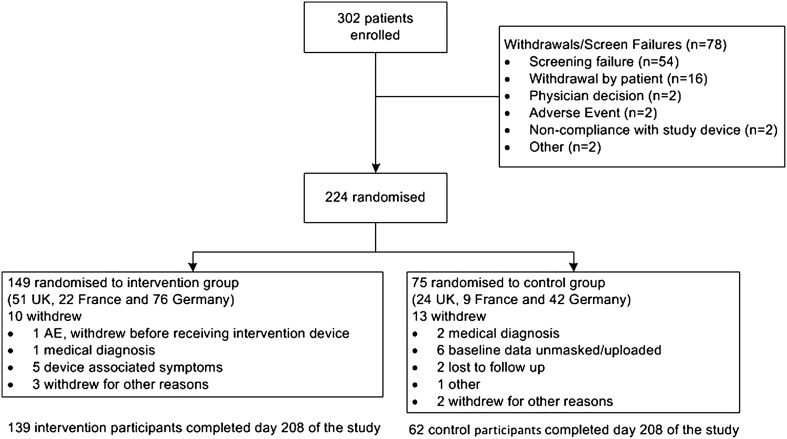
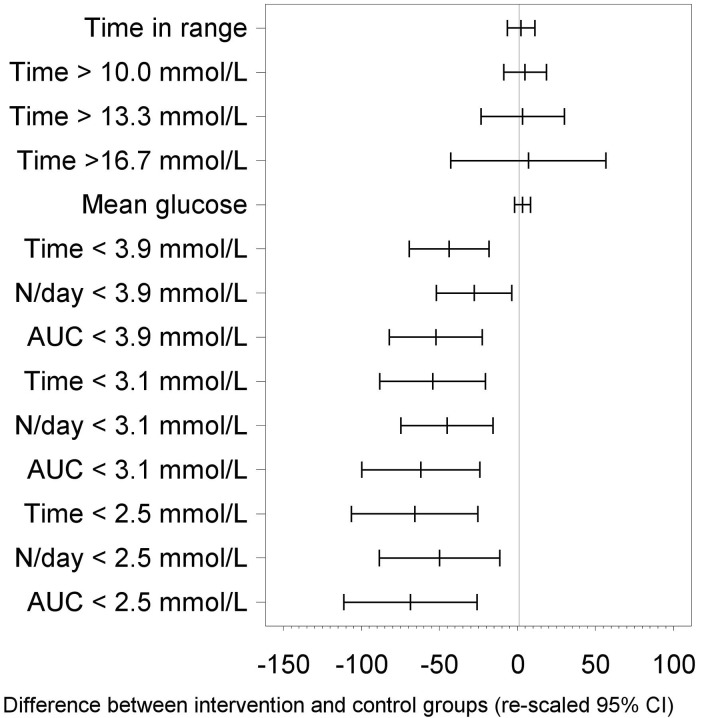
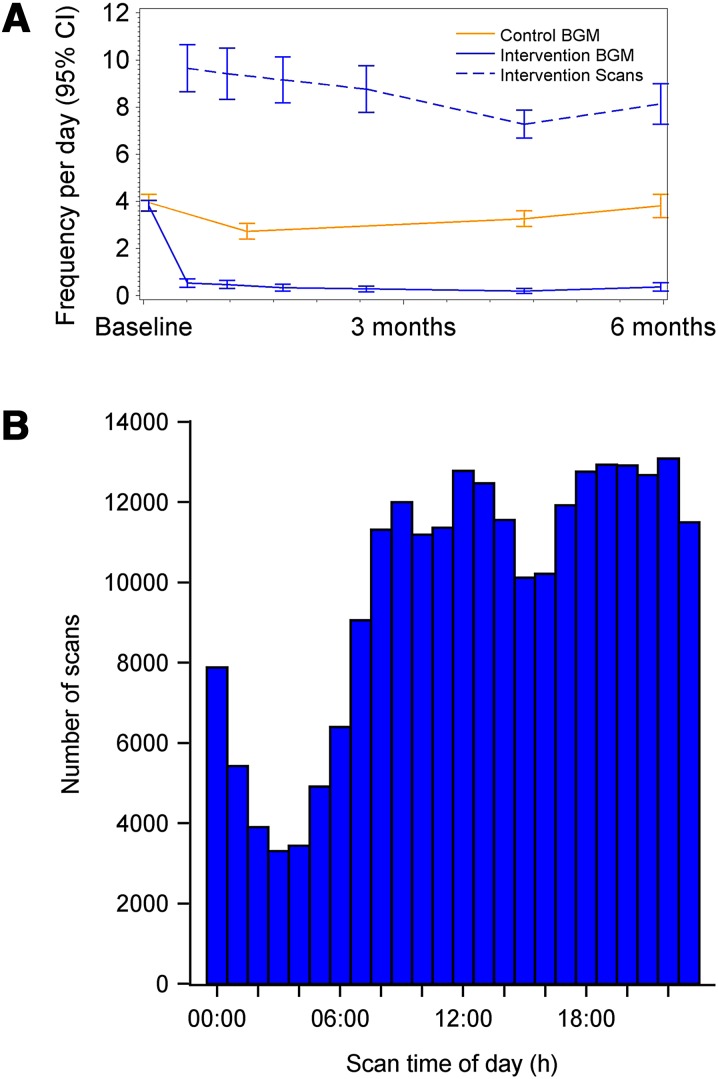
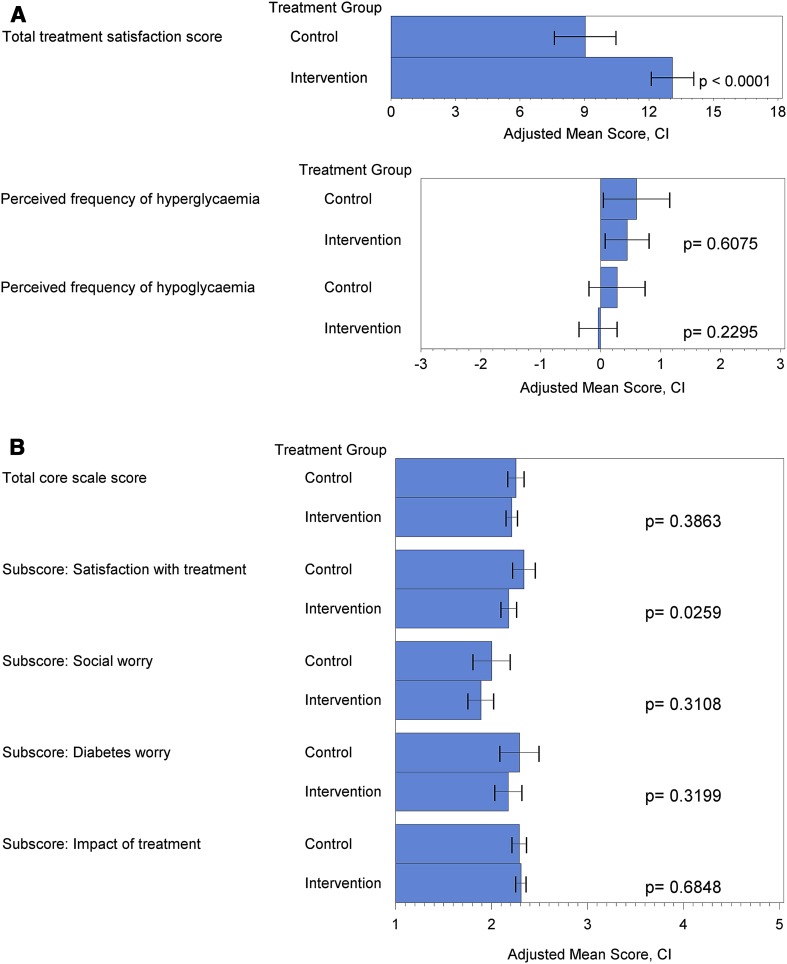
INTRODUCTION: Glycemic control in participants with insulin-treated diabetes remains challenging. We assessed safety and efficacy of new flash glucose-sensing technology to replace self-monitoring of blood glucose (SMBG). METHODS: This open-label randomized controlled study (ClinicalTrials.gov, NCT02082184) enrolled adults with type 2 diabetes on intensive insulin therapy from 26 European diabetes centers. Following 2 weeks of blinded sensor wear, 2:1 (intervention/control) randomization (centrally, using biased-coin minimization dependant on study center and insulin administration) was to control (SMBG) or intervention (glucose-sensing technology). Participants and investigators were not masked to group allocation. Primary outcome was difference in HbA1c at 6 months in the full analysis set. Prespecified secondary outcomes included time in hypoglycemia, effect of age, and patient satisfaction. RESULTS: Participants (n = 224) were randomized (149 intervention, 75 controls). At 6 months, there was no difference in the change in HbA1c between intervention and controls: -3.1 ± 0.75 mmol/mol, [-0.29 ± 0.07% (mean ± SE)] and -3.4 ± 1.04 mmol/mol (-0.31 ± 0.09%) respectively; p = 0.8222. A difference was detected in participants aged <65 years [-5.7 ± 0.96 mmol/mol (-0.53 ± 0.09%) and -2.2 ± 1.31 mmol/mol (-0.20 ± 0.12%), respectively; p = 0.0301]. Time in hypoglycemia <3.9 mmol/L (70 mg/dL) reduced by 0.47 ± 0.13 h/day [mean ± SE (p = 0.0006)], and <3.1 mmol/L (55 mg/dL) reduced by 0.22 ± 0.07 h/day (p = 0.0014) for intervention participants compared with controls; reductions of 43% and 53%, respectively. SMBG frequency, similar at baseline, decreased in intervention participants from 3.8 ± 1.4 tests/day (mean ± SD) to 0.3 ± 0.7, remaining unchanged in controls. Treatment satisfaction was higher in intervention compared with controls (DTSQ 13.1 ± 0.50 (mean ± SE) and 9.0 ± 0.72, respectively; p < 0.0001). No serious adverse events or severe hypoglycemic events were reported related to sensor data use. Forty-two serious events [16 (10.7%) intervention participants, 12 (16.0%) controls] were not device-related. Six intervention participants reported nine adverse events for sensor-wear reactions (two severe, six moderate, one mild). CONCLUSION: Flash glucose-sensing technology use in type 2 diabetes with intensive insulin therapy results in no difference in HbA1c change and reduced hypoglycemia, thus offering a safe, effective replacement for SMBG. TRIAL REGISTRATION: ClinicalTrials.gov identifier: NCT02082184. FUNDING: Abbott Diabetes Care.
Overview
The claims and statistics of this paper haven’t been checked yet.
Free: it reads the open-access text and checks the first 5 claims that cite a source we can check. Create a free account to check every claim.
Integrity signals
Registry
Cites
Statistics
Figures
Verification
Claims the paper makes
The claims and statistics of this paper haven’t been checked yet.
Free: it reads the open-access text and checks the first 5 claims that cite a source we can check. Create a free account to check every claim.
Claims other papers make about this one
Each is checked against this paper’s own text: does it say what the citing paper says it does?
The cited source doesn’t support the claim as written.
In the citing paper
“In adults with type 2 diabetes using insulin, two studies were done: one study did not meet its primary end point of A1C level reduction (69) but achieved a secondary end point of a reduction in hypoglycemia, and the other study met its primary end point of an improvement in the Diabetes Treatment Satisfaction Questionnaire score as well as a secondary end point of A1C level reduction (70).”
From 7. Diabetes Technology: Standards of Care in Diabetes—2025 (2025) · cites this paper as [69]
Checked by a reasoning model — may be wrong.
Experimental — accuracy not yet measuredThe source backs part of the claim, not all of it — or backs it for a different population, condition or comparison.
In the citing paper
“Benefits of CGM in this population include reductions in A1C, fewer severe hypoglycemia events in children and adults, increased TIR, as well as significant reductions in hospitalizations for severe hypoglycemia and DKA.156,162–168”
From American Association of Clinical Endocrinology Clinical Practice Guideline: Developing a Diabetes Mellitus Comprehensive Care Plan-2022 Update. (2022) · cites this paper as [168]
Experimental — accuracy not yet measuredThe source backs part of the claim, not all of it — or backs it for a different population, condition or comparison.
In the citing paper
“Continuous glucose monitoring (CGM) has been shown to improve glycemic control and self-monitoring, as well as to reduce the risk of hypoglycemia.”
From Importance of FDA-integrated continuous glucose monitors to ensure accuracy of continuous glucose monitoring (2025) · cites this paper as [11]
Experimental — accuracy not yet measuredThe source backs part of the claim, not all of it — or backs it for a different population, condition or comparison.
In the citing paper
“In fact, CGM supports people with DM to optimize their therapy, diet, and activity, facilitating improved HbA1c, increased time in target range of 70 to 180 mg/dL, reduced time below range (<70 mg/dL), and improved Glycemia Risk Index scores.5-11”
From Importance of FDA-integrated continuous glucose monitors to ensure accuracy of continuous glucose monitoring (2025) · cites this paper as [11]
Experimental — accuracy not yet measuredThe source backs part of the claim, not all of it — or backs it for a different population, condition or comparison.
In the citing paper
“Numerous studies have demonstrated significant clinical benefits of CGM use in people with diabetes regardless of insulin delivery method (1-15).”
From Clinical Targets for Continuous Glucose Monitoring Data Interpretation: Recommendations From the International Consensus on Time in Range (2019) · cites this paper as [9]
Experimental — accuracy not yet measured
2 more claims about this paper
Create a free account to see every claim other papers make about this one.
Self-check
Percentages, sums and reported differences re-computed from the paper’s own numbers.
The self-check needs the paper’s full text.
Citations
Cites
Turner, R. C., Fox, C., Matthews, McElroy, H. H., Cull, C. A., Holman, R. R., Neil, P., Hadden, D. R., Wright, D., Manley, E., et al. (1998) · The Lancet · Cited by 8,419
10-year follow-up of intensive glucose control in type 2 diabetes
Holman, R. R., Paul, S. K., Bethel, M. A., Matthews, D. R., & Neil, H. A. W. (2008) · New England Journal of Medicine · doi:10.1056/nejmoa0806470 · Cited by 7,751 · cited 2×
“These findings may have future clinical implications as past studies show worse glycemic control in younger participants with type 2 diabetes [3, 4] and this new sensor-based technology may be helpful for these participants.”
BackgroundGupta, A., & Uribarri, J. (2016) · Hormone Research in Paediatrics · doi:10.1159/000444053 · Cited by 4,006
Analysing controlled trials with baseline and follow up measurements
Vickers, A. J., & Altman, D. G. (2001) · BMJ · doi:10.1136/bmj.323.7321.1123 · Cited by 2,116 · cited 1×
“Analysis of covariance was used to adjust for chance imbalances in baseline measurements between the treatment groups [23], adjusted means were”
MethodAssessing Psychosocial Distress in Diabetes
Polonsky, W. H., Fisher, L., Earles, J., Dudl, R. J., Lees, J., Mullan, J., & Jackson, R. A. (2005) · Diabetes Care · doi:10.2337/diacare.28.3.626 · Cited by 1,575 · cited 3×
“DQoL Diabetes Quality of Life Questionnaire, DTSQ Diabetes Treatment Satisfaction Questionnaire and DQoL or for the DDS scales (Fig.”
MethodContinuous glucose monitoring and intensive treatment of type 1 diabetes
(2008) · New England Journal of Medicine · doi:10.1056/nejmoa0805017 · Cited by 1,559
Defining and Reporting Hypoglycemia in Diabetes
American Diabetes Association Workgroup on Hypoglycemia (2005) · Diabetes Care · doi:10.2337/diacare.28.5.1245 · Cited by 1,146
Bonds, D. E., Miller, M. E., Bergenstal, R. M., Buse, J. B., Byington, R. P., Cutler, J. A., Dudl, R. J., Ismail-Beigi, F., Kimel, A. R., Hoogwerf, B., et al. (2010) · BMJ · doi:10.1136/bmj.b4909 · Cited by 933 · cited 2×
“However, intensification of insulin therapy increases the risk of hypoglycemia [4] which is associated with adverse clinical outcome [5], impacts on quality of life [6], and increases treatment costs secondary to hospital admissions, ambulance call-outs, and clinic attendance [7].”
BackgroundBolinder, J., Antuna, R., Geelhoed-Duijvestijn, P., Kröger, J., & Weitgasser, R. (2016) · The Lancet · doi:10.1016/s0140-6736(16)31535-5 · Cited by 893 · cited 1×
“demonstrated superior reduction in hypoglycemia without deterioration of HbA1c and improved treatment satisfaction [34].”
Cited by
Items 601–643 of 643
To the issue of complications of diabetes: a review
Kulikova, N. G., Chkheidze, T., Tkachenko, A. S., Vinzhegina, V. A., Rehabilitation sanatorium «Victoria», M., Шарикадзе, Д., M. Gorky Sanatorium, M., Matyushina, N. P., & M. Gorky Sanatorium, M. (2025) · Fizioterapevt (Physiotherapist) · doi:10.33920/med-14-2503-14
Badawi, S. A. A., Alhajri, A. H. M., Altayb, N. M. O., Mohmmed, E., Hassabelrasoul, R. K. E., Mohammed, S. A. S., Mohammed, W. H. A., & Ghali, J. A. E. (2025) · Cureus · doi:10.7759/cureus.89534 · Cited by 3
Getting Started with Continuous Glucose Monitoring: From Guidelines to Implementation
(2024) · The Singapore Family Physician · doi:10.33591/sfp.50.6.u2
村川, 正. (2025) · The Japanese Journal of SURGICAL METABOLISM and NUTRITION · doi:10.11638/jssmn.59.5_127
de Pouvourville, G., Timmons, J., Levrat‐Guillen, F., Zara, A. T., & Poon, Y. (2025) · Cost Effectiveness and Resource Allocation · doi:10.1186/s12962-025-00673-1
Auch Ältere profitieren von CGM mit intermittierendem Scannen
Thomas, A. (2025) · Info Diabetologie · doi:10.1007/s15034-025-5191-3
Continuous Glucose Monitoring Systems: Applications and Integrated Benefits - review study
Goleniewska, K., Miaśnikiewicz, J., Ciechomski, K., Cecuła, W., Rypel-Bośka, J., Siuta, N., Stupecka, A., Migiel, M., & Brynczka, I. (2025) · Quality in Sport · doi:10.12775/qs.2025.48.66899
Eer, A., Ho, R. C. Y., Hearn, T., Hachem, M., Freund, M., Burchill, L. J., Atkinson‐Briggs, S., Singh, S., Eades, S., O’Brien, R. C., et al. (2024) · Figshare · doi:10.6084/m9.figshare.26651241
Evans, M. L., Divilly, P., Martine‐Edith, G., Zaremba, N., Søholm, U., MAHMOUDI, Z., Cigler, M., Ali, N., Abbink, E. J., Brøsen, J. M. B., et al. (2024) · Apollo (University of Cambridge) · doi:10.17863/cam.111147
Al-Harbi, M. Y., Albunyan, A., Alnahari, A., Kao, K., Brandner, L., Jammal, M. E., & Dunn, T. C. (2022) · Figshare · doi:10.6084/m9.figshare.19695806
Alsaif, M., Farhat, A., Blumer, Z., & Barham, L. (2024) · Figshare · doi:10.6084/m9.figshare.25762903
Škarda, J. (2021) · Digital Library (University of West Bohemia) · Cited by 1
Nowacka, K., Grygorowicz, A., Baran, K., Ględa, M., Szyszka, M., Radecka, W., Kozak, W., Szreiber, A., Grela, K., Jabłoński, K., et al. (2025) · International Journal of Innovative Technologies in Social Science · doi:10.31435/ijitss.4(48).2025.4660
User evaluation of the Hypo‐METRICS app: A tool for real‐time symptom reporting of hypoglycaemia
Cigler, M., Søholm, U., Broadley, M. M., Pouwer, F., Abbink, E. J., Ali, N., de Galan, B. E., Renard, É., Evans, M. L., Brøsen, J. M. B., et al. (2025) · Diabetic Medicine · doi:10.1111/dme.70185
Mutiozábal, C. M., Alday, A. L., Muñoz, Z. A., Uribe, E. S., Puertas, A. D., Borja, S. Z., López, M. L. A., Arteche, T. R. D. A., Martínez, E. B., Renilla, E. C., et al. (2026) · Medicina Clínica · doi:10.1016/j.medcli.2025.107255
Al-Mamari, A., Gharabi, S. A., Busaidy, M. A., & Futaisi, A. A. (2026) · Sultan Qaboos University medical journal · doi:10.18295/2075-0528.2952
“14,15 It has been demonstrated that decreased TIR and increased glycaemic variability are significantly associated with higher risks of microvascular and macrovascular complications.”
Mackie, S. (2025) · University of Hertfordshire Research Archive (University of Hertfordshire) · doi:10.18745/00026277
Mutiozábal, C. M., Alday, A. L., Muñoz, Z. A., Uribe, E. S., Puertas, A. D., Borja, S. Z., López, M. L. A., Arteche, T. R. D. A., Martínez, E. B., Renilla, E. C., et al. (2026) · Medicina Clínica (English Edition) · doi:10.1016/j.medcle.2026.107255
Arakawa, D., Ishisaka, M., Arimura, Y., Nakai, M., & Yoshimura, M. (2026) · Cureus · doi:10.7759/cureus.103437
“CGM was performed using the FreeStyle Libre system (first-generation FreeStyle Libre, Abbott Diabetes Care, Alameda, CA, USA; approval number 22800BZX00212000) [18,19], which continuously measures subcutaneous interstitial glucose levels for 14 days using a sensor implanted in the upper arm.”
Brisman, R., Palma, D. A., & Fox, P. R. (2026) · Journal of Veterinary Internal Medicine · doi:10.1093/jvimsj/aalag032
Lim, W., Zhong, Y., Bruno, J., Alemán, J. O., & Barua, S. (2026) · Journal of Diabetes Science and Technology · doi:10.1177/19322968261427499
Zhu, J., & Zhang, L. (2026) · BMC Endocrine Disorders · doi:10.1186/s12902-026-02167-4
“Eight trials [15–21] compared rtCGM to SMBG, and five trials [14, 22–25] compared isCGM to SMBG.”
Bouix‐Picasso, J. (2023) · theses.fr (ABES) · doi:10.70675/62875347z83b9z4cf4z99f6zc4f1a6725d5b
JENDLE, J. H., Adolfsson, P., Hellman, J., Klanger, B., & Ekberg, N. R. (2026) · Diabetes Technology & Therapeutics · doi:10.1177/15209156261442987
“59 The Swedish retrospective analysis also reported a reduced risk of hospital admission for hypoglycemia for CGM users versus SMBG in both all insulin-(risk ratio [RR]: 0.43) and intensive insulin-treated individuals (RR: 0.51).”
InfluentialGilbert, J., Reichert, S. M., Cadieux, T., & Senior, P. A. (2026) · Canadian Journal of Diabetes · doi:10.1016/j.jcjd.2026.04.007
Hayashi, S., Konaka, K., & HAMADA, R. (2026) · Cureus · doi:10.7759/cureus.107766
Zhang, H., Li, J., Wang, D., Du, Q., & Zhang, J. (2026) · Frontiers in Endocrinology · doi:10.3389/fendo.2026.1830980 · Cited by 1
“After any single study among Kim (2024), Haak (2017), Lau (2024), Wada (2020), or Lind (2024) was sequentially omitted, the recalculated pooled effect sizes (SMD) varied between 1.41 and 3.04.”
InfluentialDiabetestechnologie (Update 2026)
Schütz-Fuhrmann, I., Rami-Merhar, B. M., Hofer, S. E., Fröhlich-Reiterer, E. E., Tauschmann, M., Mader, J. K., Resl, M., Kautzky‐Willer, A., Winhofer-Stöckl, Y., Wascher, T. C., et al. (2026) · Wiener klinische Wochenschrift · doi:10.1007/s00508-025-02630-7
Aita, F. C., Guillén, A. C., González-Rojas, M., Rodríguez, C., Salazar, F. R., & Oviedo, L. U. (2026) · Acta Médica Costarricense · doi:10.51481/amc.v67i4.1481
Terbosh, M., Dubaj, M., Ignarska, J., Judzińska, A., `Mzabi, S. K., Kwolek, M., Osipowska, J., Piech, B., Sobczyńska, K., & Trojanowska, E. (2026) · International Journal of Innovative Technologies in Social Science · doi:10.31435/ijitss.2(50).2026.5614
Sanke, T., Matsuoka, Y., Yamada, S., & Kadoya, Y. (2026) · Diabetology · doi:10.3390/diabetology7070123
Widera, M., Owczarek, A. J., Kolonko, A., Kamińska, D., Świder, R., Król, R., Sekta, S., Więcek, A., & Ziaja, J. (2026) · Nephrology Dialysis Transplantation · doi:10.1093/ndt/gfag168
Higbea, A. M., & Siddiqi, H. (2026) · Southern Medical Journal · doi:10.14423/smj.0000000000001999
Glucose Monitoring: Advances in Technology
McDonnell, D. J., Smith, D., & Forde, H. E. (2026) · Springer eBooks · doi:10.1007/978-3-032-24854-1_4
Monteiro, N., Lima, L. P. S., Freitas, J. P. A., MACHADO, M. D. L., Gama, F. G., Silva, V. D. S., Martins, L. M., Lemos, S. D. S. F., Torres, G. L., da Silva, D. G., et al. (2026) · Canadian Journal of Diabetes · doi:10.1016/j.jcjd.2026.08.187
Perceptions About CGMs Among Primary Care Physicians and Endocrinologists
Dennis, C., Wright, E., Kohn, S., Gavin, J. R., III, Parkin, C. G., & Edelman, S. V. (2026) · The American Journal of Managed Care · doi:10.37765/ajmc.2026.90010
Yoo, J. H. (2026) · Journal of Korean Diabetes · doi:10.4093/jkd.2026.27.3.137
Yale, J., Bouchard, S., Lee, A., & Poon, Y. (2026) · Canadian Journal of Diabetes · doi:10.1016/j.jcjd.2026.09.008
Kesavadev, J., Makkar, B. M., Joshi, S., Unnikrishnan, A., Gupta, A., Chawla, M. S., Saboo, B., Deshpande, N., & Bhograj, A. (2026) · International Journal of Diabetes in Developing Countries · doi:10.1007/s13410-026-01737-5
(2026) · ADA Clinical Compendia · doi:10.2337/db20261-33
Czupryniak, L., Mysliwiec, M., Gellert, R., Jankowski, P., Mastalerz–Migas, A., Strojek, K., Walczak, M., & Targowski, T. (2026) · Endocrine Practice · doi:10.1016/j.eprac.2026.10.010
Metadata
- Authors
- Haak, T., Hanaire, H., Ajjan, R., Hermanns, N., Riveline, J.-P., & Rayman, G.
- Affiliations
- German Diabetes Center Mergentheim (DE)
- Centre Hospitalier Universitaire de Toulouse (FR)
- University of Leeds (GB)
- Assistance Publique – Hôpitaux de Paris (FR)
- Ipswich Hospital (GB)
- Corresponding author
- Haak, Thomas
- Venue
- Diabetes Therapy
- Published
- 2016-12-20
- Volume
- 8
- Issue
- 1
- Pages
- 55-73
- ISSN
- 1869-6953 (ISSN-L)
- 1869-6961
- PMC
- PMC5306122
- OpenAlex
- W2563731248
- Semantic Scholar
- 2015a86b0af46a1f808e99a1eedb7fa1f61f22eb
- Cited by
- 623
- References
- 40
- Citations by year
- 2026: 34 · 2025: 63 · 2024: 72 · 2023: 64 · 2022: 76 · 2021: 76 · 2020: 69 · 2019: 72 · 2018: 58 · 2017: 37
- FWCI
- 55.95
- Type
- journal article
- Language
- en
- Open access
- gold
- doi.org
- Licence
- cc-by-nc
- creativecommons.org/licenses/by/4.0 (tdm)
- Locations
- Diabetes Therapy (publishedVersion, cc-by-nc)
- Europe PMC (PubMed Central) (publishedVersion, cc-by-nc)
- PubMed Central (publishedVersion, cc-by-nc)
- PubMed (publishedVersion)
- White Rose Research Online (University of Leeds, The University of Sheffield, University of York) (acceptedVersion)
- Funders
- Abbott
- Topics
- Health Sciences › Medicine › Endocrinology, Diabetes and Metabolism › Diabetes Management and Research
- Health Sciences › Medicine › Endocrinology, Diabetes and Metabolism › Diabetes Treatment and Management
- Health Sciences › Medicine › Endocrinology, Diabetes and Metabolism › Diabetes Management and Education
- Keywords
- flash glucose monitoring, continuous glucose monitoring, type 2 diabetes, insulin-treated diabetes, intensive insulin therapy, self-monitoring of blood glucose, glycemic control, HbA1c, hypoglycemia, time in range, patient satisfaction, older adults, diabetes management, treatment efficacy and safety, Europe
About these checks
Registry, retraction, Cites and statistics results are computed, not judged, with one exception: a printed reference that no index lists is read once by a model before it counts as a citation error. Claims are extracted by a model and kept only when their quote appears verbatim in the text; each cited source is then checked, with a model’s help, for whether it says what the claim relies on. Those verdicts can be wrong — read the claim’s quote and the cited source before relying on one.
Statistics and arithmetic are recomputed, not judged.
Confidence bands are shown only for fields calibrated on our annotated test set. None is calibrated yet, so no band is shown.
What counts as a claim ›How we measure confidence ›How we check this ›
Are you an author, or do you see a problem with this page? Request a review
Data sources
Bibliographic data: Semantic Scholar, OpenAlex, Crossref.
Contains information from the Semantic Scholar Academic Graph Datasets, made available under the ODC Attribution License (ODC-BY 1.0).
Semantic Scholar’s data is described in: Kinney, R., et al. (2023). The Semantic Scholar Open Data Platform. arXiv:2301.10140.
