

Gut Microbiota and the Neuroendocrine System
Open accessThe DOI matches its Crossref record; 141 of the 142 references it cites were found in a registry or an index.
Abstract
The microbial ecosystem that inhabits the gastrointestinal tract of all mammals-the gut microbiota-has been in a symbiotic relationship with its hosts over many millennia. Thanks to modern technology, the myriad of functions that are controlled or modulated by the gut microbiota are beginning to unfold. One of the systems that is emerging to closely interact with the gut microbiota is the body's major neuroendocrine system that controls various body processes in response to stress, the hypothalamic-pituitary-adrenal (HPA) axis. This interaction is of pivotal importance; as various disorders of the microbiota-gut-brain axis are associated with dysregulation of the HPA axis. The present contribution describes the bidirectional communication between the gut microbiota and the HPA axis and delineates the potential underlying mechanisms. In this regard, it is important to note that the communication between the gut microbiota and the HPA axis is closely interrelated with other systems, such as the immune system, the intestinal barrier and blood-brain barrier, microbial metabolites, and gut hormones, as well as the sensory and autonomic nervous systems. These communication pathways will be exemplified through preclinical models of early life stress, beneficial roles of probiotics and prebiotics, evidence from germ-free mice, and antibiotic-induced modulation of the gut microbiota.
Overview
The claims and statistics of this paper haven’t been checked yet.
Free: it reads the open-access text and checks the first 5 claims that cite a source we can check. Create a free account to check every claim.
Integrity signals
Registry
Cites
Statistics
Figures
Verification
Claims the paper makes
The claims and statistics of this paper haven’t been checked yet.
Free: it reads the open-access text and checks the first 5 claims that cite a source we can check. Create a free account to check every claim.
Claims other papers make about this one
Each is checked against this paper’s own text: does it say what the citing paper says it does?
The source backs part of the claim, not all of it — or backs it for a different population, condition or comparison.
In the citing paper
“Similar to aging, dysbiosis has been associated with increased cortisol secretion, decreased negative feedback at the level of the hypothalamus, and changes in the circadian rhythm of cortisol release (113).”
From Signalling cognition: The gut microbiota and hypothalamic-pituitary-adrenal axis (2023) · cites this paper as [113]
Experimental — accuracy not yet measuredThe cited source says what the claim attributes to it.
In the citing paper
“This relationship, like the microbiota-gut-brain axis itself, is bidirectional -the microbiota can modulate stress-induced alterations in anxiety, memory, cognition and neuroinflammation (for reviews, see Cussotto et al., 2018;Farzi et al., 2018;Foster et al., 2017;Rea et al., 2016;Sherwin et al., 2016a).”
From The Microbiota-Gut-Brain Axis (2019) · cites this paper as Farzi et al., 2018
Self-check
Percentages, sums and reported differences re-computed from the paper’s own numbers.
The self-check needs the paper’s full text.
Citations
Cites
From inflammation to sickness and depression: when the immune system subjugates the brain
Dantzer, R., O'Connor, J. C., Freund, G. G., Johnson, R. W., & Kelley, K. W. (2008) · Nature Reviews Neuroscience · doi:10.1038/nrn2297 · Cited by 7,395 · cited 1×
“The nucleus of the solitary tract is of particular importance with regard to the gut– brain axis, as it receives visceral afferents from the vagus nerve and is activated by inflammatory challenges [37, 38].”
BackgroundEpigenetic programming by maternal behavior
Weaver, I. C. G., Cervoni, N., Champagne, F. A., D'Alessio, A. C., Sharma, S., Seckl, J. R., Dymov, S., Szyf, M., & Meaney, M. J. (2004) · Nature Neuroscience · doi:10.1038/nn1276 · Cited by 6,177
Commensal microbe-derived butyrate induces the differentiation of colonic regulatory T cells
Furusawa, Y., Obata, Y., Fukuda, S., Endo, T. A., Nakato, G., Takahashi, D., Nakanishi, Y., Uetake, C., Kato, K., Kato, T., et al. (2013) · Nature · doi:10.1038/nature12721 · Cited by 5,549
The gut microbiota shapes intestinal immune responses during health and disease
Round, J. L., & Mazmanian, S. K. (2009) · Nature Reviews Immunology · doi:10.1038/nri2515 · Cited by 5,029
Bravo, J. A., Forsythe, P., Chew, M. V., Escaravage, E., Savignac, H. M., Dinan, T. G., Bienenstock, J., & Cryan, J. F. (2011) · Proceedings of the National Academy of Sciences · doi:10.1073/pnas.1102999108 · Cited by 3,888 · cited 10×
“rhamnosus in BALB/c mice are not present in vagotimized mice, the vagus nerve is suggested to be a critical pathway of communication between probiotic signaling and the CNS [77].”
BackgroundInfluentialHost microbiota constantly control maturation and function of microglia in the CNS
Erny, D., Hrabě de Angelis, A. L., Jaitin, D., Wieghofer, P., Staszewski, O., David, E., Keren-Shaul, H., Mahlakoiv, T., Jakobshagen, K., Buch, T., et al. (2015) · Nature Neuroscience · doi:10.1038/nn.4030 · Cited by 3,569 · cited 7×
“As the behavioral effects in response to L. rhamnosus in BALB/c mice are not present in vagotimized mice, the vagus nerve is suggested to be a critical pathway of communication between probiotic signaling and the CNS [77].”
BackgroundInfluentialGut microbiota, metabolites and host immunity
Rooks, M. G., & Garrett, W. S. (2016) · Nature reviews. Immunology · doi:10.1038/nri.2016.42 · Cited by 3,409 · cited 1×
“YY (PYY) from intestinal enteroendocrine cells [56].”
Normal gut microbiota modulates brain development and behavior
Heijtz, R. D., Wang, S., Anuar, F., Qian, Y., Björkholm, B., Samuelsson, A., Hibberd, M. L., Forssberg, H., & Pettersson, S. (2011) · Proceedings of the National Academy of Sciences · doi:10.1073/pnas.1010529108 · Cited by 3,228 · cited 4×
“↑ synaptophysin + PSD-95 (striatum) [97]”
BackgroundInfluentialSudo, N., Chida, Y., Aiba, Y., Sonoda, J., Oyama, N., Yu, X., Kubo, C., & Koga, Y. (2004) · The Journal of Physiology · doi:10.1113/jphysiol.2004.063388 · Cited by 2,735 · cited 6×
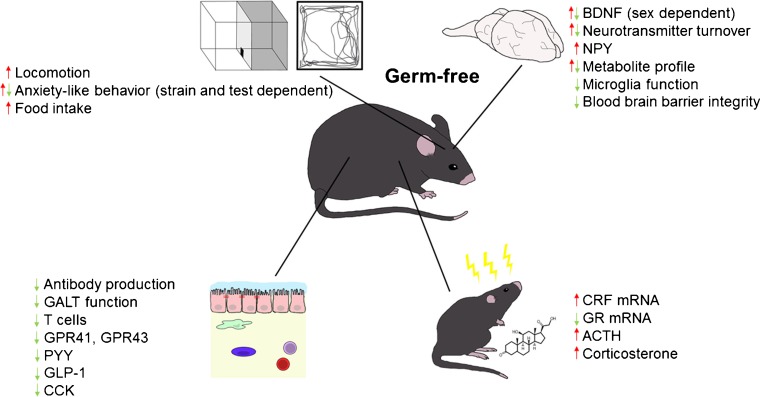
“Thus, GF mice have been demonstrated to have increased CRF expression, reduced GR expression in the cortex, and elevated plasma ACTH and corticosterone levels in response to restraint stress (Table 2) [93, 95].”
BackgroundInfluentialMetabolomics analysis reveals large effects of gut microflora on mammalian blood metabolites
Wikoff, W. R., Anfora, A. T., Liu, J., Schultz, P. G., Lesley, S. A., Peters, E. C., & Siuzdak, G. (2009) · Proceedings of the National Academy of Sciences · doi:10.1073/pnas.0812874106 · Cited by 2,677 · cited 2×
“bioactive indole-containing metabolites that derive from tryptophan is impaired, whereas the availability of tryptophan, which is a precursor of 5-HT, is increased [114].”
Background
Cited by
Items 301–400 of 509
Zhao, J., Li, G., Lü, W., Huang, S., & Zhang, Z. (2019) · Microbial Ecology · doi:10.1007/s00248-019-01462-z · Cited by 8
Understanding the role of gut microbiota in the pathogenesis of schizophrenia
Ghorbani, M., Rajandas, H., Parimannan, S., Joseph, G. B. S., Tew, M. M., Ramly, S. S., Rasat, M. A. M., & Lee, S. Y. (2020) · Psychiatric Genetics · doi:10.1097/ypg.0000000000000270 · Cited by 8
“dysbiosis may result in disruption of the immune system, leading to increased permeability of the gut barrier, release of proinflammatory cytokines, and translocation of bacterial peptidoglycan into the brain (Arentsen et al., 2017; Farzi et al., 2018).”
BackgroundAge-dependent disregulation of the immune response in humans
Artemenkov, A. A. (2021) · Medical Immunology (Russia) · doi:10.15789/1563-0625-ado-2192 · Cited by 8
“Причем эта двусторонняя связь тесно взаимодействует с другими физиологическими системами, такими как иммунная, вегетативная, кишечный и гематоэнцефалические барьеры [28, 54].”
Mikulski, D., Juśkiewicz, J., Ognik, K., Zduńczyk, P., Smagieł, R., & Jankowski, J. (2022) · Poultry Science · doi:10.1016/j.psj.2022.102098 · Cited by 8
“function and cognitive performance (Farzi et al., 2018).”
A role of human microbiota in the development of neurodegenerative diseases
Epishina, I. V., & Budanova, E. V. (2022) · S S Korsakov Journal of Neurology and Psychiatry · doi:10.17116/jnevro202212210157 · Cited by 12
Yoo, J. Y., McSkimming, D. I., Rajan, K., Sarkar, A., Labbé, N., Groër, M., & Menon, U. (2023) · Life · doi:10.3390/life13091928 · Cited by 8
The invisible influence: can endocrine disruptors reshape behaviors across generations?
Damiano, A., Caioni, G., D’Addario, C., Merola, C., Francioso, A., & Amorena, M. (2025) · Stresses · doi:10.3390/stresses5030046 · Cited by 7
“It is essential to consider the gut–brain axis as a comprehensive network without neglecting the HPA axis, whose dysregulation can also be associated with alterations in the nervous system [175].”
Exploring Gut Microbiota-Targeted Therapies for Canine Idiopathic Epilepsy
Blanquet, L., Serra, D., Marrinhas, C., & Almeida, A. (2025) · International Journal of Molecular Sciences · doi:10.3390/ijms26041742 · Cited by 10
“ACTH, in turn, triggers the adrenal glands to produce cortisol, the body’s primary stress hormone [34].”
Yan, Y., Zheng, X., Liu, G., Shi, G., Li, C., Chen, H., He, X., Lin, K.-N., Deng, Z., Zhang, H., et al. (2024) · iScience · doi:10.1016/j.isci.2024.109633 · Cited by 7
The Neuroimmune Role of Intestinal Microbiota in the Pathogenesis of Cardiovascular Disease
Suslov, A. V., Chairkina, E., Davidovna, S. M., Suslova, I. S., Khotina, V. A., Kirichenko, T. V., & Postnov, A. Y. (2021) · Journal of Clinical Medicine · doi:10.3390/jcm10091995 · Cited by 8
“Then, as far as the hypothalamus is a suprasegmental integral center of the ANS, the sympathetic division of the ANS is activated [136,137].”
BackgroundProteostasis and resilience: on the interphase between individual’s and intracellular stress
Díaz-Hung, M.-L., & Hetz, C. A. (2022) · Trends in Endocrinology and Metabolism · doi:10.1016/j.tem.2022.02.003 · Cited by 8
Brain, antibiotics, and microbiota – how do they interplay?
Rybnikova, E. A. (2018) · Journal of Neurochemistry · doi:10.1111/jnc.14341 · Cited by 8
Holistic Fitness: Microbiomes are Part of the Holobiont’s Fitness
ROSENBERG, E. B. (2021) · The microbiomes of humans, animals, plants, and the environment · doi:10.1007/978-3-030-65317-0_4 · Cited by 7
Li, Q., Wang, G., Zhao, J., Chen, W., & Tian, P. (2025) · Microbiological Research · doi:10.1016/j.micres.2025.128286 · Cited by 7
Dietary microbes and functional dyspepsia: modulating the gut microecology for therapeutic benefit
Huang, Q., You, F., Liang, F.-X., & Ma, C. (2025) · Frontiers in Nutrition · doi:10.3389/fnut.2025.1625987 · Cited by 6
“…system, and cells of the enteroendocrine system, which together maintain the function of intestinal barriers, regulate the level of local and systemic inflammation levels, influence neural signaling (e.g., via vagal pathways) and secretion of key hormones (e.g., cortisol) (38, 70, 120, 121).”
Gut microbiota in health and disease
Li, Y. N., Xiao, X., Jiang, X., Li, X., WANG, W., & Lin, R. (2026) · Molecular Biomedicine · doi:10.1186/s43556-026-00512-6 · Cited by 8
“…signals can also be sensed through vagal and neuroendocrine pathways, extending the regulatory influence of the gut microbiota on host endocrine function through the hypothalamic–pituitary–adrenal (HPA), hypothalamic–pituitary–thyroid (HPT), and hypothalamic–pituitary–gonadal (HPG) axes [342].”
MICROBIOTA INTESTINAL RELACIONADA A DOENÇA DE PARKINSON
da Silva, C. F., Azevedo, G. E., & Taketani, N. F. (2021) · Revista Ensaios Pioneiros · doi:10.24933/rep.v5i1.235 · Cited by 10
Brain injury in premature infants may be related to abnormal colonization of early gut microbiome
Hou, L., Zhao, J., Yin, L., Dai, L., Deng, H., & Jiang, L. (2024) · BMC Microbiology · doi:10.1186/s12866-024-03643-4 · Cited by 7
“They can also reach the brain through direct diffusion or transport of proteins through the blood-brain barrier [52].”
Jian, X., Zheng, D., Pang, S., Mu, P., Jiang, J., Wang, X., Yan, X., Wu, Y., & Wang, Y. (2025) · Animals · doi:10.3390/ani15131886 · Cited by 9
“The HPA axis is the primary neuroendocrine system regulating various physiological processes [95].”
Unique Athletic Gut Microbiomes and Their Role in Sports Performance: A Narrative Review
Zielińska, K., Łabaj, P. P., & Humińska-Lisowska, K. (2025) · Journal of Human Kinetics · doi:10.5114/jhk/202642 · Cited by 6
“Furthermore, the gut microbiota modulates the hypothalamic-pituitary-adrenal (HPA) axis, which controls the body's stress response (Farzi et al., 2018).”
Use of Prebiotics for Addressing Gut Dysbiosis and Achieving Healthy Gut–Brain Axis
Lasrado, L. D., & Rai, A. K. (2022) · Springer eBooks · doi:10.1007/978-981-16-8444-9_11 · Cited by 7
Zandifar, A., Badrfam, R., Gholamian, F., & Shafiee, A. (2023) · Brain and Behavior · doi:10.1002/brb3.3313 · Cited by 6
Faysal, M. F., Zehravi, M., Amin, M. A., Rab, S. O., Jahnavi, P., Arjun, U. V. N. V., Gupta, J. K., Billah, A. A. M., Vodeti, R., Prasad, P. D., et al. (2025) · Pathology - Research and Practice · doi:10.1016/j.prp.2025.156090 · Cited by 7
The role of gut microbiota in the pathogenesis of neuropsychiatric and neurodegenerative diseases
Szewczyk, A., Witecka, A., & Kiersztan, A. (2019) · Postępy Higieny i Medycyny Doświadczalnej · doi:10.5604/01.3001.0013.7326 · Cited by 6
d’Arma, A., Saresella, M., Rossi, V., Marventano, I., Piancone, F., Rosa, F. L., Clerici, M., & Mendozzi, L. (2022) · Life · doi:10.3390/life12050755 · Cited by 6
“The immunological system is connected with the neuro-endocrine system [10,11] by the hypothalamus-pituitary-adrenal (HPA) axis involvement in the integration of the”
BackgroundLiu, G., Lin, J., Zhang, L., Qiang, G., Wang, Z., Chang, Z., Gao, Y., Ma, D., & Han, Z. (2022) · Evidence-based Complementary and Alternative Medicine · doi:10.1155/2022/5886698 · Cited by 6
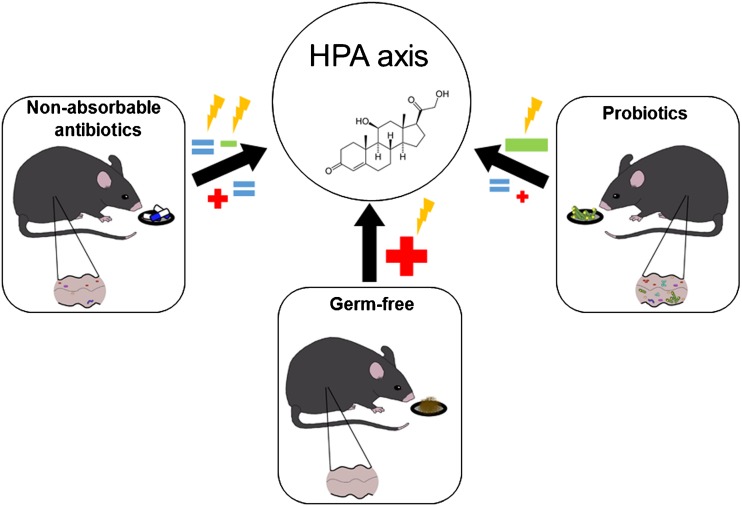
“However, compared with GF mice, antibiotic treatment could manipulate the intestinal microbiota of animals without inducing developmental changes [36].”
BackgroundRahmanian, M., Fathi, M., Eftekhari, M., Vakili, K. G., Deravi, N., Yaghoobpoor, S., Sharifi, H., Zeinodini, R., Babajani, A., & Niknejad, H. (2024) · Medical Hypotheses · doi:10.1016/j.mehy.2024.111468 · Cited by 5
Lu, J., Jiang, M., Chai, D., Sun, Y., & Wu, L. (2025) · Frontiers in Microbiology · doi:10.3389/fmicb.2025.1452423 · Cited by 6
“The microbiota create a complex ecosystem that is essential for controlling metabolism in addition to aiding in food digestion, detoxifying medications and poisons, and maintaining the health of the immune system (Farzi et al., 2018; Frisbee and Petri, 2020; Zeineldin et al., 2018).”
Microbiome‐derived metabolites in substance use disorders: Mechanisms and implications
Koperska, M., & Kiraly, D. D. (2025) · Annals of the New York Academy of Sciences · doi:10.1111/nyas.15416 · Cited by 5
“40 These interactions have broad and profound applications in the study of brain-related disorders, specifically SUDs, which can be markedly affected by endocrine disruption.”
The gut-brain axis in diabetic neuropathy, cognitive impairment, and emotional disorders
Yu, X., Zhang, K., Kan, C., Ma, Y., Sheng, S., Zheng, T., & Sun, X. (2026) · Neuroscience · doi:10.1016/j.neuroscience.2026.02.006 · Cited by 5
Microbiome-Host Interactions: The Role of Gut Bacteria in Neurological Disorders
Nasir, O., Bibi, R., Qamar, M. U., Fatima, A., Ahsan, Z., Khan, F., & Amjad, S. (2023) · International Journal of Research Publication and Reviews · doi:10.55248/gengpi.4.1023.102705 · Cited by 5
Lapmanee, S., Bhubhanil, S., Sriwong, S., Khongkow, M., Namdee, K., Wongchitrat, P., & Pongkorpsakol, P. (2023) · Physiology and Pharmacology · doi:10.61186/phypha.27.2.171 · Cited by 5
Unraveling Alzheimer’s: Exploring the Gut Microbiota–Brain Axis as a New Frontier in Understanding
Rashid, S. M., Razak, R., Tantray, A. K., James, A. W., Showkat, N., Shehjar, F., Jan, F., Ahmad, S. B., Khan, A., & Shah, Z. A. (2024) · Journal of dementia and Alzheimer's disease · doi:10.3390/jdad1010003 · Cited by 5
“On the other hand, Eubacterium rectale , Porphyromonas gingivalis , and Lactobacillus rhamnosus may contribute to the pathogenesis of AD [38–43].”
BackgroundThe comprehensive evaluation of oral and fecal microbiota in patients with acromegaly
Şahin, S., Gündoğdu, A., Nalbantoglu, U., Karaca, Z., Hacıoğlu, A., Urhan, M. E., Ünlühızarcı, K., Hora, M., Tanrıverdi, E. S., Durcan, E., et al. (2024) · Pituitary · doi:10.1007/s11102-024-01444-6 · Cited by 5
“This interaction is bidirectional [ 7–10].”
Zhang, H., Li, Y., & Li, L. (2025) · BMC Cancer · doi:10.1186/s12885-025-13598-y · Cited by 5
Tong, G., Qian, H., Li, D., Li, J., Chen, J., & Li, X. (2022) · PLoS ONE · doi:10.1371/journal.pone.0264194 · Cited by 5
Use of Extracellular Monomeric Ubiquitin as a Therapeutic Option for Major Depressive Disorder
Maldonado-García, J. L., García-Mena, L. H., Cabrera, D. M., Pérez‐Sánchez, G., Becerril‐Villanueva, E., Álvarez-Herrera, S., Homberg, T. A., Vallejo‐Castillo, L., Pérez‐Tapia, S. M., Moreno-Lafont, M. C., et al. (2024) · Pharmaceuticals · doi:10.3390/ph17070841 · Cited by 7
“However, it is also described that epinephrine has pro-inflammatory effects by promoting cytokine production in macrophages in a dose-dependent manner [114,115].”
BackgroundZhao, C., Xue, H., Guo, M., Yue, H., Chen, X., & Gao, J. (2025) · Scientific Reports · doi:10.1038/s41598-025-97759-w · Cited by 5
“Common mechanisms include the action of gut microbiota on the neuroendocrine system via their metabolites (e.g., short-chain fatty acids, SCFA), or their direct involvement in the production of neurotransmitters by secreting metabolic enzymes 33 .”
Brown, K. L., Ganswindt, A., Steenkamp, G., & Tordiffe, A. S. W. (2023) · Animals · doi:10.3390/ani13172783 · Cited by 4
“Studies have shown that chronic or repeated exposure to stressors can disrupt gut homeostasis [74,75]; therefore, an alternative interpretation of this result may be the stressreducing effects of less frequent feeding as a potential form of environmental enrichment (EE).”
BackgroundEffects of co-housing and social isolation on the gut microbiota
Song, Y., Maley, A., Boyineni, J., Challa, S. R., Fornal, C. A., Soares, M. B., Malchenko, S., Veeravalli, K. K., & Gyarmati, P. (2025) · Physiology & Behavior · doi:10.1016/j.physbeh.2025.114980 · Cited by 4
“These advances sparked investigations into roles for the gut microbiota in immune function, metabolism, neurodevelopment, neuroendocrine regulation [26], neurodegeneration [27], and behavior [28-29].”
Gut microbiota and glioblastoma: composition, mechanisms, and therapeutic interventions
Nejadrostam, S., Shadvar, P., Jameie, S. B., Jameie, M., & Farhadi, M. (2026) · Infectious Agents and Cancer · doi:10.1186/s13027-026-00740-z · Cited by 5
“Gut microbiota, the complex community of microorganisms residing in the human gastrointestinal tract, plays a pivotal role in maintaining host physiological homeostasis through metabolic, immune, and neuroendocrine functions [1–3].”
Gut microbiota composition and metabolic characteristics in patients with Craniopharyngioma
Liu, C., Liu, F., Nie, D., Xiao, Y., Wu, W., Jia, Y., Jin, L., Qiao, N., Cai, K., Ru, S., et al. (2024) · BMC Cancer · doi:10.1186/s12885-024-12283-w · Cited by 5
“Moreover, the gut microbiota can interact with the hosts’ hypothalamic-pituitary-adrenal (HPA) axis by altering the individual’s neuroendocrine system [10, 11].”
BackgroundThe Effect of Probiotic Lactic Acid Bacteria on the Symptoms of Mental Disorders
Novikova, V. A., Bondarenko, K. D., Сазонов, А. Э., & Розанов, А. С. (2024) · Nanobiotechnology Reports · doi:10.1134/s2635167624602092 · Cited by 4
Sommer, K. M., Li, Z., & Dilger, R. N. (2025) · Journal of Animal Science · doi:10.1093/jas/skaf343 · Cited by 4
Psychobiotics and Dietary Supplementation in the Clinical Practice: A Mini Review
Jurek, J. M., & Owczarek, M. (2022) · Journal of Biomedical Research & Environmental Sciences · doi:10.37871/jbres1560 · Cited by 4
Kantah, M., Catanzaro, R., Kumar, M., Ws, J., Marcellino, M. G., Chawapatrah, P., Srivastava, A., Marotta, C., Lorenzetti, A., Lorenzetti, A., et al. (2018) · Journal of Gastrointestinal & Digestive System · doi:10.4172/2161-069x.1000560 · Cited by 6
“On the other hand, following the birectional gutbrain interrelationship, several experimental research have envisaged how emotional changes (stress, anxiety, depression) may modify gut microbiota [18,19] while also other contributions have proven that by modulating gut micro-ecology, brain metabolomics and neurotransm…”
BackgroundInfluentialLalitsuradej, E., Sivamaruthi, B. S., Sirilun, S., Sittiprapaporn, P., Peerajan, S., & Chaiyasut, C. (2020) · Asian Journal of Medical Sciences · doi:10.3126/ajms.v11i1.26500 · Cited by 4
Gut microbiota: Implications on human health and diseases
Farooqui, T. (2021) · Elsevier eBooks · doi:10.1016/b978-0-12-821039-0.00009-5 · Cited by 6
Dysregulated metabolism and behaviors by disrupting gut microbiota in prenatal and neonatal mice
Han, G., Nishigawa, T., Ikeda, H., Hamada, M., Yang, H., Maesono, S., Aso, K., Jing, A., Furuse, M., & Zhang, R. (2021) · Animal Science Journal · doi:10.1111/asj.13566 · Cited by 4
Grčić, A., Varljen, J., Bedoić, E., Kučić, N., Detel, D., & Batičić, L. (2022) · Medicina Fluminensis · doi:10.21860/medflum2022_271148 · Cited by 4
MICROBIOTA-GUT-BRAIN SIGNALING: A MINIREVIEW
Kubelková, K., & Macela, A. (2020) · Military Medical Science Letters · doi:10.31482/mmsl.2020.002 · Cited by 4
Network analysis of the hair-based nine hormones from four neuroendocrine systems
Hou, X., Ding, X., Zhao, L., Gao, W., Qi, D., & Deng, H. (2024) · Psychoneuroendocrinology · doi:10.1016/j.psyneuen.2024.107262 · Cited by 3
Gut Microbiota Composition and Modulation in Developmental and Epileptic Encephalopathies
Ammar, T., Abdelhedi, F., Keskes, L., & Triki, C. (2025) · European Journal of Neuroscience · doi:10.1111/ejn.70234 · Cited by 4
“Moreover, given the bi-directional communication between the GM and the HPA axis, some researchers have suggested that the MGB axis may play a role in ACTH anticonvulsant effects (Farzi et al. 2018; Xu et al. 2021) (Figure 1).”
Che, L., Xie, J., Xia, C., & Yu, Q. (2026) · Neuropsychiatric Disease and Treatment · doi:10.2147/ndt.s579710 · Cited by 3
“94 Certain components of TCM can regulate the gut microbiota, which in turn affects the activity of the hypothalamic-pituitary-adrenal (HPA) axis, reduces stress responses, and improves depressive symptoms.”
The ageing holobiont: crosstalk between telomere dynamics, oxidative stress and the gut microbiome
Pepke, M. L., Hansen, S. B., & Limborg, M. T. (2026) · Biological reviews/Biological reviews of the Cambridge Philosophical Society · doi:10.1002/brv.70152 · Cited by 4
Çiydem, E., & Arslan, S. (2026) · Journal of Psychosocial Nursing and Mental Health Services · doi:10.3928/02793695-20260311-05 · Cited by 3
Association between gut microbiota and male infertility: a two-sample Mendelian randomization study
Deng, R., Huang, Y., Tian, Z., & Zeng, Q. (2024) · International Microbiology · doi:10.1007/s10123-024-00512-y · Cited by 3
“The HPA axis is responsible for regulating a range of physiological processes in response to external pressures (Farzi et al. 2018).”
Increased serum BDNF and ProBDNF levels in children with irritable bowel syndrome
Şenkal, E., Durankuş, F., Çam, S., Potas, N., Beyazyüz, M., & Albayrak, Y. (2020) · Journal of Psychosomatic Research · doi:10.1016/j.jpsychores.2020.110216 · Cited by 4
Francavilla, V. C., Mingrino, O. G. M., Corrado, D. D., Bellomo, M., Lanza, G., Crescimanno, C., Orofino, F., & Parisi, M. C. (2022) · Applied Sciences · doi:10.3390/app13010170 · Cited by 3
The Function of Tryptophan Metabolism in the Gut
Tang, X., Wan, L., Gao, J., Jiang, Q., Hu, S., Xiao, H., Wang, J., Qi, M., Wang, L., Huang, L., et al. (2024) · Springer eBooks · doi:10.1007/978-981-97-4719-1_2 · Cited by 3
Cardiac Cachexia and the Associations to the Microbiome: State‐of‐the‐Science Review
Anderson, K. M., Schmitt, A., Weintraub, W., Scally, R., & Steen, T. Y. (2025) · JCSM Communications · doi:10.1002/rco2.114 · Cited by 3
Microbiota–Gut–Brain Axis and Neurodegenerative Disorder
Soni, A., Verma, A., & Gupta, P. (2022) · Nutritional neurosciences · doi:10.1007/978-981-19-4530-4_3 · Cited by 3
Coprophagy prevention alters microbiome structure and function and impairs memory in a small mammalPreprint
Bo, T., Zhang, X., Kohl, K. D., Wen, J., Tian, S.-J., & Wang, D. (2019) · Research Square · doi:10.21203/rs.2.17230/v1 · Cited by 3
Hyder, N., Abbas, G., Ahmed, A., & Azhar, M. (2024) · Brazilian Journal of Biology · doi:10.1590/1519-6984.286928 · Cited by 3
Dietary influences on the gut-brain pathways: Mechanisms and therapeutic potential
Ajay, A., Gaur, S. S., Singh, J., Shams, R., Dash, K. K., Shaikh, A. M., & Kovács, B. (2025) · Human Nutrition & Metabolism · doi:10.1016/j.hnm.2025.200349 · Cited by 5
Wu, L., Li, S., Han, F., Guo, J., Zhang, X., & Xu, L. (2026) · Frontiers in Microbiology · doi:10.3389/fmicb.2026.1801367 · Cited by 3
Chong, S. Y., Raja‐Razali, R. B., Ismail, N. H., Ushidee-Radzi, M. A., Zahia-Azizan, N. A., Manickam, M., Norhisham, D. ‘., Ilham, Z., Reale, A., Nazzaro, S., et al. (2026) · Foods · doi:10.3390/foods15122079 · Cited by 2
The pathophysiology of gut–brain connection
Scalese, G., & Severi, C. (2021) · Elsevier eBooks · doi:10.1016/b978-0-12-821927-0.00001-2 · Cited by 2
Cognitive Behavioral Therapy - Basic Principles and Application Areas
Hocaoğlu, Ç., Rodríguez, C., Areces, D., & Калинин, В. В. (2022) · IntechOpen eBooks · doi:10.5772/intechopen.102251 · Cited by 3
Research progress on the relationship between traumatic brain injury and brain‐gut‐microbial axis
Yu, J., Chen, Y., Wang, J., & Wu, H. (2024) · Ibrain · doi:10.1002/ibra.12153 · Cited by 3
“58,59 Activation of the HPA axis is triggered by posttraumatic stress, which has a significant impact on gut function.”
Das, B. K., Sarma, A., & Goswami, A. K. (2024) · Elsevier eBooks · doi:10.1016/b978-0-443-16013-4.00018-x · Cited by 3
Arreaza‐Gil, V., Escobar‐Martínez, I., Soliz‐Rueda, J. R., Suárez, M., Muguerza, B., Schellekens, H., Torres‐Fuentes, C., & Arola‐Arnal, A. (2024) · Scientific Reports · doi:10.1038/s41598-024-73289-9 · Cited by 2
“Recent studies have shown that glucocorticoids regulate some physiological effects through the gut microbiota 29–31 .”
BackgroundDeng, Z., Chen, S., She, Y., Zou, Y., Yan, Z., Cheng, J., Yue, G., Li, D., Zhao, Q., Zhao, X., et al. (2025) · Journal of genetics and genomics/Journal of Genetics and Genomics · doi:10.1016/j.jgg.2025.04.015 · Cited by 2
Lai, Y., Liu, Y., Chen, J., Cao, Y. Q., Zhang, X., Li, L., Zhou, P., Sun, P., & Zhou, J. (2025) · Brain and Behavior · doi:10.1002/brb3.70693 · Cited by 2
“Nsnp, number of single-nucleotide polymorphisms; b, beta; OR, odds ratio; CI, confidence intervals. ened calcitonin gene-related peptide (CGRP) signaling (Vuralli et al. 2024; Farzi et al. 2018; Ramachandran 2018).”
Bağırsak-Beyin Eksenine Biyokimyasal Bakış
Aydın, Ü. F., & Tuli, A. (2021) · Arşiv Kaynak Tarama Dergisi · doi:10.17827/aktd.910674 · Cited by 2
Alonso-García, P., Martín, R., & Martínez‐Pinilla, E. (2021) · Exploration of Neuroprotective Therapy · doi:10.37349/ent.2021.00005 · Cited by 3
“In fact, the activation of the HPA system in response to environmental (psychological or physical) stressors triggers the secretion of cortisol from adrenal glands which negatively affects brain function, gut microbiota composition and GIT permeability [30-32].”
BackgroundRole of Brain–Gut–Microbiome Axis in Depression Comorbid with Asthma
Bhatt, S., Pai, K. S. R., Patil, C. R., Manjula, S. N., & Lakshmi, S. M. (2022) · Springer eBooks · doi:10.1007/978-981-16-8957-4_9 · Cited by 2
SCFAs in T1D: A microbiota-targeted approach for immune tolerance
Mariño, E. (2022) · Current Opinion in Endocrine and Metabolic Research · doi:10.1016/j.coemr.2022.100355 · Cited by 2
Kharchenko, Y., TITOV, H., Kryzhanovskyi, D. H., Fedchenko, M. P., Chernenko, H. P., Filipenko, V. V., & Myakushko, V. A. (2022) · Ukraïnsʹkij žurnal medicini bìologìï ta sportu · doi:10.26693/jmbs07.04.137 · Cited by 3
The Importance of the Microbiome in the Gut
Morrison, M., Murtaza, N., & Talley, N. J. (2023) · Springer eBooks · doi:10.1007/978-3-031-46712-7_1 · Cited by 2
Case study on cryptorchidism in a horse from a medico-legal and animal welfare viewpoint
Landi, A., Previti, A., Biondi, V., Roccaro, M., Pugliese, M., Peli, A., & Passantino, A. (2023) · Lirias · doi:10.4454/db.v9i1 · Cited by 2
The Microbiome as an Endocrine Organ
Masetti, G. (2021) · Elsevier eBooks · doi:10.1016/b978-0-12-820472-6.00118-3 · Cited by 1
SPORCULARDA PROBİYOTİK TAKVİYESİ VE MİKROBİYATANIN PERFORMANSA ETKİSİ
Bozdoğan, F. B. K., & Tazeoğlu, A. (2022) · Spor ve Performans Araştırmaları Dergisi · doi:10.17155/omuspd.1077375 · Cited by 2
Trofimova, I. N. (2022) · Reviews in the Neurosciences · doi:10.1515/revneuro-2022-0120 · Cited by 1
“…and some microbiota are needed to manufacture NT transponders and components for NT synthesis by brain cells (De Weerth 2017; Dinan and Cryan 2012; Farzi et al. 2018; Fung et al. 2017; Galland 2014; Lach et al. 2017) microbiota, liver and blood content, therefore, a ff ect brain functioning (Dinan…”
BackgroundPavón, L., Cabrera, D. M., Pérez‐Sánchez, G., Becerril-Villanueva, L. E., Álvarez-Herrera, S., Vallejo‐Castillo, L., García-Mena, L. H., & Maldonado-García, J. L. (2024) · Integrated science · doi:10.1007/978-3-031-72079-6_6 · Cited by 2
Nankova, B. B., Hu, F., & LaGamma, E. F. (2025) · Frontiers in Microbiology · doi:10.3389/fmicb.2025.1504513 · Cited by 2
“…postnatal period as this is a critical time for both neuronal development (Zoghbi, 2003) and the initial seeding of the microbiota (Mutic et al., 2017), linked to development of the HPA axis, and stress response (Sudo et al., 2004; Foster et al., 2017; Davidson et al., 2018; Farzi et al., 2018).”
Cai, Y., Chen, Y., Gong, X., Chen, Y., Qin, W., & Zhang, X. (2025) · Journal of the Science of Food and Agriculture · doi:10.1002/jsfa.70007 · Cited by 2
“37,38 The produced glucocorticoids can act on the glucocorticoid receptors (GR) of immune cells, thereby regulating the intestinal mucosal immune system.”
Tykałowski, B., Kowalczyk, J., Ognik, K., Mikulski, D., Koncicki, A., Kozłowski, K., & Jankowski, J. (2025) · Poultry Science · doi:10.1016/j.psj.2025.105782 · Cited by 1
“…release endo-toxins, which are among the metabolites which may potentially affect the expression levels of neurotransmitters as well as their precursors and receptors in the central nervous system through blood flow and vagus-dependent pathways, thus influencing brain function (Farzi et al., 2018).”
Miková, E., Krčmářová, E., Černý, V., Sklenářová, L., Avramová, P., Protivová, E., Slunéčková, B., Akhtar, M., Věcek, J., Procházka, J., et al. (2025) · Probiotics and Antimicrobial Proteins · doi:10.1007/s12602-025-10814-w · Cited by 1
Antequera, D., Carrero, L., Romualdi, D., Buetas, E., García‐Consuegra, I., Cantero, J. L., Mira, A., Municio, C., & Carro, E. (2026) · Biomedicine & Pharmacotherapy · doi:10.1016/j.biopha.2026.119112 · Cited by 2
Kyoung, H., Park, Y., Park, K. I., Ahn, J., Kang, Y., Hwang, H., Kim, J.-M., Yang, J., Kim, H. W., Oh, S., et al. (2026) · Journal of Animal Science and Technology · doi:10.5187/jast.2600048 · Cited by 1
Tao, L., Zhang, M., Zhang, W., Feng, P., Zhou, M., & Wang, P. (2026) · Therapeutic Innovation & Regulatory Science · doi:10.1007/s43441-026-00968-2 · Cited by 1
“Probiotic interventions in rodents have been shown to ameliorate stress-induced HPA-HPG axis dysfunction, suggesting that gut microbiota modulation could mitigate clascoterone-associated endocrine AEs [ 44].”
Yao, W., Liu, L., Wang, J., Chen, S., Zhang, C., Liao, R., Wang, Y., Ou, K., Jiang, L., Yu, Y., et al. (2026) · Cellular and Molecular Neurobiology · doi:10.1007/s10571-026-01738-2 · Cited by 1
Roles of gut and oral microbiota in methamphetamine-induced multi-organ toxicity
Rong, J., Zhuang, J., Xu, J., Yue, X., & Chen, X. (2026) · Cell Biology and Toxicology · doi:10.1007/s10565-026-10182-3 · Cited by 1
“…processes of the host and may also lead to the occurrence of a series of diseases, including neurodegenerative diseases, cardiovascular diseases, metabolic diseases, and gastrointestinal diseases (Bajaj 2014; Dalile et al. 2019; Farzi et al. 2018; Haneishi et al. 2023; Tang et al. 2017).”
Devi, S., Debnath, N., Yadav, P., Satyavolu, S., Yadav, A. K., & Tyagi, N. (2026) · Comprehensive physiology · doi:10.1002/cph4.70165 · Cited by 1
“Under stress conditions, activation of the HPA axis stimulates the release of signaling molecules such as norepinephrine, catecholamines, serotonin (5-HT), and cytokines, thereby influencing gut physiology and microbial composition (Farzi et al. 2018).”
Mora-Ortiz, M., Cardelo, M. P., Porras‐Pérez, E., Jiménez, A. S., Ledesma‐Escobar, C. A., Priego‐Capote, F., Conde, C., Agüera, E., Reyes, R. P., Malagón, M. M., et al. (2026) · Nutrients · doi:10.3390/nu18132200 · Cited by 1
“The gut– brain axis is the bidirectional communication network linking the intestinal microbiota and the central nervous system through neuroendocrine, immune, and metabolic routes, and it is increasingly implicated in neurodegeneration [6,7].”
Fregolente, L. G., Roth, F. N., Warncke, J. D., Macpherson, A. J., Yılmaz, B., & Bassetti, C. L. (2026) · Sleep Medicine · doi:10.1016/j.sleep.2026.109136 · Cited by 1
Gut Hormones and Neuropeptides as Mediators of Microbiome–Brain Communication
Holzer, P. D., & Farzi, A. (2020) · Oxford University Press eBooks · doi:10.1093/oxfordhb/9780190931544.013.1 · Cited by 1
Self-citationThe Importance of Dietary Fiber on Stress Hormone in Pregnancy: A Literature Review
Fabiani, H., & Tan, H. T. (2021) · Journal of Midwifery · doi:10.25077/jom.5.1.13-19.2020 · Cited by 5
Metadata
- Authors
- Farzi, A., Fröhlich, E. E., & Holzer, P.
- Affiliations
- Medical University of Graz (AT)
- Corresponding author
- Farzi, Aitak
- Venue
- Neurotherapeutics
- Publisher
- Elsevier BV
- Published
- 2018-01
- Volume
- 15
- Issue
- 1
- Pages
- 5-22
- ISSN
- 1878-7479 (ISSN-L)
- PMC
- PMC5794709
- OpenAlex
- W2789690147
- Semantic Scholar
- 6963f59d54a21cd764832ea5d951b1b5358dff00
- Cited by
- 478
- References
- 142
- Citations by year
- 2026: 47 · 2025: 56 · 2024: 67 · 2023: 56 · 2022: 79 · 2021: 77 · 2020: 52 · 2019: 35 · 2018: 9
- FWCI
- 4.24
- Type
- journal article
- Language
- en
- Open access
- hybrid
- doi.org
- Licence
- cc-by
- www.elsevier.com/tdm/userlicense/1.0/ (tdm)
- www.elsevier.com/legal/tdmrep-license (tdm)
- creativecommons.org/licenses/by/4.0/ (vor, 26 d)
- Locations
- Neurotherapeutics (publishedVersion, cc-by)
- PubMed Central (publishedVersion, cc-by)
- PubMed (publishedVersion)
- Funders
- Austrian Science Fund (P23097-B18, P25912-B23, W1241-B18)
- Österreichische Forschungsförderungsgesellschaft
- Topics
- Life Sciences › Biochemistry, Genetics and Molecular Biology › Molecular Biology › Gut microbiota and health
- Health Sciences › Medicine › Gastroenterology › Gastrointestinal motility and disorders
- Life Sciences › Neuroscience › Behavioral Neuroscience › Stress Responses and Cortisol
- Keywords
- gut microbiota, neuroendocrine system, hypothalamic-pituitary-adrenal axis, microbiota-gut-brain axis, stress, immune system, intestinal barrier, blood-brain barrier, microbial metabolites, gastrointestinal hormones, autonomic nervous system, early life stress, probiotics, prebiotics, germ-free mice, antibiotic-induced dysbiosis
- MeSH terms
- Gastrointestinal Microbiome, Animals, Anti-Bacterial Agents, Gastrointestinal Hormones, Humans, Hypothalamo-Hypophyseal System, Pituitary-Adrenal System, Stress, Psychological, Mice, Dysbiosis
About these checks
Registry, retraction, Cites and statistics results are computed, not judged, with one exception: a printed reference that no index lists is read once by a model before it counts as a citation error. Claims are extracted by a model and kept only when their quote appears verbatim in the text; each cited source is then checked, with a model’s help, for whether it says what the claim relies on. Those verdicts can be wrong — read the claim’s quote and the cited source before relying on one.
Statistics and arithmetic are recomputed, not judged.
Confidence bands are shown only for fields calibrated on our annotated test set. None is calibrated yet, so no band is shown.
What counts as a claim ›How we measure confidence ›How we check this ›
Are you an author, or do you see a problem with this page? Request a review
Data sources
Bibliographic data: Semantic Scholar, OpenAlex, Crossref.
Contains information from the Semantic Scholar Academic Graph Datasets, made available under the ODC Attribution License (ODC-BY 1.0).
Semantic Scholar’s data is described in: Kinney, R., et al. (2023). The Semantic Scholar Open Data Platform. arXiv:2301.10140.
