

Gut Microbiota and the Neuroendocrine System
Open accessThe DOI matches its Crossref record; 141 of the 142 references it cites were found in a registry or an index.
Abstract
The microbial ecosystem that inhabits the gastrointestinal tract of all mammals-the gut microbiota-has been in a symbiotic relationship with its hosts over many millennia. Thanks to modern technology, the myriad of functions that are controlled or modulated by the gut microbiota are beginning to unfold. One of the systems that is emerging to closely interact with the gut microbiota is the body's major neuroendocrine system that controls various body processes in response to stress, the hypothalamic-pituitary-adrenal (HPA) axis. This interaction is of pivotal importance; as various disorders of the microbiota-gut-brain axis are associated with dysregulation of the HPA axis. The present contribution describes the bidirectional communication between the gut microbiota and the HPA axis and delineates the potential underlying mechanisms. In this regard, it is important to note that the communication between the gut microbiota and the HPA axis is closely interrelated with other systems, such as the immune system, the intestinal barrier and blood-brain barrier, microbial metabolites, and gut hormones, as well as the sensory and autonomic nervous systems. These communication pathways will be exemplified through preclinical models of early life stress, beneficial roles of probiotics and prebiotics, evidence from germ-free mice, and antibiotic-induced modulation of the gut microbiota.
Overview
The claims and statistics of this paper haven’t been checked yet.
Free: it reads the open-access text and checks the first 5 claims that cite a source we can check. Create a free account to check every claim.
Integrity signals
Registry
Cites
Statistics
Figures
Verification
Claims the paper makes
The claims and statistics of this paper haven’t been checked yet.
Free: it reads the open-access text and checks the first 5 claims that cite a source we can check. Create a free account to check every claim.
Claims other papers make about this one
Each is checked against this paper’s own text: does it say what the citing paper says it does?
The source backs part of the claim, not all of it — or backs it for a different population, condition or comparison.
In the citing paper
“Similar to aging, dysbiosis has been associated with increased cortisol secretion, decreased negative feedback at the level of the hypothalamus, and changes in the circadian rhythm of cortisol release (113).”
From Signalling cognition: The gut microbiota and hypothalamic-pituitary-adrenal axis (2023) · cites this paper as [113]
Experimental — accuracy not yet measuredThe cited source says what the claim attributes to it.
In the citing paper
“This relationship, like the microbiota-gut-brain axis itself, is bidirectional -the microbiota can modulate stress-induced alterations in anxiety, memory, cognition and neuroinflammation (for reviews, see Cussotto et al., 2018;Farzi et al., 2018;Foster et al., 2017;Rea et al., 2016;Sherwin et al., 2016a).”
From The Microbiota-Gut-Brain Axis (2019) · cites this paper as Farzi et al., 2018
Self-check
Percentages, sums and reported differences re-computed from the paper’s own numbers.
The self-check needs the paper’s full text.
Citations
Cites
From inflammation to sickness and depression: when the immune system subjugates the brain
Dantzer, R., O'Connor, J. C., Freund, G. G., Johnson, R. W., & Kelley, K. W. (2008) · Nature Reviews Neuroscience · doi:10.1038/nrn2297 · Cited by 7,395 · cited 1×
“The nucleus of the solitary tract is of particular importance with regard to the gut– brain axis, as it receives visceral afferents from the vagus nerve and is activated by inflammatory challenges [37, 38].”
BackgroundEpigenetic programming by maternal behavior
Weaver, I. C. G., Cervoni, N., Champagne, F. A., D'Alessio, A. C., Sharma, S., Seckl, J. R., Dymov, S., Szyf, M., & Meaney, M. J. (2004) · Nature Neuroscience · doi:10.1038/nn1276 · Cited by 6,177
Commensal microbe-derived butyrate induces the differentiation of colonic regulatory T cells
Furusawa, Y., Obata, Y., Fukuda, S., Endo, T. A., Nakato, G., Takahashi, D., Nakanishi, Y., Uetake, C., Kato, K., Kato, T., et al. (2013) · Nature · doi:10.1038/nature12721 · Cited by 5,549
The gut microbiota shapes intestinal immune responses during health and disease
Round, J. L., & Mazmanian, S. K. (2009) · Nature Reviews Immunology · doi:10.1038/nri2515 · Cited by 5,029
Bravo, J. A., Forsythe, P., Chew, M. V., Escaravage, E., Savignac, H. M., Dinan, T. G., Bienenstock, J., & Cryan, J. F. (2011) · Proceedings of the National Academy of Sciences · doi:10.1073/pnas.1102999108 · Cited by 3,888 · cited 10×
“rhamnosus in BALB/c mice are not present in vagotimized mice, the vagus nerve is suggested to be a critical pathway of communication between probiotic signaling and the CNS [77].”
BackgroundInfluentialHost microbiota constantly control maturation and function of microglia in the CNS
Erny, D., Hrabě de Angelis, A. L., Jaitin, D., Wieghofer, P., Staszewski, O., David, E., Keren-Shaul, H., Mahlakoiv, T., Jakobshagen, K., Buch, T., et al. (2015) · Nature Neuroscience · doi:10.1038/nn.4030 · Cited by 3,569 · cited 7×
“As the behavioral effects in response to L. rhamnosus in BALB/c mice are not present in vagotimized mice, the vagus nerve is suggested to be a critical pathway of communication between probiotic signaling and the CNS [77].”
BackgroundInfluentialGut microbiota, metabolites and host immunity
Rooks, M. G., & Garrett, W. S. (2016) · Nature reviews. Immunology · doi:10.1038/nri.2016.42 · Cited by 3,409 · cited 1×
“YY (PYY) from intestinal enteroendocrine cells [56].”
Normal gut microbiota modulates brain development and behavior
Heijtz, R. D., Wang, S., Anuar, F., Qian, Y., Björkholm, B., Samuelsson, A., Hibberd, M. L., Forssberg, H., & Pettersson, S. (2011) · Proceedings of the National Academy of Sciences · doi:10.1073/pnas.1010529108 · Cited by 3,228 · cited 4×
“↑ synaptophysin + PSD-95 (striatum) [97]”
BackgroundInfluentialSudo, N., Chida, Y., Aiba, Y., Sonoda, J., Oyama, N., Yu, X., Kubo, C., & Koga, Y. (2004) · The Journal of Physiology · doi:10.1113/jphysiol.2004.063388 · Cited by 2,735 · cited 6×
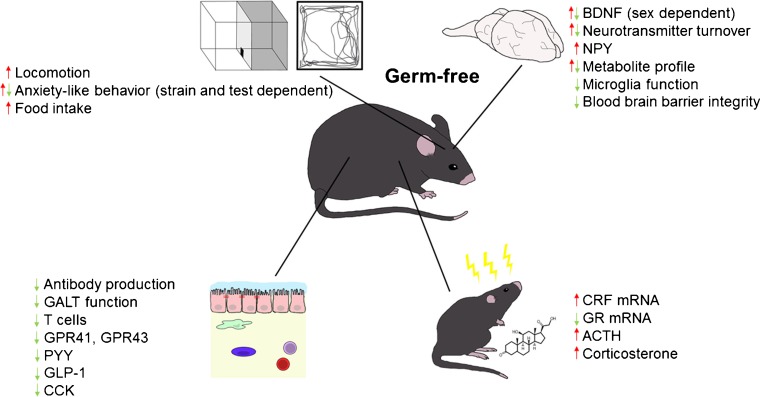
“Thus, GF mice have been demonstrated to have increased CRF expression, reduced GR expression in the cortex, and elevated plasma ACTH and corticosterone levels in response to restraint stress (Table 2) [93, 95].”
BackgroundInfluentialMetabolomics analysis reveals large effects of gut microflora on mammalian blood metabolites
Wikoff, W. R., Anfora, A. T., Liu, J., Schultz, P. G., Lesley, S. A., Peters, E. C., & Siuzdak, G. (2009) · Proceedings of the National Academy of Sciences · doi:10.1073/pnas.0812874106 · Cited by 2,677 · cited 2×
“bioactive indole-containing metabolites that derive from tryptophan is impaired, whereas the availability of tryptophan, which is a precursor of 5-HT, is increased [114].”
Background
Cited by
Items 101–200 of 509
Placental Epigenome Impacts Fetal Development: Effects of Maternal Nutrients and Gut Microbiota
Basak, S., Mallick, R., Navya Sree, B., & Duttaroy, A. (2024) · Nutrients · doi:10.3390/nu16121860 · Cited by 47
“This activation occurs by releasing pro-inflammatory mediators, prostaglandins, and microbial antigens that can cross the BBB. Maternal gut dysbiosis can lead to constitutive hyperactivity of the HPA axis [207].”
BackgroundBatista, K. S., de Albuquerque, J. G., de Vasconcelos, M. H. A., Bezerra, M. L. R., Barbalho, M. B. D. S., Pinheiro, R. O., & Aquino, J. D. S. (2021) · Nutrition Research Reviews · doi:10.1017/s0954422421000317 · Cited by 60
“The specific probiotics can also act at the systemic level, in the central(58), cardiovascular(59), endocrine(60) and respiratory systems(61).”
BackgroundLiu, M., Song, S., Hu, C., Tang, L., Lam, J. C. W., Lam, P. K. S., & Chen, L. (2020) · Environmental Pollution · doi:10.1016/j.envpol.2020.114832 · Cited by 59
Zhong, S.-R., Kuang, Q., Zhang, F., Chen, B., & Zhong, Z.-G. (2021) · Translational Neuroscience · doi:10.1515/tnsci-2020-0206 · Cited by 59
“Meanwhile, the hypothalamic–pituitary–adrenal (HPA) axis form the bidirectional communication between the gut microbiota and the brain [43].”
BackgroundThe human microbiome in clinical translation: from bench to bedside
Bautista, J., Echeverría, C. E., Maldonado-Noboa, I., Ojeda-Mosquera, S., Hidalgo-Tinoco, C., & López-Cortés, A. (2025) · Frontiers in Microbiology · doi:10.3389/fmicb.2025.1632435 · Cited by 55
“The human microbiome, a complex and dynamic ecosystem of microorganisms, plays a fundamental role in regulating immunity, metabolism, and neuroendocrine signaling throughout life (Jyoti and Dey, 2025; Zheng et al., 2020; Farzi et al., 2018).”
Ortega, V. A., Mercer, E. M., Giesbrecht, G. F., & Arrieta, M. (2021) · Frontiers in Microbiology · doi:10.3389/fmicb.2021.634539 · Cited by 59
“Therefore, it is not surprising that parallels exist between the early-life critical windows for the development of major physiological systems, such as the immune and nervous systems, and the establishment of the gut microbiome (Borre et al., 2014; Gensollen et al., 2016; Farzi et al., 2018).”
BackgroundInfluentialA Narrative Review of Psychobiotics: Probiotics That Influence the Gut–Brain Axis
Ķimse, L., Reinis, A., Miķelsone-Jansone, L., Gintere, S., & Krūmiņa, A. (2024) · Medicina · doi:10.3390/medicina60040601 · Cited by 66
“Vice versa, the functions of the HPA axis can impact the gut microbiota composition and enlarge the permeability of the gastrointestinal tract [13,14].”
BackgroundYeater, T. D., Cruz, C. J., Cruz‐Almeida, Y., & Allen, K. D. (2022) · Current Rheumatology Reports · doi:10.1007/s11926-022-01071-9 · Cited by 56
MacKay, M., Yang, B. H., Dursun, S. M., & Baker, G. B. (2023) · Current Neuropharmacology · doi:10.2174/1570159x21666230222092029 · Cited by 57
The Microbiota-Gut Axis in Premature Infants: Physio-Pathological Implications
Bresesti, I., Salvatore, S., Valetti, G., Baj, A., Giaroni, C., & Agosti, M. A. (2022) · Cells · doi:10.3390/cells11030379 · Cited by 57
“hypothalamic–pituitary–adrenal (HPA) axis and neuroendocrine and immune pathways take part in this microbial-mediated modulation of stress responses [59,106,107].”
BackgroundStress, Dietary Patterns and Cardiovascular Disease: A Mini-Review
Morera, L. P., Marchiori, G. N., Medrano, L. A., & Defagó, M. D. (2019) · Frontiers in Neuroscience · doi:10.3389/fnins.2019.01226 · Cited by 61
Taverniti, V., Cesari, V., Gargari, G., Rossi, U., Biddau, C., Lecchi, C., Fiore, W., Arioli, S., Toschi, I., & Guglielmetti, S. (2021) · Frontiers in Microbiology · doi:10.3389/fmicb.2021.706135 · Cited by 47
Huo, D., Cen, C., Chang, H., Ou, Q., Jiang, S., Pan, Y., Chen, K., & Zhang, J. (2021) · Communications Biology · doi:10.1038/s42003-021-02587-z · Cited by 52
Potential Roles of Enterochromaffin Cells in Early Life Stress-Induced Irritable Bowel Syndrome
Tao, E., Zhu, Z., Hu, C., Long, G., Chen, B., Guo, R. C., Fang, M., & Jiang, M. (2022) · Frontiers in Cellular Neuroscience · doi:10.3389/fncel.2022.837166 · Cited by 51
Is adolescence the missing developmental link in Microbiome–Gut–Brain axis communication?
Flannery, J., Callaghan, B., Sharpton, T., Fisher, P., & Pfeifer, J. (2019) · Developmental Psychobiology · doi:10.1002/dev.21821 · Cited by 44
Xu, M., Wang, C., Krolick, K. N., Shi, H., & Zhu, J. (2020) · Scientific Reports · doi:10.1038/s41598-020-60862-1 · Cited by 50
Therapeutic potential of natural products against atherosclerosis: Targeting on gut microbiota
Zhao, X., Oduro, P. K., Tong, W., Wang, Y., Gao, X., & Wang, Q. (2020) · Pharmacological Research · doi:10.1016/j.phrs.2020.105362 · Cited by 50
Gesù, C. M. D., Matz, L. M., & Buffington, S. A. (2021) · Neuroscience Research · doi:10.1016/j.neures.2021.05.003 · Cited by 53
Twenty Important Research Questions in Microbial Exposure and Social Equity
Robinson, J. M., Redvers, N., Camargo, A., Bosch, C. A., Breed, M. F., Brenner, L. A., Carney, M. A., Chauhan, A., Dasari, M. R., Dietz, L. G., et al. (2022) · mSystems · doi:10.1128/msystems.01240-21 · Cited by 49
“Emerging research highlights how stress from environmental pollutants or psychosocial pathways can affect the internal human microbiome through the gut-hypothalamus-pituitary axis (232), which can potentially contribute to an array of adverse health outcomes.”
BackgroundFuemmeler, B. F., Shen, J., Zhao, H., & Winn, R. A. (2023) · Molecular Psychiatry · doi:10.1038/s41380-023-02006-1 · Cited by 48
Targeting the endocannabinoid system with microbial interventions to improve gut integrity
Jansma, J., Brinkman, F. N., van Hemert, S., & Aidy, S. E. (2020) · Progress in Neuro-Psychopharmacology and Biological Psychiatry · doi:10.1016/j.pnpbp.2020.110169 · Cited by 49
“The MGBA is a bidirectional communication network that includes the peripheral nerves, the enteric and the central nervous system, gut hormones, the gut microbiota and microbiota derived molecules (Farzi et al., 2018; Russo et al., 2017).”
BackgroundKeskitalo, A., Aatsinki, A.-K., Kortesluoma, S., Pelto, J., Korhonen, L., Lahti, L., Lukkarinen, M., Munukka, E., Karlsson, H., & Karlsson, L. (2021) · Stress · doi:10.1080/10253890.2021.1895110 · Cited by 44
Mestre, L., Carrillo-Salinas, F. J., Mecha, M., Feliú, A., & Guaza, C. (2018) · Biochemical Pharmacology · doi:10.1016/j.bcp.2018.08.037 · Cited by 46
Interplay between Serotonin, Immune Response, and Intestinal Dysbiosis in Inflammatory Bowel Disease
Delgado, S. G., Veloz, I. G., Trejo-Vázquez, F., & Martínez‐Fierro, M. L. (2022) · International Journal of Molecular Sciences · doi:10.3390/ijms232415632 · Cited by 45
Sensitive phases in the development of rodent social behavior
Sachser, N., Zimmermann, T. D., Hennessy, M. B., & Kaiser, S. (2020) · Current Opinion in Behavioral Sciences · doi:10.1016/j.cobeha.2020.07.014 · Cited by 43
Microglial contribution to the pathology of neurodevelopmental disorders in humans
Matulevičiūtė, R., Akinluyi, E. T., Muntslag, T. A. O., Dewing, J. M., Long, K. R., Vernon, A. C., Tremblay, M., & Menassa, D. A. (2023) · Acta Neuropathologica · doi:10.1007/s00401-023-02629-2 · Cited by 44
“This bi-directional communication involves neuroendocrine, immune and neural pathways and microbiota-derived neuroactive compounds (neurotransmitters, metabolites and soluble by-products) (reviewed in [42, 50, 104]).”
BackgroundChen, J., Zhao, B.-C., Dai, X., Xu, Y., Kang, J.-X., & Li, J. (2022) · Journal of Advanced Research · doi:10.1016/j.jare.2022.12.008 · Cited by 42
“A study on an IBS-diarrhea mouse model showed that regulation of the brain-microbe-gut axis by downregulating corticotropinreleasing hormone (CRH) receptor 1 (CRHR1) expression and inhibiting HPA axis activity can ameliorate diarrhea symptoms [23].”
BackgroundGhassab, F. T., Mahmoudi, F. S., Tinjani, R. T., Meibodi, A. E., Zali, M. R., & Yadegar, A. (2024) · Life Sciences · doi:10.1016/j.lfs.2024.122748 · Cited by 41
The gut–brain–circadian axis in anxiety and depression: a critical review
Bautista, J., Hidalgo‐Tinoco, C., Delgado, M. D. C., Viteri-Recalde, J., Guerra-Guerrero, A., & López‐Cortés, A. (2025) · Frontiers in Psychiatry · doi:10.3389/fpsyt.2025.1697200 · Cited by 48
Mosaferi, B., Jand, Y., & Salari, A. (2021) · Scientific Reports · doi:10.1038/s41598-021-02231-0 · Cited by 43
How gut microbiota may impact ocular surface homeostasis and related disorders
Labétoulle, M., Baudouin, C., del Castillo, J. M. B., Rolando, M., Rescigno, M., Messmer, E. M., & Aragona, P. (2024) · Progress in Retinal and Eye Research · doi:10.1016/j.preteyeres.2024.101250 · Cited by 44
“…results in upregulation of the corticotrophin-releasing factor and adrenocorticotropic hormone by the hypothalamus and pituitary, respectively, resulting in high levels of cortisol, consistent with stress (Farzi et al., 2018; Mouihate et al., 2010; Nayyar et al., 2020; Shanks et al., 1995).”
Hong, D., Zhang, C., Wu, W., Lu, X., & Zhang, L. (2023) · Frontiers in Neurology · doi:10.3389/fneur.2023.1133546 · Cited by 38
Khor, S. L. Q., Ng, K. Y., Koh, R. Y., & Chye, S. M. (2023) · CNS & Neurological Disorders - Drug Targets · doi:10.2174/1871527322666230330093829 · Cited by 40
Gut microbiome-brain axis and inflammation in temperament, personality and psychopathology
Sumich, A. L., Heym, N., Lenzoni, S., & Hunter, K. A. (2022) · Current Opinion in Behavioral Sciences · doi:10.1016/j.cobeha.2022.101101 · Cited by 42
Raman, M., Vishnubhotla, R. V., Ramay, H. R., Gonçalves, M. C. B., Shin, A., Pawale, D., Subramaniam, B., & Sadhasivam, S. (2023) · BMC Complementary Medicine and Therapies · doi:10.1186/s12906-023-03935-8 · Cited by 37
Michels, N. (2019) · Nutrition Research Reviews · doi:10.1017/s0954422419000143 · Cited by 35
“the cortisol(69) as well as the nervus vagus(70) system, have theoretically and experimentally been linked to gut microbiota.”
BackgroundEffect of chronic stress on tumorigenesis and development
Wang, C., Shen, Y., Ni, J., Hu, W., & Yang, Y. (2022) · Cellular and Molecular Life Sciences · doi:10.1007/s00018-022-04455-3 · Cited by 37
Psychosocial impact of recurrent urogenital infections: a review
Thomas-White, K. J., Navarro, P., Wever, F., King, L., Dillard, L. R., & Krapf, J. M. (2023) · Women s Health · doi:10.1177/17455057231216537 · Cited by 61
“Levels of per ceived stress have been associated with changes in a range of physiologic functions including the immune response 67 and dysbiosis in both the gut 68 and vaginal 69 microbiomes.”
BackgroundFeng, L.-S., Wang, Y., Liu, H., Ning, B., Yu, H.-B., Li, S., Wang, Y., Zhao, M., & Ma, J. (2024) · Journal of Integrative Neuroscience · doi:10.31083/j.jin2312222 · Cited by 39
“Imbalance in gut microbiota can over activate the HPA axis and neuroimmune system and alter neurotransmitter levels, leading to inflammation, increased oxidative stress, abnormal mitochondrial function, and neuronal death [96].”
Hypothalamic-Pituitary-Adrenal Axis and Epilepsy
Bian, X., Yang, W., Lin, J., Jiang, B., & Shao, X. (2024) · Journal of Clinical Neurology · doi:10.3988/jcn.2023.0308 · Cited by 37
“20,21 Chronic stress inducing long-term excess GC exposure can inhibit the HPA-axis feedback regulatory pathway, leading to a reduction in brain-derived neurotrophic factor, while the glucocorticoid receptor (GR) can interact with neurotrophic factors to mediate changes in hippocampal structure and…”
BackgroundPostoperative pain and the gut microbiome
Brenner, D., Shorten, G., & O’Mahony, S. M. (2021) · Neurobiology of Pain · doi:10.1016/j.ynpai.2021.100070 · Cited by 35
The Gut Microbiota-Brain Axis: A New Frontier on Neuropsychiatric Disorders
Queiroz, S. A. L., Ton, A. M. M., Pereira, T. D. M. C., Campagnaro, B. P., Martinelli, L., Picos, A., Campos‐Toimil, M., & Vasquez, E. C. (2022) · Frontiers in Psychiatry · doi:10.3389/fpsyt.2022.872594 · Cited by 37
Gut‐Brain Axis Impact on Canine Anxiety Disorders: New Challenges for Behavioral Veterinary Medicine
Sacoor, C., Marugg, J. D., Lima, N. R., Empadinhas, N., & Montezinho, L. (2024) · Veterinary Medicine International · doi:10.1155/2024/2856759 · Cited by 36
“On the other hand, stressful situations and further activation of the HPA axis can result in changes in gut microbiota composition [41].”
BackgroundInfluentialThe central role of microglia in major depressive disorder and its potential as a therapeutic target
Xia, X., Li, K., Zou, W., & Wang, L. (2025) · Frontiers in Behavioral Neuroscience · doi:10.3389/fnbeh.2025.1598178 · Cited by 32
“The hypothalamus communicates with intestinal epithelial cells through the HPA axis, and the regulation, development and renewal of ENS neurons are controlled by the intestinal microbiome (Farzi et al., 2018).”
Bhuiyan, P., Chen, Y., Karim, M., Dong, H., & Qian, Y. (2021) · Brain Research Bulletin · doi:10.1016/j.brainresbull.2021.04.010 · Cited by 35
A Reciprocal Link Between Gut Microbiota, Inflammation and Depression: A Place for Probiotics?
Eltokhi, A., & Sommer, I. E. (2022) · Frontiers in Neuroscience · doi:10.3389/fnins.2022.852506 · Cited by 36
“, 2015), which can have a downstream effect on the gut microbiota (den Besten et al., 2013; Farzi et al., 2018).”
BackgroundRelationship between gut microbiota and thyroid function: a two-sample Mendelian randomization study
Xie, L., Zhao, H., & Chen, W. (2023) · Frontiers in Endocrinology · doi:10.3389/fendo.2023.1240752 · Cited by 45
“Furthermore, the gut microbiota can impact the secretion of the neurotransmitter dopamine in the brain and regulate the hypothalamic-pituitary-adrenal (HPA) axis (38).”
Narrative review on potential role of gut microbiota in certain substance addiction
Qin, C., Hu, J., Wan, Y., Cai, M., Wang, Z., Peng, Z., Liao, Y., Li, D., Yao, P., Liu, L., et al. (2021) · Progress in Neuro-Psychopharmacology and Biological Psychiatry · doi:10.1016/j.pnpbp.2020.110093 · Cited by 32
Gut-Brain Axis: Possible Role of Gut Microbiota in Perioperative Neurocognitive Disorders
Wang, X., Li, H., Li, X., Yuan, C., & Zhao, H. (2021) · Frontiers in Aging Neuroscience · doi:10.3389/fnagi.2021.745774 · Cited by 34
“Moreover, the increase of serum cortisol level can change the gut microbiota composition and intestinal barrier permeability (Farzi et al., 2018).”
BackgroundGanz, T., Fainstein, N., Elad, A., Lachish, M., Goldfarb, S., Einstein, O., & Ben‐Hur, T. (2022) · Journal of Neuroinflammation · doi:10.1186/s12974-021-02369-8 · Cited by 31
Varied Composition and Underlying Mechanisms of Gut Microbiome in Neuroinflammation
Farooq, R. K., Alamoudi, W., Alhibshi, A., Rehman, S., Sharma, A. R., & Abdulla, F. A. (2022) · Microorganisms · doi:10.3390/microorganisms10040705 · Cited by 34
Anderson, K. M., Ferranti, E. P., Alagha, E. C., Mykityshyn, E., French, C., & Reilly, C. M. (2022) · Heart Failure Reviews · doi:10.1007/s10741-022-10254-6 · Cited by 32
DNA Methylation Profiles of Tph1A and BDNF in Gut and Brain of L. Rhamnosus-Treated Zebrafish
Cuomo, M., Borrelli, L., Monica, R. D., Coretti, L., Riso, G. D., di Durazzo, L. D. L., Fioretti, A., Lembo, F., Dinan, T. G., Cryan, J. F., et al. (2021) · Biomolecules · doi:10.3390/biom11020142 · Cited by 32
Chen, H., Kan, Q., Zhao, L., Ye, G., He, X., Tang, H., Shi, F., Zou, Y., Liang, X., Song, X., et al. (2023) · Biomedicine & Pharmacotherapy · doi:10.1016/j.biopha.2023.114525 · Cited by 30
Psychobiotics for Mitigation of Neuro‐Degenerative Diseases: Recent Advancements
Dhyani, P., Goyal, C., Dhull, S. B., Chauhan, A. K., Saharan, B. S., Harshita, Duhan, J. S., & Gökşen, G. (2023) · Molecular Nutrition & Food Research · doi:10.1002/mnfr.202300461 · Cited by 33
Microbiota and Alcohol Use Disorder: Are Psychobiotics a Novel Therapeutic Strategy?
Rodríguez‐González, A., & Orío, L. (2020) · Current Pharmaceutical Design · doi:10.2174/1381612826666200122153541 · Cited by 31
Dietary Habits and Their Influence on the Microbiome and Mental Health in Adolescents
Sălcudean, A., Cîmpian, D. M., Popovici, R. A., Forna, N. C., Corodan-Comiati, D.-M., Sasu, A.-B., Cozma, M.-M., Bodo, C.-R., Enache, E.-C., Păcurar, M., et al. (2025) · Nutrients · doi:10.3390/nu17091496 · Cited by 31
Márquez-Morales, L., El-Kassis, E. G., Cavazos‐Arroyo, J., Rocha–Rocha, V. M., Martínez‐Gutiérrez, F., & Pérez‐Armendáriz, B. (2021) · Nutrients · doi:10.3390/nu13051551 · Cited by 29
Wang, M., Zhang, J., Huang, X., Liu, Y., & Zeng, J. (2022) · Animals · doi:10.3390/ani12172197 · Cited by 28
“HS-elevated corticosterone levels in the body can affect gut health and lead to dysbiosis of microbiota homeostasis [66,85].”
BackgroundThe role of the gut microbiome and its metabolites in cerebrovascular diseases
Xu, H., Xu, Z., Long, S., Li, Z., Jiang, J., Zhou, Q., Huang, X., Wu, X., Wei, W., & Li, X. (2023) · Frontiers in Microbiology · doi:10.3389/fmicb.2023.1097148 · Cited by 33
“, 2018), endocrine regulation (Farzi et al., 2018), and immune response (Sadler et al.”
BackgroundRole of the gut-microbiota-metabolite-brain axis in the pathogenesis of preterm brain injury
Li, L., Yang, J., Liu, T., & Shi, Y. (2023) · Biomedicine & Pharmacotherapy · doi:10.1016/j.biopha.2023.115243 · Cited by 32
Effect of probiotics on children with autism spectrum disorders: a meta-analysis
Zeng, P., Zhang, C.-Z., Fan, Z., Yang, C., Cai, W., Huang, Y., Xiang, Z., Wu, J., Zhang, J., & Yang, J. (2024) · The Italian Journal of Pediatrics/Italian journal of pediatrics · doi:10.1186/s13052-024-01692-z · Cited by 36
“Thus induce hormone and neuropeptide production, such as glucagon-like peptide 1 (GLP-1), peptide YY (PYY), and histone deacetylase inhibitors from intestinal enteroendocrine cells and influence the processes of learning and memory ultimately [28, 29].”
BackgroundWang, B., Xu, Y., Zhang, M., Zhang, J., Hou, X., Li, J., Cai, Y., Sun, Z., Ban, Y., & Wang, W. (2020) · American Journal of Physiology-Endocrinology and Metabolism · doi:10.1152/ajpendo.00234.2020 · Cited by 33
The Microbiome and Neurologic Disease: Past and Future of a 2-Way Interaction
Ochoa‐Repáraz, J., & Kasper, L. H. (2018) · Neurotherapeutics · doi:10.1007/s13311-018-0604-9 · Cited by 28
Metabolic factors in the regulation of hypothalamic innate immune responses in obesity
Folick, A., Cheang, R. T., Valdearcos, M., & Koliwad, S. K. (2022) · Experimental & Molecular Medicine · doi:10.1038/s12276-021-00666-z · Cited by 28
Substance use, microbiome and psychiatric disorders
Chivero, E. T., Sil, S., Kumar, M., & Buch, S. J. (2022) · Pharmacology Biochemistry and Behavior · doi:10.1016/j.pbb.2022.173432 · Cited by 28
Diet-microbiome-gut-brain nexus in acute and chronic brain injury
Krakovski, M., Arora, N., Jain, S., Glover, J., Dombrowski, K. E., Hernandez, B., Yadav, H., & Sarma, A. K. (2022) · Frontiers in Neuroscience · doi:10.3389/fnins.2022.1002266 · Cited by 28
“Interestingly, gut dysbiosis has been reported to disrupt the HPA axis (Farzi et al., 2018), which prompts the question: does a dysregulated gut worsen postTBI inflammation? The microbiome profile in individuals with TBI and other neurodegenerative diseases compared to normal controls and their respective animal model…”
BackgroundManipulation of the diet–microbiota–brain axis in Alzheimer’s disease
Lee, D. D., Lee, V. M. ‐., & Hur, S. K. (2022) · Frontiers in Neuroscience · doi:10.3389/fnins.2022.1042865 · Cited by 29
“In addition to metabolic syndrome, which is found to be contemporaneous with the progression of neurodegeneration in AD models, WD strongly accelerates the AD pathological processes through LPS translocation, BBB impairment, intensification of the amyloidogenic APP cleavage path, and chronic activation of glial cells…”
BackgroundInfluentialExploring the effect of gut microbiome on Alzheimer's disease
Pourahmad, R., Saleki, K., Zare, M., Aram, C., Farsani, A. S., Banazadeh, M., & Tafakhori, A. (2024) · Biochemistry and Biophysics Reports · doi:10.1016/j.bbrep.2024.101776 · Cited by 28
“Further research into the intricate interactions between TLRs, the microbiome, and neuroinflammation may provide valuable insights into potential therapeutic strategies for Alz-heimer ’ s disease. parasympathetic autonomic nervous systems [81,82].”
BackgroundBlood-derived factors to brain communication in brain diseases
He, J., Zhang, Y., Guo, Y., Guo, J., Chen, X., Xu, S., Xu, X., Wu, C., Liu, C., Chen, J., et al. (2024) · Science Bulletin · doi:10.1016/j.scib.2024.09.022 · Cited by 27
Brain-Gut and Microbiota-Gut-Brain Communication in Type-2 Diabetes Linked Alzheimer’s Disease
Momen, Y. S., Mishra, J., & Kumar, N. (2024) · Nutrients · doi:10.3390/nu16152558 · Cited by 29
“…on vagal sensory afferents, regulating short-term feelings of hunger and satiety as well as food intake and food choice (endocrine-mediated behaviors) to maintain energy homeostasis upon communicating the metabolic and nutrient status to the cognitive and emotional centers in the brain [34,39–42].”
Mazorra-Alonso, M., Tomás, G., & Soler, J. J. (2021) · Biology · doi:10.3390/biology10040274 · Cited by 36
Hu, C., Liu, M., Sun, B., Tang, L., Zhou, X., & Chen, L. (2022) · Environment International · doi:10.1016/j.envint.2022.107418 · Cited by 26
Shu, Q., Kang, C., Li, J., Hou, Z., Xiong, M., Wang, X., & Peng, H. (2024) · PLoS ONE · doi:10.1371/journal.pone.0296733 · Cited by 26
“The gut microbiota has the capacity to produce various neurotransmitters, such as dopamine, which can regulate the hypothalamus-pituitary axis (HPA) and inhibit TSH [15].”
BackgroundJurek, J. M., & Castro‐Marrero, J. (2024) · Nutrients · doi:10.3390/nu16111545 · Cited by 26
“In addition, probiotic preparations can help with the management of neurodegenerative and psychiatric comorbidities related to low mood, sleep problems, depression and anxiety-like symptoms [80,81] and those associated with chronic GI conditions, including IBS [82].”
BackgroundKamal, N., Saharan, B. S., Duhan, J. S., Kumar, A., Chaudhary, P., Goyal, C., Kumar, M., Goyat, N., Sindhu, M., & Mudgil, P. (2024) · Medicine in Microecology · doi:10.1016/j.medmic.2024.100118 · Cited by 27
A Healthy Gut for a Healthy Brain: Preclinical, Clinical and Regulatory Aspects
Petrella, C., Vecchioli, S. F., Cisale, G. Y., Strimpakos, G., Borg, J.-J., Ceccanti, M., Fiore, M., Monteleone, G., & Nisticò, R. (2020) · Current Neuropharmacology · doi:10.2174/1570159x18666200730111528 · Cited by 27
ALZHEIMER’S DISEASE AND ITS RELATIONSHIP WITH THE MICROBIOTA-GUT-BRAIN AXIS
Faulin, T. D. E. S., & Estadella, D. (2023) · Arquivos de Gastroenterologia · doi:10.1590/s0004-2803.202301000-17 · Cited by 30
Conde, C., Escribano, B. M., Luque, E., Feijóo, M., Caballero‐Villarraso, J., Valdelvira, M. E., Ochoa-Sepúlveda, J. J., Lillo, R., Paz, E., Santamaría, A., et al. (2019) · Nutrients · doi:10.3390/nu11102448 · Cited by 28
“In addition, the evidence shows a relationship between the neuroendocrine system and microbiota [26] that might not only affect the CNS but also other organs.”
BackgroundInfluentialChan, D. G., Ventura, K., Villeneuve, A., Du Bois, P., & Holahan, M. R. (2022) · Journal of Parkinson's Disease · doi:10.3233/jpd-223461 · Cited by 24
Metagenomic symphony of the intestinal ecosystem: How the composition affects the mind
Malan-Müller, S., Martín-Hernández, D., Caso, J. R., Matthijnssens, J., Rodríguez-Urrutia, A., Lowry, C. A., & Leza, J. C. (2025) · Brain, Behavior, and Immunity · doi:10.1016/j.bbi.2024.09.033 · Cited by 24
“…this signaling include the endocrine (hypothalamic – pituitary – adrenal (HPA) axis and cortisol secretion), immune (complement, chemokines, and cytokines), and neural pathways (vagus nerve, spinal afferent and efferent pathways, and enteric nervous system [ENS]) (Bravo, 2012; Farzi et al., 2018).”
Microbiota and glioma: a new perspective from association to clinical translation
Wang, W., Ou, Z., Huang, X., Wang, J., Li, Q., Wen, M., & Zheng, L. (2024) · Gut Microbes · doi:10.1080/19490976.2024.2394166 · Cited by 25
“48,49 This hormonal influence may be exacerbated by increasing levels of LPS, a potent immunogenic component of gram-negative bacteria that induces endotoxemia and compromises the BBB. 50 The state of dysbiosis, especially the imbalance of bacterial composition and changes in bacterial metabolic…”
BackgroundRole of gut microbiota in neuroinflammation: a focus on perioperative neurocognitive disorders
Zhou, Q., Chen, T., Wang, X., Xu, Z., Song, Y., Liu, S., Ge, Y., & Gao, J. (2025) · Frontiers in Cellular and Infection Microbiology · doi:10.3389/fcimb.2025.1582909 · Cited by 24
“Notably, abnormal neurotransmission can disrupt the HPA axis, enteric nervous system, and alter the gut microbiota, leading to neuronal damage and cognitive impairments (Grinevich et al., 2001; Farzi et al., 2018).”
Gut neuroendocrine signaling regulates synaptic assembly in C. elegans
Shi, Y., Lu, Q., Wu, M., Zheng, J., Xie, T., & Shao, Z. (2022) · EMBO Reports · doi:10.15252/embr.202153267 · Cited by 25
“Endocrine is a highly conserved signaling pathway mediated the gut – brain communication (Matafome et al , 2017; Farzi et al , 2018; Sun et al , 2018).”
Hu, C., Liu, M., Tang, L., Sun, B., Huang, Z., & Chen, L. (2021) · The Science of The Total Environment · doi:10.1016/j.scitotenv.2021.145975 · Cited by 25
Sun, B., Liu, M., Tang, L., Hu, C., Huang, Z., & Chen, L. (2021) · Environmental Pollution · doi:10.1016/j.envpol.2021.118013 · Cited by 24
Mallick, A., Quilès, F., Francius, G., Burgain, J., Gaïani, C., Scher, J., Amara, S., Lemaître, C., Marchal, P., & Alem, H. (2022) · Food Hydrocolloids for Health · doi:10.1016/j.fhfh.2022.100088 · Cited by 24
“…sites or secreting antimicrobial substances like lactic acid, (c) regulation of the epithelial barrier function, (d) modulation of immune responses, and (e) interactions with the gut-brain barrier ( Babenko, Bub-nov, Lazarenko & Spivak, 2018 ; Farzi, Fröhlich & Holzer, 2018 ; Yap & Mariño, 2018 ).”
BackgroundPathogenesis from the microbial-gut-brain axis in white matter injury in preterm infants: A review
Wang, Y., Zhu, J., Zou, N., Zhang, L., Wang, Y., Zhang, M., Wang, C., & Yang, L. L. (2023) · Frontiers in Integrative Neuroscience · doi:10.3389/fnint.2023.1051689 · Cited by 25
“Studies have shown that the gut microbiome is involved in the processes of perinatal brain development including neurogenesis, microglia maturation, bloodbrain barrier development, and myelination (Ogbonnaya et al., 2015; Hoban et al., 2016; Erny et al., 2017; Farzi et al., 2018).”
BackgroundGut Microbiota and Endocrine Disorder
Li, R., Li, Y., Cui, L., Zheng, D., & Chen, P. (2020) · Advances in experimental medicine and biology · doi:10.1007/978-981-15-2385-4_9 · Cited by 24
Jia, X., Chen, Q., Zhang, Y., & Asakawa, T. (2023) · Frontiers in Cellular and Infection Microbiology · doi:10.3389/fcimb.2023.1296713 · Cited by 22
Zhang, Y., Tang, N., Zhou, H., & Zhu, Y. (2024) · Biomedicine & Pharmacotherapy · doi:10.1016/j.biopha.2024.116218 · Cited by 22
The role of gut microbiota‐derived metabolites in neuroinflammation
Mu, L., & Wang, Y. (2025) · Neuroprotection/Neuroprotection (Chichester, England. Print) · doi:10.1002/nep3.70001 · Cited by 23
Geng, M., Gao, H. J., Wang, B., Huang, K., Wu, X., Liang, C., Yan, S., Han, Y., Ding, P., Wang, W., et al. (2022) · The Science of The Total Environment · doi:10.1016/j.scitotenv.2022.156146 · Cited by 22
Gastrointestinal Microbiome and Multiple Health Outcomes: Umbrella Review
Chang, C., Yuan, X., Zhang, X., Chen, X., & Li, K. (2022) · Nutrients · doi:10.3390/nu14183726 · Cited by 24
Social Isolation and Breast Cancer
Hilakivi-Clarke, L. A., & Andrade, F. D. O. (2023) · Endocrinology · doi:10.1210/endocr/bqad126 · Cited by 23
3D brain tissue physiological model with co-cultured primary neurons and glial cells in hydrogels
Raimondi, I., Tunesi, M., Forloni, G., Albani, D., & Giordano, C. (2020) · Journal of Tissue Engineering · doi:10.1177/2041731420963981 · Cited by 24
Willaert, W., Leysen, L., Lenoir, D., Meeus, M., Cagnie, B. J., Nijs, J., Sterling, M. M., & Coppieters, I. (2021) · Physical Therapy · doi:10.1093/ptj/pzab105 · Cited by 25
Alterations of the Gut Microbiome in Patients With Pituitary Adenoma
Hu, J., Yang, J., Chen, L., Meng, X., Zhang, X., Li, W., Li, Z., & Huang, G. (2022) · Pathology & Oncology Research · doi:10.3389/pore.2022.1610402 · Cited by 22
Welcome, M. O. (2018) · Dementia and Geriatric Cognitive Disorders Extra · doi:10.1159/000492491 · Cited by 22
Shawky, E. M., Surendran, S., & El-Khair, R. M. A. (2025) · Probiotics and Antimicrobial Proteins · doi:10.1007/s12602-025-10592-5 · Cited by 25
“The HPA axis is composed of the hypothalamus, pituitary gland, and adrenal glands, which work in concert to regulate the body’s stress response through the release of hormones like cortisol [62].”
Metadata
- Authors
- Farzi, A., Fröhlich, E. E., & Holzer, P.
- Affiliations
- Medical University of Graz (AT)
- Corresponding author
- Farzi, Aitak
- Venue
- Neurotherapeutics
- Publisher
- Elsevier BV
- Published
- 2018-01
- Volume
- 15
- Issue
- 1
- Pages
- 5-22
- ISSN
- 1878-7479 (ISSN-L)
- PMC
- PMC5794709
- OpenAlex
- W2789690147
- Semantic Scholar
- 6963f59d54a21cd764832ea5d951b1b5358dff00
- Cited by
- 478
- References
- 142
- Citations by year
- 2026: 47 · 2025: 56 · 2024: 67 · 2023: 56 · 2022: 79 · 2021: 77 · 2020: 52 · 2019: 35 · 2018: 9
- FWCI
- 4.24
- Type
- journal article
- Language
- en
- Open access
- hybrid
- doi.org
- Licence
- cc-by
- www.elsevier.com/tdm/userlicense/1.0/ (tdm)
- www.elsevier.com/legal/tdmrep-license (tdm)
- creativecommons.org/licenses/by/4.0/ (vor, 26 d)
- Locations
- Neurotherapeutics (publishedVersion, cc-by)
- PubMed Central (publishedVersion, cc-by)
- PubMed (publishedVersion)
- Funders
- Austrian Science Fund (P23097-B18, P25912-B23, W1241-B18)
- Österreichische Forschungsförderungsgesellschaft
- Topics
- Life Sciences › Biochemistry, Genetics and Molecular Biology › Molecular Biology › Gut microbiota and health
- Health Sciences › Medicine › Gastroenterology › Gastrointestinal motility and disorders
- Life Sciences › Neuroscience › Behavioral Neuroscience › Stress Responses and Cortisol
- Keywords
- gut microbiota, neuroendocrine system, hypothalamic-pituitary-adrenal axis, microbiota-gut-brain axis, stress, immune system, intestinal barrier, blood-brain barrier, microbial metabolites, gastrointestinal hormones, autonomic nervous system, early life stress, probiotics, prebiotics, germ-free mice, antibiotic-induced dysbiosis
- MeSH terms
- Gastrointestinal Microbiome, Animals, Anti-Bacterial Agents, Gastrointestinal Hormones, Humans, Hypothalamo-Hypophyseal System, Pituitary-Adrenal System, Stress, Psychological, Mice, Dysbiosis
About these checks
Registry, retraction, Cites and statistics results are computed, not judged, with one exception: a printed reference that no index lists is read once by a model before it counts as a citation error. Claims are extracted by a model and kept only when their quote appears verbatim in the text; each cited source is then checked, with a model’s help, for whether it says what the claim relies on. Those verdicts can be wrong — read the claim’s quote and the cited source before relying on one.
Statistics and arithmetic are recomputed, not judged.
Confidence bands are shown only for fields calibrated on our annotated test set. None is calibrated yet, so no band is shown.
What counts as a claim ›How we measure confidence ›How we check this ›
Are you an author, or do you see a problem with this page? Request a review
Data sources
Bibliographic data: Semantic Scholar, OpenAlex, Crossref.
Contains information from the Semantic Scholar Academic Graph Datasets, made available under the ODC Attribution License (ODC-BY 1.0).
Semantic Scholar’s data is described in: Kinney, R., et al. (2023). The Semantic Scholar Open Data Platform. arXiv:2301.10140.
