

Gut Microbiota and the Neuroendocrine System
Open accessThe DOI matches its Crossref record; 141 of the 142 references it cites were found in a registry or an index.
Abstract
The microbial ecosystem that inhabits the gastrointestinal tract of all mammals-the gut microbiota-has been in a symbiotic relationship with its hosts over many millennia. Thanks to modern technology, the myriad of functions that are controlled or modulated by the gut microbiota are beginning to unfold. One of the systems that is emerging to closely interact with the gut microbiota is the body's major neuroendocrine system that controls various body processes in response to stress, the hypothalamic-pituitary-adrenal (HPA) axis. This interaction is of pivotal importance; as various disorders of the microbiota-gut-brain axis are associated with dysregulation of the HPA axis. The present contribution describes the bidirectional communication between the gut microbiota and the HPA axis and delineates the potential underlying mechanisms. In this regard, it is important to note that the communication between the gut microbiota and the HPA axis is closely interrelated with other systems, such as the immune system, the intestinal barrier and blood-brain barrier, microbial metabolites, and gut hormones, as well as the sensory and autonomic nervous systems. These communication pathways will be exemplified through preclinical models of early life stress, beneficial roles of probiotics and prebiotics, evidence from germ-free mice, and antibiotic-induced modulation of the gut microbiota.
Overview
The claims and statistics of this paper haven’t been checked yet.
Free: it reads the open-access text and checks the first 5 claims that cite a source we can check. Create a free account to check every claim.
Integrity signals
Registry
Cites
Statistics
Figures
Verification
Claims the paper makes
The claims and statistics of this paper haven’t been checked yet.
Free: it reads the open-access text and checks the first 5 claims that cite a source we can check. Create a free account to check every claim.
Claims other papers make about this one
Each is checked against this paper’s own text: does it say what the citing paper says it does?
The source backs part of the claim, not all of it — or backs it for a different population, condition or comparison.
In the citing paper
“Similar to aging, dysbiosis has been associated with increased cortisol secretion, decreased negative feedback at the level of the hypothalamus, and changes in the circadian rhythm of cortisol release (113).”
From Signalling cognition: The gut microbiota and hypothalamic-pituitary-adrenal axis (2023) · cites this paper as [113]
Experimental — accuracy not yet measuredThe cited source says what the claim attributes to it.
In the citing paper
“This relationship, like the microbiota-gut-brain axis itself, is bidirectional -the microbiota can modulate stress-induced alterations in anxiety, memory, cognition and neuroinflammation (for reviews, see Cussotto et al., 2018;Farzi et al., 2018;Foster et al., 2017;Rea et al., 2016;Sherwin et al., 2016a).”
From The Microbiota-Gut-Brain Axis (2019) · cites this paper as Farzi et al., 2018
Self-check
Percentages, sums and reported differences re-computed from the paper’s own numbers.
The self-check needs the paper’s full text.
Citations
Cites
From inflammation to sickness and depression: when the immune system subjugates the brain
Dantzer, R., O'Connor, J. C., Freund, G. G., Johnson, R. W., & Kelley, K. W. (2008) · Nature Reviews Neuroscience · doi:10.1038/nrn2297 · Cited by 7,395 · cited 1×
“The nucleus of the solitary tract is of particular importance with regard to the gut– brain axis, as it receives visceral afferents from the vagus nerve and is activated by inflammatory challenges [37, 38].”
BackgroundEpigenetic programming by maternal behavior
Weaver, I. C. G., Cervoni, N., Champagne, F. A., D'Alessio, A. C., Sharma, S., Seckl, J. R., Dymov, S., Szyf, M., & Meaney, M. J. (2004) · Nature Neuroscience · doi:10.1038/nn1276 · Cited by 6,177
Commensal microbe-derived butyrate induces the differentiation of colonic regulatory T cells
Furusawa, Y., Obata, Y., Fukuda, S., Endo, T. A., Nakato, G., Takahashi, D., Nakanishi, Y., Uetake, C., Kato, K., Kato, T., et al. (2013) · Nature · doi:10.1038/nature12721 · Cited by 5,549
The gut microbiota shapes intestinal immune responses during health and disease
Round, J. L., & Mazmanian, S. K. (2009) · Nature Reviews Immunology · doi:10.1038/nri2515 · Cited by 5,029
Bravo, J. A., Forsythe, P., Chew, M. V., Escaravage, E., Savignac, H. M., Dinan, T. G., Bienenstock, J., & Cryan, J. F. (2011) · Proceedings of the National Academy of Sciences · doi:10.1073/pnas.1102999108 · Cited by 3,888 · cited 10×
“rhamnosus in BALB/c mice are not present in vagotimized mice, the vagus nerve is suggested to be a critical pathway of communication between probiotic signaling and the CNS [77].”
BackgroundInfluentialHost microbiota constantly control maturation and function of microglia in the CNS
Erny, D., Hrabě de Angelis, A. L., Jaitin, D., Wieghofer, P., Staszewski, O., David, E., Keren-Shaul, H., Mahlakoiv, T., Jakobshagen, K., Buch, T., et al. (2015) · Nature Neuroscience · doi:10.1038/nn.4030 · Cited by 3,569 · cited 7×
“As the behavioral effects in response to L. rhamnosus in BALB/c mice are not present in vagotimized mice, the vagus nerve is suggested to be a critical pathway of communication between probiotic signaling and the CNS [77].”
BackgroundInfluentialGut microbiota, metabolites and host immunity
Rooks, M. G., & Garrett, W. S. (2016) · Nature reviews. Immunology · doi:10.1038/nri.2016.42 · Cited by 3,409 · cited 1×
“YY (PYY) from intestinal enteroendocrine cells [56].”
Normal gut microbiota modulates brain development and behavior
Heijtz, R. D., Wang, S., Anuar, F., Qian, Y., Björkholm, B., Samuelsson, A., Hibberd, M. L., Forssberg, H., & Pettersson, S. (2011) · Proceedings of the National Academy of Sciences · doi:10.1073/pnas.1010529108 · Cited by 3,228 · cited 4×
“↑ synaptophysin + PSD-95 (striatum) [97]”
BackgroundInfluentialSudo, N., Chida, Y., Aiba, Y., Sonoda, J., Oyama, N., Yu, X., Kubo, C., & Koga, Y. (2004) · The Journal of Physiology · doi:10.1113/jphysiol.2004.063388 · Cited by 2,735 · cited 6×
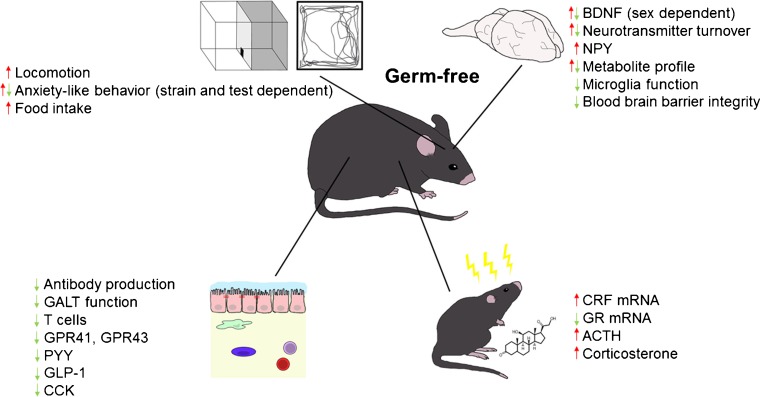
“Thus, GF mice have been demonstrated to have increased CRF expression, reduced GR expression in the cortex, and elevated plasma ACTH and corticosterone levels in response to restraint stress (Table 2) [93, 95].”
BackgroundInfluentialMetabolomics analysis reveals large effects of gut microflora on mammalian blood metabolites
Wikoff, W. R., Anfora, A. T., Liu, J., Schultz, P. G., Lesley, S. A., Peters, E. C., & Siuzdak, G. (2009) · Proceedings of the National Academy of Sciences · doi:10.1073/pnas.0812874106 · Cited by 2,677 · cited 2×
“bioactive indole-containing metabolites that derive from tryptophan is impaired, whereas the availability of tryptophan, which is a precursor of 5-HT, is increased [114].”
Background
Cited by
Items 401–500 of 509
Hominin Evolution II: Sapiens, Masters of the Known Universe
Tracy, D. K. (2021) · Cambridge University Press eBooks · doi:10.1017/9781911623625.006 · Cited by 1
Gestational Tryptophan Fluctuation Underlying Ontogenetic Origin of Neuropsychiatric Disorders
Huang, X., Li, X., & Cheng, H. W. (2023) · IntechOpen eBooks · doi:10.5772/intechopen.106421 · Cited by 1
Thergarajan, G., & Bhassu, S. (2022) · IntechOpen eBooks · doi:10.5772/intechopen.105866 · Cited by 1
Análisis del concepto “Diabesidad”
De-la-Vega, D., Nava, J. M., Pérez, O. I., & Ramírez-Girón, N. (2022) · Index de Enfermería · doi:10.58807/indexenferm20225176 · Cited by 1
What do we know about the connection between gut microbiota and pain?
Lewandowski, M. M., SIEKIERKO, N., ŚWIĘTOCHOWSKI, J., KOTUSIEWICZ, W., ŻOŁNIEREK, M., Lubczyńska, Z., Bienia, G., POPRAVKO, Y., Przeradzki, J., & Kucharski, J. M. (2023) · Journal of Education Health and Sport · doi:10.12775/jehs.2023.20.01.007 · Cited by 1
Microbial Technology for Neurological Disorders
Dasgupta, A. (2023) · Springer eBooks · doi:10.1007/978-981-99-2816-3_10 · Cited by 1
de Silva, P. N. (2023) · British Journal of Hospital Medicine · doi:10.12968/hmed.2022.0455 · Cited by 1
The Gut Microbiome, a Possible Key to Multidisciplinary Clinical Practice - Literature Review
Șchiopu, C. G., Gavril, R. S., Ștefănescu, C., Eşanu, I., & Mitu, F. (2023) · Internal Medicine · doi:10.2478/inmed-2023-0246 · Cited by 1
Effect of Fiber Consumption on Cortisol Levels and HPA Axis in Pregnancy
Dursun Alper, Y., İbrahim Hakki, C., Yıldız, M., Mehmet Salih, Y., & Dege, G. (2024) · Journal of Midwifery and Health Sciences · doi:10.5281/zenodo.10929552 · Cited by 1
Effect of medicinal and aromatic plant phenolics on gut health and gut-brain axis
Aykın‐Dinçer, E., & Dinçer, C. (2024) · Studies in natural products chemistry · doi:10.1016/b978-0-443-22214-6.00002-8 · Cited by 1
Psychobiotics: An Emerging Solution for Alleviation of Psychotic Disorders
Raju, T., Swathy Lakshmi, N., Prems, J., & Lal Prasanth, M. L. (2024) · Research Journal of Pharmaceutical Dosage Forms and Technology · doi:10.52711/0975-4377.2024.00056 · Cited by 1
The fundamental foundations of periodontal aging. Part 1
Моисеев, Д. А., Zueva, A. A., Kopetskiy, I., Budkina, D. A., Galchabekova, M. A., & Gus, L. A. (2025) · Operativnaâ hirurgiâ i kliničeskaâ anatomiâ (Pirogovskij naučnyj žurnal) · doi:10.17116/operhirurg2025902163 · Cited by 1
The prebiotic effects of amadumbe (Colocasia Esculenta) and okra (Abelmoschus esculentus) mucilage
Gajadhar, S. (2023) · DUT Open Scholar (Durban University of Technology) · doi:10.51415/10321/4803 · Cited by 7
Mota, A. S. (2024) · Digital Library of Theses and Dissertations (Universidade de São Paulo) · doi:10.11606/t.9.2024.tde-25042024-144356 · Cited by 1
Gaffney, M. (2018) · CU Scholar (University of Colorado Boulder) · Cited by 1
Physical activity regulates the intestinal microbiota composition
Jurdana, M., & Barlič‐Maganja, D. (2019) · Annales Kinesiologiae · doi:10.35469/ak.2019.185
Ilie, O., Ciobica, A. S., Bacoanu, G., & Timofte, D. V. (2020) · Bulletin of Integrative Psychiatry · doi:10.36219/bpi.2020.2.07
“With respect to the other components of the GBA and the myriad of functions fulfilled (40), we will discuss in the following about the hypothalamic–pituitary–adrenal (HPA) axis (41).”
ARE THEY ALSO MIND COLONIZERS? EXPLORING THE ASSOCIATION BETWEEN GUT MICROBIOTA AND DEPRESSION
Ayeni, F. A., & Fadeyi, T. E. (2020) · FUDMA Journal of Sciences · doi:10.33003/fjs-2020-0402-24
“The effect on endocrine (neuro) or immunosignal enhanced neuroendocrine stress response may be a variable risk arising from a marginal shift in early-life microbiota acquisition and maintenance (Farzi et al., 2018).”
BackgroundGut Feeling: What the Gut Brain Axis May Reveal About Depressive Symptomatology During Adolescence
Flannery, J. (2020) · Scholars' Bank (University of Oregon)
Microbiota intestinal: su importancia en la salud y los factores que la modifican
Espinoza, Y. R. (2020) · Latin American Journal of Clinical Sciences and Medical Technology · doi:10.34141/ljcs3995284
Dynamic modelling of monogastric gut microbiota
Galgano, S. (2021) · ERA · doi:10.7488/era/1064
A Multidisciplinary Look and Its Benefits Associated with the Gut Microbiota
de Brito, D. V. D. (2021) · American Journal of Biomedical Science & Research · doi:10.34297/ajbsr.2021.13.001872
“When the intestinal microbiota is affected, a series of changes in physical or mental symptoms can occur [30-32].”
Background(2021) · Elsevier eBooks · doi:10.1016/b978-0-12-823485-3.00040-3
Anoreksiya Nervosalı Hastalarda İntestinal Mikrobiyotanın Rolü
Almasi, N., Çetin, A. K., & Göktaş, Z. (2022) · Psikiyatride Guncel Yaklasimlar - Current Approaches in Psychiatry · doi:10.18863/pgy.944592
Weltens, N., Dalile, B., & Oudenhove, L. V. (2019) · Elsevier eBooks · doi:10.1016/b978-0-12-801238-3.66130-5 · Cited by 1
Probiotics and gut-brain axis modulation
de Oliveira, M. E. G. (2022) · Elsevier eBooks · doi:10.1016/b978-0-323-89908-6.00018-2 · Cited by 1
Impact of indigenous microbiota in gut inflammatory disorders
Arifa, R. D. D. N., de Brito, C. B., Batista, R. R. A., Fagundes, M., Souza, D. G., & Fagundes, C. T. (2022) · Elsevier eBooks · doi:10.1016/b978-0-323-91313-3.00011-8 · Cited by 1
Kapfhammer, H. (2022) · Springer eBooks · doi:10.1007/978-3-662-65873-4_5
Microorganisms in Pathogenesis and Management of Autoimmune Addison’s Disease (AAD)
Shah, F., & Dwivedi, M. (2022) · Springer eBooks · doi:10.1007/978-981-19-4800-8_7
Orlandoni, D., Fede, G. D., Mantovani, M., Nava, C. R., Tomasi, M., & Fusi, P. A. (2023) · Preprints.org · doi:10.20944/preprints202309.0253.v1
Microbiota – gut – brain communication system: the role of neurotransmitters and neuropeptides
Самотруева, М. А., Башкина, О. А., & Цибизова, А. А. (2023) · Medical news of the North Caucasus · doi:10.14300/mnnc.2023.18079
Deney Hayvanlarında Probiyotikli Yem Kullanımının Bağırsak Mikrobiyotasına Etkisi
Ayaz, N. D., İde, T., DERİNÖZ, A. N., & Göncüoğlu, M. (2024) · Etlik Veteriner Mikrobiyoloji Dergisi · doi:10.35864/evmd.1343536
Doğan, N. M., & Kart, N. N. B. (2024) · Journal of Turkish Sleep Medicine · doi:10.4274/jtsm.galenos.2023.97658
Practical Significance of Rajaswala Paricharya in Modern Era
Gaiju, L. (2023) · The Healer · doi:10.51649/healer.162
MOLECULAR ASPECTS OF THE PATHOPHYSIOLOGY OF ITCH IN SOME CHRONIC DERMATOSES
Владимирович, Г. В., Masyukova, S. A., Ilyina, I. V., Залимовна, Т. Д., & Makarova, A. G. (2023) · Bulletin of the Medical Institute of Continuing Education · doi:10.36107/2782-1714_2023-3-2-14-19
Anandamide: From modulation of neuronal excitation to antimicrobial activities—What is in common?
Sionov, R. V., & Steinberg, D. (2024) · Elsevier eBooks · doi:10.1016/b978-0-443-19081-0.00017-2
AD prevention strategies adapted till present
Naik, R. A., Mir, M. N., Rajpoot, R., Singh, S. R., Singh, K., & Singh, S. K. (2024) · Elsevier eBooks · doi:10.1016/b978-0-443-15540-6.00015-x
DISBIOSE DO TRATO GASTROINTESTINAL E DOENÇA DE ALZHEIMER: revisão integrativa
Baciuk-Souza, L., Baciuk, É. P., & Toma, M. D. A. (2024) · Intellectus Saúde · doi:10.21116/is.v1i1.954 · Cited by 1
Future prospective of microbiome-gut brain axis for treatment of CNS disorders
Mane, R., Kashid, S., Mazahir, F., & Yadav, A. K. (2025) · Elsevier eBooks · doi:10.1016/b978-0-443-21680-0.00019-5
Understanding Psychoneuroimmunology in Pediatric Development: A Focus on Neurodivergent Populations
Rajan, A. V., & Alexander, A. E. (2025) · Advances in medical diagnosis, treatment, and care (AMDTC) book series · doi:10.4018/979-8-3693-7432-0.ch006
Salim, M., Singh, V. K., & Singh, R. G. (2025) · European Journal of Medical and Health Research · doi:10.59324/ejmhr.2025.3(2).15
Sharma, B. J., & Mustaque, A. S. (2025) · Research Square · doi:10.21203/rs.3.rs-7498682/v1
Sharma, B. J. (2025) · Research Square · doi:10.21203/rs.3.rs-7608549/v1
Kamble, S. R., Sharma, K., Padhy, H. P., & Dandekar, M. P. (2025) · Metabolic Brain Disease · doi:10.1007/s11011-025-01720-9
“The correlation between gut dysbiosis and HPA hyperactivation has been reported (Farzi et al. 2018).”
The Effect of Probiotics on Mental Health
Yılmaz, G. G. (2025) · Nutritional neurosciences · doi:10.1007/978-981-95-1414-4_12
Therapeutic Role of Probiotics in Regulating Mental Health: Gut-Brain Cross-Talk
Tungare, K., Khan, N., Gurav, P., Sonani, V., Ravichandran, V., Jha, P., & Jobby, R. (2025) · Journal of Environmental Pathology Toxicology and Oncology · doi:10.1615/jenvironpatholtoxicoloncol.2025058417
Gut microbiota and aging: intermittent fasting’s influence on gut–brain axis and systemic health
Retinasamy, T., & Shaikh, M. F. (2025) · Elsevier eBooks · doi:10.1016/b978-0-443-30060-8.00016-9 · Cited by 1
Dharod, A. (2025) · Preprints.org · doi:10.20944/preprints202512.0525.v1
Gut Microbiota-Brain Axis in Pancreatic Cystic Neoplasms: An Observational Analysis
Öcal, İ. H., Başol, Ö., Oğuz, A., & Bilge, H. (2025) · Pakistan Journal of Medical Sciences · doi:10.12669/pjms.41.12.12010
“19 As Alpert et al. in 2021, the negative correlation we found between decreased microbiota diversity and depression and anxiety scores supports the regulatory role of gut microbiota on neurotransmitter systems.”
Malmuthuge, N., Howell, A., Arsic, N., Prysliak, T., Perez‐Casal, J., & Griebel, P. (2021) · Figshare · doi:10.6084/m9.figshare.16641865
Han, S.-K., Kim, J.-K., Park, H.-S., Shin, Y.-J., & Kim, D.-H. (2021) · Figshare · doi:10.6084/m9.figshare.15178938
Stress-associated changes in the gut microbiome of Asian elephants
Ovaska, M. (2023) · UTUPub (University of Turku) · Cited by 1
Medical science of Ukraine : MSU = Medyna nauka Ukraïny
(n.d.) · GSI Repository (German Federal Government)
Unraveling the Microbiome Connection: Exploring the Nexus of Endometriosis, Anxiety, and Dysbiosis
Bell, E., & Bell, E. (2024) · UA Campus Repository (The University of Arizona)
Braz, I., & Araújo, M. O. (2020) · CEUB (University Center of Brasília) · Cited by 1
Messa, A. M. M., & Paixão, M. P. C. P. (2025) · Ciência na Prática · doi:10.65458/v3n2.85102
Gao, M., Yang, X., Chen, F., Ge, L., Yang, L., Li, L., Li, Q., Pan, X., Luo, F., Tang, L., et al. (2025) · Journal of Future Foods · doi:10.1016/j.jfutfo.2025.10.016
Kozinchuk, H. V., & Mishchuk, V. G. (2026) · Здобутки клінічної і експериментальної медицини · doi:10.11603/1811-2471.2025.v.i4.15777
Qiu-Xia, K. A. N. G., Si-Jie, H. E., Yin-Yin, W. E. I., Jian-Jun, C. H. E. N., & Xiang-Lin, C. A. O. (2026) · Acta Hydrobiologica Sinica · doi:10.3724/1000-3207.2025.2025.0258
Psychological burden of alopecia areata in patients with cancer: A narrative review
Qiu, C. (2026) · Psycho-Oncologie · doi:10.18282/po5693
The impact of stress on the intestinal microbiota
Puñal, P. P. (2024) · UCrea (University of Cantabria)
Therapeutic Application of Postbiotics in the Management of Polycystic Ovarian Syndrome
Pathak, V. A., Kshirsagar, S. J., Deokar, G. S., Anyimadu, C. F., Sangsawad, P., Li, L., Abass, K. S., & Nirmal, N. P. (2026) · ACS Nutrition Science · doi:10.1021/acsnutrsci.5c00042
Psychobiotic Association in Gastrointestinal Tract for Prevention of Neuropsychological Disorders
Jaiswal, R., Jaiswal, S., Deepika, & Kumari, A. (2026) · Wiley eBooks · doi:10.1002/9781394293148.ch9
Inserra, A., VanderZwaag, J., Campanale, A., Murray, C. J., & Szabo, A. J. (2026) · Elsevier eBooks · doi:10.1016/b978-0-443-27340-7.00008-5
Proceedings of the 5th EVCBMAW
(2023) · OpenAgrar
Purgation Therapy in Neurological Disorders: Bridging Siddha Medicine and Modern Neuroscience
Thamizhoviya, G., & Muthuvel, A. (2026) · Journal of Neuroscience and Neurological Disorders · doi:10.29328/journal.jnnd.1001114
“…feedback loops, which signi(cid:976)icantly reduced the anti-in(cid:976)lammatory regulation and facilitated the central immune activation [51]. prescribed purgation therapy for a spectrum of Vatha-predominant disorders, including chronic constipation, hemiplegia, facial palsy, epilepsy,…”
The Infant Gut Microbiota and Socio-Emotional Development at Ages 4–6
Kirvesmäki, E. (2025) · Tampere University Institutional Repository (Tampere University)
Jovandarić, M. Z. (2026) · Elsevier eBooks · doi:10.1016/b978-0-443-33931-8.00008-6
PSYCHOBIOTIC POTENTIAL OF LACTOBACILLUS STRAINS IN ASD BEHAVIORAL MODULATION
Elova, N. A., Bekmurodova, G. A., Ikramovna, Z. S., & Miralimova, S. M. (2026) · Theoretical & Applied Science · doi:10.15863/tas.2026.02.154.5
Étude moléculaire et comportementale de la variabilité de réponse à la cocaïne
Martinez, L. A. A. (2021) · theses.fr (ABES) · doi:10.70675/c394f299z9930z4d9fzb9ecz074185fe9fee
Bermudez-Martin, P. (2020) · theses.fr (ABES) · doi:10.70675/d0d223ffzbc0ez44d9z8475z153f265e94f5
Uzun, N., Bilgiç, A., Ferahkaya, H., Katırcıoğlu, D. Ö., Kılınç, İ., & Oflaz, M. B. (2026) · International Journal of Developmental Disabilities · doi:10.1080/20473869.2026.2660339
“…peptides appear to interface at the crossroads of hypothalamic function, neuroimmunity, and stress regulation, pointing toward an integrated immunometabolic framework that could be central to the ASD phenotype (Cristiano et al. 2022; Farzi, Fr € ohlich, and Holzer 2018; Schwarz and Bilbo 2012).”
Complex Neurobiological Mechanisms and Risk Factors Underlying Late-Life Depression
Lee, K. J., & Kim, Y. (2026) · Advances in experimental medicine and biology · doi:10.1007/978-981-95-6872-7_16
Oyedokun, P. A., Alade, T. A.-M., Olawale, I. J., Laoke, T. S., Adeyemi, M. O., Oyedokun, M. D., Olaolu, O. A., Lasisi-Sholola, A., Olayemi, S. B., & Ndako, J. A. (2026) · Archives of Microbiology · doi:10.1007/s00203-026-04910-w
“Vaginal dysbiosis not only predisposes the occurrence of local infections, but can also transmit inflammatory signals that determine the outcome of pregnancy and the process of metabolic regulation (Browning et al. 2017; Farzi et al. 2018; Hosoi et al. 2000; Farage And Maibach 2006).”
Yi, S., Hou, X., Xu, G., Zhai, T., Zhong, X., Gao, W., & Deng, H. (2026) · Psychoneuroendocrinology · doi:10.1016/j.psyneuen.2026.107871
Mechanistic Insights into Enterolactone-Mediated GLUT4-Dependent Glucose Uptake
Smith, M. (2026) · Digital Commons (Liberty University)
Depression and the Immune Responses
Sunzeri, F. (2026) · Springer eBooks · doi:10.1007/978-3-032-14465-2_10
Al‐Beltagi, M. (2026) · World Journal of Clinical Pediatrics · doi:10.5409/wjcp.120091
Pachhain, S., Howard, C. C., Phuntumart, V., & Joe, B. (2026) · Microbiota and Host · doi:10.1530/mah-25-0016
Al‐Shami, A. S., & Anwar, M. M. (2026) · Inflammopharmacology · doi:10.1007/s10787-026-02285-4
“This is consistent with modulations that happen to the gut-brain axis, where activation of the HPA axis results in weakening of the intestinal mucosal barrier and affects the balance of intestinal microbiota (Farzi et al. 2018).”
The gut-brain axis: Exploring the bidirectional relationship between diet and mental health
Sasidharan, S., & Dhillon, H. S. (2026) · Annals of the National Academy of Medical Sciences (India) · doi:10.25259/anams_194_2025
Xu, X., Qu, C.-K., Bao, L.-L., Zhang, Y., Wang, W.-J., & Ye, Y.-Q. (2026) · World Journal of Gastroenterology · doi:10.3748/wjg.121944
Herrera, A. G., Pederson, J. W., Nuss, S., Karumuru, V., Singh, S., Morgun, A., Sim, R. R., Sánchez, C. R., & Shulzhenko, N. (2026) · bioRxiv (Cold Spring Harbor Laboratory) · doi:10.64898/2026.06.22.733804
“Beyond its central role in digestion, the gastrointestinal (GI) microbiota contributes to immune development, energy metabolism, epithelial barrier integrity, and neuroendocrine signaling [2,3] .”
Chen, Y., Chen, S., Zhang, H., Song, B., & Xu, Y. (2026) · Cancer Immunology Immunotherapy · doi:10.1007/s00262-026-04442-8
“Beyond direct vagal intervention, the microbiota and its derivatives provide slower but sustained support for HPA regulation via the gut–brain barrier [118].”
Liu, M., Liu, T., Jin, S., Liu, P., Wang, X., & Liu, X. (2026) · Frontiers in Microbiology · doi:10.3389/fmicb.2026.1848524
Jiang, J., Fu, Y., Chen, Y., Liu, H., Sun, Z., Yin, Y., Liu, Y., Li, D., Wan, Z., & Shuai, P. (2026) · BMC Women s Health · doi:10.1186/s12905-026-04646-1
“The microbiota–gut–brain axis has also been speculated to mediate the effect of early-life LRAU on PMS [44].”
Gut–autonomic–brain loops in sleep regulation: From mechanisms to clinical implications
Gao, T., Tesmer, A. L., Liu, S., Zhang, Y., Que, J., Chen, S., Wang, Z., & Lu, L. (2026) · Sleep Medicine Reviews · doi:10.1016/j.smrv.2026.102347
Han, D., & Yang, C. (2026) · Frontiers in Cellular and Infection Microbiology · doi:10.3389/fcimb.2026.1815265
Psychoneuroimmunological mechanisms of stress-induced mental and psychosomatic disorders
Tsvetkova, M., KORZH, N., & Petrushanko, P. (2026) · Medical Science of Ukraine (MSU) · doi:10.32345/2664-4738.2.2026.20
Noor, U., Khan, I., Zheng, W.-F., Khan, I., & Li, S. (2026) · Ageing and Neurodegenerative Diseases · doi:10.20517/and.2026.06
Niu, M., Fang, L., Hao, Z., Dou, J., Xu, Z., & Jia, K. (2026) · Frontiers in Physiology · doi:10.3389/fphys.2026.1897985
Silent allies: non-living microbes shaping the future of cardiometabolic health
Saraf‐Bank, S., Mehrabani, S., & Khodarahmi, M. (2026) · Journal of Functional Foods · doi:10.1016/j.jff.2026.107452 · Cited by 1
Che, Y., Zhang, Z., Zhai, Q., Zhao, J., Chen, W., Mao, X., & Wang, G. (2026) · Journal of Future Foods · doi:10.1016/j.jfutfo.2026.08.025 · Cited by 1
Santos, E. B., Cunha, C. F. D. S. B., Maslinkiewicz, A., de Lima, A. J. A., LOPES, M. E. A., Estrada, L. J. G., Moreira, K. N., FERREIRA, G. T. M., Oliveira, L. R., & Fazan, V. P. S. (2026) · RECIMA21 - Revista Científica Multidisciplinar · doi:10.47820/recima21.v7i8.8758 · Cited by 1
Endocannabinoids and related lipids in host metabolism–gut microbiome signalling
Silvestri, C., & Marzo, V. D. (2026) · Nature Reviews Endocrinology · doi:10.1038/s41574-026-01289-y
The therapeutic potential of saponins for neurological diseases via the gut-brain axis
Wang, X., Li, S., Zhong, G., Zhang, T., Chen, Q., Jing, S., Liu, S., Liu, J., & Wang, Q. (2026) · Chinese Journal of Natural Medicines · doi:10.1016/s1875-5364(26)61203-4
Metadata
- Authors
- Farzi, A., Fröhlich, E. E., & Holzer, P.
- Affiliations
- Medical University of Graz (AT)
- Corresponding author
- Farzi, Aitak
- Venue
- Neurotherapeutics
- Publisher
- Elsevier BV
- Published
- 2018-01
- Volume
- 15
- Issue
- 1
- Pages
- 5-22
- ISSN
- 1878-7479 (ISSN-L)
- PMC
- PMC5794709
- OpenAlex
- W2789690147
- Semantic Scholar
- 6963f59d54a21cd764832ea5d951b1b5358dff00
- Cited by
- 478
- References
- 142
- Citations by year
- 2026: 47 · 2025: 56 · 2024: 67 · 2023: 56 · 2022: 79 · 2021: 77 · 2020: 52 · 2019: 35 · 2018: 9
- FWCI
- 4.24
- Type
- journal article
- Language
- en
- Open access
- hybrid
- doi.org
- Licence
- cc-by
- www.elsevier.com/tdm/userlicense/1.0/ (tdm)
- www.elsevier.com/legal/tdmrep-license (tdm)
- creativecommons.org/licenses/by/4.0/ (vor, 26 d)
- Locations
- Neurotherapeutics (publishedVersion, cc-by)
- PubMed Central (publishedVersion, cc-by)
- PubMed (publishedVersion)
- Funders
- Austrian Science Fund (P23097-B18, P25912-B23, W1241-B18)
- Österreichische Forschungsförderungsgesellschaft
- Topics
- Life Sciences › Biochemistry, Genetics and Molecular Biology › Molecular Biology › Gut microbiota and health
- Health Sciences › Medicine › Gastroenterology › Gastrointestinal motility and disorders
- Life Sciences › Neuroscience › Behavioral Neuroscience › Stress Responses and Cortisol
- Keywords
- gut microbiota, neuroendocrine system, hypothalamic-pituitary-adrenal axis, microbiota-gut-brain axis, stress, immune system, intestinal barrier, blood-brain barrier, microbial metabolites, gastrointestinal hormones, autonomic nervous system, early life stress, probiotics, prebiotics, germ-free mice, antibiotic-induced dysbiosis
- MeSH terms
- Gastrointestinal Microbiome, Animals, Anti-Bacterial Agents, Gastrointestinal Hormones, Humans, Hypothalamo-Hypophyseal System, Pituitary-Adrenal System, Stress, Psychological, Mice, Dysbiosis
About these checks
Registry, retraction, Cites and statistics results are computed, not judged, with one exception: a printed reference that no index lists is read once by a model before it counts as a citation error. Claims are extracted by a model and kept only when their quote appears verbatim in the text; each cited source is then checked, with a model’s help, for whether it says what the claim relies on. Those verdicts can be wrong — read the claim’s quote and the cited source before relying on one.
Statistics and arithmetic are recomputed, not judged.
Confidence bands are shown only for fields calibrated on our annotated test set. None is calibrated yet, so no band is shown.
What counts as a claim ›How we measure confidence ›How we check this ›
Are you an author, or do you see a problem with this page? Request a review
Data sources
Bibliographic data: Semantic Scholar, OpenAlex, Crossref.
Contains information from the Semantic Scholar Academic Graph Datasets, made available under the ODC Attribution License (ODC-BY 1.0).
Semantic Scholar’s data is described in: Kinney, R., et al. (2023). The Semantic Scholar Open Data Platform. arXiv:2301.10140.
