

Native Mass Spectrometry: What is in the Name?
Open accessThe DOI matches its Crossref record; 88 of the 89 references it cites were found in a registry or an index.
Abstract
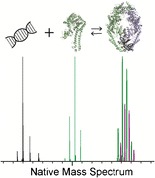
Electrospray ionization mass spectrometry (ESI-MS) is nowadays one of the cornerstones of biomolecular mass spectrometry and proteomics. Advances in sample preparation and mass analyzers have enabled researchers to extract much more information from biological samples than just the molecular weight. In particular, relevant for structural biology, noncovalent protein-protein and protein-ligand complexes can now also be analyzed by MS. For these types of analyses, assemblies need to be retained in their native quaternary state in the gas phase. This initial small niche of biomolecular mass spectrometry, nowadays often referred to as "native MS," has come to maturation over the last two decades, with dozens of laboratories using it to study mostly protein assemblies, but also DNA and RNA-protein assemblies, with the goal to define structure-function relationships. In this perspective, we describe the origins of and (re)define the term native MS, portraying in detail what we meant by "native MS," when the term was coined and also describing what it does (according to us) not entail. Additionally, we describe a few examples highlighting what native MS is, showing its successes to date while illustrating the wide scope this technology has in solving complex biological questions. Graphical Abstract ᅟ.
Overview
The claims and statistics of this paper haven’t been checked yet.
Free: it reads the open-access text and checks the first 5 claims that cite a source we can check. Create a free account to check every claim.
Integrity signals
Registry
Cites
Statistics
Figures
Verification
Claims the paper makes
The claims and statistics of this paper haven’t been checked yet.
Free: it reads the open-access text and checks the first 5 claims that cite a source we can check. Create a free account to check every claim.
Claims other papers make about this one
Each is checked against this paper’s own text: does it say what the citing paper says it does?
The source backs part of the claim, not all of it — or backs it for a different population, condition or comparison.
In the citing paper
“Since CE separations can be performed in aqueous buffers, protein complexes can be separated in their native structures, preserving non-covalent interactions within a protein and between subunits of protein assemblies, prior to MS detection19–21.”
From Recent trends of capillary electrophoresis‐mass spectrometry in proteomics research (2019) · cites this paper as [20]
Experimental — accuracy not yet measuredThe source backs part of the claim, not all of it — or backs it for a different population, condition or comparison.
In the citing paper
“The success of native MS approaches relies on ESI of proteins in a volatile aqueous buffer that preserves native quaternary and tertiary states in the gas phase19,20.”
From Recent trends of capillary electrophoresis‐mass spectrometry in proteomics research (2019) · cites this paper as [20]
Experimental — accuracy not yet measuredThe cited source says what the claim attributes to it.
In the citing paper
“Native MS can be used to interrogate the structure of intact proteins in their near native state, with an emphasis on preserving noncovalent protein-protein and protein-ligand complexes20.”
From Recent trends of capillary electrophoresis‐mass spectrometry in proteomics research (2019) · cites this paper as [20]
In the citing paper
“Briefly, native top-down MS involves using non-denaturing conditions and often employing 100–200 mM ammonium acetate as a volatile buffer for the analysis of intact proteins and protein complexes.”
From Top-down proteomics: challenges, innovations, and applications in basic and clinical research (2020) · cites this paper as [40]
In the citing paper
“Native MS provides a proteomics tool that enables identification and characterization of these biomolecular structures and advances the understanding of their biological pathways at the molecular level19,20,35.”
From Recent trends of capillary electrophoresis‐mass spectrometry in proteomics research (2019) · cites this paper as [20]
Self-check
Percentages, sums and reported differences re-computed from the paper’s own numbers.
The self-check needs the paper’s full text.
Citations
Cites
Electrospray Ionization for Mass Spectrometry of Large Biomolecules
Fenn, J. B., Mann, M., Meng, C. K., Wong, S. F., & Whitehouse, C. M. (1989) · Science · doi:10.1126/science.2675315 · Cited by 7,634 · cited 14×
“Thus, an unfolded/ less structured protein in its most expanded form (i.e., in acidified organic solvent) will pick up more charges during ESI than a folded/more structured protein (i.e., electrosprayed from aqueous solution).”
BackgroundMethodInfluentialProtein and polymer analyses up to m/z 100 000 by laser ionization time‐of‐flight mass spectrometry
Tanaka, K., Waki, H., Ido, Y., Akita, S., Yoshida, Y., Yoshida, T., & Matsuo, T. (1988) · Rapid Communications in Mass Spectrometry · doi:10.1002/rcm.1290020802 · Cited by 3,175 · cited 3×
“In MALDI, the analyte of interest is co-crystalized with IR- or UV-absorbing organic acids and laser ablation used to transfer the sample into the gas phase for analysis.”
MethodA generic protein purification method for protein complex characterization and proteome exploration
Rigaut, G., Shevchenko, A., Rutz, B., Wilm, M., Mann, M., & Séraphin, B. (1999) · Nature Biotechnology · doi:10.1038/13732 · Cited by 2,707 · cited 1×
“Tandem affinity purification [86] techniques are continuing to improve, and thus the challenges associated with extracting pristine cell-derived assemblies in high enough concentrations for native MS analysis are slowly being overcome.”
BackgroundAnalytical Properties of the Nanoelectrospray Ion Source
Wilm, M., & Mann, M. (1996) · Analytical Chemistry · doi:10.1021/ac9509519 · Cited by 1,868 · cited 1×
“This lower flow rate ESI, termed nanoESI [35], is highly advantageous for native MS analysis because of its low sample consumption, more uniform response factors, and higher tolerance to salts and buffers.”
BackgroundThe BioPlex network: a systematic exploration of the human interactome
Huttlin, E. L., Ting, L., Bruckner, R. J., Gebreab, F., Gygi, M. P., Szpyt, J., Tam, S., Zarraga, G., Colby, G., Baltier, K., et al. (2015) · Cell · doi:10.1016/j.cell.2015.06.043 · Cited by 1,425 · cited 3×
“Mass spectrometry (MS), specifically MS-based proteomics, has already played a pivotal role in deciphering the many protein complexes and protein interaction networks that are present in the cell, typically at the end of a pipe-line that starts with the immune-purification of a tagged-bait protein, followed by identif…”
BackgroundMethodA Human Interactome in Three Quantitative Dimensions Organized by Stoichiometries and Abundances
Hein, M. Y., Hubner, N. C., Poser, I., Cox, J., Nagaraj, N., Toyoda, Y., Gak, I. A., Weisswange, I., Mansfeld, J., Buchholz, F., et al. (2015) · Cell · doi:10.1016/j.cell.2015.09.053 · Cited by 1,270 · cited 3×
“Mass spectrometry (MS), specifically MS-based proteomics, has already played a pivotal role in deciphering the many protein complexes and protein interaction networks that are present in the cell, typically at the end of a pipe-line that starts with the immune-purification of a tagged-bait protein, followed by identif…”
BackgroundMethodStudying noncovalent protein complexes by electrospray ionization mass spectrometry
Loo, J. A. (1997) · Mass Spectrometry Reviews · doi:10.1002/(sici)1098-2787(1997)16:1<1::aid-mas1>3.0.co;2-l · Cited by 1,182
Electrospray: From ions in solution to ions in the gas phase, what we know now
Kebarle, P., & Verkerk, U. H. (2009) · Mass Spectrometry Reviews · doi:10.1002/mas.20247 · Cited by 905 · cited 13×
“Thus, an unfolded/ less structured protein in its most expanded form (i.e., in acidified organic solvent) will pick up more charges during ESI than a folded/more structured protein (i.e., electrosprayed from aqueous solution).”
MethodInfluentialLanucara, F., Holman, S. W., Gray, C. J., & Eyers, C. E. (2014) · Nature Chemistry · doi:10.1038/nchem.1889 · Cited by 901 · cited 1×
“Perhaps even more convincing arguments that protein structures can be partly retained in the gas phase come from more recent ion mobility spectrometry (IMS) experiments [62, 63].”
BackgroundMembrane proteins bind lipids selectively to modulate their structure and function
Laganowsky, A., Reading, E., Allison, T. M., Ulmschneider, M. B., Degiacomi, M. T., Baldwin, A. J., & Robinson, C. V. (2014) · Nature · doi:10.1038/nature13419 · Cited by 781 · cited 2×
“Overall, although the debate whether native protein structure is maintained in the gas phase continues, the future is bright for structural MS analysis of proteins and their complexes, as illustrated by a growing body of work of, for instance, protein–lipid [26, 74, 75], protein–RNA [76], protein– 8 A.”
Background
Research works printed but not linked: 2
- Bonifacino JS, 2016, Current protocols in cell biology
- Yang Y, 2016, Nat. Commun.
Cited by
Items 501–600 of 606
Mass spectrometry structural analysis of intrinsically disordered phosphoproteins
Lantz, C., Zenaidee, M. A., Tran, D. P., Biggs, K. E., Bitan, G., Loo, R. R. O., & Loo, J. A. (2025) · International Journal of Mass Spectrometry · doi:10.1016/j.ijms.2025.117455 · Cited by 1
Aptamer-based Biosensors for Monitoring Food Quality and Safety
Bruce‐Tagoe, T. A., Jeevanandam, J., Pan, S., & Danquah, M. K. (2025) · Royal Society of Chemistry eBooks · doi:10.1039/9781837674787-00091 · Cited by 1
Tajiri, M., Shida, T., Oi, R., Kondo, H., Shimamoto, K., Kato, Y., Nogi, T., & Akashi, S. (2025) · Analytical and Bioanalytical Chemistry · doi:10.1007/s00216-025-06173-8 · Cited by 1
“In the present study, we utilized native mass spectrometry (MS) to characterize zinc and inhibitor binding to two bacterial RseP orthologs, Ec RseP and Kk RseP, because native MS is a promising platform for characterizing noncovalent interactions [12–15].”
Luo, P., Zhang, D., Liu, C., Zhao, H., Zhang, W., Xiao, C., Wang, J., Yang, X., Liu, Z., & Wang, F. (2025) · Journal of the American Society for Mass Spectrometry · doi:10.1021/jasms.5c00287 · Cited by 2
Oney-Hawthorne, S. D., Barondeau, D. P., & Russell, D. H. (2025) · Journal of the American Society for Mass Spectrometry · doi:10.1021/jasms.5c00280 · Cited by 1
Integrated Native Mass Spectrometry Imaging of Soluble and Membrane Proteins
Hale, O. J., & Cooper, H. J. (2026) · Journal of the American Chemical Society · doi:10.1021/jacs.5c16821 · Cited by 4
Xu, J., Sjulstok, E., Berthias, F., Schmidt, J., Mouritsen, H., Jensen, O. N., & Solov’yov, I. A. (2026) · The Journal of Physical Chemistry Letters · doi:10.1021/acs.jpclett.5c03833 · Cited by 1
Mass spectrometry reveals the evolutionary conservation of phycobiliprotein complexes
Sound, J. K., Bianchini, G., Ashok, T. A., Rad‐Menéndez, C., Green, D. H., Sánchez‐Baracaldo, P., & Leney, A. C. (2026) · Nature Communications · doi:10.1038/s41467-026-69558-y · Cited by 2
Self-citationHodnik, B., Čamič, Ž., & Pompe, M. (2026) · Molecules · doi:10.3390/molecules31061001 · Cited by 2
“Coupling to mass spectrometry (MS) adds significant analytical power, enabling accurate mass measurement, detection of heterogeneity (modifications, oligomer variations), and quantification via extracted-ion chromatograms (EICs) or similar approaches [17–19].”
Zhou, Y., & Sun, G. (2026) · Analytical Chemistry · doi:10.1021/acs.analchem.5c06667 · Cited by 1
Native mass spectrometry meets X-rays for the elucidation of protein structures
Kierspel, T., Santis, E. D., Schamoni-Kast, K., Blanchet, C. E., Marklund, E. G., Caleman, C., & Uetrecht, C. (2026) · Biochemical Society Transactions · doi:10.1042/bst20250111 · Cited by 1
Balıkçı, E., & Akıl, C. (2026) · Sensors · doi:10.3390/s26103105 · Cited by 4
“…interactions, transient complexes, conformational ensembles, and cooperative multicomponent assemblies often cannot be understood adequately through equilibrium affinity alone [18–20 ,28, 31 Ultimately, there is a growing necessity to translate these biophysical insights across biological scales.”
InfluentialJia, M., Sen, S., Wachnowsky, C., Fidai, I., Cowan, J. A., & Wysocki, V. H. (2020) · Angewandte Chemie · doi:10.1002/ange.201915615 · Cited by 2
Pruška, A., Marchand, A., & Zenobi, R. (2021) · Angewandte Chemie · doi:10.1002/ange.202016757 · Cited by 1
Shoff, T. A., & Julian, R. R. (2023) · Journal of the American Society for Mass Spectrometry · doi:10.1021/jasms.3c00196 · Cited by 1
Accurate and High-Resolution Particle Mass Measurement Using a Peak Filtering Algorithm
Xiong, C., Pan, Y., Fan, J., Li, Y., Wang, J., & Nie, Z. (2024) · Analytical Chemistry · doi:10.1021/acs.analchem.3c04217 · Cited by 1
Fe-S cluster biosynthesis and maturation: Mass spectrometry-based methods advancing the field
Oney-Hawthorne, S. D., & Barondeau, D. P. (2024) · Biochimica et Biophysica Acta (BBA) - Molecular Cell Research · doi:10.1016/j.bbamcr.2024.119784 · Cited by 1
Crack, J. C., & Brun, N. E. L. (2024) · Biochimica et Biophysica Acta (BBA) - Molecular Cell Research · doi:10.1016/j.bbamcr.2024.119865 · Cited by 2
Structural Characterization of Protein Complexes Using Native Mass Spectrometry
Saikusa, K. (2024) · Journal of the Mass Spectrometry Society of Japan · doi:10.5702/massspec.24-132 · Cited by 1
Native Protein Mass Spectrometry
Allison, T. M., & Agasid, M. T. (2019) · Methods in molecular biology · doi:10.1007/978-1-4939-9869-2_15 · Cited by 1
Proteoforms: General Concepts and Methodological Process for Identification
Araújo, J. D. S., & Machado, O. L. T. (2020) · IntechOpen eBooks · doi:10.5772/intechopen.89914 · Cited by 2
Exploring Phosphoinositide Binding Using Native Mass Spectrometry
Bender, J., & Schmidt, C. (2021) · Methods in molecular biology · doi:10.1007/978-1-0716-1142-5_11 · Cited by 1
Unloxing the assembly and activation mechanism of Cre recombinase using cryo-EM
Stachowski, K., Norris, A. S., Potter, D., Wysocki, V. H., & Foster, M. P. (2021) · Acta Crystallographica Section A Foundations and Advances · doi:10.1107/s0108767321097075 · Cited by 1
Rapid structural discrimination of IgG antibodies by multicharge-state collision-induced unfolding
Yin, Z., Du, M., Chen, D., Zhang, W., Huang, W., Wu, X., & Yan, S. (2021) · RSC Advances · doi:10.1039/d1ra06486j · Cited by 1
Ford, M. G. J., & Ramachandran, R. (2022) · Methods in molecular biology · doi:10.1007/978-1-0716-2209-4_18 · Cited by 1
Belov (2017) · Digital Repository Service (Northeastern University) · doi:10.17760/d20259955 · Cited by 1
“Recently, native MS has emerged as a powerful tool to provide information on topology, stoichiometry, function, dynamics, and composition of protein assemblies [74, 91, 296].”
BackgroundGiese, S. H., Belsom, A., Sinn, L. R., Fischer, L., & Rappsilber, J. (2018) · bioRxiv (Cold Spring Harbor Laboratory) · doi:10.1101/502351 · Cited by 1
Attanayake, K., Li, C., Sharif, D., Li, P., & Valentine, S. J. (2022) · ChemRxiv · doi:10.26434/chemrxiv-2022-xlspx · Cited by 1
Negative Electrospray Supercharging Mechanisms of Oligonucleotide Single Strands and G-quadruplexesPreprint
Ghosh, D., Rosu, F., & Gabelica, V. (2022) · bioRxiv (Cold Spring Harbor Laboratory) · doi:10.1101/2022.07.20.500794 · Cited by 1
On the ‘phylobaric’ classification of human respiratory viruses.Preprint
Çumaku, V., Fortin, T., Hentz, S., & Masselon, C. (2023) · Research Square · doi:10.21203/rs.3.rs-3395557/v1 · Cited by 2
Lotay, N., Suarez, C. M., Franier, B. D. L., Jockusch, R. A., & Thompson, M. E. (2024) · Preprints.org · doi:10.20944/preprints202407.1589.v1 · Cited by 1
X-ray Spectroscopy Meets Native Mass Spectrometry: Probing Gas-phase Protein ComplexesPreprint
Kung, J. C. K., Kádek, A., Kölbel, K., Bandelow, S., Bari, S., Buck, J., Caleman, C., Commandeur, J., Damjanović, T., Dörner, S., et al. (2025) · bioRxiv (Cold Spring Harbor Laboratory) · doi:10.1101/2025.02.14.638288 · Cited by 1
Byrd, E. J., Olivares, E. J., Heidersbach, Z. J., Sadighi, R., Madhoun, K., Ansah, I., Kensil, M. J., Wuyang, L., Melani, R. D., Actis, P., et al. (2026) · bioRxiv (Cold Spring Harbor Laboratory) · doi:10.64898/2026.05.20.726677 · Cited by 1
The Potent PHL4 Transcription Factor Effector Domain Contains Significant Disorder
(2024) · doi:10.1101/2024.06.27.601048 · Cited by 1
Native MS Ionization Process and Non-Covalent Interactions of Protein Complex
Ishii, K., & Uchiyama, S. (2018) · Journal of the Mass Spectrometry Society of Japan · doi:10.5702/massspec.s18-45
Bakhtiari, M. (2019) · Scholarship@Western (Western University)
Bohl, J., Sicard‐Roselli, C., Rézaei, H., van der Rest, G., & Halgand, F. (2020) · Archives of Biochemistry and Biophysics · doi:10.1016/j.abb.2020.108432
“MS) which has become a valuable tool for the study of protein associations [19, 20].”
MethodDonor, M. T. (2020) · Scholars' Bank (University of Oregon)
Beasley, M. A. (2020) · The Research Repository @ WVU (West Virginia University) · doi:10.33915/etd.7968
Diving into cellular signalling: Functional proteome analysis by mass spectrometry based approaches
Leijten, N. M. (2021) · Utrecht University Repository (Utrecht University) · doi:10.33540/622
Advanced structural elucidation of new antibody formats by mass spectrometry
Graf, T., Leiß, M., Haberger, M., & Bulau, P. (2021) · Elsevier eBooks · doi:10.1016/b978-0-12-822318-5.00005-3
Espectrometria de Massa na Análise de Sistemas Biológicos
Santos, I. C. (2021) · Boletim da Sociedade Portuguesa de Química · doi:10.52590/m3.p696.a30002402
Donnelly, D. P. (2019) · Digital Repository Service (Northeastern University) · doi:10.17760/d20316343
Cheng, M., Guo, C., Li, W., & Gross, M. L. (2021) · Angewandte Chemie · doi:10.1002/ange.202014096
Proton Transfers to DNA in Native Electrospray Ionization Mass Spectrometry: A QM/MM StudyPreprint
Paulikat, M., Aranda, J., Ippoliti, E., Orozco, M., & Carloni, P. (2022) · bioRxiv (Cold Spring Harbor Laboratory) · doi:10.1101/2022.10.10.511116
Brempt, N. V., Sgammato, R., Beirinckx, Q., Hammerschmid, D., Sobott, F., Dewilde, S., Moens, L. J., Herrebout, W., Johannessen, C., & Doorslaer, S. V. (2023) · Biochimica et Biophysica Acta (BBA) - Proteins and Proteomics · doi:10.1016/j.bbapap.2023.140913 · Cited by 1
Strategies for molecular structure elucidation in static and dynamic systems
Hadavi, D. (2023) · Research Publications (Maastricht University) · doi:10.26481/dis.20230530dh
Mathew, A. (2023) · Research Publications (Maastricht University) · doi:10.26481/dis.20231017am
Morgner, N., Zangl, R., Soravia, S., Saft, M., Löffler, J. G., Schulte, J., Rosner, C., Bredenbeck, J., & Essen, L. (2023) · Research Square · doi:10.21203/rs.3.rs-3579533/v1
Shah, A. (2023) · Digital Repository Service (Northeastern University) · doi:10.17760/d20537505 · Cited by 1
Biophysical Characterization of RAS-SOS Complexes by Native Mass Spectrometry
Yun, S., Scott, E., & Laganowsky, A. D. (2024) · Methods in molecular biology · doi:10.1007/978-1-0716-3822-4_13
Lautenbach, V., Uttinger, M. J., Guckeisen, T., Lübbert, C., Onishchukov, G., Walter, J., Hosseinpour, S., & Peukert, W. (2024) · Springer eBooks · doi:10.1007/978-3-031-63164-1_13
Black, K. L., & Webb, I. (2025) · Journal of the American Society for Mass Spectrometry · doi:10.1021/jasms.4c00363
Real time characterization of the MAPK pathway using native mass spectrometry
Scott, E., Yun, S. D., Moghadamchargari, Z., Bahramimoghaddam, H., Chang, J., Zhang, T., Zhu, Y. K., Lyu, J., & Laganowsky, A. D. (2025) · Communications Biology · doi:10.1038/s42003-025-08028-5
“Herein, we use native mass spectrometry (MS), a biophysical technique that preserves non-covalent interactions 24 , and recently used to characterize nucleotide-binding, drug-binding, and phosphorylation 25 – 31 .”
Biophysical tools and their application within GPCR drug discovery
Davalli, S., Errey, J. C., Fabini, E., & Fiez-Vandal, C. (2025) · Elsevier eBooks · doi:10.1016/b978-0-443-29808-0.00020-0 · Cited by 2
Zhu, T., Yan, S., Zhu, X., & Chen, Z. (2025) · Rapid Communications in Mass Spectrometry · doi:10.1002/rcm.10080
Native Massenspektrometrie erleichtert die Hit‐Validierung in der DNA‐Encoded Library Technologie
Bittner, P., Gloger, A., Keller, M., Oehler, S., Lessing, A., Zhang, Q., Ma, Z., Su, W., Satz, A. L., Kuai, L., et al. (2025) · Angewandte Chemie · doi:10.1002/ange.202504470
Bittner, P., Kuhne, F., Pruška, A., Harrison, J. A., Preiss, N., Haberger, M., Reusch, D., & Zenobi, R. (2025) · Angewandte Chemie · doi:10.1002/ange.202505077
Song, B., Chen, Q., Dai, R., Wang, G., & Zheng, J. (2025) · Analytical Chemistry · doi:10.1021/acs.analchem.5c01898
Interface Architecture of a VHL-PROTAC Complex with and without Cullin-2
Whitford, E. N., Gilbert, J. D., Kostelic, M. M., Ehlinger, A. C., Thibaudeau, T. A., McLoughlin, S. M., & Wysocki, V. H. (2026) · Journal of the American Chemical Society · doi:10.1021/jacs.6c01509 · Cited by 2
Native Mass Spectrometry Propels Structural Biology: From Recombinant Proteins to Live Cell Analysis
Akashi, S. (2025) · Journal of the Mass Spectrometry Society of Japan · doi:10.5702/massspec.24-040
Santos-Fernandez, M., Fouque, K. J. D., Pita, S. S. D. R., Chapagain, P. P., Leng, F., & Fernandez-Lima, F. A. (2026) · Journal of the American Society for Mass Spectrometry · doi:10.1021/jasms.5c00357
Heterogeneity within phycobilisomes is highly orchestrated
Sound, J. K., Suissa-Szlejf, M., Wedgwood, H. E., Adir, N., & Leney, A. C. (2026) · Photosynthesis Research · doi:10.1007/s11120-026-01202-8
“By effectively trans - ferring non-covalent complexes from solution through to analysis, information can be reported on complex stoichi - ometry and architecture (Leney and Heck 2017 ; Karch et al. 2022 ; Tamara et al. 2022 ).”
Self-citationHoshi, K., Konuma, T., Taguchi, R., Akashi, S., Katahira, Y., Katsuyama, A., & Ichikawa, S. (2026) · Scientific Reports · doi:10.1038/s41598-026-38570-z
“For this first compound screening, we utilized native mass spectrometry (nMS), which is a promising technology to investigate intact protein complexes with high sensitivity 13–15 .”
Libraries of dynamic peptides based on reversible native chemical ligation
Reţe, C.-V. (2018) · theses.fr (ABES) · doi:10.70675/dcef1c25zb880z444bzbd13z8e3940ad970c
Lalande, M. (2018) · theses.fr (ABES) · doi:10.70675/470aa36cz7485z4364za803zdeb2e392ee65 · Cited by 2
Characterisation of non-covalent PrP assemblies
Bohl, J. (2019) · theses.fr (ABES) · doi:10.70675/2a939bf5z2532z4002z8f02zb15095f2657e
Caractérisation d’une famille de protéines intrinsèquement désordonnées, les syndécans
Gondelaud, F. (2020) · theses.fr (ABES) · doi:10.70675/a43fb43bzced0z479cz9a50z4fc7530e838d
Cherrak, Y. (2020) · theses.fr (ABES) · doi:10.70675/50fe6f7bz2852z46e8z8c69z34c04bfce736
Etude structurale et fonctionnelle des substances apparentées d’anticorps thérapeutiques
Rouby, G. (2020) · theses.fr (ABES) · doi:10.70675/ad10513ez4b3dz4911z951fza4d423629a6f
Spectrométrie de masse native et pontage chimique pour l'analyse structurale de complexe protéique
Giorgiutti, C. (2020) · theses.fr (ABES) · doi:10.70675/a5d4eb6fz69fdz4101z9552zed56bd1806b4 · Cited by 1
Etudes des cinétiques et thermodynamiques de l’isomérisation par Tandem IMS-MS
Fèvre, A. L. (2021) · theses.fr (ABES) · doi:10.70675/b5604a3ez82ddz4d11z843ezeb0b06a3be38
Nouchikian, L. (2023) · theses.fr (ABES) · doi:10.70675/ae1b34afz3360z4758zb095z89c58db2a12f
Deng, J., Liu, S., Zhou, Z., Yang, Z., Pei, H., He, Z., Yang, T., Cui, H., Xu, X., Wang, H., et al. (2026) · Journal of the American Society for Mass Spectrometry · doi:10.1021/jasms.6c00033
Svingou, D., McAlary, L., Harrison, J. A., & Zenobi, R. (2026) · Analytical Chemistry · doi:10.1021/acs.analchem.5c06100
Kay, D. F., Brooks, N. J., Caulton, S. G., Jayasekera, H. S., Lovering, A. L., & Leney, A. C. (2026) · ACS Chemical Biology · doi:10.1021/acschembio.6c00227
Self-citationTang, C., Shen, Y., Qu, J., Yu, L. J., Liu, H., Liu, H., Xun, L., & Xia, Y. (2026) · Nature Communications · doi:10.1038/s41467-026-73842-2
Wang, H.-W., Hong, Y.-L., Chiang, T.-Y., & Lai, S. (2026) · Analytical Chemistry · doi:10.1021/acs.analchem.6c01549
Native Mass Spectrometry of Soluble Proteins with Sodium Chloride Enabled by a Dendritic Detergent
Fiorentino, F., Hiller, W., & Urner, L. H. (2026) · ACS Measurement Science Au · doi:10.1021/acsmeasuresciau.6c00038
Improved Stability and Brightness Following Iterative Redesign of a De Novo Biliprotein
Morey-Burrows, F. S., Yang, T., Ahern, W., Baker, D. A., Hitchcock, A., Leggett, G. J., Clark, J., Leney, A. C., & Hunter, C. N. (2026) · Biochemistry · doi:10.1021/acs.biochem.6c00166
Self-citationMetal ion-modulated KRAS conformational dynamics unraveled by ultraviolet photodissociation
Jin, Z., Yang, S., Liu, Z., Wu, H., Zhao, H., Dong, C., Zhao, S., Luo, C., Wang, F., & Pan, Y. (2026) · Analytica Chimica Acta · doi:10.1016/j.aca.2026.345900
Zhang, M., Shi, L., Deng, Y., LIU, Z. ‐., Lu, H., Wang, X., Qiu, Y., Zhong, F., Liu, Z., Wang, Q., et al. (2026) · Journal of the American Chemical Society · doi:10.1021/jacs.6c08937
Kim, N., Huang, Z., Born, M., & Camperi, J. (2026) · Cells · doi:10.3390/cells15151333
“This allows clear differentiation among apo-nuclease, partially loaded intermediates, and fully assembled RNP species [113].”
Shimizu, S., Hisamatsu, S., Nagao, M., Murakami, K., Murata, H., & Takao, Y. (2026) · Acta Astronautica · doi:10.1016/j.actaastro.2026.08.005
Application of mass spectrometry techniques for analysis of higher order structure of proteins
Herath, D., Walls, K. N., Dollar, A. N., & Webb, I. (2026) · The Analyst · doi:10.1039/d6an00710d
Acoustic ejection native mass spectrometry for high-throughput protein-ligand screening
Grove, K. J., Liu, C., Covey, T. R., & Rudewicz, P. J. (2026) · SLAS DISCOVERY · doi:10.1016/j.slasd.2026.100330
Studying Mucin-Derived O -Glycopeptides with Gas-Phase FRET
Greis, K., Galashov, A. E., Bourehil, L., Kazakova, E. D., Seitz, O., & Zenobi, R. (2026) · Analytical Chemistry · doi:10.1021/acs.analchem.6c01957
Four IgG Antibodies and Protein G Are Shapeshifters
Glocker, M. O., Ruß, M., Koy, C., Kreutzer, M., Melder, F. T. I., Diebler, Y., Illges, H., & Opuni, K. F. M. (2026) · International Journal of Molecular Sciences · doi:10.3390/ijms27177662
““Native mass spectrometry” has shown that electrospray ionization (ESI)-generated narrow charge-state distributions with relatively few charges are typically obtained from protein solutions in which proteins adopt compact conformations [14–16].”
Ahmed, S., Woehrling, A., Li, P., Valentine, S. J., & Courtney, K. C. (2026) · ACS Omega · doi:10.1021/acsomega.6c07079 · Cited by 2
Papatziamou, D., Singh, A., Makwana, M. V., & Patel, S. K. (2026) · Biochimica et Biophysica Acta (BBA) - Proteins and Proteomics · doi:10.1016/j.bbapap.2026.141180
Sarni, S. H., Choi, E., Lai, L. B., Jia, M., Jones, B. J., Stiving, A. Q., Russell, D., Gopalan, V., & Wysocki, V. H. (2026) · Analytica Chimica Acta · doi:10.1016/j.aca.2026.346322
Native Liquid MALDI (NALIM) Mass Spectrometry Analysis of RNA-Binding Protein Complexes
Sánchez, E. Z., Irving, J. A., Beaufour, M., & Cadène, M. (2026) · Methods in molecular biology · doi:10.1007/978-1-0716-5571-9_17
Metadata
- Authors
- Leney, A. C., & Heck, A. J. R.
- Affiliations
- Utrecht University (NL)
- Corresponding author
- Heck, Albert J. R.
- Venue
- Journal of the American Society for Mass Spectrometry
- Publisher
- American Chemical Society (ACS)
- Published
- 2016-12-01
- Volume
- 28
- Issue
- 1
- Pages
- 5-13
- ISSN
- 1044-0305 (ISSN-L)
- PMC
- PMC5174146
- OpenAlex
- W2558396410
- Cited by
- 602
- References
- 89
- Citations by year
- 2026: 47 · 2025: 53 · 2024: 60 · 2023: 49 · 2022: 64 · 2021: 87 · 2020: 90 · 2019: 72 · 2018: 52 · 2017: 27
- FWCI
- 25.19
- Type
- journal article
- Language
- en
- Open access
- hybrid
- doi.org
- Locations
- Journal of the American Society for Mass Spectrometry (publishedVersion, cc-by)
- PubMed Central (publishedVersion, cc-by)
- PubMed (publishedVersion)
- Utrecht University Repository (Utrecht University) (submittedVersion, other-oa)
- University of Birmingham Research Portal (University of Birmingham) (submittedVersion, cc-by)
- Funders
- Utrecht University
- Topics
- Physical Sciences › Chemistry › Spectroscopy › Mass Spectrometry Techniques and Applications
- Physical Sciences › Chemistry › Spectroscopy › Advanced Proteomics Techniques and Applications
- Life Sciences › Biochemistry, Genetics and Molecular Biology › Molecular Biology › Metabolomics and Mass Spectrometry Studies
- Keywords
- native mass spectrometry, electrospray ionization mass spectrometry, protein-protein complex, protein-ligand complex, protein assembly, quaternary structure, structural biology, structure-function relationship
- MeSH terms
- Animals, DNA, Humans, Models, Molecular, Protein Conformation, Proteins, Spectrometry, Mass, Electrospray Ionization, Protein Multimerization
About these checks
Registry, retraction, Cites and statistics results are computed, not judged, with one exception: a printed reference that no index lists is read once by a model before it counts as a citation error. Claims are extracted by a model and kept only when their quote appears verbatim in the text; each cited source is then checked, with a model’s help, for whether it says what the claim relies on. Those verdicts can be wrong — read the claim’s quote and the cited source before relying on one.
Statistics and arithmetic are recomputed, not judged.
Confidence bands are shown only for fields calibrated on our annotated test set. None is calibrated yet, so no band is shown.
What counts as a claim ›How we measure confidence ›How we check this ›
Are you an author, or do you see a problem with this page? Request a review
Data sources
Bibliographic data: Semantic Scholar, OpenAlex, Crossref.
Contains information from the Semantic Scholar Academic Graph Datasets, made available under the ODC Attribution License (ODC-BY 1.0).
Semantic Scholar’s data is described in: Kinney, R., et al. (2023). The Semantic Scholar Open Data Platform. arXiv:2301.10140.
