

Native Mass Spectrometry: What is in the Name?
Open accessThe DOI matches its Crossref record; 88 of the 89 references it cites were found in a registry or an index.
Abstract
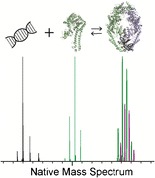
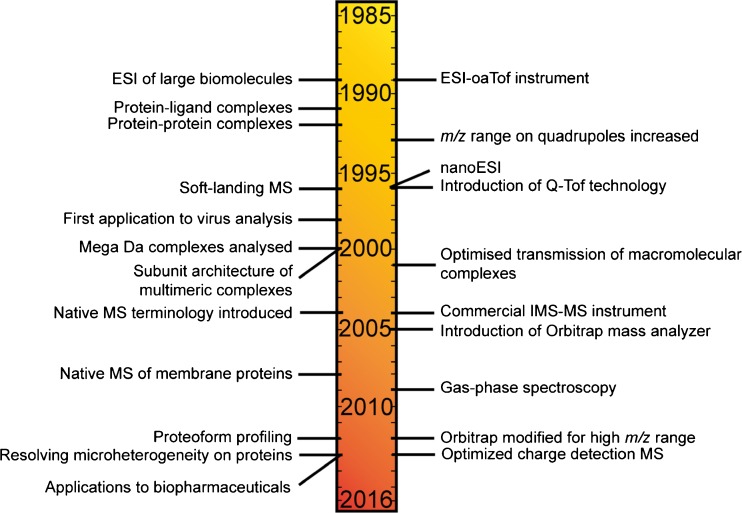
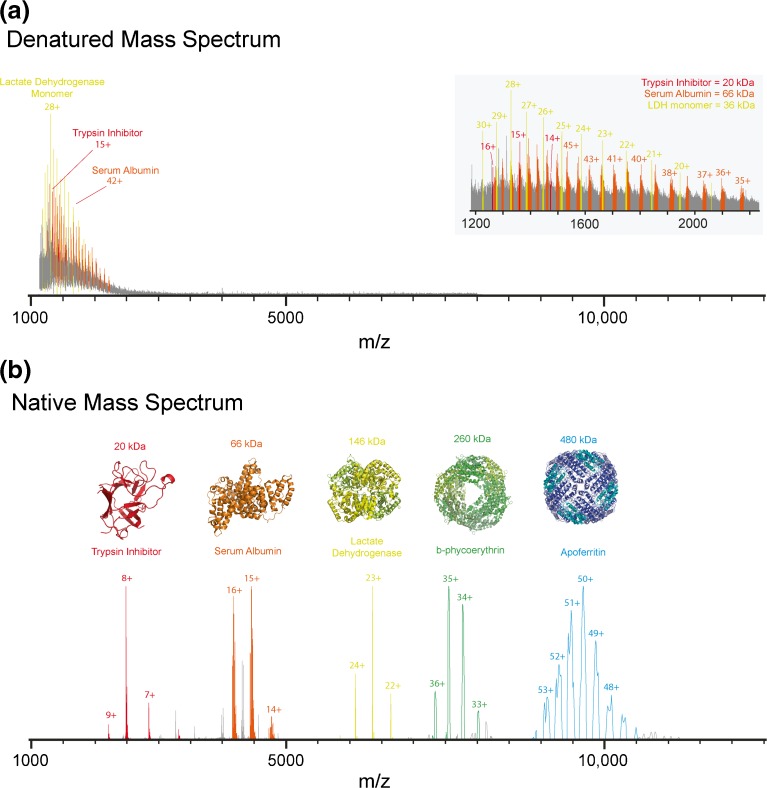
Electrospray ionization mass spectrometry (ESI-MS) is nowadays one of the cornerstones of biomolecular mass spectrometry and proteomics. Advances in sample preparation and mass analyzers have enabled researchers to extract much more information from biological samples than just the molecular weight. In particular, relevant for structural biology, noncovalent protein-protein and protein-ligand complexes can now also be analyzed by MS. For these types of analyses, assemblies need to be retained in their native quaternary state in the gas phase. This initial small niche of biomolecular mass spectrometry, nowadays often referred to as "native MS," has come to maturation over the last two decades, with dozens of laboratories using it to study mostly protein assemblies, but also DNA and RNA-protein assemblies, with the goal to define structure-function relationships. In this perspective, we describe the origins of and (re)define the term native MS, portraying in detail what we meant by "native MS," when the term was coined and also describing what it does (according to us) not entail. Additionally, we describe a few examples highlighting what native MS is, showing its successes to date while illustrating the wide scope this technology has in solving complex biological questions. Graphical Abstract ᅟ.
Overview
The claims and statistics of this paper haven’t been checked yet.
Free: it reads the open-access text and checks the first 5 claims that cite a source we can check. Create a free account to check every claim.
Integrity signals
Registry
Cites
Statistics
Figures
Verification
Claims the paper makes
The claims and statistics of this paper haven’t been checked yet.
Free: it reads the open-access text and checks the first 5 claims that cite a source we can check. Create a free account to check every claim.
Claims other papers make about this one
Each is checked against this paper’s own text: does it say what the citing paper says it does?
The source backs part of the claim, not all of it — or backs it for a different population, condition or comparison.
In the citing paper
“Since CE separations can be performed in aqueous buffers, protein complexes can be separated in their native structures, preserving non-covalent interactions within a protein and between subunits of protein assemblies, prior to MS detection19–21.”
From Recent trends of capillary electrophoresis‐mass spectrometry in proteomics research (2019) · cites this paper as [20]
Experimental — accuracy not yet measuredThe source backs part of the claim, not all of it — or backs it for a different population, condition or comparison.
In the citing paper
“The success of native MS approaches relies on ESI of proteins in a volatile aqueous buffer that preserves native quaternary and tertiary states in the gas phase19,20.”
From Recent trends of capillary electrophoresis‐mass spectrometry in proteomics research (2019) · cites this paper as [20]
Experimental — accuracy not yet measuredThe cited source says what the claim attributes to it.
In the citing paper
“Native MS can be used to interrogate the structure of intact proteins in their near native state, with an emphasis on preserving noncovalent protein-protein and protein-ligand complexes20.”
From Recent trends of capillary electrophoresis‐mass spectrometry in proteomics research (2019) · cites this paper as [20]
In the citing paper
“Briefly, native top-down MS involves using non-denaturing conditions and often employing 100–200 mM ammonium acetate as a volatile buffer for the analysis of intact proteins and protein complexes.”
From Top-down proteomics: challenges, innovations, and applications in basic and clinical research (2020) · cites this paper as [40]
In the citing paper
“Native MS provides a proteomics tool that enables identification and characterization of these biomolecular structures and advances the understanding of their biological pathways at the molecular level19,20,35.”
From Recent trends of capillary electrophoresis‐mass spectrometry in proteomics research (2019) · cites this paper as [20]
Self-check
Percentages, sums and reported differences re-computed from the paper’s own numbers.
The self-check needs the paper’s full text.
Citations
Cites
Electrospray Ionization for Mass Spectrometry of Large Biomolecules
Fenn, J. B., Mann, M., Meng, C. K., Wong, S. F., & Whitehouse, C. M. (1989) · Science · doi:10.1126/science.2675315 · Cited by 7,634 · cited 14×
“Thus, an unfolded/ less structured protein in its most expanded form (i.e., in acidified organic solvent) will pick up more charges during ESI than a folded/more structured protein (i.e., electrosprayed from aqueous solution).”
BackgroundMethodInfluentialProtein and polymer analyses up to m/z 100 000 by laser ionization time‐of‐flight mass spectrometry
Tanaka, K., Waki, H., Ido, Y., Akita, S., Yoshida, Y., Yoshida, T., & Matsuo, T. (1988) · Rapid Communications in Mass Spectrometry · doi:10.1002/rcm.1290020802 · Cited by 3,175 · cited 3×
“In MALDI, the analyte of interest is co-crystalized with IR- or UV-absorbing organic acids and laser ablation used to transfer the sample into the gas phase for analysis.”
MethodA generic protein purification method for protein complex characterization and proteome exploration
Rigaut, G., Shevchenko, A., Rutz, B., Wilm, M., Mann, M., & Séraphin, B. (1999) · Nature Biotechnology · doi:10.1038/13732 · Cited by 2,707 · cited 1×
“Tandem affinity purification [86] techniques are continuing to improve, and thus the challenges associated with extracting pristine cell-derived assemblies in high enough concentrations for native MS analysis are slowly being overcome.”
BackgroundAnalytical Properties of the Nanoelectrospray Ion Source
Wilm, M., & Mann, M. (1996) · Analytical Chemistry · doi:10.1021/ac9509519 · Cited by 1,868 · cited 1×
“This lower flow rate ESI, termed nanoESI [35], is highly advantageous for native MS analysis because of its low sample consumption, more uniform response factors, and higher tolerance to salts and buffers.”
BackgroundThe BioPlex network: a systematic exploration of the human interactome
Huttlin, E. L., Ting, L., Bruckner, R. J., Gebreab, F., Gygi, M. P., Szpyt, J., Tam, S., Zarraga, G., Colby, G., Baltier, K., et al. (2015) · Cell · doi:10.1016/j.cell.2015.06.043 · Cited by 1,425 · cited 3×
“Mass spectrometry (MS), specifically MS-based proteomics, has already played a pivotal role in deciphering the many protein complexes and protein interaction networks that are present in the cell, typically at the end of a pipe-line that starts with the immune-purification of a tagged-bait protein, followed by identif…”
BackgroundMethodA Human Interactome in Three Quantitative Dimensions Organized by Stoichiometries and Abundances
Hein, M. Y., Hubner, N. C., Poser, I., Cox, J., Nagaraj, N., Toyoda, Y., Gak, I. A., Weisswange, I., Mansfeld, J., Buchholz, F., et al. (2015) · Cell · doi:10.1016/j.cell.2015.09.053 · Cited by 1,270 · cited 3×
“Mass spectrometry (MS), specifically MS-based proteomics, has already played a pivotal role in deciphering the many protein complexes and protein interaction networks that are present in the cell, typically at the end of a pipe-line that starts with the immune-purification of a tagged-bait protein, followed by identif…”
BackgroundMethodStudying noncovalent protein complexes by electrospray ionization mass spectrometry
Loo, J. A. (1997) · Mass Spectrometry Reviews · doi:10.1002/(sici)1098-2787(1997)16:1<1::aid-mas1>3.0.co;2-l · Cited by 1,182
Electrospray: From ions in solution to ions in the gas phase, what we know now
Kebarle, P., & Verkerk, U. H. (2009) · Mass Spectrometry Reviews · doi:10.1002/mas.20247 · Cited by 905 · cited 13×
“Thus, an unfolded/ less structured protein in its most expanded form (i.e., in acidified organic solvent) will pick up more charges during ESI than a folded/more structured protein (i.e., electrosprayed from aqueous solution).”
MethodInfluentialLanucara, F., Holman, S. W., Gray, C. J., & Eyers, C. E. (2014) · Nature Chemistry · doi:10.1038/nchem.1889 · Cited by 901 · cited 1×
“Perhaps even more convincing arguments that protein structures can be partly retained in the gas phase come from more recent ion mobility spectrometry (IMS) experiments [62, 63].”
BackgroundMembrane proteins bind lipids selectively to modulate their structure and function
Laganowsky, A., Reading, E., Allison, T. M., Ulmschneider, M. B., Degiacomi, M. T., Baldwin, A. J., & Robinson, C. V. (2014) · Nature · doi:10.1038/nature13419 · Cited by 781 · cited 2×
“Overall, although the debate whether native protein structure is maintained in the gas phase continues, the future is bright for structural MS analysis of proteins and their complexes, as illustrated by a growing body of work of, for instance, protein–lipid [26, 74, 75], protein–RNA [76], protein– 8 A.”
Background
Research works printed but not linked: 2
- Bonifacino JS, 2016, Current protocols in cell biology
- Yang Y, 2016, Nat. Commun.
Cited by
Items 301–400 of 606
THE MAKING OF A FOOTPRINT IN PROTEIN FOOTPRINTING: A REVIEW IN HONOR OF MICHAEL L. GROSS
McKenzie‐Coe, A., Shortt, R. L., & Jones, L. M. (2020) · Mass Spectrometry Reviews · doi:10.1002/mas.21632 · Cited by 12
Native Mass Spectrometry Facilitates Hit Validation in DNA‐Encoded Library Technology
Bittner, P., Gloger, A., Keller, M., Oehler, S., Lessing, A., Zhang, Q., Ma, Z., Su, W., Satz, A. L., Kuai, L., et al. (2025) · Angewandte Chemie International Edition · doi:10.1002/anie.202504470 · Cited by 12
Determination of dissociation constants via quantitative mass spectrometry
Schulte, J., Tants, J., von Ehr, J., Schlundt, A., & Morgner, N. (2023) · Frontiers in Analytical Science · doi:10.3389/frans.2023.1119489 · Cited by 12
“During the ionization or desorption of the sample molecules non-covalent bonds can be preserved which allows the analysis of not only the identity of constituting molecules but also their stoichiometry and can thus provide insight into structural characteristics (Leney and Heck, 2017).”
BackgroundOh, M. I., & Consta, S. (2017) · Physical Chemistry Chemical Physics · doi:10.1039/c7cp05043g · Cited by 14
Lermyte, F., Theisen, A., & O’Connor, P. B. (2020) · Journal of the American Society for Mass Spectrometry · doi:10.1021/jasms.0c00373 · Cited by 14
Pimlott, D. J. D., & Konermann, L. (2021) · International Journal of Mass Spectrometry · doi:10.1016/j.ijms.2021.116678 · Cited by 20
Cain, R. L., & Webb, I. (2023) · Analytical and Bioanalytical Chemistry · doi:10.1007/s00216-022-04501-w · Cited by 15
“, nondenaturing) electrospray (ESI) mass spectrometry [18] has also been applied to the study of cytochrome c structure but in the gas phase.”
MethodLi, W., Srikumar, N., Forrest, W. F., Ellerman, D. A., Gu, C., Tchelepi, R., Lazar, G. A., Liu, Y., & Tran, J. C. (2020) · Analytical Chemistry · doi:10.1021/acs.analchem.9b05739 · Cited by 12
Spray Mechanism of Contained-Electrospray Ionization
Miller, C. F., Burris, B. J., & Badu-Tawiah, A. K. (2020) · Journal of the American Society for Mass Spectrometry · doi:10.1021/jasms.0c00044 · Cited by 15
Sever, A. I. M., Yin, V. C., & Konermann, L. (2020) · Journal of the American Society for Mass Spectrometry · doi:10.1021/jasms.0c00320 · Cited by 12
Pruška, A., Marchand, A., & Zenobi, R. (2021) · Angewandte Chemie International Edition · doi:10.1002/anie.202016757 · Cited by 12
Wang, X., Rathnachalam, S., Bijlsma, K., Li, W., Hoekstra, R., Kubin, M., Timm, M., Issendorff, B. V., Zamudio‐Bayer, V., Lau, J. T., et al. (2021) · Physical Chemistry Chemical Physics · doi:10.1039/d1cp01014j · Cited by 12
Canzani, D., Rusnac, D.-V., Zheng, N., & Bush, M. F. (2019) · Analytical Chemistry · doi:10.1021/acs.analchem.9b02331 · Cited by 11
Turzo, S. M. B. A., Seffernick, J. T., Lyskov, S., & Lindert, S. (2023) · Briefings in Bioinformatics · doi:10.1093/bib/bbad308 · Cited by 13
“Although native MS is a gas phase technique, several studies have shown that key aspects of protein structure, including elements of secondary structure, compactness and protein–protein interactions, can be retained when proteins transition from a solution to gas phase [2–5].”
BackgroundCharacterizing metal–biomolecule interactions by mass spectrometry
Janisse, S. E., Fernandez, R. L., & Heffern, M. C. (2023) · Trends in Biochemical Sciences · doi:10.1016/j.tibs.2023.06.006 · Cited by 13
C-terminal domain dimerization in yeast Hsp90 is moderately modulated by the other domains
Oranges, M., Giannoulis, A., Vanyushkina, A., Sirkis, Y. F., Dalaloyan, A., Unger, T., Su, X., Sharon, M., & Goldfarb, D. (2023) · Biophysical Journal · doi:10.1016/j.bpj.2023.12.005 · Cited by 11
Native Mass Spectrometry: Insights and Opportunities for Targeted Protein Degradation
Sternicki, L. M., & Poulsen, S. (2023) · Analytical Chemistry · doi:10.1021/acs.analchem.3c03853 · Cited by 12
Mass spectrometry-based methods for characterizing transient protein–protein interactions
Veale, C. G. L., & Clarke, D. J. (2024) · Trends in Chemistry · doi:10.1016/j.trechm.2024.05.002 · Cited by 14
Lee, K. W., Eakins, G. S., Carlsen, M. S., & McLuckey, S. A. (2019) · Journal of the American Society for Mass Spectrometry · doi:10.1007/s13361-019-02156-z · Cited by 11
Liao, S., Zhao, M., Luo, J. W., Luo, K., Wu, J., Liu, R., Wang, S., Jia, P., Bai, Y., & Zheng, X. (2019) · RSC Advances · doi:10.1039/c9ra02978h · Cited by 11
Yin, V. C., & Konermann, L. (2020) · Journal of the American Society for Mass Spectrometry · doi:10.1021/jasms.0c00089 · Cited by 12
Zhang, W., Liu, Z., Zhou, Y., Lai, C., Sun, B., He, M., Zhai, Z., Wang, J., Wang, Q., Wang, X., et al. (2021) · Chemosphere · doi:10.1016/j.chemosphere.2021.132945 · Cited by 12
Kline, J. T., Melani, R. D., & Fornelli, L. (2023) · International Journal of Mass Spectrometry · doi:10.1016/j.ijms.2023.117117 · Cited by 11
Generation of 34S-substituted protein-bound [4Fe-4S] clusters using 34S-L-cysteine
Crack, J. C., Stewart, M. Y., & Brun, N. E. L. (2019) · Biology Methods and Protocols · doi:10.1093/biomethods/bpy015 · Cited by 14
In situ analysis of intact proteins by ion mobility mass spectrometry
Sisley, E. K., Illes‐Toth, E., & Cooper, H. J. (2019) · TrAC Trends in Analytical Chemistry · doi:10.1016/j.trac.2019.05.036 · Cited by 12
Luan, M., Hou, Z., & Huang, G. (2021) · The Journal of Physical Chemistry B · doi:10.1021/acs.jpcb.1c09130 · Cited by 11
Testing the Robustness of Solution Force Fields for MD Simulations on Gaseous Protein Ions
Lee, J., Pollert, K., & Konermann, L. (2019) · The Journal of Physical Chemistry B · doi:10.1021/acs.jpcb.9b04014 · Cited by 11
The increasing role of structural proteomics in cyanobacteria
Sound, J. K., Bellamy‐Carter, J., & Leney, A. C. (2023) · Essays in Biochemistry · doi:10.1042/ebc20220095 · Cited by 10
Self-citationTransition Metal Ion FRET-Based Probe to Study Cu(II)-Mediated Amyloid-β Ligand Binding
Wu, R., Svingou, D., Metternich, J. B., Benzenberg, L. R., & Zenobi, R. (2024) · Journal of the American Chemical Society · doi:10.1021/jacs.3c11533 · Cited by 11
Maciel, E. V. S., Eisert, J., Dederer, V., Berwanger, A., Knapp, S., Empting, M., Mathea, S., Jensen, H. M., & Lermyte, F. (2025) · Analytical Chemistry · doi:10.1021/acs.analchem.5c00696 · Cited by 10
Ventouri, I. K., Chang, W., Meier, F., Drexel, R., Somsen, G. W., Schoenmakers, P. J., de Spiegeleer, B., Haselberg, R., & Astefanei, A. (2023) · Analytical Chemistry · doi:10.1021/acs.analchem.2c05049 · Cited by 14
Protein interactions of the inflammasome adapter ASC by solution NMR
Diaz-Parga, P., & de Alba, E. (2019) · Methods in enzymology on CD-ROM/Methods in enzymology · doi:10.1016/bs.mie.2019.07.008 · Cited by 12
Native mass spectrometry of human carbonic anhydrase I and its inhibitor complexes
Zoppi, C., Nocentini, A., Supuran, C. T., Pratesi, A., & Messori, L. (2020) · JBIC Journal of Biological Inorganic Chemistry · doi:10.1007/s00775-020-01818-8 · Cited by 14
Ribaudo, G., Ongaro, A., Oselladore, E., Memo, M., & Gianoncelli, A. (2021) · Journal of Medicinal Chemistry · doi:10.1021/acs.jmedchem.1c00962 · Cited by 11
Wu, R., Metternich, J. B., Tiwari, P., & Zenobi, R. (2021) · Analytical Chemistry · doi:10.1021/acs.analchem.1c02858 · Cited by 12
Introducing Nafion for In Situ Desalting and Biofluid Profiling in Spray Mass Spectrometry
Song, X., Mofidfar, M., & Zare, R. N. (2022) · Frontiers in Chemistry · doi:10.3389/fchem.2021.807244 · Cited by 10
“It also means that the Nafion-desalting strategy is more suitable for the bottom-up peptide mass fingerprinting compared to native MS, which should be very careful about the high-order structure intactness (Leney and Heck, 2017).”
MethodFornelli, L., Ayoub, D., Srzentić, K., Nagornov, K. O., Kozhinov, A. N., Gasilova, N., Menin, L., Beck, A., & Tsybin, Y. O. (2022) · CHIMIA International Journal for Chemistry · doi:10.2533/chimia.2022.114 · Cited by 13
Seeing flying molecular elephants more clearly
Zenaidee, M. A., & Loo, J. A. (2022) · Nature Chemistry · doi:10.1038/s41557-022-00941-0 · Cited by 10
Hale, O. J., & Cramer, R. (2019) · Analytical Chemistry · doi:10.1021/acs.analchem.9b03875 · Cited by 10
Direct‐MS analysis of antibody‐antigen complexes
Vimer, S., Ben‐Nissan, G., Marty, M. T., Fleishman, S. J., & Sharon, M. (2021) · PROTEOMICS · doi:10.1002/pmic.202000300 · Cited by 11
“Unlike proteomic methods that involve the modification, denaturation or digestion of the sample prior to analysis, native MS measures intact assemblies that are ionized in their native states from a non-denaturing solution [13].”
MethodCryo-EM of soft-landed β -galactosidase: Gas-phase and native structures are remarkably similarPreprint
Esser, T. K., Böhning, J., Önür, A., Chinthapalli, D. K., Eriksson, L., Grabarics, M., Fremdling, P., Konijnenberg, A., Makarov, A., Botman, A., et al. (2023) · bioRxiv (Cold Spring Harbor Laboratory) · doi:10.1101/2023.08.17.553673 · Cited by 10
Fucose Binding Cancels out Mechanical Differences between Distinct Human Noroviruses
Feng, Y., Pogan, R., Thiede, L., Müller-Guhl, J., Uetrecht, C., & Roos, W. H. (2023) · Viruses · doi:10.3390/v15071482 · Cited by 10
“In this study, using AFM nanoindentation technology [22–24] and native mass spectrometry (native MS) [25,26], we investigated noroVLPs of GI.”
MethodBenabou, S., de Juan, A., & Gabelica, V. (2024) · Analytical Chemistry · doi:10.1021/acs.analchem.4c02823 · Cited by 9
Quantifying Protein–Glycan Interactions Using Native Mass Spectrometry
Bui, D. T., Kitova, E. N., Han, L., Mahal, L. K., & Klassen, J. S. (2025) · Mass Spectrometry Reviews · doi:10.1002/mas.21943 · Cited by 12
Butalewicz, J. P., & Brodbelt, J. S. (2025) · Journal of the American Society for Mass Spectrometry · doi:10.1021/jasms.5c00222 · Cited by 10
Native mass spectrometry provides sufficient ion flux for XFEL single-particle imaging
Uetrecht, C., Lorenzen, K., Kitel, M., Heidemann, J., Spencer, J. H. R., Schlüter, H., & Schulz, J. (2019) · Journal of Synchrotron Radiation · doi:10.1107/s1600577519002686 · Cited by 9
“Evidence is provided by ionmobility MS and MS coupled to infrared spectroscopy at FELs (Chandler & Benesch, 2018; Leney & Heck, 2017; Uetrecht et al., 2010; Seo et al., 2016).”
MethodSchachner, L. F., Phung, W., Han, G., Darwish, M., Bell, A., Mellors, J. S., Srzentić, K., Huguet, R., Blanchette, C., & Sandoval, W. N. (2022) · Analytical Chemistry · doi:10.1021/acs.analchem.2c02423 · Cited by 9
Stincone, P., Naimi, A., Saviola, A. J., Reher, R., & Petras, D. (2023) · PROTEOMICS · doi:10.1002/pmic.202200533 · Cited by 11
Aggregation and Amyloidogenicity of the Nuclear Coactivator Binding Domain of CREB‐Binding Protein
Garcia, A. M., Giorgiutti, C., Khoury, Y. E., Bauer, V., Spiegelhalter, C., Leize‐Wagner, E., Hellwig, P., Potier, N., & Torbeev, V. Y. (2020) · Chemistry - A European Journal · doi:10.1002/chem.202001847 · Cited by 9
Aliyari, E., & Konermann, L. (2021) · Analytical Chemistry · doi:10.1021/acs.analchem.1c02836 · Cited by 8
Fenton-Chemistry-Based Oxidative Modification of Proteins Reflects Their Conformation
Nehls, T., Heymann, T., Meyners, C., Hausch, F., & Lermyte, F. (2021) · International Journal of Molecular Sciences · doi:10.3390/ijms22189927 · Cited by 11
“While it is now generally accepted that the gas-phase structure of proteins in native MS reflects important aspects of the solution structure, the question remains to what extent subtle interactions are preserved [3].”
Backgroundvan Schaick, G., el Hajjouti, N., Nicolardi, S., den Hartog, J., Jansen, R., van der Hoeven, R., Bijleveld, W., Abello, N., Wuhrer, M., Olsthoorn, M. M. A., et al. (2022) · International Journal of Molecular Sciences · doi:10.3390/ijms23031307 · Cited by 9
“The term native refers here to the unaltered, biologically functional states of proteins and non-covalent protein assemblies in solution under near-physiological conditions [35].”
BackgroundAdvances in mass spectrometry‐based footprinting of membrane proteins
Sun, J., Li, W., & Gross, M. L. (2022) · PROTEOMICS · doi:10.1002/pmic.202100222 · Cited by 12
Mass spectrometry in structural proteomics: The case for radical probe protein footprinting
Downard, K. M., & Maleknia, S. D. (2018) · TrAC Trends in Analytical Chemistry · doi:10.1016/j.trac.2018.11.016 · Cited by 9
Detection of Noncovalent Protein–Ligand Complexes by IR-MALDESI-MS
Knizner, K. T., Pu, F., Sawicki, J. W., Radosevich, A. J., Ugrin, S. A., Elsen, N. L., Williams, J. D., & Muddiman, D. C. (2024) · Journal of the American Society for Mass Spectrometry · doi:10.1021/jasms.4c00199 · Cited by 11
Butalewicz, J. P., Escobar, E. E., Wootton, C. A., Theisen, A., Park, M. A., Seeley, E. H., & Brodbelt, J. S. (2024) · Analytical Chemistry · doi:10.1021/acs.analchem.4c02686 · Cited by 7
Benzenberg, L. R., Giaretta, E., Wu, R., Svingou, D., & Zenobi, R. (2025) · Journal of the American Chemical Society · doi:10.1021/jacs.5c00740 · Cited by 10
Xie, Y., Liu, Z., Qin, H., Zhao, H., Zhang, W., Xiao, C., Wang, X., Yang, X., & Wang, F. (2025) · Journal of the American Chemical Society · doi:10.1021/jacs.5c03426 · Cited by 9
Grafted Coiled-Coil Peptides as Multivalent Scaffolds for Protein Recognition
Acevedo‐Jake, A. M., Mylemans, B., Kay, D. F., Zhang, P., Korona, B., Rhys, G. G., Leney, A. C., Huang, D. T. C., Edwards, T. A., Itzhaki, L. S., et al. (2025) · ACS Chemical Biology · doi:10.1021/acschembio.5c00137 · Cited by 9
Self-citationWu, D., Xu, P., Kelly, M., Ryan, E. T., Kováč, P., & Piszczek, G. (2023) · Glycoconjugate Journal · doi:10.1007/s10719-023-10126-7 · Cited by 12
Daems, E., Moro, G., Berghmans, H., Moretto, L. M., Dewilde, S., Angelini, A., Sobott, F., & Wael, K. D. (2021) · The Analyst · doi:10.1039/d0an02005b · Cited by 11
Measuring Protein Shapes in Living Cells
Slavov, N. (2021) · Journal of Proteome Research · doi:10.1021/acs.jproteome.1c00376 · Cited by 8
Townsend, J. A., & Marty, M. T. (2023) · Methods · doi:10.1016/j.ymeth.2023.07.004 · Cited by 9
Kooijman, P. C., Mathew, A., Ellis, S. R., & Heeren, R. M. A. (2021) · Analysis & Sensing · doi:10.1002/anse.202000025 · Cited by 10
Seibel, J., Anggara, K., Delbianco, M., & Rauschenbach, S. (2024) · ChemPhysChem · doi:10.1002/cphc.202400419 · Cited by 7
Cortez-Romero, C. R., Lyu, J., Pillai, A. S., Laganowsky, A. D., & Thornton, J. W. (2025) · Proceedings of the National Academy of Sciences · doi:10.1073/pnas.2414756122 · Cited by 11
“Here, we isolated the individual contributions of each amino acid changes by introducing them singly into Anc αβ and characterizing their effect on assembly into tetramers using size - exclusion chromatography (SEC) and native mass spectrometry (nMS) ( 30 , 31 ).”
Bolz, R. M., Seffernick, J. T., Drake, Z. C., Harvey, S. R., Wysocki, V. H., & Lindert, S. (2025) · Analytical Chemistry · doi:10.1021/acs.analchem.4c05837 · Cited by 8
Xi, Z., Kuo, S.-T. A., Cong, X., Yan, X., & Russell, D. H. (2025) · ACS Central Science · doi:10.1021/acscentsci.5c00431 · Cited by 9
Martin, L. M., & Konermann, L. (2019) · Journal of the American Society for Mass Spectrometry · doi:10.1021/jasms.9b00027 · Cited by 7
Probing the structures of G protein-coupled receptors with mass spectrometry-based techniques
Pan, C., Li, J., Yuan, S., & Shui, W. (2022) · International Journal of Mass Spectrometry · doi:10.1016/j.ijms.2022.116968 · Cited by 8
Determination of label efficiency and label degree of critical reagents by LC-MS and native MS
Carle, K., Kellie, J. F., Gunn, G. R., & Jiang, Y. (2022) · Analytical Biochemistry · doi:10.1016/j.ab.2022.115033 · Cited by 7
Sample preparation for structural mass spectrometry via polyacrylamide gel electrophoresis
Takemori, A., & Takemori, N. (2022) · Methods in enzymology on CD-ROM/Methods in enzymology · doi:10.1016/bs.mie.2022.08.051 · Cited by 8
Advances in Single Particle Mass Analysis
Lai, S., Maclot, S., Antoine, R., & Masselon, C. (2024) · Mass Spectrometry Reviews · doi:10.1002/mas.21920 · Cited by 10
Du, Y., May, R. C., & Cooper, H. J. (2022) · Chemical Communications · doi:10.1039/d2cc02085h · Cited by 9
Edwards, A. N., Blue, A. J., Conforti, J. M., Cordes, M. S., Trakselis, M. A., & Gallagher, E. S. (2023) · Analytical and Bioanalytical Chemistry · doi:10.1007/s00216-023-04891-5 · Cited by 9
“This approach maintains noncovalent interactions within the protein, and with bound ligands, as they transition into the gas phase, allowing for determination of stoichiometry, composition, subunit interactions, reaction intermediates, and binding affinities [27–32].”
Yin, V. C., Devine, P. W. A., Saunders, J. C., Barendregt, A., Cusdin, F. S., Ristani, A., Hines, A. R., Shepherd, S., Dembek, M., Dobson, C., et al. (2023) · Chemical Science · doi:10.1039/d3sc03228k · Cited by 9
Self-citationPhosphate Transfer in Activated Protein Complexes Reveals Interaction Sites
Tamara, S., Scheltema, R. A., Heck, A. J. R., & Leney, A. C. (2017) · Angewandte Chemie International Edition · doi:10.1002/anie.201706749 · Cited by 8
Self-citationIon Mobility in Structural Biology
Allison, T. M., & Landreh, M. (2018) · Comprehensive analytical chemistry · doi:10.1016/bs.coac.2018.10.001 · Cited by 9
Covalent Cross-Linking as an Enabler for Structural Mass Spectrometry
Hanozin, E., Grifnée, E., Gattuso, H., Matagne, A., Morsa, D., & Pauw, E. D. (2019) · Analytical Chemistry · doi:10.1021/acs.analchem.9b02491 · Cited by 7
Li, Y., Chi, Q., Feng, T., Xiao, H., Li, L., & Wang, X. (2020) · Rapid Communications in Mass Spectrometry · doi:10.1002/rcm.8656 · Cited by 7
Analysis of EYA3 Phosphorylation by Src Kinase Identifies Residues Involved in Cell Proliferation
Ionescu, A. E., Mentel, M., Munteanu, C. V. A., Sima, L. E., Martin, E. C., Necula-Petrăreanu, G., & Szedlacsek, S. E. (2019) · International Journal of Molecular Sciences · doi:10.3390/ijms20246307 · Cited by 8
“In this article, we used a combination of native mass spectrometry (MS) [36,37] and bottom-up mass spectrometry [38–40] to reveal tyrosine phosphorylation and dephosphorylation sites of human EYA3.”
MethodSelected Reaction Monitoring Mass Spectrometry
Hossain, M. (2020) · Springer eBooks · doi:10.1007/978-3-030-53433-2_3 · Cited by 8
Bellamy‐Carter, J., O'Grady, L., Passmore, M., Jenner, M., & Oldham, N. J. (2020) · Analysis & Sensing · doi:10.1002/anse.202000019 · Cited by 7
Zhang, H., Yang, K., Cheng, Z., Thomas, C. A., Steinbrunner, A., Pryor, C., Vulcan, M., Kemp, C., Orea, D., Paththamperuma, C., et al. (2021) · Bioorganic & Medicinal Chemistry · doi:10.1016/j.bmc.2021.116183 · Cited by 7
Donor, M. T., Wilson, J., Shepherd, S. O., & Prell, J. S. (2021) · International Journal of Mass Spectrometry · doi:10.1016/j.ijms.2021.116670 · Cited by 9
Joyner, P. M., Tran, D. P., Zenaidee, M. A., & Loo, J. A. (2021) · Protein Science · doi:10.1002/pro.4252 · Cited by 8
Kim, D., Liu, W., Viner, R., & Cherezov, V. (2024) · Structure · doi:10.1016/j.str.2024.10.004 · Cited by 7
Advances and challenges in preparing membrane proteins for native mass spectrometry
Cheng, D., Guo, Y., Lyu, J., Liu, Y., Xu, W., Zheng, W., Wang, Y., & Qiao, P. (2024) · Biotechnology Advances · doi:10.1016/j.biotechadv.2024.108483 · Cited by 7
Bittner, P., Gloger, A., Harrison, J. A., Pruška, A., Keller, M., Oehler, S., Lessing, A., Zhang, Q., Ma, Z., Su, W., et al. (2025) · Analytical Chemistry · doi:10.1021/acs.analchem.5c03540 · Cited by 4
Lambos, J. C., Bhattacharya, A., Al‐Seragi, M., & Duong, F. (2025) · PROTEOMICS · doi:10.1002/pmic.70057 · Cited by 11
Paulikat, M., Aranda, J., Ippoliti, E., Orozco, M., & Carloni, P. (2022) · The Journal of Physical Chemistry Letters · doi:10.1021/acs.jpclett.2c03100 · Cited by 6
“5,6 The biomolecular analytes are sprayed from solution under quasi-physiological conditions (aqueous ammonium solutions at neutral pH, without organic cosolvents) 7,8 into the gas phase through a capillary applied to an electric field.”
Jia, M., Song, Y., Du, C., & Wysocki, V. H. (2023) · Journal of the American Society for Mass Spectrometry · doi:10.1021/jasms.3c00142 · Cited by 6
Mu, Y., Zhao, S., Liu, J., Liu, Z., He, J., Cao, H., Zhao, H., Wang, C., Jin, Y., Qi, Y., et al. (2024) · Journal of Agricultural and Food Chemistry · doi:10.1021/acs.jafc.3c08860 · Cited by 6
Single-frequency ion parking in a digital 3D quadrupole ion trap
Fu, L., Eakins, G. S., Carlsen, M. S., & McLuckey, S. A. (2024) · International Journal of Mass Spectrometry · doi:10.1016/j.ijms.2024.117282 · Cited by 8
Applications of high performance liquid chromatography-mass spectrometry in proteomics
Wei, L. I. U., Weng, L., Gao, M., & Zhang, X. (2024) · Chinese Journal of Chromatography · doi:10.3724/sp.j.1123.2023.11006 · Cited by 9
Shao, X., Tian, M., Yin, J., Duan, H., Tian, Y., Wang, H. Z., Xia, C., Wang, Z., Zhu, Y., Wang, Y., et al. (2024) · Nature Communications · doi:10.1038/s41467-024-52948-5 · Cited by 10
Seven perspectives on GPCR H/D-exchange proteomics methods
Zhang, X. (2017) · F1000Research · doi:10.12688/f1000research.10667.1 · Cited by 6
Otsuka, Y. (2021) · Mass Spectrometry · doi:10.5702/massspectrometry.a0095 · Cited by 6
Fundamentals: How Do We Calculate Mass, Error, and Uncertainty in Native Mass Spectrometry?
Marty, M. T. (2022) · Journal of the American Society for Mass Spectrometry · doi:10.1021/jasms.2c00218 · Cited by 8
Chen, Y., Tian, W., Yasuda, M., Ye, Z., Song, M., Mandel, U., Kristensen, C., Povolo, L., Marques, A. R. A., Čaval, T., et al. (2023) · Frontiers in Bioengineering and Biotechnology · doi:10.3389/fbioe.2023.1128371 · Cited by 7
“We demonstrate that the LAGD engineering design consistently resulted in conversion of M6Ptagged N-glycans to complex-type with sialic acid capping and that the more homogeneous LAGD glycodesign reduced the glycoproteoform variability and facilitated direct analysis of the therapeutic glycoproteins by high-resolution…”
BackgroundSelf-citation
Metadata
- Authors
- Leney, A. C., & Heck, A. J. R.
- Affiliations
- Utrecht University (NL)
- Corresponding author
- Heck, Albert J. R.
- Venue
- Journal of the American Society for Mass Spectrometry
- Publisher
- American Chemical Society (ACS)
- Published
- 2016-12-01
- Volume
- 28
- Issue
- 1
- Pages
- 5-13
- ISSN
- 1044-0305 (ISSN-L)
- PMC
- PMC5174146
- OpenAlex
- W2558396410
- Cited by
- 602
- References
- 89
- Citations by year
- 2026: 47 · 2025: 53 · 2024: 60 · 2023: 49 · 2022: 64 · 2021: 87 · 2020: 90 · 2019: 72 · 2018: 52 · 2017: 27
- FWCI
- 25.19
- Type
- journal article
- Language
- en
- Open access
- hybrid
- doi.org
- Locations
- Journal of the American Society for Mass Spectrometry (publishedVersion, cc-by)
- PubMed Central (publishedVersion, cc-by)
- PubMed (publishedVersion)
- Utrecht University Repository (Utrecht University) (submittedVersion, other-oa)
- University of Birmingham Research Portal (University of Birmingham) (submittedVersion, cc-by)
- Funders
- Utrecht University
- Topics
- Physical Sciences › Chemistry › Spectroscopy › Mass Spectrometry Techniques and Applications
- Physical Sciences › Chemistry › Spectroscopy › Advanced Proteomics Techniques and Applications
- Life Sciences › Biochemistry, Genetics and Molecular Biology › Molecular Biology › Metabolomics and Mass Spectrometry Studies
- Keywords
- native mass spectrometry, electrospray ionization mass spectrometry, protein-protein complex, protein-ligand complex, protein assembly, quaternary structure, structural biology, structure-function relationship
- MeSH terms
- Animals, DNA, Humans, Models, Molecular, Protein Conformation, Proteins, Spectrometry, Mass, Electrospray Ionization, Protein Multimerization
About these checks
Registry, retraction, Cites and statistics results are computed, not judged, with one exception: a printed reference that no index lists is read once by a model before it counts as a citation error. Claims are extracted by a model and kept only when their quote appears verbatim in the text; each cited source is then checked, with a model’s help, for whether it says what the claim relies on. Those verdicts can be wrong — read the claim’s quote and the cited source before relying on one.
Statistics and arithmetic are recomputed, not judged.
Confidence bands are shown only for fields calibrated on our annotated test set. None is calibrated yet, so no band is shown.
What counts as a claim ›How we measure confidence ›How we check this ›
Are you an author, or do you see a problem with this page? Request a review
Data sources
Bibliographic data: Semantic Scholar, OpenAlex, Crossref.
Contains information from the Semantic Scholar Academic Graph Datasets, made available under the ODC Attribution License (ODC-BY 1.0).
Semantic Scholar’s data is described in: Kinney, R., et al. (2023). The Semantic Scholar Open Data Platform. arXiv:2301.10140.
