

Training the Gut for Athletes
Open accessThe DOI matches its Crossref record; 51 of the 51 references it cites were found in a registry or an index.
Abstract
The gastrointestinal (GI) tract plays a critical role in delivering carbohydrate and fluid during prolonged exercise and can therefore be a major determinant of performance. The incidence of GI problems in athletes participating in endurance events is high, indicating that GI function is not always optimal in those conditions. A substantial body of evidence suggests that the GI system is highly adaptable. Gastric emptying as well as stomach comfort can be "trained" and perceptions of fullness decreased; some studies have suggested that nutrient-specific increases in gastric emptying may occur. Evidence also shows that diet has an impact on the capacity of the intestine to absorb nutrients. Again, the adaptations that occur appear to be nutrient specific. For example, a high-carbohydrate diet will increase the density of sodium-dependent glucose-1 (SGLT1) transporters in the intestine as well as the activity of the transporter, allowing greater carbohydrate absorption and oxidation during exercise. It is also likely that, when such adaptations occur, the chances of developing GI distress are smaller. Future studies should include more human studies and focus on a number of areas, including the most effective methods to induce gut adaptations and the timeline of adaptations. To develop effective strategies, a better understanding of the exact mechanisms underlying these adaptations is important. It is clear that "nutritional training" can improve gastric emptying and absorption and likely reduce the chances and/or severity of GI problems, thereby improving endurance performance as well as providing a better experience for the athlete. The gut is an important organ for endurance athletes and should be trained for the conditions in which it will be required to function.
Overview
The claims and statistics of this paper haven’t been checked yet.
Free: it reads the open-access text and checks the first 5 claims that cite a source we can check. Create a free account to check every claim.
Integrity signals
Registry
Cites
Statistics
Figures
Verification
Claims the paper makes
The claims and statistics of this paper haven’t been checked yet.
Free: it reads the open-access text and checks the first 5 claims that cite a source we can check. Create a free account to check every claim.
Claims other papers make about this one
Each is checked against this paper’s own text: does it say what the citing paper says it does?
The source backs part of the claim, not all of it — or backs it for a different population, condition or comparison.
In the citing paper
“These recommendations aim to support rapid gastric emptying, water and nutrient absorption and adequate perfusion of the splanchnic vasculature [221].”
From The athletic gut microbiota (2020) · cites this paper as [221]
Experimental — accuracy not yet measuredThe source backs part of the claim, not all of it — or backs it for a different population, condition or comparison.
In the citing paper
““Gut training” via repeated exposure to CHO consumption during exercise sessions has been shown to increase the intestinal absorption and oxidation of exogenous CHO as an exercise substrate (for review, see [39]).”
From Neither beetroot juice supplementation nor increased carbohydrate oxidation enhance economy of prolonged exercise in elite race walkers (2021) · cites this paper as [39]
Experimental — accuracy not yet measuredThe cited source says what the claim attributes to it.
In the citing paper
“There is a substantial body of evidence that suggests that the GI system is highly adaptable [15].”
From Periodized Nutrition for Athletes (2017) · cites this paper as [15]
The cited source says what the claim attributes to it.
In the citing paper
“the rate of oxidation of exogenous CHO from sources consumed prior to and during exercise is affected by the type and amount of CHO intake, and by prior adaptation of the gut via repeated exposure to enhance tolerance and intestinal absorption [37,38,39].”
From Neither beetroot juice supplementation nor increased carbohydrate oxidation enhance economy of prolonged exercise in elite race walkers (2021) · cites this paper as [39]
The cited source says what the claim attributes to it.
In the citing paper
“Regular exposure to high carbohydrate loads may upregulate SGLT1 expression, enhance intestinal absorptive capacity, reduce GI distress, and ultimately increase the capacity for exogenous carbohydrate oxidation [74, 75, 76].”
From Carbohydrate Storage and Supplementation Strategies for Peak Performance in Cross-Country Skiing (2026) · cites this paper as [74]
6 more claims about this paper
Create a free account to see every claim other papers make about this one.
Self-check
Percentages, sums and reported differences re-computed from the paper’s own numbers.
The self-check needs the paper’s full text.
Citations
Cites
T1R3 and gustducin in gut sense sugars to regulate expression of Na + -glucose cotransporter 1
Margolskee, R. F., Dyer, J., Kokrashvili, Z., Salmon, K. S. H., Ilegems, E., Daly, K., Maillet, E. L., Ninomiya, Y., Mosinger, B., & Shirazi-Beechey, S. P. (2007) · Proceedings of the National Academy of Sciences · doi:10.1073/pnas.0706678104 · Cited by 882 · cited 1×
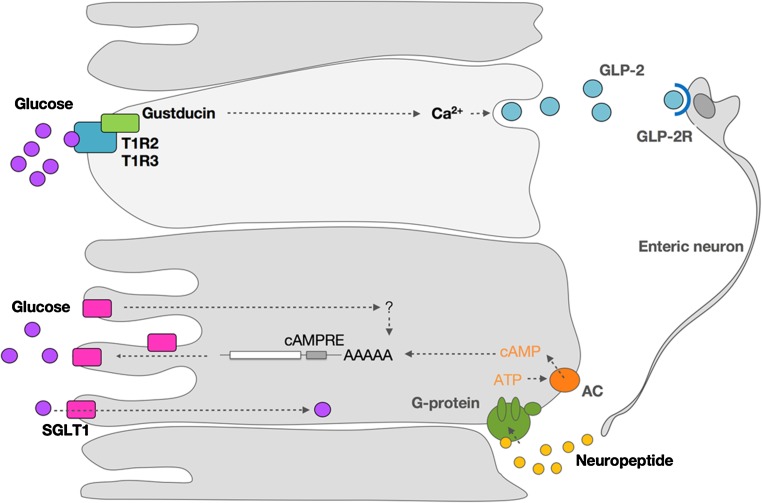
“9-fold after two weeks of a high carbohydrate diet (Margolskee et al., 2007).”
BackgroundSugar Absorption in the Intestine: The Role of GLUT2
Kellett, G. L., Brot-Laroche, E., Mace, O. J., & Leturque, A. (2008) · Annual Review of Nutrition · doi:10.1146/annurev.nutr.28.061807.155518 · Cited by 492 · cited 2×
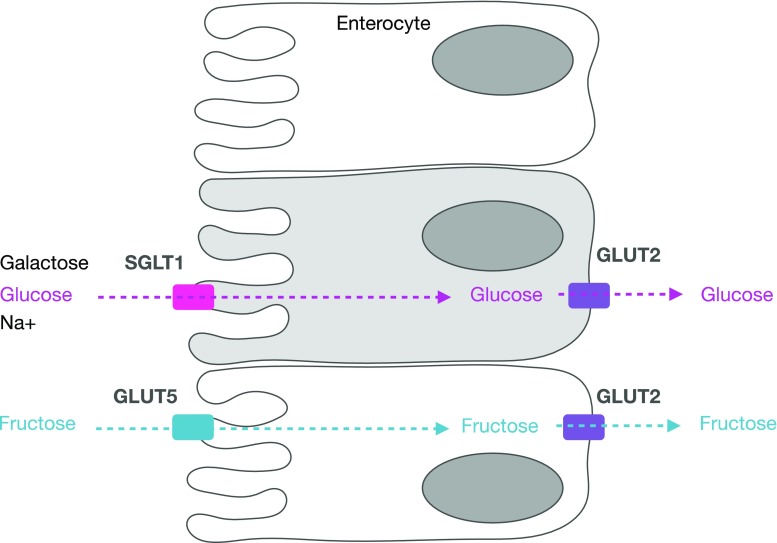
“There have been suggestions that glucose transporter (GLUT)-2, another transporter, can be recruited to the luminal membrane when high concentrations of glucose are present in the lumen [14, 15].”
BackgroundA Step Towards Personalized Sports Nutrition: Carbohydrate Intake During Exercise
Jeukendrup, A. (2014) · Sports Medicine · doi:10.1007/s40279-014-0148-z · Cited by 412
Self-citationGastrointestinal Complaints During Exercise: Prevalence, Etiology, and Nutritional Recommendations
de Oliveira, E. P., Burini, R. C., & Jeukendrup, A. (2014) · Sports Medicine · doi:10.1007/s40279-014-0153-2 · Cited by 402 · cited 7×
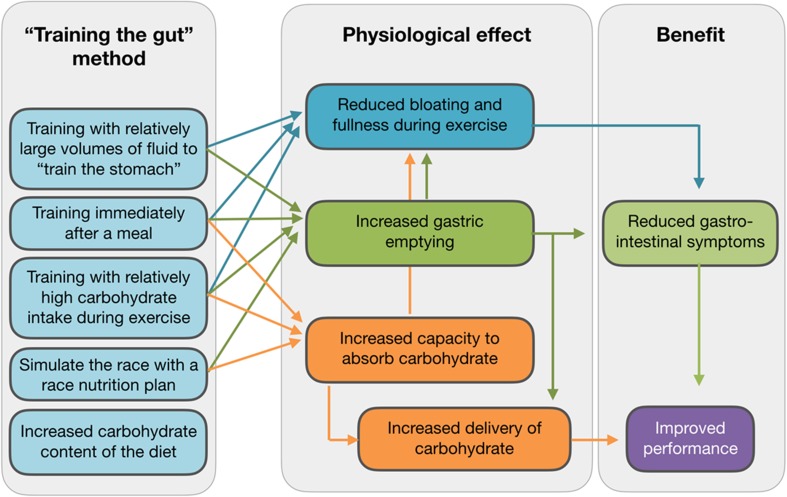
“It is thought that training the gut may alleviate some of these symptoms, perhaps by improving gastric emptying and the perception of fullness (reduced bloating), improving tolerance of larger volumes, and increasing the speed of absorption, causing less residual volume and smaller osmotic shifts [2].”
BackgroundInfluentialSelf-citationNutrition for endurance sports: Marathon, triathlon, and road cycling
Jeukendrup, A. E. (2011) · Journal of Sports Sciences · doi:10.1080/02640414.2011.610348 · Cited by 388
Self-citationDietary and developmental regulation of intestinal sugar transport
FERRARIS, R. P. (2001) · Biochemical Journal · doi:10.1042/bj3600265 · Cited by 328 · cited 2×
“There are still many questions about the mechanisms and whether the effects of sodium and glucose are additive [43].”
BackgroundThe facilitated component of intestinal glucose absorption
Kellett, G. L. (2001) · The Journal of Physiology · doi:10.1111/j.1469-7793.2001.0585h.x · Cited by 294 · cited 2×
“There have been suggestions that glucose transporter (GLUT)-2, another transporter, can be recruited to the luminal membrane when high concentrations of glucose are present in the lumen [14, 15].”
BackgroundJeukendrup, A. E., & Jentjens, R. (2000) · Sports Medicine · doi:10.2165/00007256-200029060-00004 · Cited by 279 · cited 1×
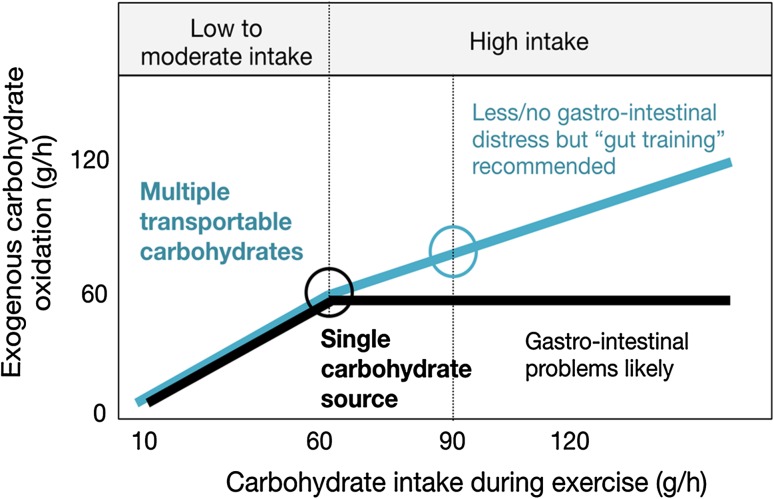
“2 Schematic of exogenous carbohydrate oxidation from a single carbohydrate (black) and multiple transportable carbohydrates (blue), based on data presented elsewhere [3, 7, 51, 52].”
BackgroundSelf-citationEffect of Diet upon Intestinal Disaccharidases and Disaccharide Absorption*
Deren, J. J., Broitman, S. A., & Zamcheck, N. (1967) · Journal of Clinical Investigation · doi:10.1172/jci105521 · Cited by 227 · cited 1×
“[39] demonstrated in 1967 that rats who were fasted for 3 days displayed fourfold increases in sucrase and maltase activity in response to a sucrose diet compared with a casein diet [39].”
BackgroundAchten, J., Halson, S. L., Moseley, L., Rayson, M. P., Casey, A., & Jeukendrup, A. E. (2004) · Journal of Applied Physiology · doi:10.1152/japplphysiol.00973.2003 · Cited by 214 · cited 1×
“Because this limitation was not caused by gastric emptying, muscle glucose uptake, or liver glycogen storage, it was deduced that absorption had to be limiting [27].”
BackgroundSelf-citation
Research works printed but not linked: 2
- 26. Jeukendrup AE. Possible links between nutrition and overtrain- ing. Vlaams Tijdschrift voor Sportgeneeskunde. 1999;80:37-45.
- 35. Kleinzeller A, Kotyk A (eds.). Membrane Transport and Meta- bolism. Prague: Academy of Sciences; 1961.
Cited by
Items 201–283 of 283
Psychological Factors and Gastrointestinal Symptoms During Running
Ehlert, A. (2021) · ODU Digital Commons (Old Dominion University) · doi:10.25777/6750-hy11
Bukhari, A., As’ád, S., Taslim, N. A., Thaiyeb, M., Chrissander, I. Y., & Pramudyo, F. A. (2020) · Research Square · doi:10.21203/rs.3.rs-40968/v1
Running Smart: How Science Can Improve Your Endurance and Performance
van Sprundel, M. (2021) · The MIT Press eBooks · doi:10.7551/mitpress/13368.001.0001
Kamaratih, A., Ohmori, H., Aoyagi, M., Kanno, Z., & Ono, T. (2022) · APOS Trends in Orthodontics · doi:10.25259/apos_167_2021
(2020) · American Academy of PediatricsItasca, IL eBooks · doi:10.1542/9781610023610-12
Neumann, G. (2022) · Elsevier eBooks · doi:10.1016/b978-3-437-24093-5.00089-5
Novas perspetivas sobre o rácio de hidratos de carbono em indivíduos com Diabetes Tipo 2 no desporto
Novo, T. R. (2022) · Acta Portuguesa de Nutrição · doi:10.21011/apn.2022.3011
Kommt Erschöpfung aus dem Darm?
Sartor, H. (2023) · Zeitschrift für Komplementärmedizin · doi:10.1055/a-2094-0615
(2020) · American Academy of PediatricsItasca, IL eBooks · doi:10.1542/9781610024181-12
Asmuddin, A., Asshagab, M., Sariul, S., & Jud, J. (2023) · JURNAL PENDIDIKAN JASMANI DAN OLAHRAGA · doi:10.17509/jpjo.v8i1.49298
Kujavo, G. H., Arruda, B. P. L., & Piedade, S. R. (2023) · Springer eBooks · doi:10.1007/978-3-031-33867-0_23
Nourishing Dance: An Essential Guide on Nutrition, Body Image, and Eating Disorders
Saigal, M. (2024) · Routledge eBooks · doi:10.4324/9781003366171
Spécificités nutritionnelles du cycliste
Maillot, J., & Bigard, X. A. (2022) · Elsevier eBooks · doi:10.1016/b978-2-294-77582-6.00005-7
American Academy of Pediatrics (2025) · American Academy of PediatricsItasca, IL eBooks · doi:10.1542/9781610027700-ch12
Ultraprosessert mat i et idrettskosthold
Norum, M. (2025) · Norsk tidsskrift for ernæring · doi:10.18261/ntfe.23.1.7
Lemarchand, B., & Lemarchand, E. (2025) · Science & Sports · doi:10.1016/j.scispo.2025.02.007
Barylski, N. A., Grewal, L., Nwankwo, A., & Cohen, S. (2025) · Springer eBooks · doi:10.1007/978-3-031-92079-0_9
Castillo, M., Jiménez-Alfageme, R., Ayala-Guzmán, C. I., Hernández, S. M., Sospedra, I., Norte, A., Romero-García, D., Herrera-Puche, L., & Sanz, J. M. M. (2025) · Revista Española de Nutrición Humana y Dietética · doi:10.14306/renhyd.29.3.2458
Mesure de la prévalence des troubles gastro-intestinaux lors de courses en montagne
Fraysse, C., Lauer, J., Picquendar, V., & Demurger, C. (2025) · Science & Sports · doi:10.1016/j.scispo.2025.06.002
Portuguez-Molina, P., Mosquera, J. C. G., & Vargas, A. (2025) · Nutrients · doi:10.3390/nu17223540
Sales, J. M., Gomes, J. H., Matins, B., Resende, C. F., & Mendes, R. R. (2025) · Revista Brasileira de Fisiologia do Exercício · doi:10.33233/rbfex.v24i1.5648
Guðmundsdóttir, L. (2019) · Skemman
Devrim-Lanpir, A. (2019) · Hacettepe University Institutional Repository (hacettepe.edu.tr)
Timmermans, S. (2024) · Document Server@UHasselt (UHasselt)
Diet and Oral Health of Elite Athletes in Ireland
Hughes, A. (2025) · Trinity's Access to Research Output (TARA) (Trinity College Dublin)
Kolvetnaneysla íþróttafólks : mikilvægi kolvetnaneyslu við íþróttaiðkun
Pétursdóttir, G. G. (2019) · Skemman
The integration of environmental sustainability in the athlete’s plate nutrition educational tool
Reguant-Closa, A. (2020) · LA Referencia (Red Federada de Repositorios Institucionales de Publicaciones Científicas)
PERONI, V. (2021) · Electronic Theses and Dissertations Repository (University of Pisa)
Análisis sobre las incidencias más comunes en pruebas deportivas de alta resistencia
Gracia Rocamora, B. (2018) · RUA, Repositorio Institucional de la Universidad de Alicante (Universidad de Alicante)
Guerrero Reyna, J. C. (2017) · Repositorio Institucional de Acceso Abierto de la Universidad Autónoma de San Luis Potosí (Universidad Autónoma de San Luis Potosí)
Gómez Cazorla, D. (2020) · The Oberta in Open Access (Universitat Oberta de Catalunya)
Vpliv strategije vnosa ogljikovih hidratov na zmogljivost med simulacijo kolesarske dirke
Grmek, B. (2024) · Repository of the University of Primorsk (University of Primorska)
The Invisible Workout: a comprehensive review of strategies in the context of athletes.
Ibáñez, H. E., Carrera‐Juliá, S., Siri, R. M. P., Lahiguera, A. B., Moreno, M. Á. N., Moreno, M. L., & Drehmer, E. (2025) · Sociología del Deporte · doi:10.46661/socioldeporte.12152
Kastal, O., Géczi, G. I., & Szmodis, M. (2025) · Repository of the Academy's Library (Library of the Hungarian Academy of Sciences)
Tomé, A. F. (2024) · LA Referencia (Red Federada de Repositorios Institucionales de Publicaciones Científicas)
Бобровник, В. І., & Коновал, Ю. М. (2026) · Scientific Journal of National Pedagogical Dragomanov University Series 15 Scientific and pedagogical problems of physical culture (physical culture and sports) · doi:10.31392/udu-nc.series15.2026.01(200).06
Khoirunnisa, W. (2025) · Nutrizione Nutrition Research And Development Journal · doi:10.15294/nutrizione.v5i1.21094
Alaydrus, S. (2025) · Nutrizione Nutrition Research And Development Journal · doi:10.15294/nutrizione.v5i2.24949
farhah, T. (2025) · Nutrizione Nutrition Research And Development Journal · doi:10.15294/nutrizione.v4i3.11754
Kardeş, S., Gönener, A., Gönener, U., Adıyaman, B., Çiçek, C., Öztürk, F., Yentürk, B., Çakmakçı, E., Aydınlı, İ., Kırmızıer, A., et al. (2026) · Akademisyen Kitabevi eBooks · doi:10.37609/akya.4006
Korohod, T., Pietrzak-Chmiel, M. M., Ramaneckaite, P., Binkiewicz, A., Ślesik, M., Tadulewicz, I., Łatkowska, S., Pawlik, A., & Pudzianowska, A. (2026) · Quality in Sport · doi:10.12775/qs.2026.51.68660 · Cited by 1
Homer, K. A. (2023) · Tuwhera (Auckland University of Technology)
Álvarez, A. C. G., & Lozano, L. C. P. (2023) · Repositorio CES
Žarnyno mikrobiotos pokyčiai atliekant įvairius fizinius pratimus
Daktaras, V. (2023) · Lithuanian University of Health Sciences
STRATEGIE NUTRIZIONALI NEGLI SPORT MISTI
BELLUOMINI, I. (2026) · Electronic Theses and Dissertations Repository (University of Pisa)
Штерман, С. В., Сидоренко, А. Ю., Сидоренко, М. Ю., Штерман, В. С., Славянский, А. А., & Стерлигов, Н. Г. (2026) · Food processing industry · doi:10.52653/ppi.2026.5.5.028
Wang, W., Zhou, R., He, G., Si, Y., Cao, Y., Zheng, P., & Zi, W. (2026) · Frontiers in Physiology · doi:10.3389/fphys.2026.1807399
“Compared with thermo-regulatory-related indices, glucose concentration is also more susceptible to acute modulation by feeding behavior and nutritional strategies (Burke and Jeukendrup, 2014; Jeukendrup, 2017).”
Palaniappan, B., Nepal, N., Crutchley, J., & Arthur, S. (2026) · International Journal of Molecular Sciences · doi:10.3390/ijms27093961
The Anti-Fatigue Properties of Polysaccharides: A Mechanistic Insight
Mourgan, F. H. A. E., Bekir, W. M. A., Hefny, N. E. D. A., & Ali, E. (2026) · Current Traditional Medicine · doi:10.2174/0122150838429723260106081340
Dewvi, P. A. S., Wulandari, P. A., Devi, N. P., & Sumartini, N. K. (2026) · Jurnal SAGO Gizi dan Kesehatan · doi:10.30867/gikes.v7i1.3080
“…should be tailored to exercise duration and intensity, consistent with contemporary sports nutrition guidelines (Thomas et al., 2016; Jeukendrup, 2017): exercise lasting <60 min: additional carbohydrate loading is generally unnecessary if habitual intake is adequate; exercise…”
Barney, D. E., Panik, K. N., Michalak, J., Wilson, M. A., Carrigan, C. T., Murphy, N. E., Drummer, D. J., & Margolis, L. M. (2026) · Journal of Nutrition · doi:10.1016/j.tjnut.2026.101593
Fortis, H. O., Whitehead, A. E., Cronin, C., Johnson, K. O., Shepherd, S. O., Hackney, A. C., Close, G. L., & Strauss, J. A. (2026) · European Journal of Sport Science · doi:10.1002/ejsc.70193
“In parallel, GI distress is common during endurance events, affecting both performance and athlete experience (Costa et al. 2016, 2017; Pugh et al. 2018; Ribichini et al. 2023).”
Dietary intake and compliance with UEFA nutrition guidelines in soccer players
Sánchez, J. G., de Oleo-Ogando, L. M., & Muciño-Arellano, M. D. R. (2026) · Journal of Human Sport and Exercise · doi:10.55860/net7d643
“Although nutritional periodization typically focuses on energy and macronutrient planning, many metabolic processes involved in performance, recovery, and adaptation also depend on adequate intake of vitamins and minerals (Beck et al., 2021; Jeukendrup, 2017; Volpe, 2007).”
Performance, physiology, and determinants of success in IRONMAN® 70.3: A systematic review
von Känel-Cordoba, I., Wilhelm, M., Leite, L. B., Andrade, M. S., Nikolaidis, P. Τ., Forte, P., Chlíbková, D., Đurić, S., Rosemann, T., Weiss, K., et al. (2026) · PLoS ONE · doi:10.1371/journal.pone.0352506
“Gastrointestinal symptoms are common among endurance athletes; this is attributed to reduced blood flow to the internal organs during prolonged physical exertion [54,124].”
AjeeL, H. D., & Tuaimah, M. H. (2026) · Adolescencia e Saude · doi:10.67440/ahj.v21i4s.1102
Hitting the Wall in Marathon Running: An Integrative Psychophysiological and Durability-Based Review
Grivas, G. V., Alkasasbeh, W. J., & Amawi, A. T. (2026) · Journal of Functional Morphology and Kinesiology · doi:10.3390/jfmk11030291
“The optimal intake for a given runner can be considered the highest CHO dose that supports stable energy availability and pacing without provoking gastrointestinal symptoms or disrupting fluid intake and race execution [13,14,29,47].”
InfluentialStaśkiewicz‐Bartecka, W., Lewandowski, P., Kołodziejczyk, A., Kardas, M., & Kiciak, A. (2026) · Frontiers in Nutrition · doi:10.3389/fnut.2026.1888737
“Such adaptation may reduce the risk or severity of GI symptoms (7, 40), which in turn may explain the lack of a significant association between the frequency of consumption of FODMAP-containing products and symptom occurrence in the study population.”
Relationships between mental toughness, perceived stress and cortisol in novice marathoners
Leija, A. (2025) · University of Minnesota Digital Conservancy (University of Minnesota)
Aykan, Ş. (2023) · Eastern Mediterranean University Institutional Repository (Eastern Mediterranean University)
de Oliveira, M. E. D., da Silva, E. M., & Paixão, M. P. C. P. (2026) · doi:10.65458/978-65-02-29246-4
Torrie, A. M., Tindal, S., Wilhelm, Z., Kommu, K., Harris, A. D., Slobogean, G. P., O’Toole, R. V., & O’Hara, N. N. (2026) · European Journal of Orthopaedic Surgery & Traumatology · doi:10.1007/s00590-026-04932-6
Decision-making in sports nutrition: An evidence-based and personalized approach (a review)
Grishina, Z. V., Kadykova, A. I., Сергеевич, Г. Н., Kopylov, E. D., Zholinsky, A. V., Feshchenko, V. S., & Deev, R. V. (2026) · Extreme Medicine · doi:10.47183/mes.2026-520
トレハロース溶液摂取が運動パフォーマンスに及ぼす影響に関する研究
Hamada, N. (2023) · Institutional Repositories DataBase (IRDB) · doi:10.32286/0002001215
Zuzak, A. P., Mioduszewska, J., Roguska, Z., Sim, A., Rot, P., Poniewozik, P., Poniewozik, P., Grabowski, K., Pernal, M., & Dziuba, N. (2026) · Quality in Sport · doi:10.12775/qs.2026.71.75146
Kokelj, A. (2026) · Repository of the University of Ljubljana (University of Ljubljana)
Blackwell, V., Dalziel, Z., Grenfell, W., & Devereaux, Y. (2026) · Journal of Sports Science and Nutrition · doi:10.33545/27077012.2026.v7.i2a.413
TREINAMENTO INTESTINAL EM ATLETAS DE ALTO RENDIMENTO
Andrade, G. D. (2026) · LUMEN ET VIRTUS · doi:10.56238/levv17n64-118
Šatalić, Z., & Duraković, M. M. (2026) · Elsevier eBooks · doi:10.1016/b978-0-443-40344-6.00286-6
Gómez, P. B. (2024) · Rovira & Virgili repository
Trexler, E. T., & Pontzer, H. (2026) · Journal of Nutrition · doi:10.1016/j.tjnut.2026.101884
Fisiologi Sistem Energi dan Metabolisme pada Latihan Fisik
Argarini, R., Herawati, L., Rejeki, P. S., & Sari, G. M. (2026) · Airlangga University Press eBooks · doi:10.20473/aup.1715
Human Milk Oligosaccharides in Sports Nutrition: Biological Rationale and Current Evidence
Hu, K., Zhang, K., Huang, C., Wang, Z., Huang, X., Li, Y., Cheng, L., & Wu, Y. (2026) · Nutrients · doi:10.3390/nu18203367
“These disturbances may compromise carbohydrate and fluid intake and absorption [21,22], while barrier disruption may increase systemic exposure to microbial products and promote inflammatory activation [23,24].”
Sardiman, S., Saparia, A., Saldi, M., Agusman, M., & Usba, M. (2026) · Jurnal Pengabdian Masyarakat dan Riset Pendidikan · doi:10.31004/jerkin.v5i1.7976
Гришина, Ж. В., Кадыкова, А. И., Gladyshev, N. S., Копылов, Е. Д., Жолинский, А. В., Feshchenko, V. S., & Деев, Р. В. (2026) · Extreme Medicine
Zhang, X., Ling, W., & Liu, Z. (2026) · Frontiers in Nutrition · doi:10.3389/fnut.2026.1968824
Meininger, A. K. (2026) · Sports Health A Multidisciplinary Approach · doi:10.1177/19417381261499157
Alotaibi, A., & Ltifi, M. A. (2026) · Sports · doi:10.3390/sports14110489
Physiological Aspects of Marathon Running, volume II
(2026) · Frontiers research topics · doi:10.3389/978-2-8325-8994-6
Exogenous Lactate Supplementation: A Promising Fueling Strategy to Enhance Endurance Performance
Viribay, A., Castillo‐García, A., & Martínez‐Téllez, B. (2026) · International Journal of Sports Physiology and Performance · doi:10.1123/ijspp.2026-0332
Supporting information 1 of Eating habits and nutritional knowledge among amateur ultrarunners
Kosendiak, A., Król, M., Ligocka, M., & Kepinska, M. (2023) · doi:10.3389/fnut.2023.1137412.s001
Azizah, A. F., Ayustaningwarno, F., Yunita, M. F., Afifah, D. N., Noer, E. R., Rustanti, N., & Fenitra, R. M. (2026) · Journal of Food Science · doi:10.1111/1750-3841.71648
The E³P model: perception of external events and exposures in sport and exercise
Latinjak, A. T. (2026) · International Journal of Sport and Exercise Psychology · doi:10.1080/1612197x.2026.2764659
Metadata
- Authors
- Jeukendrup, A. E.
- Affiliations
- Loughborough University (GB)
- Corresponding author
- Jeukendrup, Asker E.
- Venue
- Sports Medicine
- Published
- 2017-03
- Volume
- 47
- Issue
- S1
- Pages
- 101-110
- ISSN
- 0112-1642 (ISSN-L)
- 1179-2035
- PMC
- PMC5371619
- OpenAlex
- W2599285408
- Semantic Scholar
- b6d7e3c067dc0192643bc1300db3223f5e15b7c8
- Cited by
- 208
- References
- 51
- Citations by year
- 2026: 28 · 2025: 31 · 2024: 19 · 2023: 20 · 2022: 23 · 2021: 26 · 2020: 23 · 2019: 25 · 2018: 10 · 2017: 3
- FWCI
- 1.95
- Type
- journal article
- Language
- en
- Open access
- hybrid
- doi.org
- Locations
- Sports Medicine (publishedVersion, cc-by)
- PubMed Central (publishedVersion, cc-by)
- PubMed (publishedVersion)
- Funders
- PepsiCo
- Gran Sasso Science Institute
- Topics
- Health Sciences › Nursing › Nutrition and Dietetics › Muscle metabolism and nutrition
- Health Sciences › Medicine › Gastroenterology › Gastrointestinal motility and disorders
- Health Sciences › Medicine › Orthopedics and Sports Medicine › Sports Performance and Training
- Keywords
- gastrointestinal function, endurance athletes, gastric emptying, gastrointestinal distress, carbohydrate absorption, intestinal adaptation, endurance performance, fluid intake, carbohydrate intake
- MeSH terms
- Diet, Dietary Carbohydrates, Physical Exertion, Gastric Emptying, Humans, Physical Endurance, Exercise, Athletes
About these checks
Registry, retraction, Cites and statistics results are computed, not judged, with one exception: a printed reference that no index lists is read once by a model before it counts as a citation error. Claims are extracted by a model and kept only when their quote appears verbatim in the text; each cited source is then checked, with a model’s help, for whether it says what the claim relies on. Those verdicts can be wrong — read the claim’s quote and the cited source before relying on one.
Statistics and arithmetic are recomputed, not judged.
Confidence bands are shown only for fields calibrated on our annotated test set. None is calibrated yet, so no band is shown.
What counts as a claim ›How we measure confidence ›How we check this ›
Are you an author, or do you see a problem with this page? Request a review
Data sources
Bibliographic data: Semantic Scholar, OpenAlex, Crossref.
Contains information from the Semantic Scholar Academic Graph Datasets, made available under the ODC Attribution License (ODC-BY 1.0).
Semantic Scholar’s data is described in: Kinney, R., et al. (2023). The Semantic Scholar Open Data Platform. arXiv:2301.10140.
