

The DOI matches its Crossref record; 127 of the 127 references it cites were found in a registry or an index.
The Effects of Menstrual Cycle Phase on Exercise Performance in Eumenorrheic Women: A Systematic Review and Meta-Analysis
Open accessAbstract
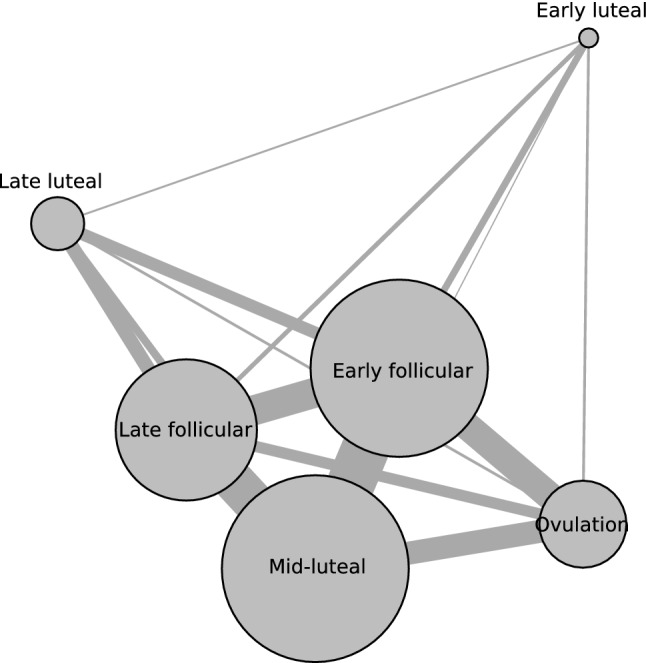
Background: Concentrations of endogenous sex hormones fluctuate across the menstrual cycle (MC), which could have implications for exercise performance in women. At present, data are conflicting, with no consensus on whether exercise performance is affected by MC phase. Objective: To determine the effects of the MC on exercise performance and provide evidence-based, practical, performance recommendations to eumenorrheic women. Methods: This review followed the Preferred Reporting Items for Systematic Reviews and Meta-Analyses (PRISMA) guidelines. Four databases were searched for published experimental studies that investigated the effects of the MC on exercise performance, which included at least one outcome measure taken in two or more defined MC phases. All data were meta-analysed using multilevel models grounded in Bayesian principles. The initial meta-analysis pooled pairwise effect sizes comparing exercise performance during the early follicular phase with all other phases (late follicular, ovulation, early luteal, mid-luteal and late luteal) amalgamated. A more comprehensive analysis was then conducted, comparing exercise performance between all phases with direct and indirect pairwise effect sizes through a network meta-analysis. Results from the network meta-analysis were summarised by calculating the Surface Under the Cumulative Ranking curve (SUCRA). Study quality was assessed using a modified Downs and Black checklist and a strategy based on the recommendations of the Grading of Recommendations Assessment Development and Evaluation (GRADE) working group. Results: Of the 78 included studies, data from 51 studies were eligible for inclusion in the initial pairwise meta-analysis. The three-level hierarchical model indicated a trivial effect for both endurance- and strength-based outcomes, with reduced exercise performance observed in the early follicular phase of the MC, based on the median pooled effect size (ES 0.5 = − 0.06 [95% credible interval (CrI): − 0.16 to 0.04]). Seventy-three studies had enough data to be included in the network meta-analysis. The largest effect was identified between the early follicular and the late follicular phases of the MC (ES 0.5 = − 0.14 [95% CrI: − 0.26 to − 0.03]). The lowest SUCRA value, which represents the likelihood that exercise performance is poor, or among the poorest, relative to other MC phases, was obtained for the early follicular phase (30%), with values for all other phases ranging between 53 and 55%. The quality of evidence for this review was classified as “low” (42%). Conclusion: The results from this systematic review and meta-analysis indicate that exercise performance might be trivially reduced during the early follicular phase of the MC, compared to all other phases. Due to the trivial effect size, the large between-study variation and the number of poor-quality studies included in this review, general guidelines on exercise performance across the MC cannot be formed; rather, it is recommended that a personalised approach should be taken based on each individual's response to exercise performance across the MC.
Overview
The claims and statistics of this paper haven’t been checked yet.
Run the check — free, no account needed. It reads the open-access text and checks the sources it cites.
Integrity signals
Registry
Cites
Statistics
Figures
Verification
Claims the paper makes
The claims and statistics of this paper haven’t been checked yet.
Run the check — free, no account needed. It reads the open-access text and checks the sources it cites.
Claims other papers make about this one
Each is checked against this paper’s own text: does it say what the citing paper says it does?
The source backs part of the claim, not all of it — or backs it for a different population, condition or comparison.
In the citing paper
“A Bayesian approach was selected because it estimates the full probability distribution of treatment effects rather than relying on binary significance testing, allowing more informative interpretation of effect sizes and associated uncertainty [40, 41].”
From The Effect of Different Psychological Interventions on Athletes' Competitive Anxiety: A Systematic Review and Bayesian Network Meta-Analysis. (2026) · cites this paper as [41]
Experimental — accuracy not yet measured
Self-check
Percentages, sums and reported differences re-computed from the paper’s own numbers.
The self-check needs the paper’s full text.
Citations
Cites
Preferred reporting items for systematic reviews and meta-analyses: the PRISMA Statement.
(2009) · PubMed Central · Cited by 44,859
Preferred reporting items for systematic reviews and meta-analyses: The PRISMA statement
Moher, D., Liberati, A., Tetzlaff, J., Altman, D. G., & the PRISMA Group* (2009) · Annals of Internal Medicine · doi:10.7326/0003-4819-151-4-200908180-00135 · Cited by 37,554
Gelman, A., Carlin, J. B., Stern, H. S., & Rubin, D. B. (2003) · doi:10.1201/9780429258480 · Cited by 27,276
Dermyshi, E., Wang, Y., Yan, C., Hong, W., Qiu, G., Gong, X., & Zhang, T. (2017) · Neonatology · doi:10.1159/000454668 · Cited by 24,586
GRADE guidelines: 1. Introduction—GRADE evidence profiles and summary of findings tables
Guyatt, G., Oxman, A. D., Akl, E. A., Kunz, R., Vist, G., Brozek, J., Norris, S., Falck-Ytter, Y., Glasziou, P., & deBeer, H. (2011) · Journal of Clinical Epidemiology · doi:10.1016/j.jclinepi.2010.04.026 · Cited by 10,681
brms : An R Package for Bayesian Multilevel Models Using Stan
Bürkner, P.-C. (2017) · Journal of Statistical Software · doi:10.18637/jss.v080.i01 · Cited by 9,476
GRADE guidelines: 3. Rating the quality of evidence
Balshem, H., Helfand, M., Schünemann, H. J., Oxman, A. D., Kunz, R., Brozek, J., Vist, G. E., Falck-Ytter, Y., Meerpohl, J., & Norris, S. (2011) · Journal of Clinical Epidemiology · doi:10.1016/j.jclinepi.2010.07.015 · Cited by 8,285
Downs, S. H., & Black, N. (1998) · Journal of Epidemiology and Community Health · doi:10.1136/jech.52.6.377 · Cited by 8,252
Salanti, G., Ades, A. E., & Ioannidis, J. P. A. (2011) · Journal of Clinical Epidemiology · doi:10.1016/j.jclinepi.2010.03.016 · Cited by 3,766
Norderyd, O. M., Koch, G., Papias, A., Köhler, A. A., Helkimo, A. N., Brahm, C., Lindmark, U., Lindfors, N., Mattsson, A., Rolander, B., et al. (2015) · PubMed · Cited by 3,584
Research works printed but not linked: 3
- Cohen J. Statistical power analysis for the social sciences. 2nd ed. New Jersey: Lawrence Erlbaum Associates; 1988.
- Grucza R, Pekkarinen H, Hanninen O. Cardiorespiratory responses to bicycle incremental exercise in women taking oral contraceptives. Biol Sport. 2002;19(3):267–79.
- Masterson G. The impact of menstrual phases on anaerobic power performance in collegiate women. J Strength Cond Res. 1999;13(4):325–9.
Cited by
Sorted by citations
Items 101–200 of 810
Fluid and electrolyte balance considerations for female athletes
Rodriguez‐Giustiniani, P., Rodríguez-Sánchez, N., & Galloway, S. D. R. (2021) · European Journal of Sport Science · doi:10.1080/17461391.2021.1939428 · Cited by 34
Taipale, R. S., Raitanen, A., Hackney, A. C., Solli, G. S., Valtonen, M., Peltonen, H., McGawley, K., Kyröläinen, H., & Ihalainen, J. K. (2021) · Frontiers in Physiology · doi:10.3389/fphys.2021.761760 · Cited by 27
“Everyone was sort of just like ‘ew’”: Adolescent athletes’ experiences of menstruation in sport
Keil, V., Adam, M. E. K., & Neely, K. C. (2023) · Journal of Applied Sport Psychology · doi:10.1080/10413200.2023.2274458 · Cited by 27
“The perceived effect of the MC on performance is an intriguing finding, as it differs from studies using objective measures of performance (e.g., McNulty et al., 2020).”
ResultHayward, E., Akam, E. C., Hunter, D. J., & Mastana, S. S. (2024) · International Journal of Environmental Research and Public Health · doi:10.3390/ijerph21020150 · Cited by 34
“Increased body mass is linked to impaired aerobic and anaerobic endurance capacity [18–23].”
BackgroundHirschberg, A. L. (2022) · Sports Medicine · doi:10.1007/s40279-021-01616-5 · Cited by 28
“Several studies have defined the cycle phase based on counting cycle days without hormone determination [1, 3, 4].”
BackgroundTracking Women’s Reproductive Data in Sport: Practical Limitations, Perils and Pitfalls
Casto, K. V. (2022) · Sports Medicine · doi:10.1007/s40279-022-01671-6 · Cited by 27
“Another recent study meta-analyzed the prior research on how menstrual phases predict performance outcomes such as time to completion, time to exhaustion, rate of force production, and indices of fatigue in sport-related physical tasks across 78 studies [24].”
Gopalan, S. S., Mann, C., & Rhodes, R. E. (2024) · Preventive Medicine · doi:10.1016/j.ypmed.2024.107980 · Cited by 26
Schlie, J., Krassowski, V., & Schmidt, A. (2025) · Journal of Applied Physiology · doi:10.1152/japplphysiol.00223.2025 · Cited by 28
Menstrual cycle tracking in professional volleyball athletes
Roffler, A., Fleddermann, M., de Haan, H., Krüger, K., & Zentgraf, K. (2024) · Frontiers in Sports and Active Living · doi:10.3389/fspor.2024.1408711 · Cited by 25
Are we asking the right questions? Female athletes’ perspectives on the menstrual cycle in sport
van den Berg, C. A., & Doyle–Baker, P. K. (2024) · Psychology of sport and exercise · doi:10.1016/j.psychsport.2024.102767 · Cited by 25
Modelling menstrual cycle length in athletes using state-space models
Oliveira, T. D. P., Bruinvels, G., Pedlar, C. R., Moore, B., & Newell, J. (2021) · Scientific Reports · doi:10.1038/s41598-021-95960-1 · Cited by 25
Saunders, B., de Oliveira, L. F., Dolan, E., Durkalec‐Michalski, K., McNaughton, L. R., Artioli, G. G., & Swinton, P. A. (2021) · European Journal of Sport Science · doi:10.1080/17461391.2021.1880649 · Cited by 28
“changes in exercise capacity during different phases of the menstrual cycle (McNulty et al., 2020) may potentially modify these effects and this warrants”
BackgroundInfluentialSelf-citationDietary Supplements for Athletic Performance in Women: Beta-Alanine, Caffeine, and Nitrate
Murphy, M. J., Rushing, B. R., Sumner, S., & Hackney, A. C. (2022) · International Journal of Sport Nutrition and Exercise Metabolism · doi:10.1123/ijsnem.2021-0176 · Cited by 30
Cuthbert, M., Haff, G. G., McMahon, J. J., Evans, M., & Comfort, P. (2023) · Strength and conditioning journal · doi:10.1519/ssc.0000000000000786 · Cited by 29
“Optionality could also give the players greater ownership based on their preferences to maximize For example, a player may have the attitude that they would rather get all the work done in larger less frequent chunks and follow more traditional approaches to training (see option A in Table 2).”
BackgroundSmith, E. S., Weakley, J. J. S., McKay, A. K. A., McCormick, R., Tee, N., Kuikman, M. A., Harris, R., MINAHAN, C. L., Buxton, S., Skinner, J., et al. (2024) · European Journal of Sport Science · doi:10.1002/ejsc.12151 · Cited by 24
“…phases two and three of the MC (Ansdell et al., 2019; Pallavi et al., 2017), as well as a decline in strength ‐ based outcomes during phase one (Dam et al., 2022; Gordon et al., 2013; McNulty et al., 2020), alongside studies reporting the opposite (Davies et al., 1991; Phillips et al., 1996).”
BackgroundMethodResultInfluentialSelf-citationWhere Are All the Female Participants in Sports and Exercise Medicine Research? A Decade Later
Ose, B. M., Eisenhauer, J., Roepe, I. G., Herda, A. A., Vopat, B. G., & Vopat, L. (2025) · The American Journal of Sports Medicine · doi:10.1177/03635465241278350 · Cited by 24
Crossley, K. M., Haberfield, M. J., Ross, A. G., Gracias, L., Bruder, A. M., Whittaker, J. L., Chintoh, A. F., Thornton, J. S., Davenport, M. H., Mountjoy, M. L., et al. (2025) · British Journal of Sports Medicine · doi:10.1136/bjsports-2025-109946 · Cited by 26
“54 55 This was the only cluster rated higher for importance than modifiability with only one statement (58: neuromuscular control) in Q1 of the Go-Zone.”
Caffeine Timing Improves Lower-Body Muscular Performance: A Randomized Trial
Harty, P. S., Zabriskie, H. A., Stecker, R. A., Currier, B. S., Tinsley, G. M., Surowiec, K., Jagim, A. R., Richmond, S. R., & Kerksick, C. M. (2020) · Frontiers in Nutrition · doi:10.3389/fnut.2020.585900 · Cited by 31
Carmichael, M. A., Roberts, A. H., Donaldson, A., & Clarke, A. C. (2024) · Journal of science and medicine in sport · doi:10.1016/j.jsams.2024.04.003 · Cited by 23
de Jager, E., Willemsen, M., Kempe, M., & Janssen, I. (2024) · Journal of science and medicine in sport · doi:10.1016/j.jsams.2024.04.011 · Cited by 23
Evolution of resistance training in women: History and mechanisms for health and performance
Kraemer, W. J., Fragala, M. S., & Ratamess, N. A. (2025) · Sports Medicine and Health Science · doi:10.1016/j.smhs.2025.01.005 · Cited by 32
“54 Circulating estrogen concentrations of women during the early follicular phase of the menstrual cycle are similar to men; however, women have cyclically higher concentrations of estrogen throughout other phases of the cycle.”
Rocha‐Rodrigues, S., Sousa, M., Reis, P. L., Leão, C., Cardoso-Marinho, B., Massada, M. M. T. D. O., & Afonso, J. R. (2021) · Nutrients · doi:10.3390/nu13020438 · Cited by 31
“This section can perhaps be best summarized through the findings of a recent SRMA assessing the effects of the MC phase on exercise performance in eumenorrheic women [94].”
BackgroundMajumder, T., Topranin, V. D. M., Sandbakk, Ø. B., & Noordhof, D. A. (2022) · International Journal of Sports Physiology and Performance · doi:10.1123/ijspp.2022-0131 · Cited by 23
Heyward, O. W., Elliott-Sale, K. J., Roe, G. A. B., Emmonds, S., Hornby, K., Stokes, K., & Jones, B. L. (2022) · Science and Medicine in Football · doi:10.1080/24733938.2022.2156588 · Cited by 23
“…indicated that performance may be reduced by a trivial amount during the early follicular phase of the menstrual cycle and that oral contraceptive users may experience slightly inferior performances when compared to naturally menstruating women (Elliott-Sale et al. 2020; McNulty et al. 2020).”
BackgroundSelf-citationBenito, P. J., Alfaro-Magallanes, V. M., Rael, B., de Castro, E. A., Romero‐Parra, N., Rojo‐Tirado, M. Á., & Peinado, A. B. (2023) · International Journal of Environmental Research and Public Health · doi:10.3390/ijerph20043266 · Cited by 23
“In fact, a recent meta-analysis revealed no differences in exercise performance variables between menstrual cycle phases, except a trivial performance decrease in the EFP [1].”
BackgroundThe Evolution of World-Class Endurance Training: The Scientist’s View on Current and Future Trends
Sandbakk, Ø., Pyne, D. B., McGawley, K., Foster, C., Talsnes, R. K., Solli, G. S., Millet, G. P., Seiler, S., Laursen, P. B., Haugen, T., et al. (2023) · International Journal of Sports Physiology and Performance · doi:10.1123/ijspp.2023-0131 · Cited by 23
Deng, N., Soh, K. G., Abdullah, B., Huang, D., Sun, H., & Xiao, W. (2023) · Frontiers in Physiology · doi:10.3389/fphys.2023.1234114 · Cited by 32
“Women remain to be underrepresented in the evidence base, with menstrual cycle complications noted as a key obstacle to include female athletes in such trials (McNulty et al., 2020).”
BackgroundFeminae: an international multisite innovative project for female athletes
Elliott-Sale, K. J., Ackerman, K. E., Lebrun, C. M., MINAHAN, C. L., Sale, C., Stellingwerff, T., Swinton, P. A., & Hackney, A. C. (2023) · BMJ Open Sport & Exercise Medicine · doi:10.1136/bmjsem-2023-001675 · Cited by 23
Self-citationMcDougall, R. M., Tripp, T. R., Frankish, B. P., Doyle–Baker, P. K., Lun, V. M. Y., Wiley, J. P., Aboodarda, S. J., & MacInnis, M. J. (2023) · The Journal of Physiology · doi:10.1113/jp284958 · Cited by 23
“…to what extent the fluctuations of hormones throughout the phases of the menstrual cycle (and ‘pseudo-phases’ in contra-ceptive users) influence exercise performance and fatiguability during isometric contractions (Ansdell, Brownstein, Škarabot, Hicks, Simoes et al., 2019; McNulty et al., 2020).”
BackgroundPelet, D. C. S., & Orsatti, F. L. (2021) · Applied Physiology, Nutrition, and Metabolism · doi:10.1139/apnm-2021-0088 · Cited by 23
Health conditions among retired professional footballers: a scoping review
Carmody, S., Anemaat, K., Massey, A., Kerkhoffs, G. M. M. J., & Gouttebarge, V. (2022) · BMJ Open Sport & Exercise Medicine · doi:10.1136/bmjsem-2021-001196 · Cited by 24
Kawabe, R., Chen, C. Y., Morino, S., Mukaiyama, K., Shinohara, Y., Kato, M., Shimizu, H., Shimoura, K., Nagai‐Tanima, M., & Aoyama, T. (2022) · BMC Sports Science Medicine and Rehabilitation · doi:10.1186/s13102-022-00569-0 · Cited by 33
James, J. J., Leach, O. K., Young, A. M., Newman, A. N., Mpongo, K., Quirante, J., Wardell, D., Ahmadi, M., & Gifford, J. R. (2022) · Journal of Applied Physiology · doi:10.1152/japplphysiol.00416.2022 · Cited by 22
Nieto-Acevedo, R., Romero‐Moraleda, B., Díaz‐Lara, J., de la Rubia, A., González‐García, J., & Mon‐López, D. (2023) · Sports · doi:10.3390/sports11060118 · Cited by 27
“In addition, it is well known that women experience significant hormonal alteration across the menstrual cycle, which may influence muscle hypertrophy and strength adaptations [21,22].”
BackgroundWilliams, J. S., Stone, J. C., Masood, Z., Bostad, W., Gibala, M. J., & MacDonald, M. J. (2023) · Journal of Applied Physiology · doi:10.1152/japplphysiol.00111.2023 · Cited by 23
Langan‐Evans, C., Hearris, M. A., McQuilliam, S. J., Burke, L. M., Stellingwerff, T., Elliott-Sale, K. J., & Morton, J. P. (2023) · International Journal of Sports Science & Coaching · doi:10.1177/17479541231163088 · Cited by 21
Self-citationProtein Requirements of Pre-Menopausal Female Athletes: Systematic Literature Review
Mercer, D., Convit, L., Condo, D., Carr, A. J., Hamilton, D. L., Slater, G., & Snipe, R. M. J. (2020) · Nutrients · doi:10.3390/nu12113527 · Cited by 20
“Recent reviews suggest that these alterations in hormones across different phases of the menstrual cycle and with the use of hormonal contraceptives may have small variable effects on exercise performance, although findings are limited by poor methodological approaches to classifying the phase of menstrual cycle [26,2…”
BackgroundOrtega, A. G., Bourgeois, J., & Kortuem, G. (2024) · Designing Interactive Systems Conference · doi:10.1145/3643834.3661503 · Cited by 23
Smith, E. S., McCormick, R., McKay, A. K. A., Ackerman, K. E., Elliott-Sale, K. J., Stellingwerff, T., Harris, R., & Burke, L. M. (2024) · Medicine & Science in Sports & Exercise · doi:10.1249/mss.0000000000003587 · Cited by 20
“…highly inconsistent between studies, the magnitude of effect is trivial, and results are confounded by study quality variability (particularly regarding flaws in methodological control and classification of ovarian hormones), the conclusions from the available literature are considered weak (1).”
Self-citationSex differences in skeletal muscle metabolism in exercise and type 2 diabetes mellitus
MacGregor, K. A., Ellefsen, S., Pillon, N. J., Hammarström, D., & Krook, A. (2024) · Nature Reviews Endocrinology · doi:10.1038/s41574-024-01058-9 · Cited by 23
“A systematic review describing the effect of menstrual cycle phase on exercise performance found that the overall quality of the 51 included studies, when considering methodological aspects pertaining to menstrual cycle phase identification and verification, was predominantly low 126 .”
Elorduy-Terrado, A., Torres‐Luque, G., Radesca, K., Andradas, G. M., Saenz-Bravo, M., & Domínguez-Balmaseda, D. (2025) · Muscles · doi:10.3390/muscles4020015 · Cited by 20
“Similarly, a recent meta-analysis [34] explained that performance might decline during the early follicular phase compared to other stages of the cycle, a finding supported by another study [18].”
Holcomb, L. E., O’Neill, C. C., DeWitt, E. A., & Kolwicz, S. C. (2021) · Metabolites · doi:10.3390/metabo11060397 · Cited by 24
“Although we did not account for sex hormones in our study, reports suggest that the menstrual cycle has minimal effects on performance in female athletes [63,64] and the estrus cycle has subtle effects on exercise performance in female mice [65].”
BackgroundDuggan, J. D., Collins, K. D., & Keane, K. M. (2022) · BMC Sports Science Medicine and Rehabilitation · doi:10.1186/s13102-022-00553-8 · Cited by 21
The contribution of age and sex hormones to female neuromuscular function across the adult lifespan
O’Bryan, S. J., Critchlow, A. J., Fuchs, C. J., Hiam, D., & Lamon, S. (2025) · The Journal of Physiology · doi:10.1113/jp287496 · Cited by 20
Scott, D., Bruinvels, G., Norris, D., & Lovell, R. J. (2024) · International Journal of Sports Physiology and Performance · doi:10.1123/ijspp.2022-0282 · Cited by 19
Jung, R., Gehlert, S., Geisler, S., Isenmann, E., Eyre, J. C., & Zinner, C. (2023) · PLoS ONE · doi:10.1371/journal.pone.0284216 · Cited by 20
Giersch, G. E. W., Charkoudian, N., Pereira, T., Edgell, H., Freeberg, K. A., Craighead, D. H., Neill, M. G., Allison, E. Y., Zapcic, A. K., Smith, K. J., et al. (2020) · Journal of Applied Physiology · doi:10.1152/japplphysiol.00809.2020 · Cited by 19
Souglis, A. G., Bourdas, D. I., Gioldasis, A., Ispirlidis, I., Philippou, Α., Zacharakis, E., Apostolidis, A., Efthymiou, G., & Travlos, A. K. (2023) · Sports · doi:10.3390/sports11070127 · Cited by 24
“Muscle soreness was perceived to be more severe prior to exercise [83] and exercise performance may be marginally reduced [85] in the very early follicular phase when estrogen concentrations are low.”
BackgroundEffects of the menstrual cycle on the performance of female football players. A systematic review
Hamed‐Hamed, D., González-Muñoz, A., Cuevas-Cervera, M., Pérez‐Montilla, J. J., Aguilar-Núñez, D., Aguilar-García, M., Pruimboom, L., & Ledesma, S. N. (2024) · Frontiers in Physiology · doi:10.3389/fphys.2024.1359953 · Cited by 19
Dragutinovic, B., Moser, F., Notbohm, H. L., Ihalainen, J. K., Bloch, W., & Schumann, M. (2024) · Journal of Applied Physiology · doi:10.1152/japplphysiol.00198.2024 · Cited by 21
Menstrual cycle monitoring in applied sport settings: A scoping review
Carmichael, M. A., Perry, K., Roberts, A. H., Klass, V., & Clarke, A. C. (2025) · International Journal of Sports Science & Coaching · doi:10.1177/17479541251333888 · Cited by 17
Reif, A., Wessner, B., Haider, P., Tschan, H., & Triska, C. (2021) · Frontiers in Physiology · doi:10.3389/fphys.2021.658994 · Cited by 17
Skeletal muscle phenotype and game performance in elite women football players
Mohr, M., Fatouros, I. G., Jamurtas, A. Z., Draganidis, D., Thomassen, M., Ørntoft, C., Ermιdis, G., Loules, G., Batsilas, D., Poulios, A., et al. (2021) · Scandinavian Journal of Medicine and Science in Sports · doi:10.1111/sms.14022 · Cited by 17
Miralles-Amorós, L., Asencio-Mas, N., Martínez-Olcina, M., Vicente-Martínez, M., Frutos, J. M. G.-D., Peñaranda-Moraga, M., Gonzálvez-Alvarado, L., Sepulveda, R. A. Y., Cortés-Roco, G., & Martínez‐Rodríguez, A. (2023) · Metabolites · doi:10.3390/metabo13020168 · Cited by 19
Recacha-Ponce, P., Collado‐Boira, E., Suárez-Alcázar, M. P., Montesinos-Ruiz, M., & Domingo, C. H. (2023) · Life · doi:10.3390/life13081764 · Cited by 16
Bolling, C. S., Tomás, R., & Verhagen, E. A. L. M. (2024) · British Journal of Sports Medicine · doi:10.1136/bjsports-2023-106891 · Cited by 17
“32”
UEFA consensus statement on menstrual cycle tracking in women’s football
Verhagen, E. A. L. M., Ferrer, E., Antero, J., Bahtijarević, Z., Barlow, A., Bolling, C. S., Gabarro, M., Harrison, M., Jarrin, P., de Jonge, X. J., et al. (2025) · BMJ Open Sport & Exercise Medicine · doi:10.1136/bmjsem-2025-002769 · Cited by 16
Self-citationSex Differences in the Physiological Network of Healthy Young Subjects
Barajas‐Martínez, A., Ibarra‐Coronado, E., Fossión, R., Toledo-Roy, J. C., Martínez‐Garcés, V. J., López-Rivera, J. A., Tello‐Santoyo, G., Lavin, R. D., Gómez, J. L. D., Stephens, C. R., et al. (2021) · Frontiers in Physiology · doi:10.3389/fphys.2021.678507 · Cited by 17
“, 2014), ↑ Ventilation (Slatkovska et al., 2006; Girija and Veeraiah, 2011), ↑ Body basal temperature (Buxton and Atkinson, 1948; Lundy et al.”
BackgroundInfluentialRighi, I., & Barroso, R. (2022) · International Journal of Environmental Research and Public Health · doi:10.3390/ijerph192113841 · Cited by 16
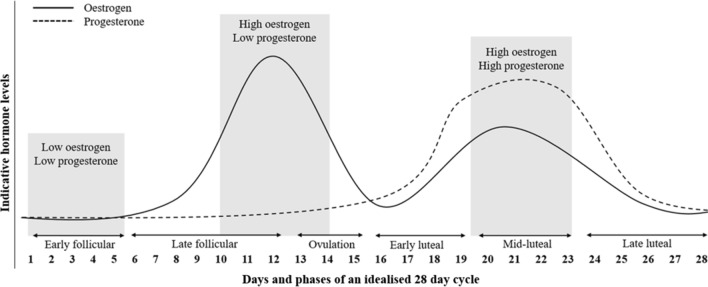
“The MC is commonly divided into phases based on the fluctuation of the different hormones, especially estrogen and progesterone: in the early follicular stage (EF), both estrogen and progesterone levels are low; in the late follicular stage (LF), high estrogen levels are apparent; at ovulation (O) estrogen peaks; in t…”
BackgroundMechanisms Underlying Menstrual Cycle Effects on Exercise Performance: A Scoping Review
Bernstein, C., & Behringer, M. (2023) · Women in Sport and Physical Activity Journal · doi:10.1123/wspaj.2022-0026 · Cited by 16
Mikkonen, R. S., Ihalainen, J. K., Hackney, A. C., & Häkkinen, K. (2023) · Sports Medicine · doi:10.1007/s40279-023-01955-5 · Cited by 22
The effect of fish oil supplementation on resistance training-induced adaptations
Heileson, J. L., Machek, S. B., Harris, D. R., Tomek, S. E., Souza, L. C., Kieffer, A. J., Barringer, N., Gallucci, A. R., Forsse, J. S., & Funderburk, L. (2023) · Journal of the International Society of Sports Nutrition · doi:10.1080/15502783.2023.2174704 · Cited by 21
“While hormonal variation does appear to uniquely impact women physiologically, there is no clear evidence that the menstrual cycle or oral contraceptive use significantly influences physical performance [21,22].”
BackgroundCoaches’ ability to support elite and adolescent soccer players throughout their menstrual cycle
Donnelly, J., Macrae, E. H. R., Valentin, S., White, A. C., Easton, C., & Forrest, L. J. (2024) · International Journal of Sports Science & Coaching · doi:10.1177/17479541241255280 · Cited by 16
Efficacy of Rest Redistribution During Squats: Considerations for Strength and Sex
Boffey, D., Clark, N. W., & Fukuda, D. H. (2021) · The Journal of Strength and Conditioning Research · doi:10.1519/jsc.0000000000003893 · Cited by 15
“However, previous research has shown no changes in acute velocity performance across the menstrual cycle (8), and a recent metaanalysis revealed trivial effects of the menstrual cycle phase on strength (24).”
Horobeanu, C., Pullinger, S. A., Paulus, J., Savoia, C., Wong, F. Y., Seurot, A., Croisier, J. L., & Forthomme, B. (2022) · BMC Musculoskeletal Disorders · doi:10.1186/s12891-022-05232-w · Cited by 15
Andersen, A. B., Graae, J., Bejder, J., Bonne, T. C., Seier, S., DEBERTIN, M., Eibye, K., Hostrup, M., & Nordsborg, N. B. (2022) · Medicine & Science in Sports & Exercise · doi:10.1249/mss.0000000000003052 · Cited by 15
“However, a recent meta-analysis concluded that performance might only be trivially reduced during the early follicular phase compared with all other menstrual phases (58), but the impact of the menstrual cycle is likely negligible.”
BackgroundStrength and Conditioning Recommendations for Female Athletes: The Gaelic Footballer
Duggan, J. D., Keane, K. M., Moody, J. A., Byrne, P. J., Malone, S., Collins, K. D., & Ryan, L. (2023) · Strength and conditioning journal · doi:10.1519/ssc.0000000000000761 · Cited by 15
“As females train and compete during all stages of their MC, the potential impact on injury and performance should be considered (48,110).”
BackgroundInfluentialMkumbuzi, N. S., Dlamini, S. B., Serner, A., Kryger, K. O., Brown, N., Larsen, B., & Chibhabha, F. (2023) · Women in Sport and Physical Activity Journal · doi:10.1123/wspaj.2023-0024 · Cited by 15
Lee, S. J. L., Sim, M., van Rens, F. E. C. A., & Peiffer, J. J. (2023) · Medicine & Science in Sports & Exercise · doi:10.1249/mss.0000000000003289 · Cited by 17
“However, our finding of a negative impact of LUT on fatigue resistance contradicts recent systematic reviews and meta-analyses, which suggested that the LUT phase does not or at best provides a trivial positive impact to performance during endurance or repeated-sprint tasks (54,55).”
BackgroundResultPurdom, T. M., Levers, K. S., McPherson, C. S., Giles, J., & Brown, L. (2020) · Sports · doi:10.3390/sports8080107 · Cited by 15
“Furthermore, the literature suffer from low to moderate effect sizes, making it difficult to discern the impact the menstrual cycle has on performance among high-level female athletes [37].”
BackgroundCowley, E. S., Moore, S. R., Olenick, A., & McNulty, K. L. (2023) · Women in Sport and Physical Activity Journal · doi:10.1123/wspaj.2023-0039 · Cited by 15
Self-citationJesus, F., Sousa, M., Nunes, C. L., Francisco, R., Rocha, P. M., Minderico, C. S., Sardinha, L. B., & Silva, A. M. (2022) · International Journal of Sport Nutrition and Exercise Metabolism · doi:10.1123/ijsnem.2022-0039 · Cited by 14
de Carvalho, G., Papoti, M., Rodrigues, M. C. D., Foresti, Y. F., Guirro, E. C. D. O., & Guirro, R. R. D. J. (2022) · European Journal of Applied Physiology · doi:10.1007/s00421-022-05086-z · Cited by 14
“2021), and our results, despite the standardized methodology, were consistent with the latest published review (McNulty et al. 2020), showing no difference in the performance variables between the two phases of the cycle evaluated.”
BackgroundResultInfluentialPrado, R. C. R., Willett, H. N., Takito, M. Y., & Hackney, A. C. (2022) · International Journal of Sports Physiology and Performance · doi:10.1123/ijspp.2022-0218 · Cited by 14
Pons, M. S., Hunter, S. K., & Ansdell, P. (2023) · European Journal of Sport Science · doi:10.1080/17461391.2023.2233483 · Cited by 14
“This decision was based on evidence from recent systematic reviews demonstrating “ trivial ” e ff ects of the menstrual cycle and oral contra-ceptive usage on exercise performance (Elliott-Sale et al., 2020; McNulty et al., 2020).”
BackgroundSelf-citationCarr, A. J., McKay, A. K. A., Burke, L. M., Smith, E. S., Urwin, C. S., Convit, L., Jardine, W. T., Kelly, M. K., & Saunders, B. (2023) · Sports Medicine · doi:10.1007/s40279-023-01872-7 · Cited by 17
“Furthermore, there is current interest in the potential impact of MC phase and the use of hormonal contraceptives on exercise performance in females [91, 92].”
BackgroundMenstrual Cycle Tracking in Sports Research: Challenges, Progress, and Future Directions
Dole, A., Beaven, C. M., & Sims, S. T. (2023) · Physiologia · doi:10.3390/physiologia3040044 · Cited by 19
Engseth, T. P., Osborne, J. O., Solli, G. S., Morseth, B., Andersson, E. P., Topranin, V. D. M., Taylor, M., Noordhof, D. A., Sandbakk, Ø. B., & Welde, B. (2024) · Journal of Sports Sciences · doi:10.1080/02640414.2024.2434347 · Cited by 22
“The impact of the MC and HC cycle on objective measures of athletic performance and recovery is currently uncertain (Elliott-Sale et al., 2020; Hackney et al., 2019; McNulty et al., 2020; Romero-Parra et al., 2021).”
The Rise of the Female Warfighter: Physiology, Performance, and Future Directions
Giersch, G. E. W., Charkoudian, N., & McClung, H. L. (2021) · Medicine & Science in Sports & Exercise · doi:10.1249/mss.0000000000002840 · Cited by 15
Dealing with menstrual cycle in sport: stop finding excuses to exclude women from research
Meignié, A., Toussaint, J., & Antero, J. (2022) · European Journal of Applied Physiology · doi:10.1007/s00421-022-05014-1 · Cited by 14
Hogwood, A. C., de Zevallos, J. O., Kruse, K., Guzman, J. C. D., Buckley, M., WELTMAN, A. L., & Allen, J. D. (2023) · Journal of Applied Physiology · doi:10.1152/japplphysiol.00221.2023 · Cited by 17
Taipale, R. S., Forssell, J., Ihalainen, J. K., Kyröläinen, H., & Häkkinen, K. (2020) · Frontiers in Sports and Active Living · doi:10.3389/fspor.2020.581305 · Cited by 20
“, at least a small performance difference exists between menstrual cycle phases (McNulty et al., 2020) while hormonal contraceptive use may result in slightly inferior exercise performance (Elliott-Sale et al.”
BackgroundTaylor, M., Hrozanova, M., Nordengen, L., Sandbakk, Ø. B., Osborne, J. O., & Noordhof, D. A. (2024) · International Journal of Sports Physiology and Performance · doi:10.1123/ijspp.2024-0201 · Cited by 16
Grgić, J., & Varović, D. (2023) · Journal of the American Nutrition Association · doi:10.1080/27697061.2023.2212740 · Cited by 14
Igonin, P.-H., Cognasse, F., Gonzalo, P., Philippot, P., Rogowski, I., Sabot, T., Boisseau, N., & Martin, C. (2024) · Science and Medicine in Football · doi:10.1080/24733938.2024.2328674 · Cited by 13
“…cycle phase on performance (Davies et al. 1991; Sipaviciene et al. 2013; Graja et al. 2022), but others did not (Hertel et al. 2006; Julian et al. 2017; Romero-Moraleda et al. 2019), probably due to methodological differences (McNulty et al. 2020; Carmichael et al. 2021; Elliott-Sale et al. 2021).”
Badenhorst, C. E. (2024) · Sports Medicine · doi:10.1007/s40279-024-02061-w · Cited by 14
Characterization of Reproductive and Morphological Variables in Female Elite Futsal Players
Queiróga, M. R., da Silva, D. F., Ferreira, S. A., Weber, V. M. R., Fernandes, D. Z., Cavazzotto, T. G., Portela, B. S., Tartaruga, M. P., do Nascimento, M. A., & Vieira, E. R. (2021) · Frontiers in Psychology · doi:10.3389/fpsyg.2021.625354 · Cited by 13
Relationships between Sex and Adaptation to Physical Exercise in Young Athletes: A Pilot Study
Pinto, G., Militello, R., Amoresano, A., Modesti, P. A., Modesti, A., & Luti, S. (2022) · Healthcare · doi:10.3390/healthcare10020358 · Cited by 12
“There are conflicting results on menstrual cycle phase effects on physical activity [55], with studies reporting improved performance outcomes during the early follicular [56], ovulatory [57], and mid-luteal [58] phases; whereas others have shown no changes in exercise performance between menstrual cycle phases [59–61…”
BackgroundElliott-Sale, K. J., Flood, T. R., Arent, S. M., Dolan, E., Saunders, B., Hansen, M., Ihalainen, J. K., Taipale, R. S., MINAHAN, C. L., Thornton, J. S., et al. (2023) · BMJ Open Sport & Exercise Medicine · doi:10.1136/bmjsem-2023-001814 · Cited by 14
Self-citationDoes the Menstrual Cycle Influence Aerobic Capacity in Endurance-Trained Women?
Ekberg, S., Morseth, B., Larsén, K. B., & Wikström-Frisén, L. (2023) · Research Quarterly for Exercise and Sport · doi:10.1080/02701367.2023.2291473 · Cited by 15
“Mean and standard deviation (SD±) are presented for the submaximal variables, as well as the incremental test variables at the different test points, EFP, LFP, and MLP, during a MC. Repeated measure analysis of variance (ANOVA) was used to examine the differences in aerobic capacity variables between the three phases…”
InfluentialNutritional perspectives in female soccer: a scoping review
Martinho, D. V., Field, A., Naughton, R. J., Ribeiro, A. S., Rebelo, A., Gouveia, É. R., & Sarmento, H. (2024) · Journal of the International Society of Sports Nutrition · doi:10.1080/15502783.2024.2366427 · Cited by 14
“This could have detrimental implications for female soccer given that females possess different physiological profiles [6,7] that are likely to influence dietary needs between sexes.”
BackgroundTripp, T. R., Caswell, A. M., Aboodarda, S. J., & MacInnis, M. J. (2024) · Scandinavian Journal of Medicine and Science in Sports · doi:10.1111/sms.14692 · Cited by 11
“While circulating ovarian hormone levels may have an effect on some measures we made, a recent meta-analysis suggests the effect is likely trivial [64].”
Vigh-Larsen, J. F., Junge, N., Cialdella-Kam, L. A., Tomás, R., Young, L. T., Krustrup, P., Mohr, M., & Nybo, L. (2024) · Medicine & Science in Sports & Exercise · doi:10.1249/mss.0000000000003442 · Cited by 15
Effects of Hormonal Contraception and the Menstrual Cycle on Maximal Strength and Power Performance
Cabre, H. E., Joniak, K. E., Ladan, A. N., Moore, S. R., Blue, M. N. M., Pietrosimone, B. G., Cortés, Y. I., Hackney, A. C., & Smith‐Ryan, A. E. (2024) · Medicine & Science in Sports & Exercise · doi:10.1249/mss.0000000000003524 · Cited by 12
Perceptions of menstrual cycle tracking among elite rugby players
Verrier, A., Knight, C. J., & Brown, N. (2024) · Journal of Sports Sciences · doi:10.1080/02640414.2024.2400810 · Cited by 12
“…platform to improve openness of conversation between athletes, coaches and support staff, via a culturally appropriate approach, while also supporting athletes and coaches to more fully understand the individual responses and associated impacts of the MC on sport performance (McNulty et al., 2020).”
McNulty, K. L., Taim, B. C., Freemas, J. A., Hassan, A. A., Lupton‐Smith, C., Oleka, C. T., Scott, D., Howatson, G., Moore, I. S., Yung, K. K., et al. (2024) · Women in Sport and Physical Activity Journal · doi:10.1123/wspaj.2024-0064 · Cited by 12
Self-citationAhmadi, M., Hoorang, N., Imanian, B., Hemmatinafar, M., Rezaei, R., Nemati, J., Eftekhari, F., & Alkasasbeh, W. J. (2024) · Nutrients · doi:10.3390/nu16244263 · Cited by 17
Nutritional Strategies for Enhancing Performance and Training Adaptation in Weightlifters
Hwang, D.-J., & Yang, H.-J. (2024) · International Journal of Molecular Sciences · doi:10.3390/ijms26010240 · Cited by 18
“McNulty et al. (2020) suggested that during the early follicular phase, low-intensity training could promote recovery, while higher-intensity training may be emphasized post-ovulation, when estrogen levels peak [99].”
Valenza, A., Blount, H., Bianco, A., Worsley, P. R., & Filingeri, D. (2023) · Experimental Physiology · doi:10.1113/ep091533 · Cited by 12
Sex hormone-mediated change on muscle activation deactivation dynamics in young eumenorrheic women
Soedirdjo, S. D. H., Rodriguez, L., Chung, Y., CASEY, E. K., & Dhaher, Y. Y. (2023) · Frontiers in Physiology · doi:10.3389/fphys.2023.1104578 · Cited by 11
“We argue that the menstrual cycle-specific phase training paradigm is premature given the conflicting evidence linking cycle state and injury (McNulty et al., 2020; Nédélec et al., 2021).”
Background
Metadata
- Authors
- McNulty, K. L., Elliott-Sale, K. J., Dolan, E., Swinton, P. A., Ansdell, P., Goodall, S., Thomas, K., & Hicks, K. M.
- Affiliations
- Northumbria University (GB)
- Nottingham Trent University (GB)
- Universidade de São Paulo (BR)
- Robert Gordon University (GB)
- Corresponding author
- Elliott-Sale, Kirsty Jayne
- ORCID
- Venue
- Sports Medicine
- Published
- 2020-07-13
- Volume
- 50
- Issue
- 10
- Pages
- 1813-1827
- ISSN
- 0112-1642 (ISSN-L)
- 1179-2035
- PMC
- PMC7497427
- OpenAlex
- W3038797657
- Cited by
- 812
- References
- 127
- Citations by year
- 2026: 183 · 2025: 181 · 2024: 153 · 2023: 136 · 2022: 72 · 2021: 70 · 2020: 17
- FWCI
- 14.50
- Type
- journal article
- Language
- en
- Open access
- hybrid
- doi.org
- Locations
- Sports Medicine (publishedVersion, cc-by)
- PubMed Central (publishedVersion, cc-by)
- PubMed (publishedVersion)
- Nottingham Trent University's Institutional Repository (Nottingham Trent Repository) (acceptedVersion)
- Northumbria Research Link (Northumbria University) (acceptedVersion)
- Open Access Institutional Repository at Robert Gordon University (Robert Gordon University) (submittedVersion, cc-by)
- Funders
- Fundação de Amparo à Pesquisa do Estado de São Paulo (19/05616-6, 2019/, 2019/05616)
- Topics
- Health Sciences › Medicine › Orthopedics and Sports Medicine › Sports Performance and Training
- Health Sciences › Medicine › Physiology (medical) › Cardiovascular and exercise physiology
- Health Sciences › Medicine › Public Health, Environmental and Occupational Health › Menstrual Health and Disorders
- Keywords
- menstrual cycle phases, exercise performance, eumenorrheic women, sex hormones, follicular phase, luteal phase, endurance performance, strength performance
- MeSH terms
- Female, Humans, Menstrual Cycle, Exercise, Athletic Performance
About these checks
Registry, retraction, Cites and statistics results are computed, not judged, with one exception: a printed reference that no index lists is read once by a model before it counts as a citation error. Claims are extracted by a model and kept only when their quote appears verbatim in the text; each cited source is then checked, with a model’s help, for whether it says what the claim relies on. Those verdicts can be wrong — read the claim’s quote and the cited source before relying on one.
Statistics and arithmetic are recomputed, not judged.
Confidence bands are shown only for fields calibrated on our annotated test set. None is calibrated yet, so no band is shown.
What counts as a claim ›How we measure confidence ›How we check this ›
Are you an author, or do you see a problem with this page? Request a review
