

The DOI matches its Crossref record; 127 of the 127 references it cites were found in a registry or an index.
The Effects of Menstrual Cycle Phase on Exercise Performance in Eumenorrheic Women: A Systematic Review and Meta-Analysis
Open accessAbstract
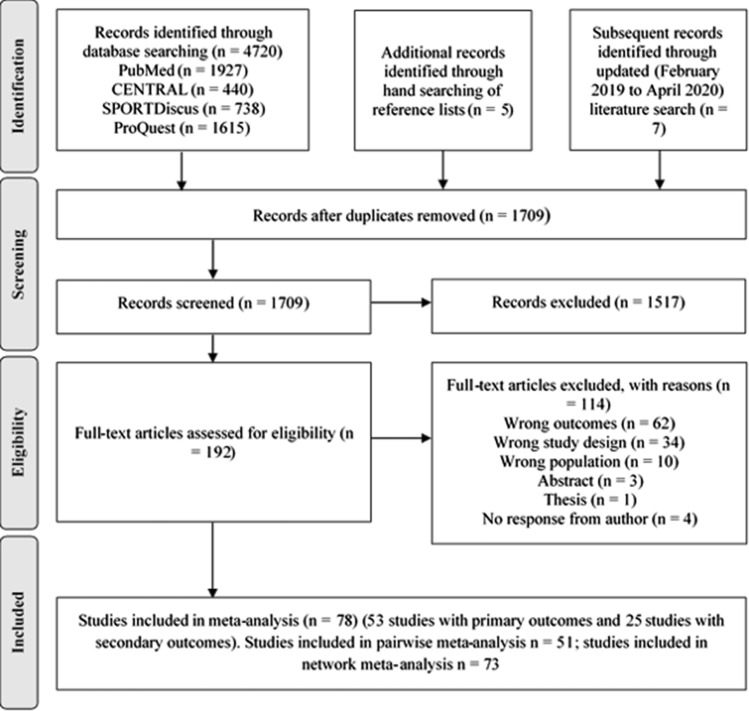
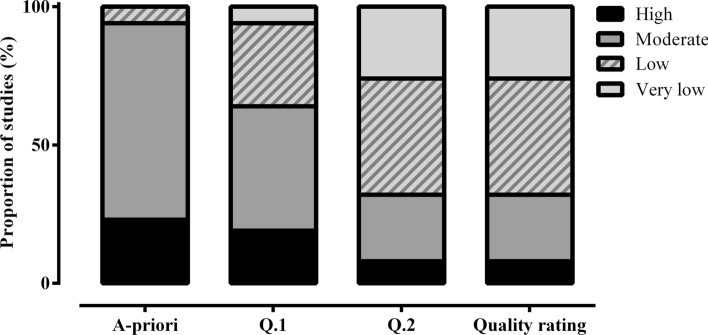
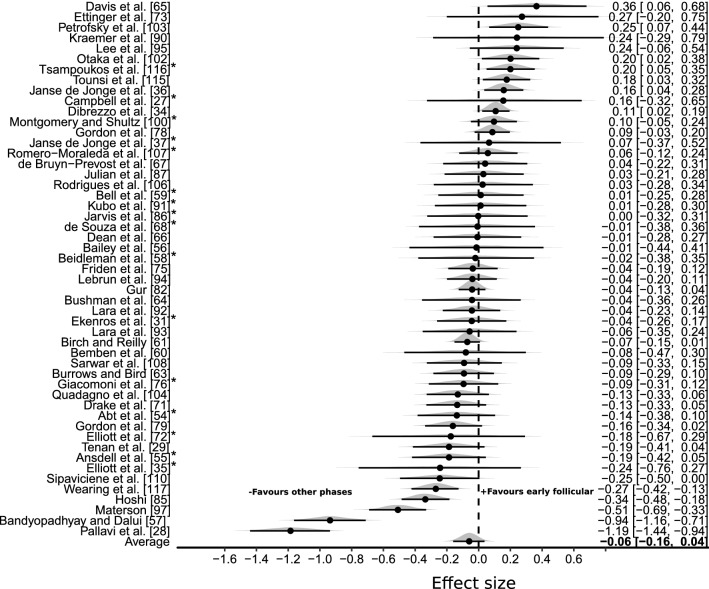
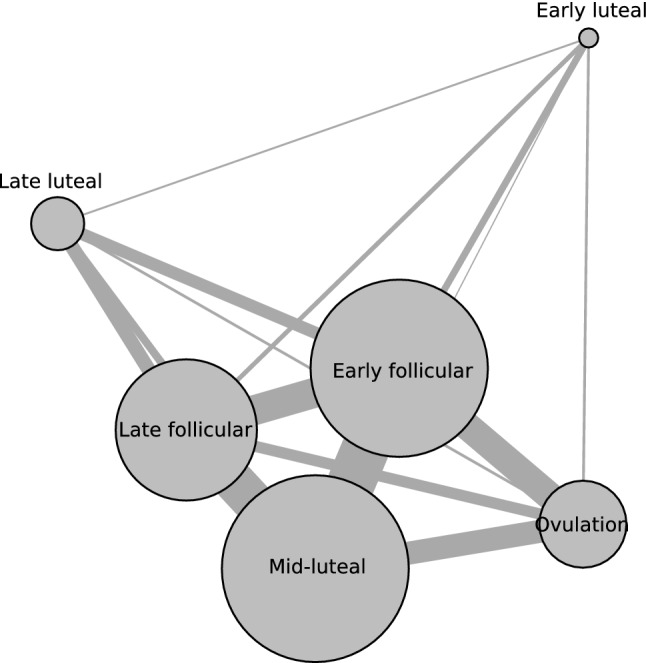
Background: Concentrations of endogenous sex hormones fluctuate across the menstrual cycle (MC), which could have implications for exercise performance in women. At present, data are conflicting, with no consensus on whether exercise performance is affected by MC phase. Objective: To determine the effects of the MC on exercise performance and provide evidence-based, practical, performance recommendations to eumenorrheic women. Methods: This review followed the Preferred Reporting Items for Systematic Reviews and Meta-Analyses (PRISMA) guidelines. Four databases were searched for published experimental studies that investigated the effects of the MC on exercise performance, which included at least one outcome measure taken in two or more defined MC phases. All data were meta-analysed using multilevel models grounded in Bayesian principles. The initial meta-analysis pooled pairwise effect sizes comparing exercise performance during the early follicular phase with all other phases (late follicular, ovulation, early luteal, mid-luteal and late luteal) amalgamated. A more comprehensive analysis was then conducted, comparing exercise performance between all phases with direct and indirect pairwise effect sizes through a network meta-analysis. Results from the network meta-analysis were summarised by calculating the Surface Under the Cumulative Ranking curve (SUCRA). Study quality was assessed using a modified Downs and Black checklist and a strategy based on the recommendations of the Grading of Recommendations Assessment Development and Evaluation (GRADE) working group. Results: Of the 78 included studies, data from 51 studies were eligible for inclusion in the initial pairwise meta-analysis. The three-level hierarchical model indicated a trivial effect for both endurance- and strength-based outcomes, with reduced exercise performance observed in the early follicular phase of the MC, based on the median pooled effect size (ES 0.5 = − 0.06 [95% credible interval (CrI): − 0.16 to 0.04]). Seventy-three studies had enough data to be included in the network meta-analysis. The largest effect was identified between the early follicular and the late follicular phases of the MC (ES 0.5 = − 0.14 [95% CrI: − 0.26 to − 0.03]). The lowest SUCRA value, which represents the likelihood that exercise performance is poor, or among the poorest, relative to other MC phases, was obtained for the early follicular phase (30%), with values for all other phases ranging between 53 and 55%. The quality of evidence for this review was classified as “low” (42%). Conclusion: The results from this systematic review and meta-analysis indicate that exercise performance might be trivially reduced during the early follicular phase of the MC, compared to all other phases. Due to the trivial effect size, the large between-study variation and the number of poor-quality studies included in this review, general guidelines on exercise performance across the MC cannot be formed; rather, it is recommended that a personalised approach should be taken based on each individual's response to exercise performance across the MC.
Overview
The claims and statistics of this paper haven’t been checked yet.
Run the check — free, no account needed. It reads the open-access text and checks the sources it cites.
Integrity signals
Registry
Cites
Statistics
Figures
Verification
Claims the paper makes
The claims and statistics of this paper haven’t been checked yet.
Run the check — free, no account needed. It reads the open-access text and checks the sources it cites.
Claims other papers make about this one
Each is checked against this paper’s own text: does it say what the citing paper says it does?
The source backs part of the claim, not all of it — or backs it for a different population, condition or comparison.
In the citing paper
“A Bayesian approach was selected because it estimates the full probability distribution of treatment effects rather than relying on binary significance testing, allowing more informative interpretation of effect sizes and associated uncertainty [40, 41].”
From The Effect of Different Psychological Interventions on Athletes' Competitive Anxiety: A Systematic Review and Bayesian Network Meta-Analysis. (2026) · cites this paper as [41]
Experimental — accuracy not yet measured
Self-check
Percentages, sums and reported differences re-computed from the paper’s own numbers.
The self-check needs the paper’s full text.
Citations
Cites
Preferred reporting items for systematic reviews and meta-analyses: the PRISMA Statement.
(2009) · PubMed Central · Cited by 44,859
Preferred reporting items for systematic reviews and meta-analyses: The PRISMA statement
Moher, D., Liberati, A., Tetzlaff, J., Altman, D. G., & the PRISMA Group* (2009) · Annals of Internal Medicine · doi:10.7326/0003-4819-151-4-200908180-00135 · Cited by 37,554
Gelman, A., Carlin, J. B., Stern, H. S., & Rubin, D. B. (2003) · doi:10.1201/9780429258480 · Cited by 27,276
Dermyshi, E., Wang, Y., Yan, C., Hong, W., Qiu, G., Gong, X., & Zhang, T. (2017) · Neonatology · doi:10.1159/000454668 · Cited by 24,586
GRADE guidelines: 1. Introduction—GRADE evidence profiles and summary of findings tables
Guyatt, G., Oxman, A. D., Akl, E. A., Kunz, R., Vist, G., Brozek, J., Norris, S., Falck-Ytter, Y., Glasziou, P., & deBeer, H. (2011) · Journal of Clinical Epidemiology · doi:10.1016/j.jclinepi.2010.04.026 · Cited by 10,681
brms : An R Package for Bayesian Multilevel Models Using Stan
Bürkner, P.-C. (2017) · Journal of Statistical Software · doi:10.18637/jss.v080.i01 · Cited by 9,476
GRADE guidelines: 3. Rating the quality of evidence
Balshem, H., Helfand, M., Schünemann, H. J., Oxman, A. D., Kunz, R., Brozek, J., Vist, G. E., Falck-Ytter, Y., Meerpohl, J., & Norris, S. (2011) · Journal of Clinical Epidemiology · doi:10.1016/j.jclinepi.2010.07.015 · Cited by 8,285
Downs, S. H., & Black, N. (1998) · Journal of Epidemiology and Community Health · doi:10.1136/jech.52.6.377 · Cited by 8,252
Salanti, G., Ades, A. E., & Ioannidis, J. P. A. (2011) · Journal of Clinical Epidemiology · doi:10.1016/j.jclinepi.2010.03.016 · Cited by 3,766
Norderyd, O. M., Koch, G., Papias, A., Köhler, A. A., Helkimo, A. N., Brahm, C., Lindmark, U., Lindfors, N., Mattsson, A., Rolander, B., et al. (2015) · PubMed · Cited by 3,584
Research works printed but not linked: 3
- Cohen J. Statistical power analysis for the social sciences. 2nd ed. New Jersey: Lawrence Erlbaum Associates; 1988.
- Grucza R, Pekkarinen H, Hanninen O. Cardiorespiratory responses to bicycle incremental exercise in women taking oral contraceptives. Biol Sport. 2002;19(3):267–79.
- Masterson G. The impact of menstrual phases on anaerobic power performance in collegiate women. J Strength Cond Res. 1999;13(4):325–9.
Cited by
Sorted by citations
Items 301–400 of 810
Abadi, M. M. K., Hemmatinafar, M., & Jahromi, M. K. (2024) · PLoS ONE · doi:10.1371/journal.pone.0311979 · Cited by 6
Brown, R. D., Bondy, E., Prim, J., Dichter, G. S., & Schiller, C. E. (2024) · Frontiers in Psychiatry · doi:10.3389/fpsyt.2024.1448914 · Cited by 7
Hamstring-to-Quadriceps Strength Ratios in Women Team Sport Athletes: A Systematic Review
Korpinen, M. M., Trieschock, D., Fields, J. B., Jagim, A. R., Almonroeder, T. G., & Jones, M. T. (2024) · Strength and conditioning journal · doi:10.1519/ssc.0000000000000867 · Cited by 5
Morton, L. C., Paton, C. D., Aberkane, R., & Braakhuis, A. J. (2025) · European Journal of Sport Science · doi:10.1002/ejsc.12267 · Cited by 5
Jørgensen, H., Davenport, M. H., Holt, N. L., & McHugh, T.-L. (2025) · BMJ Open Sport & Exercise Medicine · doi:10.1136/bmjsem-2024-002407 · Cited by 5
Shahid, W., & Noor, R. (2025) · Scientific Reports · doi:10.1038/s41598-025-00599-x · Cited by 5
“Furthermore, individuals with menstrual irregularities such as endometriosis, ovarian cysts, or other comorbidities, including a history of cardiac events or seizures, were not included 33 .”
Trofè, A., Piras, A., Breviglieri, L., Laffi, A., Meoni, A., & Raffi, M. (2025) · Journal of Functional Morphology and Kinesiology · doi:10.3390/jfmk10020232 · Cited by 5
Carr, G., & Fleddermann, M. (2025) · Scandinavian Journal of Medicine and Science in Sports · doi:10.1111/sms.70093 · Cited by 6
“Research, including a meta-analysis by McNulty et al. [71], suggests that exercise performance may vary across different phases of the MC. Based on this evidence, there is already a recommendation for practitioners working with (elite) athletes to incorporate MC considerations into their athletic…”
InfluentialSmith, K. L., Shah, A. K., Burkhart, R. J., Adelstein, J. M., Moyal, A. J., Maheshwer, B., Voos, J. E., & Salata, M. J. (2025) · Arthroscopy The Journal of Arthroscopic and Related Surgery · doi:10.1016/j.arthro.2025.07.017 · Cited by 5
Akalu, Y., Tallent, J., Frazer, A. K., Siddique, U., Rostami, M., Howatson, G., Walker, S., & Kidgell, D. J. (2026) · The Journal of Physiology · doi:10.1113/jp289141 · Cited by 5
Oester, C., Norris, D., Lovell, R. J., Pedlar, C. R., Bruinvels, G., & Kalkhoven, J. T. (2026) · Sports Medicine · doi:10.1007/s40279-026-02411-w · Cited by 6
“For readers seeking more detailed overviews of studies examining the impact of the menstrual cycle on sports performance, several detailed reviews are available [132, 134–136].”
Natalucci, V., Spinello, G., Moro, T., Pavei, G., Boccia, G., Torre, A. L., & Bonato, M. (2026) · Nutrients · doi:10.3390/nu18071144 · Cited by 5
“Notably, even when menstrual cycle phases are verified using direct hormonal measurements, substantial overlap in endocrine profiles and functional responses persists, limiting the predictive value of phase-based classifications alone [8–10].”
Oral Contraception Use and Musculotendinous Injury in Young Female Patients: A Database Study
Rodriguez, L., Liu, Y., Soedirdjo, S. D. H., Thakur, B., & Dhaher, Y. Y. (2023) · Medicine & Science in Sports & Exercise · doi:10.1249/mss.0000000000003334 · Cited by 5
Hagerupsen, K., Pedersen, S., Giller, N. B., Thomassen, N. K., Heitmann, K. A., Sagelv, E. H., Osborne, J. O., & Johansen, K. R. (2024) · BMC Sports Science Medicine and Rehabilitation · doi:10.1186/s13102-024-00911-8 · Cited by 6
Safford, D. W., Shah, K. M., Breidenbach, F., & McClure, P. W. (2024) · International Journal of Sports Physical Therapy · doi:10.26603/001c.118143 · Cited by 5
Döring, N. M., Shevtsova, A., & Schumann-Doermer, C. (2024) · Zeitschrift für Sexualforschung · doi:10.1055/a-2343-4279 · Cited by 5
Lubiak, S. M., Lawson, J. E., Rojas, D. H. G., Proppe, C. E., Rivera, P. M., Hammer, S. M., Trevino, M. A., Dinyer, T. K., Montgomery, T. R., Olmos, A. A., et al. (2024) · The Journal of Strength and Conditioning Research · doi:10.1519/jsc.0000000000004907 · Cited by 5
“This study made no attempt to control for the menstrual cycle, but based on the randomization of the study visits and previous findings (27) suggesting an insignificant effect, it is our current interpretation that this did not meaningfully influence the results.”
O’Leary, T. J., EVANS, H. A., Close, M.-E. O., Izard, R. M., Walsh, N. P., Coombs, C. V., Carswell, A. T., Oliver, S. J., TANG, J. C. Y., Fraser, W. D., et al. (2024) · Medicine & Science in Sports & Exercise · doi:10.1249/mss.0000000000003588 · Cited by 5
“Due to the nature of military training, our nonuser group was tested at various points of the menstrual cycle, but there are unlikely to be any effects on performance (65).”
Water intake in athletes: Agreement between food records and isotope-dilution methods
Jesus, F., Vincenzo, O. D., Francisco, R., Nunes, C. L., Kondo, E., Rocha, P., Minderico, C. S., Sardinha, L. B., Schoeller, D. A., & Silva, A. M. (2024) · Clinical Nutrition · doi:10.1016/j.clnu.2024.11.026 · Cited by 5
Enders, K., Hillen, B., Haller, N., Brahmer, A., Weber, V., Simon, P. D., & Neuberger, E. W. I. (2025) · Experimental Physiology · doi:10.1113/ep092284 · Cited by 7
“Given that we did not control for the menstrual cycle phase or hormonal contraception in the female participants, the potential impact of the menstrual cycle warrants discussion (McNulty et al., 2020).”
Ventilation differences in the menstrual cycle: A systematic review and meta-analysis
Rattley, C. A., Ansdell, P., Burgess, L. C., Felton, M., Dewhurst, S., Armstrong, M., & Neal, R. A. (2025) · Respiratory Physiology & Neurobiology · doi:10.1016/j.resp.2025.104468 · Cited by 5
Self-citationGuardieiro, N. M., Barreto, G., Marticorena, F. M., Oliveira, T. N., de Oliveira, L. F., Pinto, A. L. D. S., do Prado, D. M. L., Saunders, B., & Gualano, B. (2022) · Journal of Physical Activity and Health · doi:10.1123/jpah.2022-0145 · Cited by 5
O'Malley, C., Fullerton, C. L., & Mauger, A. R. (2023) · Psychology of sport and exercise · doi:10.1016/j.psychsport.2023.102544 · Cited by 4
Hormonal contraception for female athletes presents special needs and concerns
Seidman, L., Seidman, D. S., & Constantini, N. (2023) · The European Journal of Contraception & Reproductive Health Care · doi:10.1080/13625187.2023.2287960 · Cited by 5
“Yet, the magnitude of the effect, if any, on aerobic performance remains inconclusive [8,10,16–18]. it was noted that it may be difficult to reach clear generalisation from these studies, since they are all small, use different methodologies and assess a wide range of Oc formulations [2].”
BackgroundOxfeldt, M., FREDERIKSEN, L. K., GUNNARSON, T., & Hansen, M. (2024) · The Journal of Sports Medicine and Physical Fitness · doi:10.23736/s0022-4707.23.15458-2 · Cited by 5
Rebelo, A., Martinho, D. V., Pires, I. G., Arrais, I., Lima, R., Valente‐dos‐Santos, J., & Pereira, J. R. (2024) · International Journal of Sports Physiology and Performance · doi:10.1123/ijspp.2023-0237 · Cited by 5
Convit, L., Kelly, M. K., Jardine, W. T., Périard, J. D., Carr, A. J., Warmington, S. A., Bowe, S. J., & Snipe, R. M. J. (2024) · Journal of Sports Sciences · doi:10.1080/02640414.2024.2396225 · Cited by 4
“Despite these conflicting findings (McNulty et al., 2020), in studies where menstrual cycle phase was verified, prolonged aerobic exercise performance and capacity was lower during the mid-luteal compared to the follicular phase of the menstrual cycle under temperate (~20°C, 45”
Hogwood, A. C., de Zevallos, J. O., Kruse, K., Buckley, M., Guzman, J. C. D., Lempke, A. F. D., WELTMAN, A. L., & Allen, J. D. (2024) · Journal of Applied Physiology · doi:10.1152/japplphysiol.00323.2024 · Cited by 9
Hirsch, K. R., Cabre, H. E., Gould, L. M., Blue, M. N. M., & Smith‐Ryan, A. E. (2022) · Journal of the American Nutrition Association · doi:10.1080/07315724.2022.2060373 · Cited by 5
Bok, D., Jukić, N., & Foster, C. (2021) · Biology of Sport · doi:10.5114/biolsport.2022.109458 · Cited by 5
“The menstrual cycle phase of the female participants was not controlled as we believed that it would not affect the results of this study even if trivial reduction in certain fitness components would occur in some individuals [17].”
BackgroundElliott-Sale, K. J., McNulty, K. L., Goodall, S., Ansdell, P., Thomas, K., Swinton, P. A., Dolan, E., & Hicks, K. M. (2020) · Sports Medicine · doi:10.1007/s40279-020-01383-9 · Cited by 5
Self-citationKrólikowska, A., Prill, R., Patt, T., Kayaalp, M. E., Ostojić, M., & Oleksy, Ł. (2025) · Knee Surgery Sports Traumatology Arthroscopy · doi:10.1002/ksa.70257 · Cited by 5
Li, Y., Qiu, B., Kuai, H., Huang, K., Liu, H., Zhang, M., Yin, M., Zhang, Y., Deng, H., Zhong, Y., et al. (2025) · Frontiers in Nutrition · doi:10.3389/fnut.2025.1669004 · Cited by 4
Li, L., Wang, J., Li, Q., & Fu, Q. (2026) · Sports Medicine - Open · doi:10.1186/s40798-026-01007-y · Cited by 5
“A Bayesian approach was selected because it estimates the full probability distribution of treatment effects rather than relying on binary significance testing, allowing more informative interpretation of effect sizes and associated uncertainty [40, 41].”
Saner, N. J., Kuang, J., Cheng, I.-T., Drain, J. R., & Bishop, D. J. (2024) · The Journal of Strength and Conditioning Research · doi:10.1519/jsc.0000000000004868 · Cited by 4
“Althoughrecentevidencesuggestsonlyasubtle influence of the menstrual cycle stage on exercise performance (7,21), without this information, we cannot disregard the influence of the menstrual cycle on the outcomes.”
Arnaoutis, G., & Neophytou, P. (2025) · Nutrients · doi:10.3390/nu17091452 · Cited by 4
“Progesterone-mediated fluid retention during the luteal phase of the menstrual cycle may impact hydration status and performance outcomes, underscoring the need for future research in female combat athletes [73].”
Patellar tendon adaptations to resistance training in young women using combined oral contraceptives
Vesterhus, I., Hesseberg, E., Fjeldberg, K., Engstad, M. K., Paulsen, G., Hansen, M., Nordez, A., Lacourpaille, L., & Seynnes, O. (2025) · PeerJ · doi:10.7717/peerj.19581 · Cited by 4
“Although we standardized testing timing during the menstrual or OC cycle to account for hormonal variations ( McNulty et al., 2020 ), the 3–9-day window might have placed some participants in the early consumption or mid-follicular phase, potentially altering hormonal environments.”
Gibbons, A. E., Thorpe, H., Hemi, K. V., Bruinvels, G., Pedlar, C. R., & Hamilton, B. H. (2025) · International Review for the Sociology of Sport · doi:10.1177/10126902251351181 · Cited by 4
“…decades, sport scientists have examined how sporting participation (and sport-related stressors) can impact the menstrual cycle, as well as how menstruation can impact athletes ’ health, well-being performance (Brown et al., 2021; Bruinvels et al., 2017; Heather et al., 2021; McNulty et al., 2020).”
Scott, D., Lovell, R. J., & Wilson, B. (2025) · Sports Medicine · doi:10.1007/s40279-025-02266-7 · Cited by 4
Schaffarczyk, M., HIPP, T., Fuchs, K., Reichelt, L., Rückemann, L., & Gronwald, T. (2025) · Medicine & Science in Sports & Exercise · doi:10.1249/mss.0000000000003861 · Cited by 4
Sherwin, G., Flood, T. R., Burden, R. J., Burke, L. M., Field, A., Kuikman, M. A., McKay, A. K. A., Smith, E. S., & Elliott-Sale, K. J. (2025) · Journal of Sports Sciences · doi:10.1080/02640414.2025.2583013 · Cited by 4
“This framework contains criteria not captured in the modified D&B checklist, such as tracking MC characteristics of participants for at least 1 month prior to testing, and repeating outcomes measures in a second independent MC. McNulty et al. (2020) also restricted inclusion to studies reporting average MC lengths of…”
InfluentialSelf-citationSexual dimorphism in the serum metabolome following acute exhaustive exercise
Wu, B., Tang, C., Ren, Z., Qian, J., Deng, Y., Fan, Z., Zhang, Y., & Shi, L. (2025) · Biology of Sex Differences · doi:10.1186/s13293-025-00780-x · Cited by 6
Badier, N., Dupuit, M., Chassard, T., Barlier, K., Lafitte, A., Saulière, G., Delrieu, L., Toussaint, J., & Antero, J. (2025) · Frontiers in Sports and Active Living · doi:10.3389/fspor.2025.1693190 · Cited by 4
The influence of the menstrual cycle on muscle injuries - a systematic review and meta-analysis
Guthardt, Y., Sargent, D., & Julian, R. (2026) · Scientific Reports · doi:10.1038/s41598-026-36763-0 · Cited by 4
“Following McNulty et al. 22 and based on the recommendations of De Jonge et al. 51 , the initial rating was either maintained or downgraded based on two questions considered vital to assessing the indirectness of the research studies: ( Q1) Was the menstrual cycle phase confirmed using blood samples or urinary ovulati…”
InfluentialJenz, S. T., Spillane, P., O'Hanlon, M., Nédélec, E., Heckman, C. J., Piasecki, M., Ansdell, P., Piasecki, J., & Pearcey, G. E. P. (2026) · The Journal of Physiology · doi:10.1113/jp291036 · Cited by 4
Self-citationThe effects of the menstrual cycle on physical and psychological parameters in female athletes
Niering, M., Schilling, V., Beurskens, R., & Seifert, J. (2026) · Scientific Reports · doi:10.1038/s41598-026-47706-0 · Cited by 4
Franklin, E., Stebbings, G. K., Morse, C. I., Runacres, A., & Dos’Santos, T. (2024) · Life · doi:10.3390/life14070892 · Cited by 4
“…regarding the menstrual status of the athletes in the current study; however, based on the generally low quality of the evidence, the effect of the menstrual cycle phase and contraception usage has been suggested to have a limited effect on exercise performance and injury risk screening [11,77,78].”
BackgroundNokoff, N., Nemkov, T. G., Bothwell, S., Cree‐Green, M., Fuller, K. N. Z., Keller, A. C., Kelsey, M. M., Nadeau, K. J., & Moreau, K. L. (2024) · Journal of Applied Physiology · doi:10.1152/japplphysiol.00629.2024 · Cited by 4
Female Athletes Report Positive Experiences as Research Participants
Smith, E. S., McKay, A. K. A., Ackerman, K. E., Elliott-Sale, K. J., Stellingwerff, T., Harris, R., & Burke, L. M. (2025) · International Journal of Sport Nutrition and Exercise Metabolism · doi:10.1123/ijsnem.2024-0182 · Cited by 4
Self-citationWomen in the triathlon—the differences between female and male triathletes: a narrative review
Loosli, M., Nikolaidis, P. Τ., Scheer, V., Wilhelm, M., Forte, P. M., Andrade, M. S., Rosemann, T. J., Đurić, S., Čuk, I., & Knechtle, B. (2025) · Frontiers in Sports and Active Living · doi:10.3389/fspor.2025.1567676 · Cited by 5
Silva, A. F., Trybulski, R., Trybek, G., Moska, W., Aidar, F. J., & González-Férnandez, F. T. (2025) · Journal of Sports Science and Medicine · doi:10.52082/jssm.2025.532 · Cited by 4
Sánchez-Abselam, O., González-Férnandez, F. T., Figueiredo, A. J., Castillo-Rodríguez, A., & Onetti-Onetti, W. (2024) · Heliyon · doi:10.1016/j.heliyon.2024.e29240 · Cited by 4
Prado, R. C. R., Hackney, A. C., Silveira, R., Kilpatrick, M. W., Takito, M. Y., & Asano, R. Y. (2024) · PubMed · Cited by 4
Menstrual cycle and strength levels in women: a pilot study
Arantes, F. D. A., Moreira, O. C., da Costa, B. D. D., Valente, J. S., Marins, J. C. B., & de Oliveira, C. E. P. (2024) · Cuadernos de Educación y Desarrollo · doi:10.55905/cuadv16n5-046 · Cited by 4
“In previous studies (Thompson et al., 2021; Dam et al., 2022; Dasa et al., 2021), these authors used a methodology compatible with this work, using groups et al., 2020).”
MethodBagot, S., Pereira, B., Lambert, C., Pélissier, L., Chanséaume, E., Duclos, M., Hackney, A. C., Elliott-Sale, K. J., Thivel, D., & Isacco, L. (2024) · The Journal of Sports Medicine and Physical Fitness · doi:10.23736/s0022-4707.24.15879-3 · Cited by 4
Self-citationGynaecological Health Patterns and Motherhood Experiences of Female Professional Football Players
Ramagole, D., van Rensburg, D. C. J., Cowie, C., Mehta, R., Ramkilawon, G., Pluim, B. M., Kerkhoffs, G. M. M. J., & Gouttebarge, V. (2025) · International Journal of Environmental Research and Public Health · doi:10.3390/ijerph22020136 · Cited by 4
Correlations Between Body Composition and Aerobic Fitness in Elite Female Youth Water Polo Players
Zámodics, M., Babity, M., Schay, G., Leel-Őssy, T., Bucskó-Varga, Á., Kulcsar, P., Benko, R., Boroncsok, D., Fábián, A., Ujvári, A., et al. (2025) · Sports · doi:10.3390/sports13020051 · Cited by 4
“Most studies found either minimal or no association between the menstrual cycle and exercise performance [46–48].”
Birdsey, L. P., Weston, M., Russell, M. A., Johnston, M., Cook, C. J., & Kilduff, L. P. (2021) · European Journal of Sport Science · doi:10.1080/17461391.2020.1869837 · Cited by 4
The use of interval-training methods by coaches of well-trained middle- to long-distance runners
Parmar, A., Jones, T. W. A., & Hayes, P. R. (2021) · International Journal of Strength and Conditioning · doi:10.47206/ijsc.v1i1.54 · Cited by 3
Zheng, H., Badenhorst, C. E., Lei, T., Muhamed, A. M. C., Liao, Y., Amano, T., Fujii, N., Nishiyasu, T., Kondo, N., & Mündel, T. (2021) · Journal of Applied Physiology · doi:10.1152/japplphysiol.00342.2021 · Cited by 4
Borkar, K., & Borkar, P. (2022) · International Journal of Physical Education Sports and Health · doi:10.22271/kheljournal.2022.v9.i2f.2488 · Cited by 4
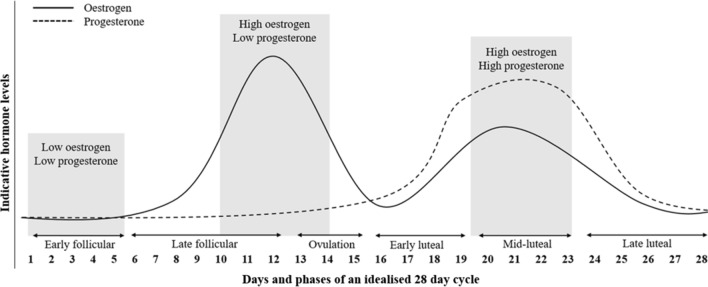
“These changes are conventionally divided into phases –early follicular phase (days 15), late follicular phase (days 6-12), ovulation (days 13-15), early luteal (days 16-19), midluteal (days 20-23) and late luteal (days 24-28) ([2]).”
BackgroundResultCaffeine intake increases countermovement jump performance in well-trained high jumpers
Santos-Mariano, A. C., Cristina-Souza, G., Santos, P. S., Domingos, P. R., De-Oliveira, P., Bertuzzi, R., Rodacki, C. D. L. N., & Lima‐Silva, A. E. (2022) · PharmaNutrition · doi:10.1016/j.phanu.2022.100305 · Cited by 5
Ishikawa, A., Matsuda, T., Gam, H., Kanno, M., Yamada, M., Ikegami, N., Funaki, A., Ogata, H., Kamemoto, K., Ichihara, T., et al. (2022) · Nutrients · doi:10.3390/nu14193896 · Cited by 4
“assessed the quality of studies in their meta-analysis of the menstrual cycle and sports performance [37].”
BackgroundMuñoz, C., del Campo, J., García, A. E., Luján, J. F. G., Martínez-Gallego, R., & Ramon-Llin, J. A. (2023) · Applied Sciences · doi:10.3390/app131910879 · Cited by 4
Kubica, C., Ketelhut, S., Querciagrossa, D., BURGER, M., WIDMER, M., BERNHARD, J., SCHNEIDER, M., Ries, T., & Nigg, C. R. (2023) · The Journal of Sports Medicine and Physical Fitness · doi:10.23736/s0022-4707.23.15277-7 · Cited by 6
Villegas-Serna, T., Wilson, L. J., & Curtis, C. (2023) · Journal of Thermal Biology · doi:10.1016/j.jtherbio.2023.103758 · Cited by 4
Effects of menstrual cycle phases on elasticity index in female soccer players
Aloy, À. M., Sanz, C., Fernández, Á. G., & García, C. M. (2024) · Journal of Human Sport and Exercise · doi:10.14198/jhse.2024.191.07 · Cited by 3
Smith, J. S., Bellissimo, G. F., & Amorim, F. T. (2025) · Frontiers in Physiology · doi:10.3389/fphys.2024.1511961 · Cited by 3
Seynnes, O., Nordez, A., Lacourpaille, L., Hesseberg, E., Vesterhus, I., Fjeldberg, K., Engstad, M. K., Hansen, M., & Paulsen, G. (2025) · European Journal of Applied Physiology · doi:10.1007/s00421-025-05753-x · Cited by 3
“Further, we standardized testing timing during the menstrual/OC cycle to account for hormonal variations (McNulty et al. 2020) to a 3–9-day window.”
Xu, Q., Wang, Z., Liu, L., Mao, R., Xi, C., & Shi, G. (2025) · Frontiers in Psychology · doi:10.3389/fpsyg.2025.1517102 · Cited by 4
Chen, W. (2025) · Journal of Health Population and Nutrition · doi:10.1186/s41043-025-01031-w · Cited by 4
“Although evidence suggests that females can achieve hypertrophy and strength gains similar to males under equivalent training protocols [63], relatively few studies explicitly focus on female hormonal influences (e.g., menstrual cycle phase) or tailor interventions to women [64, 65].”
Vicente-Salar, N., Crespo, M., Pluim, B. M., Fernández-Fernández, J., Stroia, K. A., Ellenbecker, T. S., Rivas, D. S., Coso, J. D., Moreno-Pérez, V., Hainline, B. W., et al. (2025) · International Journal of Sport Nutrition and Exercise Metabolism · doi:10.1123/ijsnem.2025-0001 · Cited by 7
Solli, G. S., Topranin, V. D. M., Svantorp-Tveiten, K. M. E., & Noordhof, D. A. (2025) · International Journal of Sports Physiology and Performance · doi:10.1123/ijspp.2025-0068 · Cited by 3
Wei, M., Shen, X., & Wang, S. (2025) · Frontiers in Physiology · doi:10.3389/fphys.2025.1622669 · Cited by 3
Perceived impact of the menstrual cycle on sports performance in adolescent and adult women
Zinner, C., Aschendorf, P., Noël, B., & Klatt, S. (2025) · German Journal of Exercise and Sport Research · doi:10.1007/s12662-025-01070-9 · Cited by 3
“Particularly during menstruation, athletes reported a perceived decrease in performance (Blagrove et al., 2020; Carmichael, Thomson, Moran, Wycher-ley, 2021; Findlay et al., 2020; McNulty et al., 2020; Meignie et al., 2021).”
Homan, P., & Short, S. E. (2025) · The Lancet Regional Health - Americas · doi:10.1016/j.lana.2025.101288 · Cited by 3
Нагорна, В., Sencha-Hlevatska, K. V., Fehr, D., Bonmarin, M., Korobeynikov, G., Mytko, A., & Lorenzetti, S. (2026) · Sports · doi:10.3390/sports14010007 · Cited by 5
“Progesterone then rises post-ovulation to support the luteal phase [11,12].”
InfluentialFemale trail running: a systematic scoping review
Espasa-Labrador, J., Sandbakk, Ø. B., Cebrián‐Ponce, Á., Irurtia, A., Carrasco‐Marginet, M., & Osborne, J. O. (2026) · Frontiers in Sports and Active Living · doi:10.3389/fspor.2025.1694925 · Cited by 4
Kirschbaum, E. M., Henke, J., Heyde, K., & Legerlotz, K. (2026) · Health Science Reports · doi:10.1002/hsr2.71812 · Cited by 3
“Although most observed effects were small, they should not be dismissed in the context of elite sport [35, 36].”
Elliott-Sale, K. J., Burden, R. J., Ackerman, K. E., Burke, L. M., Constantini, N., Hackney, A. C., Harris, R., Impellizzeri, F. M., de Jonge, X. J., Lebrun, C. M., et al. (2026) · Sports Medicine · doi:10.1007/s40279-026-02442-3 · Cited by 3
“…being published within hours of each other and by the same authorship team, a review on the effects of the menstrual cycle on athletic performance [2] has been accessed 166 k times and cited 620 times in comparison to a review on the effects of oral contraceptives on athletic performance [3],…”
Self-citationAllen, A. M., Valenti, M., Linde-Krieger, L. B., Medvescek, K., & Farland, L. V. (2023) · Experimental and Clinical Psychopharmacology · doi:10.1037/pha0000671 · Cited by 3
At What Point in the Menstrual Cycle Are the Pelvic Floor Muscles at Their Weakest?
Ojedo‐Martín, C., Rodríguez‐López, E. S., Acevedo-Gómez, M. B., Úbeda-D’Ocasar, E., de-Diego, M. V., & Lara, B. (2024) · Journal of Functional Morphology and Kinesiology · doi:10.3390/jfmk9030135 · Cited by 3
“Muscle performance during the MC has been evaluated [5–7]; however, the literature has not provided a robust conclusion regarding the impact of the MC on physical performance variations.”
BackgroundMethodNewbury, J. W., Cole, M., Kelly, A. L., & Gough, L. A. (2024) · Nutrients · doi:10.3390/nu16183123 · Cited by 3
“…little information to suggest that menstrual cycle stage affects physical performance or physiological responses to NaHCO 3 supplementation in highly trained female athletes [59,60], it is recognised that the current assumption was based on limited research [61], and was not specific to swimmers.”
BackgroundMenstrual-Cycle and Hormonal-Contraceptive Tracking in Gaelic Football: From the Lab to the Field
Taim, B. C., Catháin, C. Ó., Elliott-Sale, K. J., Madigan, S. M., & Chéilleachair, N. N. (2024) · International Journal of Sports Physiology and Performance · doi:10.1123/ijspp.2023-0489 · Cited by 3
Self-citationBadier, N., Dupuit, M., Dormion, G., Chassard, T., Barlier, K., Lafitte, A., Delrieu, L., Toussaint, J., & Antero, J. (2025) · Applied Sciences · doi:10.3390/app15031357 · Cited by 4
Mendes, G. L., Oliveira, H. A., dos Reis, A. S., Nakamoto, F. P., Staibano, A., Alvares, L. A. M., Ferreira, R. E. S., dos Santos, R. V. T., & Quaresma, M. V. L. D. S. (2025) · Nutrition and Health · doi:10.1177/02601060241307981 · Cited by 4
“Both can affect the dynamics of energy production at rest and during exercise (Roepstorff et al., 2002), although the effect of MC phases on physical performance is uncertain (McNulty et al., 2020).”
Hasegawa, J. S., Silveira, A. C., Azevedo, R. D. A., Schamne, J. C., Rondon, M. U. P. B., Papoti, M., Lima‐Silva, A. E., Koehle, M. S., & Bertuzzi, R. (2025) · American Journal of Physiology-Regulatory, Integrative and Comparative Physiology · doi:10.1152/ajpregu.00145.2024 · Cited by 6
Rowland, S. N., Boit, M. D., Tan, R., Heaney, L. M., & Bailey, S. J. (2025) · Experimental Physiology · doi:10.1113/ep092415 · Cited by 3
“Thus, there remains insufficient high-quality data to draw definitive conclusions about the effects of cyclical fluctuations in endogenous estrogen and progesterone (McNulty et al., 2020)”
Prado, R. C. R., Oliveira, T. N., Saunders, B., Foster, R., Bella, Z. I. K. D. J. D., Kilpatrick, M. W., Asano, R. Y., Hackney, A. C., & Takito, M. Y. (2025) · Endocrines · doi:10.3390/endocrines6010014 · Cited by 3
“The strength of this study lies in its relatively large sample size compared to other studies in this field [46].”
Mascherini, G., Serafini, S., Bianchi, E., Izzicupo, P., & Micheli, M. L. (2025) · Sport Sciences for Health · doi:10.1007/s11332-025-01446-2 · Cited by 3
“Current evidence suggests two main trends: (1) physical performance may be slightly impaired during the early follicular phase compared to other MC phases [13]; and (2) body composition may show increased extracellular fluid content during the early follicular phase [7].”
Amdi, C. H., Cleather, D. J., & Tallent, J. (2025) · International Journal of Sports Science & Coaching · doi:10.1177/17479541251371308 · Cited by 3
Günay, A., & Karahanoğlu, A. (2025) · Interacting with Computers · doi:10.1093/iwc/iwaf040 · Cited by 3
Characteristics of sudden cardiac arrest during endurance racing: a decade of the Paris registry
Chocron, R., Laurenceau, T., Cezard, P., Chabrol, M., Mignot, S., Meli, U., Langlois, C., Schwartz, P. J., Kääb, S., Levy, B. I., et al. (2026) · EP Europace · doi:10.1093/europace/euaf313 · Cited by 4
“These include hormonal influences, 30,31 sex-specific variations in the expression of cardiovascular disease, differing susceptibilities to arrhythmic triggers, 32 and distinct patterns of cardiac re-modelling in response to athletic training.”
New Zealand Blackcurrant extract supplementation does not improve repeated sprint ability
(2022) · The Journal of Sport and Exercise Science · doi:10.36905/jses.2022.01.01 · Cited by 3
“When assessing female participants, menstrual cycle phase should also be considered and where possible controlled for too, due to potential oestrogen-mediated antioxidant and glycogen sparing effects (McNulty et al., 2020).”
BackgroundSabermahani, F., Almasi‐Dooghaee, M., & Sheikhtaheri, A. (2022) · Informatics in Medicine Unlocked · doi:10.1016/j.imu.2022.101039 · Cited by 3
Dobashi, S., Kobayashi, T., Tanaka, Y., Shibayama, Y., & Koyama, K. (2022) · Current Research in Physiology · doi:10.1016/j.crphys.2022.09.007 · Cited by 3
“Since all experiments had to been conducted within 4 weeks in September to avoid the seasonal variation in sweat responses (Nakamura and Okamura, 1998), female participants who have the menstrual cycle affecting exercise performance (McNulty et al., 2020) were not recruited in this study.”
MethodMoran, R., Guin, J. R., Gardner, J. E., & Simer, J. (2023) · Archives of Clinical Neuropsychology · doi:10.1093/arclin/acad015 · Cited by 3
Pregnancy, Sex Hormones, and Exercise
Elliott-Sale, K. J. (2023) · Springer eBooks · doi:10.1007/978-3-031-21881-1_14 · Cited by 3
Self-citationMINAHAN, C. L., & Sabapathy, S. (2023) · Springer eBooks · doi:10.1007/978-3-031-21881-1_9 · Cited by 3
Menstrual Cycles as Key to Embodied Synchronisation
Rodriguez-Muguruza, A. (2023) · Interdisciplinary evolution research · doi:10.1007/978-3-031-30304-3_6 · Cited by 3
Metadata
- Authors
- McNulty, K. L., Elliott-Sale, K. J., Dolan, E., Swinton, P. A., Ansdell, P., Goodall, S., Thomas, K., & Hicks, K. M.
- Affiliations
- Northumbria University (GB)
- Nottingham Trent University (GB)
- Universidade de São Paulo (BR)
- Robert Gordon University (GB)
- Corresponding author
- Elliott-Sale, Kirsty Jayne
- ORCID
- Venue
- Sports Medicine
- Published
- 2020-07-13
- Volume
- 50
- Issue
- 10
- Pages
- 1813-1827
- ISSN
- 0112-1642 (ISSN-L)
- 1179-2035
- PMC
- PMC7497427
- OpenAlex
- W3038797657
- Cited by
- 812
- References
- 127
- Citations by year
- 2026: 183 · 2025: 181 · 2024: 153 · 2023: 136 · 2022: 72 · 2021: 70 · 2020: 17
- FWCI
- 14.50
- Type
- journal article
- Language
- en
- Open access
- hybrid
- doi.org
- Locations
- Sports Medicine (publishedVersion, cc-by)
- PubMed Central (publishedVersion, cc-by)
- PubMed (publishedVersion)
- Nottingham Trent University's Institutional Repository (Nottingham Trent Repository) (acceptedVersion)
- Northumbria Research Link (Northumbria University) (acceptedVersion)
- Open Access Institutional Repository at Robert Gordon University (Robert Gordon University) (submittedVersion, cc-by)
- Funders
- Fundação de Amparo à Pesquisa do Estado de São Paulo (19/05616-6, 2019/, 2019/05616)
- Topics
- Health Sciences › Medicine › Orthopedics and Sports Medicine › Sports Performance and Training
- Health Sciences › Medicine › Physiology (medical) › Cardiovascular and exercise physiology
- Health Sciences › Medicine › Public Health, Environmental and Occupational Health › Menstrual Health and Disorders
- Keywords
- menstrual cycle phases, exercise performance, eumenorrheic women, sex hormones, follicular phase, luteal phase, endurance performance, strength performance
- MeSH terms
- Female, Humans, Menstrual Cycle, Exercise, Athletic Performance
About these checks
Registry, retraction, Cites and statistics results are computed, not judged, with one exception: a printed reference that no index lists is read once by a model before it counts as a citation error. Claims are extracted by a model and kept only when their quote appears verbatim in the text; each cited source is then checked, with a model’s help, for whether it says what the claim relies on. Those verdicts can be wrong — read the claim’s quote and the cited source before relying on one.
Statistics and arithmetic are recomputed, not judged.
Confidence bands are shown only for fields calibrated on our annotated test set. None is calibrated yet, so no band is shown.
What counts as a claim ›How we measure confidence ›How we check this ›
Are you an author, or do you see a problem with this page? Request a review
