

The DOI matches its Crossref record; 127 of the 127 references it cites were found in a registry or an index.
The Effects of Menstrual Cycle Phase on Exercise Performance in Eumenorrheic Women: A Systematic Review and Meta-Analysis
Open accessAbstract
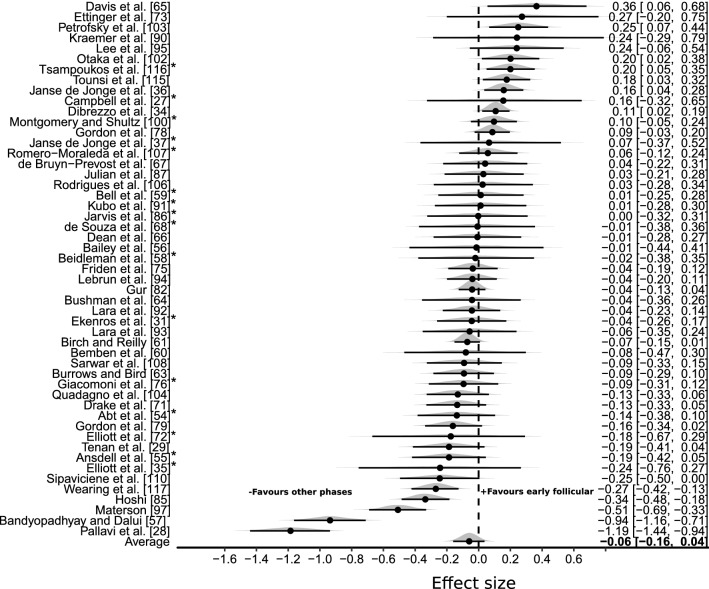
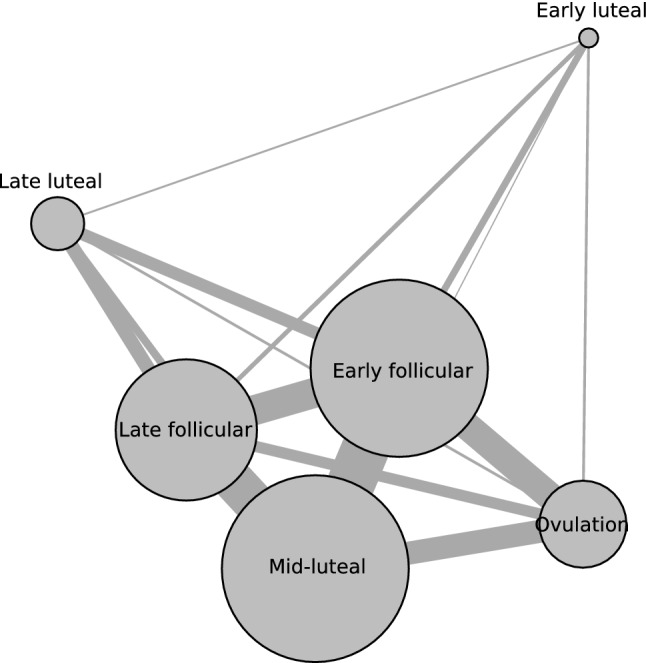
Background: Concentrations of endogenous sex hormones fluctuate across the menstrual cycle (MC), which could have implications for exercise performance in women. At present, data are conflicting, with no consensus on whether exercise performance is affected by MC phase. Objective: To determine the effects of the MC on exercise performance and provide evidence-based, practical, performance recommendations to eumenorrheic women. Methods: This review followed the Preferred Reporting Items for Systematic Reviews and Meta-Analyses (PRISMA) guidelines. Four databases were searched for published experimental studies that investigated the effects of the MC on exercise performance, which included at least one outcome measure taken in two or more defined MC phases. All data were meta-analysed using multilevel models grounded in Bayesian principles. The initial meta-analysis pooled pairwise effect sizes comparing exercise performance during the early follicular phase with all other phases (late follicular, ovulation, early luteal, mid-luteal and late luteal) amalgamated. A more comprehensive analysis was then conducted, comparing exercise performance between all phases with direct and indirect pairwise effect sizes through a network meta-analysis. Results from the network meta-analysis were summarised by calculating the Surface Under the Cumulative Ranking curve (SUCRA). Study quality was assessed using a modified Downs and Black checklist and a strategy based on the recommendations of the Grading of Recommendations Assessment Development and Evaluation (GRADE) working group. Results: Of the 78 included studies, data from 51 studies were eligible for inclusion in the initial pairwise meta-analysis. The three-level hierarchical model indicated a trivial effect for both endurance- and strength-based outcomes, with reduced exercise performance observed in the early follicular phase of the MC, based on the median pooled effect size (ES 0.5 = − 0.06 [95% credible interval (CrI): − 0.16 to 0.04]). Seventy-three studies had enough data to be included in the network meta-analysis. The largest effect was identified between the early follicular and the late follicular phases of the MC (ES 0.5 = − 0.14 [95% CrI: − 0.26 to − 0.03]). The lowest SUCRA value, which represents the likelihood that exercise performance is poor, or among the poorest, relative to other MC phases, was obtained for the early follicular phase (30%), with values for all other phases ranging between 53 and 55%. The quality of evidence for this review was classified as “low” (42%). Conclusion: The results from this systematic review and meta-analysis indicate that exercise performance might be trivially reduced during the early follicular phase of the MC, compared to all other phases. Due to the trivial effect size, the large between-study variation and the number of poor-quality studies included in this review, general guidelines on exercise performance across the MC cannot be formed; rather, it is recommended that a personalised approach should be taken based on each individual's response to exercise performance across the MC.
Overview
The claims and statistics of this paper haven’t been checked yet.
Run the check — free, no account needed. It reads the open-access text and checks the sources it cites.
Integrity signals
Registry
Cites
Statistics
Figures
Verification
Claims the paper makes
The claims and statistics of this paper haven’t been checked yet.
Run the check — free, no account needed. It reads the open-access text and checks the sources it cites.
Claims other papers make about this one
Each is checked against this paper’s own text: does it say what the citing paper says it does?
The source backs part of the claim, not all of it — or backs it for a different population, condition or comparison.
In the citing paper
“A Bayesian approach was selected because it estimates the full probability distribution of treatment effects rather than relying on binary significance testing, allowing more informative interpretation of effect sizes and associated uncertainty [40, 41].”
From The Effect of Different Psychological Interventions on Athletes' Competitive Anxiety: A Systematic Review and Bayesian Network Meta-Analysis. (2026) · cites this paper as [41]
Experimental — accuracy not yet measured
Self-check
Percentages, sums and reported differences re-computed from the paper’s own numbers.
The self-check needs the paper’s full text.
Citations
Cites
Preferred reporting items for systematic reviews and meta-analyses: the PRISMA Statement.
(2009) · PubMed Central · Cited by 44,859
Preferred reporting items for systematic reviews and meta-analyses: The PRISMA statement
Moher, D., Liberati, A., Tetzlaff, J., Altman, D. G., & the PRISMA Group* (2009) · Annals of Internal Medicine · doi:10.7326/0003-4819-151-4-200908180-00135 · Cited by 37,554
Gelman, A., Carlin, J. B., Stern, H. S., & Rubin, D. B. (2003) · doi:10.1201/9780429258480 · Cited by 27,276
Dermyshi, E., Wang, Y., Yan, C., Hong, W., Qiu, G., Gong, X., & Zhang, T. (2017) · Neonatology · doi:10.1159/000454668 · Cited by 24,586
GRADE guidelines: 1. Introduction—GRADE evidence profiles and summary of findings tables
Guyatt, G., Oxman, A. D., Akl, E. A., Kunz, R., Vist, G., Brozek, J., Norris, S., Falck-Ytter, Y., Glasziou, P., & deBeer, H. (2011) · Journal of Clinical Epidemiology · doi:10.1016/j.jclinepi.2010.04.026 · Cited by 10,681
brms : An R Package for Bayesian Multilevel Models Using Stan
Bürkner, P.-C. (2017) · Journal of Statistical Software · doi:10.18637/jss.v080.i01 · Cited by 9,476
GRADE guidelines: 3. Rating the quality of evidence
Balshem, H., Helfand, M., Schünemann, H. J., Oxman, A. D., Kunz, R., Brozek, J., Vist, G. E., Falck-Ytter, Y., Meerpohl, J., & Norris, S. (2011) · Journal of Clinical Epidemiology · doi:10.1016/j.jclinepi.2010.07.015 · Cited by 8,285
Downs, S. H., & Black, N. (1998) · Journal of Epidemiology and Community Health · doi:10.1136/jech.52.6.377 · Cited by 8,252
Salanti, G., Ades, A. E., & Ioannidis, J. P. A. (2011) · Journal of Clinical Epidemiology · doi:10.1016/j.jclinepi.2010.03.016 · Cited by 3,766
Norderyd, O. M., Koch, G., Papias, A., Köhler, A. A., Helkimo, A. N., Brahm, C., Lindmark, U., Lindfors, N., Mattsson, A., Rolander, B., et al. (2015) · PubMed · Cited by 3,584
Research works printed but not linked: 3
- Cohen J. Statistical power analysis for the social sciences. 2nd ed. New Jersey: Lawrence Erlbaum Associates; 1988.
- Grucza R, Pekkarinen H, Hanninen O. Cardiorespiratory responses to bicycle incremental exercise in women taking oral contraceptives. Biol Sport. 2002;19(3):267–79.
- Masterson G. The impact of menstrual phases on anaerobic power performance in collegiate women. J Strength Cond Res. 1999;13(4):325–9.
Cited by
Sorted by citations
Items 201–300 of 810
Schumpf, L. F., Braun, C., Peric, A., Schmid, M. J., Lehnick, D., Christmann‐Schmid, C., & Brambs, C. (2023) · Heliyon · doi:10.1016/j.heliyon.2023.e17049 · Cited by 11
Dutra, Y. M., Lopes, J. P. F., Murias, J. M., & Zagatto, A. M. (2023) · Journal of Applied Physiology · doi:10.1152/japplphysiol.00539.2023 · Cited by 11
Carlin, H., Dupuit, M., Storme, F., Chassard, T., Meignié, A., Sachet, I., Brunet, E., Toussaint, J., & Antero, J. (2024) · Frontiers in Sports and Active Living · doi:10.3389/fspor.2024.1307436 · Cited by 11
Quantitative Hormone Analysis Reveals Sources of Variability in the Menstrual Cycle
Francis, G., & Keay, N. (2024) · Women in Sport and Physical Activity Journal · doi:10.1123/wspaj.2023-0062 · Cited by 11
Menstrual Cycle and Hormonal Contraceptive Symptom Severity and Frequency in Athletic Females
Kiemle-Gabbay, L., Valentin, S., Martin, D., & Forrest, L. J. (2024) · Women in Sport and Physical Activity Journal · doi:10.1123/wspaj.2023-0086 · Cited by 11
“…main female ovarian hormones, are thought to in fl uence a plethora of physiological, psychological, and behavioral responses which can potentially impact sport and exercise performance (Blagrove et al., 2020; Bruinvels et al., 2016; 2021; Brown et al., 2021; de Jonge, 2003; McNulty et al., 2020).”
BackgroundIsenmann, E., Held, S., Geisler, S., Flenker, U., Jeffreys, I., & Zinner, C. (2024) · BMC Sports Science Medicine and Rehabilitation · doi:10.1186/s13102-024-01010-4 · Cited by 11
“The fluctuating concentrations of hormones during the menstrual cycle, particularly estrogen and progesterone could potentially impact performance, which has resulted in suggestions that strength performance and jumping ability could be affected at different stages of the cycle [8–10].”
BackgroundInfluentialDoes Creatine Supplementation Enhance Performance in Active Females? A Systematic Review
Tam, R., Mitchell, L., & Forsyth, A. K. (2025) · Nutrients · doi:10.3390/nu17020238 · Cited by 17
“This could potentially lead to erroneously generalising male-specific recommendations to females without considering physiological differences such as hormonal changes related to the menstrual cycle which can influence muscle function, injury risk, and exercise performance [7,8].”
Bougrine, H., Paillard, T., Jebabli, N., Ceylan, H. İ., Maitre, J., Dergaa, I., Ștefănică, V., & Abderrahman, A. B. (2025) · Nutrients · doi:10.3390/nu17101613 · Cited by 14
“Elite female athletes report higher competition stress levels [54], while physiological differences highlight the need for female-specific research [55,56].”
García, D. M., Chirosa-Ríos, L., Perea, Á. R., Ulloa-Díaz, D., Jerez‐Mayorga, D., & Ríos, I. J. C. (2021) · International Journal of Sports Science & Coaching · doi:10.1177/17479541211002977 · Cited by 11
The effect of menstrual cycle phase on multiple performance test parameters
Oğul, A., Ercan, S., Ergan, M., Parpucu, T. İ., & Çetin, C. (2021) · Turkish Journal of Sports Medicine · doi:10.47447/tjsm.0552 · Cited by 11
Impact of Body Mass Index on Muscle Strength, Thicknesses, and Fiber Composition in Young Women
Sung, E.-S., Han, A., Hinrichs, T., Vorgerd, M., & Platen, P. (2022) · International Journal of Environmental Research and Public Health · doi:10.3390/ijerph19169789 · Cited by 11
“According to a recent review [11], it was reported that the menstrual cycle must be taken into consideration in”
BackgroundMontanari, S., Blacker, S. D., & Willems, M. E. T. (2023) · Sports · doi:10.3390/sports11050093 · Cited by 11
“A recent meta-analysis has indicated that performance in females might be trivially reduced during the early follicular stage of the menstrual cycle with low quality of evidence [31].”
BackgroundBougault, V., Schiano-Lomoriello, S., Castanier, C., Buisson, C., Ericsson, M., Teulier, C., & Collomp, K. (2023) · Frontiers in Physiology · doi:10.3389/fphys.2023.1185343 · Cited by 11
“The menstrual cycle may significantly affect females’ health, daily activities, quality of life and performance (Tadakawa et al., 2016; Yu et al., 2017; McNulty et al., 2020; Castanier et al., 2021; Mitsuhashi et al., 2022; Pogodina et al., 2022).”
BackgroundSex Differences in Diaphragm Voluntary Activation after Exercise
Ramsook, A. H., Schaeffer, M. R., Mitchell, R., Dhillon, S. S., Milne, K. M., Ferguson, O. N., Puyat, J. H., Koehle, M. S., Sheel, A. W., & Guenette, J. A. (2022) · Medicine & Science in Sports & Exercise · doi:10.1249/mss.0000000000002897 · Cited by 11
“Moreover, neither menstrual cycle phase (17) nor oral contraceptive use (18) has a meaningful impact on exercise performance.”
BackgroundPhysical performance development in a female national team soccer program
Poehling, R. A., Tsai, M., Manson, S. A., Koehle, M. S., & Meylan, C. M. P. (2020) · Journal of science and medicine in sport · doi:10.1016/j.jsams.2020.12.009 · Cited by 10
Pereira-Santana, O., Cavalcante, V. H. V., Paulo, A. C., Rodacki, C. D. L. N., Bertuzzi, R., Lima‐Silva, A. E., & Cristina-Souza, G. (2022) · Journal of Sports Sciences · doi:10.1080/02640414.2022.2094560 · Cited by 10
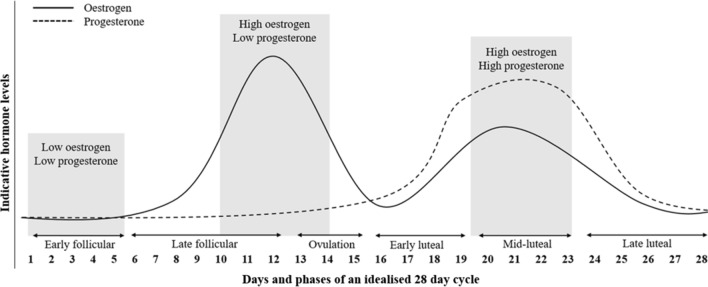
“The mid-luteal phase normally occurs between day 20 and 23, which represents approximately 70–75% of the length of an individual menstrual cycle (McNulty et al., 2020).”
BackgroundInfluentialAlterations of postural control across the menstrual cycle – A systematic review
Pohle, C., Becker, L., & Baumeister, J. (2023) · Gait & Posture · doi:10.1016/j.gaitpost.2023.09.010 · Cited by 10
Self-Reported Performance and Hormonal-Cycle-Related Symptoms in Competitive Female Athletes
Ihalainen, J. K., Takalo, S., Mjøsund, K., Solli, G. S., Valtonen, M., Kokkonen, M., Hackney, A. C., & Mikkonen, R. S. (2024) · Women in Sport and Physical Activity Journal · doi:10.1123/wspaj.2023-0102 · Cited by 10
Impact of Training Protocols on Lifting Velocity Recovery in Resistance Trained Males and Females
Amdi, C. H., Cleather, D. J., & Tallent, J. (2021) · Sports · doi:10.3390/sports9110157 · Cited by 10
Kelly, C. P. M. G. (2023) · Sports Medicine - Open · doi:10.1186/s40798-022-00533-9 · Cited by 15
Keogh, J. A. J., Bishop, C. J., Ruder, M. C., & Kobsar, D. (2023) · Journal of Science in Sport and Exercise · doi:10.1007/s42978-023-00239-8 · Cited by 10
“However, recent systematic reviews have suggested that the effect of the menstrual cycle on exercise performance are inconclusive and trivial [38, 39].”
Bagot, S., Pélissier, L., Pereira, B., Bussière, E. C., Duclos, M., Dulloo, A. G., Miles-Chan, J. L., Charlot, K., Boirie, Y., Thivel, D., et al. (2023) · Obesity Reviews · doi:10.1111/obr.13658 · Cited by 14
Effect of circadian rhythm and menstrual cycle on physical performance in women: a systematic review
Beníčková, M., Gimunová, M., & Paludo, A. C. (2024) · Frontiers in Physiology · doi:10.3389/fphys.2024.1347036 · Cited by 10
Rapid Weight Gain Following Weight Cutting in Male and Female Professional Mixed Martial Artists
Murugappan, K. R., Mueller, A., Walsh, D. P., Shaefi, S., Leibowitz, A., & Sarge, T. (2021) · International Journal of Sport Nutrition and Exercise Metabolism · doi:10.1123/ijsnem.2020-0369 · Cited by 10
García‐Pinillos, F., Bujalance-Moreno, P., Jerez‐Mayorga, D., Velarde-Sotres, Á., Anaya-Moix, V., Pueyo-Villa, S., & Lago‐Fuentes, C. (2021) · International Journal of Environmental Research and Public Health · doi:10.3390/ijerph18073662 · Cited by 10
“So, training at a high level without considering hormone fluctuations during the MC (and especially the negative side effects before and during the MP) could be dangerous for female health and also increase injury risk [25].”
BackgroundDantas, L. O., Carvalho, C., Pena, C. C., Breda, C. C., Driusso, P., Ferreira, C. H. J., & Bø, K. (2021) · Journal of obstetrics and gynaecology research · doi:10.1111/jog.15082 · Cited by 13
“To search, we used available Medical Subject Headings (MeSH) terms and keywords frequently searched in systematic reviews pertaining to menstruation: menstrual cycle; menstrual phase; menstruation; fertile period; follicular phase; luteal phase; and ovulation.(16,17) All the MeSH terms and keywords were searched in Po…”
MethodLuti, S., Militello, R., Pinto, G., Illiano, A., Amoresano, A., Chiappetta, G., Marzocchini, R., Modesti, P. A., Pratesi, S., Pazzagli, L., et al. (2023) · Healthcare · doi:10.3390/healthcare11020241 · Cited by 11
“There are controversial data on the influence of the menstrual cycle on physical activity [56], and it is very difficult to evaluate this.”
BackgroundEffects of hypoxia on exercise‐induced diaphragm fatigue in healthy males and females
Reinhard, P. A., Archiza, B., Welch, J. F., Benbaruj, J. M., Guenette, J. A., Koehle, M. S., & Sheel, A. W. (2023) · Physiological Reports · doi:10.14814/phy2.15589 · Cited by 10
Sendra-Pérez, C., Encarnación-Martínez, A., Oficial-Casado, F., Salvador-Palmer, R., & Priego-Quesada, J. I. (2023) · Physiological Measurement · doi:10.1088/1361-6579/ad1457 · Cited by 9
Frizziero, A., Demeco, A., Oliva, F., Bigliardi, D., Presot, F., Faentoni, S., Palermi, S., Saglietti, C., & Costantino, C. (2023) · Muscles Ligaments and Tendons Journal · doi:10.32098/mltj.03.2023.02 · Cited by 9
Abbott, W., Exall, Z., Walsh, L., & Clifford, T. (2024) · Research Quarterly for Exercise and Sport · doi:10.1080/02701367.2023.2298443 · Cited by 9
“There remains limited research that menstrual cycle phase affects well-being and performance in athletes (Carmichael et al., 2021; McNulty et al., 2020) and therefore whether practitioners should alter match and training preparation to account for it.”
Keogh, J. A. J., Ruder, M. C., White, K., Gavrilov, M. G., Phillips, S. M., Heisz, J. J., Jordan, M. J., & Kobsar, D. (2024) · Translational Sports Medicine · doi:10.1155/2024/7858835 · Cited by 7
Brown, G. A., Jones, M. D., Cole, B., Shawdon, A., & Duffield, R. (2024) · International Journal of Sports Physiology and Performance · doi:10.1123/ijspp.2023-0522 · Cited by 9
Influence of Menstrual Phase and Symptoms on Match Running in Professional Footballers
Brown, G. A., & Duffield, R. (2024) · Scandinavian Journal of Medicine and Science in Sports · doi:10.1111/sms.14734 · Cited by 9
Díaz‐Lara, J., Prieto-Bellver, G., Guadalupe‐Grau, A., & Bishop, D. J. (2024) · Sports Medicine · doi:10.1007/s40279-024-02119-9 · Cited by 9
“This is necessary for high-quality research on half of the world's population [49, 50].”
Osborne, J. O., Kildalsen, I., Pedersen, S., Pettersen, S. A., Welde, B., MINAHAN, C. L., & Andersson, E. P. (2024) · Journal of science and medicine in sport · doi:10.1016/j.jsams.2024.11.008 · Cited by 9
Hormonal Fluctuation and Ankle Instability in Women—Is There a Correlation?
Hartman, H., Fehr, S., & Gianakos, A. L. (2024) · Foot & Ankle Orthopaedics · doi:10.1177/24730114241300140 · Cited by 9
“23 Rather than fully adopting this “trend,” the current study’s results suggest that it may be advantageous for athletes to avoid high-intensity activity during ovulation (Figure 3).”
Menstrual Cycle Phase-Based Strength and Conditioning Training for Elite Team Sport Female Athletes
Moore, S. R., Bruinvels, G., & Smith‐Ryan, A. E. (2024) · Strength and conditioning journal · doi:10.1519/ssc.0000000000000879 · Cited by 10
Bouvier, J., Igonin, P.-H., Boithias, M., Fouré, A., Belli, A., Boisseau, N., & Martin, C. (2025) · European Journal of Applied Physiology · doi:10.1007/s00421-025-05723-3 · Cited by 9
“Specifically, fluctuations in sex hormones during the menstrual cycle (MC) or oral contraceptive (OC) intake might influence the physical performances (Elliott-Sale et al. 2020; McNulty et al. 2020).”
Gibbons, A. E., Thorpe, H., Pedlar, C. R., Hemi, K. V., Bruinvels, G., & Hamilton, B. H. (2025) · Women in Sport and Physical Activity Journal · doi:10.1123/wspaj.2024-0114 · Cited by 9
Bonilla, D. A., Stout, J. R., Gleeson, M., Campbell, B. I., Escalante, G., Rojas‐Valverde, D., Petro, J. L., Kreider, R. B., & Odriozola-Martínez, A. (2025) · Life · doi:10.3390/life15060867 · Cited by 11
Chica-Latorre, S., Knight-Agarwal, C. R., McKune, A. J., & Minehan, M. (2025) · Journal of science and medicine in sport · doi:10.1016/j.jsams.2025.06.005 · Cited by 13
Nolan, D. A., Horgan, P., MacNamara, Á., & Egan, B. (2023) · International Journal of Sports Science & Coaching · doi:10.1177/17479541231169371 · Cited by 9
“consistently affect acute performance indicators.(13) However, it must be noted that the majority of research conducted to date in this domain is of low quality, with small sample sizes and clear methodological flaws (i.”
BackgroundLarochelambert, Q. D., Hamri, I., Chassard, T., Meignié, A., Storme, F., Dupuit, M., Diry, A., Toussaint, J., Louis, P., Coulmy, N., et al. (2024) · BMJ Open Sport & Exercise Medicine · doi:10.1136/bmjsem-2023-001810 · Cited by 9
McNulty, K. L., Hicks, K. M., & Ansdell, P. (2021) · Experimental Physiology · doi:10.1113/ep089716 · Cited by 9
Self-citationTomoo, K., Suga, T., Dora, K., Sugimoto, T., Mok, E., Tsukamoto, H., Takada, S., Hashimoto, T., & Isaka, T. (2021) · Frontiers in Physiology · doi:10.3389/fphys.2021.741966 · Cited by 10
“More importantly, most previous studies that were included in the meta-analytical investigations examined using aerobic exercise (Chang et al., 2012; McMorris and Hale, 2012; Moreau and Chou, 2019; Oberste et al., 2019; Ai et al., 2021).”
BackgroundInfluentialLu, T., Jones, M. T., Yom, J. P., Ishida, A., & White, J. B. (2023) · European Journal of Applied Physiology · doi:10.1007/s00421-023-05172-w · Cited by 8
Effect of Endurance Exercise on Markers of Oxidative Stress: A Systematic Review
Mallett, G. S., & McGrath, K. (2024) · Journal of Science in Sport and Exercise · doi:10.1007/s42978-024-00305-9 · Cited by 12
Beyond the Menstrual Cycle: Time for a Holistic Approach to Athlete Health and Performance
Stitelmann, A., Gard, S., Coen, S. E., Parsons, J. L., Arundale, A., Bel, L., & Forelli, F. (2024) · International Journal of Sports Physical Therapy · doi:10.26603/001c.126285 · Cited by 8
King, M., van Klij, P., Hoak, F., Kierkegaard, S., West, T. J., Scholes, M. J., Heerey, J., Semciw, A. I., Ganderton, C. L., McMillan, R. M., et al. (2025) · Journal of Orthopaedic and Sports Physical Therapy · doi:10.2519/jospt.2025.12813 · Cited by 8
Ramadan, W., Xirouchaki, C. E., & El‐Gilany, A. (2025) · Sports · doi:10.3390/sports13030067 · Cited by 14
“Additionally, considering the potential impact of the menstrual cycle on training outcomes, aligning exercise regimens with different phases may enhance performance and recovery [32].”
Santos, C., Lopes, M., Brito, J., Kryger, K. O., Wilke, C. F., & Travassos, B. F. R. (2025) · Frontiers in Psychology · doi:10.3389/fpsyg.2025.1576752 · Cited by 8
Daneshparvar, A., Hemmatinafar, M., Salesi, M., Rezaei, R., Imanian, B., & Pirmohammadi, S. (2025) · Journal of the International Society of Sports Nutrition · doi:10.1080/15502783.2025.2502656 · Cited by 9
“Previous research indicates that the menstrual cycle can influence exercise performance in women [40].”
Taipale, R. S., & Häkkinen, K. (2025) · Strength and conditioning journal · doi:10.1519/ssc.0000000000000917 · Cited by 11
Carmichael, M. A., Roberts, A. H., Perry, K., & Clarke, A. C. (2025) · International Journal of Sports Science & Coaching · doi:10.1177/17479541251361218 · Cited by 8
Pojskić, H., Schiller, J., Pagels, P., Ragnarsson, T., & Melin, A. (2025) · Frontiers in Physiology · doi:10.3389/fphys.2025.1663590 · Cited by 9
Kullik, L., Isenmann, E., Schalla, J., Kellmann, M., & Jakowski, S. (2025) · Frontiers in Physiology · doi:10.3389/fphys.2025.1663657 · Cited by 8
Nocturnal Heart Rate Variability in Women Discordant for Hormonal Contraceptive Use
Ahokas, E. K., Hanstock, H. G., Löfberg, I. E., NYMAN, M., WENNING, P., Kyröläinen, H., Taipale, R. S., & Ihalainen, J. K. (2023) · Medicine & Science in Sports & Exercise · doi:10.1249/mss.0000000000003158 · Cited by 8
Field, A., Corr, L. D., Birdsey, L. P., Langley, C. K., Marshall, B., Wood, G., Hearris, M. A., Martinho, D. V., Carbry, C., Naughton, R. J., et al. (2024) · International Journal of Sport Nutrition and Exercise Metabolism · doi:10.1123/ijsnem.2023-0220 · Cited by 10
Caro, C. V., Trow, S., Bell, Z., Flynn, A. C., & Lavelle, F. (2025) · Sports Medicine · doi:10.1007/s40279-025-02191-9 · Cited by 7
“The current studies measuring performance capabilities across the phases of the menstrual cycle are typically of low quality and only include eumenor-rheic female athletes [72, 73].”
Safari, K., Hemmatinafar, M., Suzuki, K., Jahromi, M. K., & Imanian, B. (2025) · Nutrients · doi:10.3390/nu17081374 · Cited by 8
“These responses compromise recovery and athletic performance—especially in female athletes, where hormonal fluctuations during the menstrual cycle may exacerbate inflammation, pain sensitivity, and neuromuscular fatigue [8].”
Chica-Latorre, S., Knight-Agarwal, C. R., McKune, A. J., & Minehan, M. (2025) · Frontiers in Sports and Active Living · doi:10.3389/fspor.2025.1597469 · Cited by 7
Menstrual Cycle Effects on Sports Performance and Adaptations to Training: A Historical Perspective
Hackney, A. C., Hansen, M., & Melin, A. (2025) · Scandinavian Journal of Medicine and Science in Sports · doi:10.1111/sms.70107 · Cited by 7
Menstrual Cycle Does Not Affect Peak Torque or Fatigue in Resistance-Trained Women
Velten, L., Prado, R. C. R., Conforti, A. L. P., Andreatta, M. V., Reis, C. B. F., & Leite, R. D. (2025) · International Journal of Sports Medicine · doi:10.1055/a-2688-5060 · Cited by 7
“Some systematic reviews and meta-analyses 14 – 17 suggest”
Menstrual Cycle and Athletic Status Interact to Influence Symptoms, Mood, and Cognition in Females
Ronca, F., Watson, E., Metcalf, I., & Tari, B. (2025) · Sports Medicine - Open · doi:10.1186/s40798-025-00924-8 · Cited by 10
“…menstruation, with low levels of oestrogen and progesterone) followed by the late follicular phase (i.e., oestrogen rises and peaks prior to ovulation), ovulation (i.e., the release of an egg from an ovary), and the luteal phase (i.e., a second, smaller rise in oestrogen and peak progesterone) [9].”
Meixner, F., & Herbert, C. (2021) · Frontiers in Physiology · doi:10.3389/fphys.2021.680149 · Cited by 11
“Between T3 and T4, participants completed the experimental HisMine paradigm measuring emotional evaluation of self-related emotional stimuli (Herbert et al., 2011a,b, 2018; Winter et al., 2015, 2018; Weis and Herbert, 2017; Meixner and Herbert, 2018; Meixner et al., 2019).”
BackgroundHamer, J., Desbrow, B., & Irwin, C. G. (2022) · International Journal of Sports Science & Coaching · doi:10.1177/17479541221140188 · Cited by 8
“A greater number of trained female coaches will likely improve communication on menstrual health, supporting athlete health.(54,57) In maledominated coaching environments, an immediate strategy could involve prioritising opportunities to increase female representation within the training environment (e.”
BackgroundSandbakk, S. B., Tønnessen, E., Haugen, T. A., & Sandbakk, Ø. (2022) · German Journal of Sports Medicine · doi:10.5960/dzsm.2022.549 · Cited by 7
Pérez‐López, A., Garriga‐Alonso, L., Montalvo‐Alonso, J. J., del Val‐Manzano, M., Valadés, D., Vila, H., & Ferragut, C. (2024) · European Journal of Sport Science · doi:10.1002/ejsc.12233 · Cited by 7
“The physiological differences in hormones (McNulty et al., 2020), energy metabolism (Benton et al., 2020; Roepstorff et al., 2002), and body composition between sexes addressed the necessity to investigate female - specific nutritional needs in a sports performance context.”
Seddik, M., Bouzouraa, M. M., Ceylan, H. İ., Hamaidi, J., Ghouili, H., Chtourou, H., Guelmami, N., Dergaa, I., Muntean, R. I., & Souissi, N. (2025) · BMC Sports Science Medicine and Rehabilitation · doi:10.1186/s13102-025-01117-2 · Cited by 12
A hypoenergetic diet with decreased protein intake does not reduce lean body mass in trained females
Pearson, A. G., Alexander, L., Witard, O. C., Coughlin, T. E., Tipton, K. D., & Walshe, I. H. (2020) · European Journal of Applied Physiology · doi:10.1007/s00421-020-04555-7 · Cited by 8
Brown, D., Cappozzo, F., Roeck, D. D., Zariwala, M. G., & Deb, S. K. (2021) · Frontiers in Nutrition · doi:10.3389/fnut.2021.678105 · Cited by 7
Shalfawi, S. A. I., & Kailani, G. E. (2021) · Sports · doi:10.3390/sports9090130 · Cited by 7
“Females between the age of 13 and 50 experience fluctuations in endogenous sex hormones: among others, estrogen and progesterone [1,2].”
BackgroundInfluentialNAGAHORI, H., & Shida, N. (2022) · Physical Therapy Research · doi:10.1298/ptr.e10173 · Cited by 7
Feuerbacher, J. F., Dragutinovic, B., Jacobs, M. W., & Schumann, M. (2023) · International Journal of Sports Physiology and Performance · doi:10.1123/ijspp.2022-0377 · Cited by 8
The Effects of Space Flight and Microgravity Exposure on Female Astronaut Health and Performance
Strock, N. C., Rivas, E., & Goebel, K. (2023) · IEEE Aerospace Conference · doi:10.1109/aero55745.2023.10115765 · Cited by 4
“Recent systematic reviews and meta-analyses indicate both aerobic and strength performance are minimally impacted by menstrual cycle phase [61, 62] with trivial reductions during the early follicular phase (effect size=0.”
BackgroundTaipale, R. S., Ihalainen, J. K., Davis-Wilson, H. C., & Hackney, A. C. (2023) · Springer eBooks · doi:10.1007/978-3-031-21881-1_1 · Cited by 9
Mathy, A., Wessner, B., Haider, P., Tschan, H., & Triska, C. (2024) · Frontiers in Physiology · doi:10.3389/fphys.2024.1305895 · Cited by 8
Johnson, K. A., & Shields, R. K. (2024) · Orthopaedic Journal of Sports Medicine · doi:10.1177/23259671241251720 · Cited by 6
“The body of evidence indicating a potential influence of the menstrual cycle on ACL injury, 21,22,46 exercise performance, 40 and adaptations to resistance training 51 is growing but remains limited by the low quality and low quantity of research in these areas.”
BackgroundMethodInfluentialHemmati, H., Alkasasbeh, W. J., Hemmatinafar, M., Salesi, M., Pirmohammadi, S., Imanian, B., & Rezaei, R. (2024) · Frontiers in Physiology · doi:10.3389/fphys.2024.1426872 · Cited by 6
Gurton, W. H., Dabin, L., & Marshall, S. J. (2024) · International Journal of Sports Physiology and Performance · doi:10.1123/ijspp.2023-0535 · Cited by 8
The Effect of Proximity‐To‐Failure on Perceptual Responses to Resistance Training
Refalo, M. C., Helms, E. R., Hamilton, D. L., & Fyfe, J. J. (2025) · European Journal of Sport Science · doi:10.1002/ejsc.12266 · Cited by 8
Power in the flow: how menstrual experiences shape women's strength training performance
Augustsson, S. R., & Findhé-Malenica, A. (2025) · Frontiers in Sports and Active Living · doi:10.3389/fspor.2025.1519825 · Cited by 6
Docter, H., Taylor, M., Müller, A. L., de Koning, J. J., Sandbakk, Ø. B., Osborne, J. O., & Noordhof, D. A. (2025) · Scandinavian Journal of Medicine and Science in Sports · doi:10.1111/sms.70050 · Cited by 9
Donnelly, J. E., Valentin, S., Easton, C., White, A. C., & Forrest, L. J. (2025) · Science and Medicine in Football · doi:10.1080/24733938.2025.2476485 · Cited by 6
“…high-lighted that very high-intensity running distances were greater during the luteal phase compared to the follicular phase in elite football players, a greater volume of high-quality evidence is required to support these findings and for a general consensus to be made (McNulty et al. 2020).”
Rating of perceived exertion in continuous sports: a scoping review with evidence gap map
Torres, G., Maia, F., Nakamura, F. Y., Neiva, H. P., & Sousa, A. (2025) · Frontiers in Sports and Active Living · doi:10.3389/fspor.2025.1553998 · Cited by 6
Howatson, G., Russell, S., Pedlar, C. R., & Halson, S. L. (2025) · Sports Medicine · doi:10.1007/s40279-025-02246-x · Cited by 8
“Given the rise in popularity of women’s football, there is an increasing physical demand on these athletes [7] and concurrent increases in off-pitch demands that include opposition analysis, media involvements, travel to unfamiliar venues, fixture congestion, family and caring responsibilities, and…”
Mikkonen, R. S., Ihalainen, J. K., Bruinvels, G., Mkumbuzi, N. S., Smith‐Ryan, A. E., Kaikkonen, M., Kasongo, M., & Hackney, A. C. (2025) · Sports Medicine · doi:10.1007/s40279-025-02338-8 · Cited by 7
“That is, current evidence suggests that strength/endurance performance does not markedly change over the menstrual cycle [149] or hormonal contraceptive cycle [150]; however, the quality of research behind these findings is relatively low [149, 150], thus limiting our ability to draw robust…”
Stitelmann, A., Bruyneel, A.-V., Enéa, C., & Boisseau, N. (2026) · Sports Medicine · doi:10.1007/s40279-026-02412-9 · Cited by 6
“Indeed, cyclical fluctuations in estrogen and progesterone have traditionally been viewed as the main drivers of exercise performance variation [16, 17]; however, findings remain inconsistent in systematic reviews and meta-analyses [18–21].”
Nardon, M., Venturelli, M., Ruzzante, F., Longo, V. D., & Bertucco, M. (2022) · European Journal of Applied Physiology · doi:10.1007/s00421-021-04867-2 · Cited by 6
Ekenros, L., Rosen, P., Solli, G. S., Sandbakk, Ø. B., Holmberg, H., Hirschberg, A. L., & Fridén, C. (2023) · International Journal of Sports Science & Coaching · doi:10.1177/17479541231216403 · Cited by 7
Iacono, A. D., Watson, K., & Jukić, I. (2024) · International Journal of Sports Physiology and Performance · doi:10.1123/ijspp.2023-0357 · Cited by 6
Wang, P., Jiang, G., Ju, W., Cai, Y., Wang, J., & Wu, F. (2021) · Evidence-based Complementary and Alternative Medicine · doi:10.1155/2021/8624414 · Cited by 6
RetractedYamagishi, T., Saito, A., & Kawakami, Y. (2022) · PLoS ONE · doi:10.1371/journal.pone.0262507 · Cited by 6
“We could obtain the completed questionnaires from 14 out of 19 athletes, and the phases of their cycles were as follows: 1 early follicular, 3 late follicular, 1 ovulatory, 3 early luteal, and 4 late luteal phases [23].”
MethodBella, L. D., Doma, K., Sinclair, W. H., & Connor, J. D. (2023) · International Journal of Sports Physiology and Performance · doi:10.1123/ijspp.2022-0320 · Cited by 6
Morenas‐Aguilar, M. D., Ruiz‐Alias, S. A., Blanco, A. M., Lago‐Fuentes, C., García‐Pinillos, F., & Pérez‐Castilla, A. (2023) · The Journal of Strength and Conditioning Research · doi:10.1519/jsc.0000000000004542 · Cited by 6
“The rise of women ’ s sports may benefit from female physiology – specific research on performance, being the menstrual cycle (MC) as one of the most explored topics (23).”
BackgroundAron, V., Strul, D., Vægter, H. B., Pitance, L., & Armijo-Olivo, S. L. (2024) · Scandinavian Journal of Pain · doi:10.1515/sjpain-2023-0104 · Cited by 6
Menstrual pattern and contraceptive choices of Portuguese athletes
Coutinho, F., Rebelo‐Marques, A., Andrade, R., Espregueira‐Mendes, J., Bombas, T., & Moura, P. (2021) · The European Journal of Contraception & Reproductive Health Care · doi:10.1080/13625187.2021.1879780 · Cited by 6
“Despite the increasing number of publications on the influence of menstrual cycle and contraception in sports performance [7,10], there are no relevant publications for the Portuguese population.”
BackgroundDeshayes, T. A., Daigle, N., Jeker, D., Lamontagne-Lacasse, M., Perreault-Briere, M., Claveau, P., Simoneau, I. L., Chamoux, E., & Goulet, E. D. B. (2021) · Nutrients · doi:10.3390/nu13124477 · Cited by 6
“However, (1) the menstrual cycle phase seems to have no or trivial effect on endurance performance [53,54] but (2) may impact internal temperature differently [55].”
BackgroundCritical power, W′ and W′ reconstitution in women and men
Bourgois, G., Mucci, P., Boone, J., Colosio, A. L., Bourgois, J., Pogliaghi, S., & Caen, K. (2023) · European Journal of Applied Physiology · doi:10.1007/s00421-023-05268-3 · Cited by 10
“Although the physiological responses to exercise performance can slightly differ across the menstrual cycle (McNulty et al. 2020), it has been shown ) in the lower panel that the power–duration relationship did not vary across the menstrual cycle in eumenorrheic women (James et al. 2022).”
Background
Metadata
- Authors
- McNulty, K. L., Elliott-Sale, K. J., Dolan, E., Swinton, P. A., Ansdell, P., Goodall, S., Thomas, K., & Hicks, K. M.
- Affiliations
- Northumbria University (GB)
- Nottingham Trent University (GB)
- Universidade de São Paulo (BR)
- Robert Gordon University (GB)
- Corresponding author
- Elliott-Sale, Kirsty Jayne
- ORCID
- Venue
- Sports Medicine
- Published
- 2020-07-13
- Volume
- 50
- Issue
- 10
- Pages
- 1813-1827
- ISSN
- 0112-1642 (ISSN-L)
- 1179-2035
- PMC
- PMC7497427
- OpenAlex
- W3038797657
- Cited by
- 812
- References
- 127
- Citations by year
- 2026: 183 · 2025: 181 · 2024: 153 · 2023: 136 · 2022: 72 · 2021: 70 · 2020: 17
- FWCI
- 14.50
- Type
- journal article
- Language
- en
- Open access
- hybrid
- doi.org
- Locations
- Sports Medicine (publishedVersion, cc-by)
- PubMed Central (publishedVersion, cc-by)
- PubMed (publishedVersion)
- Nottingham Trent University's Institutional Repository (Nottingham Trent Repository) (acceptedVersion)
- Northumbria Research Link (Northumbria University) (acceptedVersion)
- Open Access Institutional Repository at Robert Gordon University (Robert Gordon University) (submittedVersion, cc-by)
- Funders
- Fundação de Amparo à Pesquisa do Estado de São Paulo (19/05616-6, 2019/, 2019/05616)
- Topics
- Health Sciences › Medicine › Orthopedics and Sports Medicine › Sports Performance and Training
- Health Sciences › Medicine › Physiology (medical) › Cardiovascular and exercise physiology
- Health Sciences › Medicine › Public Health, Environmental and Occupational Health › Menstrual Health and Disorders
- Keywords
- menstrual cycle phases, exercise performance, eumenorrheic women, sex hormones, follicular phase, luteal phase, endurance performance, strength performance
- MeSH terms
- Female, Humans, Menstrual Cycle, Exercise, Athletic Performance
About these checks
Registry, retraction, Cites and statistics results are computed, not judged, with one exception: a printed reference that no index lists is read once by a model before it counts as a citation error. Claims are extracted by a model and kept only when their quote appears verbatim in the text; each cited source is then checked, with a model’s help, for whether it says what the claim relies on. Those verdicts can be wrong — read the claim’s quote and the cited source before relying on one.
Statistics and arithmetic are recomputed, not judged.
Confidence bands are shown only for fields calibrated on our annotated test set. None is calibrated yet, so no band is shown.
What counts as a claim ›How we measure confidence ›How we check this ›
Are you an author, or do you see a problem with this page? Request a review
