

The DOI matches its Crossref record; 127 of the 127 references it cites were found in a registry or an index.
The Effects of Menstrual Cycle Phase on Exercise Performance in Eumenorrheic Women: A Systematic Review and Meta-Analysis
Open accessAbstract
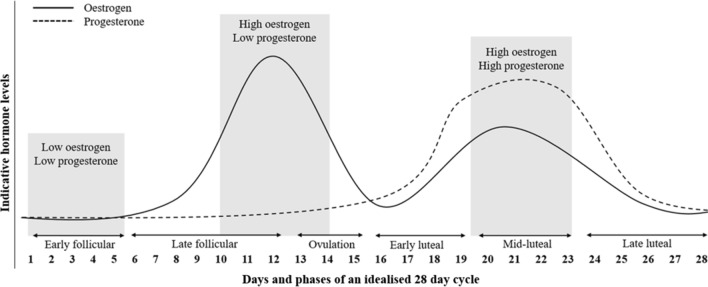
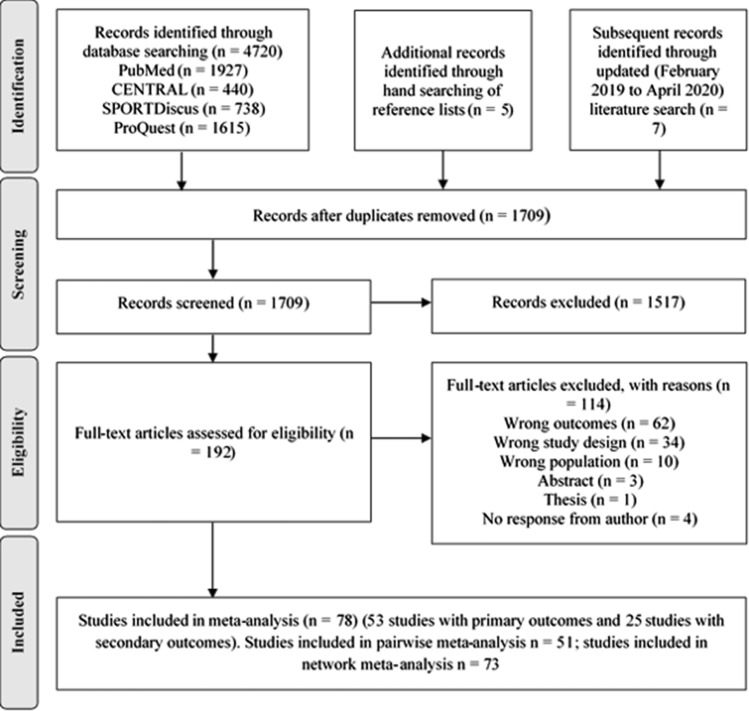
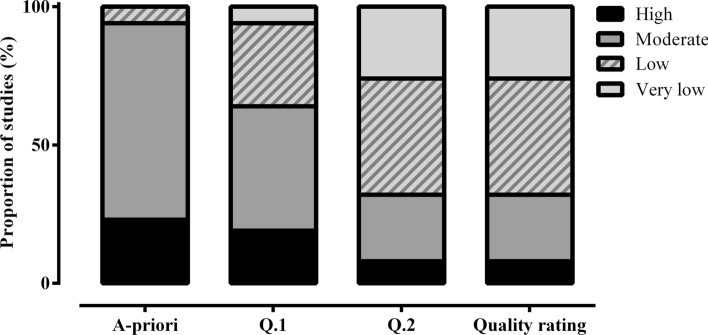
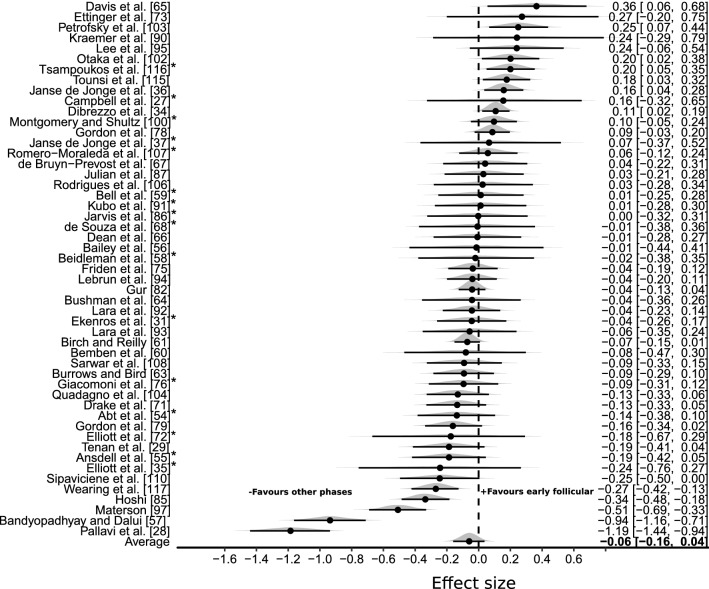
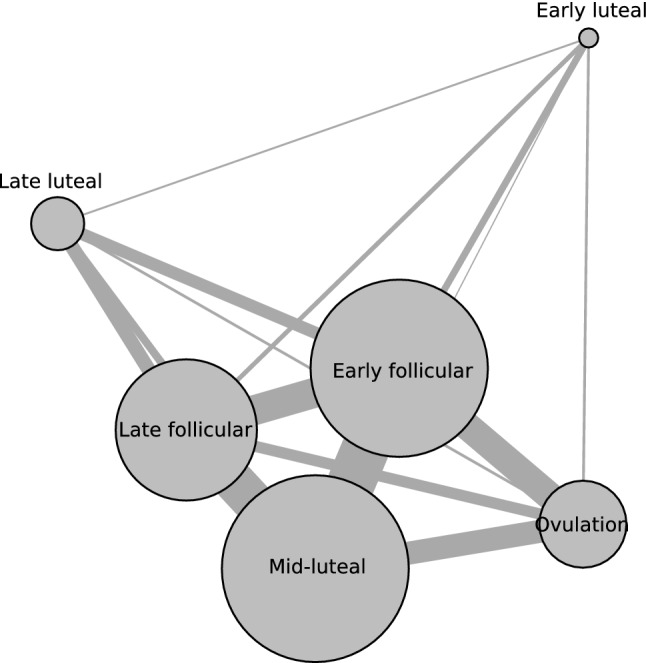
Background: Concentrations of endogenous sex hormones fluctuate across the menstrual cycle (MC), which could have implications for exercise performance in women. At present, data are conflicting, with no consensus on whether exercise performance is affected by MC phase. Objective: To determine the effects of the MC on exercise performance and provide evidence-based, practical, performance recommendations to eumenorrheic women. Methods: This review followed the Preferred Reporting Items for Systematic Reviews and Meta-Analyses (PRISMA) guidelines. Four databases were searched for published experimental studies that investigated the effects of the MC on exercise performance, which included at least one outcome measure taken in two or more defined MC phases. All data were meta-analysed using multilevel models grounded in Bayesian principles. The initial meta-analysis pooled pairwise effect sizes comparing exercise performance during the early follicular phase with all other phases (late follicular, ovulation, early luteal, mid-luteal and late luteal) amalgamated. A more comprehensive analysis was then conducted, comparing exercise performance between all phases with direct and indirect pairwise effect sizes through a network meta-analysis. Results from the network meta-analysis were summarised by calculating the Surface Under the Cumulative Ranking curve (SUCRA). Study quality was assessed using a modified Downs and Black checklist and a strategy based on the recommendations of the Grading of Recommendations Assessment Development and Evaluation (GRADE) working group. Results: Of the 78 included studies, data from 51 studies were eligible for inclusion in the initial pairwise meta-analysis. The three-level hierarchical model indicated a trivial effect for both endurance- and strength-based outcomes, with reduced exercise performance observed in the early follicular phase of the MC, based on the median pooled effect size (ES 0.5 = − 0.06 [95% credible interval (CrI): − 0.16 to 0.04]). Seventy-three studies had enough data to be included in the network meta-analysis. The largest effect was identified between the early follicular and the late follicular phases of the MC (ES 0.5 = − 0.14 [95% CrI: − 0.26 to − 0.03]). The lowest SUCRA value, which represents the likelihood that exercise performance is poor, or among the poorest, relative to other MC phases, was obtained for the early follicular phase (30%), with values for all other phases ranging between 53 and 55%. The quality of evidence for this review was classified as “low” (42%). Conclusion: The results from this systematic review and meta-analysis indicate that exercise performance might be trivially reduced during the early follicular phase of the MC, compared to all other phases. Due to the trivial effect size, the large between-study variation and the number of poor-quality studies included in this review, general guidelines on exercise performance across the MC cannot be formed; rather, it is recommended that a personalised approach should be taken based on each individual's response to exercise performance across the MC.
Overview
The claims and statistics of this paper haven’t been checked yet.
Run the check — free, no account needed. It reads the open-access text and checks the sources it cites.
Integrity signals
Registry
Cites
Statistics
Figures
Verification
Claims the paper makes
The claims and statistics of this paper haven’t been checked yet.
Run the check — free, no account needed. It reads the open-access text and checks the sources it cites.
Claims other papers make about this one
Each is checked against this paper’s own text: does it say what the citing paper says it does?
The source backs part of the claim, not all of it — or backs it for a different population, condition or comparison.
In the citing paper
“A Bayesian approach was selected because it estimates the full probability distribution of treatment effects rather than relying on binary significance testing, allowing more informative interpretation of effect sizes and associated uncertainty [40, 41].”
From The Effect of Different Psychological Interventions on Athletes' Competitive Anxiety: A Systematic Review and Bayesian Network Meta-Analysis. (2026) · cites this paper as [41]
Experimental — accuracy not yet measured
Self-check
Percentages, sums and reported differences re-computed from the paper’s own numbers.
The self-check needs the paper’s full text.
Citations
Cites
Preferred reporting items for systematic reviews and meta-analyses: the PRISMA Statement.
(2009) · PubMed Central · Cited by 44,859
Preferred reporting items for systematic reviews and meta-analyses: The PRISMA statement
Moher, D., Liberati, A., Tetzlaff, J., Altman, D. G., & the PRISMA Group* (2009) · Annals of Internal Medicine · doi:10.7326/0003-4819-151-4-200908180-00135 · Cited by 37,554
Gelman, A., Carlin, J. B., Stern, H. S., & Rubin, D. B. (2003) · doi:10.1201/9780429258480 · Cited by 27,276
Dermyshi, E., Wang, Y., Yan, C., Hong, W., Qiu, G., Gong, X., & Zhang, T. (2017) · Neonatology · doi:10.1159/000454668 · Cited by 24,586
GRADE guidelines: 1. Introduction—GRADE evidence profiles and summary of findings tables
Guyatt, G., Oxman, A. D., Akl, E. A., Kunz, R., Vist, G., Brozek, J., Norris, S., Falck-Ytter, Y., Glasziou, P., & deBeer, H. (2011) · Journal of Clinical Epidemiology · doi:10.1016/j.jclinepi.2010.04.026 · Cited by 10,681
brms : An R Package for Bayesian Multilevel Models Using Stan
Bürkner, P.-C. (2017) · Journal of Statistical Software · doi:10.18637/jss.v080.i01 · Cited by 9,476
GRADE guidelines: 3. Rating the quality of evidence
Balshem, H., Helfand, M., Schünemann, H. J., Oxman, A. D., Kunz, R., Brozek, J., Vist, G. E., Falck-Ytter, Y., Meerpohl, J., & Norris, S. (2011) · Journal of Clinical Epidemiology · doi:10.1016/j.jclinepi.2010.07.015 · Cited by 8,285
Downs, S. H., & Black, N. (1998) · Journal of Epidemiology and Community Health · doi:10.1136/jech.52.6.377 · Cited by 8,252
Salanti, G., Ades, A. E., & Ioannidis, J. P. A. (2011) · Journal of Clinical Epidemiology · doi:10.1016/j.jclinepi.2010.03.016 · Cited by 3,766
Norderyd, O. M., Koch, G., Papias, A., Köhler, A. A., Helkimo, A. N., Brahm, C., Lindmark, U., Lindfors, N., Mattsson, A., Rolander, B., et al. (2015) · PubMed · Cited by 3,584
Research works printed but not linked: 3
- Cohen J. Statistical power analysis for the social sciences. 2nd ed. New Jersey: Lawrence Erlbaum Associates; 1988.
- Grucza R, Pekkarinen H, Hanninen O. Cardiorespiratory responses to bicycle incremental exercise in women taking oral contraceptives. Biol Sport. 2002;19(3):267–79.
- Masterson G. The impact of menstrual phases on anaerobic power performance in collegiate women. J Strength Cond Res. 1999;13(4):325–9.
Cited by
Sorted by citations
Items 801–810 of 810
Polívka, T., Suková, T., & Černá, L. &. (2026) · Studia Kinanthropologica · doi:10.32725/sk.2026.006
Timing the effort: Chronobiological drivers of skeletal muscle adaptation and metabolic health
Aykora, E., Erbil, G., & Aykora, D. (2026) · Chronobiology International · doi:10.1080/07420528.2026.2750361
Zhang, S., Yang, X., Xu, H., Liu, Q., & Quan, H. (2026) · Journal of the International Society of Sports Nutrition · doi:10.1080/15502783.2026.2751785
“To reduce hormonal confounding, testing was scheduled outside menstruation and, where feasible, during the late follicular phase on the basis of self-reported cycle timing and current recommendations for female exercise research [23,36].”
Menstrual Cycle and Exercise Performance
Koschel, T. (2026) · doi:10.1093/9780197852736.003.0045
Cooper, A., Mahaiyuddin, A., Sim, D., Davies, F., Gillen, E., Brown, N., Edwards, A., & Boivin, J. (2026) · BMJ Open · doi:10.1136/bmjopen-2026-118584 · Cited by 1
“Interventions developed from this model need robust evaluation for what works, for whom, how and in what circum-stances and whether they improve rates of participation and performance in physical activity.”
Casanova, N., & Mendes, P. (2026) · Turkish Journal of Kinesiology · doi:10.31459/turkjkin.1973911
Aktitiz, S., Güzel, Y., ATAKAN, M. M., Bulut, S., Karanfil, Y., JONES, A. M., & Turnagöl, H. H. (2026) · International Journal of Sport Nutrition and Exercise Metabolism · doi:10.1123/ijsnem.2026-0041
Bischof, K. (2026) · International Journal of Molecular Sciences · doi:10.3390/ijms27219537
Gao, T., Li, J., Shan, X., Lyu, J., Huang, D., & Gao, J. (2026) · Frontiers in Physiology · doi:10.3389/fphys.2026.1943799
Soukupová, V., Musilová, E., Kramperová, V., & Šteffl, M. (2026) · JMIR Research Protocols · doi:10.2196/97370
Metadata
- Authors
- McNulty, K. L., Elliott-Sale, K. J., Dolan, E., Swinton, P. A., Ansdell, P., Goodall, S., Thomas, K., & Hicks, K. M.
- Affiliations
- Northumbria University (GB)
- Nottingham Trent University (GB)
- Universidade de São Paulo (BR)
- Robert Gordon University (GB)
- Corresponding author
- Elliott-Sale, Kirsty Jayne
- ORCID
- Venue
- Sports Medicine
- Published
- 2020-07-13
- Volume
- 50
- Issue
- 10
- Pages
- 1813-1827
- ISSN
- 0112-1642 (ISSN-L)
- 1179-2035
- PMC
- PMC7497427
- OpenAlex
- W3038797657
- Cited by
- 812
- References
- 127
- Citations by year
- 2026: 183 · 2025: 181 · 2024: 153 · 2023: 136 · 2022: 72 · 2021: 70 · 2020: 17
- FWCI
- 14.50
- Type
- journal article
- Language
- en
- Open access
- hybrid
- doi.org
- Locations
- Sports Medicine (publishedVersion, cc-by)
- PubMed Central (publishedVersion, cc-by)
- PubMed (publishedVersion)
- Nottingham Trent University's Institutional Repository (Nottingham Trent Repository) (acceptedVersion)
- Northumbria Research Link (Northumbria University) (acceptedVersion)
- Open Access Institutional Repository at Robert Gordon University (Robert Gordon University) (submittedVersion, cc-by)
- Funders
- Fundação de Amparo à Pesquisa do Estado de São Paulo (19/05616-6, 2019/, 2019/05616)
- Topics
- Health Sciences › Medicine › Orthopedics and Sports Medicine › Sports Performance and Training
- Health Sciences › Medicine › Physiology (medical) › Cardiovascular and exercise physiology
- Health Sciences › Medicine › Public Health, Environmental and Occupational Health › Menstrual Health and Disorders
- Keywords
- menstrual cycle phases, exercise performance, eumenorrheic women, sex hormones, follicular phase, luteal phase, endurance performance, strength performance
- MeSH terms
- Female, Humans, Menstrual Cycle, Exercise, Athletic Performance
About these checks
Registry, retraction, Cites and statistics results are computed, not judged, with one exception: a printed reference that no index lists is read once by a model before it counts as a citation error. Claims are extracted by a model and kept only when their quote appears verbatim in the text; each cited source is then checked, with a model’s help, for whether it says what the claim relies on. Those verdicts can be wrong — read the claim’s quote and the cited source before relying on one.
Statistics and arithmetic are recomputed, not judged.
Confidence bands are shown only for fields calibrated on our annotated test set. None is calibrated yet, so no band is shown.
What counts as a claim ›How we measure confidence ›How we check this ›
Are you an author, or do you see a problem with this page? Request a review
