

The DOI matches its Crossref record; 127 of the 127 references it cites were found in a registry or an index.
The Effects of Menstrual Cycle Phase on Exercise Performance in Eumenorrheic Women: A Systematic Review and Meta-Analysis
Open accessAbstract
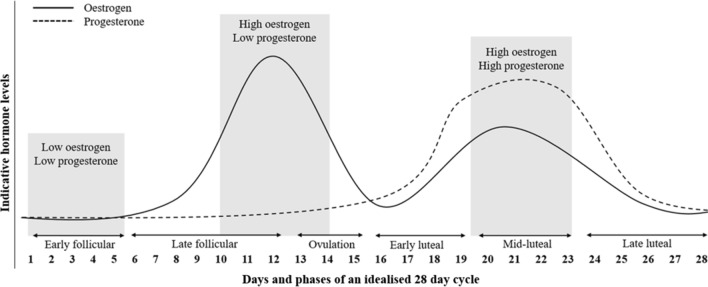
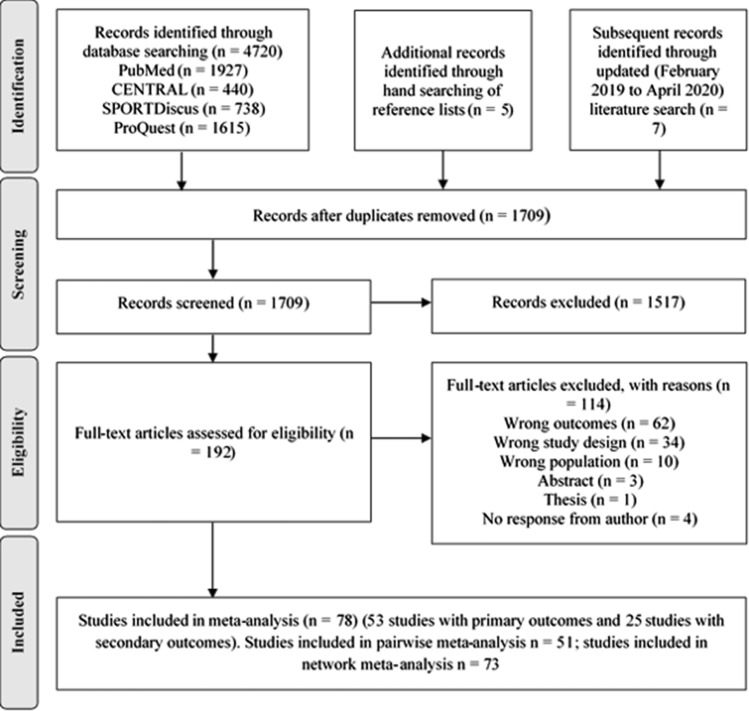
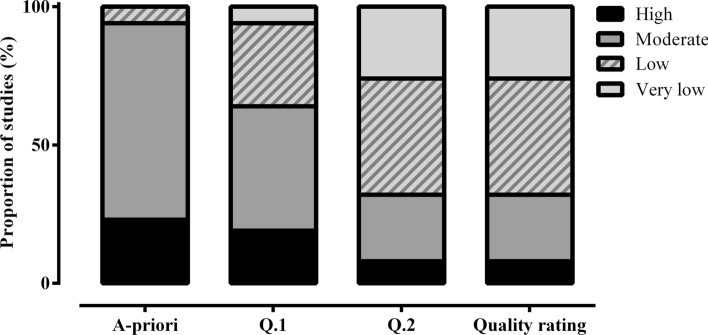
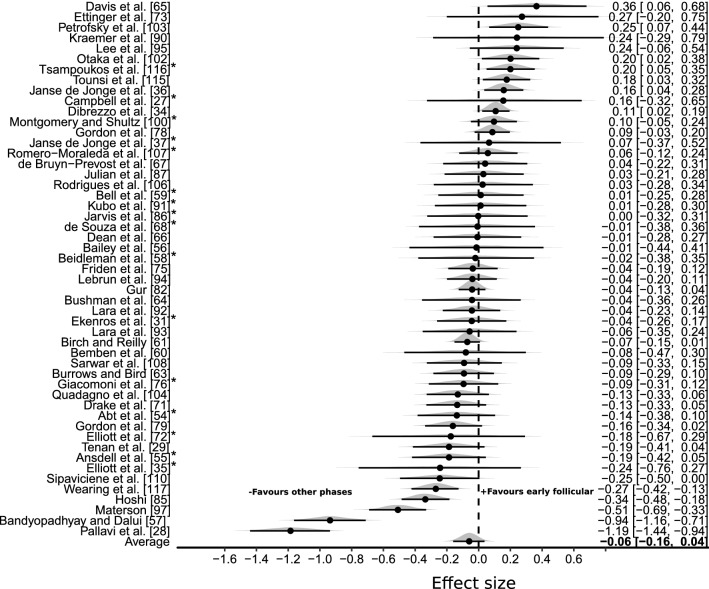
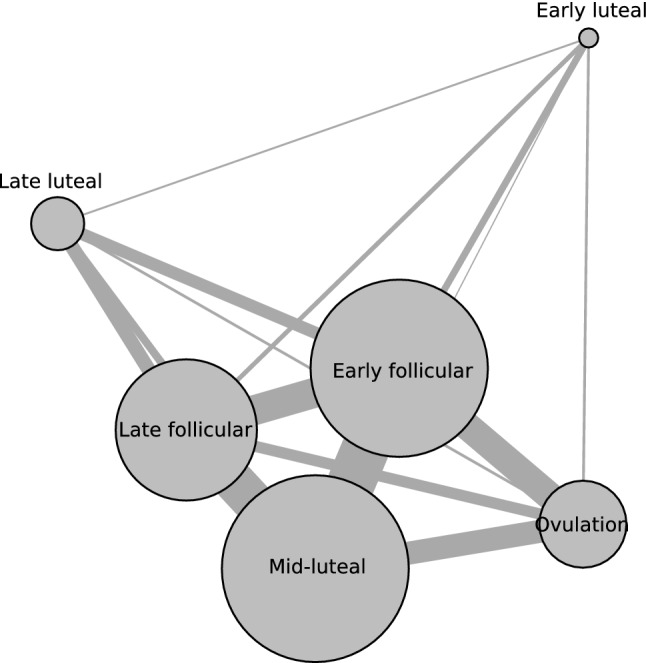
Background: Concentrations of endogenous sex hormones fluctuate across the menstrual cycle (MC), which could have implications for exercise performance in women. At present, data are conflicting, with no consensus on whether exercise performance is affected by MC phase. Objective: To determine the effects of the MC on exercise performance and provide evidence-based, practical, performance recommendations to eumenorrheic women. Methods: This review followed the Preferred Reporting Items for Systematic Reviews and Meta-Analyses (PRISMA) guidelines. Four databases were searched for published experimental studies that investigated the effects of the MC on exercise performance, which included at least one outcome measure taken in two or more defined MC phases. All data were meta-analysed using multilevel models grounded in Bayesian principles. The initial meta-analysis pooled pairwise effect sizes comparing exercise performance during the early follicular phase with all other phases (late follicular, ovulation, early luteal, mid-luteal and late luteal) amalgamated. A more comprehensive analysis was then conducted, comparing exercise performance between all phases with direct and indirect pairwise effect sizes through a network meta-analysis. Results from the network meta-analysis were summarised by calculating the Surface Under the Cumulative Ranking curve (SUCRA). Study quality was assessed using a modified Downs and Black checklist and a strategy based on the recommendations of the Grading of Recommendations Assessment Development and Evaluation (GRADE) working group. Results: Of the 78 included studies, data from 51 studies were eligible for inclusion in the initial pairwise meta-analysis. The three-level hierarchical model indicated a trivial effect for both endurance- and strength-based outcomes, with reduced exercise performance observed in the early follicular phase of the MC, based on the median pooled effect size (ES 0.5 = − 0.06 [95% credible interval (CrI): − 0.16 to 0.04]). Seventy-three studies had enough data to be included in the network meta-analysis. The largest effect was identified between the early follicular and the late follicular phases of the MC (ES 0.5 = − 0.14 [95% CrI: − 0.26 to − 0.03]). The lowest SUCRA value, which represents the likelihood that exercise performance is poor, or among the poorest, relative to other MC phases, was obtained for the early follicular phase (30%), with values for all other phases ranging between 53 and 55%. The quality of evidence for this review was classified as “low” (42%). Conclusion: The results from this systematic review and meta-analysis indicate that exercise performance might be trivially reduced during the early follicular phase of the MC, compared to all other phases. Due to the trivial effect size, the large between-study variation and the number of poor-quality studies included in this review, general guidelines on exercise performance across the MC cannot be formed; rather, it is recommended that a personalised approach should be taken based on each individual's response to exercise performance across the MC.
Overview
The claims and statistics of this paper haven’t been checked yet.
Run the check — free, no account needed. It reads the open-access text and checks the sources it cites.
Integrity signals
Registry
Cites
Statistics
Figures
Verification
Claims the paper makes
The claims and statistics of this paper haven’t been checked yet.
Run the check — free, no account needed. It reads the open-access text and checks the sources it cites.
Claims other papers make about this one
Each is checked against this paper’s own text: does it say what the citing paper says it does?
The source backs part of the claim, not all of it — or backs it for a different population, condition or comparison.
In the citing paper
“A Bayesian approach was selected because it estimates the full probability distribution of treatment effects rather than relying on binary significance testing, allowing more informative interpretation of effect sizes and associated uncertainty [40, 41].”
From The Effect of Different Psychological Interventions on Athletes' Competitive Anxiety: A Systematic Review and Bayesian Network Meta-Analysis. (2026) · cites this paper as [41]
Experimental — accuracy not yet measured
Self-check
Percentages, sums and reported differences re-computed from the paper’s own numbers.
The self-check needs the paper’s full text.
Citations
Cites
Preferred reporting items for systematic reviews and meta-analyses: the PRISMA Statement.
(2009) · PubMed Central · Cited by 44,859
Preferred reporting items for systematic reviews and meta-analyses: The PRISMA statement
Moher, D., Liberati, A., Tetzlaff, J., Altman, D. G., & the PRISMA Group* (2009) · Annals of Internal Medicine · doi:10.7326/0003-4819-151-4-200908180-00135 · Cited by 37,554
Gelman, A., Carlin, J. B., Stern, H. S., & Rubin, D. B. (2003) · doi:10.1201/9780429258480 · Cited by 27,276
Dermyshi, E., Wang, Y., Yan, C., Hong, W., Qiu, G., Gong, X., & Zhang, T. (2017) · Neonatology · doi:10.1159/000454668 · Cited by 24,586
GRADE guidelines: 1. Introduction—GRADE evidence profiles and summary of findings tables
Guyatt, G., Oxman, A. D., Akl, E. A., Kunz, R., Vist, G., Brozek, J., Norris, S., Falck-Ytter, Y., Glasziou, P., & deBeer, H. (2011) · Journal of Clinical Epidemiology · doi:10.1016/j.jclinepi.2010.04.026 · Cited by 10,681
brms : An R Package for Bayesian Multilevel Models Using Stan
Bürkner, P.-C. (2017) · Journal of Statistical Software · doi:10.18637/jss.v080.i01 · Cited by 9,476
GRADE guidelines: 3. Rating the quality of evidence
Balshem, H., Helfand, M., Schünemann, H. J., Oxman, A. D., Kunz, R., Brozek, J., Vist, G. E., Falck-Ytter, Y., Meerpohl, J., & Norris, S. (2011) · Journal of Clinical Epidemiology · doi:10.1016/j.jclinepi.2010.07.015 · Cited by 8,285
Downs, S. H., & Black, N. (1998) · Journal of Epidemiology and Community Health · doi:10.1136/jech.52.6.377 · Cited by 8,252
Salanti, G., Ades, A. E., & Ioannidis, J. P. A. (2011) · Journal of Clinical Epidemiology · doi:10.1016/j.jclinepi.2010.03.016 · Cited by 3,766
Norderyd, O. M., Koch, G., Papias, A., Köhler, A. A., Helkimo, A. N., Brahm, C., Lindmark, U., Lindfors, N., Mattsson, A., Rolander, B., et al. (2015) · PubMed · Cited by 3,584
Research works printed but not linked: 3
- Cohen J. Statistical power analysis for the social sciences. 2nd ed. New Jersey: Lawrence Erlbaum Associates; 1988.
- Grucza R, Pekkarinen H, Hanninen O. Cardiorespiratory responses to bicycle incremental exercise in women taking oral contraceptives. Biol Sport. 2002;19(3):267–79.
- Masterson G. The impact of menstrual phases on anaerobic power performance in collegiate women. J Strength Cond Res. 1999;13(4):325–9.
Cited by
Sorted by citations
Items 601–700 of 810
Hilekoaren zikloaren eragina ultra-distantziako korrikalarietan
Intxauspe, N. A., Esnal, H., Azkue, S. M. D. L. H., & Gurrutxaga, J. U. (2024) · Osagaiz osasun-zientzien aldizkaria · doi:10.26876/osagaiz.1.2024.511
A Survey of Current Exercise and Nutritional Strategies for Management of Dysmenorrhea
Hirsch, K. R., VanDusseldorp, T. A., Karns, H. E., Persaud, K. T., Ramey, K. T., & Sáenz, C. (2024) · Women in Sport and Physical Activity Journal · doi:10.1123/wspaj.2023-0106 · Cited by 1
Influência do ciclo menstrual na flexibilidade de mulheres adultas jovens
da Costa, B. D. D. (2024) · doi:10.47328/ufvbbt.2024.446
German volume training e ciclo menstrual: o efeito no balanço simpatovagal de mulheres jovens
Ramos, R. N., Mendes, A. D. A., de Miranda, L. R. A., Velten, L., Reis, C. B. F., Neves, L. N. S., Carletti, L., & Leite, R. D. (2024) · journal of physical education · doi:10.4025/jphyseduc.v35i1.3527
Menstrual Cycle Phase-Based Interval Training Yields Distinct Muscle Changes in Female AthletesPreprint
Kissow, J., Jacobsen, K. J., Jessen, S., Thomsen, L. B., Quesada, J. P., Bangsbo, J., Deshmukh, A. S., & Hostrup, M. (2024) · medRxiv · doi:10.1101/2024.10.28.24316287
Psychophysiological effects of menstrual cycle in flag football players
Aksu, M., Yıldız, Z. E., Fındık, G., & Söğüt, M. (2024) · Biological Rhythm Research · doi:10.1080/09291016.2024.2427594
“A recent review has indicated that female athletes can experience enhanced responses to physical training when the training is adapted to the phases of the menstrual cycle (McNulty et al. 2020).”
Sharma, G., Kumari, N., Rai, R., Kalra, S., Bhatia, K., & Saher, T. (2024) · Medical Journal of Dr. D.Y. Patil Vidyapeeth · doi:10.4103/mjdrdypu.mjdrdypu_680_23
The effect of age and sex hormones on female neuromuscular function across the adult lifespanPreprint
O’Bryan, S. J., Critchlow, A. J., Fuchs, C. J., Hiam, D., & Lamon, S. (2024) · bioRxiv (Cold Spring Harbor Laboratory) · doi:10.1101/2024.11.29.626123
Lipková, L., Beníčková, M., Wagner, A., & Kumstát, M. (2024) · medRxiv · doi:10.1101/2024.12.05.24318571
Koryak, Y. A. (2024) · Endocrinology&Metabolism International Journal · doi:10.15406/emij.2024.12.00357
Cafeína en la mujer atleta según el ciclo menstrual: una revisión sistemática
Gries, D. M., Santacreu, V., Fornaresio, V., Ruggi, F. Y., & Obeid, M. D. (2024) · Revista Iberoamericana de Ciencias de la Actividad Física y el Deporte · doi:10.24310/riccafd.13.3.2024.20419
Menstrual cycle characteristics among female canoe athletes
Hybská, T. B., Bušta, J., & Dytrtová, J. J. (2025) · Slovak Journal of Sport Science · doi:10.24040/sjss.2024.9.suppl.41-56
Lavanya, R., Sureshbalaji, R. A., & Kumar, S. P. (2025) · Cureus · doi:10.7759/cureus.78216
Die Relevanz von frauenspezifischem Training
Usinger, L.-S. (2025) · Sportphysio · doi:10.1055/a-2468-4337
Gestão do treinamento: a interferência do ciclo menstrual em atletas de handebol
Fernandes, L. C., Kanan, L. A., Falk, P. R. A., & Pedroso, S. R. (2025) · Revista de Gestão e Secretariado (Management and Administrative Professional Review) · doi:10.7769/gesec.v16i2.4707
MacKenzie, L., Lovell, R. J., Atkinson, L., Naumovski, D., & Shushan, T. (2025) · International Journal of Sports Physiology and Performance · doi:10.1123/ijspp.2024-0376
Bagot, S., Miles-Chan, J. L., Hackney, A. C., Duclos, M., & Isacco, L. (2025) · International Journal of Sport Nutrition and Exercise Metabolism · doi:10.1123/ijsnem.2024-0095
Comparison of Smoking Cravings and Withdrawal Symptoms in Three Phases of the Menstrual Cycle
Núñez-Lauriano, M., Mandujano, J. L., Tiburcio, M., Míguez, M. C., & Salazar, F. C. (2025) · Salud Mental · doi:10.17711/sm.0185-3325.2025.008
“Conversely, progesterone weakens the reinforcing effect of nicotine (McNulty et al., 2020; Torres & O’Dell, 2016).”
Internal and External Characteristics of Netball Match-PlayPreprint
Thomas, N., Dos’Santos, T., & Read, D. B. (2025) · doi:10.51224/srxiv.539
A Narrative Review - Exploring the Influence of the Menstrual Cycle on Badminton Performance
Gamez, M. D. C. C., & Cabello‐Manrique, D. (2023) · International Journal of Racket Sports Science · doi:10.30827/ijrss.33240
“These hormonal variations can significantly impact exercise performance, with reductions observed during the early follicular phase of the MC compared to other phases (McNulty et al., 2020).”
Pre-Sleep Protein Ingestion in Females
Hyusein, D. (2025) · IGI Global eBooks · doi:10.4018/979-8-3693-8699-6.ch008
Impact of menopause on responses to hypoxia and incidence of acute mountain sickness
Citherlet, T., Raberin, A., Manferdelli, G., & Millet, G. P. (2025) · European Journal of Applied Physiology · doi:10.1007/s00421-025-05790-6
“The levels of serum estradiol, serum progesterone (McNulty et al. 2020), C-reactive protein (CRP), and oxidative stress were assessed.”
PANHELOV, B. (2024) · Theory and practice of physical culture and sports · doi:10.69587/tppcs/2.2024.19
“The selection of these days for testing was carried out in accordance with the generally accepted classification of OMC (Anderson & Babcock, 2008; McNulty et al ., 2020; Carmichael et al ., 2021).”
Trainings- und Athleten-Monitoring – Möglichkeiten und Herausforderungen der Digitalisierung
Schneider, C., Strotkötter, C., & Nolte, J. (2025) · Springer eBooks · doi:10.1007/978-3-662-68241-8_13-1
Impact of menstruation on strength gains: A 12-week study
Holland-Coulton, I., Tallent, J., Price, P., & Cushion, E. J. (2025) · Science & Sports · doi:10.1016/j.scispo.2025.02.002
Strength and speed training practices of female Gaelic football coaches in Ireland
Hughes, W., Beattie, K., Lyons, M., Higginbotham, C. L., Lane, A., & Healy, R. (2025) · International Journal of Sports Science & Coaching · doi:10.1177/17479541251333946
Schierbauer, J., Altenberg, O., Voit, T., Zimmermann, P., & Moser, O. (2025) · European Journal of Sport Science · doi:10.1002/ejsc.12326
Howard, M. A., Rivera, P. M., Lubiak, S. M., Proppe, C. E., Schmidt, J. T., & Hill, E. C. (2025) · European Journal of Applied Physiology · doi:10.1007/s00421-025-05878-z
“Lastly, the current investigation did not control for the menstrual cycle, although short-term fluctuations in reproductive hormones may exhibit a marginal effect on acute resistance exercise responses (McNulty et al. 2020; Colenso-Semple et al. 2023).”
Díaz-Ochoa, A., Dietze-Hermosa, M., & Montalvo, S. (2025) · Strength and conditioning journal · doi:10.1519/ssc.0000000000000922
Performance trends in women and men’s Canoe Sprint and Track Sprint Cycling
McLaren, A., Osborne, M. A., Roberts, L. A., Bullock, N., Newans, T., & MINAHAN, C. L. (2025) · Journal of Sports Sciences · doi:10.1080/02640414.2025.2526289
“These differences stem from variation in genetics, anatomy and hormonal profiles between sexes (Fu et al., 2009; Janse de Jonge, 2003; McNulty et al., 2020; Welle et al., 2008), which directly influence physiological systems including the circulatory, respiratory, nervous, and muscular systems…”
Neuromuscular Fatigue Profile of Prepubertal and Adult Female Handball Players
Papavasileiou, A., Bassa, E. I., Xenofondos, A., Meletakos, P., Noutsos, K. S., & Patikas, D. (2025) · Sports · doi:10.3390/sports13070230
“As hormonal fluctuations across the cycle—particularly during the early follicular phase—may influence exercise performance [64], this factor might be a source of variability in our results.”
Ragawan, P., Rasyid, N. M., & Tengah, R. Y. (2024) · Jurnal Sains Sukan & Pendidikan Jasmani · doi:10.37134/jsspj.vol13.sp.10.2024
BEYOND THE PHASE: A CRITICAL REVIEW OF THE MENSTRUAL CYCLE AND FEMALE ATHLETIC PERFORMANCE
Adasiewicz, J., Kwaterska, K., Kutyłowska, A., Kutyłowski, K., Gajda-Bathelt, M., Benecka, A., Janawa, K., Tomaszek, M., Chojniak, A. K., & Kuna, P. J. (2025) · International Journal of Innovative Technologies in Social Science · doi:10.31435/ijitss.2(46).2025.3427
“A large-scale systematic review and meta-analysis by McNulty et al. (2020) synthesized data from 78 studies to determine the effect of the menstrual cycle on performance.”
Mejoramiento del conocimiento sobre salud menstrual en el deporte
McGawley, K., Sargent, D., Noordhof, D. A., Badenhorst, C. E., Julian, R., & Govus, A. D. (2025) · Pensar en Movimiento Revista de Ciencias del Ejercicio y la Salud · doi:10.15517/x43ajy28
Effects of concurrent training on the Chinese female elite triathletes
Liu, C., Zhang, Z., Mao, R., Li, X., & Xie, Y. (2025) · PLoS ONE · doi:10.1371/journal.pone.0329588
“A meta-analysis by McNulty et al. [53] indicated that athletic performance may be negatively affected when testing occurs in the early follicular phase (i.e., menstrual onset) compared to the late follicular phase, with a small but statistically significant decline observed.”
Peterse, E., & Bolling, C. S. (2025) · Physical Therapy in Sport · doi:10.1016/j.ptsp.2025.08.002
How does menstrual cycle affect female football players’ performance during small-sided games?
Machado, M., Gonçalves, B. V., Sousa, A., Abade, E., Nakamura, F. Y., & Coutinho, D. (2025) · International Journal of Sports Science & Coaching · doi:10.1177/17479541251366436
Smaller birth size may be associated with lower physical activity in adult women
Słojewska, K., Galbarczyk, A., Klimek, M., Mijas, M. E., Tubek-Krokosz, A., Miłkowska, K., Ścibor, M., & Grazyna Jasienska, A. (2025) · Scientific Reports · doi:10.1038/s41598-025-14620-w
“…hormonal fluctuations across the menstrual cycle (particularly changes in estrogen and progesterone) can affect both exercise capacity and behavioral motivation for physical activity, current evidence suggests that these effects are relatively modest and vary considerably between individuals 70 .”
Köse, Y., Ulaş, M., Atay, E., & Ertürk, H. (2025) · Frontiers in Physiology · doi:10.3389/fphys.2025.1610790 · Cited by 1
Lubiak, S. M., Riddell, S., Wagner, H., May, J., Antunes, V. A., Tiralla, G., Thompson, B. K., Oviedo, G. R., & Tamulevicius, N. (2025) · Research Quarterly for Exercise and Sport · doi:10.1080/02701367.2025.2546002
“Additionally, we did not control from the menstrual cycle or use of oral contraceptives; however, previous investigations (D’Souza et al., 2023; McNulty et al., 2020) have suggested an insignificant effect on exercise performance.”
Houchlei, S., Wood, S. N., Peters, S. E., Miller, S. K., Dinyer, T. K., & Gordon, R. A. (2025) · Muscles · doi:10.3390/muscles4030037
Leveling the Playing Field: Key Considerations for the Female Endurance Athlete Across the Lifespan
Christopher, S. M., DePaul, H., Piropato, L., Prevett, C., & Deering, R. E. (2025) · Strength and conditioning journal · doi:10.1519/ssc.0000000000000933
Dos’Santos, T., Stephens, S., Birdsey, L. P., Read, D. B., Runacres, A., Stebbings, G. K., & Field, A. (2025) · Strength and conditioning journal · doi:10.1519/ssc.0000000000000932
Gonzalez, A., O’Day, J. J., Johnson, S. C., Kim, J., Jasinski, S. R., Holmes, K. E., Delp, S. L., & Hicks, J. L. (2026) · npj Digital Medicine · doi:10.1038/s41746-026-02799-9
“However,prior studies aiming to identify cycle-relateddifferencesusing objective measures of sleep 29 and performance 30 have been inconclusive.”
Olenick, A., Pearson, R. C., & Jenkins, N. T. (2025) · Applied Physiology Nutrition and Metabolism · doi:10.1139/apnm-2025-0112
Salmi, V. M., Karppinen, J. E., Piltonen, T., Kyröläinen, H., Hulmi, J., Ihalainen, J., & Mikkonen, R. (2025) · European Journal of Applied Physiology · doi:10.1007/s00421-025-05993-x · Cited by 1
“Moreover, exercise performance might be trivially reduced during the early follicular phase of the menstrual cycle, compared to other phases in eumenorrheic females (McNulty et al. 2020), while it seems to be consistent across the oral contraceptive phases (Elliott-Sale et al. 2020).”
Doroshuk, M. L., Lebrun, C. M., & Doyle–Baker, P. K. (2025) · Women s Health Reports · doi:10.1177/26884844251379415
Rishiraj, N., Prasad, N., Blair, M. R., & Timmins, B. (2025) · Sport Sciences for Health · doi:10.1007/s11332-025-01555-y
“Furthermore, a meta-analysis reported that “the poorest [endurance performance], relative to the other phases of MC, was obtained during the early follicular phase” [61].”
InfluentialSPORT PERFORMANCE DURING MENSTRUATION: A SCALE DEVELOPMENT STUDY
Ilbak, İ., Akarsu, M., Karadenizli, Z. İ., & Düz, S. (2025) · İnönü Üniversitesi Sağlık Hizmetleri Meslek Yüksek Okulu Dergisi · doi:10.33715/inonusaglik.1593452
Relação entre ciclo menstrual e a qualidade do sono: revisão integrativa
Alexandre, G. N., & de Mello, S. T. (2025) · Arquivos do Mudi · doi:10.4025/arqmudi.v29i4.76047
Serafini, M. (2025) · Advances in Neuron Sciences · doi:10.70462/ans.2025.1.005
Chamoux, M., Ageron, G., Santanac, A., Doucende, G., Gaston, A.-F., & Mourot, L. (2025) · Sport Sciences for Health · doi:10.1007/s11332-025-01566-9
“Female participants were not included in the study because monthly hormonal changes can influence endurance sport performance [25].”
Trainings- und Athleten-Monitoring – Möglichkeiten und Herausforderungen der Digitalisierung
Schneider, C., Strotkötter, C., & Nolte, J. (2025) · Springer eBooks · doi:10.1007/978-3-662-70475-2_13
ACEITUNO, H. F., Cano-Cappellacci, M. A., Opazo‐Díaz, E., Amador-Castro, P., Yhuma-Laiz, M. J., & Ramírez-Jiménez, M. (2025) · Sport Sciences for Health · doi:10.1007/s11332-025-01563-y
Effect on relative power and jump performance of a single menstrual cycle in volleyball players
Arı, Y., & Tunçel, A. (2025) · Turkish Journal of Kinesiology · doi:10.31459/turkjkin.1732798
McNulty, K. L., Ansdell, P., Goodall, S., Thomas, K., Elliott-Sale, K. J., Howatson, G., & Hicks, K. M. (2025) · Women in Sport and Physical Activity Journal · doi:10.1123/wspaj.2025-0001
Self-citationDaily Laryngeal Kinematics and Acoustics Throughout the Menstrual Cycle: A Longitudinal Case Study
Kervin, S. R., Sun, C., Warner, G., Schwartz, R., & Johnson, A. M. (2025) · Journal of Voice · doi:10.1016/j.jvoice.2025.09.040
The Role of Menstrual Cycle Phases in Psychobiological Responses and Training Motivation
Çağlar, E. Ç. (2024) · Journal of Optimal Zenith Sport Sciences · doi:10.70736/jozss.2138
An Investigation into Alternative Ways of Menstrual Cycle Tracking in Professional Sports
Cabrera, M. D., & Karahanoğlu, A. (2025) · Annual Conference on Human-Computer Interaction and Sports (SportsHCI) · doi:10.1145/3749385.3749386 · Cited by 1
Altarriba-Bartés, A., Peña, J., Puig-Povill, M., Bau, J. C., Calleja-González, J., & Vicens‐Bordas, J. (2025) · International Journal of Sports Science & Coaching · doi:10.1177/17479541251390501
“10,76 Some studies, 77,78 indicate that recovery may be more effective during the early phases of the menstrual cycle, suggesting that cycle phase could be relevant when determining recovery priorities.”
Würth, S., & Günther, J. (2025) · HMD Praxis der Wirtschaftsinformatik · doi:10.1365/s40702-025-01224-1
“In diesen Phasen verändern sich die Konzentrationen von Östrogen, Progesteron und weiteren Hor-monen, was sich spürbar auf Energie, Stimmung und Belastbarkeit auswirken kann (McNulty et al. 2020).”
InfluentialAldakhiel, D., Babkair, R. A., Almusallam, M., Nuhmani, S., & Muaidi, Q. I. (2025) · Medical Journal Armed Forces India · doi:10.1016/j.mjafi.2025.09.011
Snell, E. R., Succi, P. J., Mitchinson, C. J., Benitez, B., Kwak, M., Kuhn, A. N., & Bergstrom, H. C. (2025) · Journal of Functional Morphology and Kinesiology · doi:10.3390/jfmk10040448
“The test–retest nature of this study, however, was likely short enough (2–5 days between visits) to mitigate the influence of physiological changes across phases of the menstrual cycle [39].”
Hayashi, N., Mündel, T., Lei, T., & Badenhorst, C. E. (2025) · Journal of Thermal Biology · doi:10.1016/j.jtherbio.2025.104335
Moriyama, S.-I., Marinho, D. A., Neiva, H. P., Alves, A. R., Ferraz, R. M. P., & Matsuo, K. (2025) · The Open Sports Sciences Journal · doi:10.2174/011875399x414917251118094850
Pednekar, S. S., Verma, C. V., Patil, M. R., & Gupta, A. (2025) · Journal of South Asian Federation of Obstetrics and Gynaecology · doi:10.5005/jp-journals-10006-2767
Stein, M., Peeling, P., & Girard, O. (2025) · Sports Medicine · doi:10.1007/s40279-025-02371-7
Kawabe, R., Chen, C. Y., Morino, S., Mukaiyama, K., Shinohara, Y., Kato, M., Shimizu, H., Shimoura, K., Nagai‐Tanima, M., & Aoyama, T. (2022) · Figshare · doi:10.6084/m9.figshare.21213347
Kawabe, R., Chen, C. Y., Morino, S., Mukaiyama, K., Shinohara, Y., Kato, M., Shimizu, H., Shimoura, K., Nagai‐Tanima, M., & Aoyama, T. (2022) · Figshare · doi:10.6084/m9.figshare.21213344
Hagerupsen, K., Pedersen, S., Giller, N. B., Thomassen, N. K., Heitmann, K. A., Sagelv, E. H., Osborne, J. O., & Johansen, K. R. (2024) · Figshare · doi:10.6084/m9.figshare.26727964
Hagerupsen, K., Pedersen, S., Giller, N. B., Thomassen, N. K., Heitmann, K. A., Sagelv, E. H., Osborne, J. O., & Johansen, K. R. (2024) · Figshare · doi:10.6084/m9.figshare.26727958
Refalo, M. C., Helms, E. R., Hamilton, D. L., & Fyfe, J. J. (2024) · Figshare · doi:10.6084/m9.figshare.26567261
Xie, Z., Yu, L., Li, S., Li, J., & Liu, Y. (2023) · Figshare · doi:10.6084/m9.figshare.23281062
Kawabe, R., Chen, C. Y., Morino, S., Mukaiyama, K., Shinohara, Y., Kato, M., Shimizu, H., Shimoura, K., Nagai‐Tanima, M., & Aoyama, T. (2022) · Figshare · doi:10.6084/m9.figshare.21213350
Hagerupsen, K., Pedersen, S., Giller, N. B., Thomassen, N. K., Heitmann, K. A., Sagelv, E. H., Osborne, J. O., & Johansen, K. R. (2024) · Figshare · doi:10.6084/m9.figshare.26727961
Platen, P. (2025) · Springer eBooks · doi:10.1007/978-3-662-69524-1_11
Piñol-Granadino, N., Carrasco‐Marginet, M., Puigarnau, S., Espasa-Labrador, J., Cebrián‐Ponce, Á., Gravina-Cognetti, F., Darder-Terradas, M., & Solé-Fortó, J. (2025) · Journal of Functional Morphology and Kinesiology · doi:10.3390/jfmk10040482 · Cited by 2
“…certain phases of the cycle, such as the early follicular phase—characterized by low estrogen and progesterone levels—may be associated with slight reductions in performance due to the limited availability of estrogens, which have known anabolic, antioxidant, and membrane-stabilizing effects [65].”
Piñol-Granadino, N., Rotllan, C., & Viscor, G. (2025) · Apunts Sports Medicine · doi:10.1016/j.apunsm.2025.100509
Menstrual Döngü ve Egzersiz Performansı Arasındaki Etkileşim: Bilimsel Bir Bakış
Demir, D. (2025) · Iğdır Üniversitesi Spor Bilimleri Dergisi · doi:10.48133/igdirsbd.1724947
Case report on the marathon preparation of two middle-aged women aiming for a 4-hour finish
Zając, B., Mika, A., & Szablewska, A. W. (2026) · Frontiers in Physiology · doi:10.3389/fphys.2025.1708925
MENSTRUAL CYCLE AND FEMALE ATHLETIC PERFORMANCE: A SYSTEMATIC REVIEW
Białowąs, M., Białowąs, W., Maćkowski, M., Balon, S., Urban, K. P., Śmietana, A., Szwed, P., Sojka, N. J., Dubiel, K. M., & Magnowski, J. J. (2025) · International Journal of Innovative Technologies in Social Science · doi:10.31435/ijitss.4(48).2025.4335
Dias, N. D. S., Lima‐Silva, A. E., Chierotti, P., Aguiar, A. F., Rodacki, C. D. L. N., & Soares-Caldeira, L. F. (2026) · Sport Sciences for Health · doi:10.1007/s11332-025-01623-3
“…cycle phase have been demonstrated by Stricker et al. (2006) [3] and on the review articles and methodological discussions that synthesize the different phases of the cycle and their influence on physiological, perceptual responses, and potentially performance-related outcomes [1, 2, 4, 5].”
InfluentialНагорна, В., Sencha-Hlevatska, K. V., Fehr, D., Bonmarin, M., Korobeynikov, G., Mytko, A., & Lorenzetti, S. (2026) · Zürcher Hochschule für Angewandte Wissenschaften digital collection (Zurich University of Applied Sciences) · doi:10.21256/zhaw-34890
Charoensap, T., Kilding, A. E., Barrett, A. M. S., Cross, M. R., Stewart, T., & Maunder, E. (2026) · Journal of Applied Physiology · doi:10.1152/japplphysiol.00859.2025
Rodrigues, C. N. D. S., Angelotto, F. R., Diotto, V. L., Cristofoletti, D. D. M., de Araújo, T. O. P., de Lima, M. A., Neto, J. C., Prestes, J., Navalta, J. W., & Pereira, G. B. (2026) · Journal of Personalized Medicine · doi:10.3390/jpm16010038
Levenson, D., Pegues, T. M., & Warren, A. J. (2026) · International Journal of Athletic Therapy & Training · doi:10.1123/ijatt.2025-0043
Relationships Between Hematological Variables and Bone Metabolism in Elite Female Trail Runners
Carrasco‐Marginet, M., Puigarnau, S., Espasa-Labrador, J., Cebrián‐Ponce, Á., Gravina-Cognetti, F., Piñol-Granadino, N., & Irurtia, A. (2026) · Healthcare · doi:10.3390/healthcare14020200 · Cited by 1
“To standardize hormonal influence, eumenorrheic participants were assessed during the early follicular phase (days 3–4 post-menses) [15,16].”
Antoniou, K., Antoniou, S., Georgiou, G. D., Zare, R., Bidgoli, R. R., Heinrich, K. M., & Christodoulides, E. (2026) · Nutrire · doi:10.1186/s41110-025-00414-7
“In their systematic review and meta-analysis, McNulty et al. [36] mention that a large between-study variance effect of the menstrual cycle was identified, presumably due to methodological factors, small sample size and high sampling variance, such as participants’ training history.”
Andersen, O. E., Larsen, R. G., Møller, N., Stouge, A., Ringgaard, S., Overgaard, K., & Jessen, N. (2026) · Acta Physiologica · doi:10.1111/apha.70161
Nose‐Ogura, S. (2026) · Research Square · doi:10.21203/rs.3.rs-8791927/v1
Abbasi, A., Ghanbari, M., Alijanpour, E., & Hadadnezhad, M. (2026) · Scientific Reports · doi:10.1038/s41598-026-38698-y
Pearson, M. A., Weakley, J. J. S., Johnston, R. D., Fernandez, F., Munteanu, G., & Halson, S. L. (2026) · Medicine & Science in Sports & Exercise · doi:10.1249/mss.0000000000003966
Baker, P. A., Ladan, A. N., Joniak, K. E., Moore, S. R., Britton, M. E., Cantu, E. I., Jenkins, N. D. M., & Smith‐Ryan, A. E. (2026) · Applied Physiology, Nutrition, and Metabolism · doi:10.1139/apnm-2025-0397 · Cited by 1
Sympathetic neural control of blood pressure across the premenopausal lifespan
Saboune, J., Boyes, N. G., Limberg, J. K., & Usselman, C. W. (2026) · American Journal of Physiology-Heart and Circulatory Physiology · doi:10.1152/ajpheart.00739.2025
Ribeiro, T. D., Peralta, M., Iglésias, B., Clemente, F. M., Silva, A. F., & Marques, A. (2026) · Performance Enhancement & Health · doi:10.1016/j.peh.2026.100423 · Cited by 1
Pelvic floor myoelectric excitation and force output across menstrual-cycle phases
Ojedo‐Martín, C., Rodríguez‐López, E. S., Navas-Mosqueda, Á., Téllez-García, M., de-Diego, M. V., & Lara, B. (2026) · BMC Women s Health · doi:10.1186/s12905-026-04406-1
“…physiological performance, potentially contributing to fluctuations in perceived energy, mood, and physical capacity [14–17], however, recent syntheses indicate that phase-related effects on exercise performance are generally trivial at the group level and highly variable between individuals [18].”
Metadata
- Authors
- McNulty, K. L., Elliott-Sale, K. J., Dolan, E., Swinton, P. A., Ansdell, P., Goodall, S., Thomas, K., & Hicks, K. M.
- Affiliations
- Northumbria University (GB)
- Nottingham Trent University (GB)
- Universidade de São Paulo (BR)
- Robert Gordon University (GB)
- Corresponding author
- Elliott-Sale, Kirsty Jayne
- ORCID
- Venue
- Sports Medicine
- Published
- 2020-07-13
- Volume
- 50
- Issue
- 10
- Pages
- 1813-1827
- ISSN
- 0112-1642 (ISSN-L)
- 1179-2035
- PMC
- PMC7497427
- OpenAlex
- W3038797657
- Cited by
- 812
- References
- 127
- Citations by year
- 2026: 183 · 2025: 181 · 2024: 153 · 2023: 136 · 2022: 72 · 2021: 70 · 2020: 17
- FWCI
- 14.50
- Type
- journal article
- Language
- en
- Open access
- hybrid
- doi.org
- Locations
- Sports Medicine (publishedVersion, cc-by)
- PubMed Central (publishedVersion, cc-by)
- PubMed (publishedVersion)
- Nottingham Trent University's Institutional Repository (Nottingham Trent Repository) (acceptedVersion)
- Northumbria Research Link (Northumbria University) (acceptedVersion)
- Open Access Institutional Repository at Robert Gordon University (Robert Gordon University) (submittedVersion, cc-by)
- Funders
- Fundação de Amparo à Pesquisa do Estado de São Paulo (19/05616-6, 2019/, 2019/05616)
- Topics
- Health Sciences › Medicine › Orthopedics and Sports Medicine › Sports Performance and Training
- Health Sciences › Medicine › Physiology (medical) › Cardiovascular and exercise physiology
- Health Sciences › Medicine › Public Health, Environmental and Occupational Health › Menstrual Health and Disorders
- Keywords
- menstrual cycle phases, exercise performance, eumenorrheic women, sex hormones, follicular phase, luteal phase, endurance performance, strength performance
- MeSH terms
- Female, Humans, Menstrual Cycle, Exercise, Athletic Performance
About these checks
Registry, retraction, Cites and statistics results are computed, not judged, with one exception: a printed reference that no index lists is read once by a model before it counts as a citation error. Claims are extracted by a model and kept only when their quote appears verbatim in the text; each cited source is then checked, with a model’s help, for whether it says what the claim relies on. Those verdicts can be wrong — read the claim’s quote and the cited source before relying on one.
Statistics and arithmetic are recomputed, not judged.
Confidence bands are shown only for fields calibrated on our annotated test set. None is calibrated yet, so no band is shown.
What counts as a claim ›How we measure confidence ›How we check this ›
Are you an author, or do you see a problem with this page? Request a review
