

The DOI matches its Crossref record; 127 of the 127 references it cites were found in a registry or an index.
The Effects of Menstrual Cycle Phase on Exercise Performance in Eumenorrheic Women: A Systematic Review and Meta-Analysis
Open accessAbstract
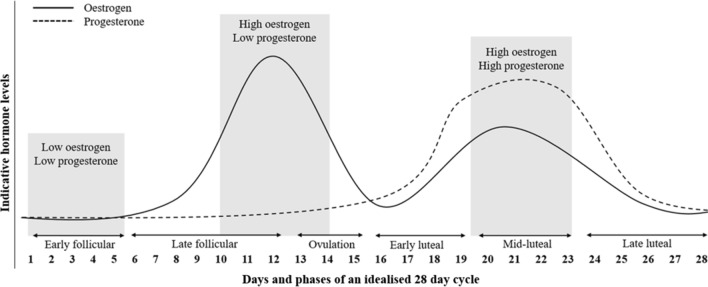
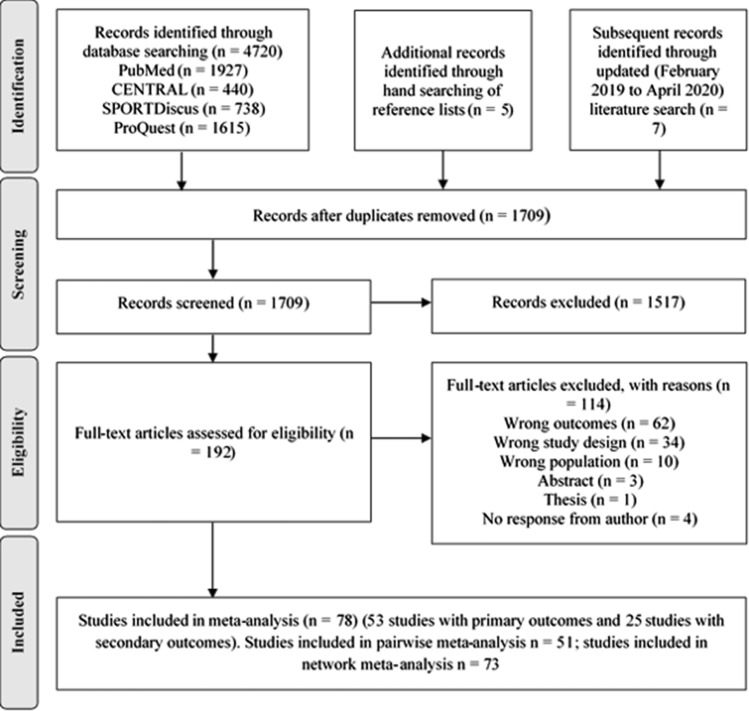
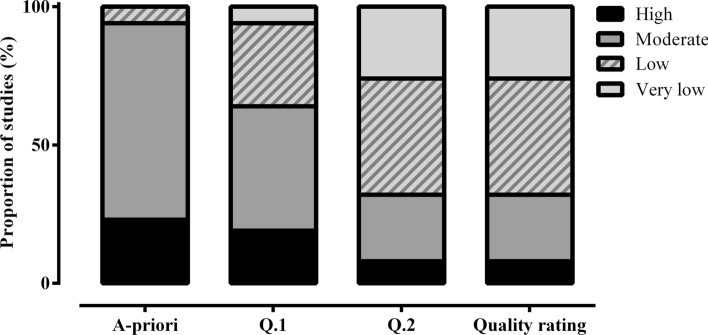
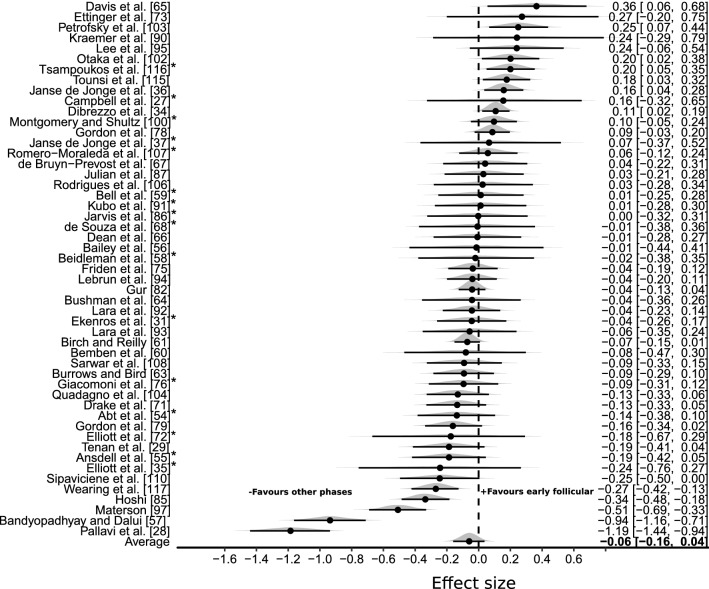
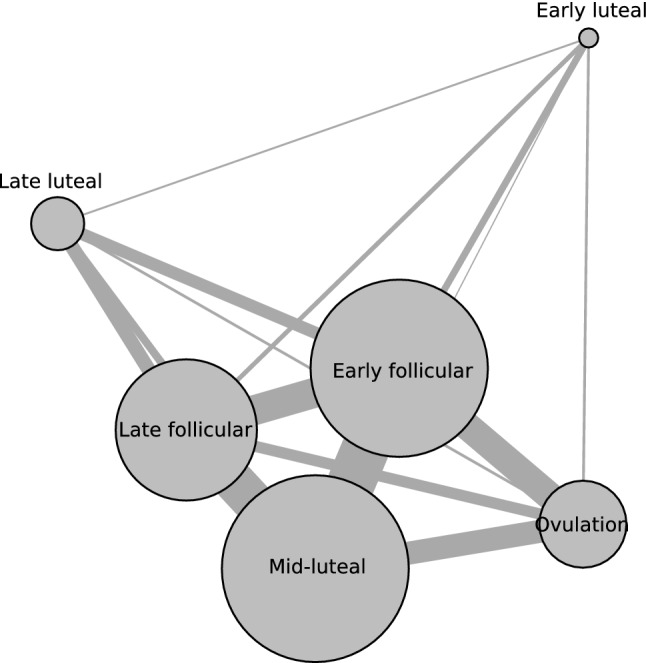
Background: Concentrations of endogenous sex hormones fluctuate across the menstrual cycle (MC), which could have implications for exercise performance in women. At present, data are conflicting, with no consensus on whether exercise performance is affected by MC phase. Objective: To determine the effects of the MC on exercise performance and provide evidence-based, practical, performance recommendations to eumenorrheic women. Methods: This review followed the Preferred Reporting Items for Systematic Reviews and Meta-Analyses (PRISMA) guidelines. Four databases were searched for published experimental studies that investigated the effects of the MC on exercise performance, which included at least one outcome measure taken in two or more defined MC phases. All data were meta-analysed using multilevel models grounded in Bayesian principles. The initial meta-analysis pooled pairwise effect sizes comparing exercise performance during the early follicular phase with all other phases (late follicular, ovulation, early luteal, mid-luteal and late luteal) amalgamated. A more comprehensive analysis was then conducted, comparing exercise performance between all phases with direct and indirect pairwise effect sizes through a network meta-analysis. Results from the network meta-analysis were summarised by calculating the Surface Under the Cumulative Ranking curve (SUCRA). Study quality was assessed using a modified Downs and Black checklist and a strategy based on the recommendations of the Grading of Recommendations Assessment Development and Evaluation (GRADE) working group. Results: Of the 78 included studies, data from 51 studies were eligible for inclusion in the initial pairwise meta-analysis. The three-level hierarchical model indicated a trivial effect for both endurance- and strength-based outcomes, with reduced exercise performance observed in the early follicular phase of the MC, based on the median pooled effect size (ES 0.5 = − 0.06 [95% credible interval (CrI): − 0.16 to 0.04]). Seventy-three studies had enough data to be included in the network meta-analysis. The largest effect was identified between the early follicular and the late follicular phases of the MC (ES 0.5 = − 0.14 [95% CrI: − 0.26 to − 0.03]). The lowest SUCRA value, which represents the likelihood that exercise performance is poor, or among the poorest, relative to other MC phases, was obtained for the early follicular phase (30%), with values for all other phases ranging between 53 and 55%. The quality of evidence for this review was classified as “low” (42%). Conclusion: The results from this systematic review and meta-analysis indicate that exercise performance might be trivially reduced during the early follicular phase of the MC, compared to all other phases. Due to the trivial effect size, the large between-study variation and the number of poor-quality studies included in this review, general guidelines on exercise performance across the MC cannot be formed; rather, it is recommended that a personalised approach should be taken based on each individual's response to exercise performance across the MC.
Overview
The claims and statistics of this paper haven’t been checked yet.
Run the check — free, no account needed. It reads the open-access text and checks the sources it cites.
Integrity signals
Registry
Cites
Statistics
Figures
Verification
Claims the paper makes
The claims and statistics of this paper haven’t been checked yet.
Run the check — free, no account needed. It reads the open-access text and checks the sources it cites.
Claims other papers make about this one
Each is checked against this paper’s own text: does it say what the citing paper says it does?
The source backs part of the claim, not all of it — or backs it for a different population, condition or comparison.
In the citing paper
“A Bayesian approach was selected because it estimates the full probability distribution of treatment effects rather than relying on binary significance testing, allowing more informative interpretation of effect sizes and associated uncertainty [40, 41].”
From The Effect of Different Psychological Interventions on Athletes' Competitive Anxiety: A Systematic Review and Bayesian Network Meta-Analysis. (2026) · cites this paper as [41]
Experimental — accuracy not yet measured
Self-check
Percentages, sums and reported differences re-computed from the paper’s own numbers.
The self-check needs the paper’s full text.
Citations
Cites
Preferred reporting items for systematic reviews and meta-analyses: the PRISMA Statement.
(2009) · PubMed Central · Cited by 44,859
Preferred reporting items for systematic reviews and meta-analyses: The PRISMA statement
Moher, D., Liberati, A., Tetzlaff, J., Altman, D. G., & the PRISMA Group* (2009) · Annals of Internal Medicine · doi:10.7326/0003-4819-151-4-200908180-00135 · Cited by 37,554
Gelman, A., Carlin, J. B., Stern, H. S., & Rubin, D. B. (2003) · doi:10.1201/9780429258480 · Cited by 27,276
Dermyshi, E., Wang, Y., Yan, C., Hong, W., Qiu, G., Gong, X., & Zhang, T. (2017) · Neonatology · doi:10.1159/000454668 · Cited by 24,586
GRADE guidelines: 1. Introduction—GRADE evidence profiles and summary of findings tables
Guyatt, G., Oxman, A. D., Akl, E. A., Kunz, R., Vist, G., Brozek, J., Norris, S., Falck-Ytter, Y., Glasziou, P., & deBeer, H. (2011) · Journal of Clinical Epidemiology · doi:10.1016/j.jclinepi.2010.04.026 · Cited by 10,681
brms : An R Package for Bayesian Multilevel Models Using Stan
Bürkner, P.-C. (2017) · Journal of Statistical Software · doi:10.18637/jss.v080.i01 · Cited by 9,476
GRADE guidelines: 3. Rating the quality of evidence
Balshem, H., Helfand, M., Schünemann, H. J., Oxman, A. D., Kunz, R., Brozek, J., Vist, G. E., Falck-Ytter, Y., Meerpohl, J., & Norris, S. (2011) · Journal of Clinical Epidemiology · doi:10.1016/j.jclinepi.2010.07.015 · Cited by 8,285
Downs, S. H., & Black, N. (1998) · Journal of Epidemiology and Community Health · doi:10.1136/jech.52.6.377 · Cited by 8,252
Salanti, G., Ades, A. E., & Ioannidis, J. P. A. (2011) · Journal of Clinical Epidemiology · doi:10.1016/j.jclinepi.2010.03.016 · Cited by 3,766
Norderyd, O. M., Koch, G., Papias, A., Köhler, A. A., Helkimo, A. N., Brahm, C., Lindmark, U., Lindfors, N., Mattsson, A., Rolander, B., et al. (2015) · PubMed · Cited by 3,584
Research works printed but not linked: 3
- Cohen J. Statistical power analysis for the social sciences. 2nd ed. New Jersey: Lawrence Erlbaum Associates; 1988.
- Grucza R, Pekkarinen H, Hanninen O. Cardiorespiratory responses to bicycle incremental exercise in women taking oral contraceptives. Biol Sport. 2002;19(3):267–79.
- Masterson G. The impact of menstrual phases on anaerobic power performance in collegiate women. J Strength Cond Res. 1999;13(4):325–9.
Cited by
Sorted by citations
Items 701–800 of 810
Anıl, B., Akdemir, E., & Yilmaz, A. F. (2026) · Chronobiology International · doi:10.1080/07420528.2026.2643808
“Studies highlighting the influence of hormones on muscle strength, tendons, and ligaments are supported by the identification of estrogen and progesterone receptors in bone, muscle, ligament, and the nervous system (Khowailed et al. 2015; Lee et al. 2017; McNulty et al. 2020).”
InfluentialSimonetti, V. S. M., & Rother, R. L. (2026) · Europub Journal of Health Research · doi:10.54747/ejhrv7n1-002
We’re asking the wrong questions about women’s athletic performance
Downes, K., & Milne, K. J. (2026) · doi:10.64628/aam.jnkwyvq45
Ruscello, B., Castagna, C., Santolamazza, F., GABRIELLI, P. R., Ceccacci, M., BENE, P. D., BUCCIARELLI, F., Guacci, M., Arena, E., di Villanova, F. S., et al. (2026) · The Journal of Sports Medicine and Physical Fitness · doi:10.23736/s0022-4707.26.17448-9
Habibpour, H., Nikpour, M., Ledari, F. M., Behmanesh, F., & Pasha, H. (2026) · BMC Pregnancy and Childbirth · doi:10.1186/s12884-026-08984-8
Beyond the Abstract: How Coaches Should Read and Evaluate Review Papers in Sports Science
Kraemer, W. J. (2025) · Strength and conditioning journal · doi:10.1519/ssc.0000000000000941
Adaptations énergétiques aux variations de poids et au statut hormonal ovarien chez les athlètes
Bagot, S. (2024) · theses.fr (ABES) · doi:10.70675/13a08bf4ze417z4cb4z80cfz47892200b6c8
Silva, J. V., Oliveira, T. N., Sampaio, P., Sá, O. M. D. S., Barreto, G., Roschel, H., & Saunders, B. (2026) · Research in Sports Medicine · doi:10.1080/15438627.2026.2656695
“Although individual performance may vary due to hormonal fluctuations across the menstrual cycle, a meta-analysis suggests trivial differences across phases when looking at the group-level (McNulty et al., 2020).”
Johnson, K. A., DuBose, L. E., Shah, A. A., & Fling, B. W. (2026) · Archives of Physical Medicine and Rehabilitation · doi:10.1016/j.apmr.2026.04.004
Proteomics to reveal relationship between menstrual cycle and subjective conditions
Fushimi, K., Kondo, T., Ikegami, N., Yamada, M., Wong, S. Y., Sakamaki‐Sunaga, M., & Hayashi, N. (2026) · Scientific Reports · doi:10.1038/s41598-026-47566-8
“The menstrual cycle is one factor known to influence the performance of female athletes 13 and it is regulated by sex hormones such as estradiol and progesterone.”
Vieira, Y. L. D. M., CAMPOS, A. V., LOPES, A. C., SANTOS, N. S. D., SANTOS, M., Bernardes, B. T., Drummond, L. R., de Lacerda, L. T., ANDRADE, M. J., Marchini, J. S., et al. (2026) · Gazzetta Medica Italiana Archivio per le Scienze Mediche · doi:10.23736/s0393-3660.25.06051-6
Fernández-Elías, V. E., Flores-Bonilla, N., Torres, O. L., & Burgos-Postigo, S. (2026) · Applied Sciences · doi:10.3390/app16083912
Chibhabha, F., Ndiaye, F. B. B., Ngcobo, M. O., & Mkumbuzi, N. S. (2026) · BMC Sports Science Medicine and Rehabilitation · doi:10.1186/s13102-026-01692-y
“To date, evidence on the influence of hormone fluctuations during the menstrual cycle on athletic performance and musculoskeletal injury risk is uncertain [41, 42].”
Cooper, A., Mahaiyuddin, A., Sim, D., Davies, F., Gillen, E., Brown, N., Edwards, A., & Boivin, J. (2026) · Research Square · doi:10.21203/rs.3.rs-9486208/v1
Jesus, F., Francisco, R., Bernardino, A. V., Nunes, C. L., Dickinson, S., Rocha, P. M., Minderico, C. S., Sardinha, L. B., Schoeller, D. A., & Silva, A. M. (2026) · International Journal of Sport Nutrition and Exercise Metabolism · doi:10.1123/ijsnem.2025-0120
Jugenheimer, A., Lohse, K., Müller, H., & Winnisch, M. (2026) · German Journal of Sports Medicine · doi:10.5960/dzsm.2025.653
Strength-sport athlete and coach perspectives and training practices throughout the menstrual cycle
Alvar, B., Harris, D. M., O’Bryan, S. J., & Nelson, A. R. (2026) · International Journal of Sports Science & Coaching · doi:10.1177/17479541261439786
Ausland, Å., Solstad, B. E., & Torstveit, M. K. (2026) · International Journal of Sports Science & Coaching · doi:10.1177/17479541261440230
Yazgan, E. A., Cavlak, U., & Kaya, B. K. (2026) · Sports Health A Multidisciplinary Approach · doi:10.1177/19417381261438752
Novel methods for women's football players' body composition assessment: an age-related perspectivePreprint
Moro, F., Mauro, M., Perugini, M., & Toselli, S. (2026) · Research Square · doi:10.21203/rs.3.rs-9493709/v1
Trynkiewicz, W., Stepinska, M., Omiecińska, M., Maciejewska, A., Kaczor, M., Rybka, Z., Żak, J., Lenkiewicz, E., Dąbrowska, K., & Winiarczyk, J. (2026) · International Journal of Innovative Technologies in Social Science · doi:10.31435/ijitss.2(50).2026.5248
“Factors such as training status, sleep quality, nutritional status, and environmental conditions often exert a substantially larger impact on endurance performance than endogenous hormonal fluctuations (McNulty et al., 2020).”
Lambright, K. R., Bunn, J. A., & Newmire, D. E. (2026) · The Journal of Strength and Conditioning Research · doi:10.1519/jsc.0000000000005503
de Brito, C. L., Leal, T. C., Silva, M. A. C., Junqueira, N. D., Rodrigues, A., Ferreira, J. M., Malechesk, G. F., Filho, L. F. P. D. S., Noal, B., Ferreira, R. E. S., et al. (2026) · Nutrire · doi:10.1186/s41110-026-00474-3
“This disparity may be due in part to biological differences, such as those related to the menstrual cycle, which can introduce methodological challenges and result in heterogeneous outcomes [16 , 17 ].”
InfluentialAlsabty, S. M., Al-Khafaji, N. M., Ali, L., Uraibi, S. H., Alsabty, M., & Ghazi, M. A. (2026) · Science Discovery Public Health · doi:10.11648/j.sdph.20260102.12
Parten, A. L., Smith‐Ryan, A. E., Sanchez, K. M., Heard, S. A., McAllister, M. J., O'Neal, E. K., Lyons, S., & Waldman, H. S. (2026) · Applied Physiology, Nutrition, and Metabolism · doi:10.1139/apnm-2025-0503
Podologie de la femme sportive : adaptation des charges et tolérance tissulaire
Potin, M. (2026) · Revue du Podologue · doi:10.1016/j.revpod.2026.04.003
Women’s team sports: Advancing performance, participation, and equity
Preissler, A. A. B., Pereira, S., Figueiredo, P., & Ramos, A. (2026) · Team Sports Studies · doi:10.1016/j.tss.2026.100006
Relationship Between Menstrual Phase-Induced Sleep Variations and Performance in Elite Female Rowers
Ethirajan, P., Premkumar, S. V. D., Raman, S. A., R, R. K., A, T. K., Sivaraman, A., Kasthuri, V. R., & Sundresh, N. (2026) · Cureus · doi:10.7759/cureus.109839
“The observed performance decrement during low-hormone phases aligns with the concept that hormonal withdrawal may adversely influence thermoregulation, sleep continuity, perceived recovery, and physiological readiness [3,4,7,8].”
Resistance training and the pelvic floor: Evidence, gaps, and clinical implications
Forner, L. B. (2026) · Elsevier eBooks · doi:10.1016/b978-0-443-32986-9.00007-2
Marques, C., Rebelo, M., Serrano, J., & Fonseca, H. (2026) · Frontiers in Sports and Active Living · doi:10.3389/fspor.2026.1789611 · Cited by 1
“In parallel, scientific interest in female-specific aspects of sports performance has increased, particularly regarding the influence of the menstrual cycle (MC) on training adaptations, injury risk, and physiological responses to exercise (6, 7).”
Vanmeerhaeghe, A. F., Milà, R., Pujol-Marzo, M., Casadevall-Sayeras, P., Nieto, A., Nevot-Casas, O., & Peña, J. (2026) · The Journal of Strength and Conditioning Research · doi:10.1519/jsc.0000000000005509
Efectos del ácido mefenámico en dismenorrea y rendimiento físico de futbolistas sub-18
Choque, L. N. P., & Ruiz, D. A. C. (2026) · Revista Ciencias de la Educación y el Deporte · doi:10.70262/rced.v4i1.2026.151
Menstrual cycle and athletic performance: a systematic review and meta-analysis
SILVA, A. B. D. A., de Assis, G. G., Ribeiro, T. D., Peralta, M., Marques, A., Trybulski, R., Grzywacz, T., Sawicki, P., & Gonçalves, C. (2026) · Human Movement · doi:10.5114/hm/216984
“When considering the overall body of literature examining the impact of the MC on sports performance, there is still no clear consensus, a conclusion reinforced by a recent systematic review and meta-analysis focusing on exercise test performance [34].”
Influence of menstrual cycle phases on anaerobic and neuromuscular performance of healthy women
Pavan, J. A., da Silva, M. S., Putti, G. M., Marchi, N. A. O., & Puggina, E. F. (2026) · Sport Sciences for Health · doi:10.1007/s11332-026-01797-4
“Estrogen and progesterone levels cause various physiological effects in several systems of the human body, including cardiovascular, respiratory, metabolic, and neuromuscular parameters, which may have subsequent implications for athletic performance [6].”
Méndez-Domínguez, N., Estrella-Castillo, D., Villarreal-Jimenez, E., & Arcila-Novelo, R. (2026) · Sports · doi:10.3390/sports14060236
“From a biological perspective, estrogen has been proposed to influence endurance-related physiological processes through modulation of carbohydrate, fat, and protein metabolism, although the practical effects on athletic performance remain inconsistent across studies [5,6].”
InfluentialScoping review of UK female-firefighters, physical fitness and occupational performance
Hart, W., Martin, D., Bishop, D. C., & Taylor, D. R. (2026) · Occupational Medicine · doi:10.1093/occmed/kqag042
Zyklusbewusste Betreuung im (Leistungs–)Sport
Strahler, J., & Marschk, A. P. (2026) · Journal of Applied Sport and Exercise Psychology · doi:10.1026/2941-7597/a000071
Menstrual Cycle Characteristics and Perceived Impact in Female Volleyball Players
Kneffel, Z., Kováts, T., Áder, A., & Kopper, B. (2026) · Sports · doi:10.3390/sports14060241
“…periods, and the follicular phase as a relative window of perceived motivational and qualitative advantage, may support more individualized periodization strategies that respect athlete preference and symptom profiles rather than relying on a one-size-fits-all menstrual cycle model [16,18,19].”
Jesus, F., Francisco, R., Kondo, E., Nunes, C. L., Sardinha, L. B., Sagayama, H., Schoeller, D. A., & Silva, A. M. (2026) · Clinical Nutrition ESPEN · doi:10.1016/j.clnesp.2026.103398
Dabbs, N. C., Binkley, H. M., Bott, C., Fragala, M. R., Herda, A. A., Moeskops, S., Moore, E. W. G., Smith‐Ryan, A. E., & Triplett, N. T. (2026) · The Journal of Strength and Conditioning Research · doi:10.1519/jsc.0000000000005493
Knight, J. D., Russell, M., Cunningham, D. J., Brown, N., Cook, C., Waldron, M., Mason, L., & Kilduff, L. P. (2026) · PLoS ONE · doi:10.1371/journal.pone.0349645
“Participants were assigned to one of the phases based on the number of days elapsed since the first day of their most recent menstrual bleeding [28].”
Barros, A. S. S. B. (2023) · RCMOS - Revista Científica Multidisciplinar O Saber · doi:10.51473/rcmos.v1i1.2023.2509
Sefotha, C., Ferreira, S., & Smith, L. (2026) · Sports · doi:10.3390/sports14070257
“Historically, MC-related research focused primarily on menstrual dysfunction within the female athlete triad [4]; however, more recent literature has begun to explore the independent effects of MC phases on athletic performance outcomes [5].”
Sex Differences in Pacing Profile and Reliability in a 4-km Cycling Time Trial
Marinho, A. H., Schamne, J. C., Hasegawa, J. S., Cavalcante, V. H. V., Gonçalves, F., Bertuzzi, R., Lima‐Silva, A. E., & Cristina-Souza, G. (2026) · Sports Health A Multidisciplinary Approach · doi:10.1177/19417381261455569
Moore, S. R., Joniak, K. E., Ladan, A. N., Britton, M. E., Cantu, E. I., Hirsch, K. R., Hackney, A. C., & Smith‐Ryan, A. E. (2026) · The Journal of Strength and Conditioning Research · doi:10.1519/jsc.0000000000005452
Ekenros, L., Swärdh, E., Rosen, P., & Fridén, C. (2026) · European Journal of Physiotherapy · doi:10.1080/21679169.2026.2693305
Sylvester, J. E., Baez, S., Charity, D., DelBiondo, G. M., Duncan, C., Hill, C., Morancie, N. A., Tayne, S., & Smith‐Ryan, A. E. (2026) · Medicine & Science in Sports & Exercise · doi:10.1249/mss.0000000000004061
Yang, H., Dong, J., Yang, J., Wu, C. L., & Su, C.-H. (2026) · Nutrients · doi:10.3390/nu18132115
Boukhris, O. F., Suppiah, H. T., Kerkeni, M., Holt, A., & Driller, M. W. (2026) · Applied Psychology Health and Well-Being · doi:10.1111/aphw.70180
“The absence of menstrual cycle control in female participants may have further increased variability, as strength, fatigue and recovery can fluctuate across the cycle (McNulty et al., 2020; Sims & Heather, 2018).”
Sex and gender entanglement in sport-related research
Schmechel, C. (2026) · German Journal of Exercise and Sport Research · doi:10.1007/s12662-026-01130-8
Furu, L. E., McGhie, D., Solli, G. S., & Dalen, T. (2026) · Research Quarterly for Exercise and Sport · doi:10.1080/02701367.2026.2696560
Optimising gynaecological surgical care for elite female athletes: a narrative review
Lockett, G., Kechagias, K. S., Thomson, A., Velji, Z. A., Cooper, N., Barcroft, J., Jones, B. P., Stephens, J. R., Soni, S., Dooley, M., et al. (2026) · Frontiers in Sports and Active Living · doi:10.3389/fspor.2026.1746638
“Fluctuations in oestrogen and progesterone concentrations throughout the cycle have been associated with changes in pain perception, ligamentous laxity, neuromuscular control, inflammatory responses, and haemostatic function (24).”
Hormonas, sueño y recuperación en deportistas femeninas
López, G. L. G., & Lucio, A. G. P. (2026) · Revista Mexicana de Ciencias de la Cultura Física · doi:10.54167/rmccf.v6i12.2284
Muñoz-López, M., Quesada-Fernández, G., Sancho-Haro, E. S., Viúdez, X. R. D. L. P., Baz-Valle, E., López‐Gil, J. F., & Tornero-Aguilera, J. F. (2026) · Metabolites · doi:10.3390/metabo16070483
Jian, Z., 张颖慧, Li, M., Fan, X., Liu, P., & Deng, H. (2026) · Frontiers in Nutrition · doi:10.3389/fnut.2026.1876198
Principal, P. D. S. A., Professor, M. S. D. A., Professor, M. L. V. A., (G.N.M), M. T. A., (G.N.M), M. S. Y., (G.N.M), M. S. K., & (G.N.M), M. A. K. (2026) · International Journal of Latest Technology in Engineering Management & Applied Science · doi:10.51583/ijltemas.2026.150600102
Navigating uncharted territory: a biopsychosocial perspective on coaching female athletes
Ausland, Å., Solstad, B. E., Knight, C. J., Ivarsson, A., & Torstveit, M. K. (2026) · International Journal of Sport and Exercise Psychology · doi:10.1080/1612197x.2026.2701821
Britton, I. I., & Duncan, W. C. (2026) · Reproduction and Fertility · doi:10.1530/raf-25-0131
Whiter, H. L., Holland, C. J., & Cooper, D. J. (2026) · Sport Sciences for Health · doi:10.1007/s11332-026-01824-4
“Adapted from McNaulty [12] skin hydration [23–25].”
InfluentialPina, W. A. R. D. A., Lourenço, V. L. D. S., dos Anjos, V. R., Vivan, L., de Lira, C. A. B., Weiss, K., Knechtle, B., & Andrade, M. (2026) · Respiratory Physiology & Neurobiology · doi:10.1016/j.resp.2026.104620
Recacha-Ponce, P., Hernando, C., Seder, A. C., Collado‐Boira, E., Suárez-Alcázar, M. P., Medina, P. S., & Domingo, C. H. (2026) · Frontiers in Sports and Active Living · doi:10.3389/fspor.2026.1793624
Multidimensional Determinants of Performance in Women’s Football: A Narrative Review
Tanturli, A., Modesti, A., & Lippi, D. (2026) · Applied Sciences · doi:10.3390/app16147293
Li, H., Chen, M., Zhuang, M., Deng, H., Wang, H., & Li, H. (2026) · Nutrients · doi:10.3390/nu18152429
“Future trials should prospectively report menstrual-cycle phase, hormonal-contraceptive use, habitual caffeine intake, [13,14,54].”
InfluentialLiang, L., Chen, M., & Qi, B. (2026) · Frontiers in Physiology · doi:10.3389/fphys.2026.1892370
Salvatore, G. M., Benasi, G., Harsora, R., Butryn, M. L., Mogle, J. A., & Arigo, D. (2026) · Health Psychology and Behavioral Medicine · doi:10.1080/21642850.2026.2706211
“…and exercise science—has focused on athlete populations, with broad patterns of PA and performance assessed in laboratory settings (e.g. laboratory-based performance testing), rather than among general populations of women (Bruinvels et al., 2022; Carmichael et al., 2021; McNulty et al., 2020).”
Baber, F., Dytrtová, J. J., Jakl, M., & Babar, N. U. A. (2026) · Frontiers in Sports and Active Living · doi:10.3389/fspor.2026.1878668
“Methodological quality was assessed using the modified Downs and Black checklist previously applied in menstrual cycle and exercise research (14).”
InfluentialAsp, E. E., Elfmark, O., & Noordhof, D. A. (2026) · International Journal of Sports Physiology and Performance · doi:10.1123/ijspp.2026-0022
Menstrual Cycle Effects on Performance Parameters in Female Football Players: A Systematic Review
Rasmussen, K. D., Andersen, M. B., & Hansen, M. (2026) · International Journal of Sports Physiology and Performance · doi:10.1123/ijspp.2025-0432
Chen, H., Liu, D., & Shen, J. (2026) · Journal of Exercise Science & Fitness · doi:10.1016/j.jesf.2026.200508
“56,57 58 – 60 Fifth, no follow-up assessment was conducted, so the durability of training effects and longer-term adherence remain unknown.”
McCarthy, S. F., Jackson, G. S., Islam, H., & Little, J. P. (2026) · Journal of science and medicine in sport · doi:10.1016/j.jsams.2026.08.207
Hormonal rhythms, performance and injury in female athletes: A narrative review
Chen, H., & Wang, Q. (2026) · Science & Sports · doi:10.1016/j.scispo.2026.05.005
Leung, A., Wellsandt, E. A., Malloy, P. J., Grooms, D. R., & Zarzycki, R. (2026) · Journal of the Pediatric Orthopaedic Society of North America · doi:10.1016/j.jposna.2026.100429
Chica-Latorre, S., Grant, T. M., McKune, A. J., Lindley, M. R., & Minehan, M. (2026) · Performance Nutrition · doi:10.1186/s44410-026-00032-y
Taşman, G. A., Güven, E., Acar, N. E., & Şentürk, D. (2026) · BMC Sports Science Medicine and Rehabilitation · doi:10.1186/s13102-026-02019-7
Lee, E.-J., & Kim, J. (2026) · Applied Sciences · doi:10.3390/app16178713
Guo, Q. (2026) · World Journal of Public Health · doi:10.11648/j.wjph.20261103.20
Reiches, M. W., DiMarco, M., Lee, K. M. N., Pape, M., Bekker, S., Boulicault, M., Danielsen, A. C., & Richardson, S. S. (2026) · Social Science & Medicine · doi:10.1016/j.socscimed.2026.119790
Jones, N. S., Mills, D. E., Pincheira, P., & Hoffman, B. (2026) · European Journal of Applied Physiology · doi:10.1007/s00421-026-06421-4
Breaking Down the Stigma and Complexities of Menstrual Health Performance Research
Badenhorst, C. E. (2026) · Springer eBooks · doi:10.1007/978-981-95-8357-7_3
“Nobody Is Talking About This!”: Exploring the Postfeminist Promise of Cycle Syncing TikTok Content
Clark, M., & Southerton, C. (2026) · Springer eBooks · doi:10.1007/978-981-95-8357-7_25
Nelson, M., Baker, D., MacManus, C., McKenna, M., & Moore, H. (2026) · Springer eBooks · doi:10.1007/978-981-95-8357-7_23
THE INFLUENCE OF MENSTRUAL CYCLE PHASES ON ATHLETIC PERFORMANCE IN WOMEN
Stępień, A., Skrzypek, J., Niewiadomska, J., Paluch, A., Bondos, B., Fussek, Ł., Lee, K., Czerny, I., Daniszewski, S., & Krajewski, M. (2026) · International Journal of Innovative Technologies in Social Science · doi:10.31435/ijitss.2(50).2026.5641
Exercise and physical activity changes during the menstrual cycle in users of the Flo app
Cunningham, A. C., Rauff, E. L., Hewings-Martin, Y., Wickham, A. P., Xu, Y., & Zhaunova, L. (2026) · Women s Health · doi:10.1177/17455057261473456
“16 Regarding more general physical activity there is more limited research on the contribution of the menstrual cycle, with a few reports of small differences in activity levels by menstrual cycle phase, 17,18 alongside other reports of no changes in step counts or physical activity levels.”
Prajapati, A. J., Lubiak, S. M., Schmidt, J. T., Howard, M. A., Shah, N. M., Patel, N. N., Wells, A. J., & Hill, E. C. (2026) · Research Quarterly for Exercise and Sport · doi:10.1080/02701367.2026.2718203
The Social Media Trend of Cycle Syncing: An Analysis of the Content and Quality of Videos on TikTok
Leupold, O., Anderson, O. K., Giampaolo, G., Cheng, J., & CASEY, E. K. (2026) · Sports Health A Multidisciplinary Approach · doi:10.1177/19417381261479699
UCI Sports Nutrition Project: Position Statement on Nutrition for Cycling
Burke, L. M., Dolan, E., Gonzalez, J. T., Mujika, I., Jeukendrup, A. E., Redegeld, M. I., Martins, G., Valenzuela, P. L., Leo, P. D., Mateo‐March, M., et al. (2026) · International Journal of Sport Nutrition and Exercise Metabolism · doi:10.1123/ijsnem.2026-0135
Self-citationHabeahan, N. P., Gaol, J. R. L., Sigalingging, E., Manalu, N., & Martua, A. (2026) · COMPETITOR Jurnal Pendidikan Kepelatihan Olahraga · doi:10.67322/cpjok.v18i3.984
“However, menstrual status, hormonal contraception, body composition, fitness, and menstrual-cycle phase may influence baseline core temperature and thermoregulatory responses (McNulty et al., 2020; Hunter et al., 2023; Christison et al., 2025).”
Training and Athlete Monitoring—Opportunities and Challenges of Digitalization
Schneider, C., Strotkötter, C., & Nolte, J. (2026) · Springer eBooks · doi:10.1007/978-3-662-73013-3_12
Lesmana, I. B., Yudiana, Y., Mulyana, B., Mahardhika, D. B., & Nugroho, S. (2026) · COMPETITOR Jurnal Pendidikan Kepelatihan Olahraga · doi:10.67322/cpjok.v18i3.1113
“…athletes may also experience recovery variations associated with menstrual-cycle symptoms, hormonal contraceptive use, iron status, and sex-specific injury profiles, although these variables were not measured in this study (Elliott-Sale et al., 2020; McNulty et al., 2020; Findlay et al., 2020).”
Mănescu, D. C., Casals, C., Piotrowska, A., de Carvalho, T. S., Petcu, C., Băltarețu, C., Bidiugan, R., Dragomir, A., Amzulescu, O., Bidiugan, S., et al. (2026) · Nutrients · doi:10.3390/nu18203337
“Athlete state should be characterized with attention to training status, sex-related physiology where relevant, menstrual-cycle and hormonal-contraceptive status, energy availability, illness and injury status, gastrointestinal history, habitual diet, and micronutrient status [84,85].”
Sun, H., Chu, X., Li, Z., & Wang, F. (2026) · Frontiers in Nutrition · doi:10.3389/fnut.2026.1902377
Heinrich, C., Herzog, K., Happ, K., Venth, L., Niederer, D., & Behringer, M. (2026) · Journal of Sports Sciences · doi:10.1080/02640414.2026.2735713
“Recent reviews reported small and non-significant effects of cycle phases on strength outcomes (Blagrove et al., 2020; Colenso-Semple et al., 2023; McNulty et al., 2020).”
Cahya, D. A., Bonita, R. Y., Azizzah, I. N., Wahjuni, E. S., Dalee, A. D., & Firmansyah, A. P. (2026) · BIO Web of Conferences · doi:10.1051/bioconf/202625501007
“Menstrual status, reproductive stage, and exogenous hormones are relevant to the design of research in women [12, 13], while problematic low energy availability may impair reproductive, cardiovascular, hematological, and recovery-related physiology in athletes [14].”
Bury, J., Papuga, A., Hejduk, M., Grzymek, M., Kraska, K., Pawłucka, K., Pawlucka, A., Sobek, A., Kadłuczka, J., Potoniec, J., et al. (2026) · International Journal of Innovative Technologies in Social Science · doi:10.31435/ijitss.3(51).2026.6222
Digital menstrual tracking risks creating more harm than benefit
Lee, K. M. N., DiMarco, M., Pape, M., Reiches, M. W., Homan, P., Bekker, S., Mountjoy, M. L., & Richardson, S. S. (2026) · BMJ · doi:10.1136/bmj-2026-100858
Yu, H., Qiao, J., Wang, W., Liu, Y., & Liu, J. (2026) · Sports · doi:10.3390/sports14100428
“…of menstrual-related symptoms and hormonal fluctuations on HR, RPE, and metabolic responses, experimental trials were conducted after the first week from menstrual onset whenever possible, and repeated trials for each participant were scheduled within comparable menstrual cycle phases [29].”
Howard, M. A., Rivera, P. M., Lubiak, S. M., Proppe, C. E., Schmidt, J. T., Fraifer, T. L., Shobe, E. D., & Hill, E. C. (2026) · Clinical Physiology and Functional Imaging · doi:10.1111/cpf.70097
Ramey, K. T., Unrein, C. L., Yang, C.-H., & Hirsch, K. R. (2026) · The Journal of Strength and Conditioning Research · doi:10.1519/jsc.0000000000005610
da Silva, E. B., de Melo, M. J. L., Mendonça, M. A., Leiros, D. D. M., Amiri, E., Faro, H., & Machado, D. G. D. S. (2026) · Neuroscience · doi:10.1016/j.neuroscience.2026.10.019
Teodoro, R. C., Guimarães, M. P., Manoel, F. D. A., da Silva, S. F., & de Abreu, W. C. (2026) · Nutrition and Health · doi:10.1177/02601060261497497
Metadata
- Authors
- McNulty, K. L., Elliott-Sale, K. J., Dolan, E., Swinton, P. A., Ansdell, P., Goodall, S., Thomas, K., & Hicks, K. M.
- Affiliations
- Northumbria University (GB)
- Nottingham Trent University (GB)
- Universidade de São Paulo (BR)
- Robert Gordon University (GB)
- Corresponding author
- Elliott-Sale, Kirsty Jayne
- ORCID
- Venue
- Sports Medicine
- Published
- 2020-07-13
- Volume
- 50
- Issue
- 10
- Pages
- 1813-1827
- ISSN
- 0112-1642 (ISSN-L)
- 1179-2035
- PMC
- PMC7497427
- OpenAlex
- W3038797657
- Cited by
- 812
- References
- 127
- Citations by year
- 2026: 183 · 2025: 181 · 2024: 153 · 2023: 136 · 2022: 72 · 2021: 70 · 2020: 17
- FWCI
- 14.50
- Type
- journal article
- Language
- en
- Open access
- hybrid
- doi.org
- Locations
- Sports Medicine (publishedVersion, cc-by)
- PubMed Central (publishedVersion, cc-by)
- PubMed (publishedVersion)
- Nottingham Trent University's Institutional Repository (Nottingham Trent Repository) (acceptedVersion)
- Northumbria Research Link (Northumbria University) (acceptedVersion)
- Open Access Institutional Repository at Robert Gordon University (Robert Gordon University) (submittedVersion, cc-by)
- Funders
- Fundação de Amparo à Pesquisa do Estado de São Paulo (19/05616-6, 2019/, 2019/05616)
- Topics
- Health Sciences › Medicine › Orthopedics and Sports Medicine › Sports Performance and Training
- Health Sciences › Medicine › Physiology (medical) › Cardiovascular and exercise physiology
- Health Sciences › Medicine › Public Health, Environmental and Occupational Health › Menstrual Health and Disorders
- Keywords
- menstrual cycle phases, exercise performance, eumenorrheic women, sex hormones, follicular phase, luteal phase, endurance performance, strength performance
- MeSH terms
- Female, Humans, Menstrual Cycle, Exercise, Athletic Performance
About these checks
Registry, retraction, Cites and statistics results are computed, not judged, with one exception: a printed reference that no index lists is read once by a model before it counts as a citation error. Claims are extracted by a model and kept only when their quote appears verbatim in the text; each cited source is then checked, with a model’s help, for whether it says what the claim relies on. Those verdicts can be wrong — read the claim’s quote and the cited source before relying on one.
Statistics and arithmetic are recomputed, not judged.
Confidence bands are shown only for fields calibrated on our annotated test set. None is calibrated yet, so no band is shown.
What counts as a claim ›How we measure confidence ›How we check this ›
Are you an author, or do you see a problem with this page? Request a review
