

The Effects of Concurrent Aerobic and Strength Training on Muscle Fiber Hypertrophy: A Systematic Review and Meta-Analysis
Open accessThe DOI matches its Crossref record; 48 of the 48 references it cites were found in a registry or an index.
Abstract
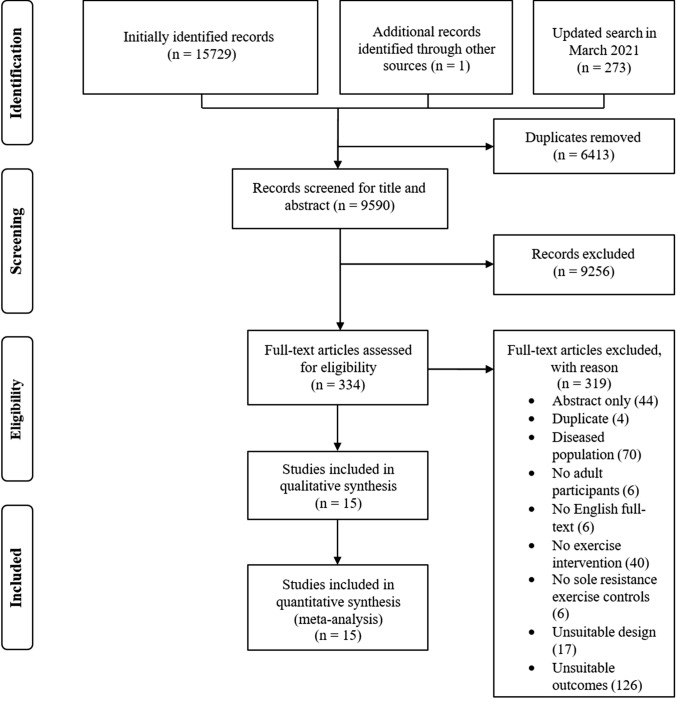
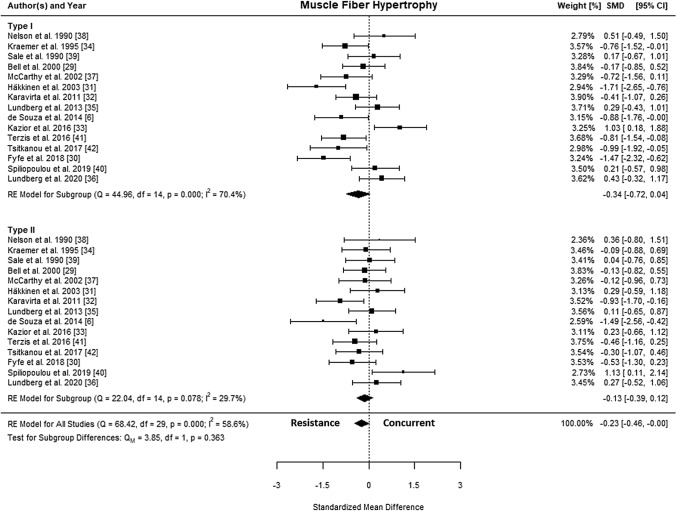
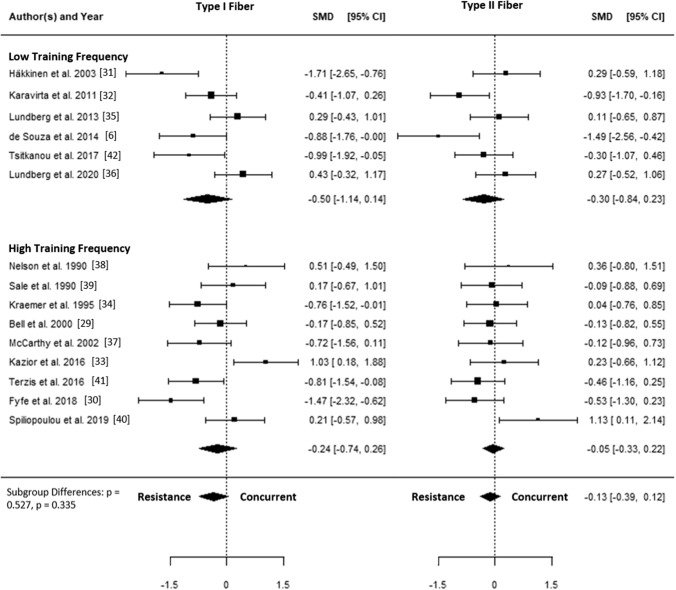
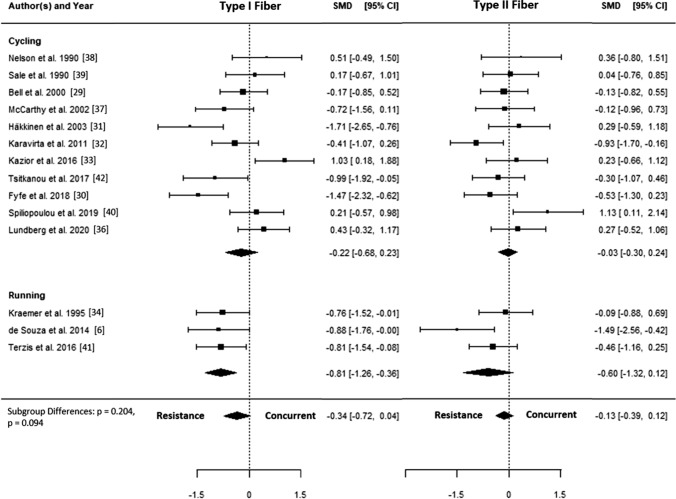
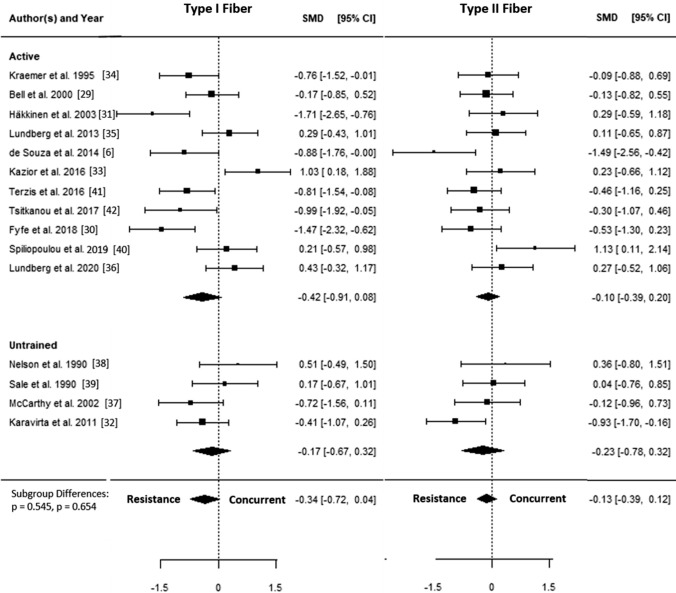
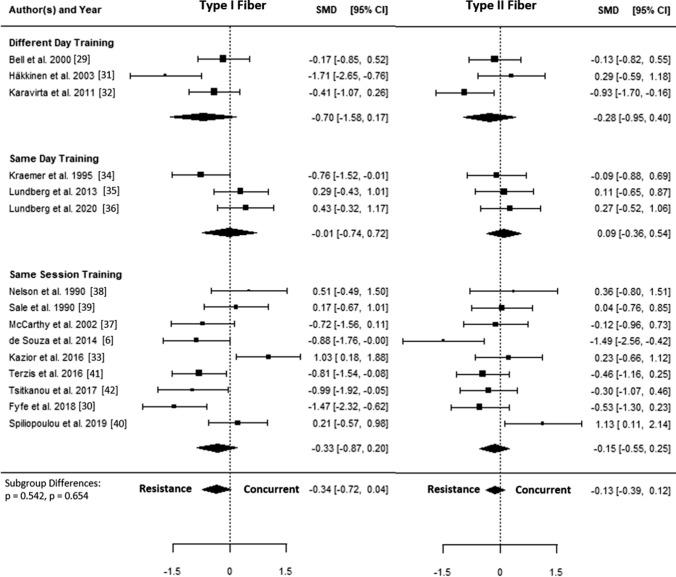
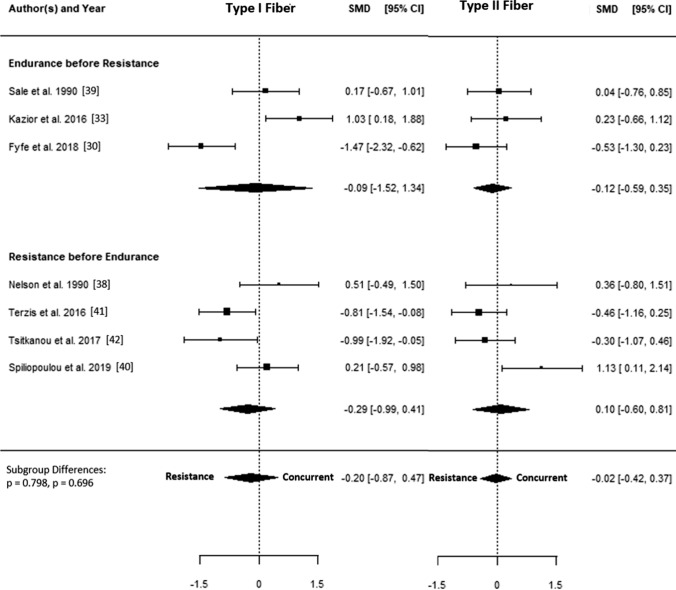
Background: Whole muscle hypertrophy does not appear to be negatively affected by concurrent aerobic and strength training compared to strength training alone. However, there are contradictions in the literature regarding the effects of concurrent training on hypertrophy at the myofiber level. Objective: The current study aimed to systematically examine the extent to which concurrent aerobic and strength training, compared with strength training alone, influences type I and type II muscle fiber size adaptations. We also conducted subgroup analyses to examine the effects of the type of aerobic training, training modality, exercise order, training frequency, age, and training status. Design: A systematic literature search was conducted according to the Preferred Reporting Items for Systematic Reviews and Meta-Analyses (PRISMA) [PROSPERO: CRD42020203777]. The registered protocol was modified to include only muscle fiber hypertrophy as an outcome. Data Sources: PubMed/MEDLINE, ISI Web of Science, Embase, CINAHL, SPORTDiscus, and Scopus were systematically searched on 12 August, 2020, and updated on 15 March, 2021. Eligibility Criteria: Population: healthy adults of any sex and age; intervention: supervised, concurrent aerobic and strength training of at least 4 weeks; comparison: identical strength training prescription, with no aerobic training; and outcome: muscle fiber hypertrophy. Results: A total of 15 studies were included. The estimated standardized mean difference based on the random-effects model was − 0.23 (95% confidence interval [CI] − 0.46 to − 0.00, p = 0.050) for overall muscle fiber hypertrophy. The standardized mean differences were − 0.34 (95% CI − 0.72 to 0.04, p = 0.078) and − 0.13 (95% CI − 0.39 to 0.12, p = 0.315) for type I and type II fiber hypertrophy, respectively. A negative effect of concurrent training was observed for type I fibers when aerobic training was performed by running but not cycling (standardized mean difference − 0.81, 95% CI − 1.26 to − 0.36). None of the other subgroup analyses (i.e., based on concurrent training frequency, training status, training modality, and training order of same-session training) revealed any differences between groups. Conclusions: In contrast to previous findings on whole muscle hypertrophy, the present results suggest that concurrent aerobic and strength training may have a small negative effect on fiber hypertrophy compared with strength training alone. Preliminary evidence suggests that this interference effect may be more pronounced when aerobic training is performed by running compared with cycling, at least for type I fibers.
Overview
The claims and statistics of this paper haven’t been checked yet.
Free: it reads the open-access text and checks the first 5 claims that cite a source we can check. Create a free account to check every claim.
Integrity signals
Registry
Cites
Statistics
Figures
Verification
Claims the paper makes
The claims and statistics of this paper haven’t been checked yet.
Free: it reads the open-access text and checks the first 5 claims that cite a source we can check. Create a free account to check every claim.
Claims other papers make about this one
Each is checked against this paper’s own text: does it say what the citing paper says it does?
The check wasn’t confident either way, so it gives no verdict — never disputed.
In the citing paper
“However, less attention has been given to body fat changes with CT [2,3].”
From Comparison of concurrent, resistance, or aerobic training on body fat loss: a systematic review and meta-analysis. (2025) · cites this paper as [2]
Experimental — accuracy not yet measured
Self-check
Percentages, sums and reported differences re-computed from the paper’s own numbers.
The self-check needs the paper’s full text.
Citations
Cites
Quantifying heterogeneity in a meta‐analysis
Higgins, J. P. T., & Thompson, S. G. (2002) · Statistics in Medicine · doi:10.1002/sim.1186 · Cited by 36,763
Liberati, A., Altman, D. G., Tetzlaff, J., Mulrow, C., Gøtzsche, P. C., Ioannidis, J. P. A., Clarke, M., Devereaux, P. J., Kleijnen, J., & Moher, D. (2009) · PLoS Medicine · doi:10.1371/journal.pmed.1000100 · Cited by 28,164
Conducting Meta-Analyses in R with the metafor Package
Viechtbauer, W. (2010) · Journal of Statistical Software · doi:10.18637/jss.v036.i03 · Cited by 20,464
Operating characteristics of a rank correlation test for publication bias
Begg, C. B., & Mazumdar, M. (1994) · Biometrics · doi:10.2307/2533446 · Cited by 16,955
World Health Organization 2020 guidelines on physical activity and sedentary behaviour
Bull, F. C., Al-Ansari, S. S., Biddle, S., Borodulin, K., Buman, M. P., Cardon, G., Carty, C., Chaput, J.-P., Chastin, S., Chou, R., et al. (2020) · British Journal of Sports Medicine · doi:10.1136/bjsports-2020-102955 · Cited by 11,657 · cited 1×
“Current physical activity guidelines recommend that all children, adolescents, and adults engage in concurrent training to promote significant health benefits [1].”
The combination of estimates from different experiments
Cochran, W. G. (1954) · Biometrics · doi:10.2307/3001666 · Cited by 5,380
Outlier and influence diagnostics for meta-analysis
Viechtbauer, W., & Cheung, M. W.-L. (2010) · Research Synthesis Methods · doi:10.1002/jrsm.11 · Cited by 2,949 · cited 1×
“Studentized residuals and Cook’s distances were examined to assess whether studies might be outliers and/or overly influential [25].”
Publication Bias in Meta‐Analysis: Prevention, Assessment and Adjustments
(2005) · doi:10.1002/0470870168 · Cited by 2,368
Estimating effect sizes from pretest-posttest-control group designs
Morris, S. B. (2008) · Organizational Research Methods · doi:10.1177/1094428106291059 · Cited by 2,133
Bias and Efficiency of Meta-Analytic Variance Estimators in the Random-Effects Model
Viechtbauer, W. (2005) · Journal of Educational and Behavioral Statistics · doi:10.3102/10769986030003261 · Cited by 1,699 · cited 1×
“, τ2), was estimated using the restricted maximum-likelihood estimator [21].”
Intercoder Reliability and Validity of WebPlotDigitizer in Extracting Graphed Data
Drevon, D., Fursa, S. R., & Malcolm, A. L. (2017) · Behavior Modification · doi:10.1177/0145445516673998 · Cited by 1,006
Synthesizing standardized mean‐change measures
Becker, B. J. (1988) · British Journal of Mathematical and Statistical Psychology · doi:10.1111/j.2044-8317.1988.tb00901.x · Cited by 889
Kraemer, W. J., Patton, J. F., Gordon, S. E., Harman, E. A., Deschenes, M. R., Reynolds, K., Newton, R. U., Triplett, N. T., & Dziados, J. E. (1995) · Journal of Applied Physiology · doi:10.1152/jappl.1995.78.3.976 · Cited by 782
Interference of strength development by simultaneously training for strength and endurance.
Hickson, R. C. (1980) · European Journal of Applied Physiology and Occupational Physiology · doi:10.1007/bf00421333 · Cited by 753 · cited 1×
“Because the typical adaptations to aerobic and strength training alone represent opposite ends of the adaptation continuum, the question has been raised as to whether skeletal muscle can comply with concurrent aerobic and strength training stimuli, without compromising the desired adaptations [2, 3].”
Neuromuscular adaptations during concurrent strength and endurance training versus strength training
Häkkinen, K., Alen, M., Kraemer, W. J., Gorostiaga, E., Izquierdo, M., Rusko, H., Mikkola, J., Häkkinen, A., Valkeinen, H., Kaarakainen, E., et al. (2003) · European Journal of Applied Physiology · doi:10.1007/s00421-002-0751-9 · Cited by 527
Bell, G. J., Syrotuik, D., Martin, T. P., Burnham, R., & Quinney, H. A. (2000) · European Journal of Applied Physiology · doi:10.1007/s004210050063 · Cited by 411
Concurrent exercise training: do opposites distract?
Coffey, V. G., & Hawley, J. A. (2017) · The Journal of Physiology · doi:10.1113/jp272270 · Cited by 351
Fyfe, J. J., Bishop, D. J., & Stepto, N. K. (2014) · Sports Medicine · doi:10.1007/s40279-014-0162-1 · Cited by 347
Skeletal Muscle Hypertrophy After Aerobic Exercise Training
Konopka, A. R., & Harber, M. P. (2014) · Exercise and Sport Sciences Reviews · doi:10.1249/jes.0000000000000007 · Cited by 320 · cited 1×
“A direct comparison of muscle hypertrophy induced by aerobic training confirms that cycling can indeed elicit increased muscle size, whereas the effect of running is negligible [48, 49].”
Neuromuscular adaptations to concurrent strength and endurance training
McCARTHY, J. P., POZNIAK, M. A., & AGRE, J. C. (2002) · Medicine & Science in Sports & Exercise · doi:10.1097/00005768-200203000-00019 · Cited by 261
Skeletal muscle adaptations consequent to long-term heavy resistance exercise
TESCH, P. A. (1988) · Medicine & Science in Sports & Exercise · doi:10.1249/00005768-198810001-00008 · Cited by 241
Interaction between concurrent strength and endurance training
Sale, D. G., MacDougall, J. D., Jacobs, I., & Garner, S. (1990) · Journal of Applied Physiology · doi:10.1152/jappl.1990.68.1.260 · Cited by 225
Hawley, J. A. (2009) · Applied Physiology Nutrition and Metabolism · doi:10.1139/h09-023 · Cited by 203 · cited 1×
“Because the typical adaptations to aerobic and strength training alone represent opposite ends of the adaptation continuum, the question has been raised as to whether skeletal muscle can comply with concurrent aerobic and strength training stimuli, without compromising the desired adaptations [2, 3].”
The size-principle: a deterministic output emerges from a set of probabilistic connections
Henneman, E. (1985) · Journal of Experimental Biology · doi:10.1242/jeb.115.1.105 · Cited by 192
Training for Endurance and Strength: Lessons from Cell Signaling
BAAR, K. (2006) · Medicine & Science in Sports & Exercise · doi:10.1249/01.mss.0000233799.62153.19 · Cited by 182
Consequences of Combining Strength and Endurance Training Regimens
Nelson, A. G., Arnall, D. A., Loy, S. F., Silvester, L. J., & Conlee, R. K. (1990) · Physical Therapy · doi:10.1093/ptj/70.5.287 · Cited by 176
Aerobic exercise does not compromise muscle hypertrophy response to short-term resistance training
Lundberg, T. R., Fernandez-Gonzalo, R., Gustafsson, T., & Tesch, P. A. (2013) · Journal of Applied Physiology · doi:10.1152/japplphysiol.01013.2012 · Cited by 168
Self-citationSchumann, M., Feuerbacher, J. F., Sünkeler, M., Freitag, N., Rønnestad, B. R., Doma, K., & Lundberg, T. R. (2022) · Sports Medicine · doi:10.1007/s40279-021-01587-7 · Cited by 156
Self-citationKaravirta, L., Häkkinen, A., Sillanpää, E., García‐López, D., Kauhanen, A., Haapasaari, A., Alen, M., Pakarinen, A., Kraemer, W. J., Izquierdo, M., et al. (2011) · Scandinavian Journal of Medicine & Science in Sports · doi:10.1111/j.1600-0838.2009.01059.x · Cited by 124
The Effects of Running, Weightlifting and a Combination of Both on Growth Hormone Release.
Craig, B. W., Lucas, J., Pohlman, R., & Stelling, H. (1991) · Journal of Strength and Conditioning Research · doi:10.1519/00124278-199111000-00005 · Cited by 114
Molecular Mechanisms of Muscle Plasticity with Exercise
Hoppeler, H., Baum, O., Lurman, G., & Mueller, M. (2011) · Comprehensive Physiology · doi:10.1002/cphy.c100042 · Cited by 111
Grgić, J., McIlvenna, L. C., Fyfe, J. J., Sabol, F., Bishop, D. J., Schoenfeld, B. J., & Pedišić, Ž. (2018) · Sports Medicine · doi:10.1007/s40279-018-1008-z · Cited by 110
Immune and inflammation responses to a 3-day period of intensified running versus cycling
Nieman, D. C., Luo, B., Dréau, D., Henson, D. A., Shanely, R. A., Dew, D. A., & Meaney, M. P. (2013) · Brain Behavior and Immunity · doi:10.1016/j.bbi.2013.09.004 · Cited by 94
Overtraining: A Review of the Signs, Symptoms and Possible Causes
Stone, M. H., Keith, R. E., Kearney, J. T., Fleck, S. J., Wilson, G., & Triplett, N. T. (1991) · The Journal of Strength and Conditioning Research · Cited by 94
Horwath, O., Envall, H., Röja, J., Emanuelsson, E. B., Sanz, G., Ekblom, B., Apró, W., & Moberg, M. (2021) · Journal of Applied Physiology · doi:10.1152/japplphysiol.00053.2021 · Cited by 87
Kazior, Z., Willis, S. J., Moberg, M., Apró, W., Calbet, J. A. L., Holmberg, H.-C., & Blomstrand, E. (2016) · PLOS ONE · doi:10.1371/journal.pone.0149082 · Cited by 82
Elkins, M. R., Herbert, R. D., Moseley, A. M., Sherrington, C., & Maher, C. (2010) · Cardiopulmonary Physical Therapy Journal · doi:10.1097/01823246-201021030-00005 · Cited by 71
Petré, H., Hemmingsson, E., Rosdahl, H., & Psilander, N. (2021) · Sports Medicine · doi:10.1007/s40279-021-01426-9 · Cited by 71 · cited 1×
“reported that concurrent aerobic and strength exercise attenuated the satellite cell response compared with strength exercise alone [12], subsequent studies failed to demonstrate that the anabolic effect induced by aerobic-type exercise was antagonistic to the molecular response induced by strength exercise [13, 14].”
Fyfe, J. J., Bishop, D. J., Bartlett, J. D., Hanson, E. D., Anderson, M. J., Garnham, A. P., & Stepto, N. K. (2018) · Scientific Reports · doi:10.1038/s41598-017-18887-6 · Cited by 69
Tsitkanou, S., Spengos, K., Stasinaki, A., Zaras, N., Bogdanis, G., Papadimas, G., & Terzis, G. (2017) · Scandinavian Journal of Medicine & Science in Sports · doi:10.1111/sms.12751 · Cited by 65
Gergley, J. C. (2009) · Journal of Strength and Conditioning Research · doi:10.1519/jsc.0b013e3181a0629d · Cited by 61
Terzis, G. D., Spengos, K., Methenitis, S. K., Aagaard, P., Karandreas, N., & Bogdanis, G. C. (2016) · European Journal of Applied Physiology · doi:10.1007/s00421-016-3369-z · Cited by 55
de Souza, E. O., Tricoli, V., Aoki, M. S., Roschel, H., Brum, P. C., Bacurau, A. V. N., Silva-Batista, C., Wilson, J. M., Neves, M., Soares, A. G., et al. (2014) · Journal of Strength and Conditioning Research · doi:10.1519/jsc.0000000000000525 · Cited by 40
Spiliopoulou, P., Zaras, N., Methenitis, S., Papadimas, G., Papadopoulos, C., Bogdanis, G. C., & Terzis, G. (2021) · Journal of Strength & Conditioning Research · doi:10.1519/jsc.0000000000003172 · Cited by 36
Babcock, L., Escano, M., D'Lugos, A., Todd, K., Murach, K., & Luden, N. (2012) · American Journal of Physiology-Regulatory, Integrative and Comparative Physiology · doi:10.1152/ajpregu.00035.2012 · Cited by 34
Jones, T. W., Howatson, G., Russell, M., & French, D. N. (2016) · Journal of Strength and Conditioning Research · doi:10.1519/jsc.0000000000001135 · Cited by 34
Shamim, B., Devlin, B. L., Timmins, R. G., Tofari, P., Lee Dow, C., Coffey, V. G., Hawley, J. A., & Camera, D. M. (2018) · Sports Medicine · doi:10.1007/s40279-018-0999-9 · Cited by 32
Early accentuated muscle hypertrophy is strongly associated with myonuclear accretion
Lundberg, T. R., Martínez-Aranda, L. M., Sanz, G., Hansson, B., von Walden, F., Tesch, P. A., & Fernandez-Gonzalo, R. (2020) · American Journal of Physiology-Regulatory, Integrative and Comparative Physiology · doi:10.1152/ajpregu.00061.2020 · Cited by 19
Self-citation
Research works printed but not linked: 1
- Higgins JPT Green S Cochrane handbook for systematic reviews of interventions, version 5.1.0 2011 Chichester Wiley-Blackwell
Cited by
Exercise Metabolism and Adaptation in Skeletal Muscle
Smith, J. A. B., Murach, K. A., Dyar, K. A., & Zierath, J. R. (2023) · Nature Reviews Molecular Cell Biology · doi:10.1038/s41580-023-00606-x · Cited by 342
The molecular athlete: exercise physiology from mechanisms to medals
Furrer, R., Hawley, J. A., & Handschin, C. (2023) · Physiological Reviews · doi:10.1152/physrev.00017.2022 · Cited by 217
Huiberts, R. O., Wüst, R. C. I., & van der Zwaard, S. (2024) · Sports Medicine · doi:10.1007/s40279-023-01943-9 · Cited by 75
“Importantly, prior meta-analyses on concurrent training did not distinguish between both endurance-and strength-trained status [7, 9, 10, 25].”
Hooren, B. V., Aagaard, P., & Blazevich, A. J. (2024) · Sports Medicine · doi:10.1007/s40279-024-02110-4 · Cited by 58
The Connection Between Resistance Training, Climbing Performance, and Injury Prevention
Sæterbakken, A. H., Stien, N., Pedersen, H., Langer, K., Scott, S., Michailov, M. L., Grønhaug, G., Baláš, J., Solstad, T. E. J., & Andersen, V. S. (2024) · Sports Medicine - Open · doi:10.1186/s40798-024-00677-w · Cited by 44
Metadata
- Authors
- Lundberg, T. R., Feuerbacher, J. F., Sünkeler, M., & Schumann, M.
- Affiliations
- Karolinska University Hospital (SE)
- German Sport University Cologne (DE)
- Corresponding author
- Schumann, Moritz
- Venue
- Sports Medicine
- Published
- 2022-04-27
- Volume
- 52
- Issue
- 10
- Pages
- 2391-2403
- ISSN
- 0112-1642 (ISSN-L)
- 1179-2035
- PMC
- PMC9474354
- OpenAlex
- W4224998771
- Cited by
- 62
- References
- 48
- Citations by year
- 2026: 13 · 2025: 19 · 2024: 18 · 2023: 11 · 2022: 1
- FWCI
- 2.69
- Type
- journal article
- Language
- en
- Open access
- hybrid
- doi.org
- Licence
- cc-by
- creativecommons.org/licenses/by/4.0 (tdm)
- creativecommons.org/licenses/by/4.0 (vor)
- Locations
- Sports Medicine (publishedVersion, cc-by)
- PubMed Central (publishedVersion, cc-by)
- PubMed (publishedVersion)
- Funders
- Deutsche Sporthochschule Köln (DSHS)
- Topics
- Health Sciences › Medicine › Orthopedics and Sports Medicine › Sports Performance and Training
- Health Sciences › Medicine › Physiology (medical) › Cardiovascular and exercise physiology
- Health Sciences › Nursing › Nutrition and Dietetics › Muscle metabolism and nutrition
- Keywords
- concurrent training, aerobic exercise, resistance training, muscle fiber hypertrophy, type I muscle fibers, fast-twitch muscle, running, cycling, exercise order, exercise frequency, training status, healthy adults, endurance training, training methods, training order
- MeSH terms
- Adult, Humans, Hypertrophy, Infant, Infant, Newborn, Muscle, Skeletal, Muscle Fibers, Skeletal, Muscle Strength, Resistance Training
About these checks
Registry, retraction, Cites and statistics results are computed, not judged, with one exception: a printed reference that no index lists is read once by a model before it counts as a citation error. Claims are extracted by a model and kept only when their quote appears verbatim in the text; each cited source is then checked, with a model’s help, for whether it says what the claim relies on. Those verdicts can be wrong — read the claim’s quote and the cited source before relying on one.
Statistics and arithmetic are recomputed, not judged.
Confidence bands are shown only for fields calibrated on our annotated test set. None is calibrated yet, so no band is shown.
What counts as a claim ›How we measure confidence ›How we check this ›
Are you an author, or do you see a problem with this page? Request a review
Data sources
Bibliographic data: Semantic Scholar, OpenAlex, Crossref.
Contains information from the Semantic Scholar Academic Graph Datasets, made available under the ODC Attribution License (ODC-BY 1.0).
Semantic Scholar’s data is described in: Kinney, R., et al. (2023). The Semantic Scholar Open Data Platform. arXiv:2301.10140.
